Silent Feature Sunday: The Gold Rush (1925)

When I first posted this series part of the idea was to get to watching more silent films. However, that has yet to pan out (yet?). And rather than skipping an opportunity to post one such that its easily accessible where it may not be expected simply because it’d be “Yet another Chaplin film” I posted, I decided to share it.

I keep the spiel simple here. Lost in the debating that film enthusiasts have about Chaplin’s place (read ranking) in film history is the fact that he wrote, directed and even scored many of his films. However, this is not meant to draw another comparison, but rather just something that needs to be noted. The appeal of The Gold Rush is fairly apparent. Enjoy!

The film can be seen at the following link The Gold Rush (1925).

Short Film Saturday: A la Francaise

A La Francaise (2013)

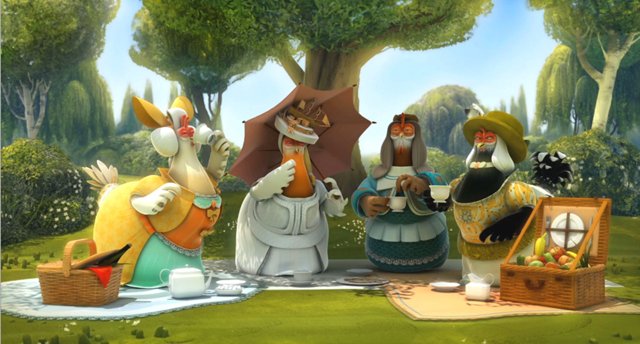
Last week I discussed the lack of focus after the fact on the Oscar-nominated shorts. Because the animated shorts tend to run shorter they usually include several “Highly Commended” selections. This past year this was one of the standouts. Its revolutionary France with chickens and it’s brilliant.

A la Française from à la Française on Vimeo.

Short Film Saturday: The Haunted Castle (1896)

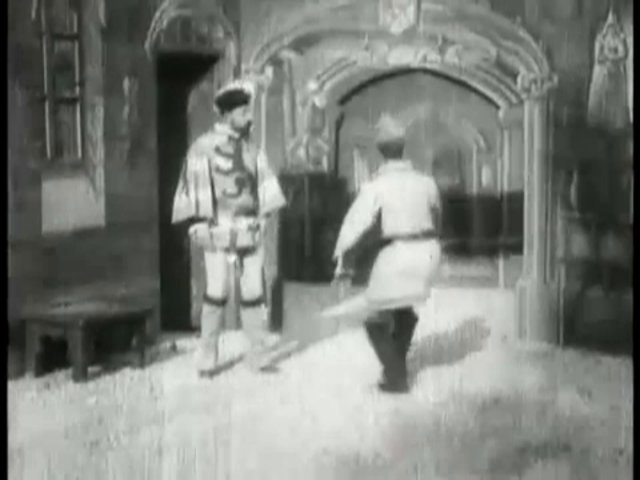
As I have been wont to do here on the site and in the Short Film Saturday theme, I love to feature the work of Georges Méliès. As it is also the time of year when the Movie Rat runs its 61 Days of Halloween theme, I figured I’d tie in the shorts in the horror milieu as well. I use the word milieu because this is a humorous take, but is still considered by many to be the first horror film. Horror, especially as many children experience through the Halloween holiday, has its whimsy and flights of fancy too; so enjoy!

Silent Feature Sunday: The Kid (1921)

While I do watch many new films, and have annual awards and will discuss current cinematic topics. Part of my desire to create my own site was to not have an agenda forced upon me that was not my own. This allows me to discuss films from all periods of history whenever I see fit. Recently my Short Film Saturday posts have been running toward silents more often. I questioned this tactic for a second until I realized that if I really do hope to encompass all of film history then the silent era most definitely should not be ignored. If you mark the silent era from the birth of film (1895) to the first talkie (1927), and I realize it could be argued that the silent era stretched a few years beyond that, and also that there were experiments with sound very early; that’s still 27% of film history at current which was entirely silent. Therefore a weekly post (or, however often I put it up) is not out of line at all mathematically or otherwise.

The good news is that many silent films are available to watch online, and are in the public domain. So I will feature some here.

As this series progresses I fully intend to discover new silents through it. However, as I get it started I figure what better way to do so than to start with ones that I know best, and have known for the longest. As a long-time fan of Charles Chaplin it’s hard to say if this is my favorite. I may be more inclined to lean towards Modern Times or, dare I be so blasphemous as to say, The Great Dictator (seeing how it is his capitulation to talkies), but what I can say about The Kid is that it does perhaps do the best of combining Chaplin’s comedic skill, dramatic sensibilities and whimsy. Enjoy!

Short Film Saturday: Barney Oldfield’s Race for a Life (1913)

This week’s short film piggy-backs off last week’s train theme. When I read this fascinating blog post about how the silent film got so closely identified with a woman being tied to train tracks, and why that might not be so accurate, there was a link to one short that’s a famous example of it.

It’s a fairly humorous and straight forward tale. Though D.W. Griffith is most noted for making cross-cutting a staple of film technique, he was by no means the only one implementing early in the development of cinema and here Mack Sennett really does the technique justice and makes the short very compelling. Another interesting thing you’ll note is that this short film is bereft of score. I am fine with that. Very few silents have their proper score attached to them to this day – some never had a specified score and that was left to the discretion of the live accompanist. Chaplin’s work, as he was also a composer, is an exception; furthermore, the restoration of the original Metropolis score is a large part of what made that reconstruction so very brilliant. Anyway, this is quick, fairly humorous short full of silent tropes.

Enjoy!

To view the film follow this link.

Short Film Saturday: Der Fuehrer’s Face (1943)

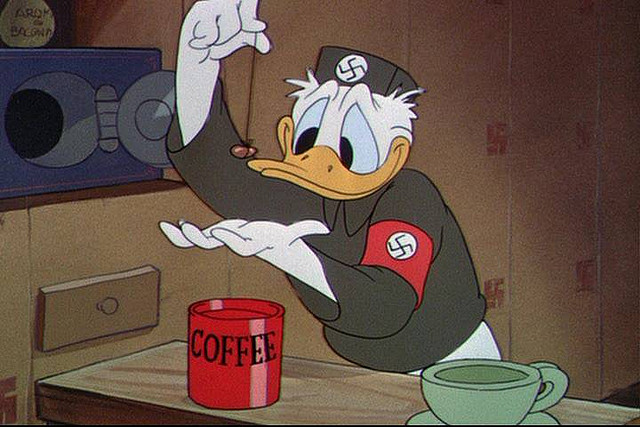
I saw this film plenty of times growing up. I think once upon a time Disney had a VHS collection of wartime shorts. This became one Disney would make sparse over years until the Disney Treasures line was launched and all the World War-Two era shorts were re-collected. Leonard Maltin typically not only did intros for the DVD collections, but also specific shorts that may have problematic content in a more politically correct age. Are the portraits of Hitler, Hirohito and Mussolini broad stereotypes? Yes. However, I’m not sure the availability was limited just due to that. The film is for the most part just a mockery of these three dictators, namely Hitler, and the disdain for him is fairly clear throughout. The main objection could be that the plot is Donald has a nightmare that he’s a Nazi. I realize that it’s risky to put an already iconic character like Donald Duck in Nazi paraphernalia, but this is a product of the war, this like many other wartime Disney fare can be classified both as being entertaining and propaganda. I doubt there’s a nation on Earth that’s been immune to propagandizing in cinema, much of it still consumed for aesthetic and historical purpose to this day.

The risk Disney took with Donald recognized and rewarded by the Academy with an Oscar. The nightmare aspect is a reveal, but one you can see this coming once the surreal sequence starts, and at the end he unabashedly exclaims his love for the US. I think the riskiness of the venture is lessened by the fact that Donald is still Donald. Namely, he’s ornery, accident prone and somewhat a non-conformist and not a “good Nazi” at all, even in a dream.

I’m glad that Disney did bring this one out of hiding with a disclaimer. If you feel something is inappropriate for mass consumption, you’re more than free to say so. However, I do think this falls within the realm of satire, and I’d hate to see that become further endangered just because on occasion it goes too far. Which is me speaking in generalities, most of the cultural insensitivity you may find in this piece is aimed at the dictators themselves. Anyway, without much further adieu, enjoy!

Once Upon a Time in the 80s: Genremeld (Part 10 of 17)

This is a recapitulation of a paper I did in college. This is part eight in the series to read other parts go here.

Gremlins, Ghostbusters, Who Framed Roger Rabbit, Creepshow, Weird Science, Time Bandits, Splash, Big, Back to the Future, The Witches of Eastwick and My Stepmother is an Alien all of these films crossed genres to try and make something new and unique, and this was a staple of 80s filmmaking.


It has been said that nothing really original has been said after 1800. In film much the same conundrum exists in that there really are no new stories, but that doesn’t mean we still don’t crave films. More so than any other decade prior the 80s were expert at recombining genres and on occasion creating something new or at least different enough that everyone flocked towards it.

One of the great hits of the genremeld was Gremlins. Never before or since has there been such a perfect balance of the horrific and comedic. There’s no tongue-in-cheek here it wants you to laugh and gasp in the same breath.
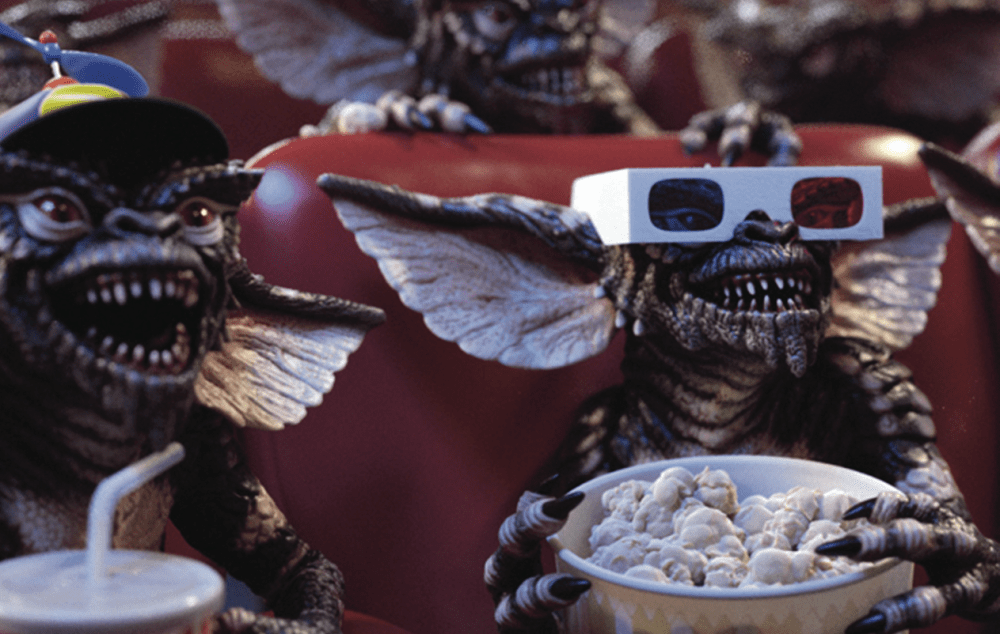

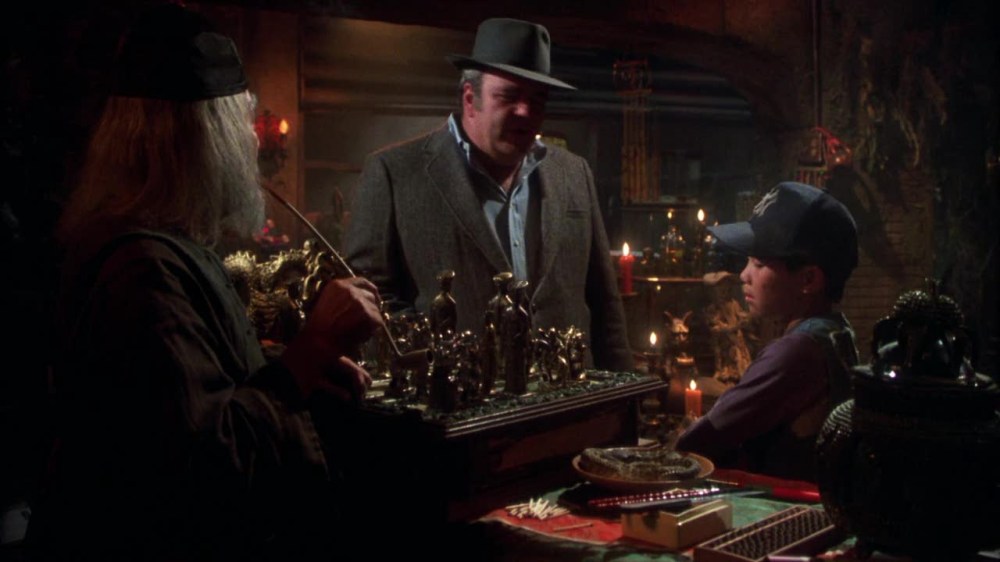
Gremlins (1984, Warner Bros.)

In the film Gremlins we have two important things occurring: first, this is one of the first films of the Spielberg School. It was written by Chris Columbus while he was attending NYU he later went on to work with Spielberg on The Goonies. It was directed by Joe Dante a former Corman protégé who later in the decade directed Innerspace and Matinee. Plot-wise this film is very important in that it’s a great example of the ’80s habit of fusing genres. Many ’80s many horror films were unintentionally funny this one is attempting to be purposely funny and succeeding. It was also quite frightening mostly to young kids because the cute, little furry things mutate into nasty, putrid beasts.


Structurally, this film is very tight. In the opening scene where the father (Hoyt Axton) buys a mogwai we are given rules, a trait common to many fantasy films, they are ‘don’t get them wet, don’t feed them after midnight and they hate bright light.’ The breaking of these rules end up being our act breaks and/or plot points. The first act ends in one of the most clear-cut fashions I’ve ever seen. Gizmo, the mogwai, gets water spilled on him in the 25th minute of the film and we see his progeny pop right out of him.


What a lot of people fail to notice is that there was actually a new creature invented for this film under the guise of an old myth. Gremlins were supposedly little monsters placed in machinery during World War II by the Germans. This creature comes from China according to this tale. It also allows for slight social commentary when Mr. Futterman complains about foreign cars and also while drunk he professes to believe in Gremlins in the classic sense. In the 1980s foreign cars truly bothered people enough such that the phrase ‘Buy American,’ was coined. 

Gremlins (1984, Warner Bros.)

The Spielberg School was always very big on ‘in-jokes,’ which can be readily apparent to the audience but are often missed (i.e. Rockin’ Ricky Rialto has the same billboard lettering as, and similar artwork to, Raiders of the Lost Ark and Gizmo hiding behind an E.T. doll). There is also a cameo by animation director Chuck Jones. 


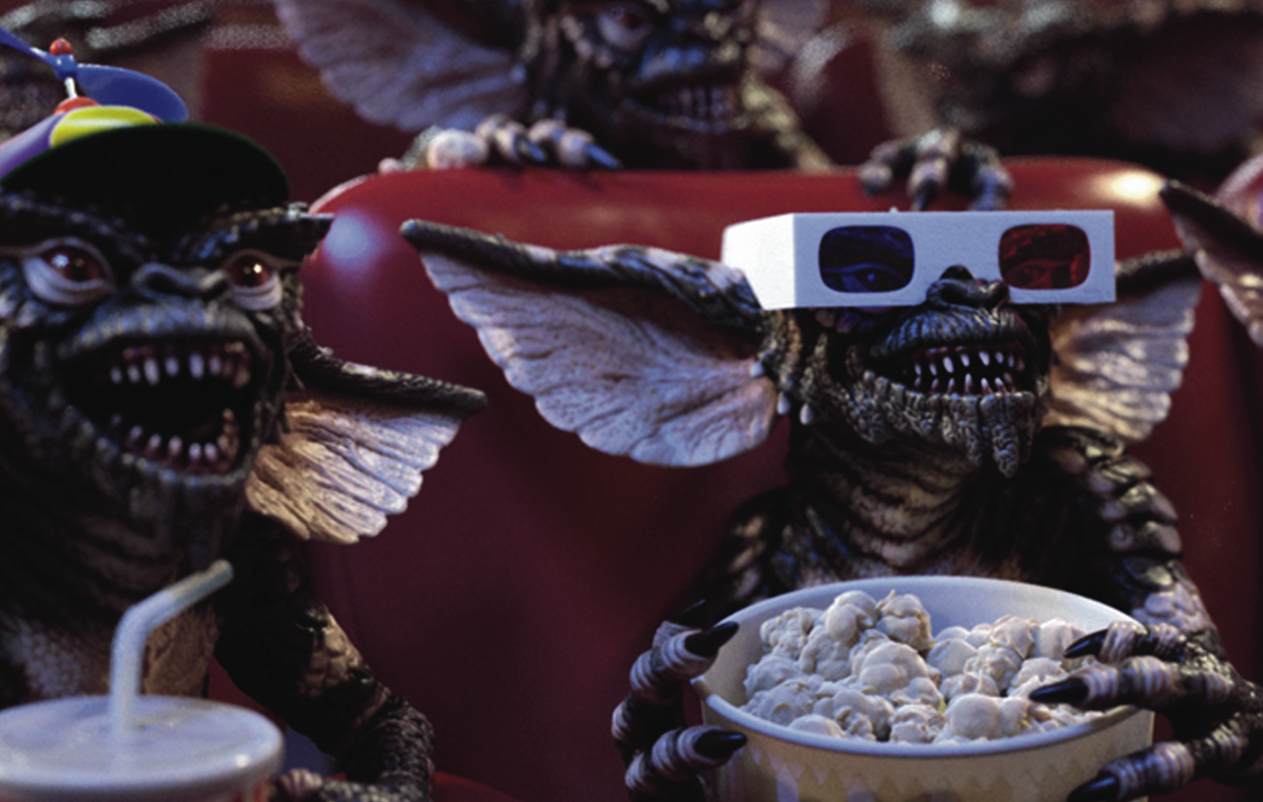
The characters in this film are quickly established. We see Rand Peltzer, the father, haplessly trying to pedal his invention, Billy (Zach Galligan) signing a petition, Kate (Phoebe Cates) works at a bar for free and Mrs. Deagle (Polly Holliday) refuses to give a family more time to pay their loan. This film is funny and fun-filled and allusions to classic cinema are also play an important part in this story there is a clip from It’s a Wonderful Life and the Gremlins watch Snow White and in a hysterical turn they love it. There’s also mimicry of a popular film at the time Flashdance, and it’s great. The whole second half of this film is a wonderful mix of the hysterical and the creepy and sometimes both. Mrs. Deagle is thrown from her Stairmaster out the window to die in the snow. This shouldn’t be funny but it is. Then on the gross-out side we see a Gremlin melting in the sunlight. We also have the music of Jerry Goldsmith in this film who is wonderful composer who will turn out tunes just as hummable as Williams’s, but he specializes more in these fun types of films.

Gremlins was a big hit grossing $148 million on an $11 million dollar budget, and it’s easy to see why. It turns from a horror/comedy and there’s a lot of action thrown in. We laugh at what we shouldn’t. This is also one of the more tastefully done ‘horrors-on-Christmas’ films with a Gremlin getting chopped to bits while Burl Ives’s ‘Do You Hear What I Hear?’ is playing. I used to be deathly afraid of this film and it took me many years to gather up the courage to see it again. I’m very glad I did see it again though because, as strange as it sounds, this film is even whimsical in the way it handles its subject matter. As an adult, I don’t know who would be truly afraid of it but it does offer its fair share of the horror currency known as the “gross-out.” It’s so well handled in that regard I think we may be in suspense for a bit waiting for something else like it.

Short Film Saturday: Cataplexy

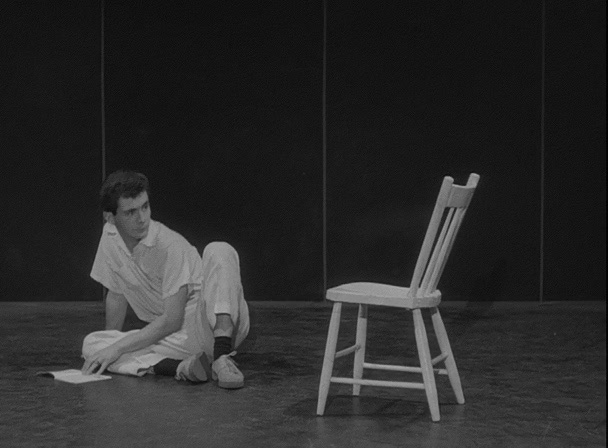
Typically, in a short film one is looking for an idea that fits the form and tells a complete story. It’s hard to find a better example than this film. Not to mention that the film does allude to the possibility of a larger story, but for the fragment it decides to tackle it handles it fairly perfectly.

Follow the link below to view the film.

Cataplexy (2010)