61 Days of Halloween- House (1977)

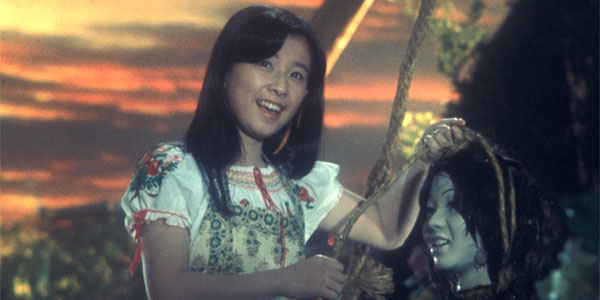
House directed by Nobuhiko Obayashi is a film which makes one glad simply because of how inventive it is – even if it’s not great. Never have so many cinematic techniques been crammed into one small film: still montages, wipes, irises, superimposition, distortion, black and white; the list is seemingly endless. It not only uses them but uses them correctly, well and never without some justification.

The second technical thing of note to House was that as the film was about to start it became clear by the side masking sliding in that the film was shot in 4:3. This is an interesting and effective decision for a number of reasons. It’s interesting because with the advent of Cinemascope shooting full-frame quickly became passé but this decision is incredibly inspired as it gives you a myopic glimpse into a kinetic world that holds your gaze completely.

The tone of this film is an interesting one. While it is great that it does build up the protagonist, and we get to know her and her friends, the tone shifts radically many times which shift focus away from her character later on. In terms of differing tones, there is a very tender scene between the protagonist and her father, several slapstick portions reminiscent of silents, comedic portions in the open and Kung Fu; then as they arrive and stay at the aunt’s house it will stay mainly horror but blend all that came before in and more. While the tale is one of witchcraft and occasional gore, it’s never what you would call terrifying but always entertaining even if predictable in terms of its end result.

It’s ultimately a very fun movie to sit and watch, even if you’re not in to counting techniques. It is, however, better if you are not thrown by things which come out of left-field because almost everything does.

To watch this film you will also need a very high tolerance for bad pre-1980 effects work because there are times you can taste the green screen so much it’s nearly nauseating, but in a way it adds to the charm of the film because it never seems to take itself too seriously.

However, if you like great cinematography this film is definitely for you. The aforementioned conversation between the daughter and father alone is nearly worth the price of admission with the supernaturally saturated background and the shots through the glass. The camera work is always appropriate for the tone at current, as is the lighting.

Ultimately, the greatest treat was in being able to view a previously unseen film in the States on the big screen where it belongs. Any film disappearing from public knowledge or not being known is a sad thing and kudos to Janus for finding a genuine original and putting it on display for the world to see.

House which was originally released in Japan in 1977 slowly made the theatrical rounds here in the U.S. and is available from Criterion on home video.

8/10

Rewind Review- Rudo y Cursi (2008)

As those who know me, and if such a person exists, cyberstalk me, know I created this blog after writing on another site, which shall remain nameless, for a while. The point is, I have material sitting around waiting to be re-used on occasion I will re-post them here. Some of those articles or reviews may have been extemporaneous at the time but are slightly random now, hence the new title and little intro, regardless enjoy!

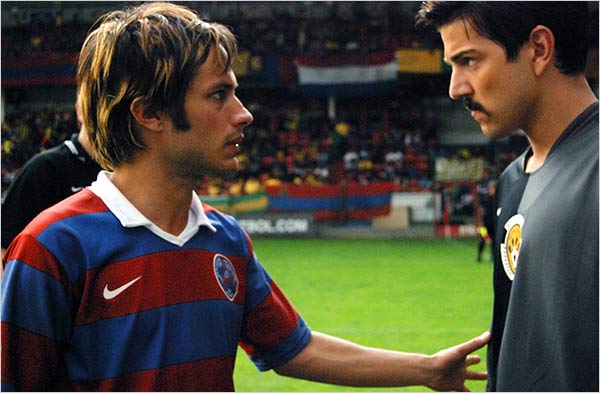
Rudo y Cursi is the feature length directorial debut of Carlos Cuarón, brother of Alfonso Cuarón. It tells the tale of two brothers who live in a rural economically depressed section of Mexico who are discovered by a talent scout and promised their chance at stardom in the Mexican soccer league with two fictitious teams.

The thing this film does best is incorporate a storytelling voice-over which draws parallels between soccer and life and also gives a little insight into the character of Batuta, played by the scene-stealing Guillermo Francella. Gael García Bernal and Diego Luna work together as if Y Tu Mama Tambien was completed yesterday and not eight years ago. Each is a bona fide star in his own right.

Both cinematically and as a soccer enthusiast one might be slightly disappointed by the in-game action. Very few of the game scenes shoot on field action but rather a reaction in stadium or around a TV or just the ball entering the net and people on the sideline.

The trajectory that each character takes to fame is quite different both as players and people – and that’s great. While their declines are also different they are equally predictable, however well-executed. Cursi (Bernal) offers a tremendously funny Spanish rendition of “I Want You to Want Me,” the music video thereof is undoubtedly the best scene of the movie and one of the best of the year, as he desperately wants to be a singer and shouldn’t be. Luna (Rudo) is spotted at a track and taken deeper into the gambling world.

There’s nothing terribly wrong with Rudo y Cursi. It’s a fine watchable film and even incorporates a decent subplot with Rudo’s wife looking for money and falling into a pyramid scheme but with such talent assembled on camera you kind of want it to do more. Things which get glossed over you want examined in more depth.

The ending ultimately, while you like Rudo and Cursi, was a bit too facile and I think as good as the voice over was, telling the tale from Batuta’s point of view might have been a mistake because it ultimately creates a distance. In the beginning we as an audience are wondering “Who is this guy?” If it was either Rudo or Cursi we might’ve been even more invested in the brothers’s plight even if all events played out the same.

6/10

Review- The Forgiveness of Blood

The Forgiveness of Blood is a film that is about a modern day feud between two families in Albania. The film starts off with what is seemingly a small incident: there is a line of rocks on a road; a man Mark (Refet Abazi) needs access to it to make his bread route shorter. He moves the rocks and with that commences the argument that escalates into a feud, as the road isn’t public and the owner permits no one to use it. Exacerbating this issue is that the families have a history and that land used to be in Mark’s family.

That’s the set-up as the fighting starts, but the film refuses to be about the main combatants but rather about those caught in the crossfire and in a sense about feuding itself. The film has two young leads Nik (Tristan Halilaj) and Rudina (Sindi Lacej) that have to bear much of the brunt of the fallout from this incident.

Now, this is a film wherein there are some idiosyncrasies and details of feuding in this society are implied but are not specifically explained. For example, there is reference to a book (Kanun) wherein the rules of combat per se are laid out, and there is also a special permission to leave the house to attend school for those old enough to be targeted (Besa), however, while these things are not clear upon their initial introduction they are soon made to be clear.

Another thing that must be noted is that there are a few incidents that occur off-screen which is fitting with the theme of the film. The film is not about the combatants but the affected by the fighting. There is a way that the film does try to engage the audience, and that is by having Nik be a bit more idealistic. Such that he looks at things logically rather than relying on what tradition says. His protestations fall on deaf ears but it allows discussions that those who are unfamiliar with such situations to get acclimated as things are somewhat indirectly explained.

The handling of the feud causes a great deal of tension in a few ways: the opposing family whom we only meet sparingly don’t necessarily play by the rules and Mark, who has exiled himself, returns intermittently endangering his family further just to visit.

With all these stressors this creates many opportunities for drama and there are truly a number of very well acted scenes and compelling arguments. While Tristan Halilaj and Sindi Lacej exist in parallel storylines they each carry their own half of the film in very different ways. Halilaj is the brooding, rebellious teen who is seeking to affect change either in his family or in tradition or both if possible. Lacej is trying her best to learn to work and bring in extra money wherever and however possible, in a now very hostile world. Then there is Mark’s abandoned wife Bardha played very well by Zana Hasaj.

Yet the film does layer some and adds a few very important pieces to the equation to give a fuller view of the feud. The first being the younger son in the family Dren (Elsajed Tallilli) who has a fair bit of screen time and has good bonding scenes with his older brother but also struggles to adapt to things like home schooling. Then you also get a more middle-of-the-road angle from the opposing side in Mara (Servete Haxhija) who also illustrates how this is still a male-dominated society.

It’s always interesting to get a glimpse into a foreign culture in any form, especially one you are fairly unfamiliar with, however, I felt a bit of a disconnect at times simply because certain things were left to be assumed or surmised. It was something that the film overcomes but is a slightly shaky foundation. However, it is an engaging and interesting tale.

7/10

Review- The Raid: Redemption

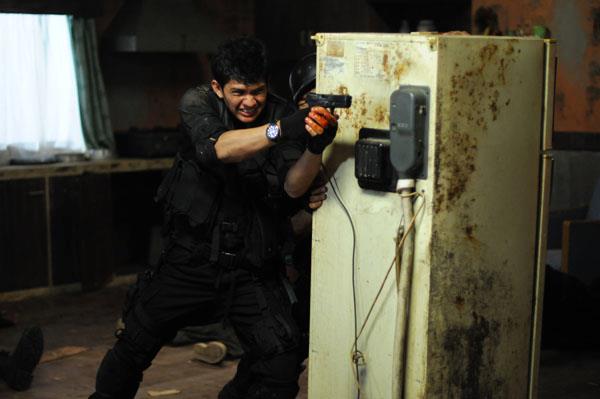
Iko Uwais in The Raid: Redemption (Sony Pictures Classics)

The Raid is quite an amazing story in the cinematic world. It was one of those movies that came off the festival circuit and as it was starting its limited release and receiving press screenings, it started to blow up my twitter feed. I didn’t want to know too much about it, even though I gleaned that plot-wise there wasn’t much to know. Yet, I knew how the movie was being touted and I was very much looking forward to it. However, I thought I’d have to ferret it out, then suddenly word of mouth caught on the film and its per screen average was ridiculous and it went wide for a weekend, hence I got to see it. An Indonesian action film, subtitles and all receiving a wide release. Wonders never cease.

One thing this film does very well, and something that I think is a bit overlooked in filmmaking at times, is the set-up. The set-up can be one of the better and more enjoyable parts of a film. It’s the hook and what ties you into the story. The set-up here doesn’t re-invent the wheel but it’s quick and it gets you going without belaboring things. There are a few more layers that will be introduced along the way but you have enough to start with.

Although, there are quite a few players, frantic action and kinetic camerawork, the narrative is kept straightforward such that I always know who’s who and what the stakes are. Whereas in some Japanese period films the players can be a bit muddled when combined with an involved narrative, here everything is crystal clear yet there are developments introduced slowly throughout. It really goes to show you that action films, more often than not are better off KISSing you (Keep It Simple, Stupid). I’m not typically a fan of the genre, but can appreciate it when it’s really well done and I came away enamored with this film.

Aside from simply being able to identify the characters they do get built to an extent and in-between the fighting you learn things and can even find points of identification. I will grant those moments are sparse but they’re also not wasted in the least, every single one is maximized. Another key is that everything serves to add context, and raise stakes for the fights. A fight by itself is just a fight. If the audience is not invested in the combatants, who care how cool it looks? This film excels on both levels.

With all that being said, the fight choreography is absolutely breathtaking at times. The lulls in between fights are where the quality of the film truly hinge but the battles are the visceral component that will pound your pulse or put you to sleep and I’ll admit, while it’s not all about being cool, I said “Oh, that is so cool!” to myself quite a number of times.

Yet, there’s always balance in this film. Those scenes that are few and far between where stakes get raised, plot moves forward and character is built are also well acted. You don’t necessary hang your hat on the acting in an action film but when you get a good turn on top of everything else it’s like the cherry on top, this film has quite a few.

This review will remain spoiler-free, however, I will say I love the way the story concludes itself. It truly is a great little button that has to be earned and absolutely is.

Some people have been asking things like “So do I really have to see The Raid?” I say this rarely but the answer is quite simply; “Yes!”

10/10

So You Wanna Win Best Foreign Language Film?

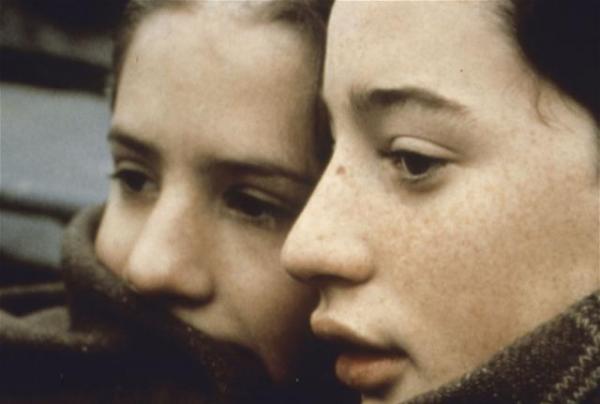
Gaspard Mannesse and Raphael Fejtö in Au Revoir les enfants (Orion)

To be clear this article is not meant in any way shape or form to disparage the Academy. This list is aimed at the film enthusiast who may, as I used to, get a bit too worked up about who won or lost. Granted you will link your opinion to a sense of justice, however, it bears keeping in mind that below are over 30 films all of whom were nominated for Best Foreign Language Film but did not win all of whom have a legacy stronger than most winners of the award. Ultimately, time, the public and critical re-appraisal are what determine the films that last, awards, while nice, are in the moment comparatively speaking. The Oscars are a great show and if something or someone you like wins its even better but if not its not the end of the world. The list below is evidence of that.

1. Umbrellas of Cherbourg
2. Kapò
3. Marriage Italian Style
4. Kwaidan
5. Stolen Kisses
6. Lacombe, Lucien
7. Cousin Cousine
8. Jacob the Liar
9. That Obscure Object of Desire
10. Kagemusha
11. The Last Metro
12. Das Boot
13. Colonel Redl
14. Au Revoir Les Enfants
15. Pathfinder
16. Farewell My Concubine
17. The Scent of Green Papaya
18. The Wedding Banquet
19. Eat Drink Man Woman
20. O Quatrilho
21. Secrets of the Heart
22. Four Days in September
23. The Thief
24. Central Station
25. Children of Heaven
26. Amores Perros
27. Lagaan
28. Amélie
29. Evil
30. The Chorus
31. Downfall
32. Pan’s Labyrinth
33. After the Wedding
34. The White Ribbon
35. Incendies

Review- The Round Up (La Rafle)

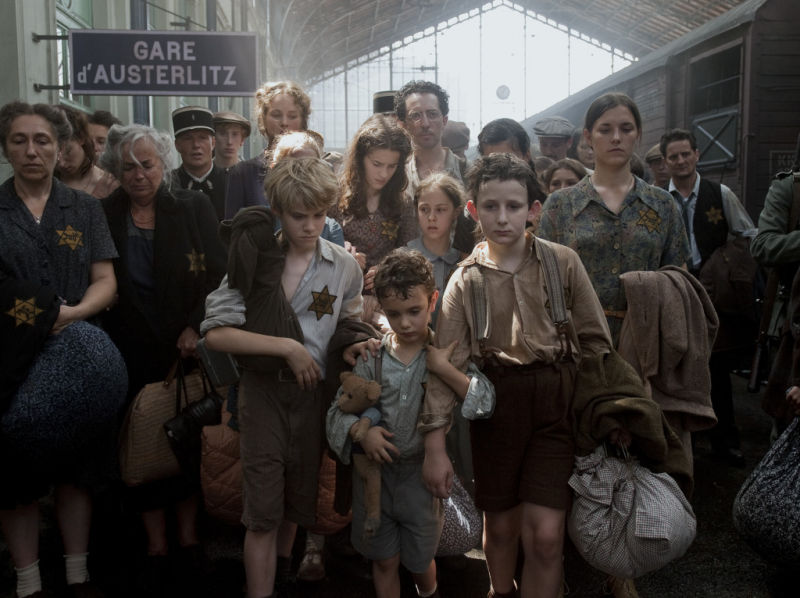
The Round Up (La Rafle) (Gaumont)

Any film that deals with World War II, more specifically the holocaust, fights an uphill battle. The film has to contend with not only the knowledge that we as a viewing public share but also with the inevitable outcome its story-lines share. These factors make any newly told tale, especially ones that may have been shared before, more daunting to tell than they have been in the past, however, what The Round Up (Le Rafle) does so well is tell a multi-faceted tale that most films that illustrate historic events tend to avoid. This film not only tells the tale of a single neighborhood, more specifically the Weismann and Zygler families, but also takes a look at the political sides of the equation (the ivory tower and backroom bargaining where lives were bartered and certain agreements were reached under a false sense of humanitarianism) which many films tend to avoid. Not only does that angle of the story get played but also as those rounded up start their unjustly imposed sojourn you also have the plight of the medical staff, illustrated by a nurse (Mélanie Laurent) and a Jewish doctor (Jean Reno) who have to try an keep the imprisoned alive as they are eventually transported to Poland. It is adding these layers to the story which makes this film different than other of the like at least on the surface.

The differentiation does not lie solely on the surface, however, while this film does not ever take place in an unoccupied France until its denouement it does start in a time where knowledge of what’s truly happening is scarce and children remain children as they are wont to do regardless of circumstance. You are shown very good illustrations of the sense that permeates the community of “It Can’t Happen to Us” and it’s tackled head on later as the eldest of the Weismann daughters tries to warn everyone a few times and wants to flee but calm is urged by her parents. Later at the first stop it is poignantly touched upon again. It’s one of the many times wherein the senselessness and unimaginable insanity of what the holocaust was is very well illustrated. Many of the characters in the film are in the dark willfully or honestly and it allows scenes we’ve viewed and facts we know to wash over us with newfound impact.

Some of these points are made with very cleverly written dialogue as well that is uttered by the right characters in the right moments and in the right context. Things being too on the head are a matter of context as much as anything else and the correct personages say the correct things to make points anew in a different way or ones that are often overlooked. The children, the nurse in her naïveté, Hitler amongst his inner circle and French heads of state all say things that were they assigned to other characters may strike you as too much commentary. Part of why auteur theory is not a popular notion in cinema anymore is that voice in a script as opposed to things like composition and genre can border preachiness but this one deals in the political and personal of a difficult subject matter makes its points about the absurdity of the situation in terse pieces of dialogue, visuals wherever possible but never to the detriment of the narrative, which helps it excel.

Conversely, when it speaks more loudly for the film not to say a word, when an honest question is better left unanswered, where a glare from an officer says more than words possibly could the film does so. The film visually puts pieces in place to set up the ending without dialogue, so as precise and purposeful as it is at some points it understands the necessity of silence also. There is also no fear in illustrating complexity in character without going overboard and simplicity in others without creating characters. The complexity is shown mostly with the families we know who start with different levels of understanding of circumstance and gradually though they don’t know exactly what lies ahead the gravity of the situation becomes exceedingly obvious, yet you also see them grasp for humanity whenever possible. The second part of that statement being most important because there isn’t an excessive myopia in this film as exhibited in something like Life is Beautiful. It creates moments where the human spirit can overcome but also illustrates the length to which human beings will go to be cruel and to be free.

As you can see by now this film us most definitely an ensemble work a few actors come to the fore as vital but it relies on many to convey its story as well as it does. In the family the patriarch and matriarch played by Gad Elmaleh and Sylvie Testud; the medical personnel played by the world renowned Jean Reno and Mélanie Laurent who many will know and love from Inglourious Basterds and The Beginners; the kids spearheaded by Hugo Leverdez in a most impressive debut, The Di Concerto twins as Nono and Adèle Exarchopoulos and lastly the political contingencies highlighted by Udo Schenk as Adolf Hitler each of these nuclei brings the film vividly to life and fully realizes their characters.

In the early stages the intercutting between these disparate worlds is at its apex but it stays rather persistent through the course of the narrative. There are great cuts aesthetically and with story in mind we never see more of the political discussions than we need to in them we are shown the steps than lead to the decisions ultimately made and clearly how things came about.

Where this film really gets to me is at its conclusion but it is effective throughout and evokes different emotions and remains compelling in spite of the aforementioned stumbling blocks the story has. It is a brilliant work that illustrates through its many facets the precipitous escalation of events in Occupied France and the lives it affected.

10/10

Short Film Saturday: Dym (Smoke)

Short films are an artform in and of themselves. Sadly, there are rarely avenues for these films to be displayed. While the platform I can offer is not a large one I do hope that by featuring short films on the weekend you’ll be encouraged to look for more that you do like or perhaps even work on your own. I will try to get these up on Saturday morning, which may be the ideal time to catch a short film: It’s a relaxed time and you’re in search of some entertainment but your attention span may not be as long as it will be later in the day.

The first film I am deciding to highlight is one called Smoke. It’s a film that was actually brought to my attention via an email from the film’s director. I’m sorry it took me so long to profile it here, however, I am glad he brought it to my attention as it truly is quite special.

The film is constructed in a stream-of-consciousness montage that is incited by the turning on of a tape recorder. What words are being spoken on the tape, or to it for that matter (if any), are left for the audience to divine as we don’t hear them. The images are rather surreal and at times completely disconnected and at others only connected by the common motif: smoke, be it in one form or another. While some images are Kubrickesque the film possesses a voice of it’s own that speaks to you in visual fragments seeking your input and associations to determine meaning. I’ve seen the film twice now and had two distinct, but both positive reactions to it.

Before I belabor it too long watch it for yourself:

In Defense of: Dubbing

(GrafittiStudio.Com)

It is quite easy to discuss what the cons of dubbing are. Many of us whether we consider ourselves to be filmsnobs or not agree with most if not all of them. Yet, I will within these paragraphs play devil’s advocate. To be completely frank, I’m doing more than that. I am taking a global view in this piece so while you will read me vehemently explain and defend dubbing as a necessity (in some cases, and an artform when done well) I do prefer to watch a film, in which I do not know the language, subtitled.

So very quickly here is the east part where we can agree on are the cons of dubbing:

Cons

When watching a film dubbed you are automatically submitting to a film wherein you are not witnessing the original vision of the director. The actors choices are re-interepreted as is his text. The edit is compromised in terms of intonation and inflection. The director’s choices are muted. A good dub will try and replicate as closely as it can what those choices are but a copy and a translation are not the same thing as hearing the original audio. Not to say that subtitles are impeachable. I know of at least two cases where edits tantamount to censorship occurred in subtitles making the theatrical release and the home video release quite different.

The biggest con for me, an American consumer who enjoys films from all around the world, is that many times in North American distribution dubbing is a “business decision.” This kind of decision is an attempt to broaden an audience which is niche to begin with and alienating the small but devoted groups of filmgoers who would watch subtitled fare (horror fans and the art house crowd to name two). Without wandering too much into the pro area the North American audience is not the base for which dubbing really is a functional, preferable alternative. We can pick and choose and those of us who will watch foreign films prefer subtitles.

When a film is dubbed suspension of disbelief becomes a major concern. Subtitles do add an artifice but it’s just relaying what is being said. You still hear it as intended. When a film is dubbed there is more artifice to it, it’s something you’re conscious of which is jarring you’re simultaneously distracted by detaching the voice from the actor and giving them a pass and gauging the abilities of the voice over artist. Then there’s the obvious that depending on what language the original was recorded in sync can be very difficult to accomplish at times, or in the worst cases completely disregarded.

And needless to say I have rarely if ever seen English dubbing that was palatable.

Pros

Charles Emmanuel in the studio for Harry Potter and the Sorcerer's Stone (Charles Emmanuel/Warner Bros.)

There is a technique to matching sync on dialogue. With care, performance and at times searching for synonyms or synonymous sentences it can be accomplished even when the languages in question have a large gulf between them.

So there’s technique, that’s fine, most would even be willing to grant that if they’ve seen halfway decent dubbing, however, too much dubbing experience is in Japanese monster movies of the 50s and 60s. There is, however, an art to it as well. Now I come to these conclusions because I speak two languages fluently (English and Portuguese) therefore if I am already familiar with material I can and have examined it dubbed and found some of them enjoyable. The first spark I had when I was about 13 I think and I saw Home Alone in Brazil and was rather impressed by how natural it managed to seem.

It was my most recent trip to Brazil that really got me thinking about dubbing more and differently. Just prior I had started to think of it because all of a sudden I did a “Where are They Now?” kind of search, the kind the internet seems specifically designed for and discovered that one actor who’s work I had enjoyed had taken to dubbing as he came of age and transitioned from being a child actor mostly on screen to mostly voice over work.

When in Brazil though I did some more watching and thinking. First, as I would often peruse the local showtimes seeking something to see (I ended up only seeing Harry Potter 7.2 there) I noticed things. For example, there was only one showing I could find in Rio for Winnie the Pooh that was subtitled. The reason is target audience. Little kids can’t read or very well so it’s easier for them to watch and comprehend a film from another country dubbed than it is subtitled. With most of the cinematic product around the world being American young people make it a necessity the world over.

However, children’s films and children as audience members only make up a small portion of the global box office Hollywood is so eager to conquer. The other reality dubbing addresses is that many countries throughout the world have lower than average literacy rate, thus subtitles present an issue. Many of the films coming out of Hollywood are easy enough to follow just a bit of assistance is needed to make it accessible to that many more people. Dubbing bridges that gap too.

So there’s a duality of purpose. The studios want a more impressive international gross and people the world round need entertainment. So its functionality is very clear. Especially when you consider the fact that the need for dubbing creates jobs for actors, recordists, editors and so on the world round in nations whose entertainment industries may not be as robust.

However, I needed to test the potential for artistry again. Being a kid seeing Home Alone, which I knew and still know quite well, opened the window in my mind allowing the possibility that seeing a dubbed film could be beyond tolerable but even enjoyable. However, the more we watch the more jaded we become. The more we study the less impressed we end to be. A new test case was needed. Again, Harry Potter fit the bill.

I must say that I did see The Deathly Hallows Part 2 subtitled, as it was a new film to me and I wanted to realize it fully. Therefore, considering it was the hot film series of the moment it was easy enough to find both on sale and readily available at people’s homes. My test case was Harry Potter and the Prisoner of Azkaban, in part because the “Where Are They Now?” actor (Charles Emmanuel) who I’d re-discovered as a dubbist played Ron Weasley in all eight films.

The first thing that struck me was how much better I knew the film than I thought. I knew it quite well indeed enough that I noticed the nuanced changes in language, syntax, intonation, inflection and so on that were made to make the film register as more natural in the language spoken. I reiterate that I must see a film many times before I can submit to seeing it dubbed but it is a masterfully well done job. I even managed to get the sense from it how one can become accustomed to and prefer the dubbed version when that’s all they’ve ever know, which is typically the case with animation. Only studio and network-based international networks show American programming mostly subtitled there.

So that was a revelation and then came another most recently and unexpectedly. I actuality this piece, though I have long pondered it would likely not exist without the following story. The reason that is so is that it’s all well and good to wax philosophical about the hypothetical (to the inexperienced) benefits of dubbing especially when most of them aren’t aesthetic but it’s another to get some insight into how two actors, each of whom portray the same character viewed their dubbing experience.

Dylan Riley Snyder

While on Twitter I saw a tweet from Dylan Riley Snyder (an actor whom you may know from either Disney XD’s Kickin’ It or Todd Solondz’s Life During Wartime) the link was a YouTube clip of scenes from Kickin’ It dubbed into Portuguese, the Brazilian version. I, of course, watched it and rather enjoyed it and was able to laugh at some of the same bits in the same way that I had in English.

The clips were uploaded to the dubbist’s personal Youtube but as of yet Snyder had not been able to discern if he had a Twitter account. After a quick search I was able to find it and relay it. So there I had discovered that the actor originating the role, to borrow the stage term, had heard the dubbist’s work and approved.

I was then further surprised by the ability to get insight into the other more unknown aspect of it, the voice over artist’s thoughts on his craft, his role and responsibilities. Bruno Dias had written a blog post and wanted a version translated to English so that Snyder could read it.

What I expected the post to be and what it was were two completely different things. I expected a cordial, complimentary, anecdotal re-telling of their interaction. What was surprising was the preface and the absolute sincerity and clarity with which Bruno Dias described his adopted and beloved form of acting and also the parallels drawn, respect felt for and connection he made with the actor whose work he is interpreting.

It is and always will be a much better explanation of how dubbing can be an artform than I can ever write so I suggest you read it. If one treats their work behind the microphone with the commitment and dedication that an actor onscreen and respects their interpretee’s process and interpretation they will be successful and yes it will be artful.
Thankful for World Cinema- The Green Room

When looking for a theme in which to select films from the start of November until Thanksgiving being literal is not the best option. Films centered around Thanksgiving tend to be overly obsessed with dysfunctional families. So in thinking about the nature of the day which was initially a celebration of survival in the New World, I thought why not focus on foreign films.

The Green Room

François Truffaut in The Green Room (Le Films du Carrosse)

Truffaut’s The Green Room may be his great over-looked gem. It is a film that I think still deserves the Criterion treatment even though it was saved from the Land of the Out of Print by the wonderful new On Demand services.

It is a film that sees Francois Truffaut make a rare trip in front of camera, not only as an actor but one playing a character unlike himself to a large extent. Unlike his turn in Day for Night in this film he is not a director but a journalist who after World War I starts to detach himself from the world lamenting all those he has lost.

The film is a fascinating examination of how to reconcile the fact that even as we live we are amidst death. It examines a character who is overly-preoccupied with those who have passed such that he forgets how to live. Perhaps what is most impressive is that it takes an noble and relatable premise, respecting and honoring the dead, and takes it to an extreme such that we se how detached from reality one can become.

It is also a refreshingly intimate piece. There aren’t many players concerned in the drama here. There is the home nucleus: Julien, Georges and Mme Rambaud. Then Julien also interacts with his boss on a few occasions and Cecilia most of all. This allows the drama to be very focused on the protagonist and his obsession.

This film is a sparkling example of Truffaut’s simplicity shining through. It’s an examination of character and theme where all is very apparent and he wants you to delve deeper and search for more within the film. It is often hypnotic, always fascinating and a must see no matter how you manage to obtain it.

9/10

Thankful for World Cinema- The Annunciation

When looking for a theme in which to select films from the start of November until Thanksgiving being literal is not the best option. Films centered around Thanksgiving tend to be overly obsessed with dysfunctional families. So in thinking about the nature of the day which was initially a celebration of survival in the New World, I thought why not focus on foreign films.

The Annunciation

Péter Bocsor and Júlia Mérö in The Annunciation (Hungarofilm)

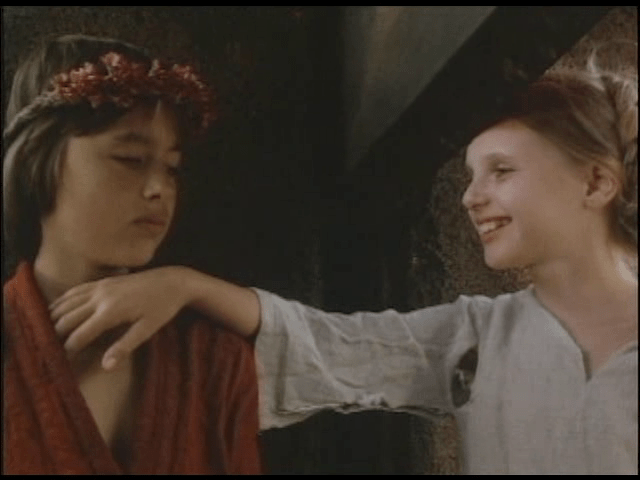
If you’re ready for a mind-bending account that is likely to be one of the most bizarre film-watching experiences you’ve ever had then The Annunciation is for you. One thing that shows you almost off the bat that this is a challenging film is that as the story changes location the subtitles include location cards, which are not dictated by the film itself.

However, owing that the shift in locations and time period are due to the fact that it is a dream should make it an easier watch. This existential tale of Adam and Eve is still ripe with multiple meanings and answers that can be gleaned from the text of it.

Another thing that should be noted that all the characters, save for circus performers near the end, are played by children. If you have a problem with child actors I feel sorry for you but I also then do not recommend this film to you because they are dealing with very real material, extraordinarily challenging material that they dive headlong into and perform spectacularly.

The things that can be observed as Lucifer sends Adam and Eve through time in similarly dystopian plots are truly fascinating. However, though the film may seem like it’s hellbent on nihilism it ends on a wondrous of hope and sardonic comedy.

It’s a classic of absurdism and dreamlike cinema, cinema in general, which deserves a wider audience.

10/10