Once Upon a Time in the 80s: Music Videos (Part 9 of 17)

This is a recapitulation of a paper I did in college. This is part eight in the series to read other parts go here.

The music video of all visual art forms probably had the shortest period of time where it was a true art. If you look at music video now it becomes more and more rare to find one that attempts to portray some kind of narrative it has become what the artists originally feared merely a showcase for a song and an artist who looks like they should be an actor. The 1980s, however, offered some very unique and experimental ventures in this new medium.


MTV, which once upon a time stood for Music Television, launched in August of 1981 and it debuted with one of the better videos they ever aired called “Video Killed the Radio Star” by The Buggles. Artists debated the intrinsic value, or lack thereof, of music videos Hall & Oates were opposed to them and Madonna was in favor of them citing that musicians when on stage acted and this was just a different medium. Fitting that she would make such a statement because Madonna was a pioneer of the video every bit as much as Michael Jackson.


If pressed to find an end for the music video as an art I’d point to Milli Vanilli’s efforts in 1989. They were two dancers who were hired by a record company to lip-sync their way to fame. They won a few Grammies and were found out in 1990. After that point the packaging was no longer hidden and videos became less and less about anything but putting visuals to a new single. But the music video was already a staple and here’s how it came about.


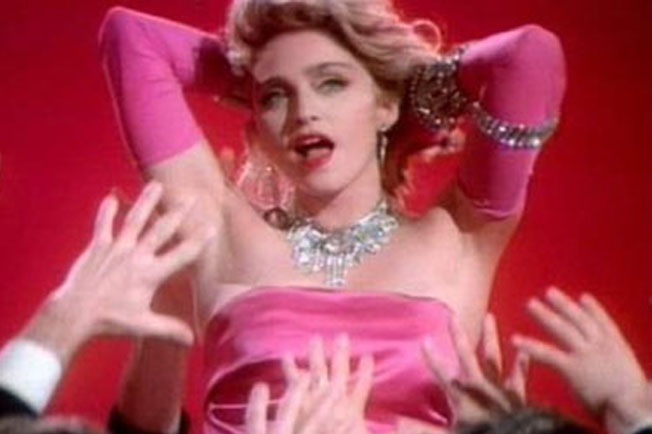
Experiments like David Bowie’s “China Girl” soon became more refined, and even cinematic, like Madonna’s homage to Marilyn Monroe in “Material Girl.” There was the irreverence of The Cars in “You Might Think” and then there were masterworks in the genre as well. One of the best videos of the 80s is undoubtedly Billy Joel’s “Pressure” it’s a visual romp, with images that add to the despair and, well, pressure of the lyrics, nothing is really explained by the lyrics and the images don’t mimic the song. It’s truly great. Billy Joel also managed to cram all of Americana since the 1950s in a three minute video for “We Didn’t Start the Fire” it is such a kaleidoscopic approach to a song which is literally going over world events while we get the portrait of a household changing while the world around it burns down.


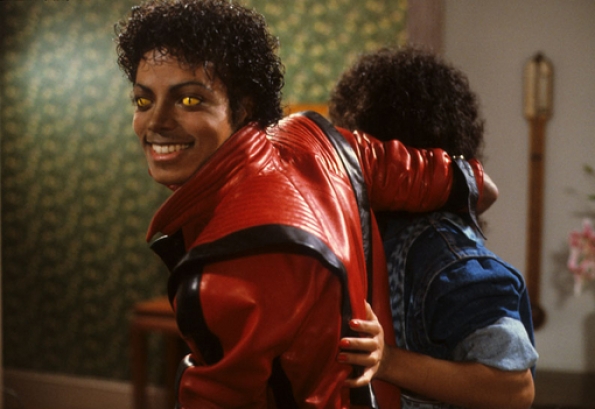
Thriller (1983, Epic Records)

Michael Jackson’s “Thriller” is probably the most important video in music history. It was treated and packaged like a film. Jackson got John Landis (An American Werewolf in London) to direct it and there was even a making of special. Nearly all of Michael Jackson’s other videos are better but this is the one that set the stage for how he approached them. It is labels and artists merely only looking at his videos as singing and dancing numbers that have bred a lack of originality and the pathetic state of the music video today. No one has to given as much thought to narrative and production since and are only concerned in the superficial most of the time, unlike Jackson.


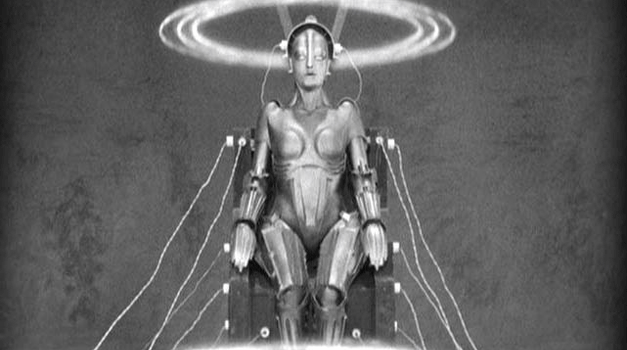
Madonna, meanwhile, love her or hate her, has always been doing something different. In the controversial “Like a Prayer,” she falls in love with a modern day martyr who is accused of a crime he didn’t commit. In “Open Your Heart,” she’s a stripper who becomes a boy’s obsession, in “Express Yourself” she leads a revolt in a video that was based on Fritz Lang’s Metropolis, in two videos shot in black and white “Vogue” and “Oh Father” she takes two different approaches celebrating sensuality in one and lamenting a death in another.


If and when another media savvy and quality performer comes about the music video may be revived. It is still an art form with a great deal of potential to entertain because by its very nature it combines two of the most powerful elements in entertainment: music and the motion picture. The music video is for the most part a marketing tool, but every once and a while it does spasm and let a bit of art come out.

Thankful for World Cinema: The Complete Metropolis (2010)

The first thing that needs saying is that there are conventions that need to be acknowledged if you are going to venture out and watch this or any silent film. Silent film acting, for example, is by its very nature more demonstrative and over-the-top than even the presentational style that dominated after the advent of sound, and most definitely can cause culture shock to those who are used to film actors of the Post-Brando world. It has to be taken as a given.

Some silent actors are clearly better than others but the style can’t be held against the film, it is what it is. While saying that Brigitte Helm is quite good in this film, she may go a little too far when she’s playing the evil robotic alter ego of her character but she is clearly two different people in those scenes. Gustav Fröhlich is an effective lead who portrays the audience’s POV aptly.

The image quality is superb for a bulk of the film, meaning the portions we already knew existed. They look as crisp and clear as they likely did in 1927, perhaps even better. While the transferred 16mm footage doesn’t look quite that good with many lines, which have been dulled and are nearly translucent running through it, they are without question an invaluable addition to the narrative.

Not only did the restorers fully explain the story of the footage’s discovery and how it was added back to the cut they also noted that the image size would change to keep less than knowledgeable patrons from complaining. Better yet they had some fun with the titles. Not only did they digitally create newer, more accurate ones, they added motion to those which referred to the workers underground and the elite up above the city.

The restoration of the original score, as best as it could be replicated, is also a welcome and brilliant touch. The end credits acknowledge the fact that some pieces of the music had to be created by educated guess and rarely could you tell. It was pretty seamless, and, moreover, the impact of the film is enhanced twenty-fold. Typically on DVD releases, especially the cheaper ones, which is how I was accustomed to seeing Metropolis; you get stock, canned, jazzy nonsense that rarely if ever really syncs. You can almost imagine the producers of said DVD sitting around picking a track because it synced in one spot. The score is breathtaking and absolutely draws you into the tale, if all else should fail.

While you should be forewarned that all we know should be in this film isn’t, as there are titles describing the rare scene that could not be saved or found. You will witness here, in greater fullness than ever before, the enormity and vastness of Lang’s vision. His vistas come through and the added running time gives this seemingly simple through-line the time to make the impact it seeks to make. It is, if you dig deep enough, a more complex and involved visual narrative than many may give it credit for. While we today will not be jarred by the seemingly contrasting styles of the sub-plots; there is a grab bag of visual elements worth exploring.

For a modern audience the message of the film, which is repeated on quite a few occasions, may seem a little heavy-handed, again I warn you that it must be taken with a grain of salt. Think of other silents you know and enjoy and consider if they too aren’t very on the head. You know exactly what the message of The Immigrant and The Kid are but they work anyway. Typically, you are told someone’s profession or that they are the hero before you see them, which is also less cinematic than desirable but the language of film was new and it was important to be simple and direct. It bears noting that Metropolis is not overly-laden with titles and it just works.

Seeing this new cut of Metropolis will not be like watching a regurgitated version of something you’ve seen before. It will be like a whole new experience. Not only do you see it on the big screen but you see it sharper and more clearly than you’ve likely ever seen it before. It really is like the saying goes; see it again for the first time.

10/10