Mini-Review- The Academy Award Nominated Short Films, Live Action

This past weekend there was a screening of the live action short films that are nominated for an Academy Award. I have decided that since overall the category is so strong that I would include a still image from each. These are films that deserve to get their recognition beyond just the five minutes of the Oscar broadcast that they occupy. So these screenings arranged by Shorts International and the theatres that screen them are to be commended. They are a bit long but there has to be some way to include the documentary shorts in a broader way next year, here’s hoping.

As for the films like I said I was resoundingly impressed with the strength of the field but I most definitely have a favorite.

The Confession
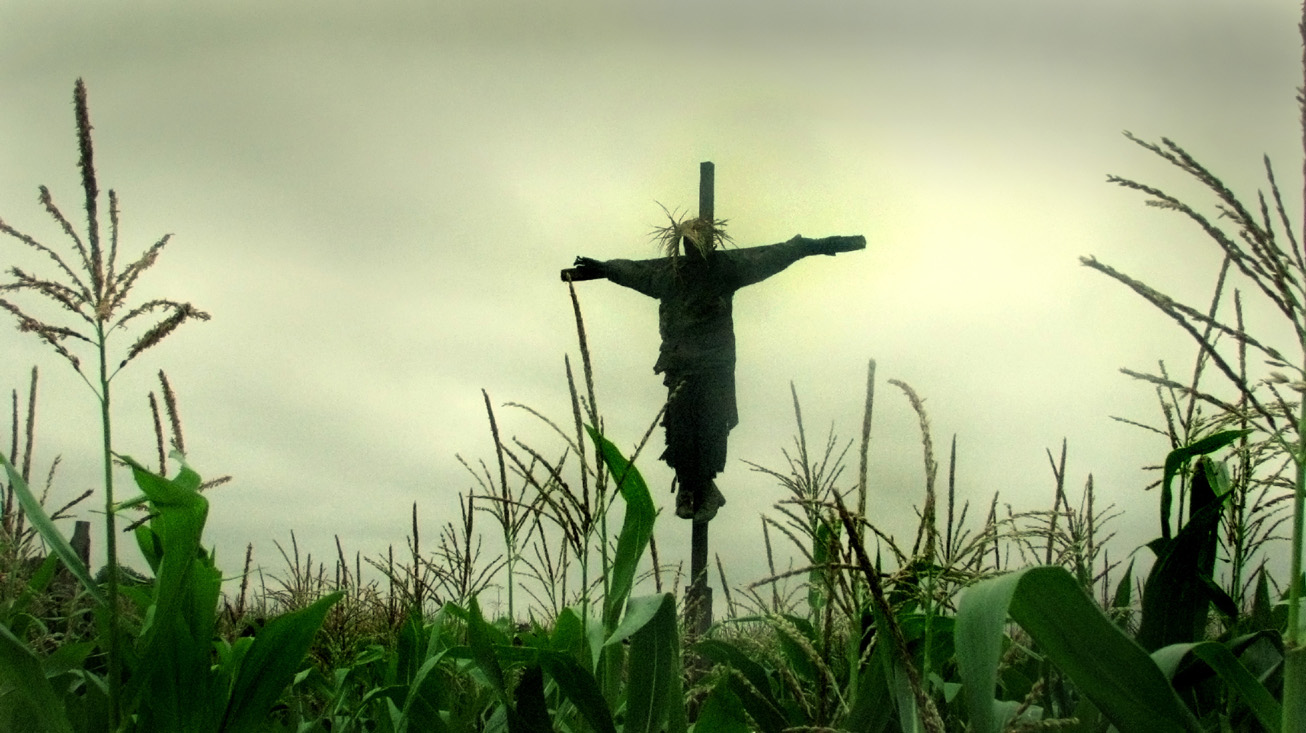
And here it is. It is so shockingly rare to see a short film that is so layered and plays on so many levels as this one does. There are moments of genuine comedy, horror and drama in this film. It is a beautifully shot and composed film that shows the tragic consequences of the combination of real guilt and “Catholic guilt.” It’s a film I’m not ashamed to say brought me to tears at the end which is a feat that’s unprecedented in my limited experience with shorts.

Wish 143

What Wish 143 does well is to create a serio-comic tale. It is not a greatly nuanced tale but it works. How well it works is where most of the interpretation comes into play. As I watched it the thought occurred to to me that this is what Holden Caulfield would be like if he was a cancer patient. Specifically, I recall the scene where he hires a prostitute and all he really wants is company. That’s a bit of an oversimplification but gives you the gist of this tale as it is centered around a young man seeking to lose his virginity in the time he has left.

Na Wewe

This a simple tale that subtly demonstrates the stupidity of genocidal tendencies. It concerns a bus traveling through Burundi in 1994 at a time where the Hutus and Tutsis were at war. The passengers are all taken off and then questioned regarding their background. There are a few great twists and good jokes in the tale as well as moments of drama. Furthermore a pretty good original (to me anyway) song to end it and underscore the message of the film.

The Crush

This is a pretty funny, dramatically well-executed and honest portrayal of a boy’s crush on his teacher. It’s deceptively simple as it does have a few surprises in store. It can be easily be described as the most charming and charmingly told of the short film nominees and it also deals with a universally relatable concept, most of us have has a teacher who fits this mold and it’s not only a wish-fulfillment tale but also concludes rather logically.

God of Love

The funniest of the nominees, this is the fantastical tale of a modern-day cupid. It’s told in such a way, however, that it reminds you both a little of Magical Realism but also of the Early-Career whimsy of Woody Allen such that it is also a very entertaining entry.

In conclusion, I would not be disappointed in any of these films being given the Oscar but I do think that The Confession is the most special film of the group.
Oscar Nominated Short Films, Animated

Yesterday, I was fortunate enough to attend my first ever screening of Oscar Nominated short films. The live action shorts will screen next weekend for more information you can visit the official site.

Madagascar, a Journey Diary (2010): Bastien Dubois (France)

While this is a very interesting film in terms of technique narrative-wise its nothing much to write home about. In fact, it plays sort of like a documentary except without disseminating nearly enough information.

Let’s Pollute (2009): Geefwee Boedoe (USA)

This film is truly a hysterical one. It’s in the format of an educational video in which it instructs the audience how to pollute and further degrade the environment. Of course, while you’re laughing the effect is that of reverse psychology and you start thinking about how you can better conserve resources.

The Gruffalo (2009) (TV): Jakob Schuh, Max Lang (UK/Germany)

There are two standout reasons that garnered this film its nomination: the first is the voice cast. There are a lot of recognizable names attached such Helena Bonham Carter and Robbie Coltrane. However, what is even more impressive is the animation. it’s perhaps the most impressive 3D animation I’ve ever seen (it’s not projected as such I’m talking technique). Having said that the story is far to simplistic, repetitive and downright redundant to be as long as it is. It could’ve have used some tightening up.

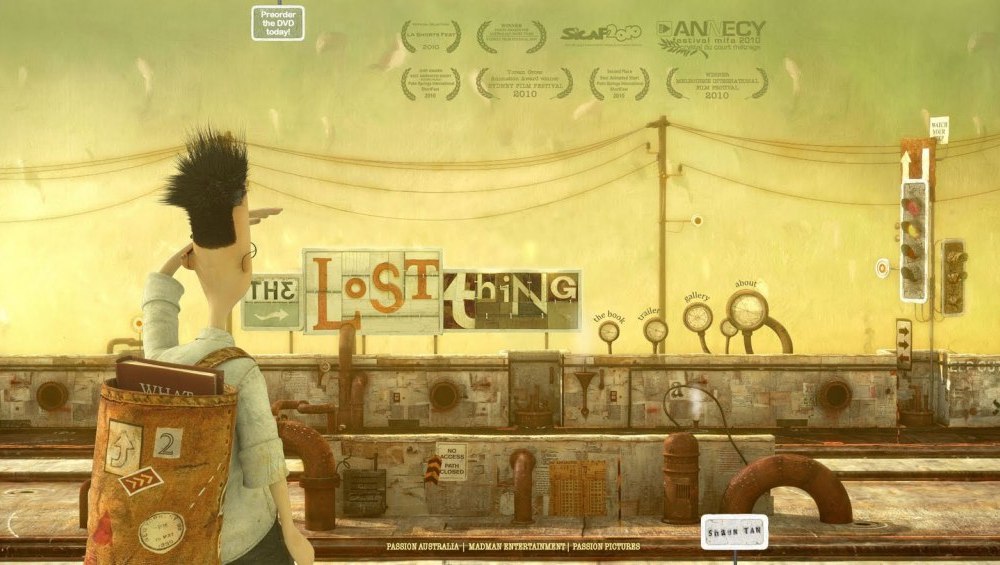
The Lost Thing (2010): Shaun Tan, Andrew Ruhemann (Australia/UK)

This would be my second choice as winner. It is without question the most subtle of the candidate films. There is some creativity in technique as well as story-telling here, principally in storytelling it tells of odd creatures showing up and no one knows where they belong. There is definitely a non-blatant parallel to humanity drawn which is just great.

Day & Night (2010): Teddy Newton

I have linked above to a full review of this film I was prompted to view upon its release. This screening reiterated my belief that it should win. Not only is it a truly smart idea but it’s classical Disney which is what draws people to Pixar. This film plays like the old free flowing montages Disney was famous for such as those in Alice and Wonderland and Dumbo. While it’s not as subtle as the above film its message may have even more resonance and is not so on the head such that it detracts from the film.

Monochromatic Monday #1

As I mentioned in my manifesto I endeavor to have viewing themes and post short entries on them. Not necessarily a full review of what I watch but just a bit of information to give you the gist.

Up until early March many of my themes will likely be concurrent with TCM’s 31 Days of Oscar. My goal as a side project is to see at least one film from every day of the festival with a little assistance form my DVR. I am currently one behind.

Today’s selections were the first in a while where both films were afforded introductions by TCM hosts which gave some interesting information, more so in the second film. But without much further ado the films.

Mr. Deeds Goes to Town (1936)

Gary Cooper and Jean Arthur in Mr. Deeds Goes to Town (Columbia Pictures)

Ben Mankiewicz hosted and while he does a fine job, invariably he leaves out a piece of information that puzzles me. The theme for part of the afternoon line-up on this day was good luck charms and it chronicled Bess Flowers, the so-called “Queen of Hollywood Extras,” who was a good luck charm herself. She appeared in over 700 films, yes, 700, this is in the days of the studio system remember, and appeared in 21 Best Picture Nominees and Five winners. Frank Capra employed her often. What I wanted to know, with all this to do being made about someone with a bit part, is where do I look for her, if I can find her that was not mentioned.

This film was a Best Picture nominee and was one of Capra’s three Best Director trophies (amazingly none of them came for his most notable film It’s a Wonderful Life). It certainly does have that Capra touch to it. It’s the story of a simple country man, often mistakenly thought to be a simpleton, who inherits a large sum of money and then has to deal with everyone trying to take advantage of him. It’s a film with a lot of subtle humor and most notably through some Hollywood magic creates some of the most surreal vistas of New York you’re likely to see on film. Capra is often associated with comedy or sentiment but here in this film there is a lot of great cinematography and the visuals really drive the story home. The shot of Longfellow Deeds (Gary Cooper) complacently sitting in a cell with barely a highlight upon his profile is a breathtaking piece of chiaroscuro.

Then, of course, there’s Cooper. This is one hell of a performance and most notably so because he is silent for so much of it. However, there’s a clear subtext and thought-process behind his actions. He’s also incredibly naturalistic, especially for the era, which really allows the story to sink in. More often than not he doesn’t let on but is listening, and absorbing information and planning his next move. Of course, there is misplaced trust in an undercover reporter (Jean Arthur) and that plot goes predictably enough but it’s very well executed but there is one surprise in store which is how it looks like out hero will be vanquished and how he triumphs.

This is a truly wonderful film that has Capra’s stamp all over it, which means that it is timeless this one more than most perhaps because it does talk about cynicism in society which is pervasive and being too cynical might allow you to take a film like this for granted but you shouldn’t.

Viva Villa! (1934)

Wallace Beery in Viva Villa!

*****Warning Spoilers Below*****

There’s much less to say about this title. The intro by Robert Osborne was quite interesting. This film was shown during a block of films that were winners of awards the Academy retired. This one winning a certificate, not a statuette, for Best Assistant Director. There were lots of pieces of information to relay here like Howard Hawks’ firing, the unruly extras who were real soldiers and peasants and the actor who relieved himself off a balcony on members of the Mexican military.

Once the film began the story was compelling but not quite compelling enough. First, it needs to be said that Wallace Beery is incredibly effective and endearing as Villa, when I read the cast I thought it might be a stretch but it worked. The film creates an interesting cinematic mestizo situation in as much as the natives of Mexico are all either Mexican or made to look like they are and the Spaniards are mostly white and don’t speak with accents. The mix of different voice stylings was actually pleasurable rather than rampant stereotypes.

While I love how full screen titles in the Golden Age were poetic and verbose there are far too many of them here and it avoids shooting some scenes which would’ve enhanced the film. It seems they might’ve been an afterthought based on the edit and there are some weird cuts in there, scenes that don’t seem to end in a logical place or stop abruptly. If you count the “Villa Wants You!” title montage as one there are 14 instances of full screen titles in this film. It was like a bad joke at times: “I went to a movie and a book broke out.”

Speaking of bad jokes there ‘s a running gag that an artist/writer friend of Villa’s refuses to draw a bull and is willing to die for this artistic standard. He called it advertising. I call it hard to swallow. Won’t draw a bull? Really?

What this film did have going for it was a beautiful little circle that closed. In a prelude that’s too short we see Villa for a child as a moment don’t really get to know him and he grows but what does get set into motion is the path of his destiny. His family was robbed of its land. His father dies for questioning it and off he goes to eventually lead a long multi-faceted revolution. While knowing that a plot is in the offing does drain some of the tension and drama out of Villa’s last words he does say, not ones the reporter puts in his mouth, are great. The reporter had started his fictionalized obit with the words “Mexico, I apologize.” Villa responded in the end “Johnny, what have I done wrong?”

It was a bit uneven and it was the rare film, in my experience, wherein the conventions that date it hold it back rather than exalt it but it is worth a watch and a decent film. Not sure it should’ve been a Best Picture nominee in this top-heavy era though.

In closing Robert Osborne related the fascinating tale of James Wong Howe the DP who was born in China but grew up in Washington State. He was an Assistant Camera at 19 and had done time at Lasky Studios. As a Director of Photography he garnered 10 Oscar nominations and two wins.