Rewind Review- Where the Wild Things Are (2009)

As those who know me, and if such a person exists, cyberstalk me, know I created this blog after writing on another site, which shall remain nameless, for a while. The point is, I have material sitting around waiting to be re-used on occasion I will re-post them here. Some of those articles or reviews may have been extemporaneous at the time but are slightly random now, hence the new title and little intro, regardless enjoy!

Those who don’t like superlatives should stop reading this right now. Those of you who are still reading please believe that it is not for simplistic reasons alone that I am all but ready to anoint Where the Wild Things Are as the best film of the year. It is unquestionably a complete cinematic experience that, for the most part, paralyzed my pencil from note-taking and here are some reasons why.

It lives up to the old manic depressive statement of “I laughed, I cried” but goes so far beyond that. The beginning of the film sets up Max’s home life and imagination in simple, beautiful terms with nary a word wasted, which goes for the whole film. The dialogue was carefully chosen and all lines were simply set traps which if sprung would take you into the deeper meaning of the film.

This is the kind of film that does require multiple viewings for the inquiring mind, and it is the best kind of film because it works on multiple levels without any of those levels interfering with the other. Some argue that some parts of the film are too frightening for children. That is a parent’s decision, not a critic’s, and frankly the book has scared many children while others read it and remain unaffected. It has always been that kind of tale. So to think that Spike Jonze was cavalier or somehow remiss in his filmmaking is ridiculous. Two words of wisdom to keep in mind are first Maurice Sendak the writer of the tale wanted the film “not to condescend to children” as he stated in a featurette released about a month ago. Films have been known to scare kids but kids will watch them anyway. The first film I remember seeing at the theater was a re-release of Bambi and almost off the bat Bambi is orphaned. Is it terrible? Yes. Did everyone keep watching? Yes. Yet people haven’t shouted about Bambi’s inappropriateness as loudly as about this film. The other quote would be Sondheim’s as related by David Poland on his blog “Children will listen…”

Ultimately, that will be what they do – listen and watch as they see a boy be angry with his mother, run off find new friends, but ultimately find that home is the better place. He returns home and is welcomed back, again almost without words. Histrionics are not needed at that point either for dramatic or moralistic purposes. The lesson is learned by all, you have no reason to run from home and you can always go back there and be accepted. A little hard to misconstrue that, and perhaps you need to boil it down for them, but one angry incident or a little yelling and growling shouldn’t deprive a child of this experience. It’s PG for a reason…be a parent and guide your child through the film. Don’t expect it to do all the work for you.

Back to the aesthetics – while CG needed to be implemented on the Wild Things’ faces, you’d be hard pressed to tell. And amen to the practical suits which just add that much more realism. Also, adding tremendously to the mood and overall effect is the score/soundtrack, written by Karen O. and Carter Burwell, which always sets the tone with absolute precision. There is never any doubt as to the intention and correctness of the score and it is almost as wondrous as the film.

The refracted tale, of course, is that of a child trying to cope with the divorce of his parents. Pull the dialogue from some of those scenes and just read them and you heard homely and very parental type battles. In the Wild Things you see various interpretations of those relationships. Again the separation of these layers of the film must be stressed. It is not the kind of tale in which missing on such details would ruin it but perceiving it will only enhance it.

For as large or small as the part was, the cast both voice and actual couldn’t have been better-chosen. Whether it be Katherine Keener in her limited screen time as Max’s very endearing mother, Mark Ruffalo as the cause of Max’s ire, Max himself played by newcomer Max Records, a surprisingly sensitive and complex James Gandolfini as Carol, or Catherine O’Hara as Judith.

This film is proof that you don’t need a lot of pomp and circumstance to elicit emotion. With the imagination everything can expand like the lecture of a teacher. It is a tale sure to delight the child within us all and also profoundly move adults. A “must see,” and likely the best film of the year.

10/10

Review- The Forgiveness of Blood

The Forgiveness of Blood is a film that is about a modern day feud between two families in Albania. The film starts off with what is seemingly a small incident: there is a line of rocks on a road; a man Mark (Refet Abazi) needs access to it to make his bread route shorter. He moves the rocks and with that commences the argument that escalates into a feud, as the road isn’t public and the owner permits no one to use it. Exacerbating this issue is that the families have a history and that land used to be in Mark’s family.

That’s the set-up as the fighting starts, but the film refuses to be about the main combatants but rather about those caught in the crossfire and in a sense about feuding itself. The film has two young leads Nik (Tristan Halilaj) and Rudina (Sindi Lacej) that have to bear much of the brunt of the fallout from this incident.

Now, this is a film wherein there are some idiosyncrasies and details of feuding in this society are implied but are not specifically explained. For example, there is reference to a book (Kanun) wherein the rules of combat per se are laid out, and there is also a special permission to leave the house to attend school for those old enough to be targeted (Besa), however, while these things are not clear upon their initial introduction they are soon made to be clear.

Another thing that must be noted is that there are a few incidents that occur off-screen which is fitting with the theme of the film. The film is not about the combatants but the affected by the fighting. There is a way that the film does try to engage the audience, and that is by having Nik be a bit more idealistic. Such that he looks at things logically rather than relying on what tradition says. His protestations fall on deaf ears but it allows discussions that those who are unfamiliar with such situations to get acclimated as things are somewhat indirectly explained.

The handling of the feud causes a great deal of tension in a few ways: the opposing family whom we only meet sparingly don’t necessarily play by the rules and Mark, who has exiled himself, returns intermittently endangering his family further just to visit.

With all these stressors this creates many opportunities for drama and there are truly a number of very well acted scenes and compelling arguments. While Tristan Halilaj and Sindi Lacej exist in parallel storylines they each carry their own half of the film in very different ways. Halilaj is the brooding, rebellious teen who is seeking to affect change either in his family or in tradition or both if possible. Lacej is trying her best to learn to work and bring in extra money wherever and however possible, in a now very hostile world. Then there is Mark’s abandoned wife Bardha played very well by Zana Hasaj.

Yet the film does layer some and adds a few very important pieces to the equation to give a fuller view of the feud. The first being the younger son in the family Dren (Elsajed Tallilli) who has a fair bit of screen time and has good bonding scenes with his older brother but also struggles to adapt to things like home schooling. Then you also get a more middle-of-the-road angle from the opposing side in Mara (Servete Haxhija) who also illustrates how this is still a male-dominated society.

It’s always interesting to get a glimpse into a foreign culture in any form, especially one you are fairly unfamiliar with, however, I felt a bit of a disconnect at times simply because certain things were left to be assumed or surmised. It was something that the film overcomes but is a slightly shaky foundation. However, it is an engaging and interesting tale.

7/10

Review- The Avengers

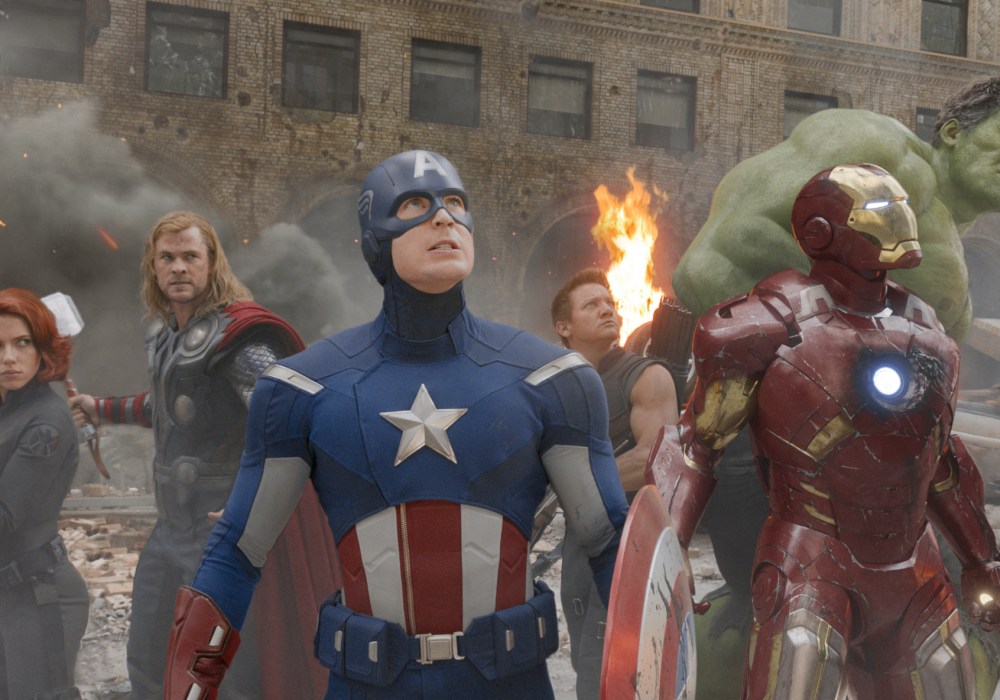
So here it is at last, the convergence of all the Marvel has been working for with its recent films. It’s the make-your-head-explode conception sure to delight many a film geek and comic book nerd the world over. Surely almost any film would implode under these nearly insurmountable expectations and such deafening hype, right? Wrong.

What we turn to summer movie fare for are spectacles. It’s where we want the ultimate in escapism, and have been let down over and over again. The Avengers name is in some ways a meta-textual one as it avengers many of the over-hyped bombs of the past but it really does is delivered as expected and so much more.

The tale is a simple one wherein the Tesseract, a stone that is a source of renewable energy and power, has fallen into the hands of the megalomaniac Loki (Tom Hiddleston). Enter S.H.I.E.L.D., headed by Nick Fury (Samuel L. Jackson) who has had small appearances in the previous Marvel films building to this event, the assemblage of the Avengers, a superhero team to combat a super threat. The tale being rather straight-forward is a great thing here because it allows the film to do something these films don’t usually do: introduce and build the characters, create conflict and investment on behalf of the audience. In the end, you want the heroes to save the world, of course, but you also want for the heroes to succeed to avenge their enemies and vanquish their demons. A rare feat, and colossal when you consider how many characters this applies to.

The common thread that applies to all the characters and actors in this film is that even though they’ve all had their own film(s) none of them have been better in their given part than they are here. Which is slightly a contrarian thought because you’d think with less screen time each and so many characters it’d end up being insufficient and watered down, nothing could be further from the truth.

Thor (Chris Hemsworth), due to the fact that Loki is his brother, has the most invested in this cause. His entrance into the tale is spectacular and one of the many memorable moments this film offers.

Captain America (Chris Evans) is great here in many ways. Not only is he perhaps the most idealistic of the characters in the context of this story but he also has similar baggage to Thor in as much as he too is a bit displaced, Thor in place and Captain America in time. His moments come both in dialogue and in a few battles.

Iron Man (Robert Downey, Jr.) is back and better than ever. I’ll discuss Whedon’s writing and directing more later, but having Tony Stark be the one who is confrontational and snarky about the team is one of the film’s best touches. It gives him a journey as first he’s arrogant, the most informed on the dossier and then has to make it work with this crew because that’s the only way it’ll happen. I cannot describe his best moment as it’d be a massive spoiler if you’re one of the few who hasn’t seen it yet.

As for The Hulk, I did trudge through the previous two attempts to make his character work in a full-length motion picture. It didn’t work at all until now. This character was really the gamble, he’s a major “new addition” to characters who had recently gotten their own successful big screen ventures. They could’ve pulled someone else in but they went back to the the Hulk. This time it pays off big time. This is all thanks to both the way the character is written, again to not say too much, and also Mark Ruffalo’s tremendous performance.

Black Widow (Scarlett Johansson) also makes a return after first appearing in Iron Man 2, however, here is where her character really develops and quite frankly she’s amazing in this. Not only in the fighting scenes but she’s also playing subtext and conveying emotion brilliantly. As the girl in the group she’s outnumbered but by no means outmatched.

Hawkeye (Jeremy Renner) is an example of impeccable casting. Due to the way the film structures itself he suits the role perfectly well and does some pretty awesome jumping about and target shooting.

Every superhero film needs a villain and the best thing this film does is it has one and one only. We know who he is early and focus on him. He gets his thralls but is allowed to flex and posture and does his darndest to convince us that things won’t work out in the end. Tom Hiddleston far outdoes himself in this encore.

Joss Whedon is someone I’ll admit I didn’t know a lot about until very recently. I knew the name but I had not seen a lot of his work. However, in light of his role as co-writer and producer of The Cabin in the Woods I’ve started to see some more and I can say that his contributions to this film are massive. He clearly has immense respect for this material but also knows how to play with it. The respect is evident in that despite the fact that this film end with a massive, near-cataclysmic, jaw-dropping action sequence it takes the time to get these characters together see how they gel or create friction, sort through some of their baggage and get people moments that they earn.

The effects in the film are, of course, tremendous. I did happen to see the movie in 3D and I would say that it’s one you can enjoy just as much without it. The difference made is negligible.

So to those of us who wondered if a super-group superhero film could work, the answer is a resounding yes. Anticipation quenched and all we wonder now is where it’ll go from here.

10/10

Rewind Review- Iron Man 2 (2010)

As those who know me, and if such a person exists, cyberstalk me, know I created this blog after writing on another site, which shall remain nameless, for a while. The point is, I have material sitting around waiting to be re-used on occasion I will re-post them here. Some of those articles or reviews may have been extemporaneous at the time but are slightly random now, hence the new title and little intro, regardless enjoy!

Iron Man 2 is the kind of sequel that has a lot to live up to. It comes on the heels of the wildly successful, aesthetically and financially, film from last year. When seeing this film two things make you wonder: first, did it come too fast, and second, is Shakespeare wrong and is there really something in a name as merely calling the film ‘2’ seems uninspired. What you get in this film is not a bad product but an indifferent one, a film most deserving of the moniker of ‘meh.’

What this film does afford its leading players is a chance to strut their stuff, in spite of the built-in limitations of their characters. For example, Tony Stark, as portrayed by Robert Downey, Jr., didn’t get much deeper or more fully realized in this film but what the material did allow was for Downey to flaunt his considerable talents, both dramatic and comedic. Similarly, Sam Rockwell as Justin Hammer is hysterical and has his high point when be-bopping onto the stage at Stark Expo. He is quite good but he also is only ever established in this film as someone out to get Stark for business reasons. You get the impression there is more behind it but it’s never explored. Last but not least there’s Mickey Rourke who plays Ivan Vanko, again who does huge amounts with such limiting material. There is so much more to Ivan Vanko than the film lets on. However, all the film seeks is to establish what the motive is and not have us fully understand and feel said motive.

Much the same can be said of the all-star supporting cast which includes Gwyneth Paltrow, Don Cheadle, Scarlett Johanssen and Samuel L. Jackson. Each does what they can with minimally arcing storylines, none of which ever gets pronounced or explored enough to truly add significant depth to this film. The love interests are buried until the end, the running of Stark remains a buried but seemingly necessarily evil subplot. Even the political interventions and the possible proliferation of the Iron Man suit never seems like the stakes are high enough and doesn’t add to the tension like it should partially due to timing in the tale and partially due to execution.

Again not to say the film is uninteresting, poorly executed or not entertaining. It is well-done and interesting but not nearly as engaging and entertaining as it could be partially because the stakes seem lowered in this one and almost all subplots seem subjugated and nearly unnecessary encumbrances rather than necessary depth.

In the end, you walk out of this film just feeling like you watched another tale where a few key pieces were moved into place for the next film but you didn’t feel you learned too much about any of these people whom seemed much more alive the last time around.

Similarly, in a film where the stakes of all the ulterior storylines is lowered then it should come as no surprise that the climactic battle is somewhat anticlimactic. It is well-shot, edited and conceived but it’s just not terribly compelling and it could’ve been ratcheted up. The extra suits could’ve been disposed of quicker and it could’ve benefited from a villain monologue in that situation.

The CG in the film doesn’t particularly stand out in one way of another which is almost as high a compliment as you can pay a film in this day and age. So it definitely does not detract from the experience.

With all that said it does bear repeating that this is a good film. Based on its disparate elements it was, of course, not nearly as good as it could have been or as its predecessor. That being said it was well worth the watch and good escapist entertainment.

6/10

Short Film Saturday: Ghild

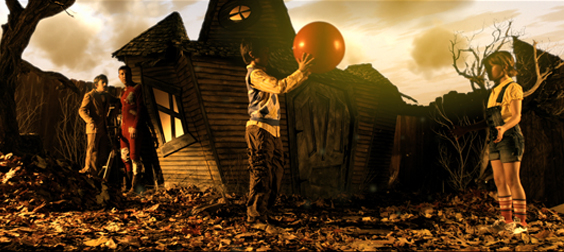
As soon as I saw the opening image of Ghild I thought to myself “Wow, that looks great, I really hope there’s a live action component to this film.” Seeing as how it easily coud’ve been stop-motion or some other animated form based on the opening image, I thought that was nothing more than a pipe-dream, well sure enough it live action.

It’s some of the most creative production design I’ve seen since The Hole.

It’s also a hilarious concept, overall not just in narrative but also in conception and execution.

You may also recognize Jimmy Bennett as the father and Harland Williams in a cameo.

It’s the most I’ve laughed out loud in a while.

Enjoy!

A Nation’s Emblematic Film: Brazil

Now, I cannot for a second claim that my viewing of all of Brazil’s significant films in the history of the nation’s cinema is complete. However, making a watch list for myself is just one motivation for writing this piece. The others are: one, there are likely many coming across this piece who couldn’t name a handful of Brazilian films. Second, it’s really about thinking of films and culture in a different way. This really isn’t about naming what is the greatest Brazilian film of all-time, or any other nation that this series might focus on, but rather to open the discussion on a nation-by-nation basis about indigenous cinemas and cultural portraiture. If I had one film, and one film only, to show someone to say “This is Brazil and what you need to understand about it” what film would open that dialogue best, if not address all those points?

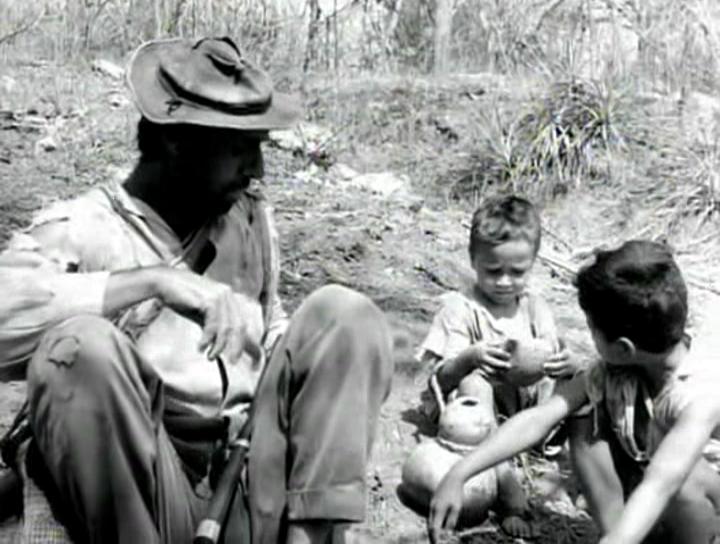
This idea came to me after a recent viewing of Vidas Secas (Barren Lives). I’m not sure that film is the representative choice but it gave me the idea, and made me think “At least I’ve seen this film now and my citizenship won’t be revoked.” What struck me as particularly Brazilian in the film was not only its locale (Brazil, like all large nations, can be quite regional but there’s seemingly something universally Brazilian about the northeast) but also the theme of persevering through hardships in that film.

Universal themes such as the ones mentioned above are just one of the watermarks of these films that can be discussed, aside from more specific traits like the migrant population and the era in the nation’s history. While the themes touched upon in the film are very Brazilian, it is a tale of being humbled, a thoughtful drama, which doesn’t have the joie de vivre that is so common in Brazil, and many other Latin nations, in spite of circumstances. Does that mean Vidas Secas can’t be the emblematic film? No, but others are worth considering, this one is still alive.

Films like Kiss of the Spider Woman, or any other foreign production, are not in the running. That specific example was clearly shot in Brazil by a naturalized Brazilian director but the way the script was written it could’ve been any authoritarian Latin American state in the 1980s, locality wasn’t the point of the film.

Fernando Ramos da Silva in Pixote, A Lei dos Mais Fraco (HB Filmes)

Another Babenco film Pixote is a better example thematically. However, once you factor in the unfortunate history the film has (A child of the favelas, Fernando Ramos da Silva [pictured above] was cast for authenticity, but was murdered at the age of 18, as he went back to live where he always had) makes choosing this film a bit sensationalistic and tabloid, not that I’m looking to have my selection propagandize, but the film and the aftermath are inextricable to me. Such that any symbolic honor not based solely on cinematic merit is difficult to bestow upon it. I could, and still may, write a whole other piece about the ethics of hiring impoverished amateur children as actors. This case, and that of Slumdog Millionaire, illustrate a cruel injustice in my mind: the bottom line is there are professional actors of all ages everywhere, if you do not want to be beholden to that child after the film, as you should be, hire one of them. If you hire an amateur child from substandard living conditions you should, as Walter Salles did for Vinícius de Oliveira in Central Station, help improve their station in life. At that point you truly are picking a lottery winner rather than just casting a role.
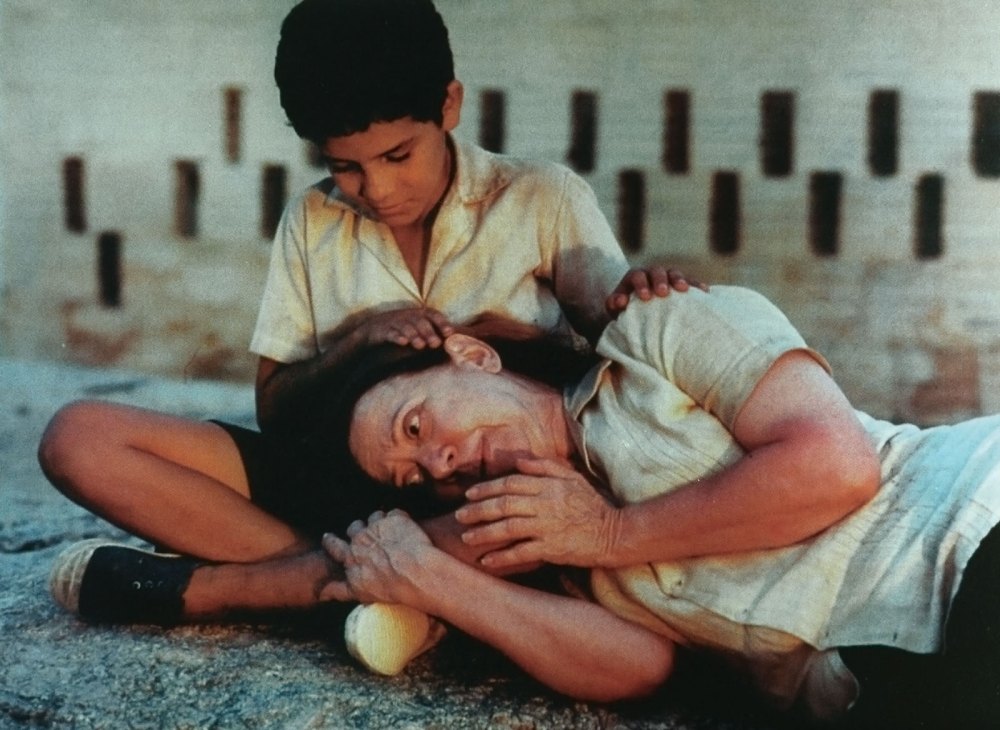
Vinícius de Oliveira and Fernanda Montenegro in Central Station (Sony Pictures Classics)

What of Central Station then? Central Station made quite a bit of money in the US. It was nominated for an Oscar for Best Foreign Language Film and Best Actress. Brazil has more a pedigree on the high-end of world cinema than most would expect. What separates Brazil from most is the consistency of product and, of course, due to the dictatorship there was censorship and artists had to fend for themselves. Now, the government is more active in promoting the arts, the major studios have a presence in the country and so forth. Yet, the fact that Brazil has been up for the Oscar, is the only Latin American nation to win the Palme d’Or (O Pagador de Promessas) and has also scored at Berlin (Elite Squad) is not what is going to dictate the most Brazilian film. Those are just indicators of quality.

Therefore, what’s the quality of Central Station? It has memorable source music, it’s a heart-wrenching drama, it tells a tale of a letter-writer and poor illiterate boy. It crosses that divide and it check off a lot of the qualities I’m looking for in a film representative of Brazil. Not to mention that it’s named after the largest train station in the country, therefore it’s a metaphor for the country and the letter-writer hears many stories from people of all walks of life that are indicative of the country and its people. The blend that exists.
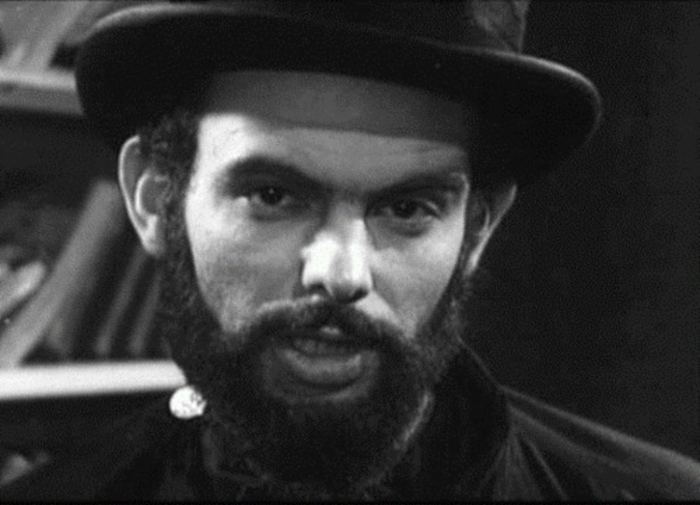
José Mojica Marin in À Meia-Noite Levarei a Sua Alma (Anchor Bay)

I think perhaps what is most important about addressing this question is deciding why certain films, or series of films, are being selected. It truly becomes a bit existential for me (and a tad corny) because the search is where the value is. Take for example the Coffin Joe films, after having seen a box set of his works I watched the documentary about him. In that film his frequent screenwriter made a very astute observation, which is that José Mojica Marins did something he thought was impossible: he created a Brazilian horror personage. All the other archetypes are decidedly American or European but this blend of religion, existentialism, patriarchy, propagation and misogyny is the perfect Brazilian horror type. In one singular, virtually indestructible entity Marins encapsulates and exaggerates virtually every possible aspect of the male psyche in Brazil and twists it to horrific effect. Does this make his films the most Brazilian? It’s not entirely out of the question. It certainly makes his films worth mentioning here, but hearkening back to how I introduced this question; no, I wouldn’t show someone Coffin Joe and say “This is Brazil.” I would show them Coffin Joe and say “This is horror” though.
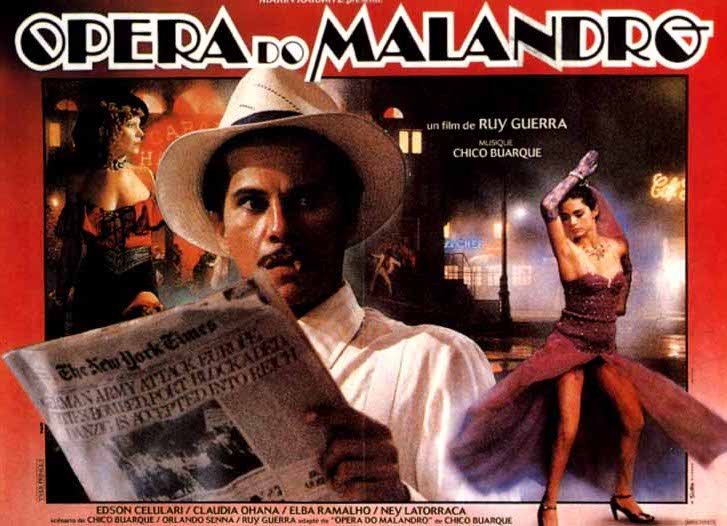
A Opera do Malandro (The Samuel Goldwyn Company)

Now, with regards to the aforementioned regional aspect to the country, I and most my family have our roots set in Rio de Janeiro, though we’ve since scattered quite a bit. With that in mind, most of us recognize and appreciate the musical diversity of the country, but our affections are usually for Samba and MPB (Música Popular Brasileiro) above all else. Few artists represent these genres and Brazil as well as Chico Buarque. That brings me to A Opera do Malandro, which is a musical based on an album he wrote. It wasn’t Buarque’s only foray into musical entertainment, he and many stars wrote a version of the Town Musicians of Bremen (‘Os Saltimbancos’) that is a standard. Yet, here his tale is a cinematic adaptation, period piece, a sort of Brazilian noir, which represents a kind of Brazilian, (the Malandro), akin to but nor quite a wise guy back in a similar era here. So it doesn’t quite pass the universality test.
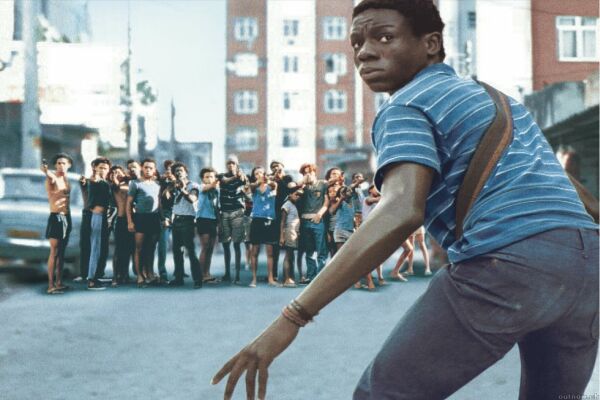
Alexandre Rodrigues in Cidade de Deus (Miramax)

Perhaps, the most accomplished work in the history of Brazilian cinema is City of God. This is a film that was a hit domestically as well as internationally, it earned box office success and critical acclaim. When writing about it I have likened it to the great films in history. Again this selection isn’t about greatness but representativeness. So while this film and the Tropa de Elite (Elite Squad) movies are great dramatizations of societal problems and brilliantly map out “How’d things get this way?” they don’t paint a portrait of all of Brazil, which I’ll admit is hard to do, but as endemic as corruption in police and politics is, and as large as trafficking and crime syndicates in favelas have been, they are localized stories cinematically. So we move on to other choices.
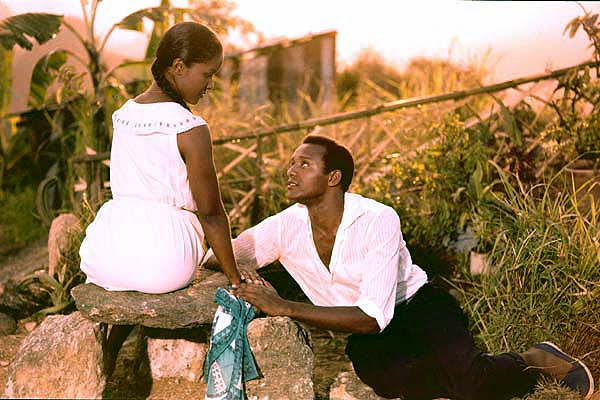
Marepessa Dawn and Breno Mello in Orfeu Negro (Janus Films)

Perhaps, some symbolic stories are the last two that need to be discussed: Orfeu Negro (Black Orpheus) and Dona Flor e Seus Dois Maridos (Dona Flor and Her Two Husbands). Now, the former has had international success. However, it is a co-production with France, which I could even let slide but the fact of the matter is its the transposition of a Greek myth to (at the time) modern day Rio. Therefore, as Brazilian as it is with Carnaval and Samba Schools, it’s still rather European too. As for Dona Flor, its incorporation of Magical Realism and its colonial/post-colonial commentary made indirectly through her husbands and the fact that it’s based on a novel by one of Brazil’s greatest authors (Jorge Amado) make it a great candidate. However, Amado is Amado. As much of the director’s voice as can be added is but if you know anything about his work any of them bear his mark a bit too much to be truly emblematic of a nation in the encompassing sense I’m trying to choose said film within, which rules out any films based on Nelson Rodrigues‘ plays.
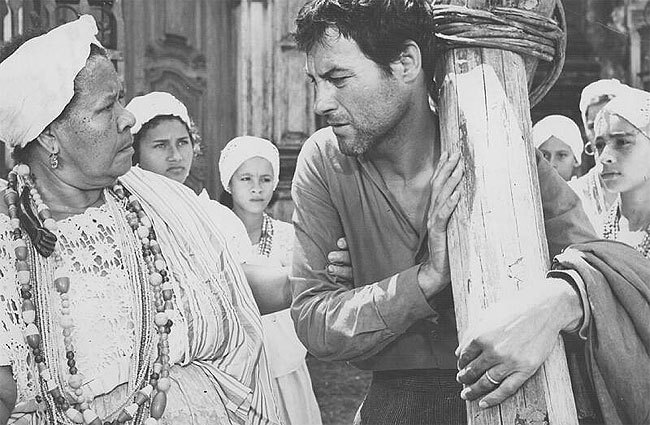
Leonardo Villar in O Pagador de Promessas (Lionex Films Inc)

So even as I began to outline and write this piece I realized there are big films from Brazil that I have not seen. At least two would be candidates for this honor The Given Word (The Given Word) and Menino de Engenho (Plantation Boy). There are likely others as well but those two are likely the ones with a universal quality combined with indigenous uniqueness that would qualify it here. For now, based on what I’ve see it’s Central Station, but I’m quite eager to continue searching and if you have any suggestions yourself please feel free to comment below!

Rewind Commentary- A Home Video Trend I Hope to See Continue

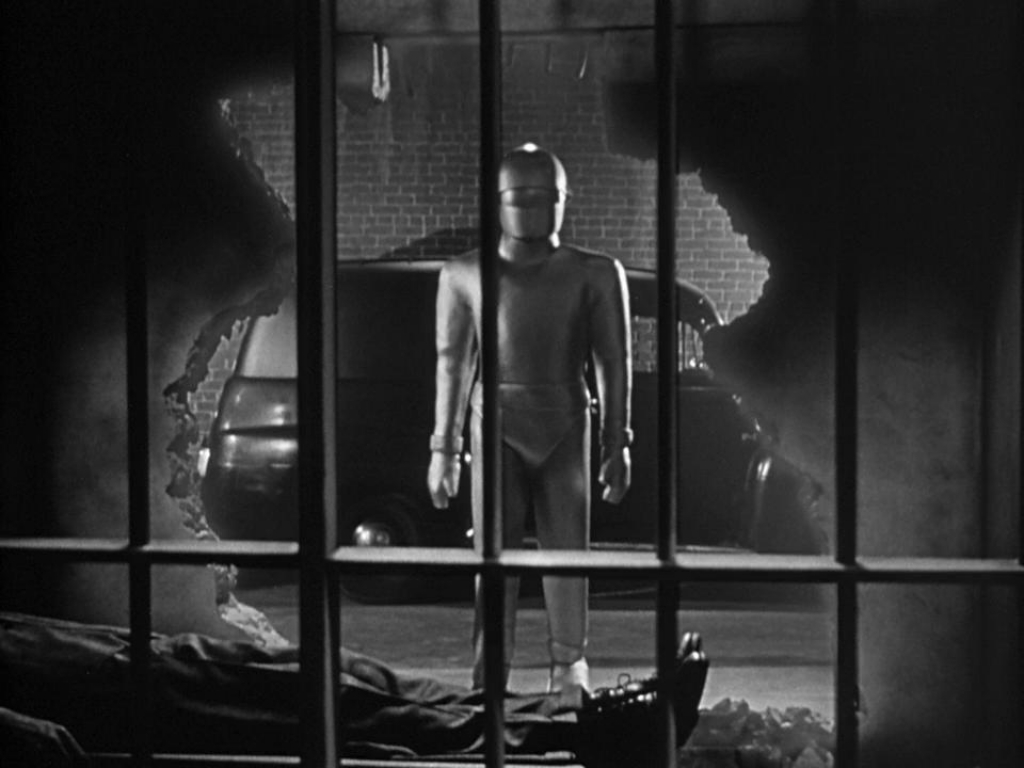
The Day the Earth Stood Still (20th Century Fox)

As those who know me, and if such a person exists, cyberstalk me, know I created this blog after writing on another site, which shall remain nameless, for a while. The point is, I have material sitting around waiting to be re-used on occasion I will re-post them here. Some of those articles may have been extemporaneous at the time but are slightly random now, hence the new title and little intro, regardless enjoy! And in this one it’s something I haven’t seen followed through.

Recently The Day the Earth Stood Still, the remake, was released on DVD. I did not see the movie. It was one of those instances where I saw no need for the film to be rehashed. How the work of the fantastic Robert Wise could be modernized or improved upon was something I never understood.

How an intelligent science fiction classic could be turned into something that looked like Independence Day turned my stomach. It follows a pattern in film and society, which I will likely comment further on in upcoming columns, that what exists just isn’t good enough. The permanency of film, which I think is part of its beauty, just doesn’t cut it. People don’t want to see The Day the Earth Stood Still from the 50s…or maybe there is hope. Maybe we’re just not discerning and we’ll see whatever slop the studios throw in front of us.

In releasing its DVD of the remake Fox has included, at no additional charge, a copy of the classic version of The Day the Earth Stood Still. This is a marketing strategy I could deal with, and knowing this is part of the scheme ahead of time I might not be as averse to the rash of remakes.

Now don’t get me wrong I don’t believe there’s altruistic intent in this move. They want to appease disgruntled fans and try to sell DVDs. Why not have it both ways though? Why not always do this? If you’re going to remake, update, re-imagine, reboot (call it what you will) a classic and introduce a new audience to it, raking in a ton of cash regardless, why not show them where the idea came from. After all as a studio, Fox in this case, both films are your product, so why not promote both? As a studio you are not a Johnny Come-Lately looking to hock electronics for the ADD generation you have a veritable arsenal of product ready-made at your disposal so put it out there, enlightening people on film history and commerce can go hand-in-hand just look at Turner’s Forbidden Hollywood deal with Warner. These are films that only really have historical relevance but are now exposed, packaged and available for purchase.

Remakes won’t stop but at least they can start to serve some purpose aside from just generating income from a public unaware or unexposed to the source material. Hopefully, this title won’t be the last to be packaged this way.

Book Review- Asterix and Obelix: The Book of the Film

Asterix and the Vikings (M6 Films)

Whenever possible I always like to address what the grain of salt is that my reader should keep in mind when reading a piece. In this scenario the grain of salt is: I like reading but I don’t as much as I should, and it’s likely impossible for me to read as much as I want to. So my experience is a little lacking but there’s another caveat here and that is this: this is essentially a novelization with a twist.

Now, novelizations are a bit passé and if I recall correctly I’ve only ever read a few. What was interesting and irresistible here is: first, I was at Disney World when I spotted it. Second, it’s Asterix and an animated film, which I said is where the franchise should go (little did I know it had been there before).

Now, it’s a hand-drawn (in terms of style if not technique), 2D film and that’s fine with me. I’d still love to see these characters and others get the motion-capture treatment as Tintin truly was a huge step forward for the technology to me, far greater than Rise of the Planet of the Apes.

Regardless, the fact that this film is animated means there are stills and illustrations in the book and it gives you a fair glimpse of what the film is like and that’s the idea: to conquer viewers for the film through another medium and this film succeeds in that task.

The images are plentiful, fairly well-selected and importantly are chasing the text, so the pictures don’t forecast the text but reflect it an allow the book to tell the tale.

As with any Asterix title, there are laughs to be had but most of it does come through the prose, which is impressive since the pictographic nature of the usual tale Uderzo and Goscinny tell is somewhat altered here.

The story also runs about as long as a typical Asterix tale 45 pages or so, but the bonus is that there are character, sketches and other making of illustrations and text that give you insight into the making of this film.

It may not be available on region 1 DVD but where there’s a computer there’s a way and this book has certainly made me want to seek this film out. Mission accomplished.

Asterix & Obelix (Clement)

Rewind Review- The Last Song (2010)

Miley Cyrus and Liam Hemsworth in The Last Song (Touchstone Pictures)


As those who know me, and if such a person exists, cyberstalk me, know I created this blog after writing on another site, which shall remain nameless, for a while. The point is, I have material sitting around waiting to be re-used on occasion I will re-post them here. Some of those articles or reviews may have been extemporaneous at the time but are slightly random now, hence the new title and little intro, regardless enjoy!

A film like The Last Song is one that seems innocuous enough, as the Brazilian phrase goes “sugar-water,” such that you think “What’s the harm?” You may think that’s true enough but the problem is that this film falls into plenty of common traps and makes next to no attempts at an uncommon escape.

One of the larger issues facing this film is the overly-convenient inter-connection that exists among the characters in this small coastal town. There is a screenwriting axiom which states that there will be the occasional character that insists on his or her presence within a given story, however, in this film there are characters like Blaze and Marcus who are insisted upon and don’t always fit logically or narratively in the situations into which they are thrust.

Therefore it should come as no surprise that the only relationship the film really consistently works to build is that between Will (Liam Hemsworth) and Ronnie (Miley Cyrus). It is the only one that builds realistically. For example, Ronnie and Blaze become very fast friends, too fast in fact and in seemingly one of the only things in this film done visually.

Yet even this relationship has its struggles in making itself be narratively relative and intriguing. For example, first Ronnie is very slow to let her guard down with Will. Which if she was always anti-social would make perfect sense, but then we just discussed the quick and quickly regrettable union with Blaze. Then there is also the fact that she not only takes the first opportunity to distance herself from Will but also after the relationship has gone further and deeper gives him no chance to explain himself and throws it all out the window. Granted it’s the kind of separation needed in such a tale, it’s just too sudden and this is an incident where you can and should stretch it out.

The film gets off to a slow start due to the fact the characters that are very broadly drawn and in vague situations made vaguer by the situation they are in. At the beginning everyone has baggage but no one opens it for far too long, if you’ll forgive the metaphor. Instead you get a teenage girl who is just angsty and a divorced dad who is merely aloof and out of touch with no other background information for far too long.

Thus, the flatness of the story in many ways does not help some of the performers at all, particularly Miley Cyrus. Especially considering that The Last Song, which the film talks of is not one she sings and this just a marketing ploy basically. Her performance is not awful but is nothing memorable or to write home about and could’ve just as easily been anyone.

The rest of the cast manages. Liam Hemsworth is easily leading man material and could do more with better material with which to work, having said that he does help to lend some urgency to this trite relationship. Greg Kinnear does well with this part and it’s a reminder of what this former Talk Soup host can do and perhaps that he should not just be known as the “Grape-smuggling” coach in The Bad News Bears. Most impressive in the film is Bobby Coleman, best known to some as the title character in The Martian Child, who plays the younger brother in this film and delivers a very compelling performance. Towards the end he does quite a bit of crying and considering this is his second tear-jerker style movie it can now be said with no exaggeration that his abilities as a crier now rank amongst the all-time greats, rivaling even Bobs Watson.

The film can’t make it through a seemingly simple denouement without tripping up either. Without spoiling, you have dialogue where the visual suffices and the change in previously established characters acting as a catharsis. Even with a relatively simple end this film doesn’t know how to play it.

There is nothing different and unique here and certainly not the best the genre has to offer.

3/10

Review- The Lucky One

Taylor Schilling and Zac Efron in The Lucky One (Warner Bros.)

When you have either a romantic comedy or even just a flat-out romance there will be several things you expect and very little that will surprise you. There’s not anything wrong with that, as with almost any film it’s not about the final destination but rather the journey there. Sadly, there are some issues that mar the journey in this film, which is otherwise enjoyable with likable characters for the most part.

I don’t have a great deal of experience watching Nicholas Sparks adaptations, I have only previously seen The Last Song, however, it doesn’t take long to see what one’s formula is. An any writer regardless of what your tastes are have their preferred genres and themes and certain similarities in their voice and narratives. So I was expecting certain things but I also am not yet fatigued by these adaptations, as I’ve not had to see all of them.

Now the first concern is one I can forgive, but again it’s about execution. The film tells the tale of a Marine (Zac Efron) who by chance finds a photo while in combat, his being distracted by it saves his life and it ends up being a good luck charm. Upon his return he is determined to find the girl in the photo, after failing to find out who it belonged to, and thank her. Now, we all know he won’t be able to say anything right away, that’s not usually how these stories work (it’d be a tremendously interesting experiment though) but it’s how he’s not allowed to say anything that’s really bothersome. And that’s on the heels of a pretty good and fluid sequence that illustrates some of his battlefield experiences, his search for the photo’s owner and his struggle to re-adjust to a life at home.

So after a surprisingly good and cinematic start the bungles come into play. However, as I said there are certain expectations and the cat having his tongue was one of them, at that point it’s just a minor irritant. The biggest overriding issue of the film is the ex-husband (Jay R. Ferguson) both his character and his interpretation thereof. Not only is it comedically broad to start but then it gets more real and natural as the drama of the tale intensifies, so not only does it start cartoonish but it doesn’t stay here, so it’s also inconsistent. Not to mention the fact that a psycho ex, who is not only an intimidator but a cop is so old and expected. There’s enough conflict inherent in the situation that this externalization is an exaggeration. There can be an ex, he can be jealous but it really is going above and beyond such that it detracts from the end product greatly. Most of the worst scenes in terms of writing and flow are the ones he’s in, the movie picks up steam again and then right on schedule he arrives and then it’s sigh, eye roll and sit through it.

His precipitously asinine behavior extends the climax of the film unnecessarily, not that the resolution of the film is perfect. There’s a slight monkey-wrench thrown in granted but the estrangement prior to the happy ending is really annoying in how it unfolds and also prolongs matters. Suffice it to say the amount of explication that Logan (Efron) is allowed shouldn’t really have occurred if we’re to have the standard “I’m so mad at you scene.”

Now every time I started one of these paragraphs I was intimating that “It’s not all that bad” but not really discussing that. And it’s not all that bad, really. It gets pretty good sometimes and then something comes along and messes it up. Most of what makes it good, when it is, are the actors. In many cases they likely breathe more life into fairly standard characters than they should have a right to so they ought to be applauded for that. Zac Efron is a very good romantic lead, he does play a soldier at all times but slowly but surely, with a bit of subtlety reveals character and emotion; Taylor Schilling certainly gives it her all and is always real; Blythe Danner adds necessary charm and sass to the film and great deal of comedy and Riley Thomas Stewart, as Beth’s (Taylor Schilling) son Ben, is a naturally gifted young actor who plays a rather multi-faceted, normal yet misunderstood by his peers kid.

Ultimately, I liked the characters and the actors enough that, yes I did invest in what became of them, even though it was a seemingly foregone conclusion, however, with so few events that had a lot of weight in terms of whether the film sink or swam I just couldn’t get over the couple of glaring issues it did have.

5/10