Mini-Review: Excision

Introduction

This is a post that is a repurposing of an old-school Mini-Review Round-Up post. As stated here I am essentially done with running multi-film review posts. Each film deserves its own review. Therefore I will repost, and at times add to, old reviews periodically. Enjoy!

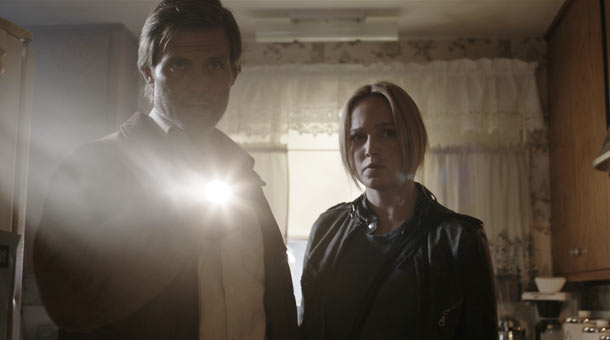
Excision

What is most successful about Excision is that it is a study in character from the inside out. Which is to say that the fantasy/daydream segments in this film may be too numerous, but the purpose they do serve is to show how the inner-monologue of a disturbed, delusional character come to the fore and affect her everyday life. There are a few dichotomous splits in character: a struggle between adoration and mutilation (both their own versions of body worship), a fight against authority, a struggle between a libertine attitude and a theistic construct. Perhaps, what’s most intriguing about Excision is watching the journey, granted I did figure where the journey would end at some point, but it seems like a basic virginity plot with a very socially awkward lead, but as it progresses you see so much more is going on here. Through all the serious and horrific observations you make there are also some laughs to be had, and many great performances notably AnnaLynne McCord, Traci Lords, Roger Bart, Ariel Winter and Jeremy Sumpter.

8/10

Short Film Saturday: Bedfellows

Introduction

No, Short Film Saturday is not over. When scheduling in advance I had horror films slated for the 61 Days of Halloween slot, and wasn’t watching many other shorts so there was a hiatus. When I watch some more I’ll keep the schedule filled. Enjoy. 

Bedfellows

At this point it’s likely you’ve discovered this film. However, one of the issues that the Internet presents is that “If it’s not new, it’s not worth it” seems to be the mantra. This is a highly effective, creepy short worth your few minutes.

Mini-Review: [REC] 3: Genesis

Introduction

This is a post that is a repurposing of an old-school Mini-Review Round-Up post. As stated here I am essentially done with running multi-film review posts. Each film deserves its own review. Therefore I will repost, and at times add to, old reviews periodically. Enjoy!

[REC] 3: Genesis

This is a prime example of having to go where the movie takes you and not judging it based on what you wanted or expected it to be. I have already expressed how much I love what [REC] 2 did for that series. When you hear that this one is going to be a prequel you assume, “Great, it’ll be about the patient zero.” The connection is more tenuous than that. However, what you do get in this [REC] tale is humor, great horror, action, effects and gore and more theological blanks filled in than before. Whether or not part 4 can, and will, be the conclusion this series needs/deserves remains to be seen, but this film is what it wants to be: a very strong, fairly stand-alone piece that contributes to a larger narrative.

8/10

Shyamalan Week: Redux Review – The Last Airbender

Introduction

When this review was first posted on The Site That Shall Not Be Named, I spent far too many words on reacting to the reviews of others. Of all the reviews I’ve written it’s one of two I lamented most. The other does not bear rewriting here because the less thought spared to that film the better. However, with this film seeing as how I was trying to write a minority, albeit not staunch defense of it; I failed that aim by trying to counter arguments. Unless, entirely relevant I dislike comparative analysis of films as a shortcut to writing a review. If that’s the aim it should be a separate piece. Argumentative points or analysis of mass reaction are made for op-ed pieces not an appraisal of the film itself. Therefore, I present to you now an edited version of that review which internalizes, and distills it all to what I thought of the film and nothing else.

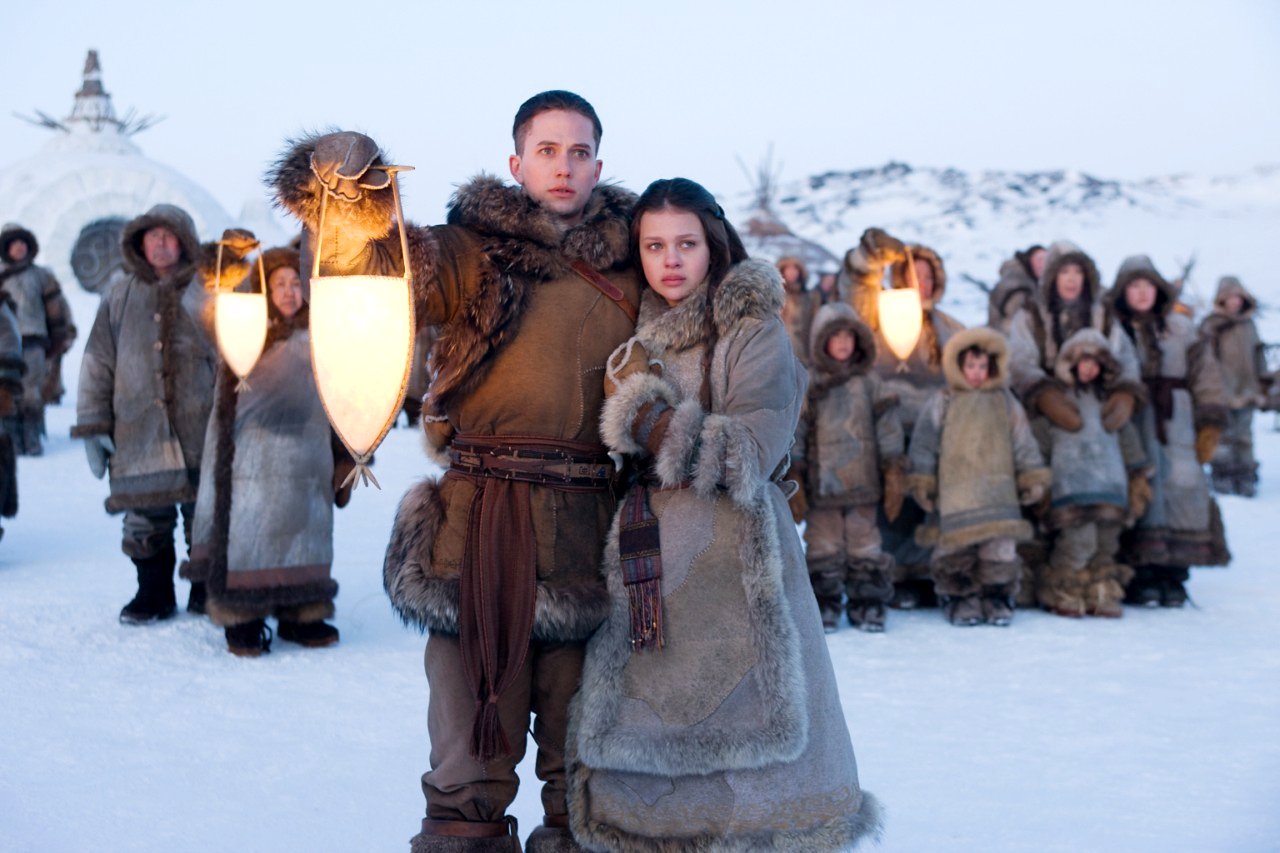
The Last Airbender (2010)

The Last Airbender (2010, Paramount)

This isn’t a complicated movie and moves briskly. A film can have a slow pace if that is the appropriate pace for the narrative being told, this film works with the pace it has and does not seem to be extraordinarily quick-moving and there are peaks and valleys in the emotional ebb.

I never saw the TV show. I don’t care if I do but I liked this. One can have a preference for one or another but ultimately a film is its own work. How much it used or discarded of the original is ultimately a debate that’s academic, and ought not affect one’s interpretation of what is presented. On that note there was a flashback I was begging Shayamalan for early on the film and it was delivered at the climax and it was better and more well-placed where he put it and quite emotional. So sometimes he does know best.

One of the more enjoyable elements of the film was that it was a essentially a simple through-line which was not burdened by unnecessary complications just necessary information.

The Last Airbender (2010, Paramount)

As for the dialogue, it does slip into the unforgivable zone on the rare occasion. It serves a function and moves the story along. This is no worse than Mr. Lucas, who himself has referred to his dialogue as “wooden,” and I always referred to as “functional” as it did what it needed to
.
The effect of the performances on the film overall, as is the case with most motion pictures, is nominal. It’s true Jackson Rathbone is better in Twilight than here but there are some cornerstones here like Dev Patel and Shaun Toub. Meanwhile, the protagonist, Noah Ringer, isn’t asked to carry too much of the load. Most of the time he is “bending” (performing martial arts) as opposed to speaking. Should the series continue he will be able to develop his acting skills not unlike the Harry Potter cast who were very raw and unpolished when they started.

As for the 3-D, it wasn’t shot in 3-D, so don’t watch it in 3-D. I saw it in 2-D and it looked fantastic. All you really need is good cinematography, which this has and the production design is absolutely out of this world in its splendor and brilliance. Philip Messina deserves special recognition for his work here (Note: in December I will likely cover some BAM Awards oddities through the years. This was one of my more lamentable snubs). The same goes for Judianna Makovsky’s costumes. The score, as is typical for James Newton Howard, is wonderful.

The Last Airbender (2010, Paramount)

What I liked here is that you saw M. Night Shyamalan go to a different place. I first became an admirer of his after seeing the vastly underrated Wide Awake, which was actually his second feature. After he did the The Sixth Sense and it was one of the biggest sleeper hits of all-time the burden of expectation fell on him. While he enjoyed(s) making “feature-length Twilight Zone episodes” it became kind of a game. “What’s the twist?” or “What did you think of the twist?” as opposed to “What did you think of the movie?” About the only thing I did appreciate about The Happening was the fact that he tried to monkeywrench his own formula and deliver a tale with no easy answer. As is the case with many works of fiction like that it’s hit-or-miss. Here he finally bit the bullet and went on a full on departure and for the most part lost himself in the story and didn’t make it your standard Shyamalan aside from the expected cameo, which is a lot less subtle and welcome than the “Find Hitch” appearances he is referencing.

Overall, though flawed, I thought it was a successful step in a different direction for the director (Note: mind you this was his first feature after The Happening.

7/10

Mini-Review: The Pact

Introduction

This is a post that is a repurposing of an old-school Mini-Review Round-Up post. As stated here I am essentially done with running multi-film review posts. Each film deserves its own review. Therefore I will repost, and at times add to, old reviews periodically. Enjoy!

The Pact

This is the kind of movie that will be referred to as a slow burn. The slow burn in the horror genre, the gradual but consistent build-up, has become more popular as of late. However, like any technique or philosophy it is not inherently good or bad. What I believe is that if you’re going to take this approach you have to take the escalating events to a fairly wild and unpredictable place. The stakes and incidents continue to increase and just when you think you have the film pinned down it expands.

The films imperfections, barring a seemingly nonsensical title and a jolt-shock end shot, are mainly that early pace that makes it a tough tale to get into. The performances are inconsistent, but the story does just enough to buoy it. How much each individual enjoys the film will likely vary on his or her patience, and their embracing or rejecting of the twists.

6/10

William Wellman Blogathon: Night Nurse (1931)

Introduction

This is a post for the William Wellman Blogathon hosted by Now Voyaging.

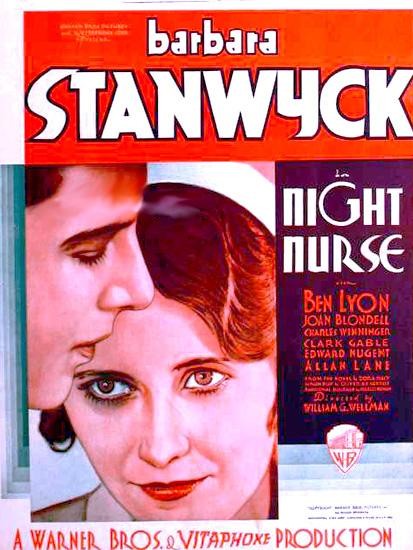
Night Nurse is a film that I would not have heard of if not for my reading Pre-Code Hollywood. Having read that I decided to get the Forbidden Hollywood volume that featured the highest number of intriguing-to-me titles on it. One of the foremost of those films to seek out was Night Nurse directed by William A. Wellman.

Perspective on Wellman from One of His Actors
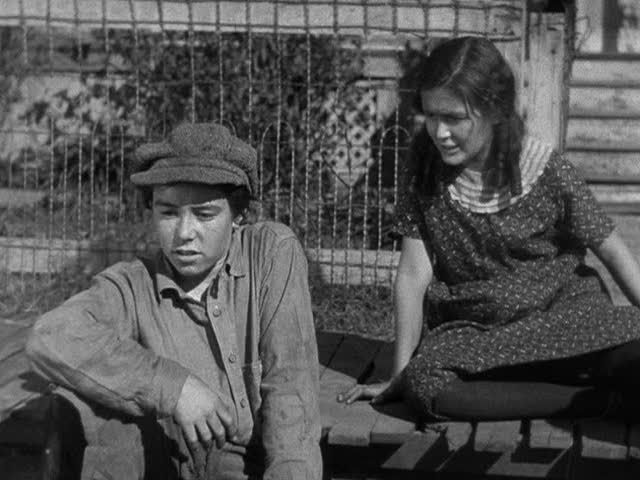
The Public Enemy (1931, Warner Bros.)

Frank “Junior” Coghlan in his autobiography They Still Call Me Junior discussed Wellman based on his experience with Wellman on The Public Enemy, and it’s quite insightful:

This unusual man had the nickname of “Wild Bill,” which was pinned on him while he was a World War I fighter pilot in the Lafayette Escadrille, the elite group of American aviators who flew under the French flag before our U.S. Army Air Corps was formed.

I believe his nickname was earned because of his daring exploits in the air and from his equally foolhardy antics at the squadron bar after fighter planes were in the hangar for the night.

Wellman was credited with being an ace with this group and the war time experience gained there stood him in good stead when he later directed the blockbuster aviation film Wings.

He broke into motion pictures as a juvenile actor working in The Knickerbocker Buckaroo with Douglas Fairbanks in 1915. From that single acting role he knew he wanted to be a director. He then went to work for the Fox company as a property man and worked himself up to the position of assistant director in a period of four years. B.P. Schullberg, then producing independently for Paramount, gave him the first opportunity to direct.

The multitalented man also directed such diverse films as So Big with Barbara Stanwyck and The Call of the Wild with Clark Gable, Loretta Young, and Jack Oakie. In 1937 he wrote and directed the first, and I think by far the best, production of A Star is Born. This was the version that starred Janet Gaynor and Frederic March, for which Wellman won the Academy Award for his collaboration on the original story.

Wellman had a way of looking right through you, with one eyebrow cocked, as he directed, yet at times he could be very tender. In many ways he reminded me of my early days director hero, Marshall “Mickey” Neilan.

So Wellman, albeit for a short while, was a young actor which is interesting to note as in both his credited and uncredited work he did direct children on a few occasions: the aforementioned The Public Enemy, Night Nurse, Wild Boys of the Road, Viva Villa, and The Adventures of Tom Sawyer, to name a few.

Also interesting to note was that his final film was Lafayette Escadrille. Fitting.

Night Nurse (1931)
Night Nurse (1931, Warner Bros.)

As for Night Nurse, the aforementioned Pre-Code Hollywood offers a good introduction to it:

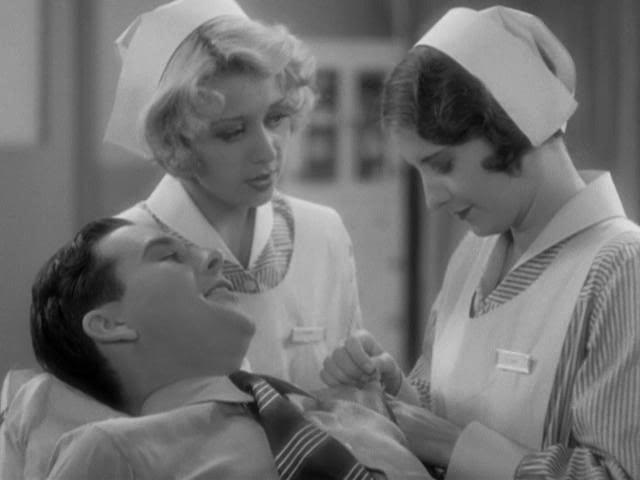
The uninhibited Night Nurse is the most cynical of the pre-Code excursions down hospital corridors. Directed by William Wellman from the novel by Dora Macy, the medical melodrama follows the rounds of spunky nurse Lora Hart (Barbara Stanwyck), who uncovers a plot by a wealthy society doctor to starve two children to death in order to seize their trust fund. Along with evil chaffeur Nick (Clark Gable, clad in black), the doctor keeps the mother hopped-up on drugs (“I’m a dipsomaniac and I like it!”). Medical ethics are elastic: Lora first meets her bootlegger beau Mortie (Ben Lyon) in the emergency room and agrees not to report his bullet wound to the police. At no point does a cop or judge appear; at no point does it occur to anyone to turn to the authorities for justice. The single force for moral order is the likeable Mortie, the bootlegger, who in the last reel nonchalantly informs Lora that Nick “has been taken for a ride.” The startling coda repays the montage that began the film, the screeching sirens of an ambulance rushing a dead-on-arrival victim to the emergency room. The supine passenger is Nick, the chauffeur, his capital punishment administered not by the law but by the criminal.

Night Nurse is more concerned with telling a story that’s one where the lesser-of-evils wins out, than some of its more Male Gaze-focused lascivious scenes. But much to the chagrin of the Code crime does pay and the justice system is scoffed at to an extent. The bootlegger becomes and aid to rescuing the children.

One of the final ticking clocks in this very brisk film is the need to get the endangered children a transfusion. This the nurse takes upon herself after finding serious lack of ethics and immorality in the medical profession thus far counterbalanced by exaggerated bureaucracy.

Conclusion
Night Nurse (1931, Warner Bros.)

As dour as this film may seem it’s counterbalanced by the innocent hero who still believes in justice and doing what’s right regardless of the circumstance. She’s however not a stickler for the rules, going back again to her meeting the bootlegger.

Even in the film’s opening montage, after a POV shot from the inside of the ambulance, is a tracking shot around the inner-workings of a hospital, it’s a true melting pot where people of all walks of life including a Chinese family wherein it seems only their boy speaks English. It sets out from the beginning to tell a small story of greed (an anti-capital slant during the Depression, especially in the Pre-Code era was not unusual) wherein good can triumph in the often seedy societal tapestry portrayed.

In Wellman’s crowded 1931 filmography (five, count them, five releases) this film and The Public Enemy were consecutive titles. So not only are Coghlan’s insights from around when this film was made but they make an interesting pairing as they tell a tale of the underworld in a society turned on its head. The moral ethical dilemmas here are more prevalent but the criminal activity is still present.

Shyamalan Week: Devil

Introduction

As those who know me, and if such a person exists, cyberstalk me, know I created this blog after writing on another site, which shall remain nameless, for a while. The point is, I have material sitting around waiting to be re-used on occasion I will re-post them here. Some of those articles or reviews may have been extemporaneous at the time but are slightly random now, hence the new title and little intro, regardless enjoy!

Devil (2010)

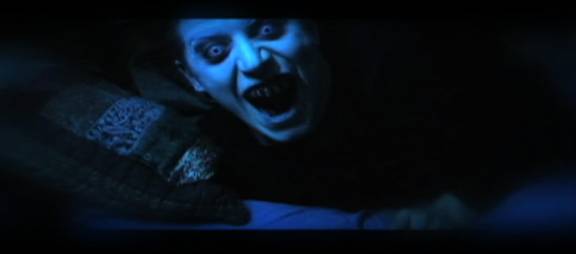
As for this film it’s the first of what is (was) being referred to as the Night Chronicles Trilogy. His impact on this film is a story credit alone so mention of him will be minimal, aside from saying that his stamp can definitely be felt on this story regardless of the level of involvement he actually had. This is a thriller which hearkens back to some of his earlier films and oddly one where you’re not necessarily waiting for a twist but you get it anyway and it does not color the whole film.

The film starts with inverted shots of the Philadelphia skyline. They are shots whose significance is not immediately made known and not overtly explained. They set the tone for a film where something is slightly amiss throughout.
 
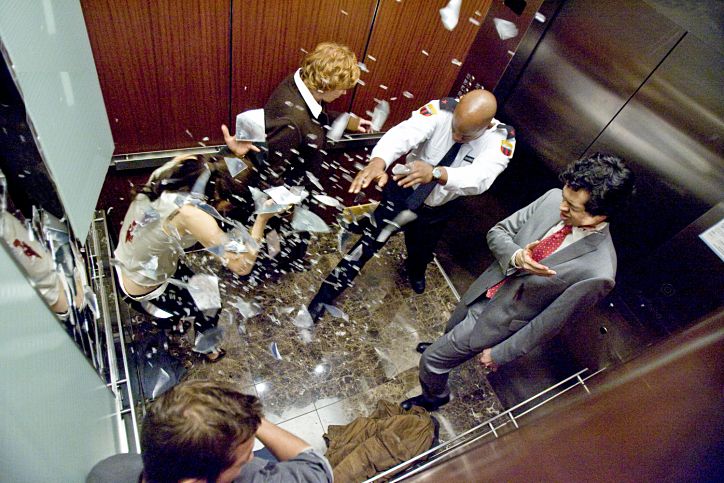
The film does well to keep its tale confined to the elevator as much as it possibly can. Granted to investigate and to try to get to the bottom of the mystery it is necessary to go outside on occasion the fact that so much of the film is contained to that cramped space definitely is a boon to the narrative and aids its effectiveness.

When dealing with a film that is so confined such that its part-absurdist chamber drama it is crucial that your cast be capable of carrying the film and this cast is definitely capable. The core of the cast being: Logan Marshall-Green, Jenny O’Hara, Bokeem Woodbine, Geoffrey Arend and Bojana Novakovic. What is most compelling about not only the story but also their respective portrayals is that at one moment or another they all lead you to believe that they, in fact, are the devil in the elevator car.

Devil (2010, Relativity Media)

The film also employs a narrator, who acts as storyteller. A technique it seems that is a bit on the rebound in film. However, in this case this narrator does not get into the fray too much but merely fills in a few blanks and acts, essentially as the glue binding this tale together. It is this voice that gives a little reason to the tale. Whereas without this narrator it might just send a chill or two up your spine with the narrator there is a point made and something to reflect upon.

With the combination of the opening montage and the narrator setting the stage the tension level in this film is ratcheted up pretty early and rarely if ever dissipates throughout out. There is a consistent feeling of dread which is pounced upon at opportune times and while there are peaks and valleys the highs are high enough to sustain a significant level of interest.

The only things that can be questioned are very minor points which could’ve been addressed by more judicious editing of the footage and story itself. One concern is that while most believe the elevator is malfunctioning due to possibilities that are terrestrial we follow around a janitor. He vanishes from the story for too long. Pieces of his journey to the roof and basement could’ve been spliced in real quick so he wouldn’t disappear for so long after having been a significant player in the early going. The characters also don’t think to use their cell phones as flashlights during the temporary blackouts for far too long.  The introduction of the religious element of the film is a bit clumsy and lastly our protagonist, Detective Bowden (Chris Messina) does a Sherlock Holmes impersonation in deducing the circumstances surrounding a suicide early on that is not only a bit extraneous but also a little hard to swallow.

Devil (2010, Relativity Media)

However, Devil is still a highly effective and well-crafted tale that is an edge-of-your-seat kind of film that is well worth your time.

8/10

Mini-Review: ATM

Introduction

This is a post that is a repurposing of an old-school Mini-Review Round-Up post. As stated here I am essentially done with running multi-film review posts. Each film deserves its own review. Therefore I will repost, and at times add to, old reviews periodically. Enjoy!

ATM

I often discuss the merits of going into a film as a clean slate. I can’t say I went in 100% clean to this film, however, I don’t see that as a detriment here. I found this was streaming, saw it qualified as a 2012 release, and added it to my queue without further thought for a time. One tweet by a fellow Twitter compatriot who disliked it, didn’t give much away, but intrigued me enough to give it a play.

A few things struck me as odd as it pertained to ATM: the first of which is that it does hold interest and a fairly believable premise through a much larger portion of the film than I expected based on what I heard. While I will credit the film for its set-up and a certain degree of cleverness in it maniacal plan, the second oddity is that the most major twist I was way ahead of, and the resolution was one that doesn’t stand up to harsh scrutiny, and the length of the reveal allows you to scrutinize it. It reminds me a bit of Penumbra but with more annoyance and less impact.

This is also a film that inflated its running time to its detriment. It cut out of the closing credits at least three, if not four times, to additional montages hinting at more villainous plots. Such were the cutaways that it bloated the credits crawl (which were slow to begin with) to nine minutes. The film clocks in at exactly 90 minutes with it included. It wouldn’t have saved the film, but it is OK to run less than 90 minutes. It really is. Add to that a very slow reveal, and you have an end that doesn’t end long after the point where the film becomes completely asinine.

4/10

Mini-Review: Cherry Tree Lane

Introduction

This is a post that is a repurposing of an old-school Mini-Review Round-Up post. As stated here I am essentially done with running multi-film review posts. Each film deserves its own review. Therefore I will repost, and at times add to, old reviews periodically. Enjoy!

Cherry Tree Lane

It’s not that the attempt being made by this film isn’t understood or appreciated, it’s just that somewhere along the way it loses the plot. The film deals within a home invasion wherein thugs are really after their teenage son. While it occasionally elicits the desired emotional response, ennui eventually wins out. It tests the limits of voyeurism and fails. It brings existential questions to mind like “Why am I watching this?”

An example of how it loses the plot is by having a fairly standard horror-film jolt-ending which feels tawdry, unearned, and mostly disingenuous. If we’re meant to just bask in the terror of how quickly and nearly irrevocably things change for this family the end should be more low-key and broken. This film by no means wants to be The Strangers, but it reaches wildly for it end when perhaps its prior sin was being unambitious. Perhaps the most enjoyable passage of the film is the set-up where there’s mundane small-talk that establishes character – that’s not good enough because there’s a second and third act where it can’t be compelling enough one way and tries another at the end.

1/10

Mini-Review: The Monitor

Introduction

This is a post that is a repurposing of an old-school Mini-Review Round-Up post. As stated here I am essentially done with running multi-film review posts. Each film deserves its own review. Therefore I will repost, and at times add to, old reviews periodically. Enjoy!

The Monitor

I will freely admit that Noomi Rapace along with the fact that this film is a subdued Swedish horror film were both selling points. I saw The Girl with the Dragon Tattoo series in rapid succession and became quite an admirer of hers rather quickly. Sadly, elevating her global star status was just one of the many failings of Prometheus.

What is perhaps most surprising about The Monitor is not that it reveals twists, and character in wonderfully indirect, yet clear, ways; but that what would be the biggest twist in most films is one you become fairly certain of early on, and I was actively thinking and hoping that “There’s gotta be another one,” and sure enough there are plenty both big and small.

The Monitor is a very interestingly handled narrative that is a great character study not only of the protagonist but of her newfound friend Helge, played wonderfully by Kristoffer Joner.

I watched this on Amazon Prime, but any way you can watch this film would be good.

9/10