Limbo: When Casting Clouds a Point

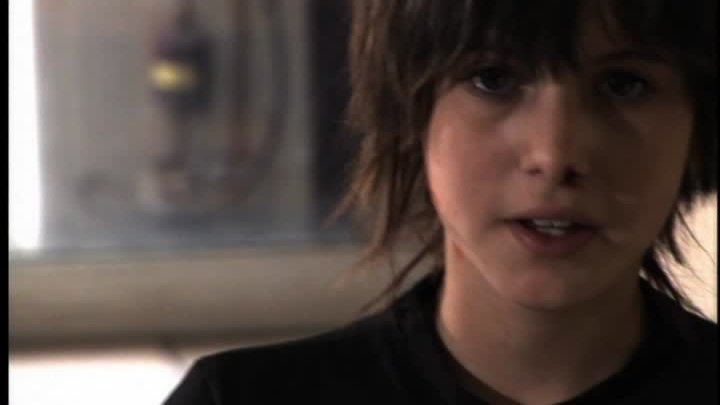
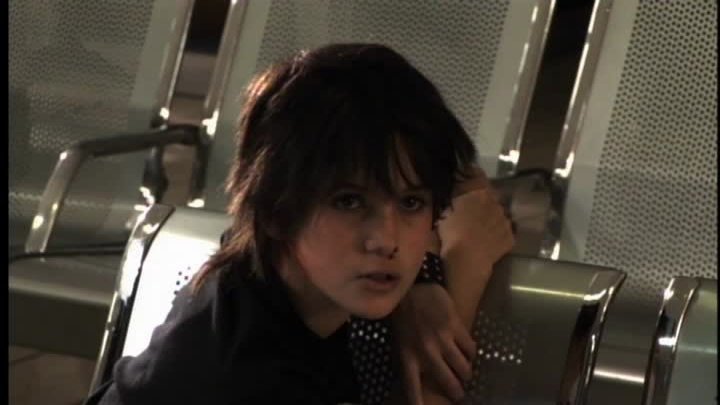
One of the films featured at Philly QFest (when I went) was called Limbo. The tale of a 5th Grade homosexual boy who falls into a delusional world after suffering an accident. Having missed this film upon its initial screening it became a DVD must. However, this film in the end suffers from more than just aesthetic/technical issues.

Those issues are rather abundant: The dialogue is rather repetitive – repeating that “it is limbo” and “everyone has their own” several times seeming to want to make up running time because they didn’t have enough, the video cinematography is uninspired to say the least, the sound is not good – in fact it’s quite bad, the revelation of the significance of the blind man is no surprise. In the end a bulk of the movie is (to not give it away too greatly) like an entire season of Dallas, at some point the lawyer, who is in Limbo with him, takes over and becomes the center of the film and the development of Isao and his driving the story stops completely, the cuts out of the limbo state to his friend’s reaction and the “real world” is jarring more than anything else and only seems to interrupt things.

As if those things weren’t bad enough it is also becomes confusing as a selection for a gay film festival in a couple of ways. The first way in which it manages this is through an exchange between Isao and the nurse towards the end, made even more awkward because she is a Virgin Mother figure, in which she says vaguely “You should give girls a chance.” The film’s message in the end is not one of conversion but at this moment that is dubious and the fact that this film depicts a Mary figure seemingly encouraging a gay boy to be straight is actually the most disturbing rendition onscreen, and that includes Sinead O’Connor’s turn in The Butcher Boy because that was Francie Brady’s vision and he was off-kilter to say the least.

Limbo (2008, Gussi Artecinema)

The intent of this line is softened, but only slightly, a few minutes later. Isao is alive and well with his friend, who tried to kiss him earlier, and tells her “I don’t want to be your boyfriend, but I like you,” and then they kiss. This would be fine if it hadn’t gotten into slow motion, and gone on for so long. There’s no reason for it and it becomes disturbing after a while.

The gaffes committed by the film don’t end there. In the end credits you’ll notice that Isao was played by Fatima Diaz. This fact is not cited on the festival page or on the Amazon listing and not even on the DVD blurb. This is a casting ruse that is completely and utterly unnecessary. The character was not written or played such that a young male actor could not have pulled it off, this is not like Felicity Huffman in Transamerica where the unconventional casting choice worked to a great advantage of the film. It wasn’t made a necessity or even preferable. In the end this little bit of simulacrum not only creates a lesbian kiss where there was supposed to be a friendly one but also makes the homophobia that Isao faced seem almost justified because there isn’t even a boy playing this role. Making it seem like it’s unacceptable for a male actor to play this part. Mind you I don’t blame Diaz in any way, though not spectacular she was only noticeably a girl when she screamed, which at time I thought was an odd ADR choice not a casting one; a casting choice more appropriate for The Crying Game than this story.

Now perhaps director Horacio Rivera was trying to make a statement both in casting and in the lesbian kiss, but what he failed to take into consideration was that that message needs to be trumpeted and said message, if intended, is more likely to backfire when the whole film just fails to work. The bottom line is that it’s a choice too open to the audience’s interpretation and undercuts the message of the film entirely.

Mini-Review: La Sirga

Introduction

This is a post that is a repurposing of an old-school Mini-Review Round-Up post. As stated here I am essentially done with running multi-film review posts. Each film deserves its own review. Therefore I will repost, and at times add to, old reviews periodically. Enjoy!

La Sirga

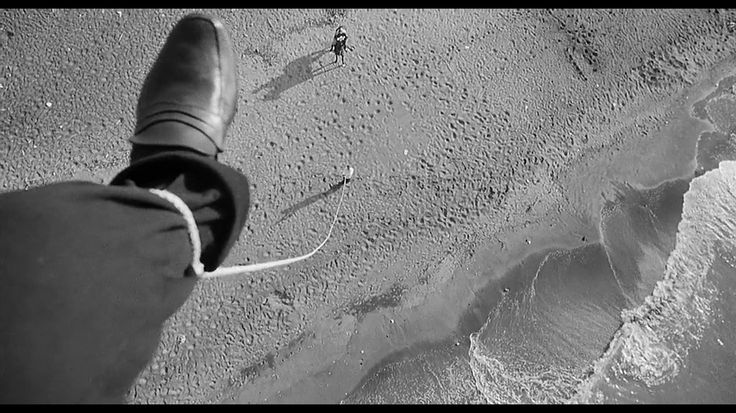
This is a film where much happens beneath the surface. It’s a narrative wherein we also have few, if any, assurances of what occurred prior to the film beginning and what occurs after it is completed. In fact, what can be considered the climactic moment of the film isn’t visible, but rather takes place behind a closed door. There isn’t too much said, but what is said bears thinking about and reading between the lines; as nothing jumps out and screams “Hey, this is important!”

That’s not to say the film isn’t engaging, or that conflict is absent. It’s just that it’s not as engaging as it might be and the conflict is highly internalized. The cinematography of the film is quite spectacular especially in terms of framing. It features some of the most exacting frames I’ve seen since Found Memories. It’s definitely a film worth viewing and considering.

7/10

Review: The Snowtown Murders

The Snowtown Murders

Note: Potential spoiler below. The ending is discussed but not in detail.

Next to nothing in this film works, that’s just the sad fact. I will discuss them with as much brevity as humanly possible and brevity would’ve helped this film. Typically when I’m discussing pace it refers to certain scenes and shots being truncated and rendered more quickly to allow the totality of the film to flow better in this film the first issue you have is that there are scenes of little to no narrative necessity or consequence that not only are allowed to occur but at times repeat themselves (see the bull sessions about stomping out pedophiles).

Characters are very poorly introduced and the population of the tale is too large. Some of the struggles of this film can be attributed to attempting to remain true to the real-life story upon which its based but not excused. A huge cadre combined with indirectly acquired information and at times implied incidents is not an easy road map to success. The protagonist in the tale is a bit too passive such that it would’ve almost been better told from a different perspective especially since it became clear who the perpetrator would be though the film took a while to formally announce it. The score designed to be grating ends up being just annoying. The film also seems to show where it ought not and have restraint where it ought not. This tact adds importance to the MacGuffin and exacerbates the delusional vigilante angle that’s really just a cover for psychosis. Granted that’s important to convey but once demonstrated that needn’t be reinforced.

The film despite all its massive flaws still keeps on a decent trajectory in terms of narrative build but then meanders irrevocably when it should be building towards some sort of concrete conclusion but instead decides it’s shown us enough horrors such that enough is enough, and rather than finding an artistic way to convey the deserved downfall of these people they’ll just give us the information in cards. This is information I could’ve acquired in a web search but I’d have preferred to have seen it now that my time’s already been wasted. Finish the job! Give me the epilogue visually. It’s not quite the slap in the face that the end of The Devil Inside is but considering the start this one had the totality may have been worse.

Furthermore, as if that wasn’t bad enough, I really needed convincing in this film and I didn’t get anything to sway me. I thought of This is England while watching this film which has perhaps an even more vile ‘charismatic antagonist’ but both in writing and performance is far more believable as someone who would be followed perhaps even against one’s will. It seems that things occur and are shown here just because they actually happened and no thought was given to narrative propriety and almost seems deliberately sensationalistic at times and never interesting.

2/10

2014 BAM Award Considerations – October

I decided that with the plethora of BAM Awards-related post towards the end of 2013 and the start of this year it was best to wait to the end of this month before officially recommencing the process.

I will post these lists towards the end of the month to allow for minimal updates. By creating a new post monthly, and creating massive combo files offline, it should make the process easier for me and more user-friendly for you, the esteemed reader. Enjoy.

Eligible Titles

Dracula Untold
Hellaware
Summer of Blood
Mercy
Alexander and the Terrible, No Good, Very Bad Day
Annabelle
Ouija
St. Vincent
The Day the Series Stopped
In the Heart
Abuse of Weakness
Moebius
1,000 Times Good Night
Fury
For a Woman
Cannibal
Finn
The Judge
Gone Girl

Best Picture

St. Vincent
Fury
Finn
The Judge
Gone Girl

Best Foreign Film

1,000 Times Good Night
Finn

Best Documentary

The Day the Series Stopped

Most Overlooked Film

As intimated in my Most Underrated announcement this year, I’ve decided to make a change here. Rather than get caught up in me vs. the world nonsense and what a film’s rating is on an aggregate site, the IMDb or anywhere else, I want to champion smaller, lesser-known films. In 2011 with the selection of Toast this move was really in the offing. The nominees from this past year echo that fact. So here, regardless of how well-received something is by those who’ve seen it, I’ll be championing indies and foreign films, and the occasional financial flop from a bigger entity.

Dracula Untold
Alexander and the Terrible, No Good, Very Bad Day
1,000 Times Good Night
Finn

Best Director
St. Vincent
Fury
Finn
The Judge
Gone Girl

Best Actress

Kim van Kooten In the Heart
Isabelle Huppert Abuse of Weakness
Juliette Binoche 1,000 Times Good Night
Mélanie Thierry For a Woman
Olimpia Melinte Cannibal
Rosamund Pike Gone Girl

Best Actor

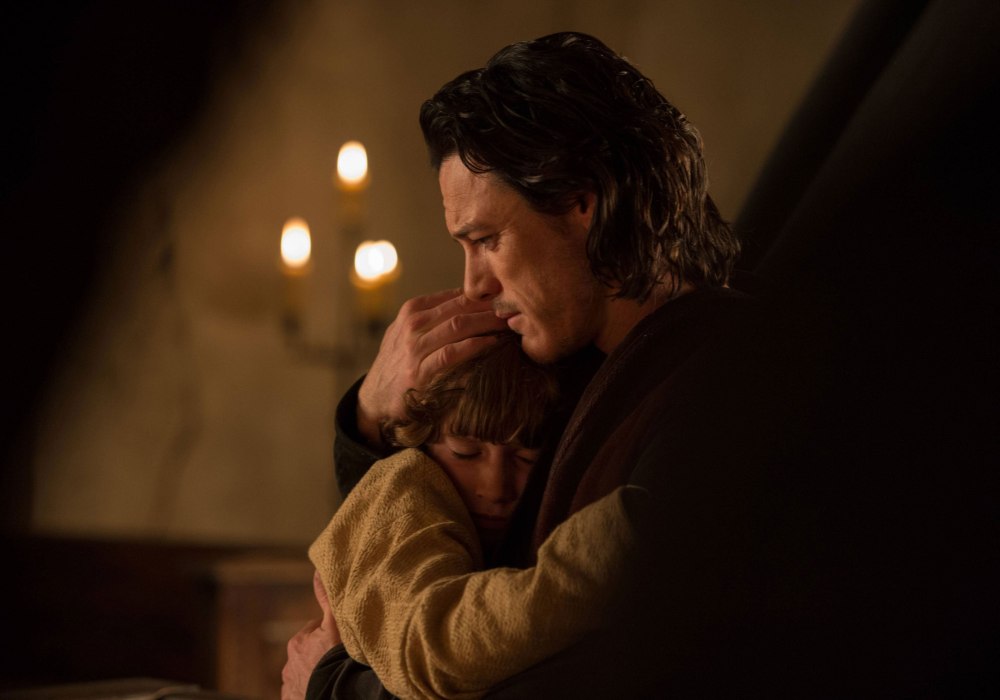
Luke Evans Dracula Untold
Bill Murray St. Vincent
Koen de Graeve In the Heart
Jae-hyun Jo Moebius
Nikolaj Coster-Waldau 1,000 Times Good Night
Robert Downey, Jr. The Judge
Ben Affleck Gone Girl

Best Supporting Actress

Melissa McCarthy St. Vincent
Eun-woo Lee Moebius
Vera Farmiga The Judge

Best Supporting Actor

Youg-ju Seo Moebius
Logan Lerman Fury
Jan Decleir Finn
Robert Duvall The Judge

Best Performance by a Young Actress in a Leading Role

Lauren Canny 1,000 Times Good Night

Best Performance by a Young Actor in a Leading Role

Chandler Riggs Mercy
Ed Oxenbould Alexander and the Terrible, No Good, Very Bad Day
Jaeden Lieberher St. Vincent
Mels van der Hoeven Finn

Best Performance by a Young Actress in a Supporting Role

Emma Tremblay The Judge
Adrianna Cramer Curtis 1,000 Times Good Night
Kerris Dorsey Alexander and the Terrible, No Good, Very Bad Day

Best Performance by a Young Actor in a Supporting Role

Dario Barosso St. Vincent
Art Parkinson Dracula Untold
Joel Courtney Mercy

Best Cast

St. Vincent
Moebius
1,000 Times Good Night
Fury
Finn
The Judge
Gone Girl
Dracula Untold
Alexander and the Terrible, No Good, Very Bad Day

Best Youth Ensemble

1,000 Times Good Night
Finn
Mercy
Alexander and the Terrible, No Good, Very Bad Day

Best Original Screenplay

St. Vincent
Moebius
1,000 Times Good Night
Fury
Finn
The Judge

Best Adapted Screenplay

Gone Girl
Dracula Untold
Alexander and the Terrible, No Good, Very Bad Day

Best Score

Fury
Finn
Gone Girl
Dracula Untold

Best Editing

St. Vincent
Moebius
Fury
Finn
The Judge

Best Sound Editing/Mixing

Fury
Finn
The Judge
Gone Girl
Dracula Untold

Best Cinematography

St. Vincent
Moebius
1,000 Times Good Night
Fury
Finn
The Judge
Gone Girl

Best Art Direction

St. Vincent
Moebius
Cannibal
Finn
Gone Girl

Best Costume Design

St. Vincent
Moebius
Fury
Cannibal
Finn
Dracula Untold

Best Makeup

St. Vincent
In the Heart
Moebius
1,000 Times Good Night
Fury
The Judge
Gone Girl

Best Visual Effects

Dracula Untold

Best (Original) Song

St. Vincent
In the Heart
1,000 Times Good Night
Finn
The Judge

Mini-Review: The Brass Teapot

Introduction

This is a post that is a repurposing of an old-school Mini-Review Round-Up post. As stated here I am essentially done with running multi-film review posts. Each film deserves its own review. Therefore I will repost, and at times add to, old reviews periodically. Enjoy!

The Brass Teapot

This is a film that tells a quirky, fairly originally-spun tale about unlimited riches being made available to a young, struggling couple and the toll that takes on their life. As funny as the film manages to be for a while, it does start to lose its bearings as it moves on. The rules seemingly change on a whim and it builds to a chaotic yet fairly anticlimactic finale.

The film has its moments and its laughs as well as good performances but it ultimately doesn’t keep itself in check and loses its chance to be a quirky charmer as it goes off the deep end.

5/10

Mini-Review: Byzantium

Introduction

This is a post that is a repurposing of an old-school Mini-Review Round-Up post. As stated here I am essentially done with running multi-film review posts. Each film deserves its own review. Therefore I will repost, and at times add to, old reviews periodically. Enjoy!

Byzantium

If one were to just look at the surface of Byzantium you might think it rings a bit too familiar as compared to other vampire-related films of recent vintage. However, when you consider the fact that this film has Neil Jordan at the helm, or if you just simply watch it then you see that surface similarities are merely what the name suggests: superficial. For what Byzantium has in spades are what other vampire narratives all too often lack: backstory, character, emotion, depth, conflict and humanity.

To put it quite simply, the only thing Byzantium does that is a little tiresome is something that’s true to a teenage character, it’s that it rehashes the same conflict over a few times without true progression of the struggle. However, it does move forward and unravel more of the web that these characters find themselves in.

The film is spearheaded by another brilliant turn by Saoirse Ronan and by far the best performance I’ve seen by Gemma Arterton to date. It’s another film that epitomizes the fact that drama is the foundation of all other genres and is intrinsic to building a good horror tale, and this is a great one.

9/10

Mini-Review: A Place at the Table

Introduction

This is a post that is a repurposing of an old-school Mini-Review Round-Up post. As stated here I am essentially done with running multi-film review posts. Each film deserves its own review. Therefore I will repost, and at times add to, old reviews periodically. Enjoy!

A Place at the Table

When one discusses hunger in America there are a lot of seemingly disparate facts that need to be connected so that the roots of the problem are readily understood to all. When No Kid Hungry and other similar charities started to have more of a national presence the dots weren’t quite connecting. That’s not meant to downplay the quality of filmmaking here to one similar to a PSA. I merely mention that to illustrate that some issues have enough layers such that a film such as this one is a necessity. The economic restraints of having and applying for food stamps; concepts such as food deserts, food insecurity; the budgeting of school lunches; the link between poverty and obesity; the dated structure of food subsidies; are all things that cannot quickly be discussed and this film does well to correlate these facts and paint a picture.

However, the film is issue-centric only when needed. As much as it can, it dramatizes these political issues with tales of actual people that personify certain struggles. Thus, the issues are brought home more so than they would be otherwise. It’s yet another documentary that tackles a dangerously large scope but it does fairly well to rein in all the contributing factors. Any who see it will be made more aware and it will likely spur action by many.

8/10

Mini-Review: The Deflowering of Eva Van End

Introduction

This is a post that is a repurposing of an old-school Mini-Review Round-Up post. As stated here I am essentially done with running multi-film review posts. Each film deserves its own review. Therefore I will repost, and at times add to, old reviews periodically. Enjoy!

The Deflowering of Eva Van End

I’ve discussed the fact that I quite enjoy the Film Movement film-of-the-month club. One aspect I’ve mentioned less frequently than the included short films on each DVD release, is the fact that on the inside cover there is usually a statement about the film from both the company and the director of the film. I make it a point to not read either until after I’m done watching the feature. The reason I mention that is because what struck me from the first frame is what Eva’s (Vivian Dierickx) look, her persona; reminded me of was Dawn Wiener, the protagonist of Todd Solondz’s Welcome to the Dollhouse, and as the opening scene played out that notion was reinforced. Those sentiments were echoed in the statement. However, I agree this is its own film because it’s not a myopic view of a world but rather a portrait of an entire family.

Eva is our entry into their world. She gives us our first glimpse of them and thus we see them in a very broad stroke. As Veit (Rafael Gareisen), the German exchange student who turns their world upside down, changes their behavior we learn about them, what their insecurities were and what they try to do to take control of an alter their lives.

It’s a very funny film in both its exaggerated renditions of reality, but also a very real one with dramatic consequences. The characters progress but are not perfect; they remain flawed in the end, but better for the experience. Veit could be the only one who walks through it unchanged. He is what he always is, it’s what the family projects him to be that alters.

Through artful cinematography, editorial finesse and music that enchantingly encapsulates this odd world, there are well-executed tonal shifts and visceral impact that far overcome any minor quibbles I may have. The Deflowering of Eva Van End is a film that paints the portrait of a family far more fully than its title suggest and is recommended viewing if you see it about.

9/10

Review: The Mystery of Happiness

Santiago (Guillermo Francella) and Eugenio (Fabián Arenillas) are longtime friends and business partners. They seem to be as in sync as best friends are when they are children, and then one day Eugenio disappears without a trace. Nothing about the timing of it makes any sense. Disconsolate Eugenio’s wife, Laura (Inés Estévez), shows up seeking to help run the business and find her husband. As they search they want to know what prompted this and how well they really knew him.

The Mystery of Happiness balances elements of comedy and drama, offering insights about life, as well as sensitive touches and laughs much the way last year’s Dos más Dos did, which is also an Argentine film. The main difference being that this film doesn’t begin with a subject matter as inherently humorous and over the top.

While the film introduces in Santiago and Laura comedic foils, but where there is a delicate touch in this film is the way in which it easily introduces a dual examination of relationships of two different types: best friend/business partner and spouse. The way the examination is conducted is also wise: with Eugenio being practically a ghost each deserted party is left to wonder about his/her respective relationship and also give their impression of the other pair.

One way in which this film makes itself a touch unique is through the quirky private eye character that is brought into the fray. Oudukian (Alejandro Awada) is an enigmatic figure who through his unrevealed life experience, and his arcane approach to interpersonal relationship examination steers the abandoned wife and business partner in the right direction. In essence, he acts more like a guide, a guru, rather than a traditional private eye, and the main characters conduct the search. This works fine because it allows the world of this story to stay small and this small mysterious character to stay shrouded.

This film begins with a sumptuous montage of Santiago and Eugenio walking about enjoying various activities. It establishes their seemingly inseparable nature, and also sets a tone for the visual approach to storytelling in this film. As per usual, it sounds ridiculous to laud a film for a visual storytelling approach as it is a visual medium, but the fact of the matter is being dialogue-heavy is a very easy trap to fall into, for comedies especially. In this film, however, many of the key moments are conveyed entirely in visuals: the opening, the montage then mirrored and the conclusion and denouement are specific, important examples.

The Mystery of Happiness is a funny and moving story that finds people in search of answers about relationships they thought they had. The literal disappearance of Eugenio symbolizes the vanishing of stability in their lives and is a classic example of a MacGuffin. The film balances its funnier moments with heartfelt, bittersweet ones. This is occasionally underscored by music which is always brilliant especially Nico Cota’s re-orchestration of “Aquarela do Brasil.” The Mystery of Happiness is now available to stream and on DVD and is most definitely worth viewing if you want to see a mature dramedy that’s not afraid to take things seriously as well.

9/10