In-Flight Movies

I typically see myself as someone a bit caught between times. In certain ways I’ve always been drawn to older materials in terms of film and television, but also seeking out newer ways in which to consume these products as I’ve discussed previously. In an age when there’s any number of ways to access new or recently released films I was surprised that one (at least) had escaped my commentary until recently. This could have to do with the fact that I hadn’t seen one in a while, but what I’m referring to is the in-flight movie.

In my experience there are two different presentations here: the communal screens, where either monitors or projection screens spread throughout the cabin are viewed; or personal screens, which are affixed to the backside of the seat in front of you.

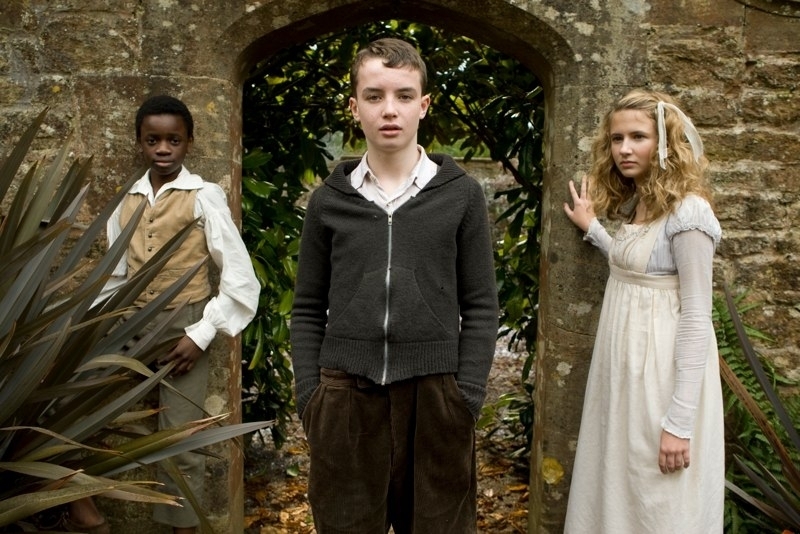
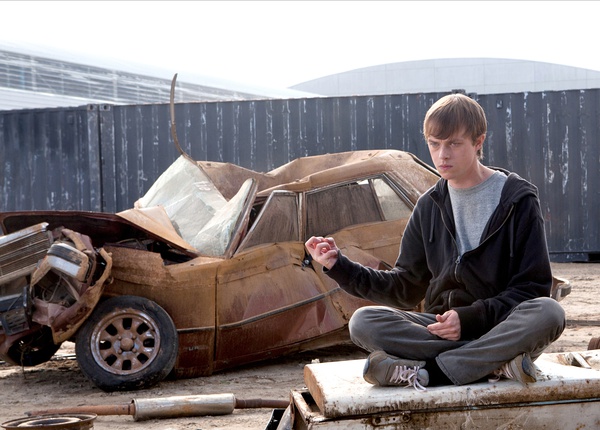
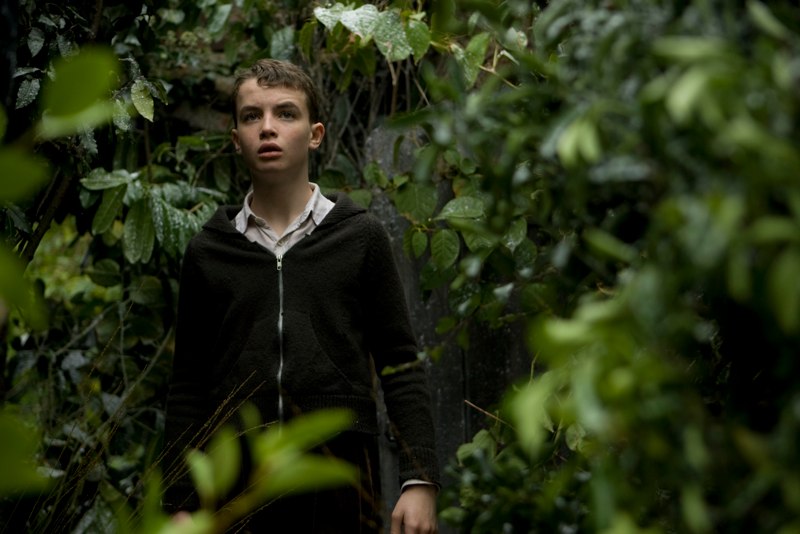
My viewing experiences have usually been better with the latter. Though I’ve experience films this way on fewer occasions, I recall having seen anew and at first analyzed The Sixth Sense and then most recently I saw Chronicle.

Now based on those two I saw better movies in this way but there’s more of an intimacy. You’re still getting sound in a headset but there’s less to distract you from the image on screen when it’s right in front of you as opposed to the lottery of monitors and screens. A big screen on a wall might seem more cinematic, but you have not chosen your seat or your distance from said screen so in that case I’d prefer something a bit more democratically equidistant, that and I’m a front row kind of viewer anyway.

The biggest downside to in-flight viewing is the PA tapping into your headset, which will occasionally cause you to rip your earbuds out in shock not unlike when Dr. Evil screamed into his space-mike in The Spy Who Shagged Me, but other than that it’s a pretty good way to pass the time, much better than most.

The 5 Most Invalid Star Wars Complaints

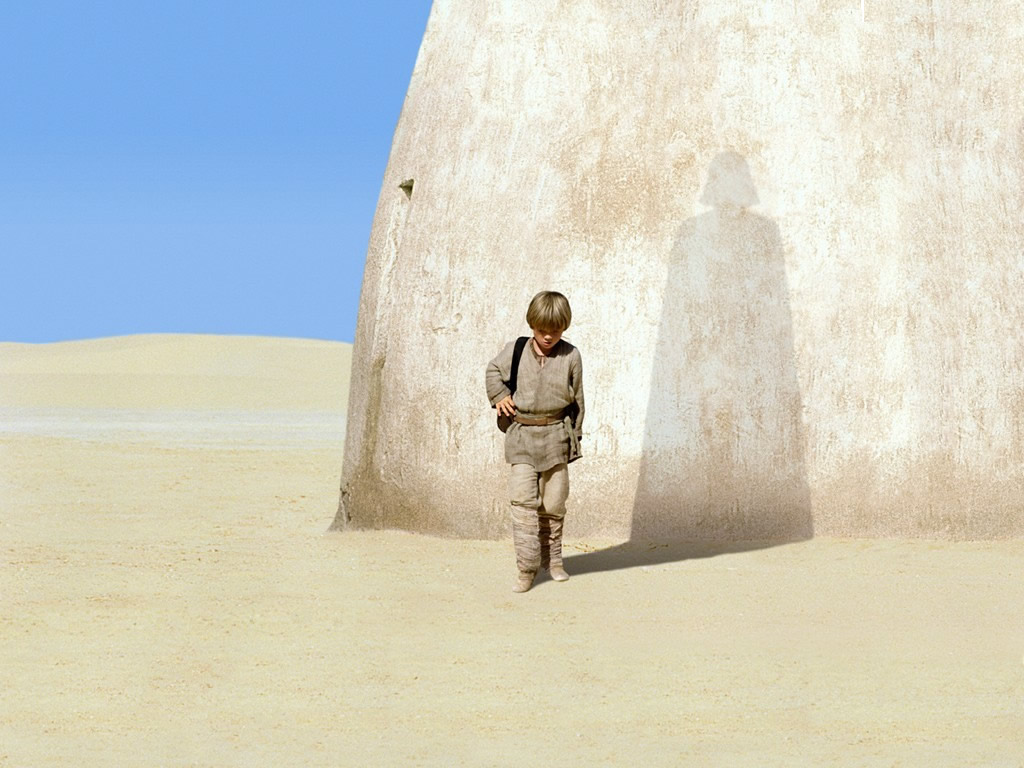
With the recent release of Star Wars: Episode 1- The Phantom Menace in one additional D that has never before been seen there were bound to be many new articles that wrote upon the first film (chronologically) all over again.

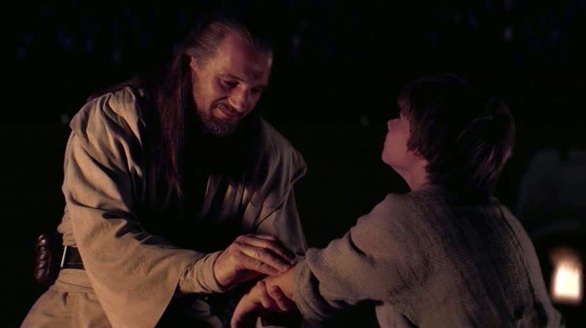
Now, it’s been well-documented that fans and critics alike didn’t have much regard for Jake Lloyd’s interpretation of Anakin Skywalker and this was reiterated in the new articles. However, what struck me as a I read a new piece on old news was that, even in Episode One, much less the entire series, there are far more bothersome things that those of us who are fans can nitpick about. So, since fandom breeds nit-pickery whether one likes it or not, I have decided that there needs to be some priority set to this nitpicking. Namely, the focus will be on things ought not be nitpicked when you think about it.

I have asked Joey Esposito and Tom Sanford V to contribute their own lists as they are bigger die-hards than I, I’ll link to those when they’re up. I provide a sort of detached-weirdo perspective as the first time I truly saw the trilogy was in order in 2005 after I had seen Episode 3.

So enjoy (or become enraged by) my opinions below.

5. The Alternate Versions

This one is the last on my list because I agree with the fans right to complain about the alternate edits with new effects and the like with a caveat: namely, and this is a theme with me, if it really enrages you that much don’t buy them. I know I’m sticking with my DVDs for the time being. While I agree with the director’s right to change his film if he so pleases, I would prefer it if Lucas treated Star Wars like Spielberg treated E.T., meaning the original, unaltered version was always available and the new stuff was optional. I went to see the new E.T. but that was the only time, every other time the original has been just fine by me. So, yes, you have a right to complain about this switch, however, if you keep buying every release it’s falling on deaf ears. Therefore your options are one of two: hold out or get over it. None are great I grant you, but it’s the sad truth.

4. Midi-Chlorians

Here’s where my watching the series knowingly in chronological, so far as the narrative goes, order starts to factor in. This is one of the most over-debated and over-analyzed aspects of the entire saga. You can like or dislike it as you please, but I really don’t see the point in getting all up in arms about this point, when you have so many you could possibly choose from. Granted you implement things in the prequel trilogy that don’t follow through to the original and it removes an element of mystery but how much does it really detract? Furthermore, to parlay the filmmaker point above, it was introduced when the prequels were very much Lucas’s design, as concessions may have been made later on, so clearly he had it in mind. So it may not fit your vision but it fit his. Essentially, if one if offended by the very notion of the prequels they ought not waste time on this factoid. Conversely, if this is your biggest issue with the series that’s not so bad or you’ve blown it way out of proportion.

3. The Prequels In General

I alluded to this above but there are some who never got over the prequels happening in the first place. That’s fine. The original films are still there and if you watch those on an endless loop for all of eternity and never watch the prequels, would you still feel dirty knowing they exist? I wouldn’t. Now, even having seen the prequels first and then racing home to finish the series that night I won’t say the prequels are better, however, the concept was new to me when I first heard of it so I figured: “Why not watch it in order?” Today I think my appreciation for the saga and for prequels in general are heightened for it. Yes, I saw the prequels first, and yes, The Empire Strikes back is my favorite, and yes, The Phantom Menace is my least favorite, but in a lot of ways it functions like A New Hope does as a prelude to what’s to come.

2. Writing

People started to pile on to Lucas’ screenwriting seemingly only from 1999 to 2005 when seeing the new ones and then retroactively casting aspersions on his prior works. I can’t defend him in some areas but he knows his style and he jokes about being the “master of wooden dialogue.” He’s not Woody Allen or Joseph Mankiewicz or any of the greats, he knows that but he also typically writes his script in milieus he knows and where his style can flourish: Sci-Fi and adventure tales structured like serials, at least 10 films he had a hand in creating are in this vain (Star Wars and Indiana Jones) they emulate the style down to visual transitions and what I prefer to refer to as functional dialogue. However, suddenly when there are movies of his forthcoming some are not excited to see he is to be mocked and ridiculed? It’s exactly the same as what he’s always done. It worked then and it worked when the films rolled around again, the difference was in the receptiveness of the audience more so than the prowess of the artist.

1. Acting

Star Wars ain’t Shakespeare. Some actors will flail about. I don’t usually excuse actors I know to be talented from struggling with flat roles they seem uninterested in but it does happen. The fact of the matter is, I can ignore sub-par acting if I like the story enough. It will detract from it sure but rarely does it single-handedly ruin a film. Furthermore, as implied above, the saga might not embolden every actor. Sure, Harrison Ford did great things as Han, however, it’s right in his wheelhouse and his range is not the most vast to be honest. When dialogue has always been functional (I think we all know the story of the argument Ford and Lucas had on the set of the original about writing and saying things) and some actors can’t find themselves as well in that world, suddenly in the fourth film you’re going to pile on to a kid? I’m not going to say Jake Lloyd was the greatest thing since sliced bread but he did become the whipping boy for all that ailed The Phantom Menace in the eyes of many. Even I, who marginally liked the film, can pick many issues with that one and Lloyd is nowhere to be found on my list.

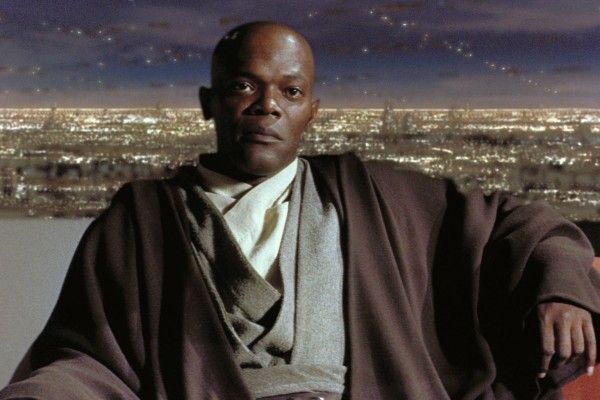
Essentially, due to fan outrage about the concept of the prequels existing and their dissatisfaction with the end result a child’s life was ruined, and yes I will go so far as to say potential was thwarted. You can’t tell me that Portman and Christiansen were always on point or that it ranks amongst Sam Jackson’s best works. As much as I’d like him you’d rattle off a bunch of Ewen MacGregor films before getting to the prequels. And if nothing else convinces you to absolve Jake Lloyd maybe this will: Did you like The Sixth Sense? I am assuming that you are a human being reading this and the answer is yes. Well, Haley Joel Osment is just one of those who auditioned for the role of Anakin but was not selected. So you can thank Jake Lloyd for The Sixth Sense if nothing else. Then feel free to troll on elsewhere, if you so please.

Short Film Saturday: Robot

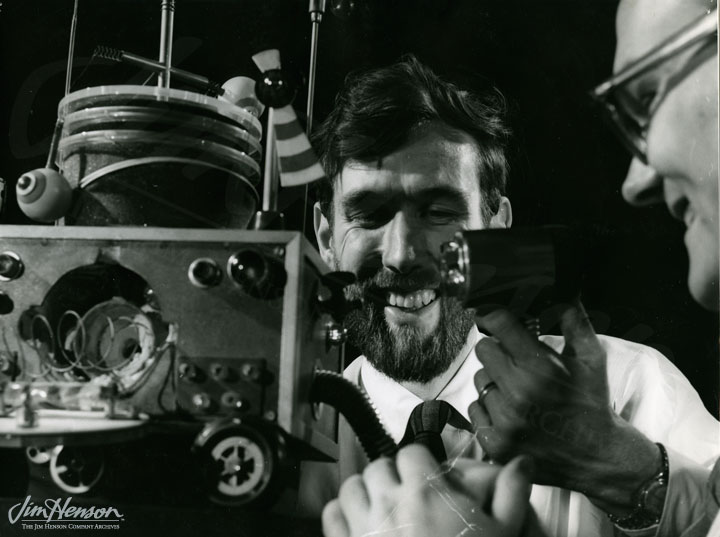
Here’s one by Jim Henson and I swear that even if I hadn’t told you that you’d likely have guessed. This is pre-Muppets and Sesame Street but his author’s voice is the same. This film was commissioned so there’s some background which needs to be given. I have quoted the information that accompanies the video on YouTube, which frames it very well:

Jim Henson made this film in 1963 for The Bell System. Specifically, it was made for an elite seminar given for business owners, on the then-brand-new topic — Data Communications. The seminar itself involved a lot of films and multimedia presentations, and took place in Chicago. A lengthy description of the planning of the Bell Data Communications Seminar — sans a mention of the Henson involvement — is on the blog of Inpro co-founder Jack Byrne. It later was renamed the Bell Business Communications Seminar.

The organizers of the seminar, Inpro, actually set the tone for the film in a three-page memo from one of Inpro’s principals, Ted Mills to Henson. Mills outlined the nascent, but growing relationship between man and machine: a relationship not without tension and resentment: “He [the robot] is sure that All Men Basically Want to Play Golf, and not run businesses — if he can do it better.” (Mills also later designed the ride for the Bell System at the 1964 World’s Fair.) Henson’s execution is not only true to Mills’ vision, but he also puts his own unique, irreverent spin on the material.

The robot narrator used in this film had previously starred in a skit for a food fair in Germany (video is silent), in 1961. It also may be the same robot that appeared on the Mike Douglas Show in 1966. Henson created a different — but similar — robot for the SKF Industries pavilion at the 1964 World’s Fair.

This film was found in the AT&T Archives. Thanks go to Karen Falk of the Henson Archives for providing help and supporting documentation to prove that it was, indeed, a Henson production..

Footage courtesy of AT&T Archives and History Center, Warren, NJ

For more from the AT&T Archives, visit http://techchannel.att.com/archives

DVD Review: Haxan

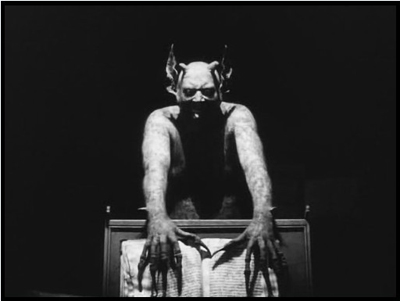
Häxan is a fascinating piece of cinematic history for a number of reasons – the first certainly being that it is one of the earliest films to straddle the line between fact and fiction; narrative and documentary. Second, because it is one of the earlier (#134) releases by the Criterion Collection.

The film tells its tale of witchcraft and satanism from the middle ages through the modern times. It cleverly uses vignettes (dramatizations if you prefer) and slides, illustrations etc. It goes from a title describing reasoning and custom behind an act or belief to a scene in which it is depicted or to an illustration where typically a pencil held by an unknown person indicates to us the area of interest.

The film goes along chapter by chapter revealing reason and the cause and effect of the hysteria concerning witches and the devil. Although, we at one point find out that several trials involve people from the same household there is little by way of a through-line, and that is by design. However, it does make it slightly troublesome to follow in part because you expect it to come back to one scenario or another but it doesn’t. Alas, one of the perils of blending fact and fiction, it moves and is structured like a doc but is portrayed as fiction much of the time so the audience member expects similar conventions.

Towards the end it does do a fascinating feat of simulacrum and tell the audience its reusing actors, does demonstrations and the titles take on a very analytical approach but it is some of the more enjoyable stuff in the film.

Criterion gets very high marks for this particular release for a number of reasons. First, there are two versions of the film on this DVD – one the 1922 silent, and then a 1968 re-score, voice-over included re-do by avant-gardists called Witchcraft Through the Ages.

In the former Criterion did a great job re-recording the score and returning the film to its original intended tinting. Tinting was a fabulous technique which was widely practiced in the silent era because it gave you the wonderful contrast and grain of black and white but it was bright and lively. It was also a tremendous tool for symbolism of time, place, emotion and so forth as colors hold many associations for people.

The original Häxan is very much worth watching. The sound version is worth comparing for students and serious films fans. The sound version is not only unnecessary but appalling; it’s akin to colorization in its futility in attempting to improve something that needn’t be fixed.

Not only is it conceptually a bad idea but the execution is also poor you get two conflicting sonorous signals sent to you and thus the confusion of the filmmakers is evident, even if subconscious. There is a clear dichotomy between the pomposity and seemingly unintentional Movie Tone newsreel style gravitas that Burroughs has in his voice and the ridiculous, cacophonous Jazz score by Jean-Luc Ponty, which makes me wonder if that music wasn’t the work of the devil.

Another thing lacking in the newer version was the tinting, so in fact, it is the opposite of colorization it’s actually a desaturated less visually appealing version of the film. The voice-over also cuts out a lot of text from the titles some including interesting anecdotal information and at times footage. There was one instance there the image was up well before the voice over started.

Ultimately, it pales in comparison to the silent film but it was still quite intriguing to watch both and compare them and the two cuts plus a plethora of bonus material like liner-notes, commentary by a Danish silent film scholar, director’s intro outtakes a look at Christiansen’s sources and stills make the DVD worth getting,

Häxan (1922) 7/10
Witchcraft Through the Ages (1968) 4/10

DVD presentation: 10

Rewind Review- Rudo y Cursi (2008)

As those who know me, and if such a person exists, cyberstalk me, know I created this blog after writing on another site, which shall remain nameless, for a while. The point is, I have material sitting around waiting to be re-used on occasion I will re-post them here. Some of those articles or reviews may have been extemporaneous at the time but are slightly random now, hence the new title and little intro, regardless enjoy!

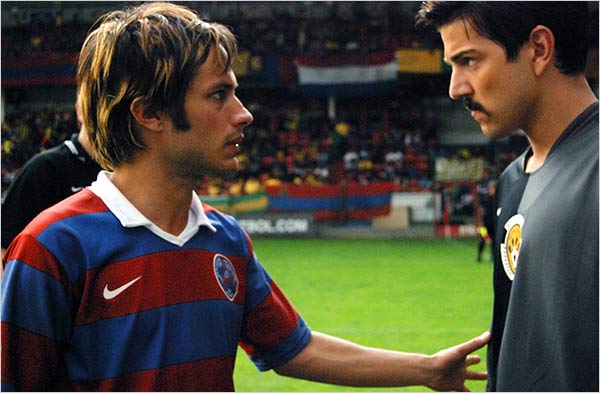
Rudo y Cursi is the feature length directorial debut of Carlos Cuarón, brother of Alfonso Cuarón. It tells the tale of two brothers who live in a rural economically depressed section of Mexico who are discovered by a talent scout and promised their chance at stardom in the Mexican soccer league with two fictitious teams.

The thing this film does best is incorporate a storytelling voice-over which draws parallels between soccer and life and also gives a little insight into the character of Batuta, played by the scene-stealing Guillermo Francella. Gael García Bernal and Diego Luna work together as if Y Tu Mama Tambien was completed yesterday and not eight years ago. Each is a bona fide star in his own right.

Both cinematically and as a soccer enthusiast one might be slightly disappointed by the in-game action. Very few of the game scenes shoot on field action but rather a reaction in stadium or around a TV or just the ball entering the net and people on the sideline.

The trajectory that each character takes to fame is quite different both as players and people – and that’s great. While their declines are also different they are equally predictable, however well-executed. Cursi (Bernal) offers a tremendously funny Spanish rendition of “I Want You to Want Me,” the music video thereof is undoubtedly the best scene of the movie and one of the best of the year, as he desperately wants to be a singer and shouldn’t be. Luna (Rudo) is spotted at a track and taken deeper into the gambling world.

There’s nothing terribly wrong with Rudo y Cursi. It’s a fine watchable film and even incorporates a decent subplot with Rudo’s wife looking for money and falling into a pyramid scheme but with such talent assembled on camera you kind of want it to do more. Things which get glossed over you want examined in more depth.

The ending ultimately, while you like Rudo and Cursi, was a bit too facile and I think as good as the voice over was, telling the tale from Batuta’s point of view might have been a mistake because it ultimately creates a distance. In the beginning we as an audience are wondering “Who is this guy?” If it was either Rudo or Cursi we might’ve been even more invested in the brothers’s plight even if all events played out the same.

6/10

Rewind Review- Trucker (2008)

As those who know me, and if such a person exists, cyberstalk me, know I created this blog after writing on another site, which shall remain nameless, for a while. The point is, I have material sitting around waiting to be re-used on occasion I will re-post them here. Some of those articles or reviews may have been extemporaneous at the time but are slightly random now, hence the new title and little intro, regardless enjoy!

Trucker is a film that knows that dialogue is precious and never wastes it. It is not afraid to leave the subtext as just that- subtext. Too many films feel the need to say what you’re already thinking, what you already know and fill in that blank for you when it’s not really necessary at all.

Written and directed by James Mottern it tells the tale of Diane (Michelle Monaghan) a woman who, as the title suggests, makes a living by driving a big rig. The curveball that comes into her life is that her ex-husband is dying and his wife Jenny (Joey Lauren Adams) can’t watch Diane’s estranged son (Jimmy Bennett) because her father is sick.

OK, so at this point you want to say “Stop, I’ve heard this one before” and you would be correct but the success of this film, like that of many films, is not necessarily in its originality because original concepts and stories are in short supply but in their execution. This story is executed quite well indeed.

The strength of this film, like any film which is about real people and real situations, should be in it its ensemble. Michelle Monaghan believed a lot in this project and wanted to flex her acting muscles which can be assumed by the fact that she signed on as a producer of this film. While always maintaining a consistent and true characterization she hit several different notes and her evolution from unwilling babysitter to mother was perfect, unspoken and like most things in reality not a steady upward climb as there are several missteps along the way. She has the looks and the ability to be an A-List leading lady.

When there is a mother-child team it needs to be a harmonious and comfortable fit for the actors engaged in the story or we as an audience will check out emotionally, even if intellectually we understand the plight; the connection needs to be made. For that connection to occur both actors need to be on equal footing and Jimmy Bennett is certainly that. Although this film has been in the can for a while this adds to a long and impressive string of performances that Jimmy Bennett has been putting together from projects as disparate as Asia Argento’s The Heart is Deceitful Above All Things, one of the most psychologically effective and haunting movies of the decade to a blockbuster bit part like in Star Trek. His anger and rebellion at the beginning never feels petulant and whiny which shows that he was well-directed and at a young age has a good deal of natural talent.

The supporting cast is also worth mentioning: Joey Lauren Adams, who is best known for being Amy from Chasing Amy, who is very convincing as the woman stuck in the middle of all this family drama. Why she never had a career akin to Renee Zellweger’s is beyond me. Then there is Benjamin Bratt who played the sick father who is better than I’ve ever seen him in anything in this film. Him and his son share a very emotional scene which is the epitome of restraint on the part of both actors and it was great to watch. Nathan Fillion plays Runner the confidant and new father figure for Peter and was also very well-played and also a developed character of his own.

The film ends at the right time on a beautifully framed and orchestrated pull out, the pace is spot on and it never drags. It is always seeking to move forward and it never seeks answers but resolutions because that’s what we typically get in life: moving on, forgiveness, unspoken apologies and if you’re lucky a second chance.

8/10

Rewind Review- The Maid

As those who know me, and if such a person exists, cyberstalk me, know I created this blog after writing on another site, which shall remain nameless, for a while. The point is, I have material sitting around waiting to be re-used on occasion I will re-post them here. Some of those articles or reviews may have been extemporaneous at the time but are slightly random now, hence the new title and little intro, regardless enjoy!

A Golden Globe nominee for Best Foreign Language Film and not submitted for the Oscars The Maid is a title likely to slip through the cracks. This, however, would be sad as it is a film guided by the cool hand of second time feature director, Sebastián Silva.

The film begins with the camera staying in the kitchen and our protagonist Raquel, played by Catalina Saaverda, going in and out to serve the family dinner. The next scene opens on her birthday, an event that will be effectively distorted in a mirrored scene later, and she is embarrassed and doesn’t want to take part. We can see she wants to but can’t. This is one example of the contradictory nature that will be effectively revealed by Saaverda throughout.

What we have here is an examination of a world rarely looked at and also of a figure that though foreign to most American audiences, a maid, is still very much a part of the fabric of Latin households. We get a glimpse at the strong yet tenuous bond that exists in this household.

Saaverda’s performance was one of the most decorated of 2009 and it’s easy to see why. She carries the film with a gruff charm and though her actions may seem simple there is always intent and thought going into everything. Looks contain lines of dialogue undelivered and the simplest words uttered over a cell phone to her mother carry more profundity because of what is not said than because of what is.

As the maid struggles with her health, job security and personal insecurity we also see her deal with an influx of new maids brought in to give her help she doesn’t want. These battles help bring humor and tension to the mix.

The subtlety of the film and the performance can truly be felt when the character of Lucy is brought into the mix. For it is in an exchange where Lucy assures her “I’m not going to be here for the rest of my life. I’d rather die” where the change occurs. What we see on Saaverda’s face is reproach but what we really get, as an audience, is a turning point. Raquel slowly realizes Lucy really isn’t a threat to her job and she starts to confide in her.

It is typically in a lesser character where you can see how far a film goes to build character and to give them depth. Mundo, the patriarch of the family, seems like your typical aloof film father. He claims he’s going up to work in his office and is really just working on his model boat. This seems to be all that matters to him ever. When he finds his family on his bed frantically trying to piece it together after its been broken, quicker than expected he gets a hold of himself and allows perspective to enter his life and he says it’s no big deal.

It’s interesting to note that this film played at the European Film Market and the Buenos Aires Festival Internacional de Cine at a running time twenty minutes longer than it currently is. It doesn’t necessarily have those pace issues at current. It takes its time and five minutes off would likely not change a thing. It’s good to see that it has been addressed and would actually be interesting to if an alternate cut makes the DVD.

While the highs are never that high and the lows are never that low this is a very strong and effective work from a director who knows how to put together an effective and thought-provoking tale. Silva is name who should be noted and have an eye kept on.

8/10

Rewind Review- Little Indi

As those who know me, and if such a person exists, cyberstalk me, know I created this blog after writing on another site, which shall remain nameless, for a while. The point is, I have material sitting around waiting to be re-used on occasion I will re-post them here. Some of those articles or reviews may have been extemporaneous at the time but are slightly random now, hence the new title and little intro, regardless enjoy!

Little Indi is a film that is playing as part of a new series called New Spanish Cinema at the Film Society at Lincoln Center. It tells the tale of a boy named Arnau, nicknamed “Little Indian” for reasons unknown to us (one can assume it’s based on his appearance but it is not confirmed), who is desperately trying to earn himself money to pay a lawyer to assist his mom who is incarcerated.

Most of the quiet, sparsely-dialogued film involves Arnau, played by Marc Soto, looking for extra work, going to a dog track or debating whether to sell his prize-winning goldfinch. He is mostly on his own and in many ways caught between adulthood and childhood. One minute he is pounding the backroads seeking more hours of work anywhere he can find them, but he is tending to a wounded fox the next.

The scoring of this film is very distinctive and it never overpowers or sentimentalizes anything but it does help push the story about and also keeps the correct middling tone. A tone believed to be desired because there is little seen of this incarcerated mother, she is seen briefly and it is understood. It is in essence a very observational film. It’s a window into a world.

There are many hurdles and many disappointments which take this film to its conclusion. The ending is open so divulging too many plot details would allow one to know exactly how it stays open.
It is a film that ultimately stays visual so bear with it and eventually you will understand what competition he enters the finch into and to an extent what the judging criteria is. Other things within the film which might also seem foreign but eventually do come to make sense.

Marc Soto is described in the writings accompanying this film as a newcomer, however, the pedigree of a film actor can be gauged more so when they say nothing than when they speak and Soto’s pedigree seems to belie his experience. Words are the domain of the theatre actor; a film actor has to be able to hold our interest in quiet moments of which this film has many. Will we watch him behave and not just speak? Yes. Do you see him thinking? For as much interaction as Soto has yes there is definitely potential for a new star of Spanish cinema to have been born in this part.

When minimalism in a minimal environment occurs it can be much easier to accept. When minimalism occurs in an urban/suburban environment, as it does in this film, it is asking for a bit more patience from its audience. Does the film reward the audience for its patience? Ultimately, I believe that answer to be yes. It’s not a tremendous reward but it is also not a shortchanging experience. It is the type of film that may even go up a rating point or two upon a second viewing as you examine how it works but it does involve you in the avenues that Arnau investigates to try and earn more money and also involves you in how he tries to go about rectifying his missteps.

Also, if you are a fan of Spanish cinema you might recognize the cameo by Agustí Villaronga, director of such disturbing thrillers as El Mar and In A Glass Cage, as the mysterious The Man in White Shoes. Ultimately, it is an enjoyable film that this critic will want to re-examine.

6/10 
 

Rewind Review- Midnight Meat Train


Midnight Meat Train is a very interesting film. While it was a limited release film last year, it certainly got the attention of horror film buffs. It was widely speculated and hyped, in part by Barker himself, as the most faithful adaptation of a Clive Barker work in years. Ryûhei Kitamura seemed certain to handle this difficult task with aplomb.

The story is ripped from the pages of Barker’s seminal short story trilogy The Books of Blood, and this is one of the most evocative pieces in said collection. So there was a lot to live up to, and for the most part it does. This film owes much of its success to its faithfulness, both in narrative and tonality, to the short story – which is a rare feat. Seldom, if ever, has Barker’s knack for mixing the mundane and the preternatural creations of his nearly unparalleled imagination been so deftly captured on celluloid. Fluorescent, washed-out lighting and long dialogue-free sequences also add greatly to the film’s impact.

The creative use of flashbacks in sync with the sound of the shutter closing as Leon (Bradley Cooper) has his breakdown in front of his girlfriend (Maya- Leslie Robb) is the cinematic apex of the film. A close runner-up is the first kill which is shocking, literally jaw-dropping and thus, great. Mahogany played stoically by Vinnie Jones is one of the better horror villains to hit the screen in quite some time and proves a silent villain is always most effective.

The ending is as shocking in its reveal and nearly as well-executed as it was in the text, and for that it deserves kudos and watching. The only real issue I had was that the mood and overall impact of the film, not just the kills, were dampened by the repeated use of CG blood, which made those scenes more like comic books and less like film. I just wish a few shots were framed or blocked differently so that they didn’t feel CG was necessary or better yet had they gotten creative and taken a risk with practical effects. Typically, CGI does play better on DVD but blood it seems will never work.

Ultimately, it is a very effective piece which is why any undercutting of the effectiveness and sheer brutality of it is hard to forgive. Its grade would be much higher without the two or three instances of digital blood.

7/10

Short Film Saturday: The Critic

This is a film that was referred to me by a Twitter friend of mine, @rurugby who also suggested the See the Movie then Read the Book post to me.

This is a very short but also very funny film wherein you get probably the funniest and least annoying in screening reaction you’ve witnessed. Provided by Mel Brooks. This film was suggested to me by way of a link and here’s the story’s inspiration as they tell it:

One day in early 1962, Mel Brooks was sitting in a New York City theater watching an avant-garde film by the Scottish-born Canadian animator Norman McLaren when he heard someone in the audience expressing bewilderment. “Three rows behind me,” Brooks told Kenneth Tynan for a 1978 New Yorker profile, “there was an old immigrant man mumbling to himself. He was very unhappy because he was waiting for a story line and he wasn’t getting one.”

Brooks enlisted Ernest Pintoff, who produced an Academy Award-nominated short called The Violinist, to help him make the film. Pintoff hired the artist Bob Heath to do the animation, Brooks ad-libbed the voiceover, and voilà: an Oscar-winning movie that today works perfectly on YouTube. Enjoy.