Introduction
So now we finally come to the newest film. Clearly this was the one that made me want to take a new, multi-faceted look at all the films. Ultimately, in this series I believe I will have only skimmed the surface on the region and maybe gone deeper into this one than many have. It’s part of why I wanted to take my time in composing this, and I only really considered it after I had already put in multiple viewings.
One benefit of Jurassic World not bridging the gap is that it skips and origin story, which at times can be as trite as a prequel. In the end, when I got around to this film I finally figured that the headings had to be a bit unique to each film.
So to begin with on this film I will begin to the characters because, there are quite a few, and it’s here that most of the difficulties in the film lie.
Characters
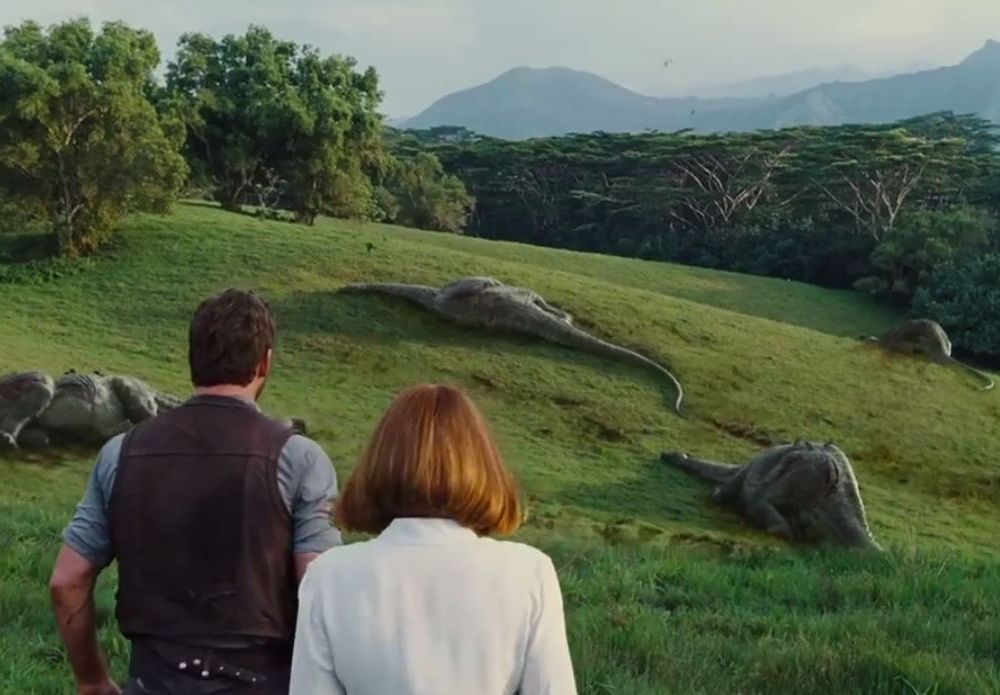
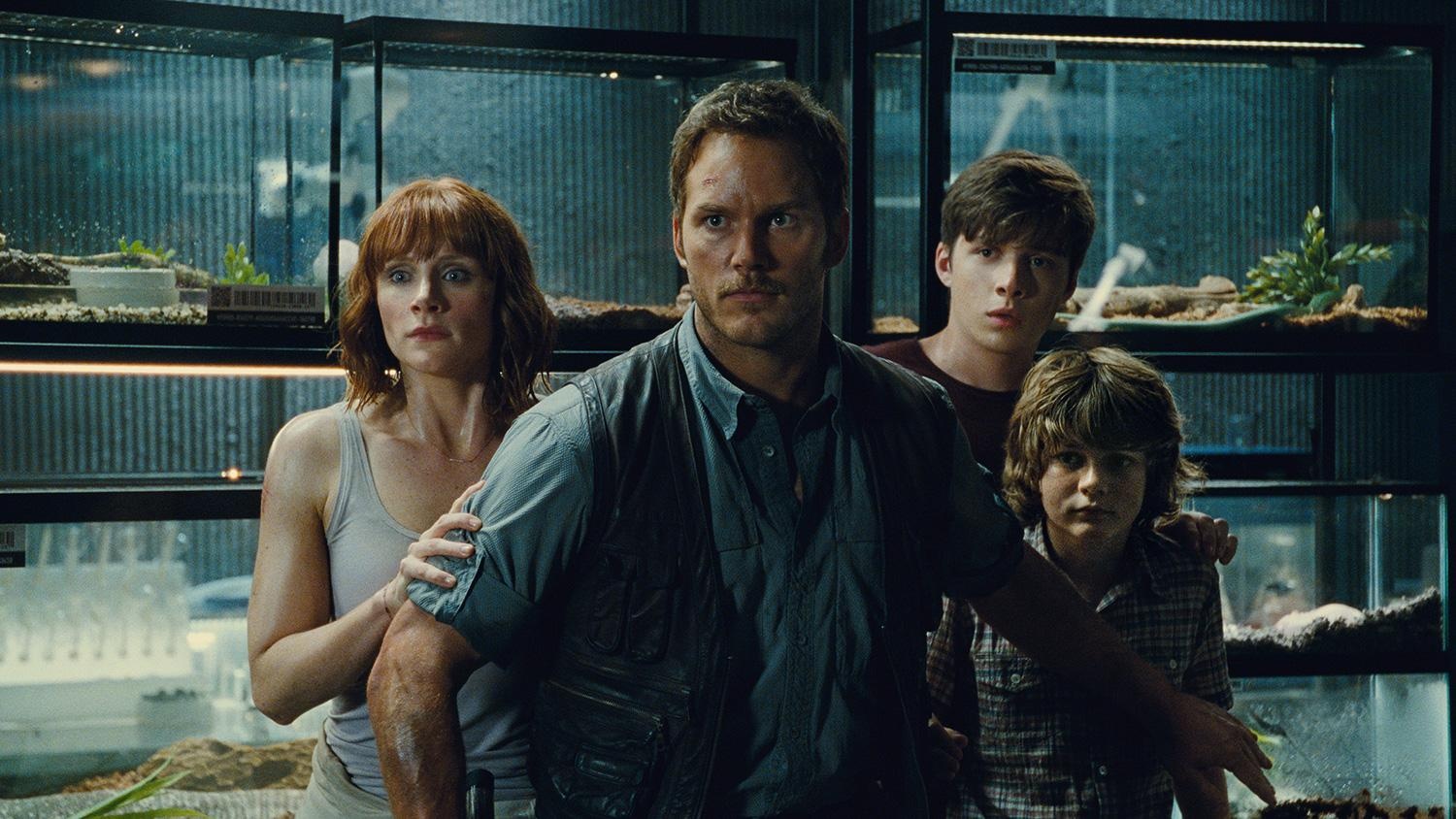
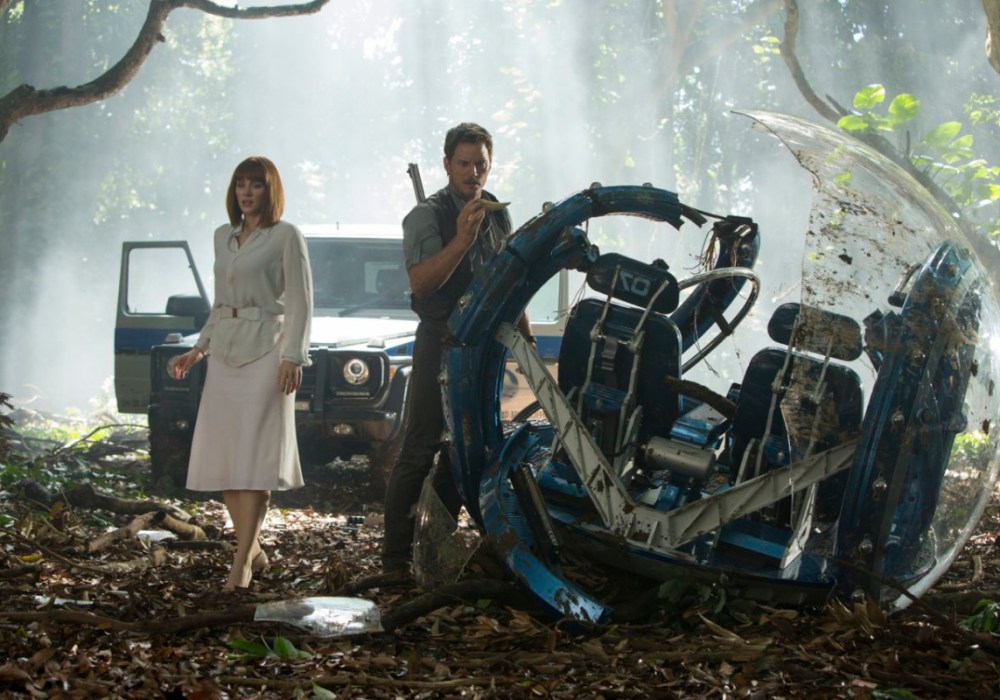
Owen Grady (Chris Pratt)
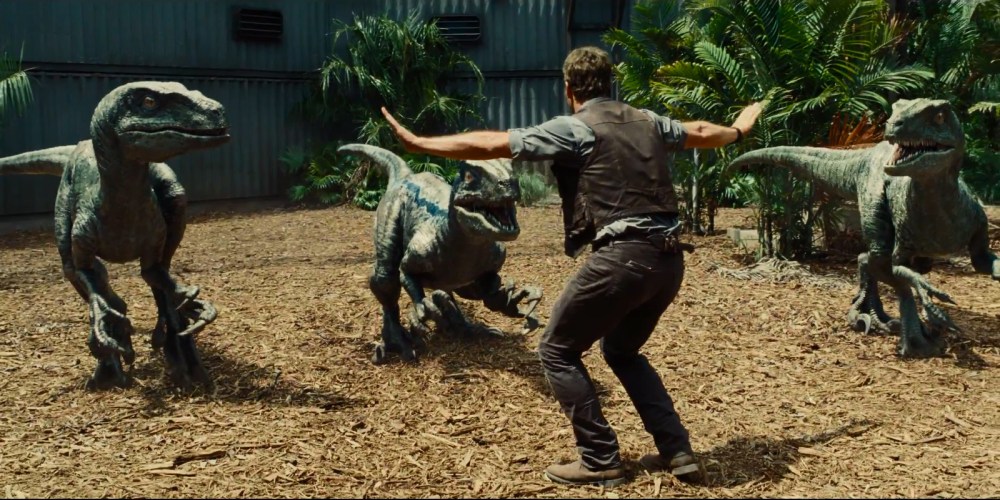
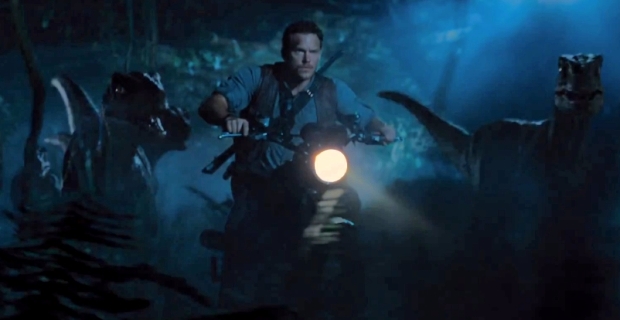
One reason I think this film works is, in part because of the others, as I first saw it when I decided almost immediately that I viewed Owen Grady (Chris Pratt) as a cross between Muldoon (Bob Peck), game expert at the original Jurassic Park, and Dr. Grant. Which means he’s knowledgable through personal experience and interaction though not necessarily studied. The part where Dr. Grant comes in is with regards to the animals, he’s a voice of reason, one that respects them and is understanding at all times. His interpersonal skills may not even be that great due to that, with members of either gender.
Miscasting is a barb I don’t use often because it presumes far too much about our understanding of what a given character is supposed to be. If the film doesn’t accurately or fully portray the character that’s the bigger concern. Chris Pratt has had a specific persona since I first saw him on Everwood. He’s cultivated it, it’s become his type. When he joins this film there’s a projection of who Chris Pratt is supposed to be and not Owen Grady. Pratt fit Guardians of the Galaxy perfectly doing what he’d done already. I knew that going in based on what I presumed Star Lord would be like based on the recent arcs of the comics series. James Gunn translated that character across different media brilliantly.
Here too many of us came in with a notion of who this Chris Pratt by another name was supposed to be. Humor is subjective. I thought he was funny, but he wasn’t supposed to be as much of a cut-up. How he treats or doesn’t treat Claire could well have more to do with their shared past rather than feelings about women in general.
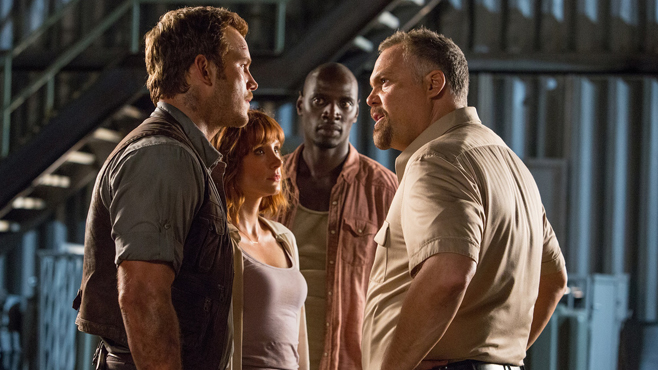
One of the mistakes the characters make in this film is that there is a communication lag. Grady is working with the raptors and doesn’t know a thing about what’s going on with the Indominus, or that it exists. He’s only brought into the loop because Masrani needs more insight after his briefing and inspection. So he starts meeting someone he shares a personal history of an ill-fated date, and he’s being called in on a new task for the most out-there genetic project the park has developed so far; one that frankly shouldn’t be a project (we all know it); his previous moment as a character and an actor is a ludicrous talk (in his estimation) with Hoskins (Vincent D’Onofrio) about weaponized raptors, and now this while he’s trying to unwind and work on his bike. So, yeah, he may be a little more hostile with Claire than he otherwise would be, his sense of humor is crass, and inappropriate, but it’s step one on a long crazy trek to earning one another’s respect and admiration.
Ultimately, it comes down to watchability. A character doesn’t have to be likable just watchable. In an age of overly-sanitized, packaged protagonists, where gray areas are unacceptable to some especially in blockbusters; I found him rather refreshing, a slightly different tonality, what would be referred to in Portuguese as a babaca charmoso; roughly translated: a charming prick.
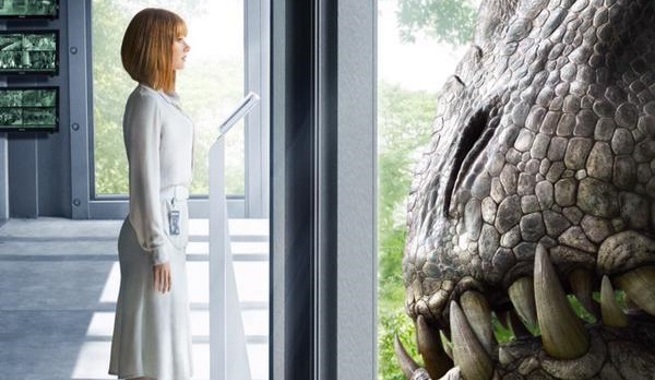
Claire (Bryce Dallas Howard)
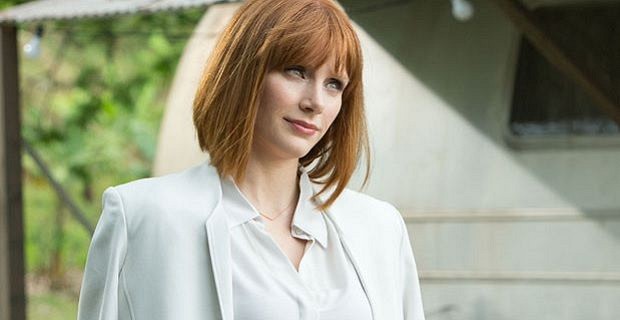
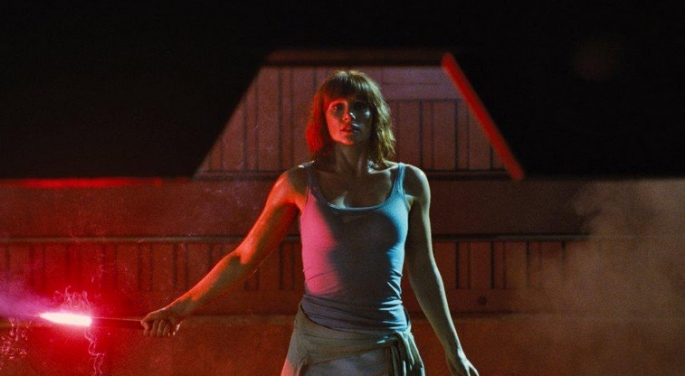
As for Claire, establishing her through the pneumonic device for remembering names is a bit awkward as a first image both in its mise-en-scène and in terms of character building. When the catastrophe is unfolding and everyone is in the control room, and Grady is holding court trying to get people to listen to reason, his version of it, she snaps and says “You’re not in control here!” It may be Claire’s finest moment, if not Howard’s, because here’s where the essence of the character lies: she seeks to be in control, to be seen as a serious professional, yet seems to fear she is not in control and can’t be viewed as such. When faced with a situation where control is shown to be illusory (“You never had control, John! That’s the illusion!”) it will surely start to grate on her.
It’s also clear that there was not an attempt to make Claire’s career-mindedness seem like a negative. What she truly lacks is balance, insight to her true self and at times a sense of priority. When she’s running for her life Owen holds out his hand to assist her up a grade. She runs right through it. She doesn’t need his help, she eventually shows, despite her inexperience, she can fend for herself and for others, Grady included. The most common Claire talking-point will be addressed in its own section.
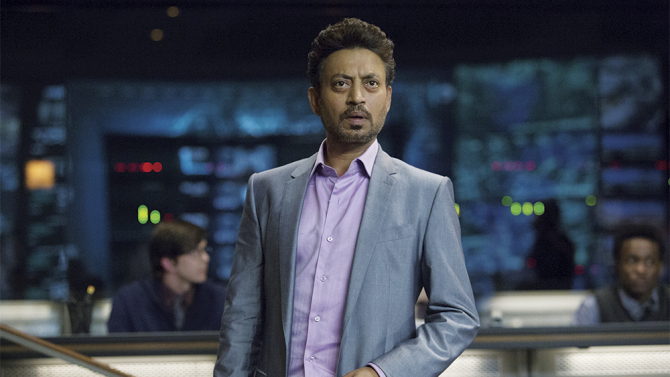
Masrani (Irrfan Khan)

As has been discussed leading up to this post, one of the points in the canon left most unfortunately nebulous is how Hammond came to make a seeming 180 from the end of Lost World where he was leaning towards conservation rather than Park-building. Of course, it can be surmised that it was just damage control and PR in light of the latest disaster but that is never confirmed or denied.
Regardless, the world of this story is one wherein Jurassic World is a park that exists on site A and has not only thrived but had done so for so long that a very 21st century ennui about the awe-factor dinosaurs can even provide is the norm.
The interesting thing about Masrani is that he has even deeper pockets than Hammond, yet seemingly is spread more thin from competing interests. So while he seems to have a genuine concern for the animals’ well-being he is equally blind to some of the dangers posed by the way the park operates, and has operated. In the end, this makes him not much different from Hammond.
If anything his demeanor makes it more likely that something like this was bound to happen eventually as his comic relief inept helicopter piloting proves he has delusions of invulnerability that extends to all he touches.
Hoskins (Vincent D’Onofrio)
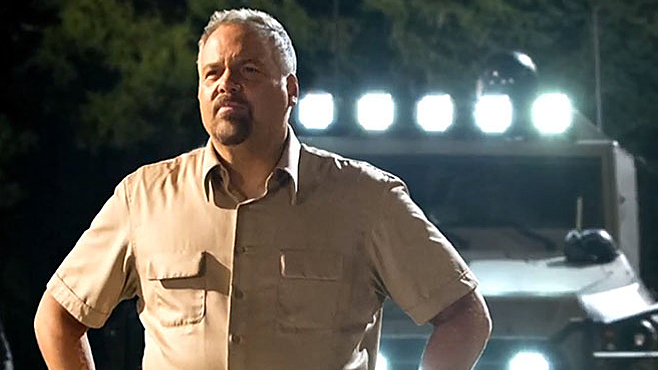
There is one point in their initial debate when Grady asks Hoskins “Do you listen to yourself when you talk?” It’s the perfect encapsulation of Hoskins really. After one successful drill/demonstration with the Raptors Hoskins is ready to go whole hog into his crazy InGen brainchild of using the raptors as a tactical military advantage. Within this series this is the follow-through on what’s now a given in the series InGen having an agenda of its own which allows for the propagation of genetically engineered dinosaurs contrary to common sense and contrary to the wishes of the public at large. This is a staple of series since The Lost World.
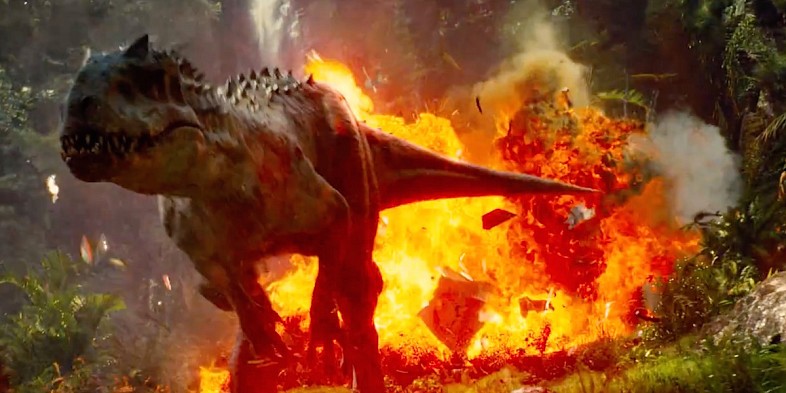
In the larger landscape of film it is another militarized plot point, which can be a bit tiresome amidst the landscape of superhero cinema wherein some martial element (like a technology that would be dangerous in the hands of military foes or terrorists) is commonplace. Granted Hoskins is useful to introduce the “At what price progress?” morale of the story, adds a human antagonist, and the occasional comic relief as well. He’s more rounded than he has any right to be as at one point there is an inkling that his crazy plan really is the only option to deal with the Indominus Rex. And it is a delicious moment of schadenfreude to see his best laid plans go up in flames for he too knows not what he’s dealing with, and even if he knew the creature’s genetic make-up he would’ve been convinced to do it anyway.
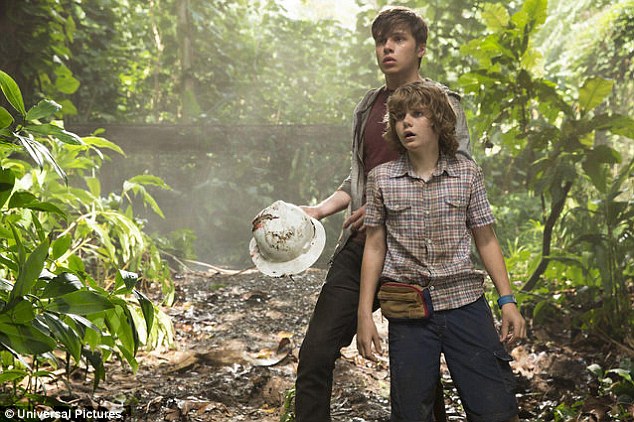
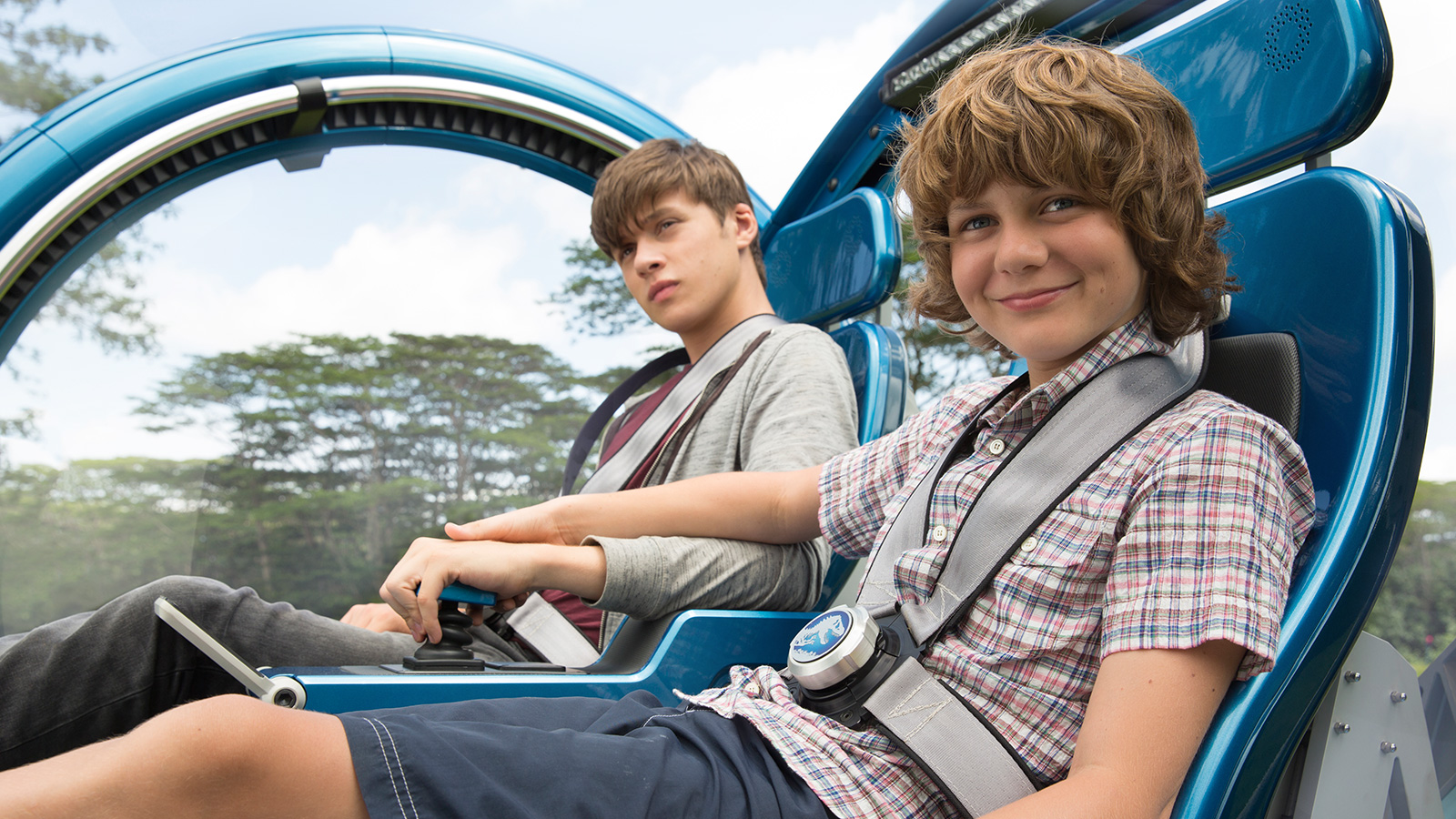
Gray (Ty Simpkins) and Zach (Nick Robinson)
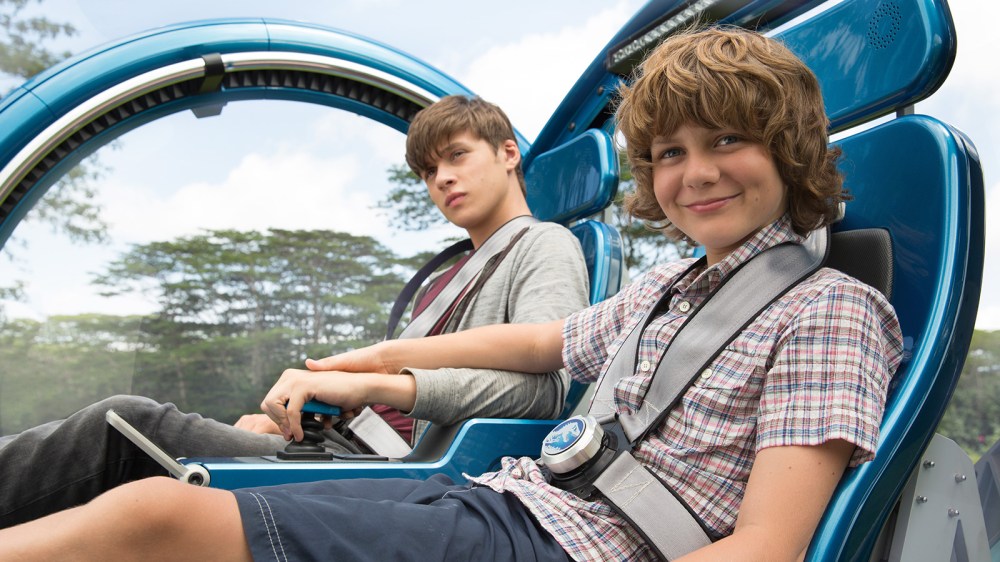
One of the greatest difficulties this film faces is that some of its most awkward character moments occur within the first ten minutes, at times instantly, or just after first meeting a character. There is an early attempt to show not only Gray’s excitement but also the fact that he’s a little odd and at times says weird things. Here the exchange is:
“How big do you think the island is?”
“I don’t know. Big.”
“Yeah, but how many pounds?”
“That doesn’t make sense.”
No, it doesn’t. It’s a weird question especially in hindsight. Gray show’s himself to be smart enough to know to express the question with a scientific term like mass. After all he runs to displays and instantly points out ubiquitous elements in all living organisms, has an encyclopaedic knowledge of most dinosaurs, including knowing how many teeth they have. This allows him an assist in the heroism. Gray’s later concerns about prison, and how he expresses it is a lot more well done.
Gray is a character who is a necessity to the film, a kid who knows dinosaurs (something else The Lost World lacked). Simpkins brings out genuine enthusiasm, authoritative knowledge, in a less prodding, in-your-face way than Joseph Mazzello did.
Following Simpkins’ last blockbuster go-around (Iron Man 3) this is a natural progression for him as an actor as he aids in bringing the wonder, joy, and fear to the audience.
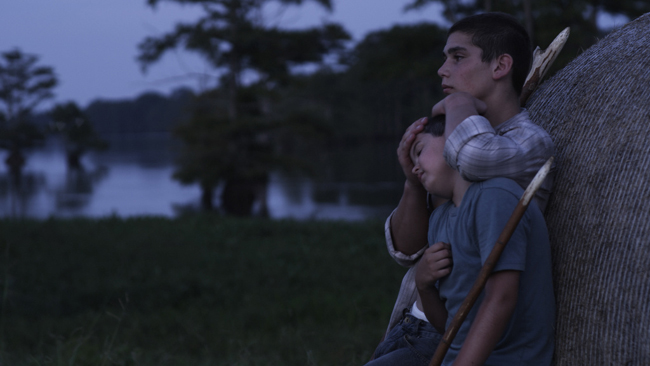
Nick Robinson’s big break was in The Kings of Summer, and he too gets a different kind of character to play here. His teenage angst here is a bit more a general malaise than anything specific, perhaps the given of his parents issues just colored his own world in a way he never realized. He has a girlfriend who’s hopelessly attached to him that he can take or leave, and he’s too cool to be at the park. Much like an older kid at Disney World it eventually wins him over before everything goes hopelessly wrong.
His arc is perhaps the strongest as he also has to step up and act like a proper big brother rather than thinking his little brother is just a nuisance he has to put up with. One step is helping Gray sneak away from their Executive Assistant cum Au Pair; as things get serious he has to be willing to console his brother about their parents’ impending divorce, try to get his brother to enjoy the experience, and then in crisis-mode protect his brother, put on a brave face when he’s scared and embolden and empower him.
Seeing how these are the characters who start the film they really do act as the backbone of the film and they help to hold it up.
Lowery (Jake Johnson)
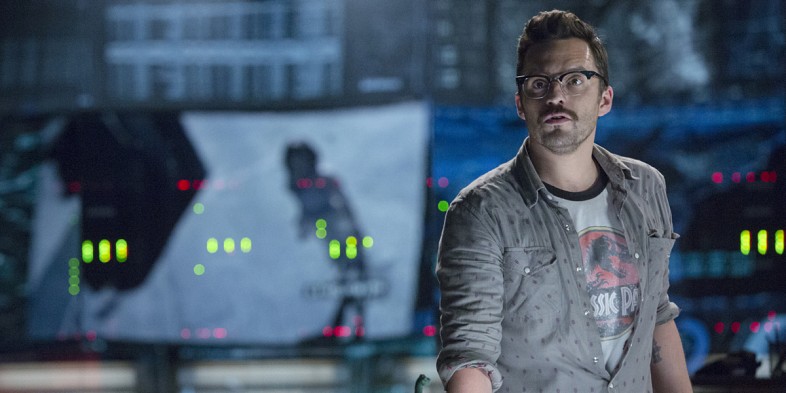
If Gray and Zach act as catalysts to bring kids or the uninitiated in (the Claire/Owen dynamic can do that too) Lowery is there at times speaking our mind, in a certain regard acting like a one-man Greek chorus. This, like most things, is only a negative if you don’t like the movie anyway. If the film’s other issues are too overwhelming for you this will be salt in your wound, if you’re enjoying the ride it’s welcome surprise.
Lowery is not just comic relief but the eternal optimist. He wants to hold on to some of his youthful wonder (hence the dinosaur toys) he still has an appreciation for the intent of the original Park even if the result was bad (hence the Jurassic Park shirt).
Since the crisis mode is entered to quickly one can suspend disbelief that his open defiance and vocal questioning of decisions would go unpunished. In a way it’s a needed catharsis as the oversights and at times insensitivity of the characters in charge needs to be addressed.
Dr. Henry Wu (BD Wong)
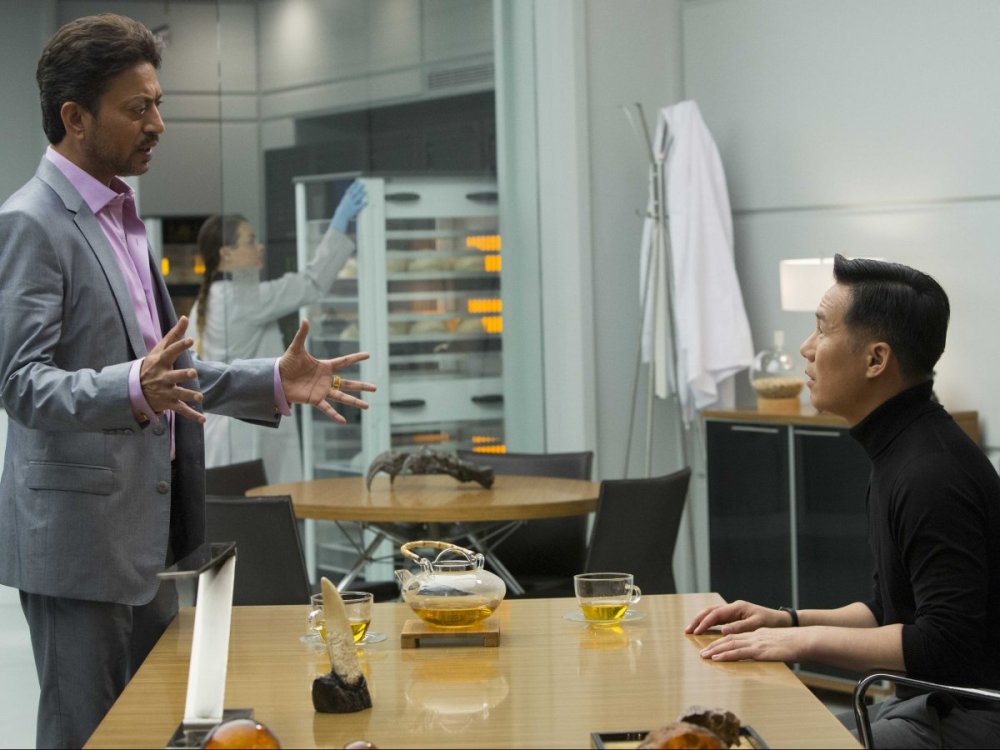
Now this post is entitled A New Cast of Characters but another thing that’s been consistent in this series is that the sequels have always featured links to the original, not just in narrative conventions, but in cast members. Even series that rattle off sequels in short succession that’s kind of rare. When it’s been twenty-plus years it’s actually pretty impressive.
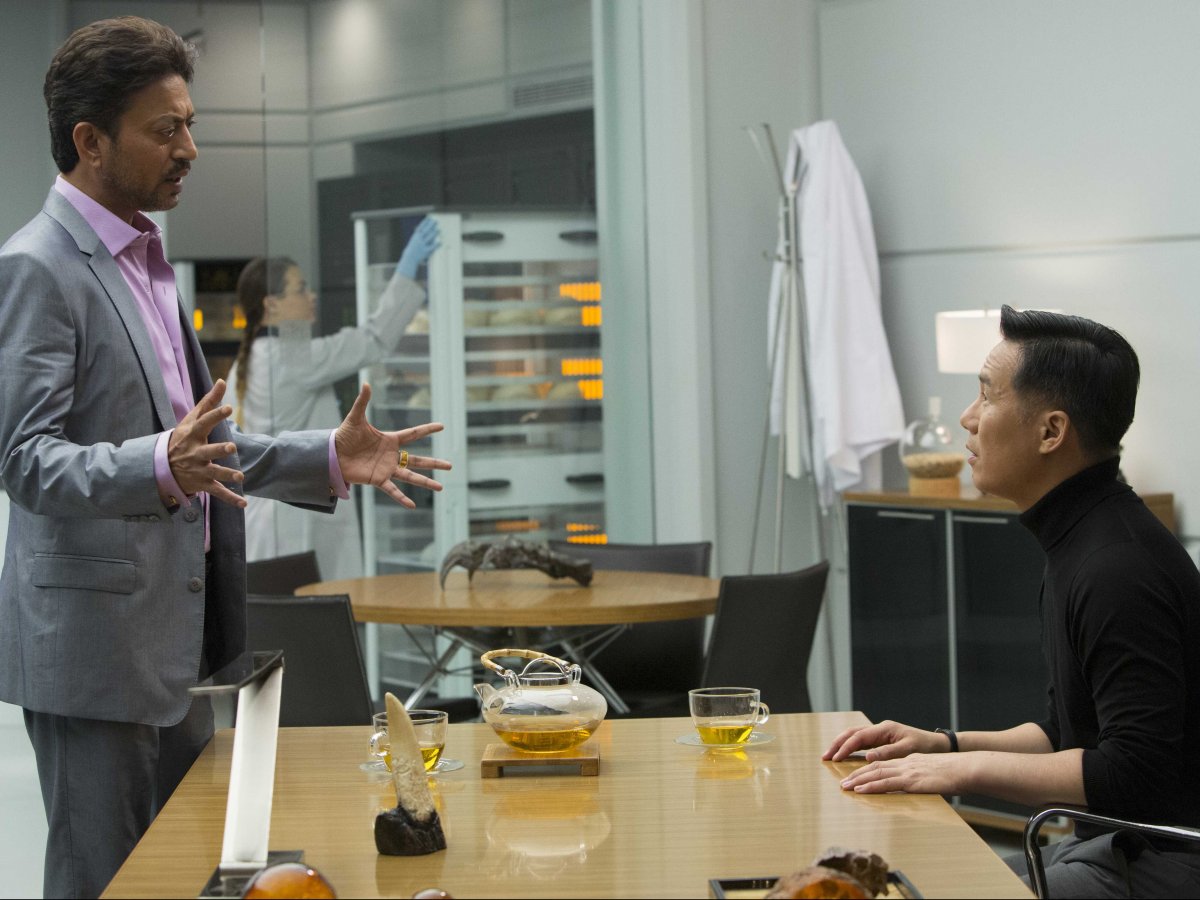
So Dr. Henry Wu is that link back to the first film, and through the years he’s climbed the ranks. However, he’s not just there to fulfill that purpose but he’s involved in the best scene in the film: when Masrani confronts him about the Indominus’ traits and genetic makeup.
I love a good turning-of-the-tables. Decisions were made hastily, for impure and profit-driven motivations without considering the inherent dangers before things went wrong. Wu simply points out things that are all correct about the relativity of it all, how unconcerned and lacking in foresight they were and these kind of genetic amalgamations are par for the course. It doesn’t make it right, it has a very “I was just following orders” ring to it, but it’s not untrue.
There’s a certain compromising of ethics either consciously or unconsciously that must occur to carry through this kind of scientific work. Both actors in the scene hit on that notion brilliantly. It’s the tightest, most logically sound, and the most reminiscent of the intellectual stimulation the first film provided. Add that to the fact that an actor who was quite young in the first film, now middle-aged is given a scene he can really sink his teeth into, and it’s a great thing.
Furthermore, Wu and his handshake agreement with Hoskins leave the door wide open for follow-ups and his further involvement. It’d be nice to examine his character, choices, and changes over time more in the future, but having not expected such an exceptional scene for a returning character I cannot complain.
Tokens?

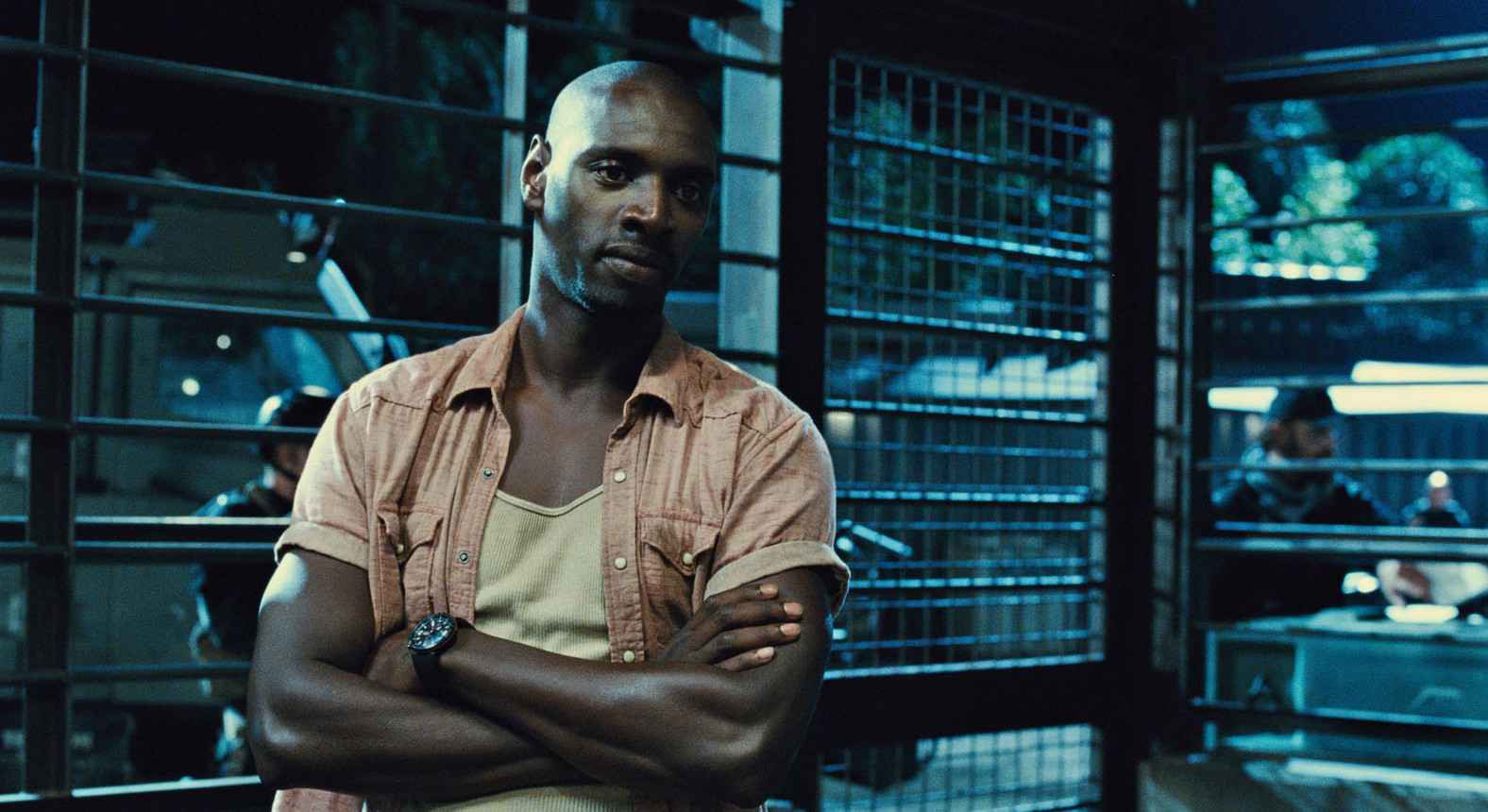
When dealing with Hollywood blockbusters and ethnic minorities the question of screentime and whether or not the characters are tokens invariably come to the fore. I think the fact that I siphoned off discussion of two characters (Masrani and Wu) proves the film is trying. The only tertiary characters that really bear mentioning here is Barry (Omar Sy).
It becomes difficult to to develop all characters well, perhaps even impossible when we’re talking about as many as are in this film. Barry, seems as in tune and knowledgeable as Grady, they see eye-to-eye, and through a muttered curse under his breath in French its established he’s not American. Sy himself is French, which gets a European into the cast.
Considering that the park is located in Costa Rica the main ethnicity underrepresented are Hispanics, who were last significantly represented by Juanito (Miguel Sandoval) in the original.
Conclusion
The discussion on Jurassic World will continue tomorrow in Part 5: Of Footwear and Fan Service.