Review: Magic Silver and Magic Silver 2

Introduction

This is a post that is a repurposing of an old-school Mini-Review Round-Up post. As stated here I am essentially done with running multi-film review posts. Each film deserves its own review. Therefore I will repost, and at times add to, old reviews periodically. Enjoy!

Magic Silver and Magic Silver 2

Without going into a full rehash of recent guest post that I did, what I will say on a wider scale with relation to the Magic Silver films is that it’s a prime example of what’s great about Netflix. Here you have two recent and rather popular Norwegian films that I had heretofore not heard of. Physical home video distribution of these titles in North America is a riskier, more expensive proposition so the streaming solution is perfect and brings these films to a wider audience.

As for the films, what drew me to the films at first was the 1980s-like illustrated approach to the artwork. Sure enough, the first film does have that feel, with some 21st Century technique thrown in. The film excels in virtually every level of production and maximizes the values it can get for whatever the budget is.

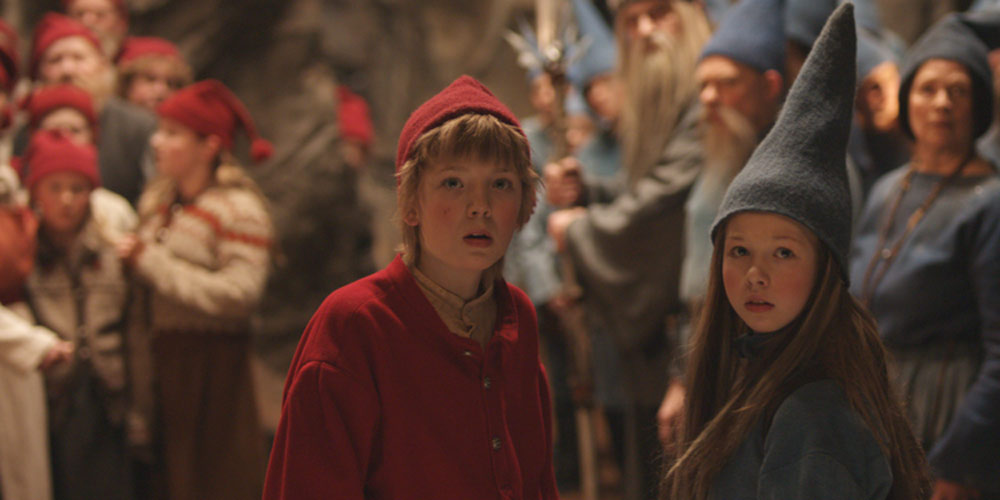
It’s a fantastical tale about how gnomes can control the weather and their life in a mountain. The sets of the inside of the mountain in the first film are simply but beautifully done and gives everyone just enough room. In the sequel the expanded space is not maximized. Similar to the costuming which in the first film is simple but effective, but in the second gets a bit more intricate and somehow doesn’t work as well. However, the art direction in both is quite good.

The story, however, again more so in the first film than the second, introduces the rules of this world wisely, as we hear it being told to the children of the village. It’s a thin but effective veil on the exposition, and some of the rules are really fascinating dramatically as they have intriguing consequences.

Both films are quite good, but the difference being that the first film has much higher stakes. Not only is the protagonist, Bluerose, coming to grips with overcoming her own fears, she must also learn the consequences of her actions, learn to assume responsibility, deal with mortality and try to do what is best for all concerned; a test of true leadership. Making this an even more intriguing dynamic is the fact that her struggles as princess are mirrored by a child king in the other clan of gnomes. There’s an innocent, subtly played romantic interest, but they both in working together learn how they can face up to their newfound responsibilties.

In these films I expected good escapist fun, what caught me most off guard about the first film was the gravitas of it, how involved and moved I would be by the narrative, and how compelling the performances of the entire cast especially Ane Viola Semb and Johan Tinus Lindgren. The best fantasy tales go to a very real place emotionally, when they are character-driven. When plot-drives a bit too much it’s harder to reach that heightened level. So a film like the former can be fun (read the sequel) but is ultimately disposable. Whereas, the film that finds universal truths in its fantastic settings, and also connects across cultural boundaries is truly special.

One more note about the follow-up film, it is fun and intriguing for randomly deciding to have four musical numbers. The first caught me totally by surprise but the next three are better, and the last one is a great Christmas-themed song that also highlights the climate change subtext of the story.

Very fun and different movies both that lend themselves to consecutive viewings like I had.

10/10 and 6/10

Review: Bestiaire

Introduction

This is a post that is a repurposing of an old-school Mini-Review Round-Up post. As stated here I am essentially done with running multi-film review posts. Each film deserves its own review. Therefore I will repost, and at times add to, old reviews periodically. Enjoy!

Bestiaire

This is a film that qualifies for this year because, though I heard of it last year, I had no legitimate chance to see it. I learned of it through a coming soon postcard while I was in New York, the soon it was referring to was not while I would be there.

What’s interesting is that I was anticipating seeing another documentary free of significant dialogue prior to this one, but when I saw this pop up on Netflix instant I had to jump at it.

Bestiare plays out like a non-fiction version of Le Quattro Volte inasmuch as the structuring of the very slight, and completely open to interpretation, narrative is nearly invisible. The description of this film on Netflix is appropriately stripped down there are extended sequences of static shot either of animals observing humans, vice versa or sometimes they seem to be staring right at us.

Some of the shots are framed beautifully to convey either claustrophobia or just how nestled some animal enclosures in the modern world are be they farms, ranches, zoos or what have you. As I mentioned, it doesn’t insist upon deciding for you what the interpretation of the film should be, believing instead that the audience is the ultimate arbiter of meaning.

I found the film very effective in places with some great cuts and angles that underscored a harsh indifference. The incessant rhythmic banging of a zebra against a wall, or the frantic pacing of an ostrich, and the, to me, disquietingly laid back work of a proficient taxidermist were scenes that really shocked me out of the lull that this hypnotic film can get you into.

It’s not a long film but it is deliberate. I would qualify it as experimental, and I think more times than not the scenes work, so I believe a 6/10 is fair for now.

Review: There’s No Place Like Home

Introduction

This is a post that is a repurposing of an old-school Mini-Review Round-Up post. As stated here I am essentially done with running multi-film review posts. Each film deserves its own review. Therefore I will repost, and at times add to, old reviews periodically. Enjoy!

There’s No Place Like Home

ESPN’s 30 for 30 continued last week with There’s No Place Like Home. Here’s another case whereupon seeing the synopsis of the film I was not so interested, but after having viewed the film it’s more effective than anticipated.

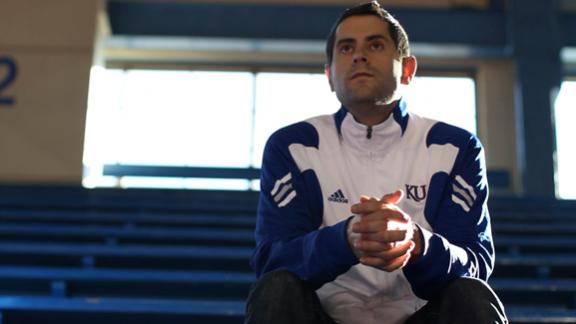
The film tells the tale of Josh Swade, a lifelong Kansas Jayhawk fanatic, who organized a grassroots effort to try and win the original rules of basketball as written by James Naismith. When reading the narrative the piece I was missing, either from ignorance or faulty memory, was that Naismith shortly posting these rules in a Massachusetts YCMA took the game to Kansas and started the Basketball program at Kansas. He was at the University for four plus decades after that. So, yes, Kansas has, and had, a very rightful claim to ownership that I was unaware of.

Another moment of enlightenment was the underscoring of the fact was that basketball, as opposed to other sports which became formalized after years of play, was very much created fairly spontaneously. I was always a rules nerd as a kid, and gaining access to rule books was a big deal, and writing down rules to created games was something I’d partake in. Therefore, the provenance of the document also interested me.

However, that’s all information gleaned, which is valuable but not the be all and end all. What’s truly most interesting in this film is that it takes perhaps the most interesting avenue in telling the film. It takes the perspective of a superfan who has the unmatched, undying passion for his team and has him be the mouthpiece, the spokesman for what he knows is something right but hasn’t the means to accomplish: acquisition of the rules. Through sheer will and determination he does get in contact with those who have the connections and the financial means, and it is impressive to see the seemingly spontaneous outpouring of similar emotions from members of the KU family.

There are some occurrences that would’ve been great to see on camera (like the apparent defeat faced), but other portions that seem rather extraneous do come back into play. The film does feel like it could’ve been tightened a bit, however, it builds the personal connection well and gets a lot of tension and drama out of the auction day even though the outcome is somewhat foreseeable.

All in all, it’s a very good dramatic rendering of the situation, and I always like to see the bump where the filmmakers discuss the process, their inspiration, etc. and this one is perhaps the best I’ve seen.

8/10

Rewind Review: Flipped (2010)

Introduction

As those who know me, and if such a person exists, cyberstalk me, know I created this blog after writing on another site, which shall remain nameless, for a while. The point is, I have material sitting around waiting to be re-used on occasion I will re-post them here. Some of those articles or reviews may have been extemporaneous at the time but are slightly random now, hence the new title and little intro, regardless enjoy!

Flipped (2010)

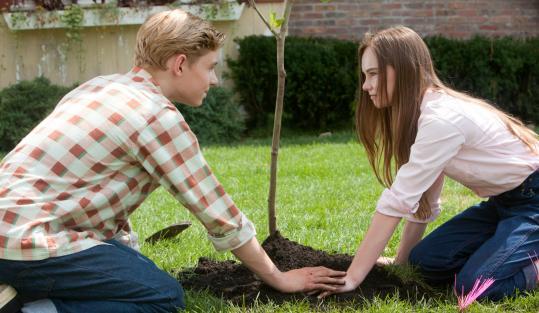
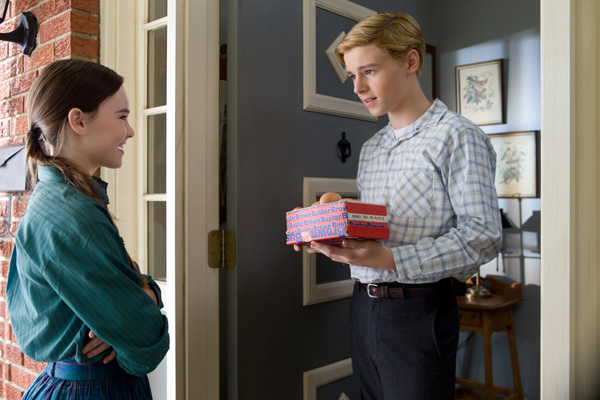
Flipped is likely a film that has gone unnoticed by many. It has had a weird distribution schedule considering Rob Reiner is its director and its coming from Warner Bros. It hit a few screens, very few, on August 3rd and made a wider release without much fanfare on August 27th. It’s quite unfortunate too because this is great little heartfelt film that is sure to have an emotional resonance with audiences of all ages. Hopefully, once it hits video more people find out about it.

Flipped while telling a seemingly simple story of a protracted relationship between neighbors Bryce (Callan McAuliffe) and Juli (Madeline Carroll)  it tells the tale from the perspective of both the male and the female, here we get the truest illustration of the now cliché that men are from Mars and women are from Venus as they are rarely on the same page. However, their perspective on each of the major events of the tale is very interesting indeed.

While it does seem at first like it is a narrative device which is being used simply for you to get to know the characters it quickly becomes the signature of the film. It is slightly unconventional and so it may not be an unusual reaction to be waiting for a more traditional narrative structure to take hold but eventually I did find myself awaiting the visual flip in which the story switch to the alternate narrator for a chapter and part of what becomes so engaging about it is that you start to identify at some points with either side of the seemingly star-crossed lovers.
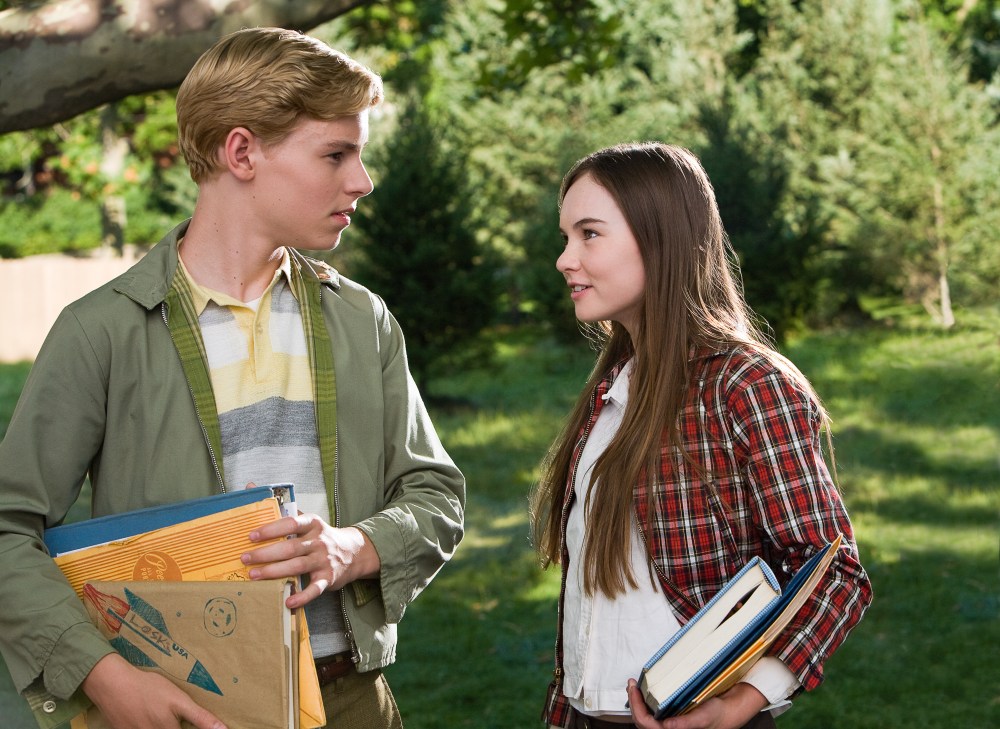
Flipped (2010, Castle Rock Entertainment)

It therefore becomes a very emotionally involving experience and to an extent and intellectually stimulating one whereas you see a scene play out and know the opposing party will have their own version of the events and you wonder what that might be.

A great surprise that this film has in store is at the end when their feelings are mutual is when the narrative divide is crossed and they speak in the same segment both of them telling the story. It is a wonderful break from the myopic views as they now are sharing a moment they’ll both remember with equal fondness.

The film in the latter stages does become manage to become very moving and by then the characters have been built so well you want for them and might even feel your eyes stinging with tears.

What is most fitting about the ending is that it is done telling the tale and that is all. There is no “happily ever after” it can be implied if you wish it or not the story at hand was about the beginning not the end so why venture a guess.

Flipped (2010, Castle Rock Entertainment)

In the end the ebb and flow of the film was quite satisfying and there was likely something most people could relate to regardless of the construct of this particular tale or the period it is set in.

This film being a period piece was a decision that Rob Reiner came to and one that was not suggested by the novel and it was a good decision as the story itself does ring a bit more true being set in the past than it would in the modern-day. Particularly due to the connection that Bryce’s grandfather (John Mahoney) and Juli have. While this does allow for a few things that make you wonder if they are accurate like dinner table conversations about salmonella and the prices of things it is ultimately a change for the good.

What is perhaps most interesting in this film in that because it has two protagonist/narrators thus it focuses on two family units and it does manage to give us some understanding as who all these characters are and allows for great dramatic scenes amongst the family units.
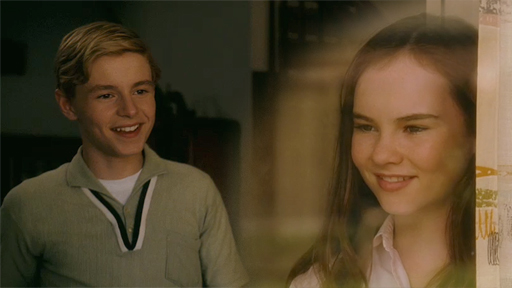
Flipped (2010, Castle Rock Entertainment)

The cast is impeccable all the way to the smallest player like Juli’s older brothers who not only look the part of aspiring doo wop singers but sing the part as well. However, the glue that holds the film together can be found in its young leads Callan McAuliffe, who not only convincingly plays a somewhat naive well-intentioned boy but also has no remaining trace of his Australian accent throughout and Madeline Carroll who is like a young Ellen Page.

This is a throughly enjoyable, heartfelt, funny and endearing film that you should make an effort to see.

7/10
Welcome to Jurassic World, Part 8: Conclusion

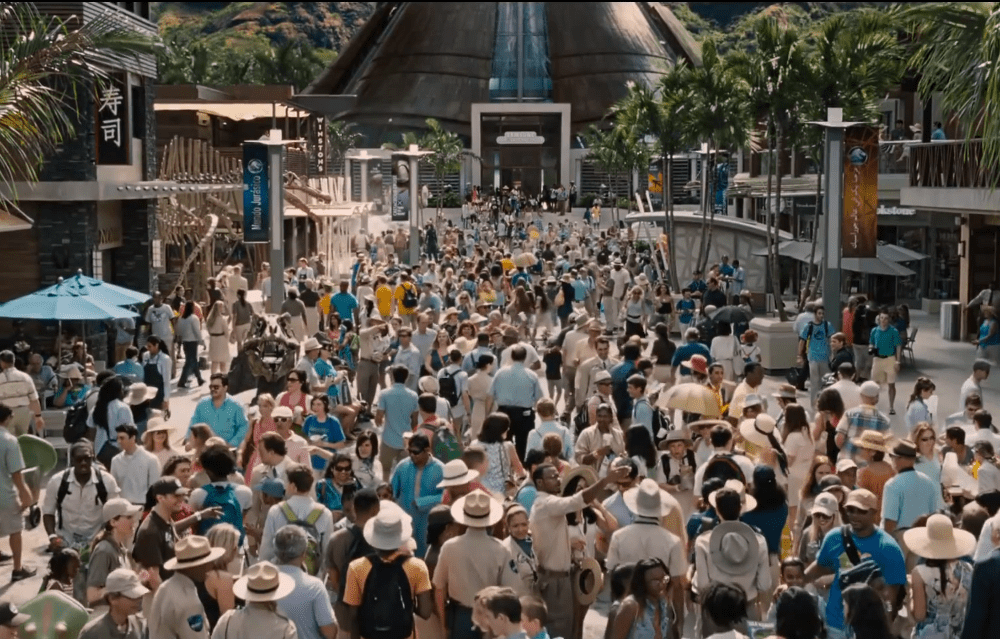
The final element that needs discussing is the park itself, a realization of Hammond’s dream that we had not yet been privy to see. The camera move into the hotel room, chasing Gray (Ty Simpkins) all along, out to the balcony and looking out across the aquatic center and the Hammond building has a very similar effect to the first view that Ellie and Dr. Grant have upon first seeing the Brachiosaurs, and this is not just because of the use of Williams’ iconic theme. Sure, it’s the kind of wonder a kid has at Disney World, but the Disney parallel has always existed; and the exuberance on display is no less pure in this scene than there in the real world.

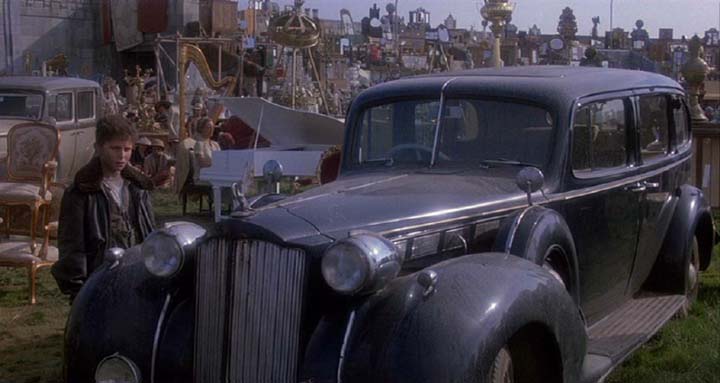
Though, yes, this is the movie part of the illusion it’s trying to create is that these dinosaurs exist not just in modern times but in the world today. What would a multi-million (billion?) dollar a year theme park full of dinosaurs look like if not something corporate? The selective nature that goes into deciphering what product placement is distasteful or gaudy absolutely confounds me. The park’s vehicles are now Mercedes-Benz, in the first film they were Jeeps, so that makes it an advertisement. Yet it seems when certain vehicles are used because they represent an era like Mercedes being used by the Germans in WWII or the tracking shot keeping the Packard hood ornament in focus during Empire of the Sun mum’s the word because that’s an artful choice. When many complaints about modern CG decry the crushing of verisimilitude it’s odd that an artifice such as Greeking, or obscuring logos and brand names, would be so prized that its mere presence is an instant distraction and detriment.

Empire of the Sun (1987, Warner Bros.)

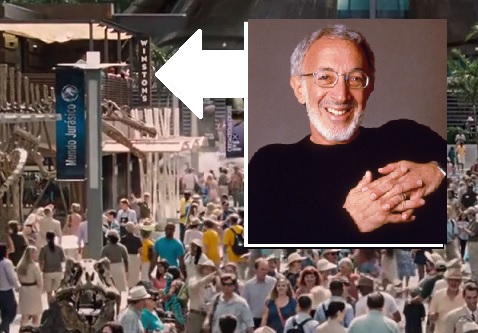
There’s a Starbucks on Mainstreet USA in The Magic Kingdom. Surely, since that was not always the case some were right to be a little peeved by it, but it’s a bit disingenuous. Disneyland and Disneyworld have always been interested in revenue, so that’s a natural progression. Jurassic World has to have a modern corporate mindset to a fault. So, yes, scoff a Brookstone being there if you like but don’t mock that and miss that a restaurant was named Winston’s, in honor of the late, great Stan Winston, and don’t be so busy being annoyed the presence of corporate logos that you miss that there, too, are commentaries like with Pandora, a jeweler I highly doubt was chosen by accident.

Jurassic World (2015, Universal)

Especially since one of the things the film is commenting on is corporate influence and it’s open about the fact. Lowery (Jake Johnson) jokes about the dinosaurs being named after companies being the next step after Verizon Wireless presents The Indominus Rex is announced.

Furthermore, there is InGen who is always plotting separate deals in the background whether its good for the park or not. They do what’s best for their brand, or more to the point their bottom-line.

If the film was called Jurassic Game Preserve, I’d understand the complaints, but since it’s a theme park it makes perfect sense. You can’t get away with charging $7 for no-name soda. No, Pepsi is not OK. Coke, please. And make it a big one so I can nurse it through yet another viewing of Jurassic World.

Welcome to Jurassic World, Part 7: What Works and Really?

“Really?”

I’m not going to over-elaborate in this section. In prior posts I have discussed some of the inconsistencies in the film. Here I will mention a few that I haven’t yet gotten around to, which leaves about two topics.

The CG is at times an issue, but at times I was surprised it worked so well. Sadly, the reason CG usually doesn’t work as well as it could have less to do with actual computer technology and other film trends. Even more surprising was the occasional actual practical effect like the dying Apatosaurus.

The implementation of the Phase One: Real World order rolls out slower than the execution of Order 66 in Revenge of the Sith, as quite a bit of screentime passes before the last employee (the gyrosphere operator) hears about it.

What Works

Jurassic World (2015, Universal)

In parsing through many smaller moments in the larger sections there are similarly not many elements I enjoyed that didn’t get mentioned. The first thing that bears saying is that Trevorrow successfully transitions from a small film with a fantastical element, Safety Not Guaranteed, to a fantastical story with smaller elements here.

As mentioned above the use of some practicals is greatly appreciated, and of course, I love that this was a film that brought the series back to its roots of a being a park of dinosaurs (which is coincidentally the Brazilian title), which two and three kind of skipped.

The pulse-pounding elements are also there aside from youthful wonder. Many of the at-the-screen 3D-aimed scares worked on me more than once, and the ACU (Asset Containment Unit) members’ deaths being accompanied by the sound of flatlining as they monitored their vitals was especially effective.

Jurassic World (2015, Universal)

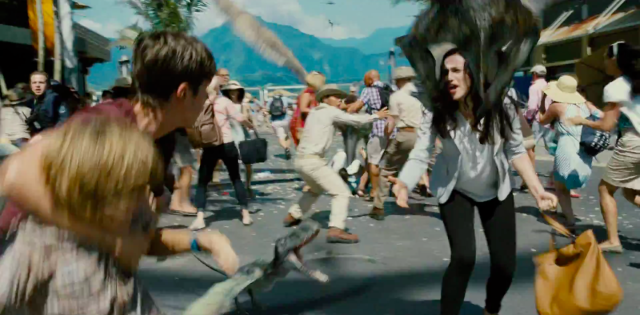
Character’s deaths can be among the trickiest things to handle in films. The handling of a death scene, like the genres of horror and comedy, can be highly subjective. The death of Zara (Katie McGrath) in the clutches of a Pterodactyl seems to hover in the gray area between comedy and horror, and it’s not a wonder its received a disparate range of reactions.

The reasons this scene works for me are myriad, among them being the morbid sense of humor, it’s the schadenfreude of taking out an annoying character, but the main reason is that it takes what is not inherently a threatening family of the dinosaur kingdom and really renders them terrifying by the torturous ordeal it puts her through, which ups the stakes for the other chases and battles, namely the one Claire ends, saving Grady, with cool confidence and a flurry of well-placed shots.

This series concludes tomorrow with Part 8: Conclusion.

Summer Reading Classic Film Book Challenge: Twinkle, Twinkle, Little Star by Dick Moore

Introduction

This is my latest post (fourth overall) for the Summer Reading Classic Film Book Challenge hosted by Out of the Past. This book fits in a few categories as biographical/filmographic account of Dickie Moore’s work but also counts as an interview book as he spoke to many of his contemporaries later on and compared experiences.

Twinkle, Twinkle, Little Star (But Don’t Have Sex or Take the Car) by Dick Moore

Twinkle, Twinkle, Little Star (1984, Harper & Row)

When I was growing up I was a kid who loved movies, movies of all kinds. When there were young characters, of course, I identified with them. Still recalling what it’s like to be of that age, I still do to the extent I can. As I grew, and started to learn a bit more a bout how films are made, separating the fantasy from reality and liking them both; things were really changed for me with one film and one name: Home Alone starring Macaulay Culkin.

As a kid who sought all different kinds of artistic expression it was mind-blowing that a kid could have that kind of success, and at that age I believed a great deal of talent. Following his trajectory there was quite a class of young actors in the early ‘90s I followed: the star of his next film Anna Chlumsky, another talent he teamed with that had more depth and range, and still does, Elijah Wood. It was quite a group of actors in the early years of the soon-to-be-called Millennials.

As I continued to follow film, and created my personal film awards, I wanted to recognize and reward young talents that were often overlooked. Similarly, as I started to watch older films I started find favorites from different eras. One of those is Dickie Moore, who I’ve seen in a number of studio and Poverty Row titles alike.

Blonde Venus (1932, Paramount)

Perhaps the strongest group of young actors came to the fore in the infancy of synchronized sound and the dawn of the Depression. As is astutely covered in Dick Moore’s account the conditions in Hollywood and society as a whole were perfect for this boom crop.

Typically, when I’ve read about film I’ve been most concerned about the material at hand. The film, analysis of it, the construction and creation of it. Having a staunch belief in separating art from artist as much as possible has limited my interest in biographical accounts to an extent. One thing I do like is setting the record straight, which is much of the larger goal of Cliff Aliperti’s great bio on Freddie Bartholomew, which I just read.

However, seeking a firsthand account lead me to this book, and what’s better is that it constructs itself based on the collected experience of many actors from the era. Yes, there is hindsight involved, but the honesty and self-examination and multi-faceted nature of the investigation of their careers, their lives, and how one affected the other is fascinating to read.

The Devil is a Sissy (1936, MGM)

Those Moore talks to are a veritable all-star cast:

Cora Sue Collins, Jackie Coogan, Jackie Cooper, Edith Fellows, Peggy Ann Garner, Lillian Gish, Bonita Granville, Darryl Hickman, Sybil Jason, Gloria Jean, Marcia Mae Jones, Roddy McDowall, Spanky McFarland, Sidney Miller, Kathleen Nolan, Margaret O’Brien, Donald O’Connor, Diana Cary (a.k.a. Baby Peggy), Jane Powell, Juanita Quigley, Gene Reynolds, Mickey Rooney, Ann Rutherford, Dean Stockwell, Matthew Beard (a.k.a Stymie), Shirley Temple Black, Bobs Watson, Delmar Watson, Jane Withers, and Natalie Wood.

The chapters are typically focused on one topic at a time yet linked chronologically so you get versions of:

Life before the movies; stories of parents on set in; how the studio system pressured kids to keep in front of rolling cameras; an insightful look inside the studio school bubble; how these kids related to the adults they work with and around, important as they had few contemporaries; a chronicle of successes, nerves, and stresses; tales of financial woe in the days before regulation and the loophole in the first law to protect minors’ earnings; tales of further imposed awkwardness and arrested development in adolescence; struggling with what happens after the phone stops ringing; and leaving home and/or show business.

Conclusion

In Love with Life (1934, Invincible)

I could go on and citing quotes ad nauseum as I did quite a bit of underlining in this one, but for those interested I’d rather not ruin the surprises herein. There is certainly plenty of food for thought, differing and insights. It’s not an easy book to get anymore, I believe mine was secondhand, unless it really sat around Strand for years and years but if you look around the Internet you should be able to find it, and if interested in any of the subjects you should give it a read.

Welcome to Jurassic World, Part 6: Building a Better Dinosaur

Introduction: Science and Society

In discussing the films in this series I’ve always discussed science in a section, and rightly so. However, when outlining this project this most recent installment this was the only one wherein I could not rightly just label it science but had to add society. Clearly this is by design because the public at large is present and the public that frequents the park, pays the bills, and demand more teeth to be further satisfied.

The most important question that needs addressing here is: when does bad science breed bad cinema? As Matt Zoeller Seitz recently stated on Twitter, I agree that more critics “should show their work,” and that’s what I intend to do here because as I was looking over some of the finer points of this film I got to wondering, if this science is shoddy then why do I like this and not Interstellar.

Bad Science = Bad Cinema?

Jurassic World (2015, Universal)

The issues I had with Interstellar I think were more pervasive for one. The so-called revolutionary sound mix didn’t work for me, the film seemed to be trying too hard in story, and performance, to coax an emotional response from the audience such that it felt artificial.

Parallel those aspects to Jurassic World and it had a sound mix that was appropriate and followed some of its pre-established rules. Further, the characters have their emotional moments (Judy Greer) and Gray, but that pain is their characters’ pain and it’s not brandished. If you identify with it you react, it’s not trying to force that reaction. This can partially be attributed to Giacchino’s more restrained musical philosophy as opposed to Zimmer’s heightening approach.

Conversely, when Nolan in Inception was more intent on building a world rather than using science as a crux of his film that worked. Regardless of whether the science of sleep and dreaming in that film were accurately interpreted for dramatic effect.

Jurassic World also has the benefit of not being the first in a series. The rules of this specific narrative universe have in many ways been pre-established, therefore, whether the science is accurate or well-applied has less bearing.

Jurassic Park (1993, Universal)

Since the beginning the issues of missing sections of genetic code has been addressed. The usage of the DNA of amphibians opened the door for the dinosaurs to change sex and to breed. The odds of newly found genetic material being more complete are slim to none, so gaps still need to be filled. The change of sex being an acknowledged issue other safeguards can be attempted.

The park is now open, it needs revenue, the patrons have demands, so do the bosses; to create the new assets tried methods will be used. To create something never before created, to try to make a hybrid, new methods will be used. Methods that would create more issues. Issues that may or may not be foreseen but will happen nonetheless if ideas are fast-tracked with less regard for the consequences than is normally shown.

Variations on the Theme

Jurassic World (2015, Universal)

The film opens quite gracefully with the hatching of an Indominus Rex juxtaposed against a tight shot of a crow’s foot, which in close looks like a dinosaur. It’s visual evidence of the evolution of species and also an allusion to how the first film started out (Dr. Grant talking to a smart-mouthed kid about the evolution of raptors into birds).

When pitching his concept of Raptors as military weapons Hoskins says as a retort to concern over if they’d follow orders “Only loyal bloodlines will be promoted.” Hearing this having seen Blackfish and heard the tale of the generations spawned in captivity from a tainted genepool is chilling.

That’s not the only time I thought of Sea World, obviously the Mosasaurus’ watershow is another one. And it prompted me to tweet the following:

Hubris has always been a theme in these films. Hubris usually begets shortsightedness and poor decision-making. As does greed. All this leads to the genetic engineering to create all-too-powerful hybrid. It’s a great idea in a video game (yes, Jurassic World has one of those you can play), but not as much in a supposedly real world. So we know from experience in the first film that it’s an inherently flawed concept. The question is how are the stakes raised and how is the enemy bigger, stronger, and faster.

Building a Better Dinosaur

Jurassic World (2015, Universal)

One of the stumbles the film faces is the partially askew introduction of the new star, the Indominus Rex in two parts; each encounter, one with Masrani and one with Grady has some oddity. With Masrani there’s the “Isn’t it white?” question which kind of foreshadows the ability to camouflage, but we never see it looking as if it’s an albino. With Owen he discovers the scratches on the outer wall and starts to surmise its intelligence, but its off-frame when mentioned, and not cut to, the scratches are only seen later. Those are odd occurrences and slips of mise-en-scène and script.

As we’ve already examined we know as a given that some of the DNA of other animals is used in completing gene sequences. This seems to be information that requires a certain amount of clearance at the park. Grady doesn’t know that, even Claire does. Her concerns are the day-to-day operations and bringing money into the park through investors and new attractions to draw crowds, if asset development is within her purview she never seems to pay it any mind. She’s only really interested in more teeth if it means more money and marketable names. It’s one of the clashes she and Grady have.

This assumption is what I believe is behind the awkwardly placed, blocked and specimen scene – this segment with forced framing is thankfully cut short by some monologue-ing by Hoskins, and that is thankfully and humorously cut-off by a raptor invasion (dinosaurs always save the day in the parks). It furthers the notion if knowing not what we’re messing with. Grady makes the leap first stating “That’s no dinosaur.” Aside from the given frog DNA it is learned that cuttlefish DNA must’ve leant the ability to camouflage, though it was incorporated due to the need to support an accelerated growth rate, which asset development would’ve wanted to get their new hybrid ready for primetime sooner.

Jurassic World (2015, Universal)

In all the examination of the genetic makeup of the new dino in the film what is perhaps most keenly gleaned is that it’s not more unnatural a creation necessarily just much harder to predict, and a beast we’re even less inclined to handle.

To What End?

Jurassic World (2015, Universal)

Jurassic World introduces the Military-Industrial complex to this world, in this setting where the park is literally creating dinosaurs that never existed, where one man’s ability to bond with the creatures is being exploited so the dinosaurs can do something they weren’t made for, seeing Malcom’s book God Creates Dinosaurs is more poignant than ever.

Stocking Masrani’s “petting zoo” and justifying be able to charge $7 a soda is of the ultimate importance, therefore it’s unsurprising in this environment that a dinosaur would be created that can hide from thermal radiation or camouflage because there has not yet been less care taken in creating one, and rushing it to public display.

Intelligence

Jurassic Park (1993, Universal)

In each of the films the question of intelligence has been brought up. This, of course, something that could only be speculated upon by paleontologists. Seeing the size of a creature’s brainpan in its fossilized remains is one thing but it doesn’t tell the whole story.

In the world of these films the ante has been raised when further observation has shown the raptors have an intelligence which rivals primates. Here with a hybrid we assume that it has taken the best traits of a Tyrannosaurus Rex and Velociraptor and not been muddled in any way. That’s how it plots to hide itself from thermal radiation sensors, has the recall to know where its implant is, the intelligence to take it out, and plot to get humans into the enclosure.

The omnipresent theme of control is an aspect too lost. Grady is there to examine the enclosure for possible faults. Grady says to Hoskins that maybe “Progress should lose for once” about his raptor plan. Surely, the same must go double for a hybrid.

Conclusion: “We’re just used to being the cat”

Jurassic World (2015, Universal)

Touching back on this scene because it’s just that good, in the debate between Masrani and Dr. Henry Wu (played brilliantly by B.D. Wong),  quickly refutes Masrani’s complaints as in any way being something he is solely responsible for. He was just doing what needed doing to get the “more teeth” on a scarier, exaggerated predator ready when it needed to be.

The death and unruliness is unfortunate but he made the creatures ordered to make. He wasn’t asked to make a third after the sibling was eaten. Genetic engineers are not behaviorists and Grady didn’t come in until it was too late and the Indominus had missed out by being in isolation and lacked in socialization.

The capper on the conversation is perfectly astute, and may distill the series to its essential core element:  we, being the current dominant species on the planet, have brought back one of the former dominant species. Being the species in its own place and time we assume we can control, maintain, and present them for our amusement and edification, but the truth of the matter is they will not be held down, and with all things being equal we don’t really stand a chance.

This series will continue tomorrow with Part 7: What Works and Really?

Review: A Wolf at the Door

A Wolf at the Door may appear on the surface to be a standard, formulaic Fatal Attraction-style plot transported in location and time. However, where this film differentiates itself is rightly in its reflection of its setting and its lack of concern over traditional conflicts caused by extra-marital affairs but rather it seeks to examine the characters on their own terms, how they interact and how they affect one another.

A Wolf at the Door starts with the inciting incident, a crime, a mother (Fabíula Nascimento) reports an unknown woman has picked up her six-year-old girl at school. While being questioned the school teacher starts remembering certain details that give the investigators a slight lead. As they summon the girl’s father (Milhem Cortaz) he confesses to an affair that leads suspicions to center on his lover, Rosa (Leandra Leal).

In a tale where at times witnesses are unreliable, and they slowly give more details about what they did or didn’t do, revealing layers of truth; a fractured chronology with frames and some narrative ellipses will be not only preferable but almost a necessity.

Much of what makes this film work is the pairing of cinematography and editing in long takes. In these hypnotic shots with slow pushes like a Brazilian version of Fred Kelemen’s work with Bela Tarr the viewer is drawn into the madness unfolding, and it also allows the actors the freedom, and the challenge to work uninterrupted without alternate takes. This continuous imagery with precise movement and mise-en-scène may seem less cinematic to those who have gotten too used to the ever shortening shot-lengths in Hollywood films; however, it’s quite the opposite. It’s astounding to watch on a technical level alone, and much more impressive when you see what it does for this story.

A Wolf At The Door (2014, Strand Releasing)

Whenever writing on a film produced outside the US, and not in the English language, there is a temptation to do a standard mandatory bit on cultural relativism; especially when its a culture I’m as familiar with as the Brazilian one being a dual citizen. Yet that familiarity with the culture doesn’t guarantee the success of the product in question, just as much as “based on true events,” which this film boasts; doesn’t guarantee 100% accuracy. The cultural relativism bit bears saying here because there are certain plot points that may challenge suspension of disbelief that are quite culturally accurate and ring true.

This is another film that is fearless in tackling a taboos, not only in general, but using it as its climactic moment, and that’s as much as bears saying without giving too much away.

Because they sometimes get overlooked I will first give kudos to a standout supporting turn in this film: Thalita Carauta, playing a character who only gets thrown into the mix by chance on a few occasions steals every scene she’s in. A bulk of the film is carried by Leandra Leal and Milhem Cortaz, more by Leal for her scenes with Nascimento. They are both magnetic, and precise in charting their persona’s unraveling, and make it quite easy for those shots to hold as long as they do. They turn in two of the most impressive performances to date this year.

A Wolf at the Door is definitely not a story to be entered into lightly, and will most definitely not find universal favor. However, those believe that great art can and should be created from human immorality and depravity should give it a look.

9/10

A Wolf at the Door will be available on DVD and digital video on August 25th. 

Welcome to Jurassic World, Part 5: Of Footwear and Fan Service

Introduction

This is part five of a series on the Jurassic Park franchise and the second post on Jurassic World

Looks Like a Pump, Feels Like a Sneaker

Yes, this is an incredibly dated reference being used to introduce one of the largest talking points in the film namely Bryce Dallas Howard’s footwear. However, I feel that in chiming in so late I had to try to separate myself from the pack, so why not try a now very old reference?

Anyway, I must confess that when Claire is doing her preparation routine, that initially confounded me as much as it did Owen, I did think removal of her heels would be part of that ritual. When that never happened I interpreted it as a calculated effort. Now that’s one that may not have been balanced well with how Owen was perceived, and the drawing of Claire, and Howard’s intepretation, but it’s one I kind of let go.

That interpretation seems echoed here. However, it’s not something I can say I feel passionately about. I see the points being made in various places, especially when the woman who I’d declare the biggest fan of Jurassic World referenced it as being ‘stupid.’

Jurassic World (2015, Universal)

I do wish there was this kind of impassioned debate and analysis of every film, but apparently even in the age of over-saturated Internet and social media coverage only films that cross the obscene one-billion-dollar threshold get this kind of magnifying glass such that even though the Pachycephalosaurus was introduced to the series in The Lost World and referred to as “Pachies” then, it only garners attention now. And, honestly, with Jurassic World, the park, being such a large corporate entity concerned with bringing on sponsorships, referring to their animals as assets, you’d think easily misconstrued or potentially offensive nicknames would be verboten.

So that’s not bending to the overly-PC slant most blockbusters have to adhere to but rather just acknowledging a reality in a large company.

Allusions and Fan Service

Introduction: The Myth of Binary Reality

Jurassic World (2015, Universal)

So through the first two sections I acknowledged some issues, and mixed results in the film. So, how can I defend liking this film? Easily. Firstly, because defense of a film is defending an overall intention and design, and not saying its flawless or perfect. One of drawbacks of the knee-jerk, vitriolic, online debate machine is that it forces us into a binary interpretation of reality, specifically art. A film is either awesome or it sucks; perfect or worthless; you’re either a hopeless tool who gobbles up Comic Con news or a worthless hipster who only attends arthouse films you half-understand. This kind of zero-sum approach to things is so disadvantageous to all involved. I like to pride myself on balance. I think my BAM Awards and Best of Lists are testaments to that, I constantly try to buck trends: tentpoles and obscure artpieces can be on my best of lists; so can horror films and horror performances; a performance can be great even if a film isn’t; and so on. Especially in this age where audiences, both casual viewers and film buffs, have so many avenues to see so many kinds of films there’s less reason than ever to be self-limiting. No longer are we as viewers confined by the entertainment fishbowl created by the partnership of major studios and theater owners.

The last paragraph is a roundabout way of saying no film is perfect, perfection is a myth. One story I embrace from film school was when a professor of mine asked Robert Wise about cutting Citizen Kane, which he stated at the time was perfect. Wise instantly replied that he should’ve cut a little more coming out of the butler’s flashback. The pause is too long. And it is.

Disavowing perfection, and showing what a sham a binary reality is I can begin to talk about what it is in this film that I enjoy.

Allusions

Jurassic World (2015, Universal)

Being the first film in the series in fourteen years, nostalgia will play a part for those who have “been there from the beginning,” so references are inevitable. There is a valid debate to be had about the excessiveness of fan service in film in general, but in Jurassic World I feel it’s one of the home run elements in a universal regard, and to me personally.

The T-Rex is introduced in this film with a familiar motif and new window dressing. We see a flare and a braying goat. The enclosure allows curious park-goers a very close, supposedly safe glimpse of the beast feeding.

Granted the predator or scavenger debate is one that rages, and is even addressed in a Jurassic World branded children’s book on dinosaurs, but cinematically he has to be a hunter. The Tyrannosaurus Rex has incontrovertible star power and in the popular imagination captures so much about what has fascinated so many about dinosaurs since their discovery in the 1800s.

Jurassic World (2015, Unviersal)

The most obvious one is the discovery of the old park and its paraphernalia, starting with the Jeeps. Is it likely that the island was abandoned for years and left to overgrow, it could’ve happened. Is it likely those edifices would be left standing after it started getting redeveloped? No. It’s certainly an expense spared. Am I glad it was there anyway, and did I think it was awesome? You be your butt (the one you’re to be holding on to).

Yes, “Spare no expense” is cited. If you take that overly-literally then Masrani should’ve just shot a warhead at the Indominus and gone back to the drawing board $26 million dollars or not, but then there’d be no movie. Genetic engineering in cinematic terms is something that has happened and not something we want to see. Much in the way Masrani was not interested in how the Indominus was made until it was killing people. “You just asked for more teeth.”

Speaking of more teeth, I still absolutely love the fact that the Mosasaur feeds on a great white shark. It’s an obvious Jaws allusion, but it also is great to illustrate the size of the Mosasaur and what fearsome predators they must’ve been when they can dwarf, and swallow whole, the present day version of nature’s most perfect eating machine.

Jurassic World (2015, Universal)

Jurassic World also uses these allusions as a tool to introduce some subtext. On his desk, aside from the dinosaur figures, Lowery also has a copy of Dr. Malcolm’s book God Creates Dinosaurs. It’s a not-so-subtle reminder of the lack of humility being shown but it’s still appreciated.

Personal

Jurassic World (2015, Universal)

Some of this fan service I will admit I can only rightly construe as being of service to me. Which means that I enjoyed certain aspects and outcomes due to the tendentious proclivities.

Among these things is the climactic battle. The reason I mention this is not only the team-up aspect, which I will admit can be seen as a tiresome trope, but not only does it hearken back to the high climax of the first film, and bring “more” into the equation than previous films, it also has a battle between dinosaurs who are “more natural” against the Indominus “more synthetic.”

The battle is staged in such a way that it got very close to doing what I hoped it wouldn’t, killing the T-Rex. In the interest of full disclosure I have several issues with the original King Kong. One of them being that this is a world where apropos of nothing dinosaurs not only still exist but this massive primate can kill them fairly easily. That’s just inanely dumb in my estimation, combine that with incessant atonal screaming that somehow passes not only as acting but the “best acting” and you get the bulk of my gripe.

Jurassic World (2015, Universal)

Jurassic World not only doesn’t play that game but it gives us the T-Rex moments we’ve been waiting for, but still introduces a new heroic figure. The T-Rex’s entrance is great and helped by the fact that I didn’t quite grasp the “more teeth” line at first, but when I heard “Paddock 9” I knew, and it was a big part of the making-me-feel-like-a-kid-again effect. I was so psyched for the ending it was insane.

The new heroic figure is the Mosasaur, which is a great touch. I have often wondered why it is that the that the oceanic species of the same age get so little press and love. If you truly want some of the most terrifying leviathans of all time you go below the water in the Mesozoic era. If there is a wholly sub-marine tale I’d willing see or write it’d be that one.

Conclusion

Jurassic World (2015, Universal)

Clearly, allusions and fan service, whether fulfilling the desires of a majority or just one individual, are not enough to give a film legs it can stand one. In many ways it is like icing on the cake though and can make everything that much better.

This series will continue tomorrow with Part 6: Building a Better Dinosaur.