61 Days of Halloween – Films to Keep You Awake: Blame (2006)

Introduction

For an Introduction to the concept of 61 Days of Halloween, and a list of previously featured films, please go here.

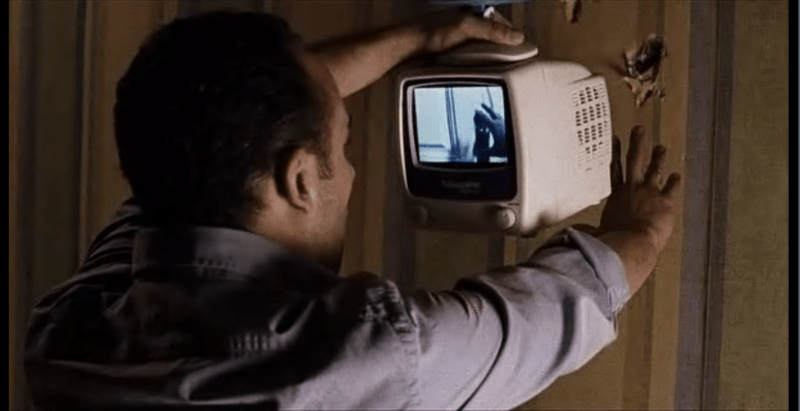
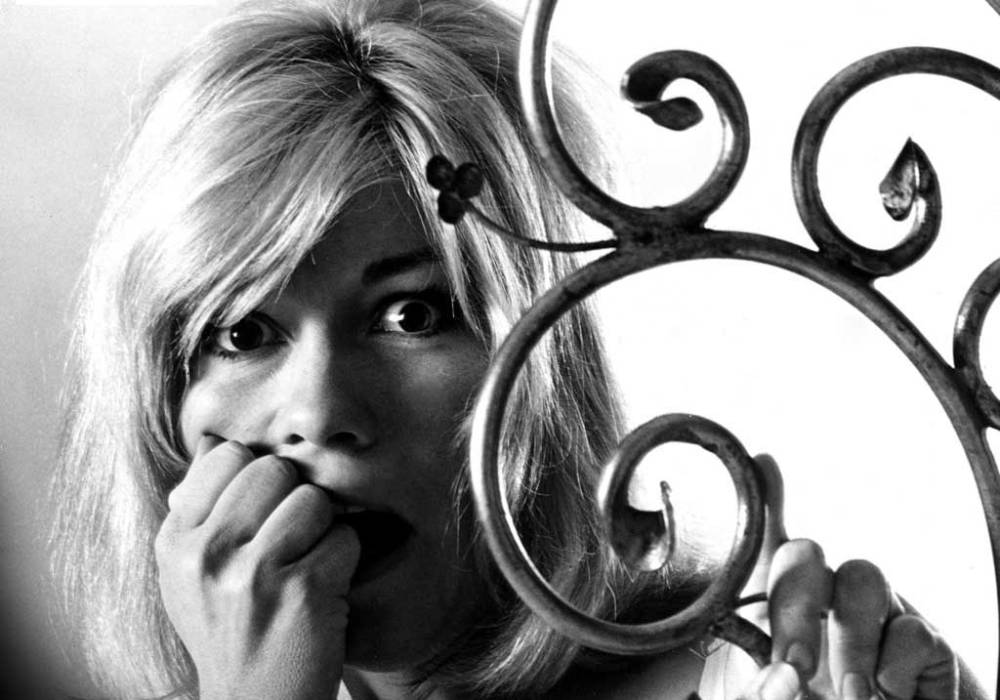
Blame

This installment of the series is offered by Narciso Ibáñez Serrador. The only other film I’ve seen of his is Who Can Kill a Child?, the original not the remake, which I enjoyed a bit more. Although many years later it’s interesting to see a filmmaker only twice and at two very different stages of their career, especially when some of the themes that are being explored are similar. This title is the most recent of his listed on the IMDb. While there are some interesting aspects to the film, and some of it is well-handled; I can’t help but feel it shares a lot of the difficulties the earlier film works: namely there are some dubious decisions by characters and some head-scratching moments.

However, what this film has going for it is that its tale is, eventually, a more layered one and touches upon themes too often avoided in American horror films. However, there does come a point in a film where it can be said you’ve been playing coy for too long and are starting to hurt the end result. The delayed nature of the reveals adds a sudden choppiness to the reveals and a very quick escalation with minimal time to absorb the impact of what is seen.

There is certainly a deftness of hand in how this tale is wrought, but it ultimately encounters some issues that titles truncated to have shorter running times do; inasmuch as I feel this film would’ve benefitted from being expounded upon such that the overall flow of it was more consistent. As it stands there are interesting scenes a themes, as well as effective sequences, that don’t gel into a completely successful whole.
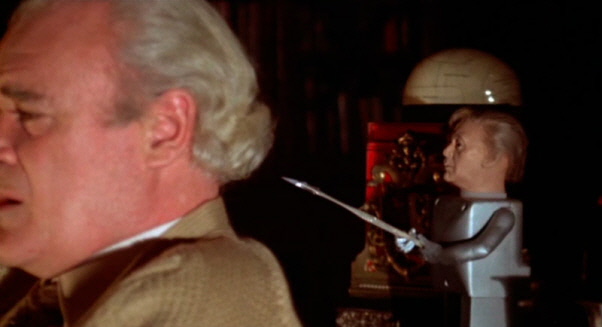
61 Days of Halloween: The Dead Father (1985)

Introduction

For an introduction to the concept of 61 Days of Halloween and a list of previously featured titles please go here.

The Dead Father (1985)

I have covered the films of Guy Maddin on a few occasions here. However, even with all that coverage there are a few of his films I had not seen. One such film was Tales from the Gimli Hospital, his first feature.

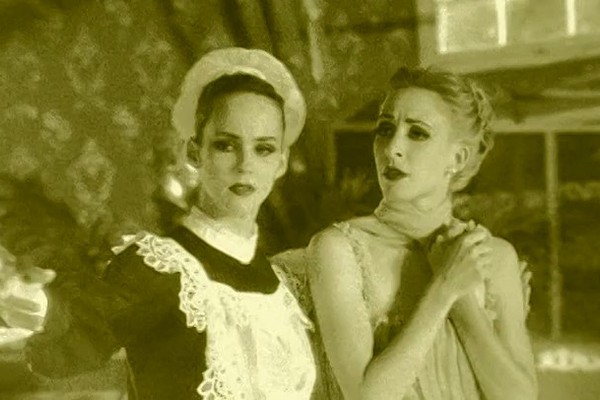
On the DVD of that film, one whose horror qualifications are disputable, there was the short film The Dead Father. This is one that is more obviously a horror tale. It’s one in which death is a transient experience. One misapprehension I recall from my days in film school is that writing “homey” or family-based tales was us students playing it safe, sticking far too close to writing what we know. However, it’s not the motif or the milieu you work with, but rather how you use it. Much of Maddin’s works, this one included, are family portraits but you could not confuse Maddin with any other filmmaker because of how he tells his stories in narrative, visual and editorial senses.

Even with it poetical use of voice over and sparse use of dialogue there are still silent film tropes all about this film starting with the introductory photo title cards of the characters. Maddin’s style is embossed on this film, and though he has experimented with different kinds of tales; he has created his own approach and that really started here.

While short films are a starting point for most, if not all filmmakers, few modern auteurs can be referred to as short film artists and Maddin is most certainly that. He continues to make many shorts and he tells tales that are as long as they have to be and is not only making features but made a short as recently as last year in an anthology, and one due out next year.

This is a film that sets its tone with weird off-kilter photo albums immediately and continues to its creepy, gross finale with occasional humor and persistent oddities throughout. Unlike many of his shorts, this film is not available online but instead is on the Kino edition of Tales from the Gimli Hospital it is definitely recommended viewing if you’re looking for something a bit different.

61 Days of Halloween: Asylum (1972)

Introduction

For an introduction to the concept of 61 Days of Halloween and a list of previously covered films go here.

Asylum (1971)

Last year I got into a real kick of watching as many horror anthologies as were easily accessible. The anthology film, horror or otherwise, was one I’d not seen too many times. Granted they are one of the rarer approaches but they are out there. The most recent notable editions in the genre are, of course, The ABCs of Death and V/H/S. I had heard, from more than one source, that this was the best of them so it was one I knew I had to give a go once this theme rolled around.

Not only had I heard it was quite good, but it was also cited as one of the 100 (or so) best horror films from 1950-1980 by Stephen King in his seminal work of non-fiction, Danse Macabre. And titles on that list are high on the pecking order so far as things I want to be seeing during this theme.

With this film the approach is one closer to a nested anthology, which is to say that the stories more naturally flow in a narrative sense. Some anthologies are rather regimented and segmented. Here the the frame is highly important both in terms of the screen time it’s given and the impact it has on the tale overall. There are far too many anthologies I’ve seen, even in the small amount, that treat the frame as a throwaway or as secondary. This does not.

With the tales spawning from the minds of the deranged there is also a brilliant liberation from “reality” and standard rules. The drawback that most will point to regarding anthologies is that invariably some tales are better than others, some are even so good that they nearly salvage otherwise dreadful films. Part of why this film is so well-regarded is the fact that pretty much all the stories in this film (frame included) stand on virtually equal footing, and they’re all quite good, creepy, weird, and well-executed.

Amicus Productions are not a name I’m very familiar with but they are a company whose titles are worth getting to know. Asylum being a prime example.

61 Days of Halloween – Films to Keep You Awake: The Baby’s Room (2006)

Introduction

For an introduction to the concept of 61 Days of Halloween and list of films previously covered please go here.

The Baby’s Room (2006)

As I mentioned last post, the very least I ask out of a series of horror films is that there be some concerted attempt to push the envelope within the confines of the genre. That’s exactly what this film does. Contrary to another film in this series that I’ll cover at a later date it does take a while to deliver on its connection between the main thrust and the teaser scene, but when it does it really works ingeniously and gives the film a creative avenue through which to explore its themes in both audio and visual ways.

While many of the films in the series, and in my experience with Spanish horror in general, can be a bit deliberately paced; the incidents in this film stack themselves nearly atop one another. The pace is fairly quick which does keep one fairly engaged both emotionally (as you watch the rapid deterioration of a relationship and mental state) and intellectually (as you fight to keep up not only with the twists and turns, but to decipher the rules that govern this cinematic universe).

Also, on the intellectual end of the spectrum there is a paradoxical nature to the film, which to my mind elevates it. Also bumping this film into another echelon are the performances. When there’s much dealing with mental state and personality it’s a pre-requisite for greatness if not passibility and this film does have very few chinks in its armor.

I believe that I may not have been as impressed by The Baby’s Room the first time I saw it, and that may have to do with the results of the narrative because what this film actually does, which too many horror films fail to do, is get me to care about what becomes of the characters within it. In one scene you see the protagonist quite literally pick up a figurine, a piece of a game; when you pick up all the pieces of the puzzle that is this film you get quite a dazzlingly terrifying portrait.

61 Days of Halloween: Graveyard Disturbance (1987)

Introduction

For an introduction to the concept behind 61 Days of Halloween and a list of films previously covered please go here.

Graveyard Disturbance

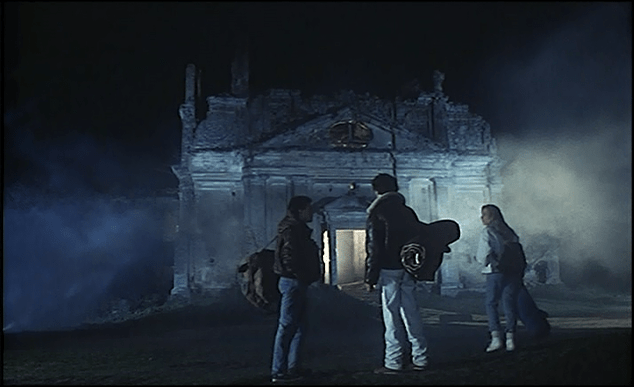
This is a film that was directed by Lamberto Bava, son of Mario and director of such films as Demons, for a televised horror film series called Brivido giallo. The inherent value of horror series in my estimation is challenging the writers and directors to create, be they within a theme or some of constraint to further contribute to the genre and hopefully push it forward. If it breeds experimentation and something new that’s ideal, but the goal ultimately, at least from an analytical viewpoint, is to not allow it to stagnate.

I’ve not seen other films released under Brivido giallo, but, sadly this title has little to offer in the way of either being a piece of quality workmanship or originality. That’s not to say it’s entirely bereft of positives but the film positions itself poorly to attempt to exploit said positives. The location, the atmosphere and overall art design is fairly great. However, it’s bookended by both poor acting and a fairly slapdash story so the atmosphere can only go so far.

As the mystery the characters find themselves in unravels itself, it wants you leaving more, in a bad way. It creates a mythos that is undernourished and it would have done well to exploit the “non-Euclidian nature” of the environs they found themselves within.

The first act offers almost nothing in the way of the incident, however, a title such as this one is not enough to get me to shut the door on Bava or this series of releases. When one watches horror one does so knowing there will be many failed ventures before finding something truly special.

61 Days of Halloween: The Fog (1980)

Introduction

For an introduction to the concept of 61 Days of Halloween and a list of previously featured titles please go here.

The Fog (1980)

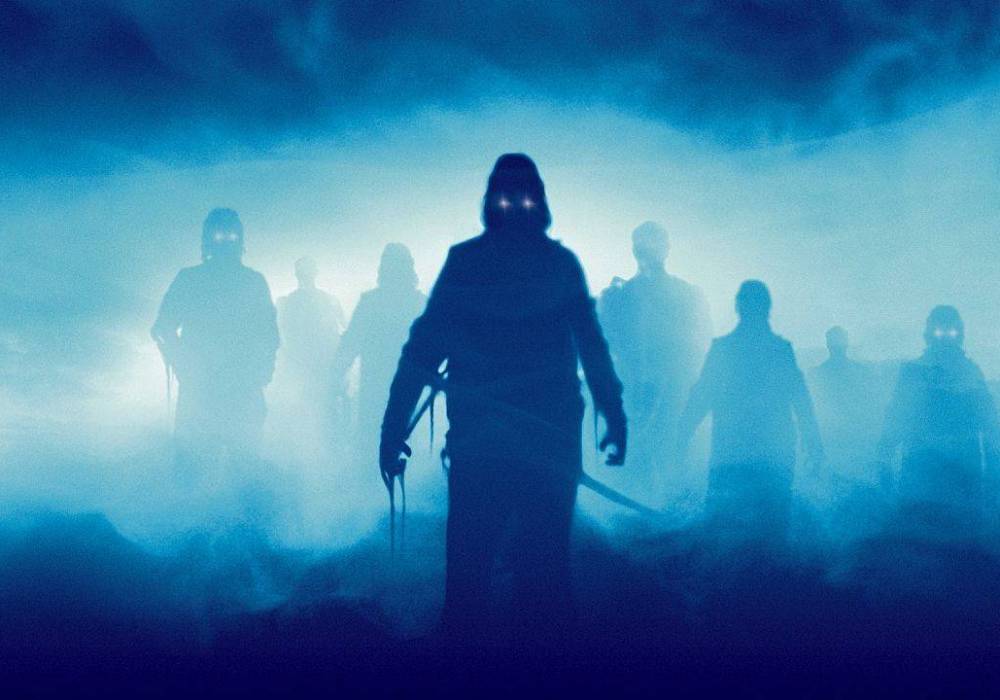
The first time I saw this film was quite a special experience. It was so not only because it was on the big screen (sure it was off a DVD, but still) but because it was very many years after the film’s initial release. The film is quite a magical feat.

What’s impressive to consider upon revisiting this film, following its wonderful transition to Blu-ray by the fine folks at Scream Factory, is that at its core it’s a very simple tale. In fact, it’s much like a campfire story, which is one of the things that really kick the film off. It’s what Stephen King might’ve described in Danse Macabre as a “tale of the the hook.” There’s a simple but wonderful backstory to this tale that allows many of the pivotal moments to be purely visual.

Furthermore, while some secrets about the history of Lorenzo Bay are being unveiled there is opportunity to crosscut to the simultaneous chaos ensuing. Which leads to another great thing about the film the fact that we the audience are given all the pieces, but the multi-character nature of the film leaves many of them only partially clued in.

Then, of course, there’s the rather obvious element of the fog itself. As human beings we get used to having five senses quite quickly, and having one taken away or severely impaired by something can lend itself to horrific situations, which is why so many horror films do occur at night or feature fog.

To have a film like this at any point after making something along the lines of Halloween would be impressive enough, but to have it come two years later and right before a very successful sequel and The Thing is why John Carpenter is one of the legends of the genre.

With Dean Cundey as Director of Photography and a cast featuring Adrienne Barbeau, Jamie Lee Curtis, Janet Leigh, John Houseman, Hal Holbrook and Tom Atkins there truly is little that can go wrong with a film such as this and hardly anything does. Carpenter and frequent collaborator Debra Hill here quickly frame a story with many characters that never feels rushed, confused or aimless and one that delivers many genuine chills. A true classic.

61 Days of Halloween: Films to Keep You Awake: Spectre (2006)

Introduction

For an introduction to the concept of 61 Days of Halloween and a list of films previously feature go here.

Films to Keep You Awake: Spectre (2006)

Part of why I write about movies, and why I’m not so hesitant to revisit them at times, is that my memory can be a bit dodgy at times. When thinking back on these films it was the one further down the list of Favorite Older Films, A Christmas Tale, that stood out more, but here’s what I wrote:

I embrace any and all horror series like Six Films to Keep You Awake that round up genre directors from certain countries to tell quick effective tales. It’s not dissimilar to Door into Darkness or Masters of Horror, this edition highlights the uniquely opaque, intricate and dramatic flair that Spain has for the genre. There will be another tale from the series on this list. This is the one that separates the die hards from the casual admirers.

Part of my wanting to write about them here is first to highlight them, as I acquired them on DVD, but also to disentangle them. In trying to surmise a series of films, a much more limited one than say Masters of Horror, generalizing and grouping can do a disservice to the individual titles.

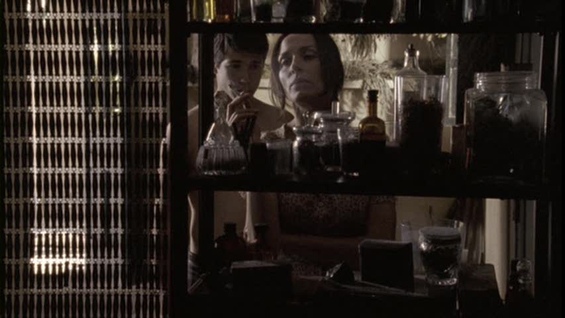
This is title really toys with chronology and with perception, its jumps through time in a character-based way and what’s best about it is its myopic focus and view of events. For only through entering the protagonist’s perception can we glimpse Moira in a different manner than the entirety of the town does. When it’s boiled down what occurs is fairly simple but the jarring, disorienting moments, the paradoxical ones, and the way in which the narrative unfolds are what make it so fascinating to watch.

Tales of obsession, be them adolescent or adult, can be hard to convey, especially in the horror genre, but I think this one sells it very well.

Another reason to revisit titles at times it to see if you over-estimated or under-estimated something the first time around. Complete reversals of opinion are rare, as they should be, but re-evaluations are good. I will see if I tweeted about another title in the series but I may have given that one the short-shrift just slightly. With this one I agree with the assessment that this is not necessarily the title that will make one gravitate to Spanish horror, but those who already like it may come to appreciate it.

61 Days of Halloween: Dementia 13 (1963)

Introduction

For an introduction to the concept of 61 Days of Halloween and a list of previous films covered go here.

Dementia 13 (1963)

This post is an exciting one for me in a few respects. First, I’ve known of this film for a very long time and I’ve always been a bit hesitant to watch it. The reasons that is likely have to do with the fact that the synopsis doesn’t sell it very well, and the early work aspect scared and intrigued me in equal respects. The second reason is that seeing something and then shortly thereafter writing these posts was the initial foundation of the 61 Days of Halloween idea. I wanted to see 61 new horror films in the season. Maybe I still will but I haven’t even met the bogey yet, so I will be featuring some titles I know already to try and do that.

Dementia 13 was probably more destined than ever to be seen since I not only recently saw Twixt, but Coppola stands as one of my most viewed filmmakers of the year as can be seen both in what I’ve watched and liked.

In very traditional AIP fashion the title is virtually meaningless. However, while Corman’s AIP productions are a very mixed bag this does end up being on the favorable end. It doesn’t all click along perfectly, and there’s a very murky section you have to trudge through, but if you’re patient (which should be easy with a running time of 76 minutes) the payoff is pretty good.

It can sound odd to say you’re a fan of knock-offs of a particular film, as well as the film itself, but I’ve come to find that many films that are riffing on, borrowing from, or borderline plagiarizing Psycho have mostly worked for me as well. This one does play some of its tropes and weaves them in quite a different pattern.

If you’re into programming double-features this would actually pair well with Coppola’s most recent foray into the genre. As there he weaves a far more elaborate tale but they both definitely feel born of the same mind, this one more youthfully creating an homage and the latter showing a vibrant maturity.

61 Days of Halloween – Tremors II: Aftershocks (1996)

Introduction

For an introduction to the concept of 61 Days of Halloween please go here.

Tremors II: Aftershocks (1996)

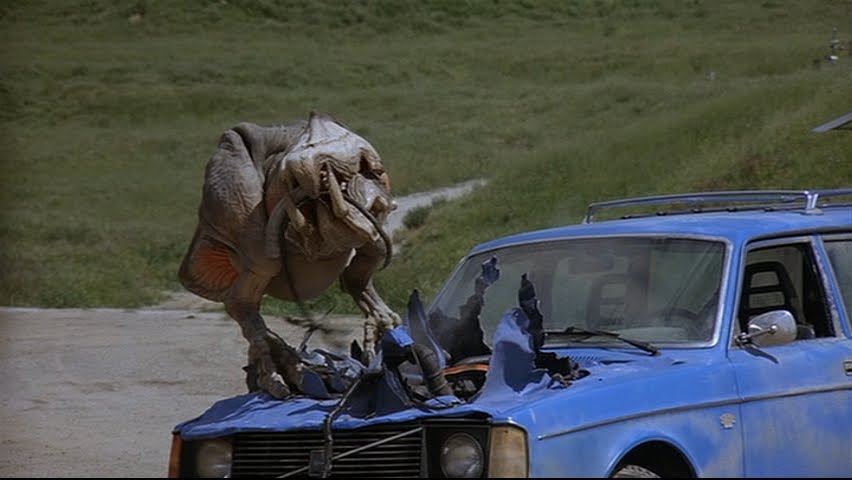
In the interest of full disclosure, I believe I watched this for last year’s theme, maybe even for the year before, but it was such a demoralizing viewing that I left my notes aside figuring I wouldn’t bother to feature it. A few things come to mind because of it: one, I tend to try and focus on a long-running series (or more) per year and this sequel squashed the possibility of me moving past it any time soon. Two, as opposed to a zeitgeist reaction of “it took too long for this sequel to come around” I saw this many years later and it still felt a disjointed unnecessary edition that takes a leap too many and forgets part of its tonal formula for success in the original.

There is to this film a terribly slow, mercenary start. Most of what it forgets is to incorporate humor. It’s not that it doesn’t try, but it does not try enough and does not succeed. The efforts are far more fruitful and concerted on the horror end, but still a bit misguided. There is a quantum leap in the evolution of these creatures in a short period of time and suddenly there is metamorphosis, asexual reproduction, infrared senses and biped offspring. That’s a lot to absorb especially when you consider that the creatures are MIA for a large portion of the beginning. Therefore, these changes are more jarring, there’s minimal explanation.

Clearly when you go a long time between editions in a series you’ll lose cast members. Michael Gross’ character was perfect as secondary, pivotal nutjob but hardly leading man material.

As the film progresses it does get a little better, but it never rights itself. I’ve been through many long series and slogged through them. In many cases, the badness almost became a sort of morbid addiction. This one is such a soul-crushing departure from the first it compelled me to quit at least for the time being.

61 Days of Halloween: The Asphyx (1973)

Introduction

For an introduction to the concept of 61 Days of Halloween and a list of past titles please go here.

The Asphyx (1973)

As I did with the last post I would like to commend a distributor to start, I got this film also at Monster-Mania but this time at the Kino Lorber table. Kino’s catalogue is fairly diverse and they offer many silent gems, other classic, art house and foreign fare as well as horror. This release is part of a line called Redemption, so named for previously rare titles in the genre. The idea for the line is wonderful, even if this particular selection doesn’t quite work for me in many ways.

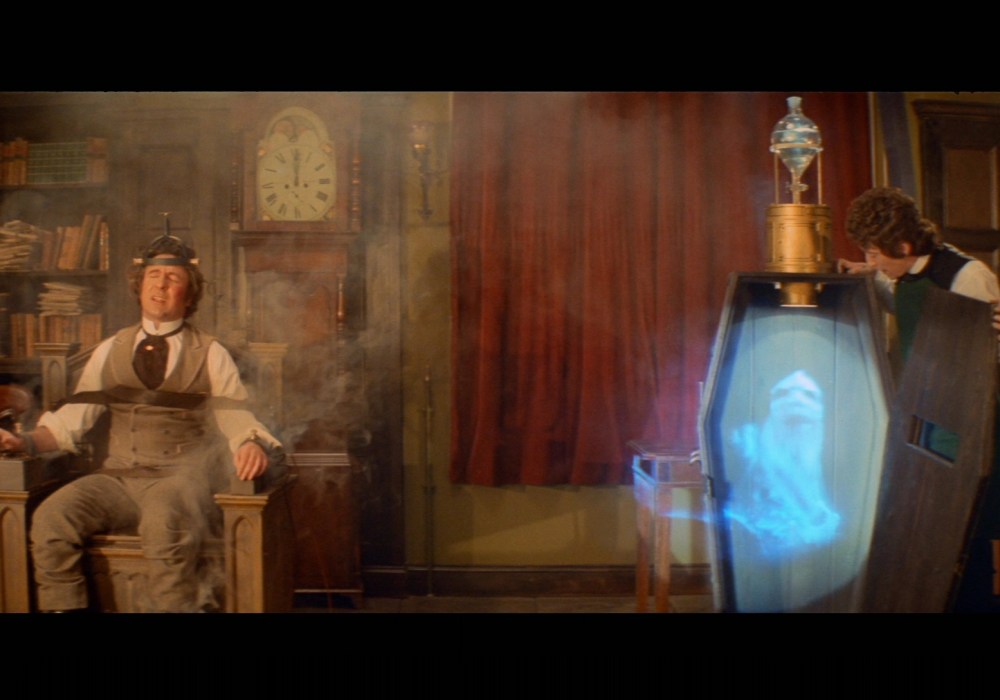
I forget where I saw it, and it may have been a later film, but an interest in capturing the exact moment of death is not a new one. However, it is an intriguing concept especially when the possibility exists to cheat it. The Asphyx is the spirit of the death, which is carrying the deceased across the mortal plain when the time comes.If one has no Asphyx, it is found, they can not die.

An obsessive pursuit of immortality is a good angle to play up. Where things start to go wrong occurs quite soon after the film starts, and quite often; such that the film does eventually lose me. It starts with cheats in the motion picture images that seem to show the Asphyx. The researcher having created motion picture recording is a clever plot element but the cuts in the image, that suggest new camera angles, are clearly cheats for we see the camera he used never moved. That’s a nitpicky complaint, but it starts the snowball effect on this film.

Clearly with the setup this story has the Asphyx must be seen, but that creates many of the issues. The effects works is good considering the likely budgetary constraints and the time period, but the design of the Asphyx strikes me and unintentionally comical. Its presence, however, is not but is rather grating and annoying.

Eventually, once the obsession is full blown the pace slows down to a snail’s crawl and why every attempted inducement of death, to lure the Asphyx, needs to be a Rube Goldberg device is beyond me. There are some good building blocks to the film but ultimately the whole is ineffectual.