61 Days of Halloween: Case 39

Case 39 is a film with tons of squandered potential that earns the rare distinction of Film Most Deserving of a Remake Due to Lack of Execution. Unlike others in the past like Captivity it does not, however, come even close to being good for a number of reasons. It should also be noted that this film was in the can for two years and likely to remain undistributed- not that something like that always matters (Blue Sky) but it should be taken into consideration.

To borrow a journalism term this film buries the lead, which is to say that it does not tell the most compelling story it has to offer. It decides to tell the tale of a well-meaning social worker who thinks she is doing this child a favor and saving her from abuse. As time goes by it turns out the girl is demonic. The more compelling tale would be to follow this girl’s life with her “parents” then the scene in which she is taken away has an added layer of emotion and becomes even more poignant, frightening and impactful. However, you cannot punish a film for what it should’ve done. What it did do wasn’t that great either.

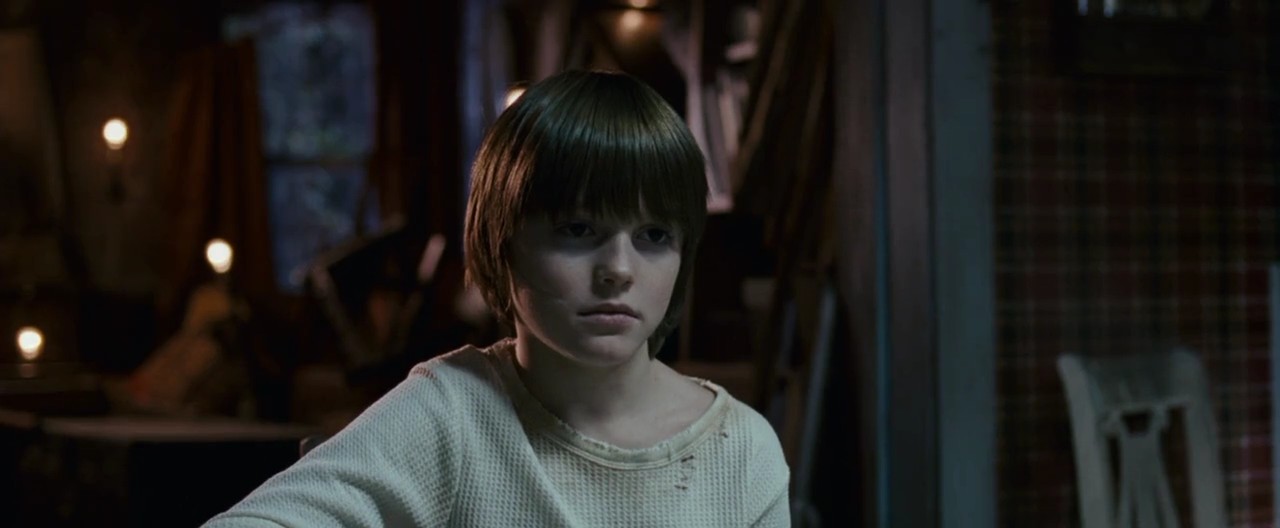
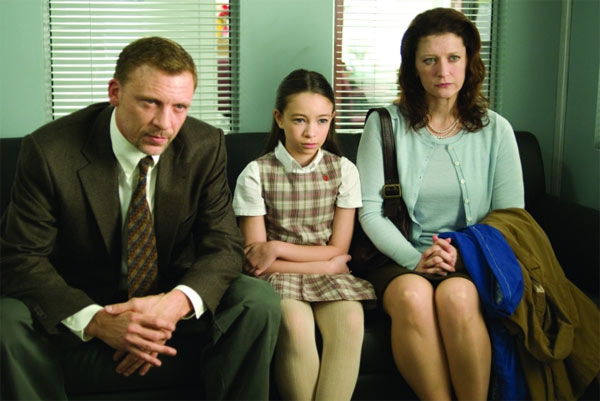
It gets off on the wrong foot right away by trying to introduce too many things in the early going. There is Emily (Renée Zellweger) and her work, then we see a little about her personal life and meet Doug (Bradley Cooper); we see her working one of her other cases which comes into the mix later, Diego (Alexander Conti) and there are a few meetings with Lilith’s (Jodelle Ferland, who is rather good in this part) family when there could be fewer. Edward’s, Lilith’s father, tight-lipped attitude prompts Emily to contact Detective Barron (Ian McShane) to try and look into their history. All this before Lilith is taken out of their custody, which would not be an issue if the film had measured its pace.

Instead once Emily has custody of Lilith she starts to jump to the supernatural conclusion far too soon and the only reason that would happen is because there is a concern about running time. While strange things had occurred things hadn’t gotten to a supernatural state just yet. Either the build had to be more consistent while bringing these people in or there needs to be a slower escalation of the Emily-Lilith conflict.

So it all becomes a question of reaction, or rather overreaction. A similar thing happens when Doug, a psychologist, has a session with Lilith. It is a disconcerting and somewhat cloying standard horror scene. As an audience, we can read between the lines and see she’s messing with him but Doug walks out of the encounter saying he feels “shaken” but he looks like he saw her head spin around the reaction is far too big for the scene we just witnessed. The only function it serves is to fuel Emily’s fears.

Then Emily’s approach to the final confrontation is all wrong. She is told that Lilith can only be killed in her sleep, which she hardly does at all. What that factoid is based on is beyond me. Her first approach is very hands-off and then although we get some very good intercut flashbacks what finally does it ends up being too easy a solution especially after having seen examples of her strength not moments before.

The concept this film tries to prey upon is that you are never safe from this demon if you are on her radar as she doesn’t actually kill you but rather makes circumstances more conducive to your death. It doesn’t quite succeed in that regard either. There is the aftermath of a gruesome scene which isn’t shot to its potential. The most effective onscreen kill is likely the hornets, however, their CG-ness is rather apparent throughout.

Inconsistency abounds in this film from pace to logic to effectiveness and even the performances aren’t immune, most of the times they are victimized by the script though. Case 39 has promise in many areas but never comes close to realizing it in anyway shape or form and ends up being a wasteful disappointment.

4/10
 

61 Days of Halloween: A Nightmare on Elm Street (2010)

Most holidays worth their while encompass entire seasons, such as Christmas, for example. However, as you may have noticed there is a corporate push every year for us to think about the next holiday even sooner. While this has many negative side effects I figure I may as well embrace it.

Since Labor Day is really only good for college football and movie marathons cinematically it is as significant as Arbor Day, which means the next big day on the calendar is Halloween and we can start looking toward it starting now.

Daily I will be viewing films in the horror genre between now and then and sharing the wealth. Many, as is usually the case, will not be worth it so for every disappointment, I will try and suggest something worth while as well.

A Nightmare on Elm Street shares one, and likely only one, distinction with the film The Perfect Game. That distinction is that it excelled, for the most part, in elements that were new and unique to it and botched what it attempted to recreate. In the latter the recreations were from other sports films, in the former the recreations were from the original version of the film.

Perhaps the best thing this film has to offer is that it seemingly breaks new ground in belief in the horror film. One of the most tired clichés in the horror film is the fact that in the face of overwhelming evidence some characters just flat out refuse to believe that there’s something out of the ordinary happening, or as Buffalo Springfield would say “There’s something happening here, what it is ain’t exactly clear.” Very quickly someone does believe the theory that it’s a nightmare come true. The majority do not believe right away but at least someone does, laying the foundation for the rest of the dominoes to fall.

What this film does casting-wise is unusual, it seems to subscribe to the theory of “Put your worst foot forward and kill it,” meaning that the first two characters focused on and killed (Kellen Lutz as Dean and Katie Fowles as Kris) are the worst actors in the film and thankfully those who receive the majority of the focus are progressively better.

Another positive is Kyle Gallner who carries this film in similar fashion to how he carried The Haunting in Connecticut. His sidekick Rooney Mara is also quite capable and a good sidekick in the film.

So, here comes a mandatory talking point: the CG. Most of the time it’s not great, not great at all. One of the things this film tried to recreate digitally was Freddy stretching through the wall. However, who would possibly want to get that in the can on set by using latex like they did in the 80s? Let’s spend money and use CG so Freddy can squirm all serpentine behind the wall and have it look totally bogus. Yes, bogus. I had to revert to 80s slang to communicate the ineffectiveness of the non-practical technique. Even when the CG was good, like when Kris could no longer fight that she was dreaming and the classroom around her exploded into ash, it only aided the film in going more over-the-top than it needed too.

The major knocks against this film will follow, and again, it’s a shame that they are big and many because it wastes a new interpretation of a now classic character. By having a new actor fill the role of Krueger in such a different way it proves that the character does have as much elasticity and room for creativity as the Joker in Batman. Jackie Earle Haley plays Freddy in a much more straightforward manner and less comedically than Robert Englund, making him more effective in this viewer’s opinion. His performance aside there were sadly some character issues with Krueger.

This film, while it does try to make Freddy a more straightforward and scary version than in the past – most noticeably by giving him a more realistically burned appearance than his prior incarnation, managed to both soften and coarsen him simultaneously. The coarsening was in his dialogue and mainly his diction. It’s a more foul-mouthed, blunt and disgusting Freddy. Apparently, his being a child molester isn’t enough anymore and to push the envelope he has to talk about it some. The way in which he was softened, however, is that he is only now, in death, a killer. His victims were all allowed to live. What was wrong with having him be a ghost-like entity who was still seeking to wreak havoc because he’d been killed by a mob is beyond me. The fact that while alive he didn’t kill one of the children he harmed does give Freddy more motivation, but we’re not dealing with the most plausible concept to begin with so that justification hardly needs addressing and does create a logic flaw in the past, mainly being why would a psychopath think the kids wouldn’t talk?

While there is more to Freddy’s back-story, which is new and good to see because it was a compelling and chilling part of the tale, it created and contributed to the number of issues with logic this film has. Examples of logic flaws include: Nancy at one point sings the “Freddy Song” yet never really follows it up or wonders why she knows it, yet she has repressed other kinds of memories, so what purpose does it serve? Jesse, aptly played by Thomas Dekker, is arrested way too quickly it’s almost like a Reichstag fire situation and aside from lacking credibility it hurts the story. The line “Who can remember being five?” stands out as being quite lazy on a few accounts, firstly, it’s clear Dr. Holbrook (Connie Britton) is hiding something and is not pressed about it and, second, even if I buy that these kids all repressed memories of what happened to them (which is easy to believe), the film also wants me to believe they all stayed in the same town and now almost all go to the same high school and don’t remember having known each other? Also, while the factoid about insomniacs experiencing micro-naps is a good touch and an added suspense element, as then one won’t realize they’re dreaming, it’s repeated ad nauseum in dialogue to make sure we remember the fact. Similarly, the allusion to the Pied Piper of Hamelin is duly noted but has no effect whatsoever on the story and is clumsily done. If the reference was to be fit in why not have Krueger read it to the kids?

Perhaps the biggest logic flaw, which is also the biggest argument for the fact that for some reason they also sought to soften Krueger, is the fact that at one point Quentin (Gallner) doubts Krueger’s guilt. Quentin’s contention is that it’s mass hysteria and they all made it up and were instantly believed, which in a post-McMartin Trial world is a legitimate enough point to address as it wouldn’t be the first false accusation of its kind. The problem is that there is no moment of decision for the character and it’s not even debated it shifts immediately from “this happened” to “we lied” with nothing in between. And only their continued investigation into how to rid themselves of Krueger proves otherwise.

So, here you have a film in which not only is Krueger not a murderer until after his death but you also have his victims believing that he may not have been guilty in the first place. It is not something that increases his villainy. What then is the point of having his absolute evil doubted? Is it armchair psychological reassurance to those who identify, however loosely, with Krueger that it’s OK because he’s not that bad? It seems unlikely but whether people want to admit it or not there is some level of identification felt with an antagonist. As Hitchcock and Truffaut discuss in an interview talking about Psycho there is a degree of that identification in that film and hence a slasher film such that the longer a franchise goes the more the villain is the star and the less you want to see him toppled. Ultimately, it just seems like another unusual decision which muddles the film.

Putting a more human face on Fred Krueger does not make him scarier. Having Jackie Earle Haley play him and not Robert Englund does but all of that is rendered nearly pointless by the rewrite of the character.

An examination of the back-story of A Nightmare on Elm Street was something I wanted to see. What it had the potential of is to intensify the fear because you more readily understand the evil. What should be sought from a more intimate portrait of the cinematic psychopath is not a softer, cuddlier interpretation of what it is he did, by having it be doubted and thus stripping it of its visceral impact, but a closer examination of it.

This very type of close examination was exactly what the Halloween remake did succeed in. It may or may not have crossed every T and dotted every I with regards to why Michael Myers became the way he was but it gave you a true, no-holds-barred glimpse of who he was before he was legend. It didn’t rewrite a history it enhanced a history, and that is what this film had the opportunity to do but it failed.


3/10
61 Days of Halloween: The Mist

Most holidays worth their while encompass entire seasons, such as Christmas, for example. However, as you may have noticed there is a corporate push every year for us to think about the next holiday even sooner. While this has many negative side effects I figure I may as well embrace it.

Since Labor Day is really only good for college football and movie marathons cinematically it is as significant as Arbor Day, which means the next big day on the calendar is Halloween and we can start looking toward it starting now.

Daily I will be viewing films in the horror genre between now and then and sharing the wealth. Many, as is usually the case, will not be worth it so for every disappointment, I will try and suggest something worth while as well.

When it was released The Mist was one of those films that just fell through the cracks for many. Mixed reviews are likely the reason. It is a film that should be seen if only as a conversation piece because it does have one of “those” endings, you know the kind that will get you talking and will inflame passions. In other words, it takes a risk and that alone makes it worth watching.

However, for the two hours leading up to said ending it earns that “should be watched” distinction. The running time alone is worth noting. Few films in the horror genre have enough substance to add a half-hour to the usual running time to build character but if a film can it should. Knowing who these people are and whether we as an audience love them or hate them makes a huge difference. The personal dramas and threats keep us locked in when there is no threat from the creatures in the mist.

The situation in which these varied characters find themselves in is built up steadily, slowly and sinisterly; such that before any of the characters realize the peril they are in we are already feeling tense. In combining two techniques of the genre we get in this film a very compelling drama with a horrific backdrop: characters trapped in a building with assailants outside (reminiscent of Night of the Living Dead) and a multi-character yet character-driven tale, which is a forte of Stephen King’s, whose novella is the source material for this film. Darabont’s handling of King’s difficult-to-adapt material is again nearly spot-on, Darabont creates and in some ways amplifies King’s effective scenario and makes it one of the most enthralling and captivating no-win horror scenarios ever created. There just seems to be no escaping it.

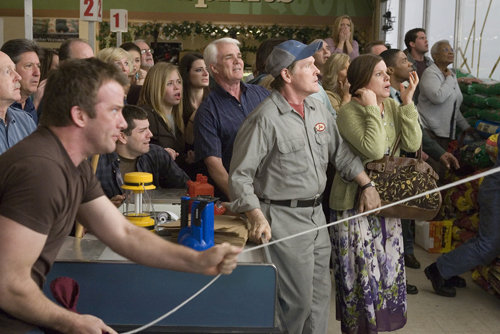
In a horror film one can forgive flawed acting from a lead, Thomas Jane, but the antagonists and most of the cast, especially in a film such as this need to be solid and they are. Andre Braugher plays his character convincingly enough such that you despise him, forgetting that it’s the part and not the man annoying you. Marcia Gay Harden, as always is brilliant, and downright frightening in this role. Her ability to convince those in the supermarket, though a bit overwrought at times, is fantastically illustrated. Some of the smaller parts are also very well-played like the Woman with Children at Home (Melissa McBride), Nathan Gamble as Billy (most well known from Dolphin Tale) and the Terrified Woman (Kim Wall).

The thing which is the most inconsistent in the film is the CGI. It seems whenever there was a good to great sequence of effects they would extend it too long or cut too close to the action and the illusion would fall apart. Typically, CG looks better on DVD than in the theatre, but not here. Some elements, like the bugs, were very impressive but the CG was not judiciously used and not carefully crafted enough, which is the only major inconsistency in the film. However, there has been worse it’s just upsetting to see such a glaring problem in a film which is of a very high caliber most of the time.

The ending is a conversation piece. It is strong and unlike King’s story it’s not open. King approved of this change. Certain elements are very effective some aren’t. What you make of it is up to you. It does not detract from the whole and the film is definitely worth watching.

This review pertains to the standard edition DVD not the two-disc special edition.

8/10

61 Days of Halloween: The Other

Introduction

Most holidays worth their while encompass entire seasons, such as Christmas, for example. However, as you may have noticed there is a corporate push every year for us to think about the next holiday even sooner. While this has many negative side effects I figure I may as well embrace it.

Since Labor Day is really only good for college football and movie marathons cinematically it is as significant as Arbor Day, which means the next big day on the calendar is Halloween and we can start looking toward it starting now.

Daily I will be viewing films in the horror genre between now and then and sharing the wealth. Many, as is usually the case, will not be worth it so for every disappointment, I will try and suggest something worth while as well.

The Other (1972)

Some films are worth the digging they require to find on DVD. This film was found while sifting through the “for sale” options at TLA. It was one I had seen on VHS way back when and was unaware that it was now available on DVD.

The film is the 1972 film adaptation of the Thomas Tryon novel The Other. The first thing this film did right was that they had the novelist adapt the screenplay. Quite often you want someone as familiar with the material as possible to transition it to the screen. The second good thing they did was to get Robert Mulligan at the helm as director. He is the man behind such greats as Fear Strikes Out and To Kill a Mockingbird. This man handles the story with a deftness and sophistication that few in the genre could.

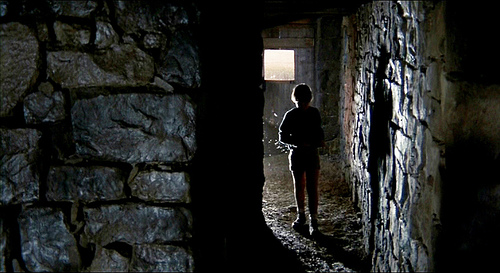
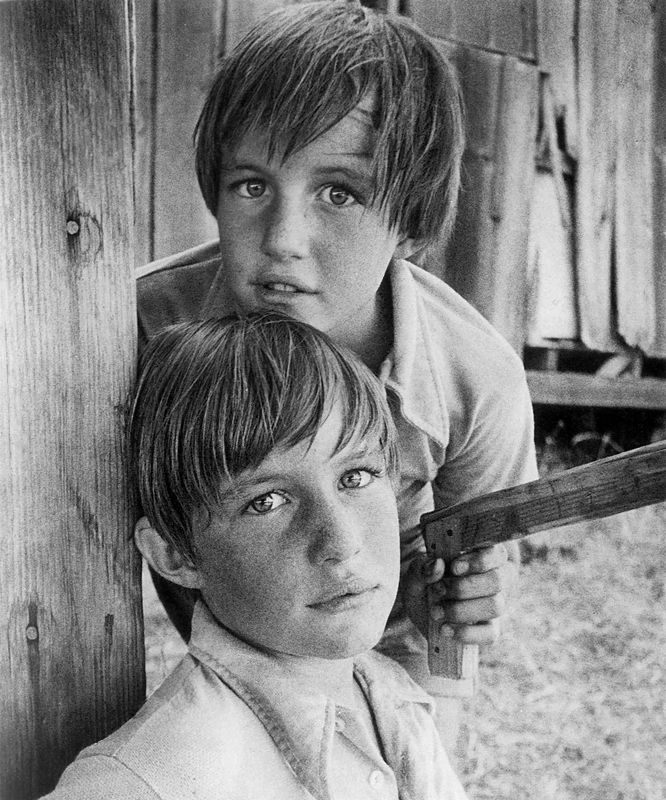
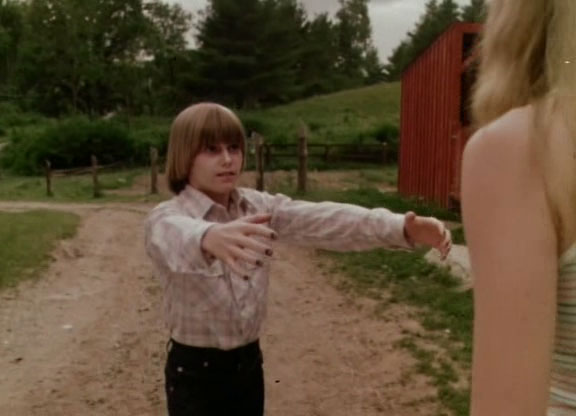
The film tells the tale of twin brothers Niles and Holland (played by Chris and Martin Udvarnoky) and the deadly secret they share. The Other is also a film that has not one but multiple twists well before The Sixth Sense made it the thing to do in horror and/or suspense for a time. These twists are set up in at least 16 instances where the truth, as we know it, is reaffirmed, only to be flipped on its head later.

Another major strength of the film is the character of Ada, the boys’ grandmother, played by Uta Hagen. Uta Hagen’s works on the craft of acting are some of the most insightful and respected in the field, and this film shows you why. Ada is the only one who holds a special bond with the boys, tries to help them and understands their special ability, which they refer to as “The Game.”

The Other is a film that is full of genuine shocks. It is the kind of film in which no character is safe from the threat that presents itself and that makes for the most realistic, palpable and enjoyable type of suspense film, one in which anything and everything can and will happen.

This may be a film that time forgot, but it is certainly a hidden gem which deserves to be unearthed.

9/10

Postscript

Prior to my ever having started the 61 Days of Halloween theme and I believe after my previous posting of this review, Christopher Udvarnoky died at the unjustly young age of 49. May he rest in peace.

61 Days of Halloween: The Children (2008)

The Children, which bears no connection to eponymous 1980 film, continues Ghosthouse Underground’s newly started tradition of showcasing independent horror films that are truly deserving of a spotlight on a bigger stage. This film was recently featured at Toronto After Dark and should be a testament to my feeling that that particular year’s field was very strong indeed.

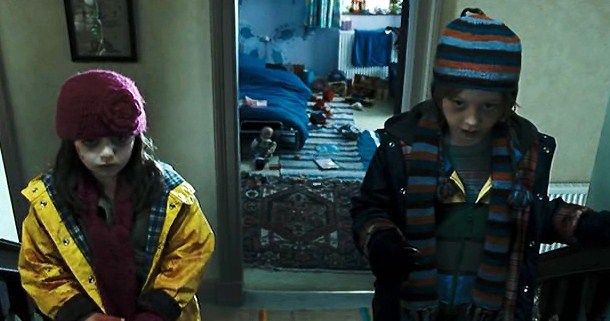
It is a subtle film indeed, which just goes to show that the horror genre does not need to spoonfeed its audience exactly what is happening at every single turn. The wheels start turning slowly but very surely; as two sisters and their families meet up at one of their houses in the English countryside to celebrate Christmas.

Their children start to come down with a very mysterious virus, which seems flu-like. We get as much detail on what’s wrong with them as the parents do, which is fine. This allows for the parents not to be the typical stupid victims in horror film, and makes most of the kills occur at the first chance the children get.

It’s a film that doesn’t get overly-contrived. We know just enough but it never gets bogged down in details, and it is likely to please the horror aficionado whether they like children (or the acting version thereof) or not.

Another very effective trait of this film is that it’s quite a nuclear tale and occurs in an around this secluded property in its entirety. The unity of space adds to the immediacy of the threat they were facing. They, of course, have to remain stranded there but it is always an effective trait to have in a story of its kind.

It’s also a film whose violence is more about its quality than its quantity, which again proves that body count is usually a cover-up for an ineffective scenario. You may be able to guess what will occur at the end of a film with a seemingly isolated problem, but I will not give it away.

It is a film that finds numerous ways to unnerve you whether it be score, the children screaming, the build up and the violence both actual and implied. It is a film that should most definitely be seen by enthusiasts of the genre.

8/10

61 Days of Halloween: The Children (1980)

Most holidays worth their while encompass entire seasons, such as Christmas, for example. However, as you may have noticed there is a corporate push every year for us to think about the next holiday even sooner. While this has many negative side effects I figure I may as well embrace it.

Since Labor Day is really only good for college football and movie marathons cinematically it is as significant as Arbor Day, which means the next big day on the calendar is Halloween and we can start looking toward it starting now.

Daily I will be viewing films in the horror genre between now and then and sharing the wealth. Many, as is usually the case, will not be worth it so for every disappointment, I will try and suggest something worth while as well.

The Children may be the best way to introduce oneself to Troma Entertainment, this is a film that I first came upon at Monster-Mania Con and chose it as my first full-fledged introduction to the indie film giant. One could hardly hope for a better introduction to their work than this film, having seen The Toxic Avenger since and Tromeo and Juliet previously this is the truth: this film is basically funny only when it intends to be and can be very effective.

This is a film whose print was lost for all intents and purposes for about two decades. Even the remastered version presented on this DVD is missing a second or two from one scene creating a grindhouse-like artificial jump cut. However, this Cameron J. Albright scripted and produced project does have its redeeming qualities not belying the tongue-in-cheek intro to the film hosted by Troma president Lloyd Kaufman.

The film takes a very typical 1980s model for a terror tale, a disaster at a nuclear power plant, and makes it simple and accessible. This very time-specific fear is counterbalanced by the exploitation of a parent’s worst nightmare: finding their children are missing. Even though the parental figures displayed in this film are typically aloof and unaffected it does feed on the audience’s fear. The sum of fears is simple and the concept is simple: once exposed to the radiation they become mindless destroyers seeking to burn all they touch. Having children, the epitome of innocence to most, turn bad is of course commonplace in horror, but this film turns the simple gesture of a hug into something that should be feared and loathed. One of the most effective moments in the film is a very quickly taken hug by an unaffected child. It is one of the most frightening moments of the film because we already expect the worst.

The make-up effects, which are crucial to this particular tale, are quite good and likely were an influence on the later films cited in the introduction. Even with the phases of burning being introduced with dissolves most of the times and not cuts the shock of the first incident is still rather good and it is another case of how going into a film as a virtually blank slate can be a very good thing indeed.

What’s also refreshing, in essentially what ends up being a zombie film, is that our heroes aren’t too slow on the uptake and only waste a few rounds of ammo before figuring out how to best dispose of these creatures.

There is some very good POV camerawork building the suspense in the first inspection of the empty bus. The acting is not nearly as forced and as hackneyed as one might expect from a Troma picture and some performances and scenes even stand out as being decent and well-done, the bottom line is it’s never painful which even some good horror films are guilty of.

The first impression this film leaves is much stronger than it leaves after a second viewing so Netflix might be the best option for those uninitiated to the Troma style. Fans will certainly want to purchase it. However, it is still well worth your time and I most definitely wanted to and did see it twice. It comes recommended so a score is practically irrelevant, but if pressed it’s an 8/10.

61 Days of Halloween: The Crazies (2010)

Most holidays worth their while encompass entire seasons, such as Christmas, for example. However, as you may have noticed there is a corporate push every year for us to think about the next holiday even sooner. While this has many negative side effects I figure I may as well embrace it.

Since Labor Day is really only good for college football and movie marathons cinematically it is as significant as Arbor Day, which means the next big day on the calendar is Halloween and we can start looking toward it starting now.

Daily I will be viewing films in the horror genre between now and then and sharing the wealth. Many, as is usually the case, will not be worth it so for every disappointment, I will try and suggest something worth while as well.

First, a comment on The Crazies’ status as yet another film in a long line of remakes: after having recently seen George A. Romero’s original film The Crazies (1973) I no longer opposed this remake. Typically they should be looked at on a film-by-film basis and the original could be improved on, so this was fine in theory if not in fact.

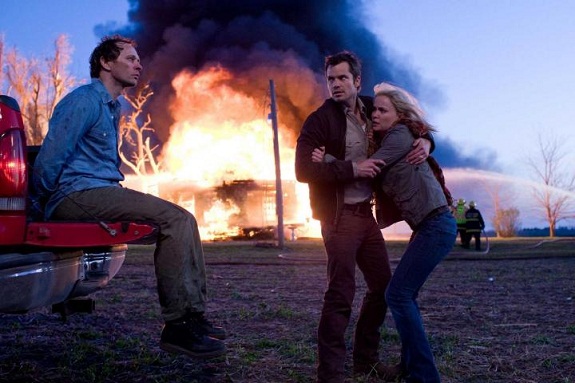
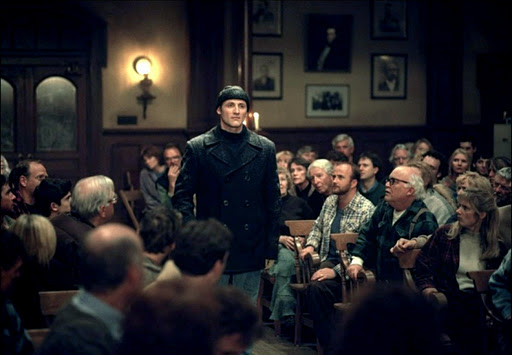
This film starts very strongly with some very notable scoring and some chilling scenes starting with the inciting incident on the baseball field. Most of the action in the beginning flows through Sheriff David Dutton (Timothy Olyphant) and it makes the mystery and horror very tight and close to the vest. The myopic view of the film allows for a very successful build in the horror as many of the characters we meet early fall prey to the disease.

The missteps begin kind of like an avalanche, one little rock rolls out of place and several other things follow. The first of these is that the jump to the assumption of contaminated drinking water is made very quickly, too quickly; it’s debated before they put a finger on anything else. Also, a touch at the beginning with the military satellite views and read outs in are a strength of the film and later they are a detriment because the military is too anonymous in this case.

Around the time when the city becomes occupied by the military, which sets up its perimeter to contain the infection, the film starts to suffer. Those we assume to be uninfected are trying to escape but they take unnecessary detours and the pace starts to suffer with many drawn out skirmishes with small victorious moments of brilliance interspersed among the trite stock episodes.

It is ultimately cannot avoid the trappings of a virus film, which is essentially a zombie movie with a different enemy. There are suspicions of who is infected, killing first and asking questions later, and unease in the survivors and aside from trying to offer unique kills nothing exciting is added to the equation. As is the case with all of these films nothing is ever over, which means we could get more Crazies which would be unfortunate indeed.

Even with the military moving in and posing a threat they are like rats in a maze just trying to avoid dead ends where they can be caught and killed, and there is no light shone upon the townspeople’s situation for far too long. While it can be to a film’s advantage to have the audience know things characters don’t, this takes far too long and slows the film down because the characters do need to find out in order to act at some point. So if we’re ahead of the tale and have to wait for the characters to catch up that’s not good.

There was, however, a goodly amount of intended humor and good acting, especially for the horror genre, in this film. It’s just a shame the material doesn’t quite live up to their capabilities and the early promise the film showed, it truly was a textbook first act but unfortunately for The Crazies films have three.

5/10

11 Creepiest Kids in Supporting Roles

Okay, I know what you’re thinking? Where the hell does dude get eleven from, and no, I’m not setting up a Spinal Tap reference. What I am doing is living up to some of the precepts I put forth in this post. So, in this list there were quite a few possibilities that I decided didn’t make the top 10, but one really stood out and it featured in my favorite horror film of 2011.

It’s really no trick to make a kid scary in a film if that’s the premise of your plot such as in Village of the Damned. In fact, it’s old hat. I’m not knocking the scary kid as a horror film motif, far from it, but it is a much simpler task when that’s the main goal and your protagonist or antagonist, as the case may be, is a child.

This list seeks to acknowledge those who through performance, or circumstance, were the Creepiest Kids in Supporting Roles. Those who made a big impact with minimal screen time. Some of them don’t even feature in horror films and some are the beneficiaries of great filmmaking touches and perfectly suited for the effect the director sought.

11. Spencer List as Martin Bristol in Bereavement (2011)

As mentioned above, this was the selection that came closest to making the list before being dropped in consideration of the arbitrarily considered round number of 10. The bottom line is: if something is good enough to be included among the best it should be. This is why I decided on a top 25 film list for 2011. True, there’s a tragically informed backstory that tinges this performance, but what makes this silent turn so frightening is the way Spencer List interprets his character; distant but not disengaged. You always sense wheels are turning far behind a vacuous facade, that makes the conclusion both work and terribly chilling.

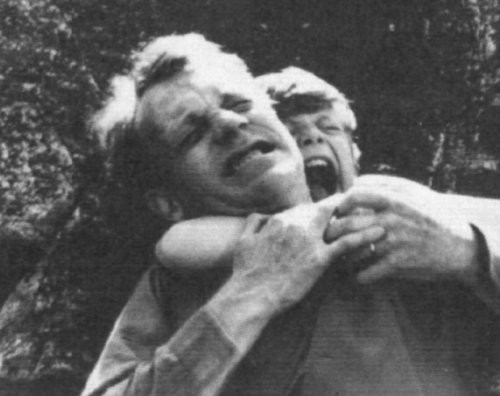
10. Mikael Rundquist as Boy in Dream in The Hour of the Wolf (1968)

Ingmar Bergman’s one surrealist horror tale gets one of its great jolts when its protagonist, played by Max Von Sydow, is attacked and bitten on a cliff over looking the sea by a would-be vampiric little boy. The scene is Rundquist’s one appearance in the film but is set up and executed to great effect, and is a standout in a film of many memorable images.
 
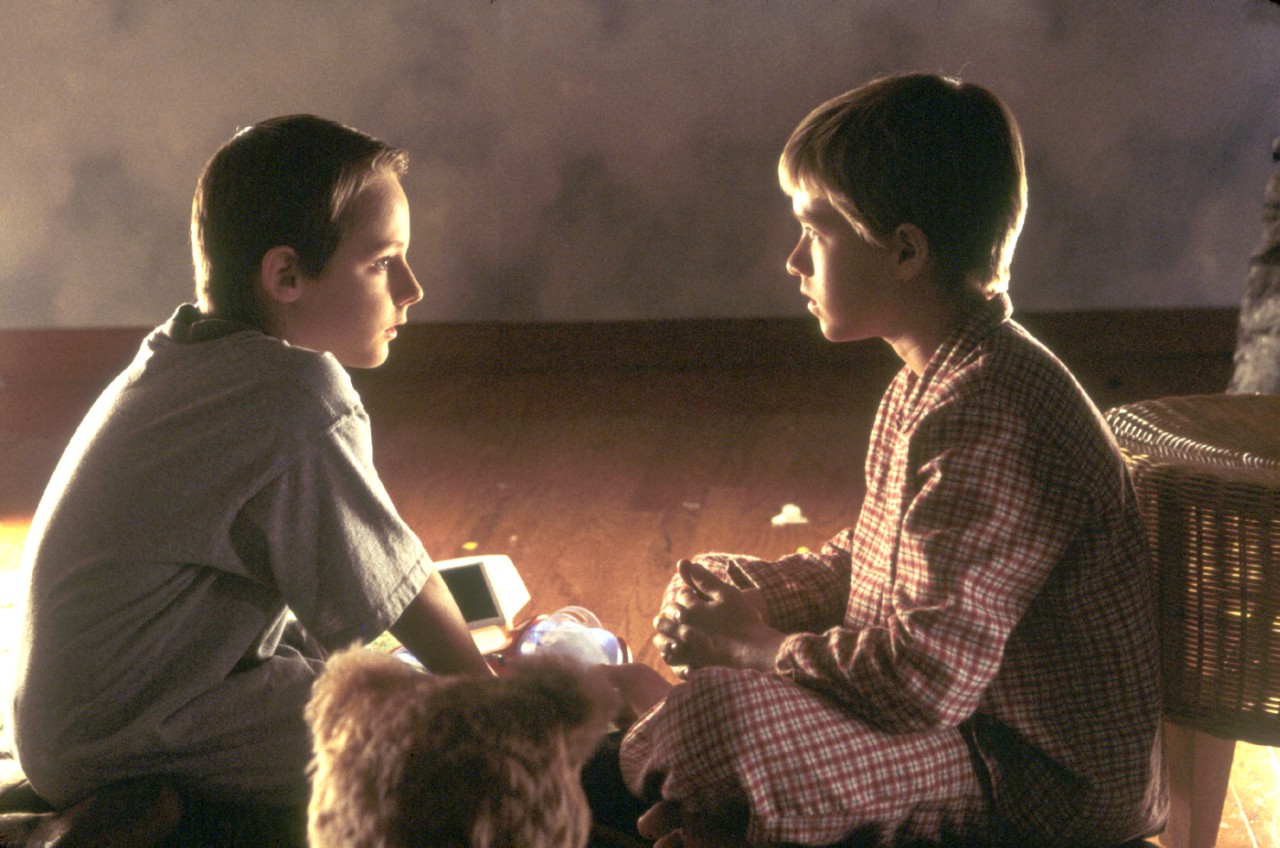
9. Jake Thomas as Martin in Artificial Intelligence: A.I.

OK, the next two selections prove out that there’s not only horror on this list. Many readers will already know my great appreciation of this film but it also presents us with a great creepy kid. Prior to Martin’s return home we feel sympathy for him and then we see him plot, much like a real kid would, to be rid of his unwanted artificial brother.
 
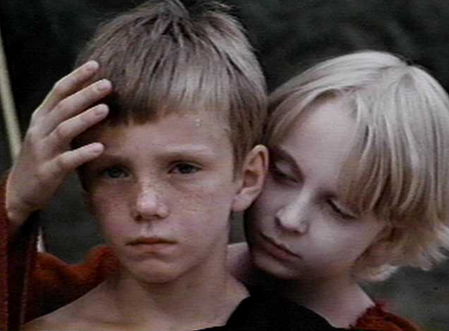
8. Eszter Gyalog as Lucifer in The Annunciation (1984)

Aside from intellectual stimulation this existential Hungarian film also brings you a throughly creepy rendition of Lucifer (on the right) as portrayed by a child, as are all the characters in this film. He has his falling, but he also tempts Adam and Eve, follows them through time and plays with the fate of mankind. If you want an effective devil you’re not necessarily seeking horns and sulfur, but cunning and persuasion, and that’s what you get here.
 
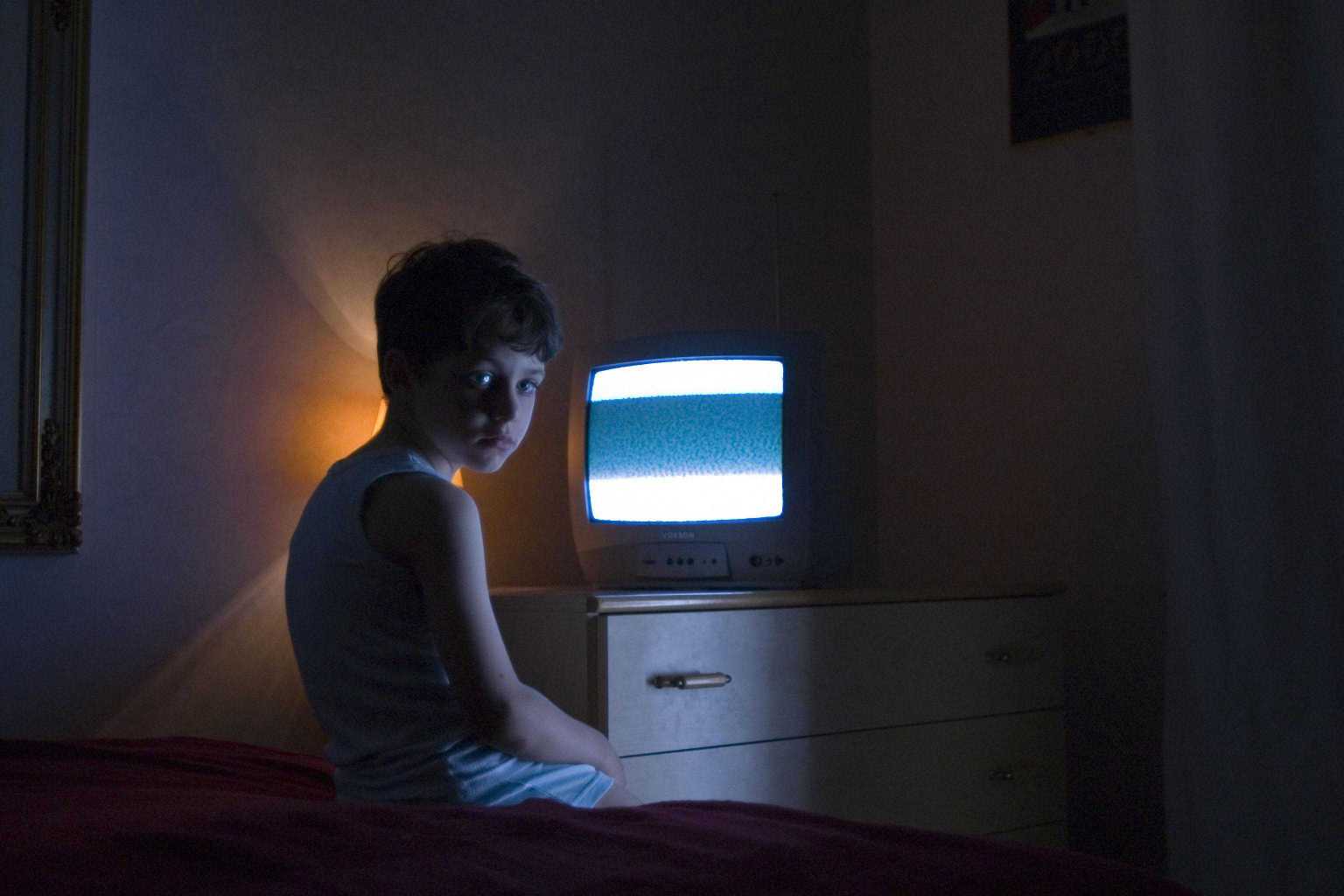
7. Fabiano Malantrucco as Giulio in The Last House in the Woods (2006)

First, if you miss old school giallo you need to get this Ghosthouse Underground selection. Second, Malantrucco in this film does the very difficult balancing act of being both convincingly innocent and evil and is one of the many strong points that this film has.
 
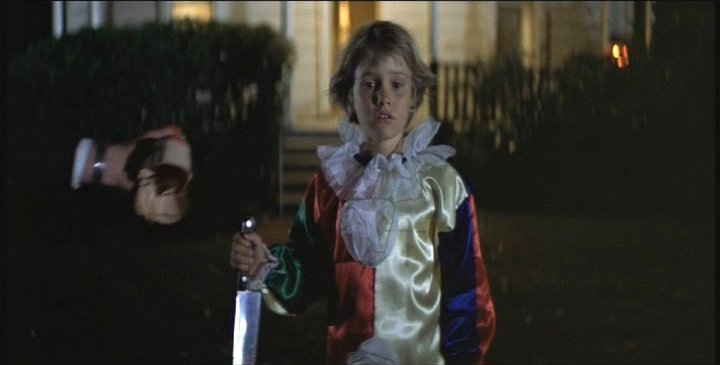
6. Will Sandin as Michael Myers (Age 6) in Halloween (1978)

This is one of the more shocking and resonant entries. Michael’s age when he initially perpetrated these heinous crimes is a secret the film holds on to and it is stunning to see it revealed. Not to detract from the brilliant work that Daeg Faerch did in the remake, but there is something to be said for both Michael’s past being more nebulous, and for him looking like an innocent. It is a brilliant touch by Carpenter.

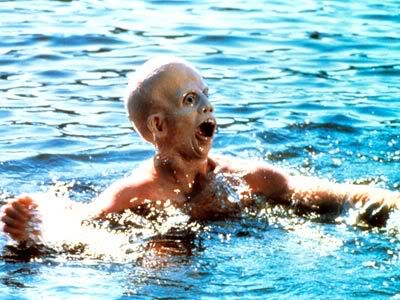
5. Ari Lehman as Jason Voorhees in Friday the 13th (1980)

Slots #6 and #5 are separated by a hair both in effectiveness and in length; they are very short appearances but memorable nonetheless. While the it’s the inferior film, the impact of Jason’s appearance, and the execution thereof, is greater hence it gets the edge. While creepy it is more emotionally rounded since Jason is not the antagonist of the first film so there is some sympathy there.

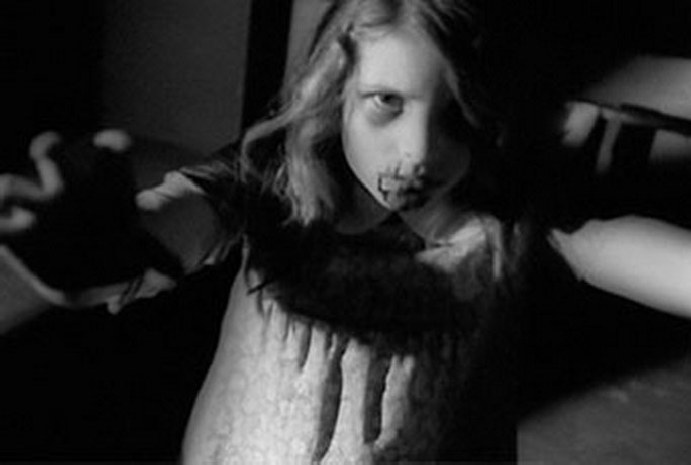
4. Kyra Schon as Karen Cooper in Night of the Living Dead (1968)

This has become perhaps the iconic image of the film The Night of the Living Dead such that it has been used as the cover image on DVD reissues and the like. Few note that this character is not ever-present in the film just very, very impactive.

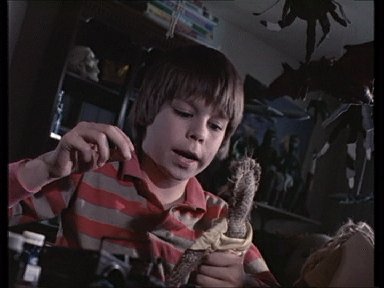
3. Joe King as Billy in Creepshow (1983)

This was actually the performance that inspired this list. Joe King, son of Stephen and now best known by his nome de plume Joe Hill, stars in the frame that surrounds the tales in Creepshow (and adds another level to the film) and he is identifiably creepy which makes it more scary. It’s a tongue-in-cheek cautionary tale of what happens when you deprive a kid of his comics.
 
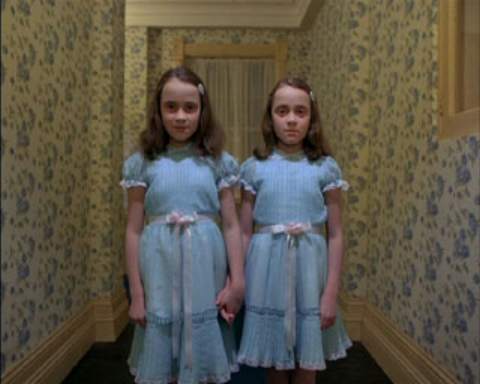
2. Lisa and Louise Burns as the Grady Twin Daughters in The Shining (1980)

OK, while this one may seem kind of obvious it needs to be said: Who knows what The Shining would’ve been if it had not been for the Grady twins being cast such as they are. They are our first and most frequent hosts to what secrets the Overlook holds and just downright creep-tastic.

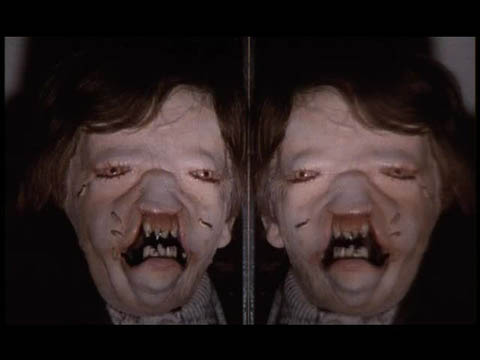
1. Davide Marrotta as Patua, Bruckner Child in Phenomena (1985)

As if it wasn’t bad enough to make you see it once here you get a mirrored image. Well, such is life. Without giving too much away about in Dario Argento’s film Phenomena this kid and his character steal the show. He ends up being the best and most frightening thing about it. Granted most of that has to do with prosthetic work but that is the nature of the beast, for lack of a better term. The scenes with this character’s involvement elevate the film to a level it would’ve otherwise been unable to achieve. Not to mention that this is the most frightening mug I’ve ever beheld on screen.

Horror Films and Stephen King (Part Seven)

De Laurentiis was the sole production company involved in the making of this film. They gave this movie a budget of $10 million dollars, which may have been risky considering their spotty past varying from Conan the Destroyer to Blue Velvet. Of their 22 productions four were released in 1986. The fact that they spread themselves so thin may have lead to the variance in the quality of the films and their financial success.
    

The distribution of this film is what really sunk it, as in almost no one saw this film. DEG didn’t have the distribution power even of a New World Pictures thus not many theatres ran the film. Even if they did get a decent amount of screens there was still the problem of bad timing. 
 

Maximum Overdrive got slammed financially and here’s why: it began slowly in June, (AIP would have called it I Was an ‘86 Blockbuster) and they rolled in: Ferris Bueller’s Day Off, Back to School, The Karate Kid Part II and Ruthless People. Then on July 2nd and 4th Disney attacked with The Great Mouse Detective and Flight of the Navigator. OK, so there are a lot of comedies and family films what’s to worry … (gulp) … Aliens, the follow-up to the original blockbuster comes out and becomes the dominant film of the next few weeks beginning on July 18th. With the horror market cornered a small unassuming film directed by a writer involving trucks comes out, what do you expect to happen? Well, as that dude Murphy would say, if he had lived in the 80s, “Yo, it gets worse!” 
 

A fortnight after the truck expedition Rob Reiner released one of the finest King adaptations to ever hit the screen, Stand by Me. It was a film that caught everyone by surprise, including Stephen King, who later remarked, “It seemed to me that Stand by Me was the first really completely successful adaptation of my work.” (Stand by Me). I believe part of that comes from a true filmmaker who wasn’t afraid to involve himself in the text in handling the film. It wasn’t just a studio picking up his latest offering, or struggling writer maxing his credits cards to get a shot or a no-name director getting his one chance. 
    

Ironically, the marketing of Stephen King is only an issue when it’s a horror film. When The Green Mile came out he was the author of The Shawshank Redemption, with Hearts in Atlantis  he was the author of The Green Mile. Dolores Claiborne was probably also thrown in the mix at one point. It’s as if they think he’s only good when he writes something other than horror.

I’d seen Stand by Me as a child and had always liked it. It was one of those things I came to later rediscover in adolescence/early adulthood and when I found that King had written that tale it confirmed his genius in my mind. King and Reiner seemed to have come from similar upbringings and it lead to probably one of his most fruitful collaborations. King commented in 1990 that “Rob Reiner, who made Stand by Me, is one of the bravest, smartest filmmakers I have ever met. I am also amused to note that the company Mr. Reiner formed following the success of Stand by Me is Castle Rock Productions … a name with which many of my long time readers will be familiar.”  (Midnight, xiii). 


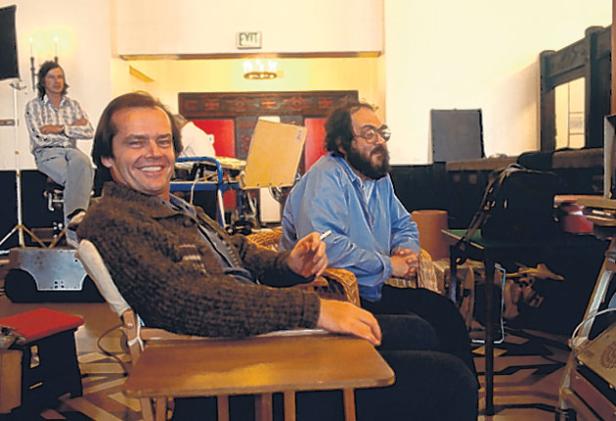
Often the relationship has not been as chummy. King is said to have had many a feud with Kubrick and has publicly aired his sentiments about The Shining over the years. Yet, he is quite an admirer of DePalma’s Carrie, as am I, while he finds no real amusement in his own book which he once threw out, I agree with that instinct but am so very glad his wife saved it from the wreckage. While I know it’s true that it’s usually the studio/distributor that makes the decision to plaster a movie poster with “Stephen King’s” or “From the producers of Independence Day” I sometimes hope that he stipulated that it be removed if he was unhappy with something, like Christine.
    

John Carpenter’s Christine is a galumphing piece of crap about an unsympathetic nerd that never should have been made. The book, however, is a fascinating, ominous, well-developed masterpiece told from three separate points of view and you can sympathize with all the characters. And like the master he is, you believe this scenario somehow because he makes you. 
 
   
To successfully adapt a book one must realize what makes each medium unique in order to capture the book’s essence on film without ruining it like millions of misguided dorks have done in the past. Ira Levin author of Rosemary’s Baby commented on Roman Polanski’s adaptation in a letter to King stating “There is a reason for his fidelity to the book, incidentally…His screenplay was the first adaptation he’d made of someone else’s material; his earlier films had all been originals. I think he didn’t know it was permitted – nay, almost mandatory! – to make changes.” (qtd. in King, Danse Macabre, 296). It is always wonderful when a film can be made that follows the book as faithfully as Levin feels his was followed. However, it’s not always a success like a Harry Potter or a Rosemary’s Baby the words ‘slavish,’ ‘slow,’ and ‘boring’ often come up in reviews. People who want drawn out movies that give you two to two-and-half hours to really examine the characters and the situation their in are rare, more and more studios are reverting to the 90 minute film length as opposed to the 120 and above.


The issue of time is one reason that Stephen King has found such a comfortable home on ABC writing mini-series’. In 1999 and 2002 he made two originals called Storm of the Century and Rose Red. In the latter he had the luxury of waiting 100 minutes before sending his protagonists into a haunted house whereas, in a feature film most producers would’ve already wanted the story to be over.
    

In the end, making Maximum Overdrive was a valuable experience for Stephen King. Since 1986 it seems that he’s taken a more active role in some of his productions and has ultimately learned to pick his battles. He’s since found a medium in which he can write long screenplays filled with rich, rounded characters and he has since become a producer. Thanks in part to Reiner’s success more accomplished filmmakers have since been attracted to his projects. The high-end Kingflicks are more frequent and there isn’t as much junk inbetween. He’s been involved with Frank Darabont on two occasions on The Shawshank Redemption and The Green Mile and Darabont has optioned the rights to a short story entitled “The Mist” [It has since been released], William Goldman has adapted three of his novels into films Misery and Hearts in Atlantis and the forthcoming Dreamcatcher. King wrote an episode for Chris Carter’s X-Files and is shopping an adaptation of Patrick McGrath’s novel Asylum to be directed by Jonathan Demme [This never came to fruition]. He’s also developing a television series based on Lars von Trier’s The Kingdom for which he will write pilot [This did happen].
    

Many readers who like to be scared by King, when they’re not going to court with Grisham or seeing the turbulence in Steel’s world, have fallen out of favor with King’s work. Stephen King is a writer who is constantly honing his craft. He is writing richer, more complex novels and has mastered other mediums along the way. A little over 36 years after his career in film began King’s legacy is only now beginning to show his true potency.

Horror Films and Stephen King (Part Six)

Stephen King has always been somewhat uncomfortable with the marketing of his name such that he created his alter-ego/pseudonym in large part to avoid the media’s scrutiny of his work. His name was Richard Bachman. “I’ve been asked several times if I did it because I was overpublishing the market as Stephen King. The answer is no. I didn’t think I was overpublishing the market …but my publishers did.” (Bachman, ix). 
 

Over-exposure is something that Hollywood has never been afraid of, especially when a gifted writer who people love to read comes along. In fact, the film which I examine in this paper Maximum Overdrive was recently re-made for TV and it was called Trucks. Many a time King has had little or no involvement with many of the films made from his work and in the past many people have had little or no regard for his actual text or for his input on the project, this has since changed.
 

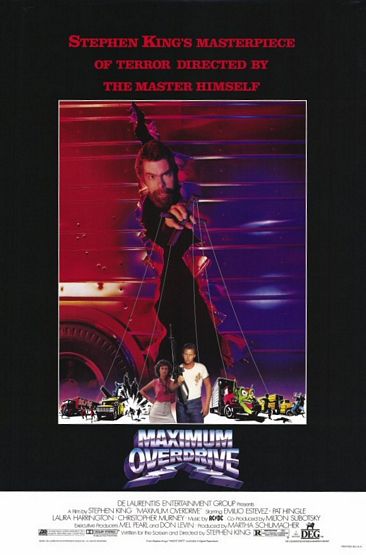
“Sometimes I feel like Mickey Mouse in Fantasia. I knew enough to get things started, but once they started to march, things are never the same.” (Bachman, vii). Stephen King was taking the helm of Maximum Overdrive just after his pen name had been “outed.” In a way, this was a chance for King to take control of a project but even this was marketed and commercialized. King was the center of the theatrical trailer claiming that he was “Going to scare the hell out of you.” The one sheet also proclaimed the film a masterpiece before it was released. This marketing scheme was poorly thought up, while it’s hard to sell a horror film that’s not as scary as it’s supposed to be, it’s more difficult to sell a film when all the audience sees is the director saying how scary it is. One thing the trailer does seem to imply is that King was looking for someone to do his work justice up ‘til then no one had until Rob Reiner did later in Stand by Me.
 

Miscasting has been a hindrance in many King films. In reference to the protagonist in The Running Man King said “he’s about as far from the Arnold Schwarzenegger character in the movie you can get.” (Long, vii). This is a problem he faced in Maximum Overdrive was in choosing the wrong actors. Not many good actors do horror films when they’re already famous and it’s hard to make a successful horror film when the characters are so horribly miscast. When the audience knows something was a novel their critical faculties seem abnormally heightened and this makes every decision crucial.
    

His difficulties also came into play in reference to length. King is one who likes to slowly develop things and needs time. He once commented that “these days it seems everything wants to be a novel, and every novel wants to be approximately four thousand pages long.” (Nightmares, 4). With film being what it is today, and what it was starting to become in 1986, it’s no wonder that Maximum Overdrive feels like a sketch by Picasso, it lacked color. Sure, Picasso could do a lot with a pencil but to see his full genius he needed a larger surface. King likewise was confined by the need to be a 90 minute film, I sometimes get the feeling that just another half hour and it might have been a whole other film.