Bernardo Villela is like a mallrat except at the movies. He is a writer, director, editor and film enthusiast who seeks to continue to explore and learn about cinema, chronicle the journey and share his findings.
Long after I signed up, I realized that I wrote about Autumn Sonata for this very blogathonway back in 2015. I realized, however, that writing about it again afforded me an opportunity look at this film from a very different angle than I did originally. So, despite my preparation being similar to how I wrote the first piece (re-reading the script and re-watching the film) my reactions and how I wanted to discuss this enigmatic piece were quite different this time.
My 2025 take will be posted in two parts. One strictly dealing with Bergman’s performance, which I will post today for the blogathon. The follow-up piece, is a bit more tangential that will look at how the creative forces of this film had their lives reflected in this work, not only from their perspectives but also from perceptions of those who covered them in the media and how that may have impacted them. That part is a bit more tangential so it made sense to split them.
Performance
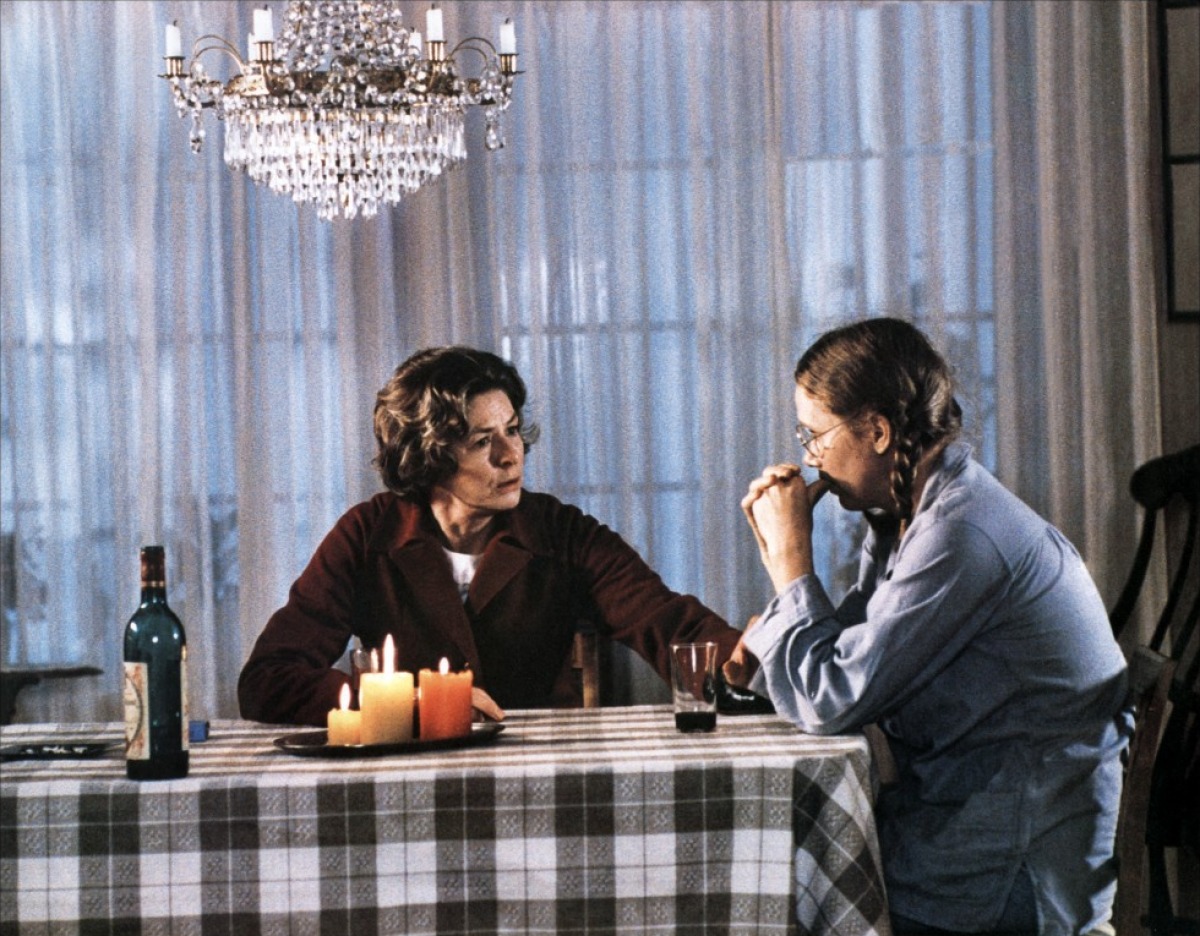
In watching the film, the first thing that’s apparent about Ingrid Bergman’s performance is her physicality. As soon as she steps out of her car she places her hand on her back due to the discomfort she’s feeling after a long car ride. A clear indication of her chronic back problems. Despite all Bergman’s dialogue, her physicality drives home the emotional toll the events of the film take on her character Whether it’s her still hand as she sleeps and then Lena comes in during the nightmare sequence, like her avoiding eye-contact during some of her daughter’s most difficult revelations and then looking back at Eva, pacing and smoking, lying on the floor to spare her back, and not wiping away her tears.
There’s also the performance within the performance aspect as Ingrid’s character is also an artist. Moments like when she speaks English on the phone, her Middle Atlantic accent and the presentational acting style that was prevalent when she broke into Hollywood. Ingrid and Ingmar butted heads over a few things in the making of this film. He didn’t want her methodically planning moves, glances, and gestures, but her persona and demeanor in English was a necessary ingredient.
Other points of contention were things like the precise length of time Charlotte and Eva had gone without seeing one another, Ingrid wanted a joke or two to soften her character. Ingmar didn’t bend to those request but there are some lighter moments, mostly when Charlotte is alone like when she speaks to Leonardo’s portrait.
The nuanced script rich in characterization set the film up for success, but the creative tension definitely yielded positive results. With two supremely talented lead performers, meaty material that hit close to home, the tension likely broke some resistance to certain aspects of the story and help wring out a tremendous amount of raw emotion from her. Emotions that usually radiate from Ingrid’s eyes outward to permeate entire frames. It was a confluence of events and talents that garnered her yet another Oscar nomination and created a masterwork.
I decided to do a deep dive on this film. If you’re leery of spoilers it might be better to just scan this post. Although, I won’t lay the whole plot out in order in one section.
Also, this post is lengthy. I would’ve posted it in three parts if I hadn’t started so late.
Titles
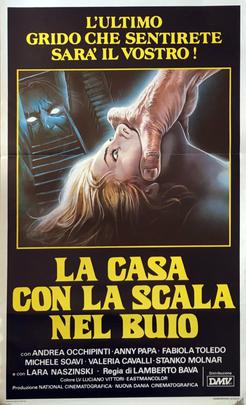
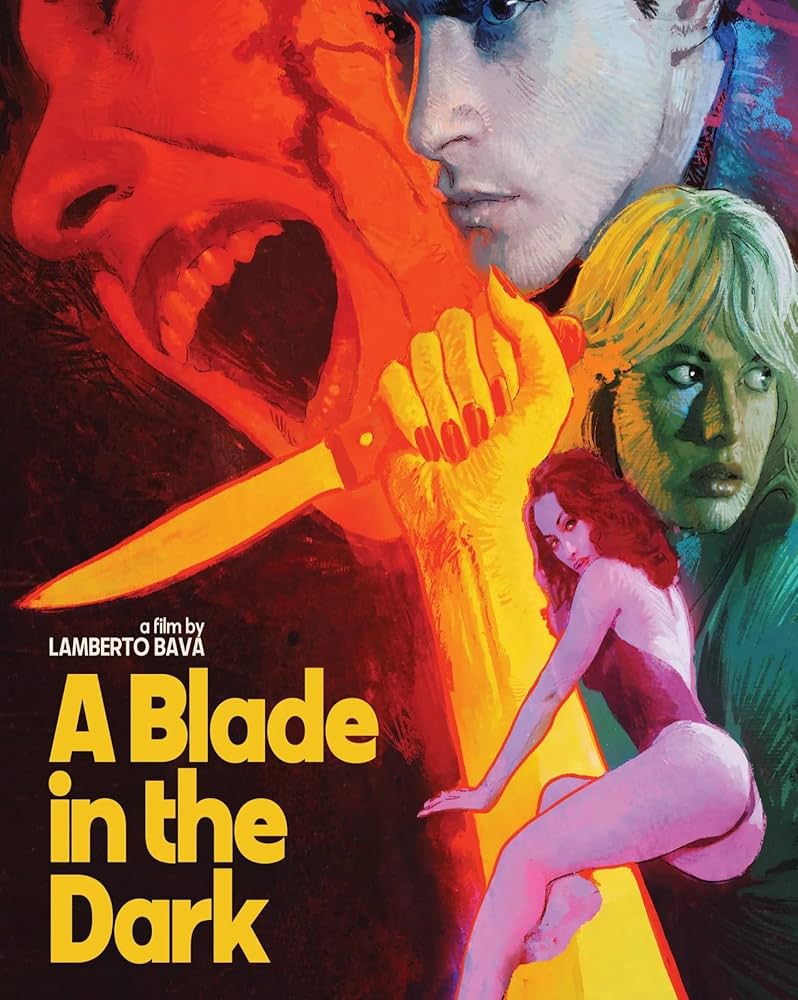
Titles of gialli, and Italian horror films, are usually your first clue of how to take them. They tend to revel in the poetry of death, they might even come off as overwrought and florid to some. I personally love them. Sometimes the alternate titles work better than the more commonly used ones. Just a few quick examples: Mario Bava’s Bay of Blood, is a good title. The alternate, on the other hand, is an all-time great: Twitch of the Death-Nerve. Mario Bava’s father shot a film called La farfalla della morte (The Butterfly of Death). Most of Argento’s titles are memorable, especially those in the animal trilogy. You also have things like Pupi Avati’s The House with Laughing Windows. With regard to this film, the original title La casa con a scala nel buio loosely translates to “The House with the Dark Staircase.” Lamberto later went on to say he preferred the English title. And I must say, as disparate translated titles go, it is quite an evocative one.
Origins
Prior to making A Blade in the Dark Lamberto Bava, son of titan Mario Bava, had directed one feature, Macabre, which is an outstanding film that deserves a proper North American Blu-ray release. Just before making this film he worked as an assistant director on Dario Argento’s Tenebrae. The influence of Argento and that film on this one are clear. However, each stands on its own due to the disparate handling of similar plot elements, but the dialogue they share is intriguing. Any two works of art that dialogue with one another will fascinate me to some extent.
This film was originally intended as a four-episode mini-series. A televised event may have fit the structure better, but that would’ve made the piece more specialized and something only die-hards would discover later. It turned out that Bava tackled his subject matter with such verve and violence it couldn’t air on television. His producers then told him to cut it into a feature-length film, the original structure can be felt in the methodical pace of the feature-length cut as compared to many giallo films which are a bit more frenetic and byzantine in their construction. In preparation to write this piece I re-watched both the English dubbed feature-length cut and the Italian audio original and the pacing is perfect in the latter as it was structured to have each of its four parts end in a murder that is built to throughout; one of the many things that is far superior there.
Yellow Fantasies (Fantasie Gialle)
One thing that is often emphasized in writing about giallo films is that they are fantastical, if not outright fantasies. In the essay booklet of Vinegar Syndrome’s box set I was reminded of that. It’s almost as if each giallo and Italian horror film felt impelled to re-remind audiences unaccustomed to these films that, yes, they’re fantastical. Watch enough of them and you know it to be true.
When discussing Argento’s work, Guillermo Del Toro is practically awestruck by the fact that so many of his films function on a staple of the fairy tale he refers to as “the power of declaration.” Why is there a dance school run by witches? Why is there a room filled with barb-wire? Because there just is, I declared it.
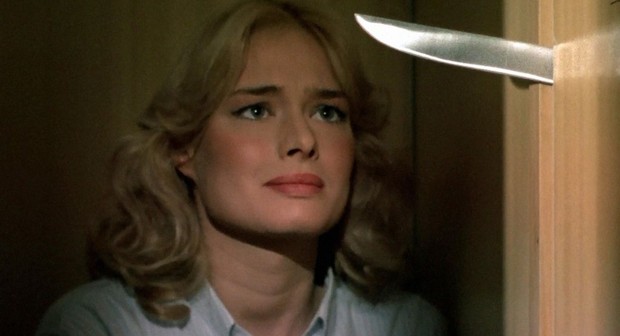
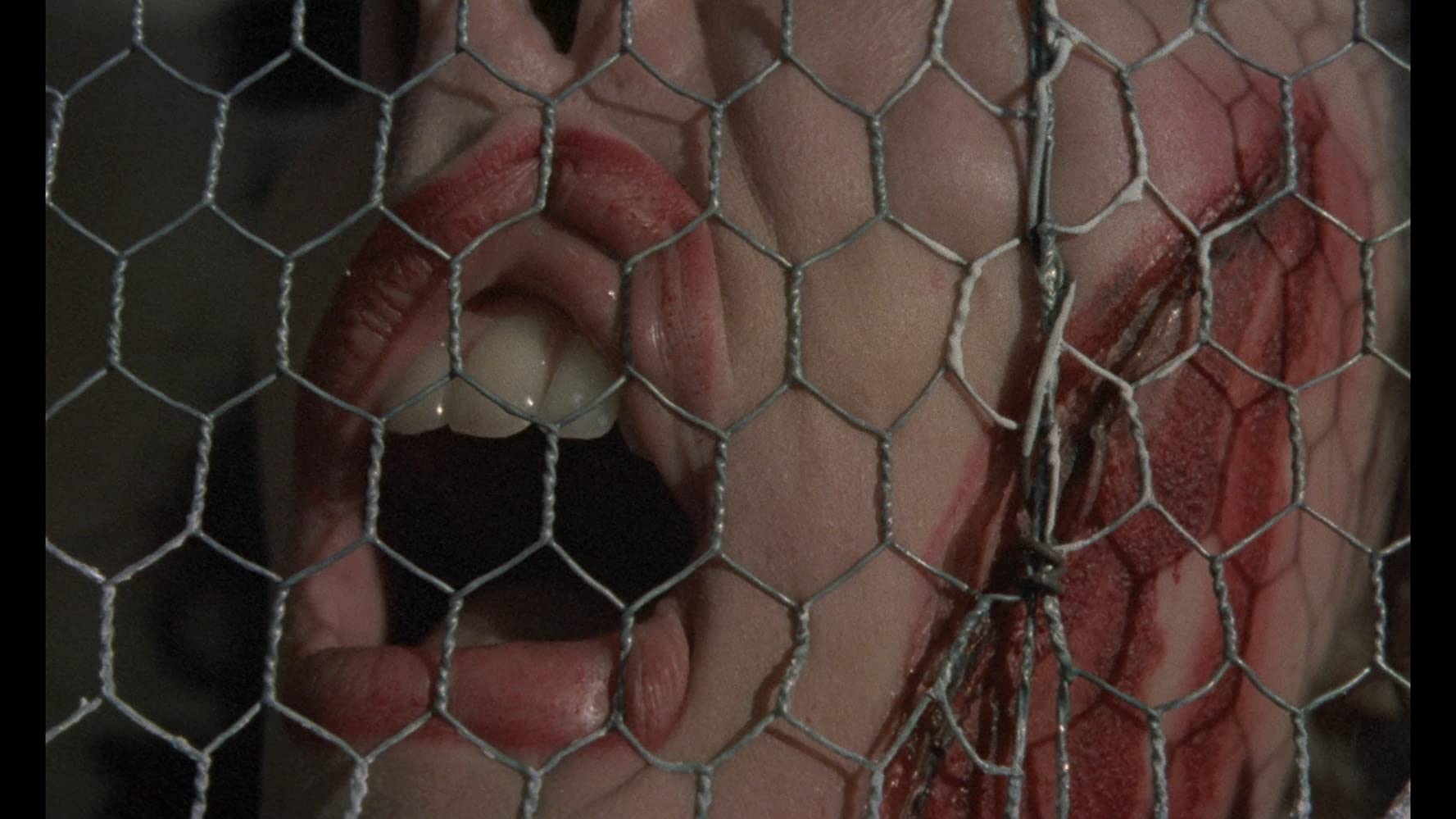
Even in giallo films, which are more earthbound, there are things you just need to go with. One example would be, the first victim in A Blade in the Dark. She’s not bound or otherwise impeded from fleeing from behind the chicken-wire extending past a half-demolished wall. It could be fear that traps her, but that needs to be inferred. Her not attempting to flee once “stuck” also plays into a giallo trope I refer to as “the teasing blade.” Wherein the murder weapon tests a latch, keyhole, door jamb, or other obstruction the target hides behind methodically, slowly at times; Torturing the would-be victim and the audience alike. In this film’s first kill we watch the killer undo blouse buttons, pierce skin, draw blood, and dig. Giallo kills are more protracted than slasher kills that followed. More about stalking than chasing, the film is less concerned about body-count and more concerned about labored, shocking, outlandish kills.
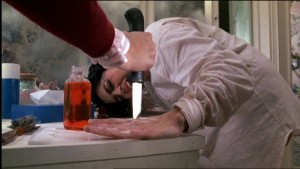
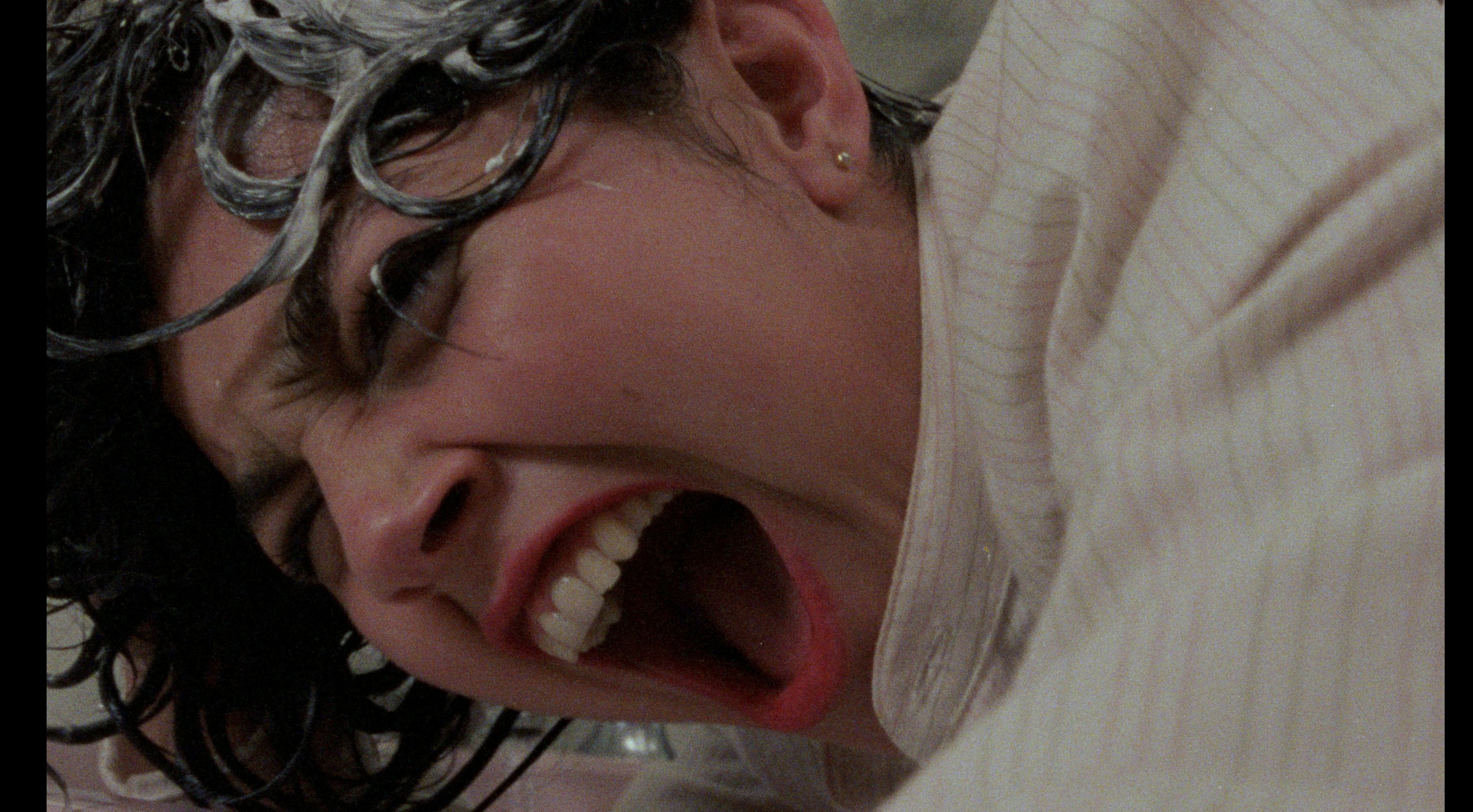
The exception to that rule in A Blade in the Dark is the bathroom kill. Typical gialli kills would have one flashy creative flare and that’d be it. This scene has multiple flourishes. It begins with the film’s most iconic bit of violence: the knife through the hand. It concludes with its most brutal coup de grace: a bag over the victims head while slamming it against the bathtub; then when the woman is practically dead, if not already there, the murderer slits her throat like she’s a slaughtered pig.
It’s safe to say this is the scene that kept it off television. A filmmaker wouldn’t want to compromise it for network censors. This scene, and the discovery of minor clues in clean-up later on, are just two of the elements in this film that remind people of Psycho. The other thing will be discussed later. While there are definitely problematic elements viewing it in the modern day, there are unquestionably many things that work about it and also many ways of parsing this film such that the aforementioned Vinegar Syndrome release’s booklet had three disparate short essays that didn’t even address my observations about it.
Another not-quite-realistic element is the women who pop-up uninvited at the house. Katia (Valeria Cavalli) is strange in general -a bit more subdued in the Italian audio- but is found in a closet by Bruno she’d come to retrieve her diary which was left there when Linda was staying at the house. Angela (Fabiana Toledo) likewise suddenly shows up wanting to use the pool, when Linda stayed she let her. Bruno agrees. She soon meets her end as well.
The Set-Up
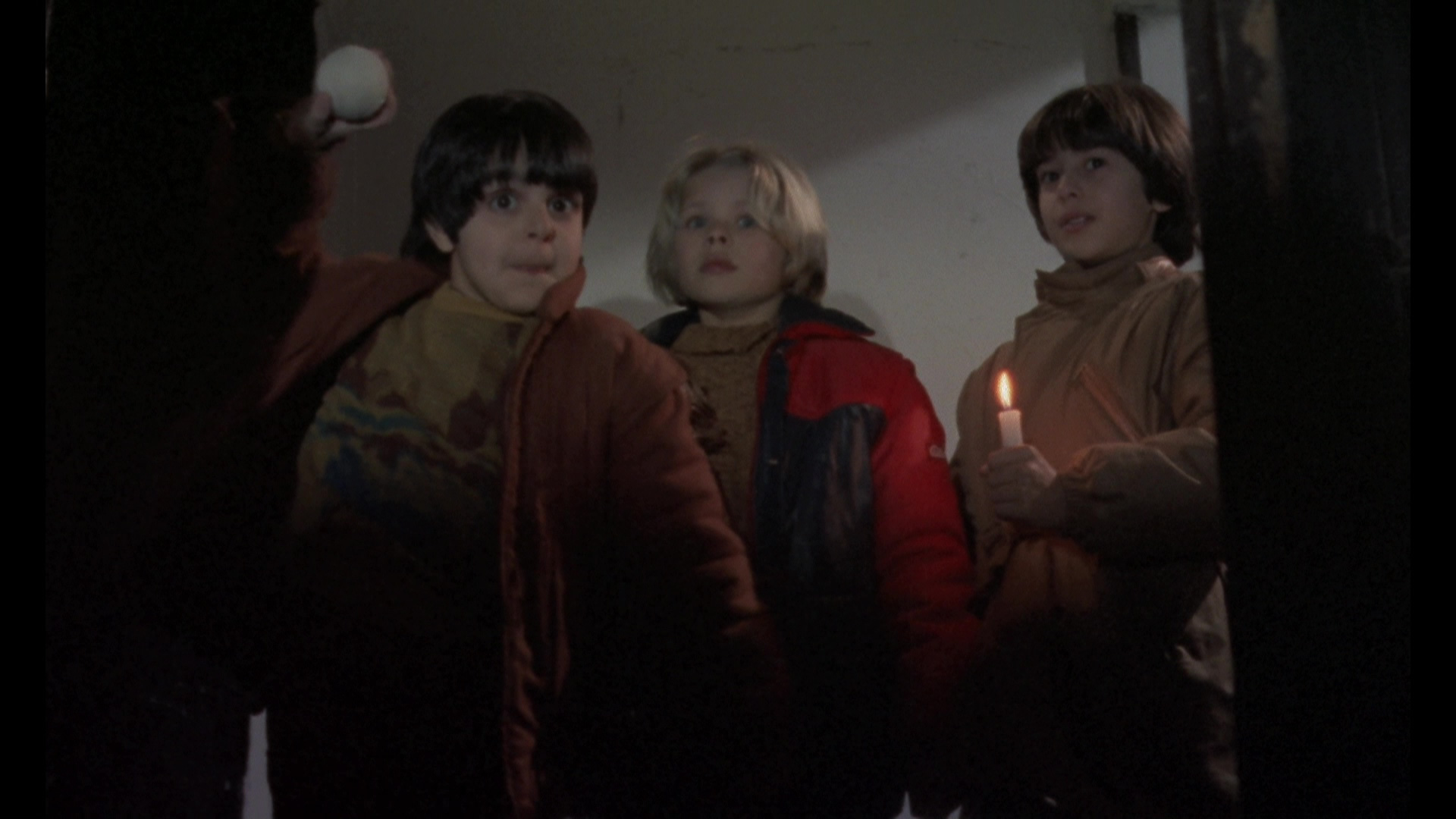
The film begins with three young boys walking into a creepy abandoned house. They gaze down through the open basement door, a stairway that vanishes into darkness tempting them. One of the boys throws a tennis ball down the stairs, daring the blond boy between them to go down and get it. They taunt him, call out his fear. Here we get one of the most significant differences between Italian and English, and TV and feature versions: in the English feature version the chant they hurl at their target is “You’re a female.” It comes across as overly formal and tin-eared considering these kids are ten at most, aside from that its on the nose considering the plot that unfurls afterward. What they say in Italian is “Femminuccia” which translates to “girl” or “baby girl.” I don’t know if there was some decision made to match the “fe” sound in both audio and subtitles, but boys calling each other a “girl” or “little girl,” as the case may be, is not only a far more universal experience, but also less predictive than how it’s generally been played in English and in the subtitles.
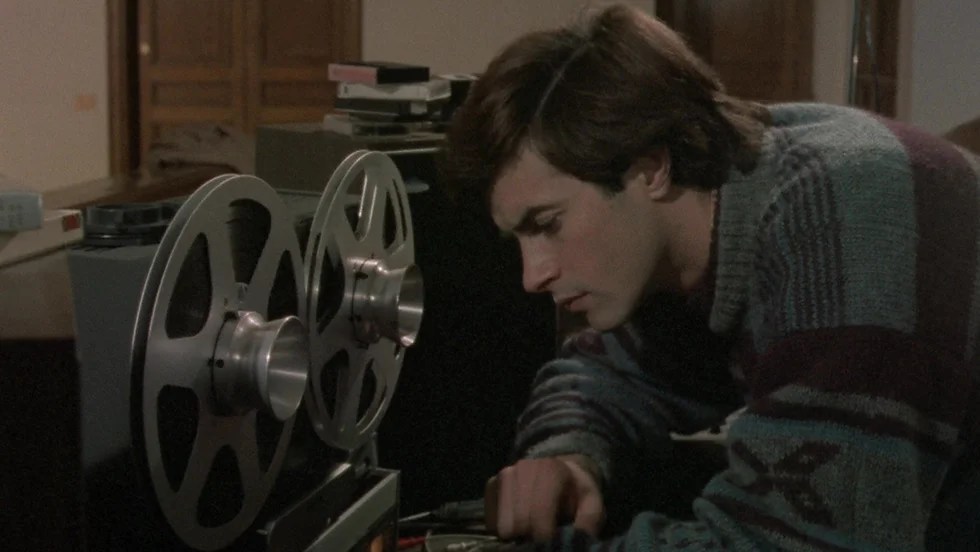
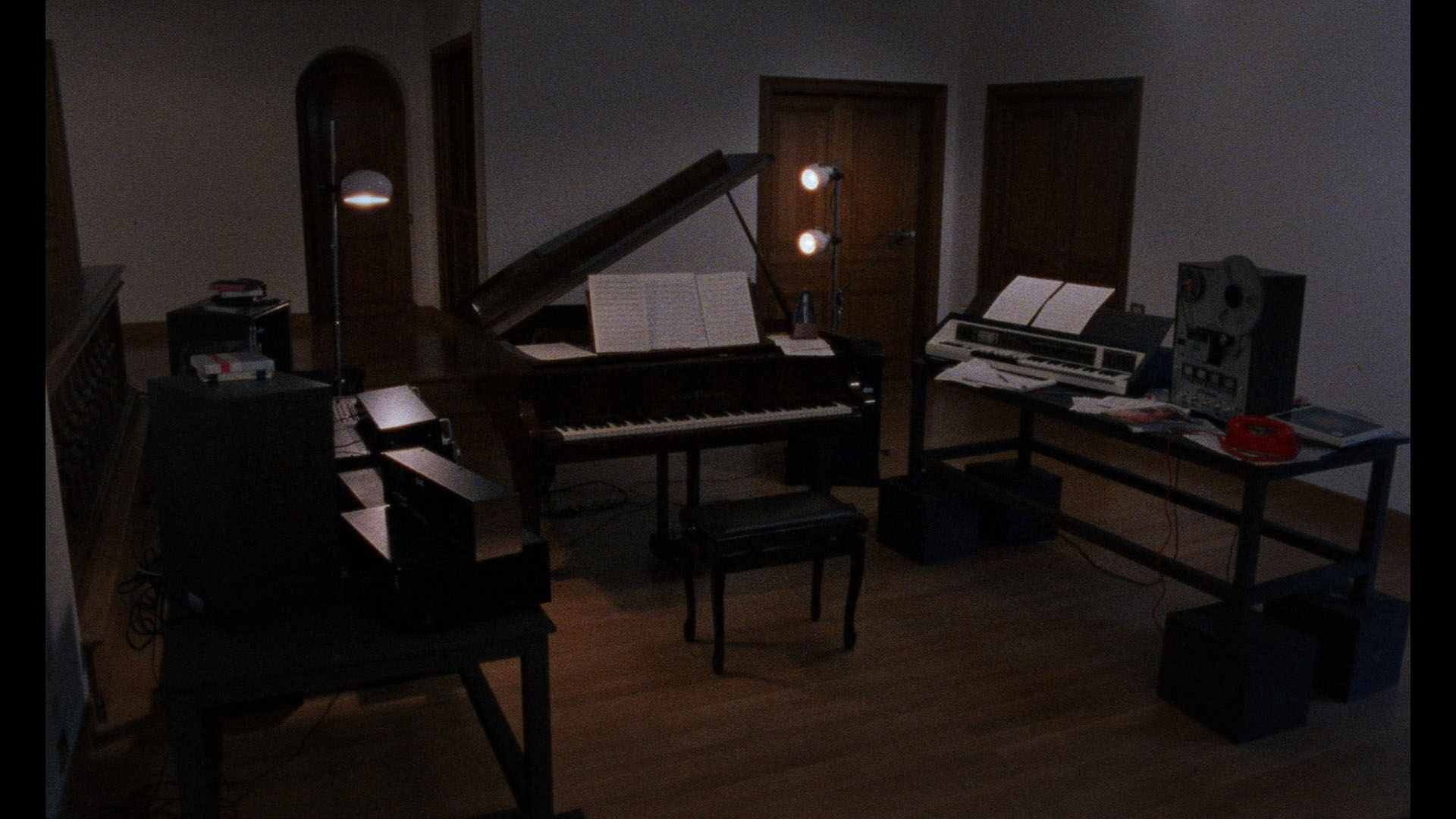
Regardless, after the tennis ball goes down the stairs, the frightened blond boy (Giovanni Frezza, best known as Bob in The House by Cemetery, and a staple in both Bava and Fulci’s films for half the ‘80s) disappears down the stairs. Then the tennis ball whizzes up the stairs, the other two boys avoid it. It leaves a bloody mark on the wall behind them. Shortly, after that we see a Moviola, Sandra (Anny Papa) and Bruno (Andrea Occhipinti, The New York Ripper) sit behind it. What we’ve been watching is a scene from a movie that Sandra directed that’s now being edited. The scene frightens Bruno. He’s tasked with scoring the movie. He’s nervous not only because the film frightens him but because horror music isn’t his usual metier. But that’s why she wants him. This is a great touch, not only does it put the protagonist out of his element artistically (he also is staying at what’s deemed to be a creepy house for inspiration), but Bava employs this very technique in scoring the film. He chose Guido and Maurizio De Angelis, who typically scored poliziotteschi films; a sub-genre of Italian action and crime films popular in the 1960s and 70s. Due to this choice A Blade in the Darkdoesn’t sound like most other giallo films. The theme is melodic but not quite as entrancing as The Psychic (7 notte in nero), it has an electronic signature and layering, but isn’t anywhere as thumping as something like Suspiria. What it does is underscore the narrative perfectly and fit.
Bruno’s working in a house rented to him by Tony (Michele Soavi, who also worked with Argento and on to direct his own films) who seems a bit odd but otherwise harmless. Aside from creepiness, Sandra hopes the solitude will enable him to produce his best work.
Sexuality, Representation, and Art
One thing that’s well-noted in the booklet of essays is that the giallo wave was pretty much dead by the time this film was released. The usual purveyors of it went on to tackle other sub-genres of horror and thriller after this. By the end of the giallo wave the films needed to find varied and more creative justification for those being targeted.
While it’s possible to read this film according to a few theories of analysis, the main characters in this film operate from different places so I believe a layered reading of the film is necessary to truly appreciate all that’s going on.
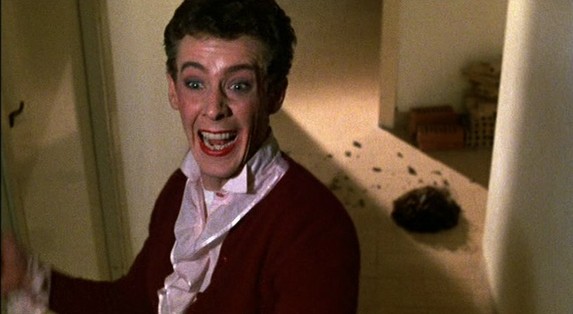
The creators of this film were coming from many places here. As mentioned, Tenebrae influenced Bava here immensely. In Tenebrae, the killer raped/murdered a trans woman he was attracted to and then targeted other women. The first part of that equation is sadly all too relatable today and wasn’t unknown in the ’80s, but it wasn’t discussed as much in film. When it was handled it was done with the understanding of the time, and usually to some extent for shock value. Here, at least, as in Tenebrae, it’s intrinsic to the plot as the big reveal of the film is Tony is Linda, who is the murderer.
When the societal outcast is lashing out rather than an expendable victim (see the myriad movies referenced in The Celluloid Closet, many of which had LGBT characters who were tertiary and pointlessly introduced only to be immediately killed), it’s a lot easier to take despite any errors. Now, I am gay, not transgender. I read a post by a transgender writer about this film. Unsurprisingly, they find it transphobic, but they also said they wouldn’t tell people not to watch. I understand that ambivalence and realize that my thinking more highly of it has to do with my layered reading and personal background.
One thing that’s important to keep in mind watching older movies now is that they will have troubling content that might not age well, but they can still be viewed if you wish. I thought one of the best jokes on Brooklyn Nine-Nine was when Ace Ventura comes up Jake (Andy Samberg) says “Classic film. One of my childhood favorites. And it only gets overtly transphobic at the very end.” It’s a great line because it acknowledges a serious issue with the film while not discounting the work entirely. For gay and transgender characters to be the protagonist or survive horror films, they had to first be in them as more than tokens. This film at least does that.
Also, when a film is trying to do a lot, not everything will work for everyone. The fact that this film features a female horror film director is also significant. Sandra’s wardrobe is masculine. She wears ties and slacks reminiscent of Diane Keaton in that era, but that choice also speaks to gender expression being part of the plot. That her wardrobe not being commented upon also expresses an almost universal double-standard. If a woman wants to be more like a man, that’s fine to a degree. But a man or boy being more feminine, or being perceived to be more feminine, is a problem.
As I discussed some above, being an artist is also a central element to this story, most of the central characters are creatives. Bruno is a musician and composer; Sandra is a writer and director; and Julia, Bruno’s girlfriend, is an actress. Much of the film deals with the struggles of creation; Bruno trying to get the theme right, Sandra perfecting the film, and through Julia another LGBT reference is inserted in the film. She says her play has been suspended due to profanity. In the English audio she says the play is called “Sackville-West,” named after a correspondent and love interest of Virginia Woolf’s. In the Italian audio there’s an added line “Imagine a play by Mae West being obscene.” The reason for the obscenity charge is the play deals with “homosexuality in females.” Bruno’s response in both instances is “Oh, that explains it. No one wants to hear about that.” Whether Bruno agrees with the decision or he just means society in general won’t accept that almost doesn’t matter because they’re characters in a film that deals with something closely related.
The struggles of these three characters to create, the time they dedicate to it, their single-mindedness puts blinders on them. Bruno, is more interested in scoring this film and doing it well, while also solving the mysterious disappearances around him, than he is in self-preservation or working on his relationship. Similarly, Julia is too wrapped up in her play, and wanting Bruno to see it, to believe murders are even happening until she has not choice but to believe it.
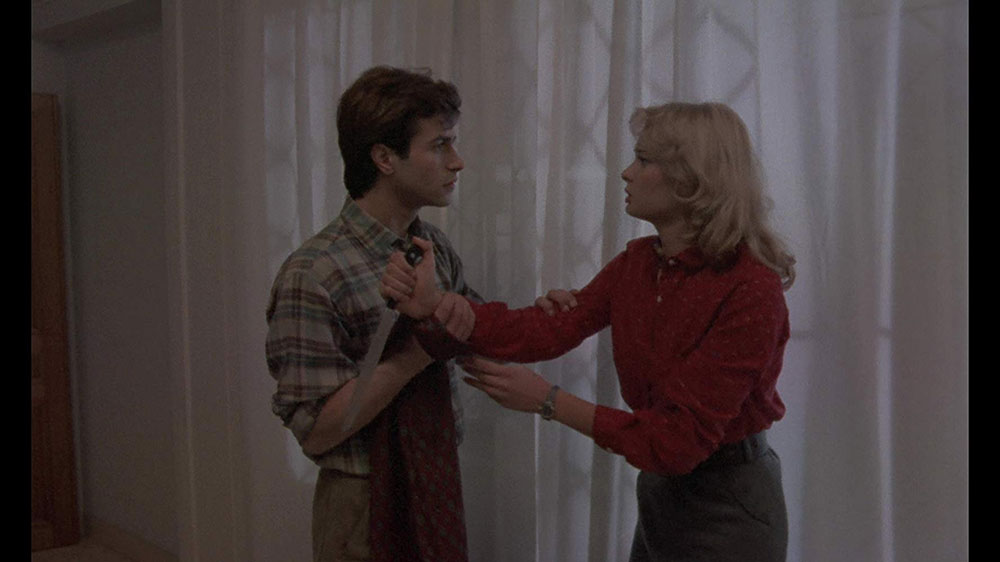
That brings us to Sandra, who perhaps best represents the narcissism that all artists have to some extent. She betrays Linda’s trust, when she was told Linda’s secret it was made explicitly clear it was a secret. Not only did she turn that into the seed of an idea for a film but she repeatedly minimized Linda’s feelings and she was the offended party. Sandra also is hiding the final reel from everyone, no one is to see it presumably until the film comes out. There are stories of controlling directors doing things like this, but stopping the composer from watching it goes beyond the pale. Obviously, the composer needs to see the images his music is supposed to accompany. It also intimates that she’s on edge about Linda or that she realizes, perhaps subconsciously, that the story she wrote is more true-to-life than she intended. She even tells Bruno “The killer in this film is a woman” meaning her film but that’s also true of the one they’re in.
The Explication Scene and Linda’s Modus Operandi
The explication scene is perhaps the Achilles heel of many gialli, sometimes the denouement allows the audience to get the bad taste out of its mouth. In this film it’s literally the last thing you hear which is unfortunate. The explication is typically necessary due to the double-edged sword of a giallo film. The audience is kept from knowing the identity of the killer for a vast majority of it. The whodunit aspect is fundamental to its structure. With that set-up, and a killer who has an alternative sexuality, by default you have other people speak for them as in the case of this film both Linda and Sandra are dead in the end. Add to that writers who are attempting to make a statement and be original and you get the kind of inaccuracy you find in this film. A lot of gialli also leaned on a pop-psychology that treated trauma as a kind of “Rosebud,” if you discovered what happened to this person you’d understand everything about them. That works to varying degrees in the genre. Even in a fantasy its hard to accept that one’s gender identity or sexuality will change because of bullying, but those taunts can make one see one’s self more clearly. Similarly, being unable to accept one’s queerness, however, is accurate and a universal phenomenon.
Not seeing the killer, not being anywhere near their headspace, one must also speculate on the plan Linda had in mind. Getting past the filmmaking elements and the surprise of the narrative into the idea Linda had is not hard. She and Sandra had a falling out. Linda told Sandra about her deepest trauma in confidence. Sandra decided to spin that story into a film using Linda’s story in a scene. Linda got upset. Her confidence was betrayed, the friendship ruined. It seems Linda’s initial goal is to ruin the film. She, as Tony, rents out the house to man people, including now Sandra’s composer. She whispers so Bruno can hear it on playback telling him eerie secrets, she then destroys his takes of the score, halting his work to make him start over. None of that deters him. Then the unexpected houseguests dying doesn’t stop him either.
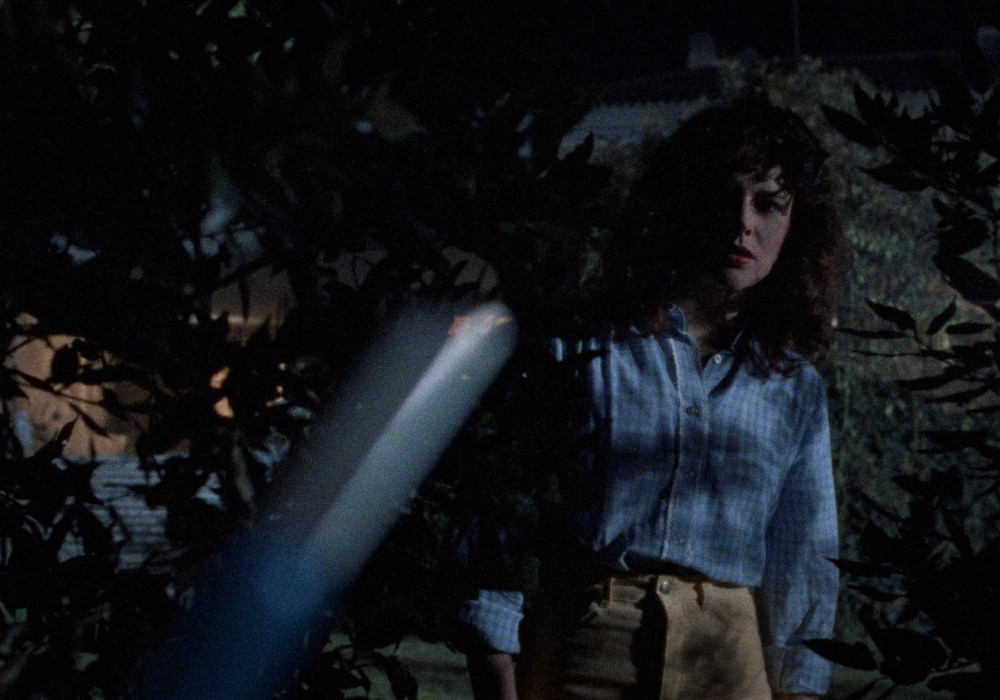
Linda then finds the film’s elusive final reel while no one is looking at the post production facility. She lops off half of it and slices the rest to ribbons. None of it stops Sandra from trying to tell the story she wasn’t supposed to tell.
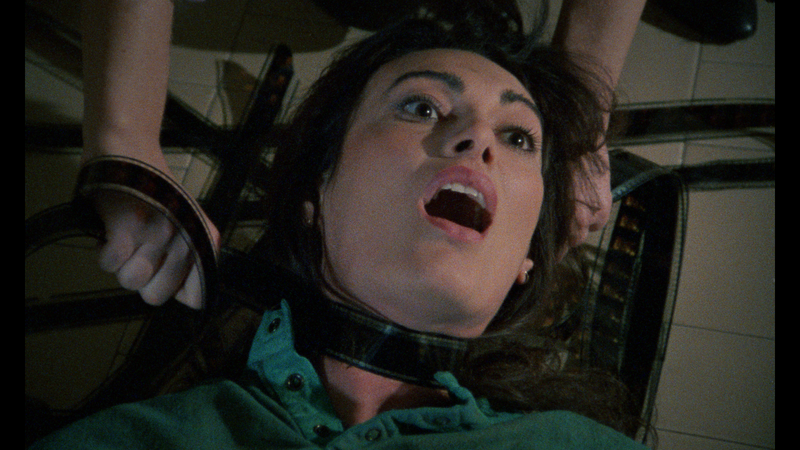
Aside from betraying Linda’s trust, Sandra was essentially outing Linda in her film, so why wouldn’t she want to get her revenge? She could stop at ruining the film, but then it wouldn’t be a giallo; the revenge fantasy aspect wouldn’t be as viscerally appealing. The fact that Sandra is strangled by a strip of 35mm film and then found in the remainder of the final reel is ham-fisted, perhaps, but it underscores the point that Linda wouldn’t have felt pushed to do this without the film. Giallo films are about excess and many times that’s just the kind of excess I want in a film. If it seems like you’re gonna go there, really go there!
At one point, Bruno and Sandra find in a room that was previously locked. It contains two collections of items traumatic to Linda in cardboard boxes: pornographic magazines (which could be a nod to her body dysmorphia without the film having the vocabulary for it. Early in the film she slashes at the centerfold in a nudie magazine when she first enters the recording studio), in the second box are tennis balls. While this is striking as an orgy of evidence, those are rarely found in reality, but this is a fantasy. Furthermore, I really love that Linda seeks to weaponize these traumatic totems. She also uses the taunt the bullies used on her (“Feminuccia“) on one of her victims.
The score at one point I feel comments on Linda also. I previously mentioned musical overlays. Toward the end of the film the emblematic theme is played, then another piece of score plays over it. This is disconcerting for the audience but also can be read to represent the clashing of Linda’s personalities.
Conclusion
Sex and sexuality are and were vital cogs in giallo films. As opposed to the slasher films they inspired in the US, there wasn’t as puritanical a bent, nor was the sexuality typically superfluous to the remainder of the story or themes. Neither is something like A Blade in the Dark totally out of left-field. In her essay “The Mother of All Horror: Witches, Gender, and Dario Argento” Jacqueline Reich wrote that giallo is “a genre dominated by sexually ambiguous villains and monsters offering cross-gender identification.” And I certainly agree with that take. Machismo or toxic masculinity has always made me bristle, so giallo characters (or those in any genre) offering a counterpoint to that intrigue me.
While Bruno’s simplistic interpretation is that Tony’s masculinity was stunted, Linda’s whole being was affected. One final comparison between English and Italian audio, there comes a point where Linda loses the box-cutter she began her spree with. When she enters the kitchen and finds the knife-block displaying the knives vertically on the wall, there’s an ecstasy in Linda’s vocalized reaction that’s half-shock (like she sounded after the bathroom kill) and half-arousal. This also plays into ambiguity, as does the fact that in order to enact this plan Linda has to inhabit the body and clothing of her former persona more often. That definitely explains how uncomfortable and nervous Tony is, and why he goes out of his way to say he’s not just leaving the house, not just leaving Tuscany, but heading to Kuwait on non-existent business.
The ingredients of many gialli, especially Tenebrae—sexuality, representation, and art—are in this film with a different recipe. Lamberto Bava wondered what if the trans person had been wronged and snapped. To answer that question and produce a film about in 1983, in Italy, it almost had to be in an exploitative genre as it was one of the few refuges to more fully examine outcasts. There is certainly more to A Blade in the Dark than meets the eye.
Writers: Steve Langford, Debra Blanchard, Tom Ruegger, Paul Dini
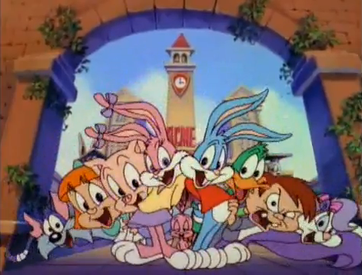
Tiny Toons was the first of a wave of Warner Brothers Animation shows produced by Steven Spielberg. Each episode began with an opening title sequence complete with theme song.
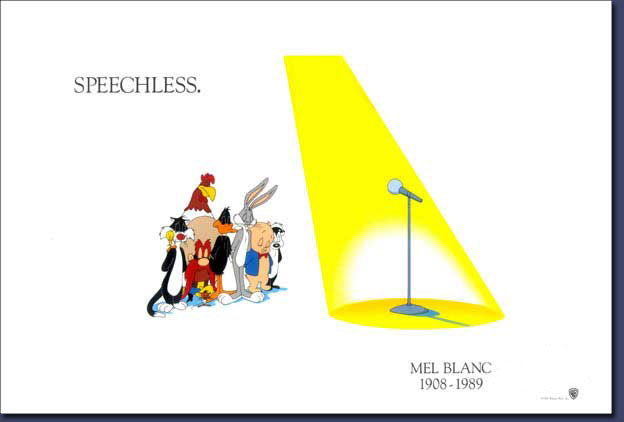
It’s no small feat to create a next generation of characters to interact with, and follow in the footsteps of, the Looney Tunes. Perhaps what made this show successful was that it incorporated the notion that these characters were learning and being taught the ins and outs of being toons by the old guard who act as teachers and mentors at Acme Looniversity. So they play a supporting role for those who don’t want to see only all new characters. Another function this show served was a continuation of the Warner Brothers canon following the death of Mel Blanc.
The episode opens with a Wacko World of Sports newsreel, which is a reference to an eponymous episode earlier in Season One, which itself was a riff on ABC’s longtime series ABC’s Wide World of Sports.
The segment sets up the rivalry between the Acme Looniversity Toonsters and Perfecto Prep. The term rivalry is used loosely here because Acme is winless on the season (a montage shows their loss to the University of Woodpeckers, Santa Ana Barbarians, and the Metropolis Marvels.
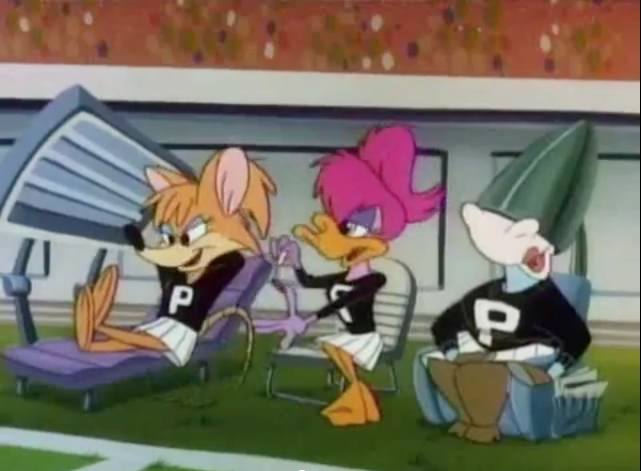
Elmyra plays nurse to the team, her character originated on this show before joining both Animaniacs and being teamed up with Pinky & the Brain. Little Sneezer is established as the team’s super-fan and his involvement is pivotal later in the episode. Babs, Fifi, and Shirley the Loon are the cheerleaders and Buster has just been named the new quarterback of the team.
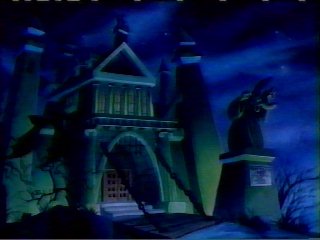
Then there’s an ominous introduction to Perfecto, the antagonists. Even the building looks foreboding. It’s also the first part of the episode that requires a little suspension of disbelief as they are cited as being undefeated in their 200 year history. A would-be record in actual college football and if the implication they’ve played that long—well, college football only turned 150 in 2019. However, that information, the whole opening captured my imagination as a child and serves as a great lead-in to the story.
Next, we go into a pep rally where Bugs, the team’s coach, introduces Buster to the student body. The cheers from the cheerleaders are the comedic highlight here and they’re jokes I relate to better as an older sports fan.
“ARE WE GONNA WIN?”
“NO!”
“ARE WE GONNA LOSE?”
“YEAH!”
“ARE WE GONNA LOSE BIG?”
“YEAH!”
“HOW BIG?”
“WE’RE GONNA GET ANNIHILATED!”
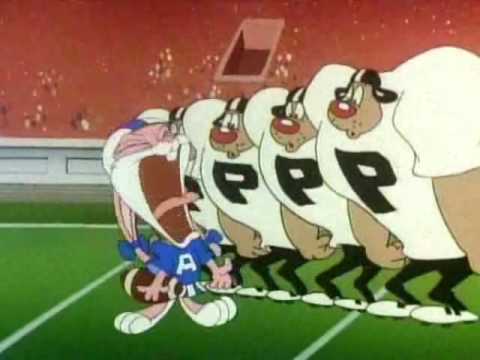
We move to Perfecto who sing their fight song in this scene and it includes the lyric “because, you see, we always cheat,” this is both fitting for sports at the moment and the honesty is refreshing.
Aside from the new QB Acme is also unveiling a new playbook for the big game.
The playbook, “filled with razzle-dazzle,” is coveted by Perfecto. When they Acme players go their separate ways we see that Plucky is not headed toward his house but is covertly meeting with Perfecto. In an Eight Men Out kind of twist, Plucky has with him the playbook they so desire. He enters a limo, hands over the book, and visits campus. In exchange for relinquishing it and throwing the game he’s being promised the ability to transfer there.
Plucky’s courtship includes video games and a seductress by the name of Margo Mallard who induces a rather Daffy-like reaction from Plucky; the first of many successful sight gags in the episode. The combination of classic bits with modern motifs was one of the things that drew me to this show aside from old favorites still being there.
One of the best running gags of this episode is Perfecto’s cheerleaders being disaffected Valley Girls (“Perfecto…rah”). When Plucky first signals Perfecto a play during the game he says “Am I a louse or what?”, which is a very Looney Tunes kind of aside. Later, there’s an anthropomorphic football gag that despite nearly being mandatory is well done.
Football fans will appreciate some of the trick plays Acme tries to run like the Statue of Liberty play. The most famous example of it can be seen below.
Recently, I was watching Who Framed Roger Rabbit with my son, and during the opening animated sequence, he asked something to the extent of “Why are there so many windows in that kitchen?” What he was commenting on was the subtle gag at play in that scene that it took me many views to pick up on—animated shorts played with space to conserve how many backgrounds they needed to create in the cell animation days and Who Framed Roger Rabbit exaggerated that.
There’s an instance of that technique which may not have been intentional in this episode. After a kick Acme is pinned at the one-inch line (A good call by Sylvester doing play-by-play in the booth; his flooding the booth with spit and Porky trying to avoid it is another great running gag in this episode. On the next play after that kick, Buster drops back to pass about twenty yards and doesn’t even enter his own end zone much less run out the back of it like he should have.
The only other football-related SNAFU is that no extra points being kicked were shown, one was arbitrarily awarded to generate the closest possible result.
Because Perfecto is signaled by Plucky about the plays they are able to force two strip-fumbles that are returned for touchdowns.
Near the end of the first half Buster brings in the secret weapon he told no one about: Diz; Diz being the young counterpart to the Tasmanian Devil. Diz is told to go long. He does. Buster puts some mustard on his throw, cue sight gag. Diz catches it, by swallowing the ball, for a touchdown.
On Perfecto’s next series Diz creates some havoc on the defensive side and would have come down with an interceptions if Perfecto hadn’t put a literal rocket on the ball that carried him out of the stadium, the where we don’t know.
It’s 18-7 at the half (see, Perfecto missed their extra-points, Acme didn’t and we saw none of them).
The halftime show is the Wackyland Rubber Band a great homage to Porky in Wackyland.
During halftime, Ronny, Perfecto’s alpha, accosts Plucky in the restroom. He’s angry about the touchdown, having expected a shutout, and is adamant that Perfecto better win.
Sneezer was in a stall overhearing this and it prompts him to say “Say it ain’t so, Plucky,” in another Eight Men Out moment.
Coming back from the second commercial break, or fade to black on streaming (Hulu has it in the US), we’re thrown back into the action with another tried and true gag: the use of stock footage. Many more of these techniques can be used in a single narrative when aiming for 22-23 minute episodes than a 6-8 minute theatrical short.
Sneezer’s refrain of “Say it ain’t so” continues to assail Plucky. Buster is sacked and as other players fall to injury Buster accepts the cheerleader’s offer to suit up. His only protestation being “Oh, brother.” For 1990 that’s progressive indeed.
As one might expect the girls don’t just help the boys avoid forfeiture. About to get tackle Babs screams that she lost her contact lens—insert gag about her having brown eyes—she finds it first and runs for touchdown. Acme now trails 18-13, another extra point missed unseen.
Fifi, the new generation’s answer to Pepe, forces a fumble and recovers for Acme with 0:06 left in the game. Buster is drawing up a play for Shirley the Loon and Babs catches Plucky signaling Perfecto. Perfecto thinks they have the game won regardless. Plucky is sent to the bench.
For the fourth time Sneezer implores “Please, Plucky, say it ain’t so.”
After the snap Plucky steps back onto the field just inside the boundary at the line of scrimmage. Buster gets him the ball immediately. In football terms, excluding the trick element aside, this play became popular much later. It’s a smoke-screen—a quick, short throw to a wideout that relies on yards-after-catch. Because Perfecto believed Plucky out and not replaced they didn’t cover that area and couldn’t catch up to him. Plucky scores as the gun sounds, no extra-point needed, Acme wins 19-18.
Ronny complains: “That wasn’t in the playbook!”
“Sure it was,” is the response. “Check the last page.”
It reads: You’ve been had. Signed, Buster Bunny.
Aside from the only-as-cartoony-as-it-needs-to-be football action, the drama of the game on display in this episode captured my imagination when I first had it and has kept it since; more on that in a bit, but first the denouement.
Sneezer approaches Plucky in the tunnel. He is proud and never doubted the team. Sneezer offers him a drink, Plucky gives him his jersey in an homage to the Mean Joe Greene Coke commercial.
Perfecto laments their fate as Diz returns on the rocket-ball, from Hawaii it seems, and crash lands on them in a final bit of poetic justice.
A few times in my early teen years and twenties I tried to deny the sports-loving part of me thinking it interfered with my creative side. What I later discovered was I needed to find balance. Since I’ve gotten better and better at doing.
The notion of Tiny Toons not only learning their craft in school but being student-athletes captivated me. I drew my favorite characters—Warner, Disney, or otherwise—in Acme uniforms and based on when they debuted in theatrical shorts I plotted when their school days would have been. I’ve thought about it with modern characters also.
In that endeavor I also imagined what positions certain characters might play. I sated my sports interest, my creative impulse, and I also learned a little bit of film history. Little did I know at the time this was an activity all about balance.
For artists in any discipline you never know what kind of impact your work will have. I’m sure those involved in “Acme Bowl” didn’t know that I—and other kids like me—would still know the score of that game thirty years later, still have drawings they made inspired by it or the diary entry I wrote recapping the episode when I had just seen it.
One of the reasons I love this blogathon so is that to discuss a series or season in totality can be tiresome. However, some individual installments can stand the test of time even better than the show as a whole. It was a pleasure discussing this one.
NOTES:1. This film can be streamed on Hallmark Movies Now, which is available for a free seen-day trial 2. There were few photos of this film I was able to find online, none featured Claire Trevor unfortunately.
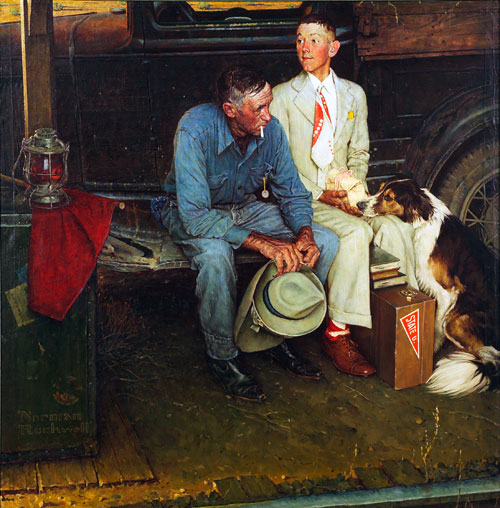
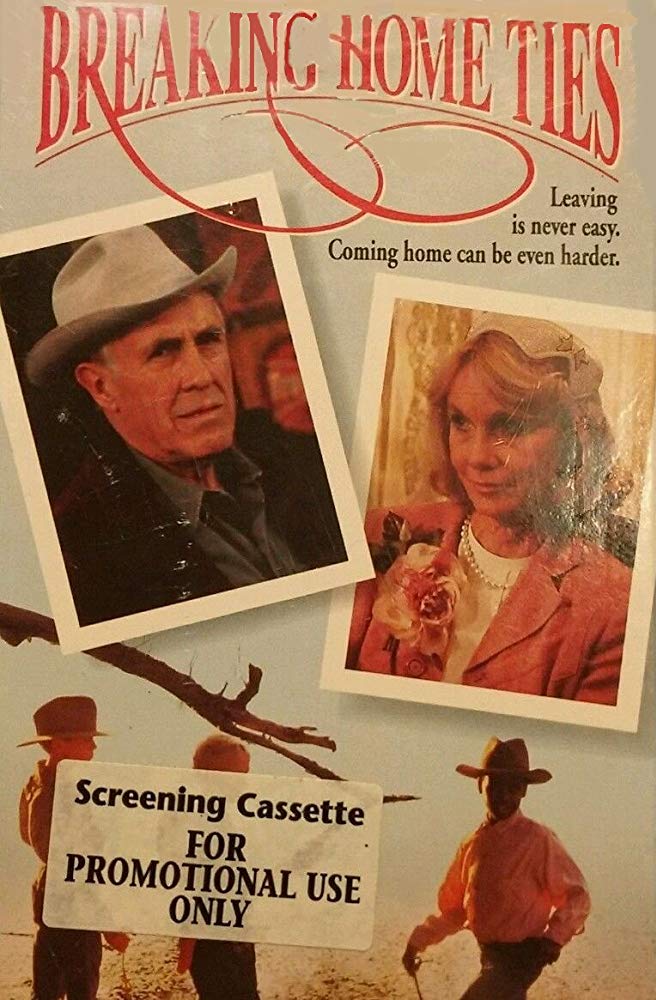
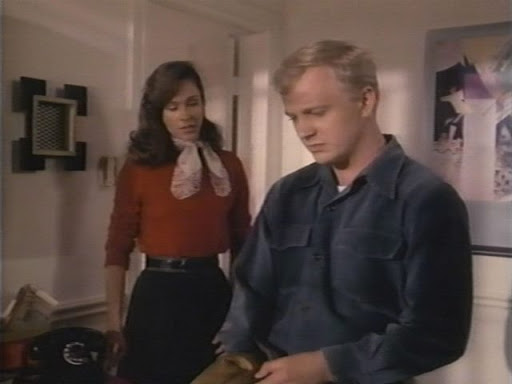
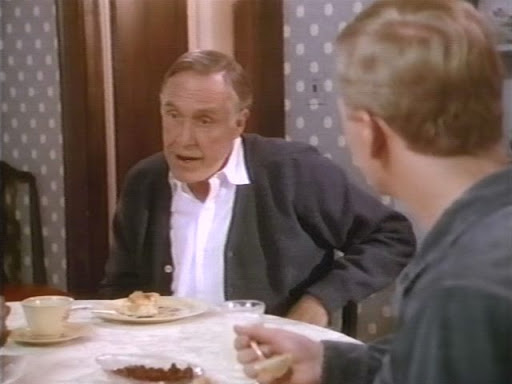
Breaking Homes Waves aired on ABC on November 27th, 1987 and is based on a Norman Rockwell painting by the same name, the film is written and directed by John Wilder. It stars Jason Robards as Lloyd, Eva Marie Saint as Emma, Doug McKeon (best known for On Golden Pond) as Lonnie; and, of course, Claire Trevor as Grace Porter was given the TV honorarium of “Special Guest Star.”
Despite being based on a work by the epitome of Americana, this film does go beneath the wholesome veneer to find the drama. It centers of Lonnie who is leaving home for the first time to attend college. While he’s adjusting academically and socially. At home, his mother, Emma, learns she has leukemia and decides not to tell her husband, Lloyd, or her son.
Claire Trevor comes in as Grace, a high school teacher, Lonnie being a former student of hers, and she is also a friend of the family. Her scenes in this film are few but significant.
In her introductory scene she arrives at our protagonist’s home driving herself. Her first shot is a male gaze shot (While male gaze was an old-hat cinematic motif by the late-‘80s what makes this instance a little different is that both characters involved are senior citizens) that starts at her foot exiting the vehicle and pans up. This establishes the mutual attraction between Grace and Lloyd. That scene is the setup and we immediately sense the screen presence that earned her the special guest star credit, even if we were previously unfamiliar with her. During this very same year she also appeared on an episode of Murder She Wrote.
When Grace speaks to Emma she asks how she’s doing especially considering Lonnie has just left for college. The bond Grace shares with Lonnie is revealed when she mentions that she never had kids but if she did he’d have been like Lonnie. Direction-wise this scene is a little off because the subtext that Grace carries a torch for Lloyd is clear but there’s never a reaction shot for Emma, so whether or not she’s any the wiser is unknown. We’re led to believe she’s not.
Regardless of that Trevor carries much of the screen-time in this scene and emotes subtext through the surface of banal dialogue, which is a testament to her abilities.
Claire next appears when Lonnie comes home from school over Thanksgiving. This visit is at the beckoning of her mother because he and his success at college mean a lot to her. This is the part in the film where Trevor has her first significant involvement and is one of two storytelling scenes she has. Here she relates how this was her hometown and that she met a man, fell in love, and then traveled the road. What surprises Lonnie as a young man who has left the nest for the first time is that Grace’s returning home and teaching generations what she learned in the great big world gave her a renewed sense of purpose after losing her husband and brings her more joy than globetrotting did. Trevor in this scene effortlessly captures the energy of a sage who tells the tale quite naturally evidencing the progression of her acting style to a more modern sensibility, demonstrating that at this age she still had the chops.
The next scene Claire Trevor has is her penultimate of the film, and finds Grace running into Lloyd in town near the pharmacist’s. At this point in the film the ailment that Emma has been hiding from her family is highly suspected by her husband. This adds a layer to the tension, this is on top of the sexual tension, as there is confirmation in this scene that there was a romantic past between the two. The restraint of emotion with clear communication between the scene partners here is most excellent.
Spoiler Alert
Claire Trevor’s final scene in this film is one where Lonnie visits her at school after the death of his mother. This is another storytelling scene where she relates to Lonnie that she and Lloyd had a relationship after he was a student of hers. Due to this fact they broke it off in order to spare her reputation. She then met her eventual husband and Lloyd met Emma. This sequence consists of longer takes and Clair Trevor and Doug McKeon play off each other well. Moreover, the naturalistic style of delivery is still present. This scene paves the way for Lonnie to talk to Lloyd get his side of the story and bury the hatchet with him as he had been angry with his father when he didn’t understand his actions and now needed to vent and to understand his mother’s decision.
Claire Trevor plays a small but significant role in this film. There are times when the “special guest star” connotation is given due to an actor’s reputation and is not merited by the role and/or the material. Here it is deserved and Trevor shows to those who may not have known why her reputation preceded her into this film.
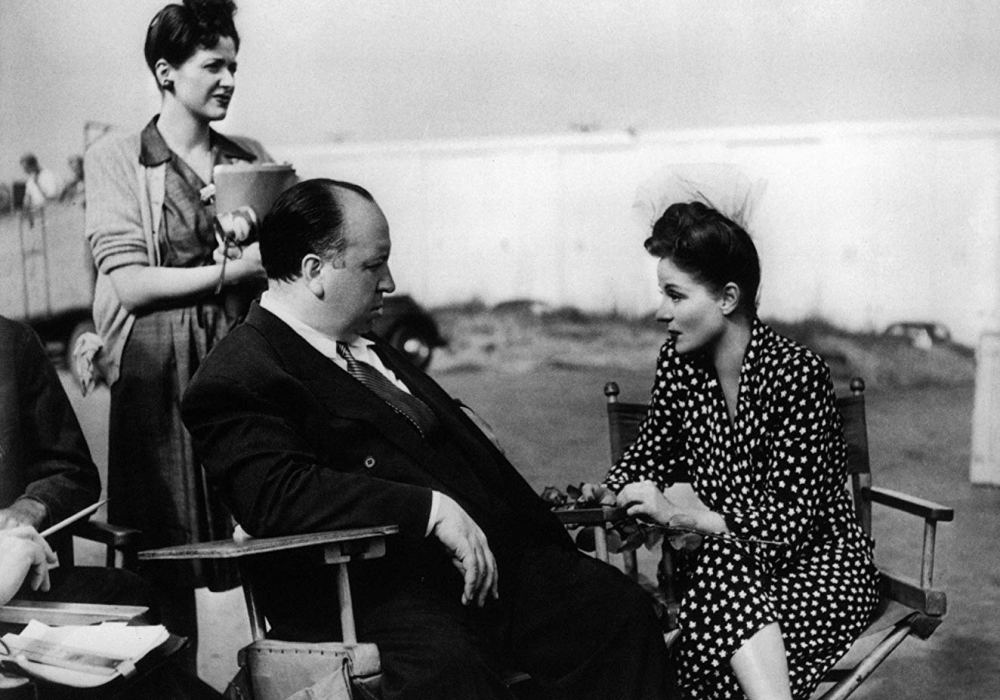
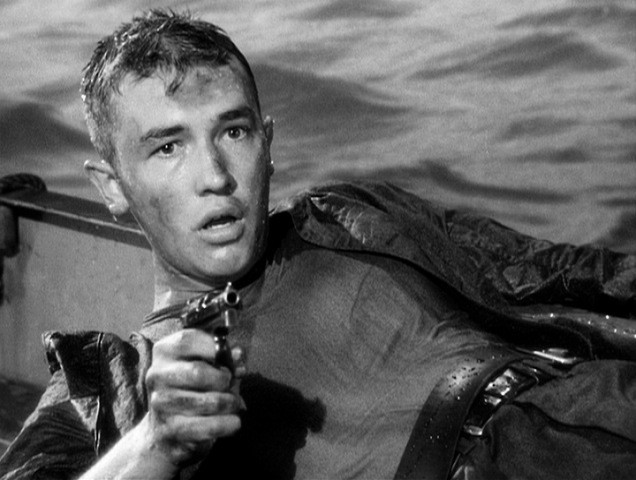
When I saw the Out to Sea Blogathon the first thing that came to mind was Alfred Hitchcock’s Lifeboat. The reason for this is that when dealing with seafaring narratives you are normally are left with few options of how to approach it in terms of the kind of story being told.
As per usual Hitchcock worked from a concept first conceived in prose. In this case a story by John Steinbeck. Shaping into cinematic story proved a daunting task in the scripting stage, as Hitch told Truffaut in their now-legendary interview series:
I had assigned John Steinbeck to the screenplay, but his screenplay was incomplete and so I brought in MacKinlay Kantor who worked on it for two weeks. I didn’t care for what he had written at all. He said ‘Well, that’s the best I can do.’ I thanked him for his efforts and hired another writer, Jo Swerling, who had worked on several films for Frank Capra. When the screenplay was complete and was ready to shoot, I discovered the narrative was rather shapeless. So I went over it again, trying to give dramatic form to each of the sequences.
This kind of revolving door of writers was not unusual then, nor is it unusual now; nor is a director’s pass of the script. This kind of revisionary writing is what many directors do in lieu of writing their own scripts start-to-finish—Spielberg would be a modern day example. Much of Hitchcock’s contribution can be seen in Constance Porter’s (Tallulah Bankhead) arc. However, there are other touches that make this work special, one of under-appreciated works.
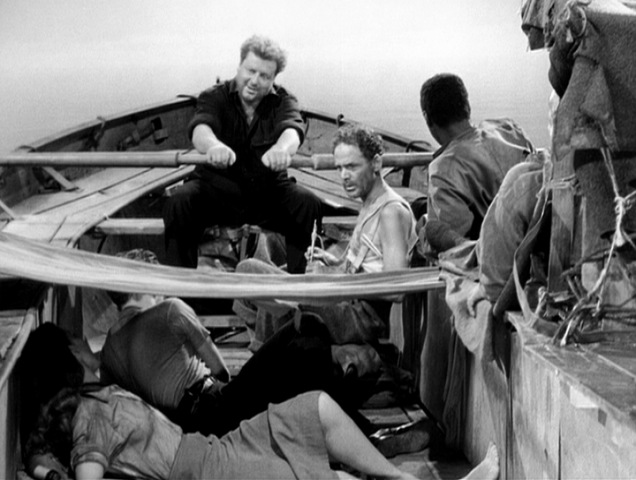
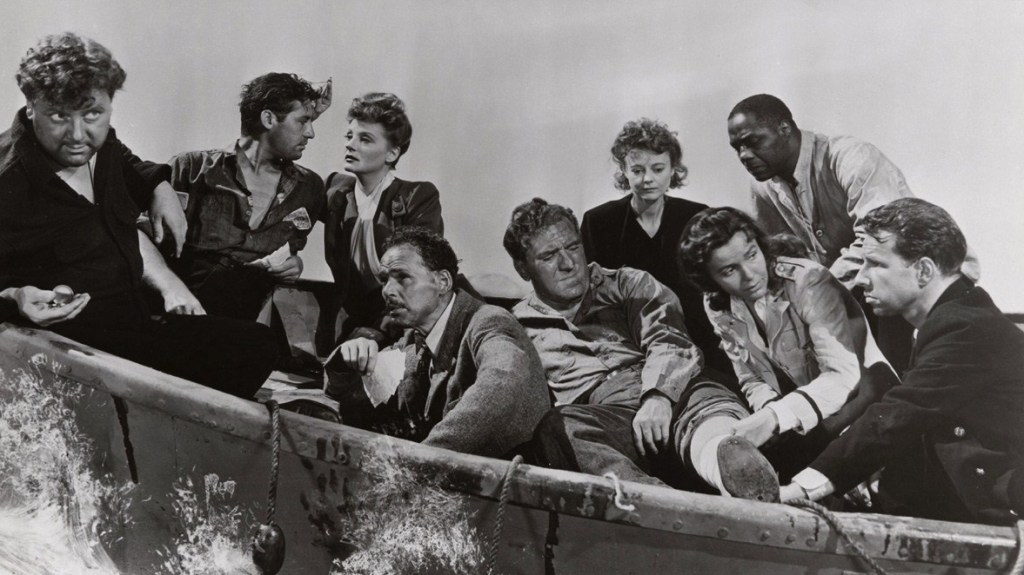
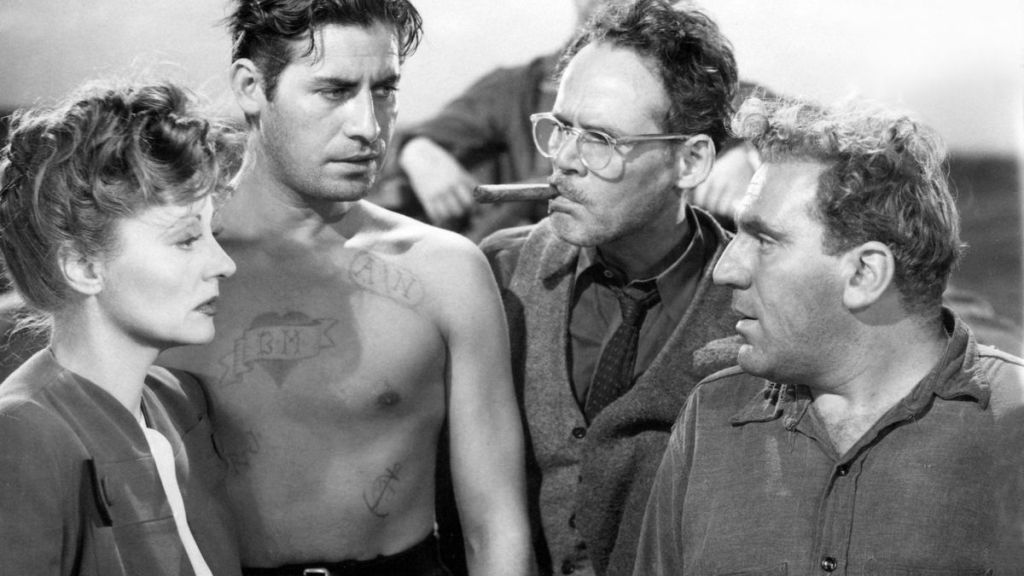
In the shipwrecked variant of the seafaring tale (this film deftly incorporates elements of that, war film, and chamber drama) there can be visual monotony to the goings on. What Hitchcock does to break this up is balancing the claustrophobic (being on a small lifeboat with a group of survivors) to agoraphobic (the oceanic nothingness that surrounds them). Another visual component that gives this film some vibrancy is that Hitchcock uses close-ups sparingly. Instead he frames many three-quarter, two-, three-shots, and larger group shots.
While, like Rope, this is a unity of space tale (but not time) yet there are cinematic moments, cuts, and mise-en-scène. So while the actors often share the frame listening and reacting to each other in the same take this film never feels theatrical.
As the title indicates the primary motivation for all the characters is survival. It instantly jumps into the action barely showing the sinking of the passenger ship by a U-Boat and getting right into the lifeboat.
The sea and their vessel is the ideal setting for this clash of characters who are a microcosm of World War II’s combatants. The focus remains myopically on the characters only focusing on the seafaring aspect as much as necessary and as a function of these characters.
As Hitchcock did later on The Birds, there is no musical score in this film. It’s another decision that focuses the audience’s attention on the characters as it searches for more verisimilitude and less spectacle.
As each passenger climbs out of the wreckage and onto the boat, there is tension and conflict as those already on the boat discover who the newcomer is and more about them. This is mostly subsumed and not bombastic. Most of the overt conflict surrounds the character of Willi (Walter Slezak), the German who comes aboard.
There are deceptions along the way but the character of Willi is most definitely an intriguing one. Hitchcock mentioned to Truffaut that some criticism from the press about the film was about the Nazi being too skilled, in short that they wanted the movie to be more propagandistic as it was released in 1944. However, the fact that he was the most qualified to captain the lifeboat doesn’t changed the fact that he lied about his rank on the U-boat and what supplies he kept on his person amongst other things. Plus, he goes to great lengths to earn their trust in order that his deception(s) can go undetected.
Had the film been more starkly black and white in its characterization, as some critics wanted it to be (judging a film by what you want it to be, and not what it is, is a cardinal sin of criticism), I don’t think the film would have had the afterlife its enjoyed despite its disappearing from cinemas with little fanfare upon its initial release. Save for a rather lengthy run in New York.
With any film the audience, both critics and the general public, are the final arbiter of meaning and impact–or at least have the final say whether “correct” or not. My perspective ends up being somewhere between Truffaut who said:
At one time I was under the impression that Lifeboat intended to show that everyone is guilty, each of us has something to be ashamed of, and that no one man is qualified to pass judgment others.
And Hitchcock who said:
Here was a statement telling democracies to put aside their differences temporarily and to gather forces and concentrate on the common enemy, whose strength was derived from a spirit of unity and determination.
In drawing the characters out, in giving them all dimension, you will naturally see flaws and positives in all these people. Having no character be a paragon of virtue is what makes this film art and not the propaganda some desired.
Yet Hitch’s message is also there, especially at the very end after the second shipwrecked Nazi is dealt with, the line is clearly delivering the moral he wants, but can be variously interpreted such that it doesn’t become a preachy statement–a trap many films of the era fell into. It could taken as a modern spin on the expression “Kill them all, let God sort them out.” The preceding events showed that when these people allowed their better natures to prevail and followed the Golden Rule they were taken advantage of. They were shown over and over again they could not deal with the Nazis humanely.
With Lifeboat Hitchcock puts on a morality play at sea with representative figures which are archetypal, yet layered; well-rounded and not stereotypical and it is perhaps that it did not connect as well 76 years ago as it might now.
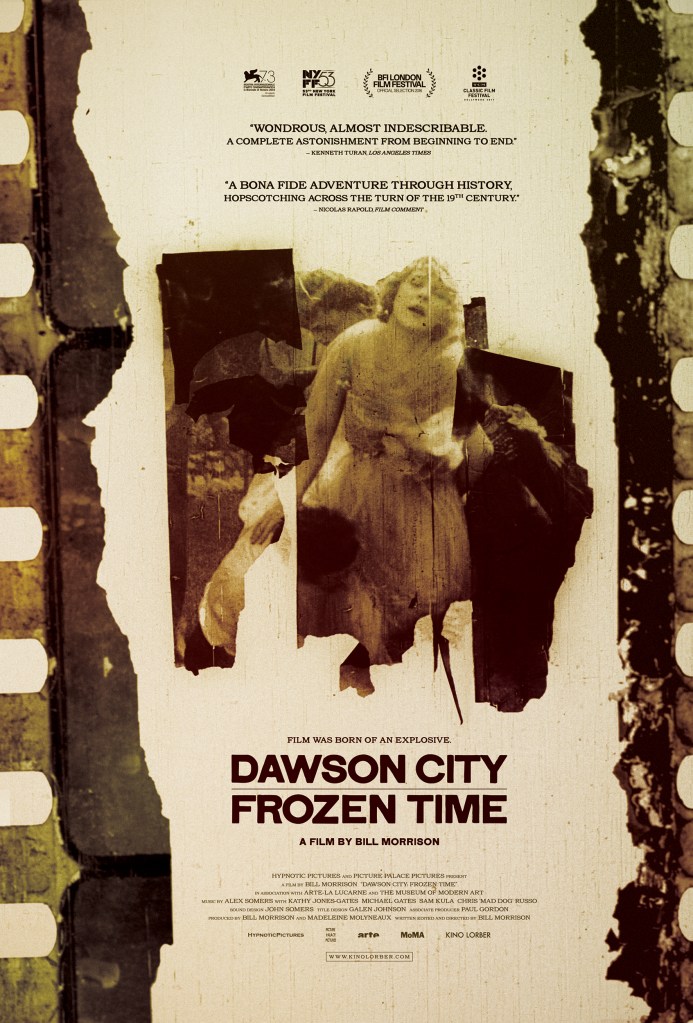
Hearing that the O Canada Blogathon was back I was wanted to join up. What I needed was a subject. To find one I sifted through my mounds of unwatched Blu-rays and DVDs (some blind buys; some not). Upon doing that I knew the film I’d write about would be Dawson City: Frozen Time.
When I was young I would often study maps and the Yukon was one of the areas that fascinated me. The attraction had to do with its name, its remoteness, it nearness to the Arctic Circle, and also (probably on a subconscious level) that Dawson City was denoted on the map in what I could only assume was a sparsely populated area and it was not the territorial capital.
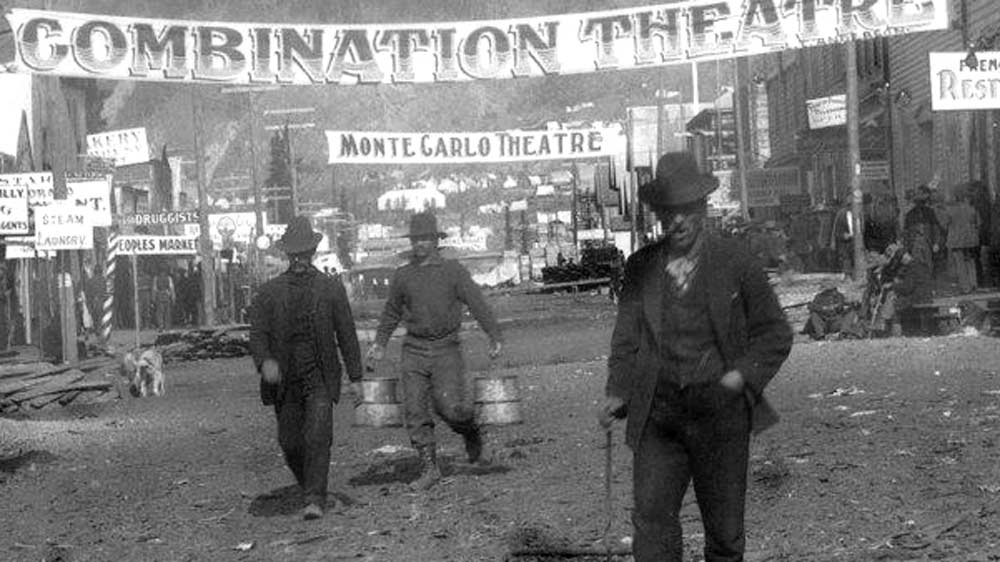
The reason for Dawson City still being on a world map in the mid-to-late ‘80s, when I was young boy, looking them was that it was epicenter of the final great gold rush in world history.
The town was built so prospectors had somewhere to live, the local Hän tribe displaced. That was one of many things I learned in watching this documentary.
But its selection is about more than just facts gleaned, which were many.
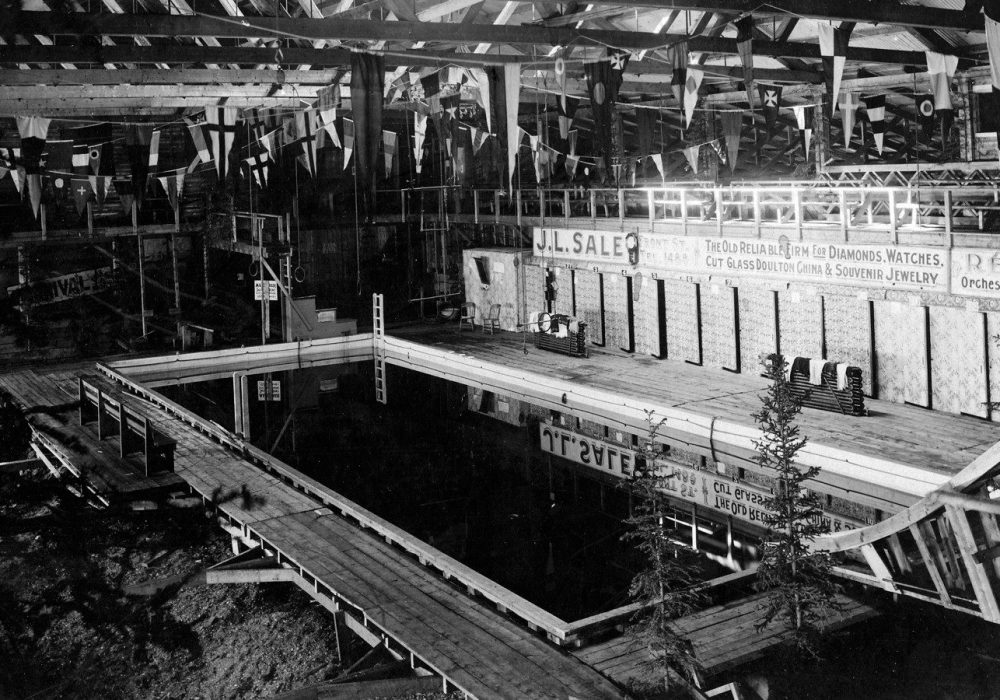
The film opens interviewing the couple who made a discovery of the movie reels while excavating for new construction project in 1978. However, this is but a framing mechanism and what comes between these bookends and predominates the film is a mix of stills, archival footage, and Dawson City film finds, both newsreels and features, that tell the story of the town’s history either with events that locals witnessed via movie houses or reenacted through narrative features that were set in Dawson City.
The impetus for the narrative crisscross is that in discussing the town you have to establish the find, the foundation of the city, the year-by-year stampede of prospectors north, followed by the dwindling population later.
Dawson City’s apex population of 30,000 in 1898 and the fact that people from all walks of life came there in search of fortune made it such that it was a crossroads. The people who came through as the town boomed and what became of them after their time there also play a part in the story.
To the nascent film industry Dawson City was a new market, so films came as people needed entertainment in all forms. However, Dawson was the end-of-the-line and films were slow to come there. Studios did not want the costs of shipping the film canisters back from the Yukon to California, so when local theaters were done with them the studios ordered the prints destroyed.
The formerly flammable nature of film stock plays a part in some of Dawson City’s early tragic moments and gives this film its tagline: Film was born of an explosive.
The tragedy for film everywhere—one of the omnipresent in its early history—was shortsightedness. Many films were purposely destroyed, involuntarily burned, or merely decayed over time erasing much of the silent era’s output. A form of safety film was first developed in 1910 but not adopted until the early ’50s due to prohibitive costs—more shortsightedness. All this talk of film burning had me thinking of Cinema Paradiso when Alfredo, already blinded in a film fire, is introduced to safety film by Toto he laments that progress always comes too late.
In the end the decision in Dawson City to not burn all the film and how it was finally stored helped preserve much of it paving the way for one of the most monumental film finds in motion picture history. More specifics than that are spare to preserve some other surprises, for the film which contains plenty (not that one could adequately describe the magic of this particular film in mere words, but my meager attempt is forthcoming).
This film separates itself in its aesthetic approach to its subject matter. Other films have used feature film footage as a stand-in for archival footage or dramatization; the essays in the booklet included with the Blu-ray by Lawrence Weschler, Vanity Fair, and Alberto Zambenedetti highlight Los Angeles Plays Itself as a prime example. However, it is the other techniques that combine with this that make this film a unique and masterful work.
For long stretches of its running time Dawson City: Frozen Time functions as a silent film. The titles cards disseminate needed information about the images we are shown, without voice over. We go through the rise and fall of Dawson City as a hub of civilization.
Director Bill Morrison was one of the first people to view much of the recovered footage, and so, over the years developed an intimate relationship with it that allowed him to exploit it as well as he does here.
The rapturous symphonic score by composer/multi-instrumentalist Alex Somers increases the immersive nature of the film.
A general interest audience will be captivated alone by how disparate folks like Fred Trump, grandfather of Donald, had his first financial success there; Tex Rickard, founder of the New York Rangers, passed through; Robert Service, poet and Jack London, novelist, found inspiration there; Calamity Jane, made a splash; Klondike Kate, of course, got her name there and there’s a pub not too far from me bearing her name a mere 3,917 miles away; the Carnegies, Guggenheims, and more all crossed paths at the top of the world.
The connections to the film industry and its history don’t stop with a couple thousand rediscovered film reels: Alexander Pantages and Sid Grauman both had their humble starts in Dawson City. Perhaps, most amazing to me was the reference to the 1957 Academy Award winning documentary short City of Gold, which tells the tale of Dawson City’s gold rush, but more influentially pioneered the pan and zoom techniques on still photos that Ken Burns would later make famous and make a staple of documentary filmmaking.
A few years ago when cutting a documentary for my local church I learned that Final Cut Pro now has a function called Ken Burns that facilitates usage of the aforementioned technique. So if you’ve used that software recently you’ve felt the influence of Dawson City, too, albeit in a very indirect way.
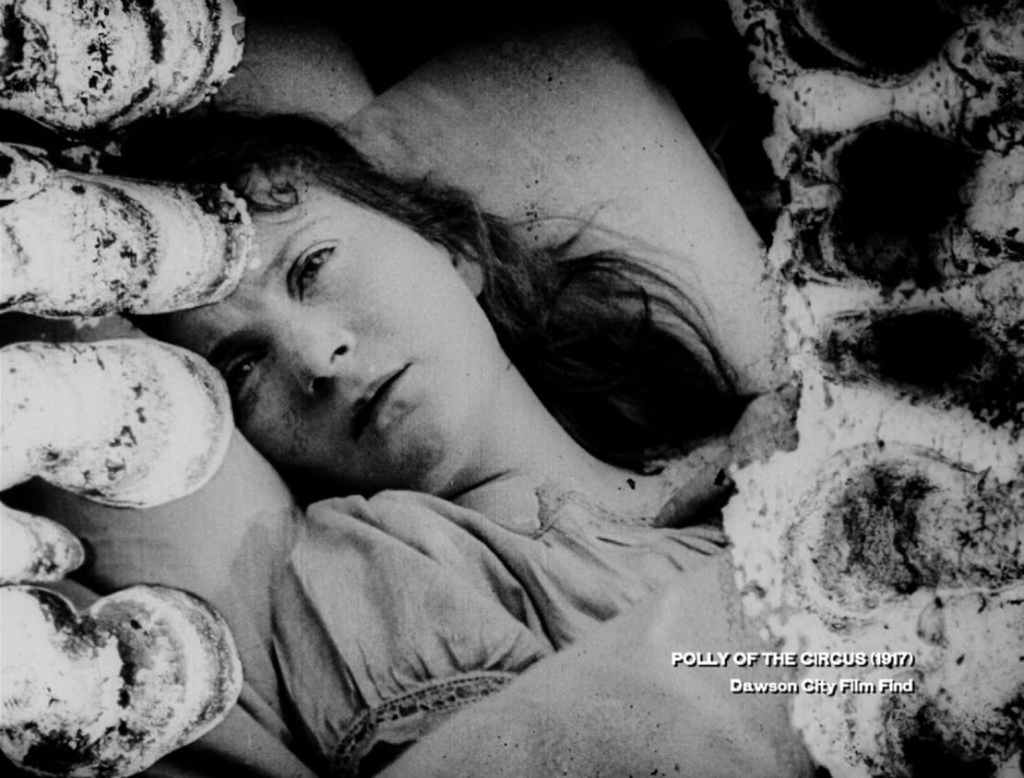
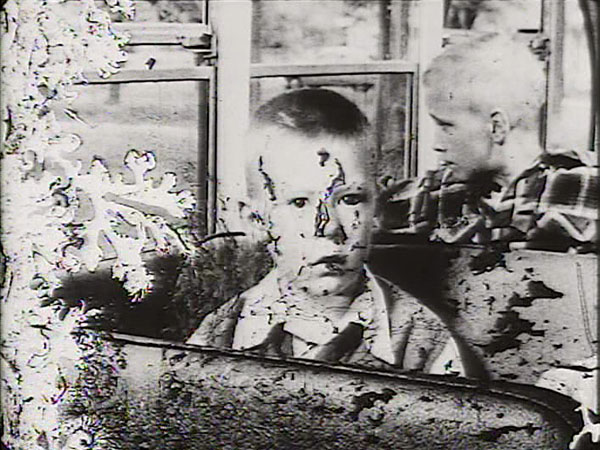
Toward its conclusion the film becomes transcendent upon entering a montage of Dawson City film finds that are in various stages of water damage and other forms of decay. The imperfections of the film, scratched, nebulous, nearly abstracted images dance to the crescendo in the score. Being able to see part of an image that was previously lost is better than nothing. The visual image in a motion picture can be—and often is—beautiful even when imperfect. Hairs not removed from the gate live forever in the recorded image. Some older films will always have Nelson Spots or cigarette burns on them. Pristine images are ideal, but there is a majesty, power, and poetry to decayed film that still survives through the ages, preserving a moment in time.
It is the fact that this film can tell the story of the Gold Rush; how it created Dawson City; who came and left and how those people experienced the world; how the film was found and also celebrate celluloid itself that makes this work so special.
Decasia (2002)
The essays included with the Blu-ray also made me aware of a film I had not heard of by Morrison called Decasia. Decasia is a portmanteau of “decay” and “fantasy” and it plays with the idea of this kind of montage for a feature. The fact that Morrison made a whole film in this motif and blends a similar sequence seamlessly into a film that already tackles so much is remarkable.
Morrison’s Decasia was the first film released in the 21st Century to be added to the National Film Registry. It would not surprise me if this film ends up there someday also. It’s a story about a small town in the Yukon, but also all of Canada, all of America, and all of cinema. So much stemming out of such a small town is a miraculous thing, as is the discovery of the film, as is Dawson City: Frozen Time.
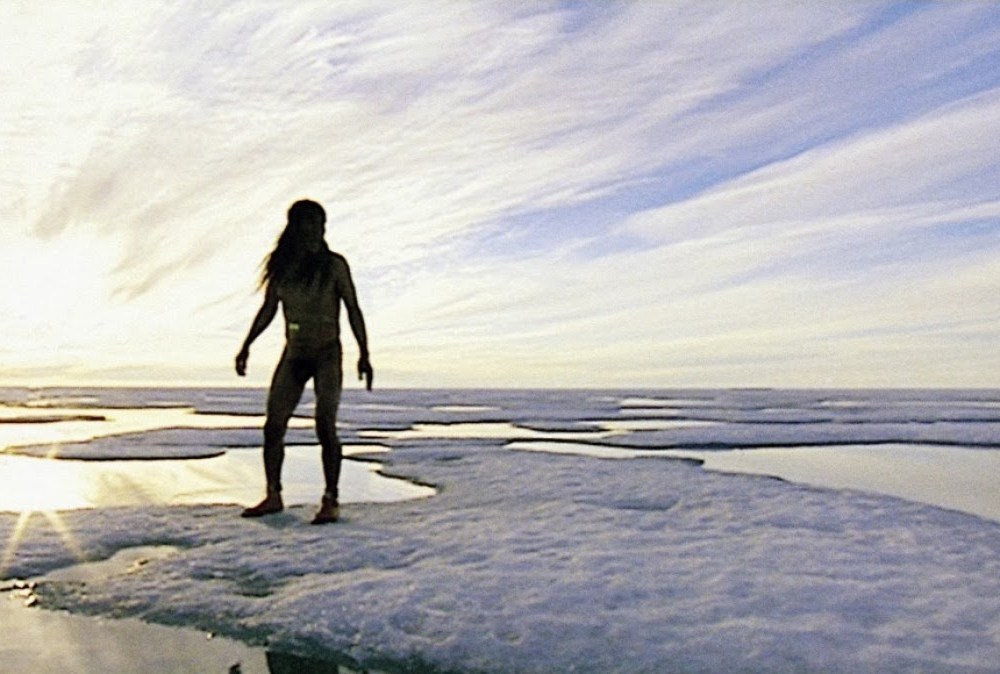
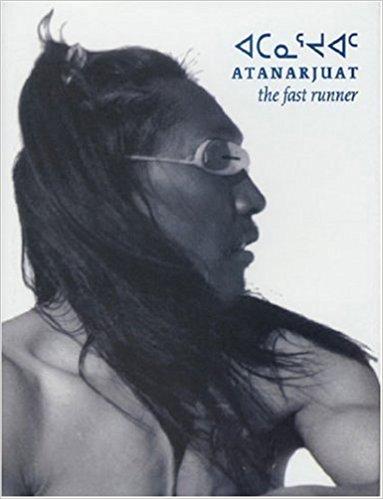
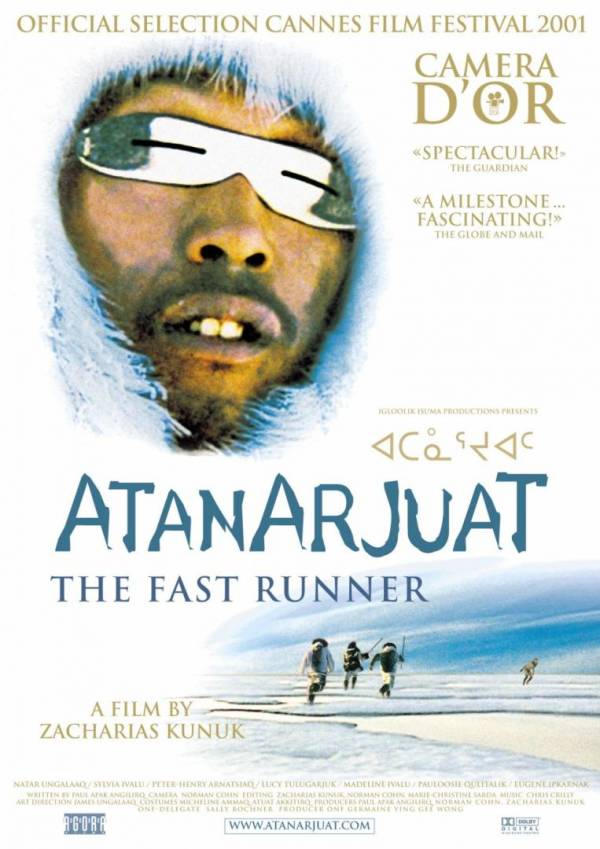
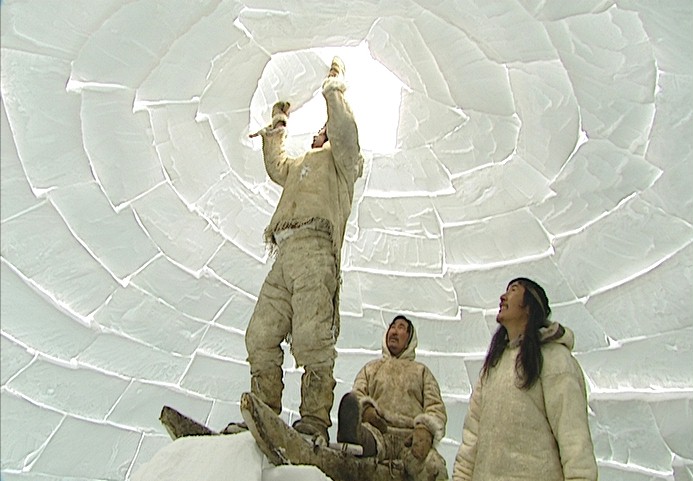
When I watched the documentary Reel Injun – which is a fascinating attempt at an all-inclusive retrospective of the history of Native American characters and narratives on North American, mainly Hollywood, screens – I was somewhat surprised to see the inclusion of Atarnarjuat: The Fast Runner in it. However, it made sense for two reasons: it’s a tale of the First Nations (Canadian vernacular for indigenous tribes) and because of its universal appeal. This appeal is perhaps most brilliantly demonstrated by the reactions of Native Americans to this film. It was a consensus: the movie is something special and “an inside job.” This term is left vague but you can tell what it means it’s a story born in a tribe, that’s lived with it, and now found a home on film shaped my Inuit filmmakers. However, this thought echoed through my mind even more when I thought to write about Atanarjuat. I had seen it the third film a loose trilogy (The Fast Runner Trilogy concluding in Before Tomorrow) and knew it was a thematic rather than chronological, but when I discovered there was an illustrated screenplay and started reading it, and its additional materials, I knew that the term “inside job” was not only fitting (which I assumed), not only a great compliment (which I knew), but also a testament to the level of work taken on by all involved, in this film and in Isuma Productions’ ongoing mission.
The Wonders the Pages Contain
On the equivalent of a blurb page the significance of the Atanarjuat in film history is made apparent: “the first film written, directed, and acted by Inuit in the ancient oral language of Inukitut…” then the accolades like the Camera d’Or at Cannes, Genie Awards and the like. But the review by A.O. Scott really gets you going if you don’t know what you’re in for:
“The Fast Runner is not merely an interesting document from a far-off place; it is a masterpiece. It is, by any standard, an extraordinary film a work of narrative sweep and visual beauty that honors the history of the art form even as it extends its perspective.”
Then came the first awe-inspiring, chill-inducing moment that came only in this book, which is a timeline of the Igloolik area, where the story is set and shot, starting at 7,500 years ago with the emergence of the island to the period between 1995 to 2002 when writing the film began and after the festival runs and worldwide release.
With education being one of Isuma’s goals aside from preserving oral traditions (Isuma is the Inuit word for ‘to think’), there are quite a few enthnographic supplements to the screenplay the first being a letter from Claude Lévi-Strauss of the Académie Française to Bernard Saladin D’Anglure, professor at Laval University and Head of the Institute for Traditional Inuit Life, reacting to the film but also hoping for added information, and intimating that a deep link between the cinematic construct and cultural traditions, which do seem to permeate the film.
Yet this is only dipping your toes in the water. Then you get Zacharias Kunuk, one of the writers and director of the film, telling the story of how he first heard the legend of Atanarjuat as a child. And reading that brief missive just made me appreciate the weight not just of the story decisions he had to make within the given narrative but also the project selection. This was to be the first project of its kind and this was the story and he was the one not only trying to keep this legend alive for future generations but also dealing with modern filmmaking headaches like raising capital.
This hurdle, and the added difficulties of it are underscored in the interview with Paul Apak Angilirq, a co-screenwriter, not only did they confer with a group of elders on behavioral differences, and cultural differences in pre-colonial times, and the old oral version of Inukitut, and pick between the minor variations that exist in any legend passed down by oral tradition, but also they had to translate the script into English as it was being written in hopes to try to secure grants and other funding.
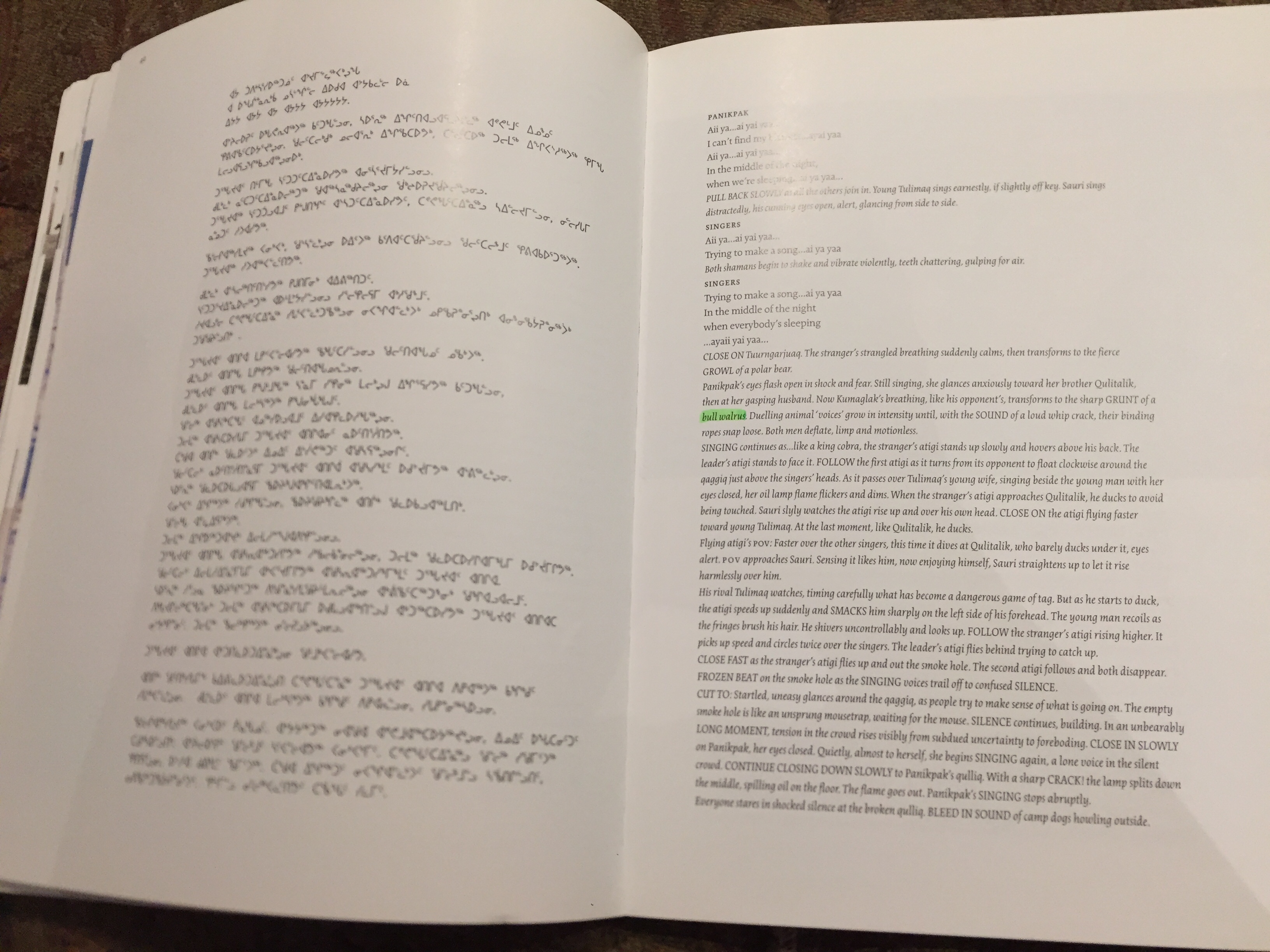
These two versions of the script are put to full use in the illustrated screenplay, aside from behind the scenes photos, production stills, inset boxes with more pertinent cultural information as appropriate; and most notably and poetically parallel text syllabic Old Inukitut on the left, English on the right.
Since two screenplays are crammed in the pages the spacing is condensed to accommodate the photos. Despite this the movement of the story is evident, and even some details in the script that aren’t strictly speaking visual details, are conveyed in the film.
After the screenplay there is an extended ethnographic commentary from the aforementioned Bernard Saladin d’Anglure that covers the Legend of Atanarjuat, the Inuit people in general, and shamanism. In discussing the Inuit he goes from pre-colonial times, and mentions Knud Rasmussen whose Thule expeditions and journals form the basis of the hard-to-find second film in the series up to and including the end of the last holdouts against radio, television, and formalized permanent settlements, creation of the syllabic alphabet and contextualization of the formation of Nunavut. It’s a testament to the non-fiction writing and insights offered that I gladly read the front and back matter without much hesitation.
This was not the first book indigenous legends with parallel text I read but it much more readable in part because while the goals are similar (imparting knowledge and preserving traditions) the audience for all parts of this book is fairly wide, and there isn’t a section that reads like it’s mostly for specialists (e.g. linguists or anthropologists).
Even if you never heard of the term ethnography before, if you know and like the film I’d recommend you seek out the illustrated screenplay. If you want to look this screenplay up, I’d say find the film first and all of the book will have that much more impact on you.
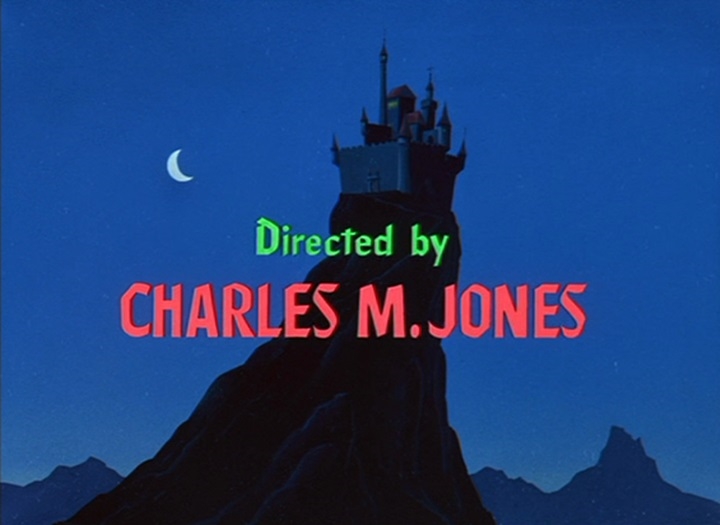
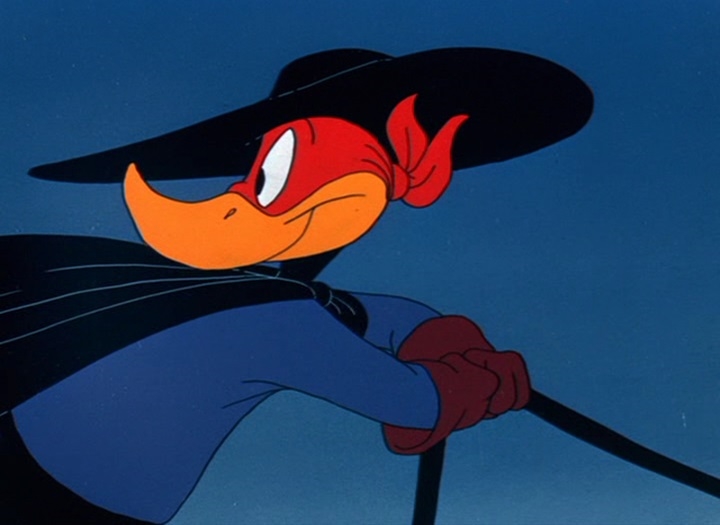
Directed by Chuck Jones this Looney Tunes short is another that takes place on the Warner Brothers backlot. Daffy has a meeting in faceless studio head J.L.’s office (clearly modeled after Jack L. Warner). Part of Daffy’s desire in this outlandish pitch is to break out of what he sees as typecasting and play the role of a swashbuckling hero.
Perhaps one of the more interesting aspects of this short is how it deals with the concept of casting. In the framing mechanism Daffy is pitching a film to break out of the type-cast mold he feels he’s stuck in. Within the pitched story the Warner crew cast from their stable of stars to create a swashbuckling, animated version of The Scarlet Pimpernel called The Scarlet Pumpernickel.
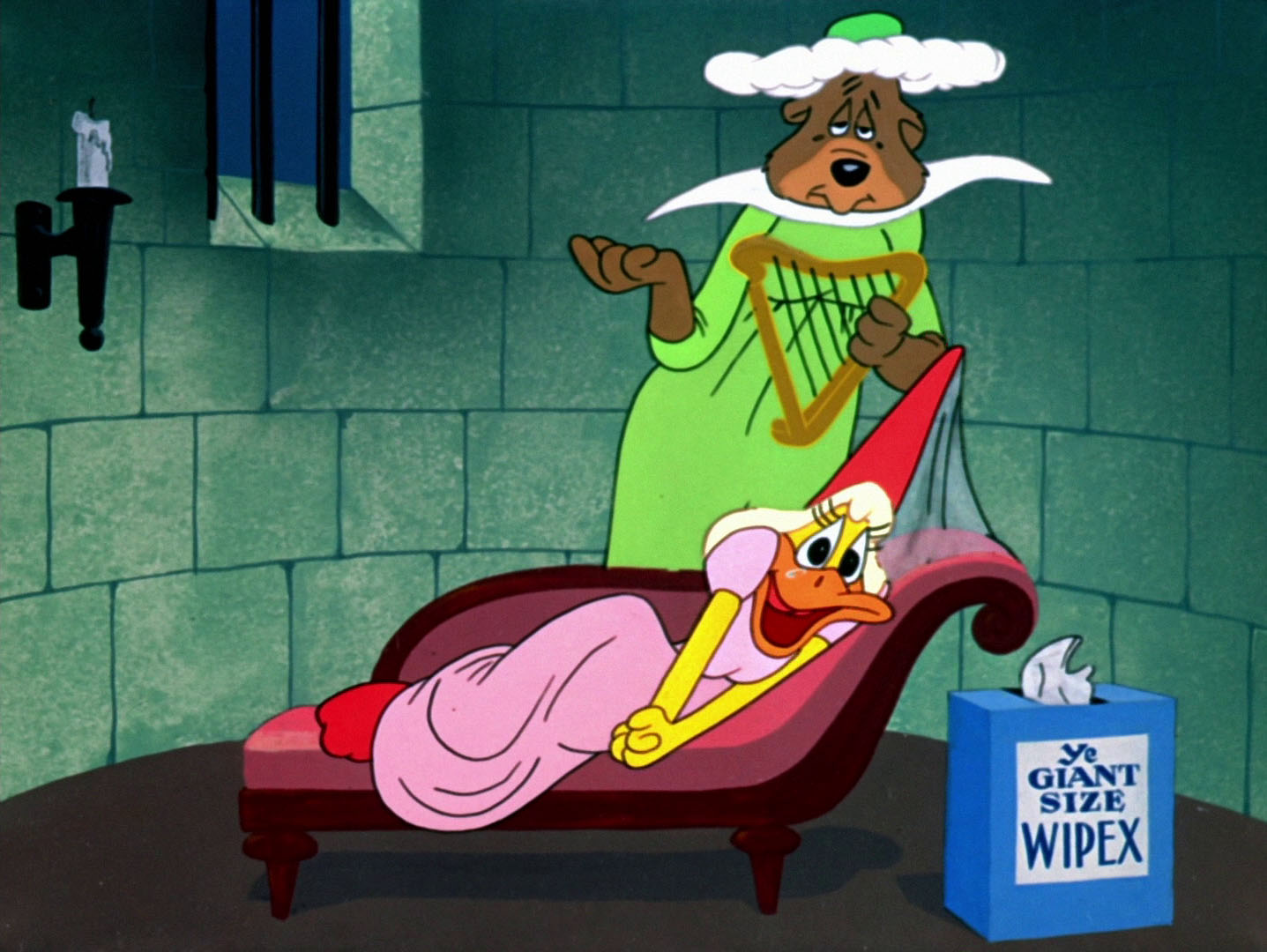
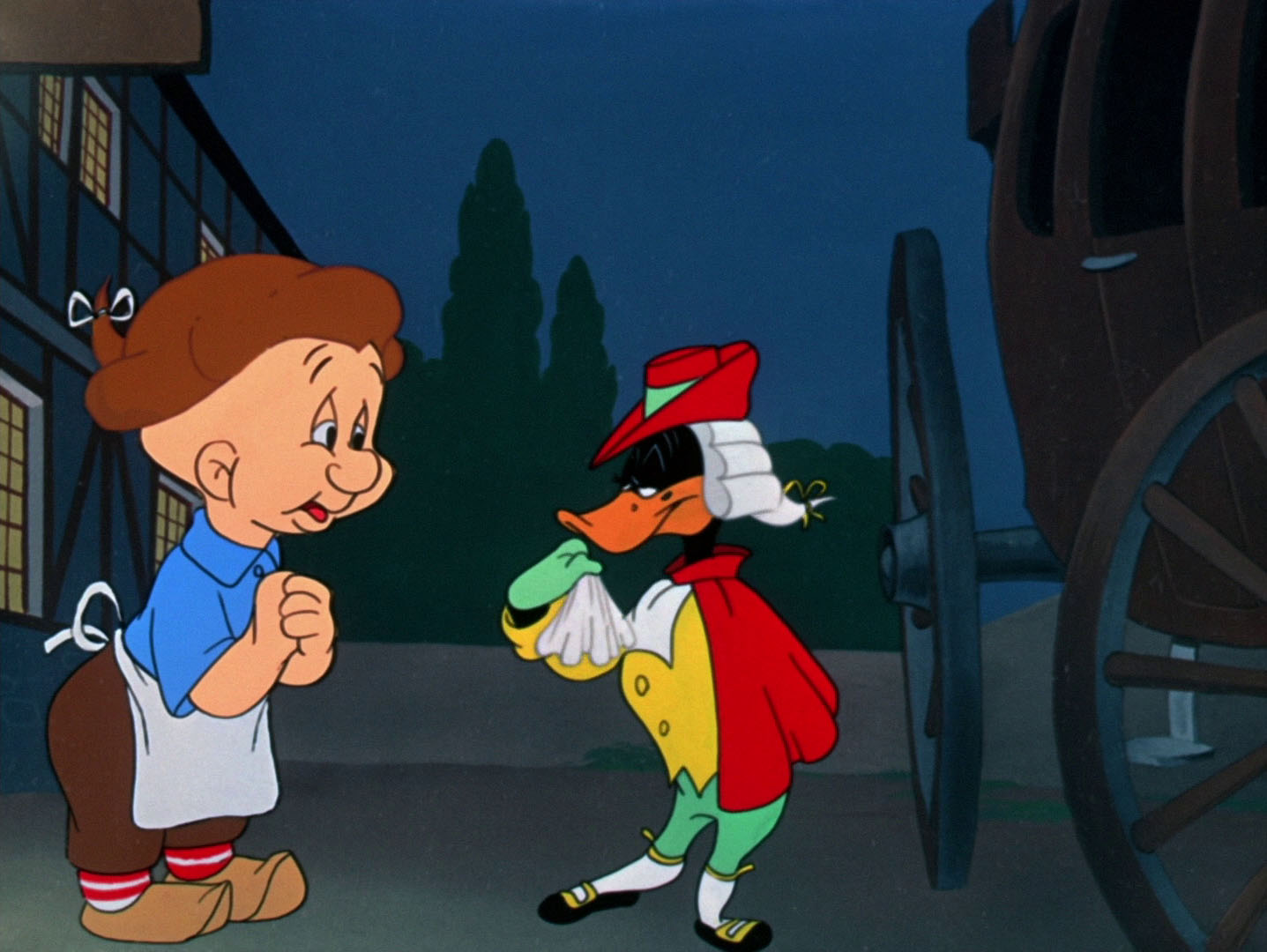
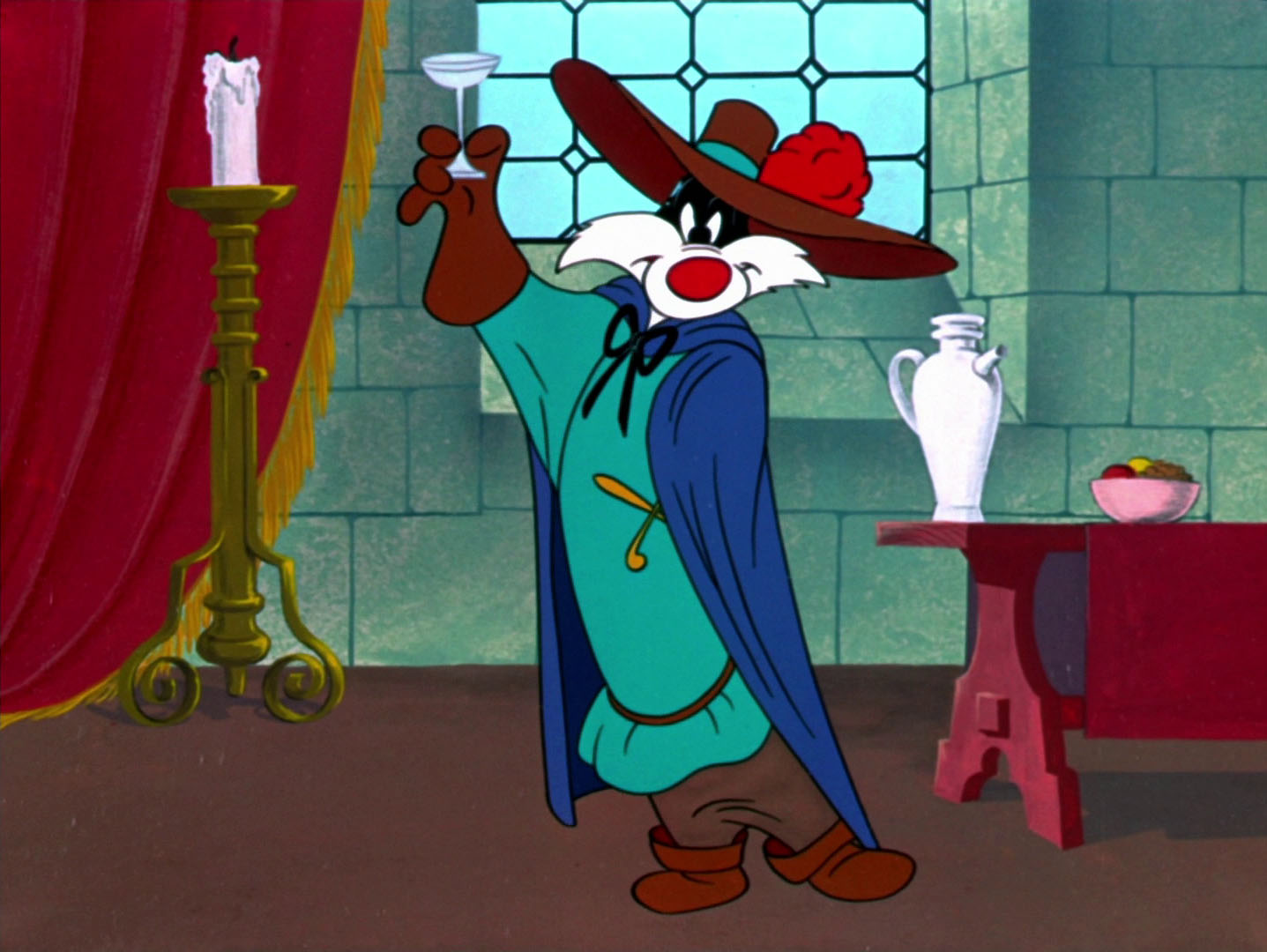
Daffy plays Daffy Dumas Duck, Porky Pig plays Lord High Chamberlain, Mama Bear plays a handmaiden, Henery Hawk plays a pageboy, Sylvester plays a Lord and groom-to-be, Elmer Fudd plays an innkeeper; and an obese horse not unlike the one in What’s Opera, Doc? also makes an appearance.
This short is also a showcase for the music of Michael Maltese who is frequently the unsung hero behind the scenes of the Looney Tunes shorts.
Aside from some visual flair like hanging off the underside of a cliff, a flood, the Pumpernickel using a parachute; it’s an absurd plot only animation could really pull off in such a short amount of time. As the commentary track on the DVD observes it packs in all the conventions of a swashbuckler with comedic effect, complete with jokes about Errol Flynn. Also, on the Golden Collection’s commentary track I learned that this was more of a showcase for Mel Blanc than usual as he voiced Elmer Fudd in this short as well though he usually didn’t.
This is also one of the Looney Tunes shorts which has been the target of retroactive censorship and re-edits on TV. The short ends with Daffy putting a gun to his head, as his story ends with the Scarlet Pumpernickel killing himself. Daffy shoots, falls to the ground, then looks up (the bullet went through his beret) and says “It’s getting so you have to kill yourself to sell a story around here.” Edits dropped frames where the gun fired and cut straight to him on the ground. In my estimation it’s a useless edit as the implication is still there. Yes, the reality of suicide is more present in today’s world. However, the fact remains that art of the past cannot and should not be constantly altered to fit ever-changing mores and realities. They are what they are and are reflective of a time. It’s up to each successive generation to know better as the collective consciousness grows.
As such, there’s not a moral to be learned from this short, it’s funny with jokes for audiences young and old, for people who just like animation or old Hollywood; but it’s not a morality play and an excellent quick parody of a genre.
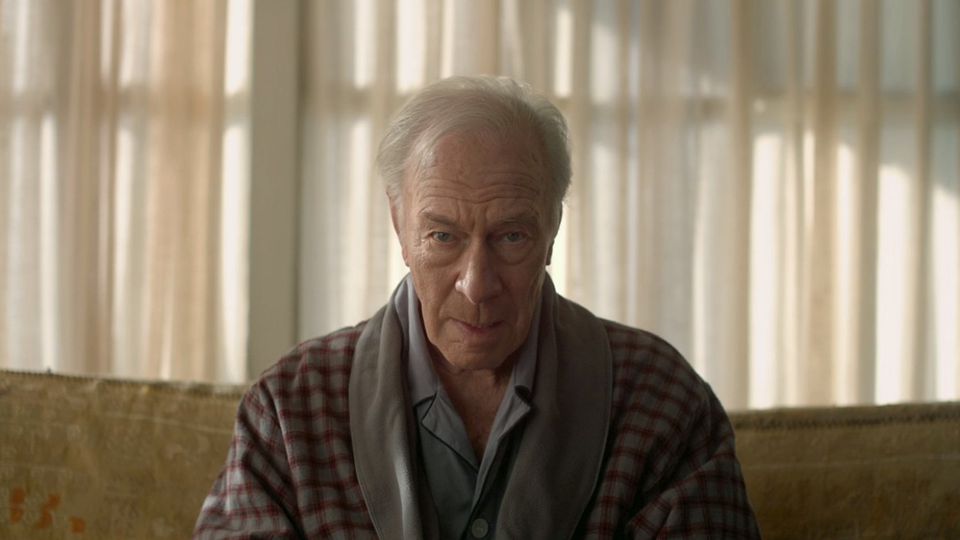
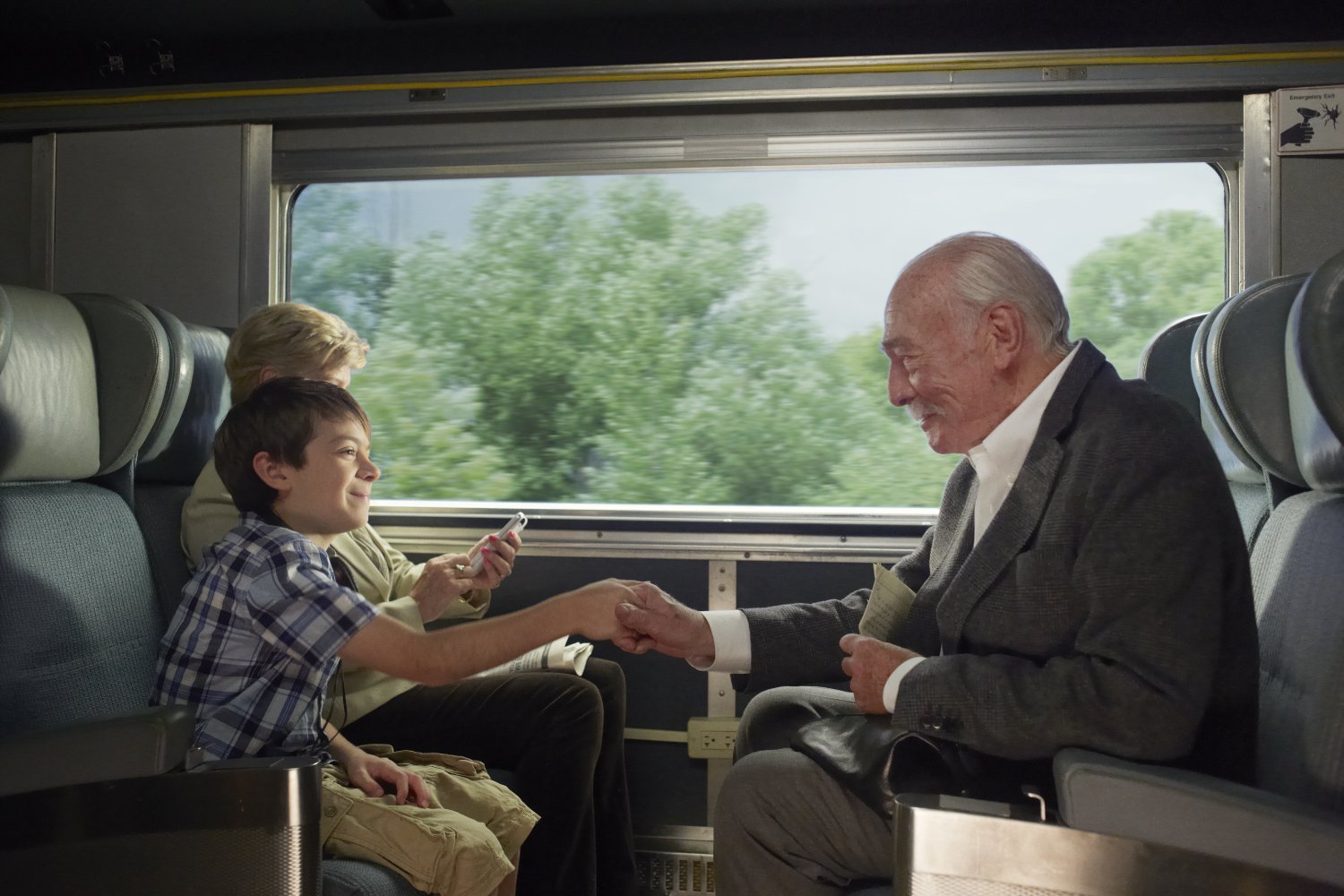
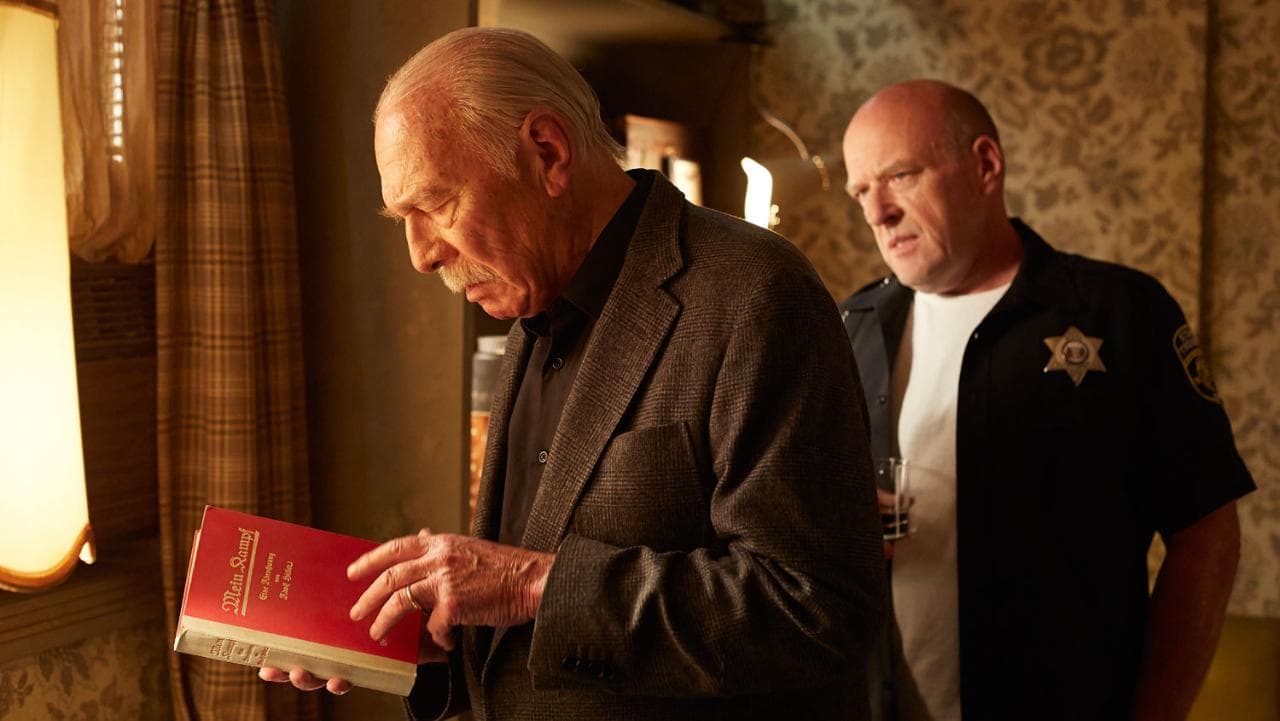
Even when you’re as legendary and accomplished an actor as Christopher Plummer is there are certain themes you may be loath to revisit if it mirrors a bit too closely to one of your more famous roles. In Remember Christopher Plummer plays Zev Guttman, a Holocaust survivor living in a nursing home whom has just lost his wife and is dealing with dementia. Now entering a new stage of his life he can embark on his mission to avenge the death of his family at Auschwitz.
When the material is good enough and you feel it has something to say, the director you’ll be working with is acclaimed (as Atom Egoyan is), you will gladly participate in a film that may appear to share superficial themes (Nazism and World War II) to a film in your past you can’t seem to outrun (The Sound of Music). Furthermore, when you have over 200 credits to your name, and are in your late eighties (an age bracket that may as well not exist as a consideration in mainstream films) you may not be too picky. However, as some of Plummer’s more recent films like Beginners show he’s not just agreeing to a project because he read a script as some actors over a certain age may appear to.
What is the most notable in this film is that Plummer is not merely the elder statesman in an otherwise youthful cast. Quite on the contrary Remember features impressive performances from fellow octogenarian Martin Landau and septuagenarian Bruno Ganz, and features but a brief supporting turn by the prodigious and prolific young actor Peter Dacunha. Not only are the older actors great but they feature prominently in the film. However, the film as opposed to the pre-packaged film for the older set it is one about characters and plot considerations that are specific, and can communicate to audiences of all ages due to the use of expertly employed suspenseful set pieces.
While much of film acting is the ability to recreate emotional notes many times over owing to the need to shoot coverage, much of a film like Remember wherein a character must reabsorb givens as if it is entirely new information asks much more from an actor, director, and editor than a conventionally constructed film. In this film Plummer has to not only emote to have us engage in the repeated loss of his wife but also on more than one occasion have us fear that his only purpose left — as he sees it — will fail because he has either forgotten about the letter that now defines his reality or because in his travels it has become illegible.
While a protagonist going brazenly into random encounters with other men of a certain age and asking them they are German, were at Auschwitz, and a blockführer does allow for a quiet thrum of tension throughout; there are moments of unexpected pathos. Zev has but a name (Rudy Kurlander) and a location to find each of the man who could be responsible for killing his family. One of the men has a number tattooed on his arm, which catches Zev by surprise.
“You’re Jewish?”
“Homosexual.”
At that moment Zev breaks down in tears, feeling remorse and offering his condolence. It’s a wonderful moment of empathy that is but an example of how this is a more layered emotional experience than one might expect going into it.
There is a huge revelation that I will not spoil but it is the commitment to a performance that allows it to work. When the film is over and consider things in hindsight you will note the clues were there all along, but you didn’t even realize you should have been looking for them.
This film was distributed by A24 who is a company willing to go outside the norms and push the envelope even where we weren’t aware it should be pushed even lightly. It is available to stream for Amazon Prime subscribers and is worth checking out.
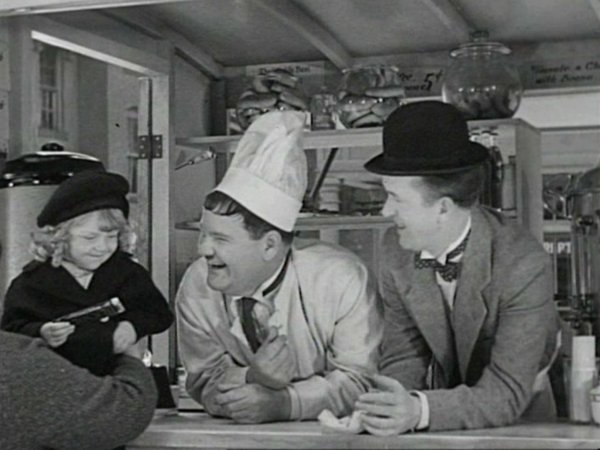
Whenever I’ve been offered the opportunity to write about Laurel and Hardy, I’ve jumped at it. This is not just because they were a staple of my childhood as I mentioned here:
I love Laurel and Hardy. I’m not sure how many of their features I’ve seen. I do fondly recall watching their shorts on weekends growing up.
However, that and the fact that The Music Box became a sort of white whale for me for years does factor in. The fact that Laurel and Hardy was just something I found on TV, usually thanks to TCM, lead to me seeing many of their shorts without knowing their names. The internet, my studying films, and revisiting some had men eventually find The Music Box by title.
In my youth I knew them as O Gordo e o Magro first, the Portuguese name for the pair which translates to The Fat Man and The Thin Man. I learned their names in English, and watched them here, I even recall coming across plastic toys of them in Brazil.
That dyed-in-the-wool fandom has me wandering back to them on occasion as my gyre of movie-watching wends its way through history, be it their silent, more often their short talkies or their features I come back to this duo often.
Sometimes this is by design and others it is by chance. When writing on the topic of non-competitive Oscars I ran into Stan Laurel, whom was awarded one (Oliver Hardy was not) for:
his creative pioneering in the field of cinema comedy. Stan Laurel was not present at the awards ceremony. Presenter Danny Kaye accepted the award on his behalf.
When trying to select a way for me to discuss the War to End All Wars on Film Laurel and Hardy were the only way I could find to get myself a comfortable toehold.
A silent, solo turn by Ollie in The Show, and their film Brats was one of my favorite discoveries of 2012, were two other times they came up just on my blog. So, you can clearly see an omnipresence there in my life and times.
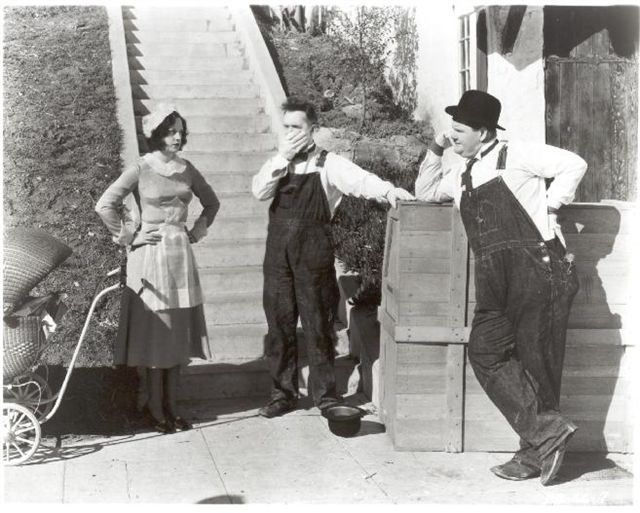
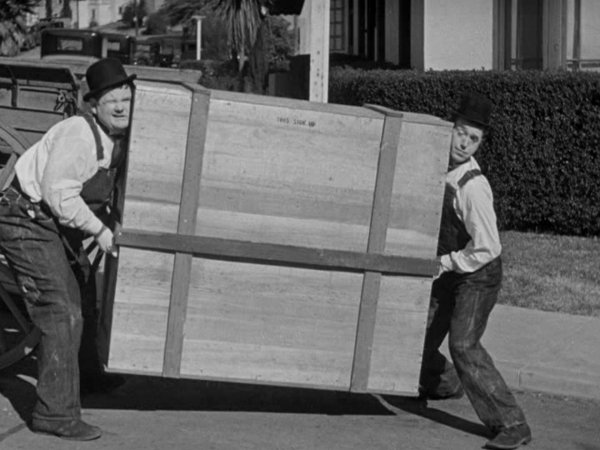
However, the most persistent memory of them of all so far as I’m concerned is The Music Box. It’s one I may have lost track of for a time because I think of it the way Friends names episodes “The One with the Piano Movers.” This is likely their most iconic bit. It’s not a wonder the synopsis cites Sisyphus because the task at hand is just as hopeless and fraught with peril but far funnier with these two involved.
Humor is subjective, but since I saw it this has been one of the handful of funniest things I’ve ever seen. Enjoy!




















 The Movie Rat