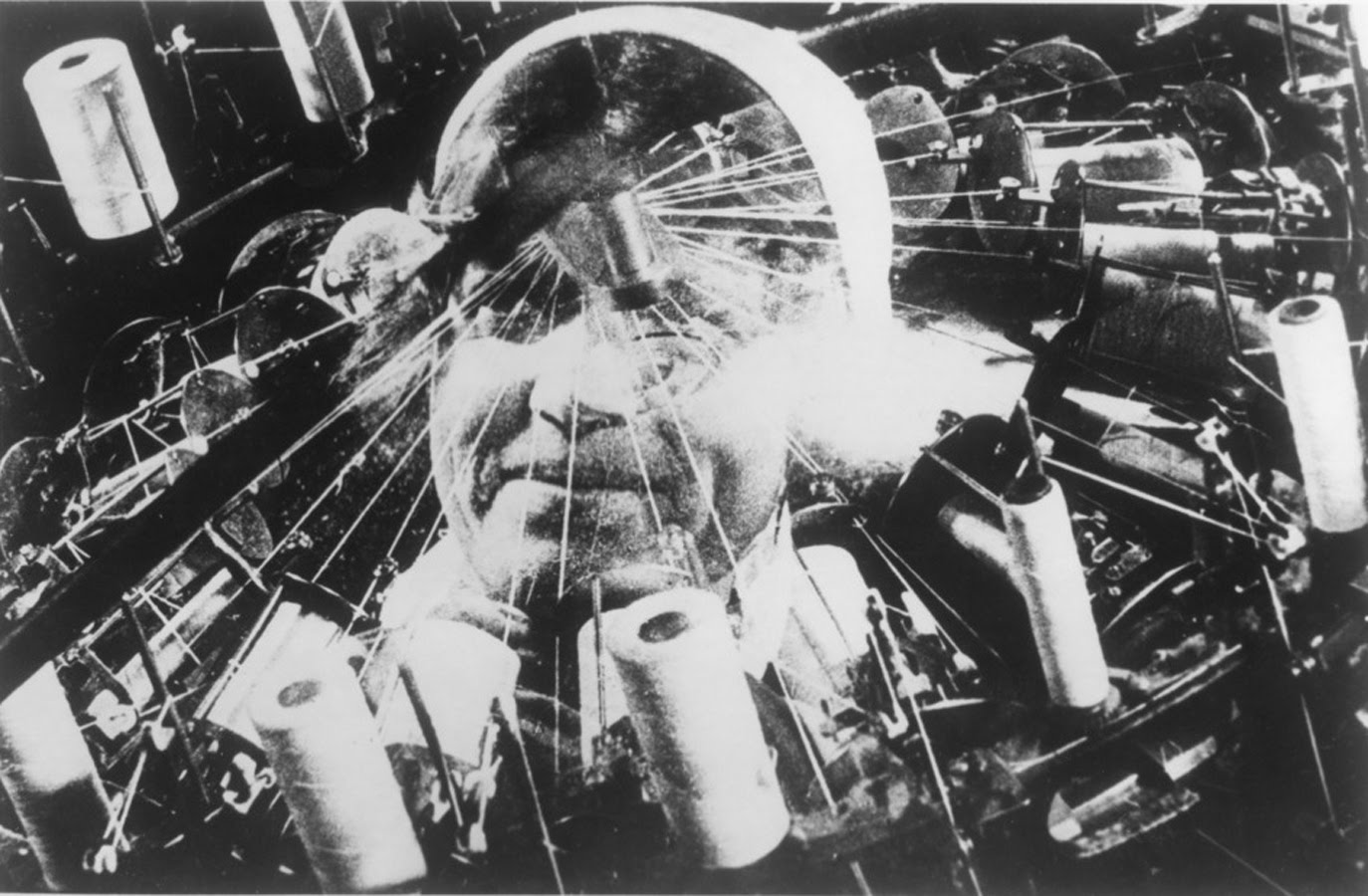
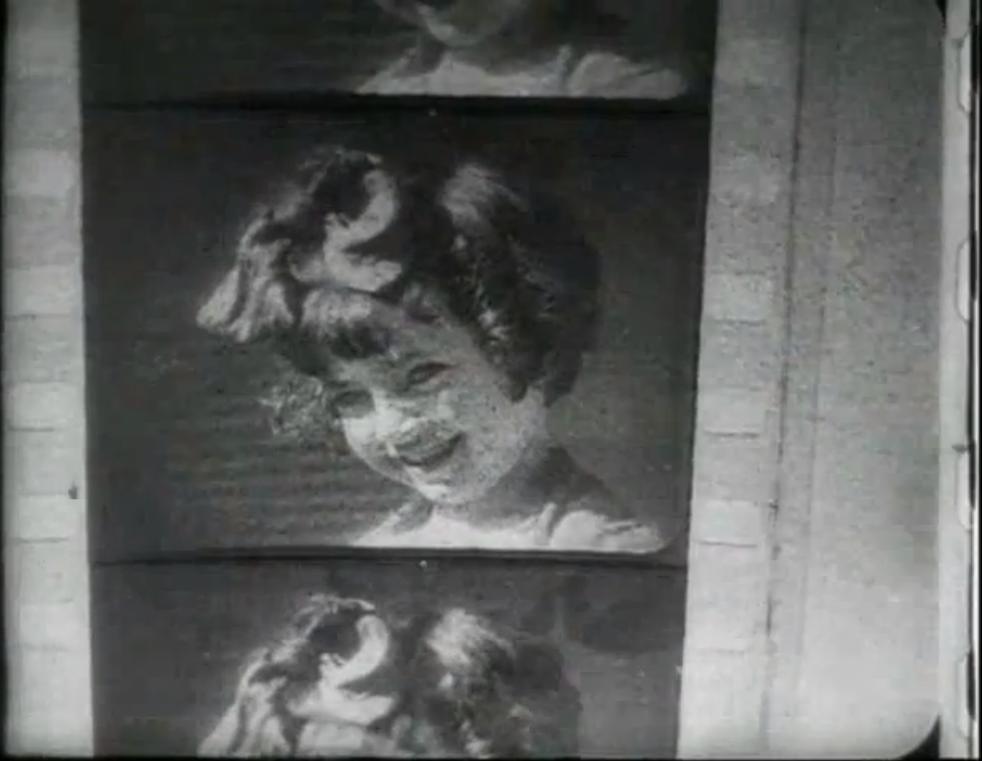
Russia in Classic Film Blogathon – Dziga Vertov: The Man with a Movie Camera in a Gyre of Time and Truth

In preparing this post I naturally watched The Man with a Movie Camera again. In doing so I was reminded of Berlin: Symphony of a Great City, which I had seen more recently but was made first. Due to that fact I got to thinking about my history with this film, and what if anything had changed in my perception of the film.

To accurately try to capture this I must go back to the beginning to where I first heard of the film. For yes, it is still my assertion that every film does have a pre-life in the mind of the viewer. This pre-life ought not effect the perception of the film in the viewer’s mind, but can and does more often than not color it. Furthermore, if I am to accurately map the trajectory of this film through time as I see it I have to go back to my beginning with it, which is in a textbook in an introduction to film history course that tries to encapsulate Vertov’s intention with his experiment.

This introduction was found in A Short History of the Movies by Gerald Mast and Bruce F. Kawin, 7th ed.:

Dziga Vertov, one of the Soviet Union’s pioneers in combining documentary footage with political commitment, experimental cinema with ideological statement, suffered similar artistic strangulation as Stalinism took hold – partly because he was a Jew, partly because his aesthetic stood for the truth, and partly because he didn’t praise Stalin enough in the last film he was allowed to make, Three Songs About Lenin (1934).

Dziga Vertov’s intense energy was evident not only in his documentaries and manifestos, but also in the name he chose for himself, which translates roughly as “Spinning Top.”

Yes, his work had quite an impact:

Vertov began by compiling footage into weekly newreels in 1918-1919, went on to edit full-length compilation films and shoot some of his own footage in 1920-22 (he called the camera his “Kino Eye”). then invented a documentary form that went beyond the reportage of the newsreel into creative journalism: a series of shorts that were called newsreels but focused on specific topics and themes. That series, which ran from 1922 to 1925 was Kinó-Pravda (“Film truth”; the French term, in homage to Vertov is cinéma vérité).

Documentary films are as old as films themselves. However, the very early documentary cinema was very literal, and would only be interested in what happened and that is all. The unseen hand theory of direction was more an iron fist.

This was the first film ever exhibited; a documentary:

Vertov clearly had other ideas in mind, and his revolutionary ideas transcend cinema as his artful treatment of real subject may predate the same concept in prose, like In Cold Blood and the birth of creative nonfiction. Did cinema beat other arts to something? I think it may have.

Next in my journey, I read some of Eisenstein’s works. He was not mum on Vertov’s works. In Film Form has some less sparkling things to say on Vertov.

With regard to the use of slow-motion:

Or, more often, it is used simply for formalist jackstraws and unmotivated camera mischief as in Vertov’s Man with a Movie Camera.

And with regards to his experimentation:

The young Soviet cinema was gathering the experience revolutionary reality, of first experiments (Vertov), of first systematic ventures (Kuleshov) in preparation for that unprecedented explosion in the latter half of the ‘twenties, when it was to become an independent, mature, original art, immediately gaining world recognition.

Great filmmakers often disagree. Tarkovsky thought Eisenstein’s overemphasis on editing was misplaced, as all arts have editing; so montage, in his mind, did not define cinema, but rather time did. Art is subjective and different perspectives lead to personal and unique works. Vertov acknowledged he was experimenting in title to The Man with a Movie Camera, so as he wrote (both scripts and theory), shot and cut he too developed his own ideas.

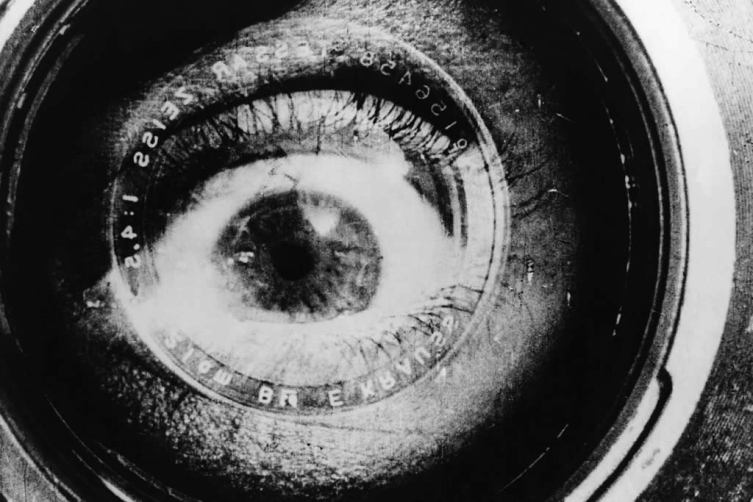
The Man with a Movie Camera (1929)

This idea took root after he had seen, and decided to respond to, Berlin: Symphony of a Great City. What Vertov seeks that’s different he states straight from the outset:

Man with Movie Camera
A 6 reel record on film
Produced by VUFKU in 1929
Excerpt from a camera operator’s diary

Attention viewers:
This film is an experiment in cinematic communication of real events/
Without the help of intertitles/
Without the help of a story/
Without the help of theatre/

This experimental work aims at creating a truly international language of cinema based on its absolute separation from the language of theatre and literature.

Author-supervisor experimenter
Dziga Vertov

With that in mind the mind instantly opens upon the start of the film. Yet it’s the creativity and positively kinetic nature of the film that makes it a unique experience. Yet, despite some of Eisenstein’s grumbling of the primitive nature of the trickery it’s not the party tricks, or the editing pattern that make this film standout, but the embodiment of statement; the visual unity created through theme that’s so clearly communicated.

Mast and Karwin put it best:

Like everyone else in society, the man with a movie camera has a job to do — his special work being to record and reveal the work of everyone else. And like everyone else in society, the man with the movie camera likes to play. Vertov allows the playful camera to dazzle us with accelerated motion split screens, superimpositions, stop-motion animation — demystifying the cinema even as it gives the audience the visual treats it came to the theater to enjoy. Grounded in daily life as much as in the theory and practice of cinema, this brilliantly reflective documentary renders cinema and life inseparable.

The only way in which the film relies on any other art-form (barring photography, of course) is in the use of music. Even upon its release it, like many other silents, was accompanied by a live orchestra. Since the silent days it has acquired many other scores to accentuate the cuts and changes in composition that this film has.

The Man with a Movie Camera (1929)

This is not to discredit the film in anyway. Music and film have always co-existed. Films need music. Especially this one cites Roger Ebert:

The experience of “Man With a Movie Camera” is unthinkable without the participation of music. Virtually every silent film was seen with music, if only from a single piano, accordion, or violin. The Mighty Wurlitzer, with its sound effects and different musical voices, was invented for movies.

This film seeks to unshackle cinema, and I feel it did, and most importantly it continues to do so as new viewers find it. For film, which relies on motion, both within the frame and in swapping those images out, the parameters must be challenged. Film was once a new toy, vibrant, irreverent and disrespected, looked down upon, and thus somewhat more unafraid to try things on for size. Yes, certain universal narrative precepts needed to be borrowed, but film needed to find its own voice with which to speak. Experiments like this one were crucial in developing that voice not only in documentary but in narrative cinema as well. This restless creative audacity is something that ought not be lost and held onto; the more fertile imaginations; the more impressionable viewers that catch a glimpse of this film the more possibilities the future of cinema has.

For that’s really what is being discussed here. Too often film history, like any history, can be bogged down in facts, dates and events that have happened without discussion the domino effect of influence that events, filmmakers and films can have. The concussive impact of one stellar film can have repercussions throughout time, and not just in the zeitgeist. The Man with a Movie Camera is such a film because it not only tests aesthetic norms and boundaries, but asks the important questions of “Why are we creating this way?” and “What can we do with it?” and most importantly it shouts “Yes, it is important and worthy and should continue!”

Russia in Classic Film Blogathon: Peter and the Wolf (1946)

Intorduction
This post is my first contribution to the Russia in Classic Film Blogathon.

I have always wanted to sit down and define what to me were the “Great Stories.” By great stories what I mean is those stories where I can watch many different adaptations of it without tiring. This particular story, like many that would be on that as of yet un-drafted list, is one I’ve enjoyed since childhood. This 1946 Disney produced version is the one I first saw.

Since discovering and re-discovering it several times over I have since sought out other versions of the story, including: A ballet produced by the Royal Ballet School; a live action/animation hybrid with characterizations by Chuck Jones and a Soviet stop-motion animation film from the ‘50s (this version will soon be featured on a Short Film Saturday post. As well as crafting my own version for the stage for young actors and musicians to perform.

What I believe draws many to this story is, of course, Prokofiev’s music, but also the inherent humor many have found to counterbalance the true scares the plot points can offer.

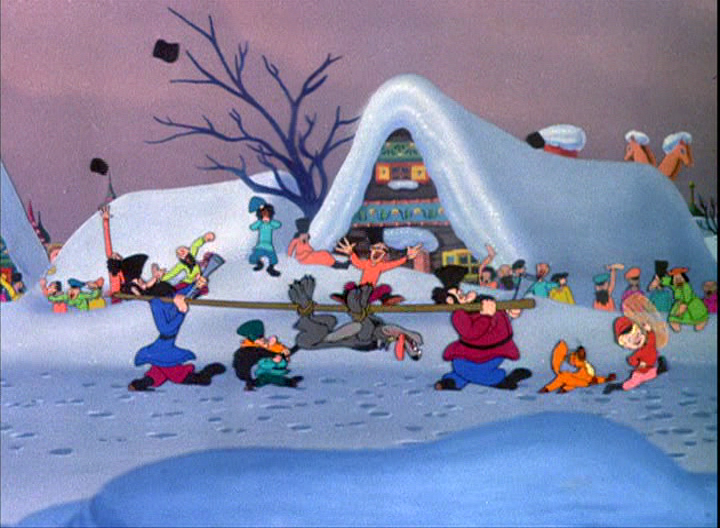
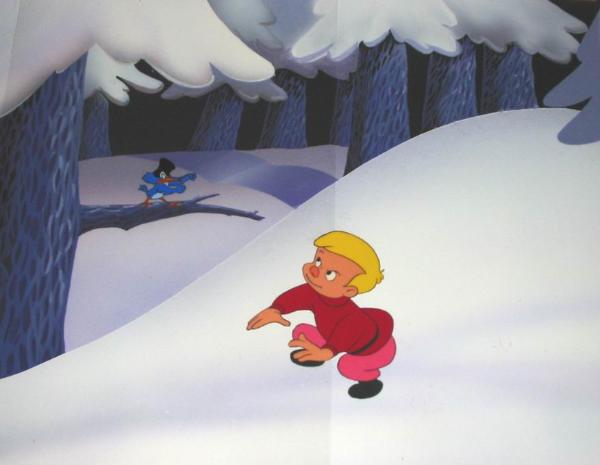
Peter and the Wolf (1946)

Peter and the Wolf (1946, Disney)

For the purposes of this blogathon, and to mesh with my March to Disney theme, I will focus solely on Disney’s 1946 version created for inclusion in the anthology film Make Mine Music. This version was also later siphoned off as its own short and released on video (once with the original Sterling Holloway narration, and one time now) and it also accompanied a theatrical re-release of Fantasia, which is rather a perfect pair.

Make Mine Music, I recently discovered is yet another title that has been subject to Disney’s self-censorship having lost an entire segment in all subsequent releases due to concerns over racial insensitivity. However, that is but a compelling footnote here. What compels here is the treatment of Peter and the Wolf within the longer piece.

It’s interesting to consider that this short film was fashioned just 10 years after Prokofiev’s opus debuted, a debut he himself cited as being inauspicious. So in many ways this animation truly is largely responsible for popularizing and immortalizing the piece; at least in the west. Like many lasting works it wasn’t an instant success.

Much like Disney did with the Seven Dwarfs (who had no names in Grimm’s version) he named Peter’s animal friends (Sasha – Bird; Sonja – Duck and Ivan – Cat) and the hunters were also named (Misha, Yasha and Vladimir).

I have written extensively on divorcing oneself from a prior incarnation of a narrative when watching the film. However, when discussing different versions of a work noting changes matters. The introduction of the representative instruments remains, yet the situation with the Duck’s fate is slightly changed from the original.

Peter and the Wolf (1946, Disney)

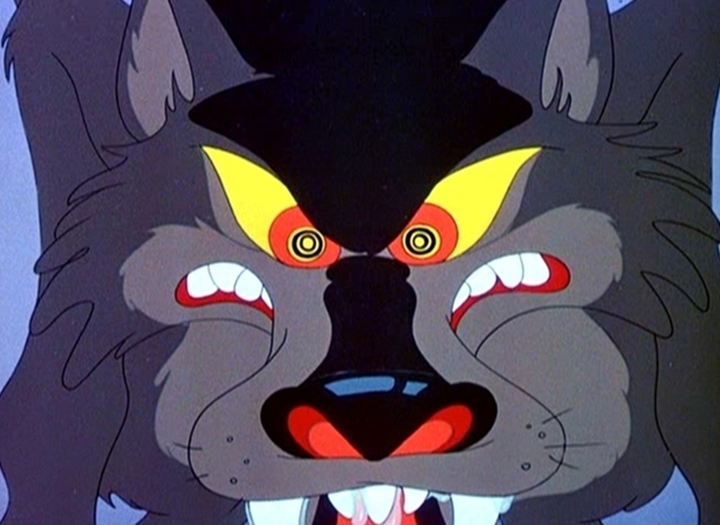
The short balances real scares like the wolf’s appearance in general, his threatening the duck and other’s are balanced with humorous touches, like Peter’s pop-gun, pantomime action and voice-over dialogue. This follows through to the ending with Peter’s presumed fate and his heroic reveal.

It truly is a fairy tale set to music that also includes some of Disney’s didactic proclivities by having signs in Cyrillic then dissolve to translated versions after being misunderstood. This helps indicate to even the youngest audience members that the story is foreign in origin, but allows them to relate to it through the narrative storytelling technique.

The main action sequence of the film is very well and dramatically rendered. Furthermore, at 13 minutes there’s a more grandiose sprawl to this tale than standard six-to-eight minute shorts allow. Yet, with the musical score usually clocking in around 25 minutes in length it moves more briskly apace than that. Add to that the typical deep, intricate backgrounds, and fanciful setting that Disney can create, and you get a world that is fully realized and dimensional. A narrative landscape that seems much larger than indicated and seems to belie the modesty of budget likely implemented (I hypothesize somewhere between pre-War opulence and wartime belt-tightening).

It’s a rendition that has stood the test of time, and like much classic animation, has come to define pieces of classical music in the minds of those who know it. Whether individually or as part of the underrated Make Mine Music it’s a short that is worth knowing whether you’re a Disney enthusiast or not.


31 Days of Oscar Blogathon: Pictures and Directors- Actors Awarded as Directors

Introduction

As it turned out this post also was a bit more involved than I initially realized before I embarked on it for the 31 Days of Oscar blogathon.

The idea of the post was to briefly talk about the handful of men who have won Best Director despite the fact they were better known as actors for most of their career. However, the desire to be a completist, and investigating gray areas makes the list a bit longer than initially realized. All of these directors deserve some mention. So I will discuss them all and delineate the tiers they appear in.

Essentially, the fact-checking for this post was done by checking filmographies of Best Director winners. Directors who had only walk-on, cameo or “Find Hitch” type appearances do not qualify. To be mentioned by name the directors needed to: A) Have won Best Director B) Have not been awarded as an actor C) Have had acting credits prior to directing credits.

Now there are levels of notoriety and role which is why many of the directors deserve mention but aren’t necessarily in the same echelon as one another.

Peripherally Acting

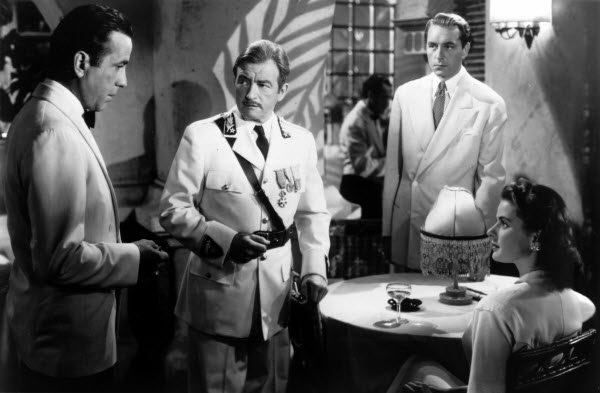
Casablanca (1942, Warner Bros.)

Michael Curtiz (won for Casablanca) acted in the first short he directed in Hungary (credited as Kertész Mihály) and other silent shorts. He never truly established himself as an actor though.

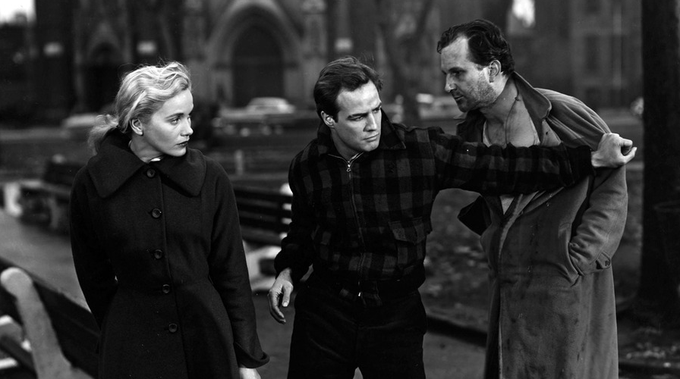
On the Waterfront (1954, Columbia Picture)

Elia Kazan (won for Gentleman’s Agreement and On the Waterfront) again bears mentioning since he has a screen credit before a directing one, but does not rate as highly as the next level.

Started as Actors, but Are More Well-Known as Directors

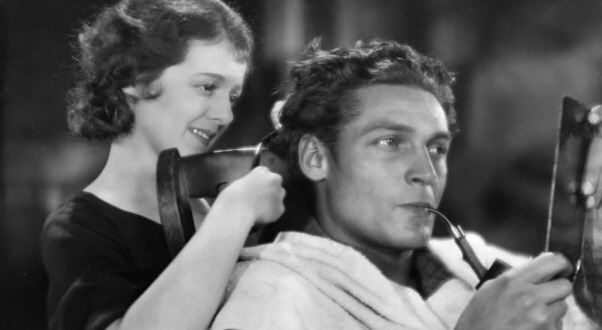
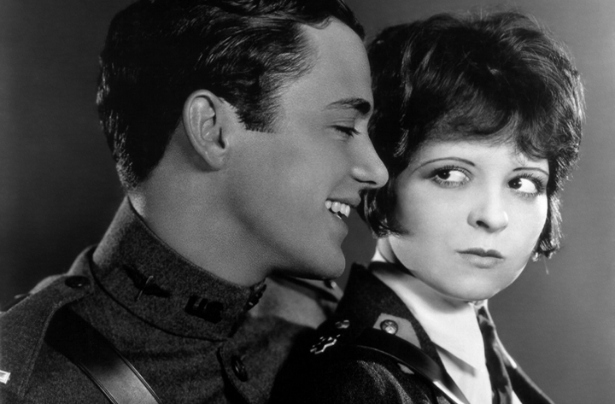
7th Heaven (1927, 20th Century Fox)

Frank Borzage (won for 7th Heaven and Bad Girl) is borderline only because his first acting credit and directorial credit were the same film The Mystery of Yellow Aster Mine in 1913. Borzage’s 113 credits from 1913-1957 certainly include him in the company of thespians even if not a leading-man type.

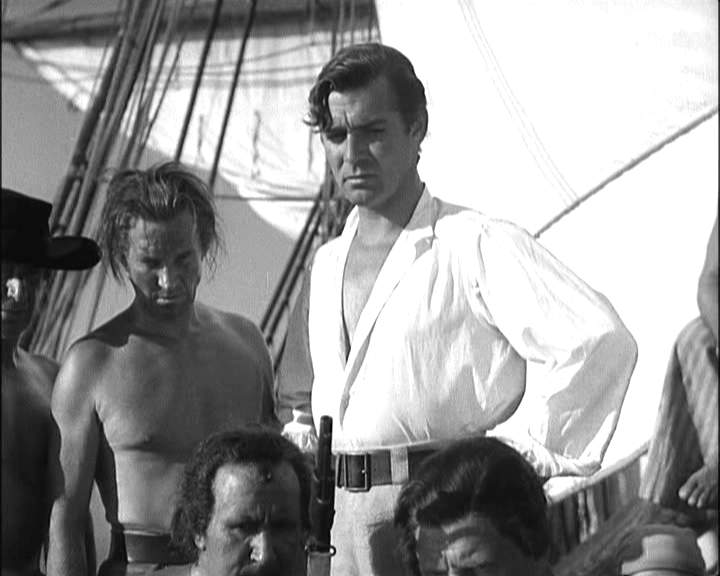
Mutiny on the Bounty (1935, MGM)

Frank Lloyd (won for The Divine Lady, Cavalcade and Mutiny on the Bounty) definitely has enough credits 63, but most of them were silent shorts. However, these is a bit of longevity (through 1955) that it does bear mentioning.

How Green Was My Valley (1941, 20th Century Fox)

John Ford (won for The Informer, The Grapes of Wrath, How Green Was My Valley and The Quiet Man) had 22 acting credits between 1913-1917 as Jack Ford. That was brief and before the Oscars, but he did clearly start as an actor first.

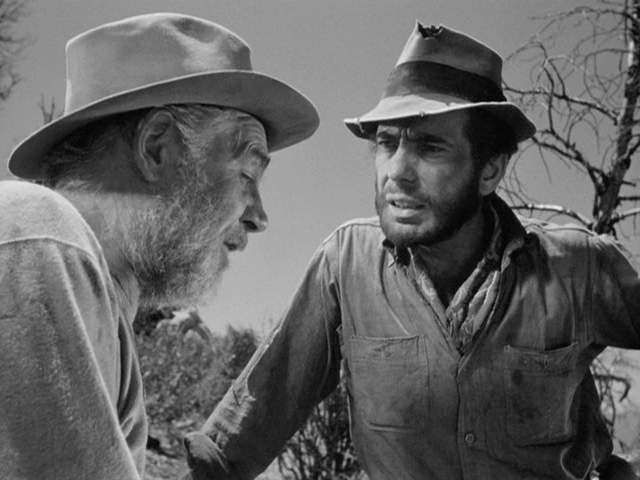
Treasure of the Sierra Madre (1948, Warner Bros.)

John Huston (won for Treasure of the Sierra Madre) -Many credits and many before directorial debut starting in a 1929 short, but his notoriety behind the camera was always higher despite some high-profile onscreen appearances like playing Noah in The Bible: In the Beginning…

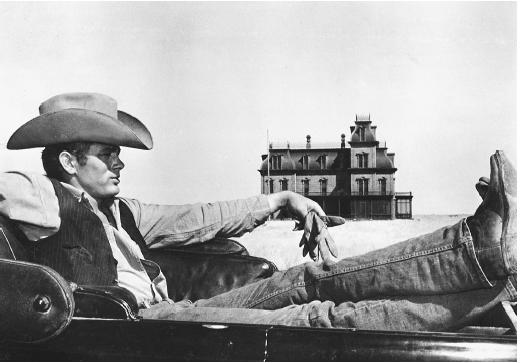
Giant (1956, Warner Bros.)

George Stevens (won for Giant and A Place in the Sun) bears mentioning simply because he has two silent credits The Tigress (1915) and Whispers (1920), but he was clearly a director more so than an actor.

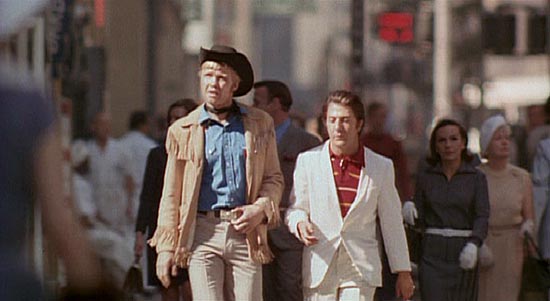
Midnight Cowboy (1969, UA)

John Schlesinger (Won for Midnight Cowboy) had credits as characters, mostly on TV before directing for the first time.

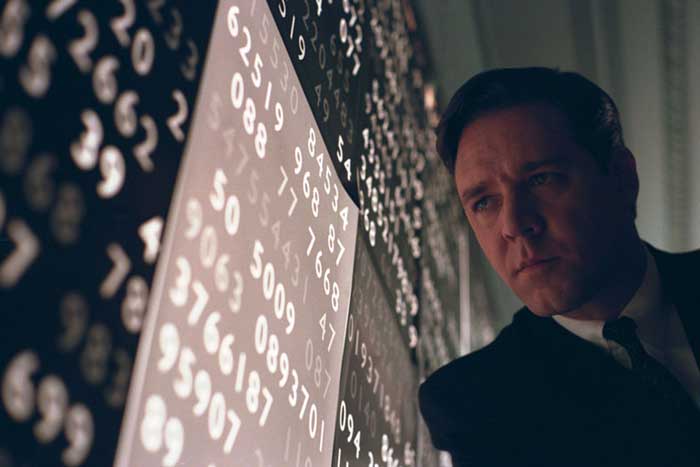
A Beautiful Mind (2001, Universal/DreamWorks)

Ron Howard (Won for A Beautiful Mind) this categorization is generationally sensitive. Yes, I’ve seen The Andy Griffith Show and Howard’s other work as a young actor. Aside from making the occasional appearance Ron Howard has not kept up consistent onscreen appearances enough for me to consider him someone who has always done both. He has been directing features since 1982 so I consider him officially transitioned, especially considering he has helmed one of my all-time favorites Parenthood.

Has Always Done Both

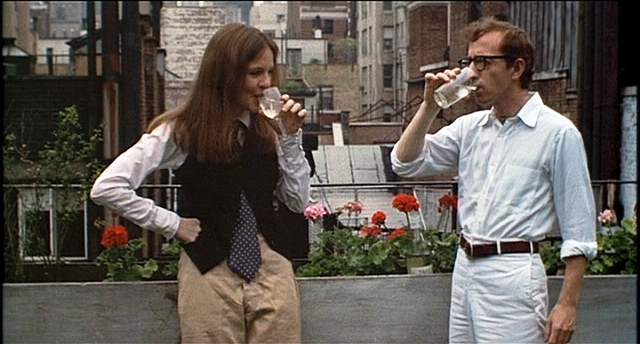
Annie Hall (1977, UA)

Woody Allen (won Best Director for Annie Hall) made his acting, writing and directorial debut in What’s New Pussycat. While he’s not quite Orson Welles in this regard (I’ve always felt that Woody Allen was a bit under-appreciated as an actor). Yes, he rarely works someone else’s material, and has a very specific type, and limited range, but so do other people.

Borderline

Ahh, here come those honorary awards again.

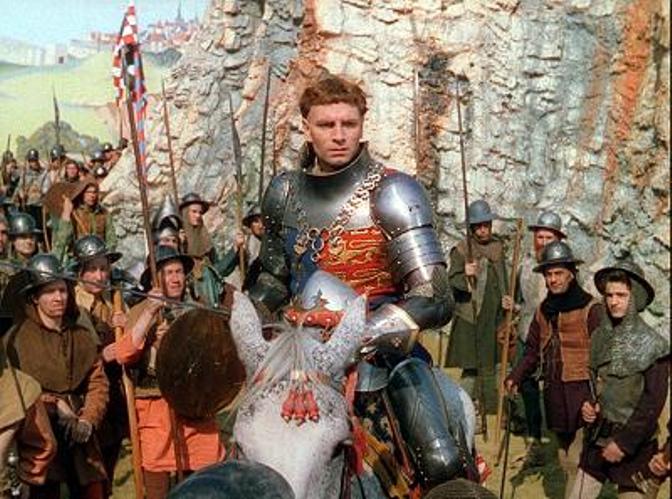
Henry V (1944, Eagle-Lion Distributors)

Laurence Olivier amazingly never won a competitive Oscar. In 1947 he won an honorary prize that cited all his work on Henry V:

For his outstanding achievement as actor, producer and director in bringing ‘Henry V’ to the screen.

More Well-Known as Actors but Won as Directors

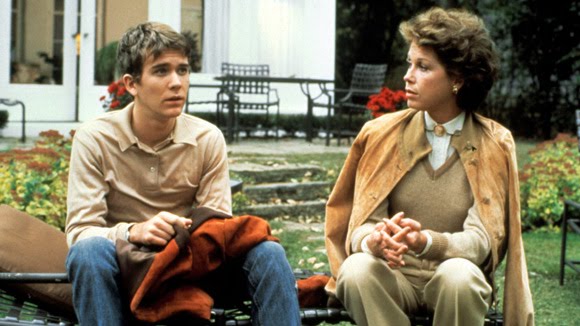
Ordinary People (1980, Paramount)

Robert Redford (Won for Ordinary People): his prowess as an actor is not debatable. However, Redford only ever has received one Best Actor nomination. His Oscar wins have been honorary and for directing.

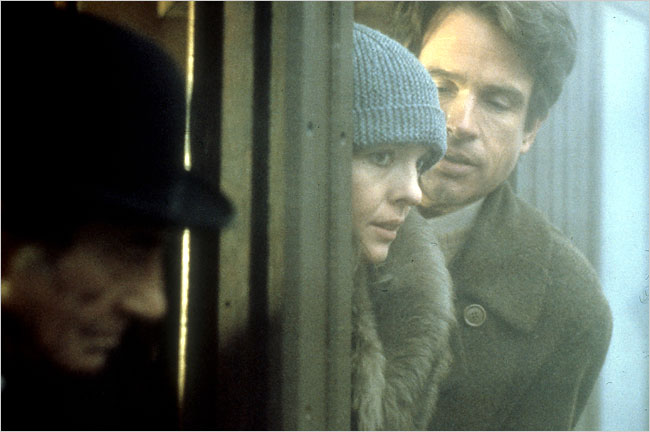
Reds (1981, Paramount)

Warren Beatty (Won for Reds) has been nominated three times as an actor. He’s directed and written a number of films but is likely best known as an actor. Beatty’s only hardware from the Academy came behind the camera.

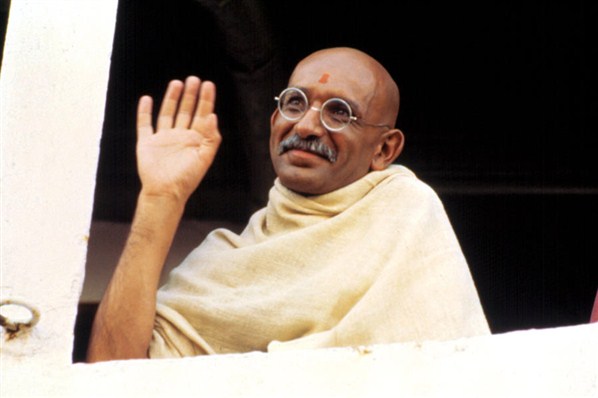
Gandhi (1982, Columbia)

Richard Attenborough (Won for Gandhi) had his first screen credit in 1943. His directorial debut came in 1969. There are other standouts in his resume as a director (A Bridge Too Far, A Chorus Line, Chaplin, Shadowlands) but I think most casual film fans likely know him best for his appearance in Jurassic Park, which is why I included him in this section.

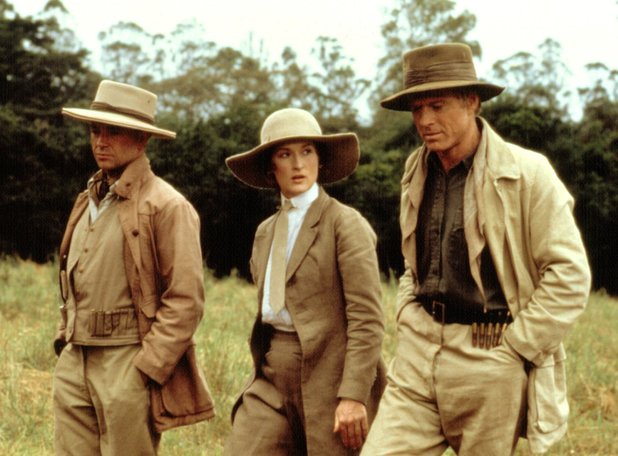
Out of Africa (1985, Universal)

Sydney Pollack (Won for Out of Africa) his first credit was on TV in 1956 and his first directing credit came in 1961. I do recall seeing him in many things, which is why I include him here even though he was never an award threat like some legends on this list.

Dances with Wolves (1991, Orion)

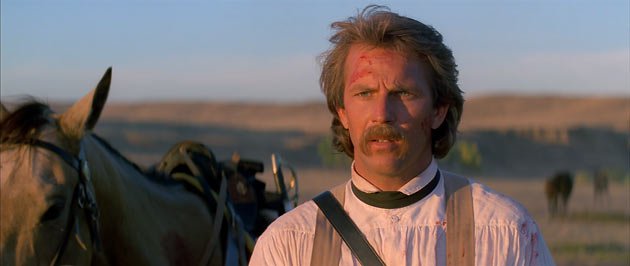
Kevin Costner (Won for Dances with Wolves) Costner now on a comeback trail in recent years was always more synonymous with acting and movie-stardom. However, that’s not to say he’s never had award-caliber performances. JFK comes immediately to mind. However, it was for his fashioning of a film behind the scenes that he received an Oscar.

Unforgiven (1992, Warner Bros.)

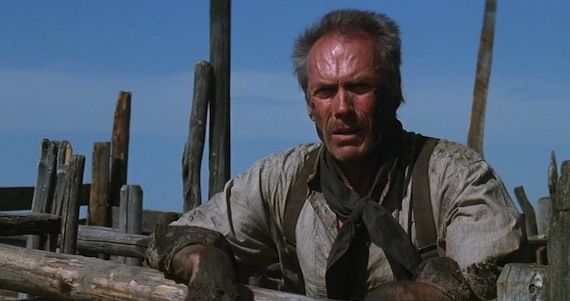
Clint Eastwood (Won for Unforgiven and Million Dollar Baby) at this point in his long an illustrious career it’s hard to say if Eastwood is more known as a director or actor. It may be, like many, a generationally-dependent answer. Eastwood in essence helped redefine the Western genre and give it new life and that’s outside of Dirty Harry films and some departures like Honkytonk Man so it is mildly surprising his first statuette came behind the camera.

Braveheart (1995, Paramoutn/20th Century Fox)

Mel Gibson (Won for Bravehart) Gibson came on to the scene in an Oscar-nominated film (A Year of Living Dangerously) and was one of the biggest stars of the 1980s and into the 1990s. His directorial resume is more accomplished than Costner’s but like Costner he first won as a director. His acceptance speech where he joked “What I really want to do now is act,” is largely responsible for my writing this post.

Argo (2012, Warner Bros.)

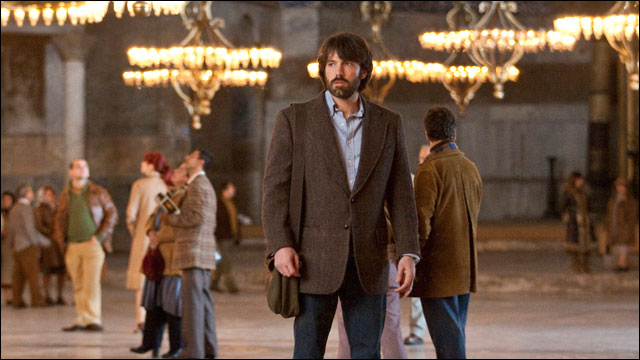
Ben Affleck (Won for Argo) here’s an interesting one. Affleck came on the scene as one of the co-writers and co-stars of Good Will Hunting. His acting career has been a bit more up-and-down than Matt Damon’s in terms of successes and perception. However, he has been the one who had a career behind the camera (writing and directing) take off. Affleck is now rebounding as an actor as well and has had enough notable onscreen appearance that I think of him as an actor first even though he is highly accomplished and capable on the other side.

Conclusion

Oscar’s at times curious desire to award well-liked actors in other capacities will likely not end soon and it is interesting to consider where they have already done so.

31 Days of Oscar Blogathon: The Snubs – Defunct Categories

Introduction

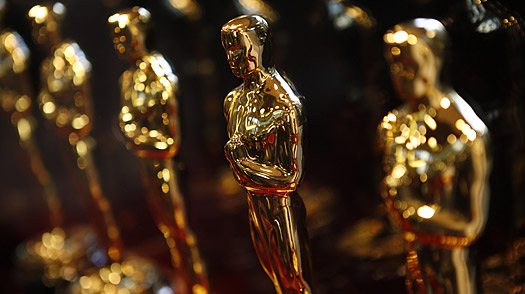
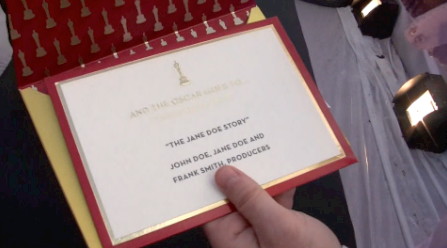
Oscar Envelope

Film is an ever-changing artform, so it stands to reason that the awards that Hollywood created to help celebrate the industry should evolve. It’s more apparent when you realize that the Oscars began when the industry was in flux as sound was in its infancy.

Film has twice adapted itself in competition with other media arts. Synchronized sound came on the heels of the popularity of radio and a shift in aspect ratio, away from 1:33 to widescreen formats was introduced to distance itself from television. The same competition with television helped push films away from black and white film and towards color. With just these technical changes its natural that some award categories would fall in an out of favor over time, some aren’t so obvious. Some, surprisingly, should have never left. I will discuss the categories that are no longer around.

Best Picture, Production and Best Picture, Unique and Artistic Production (1929)

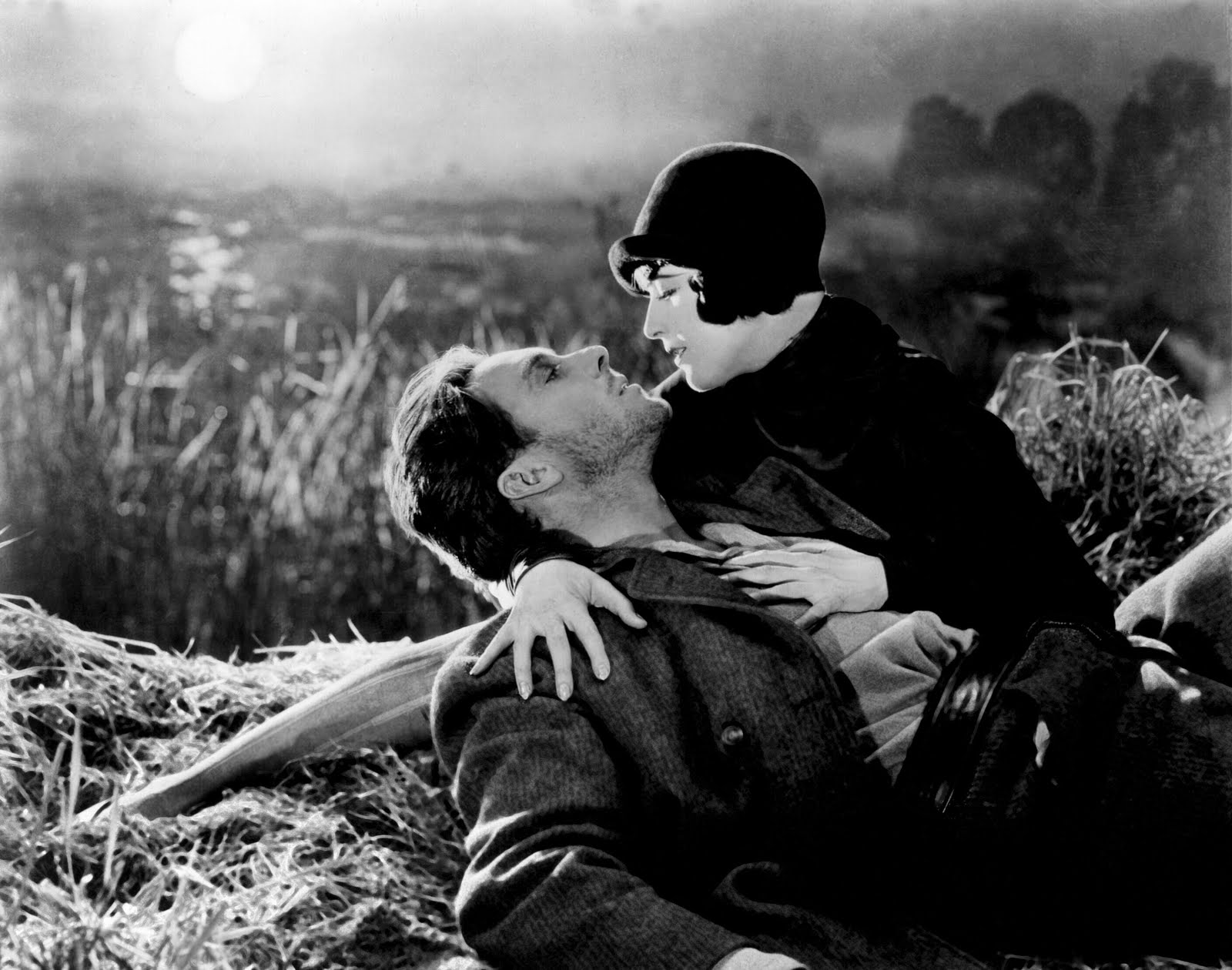
Sunrise (1927, 20th Century Fox)

The Academy Awards began with two different iterations of Best Picture. In 1929 the winners of these two respective categories were Wings (Production) and Sunrise (Unique and Artistic). My interpretation of these trophies is that one is more akin to a PGA (Producers Guild of America) award. Whereas, the logistics, accomplishments and merits of the production are highly impressive and well-executed even if the picture mat not be the best overall. Unique and artistic would then be a more narrative-award with special emphasis on creativity. This is a distinction that could’ve proved highly useful in later years. Imagine if it had been around in 1998 (the first year that jumps to mind) give Production to Titanic and Unique and Artistic to As Good as It Gets or L.A. Confidential or Good Will Hunting. Or earlier maybe How Green Was My Valley could get Production and Citizen Kane can get Unique and Artistic and everyone can leave the former alone already, and stop hating it for something that’s no fault of its own.

Ultimately, I understand how the two awards would forever cause confusion and why they needed merging, but it is interesting to consider.

Best Director, Comedy Picture and Dramatic Picture (1929)

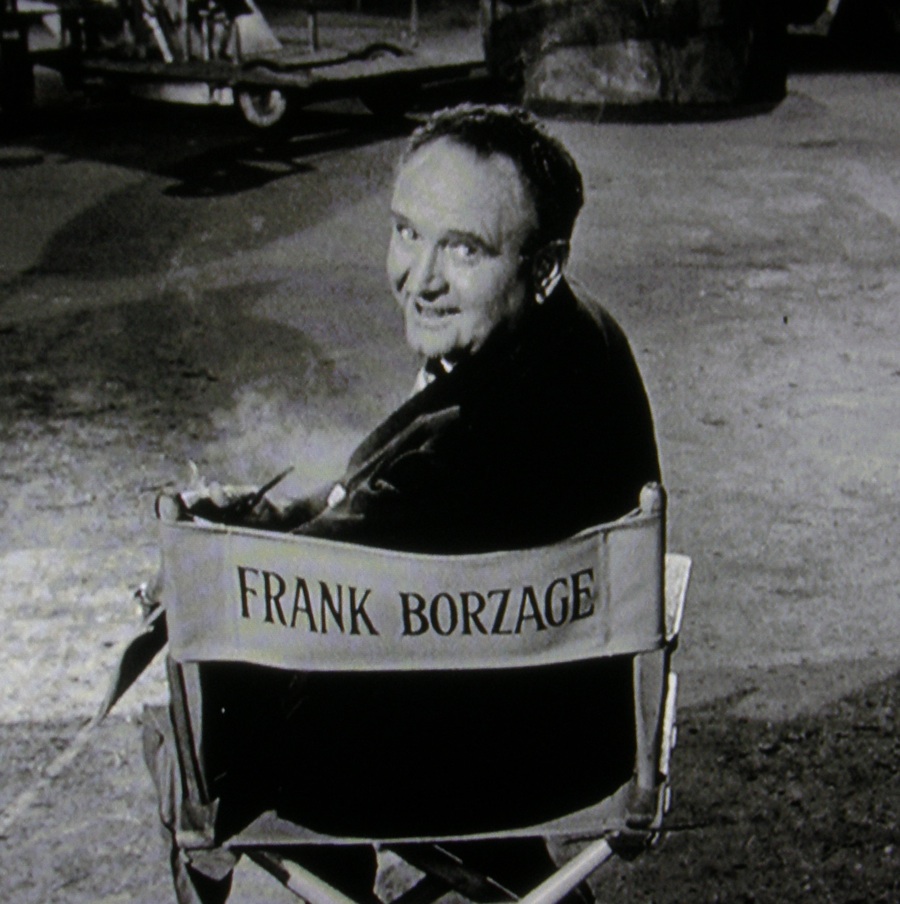
Frank Borzage

The Golden Globes still have Comedy/Musical and Dramatic categories for Films and Actors, but not directors. The directing job is highly different in both aspects. Are comedies far too overlooked when it comes to award shows? Yes. Does each year really merit having both categories? Probably not, and surely enough it was not a category the following year.

Best Title Writing (1929)

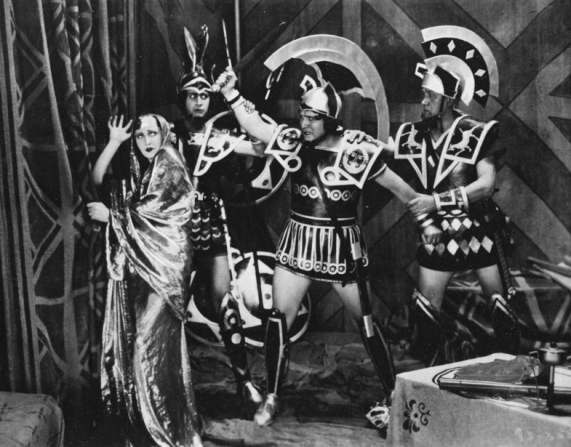
The Private Life of Helen of Troy (1927, First National Pictures)

To be quite honest considering that the industry was already in flux awkwardly transitioning from silent to talkie I’m a little surprised this was a category at the first awards. Granted some were trying to dismiss synchronized sound as a fad, but it was clear it was coming. Some categories held on longer, but silent films in the end virtually vanished quite quicker than black-and-white fare or 4:3 aspect ratio films.

Yes, titles were crucial in the silent era, and silents did win Oscars, but it’s slightly unusual that this was actually a category for one year.

Best Cinematography, Color and Best Cinematography, Black and White 1936-1939 (Special Achievement) 1940-1966

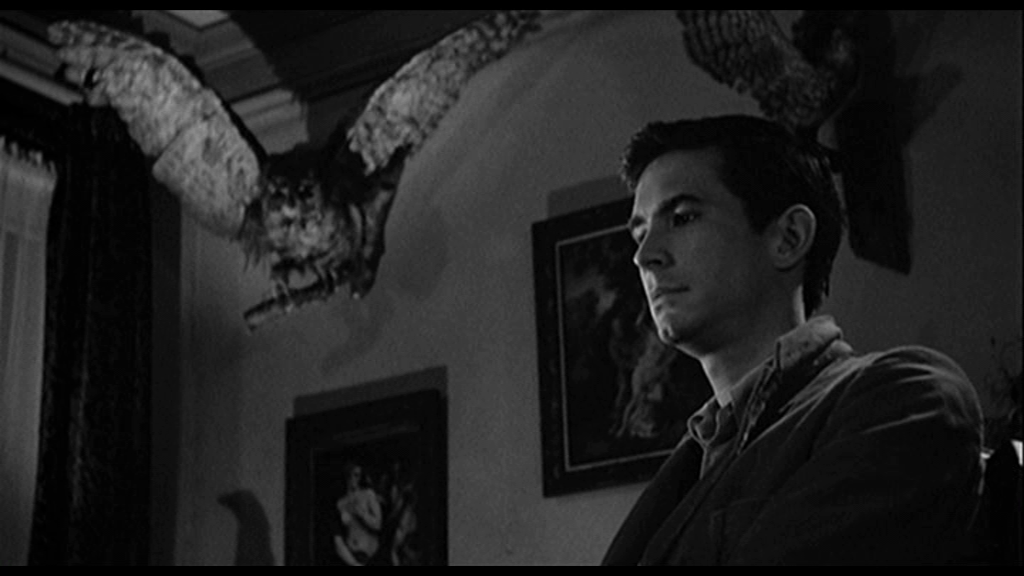
Psycho (1960, Universal)

This split became a mainstay of the Academy for 27 editions of the Awards. This is quite a long time and indicates that despite the business-related impetus for color cinematography the necessity of occasionally going into more ethereal monochrome remained and undeniable siren’s call for filmmakers for many years to come.

As wide as the gap between color productions and black-and-white ones have become they are not extinct as recent films like Ida, The Artist and The White Ribbon indicate. Yet, color cinematography in unquestionably ubiquitous enough such that the split no longer makes sense. It most definitely did at one time: color and black-and-white are two different ways of seeing the world. The reason for splitting the two was due to that and the fact that they were fairly equally split. With little equality superlative black-and-white films do have to compete against chromatic ones be it fair or unfair; it’s just a reality.

Best Effects, Engineering Effects (1929)

Wings (1927, Paramount)

The awards for Special Effects were ones that had many names an iterations before becoming a mainstay. A category for “Special Effects, Engineering Effects” existed at the first ceremonies. They returned in 1938 with and Honorary Award. From 1939 to 1962 Visual and Sound Effects shared an award titled Special Effects. In 1963 Special Visual Effects took over. From ’72-’77 it was awarded under Special Achievement Award. The current Special Visual Effects title debuted in 1995.

However, going back to the original trophy it puts me in a mind that perhaps the Academy does need to encourage and reward different kinds of effects work. Maybe split it between practical and computerized. It actually would encourage creativity and be fair. For example many of the most impressive feats in Inception (like the spinning hallway) were done practically. This could highlight those creative moments but still reward highly-creative, ever-evolving computerized effects work.

Best Writing, Achievement 1930

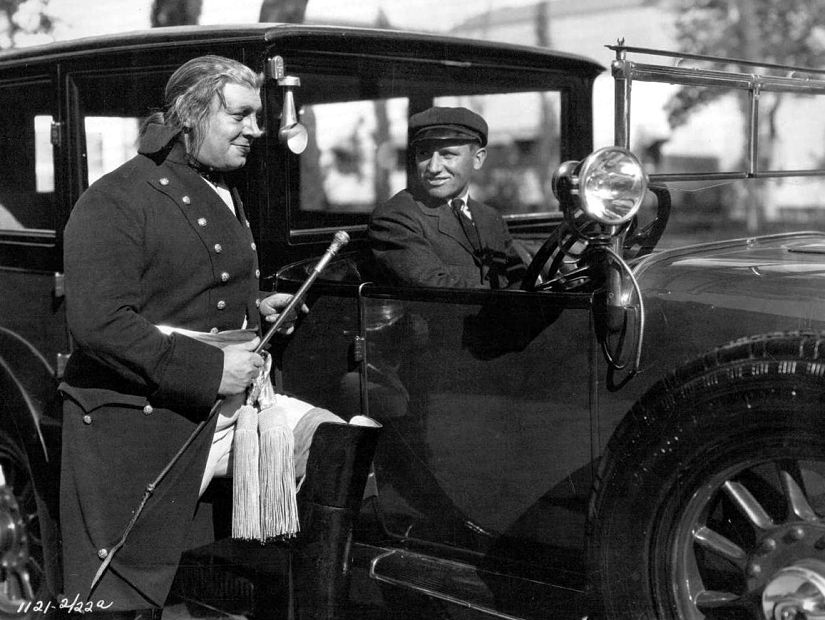
The Patriot (1928, Paramount)

This was the category introduced for the 2nd Annual ceremonies and for that year only. It was an attempt to transition away from three categories (Original, Adaptation and Title Writing) to just one. The only other award I ever saw merge all screenplays into one category was my own for a while. However, adaptation and original screenplays are games with similar rules but different approaches and need different skills. They should be separately awarded and this change is one that was needed.

The Juvenile Award (Awarded intermittently from 1935-1961)

The Window (1949, RKO)

This is an award I’ve already written about at length here. In that post I chronicled those young people who were honored by the Academy. I also followed-up on that by listing who since 1961 would have earned the honor, or could have, if it was still something awarded. Since my personal BAM Awards have started offering parity (meaning the same categories for mature and young performers) I have become convinced the Academy could fill a roster of five nominees a year for a category with this same concept. The term juvenile may be dated, and have poor connotations now, but the idea is one worth revisiting.

Best Short Subject, Cartoons (1932-1957) Short Subject, Comedy (1932-1937), Short Subject Novelty (1932-1937), Short Subject Color (1937-38) Short Subject One-Reel (1937-1957) and Short Subject Two-Reel (1937-1957)

The Dot and the Line (1965, MGM)

You can almost always look to the Academy for some kind of indication as to what the state of the art at least in terms of trends. One thing that would be apparent to someone looking solely at the Oscars with no other film knowledge would be that short films used to be a much more integral part of Hollywood films than they are now. For six years Live Action films were split into Comedies and Novelties, which featured, as the name implies varied subjects and approaches. Starting in 1937 animated films (then referred to as Cartoons by the Academy) were split off and Live Action films were bifurcated by length either one-reel (about 10 minutes or less) or two-reel (about 20 minutes or less). In 1958 Live Action was introduced as the only short subject category for live action, Cartoons still the term used, and the category changed to Best Short Subject, Animated Films in 1972. It is notable that serials never had a category somehow. Maybe because Poverty Row and “lesser” majors specialized in them.

Best Assistant Director (1933-1937)

Imitation of Life (1934, Universal)

Assistant Directors back at the beginning of the film industry had a far different role than they do as the industry and art evolved. There used to be far more directing for assistant directors. First ADs now are far more administrative and keep the production running, most of their direction geared at background performers. Therefore, its interesting that the Academy once underscored the greater level of responsibility this job had with an award.

Best Dance Direction (1936-1938)

Show Boat (1936, Universal)

There are a few instances of the Oscars highlighting the elevated place that the film musical once held. This category specifically aimed at choreography on film is one.

Best Art Direction-Interior Decoration Black-And-White and Color 1940-1966

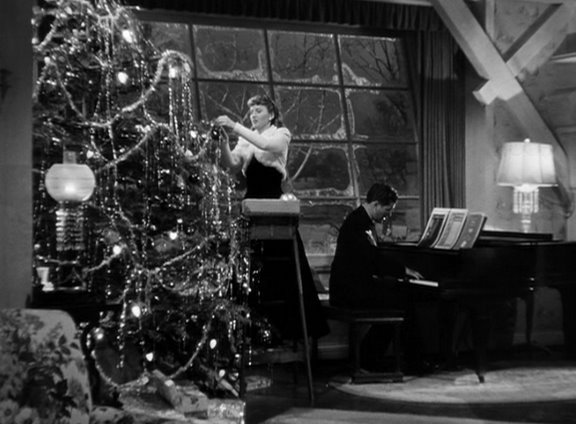
Christmas in Connecticut (1945, Warner Bros.)

This is the second of three categories that for year offered two prizes owing to the unique challenges and distinct differences in working in black-and-white and color. In simplest terms in color there are temperature, palette and tone considerations but in monochrome there is a transliteration of actual colors to gray tones for desired effect that must be considered and calculated by all department heads.

Best Music, Scoring of a Drama or Comedy (1946-1957) Best Music, Scoring of a Dramatic Picture (1942-1945) and Best Music, Scoring of a Musical Picture (1942-1957)


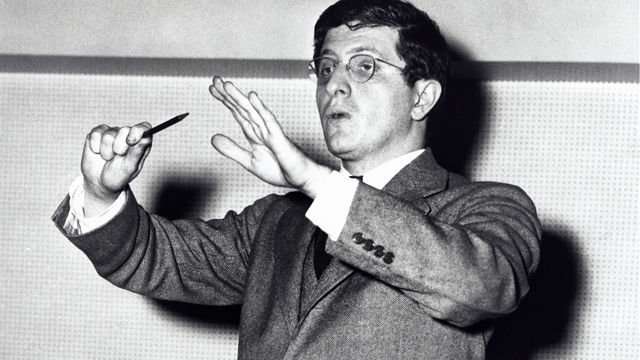
bernard-herrmann5

Here’s one more testament to the potency the musical once hand in the cinematic landscape of Hollywood’s output. In 1958 the distinction in scoring ended. For 16 ceremonies musicals were a category apart. They were so prevalent, significant, and thought to be so different that it had its own category for scoring.

The issue with genre-splitting is: where does it end? Comedy was excluded for three years, and then added. If musicals had stayed at their zenith would further scoring splits have occurred? Unlikely, but it may have been clamored for. Clearly, the loss of a category did not shut the door on the musical winning Best Score, The Sound of Music jumps immediately to mind, but it’s fascinating that it was a class apart for years.

Costume Design Black and White and Costume Design Color (1948-1966)

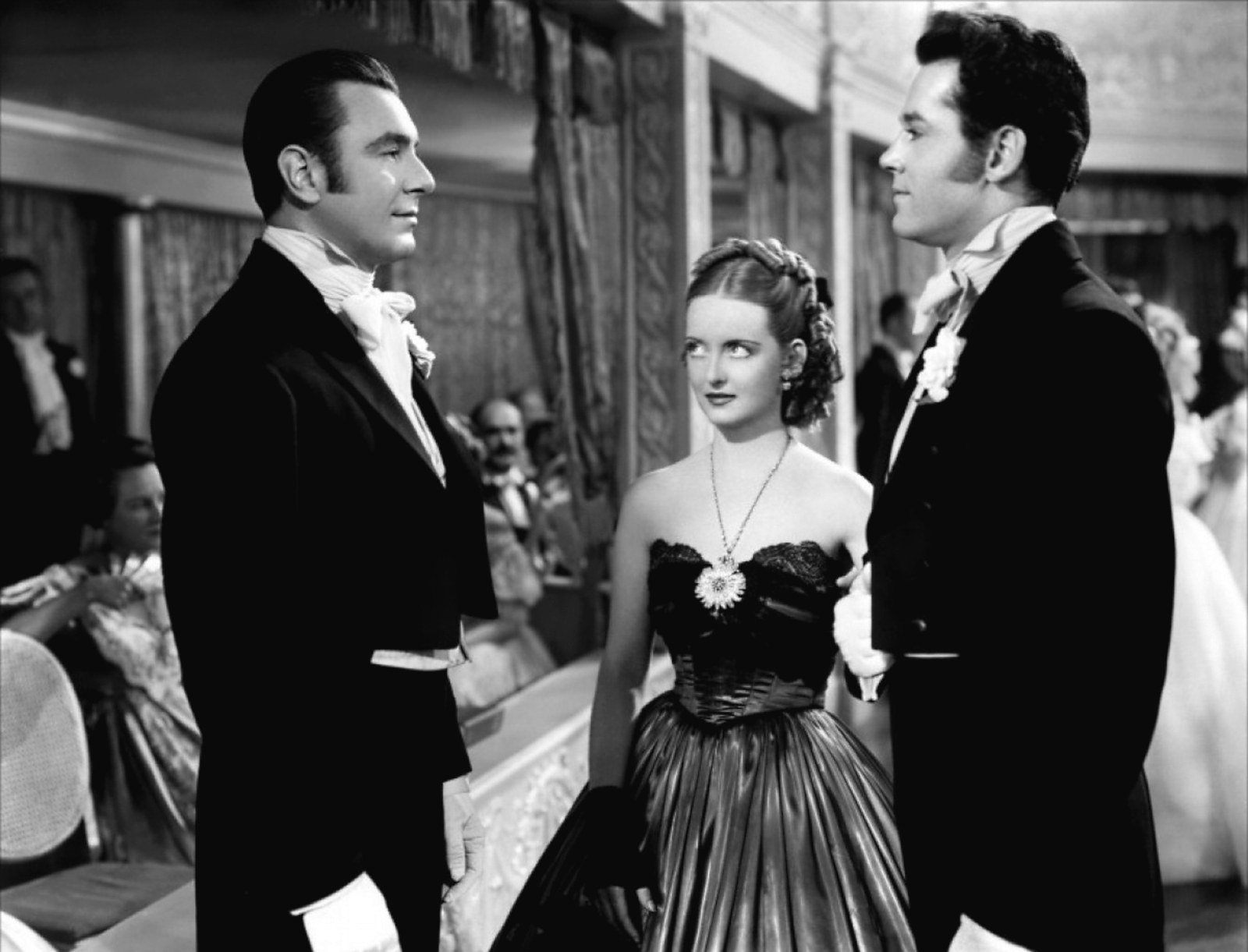
Jezebel (1938, Warner Bros.)

If there’s one thing that you can laud the Academy for it’s that there was uniformity in when categories stopped being subdivided by color and black-and-white. In all cases when there was such a division, either from the inception of a category like costume design, or later in the game like with cinematography, that split ceased after the 1966 Awards.

Similar to Cinematography and Art Direction costuming for both media is a different game. Black-and-white requires a more abstract understanding of colors and textures and how they’ll read when exposed. Thus, its a bit more intuitive, at times counterintuitive, and far less literal than working in color. Again the time had surely come for the category to merge due to ubiquity but the task is by no means an easy one in monochrome.

Conclusion


Oscars (AMPAS)

In most of the these cases it is just interesting and important to note how far the artform and industry have come. It’s important in aesthetic appreciation to note some things that used to be taken for granted and to acknowledge different trends and forms of the past. However, in some of these cases these categories could still be highly useful and be brought back today.

31 Days of Oscar Blogathon – Actors – Non-Competitive, Non-Lifetime Wins

If you followed this link I know what you’re likely thinking: How many actors have been awarded Oscars that both not in a competitive category (meaning there were no nominations announced), and also not honored in a Lifetime fashion. It’s true there aren’t too many, but they are worth noting.

Some notes: Honorary Awards were once testing grounds for concepts before they were categories like Color Cinematography, Best Foreign Language Film, Best Visual Effects, Best Sound Editing, etc.

For each honoree I’ve included the Academy’s official blurb where available, and

For your edification here are the Honorary Oscars that are for an actors’ body of work over the course of their career:

2015

Maureen O’Hara on 2/22.

2014

Angela Lansbury and Steve Martin.

2013

Hal Needham

Is this the closest the Academy will get to acknowledging stunt performers?

2012

James Earl Jones

2011

Eli Wallach

AMPAS Governors Awards: Given ‘For a lifetime’s worth of indelible screen characters’.

2010

Lauren Bacall

In recognition of her central place in the Golden Age of motion pictures.

2003

Peter O’Toole

Whose remarkable talents have provided cinema history with some of its most memorable characters. (Oscar statuette)

2002

Sidney Poitier

For his extraordinary performances and unique presence on the screen and for representing the industry with dignity, style and intelligence. (Oscar statuette)

Robert Redford

Actor, director, producer, creator of Sundance, inspiration to independent and innovative filmmakers everywhere. (Oscar statuette)

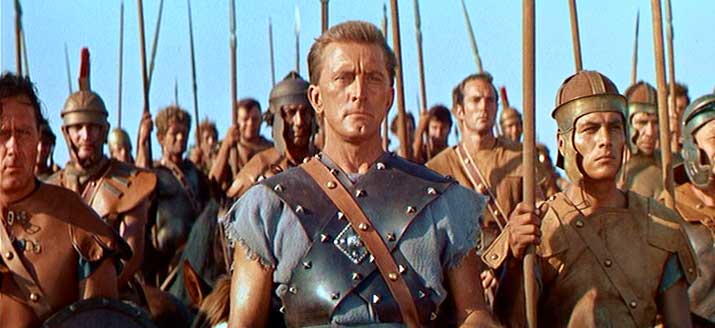
Spartacus (1960, Universal)

1996

Kirk Douglas

For 50 years as a creative and moral force in the motion picture community.

1994

Deborah Kerr

An artist of impeccable grace and beauty, a dedicated actress whose motion picture career has always stood for perfection, discipline and elegance.

[Immortalized since my childhood in Brazilian singer/songwriter Rita Lee’s “Flagra.” Lyrics and audio can be found here, translations can be done on engines. ]

1991

Sophia Loren

For a career rich with memorable performances that has added permanent luster to our art form.

Myrna Loy

In recognition of her extraordinary qualities both on screen and off, with appreciation for a lifetime’s worth of indelible performances. (Oscar statuette) – Myrna Loy was not present at the awards ceremony. She gave her acceptance speech live via satellite from her Manhattan apartment.

1987

Ralph Bellamy

For his unique artistry and his distinguished service to the profession of acting.

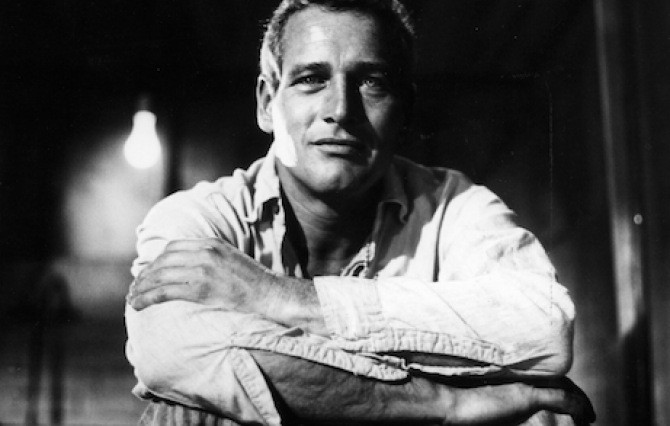
Cool Hand Luke (1967, Warner Bros./Seven Arts)

1986

Paul Newman

In recognition of his many and memorable and compelling screen performances and for his personal integrity and dedication to his craft.

Paul Newman was not present at the awards ceremony. He gave his acceptance speech via satellite from Chicago.

1985

James Stewart

For his fifty years of memorable performances,, for his high ideals both on and off the screen, with respect and affection of his colleagues.

1983

Mickey Rooney

In recognition of his 50 years of versatility in a variety of memorable film performances.

1982

Barbara Stanwyck

For superlative creativity and unique contribution to the art of screen acting.

1981

Henry Fonda

The consummate actor, in recognition of his brilliant accomplishments and enduring contribution to the art of motion pictures.

1979

Laurence Olivier

For the full body of his work, for the unique achievements of his entire career and his lifetime of contribution to the art of film.

Tess of Storm County (1921, AMPAS)

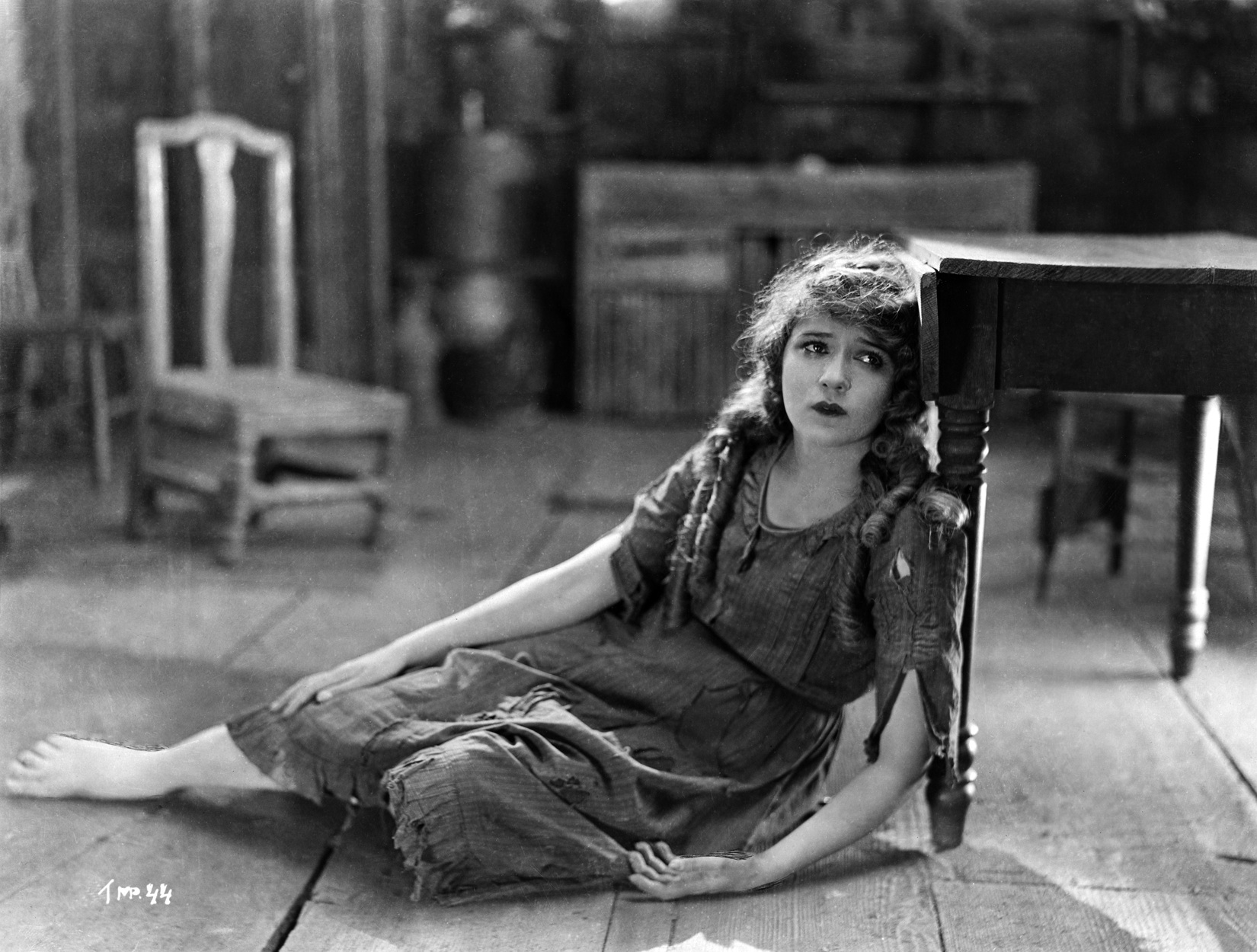
1976

Mary Pickford

In recognition of her unique contributions to the film industry and the development of film as an artistic medium.

Mary Pickford was not present at the awards ceremony. The presentation was made at her Pickfair estate and taped for inclusion in the broadcast.

1974

Groucho Marx

In recognition of his brilliant creativity and for the unequaled achievements of the Marx Brothers in the art of motion picture comedy.

1973


Edward G. Robinson

Who achieved greatness as a player, a patron of the arts, and a dedicated citizen … in sum, a Renaissance man. From his friends in the industry he loves.

Posthumously. Robinson died 2 months before the ceremony, after the award was voted on. His widow Jane Robinson accepted the award on his behalf.

1972

Charles Chaplin

For the incalculable effect he has had in making motion pictures the art form of this century.

1971

Lillian Gish

For superlative artistry and versatility in the creation of motion pictures.

Orson Welles

For superlative artistry and versatility in the creation of motion pictures.

Orson Welles was not present at the awards ceremony. His acceptance speech was pre-recorded.

1970

Cary Grant

For his unique mastery of the art of screen acting with the respect and affection of his colleagues.

1966

Bob Hope

For unique and distinguished service to our industry and the Academy (gold medal).

[The fourth time Hope was honored is the only one in which it seems to be for the whole of his career.

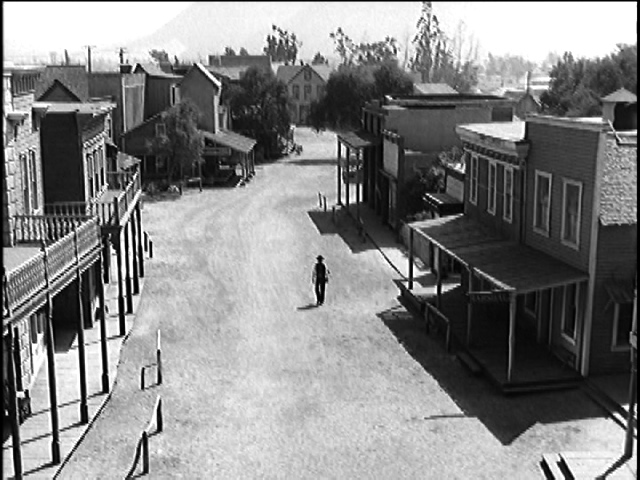
High Noon (1952, United Artists)

1961

Gary Cooper

For his many memorable screen performances and the international recognition he, as an individual, has gained for the motion picture industry.

Gary Cooper could not attend the awards ceremony. James Stewart accepted the award on his behalf.

Stan Laurel

For his creative pioneering in the field of cinema comedy. Stan Laurel was not present at the awards ceremony. Presenter Danny Kaye accepted the award on his behalf.

[Just Stan? Fair or unfair? Unfair.]

1960

Buster Keaton

For his unique talents which brought immortal comedies to the screen.

1959

Maurice Chevalier

For his contributions to the world of entertainment for more than half a century.

1957

Eddie Cantor

For distinguished service to the film industry.

White Christmas (1954, 20th Century Fox)

1955

Danny Kaye

For his unique talents, his service to the Academy, the motion picture industry, and the American people.

Greta Garbo

For her unforgettable screen performances. Greta Garbo was not present at the ceremony. Nancy Kelly accepted the award on her behalf.

1953

Bob Hope

For his contribution to the laughter of the world, his service to the motion picture industry, and his devotion to the American premise.

[Number three. Since it cites the Motion Picture industry I do not cite it as an award for other services.]


Harold Lloyd

For his contribution to the laughter of the world, his service to the motion picture industry, and his devotion to the American premise.

1952

Gene Kelly

In appreciation of his versatility as an actor, singer, director and dancer, and specifically for his brilliant achievements in the art of choreography on film.

1950

Jean Hersholt

For distinguished service to the motion picture industry.

Fred Astaire

For his unique artistry and his contributions to the technique of musical pictures.

Actors Awarded for Other Endeavors

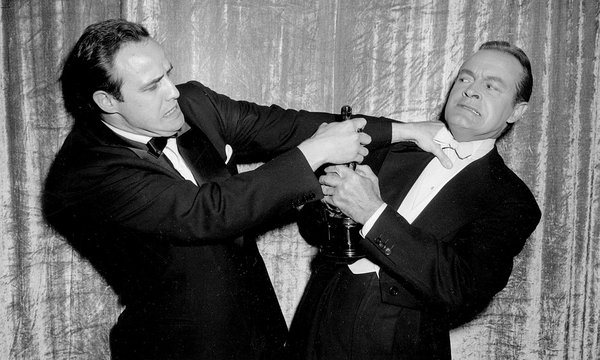
Bob Hope and Marlon Brando (A.M.P.A.S.)

There have been many cases where Honorary Awards have been specifically given to actors for work not onscreen. Here are those instances with the Academy’s blurb for each. When necessary I have expounded on them:

1945

Bob Hope

For his many services to the Academy (Life Membership in the AMPAS).

[Did hosting apply to this too?]

1943

Charles Boyer

For his progressive cultural achievement in establishing the French Research Foundation in Los Angeles as a source of reference (certificate).

1941

Bob Hope

In recognition of his unselfish services to the motion picture industry (special silver plaque).

1940

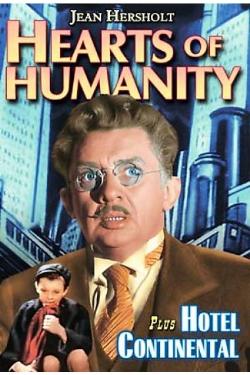
Hearts of Humanity (1932)

Jean Hersholt (president), Ralph Morgan (chairman of the executive committee), Ralph Block (first vice-president), Conrad Nagel (Motion Picture Relief Fund)

Acknowledging the outstanding services to the industry during the past year of the Motion Picture Relief Fund and its progressive leadership
(plaque).

Douglas Fairbanks

Recognizing the unique and outstanding contribution of Douglas Fairbanks, first president of the Academy, to the international development of the motion picture (Commemorative Award).

1938

Edgar Bergen

For his outstanding comedy creation, Charlie McCarthy (wooden statuette).

[Ventriloquism is performance, but since this award is for the creation of a character I consider it “another” contribution.]

1932

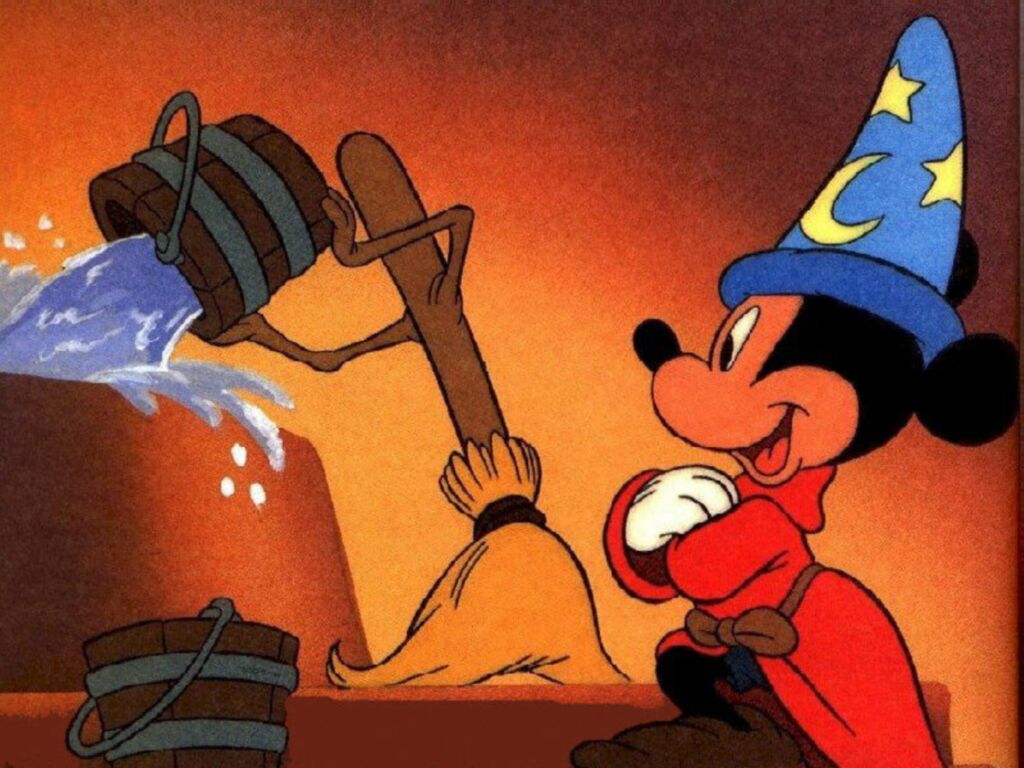
Fantasia (1940, Disney)

Walt Disney

For the creation of Mickey Mouse.

[Walt Disney received quite a few custom-created Oscars. This one I consider as an actor for another endeavor because he did start of drawing and voicing Mickey aside for conceptualizing him. Disney’s renown is justly more for producing and his creative/business acumen, but it did all start with a mouse which he was the driving force behind].

Actors Awarded For Singular Performances in Non-Competitive Ways

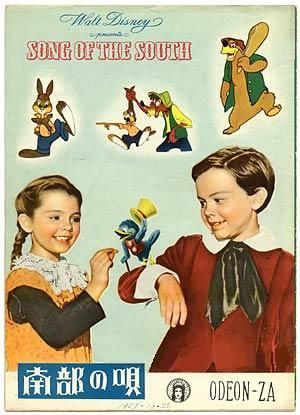
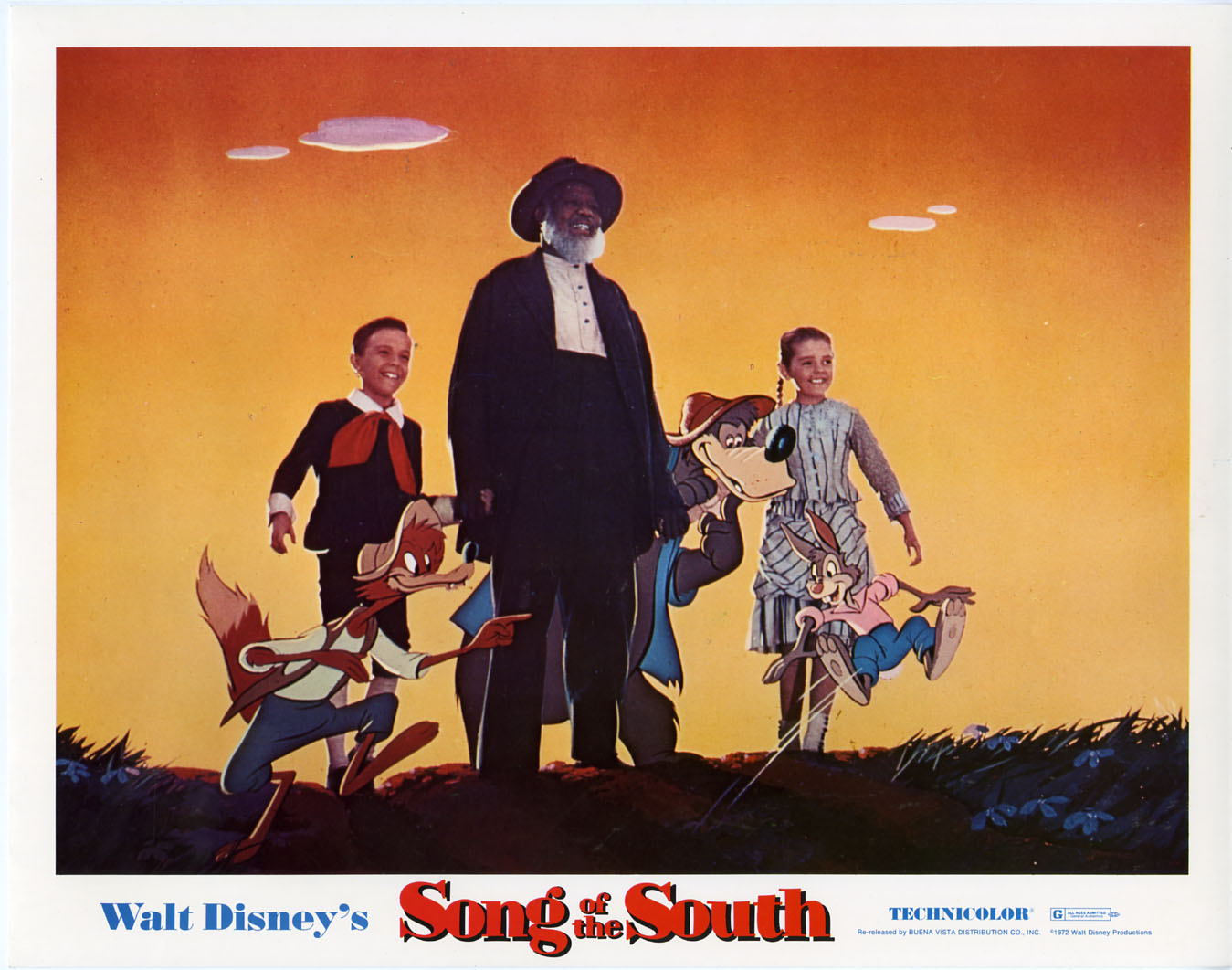
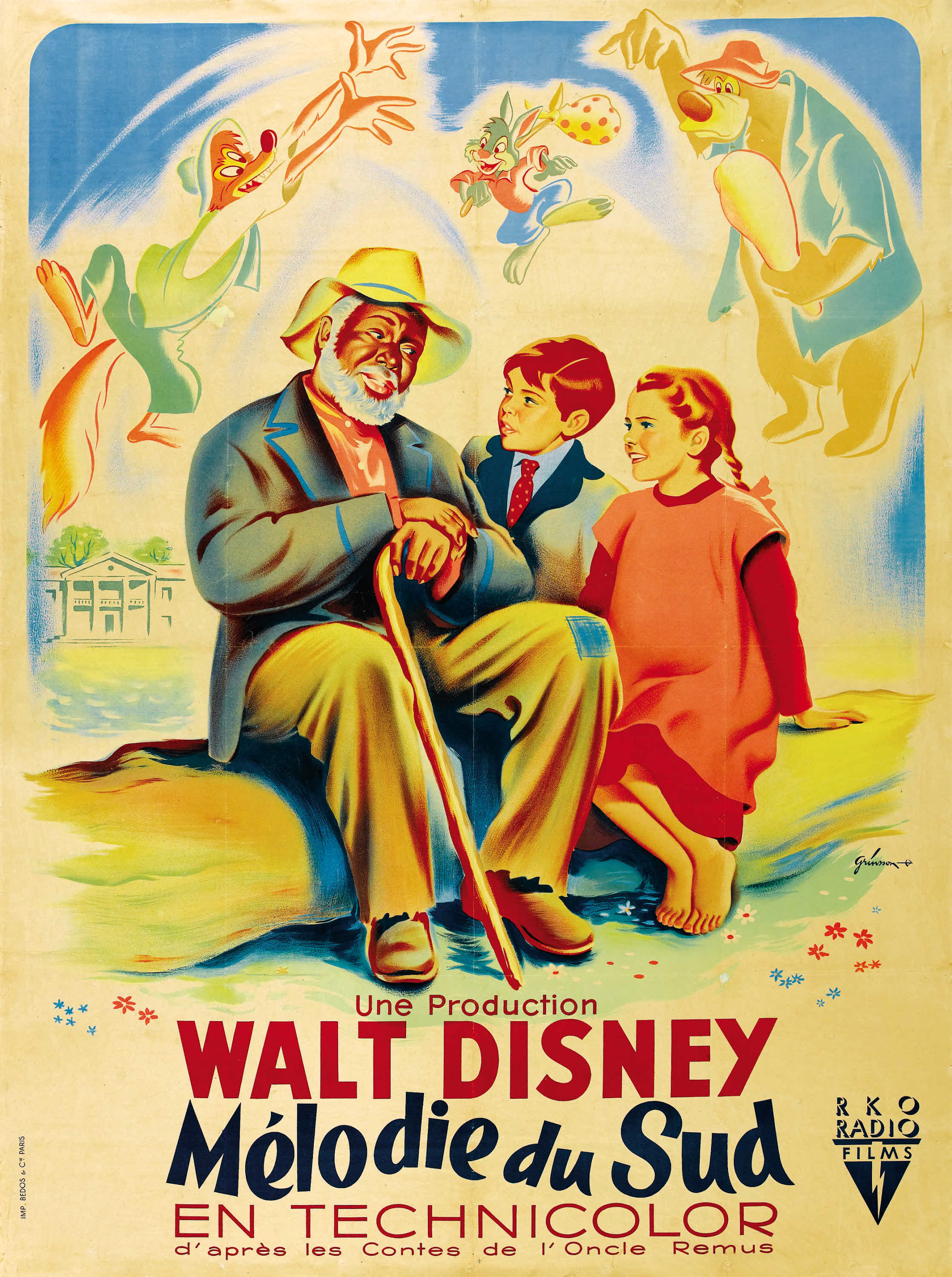
Song of the South (1946, Disney)

OK, now that we got the standards and the oddities out of the way we can discuss briefly the two single-performance Honorary Oscars ever. They are rare and each have their own unique circumstances.

1948

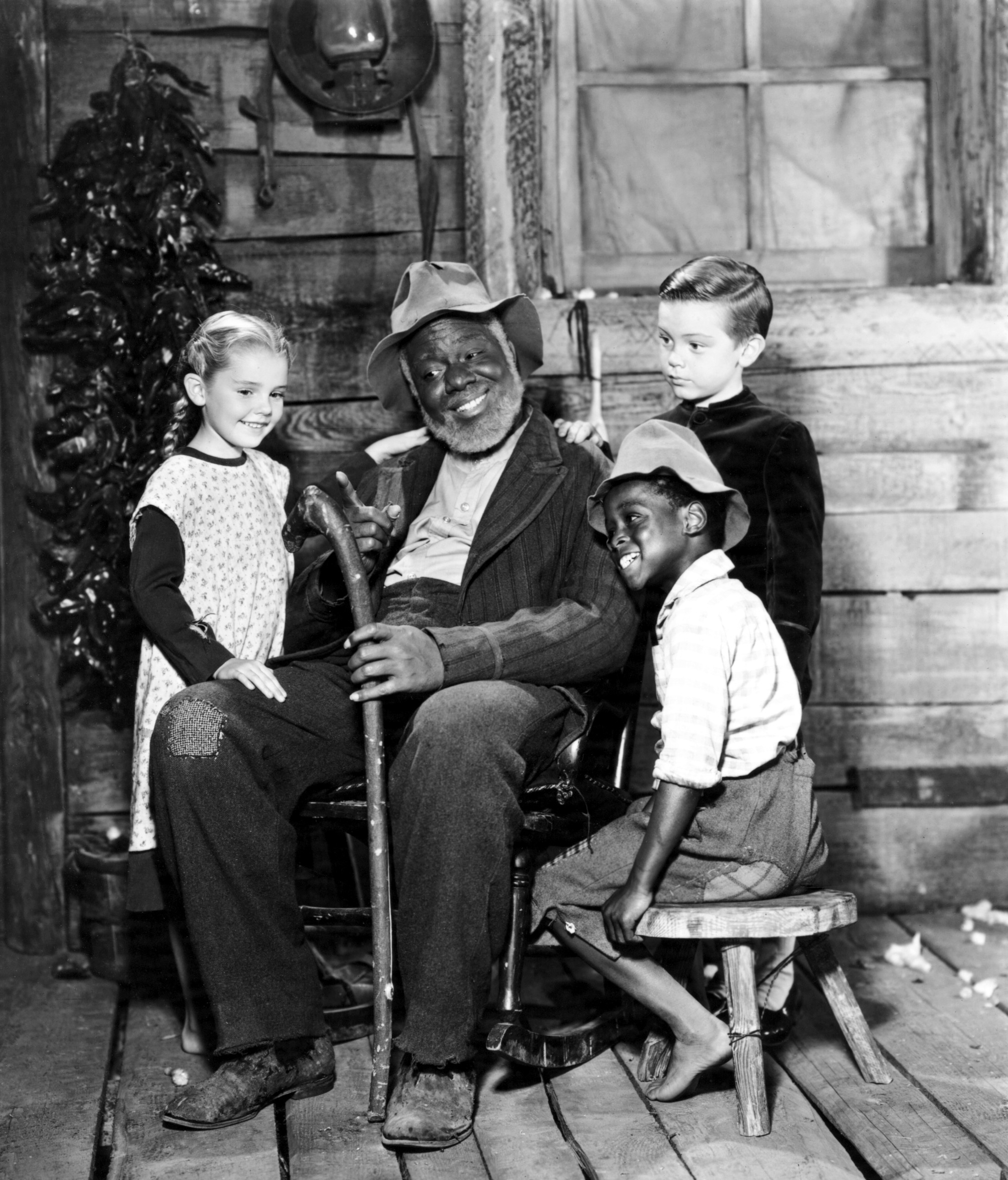
Song of the South: James Baskett

For his able and heart-warming characterization of Uncle Remus, friend and story teller to the children of the world, in Walt Disney’s Song of the South.

[Here I go talking about Song of the South again, I knew this was going to overlap here when I planned it.

Essentially this is the Academy taking up the idea after Disney’s urging. Baskett sadly died a most untimely death of heart failure shortly after his being awarded the Oscar.

1929

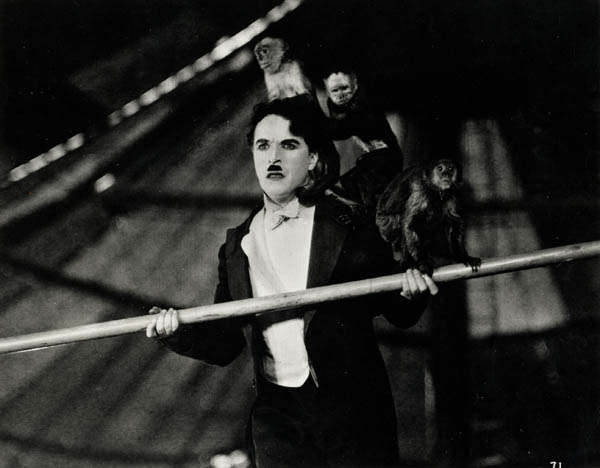
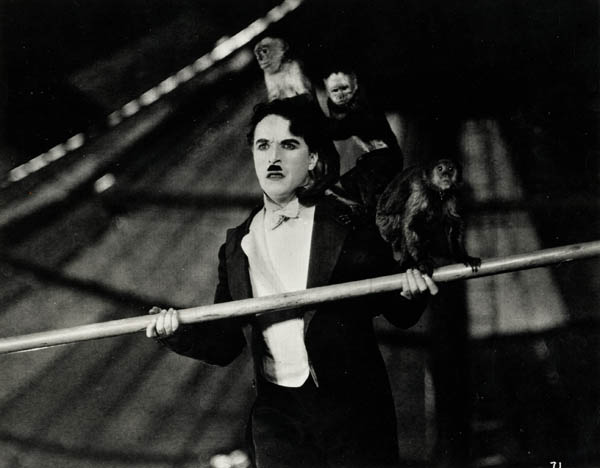
The Circus (1928, United Artists)

Charles Chaplin, The Circus

For versatility and genius in acting, writing, directing and producing The Circus.

Though nominated for best actor, the academy decided to remove Chaplin’s name from the competitive classes and instead award him a Special Award.

As I will look at in the defunct categories post when snubs come around thing were a lot different in the early days before the Academy gained prestige and standard operating procedures. Even though the blurb for Chaplin’s honorary award reads very complimentary between the lines it does seem to read like: “You were going to embarrass everyone, Charles, here’s an award now let’s all give some other folks a chance.” Whether personal, actual or business politics came into play I’m sure will never be confirmed, but it’s really one of the most head-scratcing decisions ever on the surface. We’re going to un-nominate you and give you an Oscar then re-award Best Actor of 1929. Weird to say the least. Not only were the Oscars new but the industry was in flux. Silent versus Talkies may have played into it as well.

Chaplin, of course, would go on to win another Honorary Award after long leaving the US, and again when Limelight made its way across the Atlantic after 20 years.

Conclusion

Anyone with further information on the Chaplin oddity, please do add some. Thank you. Next week I will discuss the short-lived and otherwise defunct Oscar Categories in the Snubs theme. I hope this was an enjoyable one even with the long lead-in citing conventional Honorary Winners.

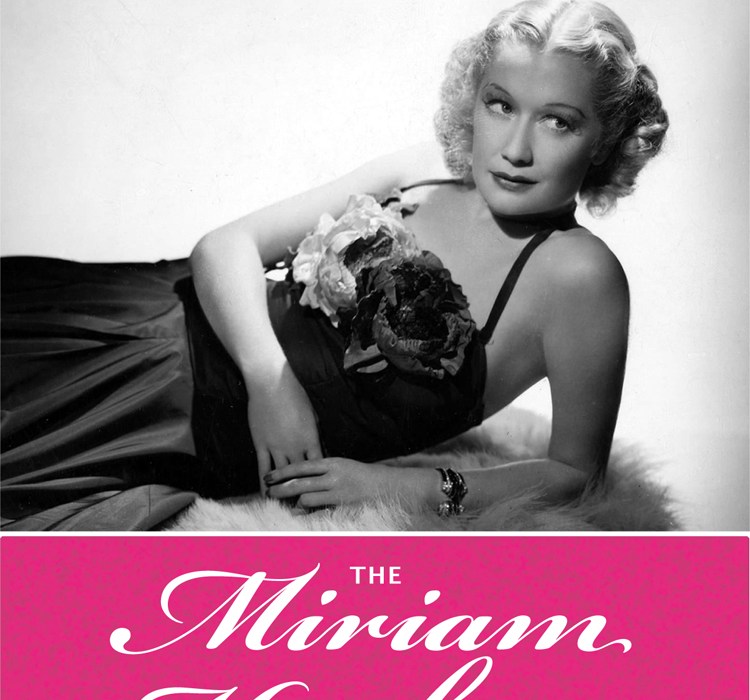
The Miriam Hopkins Blogathon: These Three and The Children’s Hour – The Adaptation of Miriam Hopkins

Introduction

One thing I must fully acknowledge before beginning was that prior to signing up for this Blogathon Miriam Hopkins was not a name I could connect to a face. When I checked her filmography on the IMDb I saw that i had seen her in a few things but it hadn’t stuck with me for some reason. At that point I thought I would pass on the blogathon. However, then I got to following links and I realized that she was in not one but two versions of Lillian Hellman’s The Children’s Hour on the big screen. The opportunity to cover the multiple fascinating angles that affords got me more into.

First of all, I find it quite interesting that both she and William Wyler were drawn to the title on more than one occasion. Second, an actor playing two parts in the same story over the course of a career is quite interesting as well. Third, due to the fact that 25 years elapsed between the films it also displays Hopkins at two very different stages in her career. Lastly, what makes these two versions of The Children’s Hour, the earlier called These Three, interesting to compare and contrast is that since the initial adaptation was made in the early days of the Code being fully enforced it’s a rather different treatment of the narrative that removes overt references to lesbianism entirely.

In the structuring of this post I will touch on all these topics while attempting to keep a bulk of the discussion on Hopkins, and extrapolate and disseminate other points from that place.

The Children’s Hour (1934 a play by Lillian Hellman)

e0484b656e107f538deba822747075d5

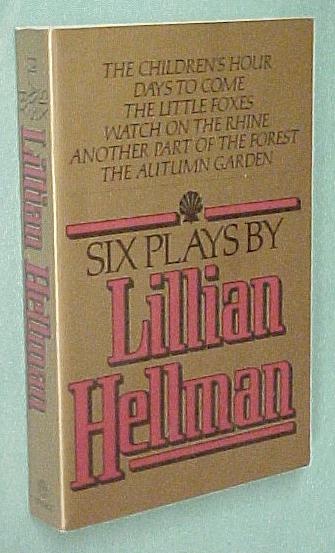
To start with I wanted to finally get to read The Children’s Hour. When I was in college, in one of those oh-so-wise syllabus-requirements I was asked to purchase Six Plays by Lillian Hellman even though we were only going to study the Little Foxes. I don’t mind having extra plays, it just seemed a little silly as required reading.

I happened upon excerpted reviews of the play on Goodreads before I embarked on reading it that I must say disappointed me a great deal. They did so because they said things to the extent of “it doesn’t seem so shocking now, maybe it was then…” and they would proceed to discuss why they think the play is mediocre. The issue there is that they’re missing the point entirely. Firstly, there’s only a halfway decent rationalization of the time period. Yes, discussing the subject of homosexuality in 1934 carried far more weight, however, I do not think that shock was the sole intent of the play – or even the intent, at most it’s the hook. The tale in its original form and in the 1961 film is a tragic one. It’s about perceptions, attitudes, rumors and lies. Furthermore, many of the things that Lillian Hellman wrote in 1934 are still said in America in 2015 when the topic is discussed by some the perceived relationship is described as “unnatural,” “it becomes a great deal more than that when children are involved,” “I don’t understand it. I don’t want any part of it,” “But this isn’t a new sin they tell us we’ve done. Other people aren’t destroyed by it.” Clearly we’re not as advanced as we’d like to think. Some of these very prejudices and perceptions are still bandied about like they make the most sense in the world. Furthermore, a child’s word when they do not understand the totality of what they are insinuating is the same thing that incites the recent Danish film The Hunt. Clearly I think there is still a vitality to this play that belies the date of its first production such that I wouldn’t mind it being revisited anew. However, it clearly struck a nerve in 1934 and remained relevant enough that it was deemed worth of revisiting when film was entering a bolder, new era.

Now back to the era at hand when this story first rolled onto the silver screen the liberties Miss Hellman was afforded as a playwright were not the same she would be afforded as a credited screenwriter, not to the studio adapting her work seeing as how the Pre-Code madness was snuffed out and the Code was in full force.

These Three (1936)

These Three (1936, Samuel Goldwyn)

In the initial Production Code there is a section on “Impure Love.” In that section is detailed that any sexual congress deemed inappropriate by the Bible were impermissible. It then goes on to detail how things like extra-marital affairs or pre-marital relations should be handled when necessary as plot elements. Banished from even mention in the code was homosexuality. Even miscegenation, was later addressed and strictly forbidden in an amendment. Homosexuality it was understood was not to be broached. It was in fact the “love that dare not speak its name” in his mind.

Thus, when dealing with a narrative wherein a child claims her two female teachers have an unnatural relationship not only can Martha not confess that she believes she has loved Karen “the way they said” the entire insinuation has to be struck or risk being banned altogether. Therefore, the story must be told under the guise of something that can be dealt with, but not glorified: a heterosexual love triangle with jealousy.

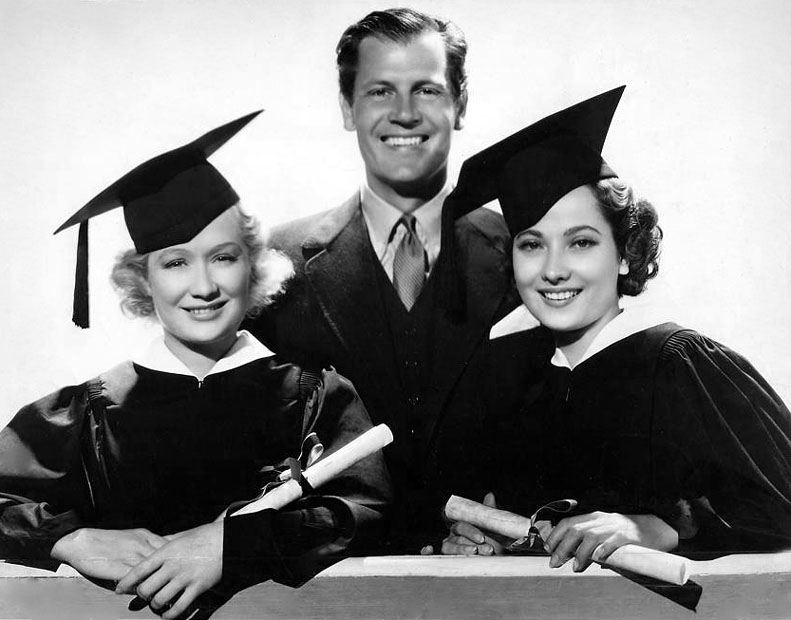
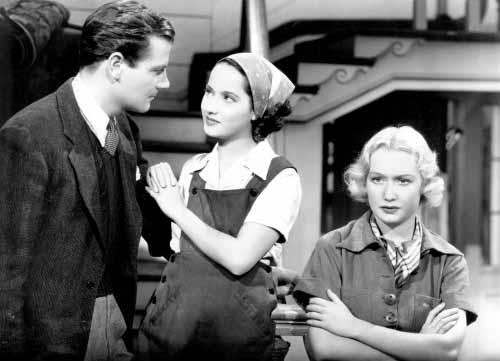
To make the story function in this manner two things were highly necessary: first, a meet-cute treatment for all three with Carden (Joel McCrea) being drawn to romantic interest in Karen (Miriam Hopkins), and just friendly interest with Martha (Merle Oberon). Second, Mary has to be even more the villain in this film than she was in the play. Thanks in large part to the rather spectacular scene-stealing performance by Bonita Granville that is accomplished.

Hopkins in this film has a statuesque poise and refinement that make her perfectly suited to the role. There’s a certain authority that lends her character, which while she seems affable enough she also has a no-nonsense approach to dealing with the likes of Mary and a cool patience with the flights of Mrs. Mortar (Catharine Doucet).

It would be tedious to quantify but it seems in this version Martha get a much greater share of the screen time. However, the ensemble scenes such as the initial confrontation with Mrs. Tilford (Alma Kruger) are all beautifully handled.

Hopkins certainly has no troubles engendering sympathy, and being the heroine getting for us to root for her. Now the story in this version does conclude in a standard Hollywood was (again owing to the code), however, while some say that this film reads as even more of a lesbian love story with the change in dynamics, I do not after first viewing. Yes, I did feel the insinuation nipping around the edge every once in a while, but Rebecca this most certainly is not.

The Children’s Hour (1961)

The Children's Hour (1961, United Artists)

One thing that is immediately clear to those that have both read/seen the play and seen this version is that it is far more faithful to the original text than the prior incarnation. With the transformation of the alleged transgression in the first one changing one would think that would be a given, but this film does more closely approximate the play even in its claustrophobic mostly chambered set-pieces.

Part of the film being allowed to be so faithful is not just the different era in which it was made but also the involvement of screenwriter John Michael Hayes. Hayes a two-time Academy Award nominee and WGA Lifetime Achievement Award recipient was prior to this film wrote Rear Window, To Catch a Thief, The Trouble with Harry, The Man Who Knew Too Much (1956) and many more.

Having William Wyler at the helm again helps this film achieve far greater heights than the one before it. Those achievements further bolstered by the film receiving five Oscar nominations.

The first time I saw The Children’s Hour was during TCM’s 31 Days of Oscar and it’s interesting to note that in an interview segment with Shirley Maclaine she lamented, practically apologized for the fact that the subject matter though known to all was not discussed on set. She felt it showed in the finished product. I don’t believe it did, and it astounds me based on the results. Now that I think on that fact more that could have a lot to do with the way scenes played out on film that the cast was working under the discomfort that people in society felt in even broaching the subject and channeled it into their performance.

From Martha to Lily

These Three (1936, Samuel Goldwyn)

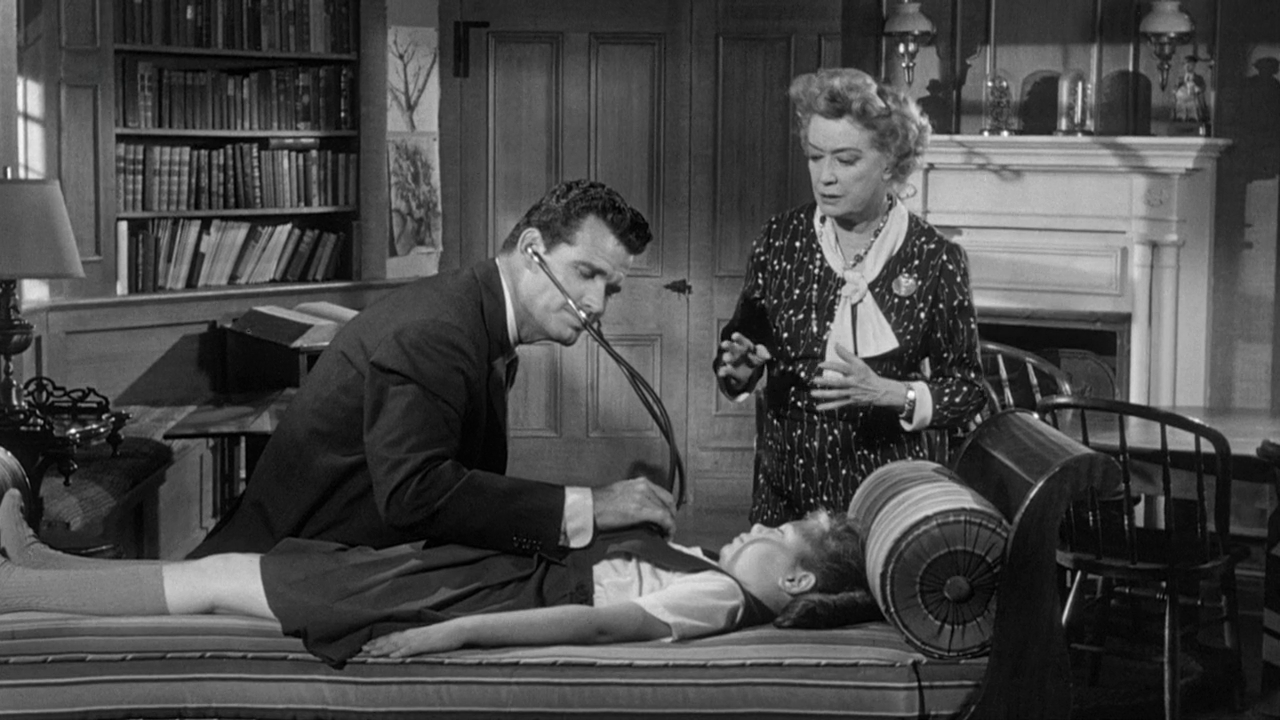
Not to be forgotten in the midst of the tremendous work that Hepburn and Maclaine do in this film is the contribution of Miriam Hopkins as Lily Mortar. As Martha’s aunt and the school’s elocution teacher she plays a pivotal role in the proceedings. Mrs. Mortar is a far more insidious type as she’s an aloof, eccentric actress who seems silly and harmless until she gets angry and uses the words that can all-too-easily be misconstrued, and later damns the pair with her absence.

Interestingly its Hopkins’ refined elegant air that here matured and combined with the eccentric behaviors she employs for the role of Lily that make the transition seamless. I was struck by this notion of playing different characters in the same drama ever since I saw a one-act play about an actress who spent her life in The Sound of Music transitioning from one role to another. It would’ve been fascinating to see Hopkins have completed a trilogy, but that’s just dreaming.

Interestingly, in part because as a whole the impact of The Children’s Hour is so much greater than its predecessor’s that, Hopkins impresses and sticks in my mind more in the newer version with a supporting role than in the original where she was one of the leads. This is due to the aforementioned air, the key role the scenes play and the humanizing aspect Hopkins brings to the part. It can be far too easy to play Lily Mortar as a caricature, but to make her human, understandable even if intolerable is the task of a great actress. It’s an occasion that she more than rises to, but embraces.

Conclusion

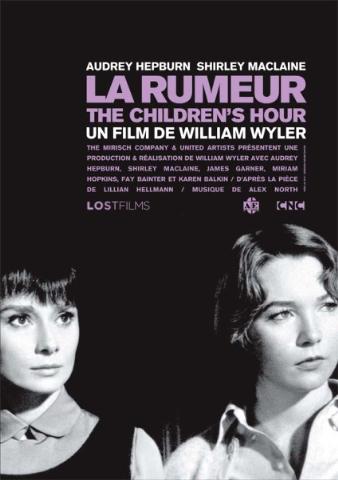
La Rumeur (The Children's Hour) (1961, Samuel Goldwyn)

It is quite a small sample size, just two of over 50 credits, but it was great to have a chance to focus on her work in two versions of the same story. It was also great to be able to focus more closely on the adaptation and film-crafting of a story that truly moves me a great deal.

Contrary to Popular Opinion Blogathon: Song of the South (1946)

Is This Really Contrary to Popular Opinion, or Why Choose Song of the South

In the course of this brief examination of Song of the South I hope that the only mea culpa I have to write is about the fact that my enjoying this film is not a minority view. Usually, when I’ve seen discussion about the film on Twitter it has been by people who also have a fondness for the film, and are film people. However, the mere fact that it is Disney, the very company that produced the film that is doing the suppressing is a large part of the issue in my mind, and part of why it feels like an unpopular opinion.

The film is one that Disney produced in the mid-40’s, had a mixed reaction, and early detractors, the NAACP included, but was not a title Disney ran from until the 1980s, after its second re-release in theaters it was gone from American home video in the mid-’80s. Later on “Zip-A-Dee-Doo-Dah” was even expunged from Sing-Alongs. However, one of the many aspects about this disavowal is the fact that Disney picks and chooses where and how it will shun the film. It will not distribute the film in the US, but it does still sell overseas; it will make one of its more popular Disney Wold rides about it, but it won’t include Uncle Remus or try to enlighten the park guests who is on the tee shirt they’re buying. They will have many pop singers reinterpret its iconic theme song, but no longer play the version from the film.

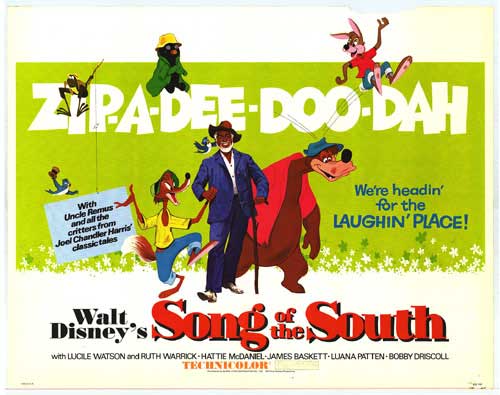
Song of the South (1946, Dinsey)

In the past Disney liked to used to play the “you misremember” card. With the advent of video and the internet that holds less water so editing and suppression have become the norm for certain things that have made people squeamish. While other projects, also fairly common to all forms of entertainment in their era are addressed via contextualizing disclaimer usually delivered by Leonard Maltin on a DVD collection.

In the interests of further fully disclosing where I am coming from I will say that yes, I do consider myself a fan of Disney. One of my blog’s theme topics on an annual basis is an examination of Disney fare. However, in an age of fanboydom it seems like you can only be a cynical chronic complainer or a blind follower. I’ve always equated following a studio, especially one that’s part of a large corporate armature, to be akin to rooting for a sports team: you like them, you want them to do well and right, but you’re not blind and they are not immune to being criticized by their patrons.

It’s not as if Disney has never had to deal with these questions even from their stockholders. It has come up rather frequently at annual meetings. There’s more on that and many other of the stories I will touch on here in Who’s Afraid of the Song of the South? a great book I read in preparation for this blogathon. I recommend you check it out if you have further interest in the topic.

“Somebody has to kill the babysitter.”
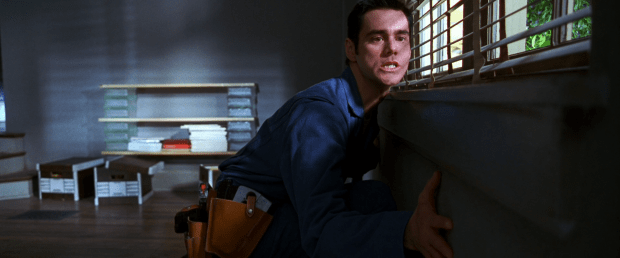
The Cable Guy (1996, Columbia Pictures)

Television and Film as surrogate parent or babysitter is not a new concept. The quote that is in the inspiration for this heading is from The Cable Guy (1996). In that film this is the line that divulges the modus operandi of Chip’s psychosis. When this film was made the over-emphasis that some believed TV and Film had on society, or on certain individuals, was not a new debate. However, one of the points that the film is making, even in all its silliness, is that it takes a deranged sort of delusion to really use film or TV as an analogy for real life or to get it to substitute things like parenting, conversation, thought and other things. The climactic events of the film take place as the nation hangs on the live broadcast of a famous murder trial (a subplot which brilliantly spoofs the Menendez case). What this is all leading to is that one of the things that Song of the South has had to contend with, which was not a problem of its own making was the overemphasis that depictions in the media have been given on the formative process of human beings as they pertain to attitudes towards racial groups, women and the like.

I use the word overemphasis because I cannot argue there’s no impact, but it is almost never the main cause of a prevailing attitude. Those who have cited video games, movies, or TV as motivation for crimes have usually had mental issues that impaired their grasp on reality. Part of the issue stems from the fact that oftentimes a film or cartoon with dated material or material that can be interpreted as offensive are usually seen by children who are not monitored. In essence, removing the potentially offensive work of art is pandering to the lowest common denominator: the “impressionable child” watching something unsupervised.

Singled Out; Other Things are Never Questioned and Readily Available

Song of the South (1946, Dinsey)

Yet, aside from some short subjects this is the only Disney product that has been struck in its entirety. Disney’s corporate penchant for self-editing and censorship is usually in smaller moments but rarely involve making a title wholly available. Other films, even from the selfsame studio, have references or depictions by today’s standards that are wholly unacceptable but they’re still widely consumed without a second thought. One of the more notable examples is Dumbo. Aside from having its scary moments I am mostly referring to the crows. The characters are crows and clearly voiced by African-American actors, which can be construed as a reference to Jim Crow laws. However, the availability of Dumbo has never been threatened. Disney has never shied away from the title as a whole. Yes, the crows are absent from the Dumbo ride at Disney world and their songs (Namely “When I See an Elephant Fly”) are rarely collected and re-released despite being one of Disney’s finest musical creations. The Simpsons made a brilliant joke about this, Lisa asked if Dumbo was the film that had “those racist crows in it?” Homer responds “Oh, Lisa, those crows weren’t racist the men who animated them were.” Which is what a lot of this boils down to: it was a different era so the necessity of sensitivity, and the level that needed to be reached to be seen as progressive, was lower.

In watching documentary footage on a Little Rascals box set you hear speak of the progressive move it was to have characters like Buckwheat and Farina who played with white children as equals. In a nation that still had segregation and other discriminatory practices in play, yes, relative to society that was a utopian vision. Even though a lot of the dialog and gags those characters have are what most date their films relative to its own era it was a step forward. Back then it was a bold statement today children of different races playing together is far more common, as it should be.
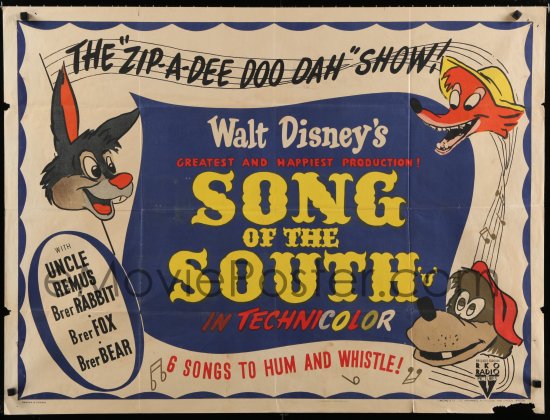
Song of the South (1946, Disney)

In the ‘90s certain Bugs Bunny cartoons like Hillbilly Hare for one were taken off the air after complaints were lodged to Cartoon Network. Yet, to my knowledge the short where in Bugs sings “One, Little Two, Little Three, Little Injuns” as his tallies his arrow-hits and then corrects himself to mark one as only half a hit because “that one’s a halfbreed” never was removed. That fact is brought to attention because those who know of the cartoons know these facts, but they don’t get the notoriety the Disney titles get for equal or lesser offenses. Looking at the whole landscape of animated shorts from these eras ethnic stereotypes were common, broad and not unique to one studio. Even with these occasional lapses in judgment (by modern sensibilities) it doesn’t really change Bugs Bunny’s character. He was wisecracking and had a mean-streak at times but he was always the retaliatory figure in his conflicts. Only on occasion like in the aforementioned short or in his battle with Giovanni Jones, the opera singer did things go too far. Woody Woodpecker over at Universal on the other hand was an instigator but still made of similar stuff, maybe a little more unhinged. Getting back to the Disney realm, one correct modern interpretation is actually found on a t-shirt you can find at Disney World gift shops with Donald Duck on it, which cites him as the original angry bird.
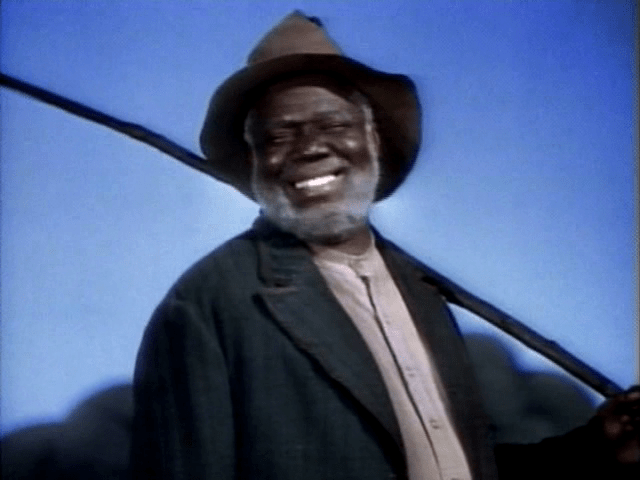
Song of the South (1946, Disney)

In Song of the South, even accepting the fact that there are some miscalculations the bottom line is that Br’er Rabbit and Uncle Remus are undoubtedly heroes of the story. I used to attribute most of the notion that the film was racist to the Tar Baby sequence, which as I discovered when watching this film was and is a phrase and a fact of life in the South before it became a racial slur. Much of the belief that the film is racist stemmed from the fact that Disney did not add a title card establishing a postbellum time period. Thus, some believed it was antebellum and not postbellum. It’s an unusual miss though from an audience that frequently had to infer and decode as the Hayes Code made filmmakers get creative about such things so they could deal with adult issues in films without being overt.

One thing that Who’s Afraid of the Song of the South by Jim Korkis goes into a good amount of detail about is the pre-production process. Many of the errors and perceived errors in the making of this film can be attributed to Disney playing both ends against the middle. The first writer (Dalton S. Raymond) they hired with a mind to be true to the source material. Then after some battles about certain elements like his use of the word “darkie,” which Disney sought to avoid they hired a leftist Jewish writer (Maurice Rapf) to try and balance it out.

If you want a troubling depiction of the South and slavery set before the war watch Way Down South which I discuss here. There’s no move from any entity to strike it. On a more noteworthy level Birth of a Nation both received protests upon its release and spurred and increase in popularity of the KKK. The next decade (the 1920s) was the zenith of its membership numbers. It is in the public domain now so it would be hard to suppress, but it’s still very easy to find.


Segregation and Other Truths We’d Prefer not to Address
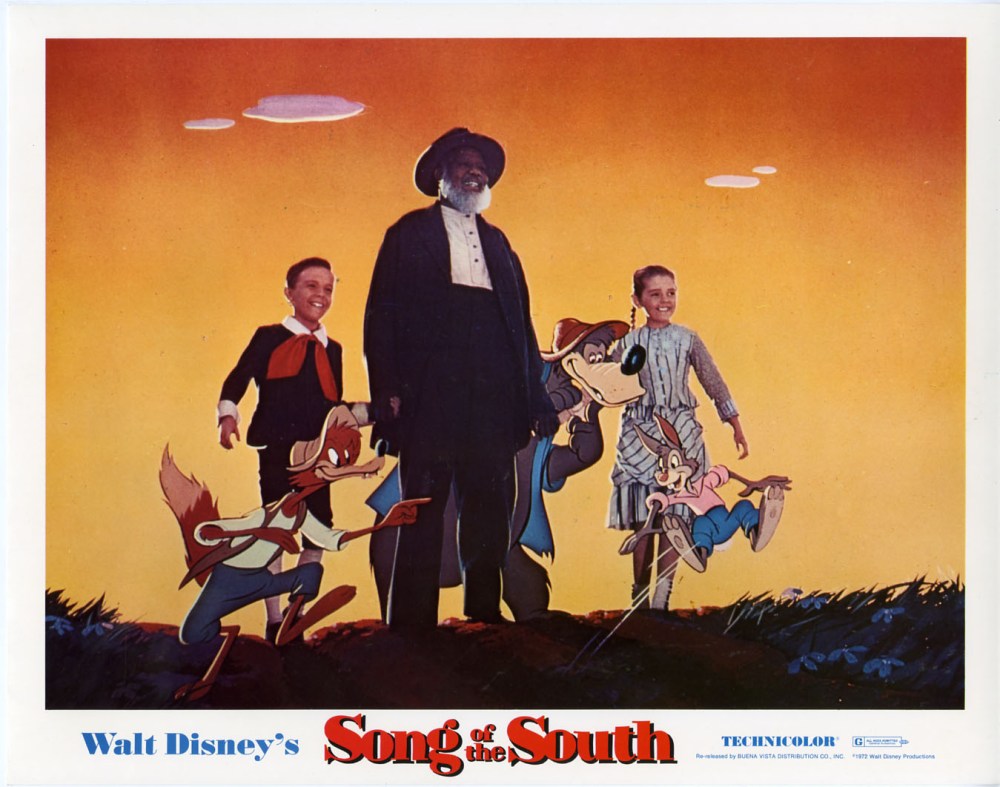
Song of the South (1946, Disney)

Part of this whole issue is that we like to pretend there’s no racism in America. If we didn’t how could someone seriously have coined the term post-racial with a straight face almost entirely based on one election result? Song of the South was made in an America that was still segregated, thus, in some ways racism was still government-sanctioned. Furthermore, its premiere was in Atlanta meaning that many of the cast members were not even in attendance because the premier venue was “Whites Only.” So clearly almost any film made in this time will likely reflect racial attitudes that are no longer prevalent or acceptable. But just because its not the norm, or frowned upon, does not mean that racism has been eradicated.

Slaves being emancipated, didn’t end the discrimination against blacks in America. Neither did the Civil Rights Act. Nor did the creation of the term Post-Racial. However, unless some incident sparks the debate like Ferguson we choose not to have the discussion. Film has always tied art and business and with the corporations running the big studio being larger than ever the gut instinct more than not is to always be safe and never be sorry.

Splash Mountain

Splash Mountain (Disney Parks)

Splash Mountain is perhaps one of the most iconic rides at Walt Disney World. The theme parks are like an embodiment of the Fantasia ideal rides (read segments) have been switched out but the basic premise remains the same. The planning of the ride, like anything Disney, is well-documented in lore. There was much discussion and it was decided that all the animal characters could and should play a role in the ride, but Uncle Remus, the center of the film, should be omitted since it was his persona, his perception by some as being an Uncle Tom, which much of the controversy around the film swirled. Because the fables in which Uncle Remus and his cast of animal friends were a part of are no longer as well known as they once were there is no frame of reference for younger patrons.

However, what happens when he’s hidden is that Disney really ends up misrepresenting itself and baiting-and-switching its consumers. There are are people riding it who have no idea there’s a film behind the ride, many likely leave believing that Br’er Rabbit, Bear and the like may be created for the ride like Figment was for The World of Imagination in Epcot. It’s another case of Disney wanting to have its cake and eat it too: because the film is deemed misrepresentative and offensive to some in the US market we will not make it available on video there, but we will make it available in many foreign markets, exploit the song for CD sales and the other characters for a ride.

Zip-A-Dee-Doo-Dah
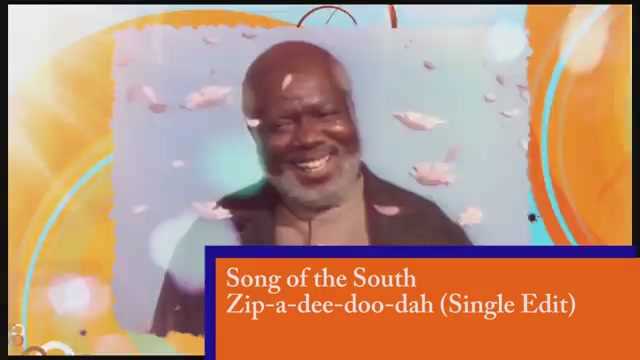
Sing-Along (Disney)

Lawrence Welk, Xavier Cugat, Freddie and the Dreamers, André Previn, Bing Crosby, Doris Day, Debbie Reynolds, Mannheim Steamroller, Dionne Warwick, Johnny Mercer, Rick Ocasek, Steve Miller, Los Lobos, The Jackson 5, Miley Cyrus and many others have recorded the song. Many of them on Disney released albums. Disney has even still included James Baskett’s film version on some collections. The only apparent retraction of the song was removing it from a Sing-Along collection on later editions. It’s just another case of Disney being inconsistent. They still want to be able to profit from the movie, but not actually make the movie available.

The Split On the Film Has Always Existed
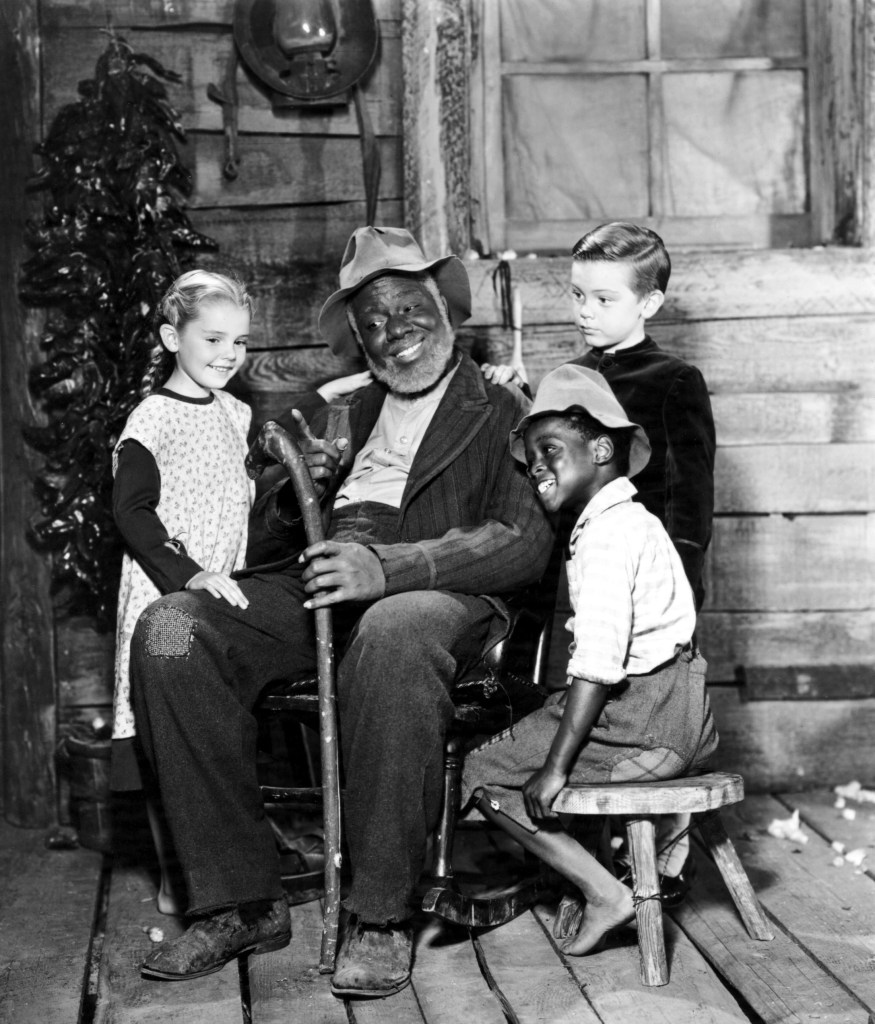
Song of the South (1946, Disney)

Upon its release the NAACP issued a statement on what if felt about the film much of their interpretation was shaped by the areas Disney left vague. The point being really that that reaction was immediate and not revisionist or in hindsight. It’s only many years later that Disney decided it would start to err on the side of caution to protect their brand name and assuage the detractors of the film and make the film hard, if not impossible to find in the US.

It’s Consistent with Disney
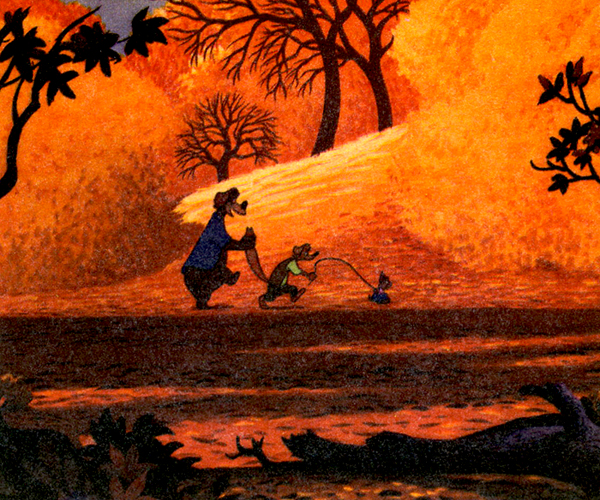
Song of the South (1946, Dinsey)

However, the unfortunate part of this story is that it’s just the most notable example of Disney’s in-house censorship. Many of the stories Jim Korkis tells are about films being altered, edited or otherwise modified because certain things years down the line may have been deemed objectionable.

Among them are the car crash in Who Framed Roger Rabbit, characters being digitally removed from Fantasia and shorts disappearing because they were wartime propaganda, and there are many more.

Disney Buried RKOs Swiss Family Robinson
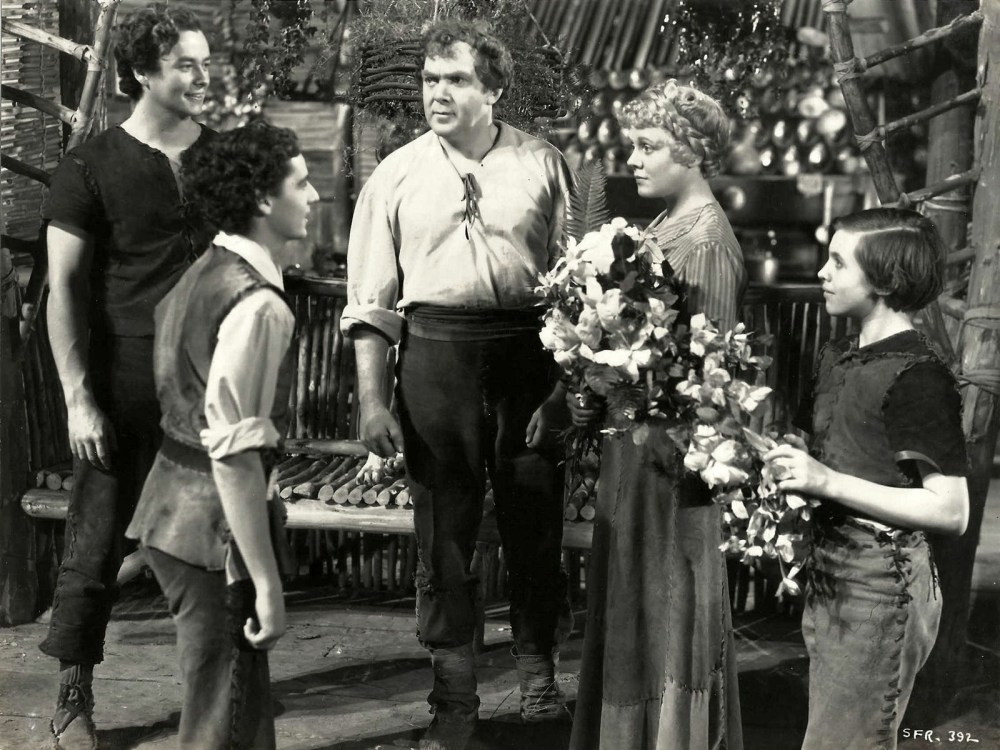
Swiss Family Robinson (1940, RKO)

Here’s a small tidbit about Disney that really irks me, and it goes back to suppression: when Disney was preparing to make Swiss Family Robinson they made sure they acquired all the copies of Swiss Family Robinson (1940) produced by the defunct RKO Radio. The purchase was made simply because Disney didn’t want the versions compared. Now, this is not an act too dissimilar from repeatedly optioning a story, or many stories, simply so your competition can’t have any. However, where it falls into suppression is that the original they wanted hidden is now 75 years old. They audience for it, and even for Disney’s version has, dwindled. No one can see it now, it’s not impossible that the film is now lost for all time just to continue to protect the business interests of a 55 year old film.

Rerelease Madness
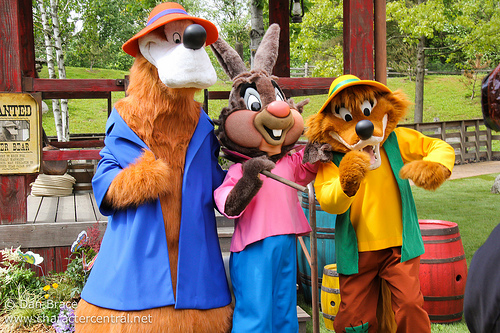
(Disney Parks)

Song of the South is a property that Disney didn’t cool on immediately. It was later on, when Walt was gone and the company was bigger, more successful and more corporate than it was during and just after World War II. A comic strip story was the topic of some internal debate in the 1970s, ultimately it was printed and came and went without incident. A clip from the film was featured in an episode of the Disneyland TV show a decade later. More telling is the fact that the film was, like many Disney films, rereleased on multiple occasions. The difference here was that there was more of a layoff. The film again saw the light of day in 1980 and 1986. It was released on VHS in 1986 but has since been further and further barred from the pantheon.

Conclusion
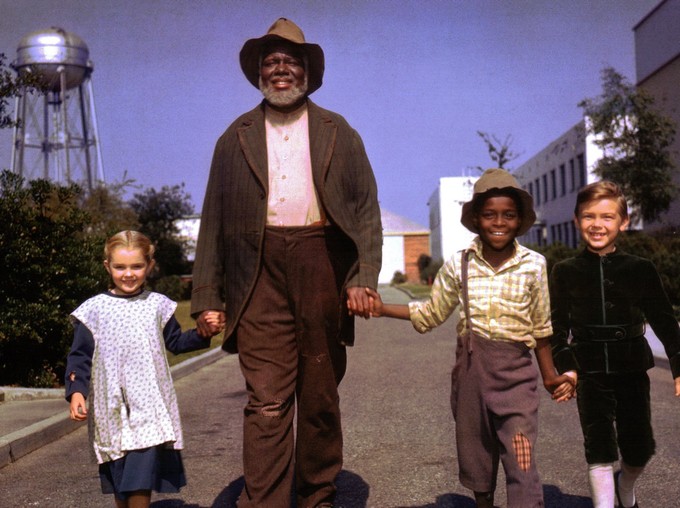
Song of the South (1946, Disney)

Perhaps what should really be asked is “What is gained through the suppression of Song of the South?” If there’s one thing that many recent headlines have proven is that freedom of speech is still under attack, and many of us who are fond of the arts and making a living therein are willing to fight tooth and nail to defend the right to speak. The argument that passive racism is more pervasive and harmful than overt racism is a fair one. In my estimation there are cinematic trends that are far more harmful than one interpretation. If you look at the landscape of films most award-nominated performances for African-American actors are still Civil Rights or Slavery-themed films. Films without award aspirations usually still cater to stereotypes that are not new. The Help may be a film that was divisive, but regardless if your outlook on it is positive or negative it is still about domestics as well-intentioned as it is. The point I’m driving towards here is: Song of the South had good intentions that were muddled in the the production decisions, and furthermore through interpretation. There are far more obviously troubling titles that never get questioned.

The expunging of history, and formerly accepted attitudes, many of which still exist, do not change the fact they once existed. If there’s one thing that history, or even the nightly news proves, is that ignoring problems does not make them go away. Even in its condemnation of the portrayal of African-Americans in the film the NAACP did commend the filmmaking at play involved, and the Academy followed Mr. Disney’s suggestion and gave him a honorary Oscar. Correcting the notion that this was an antebellum tale lessens much of the issues. The costuming was another aspect that in reading the book I had to roll my eyes. If the white characters had been more threadbare and destitute in the throes of reconstruction as they had been described as in the script the notions of class and master-slave relations wouldn’t have been able to take hold. That doesn’t alter the fact that these children are taught sage advice, and helped out greatly by Remus more so than their parents can.
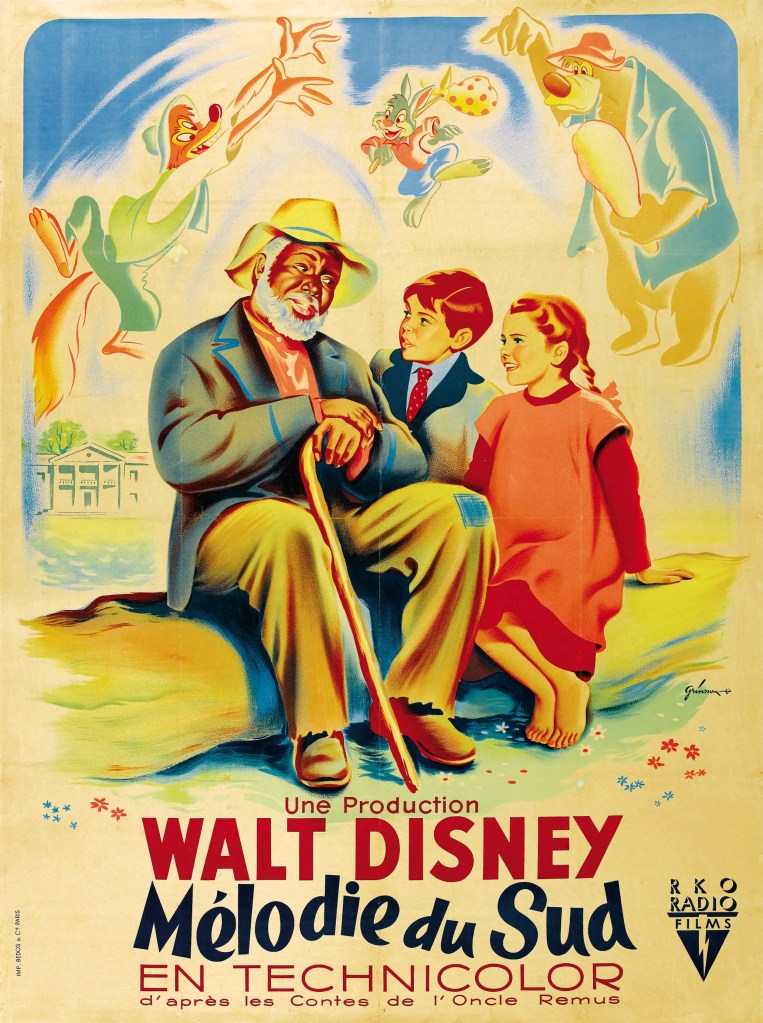
Song of the South (1946, Disney)

While I’ve gone over the finer points and discussed how the film has been construed as racist, and where I believe more deliberate decisions could have been made to make the facts and points of the narrative more clear; I do not agree with its assertion that its racist. I have not been able to get past Birth of a Nation’s introductory shot of African-American characters sitting on a porch eating watermelon. There it’s not the kind of offense I can roll my eyes at and continue Propaganda films are still available to see in more cases, highly uncomfortable to sit through and at times more uncomfortable because of how effective they are like Triumph of the Will. However, these are opinions I’ve formed by seeing all or part of this film. I’ve seen Song of the South on multiple occasions. Those who have seen it and contend it is racist are at least informed by their interpretation of the film. As Eric Vespe of Ain’t It Cool News points out, the gatekeepers who keep the film hidden are not as informed:

I was speaking to an ex-Disney executive a few years ago at a film festival and I brought up Song of the South. We had been watching a lot of films together over a couple of days and I decided it was okay to broach this subject. After all, this unnamed exec seemed very smart and obviously cared about cinema.

My big question: “When do you think we’ll ever see Song of the South on DVD or Blu-Ray?”

His response: “Never.” I asked why. “Because it’s racist,” he exclaimed.

I know that’s the general perception of this film, but I was still taken aback. I thought for a second and asked, “Have you seen it?” Incredibly he said he hadn’t and that right there is the root of the problem. People see the Tar Baby image or remember Uncle Remus as a slave, which is wholly incorrect. The film is set during Reconstruction and Uncle Remus is a free man. In fact all the people working on the farm are free.

The heart of the film is Uncle Remus’ friendship with the white kids, played by Walt Disney favorites Bobby Driscoll and Luana Patten. Their characters didn’t see Uncle Remus as black or a lesser person. He was a friend.

Someday someone at Disney will realize there’s a way to release the movie to home video. Harry had a good idea to have someone like Spike Lee put the film in context with a specially filmed intro. It’ll take something like that, which is a bit of a shame. It’s also a bit hypocritical since they aren’t afraid to monetize the cartoon characters and the infamous Zip-A-Dee-Doo-Dah while pretending the actual movie they come from doesn’t exist.

Dated and inaccurate portrayals where they are found are different than a film that is in its entirety a racist construct. Furthermore, there is a bottom line notion that every film is a film of its time. Disney here becomes a victim of its own marketing where titles are branded as classics prior to even coming out. There’s also a fallacy of timelessness, of unchanging social mores and that everything will always be the same. Nothing is ever the same. A popular film notion has always been “They don’t make them like they used to.” Recently I saw that amended to read: “They don’t make them like they used to and they never did.” Film is an ever-changing artform just as society continually adjusts our interactions, laws, politics, etc. Therefore, how can a film made nearly 70 years ago ever be acceptable by current standards of anything. Context always matters, and discussion is not bad regardless of what side of a topic you land on.

That puts a button on the final point of the last argument. I feel if anything Disney was trying to make its point in not-so-many words. The problem there, especially when things were usually more didactically done is that it can be misconstrued. However, just because something makes us uncomfortable or can be difficult to discuss doesn’t mean it should go away. Ignoring problems doesn’t make them go away as we’ve been forced to rediscover many times over. I happen to be pro-Song of the South. However, even if I was against it and thought it to be a harmful representation, I would not be in favor of its being made unavailable. Too many films are lost to the ravages of time and chance. Where other arts enjoy more permanence film remains fragile in this regard and we should not wilfully remove films from existence just because some may dislike it. It’s a part of cinematic history and our history that should be readily available.
contrary-blogathon-6

Favorite Film Discoveries of 2014: Part Two (The Not-So-Discoveries)

This is the same idea as “Favorite Older Films First Viewed in” which I did since 2011. The idea was one I first saw on Rupert Pupkin Speaks. I have usually done the list in parts. This time I will find ways to group the films.

My first installment can be found here. In this installment I will briefly discuss some films that are not discoveries in the truest sense, but rather ones I either took a while to get to and versions I didn’t know existed.
Christmas in Connecticut (1945)

Christmas in Connecticut (1945, Warner Bros.)

This is one of two on this list that I saw for the first time on the big screen. It’s tremendously funny, zany, permanently S.Z. “Cuddles” Sakall in my head (another tremendous Hungarian ex-pat character actor) and quite romantic too. It was a lot of fun. I saw it after A Christmas Carol (1938) which I believe I had seen before but not on the big screen. It was a great presentation by Fathom Events, which showed the positive side of digital projection.

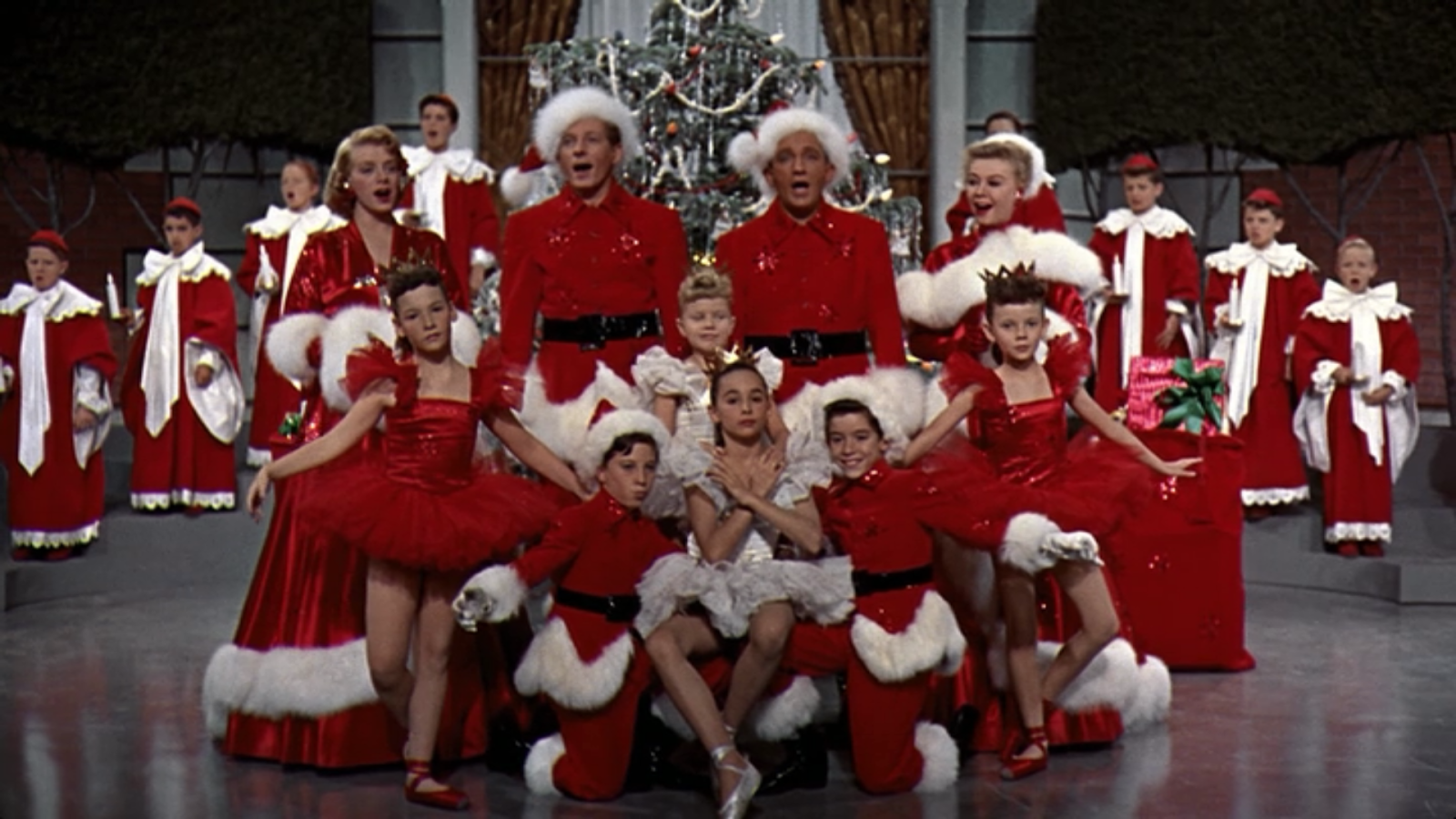
White Christmas (1954)

White Christmas (1954, 20th Century Fox)

This was a separate Fathom Events presentation, and it was another Holiday standard that I finally got around to. It is a simple, effective through-line and proves once again that Michael Curtiz can do anything.

The Hideaways [a.k.a. From the Mixed-Up Files of Mrs. Basil E. Frankenweiler] (1973)

The Hideaways (1973, Cinema 5 Distributing)

This story wasn’t new to me. I had seen the ’90s TV version which featured Lauren Bacall. Here it’s Ingrid Bergman as the mysterious woman. The story is rendered better here and equally as capably performed by the young leads. It’s a film I wouldn’t have known of or seen if not for Warner Archive which continues to do great work.

Swiss Family Robinson (1960)

Swiss Family Robinson (1960, Disney)

The first of two Disney films on the list this viewing was a long way coming, because I had it around and because of my having climbed through the Disney World Treehouse inspired by the film a few times. While it was sad to learn that Disney purchased and buried the 1940 RKO version starring Freddie Bartholomew and others, to avoid comparisons this is a very good film with some Disney regulars.

Tarzan (1999)

Tarzan (1999, Disney)

I’ve discussed many a Tarzan film on this site. It was only a matter of time before that theme crossed with my annual devoted to Disney theme and I finally got another film off my list from my hiatus.

Here was my conclusion:

By getting away from certain conventions that other Tarzan movies set, and spinning the tale a Disney way, while also tweaking certain expectations of a Disney film the road to success is already paved. In a pleasurable surprise, however, the film also does manage to tug at the heartstrings like most Disney fare does – more strongly here. Also, Disney flips the script on a template established in The Jungle Book. A successful restructuring of a given pattern can be a joy to watch, conversely a failure of such an attempt is difficult to deal with.

Taking all that in mind, with so many other versions under my belt, and with the hallmark Disney delivery of the origin, this may be the Tarzan film I was looking for all along the one that combines adventure, emotion and the intrinsically fascinating things about this tale in one package.

The Mist (2007) [The Black and White Version]

The Mist (2007, Dimension)

I closed my mostly highly-favorable review of The Mist in 2012 with the following:

The ending is a conversation piece. It is strong and unlike King’s story it’s not open. King approved of this change. Certain elements are very effective some aren’t. What you make of it is up to you. It does not detract from the whole and the film is definitely worth watching.

I still really enjoyed it, I discussed the CG quite a bit. Later on I discovered that there was a black-and-white version, then it clicked. That would probably “deal with” most of the issues I had with it. The film sat around here a while waiting to be seen. When I did my suspicions were confirmed: it’s darn near perfect in monochrome. Check it out if you have a chance.

There will be other themes to follow.

Announcement: 31 Days of Oscar Blogathon 2015

Seeing as how I typically partake in writing about and seeing many TCM selections for 31 Days of Oscar, I’m thrilled to also join a 31 Days of Oscar blogathon discussing four unusual topics: Non-competitive, non-lifetime wins (e.g. Charles Chaplin “The Circus), Defunct Categories (e.g. Title Writing), Cinematographers in Black & White and Color, and those Who Won as Directors Not as Actors. Can’t wait!

Aurora's avatarOnce upon a screen...

“Oscar and I have something in common. Oscar first came to the Hollywood scene in 1928. So did I. We’re both a little weather-beaten, but we’re still here and plan to be around for a whole lot longer.”
– John Wayne

oscars6

Continuing an Oscars tradition – albeit a much newer one than either the legendary awards or Mr. Wayne’s impressive career – Kellee (@IrishJayHawk66) of Outspoken and Freckled, Paula (@Paula_Guthat) of Paula’s Cinema Club and Aurora (@CitizenScreen) of Once Upon a Screen are back for the third annual 31 Days of Oscar Blogathon.

Oscars1

We started this event to coincide with Turner Classic Movie’s (TCM) 31 Days of Oscar marathon during which the network shines the spotlight on the storied history of the Academy Awards.

1

This February promises to be another stellar programming month for TCM, a month filled with fabulous tales and screen wonders –…

View original post 688 more words