Mini-Review- Spud 2: The Madness Continues

Spud 2: The Madness Continues is a follow-up to the film Spud. Like the cinematic predecessor before it this one is also based on a novel by John van de Ruit which tells a coming-of-age tale at a boys boarding school in South Africa. While the first film takes place against the end of apartheid and is very much Spud’s tale, the sequel begins to tell the story in the immediate aftermath thereof and is more an ensemble piece than the prior film.

It is the nuclear subplot in the film that is the most effective. In John (“Spud” Troye Sivan’s) home where his mother (Julie Summers) is insisting she wants to move to England for she feels she cannot adapt to the new South African reality, whereas Spud and his father (Aaron McIlroy) are perfectly content where they are.

While the romantic storyline is followed up from the first film and some good growth is shown there the film essentially ends up being too sporadic. Again there is a schoolyear-long structure to the story. The major difference here is that the flow is not nearly as good. That and the other members of the Crazy Eight (Spud’s group of friends) get more screentime in less substantive and interwoven manners than in the first installment. Add that to the emergence of the Normal Seven (A group of first years who are singled out and hazed for their normality by the Crazy Eight). Then when you add the late-game re-emergence and lessening of The Guv (John Cleese) the attentions are divided and the plot spread thin.

There are some laughs and good times to be had but eventually the trudging narrative does wear a bit. A misstep in the follow-up in a series is not unusual. With a third film released in South Africa in November and hitting iTunes globally this year hopefully the series concludes on a better note.

4/10

Mini-Review: In the Heart

Here is the synopsis for this film as listed on the IMDb:

Masha (37) is in an overwhelming relationship with Luuk, father of two and separated. Nothing seems to stand in their way until Luuk turns incurably ill, leaving Masha without status.

What is interesting about this film is the way it plays with the traditional meet-cute formula in act one with a couple that’s a bit more mature. Luuk is divorced with children and Masha has never been in a relationship. The typical romcom plot exhausts most of its plot points in this entertaining, funny and charming first act and then the aforementioned life-changing event alters the path and the genre of the film. This is the film’s strongest and most unique point.

The sequence when Luuk is diagnosed and the immediate fallout thereof is the next strongest section of the film and is ultimately what buoys it over the finish line.

However, the film does lose some of its momentum as it pulls into its inevitable conclusion the button on the story is strong and well-earned, but it does lose a lot of what if could’ve been in getting there.

Much of what slows it down is that the tension amongst makeshift family members ends up being as frustrating for us as it is for Luuk. Which does help us identify with him but it seems that, even as emotional as they are that the ex-wife/girlfriend tension is ill-timed, repetitive and unfortunate.

Kim van Kooten is highly effective in this film and her charms are equally evident in both distinct portions of the narrative. Though his character here follows a similar trajectory as his in Time of My Life Koen De Graeve is wonderful here playing a different kind of man in a similar process.

In the Heart was released in Netherlands in January. Should it hit other markets it is worth looking into if you are intrigued. While I lamented what it could have been it is still an enjoyable experience with memorable performances.

6/10

31 Days of Oscar: The Invisible Woman (1940)

Introduction

Whatever I do manage to see this year during 31 Days of Oscar will be covered in a wrap-up post. In the meantime, those films that previously got buried in conglomerated posts will get their own due here. In the wrap-up I will continue the tradition of attempting to see 31 new-to-me Films and accounting for 100+ nominations.

The Invisible Woman (1940)

If you think that dumb movies that are all about effects are a new thing you should check this out. While not even new I must say the effects work in this film are great, however, the film is comedic in tone and isn’t that funny and truly suffers from the cast trying a bit too hard to sell it. Virginia Bruce does fine when she’s visible but when she’s invisible she’s as obnoxious as her character’s antics. It’s premise is thin and it’s a lame effort, sadly.

Oscar Nominations/Wins: 1/0
Score: 3/10

31 Days of Oscar: Key Largo (1948)

Introduction

Whatever I do manage to see this year during 31 Days of Oscar will be covered in a wrap-up post. In the meantime, those films that previously got buried in conglomerated posts will get their own due here. In the wrap-up I will continue the tradition of attempting to see 31 new-to-me Films and accounting for 100+ nominations.

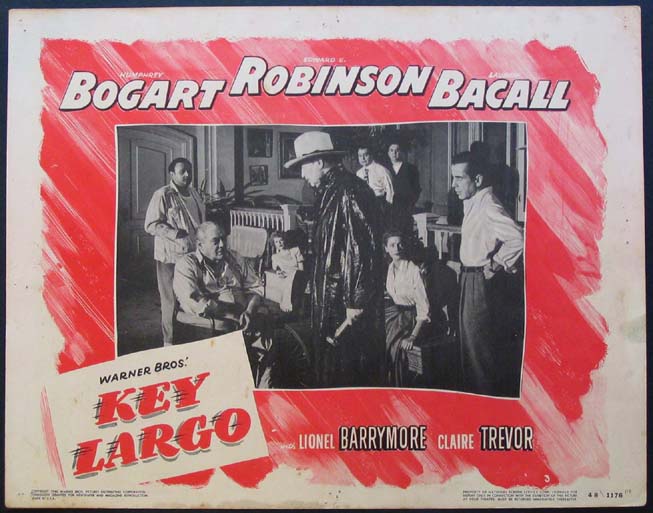
Key Largo (1948)

I’ll admit I allowed myself to get too swept up in the MacGuffin but that didn’t hurt the film at all. The only things that really got in its way was that I ended up knowing what Bogart’s endgame would be and the occasional heavy-handed (read dated) attempt of inserting a message into the film about Native Americans while still reinforcing certain stereotypes. In the big picture it’s minor stuff. It’s a great situation that lends itself to tension-building and surprising reversals of fortune and plot.

Oscar Nominations/Wins: 1/1

Score:
8/10

Mini-Review: Shadow Dancer

Introduction

This is a post that is a repurposing of an old-school Mini-Review Round-Up post. As stated here I am essentially done with running multi-film review posts. Each film deserves its own review. Therefore I will repost, and at times add to, old reviews periodically. Enjoy!

Shadow Dancer

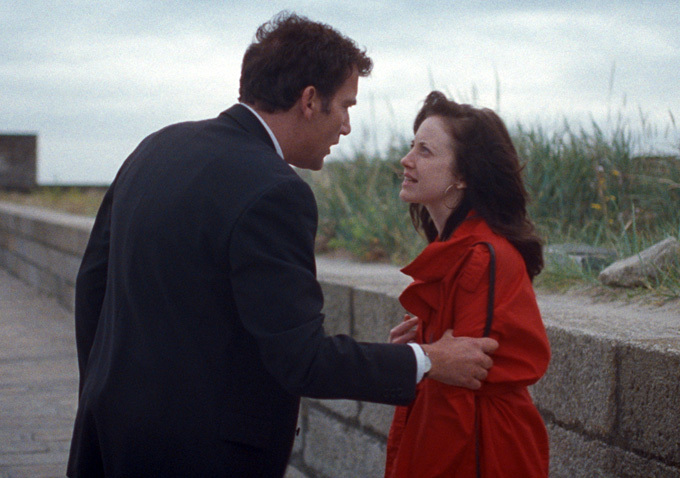
This is the kind of film you want to talk about gingerly because there are a few gut-punches in it that bookend the film. Those are great and best left preserved. However, all that you need to know about it going in can be found on the synopsis on the IMDb/box: a woman is arrested in a failed IRA terrorist attack and asked to spy on her family.

While the film is very enjoyable, dramatic and intriguing the intervening majority that sits between the two bookends isn’t quite as tight as it could be. This is a quibble-level complaint though because of how strong it sets things up and closes them out, I just wish the middle met it. However, smart, character-driver thrillers are too hard to find so it doesn’t hurt the film that much. This is very good film that deserves your viewership. The performances by Riseborough and Owen especially make it work.

8/10

Mini-Review: Beyond the Walls

Introduction

This is a post that is a repurposing of an old-school Mini-Review Round-Up post. As stated here I am essentially done with running multi-film review posts. Each film deserves its own review. Therefore I will repost, and at times add to, old reviews periodically. Enjoy!

Beyond the Walls

While the performances by the films two leads (Guillaume Gouix & Matila Malliarakis) are quite good, especially the latter, what passes in this film is ultimately an ineffectual drama. What you have here is a tale where one man discovering his sexual identity falls for another. As fate would have it, when they’ve barely established anything, they are torn apart. The link remains longer than logical, which is fine but there is minimal consequence to it. There is then a bittersweet passage toward the end that is well-rendered but really does not feel earned in the slightest.

5/10

Mini-Review: Venus and Serena

Introduction

This is a post that is a repurposing of an old-school Mini-Review Round-Up post. As stated here I am essentially done with running multi-film review posts. Each film deserves its own review. Therefore I will repost, and at times add to, old reviews periodically. Enjoy!

Venus and Serena

Whenever you’re dealing with a documentary about current athletes there is always a undercurrent of concern about the PR spin or publicity angle of the piece. However, Venus and Serena does manage to a bit more even-handed than anticipated in three notable instances once about an early coaching stint and two times about Serena’s more noteworthy on court outbursts. What is also fortunate is that the film was allowed to be a more human tale as for the most part it chronicled the 2011 season where they both dealt with their share of injuries so the film goes back and forth between the rehab process and personal information and their path to that point.

While the film does lack a bit in narrative thrust, it is a good portrait of their lives and career to that point.

6/10

Mini-Review: Museum Hours

Introduction

This is a post that is a repurposing of an old-school Mini-Review Round-Up post. As stated here I am essentially done with running multi-film review posts. Each film deserves its own review. Therefore I will repost, and at times add to, old reviews periodically. Enjoy!

Museum Hours

This is a film that is most effective in how it examines its two characters in passing glances, much like museum exhibits themselves. That may sound as if it’s sophistry but I think if you were to apply that thesis to the whole of the way the film is constructed, the tales that are being told, you’ll see it holds.

The film is ostensibly about a woman (Mary Margaret O’Hara) who heads to Vienna at her cousin’s side while she is sick. With much time to herself to wander a strange city she spends much time at the art museum and befriends one of the guards there (Bobby Sommer). After he helps her, they become friendly. In the film you see: snatches of their conversations where they talk about their lives, shots of paintings and other exhibits and there’s one extended scene of a tour guide (Ela Piplits) espousing her theories on the works of Bruegel. Her dialogue is key to reading the film, in my estimation.

This is not to say that the film is a difficult one to follow. It’s quite a straightforward one. However, it’s connecting these disparate threads through that notion that give it a greater significance and unity. Leaving those pieces apart it can seem a fine, albeit disjointed effort. When one considers that we look at art and try to interpret the artists, that we speak to others and try to interpret them and that we tell our tales and try to interpret ourselves; but can only so in small strokes, in passing glances, within the short amount of time that “museum hours” encompass, then the whole of this work comes together much more strongly. It’s not a film about Bobby, who is Austrian, or Anne, who is Canadian, or Pieter Bruegel who was a Dutch master, but rather about all of us and our journey to understand and be understood, to empathize and to have empathy shown toward us.

10/10

Mini-Review: Three Worlds

Introduction

This is a post that is a repurposing of an old-school Mini-Review Round-Up post. As stated here I am essentially done with running multi-film review posts. Each film deserves its own review. Therefore I will repost, and at times add to, old reviews periodically. Enjoy!

Three Worlds

What you get in Three Worlds is a very compelling situation (a witness to a hit-and-run unwittingly becomes a liaison between the victim’s wife and the culprit) handled in a fairly unconventional way. What this film could turn into is one of histrionics that quickly spirals into things hard to believe or identify with. What instead it chooses to do is be a morality play. As it examines how the incident affects three characters, the push-and-pull, the ebb and flow of each turn of events puts the characters in places they did not expect to be. It’s not as if each decision in the film does not lead to a domino effect, it’s the path that the dominoes take that makes it most enjoyable to watch.

No character in this film is simplistic or one-dimensional, neither entirely altruistic or calculated. This allows for, and requires, much greatness from each of the principal actors and they do bring that. Raphaël Personnaz make me think of what a young Jean-Pierre Leaud would have brought to this film in a different time. Clotilde Hesme’s performance as a woman whose desire to help people, and her inclination to see the good in them, gets the best of her is pitch perfect. Arta Dobroshi, who has perhaps the most demanding tasks assigned her plays conflicting emotions and philosophies such that you always understand her and sympathize with her position.

Three Worlds reveals its characters throughout while still telling a very compelling tale and is worth looking out for.

9/10

Mini-Review: 56 Up

Introduction

This is a post that is a repurposing of an old-school Mini-Review Round-Up post. As stated here I am essentially done with running multi-film review posts. Each film deserves its own review. Therefore I will repost, and at times add to, old reviews periodically. Enjoy!

56 Up

56 Up (2012, First Run Features)

It’s a bit difficult to discuss 56 Up in a vacuum. Most of the reason behind that is that it is the 8th installment in a series that ought not be viewed in before the prior films. Starting on the UK’s Granada Television in 1964 the series has revisited its subject every seven years. Starting under director Paul Almond it has since been taken over by renowned director Michael Apted.

As this film touches on, it seems the initial these of the series stated first that the child at seven was a forerunner of the adult, but the more overriding theme of the initial installment was a commentary on the class society in England. I re-introduce the initial concepts because they are touched on by the subjects anew. In fact, of all prior installments this is without question the film that most fully, totally and maturely (with respect to the subjects’ comments) deals with the nature of the series both in terms of the class question and in terms of the odd life of its own that the series has developed over the years, the paradoxical attachment that some subjects have with it no matter how much they may dislike it.

As a follow-up to 49 Up, it’s quite the impressive installment. As always, it’s next to impossible to predict the changes life brings to people, but on the filmmaking end it has perhaps the best order and compartmentalization of subjects yet.

Released in the UK last year it remains to be seen if Apted and the “cast,” a few of whom come and go (look out for a surprising return here),will be back in 2019 with 63 Up, but one can only hope. If only in conception, it’s perhaps the most fascinating long-term documentary project in history. However, many of the installments are about as good as documentaries get. I may take a bit of time to see just how this one stacks up.

8/10