Tarzan Thursday: Tarzan’s Revenge (1938)

Introduction

In 2012 the character of Tarzan celebrated his 100th year in print. A serialized version of the story first appeared in 1912. A hardcover collection of Tarzan of the Apes first appeared in 1914. Being in the middle of the Tarzan centennial period it’s an opportune time to (re)visit many of the screen renditions of the character. Previous posts in this and other series can be found here.

Tarzan’s Revenge (1938)

If you page through the Poverty Row Studio books you’ll find an entry for a studio established by Edgar Rice Burroughs to bring his characters, mainly Tarzan to the silver screen the way he saw fit. Surely, Burroughs (and his estate) was not the only author ever dissatisfied with screen versions of his story, but a reason for that could be the proliferation of poor films made. Disregarding “accuracy” many of them are just not good and highly disposable works.

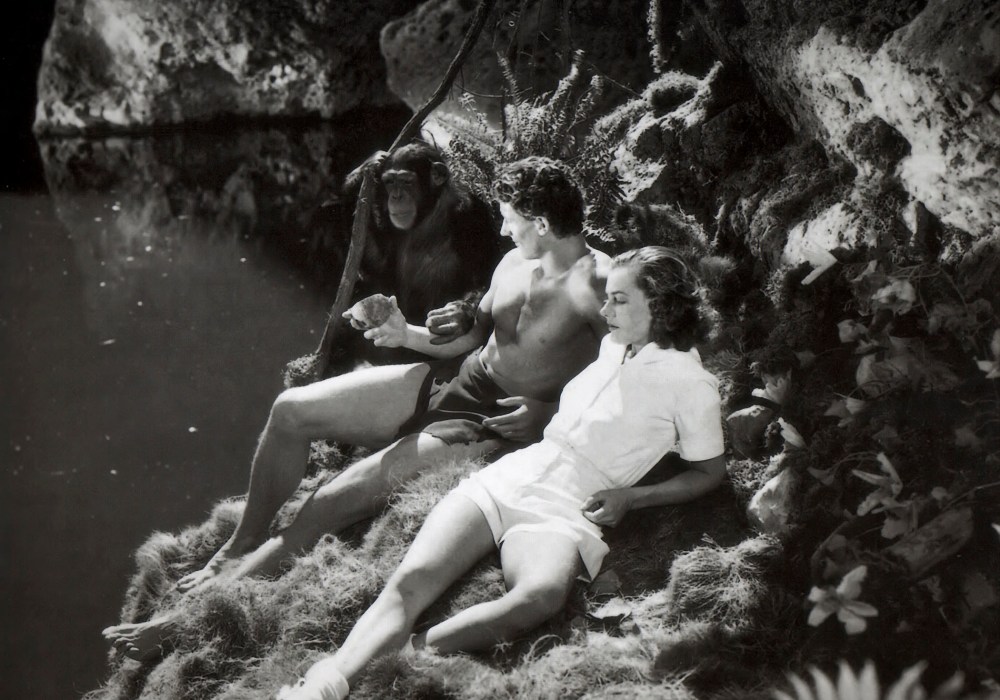
This particular version though produced by Sol Lesser, who was the architect of many of the character’s onscreen incarnations, was a Fox release. There’s not a lot in Tarzan’s Revenge that stands out as unique and most of it stands out as being so in a bad way. Hunting is a major plot element, and the goal of the hunt is to trap animals for a zoo.

Being at another studio there are some things that would have to be different: the love interest is Eleanor (Eleanor Holm) not Jane, the Tarzan call is different, the chimps is a quieter less insane version, and in its defense this Tarzan (Glenn Morris) is a bit more fit.

However, many of the issues from the MGM-RKO titles are here too because conventions of the day were too easily obeyed. A map of Africa plays a significant supporting role, ambiguous native, excessive amounts of exposition, Eleanor being disbelieved, lots of swimming and gallivanting.

However, there are things uniquely weird here: Tarzan is there but rather passive for a time, the battle for Eleanor’s affection is lame; the bottom line is that this is flat and unengaging.


2013 Holiday Viewing Log

The end of the year for any movie watcher typically puts you in scramble mode. Regardless of what kind of movies your trying to watch: new releases, classic cinema or Holiday-themed films.

Therefore, rather than have both the Year-End Dash run overly-long, I figured it’d be good to siphon off the holiday-themed offerings. If any films are new and holiday they will link from the other posts to text here.

For a reference to what my ratings mean, go here.

The Christmas Ornament (2013)

TheChristmasOrnament_0001U

The first thing that needs to be said is that the initial offerings are all Hallmark originals for the holidays. On the rare occasion these can surprise. Those found in these reviews here are not the case. Furthermore, what’s not included here was one that I could not finish watching due to how insipid, and in the end, predictable it was.

All these three have their moments, but ultimately fall short. What’s pleasant in this tale are some of the performances and that some of the obvious realizations are not held off for too long. Certain factors that I thought would only come in to play late are out fairly early here. Other than that nothing special.

5/10

Pete’s Christmas (2013)

petes-christmas-hallmark-channel

This film does feature a Groundhog Day like tale that is unusually, in a good way, heavy in montage and features a good cast Bruce Dern, Zachary Gordon, Bailee Madison and Peter DaCunha. However, given its trappings it doesn’t do anything to special with the formula and does, sadly, meander a bit through the second act taking too long to figure out what its ultimate path was aside from trying to improve how setpieces and tropes are handled.

5/10

Christmas Star (2013)

Catch-A-Christmas-Star-Hallmark-16-550x494

This may not have been the straw that broke the camel’s back in regards to my tolerance for Hallmark’s formula, but it was the low ebb prior to having to call one quits early. Essentially what you have in this film is an unrealistic and highly predictable scenario, inadequate performances save by one given by the youngest cast member (Kyle Harrison Breitkopf), uncomfortable staging and glacial plot movement and add to that, for the most part, really grating country music stylings. It just fails in nearly all aspects.

2/10

Christmas Special Review: O Natal de Todos Nós

Introduction

I didn’t, as of yet, stockpile a bunch of new Christmas specials for this year so I am unsure how many of these reviews will be posted, and how many titles will be added to this year’s Holiday Viewing Log (to be posted soon) in addition to the first class.

O Natal de Todos Nós

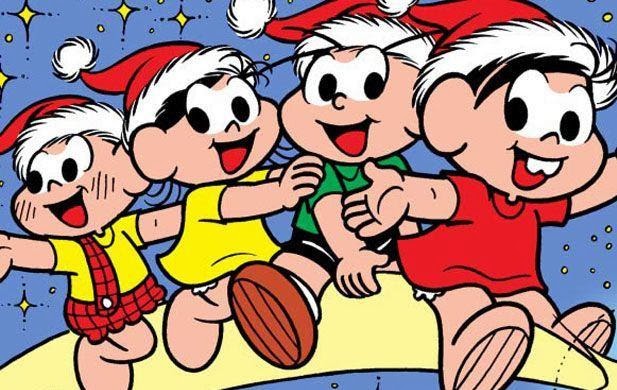
However, I did see this short special through the year. It’s interesting that this universally loved group of characters in Brazil in essence did one special did kind of what I suggested in this piece. The film goes through short iterations where we see disparate characters, one-by-one, have their own Christmas preparations and they all coalesce in the end and join into one story.

The stories deal with the following characters: Horácio, Jotalhão, Mônica, Cebolinha, Cascão, Magali, Bidu, Franjinha, Chico Bento, Astronauta, etc. and is made up of shorts produced from 1966-1986. It includes a preponderance of voice over, emphasis on montage and stills. Techniques aside there are quite a few interesting thematic touchstones in it such as, mainly, the fact that there are dinosaurs and Jesus, thank you, Brazil! Aside from the co-existence of science and religion in the same special, which would be unheard of here; there is also fantasy and reality side-by-side such as acknowledgment of the true nature of Santa Claus and embracing it nonetheless. There are other aspects touched upon both universal (midnight mass) and culturally specific (trying wine with parental consent), more creative touches (a celestial Christmas tree and the Big Bang) and voice talent up the wazoo.

Perhaps what’s best is, that at least for the time being, I found it on YouTube (Sorry, I did not locate English dubbing or subtitles). Enjoy!

Year-End Dash: The World’s End

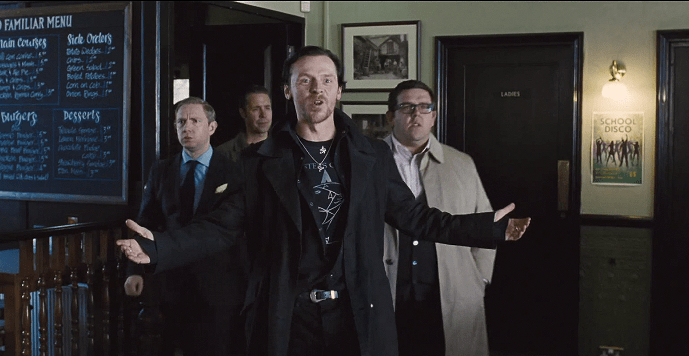
The tremendously fun thing in retrospect about the first two installments of the now-referred-to-as The Cornetto Trilogy (Shaun of the Dead and Hot Fuzz being the first two) is not just the fact that they start fairly parodist but metamorphose to the parodied (sub)genre rather brilliantly. That and upon re-viewing the films you can see how brilliantly it all holds up together. I didn’t get to see this film until now so obviously I don’t have the benefit of a revisit yet, but there are some odd things in good ways and not-so-good ways about this film. The humor, the performances and the kinetic editing are there. Gary (Simon Pegg’s) character has an arc setting up for him right away, and that’s also good. I’ve commented this year on how I like a weird sequel and the thing is you never know what to expect with this combination of stars and director so it’s not like expectation is a huge stumbling block.

There’s good and apparent commentary on lots of things like nostalgia, aging, alcoholism, technology and the eternal “At what price progress?” questions; however, the fenestration which matters less here than in prior films is where it gets muddy. Things are found out and some pieces are picked up nicely and some pay-offs are brilliant, but some of the necessary exposition is rushed and doesn’t quite compute. There’s something newer in the offing and how omnipresent the parody element is here is a bit lost on me. However, what they’re creating in the end, is always new and there’s a point where I felt I was chasing it a bit too much; not such that I didn’t get it or like it, but that I felt I could’ve absorbed and liked it more with a bit more time in acts two and three.

6/10

Thankful for World Cinema- Short Essay and Review: In Bloom (2013)

Post-Soviet Cinema and the New Postcolonialism

One thing that jumped to mind when I had concluded In Bloom is that it holds a fairly unique place in cinema, one that I’m not sure has been fully examined or surveyed just yet. The story of this film is a coming-of-age tale set against the backdrop of Tblisi, Georgia in 1992; shortly after the independence of the new nation. In essence what you have is a slice-of-life look at a new-age postcolonialism.

Much postcolonial cinema deals with the Old World and the colonies spawned from its outward expansion. Therefore, the tales both about the colonial age, and the cinemas born in new nations (mainly those in Latin America), were the First Wave of Postcolonial Films.

However, as this film underscores, there is a New Wave of Postcolonial Films to consider and that is of the former Soviet states. Throughout the entire history of the cinema (barring a brief period where Georgia declared independence following the Bolshevik revolution and was under British protection) Georgia has been a part of another nation and with no outlet to express its national identity to the world at large.

In the early 1990s with the collapse of communism 15 new Post-Soviet nation-states came into being. That’s 15 new cinemas, new voices and a brand-new wave of post-colonialism in the world. That’s just out of Russia alone, when you consider the division of the former Yugoslavia, and other changes in the Balkans, you can see this is not a small topic. It’s subject that would make a fascinating research and writing for one well-versed both in cinema and in those regions. This film is just a peephole into that newfound reality.

Review of In Bloom

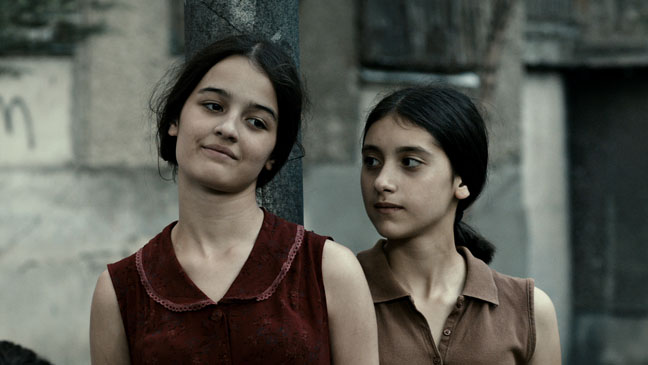
In that light, In Bloom offers an interesting glimpse, not only as my first exposure to Georgian film, but also to the concept that a brand new cinematic world opened up.

That being said, there is only so much intrigue that can be generated by such non-diegetic thoughts within the diegesis of a given film. What the film does do well is sketch the backdrop and the world that these characters are growing up. It’s a society a bit difficult to swallow to a Western sensibility but the general lawlessness of the tumultuous time is apparent, and that is something often glossed over.

Usually, independence is treated as the endgame. Whereas here in this tale, and with nations, it’s really just the beginning. It’s what happens next that really matters. How does one get ones feet under oneself when their fledging nation is still war-torn and barely standing on its own two feet?

The backdrop works, and the performances of the two leads: Lika Babluani as Eka and Mariam Bokeria as Natia really are tremendous. I see many impressive performances by young actors. However, it’s very rare to see two performances in one film from neophytes that are not only exceptional, which these are, but also read as if they are veterans; and furthermore should continue acting for a very long time to come. Babluani and Bokeria certainly achieve that and make this film as watchable as it.

However, the issues that end up plaguing the film are not that unique to slice-of-life tales. Essentially, what these films boil down to is: is that approach the more effective telling of the tale than something more conventional? Quietly and without too much fanfare these girls are doing tremendous things and defying social mores but the pace struggles; the telling is a bit matter-of-fact; the eye on the story too far removed. Major occurrences are treated with ho-hum indifference by camera, edit and characters alike.

The unique backdrop and performances are enough such that I would advise people to see this film for themselves, but the facets that work against this film are such that I cannot say I enjoyed it.

5/10

Thankful for World Cinema – Paradise: Faith (2012)

Introduction

For an introduction to the concept of Thankful for World Cinema please go here.

Paradise: Faith (2012)

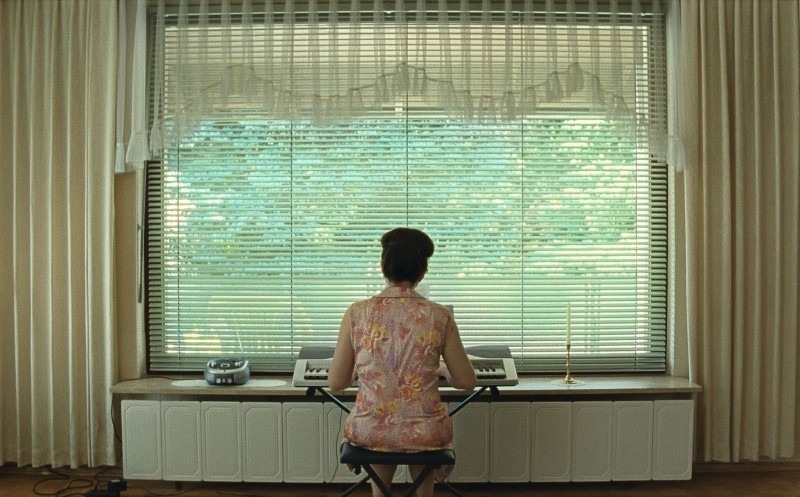
With his initial installment in this trilogy, Paradise: Love, Siedl established his template for the precipitous decline away from any hopes of fulfillment that his leading ladies face. In this film, the starting point is a far different one wherein Anna Maria (Very ably played by Maria Hofstätter) seems to have her devoutly religious, stern life well in hand and then things change.

The challenges that this particular tale faces are some of the same the first film does in terms of borderline exploitative narrative. Where it falls is that while the prior film only seemed over-extended; here the film frequently has a vacuous feeling. Certain points are raised and later expounded on, but they frequently over-stay their welcome and scenes last long after they cease to function. Not only is this a pacing issue but a question of narrative necessity.

Furthermore, it’s plainly apparent here that he works off loose outline and through improvisation. There’s nothing wrong with that, except when it shows. In other improvisational works (See any Mike Leigh film or even the prior film) there’s nary a hint of the nature of how the script/narrative is constructed.

Whereas the film does have some undeniably comedic moments, where some may even laugh in spite of themselves; it seems a bit of spite exudes the narrative. There doesn’t seem as detached and analytical an eye to this tale as there is with Love. Instead it seems we’re given a protagonist to pillory whether we want to or not and there’s only so much gratification one can derive from that.

Again, this is not a complaint about protagonist likability. Blue Jasmine is one of the best films of the year. I wouldn’t say I like Jasmine (Cate Blanchett), however, I do understand her and am made to invest in her fate. With Anne Maria, who shares (at least in her own perception) a similarly tragic fate, it’s as if we’re watching her slowly being tied to the stake and burned – and when all is said and done this film has not aroused vengeful glee, pity or disgust but rather ennui.

5/10

61 Days of Halloween: The Curse of the Fly (1965)

Introduction

For an introduction to the concept of 61 Days of Halloween, as well as a list of previously featured titles, please go here.

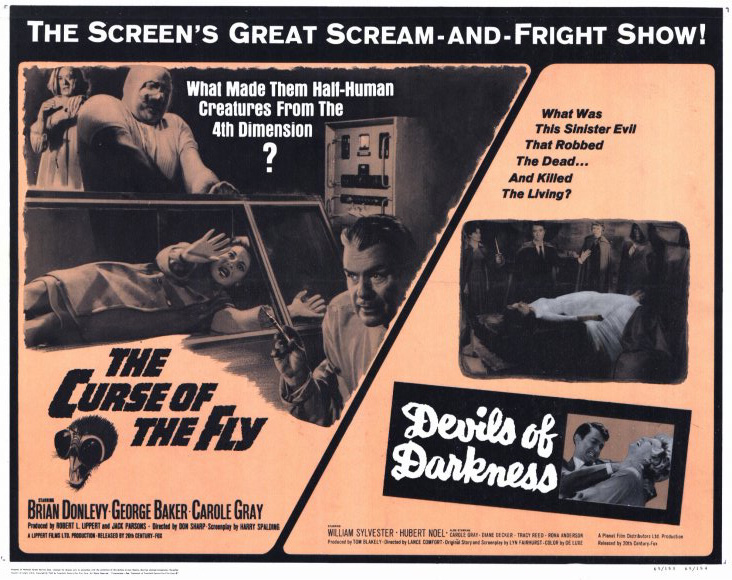
The Curse of the Fly (1965)

One thing that becomes clear when your are viewing a series of films in hindsight is when the death knell rang. When you’re in the midst of things occurring extemporaneously, it can be easy to be hopeful and want a course correction that may not necessarily be better than just abandoning ship.

Now, a lay-off in a series is not always a bad thing. A contemporary example would be that the Paranormal Activity series just skipped its first year since the series debuted, and will return in the early part of 2014. However, with the prior film (still being wildly successful in my mind) being six years prior, the changing climate of the nation as the ’60s progressed; a tale like The Fly had to change and wasn’t necessarily going to work.

So in this The Curse of the Fly there is no fly so to speak, the curse is a euphemism. However, the decks are also virtually scrubbed of any connections to the prior to films only bringing in a very old Inspector Charas to fill in blanks. However, the characters who are brought in don’t contribute in a great way: the colleagues in London add a conscience, the servants in the Delambre add an unfortunate racial stereotype (as well as whitewashing) that seems extraneous even for that kind of thing; the love interest distracts from building the new Delambre generation. A generation that’s building the myth of the series by not being as far from the first incident as one may think at first. Or is it? That was murky too.

All this splits focus, however, there’s also the fact that the fly element is removed and what the threat is, is deformity as attempts of transatlantic teleportation are seriously disfiguring test subjects.

There’s less spectacle, less character, less drama, less suspense, less everything in this film such that the end, not only of this installment, but of the original series is a sweet relief. The mythology of this series is great and could easily be picked up and updated again, maybe even in a truly Quebecois version, but sadly this is an unfortunate final chapter to the original series.

61 Days of Halloween: Return of the Fly (1959)

Introduction

For an introduction to the concept of 61 Days of Halloween, as well as a list of previously featured titles, please go here.

Return of the Fly (1959)

Where can one possibly hope to go in a sequel? It’s almost a rhetorical question (one I’ve asked quite a few times this year), but it’s a perpetually pertinent one in the horror genre because sequels are quite nearly expected and always possible whether they are implied or not. With the conclusion of the first film in the series the story was done, the tragedy set … or that’s how it seemed.

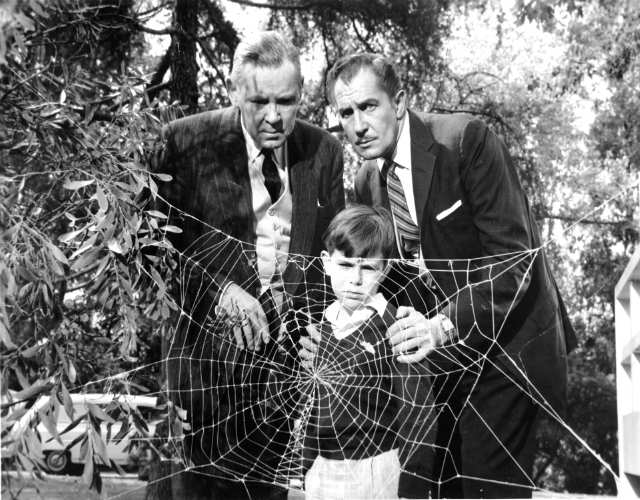
Another risky thing a series of films can do is jump ahead, or back, a number of years. It’s not a new idea, and it’s been done a few times with varying degrees of success. Here the story moves ahead 15 years. Vincent Price is retained, while Phillippe, the son of the ill-fated scientist who made the first experiments with the matter disintegrator is following in his father’s scientific footsteps.

While there is a bit of scientific zealotry, and borderline madness, what works especially well in this film is the inclusion of a most vile, very villainous character. It is he who ultimately brings the scares and chills into this installment, the seeking of revenge against him is but part of the suspense. Perhaps most importantly, his existence serves to buck this film from an identical narrative pattern to the first film.

While the first film kept the truth about the occurrences a closely-guarded secret amongst a few characters, here, years later, rumors have spread; a chase ensues and a few more now realize what this machine can do when ill-used. However, the knowledge doesn’t become widespread allowing the drama to play out with a fairly small number of characters.

In fact, it contributes to the drama by needing to keep the information about what’s really happening among only those who are in the know. As opposed to The Fly II, the follow-up to Cronenberg’s version, this is a highly successful sequel that keeps the spirit of the first while expanding the myth and throwing some twists into the story.

61Days of Halloween: The Fly (1958)

Introduction

For an introduction to the concept of 61 Days of Halloween, as well as a list of previously featured films, please go here.

The Fly (1958)

If you’re like me (and in this regard, you just might be) you’re likely to have seen the 1986 version of The Fly first. With that being the case, it’s likely you think there’s nothing that compare with it. Superficially speaking you’d be right, however, both films have separate and equally valid aims with their versions of the story. Aside from a modernized filmmaking approach, Cronenberg’s The Fly is seeking a more realistic handling of the tale. The 1958 version is working in the highly-stylized 1950s horror/sci-fi milieu.

What’s more is that that version of the tale tells its story in a different way, backtracking and retracing the events that have come to pass and ultimately trying to prove the highly improbable tale. However, with all the affectation of 1950s horror/sci-fi the film is tremendously and not without its chill-inducing moments.

The use of Cinemascope and the vivid color photography is used to great effect in this film. Not to mention the sound design which takes the buzzing of a common housefly and turns it into something even more terrible than it normally is.

A fact I was unprepared for was the covert Canadian-set nature of this tale. While this achieved through the occasional use of French words, surnames, and not much in the way of accents (in a very Old Hollywood way) it does add an additional texture to the film.

Then, of course, there is the incomparable Vincent Price. While not the eponymous character in this film he plays, due in part to the structure, a central figure in the tale. As per usual, he is marvelous adding a seriously needed dose of gravitas to a tale with a preposterous concept.

And therein lies the genius of the film. For it does commit to its concept and delivers many spine-chilling moments, and though different in tenor, is a classic in its own right.

61 Days of Halloween: Seven Deaths in a Cat’s Eye (1973)

Introduction

For an explanation of the concept of 61 Days of Halloween, as well as a list of previously featured films, please go here.

Seven Deaths in a Cat’s Eye (1973)

Seven Death in a Cat’s Eye takes a slightly offbeat approach to the whodunit aspect of the story. As I have celebrated, and complained about when the opposite is true, the title is not only eye-catching but literal. However, that is one of the few intriguing things about the way this story is handled.

There is one ludicrous red herring that is both poorly handled and so far out of left-field compared to the rest of the things that occur in the film that it sticks out terribly and drags the film down. However, at least this insane thing that occurs – that I’m sparing you a spoiler about – is something notable and interesting.

Perhaps the biggest issue this film has is the lulls between its deaths and characterization. It does fairly well with one supporting character, but the protagonist is the kind we get facts dropped about but don’t really get to know. This is the kind of lead that we’re supposed to root for simply because they’re the lead, and we’re really given no other impetus to give a damn about them at all.

While the approach does well to obfuscate the identity of the killer the climactic reveal and confrontation really aren’t as such. There are some decently executed kills, however, the most memorable thing about film ends up being title and the ridiculous red herring.