Blu-ray Review: Cub

If you’ve followed this blog closely you may have noticed that many films from the Benelux region have been featured here. There is a good reason for this, many of these films have been finding distribution, and a large number are of extremely high quality. Cub is no exception.

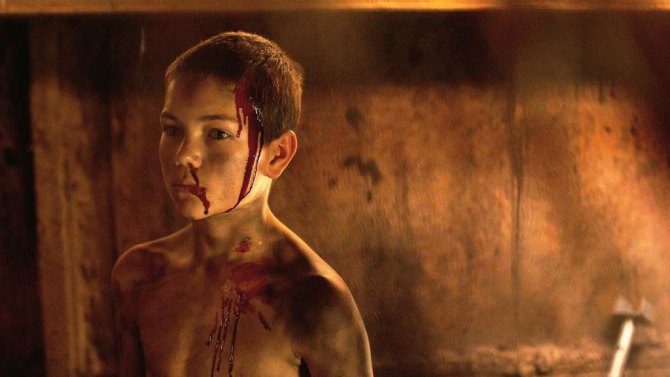
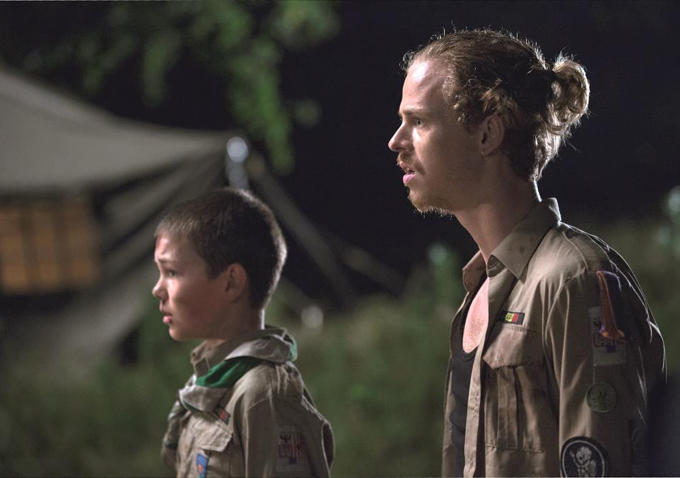
The film tells the tale of a Belgian scout troop heads out on a camping trip and slowly discover a campfire tale their counselors are telling them has a lot of truth to it.

It’s a simple, stripped down narrative that lacks obsession with backstory and remains strongly situation-based. It opens up cans of worms and allows you to think on certain implications and meanings without force-feeding you information. Things get going right away and never really stop moving until the final fade to black.
Cub (2014, Artsploitation Films)

Cub simultaneously moves briskly with a tight edit and sparse running time without hitting the gas too soon on the most horrific elements. There is a steady crescendo that really gets heightened consistently from the midpoint through the harrowing conclusion.

The film effectively deals with the problem of disbelief throughout. In linking the nearly mandatory disbelief element in any horror film with its protagonist, Sam (Maurice Luijten), and having him be not only ostracized but suspected; it really does well to increase identification and build character.

Eeriness pervades the proceedings throughout and is heightened by the score by Steve Moore, which is brilliantly catchy and an excellent throwback; the camp song, which plays brilliantly and ominously, and there is the occasional homage to Argento which is greatly appreciated.

Cub (2014, Artsploitation Films)

The cinematography by Nicolas Karakatsanis is effectively moody and at times seamlessly artful. Some of the imagery in this film like Kai’s (the purported werewolf of the woods) silhouette and a few of the kills could prove iconic over time.

Also assisting in the creation of imagery is the art direction. With a tale set in the woods you may think there isn’t a chance for the art direction to shine, but there are some environs in the film that needed to not only be created but communicate tonally, and this is something exceedingly well done here.

Horror films are notorious for not requiring exceptional performances from their players, but this film does need them and gets them throughout. Kris (Titus de Voogdt) and Baloo (Stef Aerts) are foils, the former a little more understanding, and seeking to aid the children; the latter is impatient, immature and combative. Each executes his role perfectly, and the characters are rivals for Jasmijn (Evelien Bosmans), in an unobtrusive triangle. Bosmans inhabits a character given a bit of dimension despite sparse screentime, and she imbues it with genuine star power. Luijten has the hefty task of shouldering much screentime, seeming stoic and clench-jawed, and not talking a great deal and still emote and travel an arduous character arc. It’s quite a feat for an actor so young in his feature film debut. The ensemble of kids around him, and mostly against his character, also has moments in the spotlight and add to the texture of the film.

Cub (2014, Artsploitation Films)

The above, as well as the overall success is of course also a tribute to debutante director Jonas Govaerts. Cub is a bloody, creepy film, that has some depth and can still satisfy a seasoned viewer. It’s not one that’s for the faint of heart because it “goes there” often. Horror must be unafraid to go into deep, dark places and this is a trip to the woods the worth taking for those fans of the genre with a strong constitution.

Bonus Features
Cub (2014, Artsploitation Films)

It’s always nice, especially in the current state of affairs in home entertainment, when you are incentivized to get a physical edition of a film. Often there are no bonuses anymore such that you won’t get a physical copy unless you really like the artwork or are that adamant about having physical media.

Short Film

Of Cats and Women (2007, Potemkino)

On this disc there is a short film by Jonas Govaerts which is a little over ten-minutes long called Of Cats and Women. It’s an original piece, as opposed to a short version of the feature, but you can definitely see a director’s style emerging, also be on the lookout for an homage here as well.

Music Video
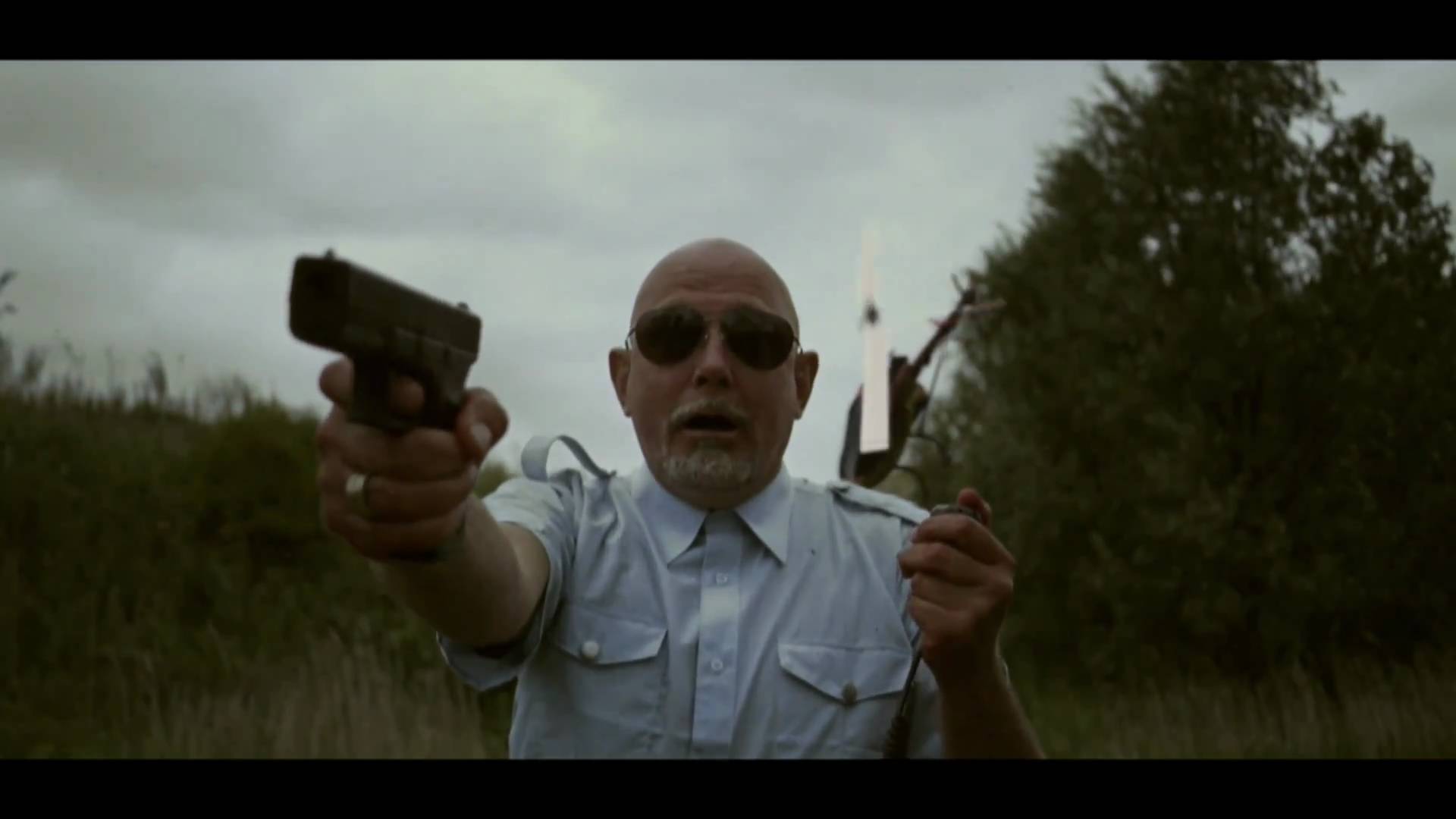
One Hour (2013, The Dead Sets)

Also included is a Govaerts-directed music video which is a text-book example of juxtaposing imagery and music.

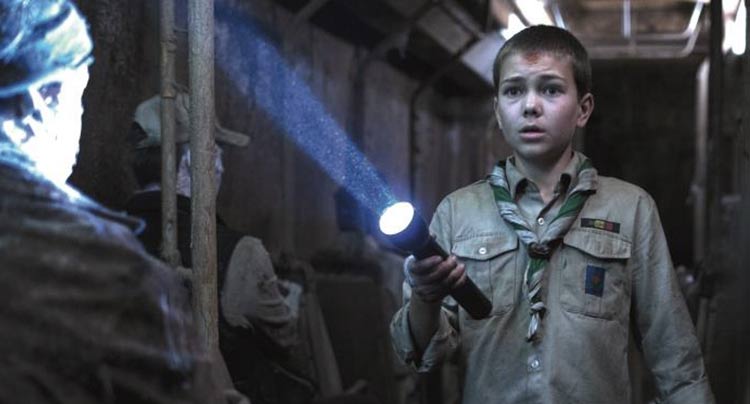
FX Reel
Cub (2014, Artsploitation Films)

Also nice to see, when so often visual effects are not as overt as they once were, to see a demonstration of what the effects artists contributed to the film, which also added to the feel of the film.

Deleted Scenes
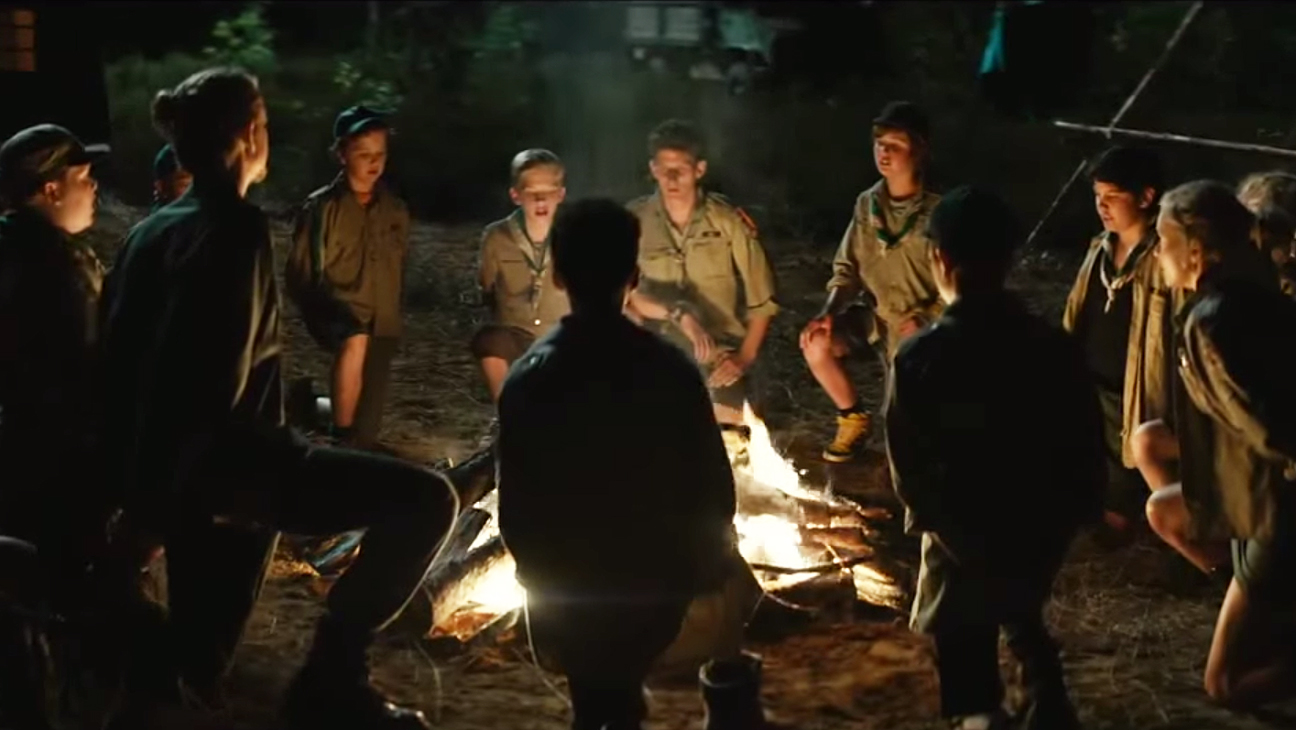
Cub (2014, Artsploitation Films)

These are interesting because they show a bit more character development, and even new characters, and add some information. They are free of commentary but fairly self-explanatory.

Movie: 9/10
Features: 8/10

Cub will be released on Blu-Ray, DVD and digital platforms on August 18th.
Rewind Review: Chronicle

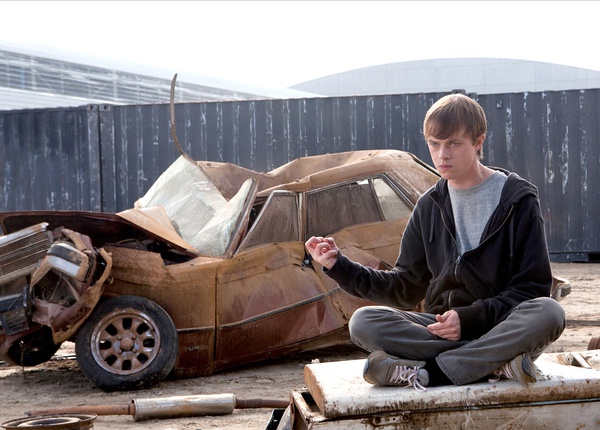
Chronicle

This was a film I heard a lot about and I love the fact that it is divisive. I had a lot of stumbling blocks to overcome in this one, but seeing elements enacted as opposed to just hearing about them are two completely different things.

This being a found footage film there are “cheats,” inasmuch as it’s not always the same source camera providing the footage, but as events escalate you’ll see why it’s possible, you just get no hint as to who put it all together. That’s a minor concern regarding the handling of technique.

In fact, the only other quibble I have has to do with Casey (Ashley Hinshaw) who is a blogger, thus she too obsessively records things. It’s a bit convenient but mostly the film works in the found footage milieu because it remains tremendously reflexive, and it has to. Andrew (Dane DeHaan) feels compelled to record his life due to his abusive father (a wonderfully malignant villain with few parallels), it clearly continues after the mysterious inciting incident.

Perhaps what is most brilliant and moving about the film is that it creates a sense of identification immediately and it builds from there. It’s not a case of likability but rather understanding. It gives characters powers, and inherently responsibilities, they’re not necessarily equipped to cope with and shows you what they do.

Yes, there is a slightly Jackass, slightly YouTube-voyeuristic, quality to certain scenes inherent in the found footage approach but things to do come back that seemed as if they didn’t fit, and the seemingly frivolous is sublimated quickly. Through it all it remains a character study. It’s a film that does not get overly-concerned with its technique to the detriment of its plot or personages.

Clearly, the performances need to be really strong for a film of this kind to work. That is the case with Michael B. Jordan as Steve, who convincingly plays the winning, popular, untouchable jock but also conveys some hidden depths when allowed to. However, the true standout is Dane DeHaan who is asked to deal with far more range in a film of this kind than you’d expect and is magnetic and captivating in all facets of his character. The scripting shows a certain amount of restraint in many of his scenes and intonation and expression have to convey a lot and he does.

There’s an air of mystery to the story even after the inciting incident as you learn with the characters but are still not overly-inundated with facts.

The sound mix is rather effective, especially as it counterbalances with certain moments of dead silence paired with powerful images. The visual effects aren’t as flashy as some other films but very strong.

I tend to try and avoid things that can be construed as pull quotes but the film did get quick a few visceral, nearly unconscious reactions from me I laughed, I was was on the verge of tears a few times and my jaw literally dropped at least once.

I have the few small reservations mentioned above but many prejudices I had coming in vanished entirely and I came away resoundingly impressed with this film.

9/10

Review: Michael

Introduction

This is a post that is a repurposing of an old-school Mini-Review Round-Up post. As stated here I am essentially done with running multi-film review posts. Each film deserves its own review. Therefore I will repost, and at times add to, old reviews periodically. Enjoy!

Michael (2011)

I generally remain vague about plot descriptions in my reviews. Philosophically I believe that if you happened upon my review you know enough about the film and you’re just looking for some further information. With a film such as Michael one does need to be forewarned: while not sensationalistic or exploitative this film does chronicle about five months in the life of a pedophile. You will be disturbed and affected by it: I guarantee it. What is most effective is that the film does so almost exclusively through implication.

The film edit of the film is tremendous and much of the dialogue on reflection implies so much more than is said. One example of how the film communicates horrible consequences while doing little is a simple visual: Michael and Wolfgang, the child he has captive, are setting up a bunk bed in his room. That scene has made its point and hits you in the gut.

What makes the film most harrowing is the humanistic portrait painted of Michael. With an act as awful as child abuse, whether of a physical or sexual nature, some films overplay their hands. Meaning they feel the need to make the antagonist over-the-top and borderline cartoony as if to re-emphasize the inherent villainy and cruelty of their actions. Yet more often than not that kind of writing takes a viewer out of the moment. This film takes things as mundane as decorating a Christmas tree, talking to a neighbor, or a haircut and tinges them with malignancy and implications that belie the simplicity of the line spoken or the action taken.

You also have in this film two performances that make this film work and they are those of Michael Fuith, who used his awkwardness to endearing effect in Rammbock, but here is intimidating, frightening, awkward, and charming as needed. Then there’s also David Rauchenberger, who while not in the film a tremendous lot, has the unenviable task of playing the victim who as times dour, at times detached, at times a child and also rebellious.

The craftsmanship of the film is what truly makes it work. There’s one scene that really doesn’t jibe with the restraint, and the ending is one I stewed on but decided it is earned, as a whole other film would start had it continued.

8/10

Review: Reckless

Reckless is the inverse of what we normally see as it is a foreign language remake of an English language (British) film, called The Disappearance of Alice Creed. Seeing as how comparative analysis is not something slipped into lightly here, I can only state in the interest of full disclosure that I never did get to see the original. However, a review is self-contained and it is not incumbent on a film to justify its existence in relation to a prior rendition of the same tale. It only matters if it justifies its existence on its own merits. Just recently I happened to see a remake and only became aware of it after the fact.

Reckless is the first title from Artsploitation Films that I had the pleasure to see. Like many independent distributors this company has a specific an precise credo that pulls into focus the kind of film niche they seek to fill. Theirs is one I readily identify with with:

Not strictly a genre label, ARTSPLOITATION FILMS looks for intriguing, unsettling, unpredictable and provocative films from around the world. Artsploitation’s focus knows no boundaries and we hope you’ll enjoy our unconventional cinematic tastes.  Artsplotation: International films with an edge.

That ethos is readily apparent if one synopsizes the film; it tells the tale of Victor (Tygo Gernandt) and Rico (Marwan Kenzari) who met in prison believe they have picked a perfect target for their kidnapping-for-ransom plot, Laura (Sarah Chronis), but secrets about the plan and the identity of the girl could unravel their plot in unexpected ways.

Reckless has a rather deceptive outward appearance. The bare facts belie the intricate web of interpersonal relationships that are motivating the plot. For as unsettling a scenario as it is it is a film that is not impelled by shock value or cheap sensationalism, but rather how these extremes in setting, situation, and circumstance put a strain on both the relationship between the kidnappers and on how they relate to their captive.

Sure there are many stories that breed discomfort and fright and the envelope does get pushed to a degree but never to the detriment of narrative progression. The film is tightly edited, artfully styled, and precisely acted ; and so organically such that the overtures at elevating more base story elements doesn’t feel disjointed.

The film is one rife with twists each of which further elevates the stakes, intensity and suspense of the proceedings. None of them seem out of place and things resolve themselves naturally and correctly based on the momentum accumulated leading up to the climax. It’s not a case where the ending needs to be forced to satisfy audience expectations, but really feels like the only one that is just.

9/10

Review: Tinker Tailor Soldier Spy

Introduction

This is a post that is a repurposing of an old-school Mini-Review Round-Up post. As stated here I am essentially done with running multi-film review posts. Each film deserves its own review. Therefore I will repost, and at times add to, old reviews periodically. Enjoy!

Tinker Tailor Soldier Spy

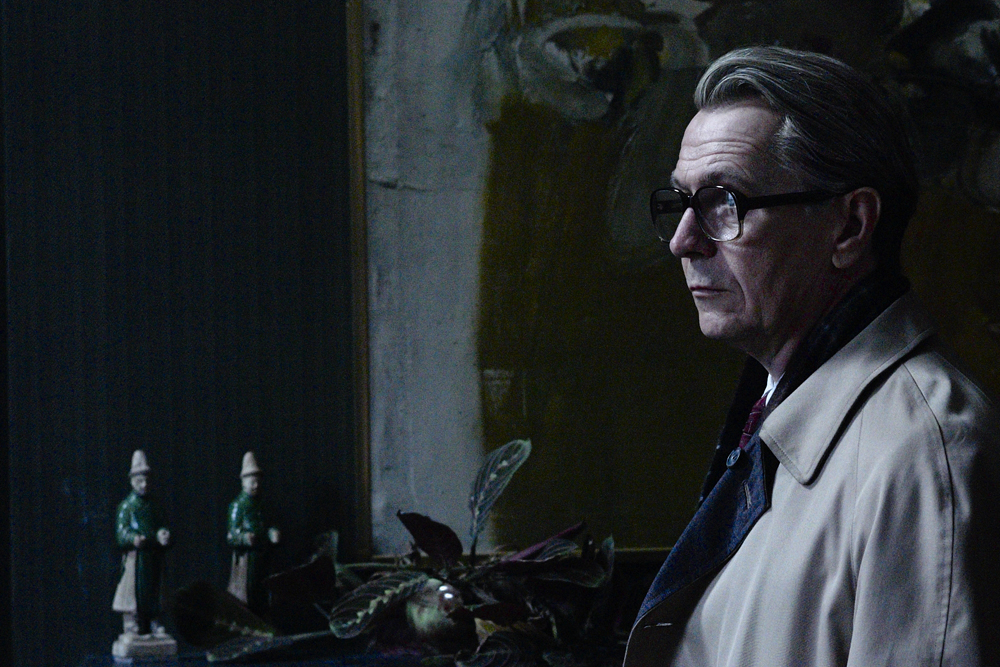
Had I not read that Thomas Alfredson (Let the Right One In) directed this film I would’ve figured it out at some point and that’s due to the film’s pace and construction. Tinker Tailor Soldier Spy is not an easy story to convey on the screen. It’s the type of film that has to put forth a very difficultly-attained and nearly intangible fascination that is usually the sole purview of spy capers and whodunits wherein you must be simultaneously enthralled by the intrigue of the narrative and rapt by the film; such that you can keep pace with it, on a mental level. I specify that pace because the temporal pace of the film is rather interesting. In a film such as this it’s information that’s flying at you tinged with foreboding, and the sense of a gyre closing, such that the story cannot speed along at a brisk 90 minutes but must unfurl at a more leisurely 120 yet also still have enough incidents within it to hold that bifurcated attention its worked to create. The film manages that easily and keeps the pace rather steady and the facts quick in coming. Even when in flashback sequences, which there are many, though the cuts may be quick the information does not overwhelm. That is not to say that a second viewing wouldn’t make the film more enjoyable or that nothing will be missed, I certainly can’t guarantee that as the film does play things close to the vest often but it does easily connect a lot of seemingly disparate incidents such that a vast majority of facts, and how the conclusion that occurs is reached, becomes clear. In the end, whatever vagueness the film may have is not something one can find in anyway distasteful as it recalls to me Bergman’s quote:

I don’t want to produce a work of art that the public can sit and suck aesthetically… I want to give them a blow in the small of the back, to scorch their indifference, to startle them out of their complacency.

I have always taken that to mean that he wanted people to be moved one way or another by his work and if you’re actively trying to piece this film together and succeeding or failing it won’t bore you to the point of indifference I feel and I think it’s riveting.

9/10

Review: Human Capital

Human Capital is a film that works effectively on all levels. However, the further a viewer is willing to dive in to the story, the implications thereof, and the characters’ psyches the more rewarding an experience it will be. Superficially the drama, stakes, and tension are always palpable as the beats, be they dramatic or suspenseful, are easily recognizable and slowly drag you to the edge of your seat. If you adventurously wander deeper into the construction, the societal portrait, the character sketches, and how they relate to one another; you’ll find yourself rapt intellectually in addition to your emotional investment.

Here is the synopsis as per Film Movement, and believe me due to the way this film is built through the edit most of this information makes itself readily apparent quite quickly. It’s not a case where a write-up says too much:

With a lavish home and beautiful wife, hedge-fund manager Giovanni Bernaschi seemingly has it all. Meanwhile, real estate agent Dino Ossala struggles to maintain his family’s middle-class existence and faces even worse financial straits when his wife announces that she is pregnant with twins. Leveraging his daughter’s relationship with Giovanni’s son, Dino deceives the bank and manipulates his way into the Bernaschi hedge-fund. As the destinies of both families become further entwined, a fateful hit and run accident sets in motion a chain of events, triggering dangerous consequences that will change their lives forever.

Specifics aside, what gets you instantly hooked is seeing that it is structured in chapters. This is not merely a ruse but an indicator of the fact that this film will focus on interrelated characters one at a time. The first chapter of the film is entitled Dino, but even though we may not know all the characters by name yet; we know they comprise two family units and there are shared interests among many of the characters that will cross paths.

Human Capital (2014, Film Movement)

So what you have here is elliptical storytelling in its truest sense. The multiple points of overlap, major and minor, carry the characters and plot through with increased momentum and intrigue as it develops. While newly-emerging plotlines take the fore in each chapter they are all intermingled, touched upon, then wrapped up neatly in successive order.

Therefore, there is an undaunted positive progression of the narrative wherein the backpedals are enlightening and deepen the narrative and do not feel like a rote writing exercise as they could, but rather a heightened cinema that does not only engages the intellect but plays on visceral emotions expertly well.

Human Capital (2014, Film Movement)

All this deconstruction of the plot may lead one to believe that the film is lopsidedly plot-driven; quite the opposite is true. It builds character consistently throughout, it’s just that the focus shifts. That shift in narrative perspective puts us in the shoes of several characters, and due to that the drama is more tautly built as we understand multiple vantage points.

This film would be impressive enough if the actors just showed up, hit marks, and said their lines; in other words did the bare minimum. However, yet another rarified level is reached by the work they put in as a unit and individually by truthfully inhabiting their characters and committing to the motivations entailed. Paolo Virzì’s shrewd direction is omnipresent in the film from the edit, the mise-en-scène and cinematography to the crafting screenplay of an American novel into one set against an Italian backdrop and keeping it universal.

Human Capital (2014, Film Movement)

This universality latches on to the film in such a way that it enjoys the high-class problem of being easily identifiable to a wide variety of audiences yet hard to classify. Its playing of suspense tropes, combined with its palpable drama and social commentary it can correctly be identified with the catch-all of ‘thriller’ but it’s so much more than that. In a film market that seems to, at times, think we can’t have our cake and eat it too this film knows that’s nonsense, and delivers emotion, pathos, and tension while also crafting a story of sociological relevance and leaving the soapbox out of it. It clicks like a film you can maniacally eat popcorn to and just let it wash over you, but invites you dig deeper and think on it long and hard. What more can you ask for?

10/10

Human Capital is now available for rent and purchase on digital and physical media.

Review: Coriolanus

Introduction

This is a post that is a repurposing of an old-school Mini-Review Round-Up post. As stated here I am essentially done with running multi-film review posts. Each film deserves its own review. Therefore I will repost, and at times add to, old reviews periodically. Enjoy!

Coriolanus

Oh, how I wish I could cite the Titus Conundrum as an exception here, but I cannot. What I mean by that is that I did know of Coriolanus at the end of last year and its having opened at the Ritz theaters in Philadelphia in late 2011 made it eligible for the BAMs last year. To make a long story short, I could’ve seen it but I did not. Therefore, it cannot carry over into 2012 unlike some films, which I had no legitimate chance of seeing last year, like We Need to Talk About Kevin for instance.

There are many facts that this film crystallized in my mind: first, it is much easier for me to watch Shakespeare, even if going in cold, than to read it. Seeing some sort of visual accompaniment provides a context that in a way allows me to focus on the words, the inflections used and in so doing I interpret rather rapidly. Whereas with the text, it’s you and the book and you stare at the words, glance at the footnotes and not having a framework of production there’s a bit more mental legwork to do to break down that barrier, to surpass the wonderful linguistic acrobatics and capture the meaning.

The second fact was a bit more interesting, as I have now for the fourth time seen a cinematic adaptation, which took liberties in updating the visuals of the story, quite a few things became clear simultaneously: While I certainly take no issue with a film that wants to take a literal period approach, I love the creativity that these modernized renditions show. Perhaps the biggest facts they underline is the timelessness of Shakespeare’s themes. In Coriolanus, for example, the names of the characters and the city-states remain the same. If looking at the text I would wonder what on Earth is a Volsci and where is Volscica, not that those questions are invalidated, but with this rendition that portrays Ancient Rome in a modern yet alternate reality, it’s easy enough to understand; Rome is a huge Empire, Volscica lies on the outside, they are an enemy state.

Coriolanus, like many a Shakespearean tragedy I’m sure, excels due to the fact that you not only understand the tragic figure’s flaw, and to an extent identify with it but circumstances constantly conspire to shift characters from one side to another, power play opportunities abound and each and everyone is taken, plots and counter-plots are always afoot.

With the implementation of news television as a major narrative device, combined with televised senatorial debates, even the peculiarities of Roman politics become not only easily accessible almost instantly but the entire story resonates so much more as a modern political allegory than it would be allowed to as a period piece.

The performances are exceptional and what also allows the film to be quite relatable is that the nucleus of dramatis personae is not as large here as in other Shakespearean works, at least in terms of major figures as they are presented here.

Essentially, Coriolanus as envisioned by first-time director and lead Ralph Fiennes and multi-talented screenwriter John Logan is a film that is likely to be an awe-inspiring experience for neophytes and die-hard Shakespeare fans alike. I know hearing from people on either side of that fence made me want to see it and after another invigorating adaptation I am certainly seeking to brush up on my Shakespeare further.

10/10

Review: Piranha 3DD

Introduction

This is a post that is a repurposing of an old-school Mini-Review Round-Up post. As stated here I am essentially done with running multi-film review posts. Each film deserves its own review. Therefore I will repost, and at times add to, old reviews periodically. Enjoy!

Piranha 3DD

A film like Piranha 3DD always prompts the question: “Well, what did you expect?” Whether this question is asked in sincerity or sarcastically it is a valid one, as I always strive to judge a film on what it’s trying to be and whether or not it succeeds in that aim. Due to this fact, I have no problem giving disparate films the same grade without ever questioning whether one is better than the other. After all, if you think on it Jurassic Park and Citizen Kane might be two films you like, but no one will ever confuse them with regards to their aims.

So what did I expect from Piranha 3DD? It may be easier to explain what I didn’t expect first. I did not expect anything remotely like Piranha (1978). I didn’t expect to need to have seen the new incarnation of this series to follow this. I expected the film to be silly and strive to land in the so bad it’s good realm based on its premise. I did expect a passable horror story regardless of said fact. Considering that John Gulager was attached, and that I did like Feast, I had some hopes to see this film achieve these aims.

What unfolds instead is a film that you laugh at not with. It’s a film that wants badly to fall into an exploitation mold but it more frequently is an uneasy mix of attempts at such, mainly sex and star exploitation. Both aspects are so poorly handled the film more closely resembles a softcore porn/vanity press hybrid. Yes, the silly, poorly-animated piranha take a backseat in this film to implants, David Hasselhoff and sorry, lazy comedy, which works all too infrequently, especially considering some of the people they wrangled into being in this thing.

Speaking of the people they got in this thing: Christopher Lloyd deserves a medal for being the only redeeming quality this sorry excuse for a film has. In all honesty they would’ve been better served turning the camera on him for 83 minutes and allowing him to improvise, with no rehearsals and no editing. Lloyd is a truly gifted actor and why he ends up in films of this ilk these days baffles me to no end.

What I was expecting, in all honesty, was not nearly as bad as I got. As silly and ill-conceived as the oh-so-thin plot is it also lacks focus. It contains no flair or verve that gives me any cause to forgive it its sins. The key to good exploitation is that the subject matter is the only thing being exploited. This film also exploits its audience, and I was actually very surprised and disappointed that it was the worst thing I’ve seen this year to date.

2/10

Review – Antboy 2: The Revenge of the Red Fury

It’s interesting in age when superhero cinema, and one of the latest critical buzzwords “superhero fatigue” being bandied about with nearly mindless abandon, to take a look at films who have a more modest approach to the trope and different aims than the world’s most gargantuan cinematic franchise. As has previously been mentioned here at The Movie Rat, the world of foreign genre cinema offers different takes which is typically like a breath of fresh air compared to the American formulaic traits. Whether or not they are always successful is almost not even the point as there is great value in seeing a different way to broach familiar topics.

However, Antboy and Antboy 2: The Revenge of the Red Fury are most definitely successful. One of the ways in which this sequel succeeds is in walking the tightrope between a continuous narrative that would lose the uninitiated and a film overly-slavish to its prior installment. Where reminders become necessary they are there but do not waste excessive amounts of screen time or come off as ham-handed.

The film jumps into the action almost immediately and moves at a steady clip from thereon out making its brisk running time not feel conversely overly-expansive. It’s also great to see a tale of super characters where the stakes are high, and matter to those concerned, but they are also focused and contained to their small, suburban hometown. It’d be relief enough just to have character time in a standard superhero film, but when you add the fact that this is a story with young antagonists and protagonists; you have something doubly rare wherein a film is treating both kids and superheroes/super-villains as people.

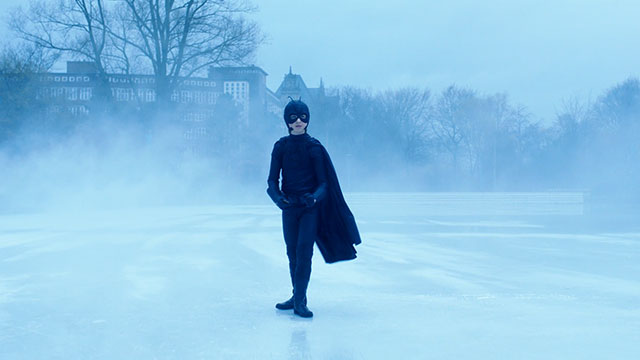
Antboy 2: Revenge of the Red Fury (2014, Attraction Distribution)

As opposed to the first film, I watched this one with original audio not dubbed. The dubbing in the prior installment was passable, and clearly more accessible to the younger viewers who are the target audience. Therefore, it’s fairly safe to assume that there must not be much degradation in quality offered in English dialogue. If the option of viewing the original audio version is available to you, it is clearly a better approach.

When discussing films designed for kids the potential pitfalls are many: pedantic story treatment and characters, too much escapism with little pedagogical value, or the opposite issue; too bluntly moralistic to be enjoyable. Antboy 2 does not suffer on any of these accounts, in fact, excels in folding in its lesson with the entertainment value. It turns out to have a statement about not taking out one’s anger over slights against others, self-assurance and confidence in a highly enjoyable, entertaining and funny package. The only way in which it lacks in this regard is that the atonement is a bit easily earned and the reason behind the offense not adequately explained to the offended. Ultimately, the forgiveness Pelle earns ends up being a bit like the Blue Fairy’s granting Pinocchio’s wish because despite his mistakes she knows he’s good at heart.

The visual effects while not of the highest order are used sparingly and executed well enough such that the do not detract from the story in anyway. What truly augments the story is the sound mixing and editing, which take it a step above where most would believe it to be, and the suspension of disbelief is most aided by the work of the costume department who has all characters looking the part.

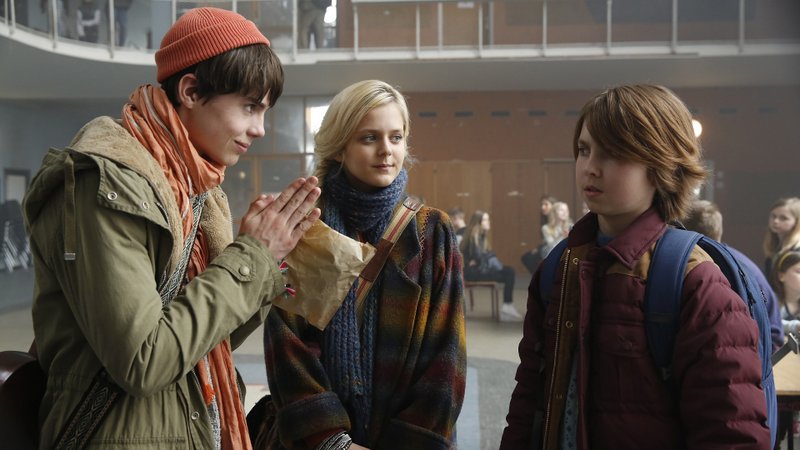
Antboy 2: Revenge of the Red Fury (2014, Attraction Distribution)

The heart of the film lies in the young cast who are extremely capable and aptly pull off the double-task of being relatable and super-human. In many ways those who are returning are given more opportunity to shine. Oscar Dietz, as Pelle a.k.a. Antboy, aside from having stuntwork, and his physically weak moments when faced with his character’s version of Kryptonite; has to show a emotional vulnerability and insecurity throughout, as he’s struggling with normal adolescent angsts and insecurity balancing that with the dichotomy of having an alter ego who seems to have it all together. He is a perfect every-kid and delivers when scenes get emotional. Samuel Ting Graf (Wilhelm) and Amalie Kruse Jensen (Ida) return to the fold more assured and layered as Antboy’s sidekicks and best friends. While Wilhelm keeps him motivated and in check Ida’s fascination with one of the new kids Christian (Hector Brøgger Andersen) is understandable and very believably played by both. The new, titular villain played by Astrid Jucher-Benzon perhaps has the best arc, and achieves the highly difficult task of being a villain that can engender empathy.

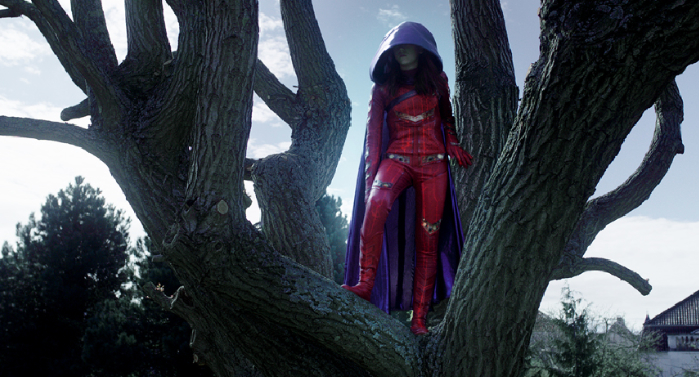
Antboy 2: Revenge of the Red Death (2014, Attraction Distribution_

As these films are adaptations of popular children’s novels in a post-Harry Potter world, the turn around on the series will be quick and there will be more Antboy to follow. However, there is a small universe here that doesn’t connect anywhere else unless you count the connection these characters and their stories make with the audience which is surely palpable, and as such make the continuation of this series something to look forward to indeed.

9/10

Review: Nicky’s Family

Introduction

This is a post that is a repurposing of an old-school Mini-Review Round-Up post. As stated here I am essentially done with running multi-film review posts. Each film deserves its own review. Therefore I will repost, and at times add to, old reviews periodically.

Specifically to this post, upon hearing of Sir Nicholas Winton’s death today at the age of 106 I confirmed that I had not given this film its own post yet. May he rest in peace. 

Nicky’s Family (2011)

In this documentary, which also includes dramatizations that are thankfully usually silent, the tale of a British businessman, Sir Nicholas Winton, who took it upon himself to organize the Kindertransport program, which evacuated hundreds of children out of Czechoslovakia prior to World War II and the transport of Czechoslovakian Jews, Slavs and Gypsies to concentration camps, is told. However, as the title suggests how Winton came to be inspired to do so, what he had to do and how is only a part of the tale. The film also tells of how the story became more widely known and some of what the survivors went through both as Nazi Germany annexed the Sudetenland, what occurred during and after their relocation and lastly how the legacy of Nicholas’ actions are still felt to this day both with survivors and those inspired by his tale.

Within a seemingly simple story at the outset this is a hefty and ambitious task when all the component parts are taken into account. Having said that it does so quite well. Though I occasionally wondered about, or lost track of a thread, there is a narrative language established wherein transitions between hosted intros, stills, interview pieces, stock footage, re-enactments and b-roll occurs. It’s only a minor pacing hiccup in the end.

Much of the footage implemented, along with the personal accounts as well as some unique and well-placed scoring and original music really elevate this film.

In a great piece by Christopher Campbell from last year he discussed the importance of judging the film in question when dealing with a documentary and as a sidebar you can talk about the topic as he discusses in issue films, which this is. So here’s my sidebar: while there are myriad stories of heroics that occurred during the holocaust that saved further lives from being lost what separates this one is what a small, almost individual effort it was, how unassuming the hero is and how he’s inspired others to take action to this very day in almost a real-life Pay It Forward manner.

Nicky’s Family is a fairly good documentary that should find a wider audience both for the cinematic qualities it possesses and the tale it tells, one that may not be so widely known. For more information on the film you can visit Menemsha’s site or go here to request a screening near you.

8/10