Review: Lilting

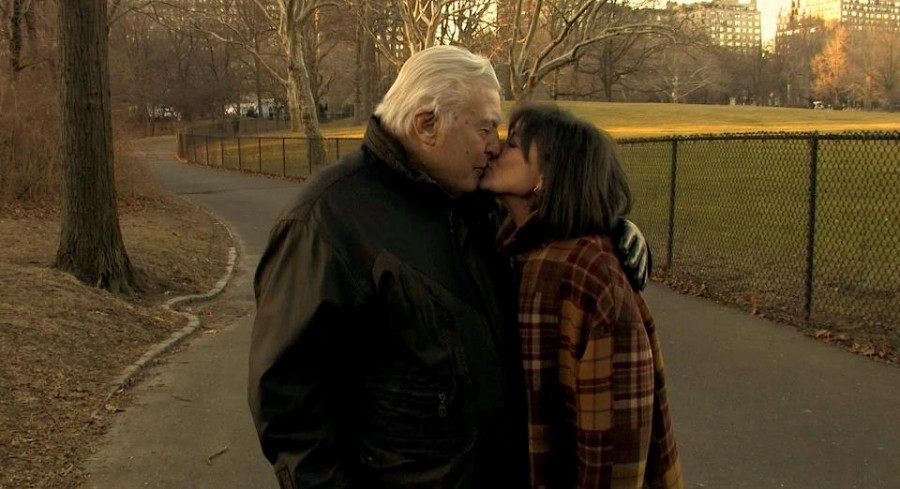
Lilting offers a sensitive look at two people coping with the loss of a loved one and trying to reach some common understanding and hold on to their dearest memories. There are quite a few barriers they must overcome to try and reach that, just one of which is language. The title may refer to the tonal quality of a song that is a cornerstone of one memory and a particular sentiment, but also can be indicative of the certain uplift that exists in this bittersweet tale.

The synopsis is as follows:

In contemporary London, a Cambodian Chinese mother mourns the untimely death of her son. Her world is further disrupted by the presence of a stranger. We observe their difficulties in trying to connect with one another without a common language, as through a translator they begin to piece together memories of a man they both loved.

This is a film that, as is intimated in the above synopsis, does feature quite a few flashback sequences. That’s not really divulging a secret as it starts in one and the break back into the present is quite elegant and effective. It’s a film that certainly adheres to the rule of thumb about breaking chronology if it makes the film better. Here where you are dealing with two people coping with a lost the past is a pivotal player and constantly intrudes on the present.

What’s interesting is here you have another multicultural film, a story in part of immigration abroad and of globalized cinema, wherein translation plays a role. Vann (Naomi Christie) is brought in to proceedings to translate conversations between Alan (Peter Bowles) and Junn (Cheng Pei-Pei, as she was credited in this film) who have caught each other’s fancy at the retirement home they’re in. Eventually Vann allows Richard (Ben Whishaw) and Junn to talk to one another and try to get a better feel for each other as well.

As this is a film that is clearly driven by its characters, their interactions and what they must overcome the cast becomes a key component of the success of the film. Ben Whishaw and Andrew Leung have real connection and chemistry and with less screentime and playing a ghost Leung has to supercede his allotted screentime and create a far bigger presence and does just that. Whishaw also has to play the torn character carrying the burden of a secret and a sort of noblesse oblige to Junn, who in turn is wonderfully rendered by Pei-pei Cheng who gives her character a sense of real dimension hitting all the notes asked of her. Naomi Christie and Peter Bowles as intermediary figures round out the ensemble and add different perspectives than those of the sometimes-combatant parties, and also add some humor and additional emotional investment.

This film is one that will be coming to home video in the US through Strand Releasing and is one with a bit of an Award pedigree with nominations at the BAFTAs, BIFAs and Sundance that is worth looking out for. While one aspect of the ending leaves you needing to engage some suspension of disbelief and let it go there is a bit of closure, although its not as powerful as some other moments in the story.

It is a tidily wrapped up simple, short story that moves quite well and is evocative without being cloying and is definitely recommended.

7/10

Review – Life According to Nino

The synopsis provided for Life According to Nino is as follows:

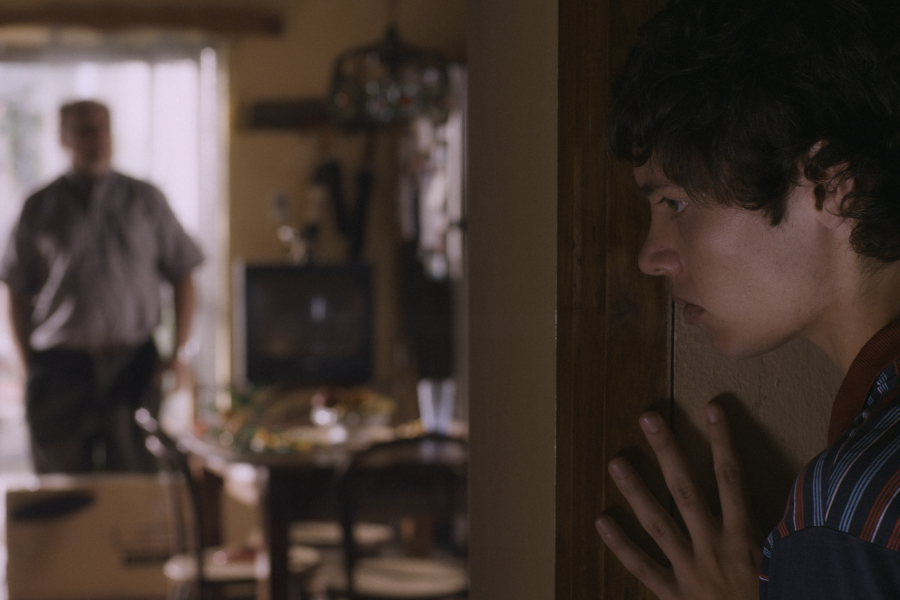
Life is good for Nino van Doorn (8). He has a terrific brother Lucas (14), wise father Bruno and an angel of a mother, Marla. When Marla dies, Bruno can’t cope with her death. Also the values like order, responsibility, love and care they represented. The two brothers create their own world. But soon the anarchistic world is threatened by the outside world. The two brothers are prepared to fool the system but what happens is that they really become a family again.

Life According to Nino takes a potentially dour story and infuses it with some humor, vitality and quite a bit of heart to make it a fully satisfying and not at all run-of-the-mill family story.

Recently Paddington got some much deserved praise for many things but especially for underplaying the talking bear angle. In this film Nino, after a year has passed since his mother’s death, starts to hear what animals are sating, especially his rabbit Bobby. Hearing animals is not the largest focal point of this film, indicative of handling of family films overseas, especially in Benelux. What this allows is the film to keep its focus where it most needs to be (reunification of the family) and allows that aspect of the film play out naturally; for a child’s imagination is fertile and talking to friends real or imagined will happen.

This aspect of the film is buoyed by the fact that the dialogue and and voice talent assembled to voice the animals is great. It keeps that aspect of the film as light as it should be and allows it to balance the more serious moments the film has to offer.

Another interesting aspect of the film is that in social services getting involved at the insistence of some helicopter parent neighbors the trio start become very self-conscious as part of their examination involves the installation of surveillance cameras in their house. They act the part of a proper family and feel extraordinarily awkward. Hilarity ensues but then they eventually do figure out how to function again and it is useful in two ways.

Koen De Graeve is an actor who I’ve recently become quite familiar with after not having consciously seen him prior. With a breakout Best Actor nomination for Time of My Life in 2013, then that was followed up with a film in a similar vain in In the Heart. Here he completes a kind of “Death Trilogy” with his oddest character yet. It’s a very funny portrayal yet accurately depressed an disengaged yet also believable when he switches back on.

Most of the film does rest with a young actor virtually debuting, Rohan Timmermans. The only credit to his name prior to this is as a stand-in, but you’d never know it. He very naturally carries himself, and takes on scenes where he’s talking to animals and not getting anything back, and also readily delivers realistic dialogue.

Arend Bouwmeester not only conveys well a lost youth prone to bouts of hooliganism but also manages to flip the switch and be a caring, sensitive brother. He also partakes in an interesting rather visual subplot that does factor in well.

Life According to Nino is a brisk, enjoyable funny film that manages to smoothly balance elements and tones that would seem too disparate when enumerated in a list, but blend well together. It’s enjoyable and funny and refuses to be overly conformist. Two production companies that have made very enjoyable family fare (Family Affair and Waterland) produced the film and Attraction Distribution handles it in North America, if you get a chance to see it you definitely should.

7/10

Review – The Third Side of the River

By way of a synopsis of this film the best encapsulation is found on Waterland’s (the Dutch Production company that helped bring this film to fruition) site:

‘The third side of the river’ is an intense father-son drama from director and writer Celina Murga. (‘A week alone,’ ‘Ana and the others’). The power of this beautiful Argentinian feature film is the way Murga moves the apparent calm surface. You feel the tension increase. You wait for the explosion.

American director and producer Martin Scorsese is involved as executive producer. About the script he said: “I was struck by the documentary reality, the feeling for everyday life, the sense of looming danger”. Scorsese previously worked with director Celina Murga on her film ‘A week alone’ and Celina Murga was on the set of ‘Shutter Island’. ‘The third side of the river’ was nominated for a golden bear at the international Film Festival of Berlin 2014. The film is produced by Argentinian producer Tresmilmundos Cine and coproduced by German producer Rommel Film and Dutch producer Waterland Film.

Nicolas, a 16-year-old boy, lives in a small town in the Argentine province of Entre Ríos. Nicolas’ father, a much-respected local doctor, has fathered two families and lives two parallel lives. First, he has a socially acceptable marriage to a professional woman – also a doctor – with whom he has a 12 year-old son. Second is his relationship with a woman of humble origin who has born him four children. Nicolas is the eldest and the only one his father officially acknowledges. Only six blocks stand between the two houses, but Nicolas’ father does not allow the boy to walk those streets, and does not even allow him to call him “dad” in public, even though the boy carries his name.


The two women in the doctor’s life know about each other, but their lives are asotto [sic] voce secret: the whole town is fully aware of the situation, but everyone pretends not to notice. Nicolas takes this situation for granted, as though it were completely normal, for it’s the only reality he knows. Yet, the tension of the situation must inevitably explode one way or another. Nicolas will have to make a decision.

Yes, all of the above is a mouthful but it does prepare you very well for the simmering nature of the narrative. In a way the subtextual approach of this Argentinian film bears a similarity to Two Shots Fired. The difference here being that the clarity of most of the intentions, sentiments and resentments brewing beneath the surface are far clearer. The story also does boil over and without pomp or circumstance leading up to it, but it does all make sense.

Furthermore, the button on the film is perfectly placed and rendered. It’s the kind of title that had me thinking on it for quite some time in terms of some of the nuance. With many of the recent titles I’ve reviewed I’ve stewed on them for some times for many different reasons. With this one I appreciated enough of the superfice to want to plumb the depths further for my own insights on smaller moments.

However, I won’t turn this review into a ‘reading’ where I parse it all and give it all away.

In what is becoming a more prevalent modern theme the title is not something commented upon by the film in a Family Guy kind of way. The title has a paradoxical component but also offers an allusion to the region in Argentina in which the story takes place (Entre Ríos), and also the yearning for escaping the provincial trappings therein, which is in all likelihood the most universal theme contained within the story.

Much of the story does focus on Nicolás’ (Alain Devetac) interactions and reactions to his family life. At times having a myopic POV can be a detriment to a story but here there are insights, and his vantage point does end up being a window rather than a portrait allowing us to see in further.

Should the film make its way over to the US it’s definitely one worth looking for.

7/10

Review: The Strange Color of Your Body’s Tears

Typically when I have failed to write about something prior to the BAM Awards, then that film is nominated a half-dozen times, then wins three times; I consider myself done writing about it for a time. However, The Strange Color of your Body’s Tears is one of the films that deserves some extra consideration. It should rouse some giallo fans out of the funk and stupor of scouring old titles whose hats are now as old.

If you saw Amer, and walked away disappointed as I did, this is a wholly different experience from directors Hélène Cattet and Bruno Forzani. This is a fully realized vision. Now one thing I will caution viewers on was that this was not an insight I came to immediately.

This is a film I didn’t re-watch yet but has lived off-and-on in my mind since I saw it. The initial ambivalence about it overall are fading away. Yes, I was floored by the sound mix, edit, the visuals and oneiric flow, but I think now that I’ve chewed on it enough that it’s the giallo elevation I wished Amer was, and whether or not I get it intellectually is almost secondary to its overall gut-punch impact. It’s a film you should allow to ravish you. I cannot guarantee that it will be as rewarding for the uninitiated as it is for someone who knows Giallo, well but if you stick with it and start to reconstruct the jigsaw you may well find you like it as well.

…deep, penetrating backgrounds and precision [camera] movements in The Strange Color of Your Body’s Tears.

Quite frankly the only word to adequately describe the images carved out in this film is astonishing. There’s a lushness that far exceed the prowess of gialli that inspired it and brand themselves on the eyes and minds of those who see it. Sure, it’s excessive but it is so with definite intentions and planning and is all the more breathtaking because of it.

The Strange Color of Your Body’s Tears, which does cut frequently but with purpose. It is almost nearly living in someone’s psyche and attempting to replicate that with it also moving through time, creating frames and meaning visually it is clearly the most outstanding work of the year.

The Strange Color of Your Body’s Tears assaults the senses throughout its duration and the ears are not exempt. Many of the jolts, much of the impact is through the mixing of effects, dialogue and score and helps contribute to its dreamy flow greatly.

It is available on digital and disc not and is recommended for fans of this unusual subgenre and the unusual.

Rewind Review: X-Men Origins: Wolverine

X-Men Origins: Wolverine is a strange little film. This isn’t necessarily always a bad thing in the case of this film but it’s just strange. It seems as if in an hour and forty minutes that not very much story was told and whatever story was told wasn’t properly focused.
The opening sequence which takes place in the Northwest Territory of Canada in the 1840s is quite strong. Yet it barely keeps its head above water. What drives the first four to five minutes is the performance of Troye Sivan who was great despite little screen time. Michael-James Olsen as young Creed, aside from one line reading, was forgettable and the one line, delivered by Aaron Jeffery, which was supposed to be a surprise wasn’t and was poorly delivered. Aside from a conversation when Victor reveals his clear stand on what he thinks his powers on there is no examination of the impact of young Wolverine’s actions on him and where he went from there.
One of the hardest balancing acts a film has to do is when to age a character. Though it was predictable that once the opening title sequence began that Hugh Jackman and Liev Schrieber would appear and while it’s cutesy to see them going through the major American wars until we get to the present day of the tale a lot ends up getting glossed over and they’re almost immediately through their service and going to be executed, when that fails enter Stryker.
Stryker is rounding up a unit for a very covert task which you discover later and they’re off to Nigeria in search of Adamantium, which the team in unaware of they are just doing a job. Wolverine is not having it and leaves.
He goes back home. He lives in a cabin with Kayla Silverfox (Lynn Collins) and in their most intimate moment lies an example of the problem with the film. She tells him of a native legend of the moon and a creature, a wolverine, being separated and it serves its purpose, like it or not, and it’s over only it’s not because it’s flashed back to twice; once in audio, in short order thereafter. Flashbacks of this kind are typically only necessary when you have a complicated plot or want to highlight a twist and this fell into neither. Logan sitting on his bed and looking stressed could look just as effective without it, more so in all likelihood.
There then comes the unnecessary scene where Logan nearly attacks a jerk on the road because he won’t move his car. The plot that ensues of Wolverine on his way to try and find Stryker and seek his revenge on his terms isn’t unnecessary it just could’ve unfolded quicker perhaps. Did the Blob really need to lead to Gambit? Either could’ve had all the information. It was a very odd mix of action scenes that didn’t necessary have a lot of kinetic energy or the highest stakes and almost completely forsaking character.
It says Wolverine on the poster, he needs to have an antagonist which is Stryker and his other struggle is with Creed. The other characters are kind of like window-dressing it’s fun and fine but doesn’t really accomplish much. The shock that’s supposed to be delivered at the end, seeing Kayla alive when she’s supposed to be dead, doesn’t really hold much weight. In fact, Stryker killing the general is slightly more surprising but still not jaw-dropping. It’s a little strange that she had to say so little to Logan to be forgiven when her character are Logan’s are so underdeveloped, which is saying something when this is the 4th X-Men movie.
Recent articles about the Wolverine sequel have quoted producers as saying that it’s their “responsibility to remain true to the source material.” Which would be good because this was neither like the original three or the comics and if you’re going to change things like that, of course, that’s their prerogative and there’s little that can be done about it but they could’ve been executed this tale differently and better than they did.

5/10

Review- To Kill a Man

Lest I sound like I’m sitting here griping about cultural vegetables after yesterday’s post and today’s which include similar conclusions about films that are rather different, but have been pigeonholed similarly for the purposes of the American market. There are certainly past examples of my enjoying films that don’t fit the Classical Hollywood Style to a great extent. Perhaps the most noticeable over the past few years has been this film. So what is it here that rings a bit hollow.

Jorge (Daniel Candia) middle-class family man whose neighborhood has become overrun by a fringe class of street thugs. Jorge’s teenage son, Jorgito (Ariel Mateluna), boldly tries to stand up for his father, which only serves to unleash the bully’s terrorizing reign of threats upon the family. Jorge and his wife, Martha (Alejandra Yañez), seek protection from the legal system but they remain vulnerable. As Jorge’s family suffers from fear and humiliating anguish, the situation paints him as a deficient patriarch-until he’s cornered into defending what’s his.

Much of this is established before the thrust of the film is embarked upon, this being incited by the thug, Kalule (Daniel Antivilo), being released from prison. The initial set-up is simple and quietly menacing, the inability of conventional means to stop this crook is predictable and lacking drama. It merely being a table-setting scene makes it OK the decisions later on are where the lack of impact is felt.

The reason this is so is that there is a very naturalistic, visually distant, abundantly real-time approach to the proceeding following the zenith of suspense in the film. The film does not quite fall into a paint-by-numbers approach but it instead realities instead on the realities of a not entirely unique scenario to build the impact and staunchly refuses non-diegetic amplification of stakes and emotions consciously. Which mean the soundtrack is natural or sound effects lacking score wherever possible. The wide shot, all-too-absent from most cinema is in the forefront seeking to communicate the time and space Jorge has to interact with as he copes with his decisions.

Aberrant event in his nature aside the film tries to work with this reverse notion of the break in the routine occurring early and the change in tenor it takes later. Compare this (again if you will) to something like Cannibal the mundane carries wait because the quotidian activities of that protagonist are typically far out of the norm. Here the return of the norm post departure is not heightened nearly as much.

Thus, it should be clear that as a thriller it does not work in my estimation. Does it work then as a drama, especially considering the fact that drama is the foundation of all other genres? It comes closer but it ends in such a way such that it doesn’t fully explore its potential and instead leaves one wondering about the form of the story wondering: as it’s based on real events, would it not work better as a documentary? To not try and implement my own creativity on the film I acknowledge it comes close, but for the approach taken it felt it lacked a button to fully connect.

5/10

Review: Apaches (2013)

With Apaches, and similarly a film that shall be reviewed tomorrow, the tendency of genre categorization here is again to attempt to pigeonhole a film into a genre-specific spot based on American aesthetic mores. While it can still be argued that American cinema, Hollywood and independent cinema alike, do set global genre expectations – foreign films often eschew cozily fitting in predetermined slots the same way many genre films here do. When I hear the word “thriller” used to descibe a Hollywood film I usually see it a catch all: a film with crime and/or suspense elements that isn’t quite a drama, cape, horror film or another more specific type.

Apaches certainly seems like it has very traditional bones:

A group of beautiful but morally bankrupt teenagers live the fast life in the dark side of beautiful Corsica, but things spiral out of control when one of their number wants to confess their crimes. -IMDb

However, while the plot points in and of themselves may seem familiar for a thriller the rendering thereof, the mise-en-scène and editorial approach are more removed. Communicating this moral bankruptcy is mostly accomplished by examining these characters on the surface rather than digging in deeper. Yet that’s not uncommon. Combine that with some elements being near afterthoughts or occurring between scenes and you see evidenced a different tack than one is used to.

The most common-seeming sequence would be the inciting sequence. This approach in and of itself is not inherently an issue or a downfall. The issues come when there’s less of a probe, when we’re focused more on a place than people (especially a place scarcely appearing on films) there’s an untapped potency being ignored. Definitions could be set or reset, a world built in any number of compelling ways when there is truly no shorthand for us. Instead we get the world through a window approach that doesn’t let us in. A callous series of acts and consequences viewed coldly, presented factually as if they’d have intrinsic weight. A weight that would be be redoubled by its aloof far-too-cool ending. Instead that salvo reads as more of an anomaly than anything else.

With this film we’re getting the anatomy of a crime, and a bit of the environment that breeds these attitudes in these characters, but not enough of why they develop the attitudes and the struggle or lack of struggle they have with that notion. It’s a blasé rendering of blasé criminals that seems to insist its existence is enough to merit my emotional investment. That much doesn’t work.

I frequently discuss the fact that I greatly dislike comparative analysis. I have an issue of it on many levels the main one being that it could judge a film by goals its not trying to accomplish. However, sometimes there are fairly intangible feelings that these comparisons can encapsulate. Here it felt to me like this was Spring Breakers without the artistic verve. That verve is all that kept me at all interested in that film and this film had none of it.

I can unequivocally state that I don’t find this to be a thriller in the traditional sense. It didn’t work for me for the reasons listed above, they may work for you for the same reasons, but I just couldn’t engage more than the characters seemed to engage in their own actions.

3/10

Review: A Christmoose Story (2013)

A Christmoose Story (Midden in Der Winternacht) from 2013 actually marks the second version of this story that I’ve seen adapted to film. As was the case when I saw the second of the new wave of Famous Five films, this remake caused me to look more into the source material being adapted here. The first version of A Christmoose Story I saw was produced in Germany where Andreas Steinhöfel the book’s author hails from. About eight years later to re-adapt the film this time in Dutch and co-produced by Sweden, The Netherlands and Belgium it can seem culturally redundant tio bring this story to film anew so soon. Gladly there are myriad ways in which this film justifies a new interpretation.

What is the most persistently charming aspect of this story is how through a new tale many age-old Christmas story tropes are flipped on their ear. This moose is Santa’s test pilot, he crashed into a barn on a farmstead and he fears beign fired and mistreatment by the reindeer amongst other things.

The bones of this version and the prior are essentially the same. Much of the humor being intended to stem from the situations the characters find themselves in in this well-crafted world. However, through more sure-handed filmmaking, better implementation of practical and digital effects work as well as a more prominent, comedic presence from supporting actors makes this film work even better.

Truly, with the prior version there was a somewhat stilted aesthetic and the impression that the ceiling on this story was only so high. It seemed like it was a pleasant diversion but could not be a more rounded holisitcally enjoyable holiday tale.

Here were some key quotes from my review of the prior version:

Yes, there are overtures of schmaltz and warm-fuzziness, it is a Christmas film after all, but it’s eminently more watchable and enjoyable than I ever thought it would be – and really should have any right to be. Part of this has to do with just a different perspective. Heaven forbid an American film try and get away with a Santa getting drunk and distracted, yet still trying to make a positive film, much less having it actually be Santa and not a mall employee or a psychopath. What the film deals mostly with is a thankfully practical and rather well-crafted Moose character (It seemed rather Falkor-like, I wonder if there is any connection to NES) and adds its own spin, and a rather cloistered tale that is neither a retread or earth-shattering in its repercussions as “disaster” is being avoided.

Much of the same commentary applies to this version, but it’s a level of degrees: one thing many family films struggle with is making leading and supporting young characters who are siblings equally appealing. Here Max (Dennis Reinsma) and Kiki (Dana Goldberg) are equally well realized and the girl/sister is not just an annoying counterpart to her brother, but a valuable member of the cast of characters and players. Similarly, the crotchety villainous older neighbor can be a very tired trope but Arjan Ederveen is quite hilarious. Then, especially for this story, rounding out Santa Claus is crucial in this film and Derek De Lint does so marvelously with a fabulous counterpoint.

Lastly, the pace in this film is excellent as well as a cinematography which adds a richness to the tale. While I described schmaltz being a trap, and almost a Christmas necessity, here even amidst the silliness and improbability there is some genuine emotion, which is a fine achievement.

8/10

Review: A Life in Dirty Movies

A Life in Dirty Movies is a documentary about the life and films of Joe Sarno who was professed as “The Ingmar Bergman of 42nd Street,” a titan of sexploitation cinema from the 1960s through the mid-1970s.

Early on in watching A Life in Dirty Movies you may find a weird number of allusions coming to mind as the narrative unfolds such as the character of Jack Horner (Burt Reynolds) in Boogie Nights. Yet as the story moves on you’ll see the individual, the milieu, the genre and where some of the legends about these films came, as well as information on the transformative shift from what was once sexploitation to hardcore; and thus Joe Sarno as an artist goes from the avant guard to a man of a bygone era almost immediately.

As a man he is almost unchanged. In one of the wonders of the Internet age his films, like those of other mavericks and originals in specific niches; have found new life and appreciation due to discussions and video availability. As the story unfolds and you see footage, even if you never saw one of his films, that illustrates what the likes of his widow Peggy Sarno, John Waters, and film historians are saying: in this softcore world Sarno found a voice.

It’s one of the film writing axioms that within your genre you find the room to speak and ply your craft. This was the case here. The fact that years later be it in the United States or Sweden there were retrospectives and reconsideration and seemingly sudden interest in his film is a testament to what Sarno did do, and what after a while he was no longer allowed to do as frequently.

Part of the film talks of his work in a filmographic sense with talking-heads and footage, part of it is current as he is trying to write and get a new script produced well into the 21st century as well as making ends, juxtapose that with the sudden recognition he’s getting and the travails he faced personally aside from the career that couldn’t and didn’t want to conform to where business took his form and there’s a lot to work with and fit into this compact film.

It does meld together well and the conclusion has impact. I can’t help but think the final third did feel a bit herky-jerky not because of narrative decisions, but rather pacing decisions in the edit that built emotional backstory and current context that shifts a bit too abruptly. The shift in the end does need some abruptness based on the parameters but it lends itself to a compartmentalized fragmented view of the film that had come to tie together many disparate elements to that point.

Ultimately this is a case wherein film is the best chronicler of film history in a manner such that the information would reach an audience that may not have been receptive to Sarno’s story another way. As is illustrated in the film Joe struggled to win any sort of favor with his wife’s family and it seemed even his industry had forsaken him, but when he died the New York Times dedicated the topmost, largest obit on that day to his memory. A mark had been made, but to the completely uninitiated that or text on his work may not be the most effective introduction, but rather this film is. For I think without it, without cutting in clips starting with one that is a jarring amount of cinéma vérité in sexploitation film; I may not have come away from the film with an appreciation for what he did and a curiosity to perhaps see it. A writer can do wonderful things in describing a film, but a lot of film writing can communicate more easily when the audience has already experienced the film it’s harder still to paint that picture and compel someone to seek out further and in that way this film may allow Sarno’s legacy to live on further.

7/10

Blu-ray Review- Astral City: A Spiritual Journey

Film Review


Astral City: A Spiritual Journey tells the story of André Luiz (Renato Prieto), a doctor, as he journeys from life to Umbral, a kind of purgatory, and the afterlife in Nosso Lar, where he ultimately has to adjust to his death and prepare for eventual reincarnation.

With this film being a Brazilian production and my being dual citizen of the United States and Brazil, my interest in this film would be fairly clear. It’s a film I actually saw a small piece of on cable in Brazil but never saw all of. Furthermore, I knew it was a big production but was not aware its being based on the word of Chico Xavier, a world renowned medium/spiritualist.

However, pre-existing knowledge of Xavier’s work or philosophies are unnecessary to follow and appreciate this film. Much of the film is introducing these concepts in a narrative way, and it does communicate in a manner apart from religion so the dogmatic, preaching inclinations of the film are kept to a minimum. As the protagonist does learn the workings of this new plain of existence and see his prior life more clearly the initial conflict is resolved and must be replaced. This does cause some issues with the stakes as the conflicted character needs to be a secondary one from that point forward. Yet it is intriguing and well-produced enough to still be engaging even though it does bloat and drag in its latter half.

Astral City (2006, Strand Releasing)

The cinematography, like many elements of this film, has to communicate quite a few environs and implement numerous techniques to do so. It travels from a gilded past to a dark underworld and a bright heavenly plain with equal aplomb in all, which is a credit to Ueli Steiger.

The effects considering the initial production date of the film are fair. As with any film that has much effects work in it the results are hit-and-miss, but the effect desired is usually very well conveyed.

Departmentally the costume and make-up teams are perhaps the most interesting to see. In a film such as this it is clear to see the interplay of the work done by each to create a cohesive whole.

Another aspect that can often be overlooked in a film that features a copious amount of visual effects is the production design. It can be overlooked entirely. The use of locations, sets and effects mesh very well throughout the whole generating numerous emblematic locations that enrapture the eye.

The certain lack of undulation in the emotional fever chart of this film makes it tough sledding for the actors and the results inconsistent, but there are flashes that make it passable.

While at times it functioned more as an exercise in departmental appreciation, and a source of pride for Brazil ramping up things on the technical, the film does manage to hold interest throughout. While I’m not enamored with the translated title it does make it likely that this film will find the most receptive audience for this film. The film does manage to be somewhat more than a philosophical treatise, but does not transcend its ethereal trappings as sufficiently as it could have.

6/10

Bonus Features

Astral City (2006, Strand Releasing)

The trailer of the film in question is the bare minimum a Blu-ray or DVD can offer as a special feature. It can be even more interesting to view the trailer in hindsight. This way you can more closely examine the link between art and marketing and how the story is conveyed to sell to an audience.

In this film it’s interesting to see how the film was geared toward the American arthouse crowd rather as it is a Brazilian film. It does accurately convey the stakes of the story and the production aspect.

Other Trailers

Astral City (2006, Strand Releasing)

One thing that can be interesting to access later (and not before you sit down to watch the main feature) is the additional trailers. This way you can potentially discover new titles. This disc contains: The Way He Looks and The Amazing Catfish, which I have seen. There are two I am not familiar with Symphony of Summits and Lilting.

Making of

Astral City (2006, Strand Releasing)

The making of is usually one of the meatier bonus features you’ll find. On this disc that is certainly the case it runs 22 minutes, it was likely used as promotion on Brazilian television based on that running time.

If there was a Brazilian film that would have the need for such a featurette this would be it. When it was made it was one of if not the biggest production budgets for a Brazilian film. Super-productions are usually reserved for television in Brazil and it’s interesting to get a glimpse into how this production came together. Yes, some help was brought in from abroad where it was clearly needed (most notably with the Ueli Steiger, Director of Photography and SFX company) but as the interviews go around the horn to all production heads you’ll find most of them are nationals.

While the look at all aspects is a bit cursory it is great to see some of the journey of this story from Chico Xavier’s book to the big screen: from taking disparate locales and elements, to creating the visuals both in principal photography and in post.

As many films are its journey to the screen was long but seemingly worthwhile. This do offers a good look at what it was like on set from Werner Schünemann post-wrap speech to the National philharmonic recording Philip Glass’ brilliant score (another coup for the nation’s cinema this film is responsible for).

Oftentimes when watching a film it can be hard to tell how that film fits into the national landscape of the cinema represented. While there is some salesmanship in this doc it does give you a sense of context to that, which is valuable for the uninitiated.