Bernardo Villela is like a mallrat except at the movies. He is a writer, director, editor and film enthusiast who seeks to continue to explore and learn about cinema, chronicle the journey and share his findings.
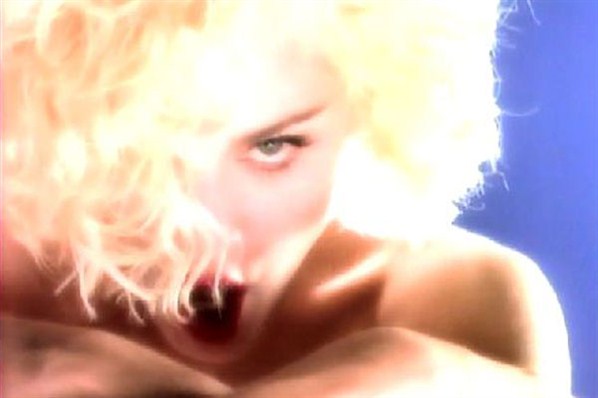
Lastly, and perhaps most obviously in a string of Madonna videos with musical touches, Madonna’s “Express Yourself” not only draws its inspiration from Metropolis but also is directed by David Fincher, who started in the music video trade before transitioning to feature films.
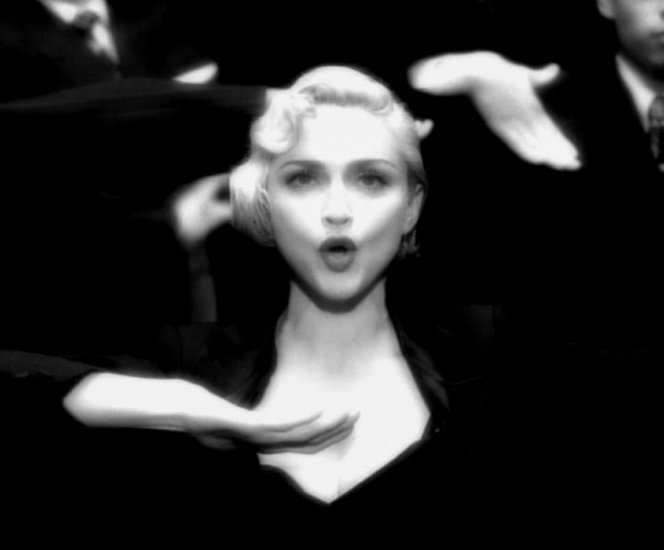
Here Madonna again (the theme started here) not only gets cinematic with many of the visuals emulating the halcyon days of Hollywood both on film and in promotionals stills but there are also references to many of the biggest stars of yesteryear in the lyrics.
More specifically with regards to the photos here’s what the Wikipedia article says about the images. To check the sources visit the actual page:
Filmed in black-and-white, the video recalls the look of films and photography from The Golden Age of Hollywood with the use of artwork by the Art Deco artist Tamara de Lempicka and an Art Deco set design. Many of the scenes are recreations of photographs taken by noted photographer Horst P. Horst, including his famous “Mainbocher Corset”, “Lisa with Turban” (1940), and “Carmen Face Massage” (1946). Horst was reportedly “displeased” with Madonna’s video because he never gave his permission for his photographs to be used and received no acknowledgement from Madonna.[29] Some of the close-up poses recreate noted portraits of such stars as Marilyn Monroe, Veronica Lake, Greta Garbo,[30] Marlene Dietrich, Katharine Hepburn, and Jean Harlow. (Additionally, several stars of this era were name-checked in the song’s lyrics.)[31] Several famous Hollywood portrait photographers whose style and works are referenced include George Hurrell,[32][33] Eugene Robert Richee,[34] Don English,[35] Whitey Schafer, Ernest Bachrach, Scotty Welbourne, Laszlo Willinger, and Clarence Sinclair Bull.[36]
This Madonna video also features a cribbed image from a well-known film but it is not as renowned as her borrowing liberally from Metropolis for “Express Yourself.” This video for “Oh Father” borrows images from Citizen Kane. Kudos to the Comet Over Hollywood for spotting it and inspiring this month-long focus on Madonna’s videos.
Citizen Kane (1941) was named the greatest film of all time by the American Film Institute in 1998.
But prior to this, Madonna used themes from the Orson Welles film in her 1989 music video “Oh Father,” according to writer E. Ann Kaplan.
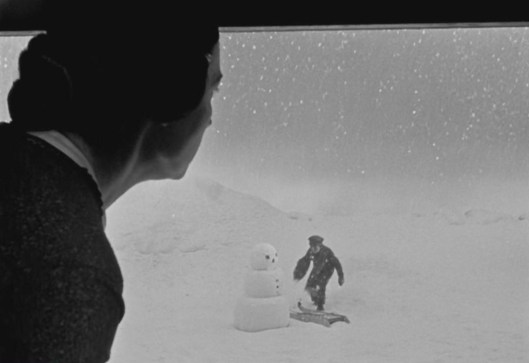
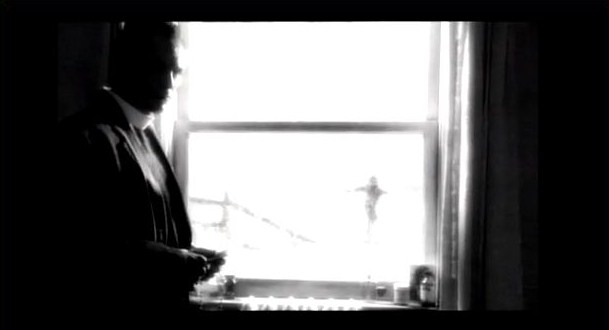
A scene similar to Citizen Kane in Madonna’s video “Oh Father”
The whole video is shot in black and white. At the beginning of the music video, a priest is looking out the window, watching a little girl spin and play in the snow. Inside, the little girl’s father is lying over her mother as she dies.
Madonna’s video was modeled after his scene of Agnes Morehead as Mary Kane watching young Charles Foster Kane playing outside.
The scene is similar to young Charles Foster Kane playing in the snow as his parents are inside, preparing to send him away with guardian to be raised in luxury. When Kane is taken away from his parents, he acts rebellious and is expelled from several universities.
The song and video were Madonna’s attempt to accept her mother’s death and her father remarrying.
“I had to deal with the loss of my mother and then had to deal with the guilt of her being gone and then I had to deal with the loss of my father when he married my stepmother. So I was just one angry abandoned girl. I’m still angry,” she is quoted as saying in a 2002 biography “Madonna: An Intimate Biography” by Randy Taraborelli.
Kane allusions aside it’s a fairly haunting video that I could scarcely watch when I was younger. On a musical note, there are perhaps no two more disparate back-tp-back tracks in her discography than this followed by “Dear Jessie” on Like a Prayer.
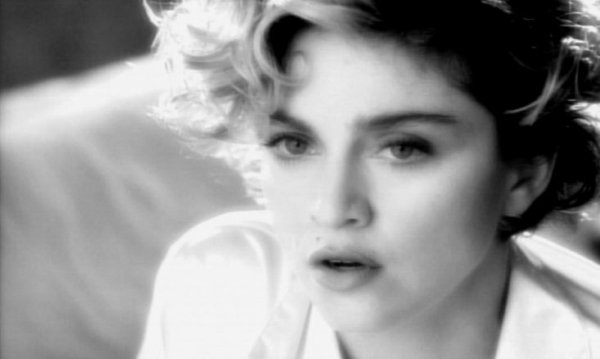
Continuing the Madonna theme this month, which began last week, we come to a video that is not only in black and white but has a bit of a story to it also “Cherish.”
Here’s some interesting info about the video gleaned from Wikipedia. Some of it pertains to the production and release and the last paragraph gets into interpretations of the motifs, which you are always advised to take with a grain of salt. If you want to look into what the sources are, you can visit the original article here.
“Cherish” was accompanied by a black-and-white music video that was directed by Herb Ritts and was filmed on July 22, 1989 at Paradise Cove Beach in Malibu, California. Its world-premiere took place on MTV on August 28, 1989.[47] Ritts was one of Madonna’s preferred photographers at that time and so she asked him to direct the “Cherish” video. Ritts reportedly tried to talk her out of it saying, “But I’m a still photographer. I don’t know anything about film.” Undaunted, Madonna replied simply, “Well you have a few weeks to learn.”[47] The video was conceptualized by Ritts, who wanted to portray Mermen in their natural habitat, but Madonna baulked at the idea since she wanted to be portrayed as herself, but keep the Mermen also.[47] Four male performers were signed for this, one of them being Tony Ward, who would become Madonna’s boyfriend later, with the other three being water polo players from nearby Pepperdine University.[47] There were four Merman tails created by Global Effects in North Hollywood, California, for the video.[47] Three full size tails for the mermen were cast in a solid highly flexible rubber, each weighing around 40 lbs. This was necessary to make them neutrally buoyant in water as lighter tails would have floated, causing the swimmers to be head down in the sea.[47] Once in these tails, the polo players needed to be carried to and from the water and once inside, they had tremendous swimming power and agility. This was partly due to a plastic spring like armature cast into the flipper of each tail.[47] One of the reasons that this video was shot in black and white was because the water was very cold, causing Madonna’s already pale complexion to look even whiter.[48]
Fouz deduced a relationship between the music and the images in the video for “Cherish”, saying that they complement each other; the author felt that this in turn encouraged the viewer to watch the video repeatedly.[49] Fouz talked about the balancing of height and depth occurring in the video. The visual depictions of the Mermen and the lighting used in the video was influenced by Ritts’ still photography known as “The Male Nude Bubble”, which showed nude male models inside a giant water tank, with a white cloth entwined around them. Many of the qualities in the photos, including the floating nature of the models, were used in the swimming and the posing of the Mermen.[49] Carol Vernallis, author of Experiencing Music Video, found homoerotic connotations between Madonna and the Mermen. The Mermen in the video exist in a self-contained world of their own, where they procreate with their own kind, both biologically and socially. The fact that the Mermen did not seem to possess genitalia led Vernallis to believe that it associated them with Ritts’ other works, homoerotic sculptural images without penis.[50] Their tails drew different meanings, including sexual ones and Christian symbolism. Since in contemporary art, the images of Mermen are rare and Mermaids are prominent, they are sometimes called fairies partly because it is not known how they came to be.[50] Vernallis believed that the mysteriousness and the elusiveness of the mermen in the video played a crucial role. They never address the camera directly and are often shown disappearing from view.[50] Vernallis believed that since invisibility is a central theme in the homosexual community, this actually portrayed oppression and also the desire to watch but never be seen.[50]
This August, on the 16th specifically, marks Madonna’s birthday. I’ve had occasion to discuss Music Videos and their cinematic tendencies on occasion here, but I never really focused on them during a Short Film Saturday. So during this month I will feature some of her more cinematic, or cinematically-inspired ventures.
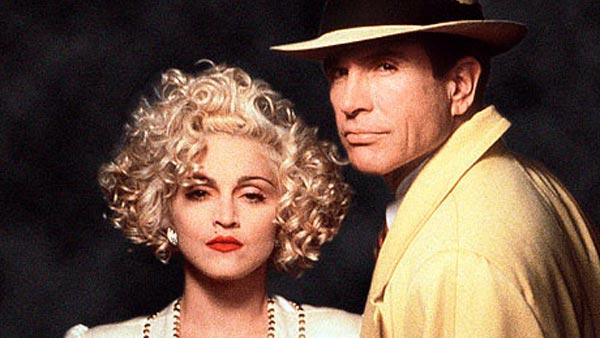
This first video for the song “Sooner or Later” plays both into the music and the film of the 1940s as it was produced to accompany the 1990 film Dick Tracy.
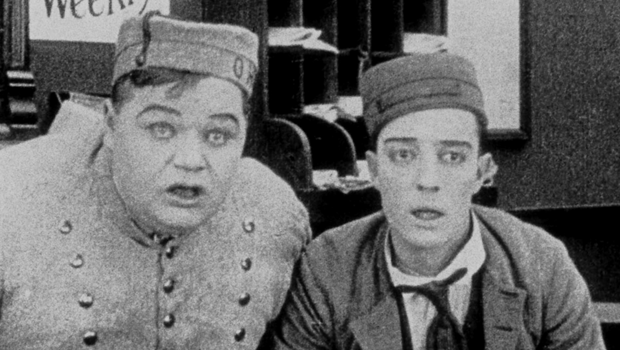
As I wandered through the list of rediscovered films on Wikipedia and got into the nineteen-teens there were far more titles viewable online than the prior decades. Four of the titles, three that you can view here, feature both Fatty Arbuckle and Buster Keaton.
These are obviously two of the bigger figures in silent comedy. I know I’ve had occasion to view a few Arbuckle Keystone titles when TCM has done Mack Sennett nights, but I never really focused on him as I should have. Especially considering the fact that his star-power and acclaim were perhaps unprecedented as was his decline.
As for Keaton, the only of his films I was sure I saw of before this was Limelight. Yes, I am a Chaplin aficionado by breeding but in spite of these titles being middling you can see what both could do in glimpses. Depending on your mood you may prefer the all-out chaos of His Wedding Night, the subdued reaction Fatty has to a fire at the beginning of The Rough House or the escalating zaniness of Back Stage. Regardless, enjoy!
Here is the third and second to last Short Film Saturday where I will give you a sampling of short works that were once thought to be lost, but were re-found at times in the most unlikely circumstances. These selections are films originally produced between 1910-1919.
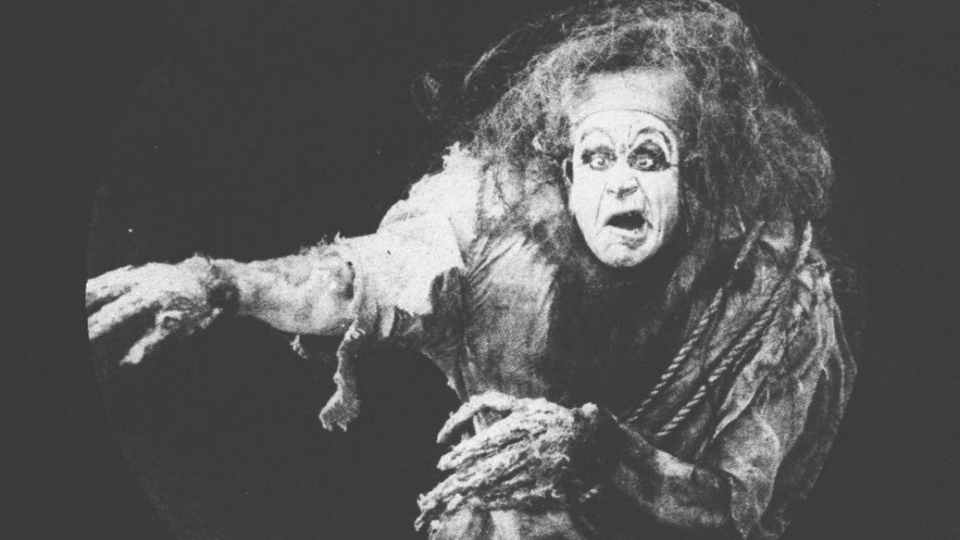
The first cinematic incarnation of Frankenstein was brought to us by Thomas Edison. I had seen this prior but didn’t realize it was missing.
Frankenstein (1910)
The second is another first time screen adaptation this time of Robert Louis Stevenson’s classic Dr. Jekyll and Mr. Hyde
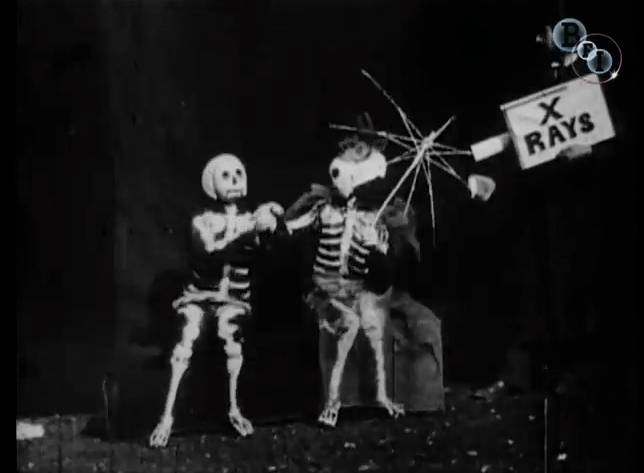
If you saw last week’s post, you’ll see I’m running a theme on rediscovery. These will spin-off into a different kind of post when I start to run into features. As for now, while shorts were king, the films will appear here.
The Death of Poor Joe (1901)
Believed to be the first cinematic work based on Dickens.
Katsudō Shashin (1907)
Believed to be the first Japanese animation.
Running only 3 seconds. Discovered in Kyoto in July 31, 2005.
Sherlock Holmes Baffled (1900)
From Wikipedia:
Running only 30 seconds, this is the first recorded detective film and the first to feature Sherlock Holmes. A paper copy was identified in 1968 in the Library of Congress Paper Print archive by Michael Pointer, a historian of Sherlock Holmes films. It was transferred to 16 mm film in the Library of Congress collection.
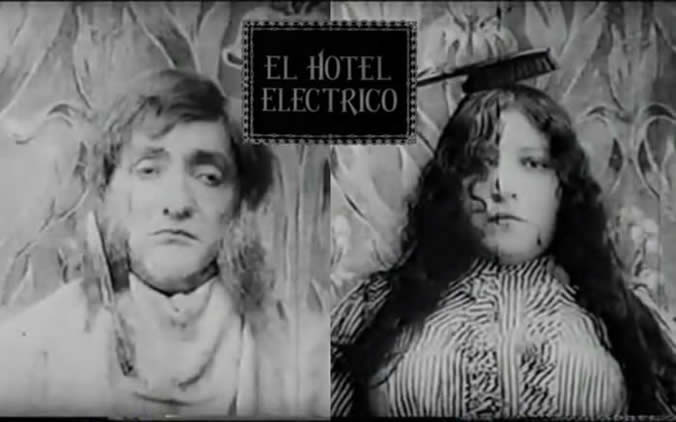
El hotel eletrico (1908)
Directed Segundo de Chomon a Spanish film pioneer.
Recently I was doing research on another topic entirely and came upon a Wikipedia list of rediscovered films. That is to say films believed to be lost and rediscovered much later. Many of these finds are quite remarkable and unlikely. The fact that many of these films are quite old and in the public domain made me start searching for them. I was thus able to create a few Short Film Saturday, and maybe a few other posts, featuring these films.
This first post contains the oldest: it’s a film from 1897 by George Albert Smith and is quite ingenious.
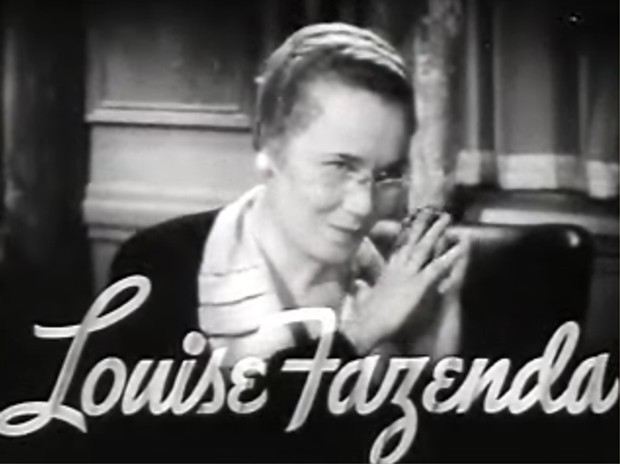
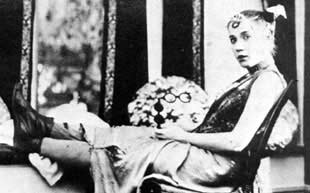
When I heard about Movies, Silently’s blogathon about funny women the first name that came to mind was Louise Fazenda’s, and that was almost instant. However, unlike in my recent Children in Film Blogathon post wherein I knew Jackie Searl’s works, but had just discovered a new side of his them; here I’d quite honestly never heard of Louise Fazenda until I read the wonderful book The Keystone Kid.
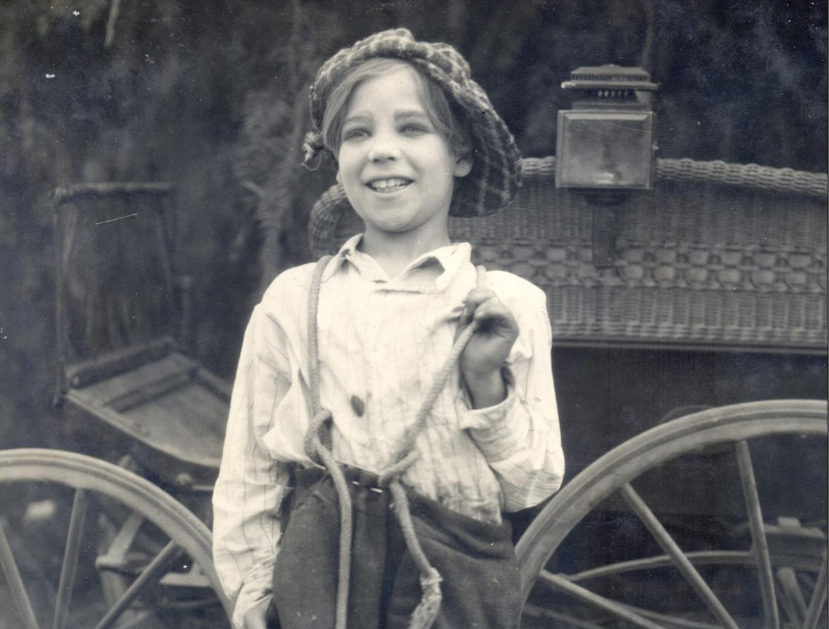
The Keystone Kid is part film history and part memoir. The recollections of Coy Watson, Jr. speak most fondly of Louise Fazenda, not only as she became a close family friend, but also of her talents as a comedienne.
My discovering Fazenda’s work, any of it really, is a testament to the importance of The Keystone Kid as a document of film history. As we move further and further in time from given eras in the artform, thumbnail sketches and one line synopses become what we take to be the truth about era, films and performers alike, while other instrumental figures can be forgotten entirely.
Examples of this would be that through Watson’s book I learned that Bobs, whose talent and fame for crying I knew and have been witness to, was the youngest of a large family; that Coy, Sr. was a pioneer in wire effects in Hollywood and that there was an actress named Louise Fazenda who was highly regarded. However, even in wanting to give her what was her due, and he did so citing her notoriety; and two stories (one on set and one off), I still knew nothing of her really, and I was very intrigued. This was not just because she was an unknown silent actress to me, but also because even her name, which means farm in Portuguese, fascinated me. It was a decidedly “un-American” surname yet remained unchanged.
Method
So this post has that element of excitement wherein I’m not coming of a position of having known a bit about, and having insights into, said performer, but instead was discovering her. And that’s great because part of why I don’t read books about film as voraciously as I could is that element of “I wanna see that, and that and that” for various reasons and being disappointed to find said titles are rare or hard-to-find.
My tactics in finding her, owing to the fact that I didn’t have too much time to get cracking, were to hit two internet resources one was YouTube, the other the Internet Archive. I didn’t scour compilations as it may have taken too long to uncover he appearances there.
The films I was able to see all or part of were as follows:
Your Show of Shows(1929) Wilful Ambrose (1915) Ambrose’s Fury (1915) When Ambrose Dared Walrus (1915) Ambrose’s Lofty Perch (1916) Ambrose’s Nasty Temper (1917) Once Over Lightly (1944) The Bat (1926) Her Fame and Shame (1917) Her Torpedoed Love (1917) A Versatile Villain (1915)
General Impressions
If I had only seen Once Overly Lightly, a 1944 moviereel style compilation of many silent films with a voice-over track full of insincere wistfulness and backhanded apologies for silent tropes; I still would’ve known little. Again she’s cited as one of the best but all that’s cut into the film is one very apt pratfall. This release being just five years after her last credit mind you.
Yes, Louise Fazenda survived into the sound era. As the first clip I watched showed (Her segement in Your Show of Shows), though she was playing the straight man, she remained quite funny, versatile and had a pleasant speaking voice. She had a good run in the transition to sound, at least in terms of years, it seemed apparent even in 1929 that writers didn’t know what to do with her talking though – a harbinger of the influx of stage influence in the craft of writing and acting perhaps.
So those first two bits only gave me small glimpses. As I sat down to write this I wondered, maybe the internet has some insights. I found on Golden Silents her bio from Who’s Who on Screen 1920:
“Louise Fazenda, famous Mack Sennett comedienne, was born in Lafayette, Indiana and educated in Los Angeles. After a short season in stock she secured an emergency engagement with Universal, going from there to Keystone and Mack Sennett. Miss Fazenda scored notable success in “The Kentucky Lady,” “Her First Mistake,” “Her Screen Idol,” “The Village Chestnut,” “The Village Smithy,” “The Foolish Age,” “Hearts and Flowers,” “Treating ‘Em Rough,” “Back to the Kitchen,” and “Down on the Farm.” She is five feet, five inches tall, and weighs a hundred and thirty-eight pounds. Her hair is light and her eyes are blue. In spite of her remarkable characterizations of homely girls, Miss Fazenda is one of the screen’s most beautiful actresses.”
At least, here you see some popular titles at the time. It can be worth looking into those down the line, but I’m fairly sure that time has been very unkind to many of her earlier works. Oddly enough through my viewing over this week, I didn’t see what was cited as her staple character:
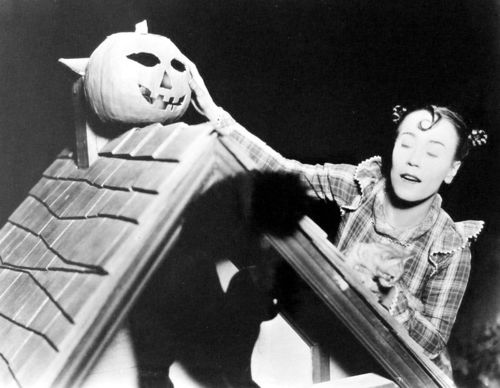
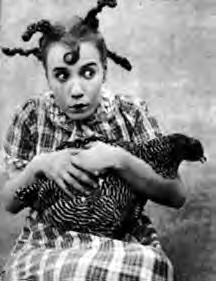
Her best known character was her country bumpkin — complete with spit curls, multiple pigtails, and calico dresses, a look that went on to inspire such later comics as Judy Canova and Minnie Pearl.
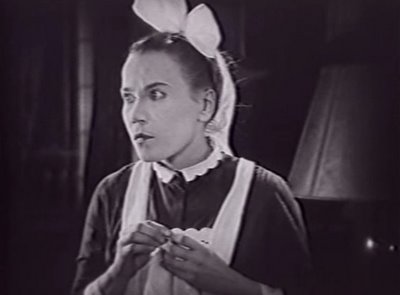
However, I did see her range one of the amazing things I picked up by watching Fazenda, even in the fleeting glimpses I saw, was that there is an elasticity, a chameleon-like quality to her appearance. In the teens she played lovestruck young ladies and matronly housewives. When you compare that to her appearance in Your Show of Shows, she looked more refined, mature (as she could look) but hardly like 14 years had passed.
Sure there was movie magic even back at the very beginning but ones facial structure and the quality of their features have to be perfectly conducive to such a seamless transformation. Fazenda did what needed doing to create her character and seemed to take it seriously even in entirely goofy films. That grounding in reality, even of just one element can be essential for comedic success. It’s not a wonder that legend has it that Mack Sennett would bring in Fazenda to try and quiet Mabel Normand’s comments on the caliber of films Keystone put out.
Fazenda seems to have a physicality that’s ahead of her time, possessing not only natural ability but the innate ability to seem natural on screen. Silents weren’t communicating with words so gestures, movements and looks had to be exaggerated such that those who could be big but also convey and get desired results with restraint are noteworthy. As cameras moved closer to actors broader was no longer better and those who could make subtle communicative gestures continued to work consistently. Fazenda proved early on she had that innate ability.
Her facial expression in Wilful Ambrose as she lines up a “bonk” in Wilful Ambrose is priceless. A husband being smashed on the head is a standard bit, but to make the anticipation funnier than the result is great and the mark of a good comedian. All of these traits, including a good singing voice, were on display in the sound era.
In The Bat you can see that she was the comic relief and brought that levity when needed but her fear always seemed very real. She instantly asserts her presence. Her character, for as superstitious as she is, is often correct to be fearful and it ends up being one of the charms of the film. While that film had its failings it is perhaps the best illustration of her persona that I was able to see: deft physical comedy and seriously grounded commitment.
Conclusion
Going back around to the beginning, it really is a wonder what The Keystone Kid, or any written work about film can do. You open the book with a vague interest in the subject matter and learn of very specific avenues to explore. They are entryways to new constellations in the universe of film. Due to this book I now have definitive thoughts on why Louise Fazenda is great. I no longer take that statement and remember it like a cinematic platitude such as film X is great and film Y is such-and-such’s best. I’ve now seen some of her work for myself.
If a piece of film writing leads you find one new artist of film it’s done a great service. If you find many it’s a debt that can never be repaid save to thanks again. I am now a fan Louise Fazenda’s thanks to Coy Watson, Jr.’s book, and I’m quite grateful I am.


 The Movie Rat