Review- Snow White and the Huntsman

Snow White and the Huntsman is such an odd case. Based on the way it handles the oft told legend it has a lot of promise, however, this film has a weird handling of its two titular characters inasmuch as it seems to run from them both. At the start, yes, it is the hunstman (Chris Hemsworth) who is doing the voice over for the necessary backstory segment that kicks the narrative off, but there are a few unfortunate things about it: first, this is one of the higher points of the film and it’s a brisk, but not rushed beginning portion. Second, after this part the Huntsman is lost for a while until the queen commissions him to retrieve an escaped Snow White. Which brings us to the young princess, her dialogue is sparse throughout, her involvement until her escape is minimal and she drifts into the background more than any would-be protagonist in recent memory.

Is it just sloppy plotting and writing or is the fact that the film wanted Kristen Stewart involved for box office appeal, but didn’t want to hitch their wagon to her alone? She has a moment here and a moment there, but the big military speech falls short of what it should be and her physicality issues persist. No actress on the face of the earth has a mouth so persistently agape for no discernible reason as she does and few emote so little facially, at least in the roles I’ve seen. I’m not going to avoid seeing something merely due to her presence, but I have yet to see this other side of her that her staunch supporters keep citing.

However, as I said, the film is rarely about either of its two named characters, at times this is a good thing and at other moments it’s a failing. Charlize Theron is broad in her role as the evil queen as if she just fell out of an old Hollywood melodrama. I think that’s something most of us can agree on. I, for one, absolutely love her performance and find nary a misstep in it. At the very least someone, is bringing energy and commitment to this film, and more often than not I found her scenes rather chilling.

Much of the conversation has been about the performances thus far because there is little else holding this precarious piece of work up. The pace of the film is decent up until about the midpoint when the dwarfs are introduced and then the film gets a bit unfocused, lost and extraneous. The narrative does pick up again eventually but never recovers from this unfortunate area. This section also introduces the odd production choice of having average size actors be the faces of the dwarfs. I’m really not sure why it’s deemed necessary, and it is a distraction.

The cinematography, scoring and production design of the film were all really quality components that could’ve truly elevated this film to its potential had the narrative it was supporting been up to snuff. The beginning of the tale works best because it’s in storybook mode and frames the queen as much more of a power-hungry madwoman than say, Disney did. The stepmother queen in either tale is motivated, it’s just that this film explains the motivation a bit more. Where it develops her plot and psychology it works, but little else is substantial here at all, which is not the case of the animated version, or even some others for that matter. Where it sets up Snow White’s initial struggle it works, but it loses her along the way, as it not only fills in blanks but colors outside the lines, so to speak, and adds running time and trivially valuable sub-plotting with the love triangle that evolves. The richness it builds is soon watered down by excess.

Snow White and the Huntsman
starts with a few clear objectives but then becomes occluded and can no longer see the forest for the trees and like many travelers in this imaginary world gets lost in a dark forest, and all hopes of its being a quality piece of work perish.

5/10

Comparative Analysis: The Dictator (2012) and The Great Dictator (1940)

I have often said that I do not enjoy indulging in comparative analysis when writing a standard review. Sometimes it does come up by I try not to focus on that aspect. However, there will be the rare occasion where the comparative analysis angle is far more intriguing than a standard review, so I have taken it here. I hope you enjoy it and welcome comments.

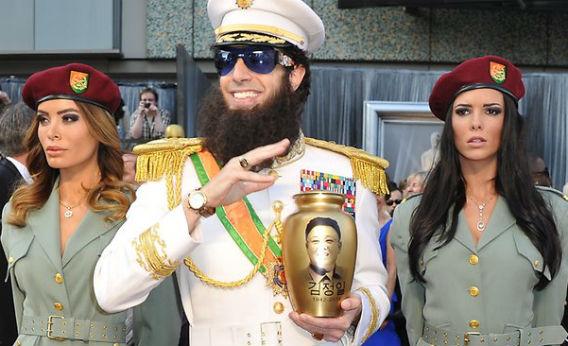
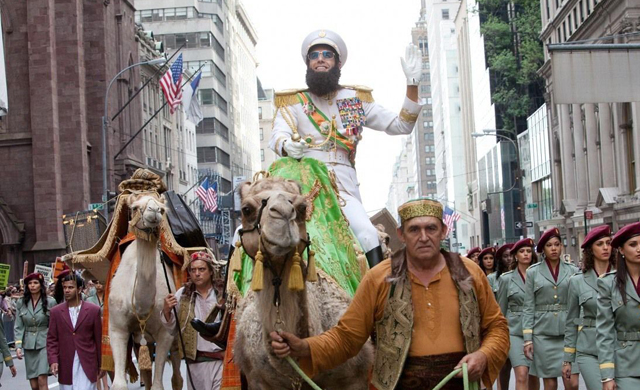
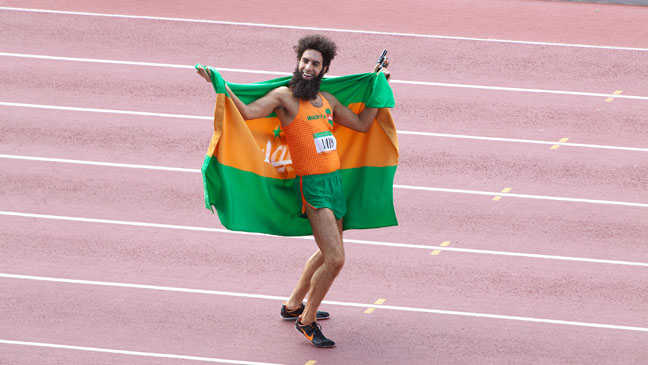
After having seen The Dictator a thought occurred to me that would invariably shift the tone and direction of the piece I wrote regarding it and it would thus not be a traditional review. The thought was as follows: The Dictator is like Sacha Baron Cohen’s own take on The Great Dictator. Now before proceeding with this line of reasoning allow me to state unequivocally that I am not for a second equating Cohen to Chaplin. What I am saying is that the parallels that this film shares with the one made 72 years ago are rather hard to ignore.

Frankly, I could also write a little more on this topic and explaining why this film does work to the extent that it does and find that this is a much more interesting dialogue than “How funny is this?” as that’s quite the subjective question, and “How does this rank in Cohen’s canon thus far?,” ibid.

Now, this might seem a rather facile allusion at first but what most intrigued me about this thought was the absolutely refractory nature that this tale has and that it makes The Dictator not only true to its time but as true to the artistic force driving it as The Great Dictator was.

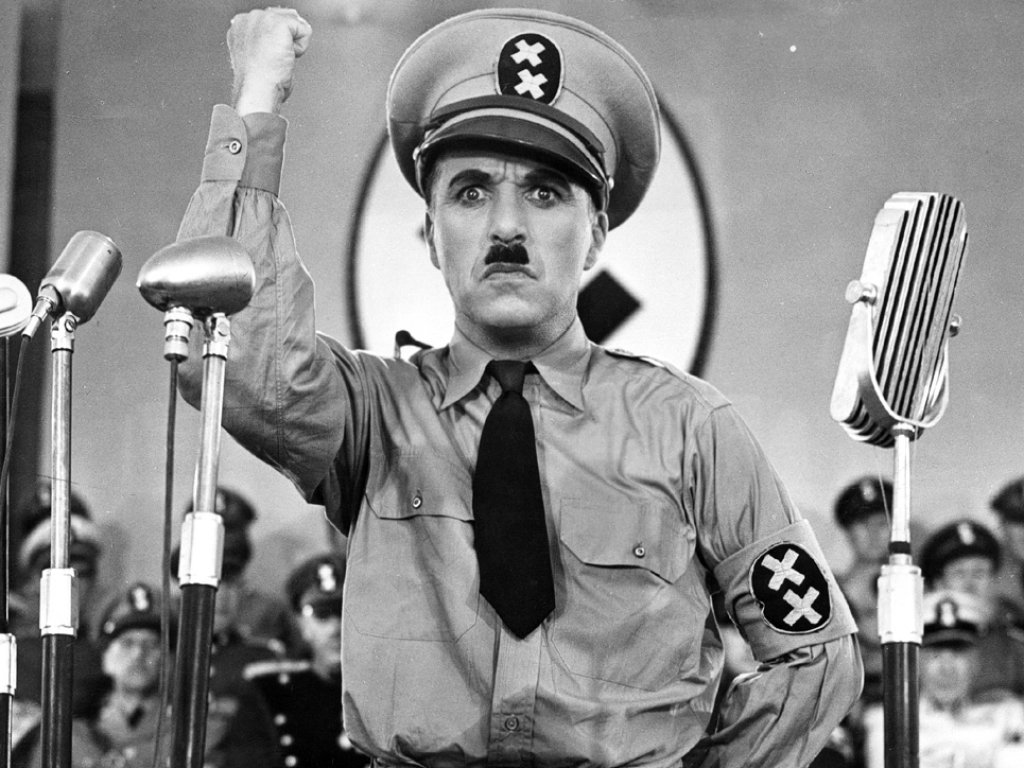
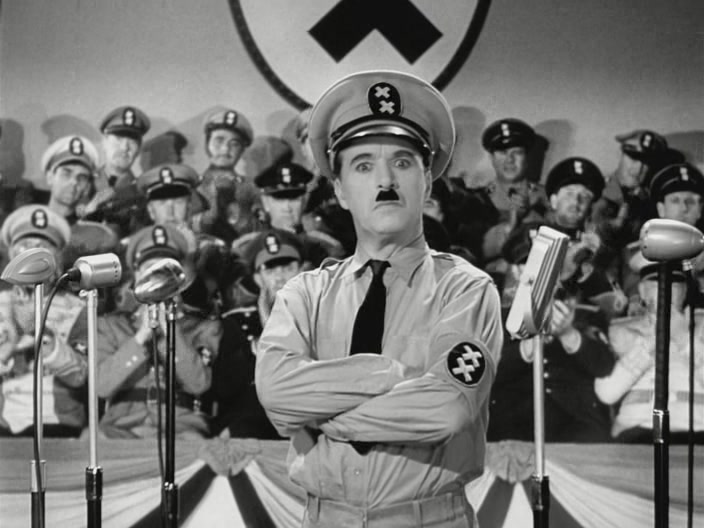
The first confluence that the two films share is that there is a rather overt political message being delivered in the film. Each fits the tone of the actor and the film perfectly aside from being a necessary oration for the political climate in which it was spoken. Chaplin, the silent star, who resisted the advent of sound with fervor eventually, slowly gave in. The Great Dictator was his grudging embrace of the new form. That’s not to say Chaplin didn’t make it a visual venture, as this film features the iconic playing with the globe scene but it does also have the memorable speech, one of the most brilliant pieces of acting ever committed to celluloid. The silent star has a stump speech wherein he not only wears his heart on his sleeve but belies the fact that he is a double for the dictator.

The Dictator does have its own double aspect, however, as the title indicates, it focuses on the dictator rather than the double, and the speech here is given by the dictator not the double. The speech, as opposed to being heartfelt, goes from being tongue-in-cheek to sarcastic to the near equivalent of a bit from The Daily Show or The Colbert Report, the 21st Century replacement of the political cartoon. Chaplin’s speech was made during the darkest moments of the 20th century and was a message of hope, whereas Cohen is speaking in a world that alternates between great apathy and great fervency, where there is much conviction with little to no information despite the ready availability thereof. In the end, his is a rather even slam of both sides showing the warts totalitarianism and capitalism have.

While Cohen’s tale creates a fictitious nation meant to capture the foibles of as many leaders of Aladeen’s ilk as possible, Chaplin’s is clearly a caricature of Adolf Hitler, and has the additional layer of being a personal statement by Chaplin on his own behalf, who had for years been a presumed Communist by Hoover’s FBI.

While the cinematic quality of either is never going to be confused, I will reiterate that each reflects their lead perfectly. Chaplin was every bit the dramatist, the sensitive artist as he was a comedian, he’s cinema’s crying clown, only he’s unlikely to frighten small children. Cohen is broad, crude and if he’s left a member of his audience un-offended he feels he’s failed in his mission. His style is a perfect reflect of the excess and vapidity of the global political scene in this day and age. This is not to say that decisions of today’s world leaders do not carry weight, but while the world is always in the balance we’ve rarely come so close to the brink of global devastation as we did in World War II. Therefore, the tone of events allow for greatly contrasting tones in the films.

Cohen’s film taking place in a world that is not completely and totally at war allows there to be more societal commentary here, namely in the person of Zoey (Anna Faris). It’s not subtle and it doesn’t always work perfectly but she is the personification of what I referenced above: much conviction with not enough information.

The insanity of World War II also lead to the creation of the United Nations, what was essentially supposed to be a more effective solution than the prior League of Nations. In some ways it has been, in others not as much, this is also a notion that this film toys with quite a bit. Whereas The Great Dictator tackles the Nazi notion of Aryan superiority foremost, then the major players of the Nazi party and then the party’s constructs. The tertiary commentaries of The Dictator vary from totalitarian mindset, to post-9/11 paranoia, the year of protest and more.

While very different tonally, in terms of comedic and dramatic effect it would be fascinating to see these two films as a double feature and further compare and contrast them, but there are some of the most apparent parallels that I found upon one viewing of the newer film.

For the record, there is a bit of inconsistency in The Dictator for my liking. The laughs stop long enough so you notice some of the sillier plot points so the most I can give it is a 7/10. Having said that, I clearly found method to Cohen’s madness such that I took up this tangential association as the most interesting way I could find to discuss it. No film is perfect but there are few films in this day and age that even have something to say, and no matter how crass the method of delivery or how silly the context that does mean a great deal, and I definitely appreciated that.

Review- Battlefield: America

The weekend of June 1-3 was one that was rather filled with movies practically no one had heard of until very close to the weekend. This is rather unusual for a summer movie release slate but I suppose part of it had to to do with not over-spending when you’re heading up against Snow White and the Huntsman. That’s where Battlefield: America comes in. All of a sudden, on Thursday I see it plastered all over the IMDb and I had no idea it even existed previously, nor that it was likely playing anywhere near me.

After viewing the trailer it seemed to me to fall into the so bad I had to see it category, however, what was so surprising and disappointing after having seen it is that it’s being bad was really easily avoidable but there were myriad sloppy, lazy mistakes, which mostly had to do with story more so than any production value, that could’ve made it passable.

Many of the issues fall into the logical follow-through category, example: Sean Lewis (Marques Houston) is established in a series of walking shots as a boss so feared that his employees has someone on the street radio that he’s coming up, yet later on everyone’s all chummy with him, giving him love advice, telling him to quit the community center, etc.

The inciting incident here is that he’s ticketed for DUI and has to do community service and mainly that entails coaching a dance battle team (a team that in the opening credits is pretty good then suddenly become the Bad News Bears of dance). Here’s the next failing on a few levels: the film knows we know how this story goes so it gets a little too cocky making Sean a huge jerk, and yet as bad as he is he softens and we’re supposed to buy that completely, and also that the Sarah (Mekia Cox) falls for him, not once but twice and that the kids come to like him, also not once but twice.

As if Sean’s predictable regression to his former self isn’t enough, the film also chooses to shoehorn in additional extraneous conflicts, namely: one of the boys mothers suddenly comes in late and takes issue with him dancing and spouts a lot of circular logic about why her child can’t dance that even she can’t sound completely convinced of in the end. There’s also the obligatory rival dance crew and their leader who is the only person in the film playing it like it’s a parody.

Then you have a couple of issues with the dancing itself, which in a movie essentially about dancing is quite troublesome. They are twofold: First, a lot of the times the handheld cinematography combined with the overly-anxious editing style make it hard to absorb and appreciate the dancing itself. Proof: I went with two other people and we all had different interpretations of how well or poorly the two main squads did in the final. The second issue is that not quite enough is done, either in dancing or cinematically, to fully convince me of who won.

It kind of goes without saying that the acting is inconsistent at best, however, that is far from the biggest issue that faces this. In fact, there are many instances where that’s about all that makes it watchable.

The cardinal sin this film commits really is over-complicating things. It’s a case where simpler would’ve been better. Where smaller would’ve been better two as the two rival dance teams face off in several rounds leading up to a national final, where they’re the two finalists, really? The film runs about one hour and forty-six minutes and I think many of the films sins would’ve been expiated in excising 16 minutes or so and another couple could’ve been dealt with in reshoots. As it stands the film is well-intentioned but messy beyond repair.


4/10

Review- Keyhole

Keyhole is a film by Guy Maddin. If one knows Guy Maddin then one knows precisely what this means. If one is not familiar with him then you will soon find out precisely what this means. To begin to get some sort of grasp of the significance of that statement you can visit either of the aforelinked posts. Now what precisely is Guy Maddin’s latest like?

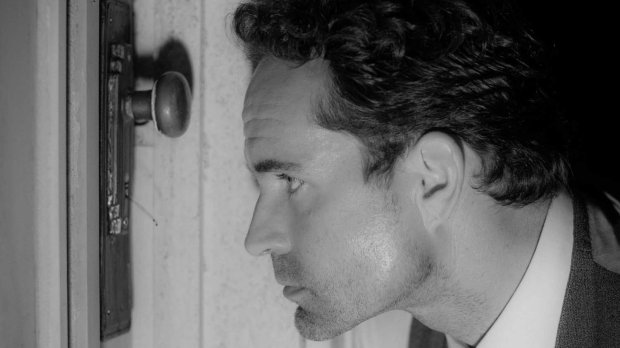
Keyhole is a black & white, horror/comedy melodrama, which is a widening gyre that goes from a very cloistered, guarded tale and unwinds into one that is a rather effective and is nearly pantomime. The loop that the world revolves in and the roles these characters play, the unusual ways the characters behave in soon make themselves evident and as they do a seemingly fragmentary tale begins to tell other tales and history by implications.

With a film such as this, which is so unorthodox, the pacing thereof will be a precarious balancing act and a difficult thing to navigate, however, while not brisk the film does manage to move at a relatively steady pace. The incremental repetition of certain visual motifs and snatches of dialogue don’t bog the story down and serve as markers to an extent. One must also acknowledge that there will be a certain amount of disorientation that will need to be surmounted that also affects the speed of mental processing that this film requires.

Key to establishing the surreal and other-worldly tone that Maddin seeks in this film is the scoring, which is wonderful in this film. The score provides an anchor which keeps the film grounded in some sense of constancy and gravitas as the dialogue, images and scenes get all the more wilder as they are slowly unfurled and deciphered.

Another aspect that gives the film a sense of tempo is the edit. This is a film where you can almost predict the cuts by metronome. Here is where Maddin imbues the film with much of its frenetic energy. Surely, the pace of the cuts frequently belies the flow of the narrative, but it reaches a rather constant speed that pulls the story along with it. While such a discordant bit of technique may seem a distraction it mostly serves the film well as another steadying force.

The guardians of this arcane world that is partially occluded are the actors as they must do something very difficult, which is to play rather broad types but still resonate with the audience as people, transmit that they too are trying to uncover mysteries and/or not seem as they are obviously hiding something. With such affectations in the making of the film and stylizing in the narrative it can be most difficult for an actor to convey true emotions but the cast throughout manages quite well.

I find it important to seek reasons to justify the usage of color, even if the choice between color and black and white is a rather anachronistic one in this day and age, however, I hold the inverse true: if a film is shooting in black & white is it truly exploiting that choice; is it seeing and portraying a world that can only be conveyed monochromatically? Here I say the answer is an emphatic yes. There are tableaus and mise-en-scène designed the way they are because they fit a black & white landscape similarly many of the actors look like they were born to be shot in black & white.

Keyhole is not the most accessible film in the world but it is a nut that can be cracked with patience and focus, whether you know Maddin or not. Clearly, if you are familiar with him you’ll know what to expect better than most and your appreciation of it may be greater.

8/10

Review- Chernobyl Diaries

The nuclear incident in Chernobyl is one of the most unfortunate events in modern human history. It’s effects are far-reaching in terms of both distance and time, as the illnesses caused by radiation spread far and wide. Lest you confuse this with a Wikipedia entry that’s about as much as I need to say up front save that the Chernobyl incident is one I learned a great deal about and have a tremendous amount of sympathy for. Therefore, despite the fact that it’s rare, this was a film I was likely to be sensitive to in the horror genre. However, I went in hopefully, as horror cannot play it safe and I was rather surprised that this angle hadn’t yet been taken.

One of the few things I can happily report is that the film is not overly-exploitative. The deliberate pacing of it, the restraint it shows and the fact that it takes the point of view of a group of American tourists looking for an extreme locale make it much more palatable.

However, that is not to say it works entirely. The film works to about its midway point and then it starts to seriously degenerate into typically silly, dumb tropes that are only half-baked and highly illogical. Granted Hitchcock had a very valid point about feasibility, and it usually doesn’t come into play in horror, but what I mean is it seems the consequences of the exploration could’ve been greater and more logical simultaneously, so why not do that?

The set-up works very well and what’s more the acting is quite good. I speak frequently of acting when it comes to horror films because quite often it is not a prerequisite for this kind of film, or many actually, to have exceptional thespians to work on a narrative and technical level. However, this film has no weak-link that stands out in that regard. Particularly effective is Jesse McCartney, who not only plays the requisite Doubting Thomas but also spends a good deal of time injured. He is a talented actor who should be getting many more chances to show what he can do aside from being my favorite Chipmunk.

The film thankfully doesn’t take the found footage approach but there are a few unusual decisions visually. Some of them work well, some of them not so well. When the tour group is first threatened we watch the first search part go out from afar, see muzzle flashes, hear off screen noises but we eventually lose them. In a vacuum it’s an effective tactic, however, combining it with how minimal the rest of the film is it’s regrettable in hindsight. Towards the end there looks like there’s an incredible fight and struggle. The shame of it is I can’t see it because of the crazy handheld swish-pans and frenetic editing. The handheld camera in modern cinema is perhaps the biggest double-edged sword. Much vitality is added to action shots with the jostling that goes on, with the proximity that we get to the subject, but the pace of the edit needn’t be as frantic as the framing if we need to see something.

The climax of the film and the conclusion is so unsatisfying it nearly taints all that preceded it. Now, it’s is by no means The Devil Inside but perhaps this would’ve been a case where a few more incidents and a little less explanation would’ve made a bigger impact. The film falls close to over-explication than under and perhaps less truly would’ve been more here.

The Chernobyl Diaries
simmers for a while and never really comes to a full boil, which in the end leaves it tepid and a bad taste in your mouth.

4/10

Review- A Bag of Hammers

A Bag of Hammers is a comedy, which follows two men in their 20s who make a living stealing cars and suddenly find that responsibility falls into their laps when a neighboring child loses his mother. The film, as some have noted, fits a bit to the mold of About A Boy. The main difference being that here its a pair of men and they are somewhat less reticent to assume responsibility.

The film is quite funny but it does mix in its themes rather well because of that fact. There are comments on child rearing and social services being made with out being too on the head about either of them. Also, considering that this pair of leads can be seen as beyond imperfect role models and quintessential slackers it does underline the points that are being made. These same points are further underlined by the fact that their background is not dissimilar to that of the young boy’s.

One thing the film is to be commended for is its handling of quirkiness. The temptation to be quirky in pursuit of originality is a strong one, especially in an indie film, especially in a comedy. However, quirkiness for quirkiness’ sake can be a disturbance to the progression of a film. What this film does well is makes the idiosyncrasies seeming necessities, and builds them through the characters and not as plot devices.

The pace of a film is a significant boon to it. The film doesn’t run long but I think that we all know that running time is not necessarily a fair gauge of pace. The pace is positively breezy throughout and the film really flows well for the most part.

The lone exception to the pacing brilliance is the fact that the third act is a bit abrupt. I can’t say it’s the handling that’s poor, it’s just that there’s a certain disproportion to the structure and a bit of acceleration through the end that could require a little more time than it gets.

However, what does need to be said is that the film is propelled to said end by a brilliantly framed and beautifully rendered wish-fulfillment montage, the likes of which you rarely see in this day and age. It truly is the coup de grace of the entire film and it’s rather breathtaking and should serve as an instructional as to how to construct a montage.

One thing that’s interesting to note is that the film, despite some it’s comedy being rather broad and it’s dramatic question being very much up front, it does handle thing with a certain bit of restraint. Namely after the film myself and the two friends I viewed it with were debating the sexuality of the two friends. It’s something that’s never addressed directly but certainly gives food for thought.

The performances in this film are wonderful. Jason Ritter, the spitting image of his father John, plays his character sincerely with great comedic timing and dramatic aplomb. He even carries the film through it’s most difficult patch where his character is resistant to taking care of the boy. Jake Sandvig is comedically deadpan and very sensitive as the character who reaches out to the child. The child, of course, plays a crucial role and Chandler Canterbury who is a very talented, as of yet underrated young talent, is very good in this role. He retains innocence while emoting the browbeaten posture of a child in an inadequate home situation and also shows great restraint emotionally. The scenes between him and his mother feature some of the best writing in the film.

A Bag of Hammers is by no means perfect but it does deserve to be seen and sought out if you have not heard of it yet. It’s both funny and moving and gets the manic depressive seal of approval: you’ll laugh, you’ll cry. Be on the lookout for it.

8/10

Book Review- Through a Glass Darkly by Jenny Worton

With book reviews I will typically limit myself to books that are about a film, filmmaking or filmmakers. However, there will be the occasional tangential exception and this is one of them. Through a Glass Darkly is one of the most famous films by Ingmar Bergman, but many of his films are very adaptable to the stage, and already have been either while Bergman was living or through the Ingmar Bergman Foundation.

Bergman himself was also every bit as much a man of the theatre as he was of the cinema. As for the adaptation it is written by Jenny Worton and the first thing of note is that it is easier to recommend for fans of Bergman and the piece. I picked up this brisk 72-page play at The Drama Book Shop for $18, which is not cheap so that’s the first grain of salt with which to take the play.

However, for the most part the play does manage to translate the palpable drama of the tale from screen to stage. There are a few head scratching decisions though; the story is neither moved in time or locale but there are I believe three profanities, only one of which really rings true given the situation. There is also the occasional awkward piece of dialogue, but for the most part it reads like Bergman’s tale. It must also be stated that the edition I read has a disclaimer within it that states dialogue may have altered between rehearsal process and debut.

There’s also the double-edged sword of sparse scene description, which gives productions a bit of freedom but also can at times catch the reader unawares as certain scenes perhaps seemed more minimalist at first and then developed.

Another pet peeve of minimal importance is that the biblical quote that inspired the title is nowhere to be found. In the film there is a title card at the start, but here there’s no textual allusion to it at all. No food for thought, only an assumption that we may know it. Now, this may be the playwright not wishing to impose some sort of multimedia aspect on anyone seeking to produce it. However, that is becoming more common in the theatre and might be a nice touch.

Granted it’s not Bergman adapting himself, which would be ideal, but it is a very good take on the tale. If you’re a fan of Bergman or the theatre it is worth looking into indeed in spite of a steep price.

Hero Whipped: The Double Life of Archie Andrews

It’s about time to do one these again, as other ideas in the vain are coming to the fore, and I want this one focused and not as scatter-brained.

As you may or may not know, Archie Comics have been shaking things up over the past few years. The introduction of Kevin Keller, the first openly gay character in this comics universe, was a big step and perhaps the most significant of all such recent stories. I think many comics fans cut their teeth on the Archie tales, I know I did. What makes them a good stating place is that they’re usually humorous tales about the commonplace. That’s why Keller is significant, he’s been folded into a world that just accepts him.

Kevin Keller, however, was the second bold initiative from Archie recently. The first was the Life with Archie series that plays out two different realities: Archie marries Betty and Archie Marries Veronica. Each issues is double-sized in page count and magazine-sized in proportion at a standard comics rate, less if you subscribe like I do.

The stories, now several arcs deep, have always mirrored each other and it got me to thinking about the doppleganger phenomenon in certain realms of fiction. I haven’t had extensive experience with such phenomena with it but what it ultimately lead me to conclude is that this series could be great preparation for more involved and less direct, nonlinear storytelling modes kids may encounter as they grow older.

The first example that came to mind was the film The Double Life of Veronique. This film aside from having a signature and extremely memorable theme plays with the notion that we all have a double in rather dramatic and no frills kind of way. Here you also have slightly different interpretations of established characters, which is not only a staple of comics but occurs in other media too. One for instance would be Stephen King who, via his pseudonym Richard Bachman, treated his characters from Desperation almost like they were actors and recast and re-purposed them in The Regulators.

The story also has a soap opera like feel in the best sense of the word. I think of these as my stories; the tension is palpable and is delivered in drips and drabs. Each storyline and subplot is touched on just enough to keep you coming back for more. Each character’s plot runs about 2-3 pages per issues, thus they have about an issue (two counting both tales) per arc of their plot. Just enough to incrementally move things along.

Another thing the series does which is crucial to breeding comics readership and is applicable to certain films as well, is that it plays with the parallel dimension/multiverse concept in a stripped-down dramatic sense. The lack of grandiosity and superhero tropes introduces a fundamental of the medium in a much more conventional, comprehensible tale for the neophyte and rewards long-time readers with glimpses of old favorites and puts new spins on old tales.

It’s a series that can still relate to teens but what it’s doing is making strides to stay somewhat in step with the times, which I think many will admit it hadn’t until recently. The aesthetic benefits of laying a foundation of more complicated story structures and approaches can be easily understood is what is really exciting; and the pedagogical abilities of comics, even in fiction ought never be overlooked. I’ve said it before and I’ll say it again, comics essentially taught me Portuguese and organizations like Reading With Pictures know of this power too.

Not to say that Archie’s social forwardness combined with its pushing its own aesthetic boundaries while staying true to its characters and style isn’t exciting too; but it’s this added element and depth that this series has that separates it, and makes it a great gateway to comics, more involved narratives and is the best fodder for cinematic adaptation they’ve likely ever had.

It’s brilliant on so many levels.

Short Film Saturday: A Therapy (2012)

Helena Bonham Carter and Ben Kingsley in A Therapy (Prada)

At the time of his arrest I wrote an editorial on Roman Polanski. It’s not really topical unless there’s a new development with regards to his status so I don’t foresee reporting it any time soon. I will merely state that I watch films and the works of filmmakers. I do not confuse the artist and the man, nor do I allow my perception of creative persona to color what my thoughts are on a person and vice versa. After all, Woody Allen still releases a film a year on average and his scandalous divorce from Mia Farrow is barely mentioned anymore.

Having said all that, here are some interesting things to note about this very short film Polanski has made for Prada. First, it’s a short film commissioned by a corporation, which is back en vogue since BMW started making a few for web consumption. The second thing is the film is completely about the performance of Ben Kingsley and is a great example of a flashback not taken. You can see in his face there’s a reverie, a remembrance but we see it only in his face and not in actuality. It’s great stuff.

A Therapy (2012)

The Drive-In Movie Experience

Today as I surfed around, I discovered that it was the anniversary of the first drive-in theater opening. The first theater opened in Camden, New Jersey. There are several places covering that angle, and Google even had their daily doodle reflect the date.

What struck me as fortuitous timing was the fact that I’ve been anxiously anticipating emails of schedules from a drive-in recently. I’m getting that itch to go again soon. What’s more surprising is that not so long ago I’d never gone at all.

Drive-ins may be a dying breed but they’re by no means extinct. If you’d like to experience one you can go here to find the one closest to you. This is the site I use to find the one I trek to. The interest was kindled by realizing that when vacationing in Central PA, I was not that far removed from some. Therefore, I found the one closest to me, which is a hike.

However, it’s a great time and something a movie buff must try. My recommendation would be to go see something you’ve seen already the first time around. This isn’t that hard to do as the schedules are usually a bit staggered on major releases and they will bring back older films.

For example, my most recent trip was around Halloween to see Paranormal Activity 3 followed by The Exorcist. My initial trip was to see the more family friendly slate of the weekend Dolphin Tale and Real Steel. Those were encore viewings to get my feet wet and used to the experience, which is surprisingly good.

The theatre I go to has two dedicated radio frequencies by which the sound is played in your car. Therefore, if you have good sound system the aural experience is rather good. The visual is not the greatest, which is why it’d behoove you to arrive a little early for a good spot. However, considering some projection snafus I’ve seen and heard about, it’s not the worst experience either.

The admission per person is about equivalent to one ticket at a multiplex. Example, The Delsea Drive-In is $9 per adult, $4 per child; for the double feature. The concession selection is extensive, and like a conventional theater this is where they make their money, but you can buy an outside food permit, if you wish.

So there are the basics regarding the drive-in experience, I suggest you look for one close to you and make a trip of it.