Review: Stop the Pounding Heart

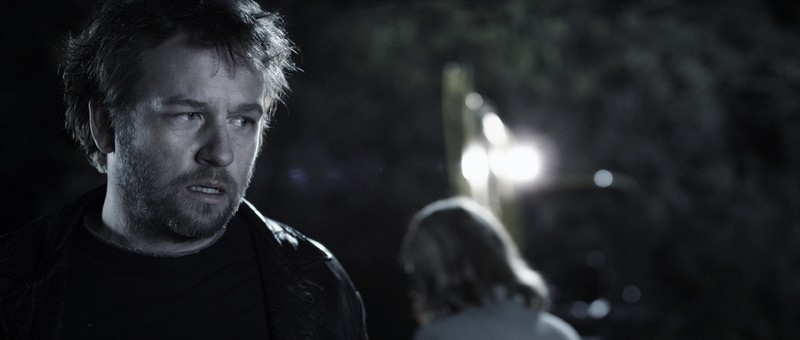
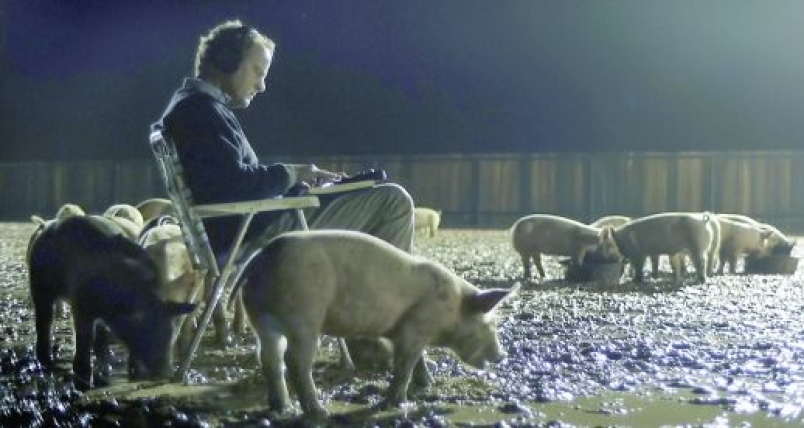
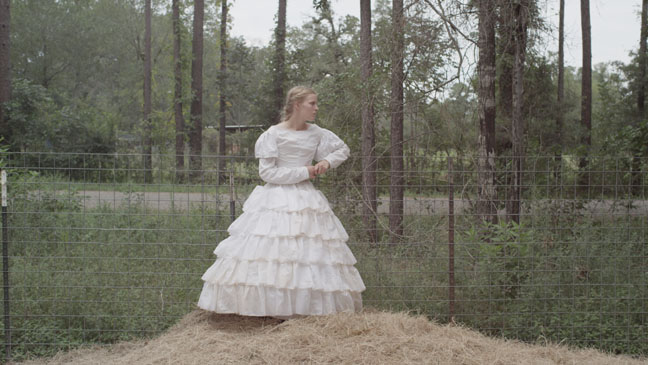
Stop the Pounding Heart is a low-key modern neorealist look at cloistered religious upbringing clashing with the pitfalls of adolescence. It carefully treads the line between narrative and documentary perhaps more so than any other film I’ve seen recently – as such evaluating it becomes tricky. However, my interpretation of the film having seen it (through the end credits) was that I would treat it as a narrative feature. This notion is reinforced by something the director says in response to that vagary in the press kit:

I work exclusively with real life people and their true environments, so there are no actors involved in the traditional sense. At the same time, the underlying arc of the story is my own so you could say that the hand of the director is present. My involvement with these communities is a deeply intimate experience, and it required a lot of mutual trust. They were willing to open up their lives up to me, and me for properly portraying their lives to the public. In addition to the relationships that are cultivated over time, I also credit my shooting style with allowing people to feel comfortable in front of the camera. My production consists of a five person crew, no artificial lighting, and one take for each shot. One could say that this film follows in the traditions of Rossellini and Bresson, the latter of whom once said that more than realism, he was interested in truth. That comment has always stayed with me.

The brief synopsis up-top is the most succinct encapsulation of what passes for a narrative in this film, and that is not a slight; it does pass. For a while most, if not all, the turmoil is internalized and when it does overflow near the end it does so in a tearful confession by the lead, Sara (Sara Carlson), in which she cuts to what’s bothering her, but does not enumerate the events/symptoms bringing on such feelings.

Much of the running time of the film is spent watching Sara’s life unfold. All the characters in the film are eponymous. The film in large part engages in watching the characters behave and the most basic voyeurism known to man; the psychological root of our interest in cinema. There are established routines that come around full circle and at times have different iterations: homeschooling, bible study, selling at the farmers market, talking to Colby, watching bullriding, going on the firing range, etc.

While this film enjoying a different shade of behavioral observation that Chantal Akerman, Bela Tarr and others occupy what separates this tale is the documentarian removal. There is, due to the fact that there is a loose scripting, no talking heads, natural light; a distance and lack of judgement. Because the lives of these people is being explored as uninterrupted as possible it does achieve a sort of real slice-of-life effect.

This film is an affectation though, much as a more conventional documentary would be. What the guise of narrative allows it to do is widen its exploration of this family and place. A traditional documentary has to be about one thing only, even off-beat docs like Leviathan and Bestiary are about one unifying notion. As an affectation it is an affective one as it finds a humanity in these people regardless of what differences we may have. In a traditional documentary there’d likely be a point of view, in a narrative there is a slant to any tale, a commentary or moral. In this film the characters just are and we just watch them and have a small notion of what it’s like to be in their home, their town, their work, and their life. Because of the way these ideas, emotions and images weave together it just washes over you with minimal focus on where those differences lie, but more focus on where commonality exists.
6/10

Mini-Review: Under the Bed

Introduction

This is a post that is a repurposing of an old-school Mini-Review Round-Up post. As stated here I am essentially done with running multi-film review posts. Each film deserves its own review. Therefore I will repost, and at times add to, old reviews periodically. Enjoy!

Under the Bed

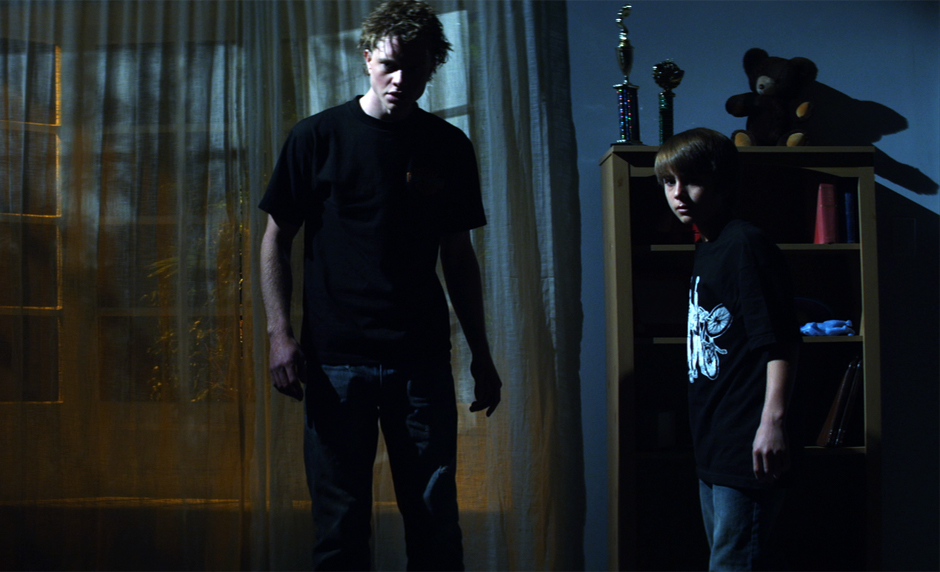
This is a film that’s a classic non-starter. The work that’s done to build the characters, the brothers, at least, is appreciated; as is the late reveal of several key pieces of information. However, the issues that come into play are that the film ends up not having enough jolts or enough incidents. The battle against the evil entity these brothers fight is forestalled too long, is resolved to quickly and far too anti-climacticly. So you have a film where engagement is barely kept for as long as it takes and then there’s no real pay-off. With a horror film, especially one of this type, you know certain characters are going to be safe so it really ends up being more about how things occur rather than who makes it. The film has really good performances by Jonny Weston and Gattlin Griffith, especially the latter, but not much else to show for itself.

3/10

Review: Mercy

Mercy was a film that I had on my radar for quite some time. It was a film announced a while ago. It was one of a rash of projects that Joel Courtney got involved with on the heels of his outstanding performance in J.J. Abrams’ Spielbergian Super 8. Combine that with the fact that it is a Stephen King adaptation, the signing of Chandler Riggs (The Walking Dead), the involvement of Blumhouse and Universal and there were plenty of reasons to look forward to this film. Eventually though, without and fanfare (as there usually isn’t), this film kind of vanished from consciousness as all involved moved on to the next job.

Then with just as little fanfare the film plopped up available as a digital first download on Amazon ahead of its DVD release.

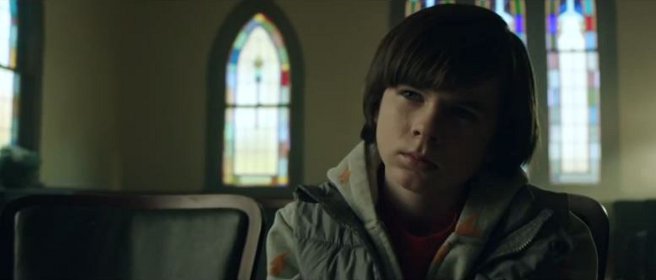
Mercy mainly concerns a young boy, George (Chandler Riggs), who with his grandmother (Shirley Knight) bedridden starts to wonder about and discover her true nature and family secrets buried in their past.

The difficulty of divorcing one’s fanboy self from an objective film-viewer is epitomized by the fact that this film could have harvested an intriguing internalized tale from the prose, but instead it perhaps over-externalized it. One of the pitfalls it faces is also expanding a short and building out characters because it only does so part of the way. More dimensions are added to characters but it only goes part of the way. Mark Duplass, plays an uncle, he comes to George (Riggs) to disavow him of his notions because he idealizes her. However, this has to be assumed. He’s barely introduced when he makes this leap, and knowing how jaded he is, why not try and talk to Buddy instead (Courtney)?

The aforementioned facets of the film nits; smaller quibbles. There are things that occur that in some ways make you wonder about the production, and in general questionable decisions. The very first scene in the film cuts awkwardly. Riggs and Courtney overall do fine jobs, but in the early scenes they seem a bit ill at ease in their roles, Courtney especially; as they get caught up then the stakes go up. Unfortunately, CG plays a hug role in the latter third and it doesn’t really work that well at all.

I think to convey it best to King fans I can frame it this way: the CG-heavy climactic portions of this film remind me of a 21st Century Langoliers, only this film isn’t anywhere near as compelling as The Langoliers is before being heinously under-served by the effects work.

Up until then the film is passable, and there are things worth watching it for, Shirley Knight is another. In a film whose running time is less than 80 minutes it tries to spread the tale between too many inconsequential supporting characters, and doesn’t move as quick as it should.


When Mercy is available on rental platforms it’s worth it if you’re curious enough, but in this case sadly the whole is far less than the sum of the parts.

5/10

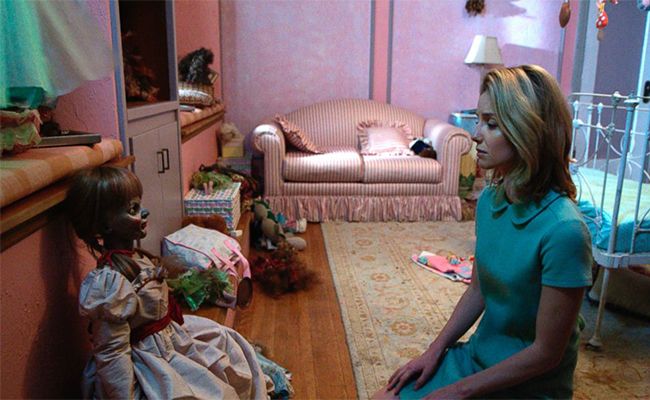
Review: Annabelle

When The Conjuring came out, I, like many enjoyed it a great deal. Not necessarily like many, and moreover, a bit uncharacteristically; I was really psyched about the prospect of Annabelle. It was one of the rare cases where I thought a prequel, or more appropriately, a spin-off had the potential to expand a bit of backstory into a feature-length tale on equal footing with its progenitor.

After having seen it, however, it did bring to mind Dario Argento’s response to when I asked if he ever considered further examining the backstory of Deep Red. Basically, what this ended up feeling like was a vacuous money-grab even though it, and the Deep Red concept, still could theoretically work.

What Anabelle lacks is not only atmosphere, which it is sadly in wont of throughout, but also a compelling narrative. In The Conjuring James Wan and the Hayes brothers wrung out so much effect from this doll affectation to give the protagonists a background you were left wanting more, in getting it you are left dissatisfied.

One issue the film contends with is that it’s not really an origin. The accursed doll comes to the couple at the center of this story and they deal with it. However, that’s not really a fault of the film. One true fault is that its zest for innovation peters out on the first act when introducing the notion that the world is changing in light of the Charles Manson killings. Much of the rest of the film following the inciting sequence is methodical and rote, and rarely introduces a wrinkle that is unique to this tale.

BANG!

There. Are you scared yet? No, well then don’t see this movie, because as it is unable to generate palpable atmosphere, real concern, or interest, in its characters the film then resorts mostly to jump- and false-scares. This is really a shame because the score does have some nice moments but it has to be an accomplice to the lacking script and direction and try and pry scares out of its prospective audience.

One would think that it would be hard to bungle a film wherein one protagonist is either pregnant or raising an infant, but this film manages to quite easily. Some milquetoast performances along with all else that’s plain to lacking really doesn’t help.

To add insult to injury the obligatory, somewhat open ending is as anticlimactic as the rest of the film is. It’s rare I use the phrase “forgettable” as it usually employed crassly, but when one has recently experienced a film so empty, so devoid of soul and verve, that you could easily forget that you just saw it. “Forgettable” one of the most fitting words there are.

3/10

Film Thought: The Tableau Vivant in Halloween (1978)

Each year I will revisit the original, classic Halloween at least once. This year, owing to the new Blu-ray box set I will be revisiting the whole series anew. However, the one I will likely come back to more than once, and always find new things to say about, is the first.

With very good reason there has been much made about the use of Steadicam not only in the film as a whole, but also during the opening sequence (one of the last shots in the can during principal photography) where Michael’s POV is taken as he stalks around the house and kills his sister, Judith (Sandy Johnson). Now in technical, artistic and production terms this shot is quite a feat. In the narrative terms it, of course, begins the film with some mystery, a thrill when the POV is broken and a great reveal. However, over the course of time that has obfuscated something of almost equal intrigue (if not anywhere near as hard to achieve as the prior sequence).

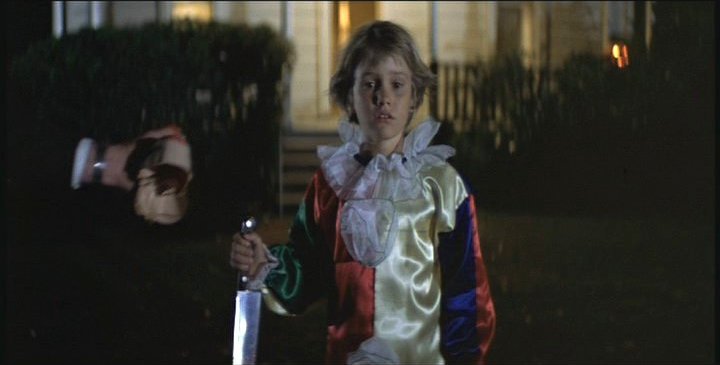
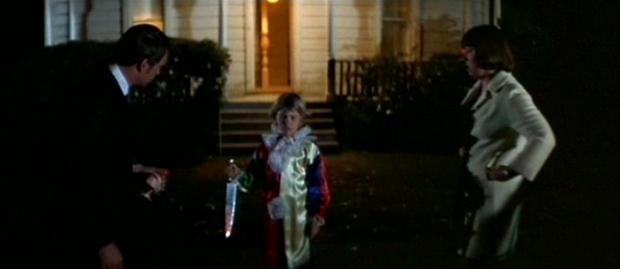
The shot that immediately follows reveals Michael to be a young child of six years of age (Will Sandin). Here again narrative shock may distract you from absorbing what’s happening in its fullest implications. The cut occurs when his mask is removed. We see his face and pull back. As we do, we are introduced visually to Michael’s parents. They look shocked, try to get his attention and the camera continues to methodically crane away. As the camera makes its move there is an unnatural lack of movement in the mise-en-scène, it can be argued, by all parties. Even if you’ll give a pass to the fact that Michael doesn’t move; owing that to some semblance of shock he may be feeling (which would be the last time he really, totally felt any sort of human emotion), then you still have to consider the parents who having found their six-year-old with a bloody butcher knife merely stand there befuddled and scarcely move or comment after having merely called his name a few times, mom crosses her arms and dad takes a step back. That’s it.

Previously, I believe I had dismissed such concerns owing to the fact that the shot needed to happen, and being a director that sufficed. However, the shot can still go on with some more movement by the players as the camera drifts away. So, what was it that was compelling this blocking? It’s a choice so conscious it cannot be dismissed as an oversight and has to be viewed as intentional on the part of the director.

Halloween (1978, Compass International Films)

As I watched it this time it struck me. It was so obvious I can’t believe I hadn’t considered it before. What is being created is a cinematic equivalent of a tableau vivant. This is a technique that is rarely implemented on film, however, it’s one I always felt a powerful to implement on stage, and when one considered some instances in which they are used (such as in fairly tales or religious stories) it starts to make sense.

The tableau vivant is described as:

Tableau vivant (plural: tableaux vivants) means “living picture”. The term, borrowed from the French language, describes a group of suitably costumed actors or artist’s models, carefully posed and often theatrically lit. Throughout the duration of the display, the people shown do not speak or move. The approach thus marries the art forms of the stage with those of painting or photography, and as such it has been of interest to modern photographers.

Usually the only times this has been approximated on film or television that I can recall off the top of my head is is in very obvious circumstances where a character would say “Freeze” or some other directive like it and rather than freeze framing the actors stop moving. One notable example of this was the children’s sitcom Saved by the Bell. Now here you have a far more subtle form and the reason I believe it is: one, is that it is allowing the events to sink in; two, building a legend; three, ending a chapter in the story prior to moving to another one. In the world of this film, in this town, this is the local legend; this is the boogeyman. Now that we the audience know what happened, have ruminated on it for 29 seconds during the shot (Yes, 29 whole seconds this shot runs uninterrupted; quite nearly unconscionable now) here is a story set in the present (1978) about the same town, and what happens when he comes home.

It’s the kind of time-taking and camera move that you wish was easier to get away with in the modern language of cinema. However, it is the way that this shot works, the way it so perfectly caps off the opening salvo of this film that has allowed it to stand the test of time and multiple viewings without even being subject to tremendous amounts of scrutiny. Although, as with most things in Halloween, added scrutiny only enhances the mastery of the work, and doesn’t diminish it in any way, shape or form.

Mini-Review: Shadow People

Introduction

This is a post that is a repurposing of an old-school Mini-Review Round-Up post. As stated here I am essentially done with running multi-film review posts. Each film deserves its own review. Therefore I will repost, and at times add to, old reviews periodically. Enjoy!

Shadow People

I could probably write a much longer piece on this film. One thing it does fairly successfully is mash feature and documentary techniques together. It fully commits to the this “inspired by real events.” The subject matter (Seeing malevolent shadows that would kill you in your sleep if you know they exist) is very strong. This commitment to approach, and the scoring help driving home despite missteps in the approach on occasion and casting issues. A testament to it’s efficacy is that it still was unsettling even in spite of nagging doubts about the quick escalation of the investigation of the phenomena and the fact that much of the second into the third act is spent crystallizing the modus operandi of these beings. Some aspects work brilliantly, for example, it’s a shame I watched it on TV because it was trying deft, slight scares at time that would read better in a theater, some facets of the myth aren’t quite as strong as the others, however, it’s a fascinating one.

Granted the bones of it do have a source in popular culture but its impact on the cinematic realm, as far as I know, is fairly small at current. What one can say is that this film is not unlike The Curse with better production values that’s slightly less clear on its own rules – in short, it excels in spite of itself. Taking that into account, and owing to how it made my skin crawl, I can give it a…

8/10

despite my reservations.

Mini-Review: Stoker

Introduction

This is a post that is a repurposing of an old-school Mini-Review Round-Up post. As stated here I am essentially done with running multi-film review posts. Each film deserves its own review. Therefore I will repost, and at times add to, old reviews periodically. Enjoy!

Stoker

This is one of those films that grabs you from the first frame and scarcely ceases long enough to let go. It’s the kind of film that peels back layers of mystery and intrigue, slowly at first, but, then it escalates them until you find yourself in a delirious whirl of rapt tension and drama. All the while, as it slowly sets the foundation of the most basic facts, it’s setting up reveals of more precisely sinister revelations of motivation and past incidents.

The film is technically constructed to match this narrative drive employing montages, cross-cutting sequences, frames and L-cuts (cuts where audio lingers after a scene, or starts before an accompanying visual) to link what are at first seemingly disconnected events.

Stoker builds mystery regarding enough elements of its story, while keeping things simple, such that it easily achieves misdirection from one unanswered riddle to another. Thus, answers you had half-formed are forgotten briefly as you puzzle something else and when you’re confronted with confirmation of a fact it lands with the desired impact, whether you intuited the information or not.

Practically everything regarding Stoker is precise and stylized to the utmost for impact, yet scarcely ever feels forced when you consider all the pieces in the whole. It’s a mesmerizing portrait that is sure to rank among the best of the year.

10/10

Mini-Review: Imaginaerum

Introduction

This is a post that is a repurposing of an old-school Mini-Review Round-Up post. As stated here I am essentially done with running multi-film review posts. Each film deserves its own review. Therefore I will repost, and at times add to, old reviews periodically. Enjoy!

Imaginaerum

What the Finnish symphonic metal group Nightwish brings with this film is not so much a musical but a film built around music. It’s the visual accompaniment to their concept album that’s the kind of thing that I would’ve liked to have seen from the titans of the music video form at their zenith as well. Having said that there is not much at all un-cinematic about this tale, quite to the contrary.

What Imaginaerum is, is a mind-play and it implements the inner-workings of a man’s psyche and imagination to create a personal and engaging fantasy. Throughout symbols consistently come to the fore and return to create their meaning to tell the tale of a quasi-willful descent into dementia, and what precipitated it all.

The way in which it does all this is a gradual process and the implementation of the music, which is fantastic, is always at the service of the narrative. In other words, it gets the equation right and doesn’t live to support the music but the music serves to buoy the tale.

There is fine editing, cinematography, production design and quite a few good special effects throughout. The film is also aided by very engaging performances by Joanna Noyes and Quinn Lord.

This film is not readily available in the US, but fans of Nightwish and inventive cinema should seek it out.

8/10

Mini-Review: Upstream Color

Introduction

This is a post that is a repurposing of an old-school Mini-Review Round-Up post. As stated here I am essentially done with running multi-film review posts. Each film deserves its own review. Therefore I will repost, and at times add to, old reviews periodically. Enjoy!

Upstream Color

The one thing I can advise potential viewers of this film is: you should not embark on this journey if you’re not ready to be challenged. If you’re looking for escapist hit-me entertainment, this isn’t it.

The film is quietly cacophonous and, on the surface, visually disjointed. This is all by design as, much like characters in the film, we go off in search of as to how and why things occur. The answers to the questions are not disseminated in an overt manner, but most of the ones that truly matter are there. Ones that seemingly aren’t would likely be there upon review, or aren’t as much of a concern.

The heavily visual nature of the film is among its greatest assets, along with its edit. Some of the performances and the sound work, and the plot that is unearthed, are among its more uneven elements. Ultimately, its the craftsmanship and artistry of the film that has it succeed in spite of its missteps.

It welcomes revisiting, debate and discussion but once most of its mystery fades, and its minor ambiguities settle in, there’s not as much impact as it seems to promise early on. It’d make a great double feature with Beyond the Black Rainbow; though I find this to be a better film in a similar vein.

7/10