Bernardo Villela is like a mallrat except at the movies. He is a writer, director, editor and film enthusiast who seeks to continue to explore and learn about cinema, chronicle the journey and share his findings.
I believe in nothing before its time, which is why even though I’ve seen it, and it’s already quite popular on YouTube; I am only posting this holiday-themed film from Burberry now. While I have discussed in the past that commercial-films can be artful (See example one and two). This one is interesting in another way: it also blurs lines of theatre and film as Old Hollywood musicals did in big numbers. It also starts Romeo Beckham, the son of a international footballer David Beckham.
This is a post that is a repurposing of an old-school Mini-Review Round-Up post. As stated here I am essentially done with running multi-film review posts. Each film deserves its own review. Therefore I will repost, and at times add to, old reviews periodically. Enjoy!
23:59
Where this film succeeds in in bringing oral history and the element of fireside horror stories into a mostly cohesive narrative. Where it finds troubles is unfortunately towards its ending. What was a very simple and straightforward story decides it’s going to take a dip into the coy and vague.
Sadly, the ending though does feel a bit of a letdown and incongruous when it first occurs is truly symptomatic of the lack of ebb and flow of the film as whole. During act one, when most of the flashbacks are occurring there are some good moments, and maybe even a shock or two, as the suspicions of what’s really occurring come to the fore the film becomes increasingly uninteresting and uninspired.
The ending is the built-to whimper rather than a necessary jolt.
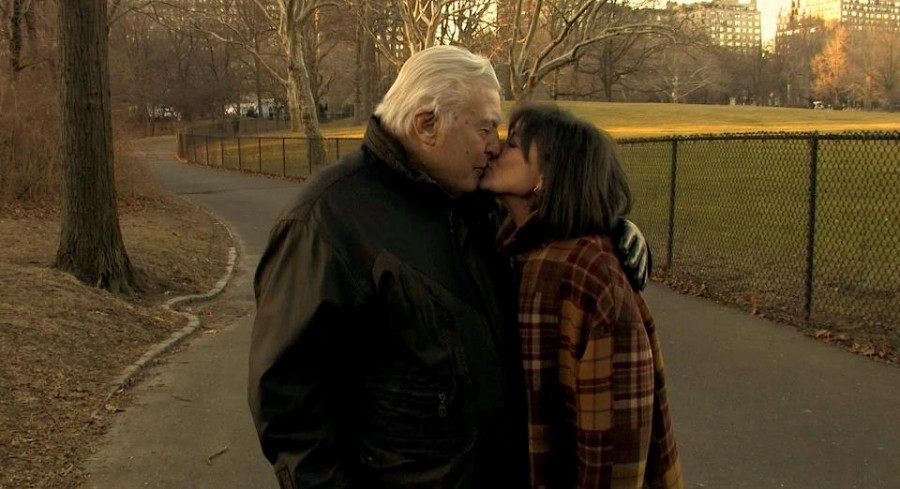
A Life in Dirty Movies is a documentary about the life and films of Joe Sarno who was professed as “The Ingmar Bergman of 42nd Street,” a titan of sexploitation cinema from the 1960s through the mid-1970s.
Early on in watching A Life in Dirty Movies you may find a weird number of allusions coming to mind as the narrative unfolds such as the character of Jack Horner (Burt Reynolds) in Boogie Nights. Yet as the story moves on you’ll see the individual, the milieu, the genre and where some of the legends about these films came, as well as information on the transformative shift from what was once sexploitation to hardcore; and thus Joe Sarno as an artist goes from the avant guard to a man of a bygone era almost immediately.
As a man he is almost unchanged. In one of the wonders of the Internet age his films, like those of other mavericks and originals in specific niches; have found new life and appreciation due to discussions and video availability. As the story unfolds and you see footage, even if you never saw one of his films, that illustrates what the likes of his widow Peggy Sarno, John Waters, and film historians are saying: in this softcore world Sarno found a voice.
It’s one of the film writing axioms that within your genre you find the room to speak and ply your craft. This was the case here. The fact that years later be it in the United States or Sweden there were retrospectives and reconsideration and seemingly sudden interest in his film is a testament to what Sarno did do, and what after a while he was no longer allowed to do as frequently.
Part of the film talks of his work in a filmographic sense with talking-heads and footage, part of it is current as he is trying to write and get a new script produced well into the 21st century as well as making ends, juxtapose that with the sudden recognition he’s getting and the travails he faced personally aside from the career that couldn’t and didn’t want to conform to where business took his form and there’s a lot to work with and fit into this compact film.
It does meld together well and the conclusion has impact. I can’t help but think the final third did feel a bit herky-jerky not because of narrative decisions, but rather pacing decisions in the edit that built emotional backstory and current context that shifts a bit too abruptly. The shift in the end does need some abruptness based on the parameters but it lends itself to a compartmentalized fragmented view of the film that had come to tie together many disparate elements to that point.
Ultimately this is a case wherein film is the best chronicler of film history in a manner such that the information would reach an audience that may not have been receptive to Sarno’s story another way. As is illustrated in the film Joe struggled to win any sort of favor with his wife’s family and it seemed even his industry had forsaken him, but when he died the New York Times dedicated the topmost, largest obit on that day to his memory. A mark had been made, but to the completely uninitiated that or text on his work may not be the most effective introduction, but rather this film is. For I think without it, without cutting in clips starting with one that is a jarring amount of cinéma vérité in sexploitation film; I may not have come away from the film with an appreciation for what he did and a curiosity to perhaps see it. A writer can do wonderful things in describing a film, but a lot of film writing can communicate more easily when the audience has already experienced the film it’s harder still to paint that picture and compel someone to seek out further and in that way this film may allow Sarno’s legacy to live on further.
This is a post that is a repurposing of an old-school Mini-Review Round-Up post. As stated here I am essentially done with running multi-film review posts. Each film deserves its own review. Therefore I will repost, and at times add to, old reviews periodically. Enjoy!
Deadfall
The hook in Deadfall, or what pulls you into the story, is the inevitable collision course of events and people at a Thanksgiving dinner. From the start when a bank heist escape goes awry in a blizzard and characters split up, you can feel it coming. However, what keeps you engaged throughout is the characters and their personal journey leading up to the moment.
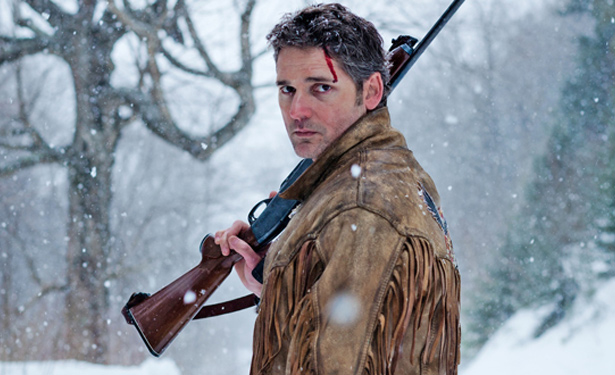
You have in the tale essentially four parallel story-structures surround the manhunt. There is Addison (Eric Bana) who takes off and tries to keep on the move and get to the US-Canada border, who while on the run encounters some foes and plays out some family traumas of his own. Liza (Olivia Wilde) who sets the collision course in motion by finding Jay (Charlie Hunnam) whose troubles and complications we are introduced to early.
Then there’s the law enforcement side with another family dynamic of Sheriff Marshall T. Becker (Treat Williams) and his daughter, a trooper named Hanna (Kate Mara). Lastly, the parents awaiting Jay, and little do they know the trouble coming with them, Chet (Kris Kristofferson) and June (Sissy Spacek). What occurs in the end is a tense, though not overly-melodramatic, confrontation. There is great acting throughout, particularly by Bana, and the story takes its time so there are stakes invested on behalf of characters who we now know and understand. Some of the explosive dynamics of the climactic sequence we know will occur, just not how, are set up wonderfully; but they have even more impact with the work that has been put into these personages.
Deadfall is a beautifully photographed film that doesn’t neglect development while creating a compelling crime thriller. It delivers plenty of shocks, heart and intelligence.
This is a post that is a repurposing of an old-school Mini-Review Round-Up post. As stated here I am essentially done with running multi-film review posts. Each film deserves its own review. Therefore I will repost, and at times add to, old reviews periodically. Enjoy!
This Girl is Badass!
This is a film that does promise action and comedy and delivers small, portioned doses of both. Sadly, there is never really a good balance struck between the two. It usually seems to be one or the other, with comedy far outweighing the action.
The action is never overly dynamic, and the plot, which is not terribly involved, never develops at a sufficient rate to raise this above being a mere diversion into being genuinely entertaining. It’d be a passable film if it didn’t drag through certain sections, but unfrotunately it does.
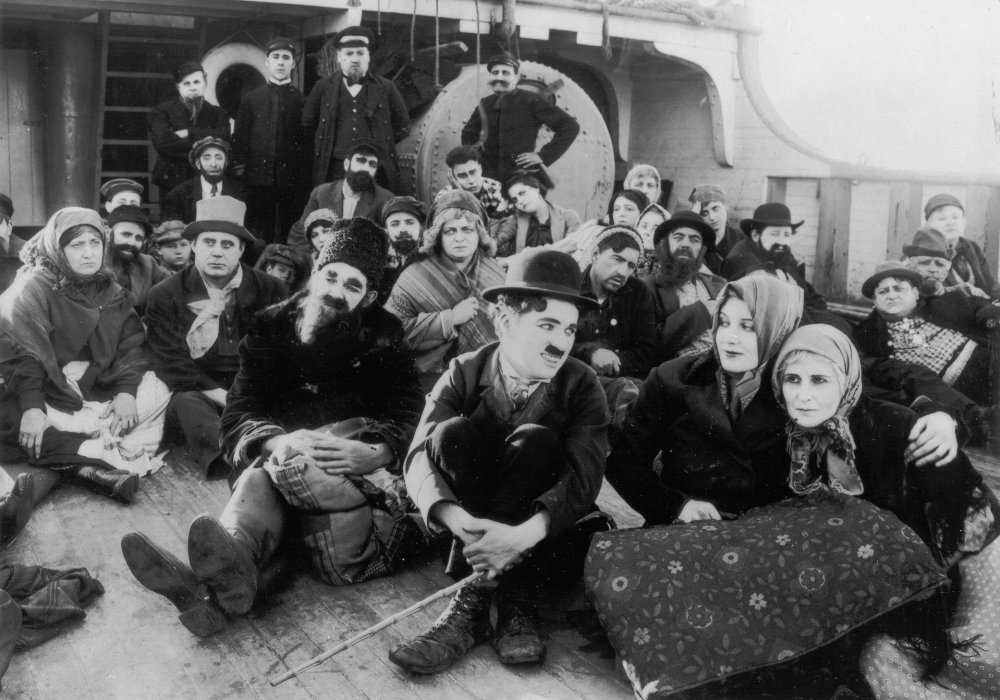
This is an important short film on a number of levels:
In no particular order: it was added to the National Film Registry in 1998, it’s topical yet again and always has been; and it’s a Chaplin film that works as a great intro to his work as an actor, writer and director just to name a few that jump instantly to mind. So after some brief discussion on the version I linked to, enjoy!
You can view The Immigrant quite a few places on line. In two other links I saw it run at 22:30 and 20:00 respectively based on different frame rates. I chose the one here for the best image. The track is silent. The 22:30 on YouTube has a decent score, the 20′ on Archive.Org starts the soundtrack emulating a steamboat horn.
If you’re not already aware of Open Culture you should bookmark or follow them for they are great resource. One post on their site notified me to the fact that the films of Andrei Tarkovsky are online legitimately. In the case of his last student film: the great The Steamroller and the Violin it’s been taken down, but the others are good to go. Be sure to click on the “cc” for subtitles.
It’s hard to believe that Tarkovsky authored but seven narrative features. What he lacked prolifically he made up for with his impact.
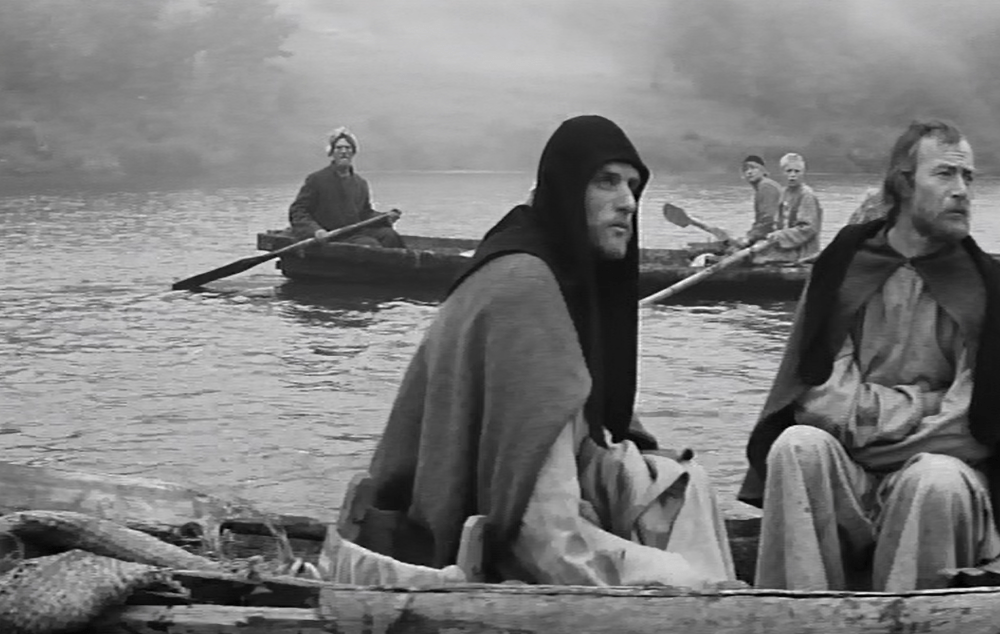
Today’s feature is posted in two parts below. It is Andrei Rublev.
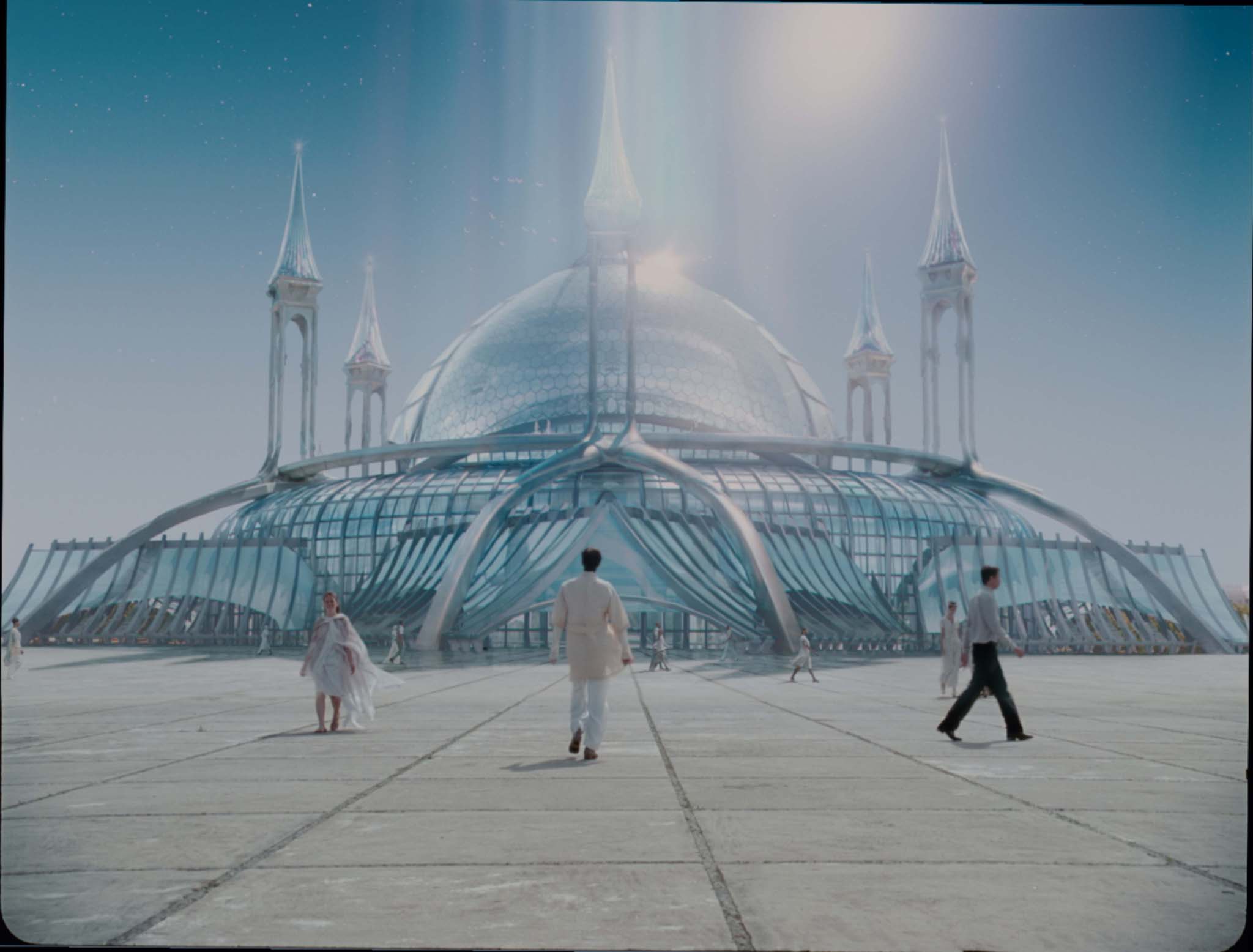
Astral City: A Spiritual Journey tells the story of André Luiz (Renato Prieto), a doctor, as he journeys from life to Umbral, a kind of purgatory, and the afterlife in Nosso Lar, where he ultimately has to adjust to his death and prepare for eventual reincarnation.
With this film being a Brazilian production and my being dual citizen of the United States and Brazil, my interest in this film would be fairly clear. It’s a film I actually saw a small piece of on cable in Brazil but never saw all of. Furthermore, I knew it was a big production but was not aware its being based on the word of Chico Xavier, a world renowned medium/spiritualist.
However, pre-existing knowledge of Xavier’s work or philosophies are unnecessary to follow and appreciate this film. Much of the film is introducing these concepts in a narrative way, and it does communicate in a manner apart from religion so the dogmatic, preaching inclinations of the film are kept to a minimum. As the protagonist does learn the workings of this new plain of existence and see his prior life more clearly the initial conflict is resolved and must be replaced. This does cause some issues with the stakes as the conflicted character needs to be a secondary one from that point forward. Yet it is intriguing and well-produced enough to still be engaging even though it does bloat and drag in its latter half.
The cinematography, like many elements of this film, has to communicate quite a few environs and implement numerous techniques to do so. It travels from a gilded past to a dark underworld and a bright heavenly plain with equal aplomb in all, which is a credit to Ueli Steiger.
The effects considering the initial production date of the film are fair. As with any film that has much effects work in it the results are hit-and-miss, but the effect desired is usually very well conveyed.
Departmentally the costume and make-up teams are perhaps the most interesting to see. In a film such as this it is clear to see the interplay of the work done by each to create a cohesive whole.
Another aspect that can often be overlooked in a film that features a copious amount of visual effects is the production design. It can be overlooked entirely. The use of locations, sets and effects mesh very well throughout the whole generating numerous emblematic locations that enrapture the eye.
The certain lack of undulation in the emotional fever chart of this film makes it tough sledding for the actors and the results inconsistent, but there are flashes that make it passable.
While at times it functioned more as an exercise in departmental appreciation, and a source of pride for Brazil ramping up things on the technical, the film does manage to hold interest throughout. While I’m not enamored with the translated title it does make it likely that this film will find the most receptive audience for this film. The film does manage to be somewhat more than a philosophical treatise, but does not transcend its ethereal trappings as sufficiently as it could have.
The trailer of the film in question is the bare minimum a Blu-ray or DVD can offer as a special feature. It can be even more interesting to view the trailer in hindsight. This way you can more closely examine the link between art and marketing and how the story is conveyed to sell to an audience.
In this film it’s interesting to see how the film was geared toward the American arthouse crowd rather as it is a Brazilian film. It does accurately convey the stakes of the story and the production aspect.
Other Trailers
One thing that can be interesting to access later (and not before you sit down to watch the main feature) is the additional trailers. This way you can potentially discover new titles. This disc contains: The Way He Looks and The Amazing Catfish, which I have seen. There are two I am not familiar with Symphony of Summits and Lilting.
Making of
The making of is usually one of the meatier bonus features you’ll find. On this disc that is certainly the case it runs 22 minutes, it was likely used as promotion on Brazilian television based on that running time.
If there was a Brazilian film that would have the need for such a featurette this would be it. When it was made it was one of if not the biggest production budgets for a Brazilian film. Super-productions are usually reserved for television in Brazil and it’s interesting to get a glimpse into how this production came together. Yes, some help was brought in from abroad where it was clearly needed (most notably with the Ueli Steiger, Director of Photography and SFX company) but as the interviews go around the horn to all production heads you’ll find most of them are nationals.
While the look at all aspects is a bit cursory it is great to see some of the journey of this story from Chico Xavier’s book to the big screen: from taking disparate locales and elements, to creating the visuals both in principal photography and in post.
As many films are its journey to the screen was long but seemingly worthwhile. This do offers a good look at what it was like on set from Werner Schünemann post-wrap speech to the National philharmonic recording Philip Glass’ brilliant score (another coup for the nation’s cinema this film is responsible for).
Oftentimes when watching a film it can be hard to tell how that film fits into the national landscape of the cinema represented. While there is some salesmanship in this doc it does give you a sense of context to that, which is valuable for the uninitiated.
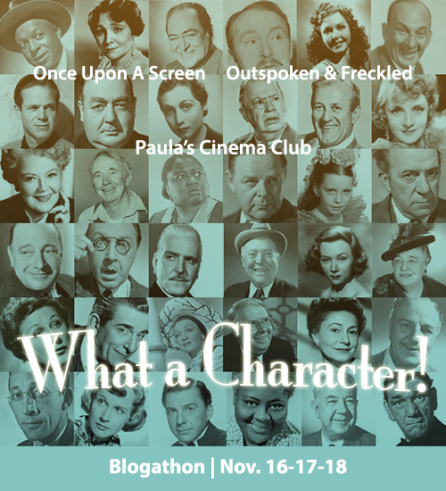
One of the great things about the What a Character Blogathon is that it is a blogathon whose theme literally can be repeated on an annual basis. This being the third edition of the series is a testament not only to the passion of the bloggers involved, but also to the plethora of talented so-called character actors that have graced the silver screen through the ages.
When thinking of whom to write about, and noting that there was no restriction with regards to era of film, Christopher Lloyd came immediately to mind. Mr. Lloyd occurred to me not only because he is still currently active; though perhaps not usually in the caliber of production worthy of his veritable skills, but also because his career has spanned quite a few decades, and in true character actor form in some of them you may have forgotten or not realized that “Oh, yes, that’s him too.”
Though he does have a few appearances and characters that are well known to all movie fans Christopher Lloyd is on that list of actors that not only makes me smile when I see him show up in a film, he is also prodigious enough such that he can nearly elevate an entire movie all by his lonesome – as will be evidenced below.
Christopher Lloyd has be around for sometime such that you may not know (depending on your age or what you’ve seen) he was occasionally credited as Chris Lloyd early on, or that we was nominated for Primetime Emmys (Taxi) and was mostly known as a TV actor early on in his career.
He has since 1975 accumulated more than 180 credits on the big and small screen. Below I will discuss some of those roles that have had the longest lasting impact through the years. As this is about an actor who is active I have, where possible, pulled in video clips to help illustrate my points.
R.L. Stine’s The Haunting Hour (2012)
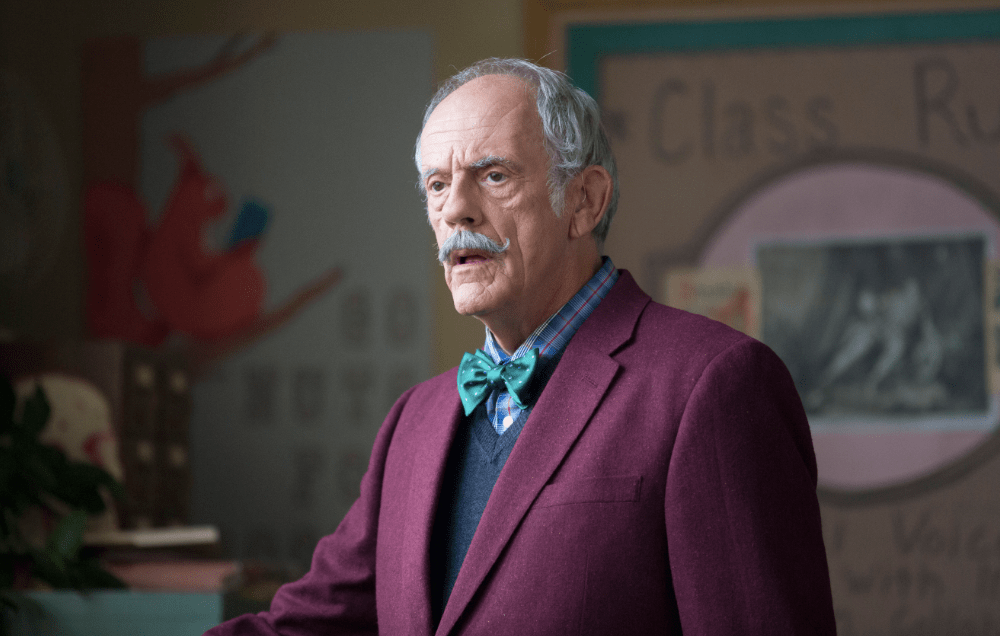
I have been a fan of R.L. Stine’s The Haunting Hour from the start, I wrote about as such here. Even though the current (fourth) season has jumped the shark, or nuked the fridge if you prefer, it had a very good run. The balance of juvenile horror and humor elements in the Grampires episode that Christopher Lloyd played the titular role is being a strong indicator:
Make no mistake that I truly hate this movie, but as I mentioned in my initial review the standout is the monologuing of Christopher Lloyd. By this day and age’s standard’s Lloyd is now a throwback so it’s more than fitting that he would play the ranting scientist with a conscious in a sci-fi film, an older archetype rarely seen anymore, much like his talent for being somewhat theatrical yet relatable and human.
Snowmen is the kind of film that I liked, and functioned on a very basic level almost in spite of itself. Put it this way: it’s a film where one character’s entire involvement was confusing and detracted from proceedings. That being the case there is a lot of slack for everyone to pick up. When a story is ostensibly just about breaking a Guinness record actors with chops are needed to add any kind of gravitas to it. This film gets them in a few cases Lloyd especially is among that company.
Clubhouse (TV Series, 2004-5)
It’s a TV show but I did want to include this because it was one scene I found as opposed to a whole trailer or a whole work. One thing you find on a résumé as long and varied as his are involvements you forgot about. This was one of many short-lived series I’ve watched through the years. I’m not sure it stands out as being more deserving of extra time than other shows but it was taking a risk. Lloyd’s character of a curmudgeonly equipment manager is a great fit. This scene with Billy Dee Williams is evidence of that.
Camp Nowhere (1994)
This is the kind of role that was made for Christopher Lloyd. Sure the plot where kids create a fake summer camp to have a free summer and get parents off their back is outlandish, but he elevates it so well. Lloyd’s character being a frustrated thespian plays into the plot and gives him license to do great things and make this film work much, much better than it should:
The Addams Family (1991) and Addams Family Values (1993)
This is a role I recently had to remind myself of. Another thing that is easy to forget is that this film was taking a risk plot-wise. There was no such risk taken in casting the film as they assembled quite a slew of talented players here. Lloyd’s expressive face brings the perfect amount of life to Fester Addams and makes him odd and endearing in equal measure. He follows admirably in Coogan’s footsteps.
Who Framed Roger Rabbit (1988)
Out of all of these roles I’ve mentioned here this is the one I was chomping at the bit to write about. This is the movie from my childhood that made Lloyd stand out and made him a legend in my mind. Yes, I saw Back to the Future as a child and enjoyed it, and him in it; but here’s where time and time and time again I was enamored by his verve by the charisma he brought to a villainous character. Where I became mesmerized by what he and Hoskins were able to incarnate in an animated world.
My personal barometer for labeling a film a classic is at least 25 years in nearly all cases, which means this film was jettisoned there last year. If it is a film that will find new generations remains to be seen, but it certainly has a stronghold for those who grew up with it and Lloyd is a huge reason.
Back to the Future (1985), Back to the Future Part II (1989) and Back to the Future III
This is the one we all know. I traveled in reverse chronological order in part because this role is the given, it’s his most well-known character. I don’t mean to diminish it, but I wanted to include it in a sea of his performances to illustrate the rather Gloria Swanson-like point that it’s not him that’s gotten small, it’s the pictures:
One Flew Over the Cuckoo’s Nest (1975)
With the memorable performances both large and small in this film it can be easy to forget that this was Christopher Lloyd’s debut performance. After all this is the film of Louise Fletcher’s legendary turn, of one of Jack Nicholson’s Oscar wins, of Will Sampson’s stunning nearly-silent turn and stereotype busting, Sydney Lassick’s brilliant neuroses, and also of a very young Danny DeVito. Yet, Lloyd as Taber adds a counterpoint to McMurphy’s new, vital frustrations with seasoned ingrained frustrations beyond just his mental disturbances.
Other Works
His appearances in film genres run the gamut from dramas like Star Trek III: The Search for Spock and The Postman Always Rings Twice (1981); works of horror like the Masters of Horror episode written by Clive Barker (Valerie on the Stairs) or the TV anthology film Quicksilver highway. Myriad children’s film the Disney Angels series (…in the Outfield, …in the Endzone), Kids World, voice work in DuckTales the Movie: Treasure of the Lost Lamp, Dennis the Menace a slightly tonally askew criminal.
Conclusion
In watching Whoopi Goldberg on Inside the Actors Studio once I recall how she related a story about how the ‘bigger picture’ of a film’s success or failure by looking at either box office or aggregated reviews can obscure the fact that films can affect individual lives. That was the thought process I had as I assembled clips mostly from lesser-known and under-seen performances. An actor or filmmaker can make a name for oneself in a film that’s a breakway hit, but it’s the titles that not everyone really knows, that are more unique and personal to your tastes that really bind you to an actor.
These days he may not even be supporting in the caliber of works he used to, but Christopher Lloyd is persistently a bonus and a boon to a film. Often I can say “at least Christopher Lloyd is in this” so it won’t be that bad, but oftentimes it makes something good even better. He’s one who brings his all to everything he does and rewards your engaging in a film a consummate entertainer who is quite a character indeed.
This is a post that is a repurposing of an old-school Mini-Review Round-Up post. As stated here I am essentially done with running multi-film review posts. Each film deserves its own review. Therefore I will repost, and at times add to, old reviews periodically. Enjoy!
At the Gate of the Ghost
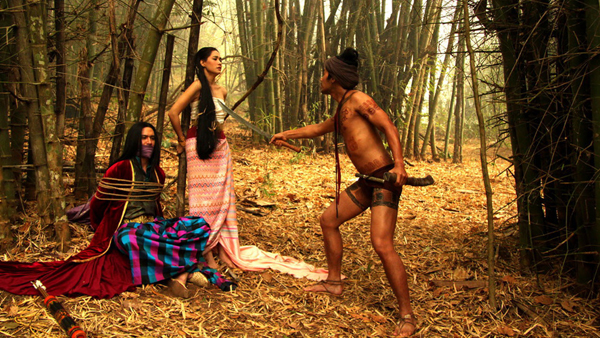
As soon as I saw that this film was an adaptation of Rashomon, I knew I wanted to see it. Now, knowing that some statements need to be made: Firstly, there mere fact that it builds its narrative on a great skeleton is not enough to make or break it. It also bears noting that even Kurosawa’s version was based on earlier Japanese texts so the opportunity to create new renditions of the tales exist all the time, and doesn’t really fit into any perceived “scourge of remakes” complaints one might have. The same goes with Hitchock’s films as he dealt almost exclusively in literary adaptations. Any other asides to these effects are likely covered in my fanboy series, so I shall proceed.
What makes a new, transplanted version of a known classic tale either work or not usually has to do with what’s done to make the story particular to the new locale and how well it embodies the spirit of the original narrative rather than how dogmatically it sticks to the script. The new locale is incorporated quite well, on the surface turning a Shinto priest into a Buddhist monk might seem a superficial change, that analysis would be too reductive. It would discount the connection between religion and national identity far too much, especially considering the period in which this film is set (16th Century Thailand).
The other thing this film does well is that it quickly inserts an artfully rendered, character-building montage so that the monk’s inner-turmoil is explained and we get a sense of him and what he sees his duties as. At the start of the film he makes a difficult decision. We then see all that factored into the aforementioned decision and the bulk of the film is about the straw that broke the camel’s back so to speak.
As with any tale based on Rashomon, or of a similar construction, much of the success hinges of the perspective and execution of the varied interpretations of an incident from different points of view. The wildly variegated versions delivered here are nearly flawless told and very well-executed with fantastic acting throughout.
If you have not seen Rashomon I would, of course, recommend you see that first. However, whether you have or have not, I think this alternate take is one that is likely to find many fans of its own as it is a rather gripping, evocative and emotionally charged version in its own right.