2013 Oscar Nominated Short Films – Animation

One thing I most definitely praise the Academy as well as the sponsors who help bring this showcase to being (DirecTV, AT&T and Shorts HD) is that they are bringing the Oscar nominated shorts to a wider audience, whereas before you were in the dark and few, if any of these shorts, had any life beyond the ceremonies. Not to mention the fact that they’re now being sold on iTunes too.

The animated slate screened first this year, and it’s an even stronger field than last year. Especially when you consider that none of the nominated films has any significant dialogue. One merely had a news broadcast on TV, which is of no consequence.

Fresh Guacamole

Fresh Guacamole (2012, PES)

This could well be the most creative of the nominees, but while there is abundant cleverness in the replacement of literal props with representative artifacts, its brevity and simplicity may be to its detriment considering the other nominees.

Adam and Dog
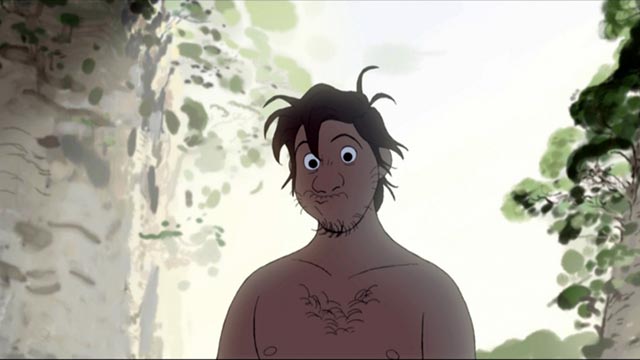
Adam and Dog (2011, Minkyu Lee)

This is a very well-drawn and interesting depiction of the first dog and the first man, which is very poignant.

Head Over Heels
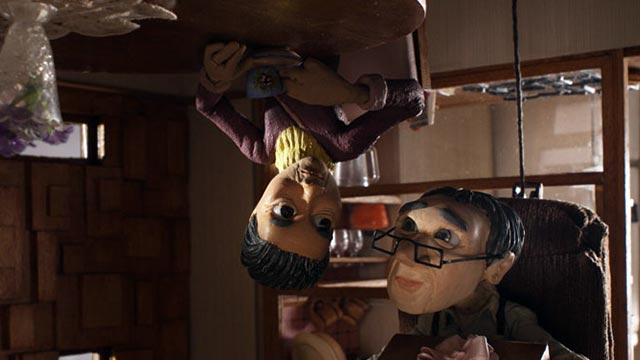
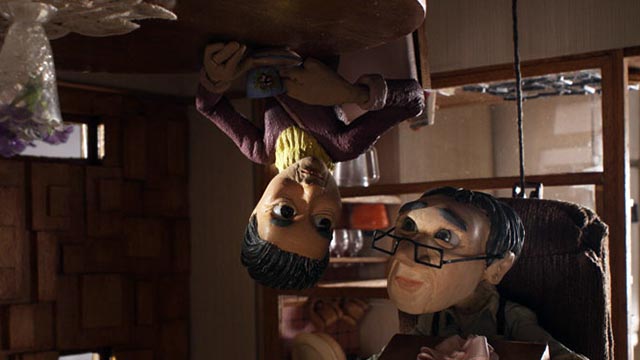
Head Over Heels (2012, National Film and Television School)

Is perhaps the most moving of the selections. As opposed to a short like Reverso, which I featured on a short film Saturday, here you get a very literal metaphor for the unusual upside-downness of the world.

Maggie Simpson in “The Longest Daycare”
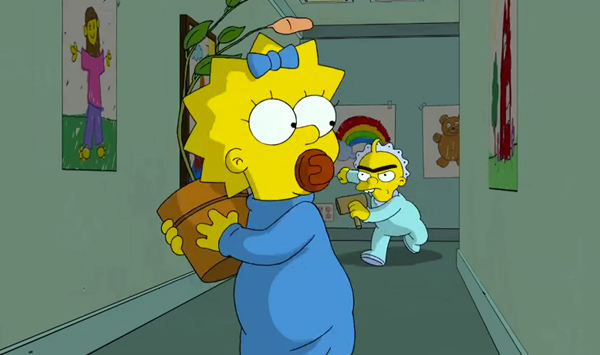
Maggie Simpson in The Longest Daycare (2012, Gracie Films)

Here you have a nomination that hearkens back to yesteryear inasmuch as it is a notable lead from a popular stable of characters in this short tale. As you might expect from Matt Groening there is a lot of intelligence and humor in this short, but also a very cinematic sensibility.

Paperman
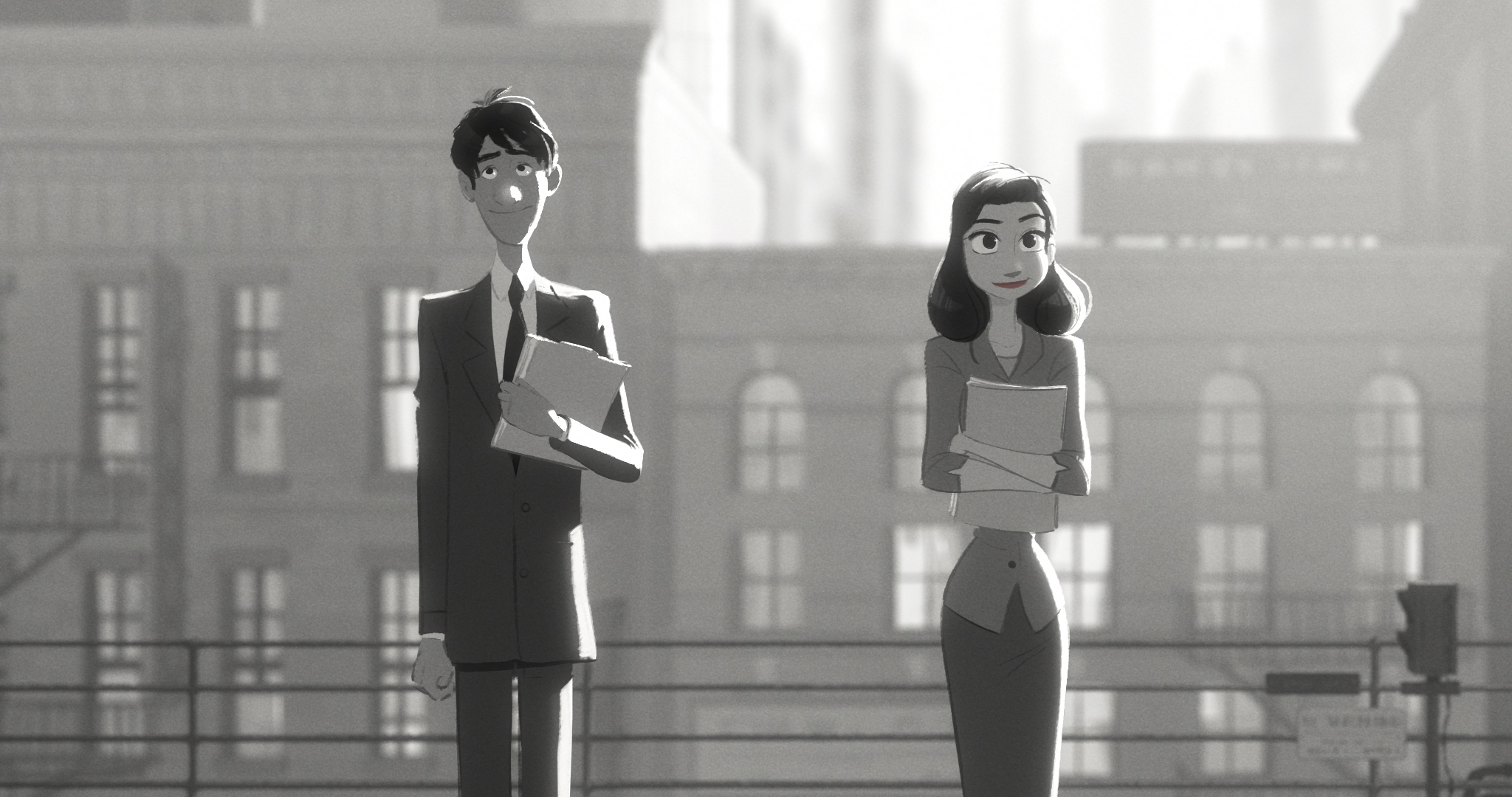
Paperman (2012, Disney)

Walt Disney Animation Studios is also nominated for this charming little short that they had play prior to the start of Wreck-It Ralph. It’s another coup for the studio pushing the company brand to greater heights. I likely have little pet peeves about each of these shorts, this one is the largest though.

Highly Commended Selections

To fill out the program there is usually a selection of Highly Commended shorts. This year’s crop isn’t as strong overall if memory serves.

The Gruffalo’s Child
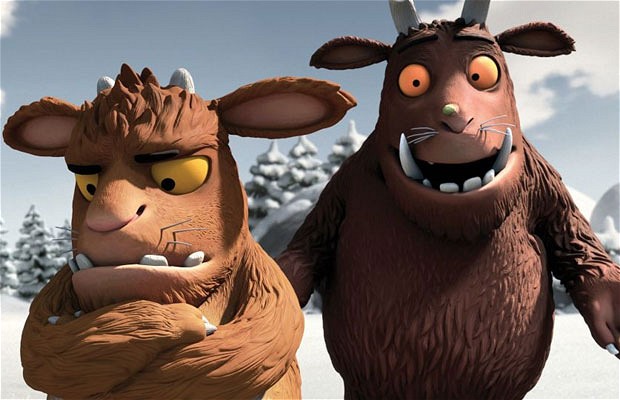
The Gruffalo's Child (2012, E1 Entertainment)

I didn’t really care for the original, and like this one less so. As beautiful as the animation is, and as much as I appreciate the technique, the storytelling is too basic and stilted in its storybook predictability.

Dripped
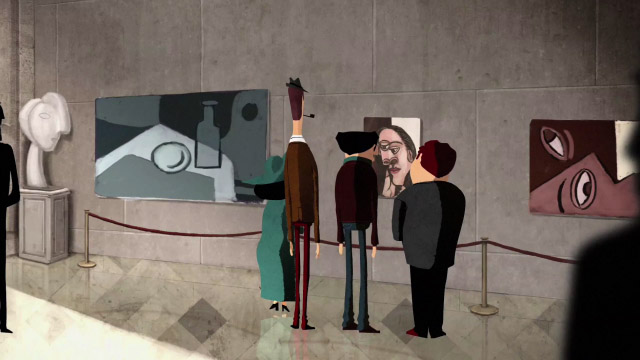
Dripped (2011, ChezEddy)

It’s a creative idea that doesn’t feel quite as fully developed as the others.

Abiogenesis

Abiogenesis (2011, Fuzzy Realms Media)

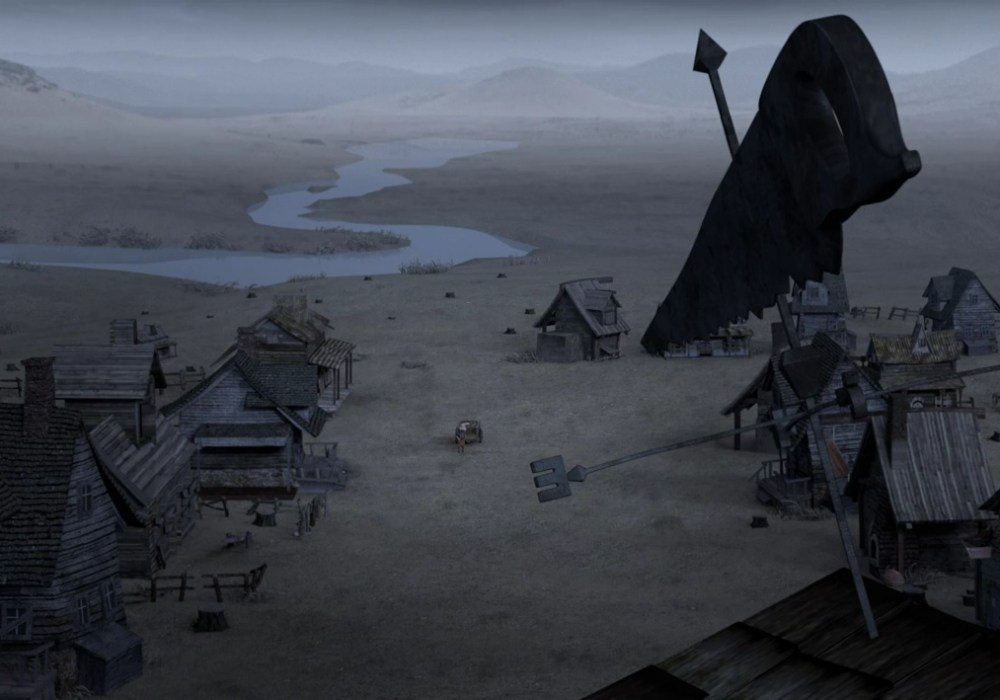
Of the three selections, this is by far the best and presents the double-edged sword of including Highly Commended films because I honestly don’t understand how this film wasn’t nominated. It’s sheer brilliance.
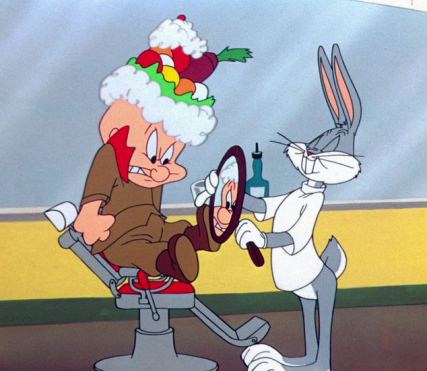
Short Film Saturday: Rabbit of Seville

I could very easily always pick a Looney Tunes short. I love Rabbit of Seville but saw a link wherein True Classics offers some brilliant insight:

Rabbit of Seville is the brainchild of director Chuck Jones, writer Michael Maltese, and frequent Warner Bros. composer Carl Stalling. Stalling was, on occasion, criticized by some (including Jones) for his habit of quoting modern or popular melodies in his scores, and it is true that his scores featured repeated use of certain musical cues for similar situations from cartoon to cartoon–for instance, the recurrence of Rossini’s William Tell overture in chase scenes (particularly those in Western-themed cartoons), or the use of “We’re in the Money” (from Gold Diggers of 1933) in scenes featuring the sudden acquirement of wealth. Stalling’s penchant for musical puns aside, he was nonetheless an incredibly talented musician, and the Stalling scores are among the most memorable in the Warner Bros. animated canon (for a pitch-perfect example of Stalling’s unparalleled talent, see 1943′s A Corny Concerto, directed by Bob Clampett, which Stalling completed with his eventual successor, Milt Franklyn).

In Seville, Jones takes full advantage of Stalling’s musical abilities, as the composer manages to incorporate a slightly abridged version of the overture to Rossini’s opera The Barber of Seville at an accelerated tempo that still manages to capture the essence of the original tune. Additionally, he works in a bit of the “Wedding March” from German composer Mendelssohn. Maltese composed new lyrics to accompany the sped-up tune, and aside from Bugs’ final line, the song lyrics are the only dialogue to accompany the cartoon–and really, no dialogue is needed when the lyrics include such brilliant lines as, “There, you’re nice and clean … although your face looks like it might have gone through a machine!”

There are little touches throughout this cartoon that heighten the humor: a sign in the opening scene advertises a “Summer Opera” performance of The Barber of Seville starring “Eduardo Selzeri” (producer Eddie Selzer), “Michele Maltese” (writer Maltese), and “Carlo Jonzi” (director Jones); the stage is set for a scene at a barber’s shop, yet in Rossini’s opera, there is no such scene (despite the character Figaro’s titular position); Bugs (naturally) gets the chance to don drag, as Elmer’s alluring “little senorit-er”; Elmer deals with multiple indignities in Bugs’ Sweeney Todd-esque barber chair o’ horrors, not the least of which is having a hair tonic treatment that results in a patch of red flowers sprouting on his otherwise bald noggin; to bring an end to the madness, Bugs proposes marriage, and Elmer zips offstage briefly and reemerges in a white wedding gown; Bugs’ final, mischievous nod to the audience. The result is a sort of insane mash-up of so-called high and low culture, audaciously combining cartoonish antics and high-brow musical accompaniment in a way that, by all logic, should not work … and yet totally and completely does.

Is Rabbit of Seville as effective a cartoony operetta as What’s Opera, Doc? In truth, not quite–though both cartoons have their strengths, the more satirical bent of the latter cartoon trumps the relentlessly slapsticky nature of Seville. Opera functions as both a parody of its musical source material and an incisive comedic homage to it, while Seville concentrates more on just generally garnering laughs. Not to say that there’s anything wrong with that, for Rabbit of Seville is truly hilarious, and undoubtedly its success enabled Jones, Maltese, and crew to embark on the much more ambitious (and much more expensive) Opera in later years. And its influence has not gone unnoticed; Rabbit of Seville is, like its operatic cartoon brother, on the list of the 50 best cartoons of all time, placing at number twelve, and it remains one of the most popular ‘toons to emerge from the Golden Age of animation. Perhaps most importantly, this cartoon is among a number of memorable Warner Bros. shorts that helped introduce new generations to classical music in a fun, engaging way that, if it didn’t exactly foster new fans of the genre, at least created a lingering awareness of the great compositions of those grand old masters.

Enjoy!

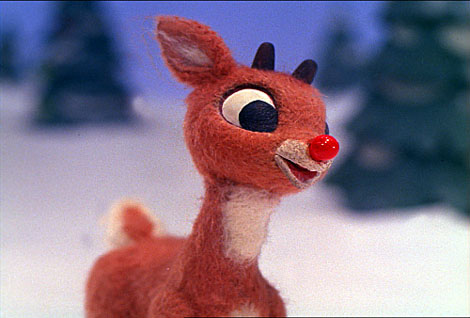
Christmas Special Review- Rudolph The Red-Nosed Reindeer

If you need further evidence of the genius of Rankin & Bass, and their favorite writer Romeo Muller, I present to you exhibit B: Rudolph the Red- Nosed Reindeer. The only thing I could really call this special out on, in my umpteenth viewing, was how silly Rudolph’s ostracism is, but that’s a given of the story, and ostracism is usually baseless and it’s really lampooned if it’s based on something so frivolous.

What really stands out in this tale is the characters and some of the things which are done with them. You have Rudolph’s parents who have differing opinions his mother sees no problem with the nose, his father, Donner; is embarrassed by it. You also have Santa Claus, of all people, being wrong about Ruldolph and admitting as much.

Typically, I do not favor didacticism in the arts, but there are exceptions to every rule, and many to this one; here it works wonderfully because it’s not overt. Kids see that even Santa can be wrong and learn not to judge a book by it’s cover, so to speak.

Yet, where this special really excels is in the original characters it brings into the mix, and the different wants they each have, and yet, most of them are also misfits. There of course is Hermey, who wants to be a dentist and not build toys. He and Rudolph are fast friends.

The cause and effect also works very well the Abominable Snow Monster chases them away and they run into Yukon Cornelius. A character who meets a very real fate, following a Disney axiom that you can scare kids if things work out in the end.

Then of course there is the iconic Island of Misfit Toys. All these pieces may seem disparate but the fact that they’re all sewn together in a coherent manner, and each are still original pieces that do not get homogenized, make this story work.

Short Film Saturday: Scarlet Sunsets (Music Video)

I honestly cannot say that I watch that many music videos anymore. In part, because the two channels initially created in part to broadcast them scarcely do anymore. The other reason is that, at least with many popular music acts, videos are virtually bereft of narrative and scarcely events any more as they once were. Lady Gaga’s “Telephone” is a recent exception that proves the rule.

However, I’ve been told that storytelling, with smaller more independent-minded (if not in musical styling or label) do do some interesting things with the form.

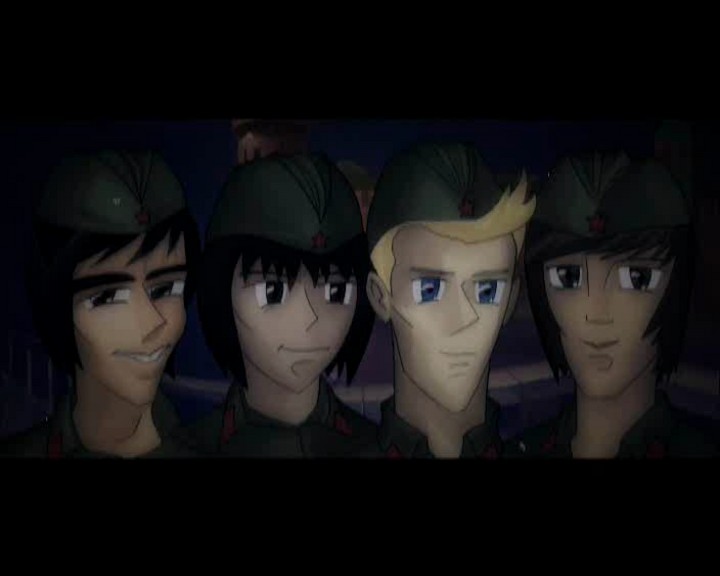
One example I stumbled upon was this video by Russian boy band Heroes which depicts scenes of the German invasion of Russia in 1941. It is animated uses some interesting techniques and is about the story not necessarily the band, though they are clearly personified in the video.

Enjoy!

Short Film Saturday- Red Riding Redux

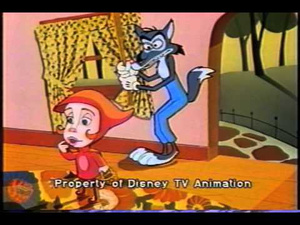
A classical animation style rendition of Red Riding Hood wherein the Big Bad Wolf has the nursery rhyme equivalent of Post Traumatic Stress Syndrome? That’s what Disney’s Oscar nominated Red Riding Redux offers. It’s a hilarious tale with workplace teasing, the wolf married to a sheep, a celebrity voice cast, modern twists, pop culture allusions and much more. It’s a wonderful marriage of Disney fairy tale-telling and Looney Tunes style zaniness.

NOTE: Please forgive the inconsistent quality as it appears to be a dub of a VHS screener that has seen some degradation over time (Ah, the wonders of VHS).

Short Film Saturday- Reverso

Typically, these shorts come to my attention on Twitter either randomly or directly from feeds I follow. As I was watching many a short one day to make these posts I noticed many of them cam from Short of the Week. They really do have great stuff and post great blurbs. I really adore this short and the blurb that accompanies it by David Masters, so I have quoted it below. Enjoy!

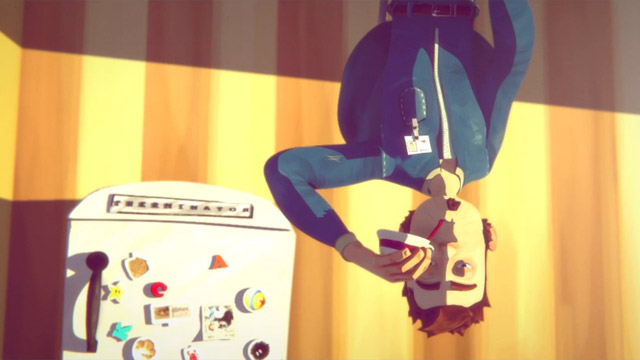
Living in an average British suburb, Barney drives an average car to an average office where he works an average job. He’s an average bloke, with one important exception: he lives life upside down.

On a technical level, Reverso gets everything right—quality 3D animation, realistic lighting, and complex yet easy-on-the-eye rendering. Yet in today’s democracy of filmmaking, technical ability isn’t enough to stand out from the crowd. What makes this film special is its bold visual storytelling.

Reverso is a masterclass in how to tell a story without dialogue. Strong characters and visual cues are used to establish viewer expectations, build the conflict, and draw the story to an inevitable conclusion that despite its sadness, is also uplifting (both literally and figuratively).

The filmmakers devoted careful thought to establishing characters through visuals. Barney, the lovable protagonist who navigates his upside-down world with a cheeky smile, and moves his too-long limps with lolloping grace, is based on a chimpanzee. Barney’s Dad, a soft, kind, maternal man has the rounded belly of a greedy gorilla, and spends his whole life wearing pink slippers. The office bully, Humphrey, is petty and mean, with the ugly face and sharp features of a rodent.

In its visual-only storytelling, its choice of office setting, and its thematic focus on difference, Reverso is reminiscent of the Jaime Maestro animation FriendSheep.

Reverso is a playful story with a serious message. Launched as part of the ArtFx school’s 2012 promotion, this is the first animation featured on Short of the Week from the Montpelier-based school of special effects and 3D animation. If it’s a sign of what’s to come from ArtFx, I’m excited to see more.

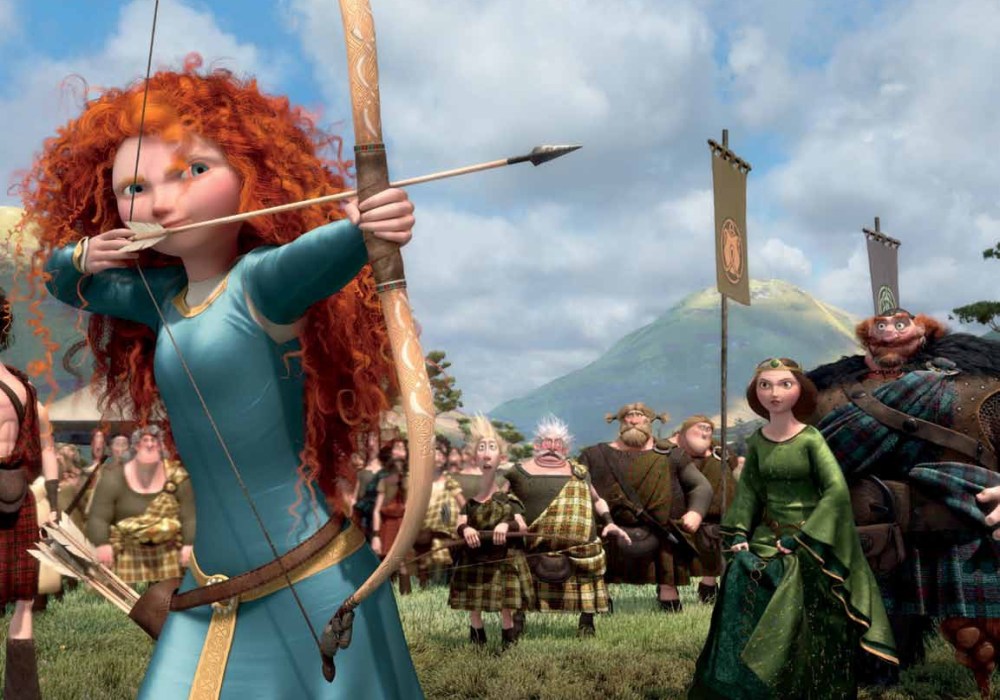
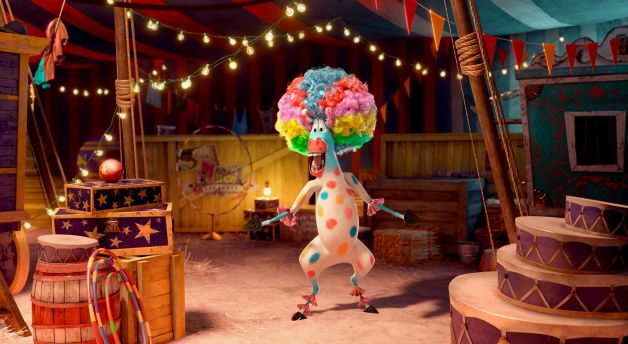
Madagascar 3 & Brave: Audience Expectations and Narrative Goals

Shortly after writing about the drive-in experience I made my first trip of the season. The drive-in I frequent does double-features and usually the fit of the bill and whether or not I’ve seen the movies ends up being the deciding factor.

This time in the family-friendly block there were two animated films being shown Madagascar 3: Europe’s Most Wanted and Brave. The fact that I had seen neither, really wanted to see Brave and they were both in the same medium, made it an easy pick for me.

What I found to be most interesting is in comparing and contrasting the two films, which I did merely because I viewed them back-to-back and because they had any inherent narrative or thematic similarities aside from being in the same medium; is that it was a tremendous study in audience expectation and narrative goals.

With regards to audience expectation: I expected next to nothing from Madagascar 3 except to hear the circus song again and laugh like some human version of Pavolv’s dog and I did, and I got some other chuckles out of it too, more than anticipated. Yes, there were things that were silly and overwrought but for fluff it was OK.

Whereas with Brave, just in the trappings of the story that I knew going in, the implications of those trappings and the potential it had based on that alone; set the bar was set very high.

Now, with regard to narrative goals what I mean is what the stories primary desire is. I believe, first and foremost, in judging a film on its own merits and with regard to what it is trying to accomplish. I won’t knock Austin Powers because it doesn’t stack up to Citizen Kane because it’s not trying to be that, it’s just trying to be funny. Granted with any genre film, yes, they want to successfully execute a story in the given genre and then if you get more out of it that’s icing on the cake, but the extras are not the main objective.

It’s trite but it’s probably easiest to think of it as setting a bar in the high jump, as I alluded to before. Madagascar didn’t set it so high but they cleared it, Brave set it really high and stumbled around a bit, in my estimation.

To be perfectly honest, I haven’t registered a grade on either film anywhere simply because I remember I saw them and found them both middling. Yet, as I alluded to before, that middling for Madagascar 3 is somewhat triumphant and for Brave was really disappointing based on what my perception of them was going in. In essence, I probably felt more frustrated after the better film. While there are still things that bothered me about how it was handled, Brave is still probably would be the one I’d pick if forced, and the one I’d be most likely to revisit.

I haven’t read a lot of press on Brave but I have a feeling that there were many who were talking about what they would’ve preferred happen. Without giving it away that’s not what I mean to say when I say it bothered me. I mean even with all the same givens and without reworking the circumstances there were elements there that could’ve been fine-tuned and much of what was likely to be good about it still was: the message, the struggle and the conflict.

Perhaps what’s most interesting is that I likely wouldn’t have drawn these parallels had I not seen them back-to-back but I did, and Brave was supposed to be the jewel in the crown. Yes, I hyped it a bit but having not read much in detail I did wonder what the complaints were about then the elements that didn’t connect as crisply as they could have came into the mix.

In the end, I thoughtthis a perfect opportunity to address those nuances in narrative evaluation that scores, regardless of you scale, can belie.

Short Film Saturday- Moonrise Kingdom Animated Shorts

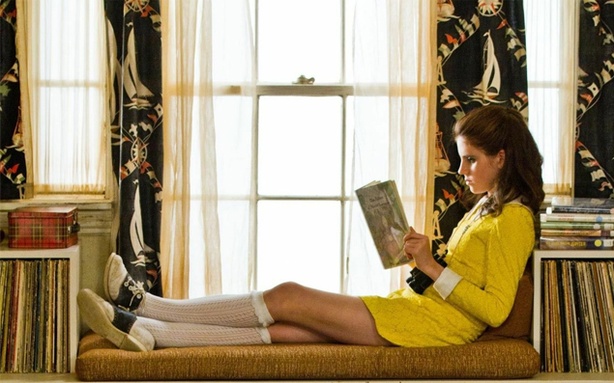
Wes Anderson’s film Moonrise Kingdom, which will be reviewed here shortly (Hint: I liked it), features six fictitious books that are Suzy’s (Kara Hayward) favorites and she reads from constantly. Aside from having a heroine who is an avid reader, thus encouraging reading in general, the film is also very creative in making these tales. Not only does Suzy read aloud from these imagined tomes but different artists were commissioned to create the covers and also animate this short film, which is not only entertaining, but gives you a glimpse into the world of this film without spoiling it.

Enjoy!