Dario Argento Says No to Prequels

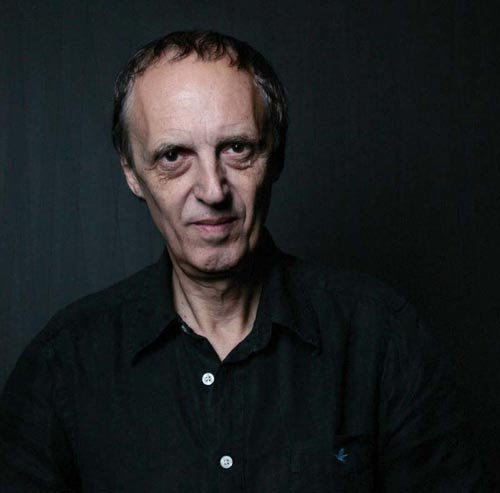
A few years ago I was fortunate enough to attend a horror convention that Dario Argento was attending. The following is a repost based on questions that I and a friend of mine were able to ask.

While at a Q & A session at Monster-Mania I managed to ask a question. It was as follows:

Considering that the flashback that acts as a frame in Deep Red is one of my favorite flashbacks have you [Argento] ever considered expanding that story into a prequel?

The answer was short, sweet and pretty funny.

“No, no, no. That’s a joke; for money. The movie is the movie.”

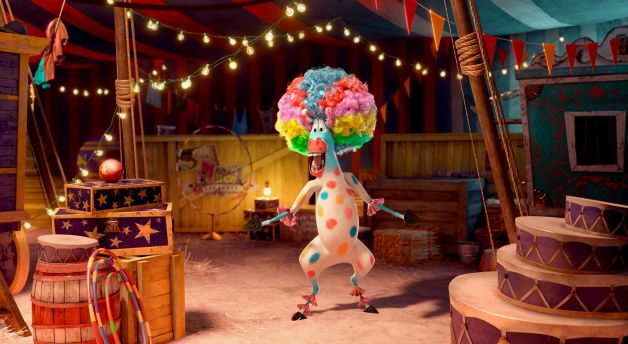
Madagascar 3 & Brave: Audience Expectations and Narrative Goals

Shortly after writing about the drive-in experience I made my first trip of the season. The drive-in I frequent does double-features and usually the fit of the bill and whether or not I’ve seen the movies ends up being the deciding factor.

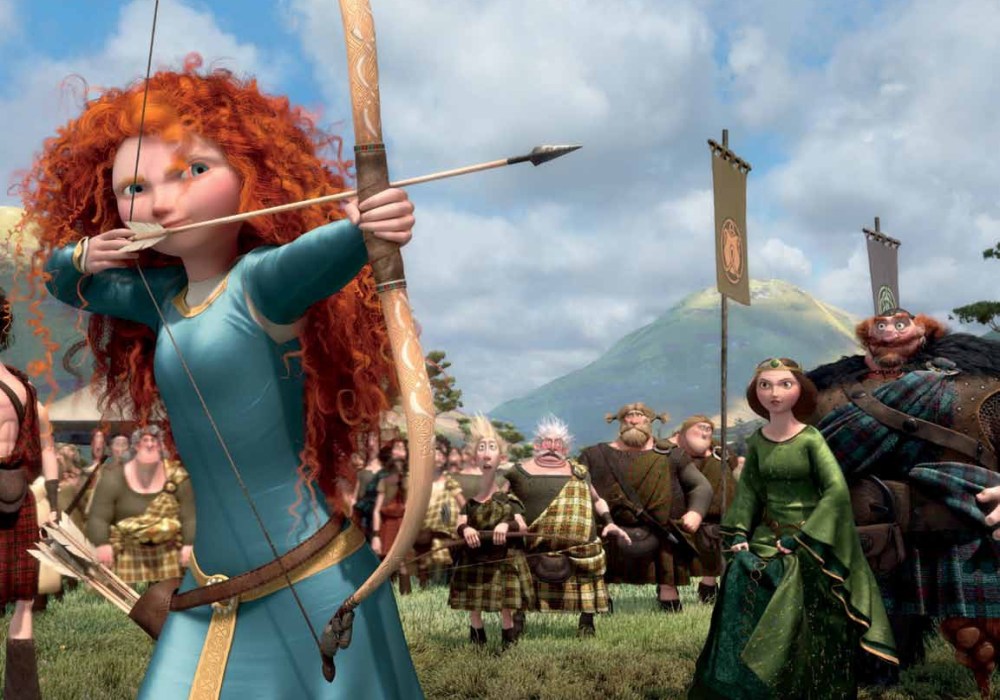
This time in the family-friendly block there were two animated films being shown Madagascar 3: Europe’s Most Wanted and Brave. The fact that I had seen neither, really wanted to see Brave and they were both in the same medium, made it an easy pick for me.

What I found to be most interesting is in comparing and contrasting the two films, which I did merely because I viewed them back-to-back and because they had any inherent narrative or thematic similarities aside from being in the same medium; is that it was a tremendous study in audience expectation and narrative goals.

With regards to audience expectation: I expected next to nothing from Madagascar 3 except to hear the circus song again and laugh like some human version of Pavolv’s dog and I did, and I got some other chuckles out of it too, more than anticipated. Yes, there were things that were silly and overwrought but for fluff it was OK.

Whereas with Brave, just in the trappings of the story that I knew going in, the implications of those trappings and the potential it had based on that alone; set the bar was set very high.

Now, with regard to narrative goals what I mean is what the stories primary desire is. I believe, first and foremost, in judging a film on its own merits and with regard to what it is trying to accomplish. I won’t knock Austin Powers because it doesn’t stack up to Citizen Kane because it’s not trying to be that, it’s just trying to be funny. Granted with any genre film, yes, they want to successfully execute a story in the given genre and then if you get more out of it that’s icing on the cake, but the extras are not the main objective.

It’s trite but it’s probably easiest to think of it as setting a bar in the high jump, as I alluded to before. Madagascar didn’t set it so high but they cleared it, Brave set it really high and stumbled around a bit, in my estimation.

To be perfectly honest, I haven’t registered a grade on either film anywhere simply because I remember I saw them and found them both middling. Yet, as I alluded to before, that middling for Madagascar 3 is somewhat triumphant and for Brave was really disappointing based on what my perception of them was going in. In essence, I probably felt more frustrated after the better film. While there are still things that bothered me about how it was handled, Brave is still probably would be the one I’d pick if forced, and the one I’d be most likely to revisit.

I haven’t read a lot of press on Brave but I have a feeling that there were many who were talking about what they would’ve preferred happen. Without giving it away that’s not what I mean to say when I say it bothered me. I mean even with all the same givens and without reworking the circumstances there were elements there that could’ve been fine-tuned and much of what was likely to be good about it still was: the message, the struggle and the conflict.

Perhaps what’s most interesting is that I likely wouldn’t have drawn these parallels had I not seen them back-to-back but I did, and Brave was supposed to be the jewel in the crown. Yes, I hyped it a bit but having not read much in detail I did wonder what the complaints were about then the elements that didn’t connect as crisply as they could have came into the mix.

In the end, I thoughtthis a perfect opportunity to address those nuances in narrative evaluation that scores, regardless of you scale, can belie.

Mini-Review Round-Up June 2012

I had quite a review drought to end 2011 so I think the remedy for this kind of post would be to have the post be cumulative monthly. Therefore, after each qualifying film a short write-up will be added to the monthly post. The mini-reviews will be used to discuss Netflix and other home video screenings. Theatrical releases will get full reviews.

For a guide to what scores mean go here.

Piranha 3DD

A film like Piranha 3DD always prompts the question: “Well, what did you expect?” Whether this question is asked in sincerity or sarcastically it is a valid one, as I always strive to judge a film on what it’s trying to be and whether or not it succeeds in that aim. Due to this fact, I have no problem giving disparate films the same grade without ever questioning whether one is better than the other. After all, if you think on it Jurassic Park and Citizen Kane might be two films you like, but no one will ever confuse them with regards to their aims.

So what did I expect from Piranha 3DD? It may be easier to explain what I didn’t expect first. I did not expect anything remotely like Piranha (1978). I didn’t expect to need to have seen the new incarnation of this series to follow this. I expected the film to be silly and strive to land in the so bad it’s good realm based on its premise. I did expect a passable horror story regardless of said fact. Considering that John Gulager was attached, and that I did like Feast, I had some hopes to see this film achieve these aims.

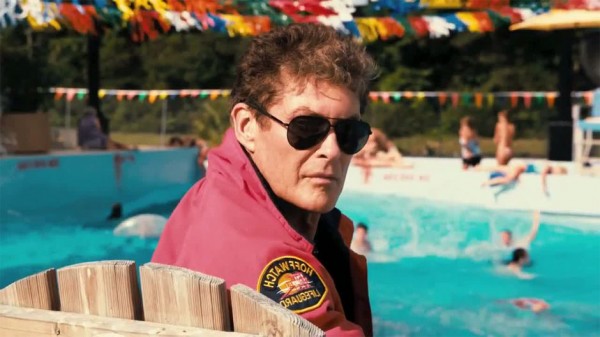
What unfolds instead is a film that you laugh at not with. It’s a film that wants badly to fall into an exploitation mold but it more frequently is an uneasy mix of attempts at such, mainly sex and star exploitation. Both aspects are so poorly handled the film more closely resembles a softcore porn/vanity press hybrid. Yes, the silly, poorly-animated piranha take a backseat in this film to implants, David Hasselhoff and sorry, lazy comedy, which works all too infrequently, especially considering some of the people they wrangled into being in this thing.

Speaking of the people they got in this thing: Christopher Lloyd deserves a medal for being the only redeeming quality this sorry excuse for a film has. In all honesty they would’ve been better served turning the camera on him for 83 minutes and allowing him to improvise, with no rehearsals and no editing. Lloyd is a truly gifted actor and why he ends up in films of this ilk these days baffles me to no end.

What I was expecting, in all honesty, was not nearly as bad as I got. As silly and ill-conceived as the oh-so-thin plot is it also lacks focus. It contains no flair or verve that gives me any cause to forgive it its sins. The key to good exploitation is that the subject matter is the only thing being exploited. This film also exploits its audience, and I was actually very surprised and disappointed that it was the worst thing I’ve seen this year to date.

2/10

Beautiful Wave
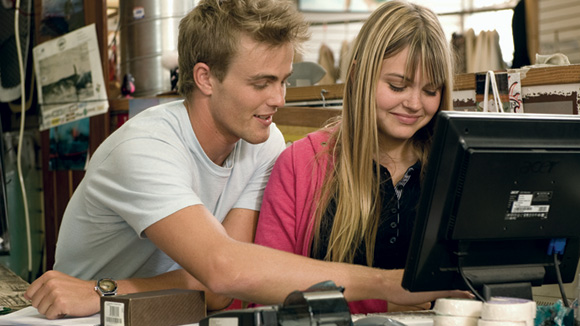
I quipped, with a lack of anything of real significance to say, after having seen Beautiful Wave that it was “neither beautiful nor a wave” in my best Linda Richman voice. However, the Mike Myers character-inspired jab may have been the most succinct way to put it. This is a film which seems like an excuse for a surfing film. I haven’t seen every surfing film, but I honestly can’t remember it being almost incidental to the story, as it is here.

Sadly, the protagonist is also rather incidental. Very little of her conflict is externalized and ultimately the film feels like it’s about everyone around her rather than her. I’d critique the pace if there was any discernible pace to criticize. The film telegraphs its climax and denouement very early on making much of the film transient.

As you can tell the issues are mainly structural but there are a few decent to good scenes along the way. I can’t fault the performances of the three main players Aimee Teegarden, Patricia Richardson and Lance Henriksen. It’s just so inconsequential.

Why she’s jettisoned to California just occurs as this forced inciting incident, which really has no impetus aside from the narrative necessity placed upon it by the makers. Somewhere in its running time there’s a perfectly innocuous, enjoyable albeit nebulous short film, but it really ought not be a feature. This is essentially Soul Surfer almost entirely devoid of pathos.

3/10

I’m Not Jesus Mommy
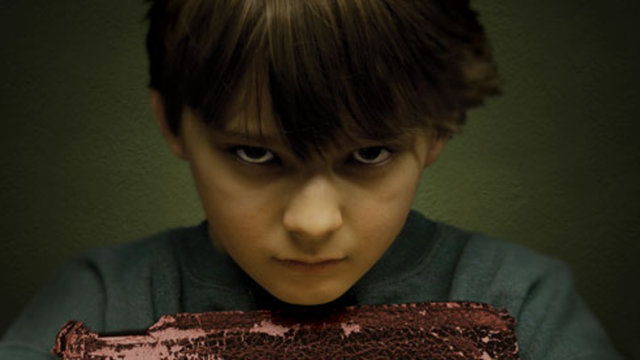
Here’s another one of those movies you just happen upon and then you look into it and you realize that the idea is so outlandish, and could end up being either brilliant or a disaster, and based on its premise that you absolutely have to see it.

Perhaps what’s most unfortunate about the film is that both in its title and in its synopsis it divulges what is truly revealed in the third act, however, intimations to the fact in question are made well before the revelation.

Perhaps the most surprising thing about this film is despite a rather flat, blank performance by its lead actress and clearly video cinematography is that it has a strong first act. It mixes in some themes that I don’t necessarily expect to see touched upon at all and rather well. Then there’s a time jump, now this is where the excessive amount of restraint comes into the mix, where the plot really begins plodding. There’s some sort of plague about, the world is a really crazed place. However, vague allusions as to why are all that’s ever made. Similarly, visual motifs come into play that are also unclear, but the real issue is that the near cessation of incident.

Unlike some who have seen it, I have no issue with the fact that this film handles what is potentially such a polemic, sacrilegious premise with utmost seriousness of tone. The issue seems to stem from, at least in part, a bit of reticence to fully commit and it’s a shame.

The music, the lack of dialogue and the edit set the stage but there’s virtually no show upon it. I would see another work by Vaughan but what is most aggravating here is that it seems there was the courage and commitment to take a potentially ludicrous idea, treat it seriously and make it a film. However, the follow-through to make the film as shocking and effective as it could be doesn’t seem to be there. The film does become somewhat memorable for the previously alluded to fact but that’s rather dubious.

4/10

Playback
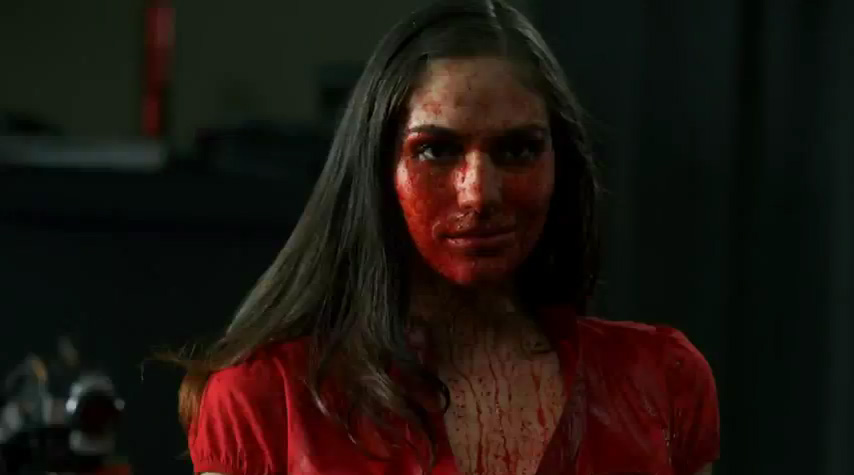
This is a film that has a formula shared by quite a few films in the horror genre: A town with a scarred past that comes back to haunt it anew. However, what this film attempts to is to double said formula. There is the now local-legend of a mass murder in a house but that fuses with a completely fictitious legend about the birth of cinema that borrows more than liberally from a few other films. I certainly cannot knock this film on the ambition front. However, where it does falter are in a few ways: first, the leads are very much in the dark about the famous case, which is an issue. We the audience don’t know the information and need it, but it seems unrealistic that most know nothing or care nothing about it. Second, I appreciate the attempted misdirection, however, the decisions about the paths the leads take also somewhat derails the story. Next, there’s a bit of inconsistency in the divulging of information. In certain cases it’s overly-expository and certain people know too much, yet in others certain aspects keep a little mystery. It’s a difficult balancing act, but it’s botched here I feel. Lastly, the ending does offer a resolution but it’s another one of those unsatisfactory shock cuts that puts a damper on the film when it had grown, just a bit in the last third.

The elements for Playback are all there for it to work in hindsight but they’re either mismatched or mishandled in some way such that the center doesn’t hold.

4/10

Found Memories

This film is a perfect example of a translated title that doesn’t quite do the film in question justice. If you were to translate the Brazilian title of Found Memories literally it would be Stories That Only Exist When Remembered. Granted that is more of a mouthful but it gives you a better sense of the kind of film you’re getting I feel, because as I watched the film I realized there was perhaps one of the more subtle Magical Realism tales I’d seen, one with with extreme emphasis on the the realism. Yes, there is a rather mundane, repetitious nature to certain scenes but the equation is skewed as the film progresses by a newcomer. The framing of many shots is wonderfully precise and as the story unfolds you are taken in both by the stories being told by the characters themselves as well as the ones being told about them by the film, which in many cases are parallel but not identical. Found Memories is a tremendously subtle, yet at times rapturous, look at small town life in a Brazilian town that should still be able to play anywhere and I highly recommend it.

9/10

Theme Parks and Alternative Film Forms

Disney Hollywood Studios' Fantasmic

When going on a vacation to the Disney Parks there is less time to take in movies, Disney or otherwise, however, that does not mean there isn’t fodder to sate your cinematic thirsts while there. Here are some of the sights I saw that met that requirement.

The Magic Kingdom


Mickey’s PhilharMagic

3D is a theme at many of these cinematic attractions, I stumbled upon this attraction with little knowledge of what it was but I absolutely loved it. It’s a great mix of new and old of Disney and music and it’s brilliant.

Epcot

Disney 360 presentations is the preferred mode of conveying the aural-visual message crafted by each nation’s tourism board that so chooses to have a film in the park.

With the 360 the name is very indicative: there are projectors and screens above you that surround you on all sides. At times the visual you get is panoramic at others these screens show different imagery, which encourage you to turn yourself about such that you don’t sit to watch said film but rather stand in rows with a bar to lean on should you need it. I certainly tried to take in as much as I could here. The countries in Epcot with 360 films are China, Canada and France.

The only country offering a tourism film not in 360 is Norway whose 5 minute short is added on to the end of their water ride. Ironically, it’s also my favorite of the films because it’s the most artistic and least hey-this-was-commissioned-by-the-tourism-board film of the bunch.

Yet this isn’t the only place Epcot incorporate moving imagery. In Mexico there’s the Gran Fiesta Tour starring the Three Caballeros (Panchito, Jose Carioca and Donald Duck) where in they appear animated on screens many times, in all directions during your boat ride which is a great way to get a chuckle and cool off.

Disney Hollywood Studios

Star Tours

Is clearly one of the more popular attractions at the park being a Star Wars flight simulator. The imagery is great and there’s little actual motion needed to suggest the movements.

Another example of this if you’re really park-hopping can be found at Universal in the Spider-Man ride.

Muppet-Vision 3D

Is a great little show with jumping out at you 3D imagery mixed with live performers (i.e. Muppets) in a wonderful theater which is built to replicate the Muppets’ performance space.

Fantasmic

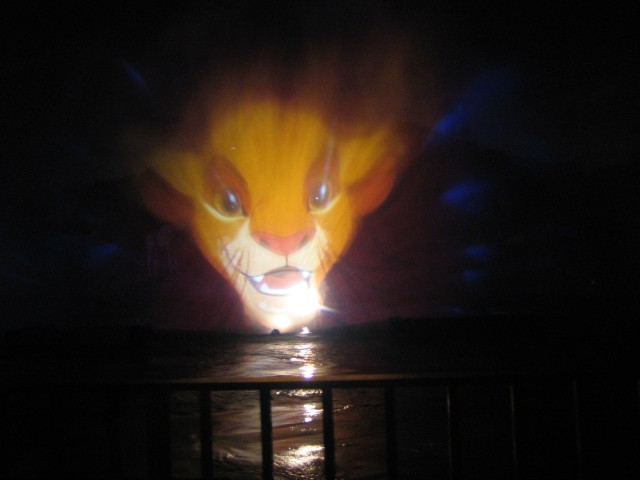
Is the night-time spectacular that closes the park. It features one of the largest conglomerations of characters you’re likely to find and features many images both old and new projected onto a wall created by water jets.

There are also live-action shows like some stunt demonstration shows Indiana Jones Stunt Spectacular and Lights, Motors, Action; a great car stunt demonstration show.

Then in this more film-centric park there are more literal films and exhibits like Walt Disney: One Man’s Dream and The Magic of Disney Animation.

This is all just based on what I saw while I was at the park, there were a few things I missed that likely qualify. Ultimately, yes, it is a getaway but that’s not to say there aren’t alternate film forms that can be observed and admired both here and at other parks. Be on the lookout for them.

10 Keys to a Better Life as a Fanboy: 2. Have a Bad Memory

Ian McKellan in The Lord of the Rings: Return of the King (2003)

This series of articles is designed to help you, the fan, try and divorce yourself from your attachment to source material and judge a film on its own merits and not in comparison to another work. These tips come from my own experience. I hope they are helpful.

I don’t know if it’s possible to train yourself to have a bad memory but you can sure as hell give it the old college try. You may have to be born with it and in that case I have been blessed. At least in this regard, it’s not really as handy as you may think.

How this will help you, though, is that the further you remove yourself from the source material the more you will be able to enjoy the film as a separate entity. An example of my experience with this is the Harry Potter films. Now granted they have gotten better, in my opinion (exponentially so with each installment), however, when I saw The Sorcerer’s Stone my first viewing was marred because I had so recently finished reading the book.

Since then there has been a bit of a gap between my having read the book and seeing each movie. Some were larger than others but that has helped. With each successive film I have spent less and less time and mental energy thinking to myself “Oh, Such-and-Such is coming up.”

Anticipating events and then wanting to see how they are executed cinematically can diminish your enjoyment unnaturally. If you came in as a blank slate you may either be awed or disappointed but it would be all your opinion of what you saw and in no way influenced by your expectation.

An illustration I could give you would be The Lord of the Rings trilogy. I never read them. I don’t care if I ever do read them. It certainly wouldn’t make my bucket list were I to write one (Finishing War and Peace would), but I did see all three movies. Thus, I had no preset expectations and the reception it got was the reverse of what usually happens. It was hyped, fans wanted it and were typically pleased with what they saw. For the record: I thought part one was pretty good, part two was interminable and part three was brilliant until it decided it would refuse to end. In some parallel dimension of the multiverse I’m sure it never did.

10 Keys to a Better Life as a Fanboy: 1. A Book is a Book (A Question of Form)

1. A Book is a Book (A Question of Form)

Star Wars- Episode III: Revenge of the Sith (Lucasfilm)

This series of articles is designed to help you, the fan, try and divorce yourself from your attachment to source material and judge a film on its own merits and not in comparison to another work. These tips come from my own experience. I hope they are helpful.

The first and most important thing to keep in mind if you are hoping to have a happy existence as a fanboy is that medium matters. A book is a book, a comic is a comic and so on and so forth. Each medium has its own rules and limitations and conversely benefits. If something achieves perfection within its form it is therefore referred to as a masterpiece.

It is very difficult but not impossible for a story to be that well told in more than one medium. Now how to gauge whether or not a film has achieved such a lofty height cannot and should not be decided based on a comparative analysis.

There is merit to examining the decisions made in adding and omitting and transforming material from other mediums to film but such discussions are typically more adept to academic scenarios and not germane to analyzing the quality of a film.

I will even have occasion to describe a film I saw and cite that I thought it should’ve done X when it does Y, Case 39 is a prime example of that, however, that should not influence one’s overall opinion of a film. You must look at what is presented you and then decide if it works based on what is there not what you wish is there. That should apply to films as well.

Another illustration would be Star Wars: Episode III: Revenge of the Sith. I was hoping against hope that amidst the bloodshed would be the headless corpse of Jar Jar Binks, alas it was not to be. Yet that didn’t color my entire view of the film. It still would’ve been bitchin’ though.

A Reading and Review of The Turin Horse

Erika Bók in The Turin Horse (Cinema Guild)

NOTE: A film like this warrants discussion beyond a typical review. While some relevant plot details are discussed they are not what I’d deem spoilers.

Béla Tarr. Perhaps one of the most daunting things to contend with when writing about him or his films is trying to encapsulate him and/or his work for the uninitiated. For to write this review solely as the fan and devotee that I am would not do for all who may come across this article. The read of the film that rang true to me became apparent very quickly. However, the prior question nagged me. So how do I go about it? Carefully and with explication but not what I’d classify as a spoiler. Recently, upon viewing Fata Morgana I tweeted that I was glad it wasn’t my introduction to Herzog and that it likely should’ve been the last film of his I saw. With Tarr there really only is baptism by fire I feel and I’ll attempt, aside from reacting, to give a bit of a primer for his work. My baptism by fire occurred by acquiring and watching his seven-hour epic Satantango while in college and I’ve been hooked ever since.

This is as good a place as any to discuss the pace and a few other trademarks of Tarr’s work. Tarr has shot only black and white for the past 30 years. He moves the camera beautifully and intricately at times while using very long takes. I counted shots in this film and came up with a similar number to reports I read: 30. The running time is approximately 146 minutes meaning the average length of a take of about five minutes when Hollywood has us conditioned to expect cuts every five seconds, depending on genre. All the cuts are good, some are wonderful and the pace works for the tale but is worth noting for those who are unfamiliar with his work. Gird your attention span!

With regards to this film, as I started to watch it what struck me is that it seemed like his own version of Jeanne Dielman. This allusion to Chantal Akerman is not completely my own Scott Foundas in a Facets symposium on Tarr made the comparison that made me want to see Jeanne Dielman in the first place. However, while he’s talking stylistically in terms of camera movement, mise-en-scene and blocking; here the narrative in many ways resembles in that in Jeanne Dielman in as much as the film most reveals its characters and their story in the slow but steady deterioration of daily routines.

The setup is fascinating in two ways: First, the name of the film refers to the incident wherein Nietzsche supposedly lost his mind, he so felt for a horse being beaten by his owner that he broke down in tears, intervened and embraced the horse and was never the same. The story then is really about the owner of said horse and his daughter, however, I’d caution you not to forget about the horse and the title and watch him and his arc and the relationship the family has with him. Second, in a structural consideration the inciting incident occurs in a voice over wherein a detached, unidentified narrator tells us what happened and that propelled an unseen Nietzsche into madness and affected the horse and the family in the long run.

The film is above all indirect, even when seemingly being direct, which is part of its brilliance. The film is about the inevitability of death but it’s not spoken about in certain terms. The bare minimum these people need to do to survive starts to deteriorate as does their ability and willingness to live, mostly due to said uncommented upon inevitability.

Perhaps what works best is that it really creeps up on you. These routines play out repeatedly, shot and cut a little differently each time such that the slight changes at the start might not be picked up but then you start to see them.

With regards to moments that are direct there are a few ways to interpret them. Perhaps the pivotal scene where there can be some debate is one wherein their neighbor comes over because he’s run out of Palinka (Hungarian fruit brandy). It’s human nature to want to hang your hat on something when watching a story that’s not traditional, therefore when watching a father and daughter just doing what they do in a desolate countryside in the middle of an unnatural windstorm you listen to the neighbor’s wild theory. Ohlsdorfer, the father, dismisses it as bull and some reviews as a red herring, I feel the truth lies somewhere in the middle.

You don’t have to know Tarr’s cinema to start to sense that there’s a metaphysical nature being applied to a mundane setting, a sort of allegory free of dogmatic restraints. The neighbor’s theory on what’s wrong with the world and life in general may be only his mad formulation but his view, like anyone else, is all he has and everyone’s seeking an answer, we may change it, we may not have one but anyone’s guess is as valid as the next to questions like “What’s the point of all this? What’s going on? Why am I here?” The neighbor’s theory may be vague and labyrinthine but part of what tips it towards truth for me is that he made it a specific revelation to each individual and not an externalized event. I know I’ve have been aloof in the theory’s description because I think it’s open to individual interpretation. My inference that it’s closer to fact or fiction falls in line with my final interpretation, which deals directly with how the film ends, which I will not reveal.

Similarly oblique is the passage read from a book left as a gift by a band of Gypsies passing through for some water. However, in that it speaks of defiling of the Holy Land and damnation, in short inevitability, so it works. It connects to a theme rather than offering and epiphany, yet I did have one. Only as I was just walking out of the theatre after the very short closing credits did I realize the last domino that needed to fall for me and it did and it made the whole thing that much more amazing.

The film keeps its cast of characters small and the location virtually unchanging. It’s probably too claustrophobic to be called a chamber drama. That sense heightened by the sound editing and mixing which plays the persistent sound of the wind at just the right level to unnerve you and will then drop entirely to bring in Mihály Vig’s dichotomic score, half-mellifluous and half-discordant.

Another thing that bears mentioning that there’s next to no dialogue. Yes, there is the neighbor’s extended monologue which gets a few replies, curses thrown at the gypsies and occasional exchanges between father and daughter but no scene I would call a conversation scene and it’s all the better for it. The lack of the spoken word invites you to participate in the film more freely, draw your own conclusions.

The actors János Derzsi, Erika Bók and Mihály Kormos are all brilliant. The main tandem do so much physically and with their eyes they scarcely need dialogue to convey their emotions and turmoil.

The only other plot point that really bears any discussion is the attempt the Father and Daughter make to leave their house. You are not told or shown why they don’t make it to some safer locale. You are left to speculate on it. I drew my own conclusion, you may draw a different one. It’s just one of the other great touches this film has. Again it’s something that fits in my reading for the story, in a film about the inevitability of death what escape can there be, really?

It’s a bit sad to have to say that not all directors are what you can call visionaries but Tarr is definitely one. What you see on display in The Turin Horse is the mark of an artist. There is a style and language all his own, which he has cultivated through the years. I love Hungarian cinema from what I’ve been able to see but at the start of his career you wouldn’t know just by watching one of Tarr’s films it was his, now his style is unmistakable and inimitable, unique in all the world. If this is truly to be his last feature what a glorious way to go.

The Turin Horse is a flat-out masterpiece. That’s not a word I use lightly. There are films I consider masterpieces but I did not proclaim them as such upon first seeing them. However, when trying to encapsulate my reaction that’s the first word that came to mind. It truly is, it’s sheer brilliance and believe me when I say that my stating several facts in the course of this piece does not detract from the experience of the film, it’s just a guide. Watching and immersing yourself in it is a lot more valuable and harder to describe than a few instances in the story. If you have decided this is the kind of film you’d like to see (it’s certainly not for everyone) it’s worth seeking out on the big screen.

10/10

Review- Underworld: Awakening

Kate Beckinsale in Underworld: Awakening (Screen Gems)

Going into this film in all sincerity I wanted the ceiling of its potential quality to be much higher than I expected it to be. To be fair I only saw the last installment prior to this so I came in dreading a similar experience and hoping for a better one. While I’ll concede it was a better film it wasn’t by very much at all.

The film starts immediately on the wrong foot with a tired recap that relies too heavily on voice-over and not enough on montage. Granted it is a storytelling crutch to introduce new viewers and/or refresh the memory of fans but even the Friday the 13th series, which practically invented the technique, was more visual and inspired than this attempt at backtracking.

The tonality of this film is, from the very first, off. When you combine the desaturated color palette with the icy, stiff performances and flat-lining storyline you’re in a situation that no stakes can raise. I do grant this film raises the stakes from the last chapter but everything is so rote and done with such little aplomb it has no impact whatsoever.

Essentially the problem that plagues this film is the same that plagued the last one: the conflict seems created to support the action sequences and the action does not seem to flow organically from the conflict. We are given the minimum information and development and expected to be fat and content from that as we watch yet another tiresome action sequence where we as an audience have little to no investment.

Upon looking at the cast list one can easily ask “What is Stephen Rea doing here?” Sadly, that question does not dissipate in my mind as the film progresses. It seems as if Rea wanted nothing to do with this film and that perception makes itself evident in every frame.

In technical terms the films fares slightly better than the narrative does. The 3D is serviceable but rarely exploited and hardly worthy of the upcharge incurred. The effects are decent in execution but in conceptual terms the same unfortunate choices are made and exacerbated like big, hairless, “werewolves” and so on.

The film like the prior installment overdoes gunplay and downplays chase and is always trying to be more action then horror and achieves neither. All it ends up being is an incredibly tedious exercise that minimally advances a muddled mythos.


4/10

Your Online Georges Méliès Film Festival

Ben Kingsley and Asa Butterfield in Hugo (Paramount)

Now, I know what you’re thinking: “Here’s another blog trying to prove how clever they are by linking to all the visual references in Hugo.” Wrong. Granted it’d be more painstaking to jot down the shots and match them to those in the film. However, the purpose of this post is a bit broader.

I have linked to anything and everything I could find. Some are referenced in Hugo, some aren’t. What I really want to people to do is to take a few minutes and watch some of there. Some are quite short. However, I’ve also created this post using just one website.

The internet archive is a great resource for all kinds of material but especially films which have entered the public domain. You can stream and download all kinds of great movies for free.

If you enjoy these movies, as I suspect you will, in their more primitive degraded state then you can look to Flicker Alley who have released many great sets of Georges Méliès rediscovered and restored works on DVD.

Enjoy!

If you ever wonder where your dreams come from, look around: this is where they’re made.
-Ben Kingsley, Hugo

<a href="http://www.archive.org/details/Lauberge-ensorceletheBewitchedInn1897&quot; title="The Bewitched Inn (1897)”>

A Terrible Night (1896)

The Devil in a Convent (1899)

<a href='http://www.archive.org/details/Cinderella_601&#039;>Cinderella (1899)

Joan of Arc (1899) [TINTED; Third-Party Voice Over Added]

The Man with a Head in the Cabinet (circa 1900)

The One Man Orchestra (1900)

The Devil and the Statue (1901)

A Trip to the Moon (1902)

The Monster (1903)

The Infernal Cauldron

The Impossible Voyage (1904)

The Infernal Cakewalk (1903)

Frolics of Satan (1906) [TINTED]

The Palace of the Arabian Nights (1906)

The Eclipse (1907)

20,000 Leagues Under the Sea (1907)

Good Glue Sticks (1907)

The Devilish Tenant (1909) [TINTED]

Cinematic Battle of the Nutcrackers

Every year for the past 5 years Ovation TV has a Battle of the Nutcracker’s wherein they play 5 different versions (rotating some out annually) of the ballet based on Tchaikovsky’s most renowned work. While I definitely qualify myself as an enthusiast rather than a savant of dance, this is a piece I know well enough such that I find it interesting to watch the different versions and pick a favorite.

Now within the ballet there are many variations for while Tchaikovsky’s music is the standard each choreographer has their signature while it was Marius Petipa and Lev Ivanov who originally choreographed it, it’s perhaps Balanchine’s that’s most well known.

What’s most interesting to me about this “competition” where the viewers are invited to vote for their favorites is that it gets me thinking about adaptation. One could do quite a lengthy case study on The Nutcracker alone. While there are many either “filmed ballets” or cinematic versions based on Tchaikovsky there are many based on E.T.A. Hoffman’s story The Nutcracker and the Mouse King. Just the fact that you have these two available sources available to freely adapt makes this quite a notable story.

However, a narrative as flexible as this wouldn’t suffice for a post for one could argue that “The Turn of the Screw” by Henry James and “The Colour Out of Space” by H.P. Lovecraft are more malleable pieces of fiction based on the films they’ve spurned. What makes The Nutcracker a unique tale, is not only the fact that I personally would put it on a list of ‘The Great Stories’ meaning classic narratives I could watch re-interpreted any number of ways but also the fact that it does have two potential origins as a source material either in literature or in dance.

In honor of this great story and the novel idea by Ovation I thought it’d be good to have some suggested Nutcracker-related film viewing for the holiday season.

Here are perhaps the three most well-known (the ones I’ve seen) cinematic versions to get you started.

The Nutcracker in 3D (2010)

The Nutcracker in 3D (2009, Freestyle Releasing)

During its all too brief cinematic run it was referred to as The Nutcracker in 3D. Now with 3D being the cinematic boogeyman du jour home video is the way to check this film out. I won’t give too much away but this version is most definitely different and based on the story rather than the ballet. This allows the storytellers to have a lot of latitude and there are few if any safe decisions and this film will likely cause divisive reactions all around. Partially musical and very allegorical it’s a film that refuses to be ignored. It also features Elle Fanning (Super 8, We Bought a Zoo) and Charlie Rowe (Neverland).

Fantasia (1940)

Fantasia (Disney)

If you’re one who prefers your references and adaptations a bit more oblique then you need look no further than Disney’s pet project Fantasia. Along with many numbers from The Nutcracker you will of course see interpretations of may other classical pieces. This film is definitely all about Tchaikovsky’s music rather than the ballet though there is dancing too as you may well know.

George Balanchine’s The Nutcracker (1993)

Macaulay Culkin and Jessica Lynn Cohen in George Balanchine's The Nutcracker (Warner Bros.)

This was the first place I was able to complete viewing the complete story of The Nutcracker ballet. My first attempt to view it live at Lincoln Center was interrupted halfway through. There are a few things that are interesting about this film not the least of which is that you have within it an encapsulation of George Balanchine’s choreography. You also have the fine narration of Kevin Kline. However, of course, what most will note is that it features Macaulay Culkin in the lead. The only major alteration is that the choreography, which for the nephew/nutcracker is rather minimal is diminished further here. While some may not even know this film even exists you might be further surprised to learn that this film is really perhaps the biggest power play Kit Culkin, Macaulay’s father and perhaps the most notorious stage parent in modern times, ever pulled off. Macaulay’s participation in The Nutcracker was really a case of living vicariously through your child. Though he speaks of it earnestly now of his distaste for the project it really doesn’t translate very much on film. Furthermore, Kit tried to influence the final cut of the film removing said narration and when it wouldn’t happen Culkin didn’t publicize the film so it was another Nutcracker box office bomb.

The Ovation block certainly made me want to look for other versions on film and I hope you enjoy these as well as seeking out others.