Horror Films and Stephen King (Part Five)

Note: What follows is a full analysis of the entire film, all other parts of this essay are fairly spoiler-free with regards to the film but this is not. You’ve been warned.

Maximum Overdrive begins with a title insert basically stating that the earth will be stuck in the tail of a rogue comet for about a week. The insert seems a extraneous to me and takes away from the story to a certain extent, however, King may have stated his reasoning in an earlier writing “…any horror film (with the possible exception of the German expressionist films of the teens and twenties) has got to at least pay lip service to credibility” (Danse, 156). One will note that even Friday the 13th and A Nightmare on Elm Street give their slashers traumatic pasts they must exorcise. In this film the explanation comes early and removes a necessary suspense element I feel would’ve helped the story out. One may also notice that the picture of the earth used in this sequence is backwards meaning Egypt now looks out on the Atlantic. I don’t know how no one caught that.
    

The film is set in Wilmington, North Carolina for the duration of the story. The only other time King set a tale in the south was The Green Mile. He’s set tales in Nevada, Pennsylvania and had a few go across some states but usually relied on atmosphere or people he could sketch reasonably well, which is Maine. The characters in this tale while are sometimes sketched and drawn out by King, to the extent he could with the limitations of the film but they’re acted like caricatures in most cases.
 (Note: This geographic note was correct upon the original writing. Since then King has taken to wintering in Florida, thus his fiction goes there sometimes too).    

We first see the way that the comet affects machinery on the streets of Wilmington.  First, we see a news ticker over a bank that constantly displays the phrase “Fuck You.” Then we get the early King cameo in which, he’s a bumpkin who’s called an “Asshole” by his ATM machine, this is humorous but nowhere near as good as his role as Jordy Verrill in Creepshow.  These small details may add a bit of eeriness to the beginning but as is the theme throughout this film we get a lot more humor than fright. In this sequence all the laughs are intended.

After this we get what might be one of the more frightening sequences of the film, unfortunately no one really escapes this scene unharmed. There is no protagonist who makes their way out of this wreckage and moves on to where a bulk of the action takes place. Instead, what we get is quite an effective crash scene that shows that all machinery can now think and the drawbridge lifts even though all the cars got the green light. The bridgemaster and his assistant look befuddled and the bridge is a disaster area. Everyone is stuck at the base of the lifted bridge. A motorcycle rider flies off the edge, this is the source of the big continuity error one man slides of his motorcycle and we see him seemingly go in two directions, and also go out the gap which hasn’t opened as big as camera angles would have us believe later. This huge mistake is also surprising considering Evan A. Lottman, who edited The Exorcist and Sophie’s Choice worked on this film. This scene is somewhat freaky but is also a little extraneous.
    

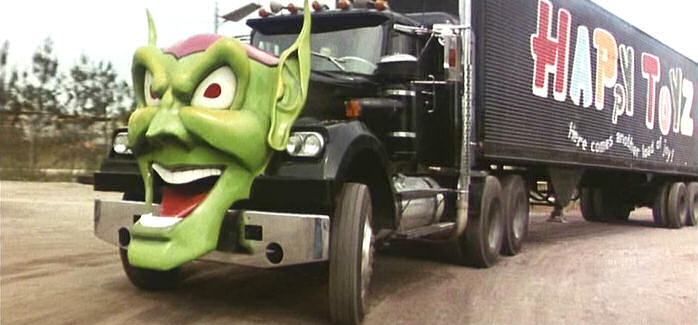
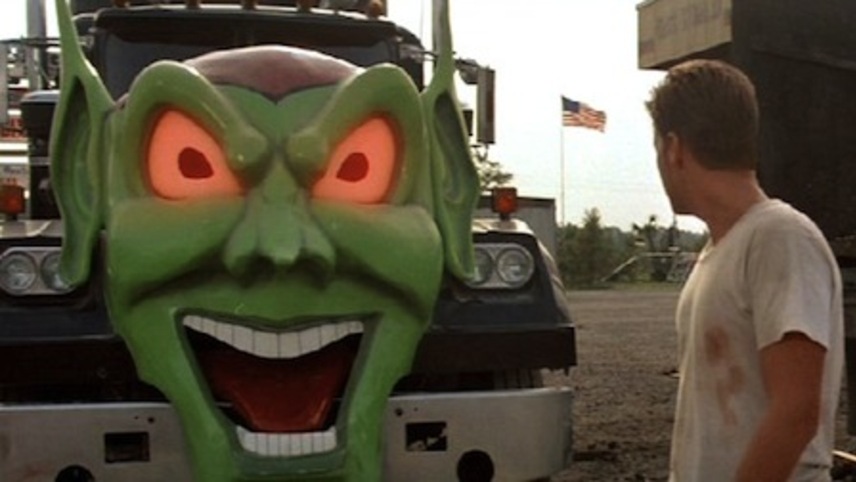
We then cut and see the Happy Toyz truck, it’s adorned with a huge demon face on the grill and has a slogan emblazoned across its broadside (“Here Comes a Load of Joy,” King’s ability to come up with clever and humorous slogans is uncanny). It is driven by Andy (J. Don Ferguson) who stops at the Dixie Boy Truck Stop. We get our first good shot here it comes when Andy’s talking to one of the gas jockeys, it’s a medium from the inside of the truck and we get a hint that soon there’s going to be some trouble.
 

We’re introduced to our protagonist next, Billy played by Emilio Estevez in his first role outside of “The Brat Pack.” Someone should have told Emilio that it is very difficult to flex your acting muscles and make a name of yourself from one horror film. Inside the Dixie Boy we now see that the pinball, coffee and cigarette machines are going crazy in the game room and we get a bad performance out of Videoplayer (Giancarlo Esposito) who is quickly killed off.
The first act’s pace is relentless as soon after Duncan (J.C. Quinn) is outside filling the Happy Toyz truck and the pump has mysteriously stopped. He removes the nozzle to check what’s going on and gets sprayed in the eye with diesel. At this moment we get our first sample of the score, the true score and not any sort of source music. While the score like so many is reminiscent of Hermann’s Psycho we only get this stabbing music on a few rare occasions. A few old AC/DC songs were used for this film along with a new one entitled “Who Made Who?” I happen to know that Stephen King is a big fan of AC/DC but I feel that he knows enough about horror to not have left most of the music track in this film dead. There is a lot of silence and it wasn’t very effective at all. AC/DC provided the wrong kind of mood with their high to medium Heavy Metal riffs. It makes me wonder if most of the budget wasn’t diverted towards pyrotechnics and Emilio’s salary further taking away from the film’s quality.
    

We’re later introduced to Bubba Hendershot (Pat Hingle) who shows himself to be the human villain in this tale. He is unscrupulous and uncaring. His character is quite well played. Then we see King’s first big touch when we see a headline about the comet. Prior Duncan and Joey (Pat Miller) had been talking and it was more subtle and many people won’t realize that the “Mickey Mantle” they were referring to is Deke (Holter Graham), Duncan’s son. In this film King had a little more than 90 pages and too many characters to deal with in that allotted time.
 
   
Our next two mechanical attacks work in different ways and introduce two more characters. A hand-held electric saw attacks the waitress Wanda June (Ellen McElduff) gets her forearm sliced into this is quite a gross moment and also establishes Billy as the protagonist. Then we cut to the baseball field and Deke’s team has just won and the coach is attacked by soda cans shot out of the vending machine. There is some great makeup work in this scene and it’s also pretty funny along with a shocking steamrolling shot that literally made my jaw drop. There are more characters to get to though.
    

We are in a car and getting a radio report about the odd occurrences a la Night of the Living Dead, but more subtle, and are introduced to the Bible Salesman (Christopher Murney) and Brett (Laura Harrington) a hitchhiker he has picked up. The Bible Salesman actually ends up being quite a good hypocritical character in this tale carrying a briefcase with has gold leaf on it and has “The Holy Bible” scrolled across it. Brett is going to be the love interest and this party like Deke are heading to the Dixie Boy. Laura Harrington should have gotten an Oscar…thrown at her, she was so terrible in this film. As a matter of fact the casting in this movie for the most part is rather weak; I wonder why in the closing credits the Casting Director got top billing. A director should know his actors limitations and should have reworked his characters accordingly.

  

Staying in the mode of less than satisfactory acting we switch over to Curt (John Short) and Connie who are a newlywed couple. Connie (Yeardley Smith) who went on to make a name for herself on The Simpsons as Lisa, is so annoying in this role it is nearly impossible to sympathize with her. John Short is one of the actors who ruins some of Stephen King’s great dialogue by having no idea how to deliver it. This is where King should have stepped in and altered the dialogue. It does pain a writer to change effective and intelligent dialogue for simple, pedestrian dialogue but it should be done when the actors sound stupid saying these lines.
    

Along Deke’s journey on bike to the Dixie Boy we see the wrath of the machines has left many dead bodies splayed all over the place. We get an eerie feeling again with a guitar riff for each corpse that is found. If there is one thing that can be said for this film is that all the effects are well done; as we see the trucks maneuver, drive and terrorize people. When these vehicles are on the move on their own they even drive better than real people in film they did quite an admirable job in that respect.
    

Perhaps the best dialogue King has to offer us in this film is when the Bible Salesman is trying to sell some editions in the Dixie Boy. This is also where we see Wanda June start drinking it may be the most well written scene of the film capped off by the salesman saying “This Bible has everything from the creation of this beautiful world to the fall of mankind.” This is the closest we come to seeing the implications that King had intended to impose, aside from a painting of the Last Supper we see for a few seconds, in the short story and there isn’t enough emphasis placed on this scene in my opinion. I also feel it’s a humorous commentary on how the salesman doesn’t know his scripture because all Bibles, regardless of denomination, include those tales.
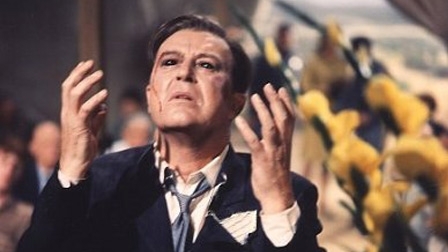
    

Right before Duncan goes out to be killed we see how the blood has escaped his burned eyes. It’s a rather creepy shot that reminds me of one of King’s favorite films X – The Man with X-Ray Eyes. This death occurs in minute 32 and already we’ve seen so many characters. The Bible Salesman is later sent flying into the sewer after he charged the truck that smashed his car. King, being one who doesn’t believe in any one Christian doctrine, throwing a Bible Salesman into a gutter is a great touch. The truck that decks him also rolls over his Bible briefcase which I liked. When the body is returned to the truck stop we get another good piece of dialogue Bubba says, “He’s dripping all over my floor.” to get the people moving.
    

Stephen King also usefully employs the sewer in the attempted rescue of the Bible Salesman who we find many minutes later is clinging to life in the gutter. This provides the film with it’s only truly good looking and dark cinematography. John Short also displays his inability to deliver a great off-color line written by King in the sewer sequence (“What happened to the people who peed in this?”). The salesman we see is ultimately not worth saving when Deke finds him and the salesman says “Help me or I’ll kill you,” very Christian.
     

Just after the trucks smash a phone booth, we assume in order to effectively isolate them, and begin to angrily circle the truck stop instead of attempting to build some tension we cut away to Curt and Connie, who are chased by an eighteen-wheeler, it’s literally a cut to the chase situation. King had the opportunity to have a situational and somewhat atmospheric film but I feel that was robbed from him by producers looking to imitate many of the 80s poorer films.
    

The way in which these massive hunks of metal are fought most of the times is through gunfire, this is aided by the fact that Hendershot has a huge armory in his basement, which seems to hold everything from AK-47s to Bazookas. The only way in which the special effects fail in this film, being no ballistics expert I’m not sure, but the bazooka’s missiles are never seen in flight we only see the truck exploding. With something that big I’d go to the optical lab and add it even if it is technically inaccurate. 
    

King touches upon the flying airplane mentioned in his short story but this also comes out as comical. Once again we have a nice shot from the inside of the plane and can see the plane operating itself. It is turned humorous by the employment of Wagner’s “Flight of the Valkyries.”
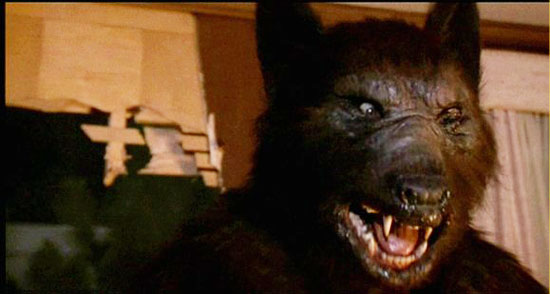
    

Aside from the seemingly incessant presence of the comedy in this film we are also pestered by the lack of darkness; we are bombarded by light. “The dark, it goes without saying, provides the basis for our most primordial fear.” (Danse, 182). Cinematographer, Armando Nannuzzi, had done plenty of films in Italy for years on end and had most recently done quite an admirable job with King’s Silver Bullet. The nighttime footage in that film was effective in deemphasizing the low-budget werewolf but he seemed to thrive on the use of daylight to make some of his more impressive shots in Maximum Overdrive. In all fairness, Maximum Overdrive is a bright, pretty to look at film with sporadic good shots but it’s not quintessential horror. With the positive affect of darkness being so obvious one must wonder if budgetary concerns or perhaps weakness in the lighting department played into it. Even though much of the story is at day time in prose King must have realized he’d need more nighttime scenes for the film. He also knows that not only is it needed but the dark and night time is often heavily used in certain films. “All but approximately eighteen minutes of John Carpenter’s Halloween are set after nightfall.” (Danse, 186). Whereas after sunset we have but 17 minutes in the dark, and then we also have the interesting situation in which most of the human deaths occurred in broad daylight. In this film, the first scene to be set in a darkened place is in minute 48 and the sun only sets three minutes later more than halfway through the movie. Later on in the sequence, the truck stop also loses its power but this is not used in any sort of dramatically moving way and it comes back on before ever having taken any sort of toll on the story. And we are made well aware of it by a beautiful shot of the sunset.

Afterwards, we get the weird green effect in the sky which is larger in some areas of the sky than others. It was used at the beginning to symbolize the comet’s tail. In a poorly acted moment yet again provided by Laura Harrington, in the role of Brett, assumes the comet must be causing all this. It’s in a way also King’s most unfortunate piece of writing because the title card shown from the beginning is practically reiterated for the audience.  At night it seems that only Wanda June and Deke have been affected negatively. Billy is courting Brett, all others are unmoved by the celestial oddity. It’s very unusual that King with the understanding of character he has wouldn’t have gotten on these actors and told them they weren’t driving home the suspense and claustrophobic elements that should have been what was carrying the film.
    

Billy and Brett dominate this section of the film with their nighttime romance which I can only describe as filler. While I understand people can cling to each other in such a situation there was too much focus on the romance for my liking while I do applaud King for not being afraid to implement it. Wanda June dies an overacted death, she was completely drunk and yells the lines I least liked from King’s short story “We made you.” and if a film such as this can have a subtext she just blurted out part of it and she made this little speech more than once.

    
Another thing which constantly plagued this film was that it was very heavy with incident in the beginning and towards the middle of the film the action begins to taper off. The story becomes diverted to an extent.
    

Many times we are shown that Deke is the best drawn of all the characters. In the beginning we see him check on his injured coach, he’s then scared off by the salesman. He breaks down upon hearing about his father’s death, then the next morning has apparently regressed and is blowing bubbles. Not only that but when the trucks start beeping he not only realizes it is Morse code but translates it. What would have made this a better film was some more focus. At the end, when the great exodus of the Dixie Boy begins, we see eleven characters running, three of which I don’t think ever had their name uttered in the film but were perhaps named in the script.
    

The Morse incident is where the trucks admit that they need to be refueled. Billy’s reasoning eventually wins out. They pump gas for the truck because the dried out ones might call for one or many that can destroy them. A few more vehicles do show up including what appears to be a mini-flatbed with a machine gun set on a tripod, which in the end seems a little too beatable. During this sequence Emilio Estevez’s performance, which was nothing earth-shattering to begin with, also slips when we see him yelling at the truck, the Happy Toyz one with the Green Goblin face.
    

Towards the end we get an escape. The truck stop blows up. The Evil Truck which has been harassing the people and is the villain gets a bazooka in its open mouth. This moment is somewhat effective as we think for a moment maybe that one can’t be beat but then it explodes. We end with another annoying title card with a sappy finishing touch and some odd Soviet involvement in destroying a “weather satellite.” And the film closes on a comedic note with the last line of dialogue being Connie saying “Ooh, I think I’m gonna whoops my cookies.”
  
 
Maximum Overdrive is a film that has a few shocking and jaw-dropping moments. All the effects are well done and the cinematography is well-composed. What King ends up providing is a movie that ends up being a pretty good comedy/adventure, which is probably why he didn’t like it all that much. He should definitely give it another go because despite the bad casting there were some good performances in this film most notably those of Holter Graham as Deke and Pat Hingle as Hendershot. One thing King can be thankful for is that his film doesn’t ever tread into the so bad it’s good region.
 

Horror Films and Stephen King (Part Four)

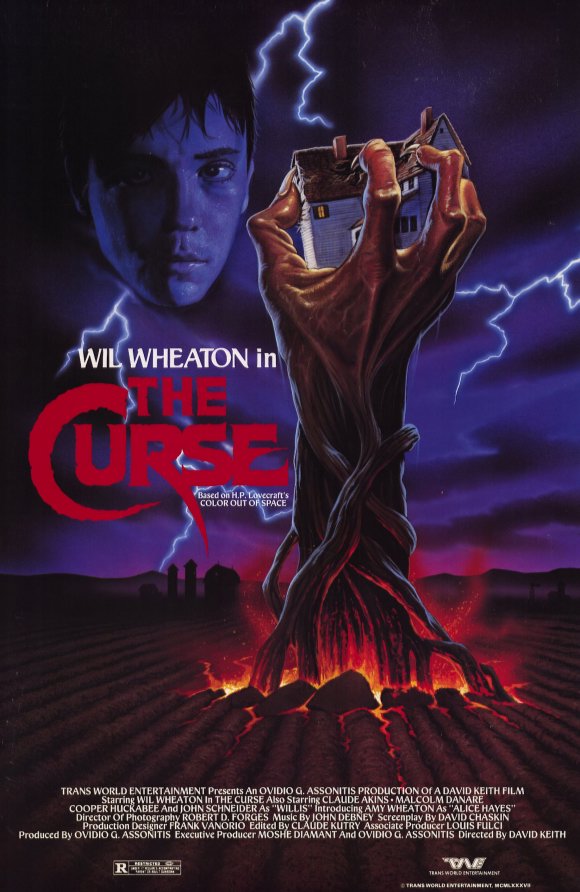
The horror genre in film has attracted more than its fair share of crud-ass directors. Amazingly some of these people who lack in the fundamentals essential to filmmaking have managed to create scary films like David Keith’s The Curse, a modern day rendition of Lovecraft set in Tennessee, I dare you to watch it alone! Some, actually many, take a story that’s not all that bad and assemble a group of people who are just talent-less and waste a perfectly good premise, like in Richard Caesar’s The Calling. 

 
“The worst movie sends its own message, which is simply to say stay away from other movies done by these people; if you have seen one film by Wes Craven, for instance, it is safe enough, I think, to skip the others.” (Danse, 216). Contrary to King’s opinion people who begin their careers making junk as filmmakers can move on and make some damn good stuff. Case and point, Craig R. Baxley directed one of the most painful movies of all time Bad Day on the Block, better known as Under Pressure, in 1997 but quickly turned around to direct both Stephen King’s original mini-series (Storm of the Century and Rose Red).
 

And horror always seems to produce some of the worst films in the world, in America anyway, well, why? Stephen King puts it very astutely in his non-fiction examination of the genre “low-budget moviemakers are attracted to horror because it seems to be a genre which is easily exploited – an easy lay, like the sort of girl every guy wanted to date (at least once) in high school.” (Danse, 216).
    

Not only does the genre have to deal with low-budget moviemakers, which isn’t so bad, which the 90s have proven with the rise of the independents, but you also have to deal with rookie filmmakers working in what is likely the hardest genre to be effective in.
 

King approaches the horror genre in film with a very fair-minded and level-headed attitude. He understands that we’re not dealing with Shakespeare and every style has its standards. “I am no apologist for bad filmmaking but once you’ve spent twenty years going to horror movies looking for diamonds (or diamond chips) in the dreck of B-pics, you realize if you don’t keep your sense of humor you’re done for.” (Danse, 200). And one thing many people may not realize is that he is a very funny guy one of the few authors who doesn’t write humor who can make me laugh out loud. One of Maximum Overdrive’s “failings” is that it succeeds as being a comedy. There is some funny dialogue but the tone of the piece ended up being a little more lighthearted towards the middle and it feels totally unintentional.
 

“Once you’ve seen enough horror films you get a taste for really shitty movies.” (Danse, 200). This may be at the root of at least part of the problem with how Maximum Overdrive came out. While King understands the way horror works a more filmic approach was needed and is always needed when handling his tales. The concept of genre should be on the backburner. There were definitely attempts by King to try and build these characters through images but he may have run both out of time and cash to be completely successful.

Horror Films and Stephen King (Part Three)

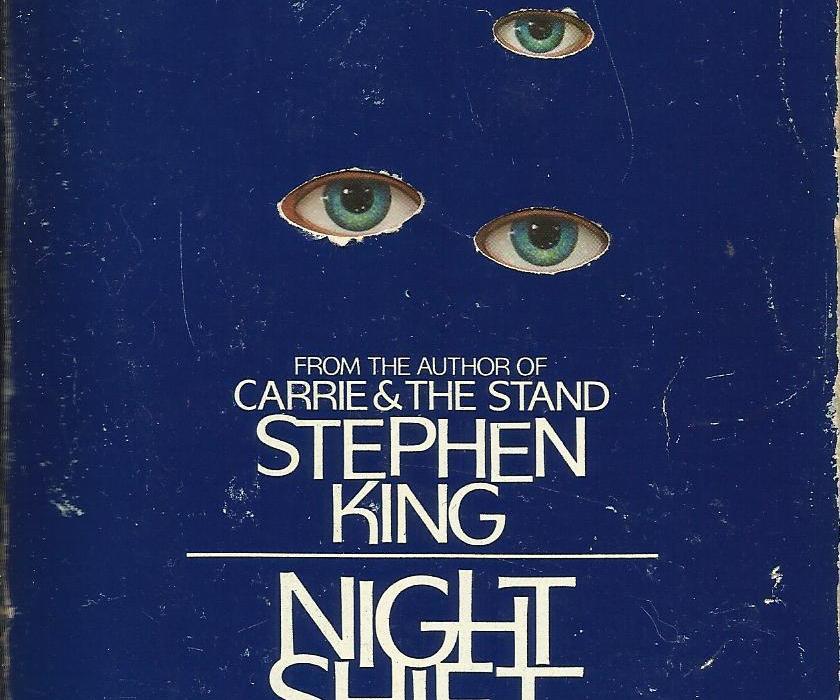
The short story “Trucks” first appeared in Cavalier, a men’s magazine, in June of 1973, which probably means that no one actually read it, or very few people did anyway. It was later published in Night Shift, King’s first collection of short stories, in 1979. This was King’s first venture into automotive horror. It’s not a sub-genre many of us ever consider but as King demonstrates in Danse Macabre it certainly exists.
 

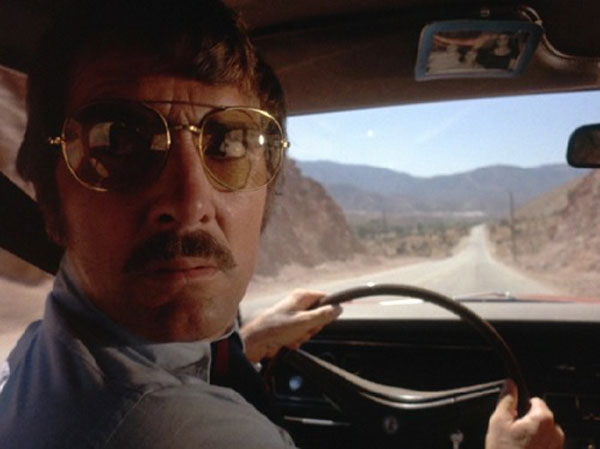
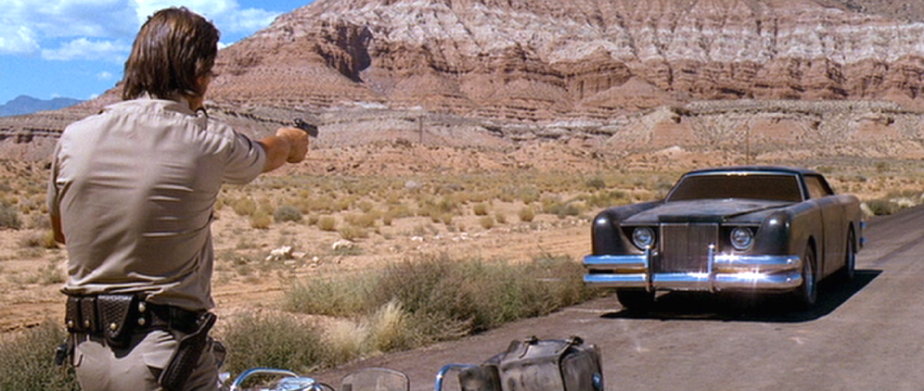
“Even such a much-loved American institution as the motor vehicle has not escaped the troubled dreams of Hollywood…” (Danse, 163-4) From this tone we can see we’re usually not going to be dealing with masterpieces even within the genre. He then goes on to discuss a movie starring James Brolin called The Car. “The movie degenerates into a ho-hum piece of hackwork before the end of the second reel (the sort of movie where you can safely go out for popcorn refills at certain interval because you know the car isn’t going to strike for another ten minutes or so).” (Danse, 164).
 

We later are given a sense of what would be a better tale and King makes reference to Spielberg’s Duel (164) but ultimately concludes that to find other interesting car stories one should look towards stories and novels (164).
 

So, if King was not actually told to do this story because it was the one that De Laurentiis was willing to buy from him, perhaps he thought he was better off going into territory that hadn’t been handled all that successfully in the cinema.
    

King’s tale is very short and obviously needed to be expanded upon in order to make it into a motion picture. While the short story isn’t perfect, there are areas in which it is much more successful than the film. First off, we get no moments of comedy in the tale, unless we’ve seen the film, and I like the way the characters interacted in prose better.
     

In the short story there was more of an emphasis on waiting it out and also on speculation of impact. The characters discuss how much food they have stored and start to fill jugs with water; these issues are not addressed in the film, it’s as if everyone knows they’ll only be trapped for two days at most. The impact of these trucks taking over may have plays itself in the mind of the narrator and occasionally through dialogue. When there is a debate over pumping gas; the issue of being slaves to the machines comes up. Billy imagines people all over the country pumping gas into driverless trucks. He imagines an escape to a cave a digression to near pre-historic times. The inability for the trucks to reproduce and the contrast of whether or not they were currently being assembled at that moment was also postulated. 
 

Where the story is similar in some places is meaningless because of the way King approached the short story. He starts with the people already stuck in the truck stop. Even if the studio would require the cockamamie comet excuse later on, fine but it is much more frightening without such an outlandish set up; a set up might I add that doesn’t logically lead to machinery working and thinking on its own. Another way in which the short story is superior is in the ending. Here’s the way it ends: “Two planes leave silver contrails etched across the darkening eastern horizon. I wish I could believe there are people in them.” (Shift, 142).  And it’s over. They’re stuck and it doesn’t look like they’re going anywhere. It’s a great ending, but obviously not one many film production companies will want to have, so King had to change.
 

Stephen King has always been a fan of the unknown and while he knows it’s difficult he occasionally likes to leave things opaque like in Dreamcatcher. It may have been better if he had been allowed to do that with this film.
 

In fairness to the film, the characters were more drawn out than they were in the short story. It was just a case of having too many and not having enough time to deal with them all.

Horror Films and Stephen King (Part Two)

Stephen King’s philosophy on how he approaches the horror genre as a writer is three-pronged. “I recognize terror as the finest emotion and so I will try to terrorize the reader. But if I find I cannot terrify, I will try to horrify, and if I find I cannot horrify, I’ll go for the gross-out” (Danse, 25). He believes this to be a hierarchy system in which he has three methods of attack in which to impress the reader. He will, without question, attempt each of these tactics through the course of either his writing and/or filmmaking. 
    

In the novel Desperation, as in the film version of The Shining, I feel there is a tremendous undercurrent of terror running through each of these tales. Maximum Overdrive relies mostly on the gross-out as its means to scare the audience but that does not depreciate its aesthetic value. “But the gross-out is art, and it is important that we have an understanding of this. Blood can fly everywhere and the audience will remain largely unimpressed. If on the other hand the audience has come to like and understand – or even just to appreciate – the characters they are watching as real people, if some artistic link has been formed there, blood can fly everywhere and the audience cannot remain unimpressed.” (Danse, 189).
  
 
And we are impressed to an extent in watching the havoc that King has created in this North Carolina town. That gag reflex does work on us on occasion. We are drawn into certain situations. The drawback of the gross-out being so dominant is that it’s the only level on which this film worked and it’s the bottom level. The reason it doesn’t climb higher is because “the gross-out serves as the means of last-ditch sort of identification when more conventional and noble means of characterization have failed.” (King, Danse, 190).

  

One thing that may have been a challenge to King is that this was his first produced first full-length narrative screenplay. His first two screenplays were Creepshow and Cat’s Eye. The former is an homage to EC Comics, it tells five tales and is masterfully put together by George Romero. Cat’s Eye, which isn’t as good, but it is in the same anthology format. Stephen King had written many screenplays that weren’t used prior to directing his own film. Scripts for The Shining, Poltergeist, The Dead Zone, Children of the Corn and Cujo all weren’t used for various reasons. And he had previously given an idea to the Dino de Laurentiis Company for something called Training Exercises, which was never produced. This is likely what prompted King to finally direct but just because he was finally directing didn’t mean producers wouldn’t interfere.

Mini-Review Round-Up – August 2012

I had quite a review drought to end 2011 so I think the remedy for this kind of post would be to have the post be cumulative monthly. Therefore, after each qualifying film a short write-up will be added to the monthly post. The mini-reviews will be used to discuss Netflix and other home video screenings.

For a guide to what scores mean go here.

The Whisperer in the Darkness

The Whisperer in Darkness was a film I just had to see. After having seen The Call of Cthulhu, which was a short, silent version of a Lovecraft classic, I knew I’d want to see anything this company (known as the H.P. Lovecraft Historical Society) did.

In their newest film, and first feature, they tackle The Whisperer in Darkness and shifted from a silent film representation to a monster film of the 1930s approach. In both cases, the style of film that is emulated perfectly suits the work being interpreted.

I firmly believe this to be the case, regardless of your familiarity with either of these very distinct niches. If you are unfamiliar with Lovecraft this is a great introduction as it very faithfully, but also intriguingly in cinematic terms, renders the narrative. Any admirer of film, regardless of what era(s) they prefer, will recognize some of the conventions on display in this film, and as details of the narrative unfold it’ll become clear the choice is an inspired one.

Much of this is a roundabout way of saying that odds are you’ll like this if you go in with the knowledge of what the film is attempting, and you could be a fan of either or neither end of the narrative equation and walk away liking it. However, if you like both it’s rather heavenly, or should I say hellacious? Either way, it’s great stuff.

10/10

Intruders

20120822-231103.jpg

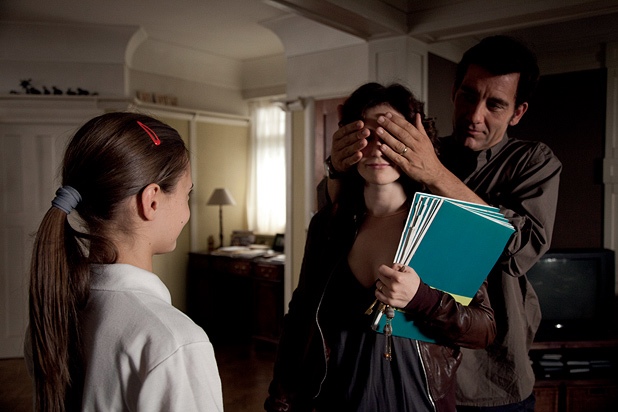
I can’t put it right at the top, but when all is said and done, Intruders will likely end up being one of my favorite horror films of the year. It starts almost immediately with a scene that you think will just be a great teaser but instead ends up being the first building block in a parallel storyline (in terms of both time and place). Aside from being a bi-lingual film, the film does a great job mirroring certain themes and elements in the storylines, giving elements different spins in each. The film is very tense but also cloistered in its drama and fear-inducing, which it makes it very effective indeed. To say too much more would be to start giving things away. I think that fans of the horror genre, Spanish horror in particular should see this film.

10/10

Detention

To accentuate the positive first, I cannot, nor can anyone in all likelihood, accuse Detention of being unoriginal or predictable. One of its few perks is that it does not ever make it obvious where it’s going next, and in its own insane way does manage to link everything together in the end. However, the film seems to think it’s a lot more clever and funny than I find it to be. It’s part (sub)genre-hopping horror/sci-fi and mostly comedy but the comedy portion is very forced, nearly all of it. Few and far between are the jokes that work for me and rarely did jokes strike me as genuine reflections of character. Instead the characters always seem to be in a state of limbo between being a stand-in for a horror archetype and a human vessel for a punchline.

I can see how the film has produced divisive reactions, and I always prefer a film that strives for divisiveness. When all is said and done, attempting to please everyone creates tepid cinema. Truly universal stories, at their core, come from a very personal place- so, I can easily see how this might be someone else’s cup of tea, but it’s not mine.

2/10

Lovely Molly

I tend to take my time to even send out a tweet reaction to a film most of the time. In very vague terms I’ll know walking out of a film, if I liked it or not. However, to what extent I did and what I thought of it usually takes a little time to decide. It’s the rare film that plays on my mind for a while.

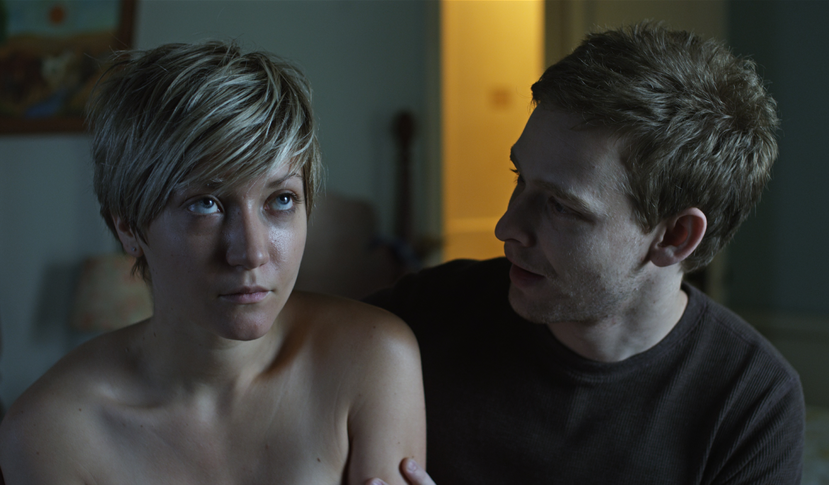
Lovely Molly is one of those films. My initial tweet about it, when I did finally mention it, was slightly mis-worded: it’s not that the film is difficult to follow, it’s not; the denseness and nebulousness comes in the ‘answers’ the film gives to questions it poses. They’re not entirely clear, they invite debate, they invite you to re-view the film; but they are all chilling and surprising.

The film also features a fabulous performance by Gretchen Lodge, which makes you stand up and take notice.

This film made me realize that there are two kinds of re-viewable films ones that could get massively better and one with a definite ceiling. This film is the latter kind, but worth giving your own shot.

6/10

The Moth Diaries

It’s a bit of a shame when a film that offers a different perspective on a subgenre fails to catch lightning in a bottle. The Moth Diaries is not only subtle vampire tale set at an all girls school, but is also directed by a woman. It’s a slow-burn, which never quite catches fire all the way and it doesn’t really bend convention too much save for the casting and setting. Some of the better parts of the film are the overt allusions to the Gothic literature, from which all vampire tales draw at least some inspiration, which doesn’t bode too well for the piece at hand. The film doesn’t seem to detach itself too much from the source material, and there is an excessive amount of voice over for the story being told. Perhaps the novel is a better vehicle for this tale than the film as constructed.

5/10

Bad Movies I Love (Part Two of Four)

This is yet another post that has been inspired by Bob Freelander and his wonderful blog Rupert Pupkin Speaks. Check it out, if you haven’t already.

I’ve ruminated on this list long enough I believe. In the spirit of my recent post about lists not really being finished, I’ll just go with what I have at my disposal currently and spitball it. For the mutual convenience of myself and whomever may read this, I will split the list into four posts.

Now, I did, as most who have compiled this list recently, have to examine what makes a movie both bad and one I can enjoy because of that. There were a few different directions I could’ve gone with this list. I could’ve picked some films universally considered to be bad that I like and I don’t care who knows it (A few of those can be found here). I could’ve picked the rare film that’s so bad that it’s good, which in my mind are few and far between, and I won’t argue if you believe there’s no such thing.

What I decided to do instead was to pick movies that I find to be bad, however, that I still enjoy certain things about them (badness included), and in many cases I have given them more than one viewing due to their uniquely awesome awfulness.

Now, without much further ado, my selections:

Demons 2 (1986)

In one a screenwriting course I took, one exercise we did was to read our short scripts aloud, this was done so we could simultaneously share knowledge and offer each other constructive comments. A script I wrote reminded a classmate of mine of Demons. At the time I had not seen Demons, so the only responsible action I could take was to see it ASAP. I loved it. My short and it shared similarities, but were also different enough.

Eventually curiosity got the better of me and I just had to see Demons 2. The film is directed by Lamberto Bava, co-written by Dario Argento, features one of the first screen appearances by Asia Argento and more of the freaky demons. What ends up not working is the film shifts away from the movie theater setting. However, being an Italian horror film, it will be stylish, bloody and at times bizarre and at others nonsensical, which makes it engaging, if not quality.

The Church (1989)

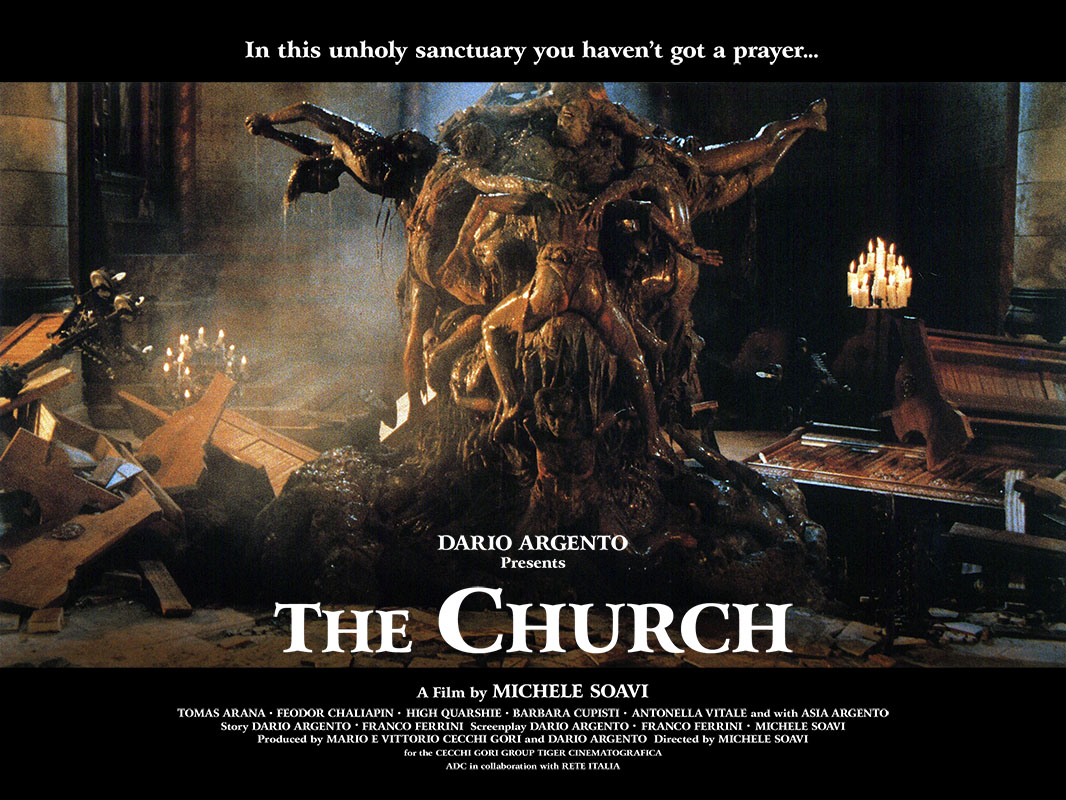
One not-so-good but watchable Italian horror film deserves another. This film has a lot of the same pedigree that Demons 2 has and a lot of the same issues: Argento has a writing credit, Asia makes an appearance, one of its alternate titles is Demons 3, it has a really good idea that doesn’t quite click and I really want it to. I’ve seen this one a few times, I’ve even listened to the score in isolation and I like that. There’s a draw to it that’s brought me back a few times, perhaps with this one more so than the prior choice, it really is the unfulfilled promise that’s been the reason.
Tommy Tricker and the Stamp Traveller (1988)

There will be another film that makes this list based in part on the audaciousness of its conception. However, I do have to admit that this one handles the execution of its outlandish concept better than the one to come.
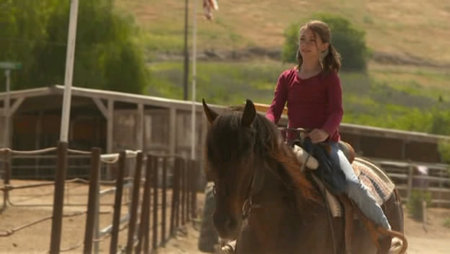
As the title implies, in the world of this film you can literally travel by stamp. Now, as a concept that’s something you’re going to either buy or you won’t. The film has its heart in the right place through a lot of it (Such that I almost feel bad including it), it’s just really misguided much of the time, and the caper of bringing back someone lost via ‘stamp travel’ takes a bit away from it I feel. The acting’s not great, nor is the writing, but there is a boldness to the concept.

Also, as a bit of trivia, the film also features a cameo by a young Rufus Wainwright who sings a very catchy song, which is one of the redeeming qualities of the film, another one which becomes obvious as you watch the clip is how incredibly ’80s this film is.

Uncle Sam (1996)

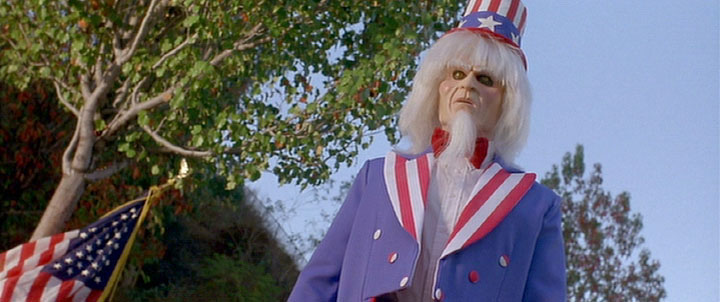
Perhaps one of the best ways to determine a bad movie you love is to gauge just how mixed your feelings on the film are. There are films written by Larry Cohen such as It’s Alive, The Stuff, Q: The Winged Serpent that I would say I love. This one I can’t really defend as staunchly but there are things about it that I do appreciate. Namely, it incorporates militaristic zeal in a horror film in a way I’ve rarely seen. Not only that but note the release date, there was no unpopular or costly (in terms of American casualties) war going on at that time, so there’s a certain gutsiness in telling this kind of tale when dissenting opinions are fairly quiet. The film does end up being sloppy and a bit slow, there’s no Michael Moriarty in it to up the caliber of the cast, but the satire is definitely there which makes it worth mentioning.

The Space Children (1958)

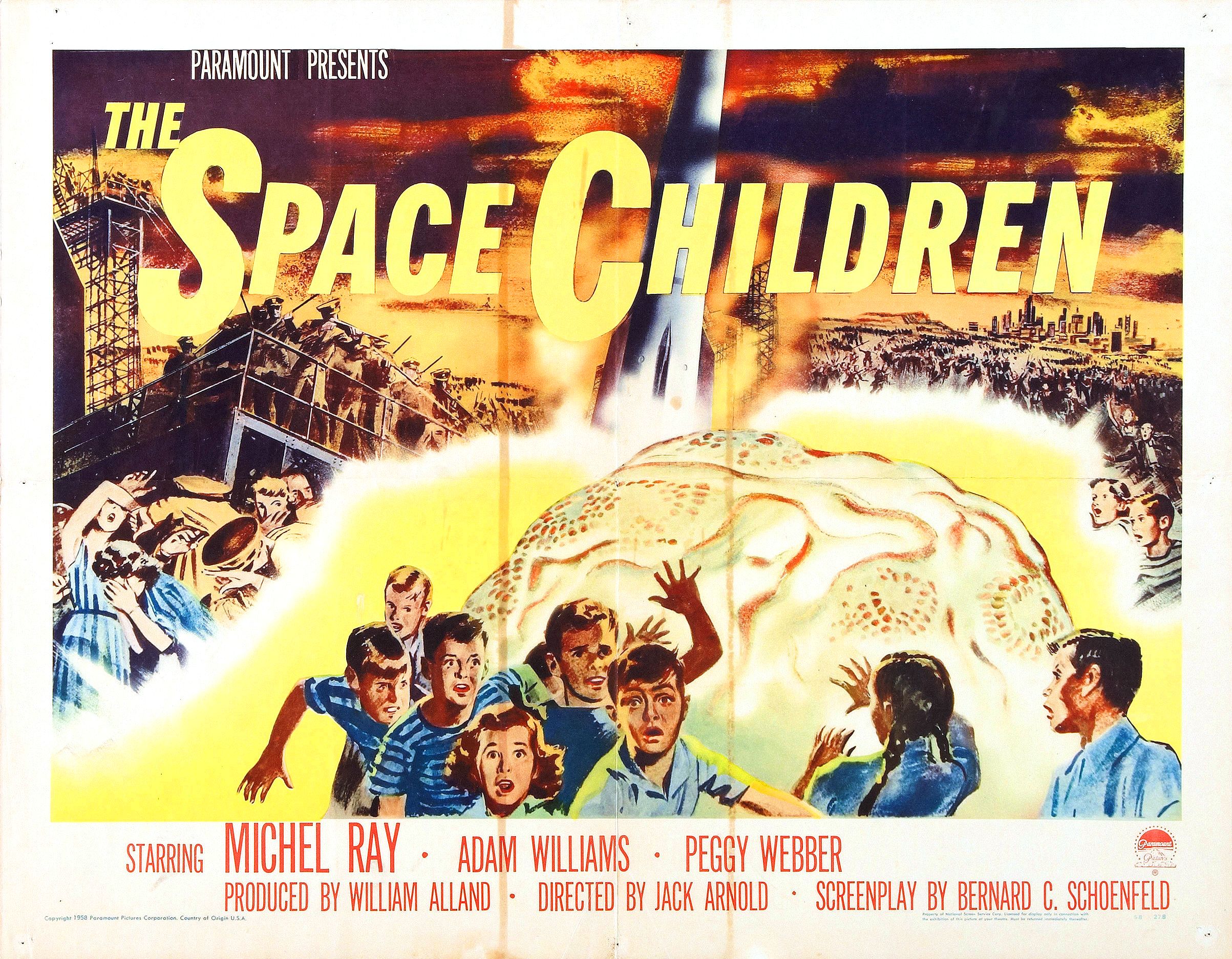
This is a case of Mystery Science Theater 3000 in reverse. Here’s one I saw first and then found an MST3K for, which I don’t do often. I was on kind of on the fence after I saw it and while I can’t ultimately say it’s a quality piece of work, as logic and reason vanish somewhere in the middle of act two, there are things about it I do like. As for the MST3K treatment it’s funny, not one of their best and this is nowhere near one of the legendary duds they’ve covered; in many of the films they watch it’s hard to even ferret out what the plot is supposed to be. Here there are issues but the plot is clear. The tropes of a hivemind amongst children, and some form of other-worldy radiation or possession, are not new but they’re also not the biggest problem. The film is actually consistently interesting, it just emotionally flatlines after a while, which is a cardinal sin, especially when any atomic age sci-fi tale is likely to hook me based on its implications. Michel Ray’s turn as the ringleader is also quite effective.

Part three will be up tomorrow!

Nominate Films for the 2012 National Film Registry

Recently, while scrolling through Twitter I noticed quite a few people posting that the National Film Preservation Board is allowing the general public to suggest titles to be entered to the National Film Registry for the first time. You can read the pertinent details here. The only thing I found a bit confusing was whether an individual can select 50 titles from a calendar year (e.g. 1933) or if and individual may only suggest 50 per year. I erred toward the latter option. My choices feature many Hitchcock, Disney, horror, Looney Tunes; a few silents, docs, and the occasional footnote. What’s great is that since 575 films have been picked in 23 years they provide a list of significant films not yet selected for you to peruse. Of course, you can submit whatever you like if it fits their criteria. I made all my selections 25 years or older, however, the official cut-off is 10 years.

The National Film Registry was instituted after a bill was passed “Congress first established the National Film Registry in the 1988 National Film Preservation Act, and most recently extended the Registry with passage of the Library of Congress Sound Recording and Film Preservation Programs Reauthorization Act of 2008 (PL110-336).” So, essentially these are your tax dollars at work, America, so make some suggestions. If you’re curious you can read mine below:

1. Suspense (1913)
2. The Perils of Pauline (1914)
3. Charlie the Champion (1915)
4. Mickey’s Orphan’s (1931)
5. Skippy (1931)
6. Island of Lost Souls (1931)
7. Wild Boys of the Road (1931)
8. Babes in Toyland (1934)
9. Manhattan Melodrama (1934)
10. A Midsummer Night’s Dream (1935)
11. Son of Frankenstein (1939)
12. Rebecca (1940)
13. Dumbo (1941)
14. The Little Foxes (1941)
15. The Wolf Man (1941)
16. Gaslight (1944)
17. Mrs. Parkington (1944)
18. Three Caballeros (1945)
19. The Yearling (1946)
20. Panic in the Streets (1950)
21. Strangers on a Train (1951)
22. Limelight (1952)
23. House of Wax (1953)
24. It Came from Outer Space (1953)
25. Creature from the Black Lagoon (1954)
26. Them! (1954)
27.Lady and the Tramp (1955)
28. The Trouble with Harry (1955)
29. Forbidden Planet (1956)
30. Ali Baba Bunny (1957)
31. Witness for the Prosecution (1957)
32. The Children’s Hour (1961)
33. The Pit and the Pendulum (1961)
34. Whatever Happened to Baby Jane? (1962)
35. The Birds (1963)
36. Hush…Hush Sweet Charlotte (1964)
37. Wait Until Dark (1967)
38. Rosemary’s Baby (1968)
39. Willy Wonka and the Chocolate Factory (1971)
40. Texas Chainsaw Massacre (1974)
41. Carrie (1976)
42. Burden of Dreams (1982)
43. The Big Chill (1983)
44. A Christmas Story (1983)
45. National Lampoon’s Vacation (1983)
46. Terms of Endearment (1983)
47. Amadeus (1984)
48. The Times of Harvey Milk (1984)
49. The Breakfast Club (1985)
50. Stand by Me (1986)

Mini-Review Round-Up: July 2012

I had quite a review drought to end 2011 so I think the remedy for this kind of post would be to have the post be cumulative monthly. Therefore, after each qualifying film a short write-up will be added to the monthly post. The mini-reviews will be used to discuss Netflix and other home video screenings. Theatrical releases will get full reviews.

For a guide to what scores mean go here.

The Theatre Bizarre

Recently I’ve been seeing quite a few horror anthologies. Part of the reason behind that is just to familiarize myself with a few more of them and the voices involved in creating them. The second reason, to be perfectly honest, is that due to their episodic nature they are conducive to fractured viewing, which makes them easier to schedule. However, I did see The Theatre Bizarre all the way through in one sitting.

This one, like many horror anthologies, is a bit inconsistent in its quality, which is to be expected when different directors handle each segment. In my estimation, the highs are rather high and the lows are rather low. There are some interesting and at times daring attempts. It’s always hard to gauge them as a whole because this see-sawing in quality is not unusual at all. However, for fans of the genre I do think it’s one worth checking out, your feelings on the whole piece or a particular segment may be greatly different than my own. In the end, I really liked more of the installments than I disliked so it’s worth a watch.

6/10

Cold Sweat

One thing I thought was particularly interesting an effective about Cold Sweat was the implementation of antagonists who just could not let go of the past in a very villainous way. At the start of Cold Sweat there is archival footage that gives you a brief overview of the revolutionary and counterrevolutionary factions at play in Argentina in the 1970s, then you get a very specific incident chronicled. You know this will all come back into play, you just don’t know how. Now, using overt political symbols in horror has been done, most commonly with Nazis in all likelihood. However, the circumstances and players of each countries political past (and seedy underbelly) are all somewhat different, and the refracted ideologies, and reverberations thereof, can still be felt at current, in one way or another. So it is rather fascinating to find this angle in this film because it lends a specificity to the film and a voice; a stamp of a national cinema. Coincidentally, I saw another Argentinian (co-produced with Spain) horror film soon after this one that implemented many similar threads. The horror setpieces and manipulation of given tropes in this film is quite effective, but it its this backdrop of sociopolitical commentary, past and present, combined with the narrative that makes this such an intriguing film.

8/10

Hiding

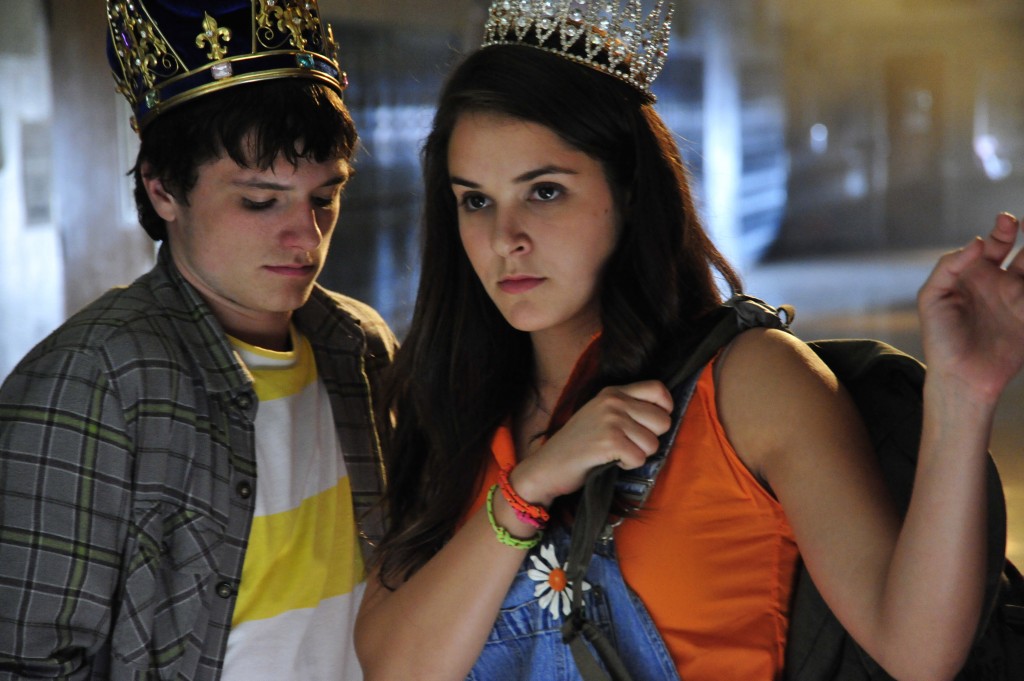
Hiding in some ways reminded me of Beautiful Wave in as much as we see a teenage girl do a lot of brooding with minimal backstory given to the audience so it becomes tiresome. The good news is that this film is quite a bit better than Beautiful Wave. The bad news is that it still doesn’t end up being good. It concerns this brooding girl (Ana Villafañe) who is in witness protection and there’s a given that she’ll be found and there’ll be this dramatic showdown. What really matters is how do you get to that point and sadly much of it seems like they’re just trying to fill time. She is interested in two guys at her new school and has similar, nearly mirrored scenes with them, at times. There’s a psycho jealous cheerleader (Kelcie Stranahan) who does a lot of digging into her on a delusional whim, there are flashbacks some of consequence and some not; all with an an annoyingly unnecessary excess of jiggling. Many characters make really bad or dumb decisions and we don’t necessary have enough affection or interest to let that slide. The best part of the film is unquestionably Jeremy Sumpter‘s supporting turn. He remains a heinously under-utilized and under-valued talent.

4/10

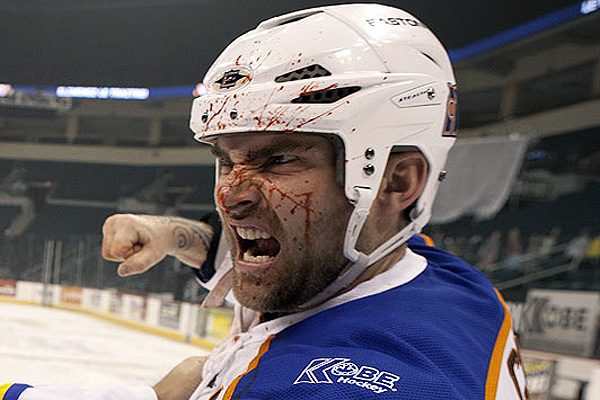
Goon

For my thoughts on this film please go here.
10/10

Absentia

As per usual, and as I say quite frequently, I went into Absentia knowing very little and that’s the way I prefer it. I knew it was was a low-budget horror film and what the basic synopsis was from Netflix. That’s about it. Only later on did I learn more details like the budget was purportedly $70,000 and funded in part by a Kickstarter campaign.

All that stuff is great to know after the fact. Knowing it before you see something can be a double-edged sword. Essentially, either the movie works or it doesn’t. What the budget is, whether exorbitantly high or incredibly low, does not make it immune from, or more deserving of, criticism.

As for the film I really enjoyed it a great deal. It tells a tight-knit simple horror story that gives you just enough information to keep things going but never gets ahead of itself, and the idea is a low-concept production of a rather high-concept idea at the bottom of it. However, the curtain is only barely raised on the horrors being uncovered by these characters. I wouldn’t be surprised if the film was shot rather in continuity because it certainly was doable and the performances across the board got much stronger as the film progressed, and even rather impressive at times. The score is really good and there are good twists to it. This is definitely a Netflix gamble worth taking.

8/10

Exit Humanity

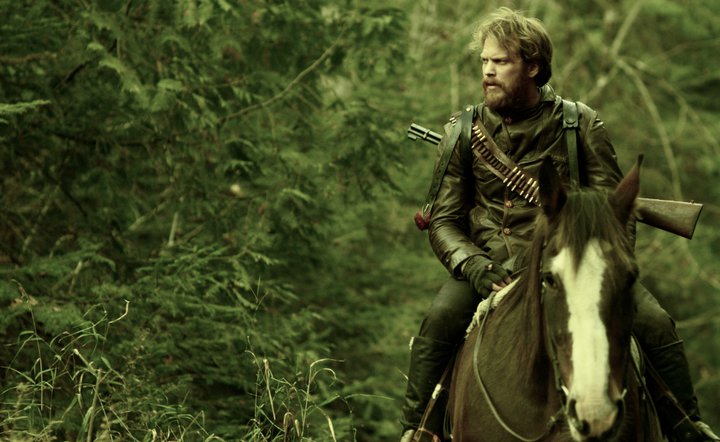
Exit Humanity is a horror film that has a rather interesting take on the zombie subgenre. With the proliferation of such a genre one must contend with both fatigue and differentiating one’s own story from the crowd. In these aspects is where the film is most successful, and that’s without including the fact that this is an alternate history tale of the postbellum south. The story is an introspective one that is more concerned about those left behind after a plague of zombieism, and isn’t so concerned with making the walking dead of this tale a metaphor. Yes, there is a somewhat different spin to the cause and the history, but that ends up being more a narrative necessity than a focus.

With a fairly original take the film is setup to succeed and does, but only barely. Where the film struggles most is in terms of balance. The score is really good but at times only in isolation, at times it’s too intrusive and too intense. There is some wonderfully florid voice-over, but at times it’s too much, and at other times the scene would’ve been better demonstrated visually than through monologue. The film does have its twists and turns that are rather surprising, but after some of those unusual decisions some quickening of pace is needed so that it doesn’t feel aimless.

The film never really lost me as a viewer, however, it had me reeled in at times and let go just a little bit due to some of these inconsistencies. I don’t want to over-accentuate them because I do still like the film, but feel it easily could’ve been something truly special had certain edits been made. It’s worth watching for fans of the genre for sure. I wouldn’t raise an eyebrow if some professed greater admiration for it than I do, especially considering some of the touches it employs such as animation, colored shots and top notch make-up effects.

7/10

Summer Olympic Movie Picks- Part One

I did a post like this for the Vancouver games a little more than two years ago and I shall unearth it again at some point at least on Letterboxd because that was certainly a lot more fun and in many cases weirder. However, the variety that is provided by the over-stuffed nature of the summer games is nothing to sneeze at. I think that these films that feature the sports of the warmer Olympiad will likely introduce you to something you want to check out. I know I found a few. These picks will be posted in three parts.

Archery

The very first sport alphabetically is one that will illustrate to you rather quickly that there are two ways you can see a sport portrayed in a film: direct (e.g. sports movies) or indirect (wherein the sport is a component of the film but not the focus). Archery is an ancient practical discipline, which is rather visually appealing. Thus, it makes cameos in myriad ways: whether the super-human precision of Hawkeye in The Avengers or the cold brutality of Kevin, as in the one who needs talking about.

Films about the sport itself are harder to come by but with all the Robin Hoods there should be something that tickles your fancy.

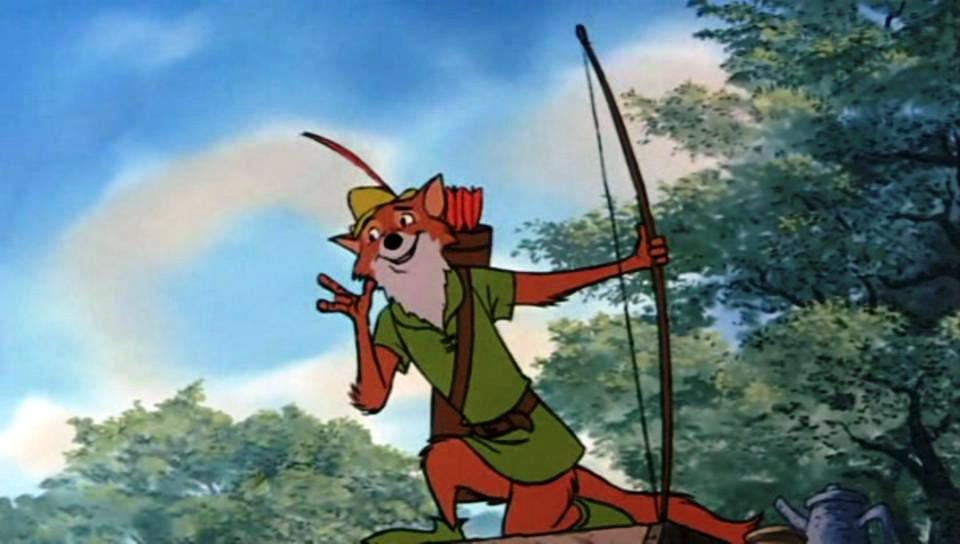
My official pick will by Walt Disney’s Robin Hood, though of course Disney/Pixar’s Brave also features a prominent competition, and Katniss Everdeen of The Hunger Games is quite skilled too.

Athletics

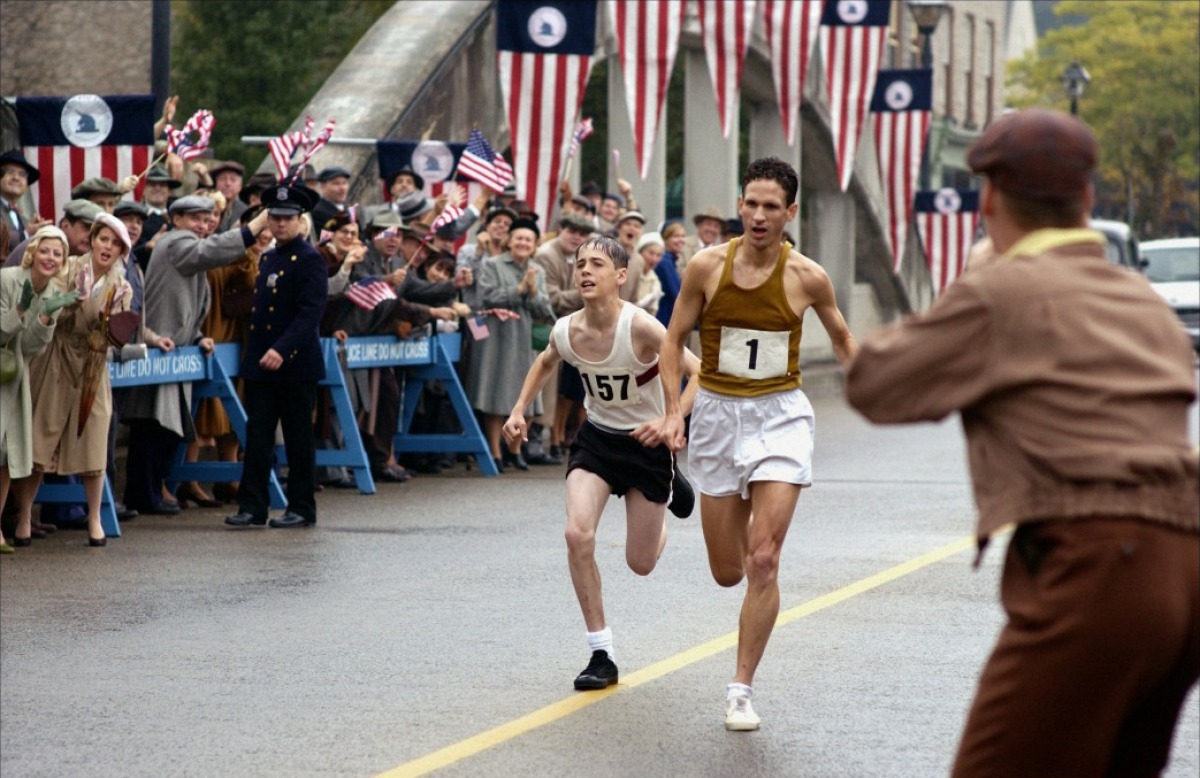
Another permutation of the sports movie you get is that of the biopic. This seems to be a particular purview of Athletics, specifically track and field events. Clearly, Chariots of Fire is the first title that comes to mind. Then there are the lesser known but still worth looking out for like Prefontaine and Saint Ralph.

Badminton

Here is the first of the challenging sports on this list. In looking into it I was reminded that badminton, like so many other things, has been included on The Simpsons. In film terms, I learned of two features that involve it, one I’d be interested in seeing and one not so much. The first is National Lampoon’s Golddigger, a newer and prior to this unknown to me installment of the series, and then an Indonesian biopic about Liem Swei King simply called King, which is clearly more appealing for the purist.

Basketball

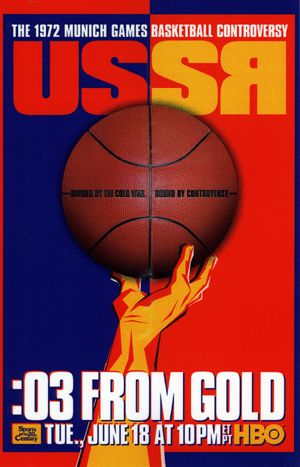
Basketball is one of the sports that has most frequently made for popular or entertaining films. Now, the two that jump immediately to mind are Hoosiers and Blue Chips. Having said that, since there are so many basketball titles, such that you can specifically cite the Olympics in some; I’d choose HBO’s documentary :03 from Gold about the ’72 Gold Medal Game between the US and USSR.

Beach Volleyball

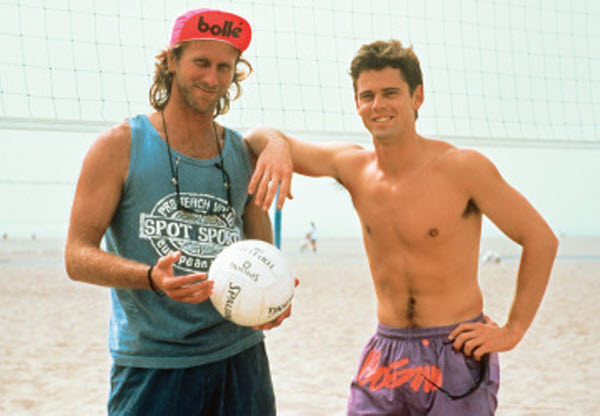
It was incredibly difficult to parse beach volleyball films from traditional volleyball ones. Beach ones are clearly more popular, but rather than being crass and to respect the differences between the two disciplines, they will each get their own films. The beach volleyball choice is Side Out, which I do believe I’ve actually seen Side Out (so help me God).

Boxing

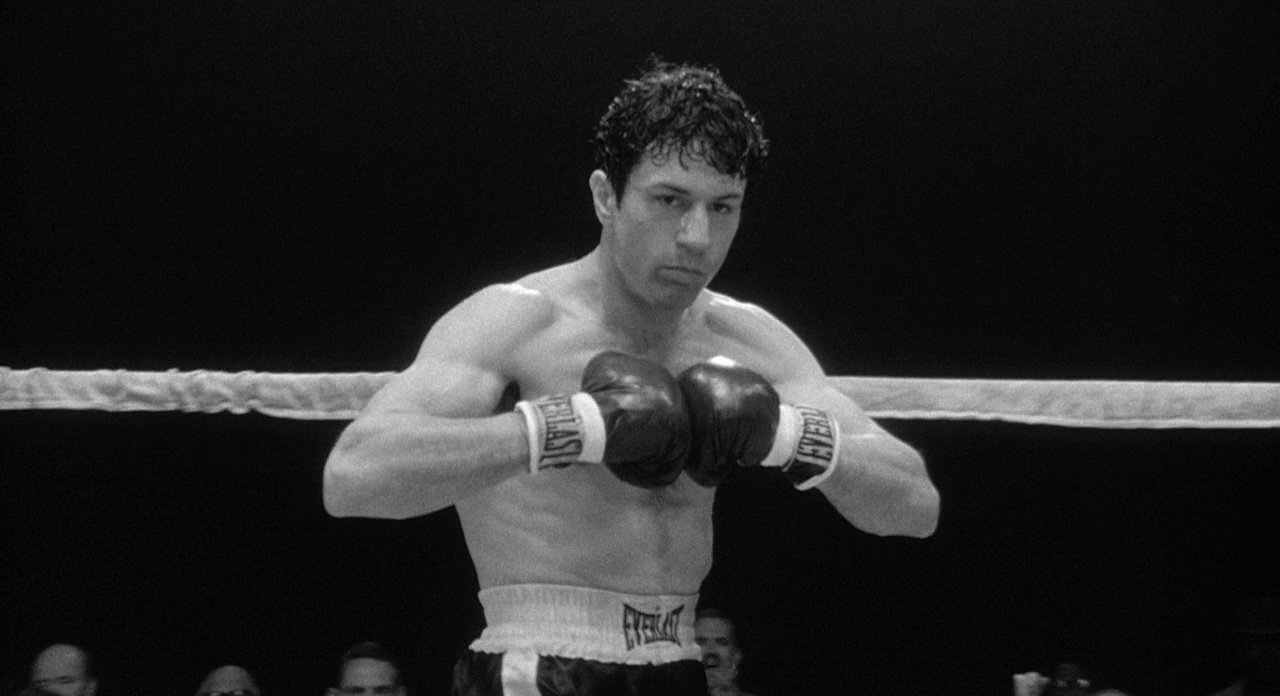
Boxing is the sport where I’m sure you’ll find the most movies to choose from. Of course, a movie about Olympic boxing is disqualified since the scoring system instantly introduces plot holes and confusion, but you can pick among the classics here Rocky, Raging Bull or whatever your preference may be you’re spoiled for choice with this sport.

Canoeing


Any of the paddle sports will be rarely found on screen and usually as a background element. In the Social Network the Winklevoss twins were part of a crew legacy, which could qualify that as a rowing movie.

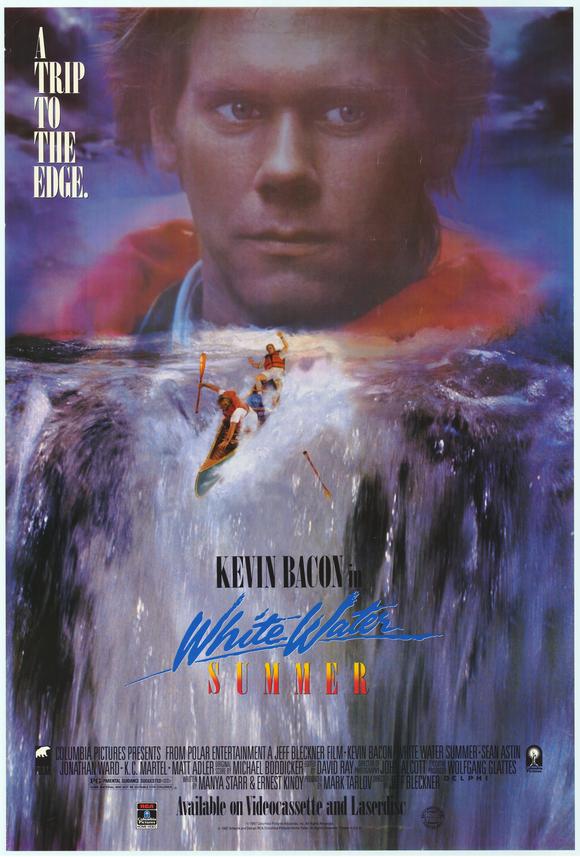
With regards to the canoeing/kayaking end of the spectrum that’s where you get to fudging it a little. The first thing that came to mind was White Water Summer, that was immediately followed by more Kevin Bacon in The River Wild, which is a rafting film but less all around odd and not at all ’80s. You could also turn to A River Runs Through It.

With regards to paddle sports it all depends on how ensconced you want to be. If you want just a hint of it you can certainly fudge a movie in in easily.

Cycling

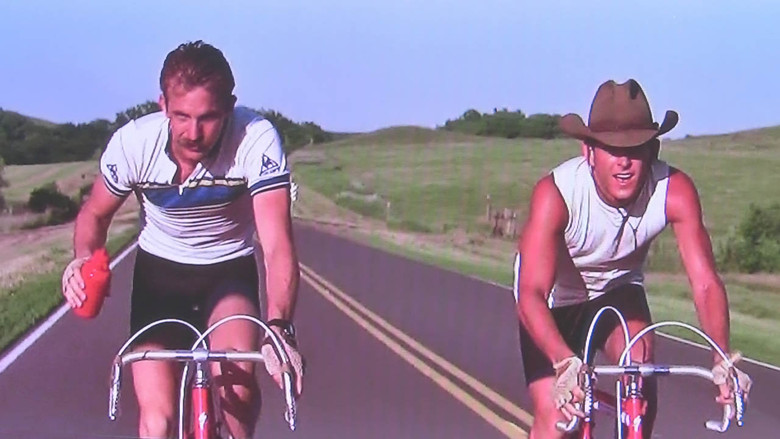
With many of these films I’m discovering them and wanting to find them at some point, with some they are oddities that I have seen and want to recommend. When it came to cycling I’ve seen two of the bigger cycling movies Breaking Away and American Flyers thanks to a family member who is obsessed with the sport.

They have their moments but have also bred some inside jokes based on the fact that it’s a “shown movie,” as in a “You should see this” kind of thing. However, in fairness, they seem to be the go to choices for enthusiasts.

One of those sports that pops up at the Olympics that grabs my interest are the track cycling events, which are more intriguing to me that the other disciplines. The Flying Scotsman seems to be a popular choice for that particular modality.

Diving

Diving, whether it be platform or springboard, is usually an affectation wherein we witness the externalization of a protagonist’s fear and his overcoming it, and rarely the focus of a film.

Perhaps the most notable examples are Greg Louganis: Breaking the Surface, and now with the games in London, Tom Daley four years on from a debut at the age of 14, wherein he finished 7th and 8th in his two events; has a BBC documentary about him to his credit along with being a serious medal threat.

Equestrian

I’m not going to say I’m a horse whisperer or even any kind of an expert, but what invariably ends up bugging me in some horse movies is the whole nature of them participating in a sport. A notable example being The Black Stallion. The beginning, say the first 40 minutes is a gem, a perfect replica of a silent film. Then the horse becomes a racehorse and it’s kind of trite from there. I think that’s one of the greatest things about the handling of Secretariat, it makes it seem like the horse is more willful than his jockey.

When it comes to equestrian disciplines that’s less of a concern because I believe that typically it’s the rider facing more danger and if the horse doesn’t want to jump, he won’t jump; or whatever maneuver is intended. That and watching these maneuvers is rather hypnotic at times.

A recent film I saw that dealt well with equestrian if nothing else was Harley’s Hill. In reading a similar list I was enlightened towards International Velvet. If you can’t drop your reservations about equine sports, and are a member of the Disney Movie Club, you can look up The Littlest Outlaw wherein a boy frees a showhorse.

Fencing

Fencing is another sport wherein you can shoehorn many a film into your viewing to suit your taste. Any Zorro, Three Musketeers, Peter Pan will feature fencing-like swashbuckling. You can take your pick from those oft told tales or you can be a little more literal with something like By the Sword, a 1991 film featuring Mia Sara, Eric Roberts and F. Murray Abraham. Or perhaps The Fencing Master, there was one in 1915 and 1992, I suspect the latter would be easier to find.

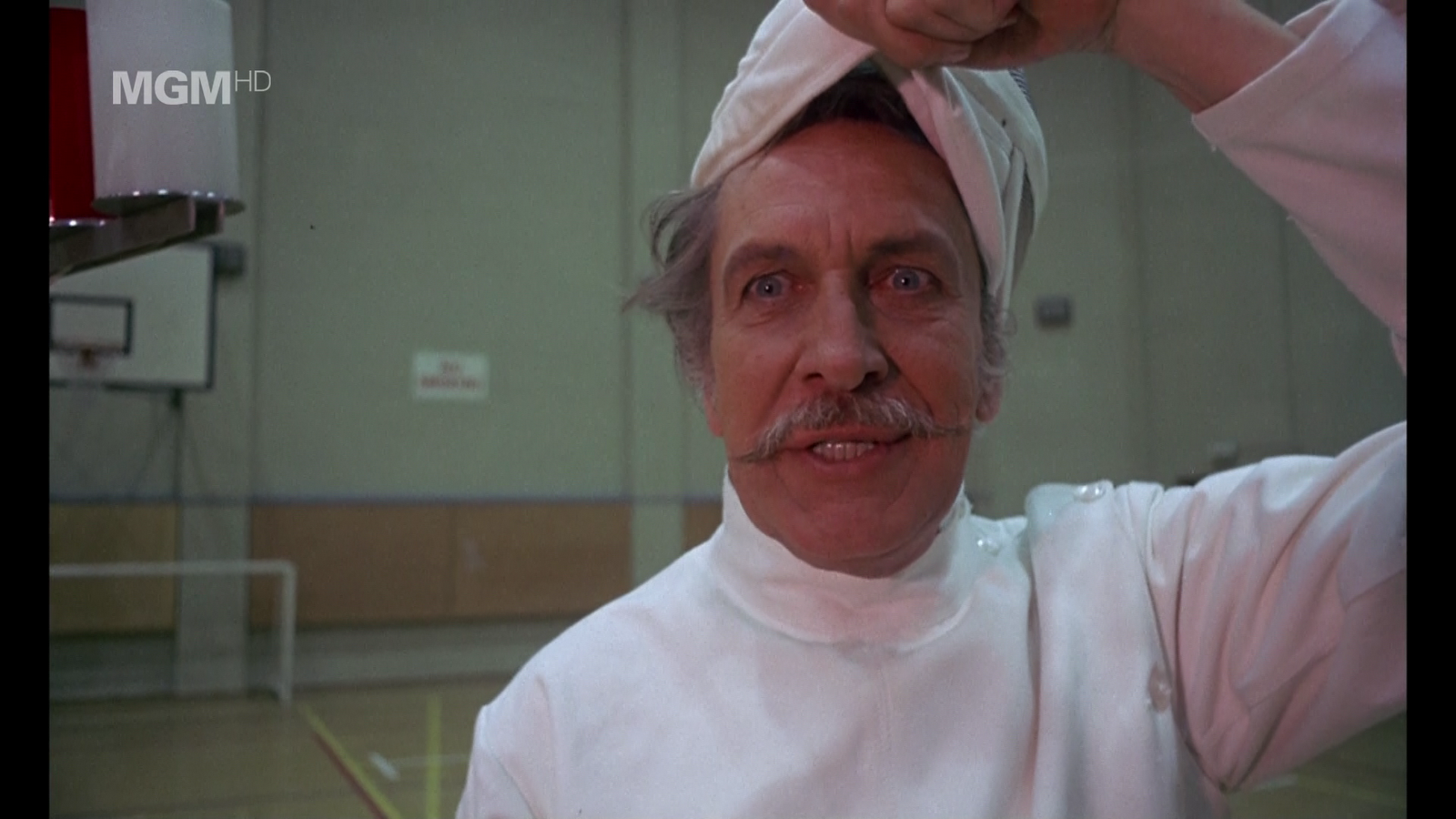
However, if you want to get creative I suggest Theatre of Blood. Not only does Vincent Price play a crazed, thought-to-be-dead Shakespearean actor seeking vengeance on a critics circle but he recites the Bard as he kills and once such scene is a fencing duel!

That’s all for now. Suggestions are more than welcome, and tomorrow’s films start with those about or involving football (aka soccer).

Review- Chernobyl Diaries

The nuclear incident in Chernobyl is one of the most unfortunate events in modern human history. It’s effects are far-reaching in terms of both distance and time, as the illnesses caused by radiation spread far and wide. Lest you confuse this with a Wikipedia entry that’s about as much as I need to say up front save that the Chernobyl incident is one I learned a great deal about and have a tremendous amount of sympathy for. Therefore, despite the fact that it’s rare, this was a film I was likely to be sensitive to in the horror genre. However, I went in hopefully, as horror cannot play it safe and I was rather surprised that this angle hadn’t yet been taken.

One of the few things I can happily report is that the film is not overly-exploitative. The deliberate pacing of it, the restraint it shows and the fact that it takes the point of view of a group of American tourists looking for an extreme locale make it much more palatable.

However, that is not to say it works entirely. The film works to about its midway point and then it starts to seriously degenerate into typically silly, dumb tropes that are only half-baked and highly illogical. Granted Hitchcock had a very valid point about feasibility, and it usually doesn’t come into play in horror, but what I mean is it seems the consequences of the exploration could’ve been greater and more logical simultaneously, so why not do that?

The set-up works very well and what’s more the acting is quite good. I speak frequently of acting when it comes to horror films because quite often it is not a prerequisite for this kind of film, or many actually, to have exceptional thespians to work on a narrative and technical level. However, this film has no weak-link that stands out in that regard. Particularly effective is Jesse McCartney, who not only plays the requisite Doubting Thomas but also spends a good deal of time injured. He is a talented actor who should be getting many more chances to show what he can do aside from being my favorite Chipmunk.

The film thankfully doesn’t take the found footage approach but there are a few unusual decisions visually. Some of them work well, some of them not so well. When the tour group is first threatened we watch the first search part go out from afar, see muzzle flashes, hear off screen noises but we eventually lose them. In a vacuum it’s an effective tactic, however, combining it with how minimal the rest of the film is it’s regrettable in hindsight. Towards the end there looks like there’s an incredible fight and struggle. The shame of it is I can’t see it because of the crazy handheld swish-pans and frenetic editing. The handheld camera in modern cinema is perhaps the biggest double-edged sword. Much vitality is added to action shots with the jostling that goes on, with the proximity that we get to the subject, but the pace of the edit needn’t be as frantic as the framing if we need to see something.

The climax of the film and the conclusion is so unsatisfying it nearly taints all that preceded it. Now, it’s is by no means The Devil Inside but perhaps this would’ve been a case where a few more incidents and a little less explanation would’ve made a bigger impact. The film falls close to over-explication than under and perhaps less truly would’ve been more here.

The Chernobyl Diaries
simmers for a while and never really comes to a full boil, which in the end leaves it tepid and a bad taste in your mouth.

4/10