Bad Movies I Love (Part Three of Four)

This is yet another post that has been inspired by Bob Freelander and his wonderful blog Rupert Pupkin Speaks. Check it out, if you haven’t already.

I’ve ruminated on this list long enough I believe. In the spirit of my recent post about lists not really being finished, I’ll just go with what I have at my disposal currently and spitball it. For the mutual convenience of myself and whomever may read this, I will split the list into four posts.

Now, I did, as most who have compiled this list recently, have to examine what makes a movie both bad and one I can enjoy because of that. There were a few different directions I could’ve gone with this list. I could’ve picked some films universally considered to be bad that I like and I don’t care who knows it (Many of those can be found here). I could’ve picked the rare film that’s so bad that it’s good, which in my mind are few and far between, but I do have a few that come to mind, and I also won’t argue if you believe there’s no such thing.

What I decided to do instead was to pick movies that I find to be bad, however, that I still enjoy certain things about them (badness included), and in many cases I have given them more than one viewing due to their uniquely awesome badness.

Now, without much further ado, my continued elections:

Overdrawn at the Memory Bank (1983)
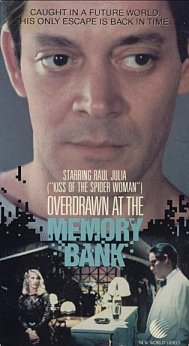
Here is the third and final appearance of a film with some connection to Mystery Science Theater 3000, it in essence highlights one of the better more overlooked aspects of that show; there are many of these movies that people would not be aware of were it not for its being lampooned there. Another odd note is that this TV film has, for reasons I don’t yet understand, been stuck from the IMDb.

As for the film itself, the story is quite out there. It concerns a futuristic dystopia wherein arts are prohibited. There are many other weird facets to the story that, if you would like to know them, can be found on the film’s Wikipedia. However, beware, as is often the case, it is rife with spoilers. Perhaps if the film the protagonist was obsessed with, and that this one cribs from, were not Casablanca my take on the film would be somewhat different, as Casablanca is too often referenced, lampooned and cribbed from. It’s also a very high-concept idea with a seemingly rather low budget. Something else I learned about this film was that is was shot on VHS, which I was not aware of, so that is a mark of distinction as older formats are having a renaissance, most notably as featured in Super 8 and the upcoming V/H/S.

The Beastmaster (1982)
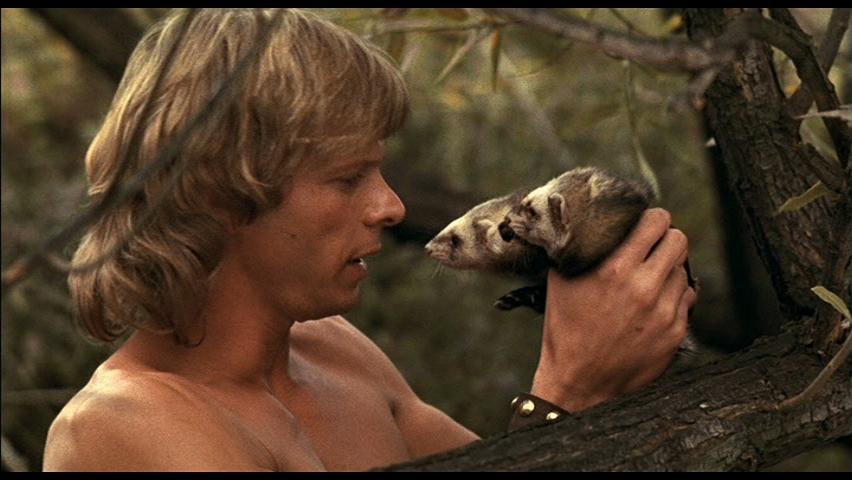
“Born with the courage of an eagle, the strength of a black tiger, and the power of a god.” With a tagline like that you know what you’re getting from The Beastmaster, do you not? Essentially, it combines sword-and-sorcery precepts with a dash of Tarzan and there you have it. Plus, it’s another one wherein if you read any synopses you can see how it would end up on a list such as this one. One thing that has occurred to me is that aesthetically this is rather more like what Masters of the Universe would have been had they not employed the-fish-out-of-water element in their telling.

The Redeemer: Son of Satan! (1978)

I love distributors like Code Red, who not only specialize in rare, hard-to-find titles but are also fairly honest about them. I recall the box to this one mentioned something about the opacity of its plot, and boy is it ever opaque! Another way a film can end up on this list is if I thought it could use a remake, and this one could, if anyone wanted to tackle it. There are elements in place that work, and some that come into play that serve to obfuscate what could be a really effective film. It feels longer than it is; it’s confounding at times; gets slow but it never really loses me, which is pretty hard for any bad film to accomplish. An interesting editing experiment comes to mind as I think on it, edit it down into an effective short. In it’s current state it either needs a bit of expansion or contraction to work as a proper good film.

The Nutcracker in 3D (2009)

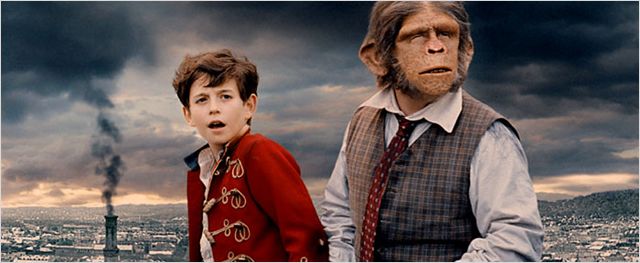
All credit for this selection making the list goes to Emily Intravia who wrote a guest post on Bob Freelander’s blog that jogged my memory. What really makes this film stand out is that any of the decisions taken in isolation wouldn’t be completely insane, but they all occur in the same film: Involving a thinly veiled Einstein; casting Nathan Lane to play him; making it a musical; having the Rat King and his minions symbolic of Nazis. However, I must say that it is a prime example of the fact that a film does not represent a crystalized version that has to adhere to everyone’s vision of a tale, which is something I’ve written of before. A film adaptation of a tale represents a version of a narrative, the director’s, writer’s and the production. This is why there have been so many adaptations of some of the most popular works in literature, film and cover songs in music and so on.

I have seen myriad versions of the Nutcracker. In fact, in the world of dance interpretations of narrative and choreography differ. As a director, I truly do appreciate Konchalovsky’s uncompromising vision, and some of the elements do work. I saw it upon its initial release and in 3D and that was a good element. The music, as I recall, the instrumentals that is, are pretty good whether Tchaikovsky’s or otherwise. Charlie Rowe, who would later appear in a very different and good interpretation of the Peter Pan myth in, Neverland is also good. As is Elle Fanning, who truly broke out with two amazing performances last year.

It also underscores another common element in the films I tend to choose for this list is that there’s something so unique, an intent so honest that I could never fully disparage the film without some qualifier. It’s one I haven’t revisited yet, but definitely will.

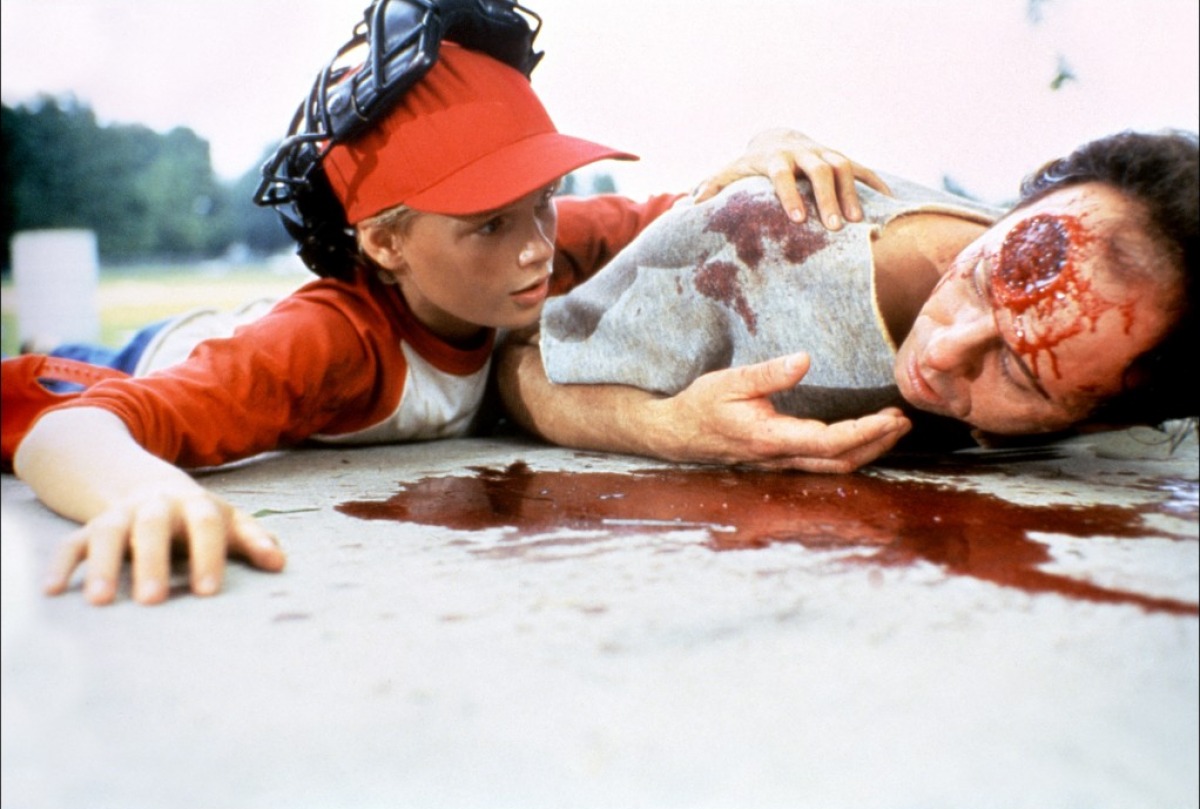
Sidekicks (1992)

The Chuck Norris joke as a cultural phenomenon is rather dead in the water, aside from the rare soul who hears one for the first time and then builds a newfound obsession with them for a time. I’m not sure anyone ever traced the exact source of that phenomenon, and if that would serve any real purpose, but this film may have something to do with it. The reason is, of course, that in this film Chuck Norris plays himself and the idol of a downtrodden kid. At this point Norris had already been in enough bad movies where he improbably beat the crap out of everyone that it made sense and this just adds to his odd mystique, and, of course, up until The Expendables sequel was announced he was the most one of the most notable action star who wasn’t in the club.

Come back tomorrow for the conclusion!

Bad Movies I Love (Part Two of Four)

This is yet another post that has been inspired by Bob Freelander and his wonderful blog Rupert Pupkin Speaks. Check it out, if you haven’t already.

I’ve ruminated on this list long enough I believe. In the spirit of my recent post about lists not really being finished, I’ll just go with what I have at my disposal currently and spitball it. For the mutual convenience of myself and whomever may read this, I will split the list into four posts.

Now, I did, as most who have compiled this list recently, have to examine what makes a movie both bad and one I can enjoy because of that. There were a few different directions I could’ve gone with this list. I could’ve picked some films universally considered to be bad that I like and I don’t care who knows it (A few of those can be found here). I could’ve picked the rare film that’s so bad that it’s good, which in my mind are few and far between, and I won’t argue if you believe there’s no such thing.

What I decided to do instead was to pick movies that I find to be bad, however, that I still enjoy certain things about them (badness included), and in many cases I have given them more than one viewing due to their uniquely awesome awfulness.

Now, without much further ado, my selections:

Demons 2 (1986)

In one a screenwriting course I took, one exercise we did was to read our short scripts aloud, this was done so we could simultaneously share knowledge and offer each other constructive comments. A script I wrote reminded a classmate of mine of Demons. At the time I had not seen Demons, so the only responsible action I could take was to see it ASAP. I loved it. My short and it shared similarities, but were also different enough.

Eventually curiosity got the better of me and I just had to see Demons 2. The film is directed by Lamberto Bava, co-written by Dario Argento, features one of the first screen appearances by Asia Argento and more of the freaky demons. What ends up not working is the film shifts away from the movie theater setting. However, being an Italian horror film, it will be stylish, bloody and at times bizarre and at others nonsensical, which makes it engaging, if not quality.

The Church (1989)

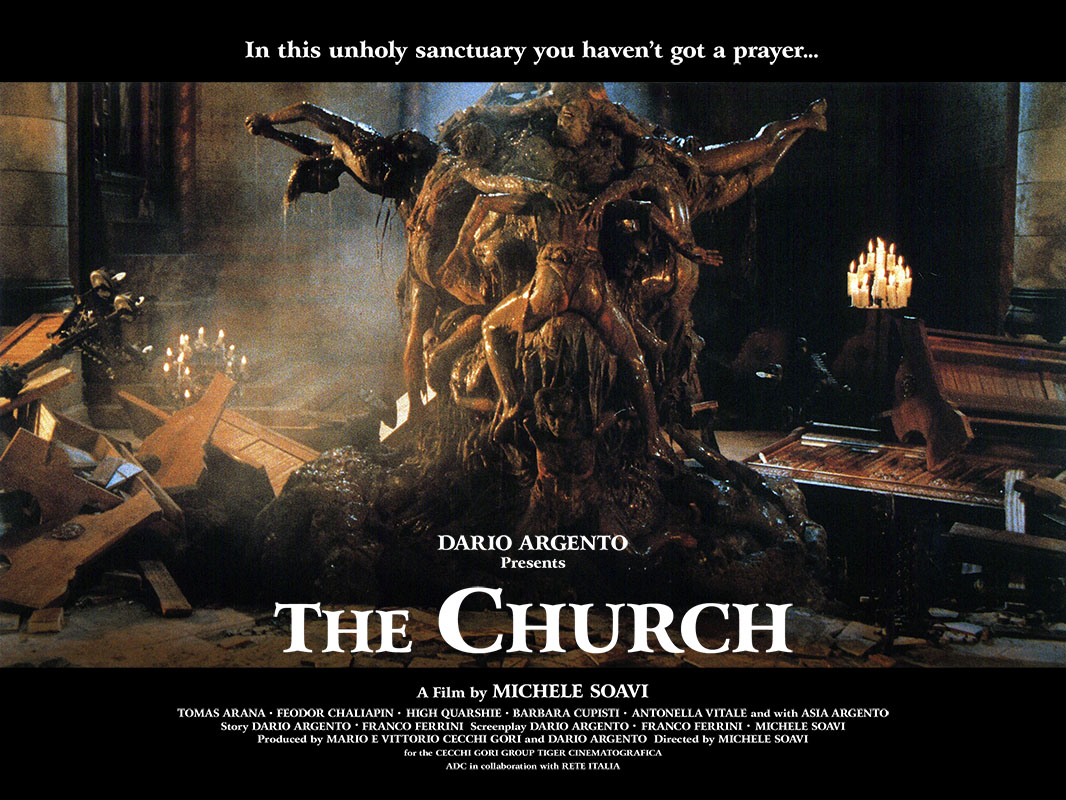
One not-so-good but watchable Italian horror film deserves another. This film has a lot of the same pedigree that Demons 2 has and a lot of the same issues: Argento has a writing credit, Asia makes an appearance, one of its alternate titles is Demons 3, it has a really good idea that doesn’t quite click and I really want it to. I’ve seen this one a few times, I’ve even listened to the score in isolation and I like that. There’s a draw to it that’s brought me back a few times, perhaps with this one more so than the prior choice, it really is the unfulfilled promise that’s been the reason.

Tommy Tricker and the Stamp Traveller (1988)

There will be another film that makes this list based in part on the audaciousness of its conception. However, I do have to admit that this one handles the execution of its outlandish concept better than the one to come.

As the title implies, in the world of this film you can literally travel by stamp. Now, as a concept that’s something you’re going to either buy or you won’t. The film has its heart in the right place through a lot of it (Such that I almost feel bad including it), it’s just really misguided much of the time, and the caper of bringing back someone lost via ‘stamp travel’ takes a bit away from it I feel. The acting’s not great, nor is the writing, but there is a boldness to the concept.

Also, as a bit of trivia, the film also features a cameo by a young Rufus Wainwright who sings a very catchy song, which is one of the redeeming qualities of the film, another one which becomes obvious as you watch the clip is how incredibly ’80s this film is.

Uncle Sam (1996)

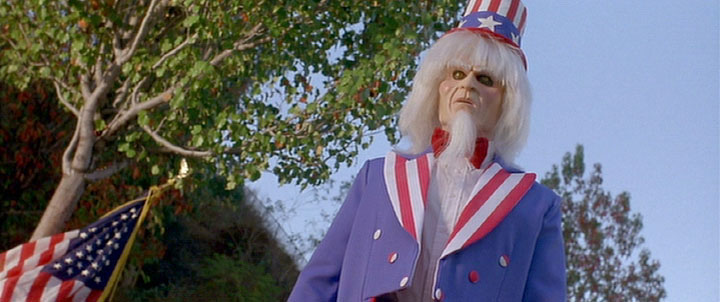
Perhaps one of the best ways to determine a bad movie you love is to gauge just how mixed your feelings on the film are. There are films written by Larry Cohen such as It’s Alive, The Stuff, Q: The Winged Serpent that I would say I love. This one I can’t really defend as staunchly but there are things about it that I do appreciate. Namely, it incorporates militaristic zeal in a horror film in a way I’ve rarely seen. Not only that but note the release date, there was no unpopular or costly (in terms of American casualties) war going on at that time, so there’s a certain gutsiness in telling this kind of tale when dissenting opinions are fairly quiet. The film does end up being sloppy and a bit slow, there’s no Michael Moriarty in it to up the caliber of the cast, but the satire is definitely there which makes it worth mentioning.

The Space Children (1958)

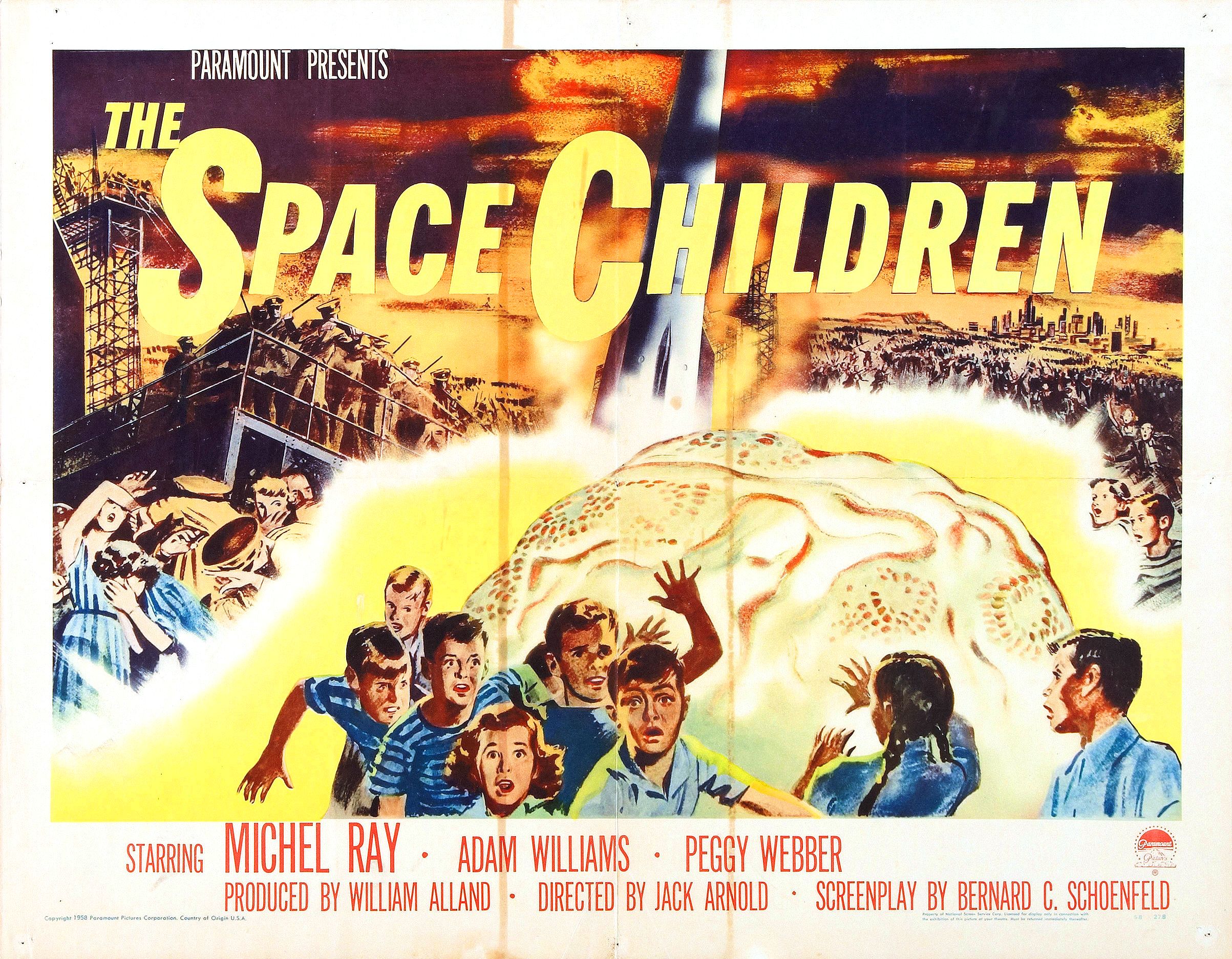
This is a case of Mystery Science Theater 3000 in reverse. Here’s one I saw first and then found an MST3K for, which I don’t do often. I was on kind of on the fence after I saw it and while I can’t ultimately say it’s a quality piece of work, as logic and reason vanish somewhere in the middle of act two, there are things about it I do like. As for the MST3K treatment it’s funny, not one of their best and this is nowhere near one of the legendary duds they’ve covered; in many of the films they watch it’s hard to even ferret out what the plot is supposed to be. Here there are issues but the plot is clear. The tropes of a hivemind amongst children, and some form of other-worldy radiation or possession, are not new but they’re also not the biggest problem. The film is actually consistently interesting, it just emotionally flatlines after a while, which is a cardinal sin, especially when any atomic age sci-fi tale is likely to hook me based on its implications. Michel Ray’s turn as the ringleader is also quite effective.

Part three will be up tomorrow!

Bad Movies I Love (Part One of Four)

This is yet another post that has been inspired by Bob Freelander and his wonderful blog Rupert Pupkin Speaks. Check it out, if you haven’t already.

I’ve ruminated on this list long enough I believe. In the spirit of my recent post about lists not really being finished, I’ll just go with what I have at my disposal currently and spitball it. For the mutual convenience of myself and whomever may read this, I will split the list into four posts.

Now, I did, as most who have compiled this list recently, have to examine what makes a movie both bad and one I can enjoy because of that. There were a few different directions I could’ve gone with this list. I could’ve picked some films universally considered to be bad that I like and I don’t care who knows it (A few of those can be found here). I could’ve picked the rare film that’s so bad that it’s good, which in my mind are few and far between, and I won’t argue if you believe there’s no such thing.

What I decided to do instead was to pick movies that I find to be bad, however, that I still enjoy certain things about them (badness included), and in many cases I have given them more than one viewing due to their uniquely awesome awfulness.

Now, without much further ado, my selections:

Troll 2 (1990)

To put it simply, Troll 2 was the first movie that ever struck me as being so bad that I had to have it. That and its all out ridiculousness are what really prompted me to acquire it after I randomly saw it on TV. Little did I know at the time that I was not alone in my ‘enjoyment’ of it. Only when I read online about Best Worst Movie‘s impending release did I learn about its cult status. For that alone, it belongs here because that doc proves there’s something unique about bad movies as opposed to other artforms, and the fact that Stephenson embraced the phenomenon and spun it into something quite special makes it even better.

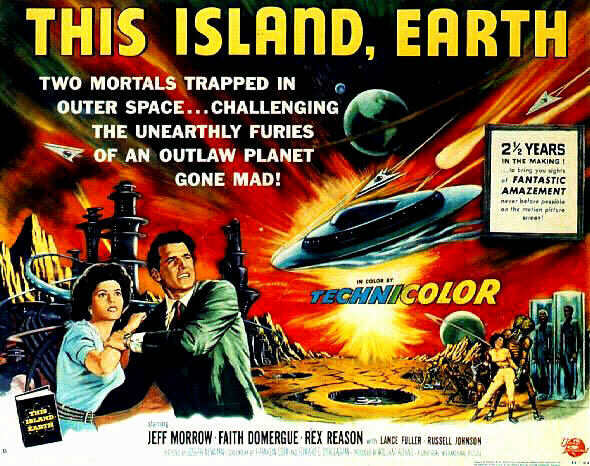
This Island Earth (1955)

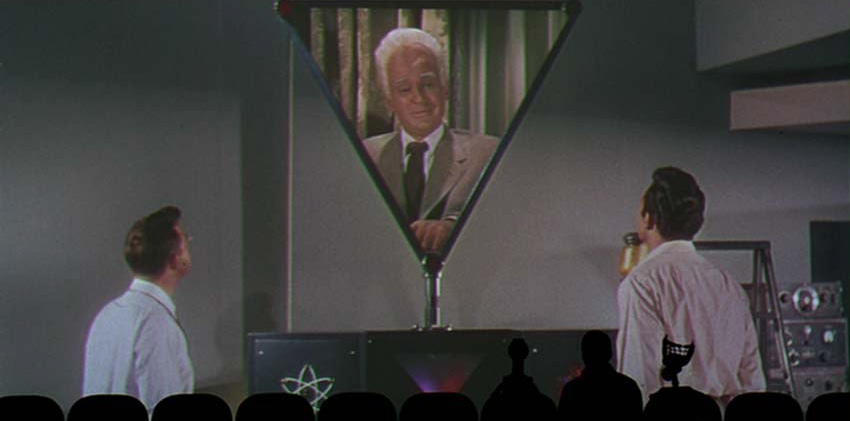
The story I have with this movie is a bit similar to the one above; I only came to know This Island Earth through Mystery Science Theater 3000: The Movie. Later on, I learned that it was seen by some as a bit of a controversial choice as it does have a legion of admirers, and I started noticing it popping up in many films like E.T. and Explorers.

However, when you’ve seen something enough (and sometimes it doesn’t have to be that much) it’s easy enough to separate how bad it is from how bad MST3K is making it look. The film is quite silly, it’s characters range from transparent to dimensionless, the dialogue ranges from trite to awkward and it’s more unintentionally funny than anything else.

When thinking upon it, I can see the attraction to some, but it’s no Forbidden Planet or anything of that ilk in my book. This is a movie I’d find hilarious without MST3K’s help. However, the dialogue, the characters, the pauses and the plot all serve up so many softballs that the guys really hit it out of the park early and often. It is almost as if the movie was made to be lampooned by them. In fact, a friend of mine unfamiliar with both this film and the MST3K format, thought it was!

Essentially, it’s the kind of bad movie you could never, ever hate, but I do find it bad and hilarious. “Not even a moth equipped with a lighting bug could fly through that!” says Joe about the fog. Hilarious indeed.

Maximum Overdrive (1986)

This entry is one of quite a bit of distinction; when I was writing a paper on Stephen King in a horror/sci-fi class I made this film the fulcrum because not only is it the only feature film King ever directed, but it’s also based on one of his short stories, “Trucks.”

Partially due to the paper, I’ve seen this film quite a few times. Try as I might to like it, and though I can find good in it, it’s a film where I have to agree with his own assessment of it; it’s not good. However, it’s the kind of not good worthy of repeat viewings simply due to some of the factors involved: His direction, an on camera appearance by Yeardley Smith (aka The voice of Lisa Simpson), Emilio Esteves’s awesomeness, the AC/DC score, the vending machine kill, Holter Graham, Pat Hingle, Stephen King’s almost Creepshow-over-the-top cameo, and some of the humor.

By this point, I’ve listed so much stuff that you’d wonder what makes it bad? Well, the story just doesn’t work, it’s not one of his better short stories to start with and the film ends up being too scattered to be as effective as it could be. For a more in-depth explication, I will be posting the aforementioned paper in a serialized format in September.

Santa’s Slay (2005)

Here’s one I did a 61 Days of Halloween post on. This movie is essentially what this list is about for the most part; if you’re going to go down, go down with guns blazing. You’d think that a film that featured wrestler-turned-actor Goldberg as Santa would have that as its weirdest component, but that’s not nearly the oddest thing about this film. This film is essentially about how Santa’s homicidal maniac tendencies have been thwarted by the fact that he lost a game of something akin to curling 1000 years ago. The casting is odd, but at times inspired and features a good turn by Douglas Smith, and it is trying to be funny often and succeeds. Therefore, it’s one of the better bad movies on this list.

Tourist Trap (1979)

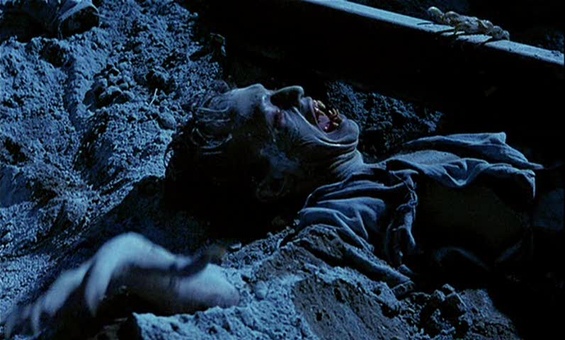
Another way of sneaking on to the list aside from general watchability, some originality and being funny is by having one truly standout scene. Tourist Trap after a while just doesn’t cut it for me, it really doesn’t. However, I will always recall the plaster death scene. It’s the kind of thing that can redeem the decision to watch the movie in its entirety. The rest of it is either been there done that or not really that well executed, but this one idea, is sure to get under almost anyone’s skin and is truly well done.

The next five will be up tomorrow!

Short Film Saturday- Red Riding Redux

A classical animation style rendition of Red Riding Hood wherein the Big Bad Wolf has the nursery rhyme equivalent of Post Traumatic Stress Syndrome? That’s what Disney’s Oscar nominated Red Riding Redux offers. It’s a hilarious tale with workplace teasing, the wolf married to a sheep, a celebrity voice cast, modern twists, pop culture allusions and much more. It’s a wonderful marriage of Disney fairy tale-telling and Looney Tunes style zaniness.

NOTE: Please forgive the inconsistent quality as it appears to be a dub of a VHS screener that has seen some degradation over time (Ah, the wonders of VHS).

Short Film Saturday- Reverso

Typically, these shorts come to my attention on Twitter either randomly or directly from feeds I follow. As I was watching many a short one day to make these posts I noticed many of them cam from Short of the Week. They really do have great stuff and post great blurbs. I really adore this short and the blurb that accompanies it by David Masters, so I have quoted it below. Enjoy!

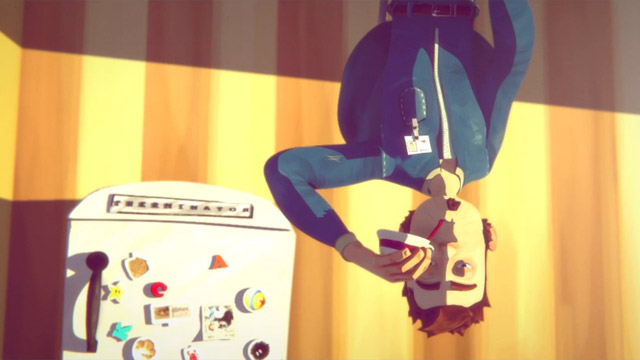
Living in an average British suburb, Barney drives an average car to an average office where he works an average job. He’s an average bloke, with one important exception: he lives life upside down.

On a technical level, Reverso gets everything right—quality 3D animation, realistic lighting, and complex yet easy-on-the-eye rendering. Yet in today’s democracy of filmmaking, technical ability isn’t enough to stand out from the crowd. What makes this film special is its bold visual storytelling.

Reverso is a masterclass in how to tell a story without dialogue. Strong characters and visual cues are used to establish viewer expectations, build the conflict, and draw the story to an inevitable conclusion that despite its sadness, is also uplifting (both literally and figuratively).

The filmmakers devoted careful thought to establishing characters through visuals. Barney, the lovable protagonist who navigates his upside-down world with a cheeky smile, and moves his too-long limps with lolloping grace, is based on a chimpanzee. Barney’s Dad, a soft, kind, maternal man has the rounded belly of a greedy gorilla, and spends his whole life wearing pink slippers. The office bully, Humphrey, is petty and mean, with the ugly face and sharp features of a rodent.

In its visual-only storytelling, its choice of office setting, and its thematic focus on difference, Reverso is reminiscent of the Jaime Maestro animation FriendSheep.

Reverso is a playful story with a serious message. Launched as part of the ArtFx school’s 2012 promotion, this is the first animation featured on Short of the Week from the Montpelier-based school of special effects and 3D animation. If it’s a sign of what’s to come from ArtFx, I’m excited to see more.

Diary of a Wimpy Kid: Rodrick Rules

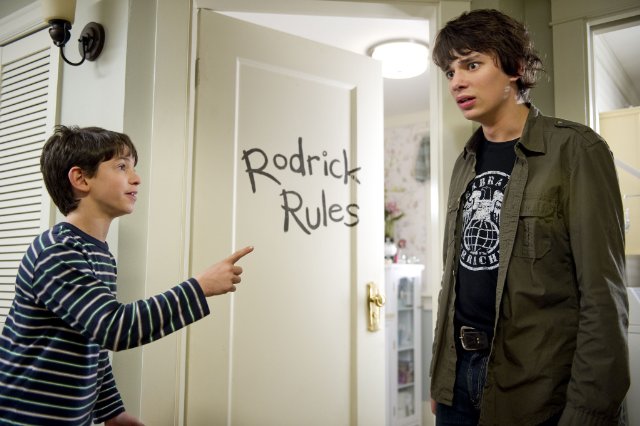
Diary of a Wimpy Kid: Rodrick Rules is a better film than its predecessor. This was something I rather anticipated, however, I don’t believe its to the detriment of this installment that it is second. There is not too much shorthand used and the narrative is accessible enough that that much enjoyment will not be stripped away if you are walking into this one cold.

This film benefits from a more unified and less episodic plot than did its predecessor as well. Not that it still doesn’t reap the benefit of humorous and well thought out subplots but they weave their way into the larger narrative with more finesse than prior. These tales like Chirag’s invisibility, the new girl, the teacher with a vendetta, are all well-handled and add to the film but do not ever threaten to overtake the film from what the central conflict is.

The conflict being that of sibling rivalry, which is handled very well because you see a relationship in stasis go from just about as bad as it can possibly get to become rather functional. It also contains the peaks and valleys that are requisite for such a struggle, and even more of a credit to the film it goes from being borderline cartoonish in its animosity to being rather real and honest in the handling of the themes of both resentment and insurmountable hatred that sometimes accompany such relationship, especially when the age difference is large.

These discussion points come first to illustrate that despite its varying brands of humor, there is a point to be made in the film and its not just mindless and “low-brow” comedy. As for the comedy, it does do a wonderful balancing act again. As this is a home-based tale, there is more parent-child and husband-wife comedy than before.

Again the Steve Zahn brilliantly plays a dad who wants to be as hands off in parenting as he can and also is a typical guy in some regards and not just your typical distant patriarchal archetype. He is countered wonderfully by Rachael Harris. They are funny enough, however, the comedic quotient in this film is amplified greatly when you consider that the talented and previously under-ultilized Devon Bostick gets to step to the fore in this film. He is astonishingly good in this film and rarely delivers a line that doesn’t elicit some sort of response whether it be a laugh or one that connects dramatically.

Zachary Gordon’s character Greg is somewhat mellowed this time around not as hellbent on achieving popularity and other superficial means of acceptance but glimmers of that self appear even in a more rounded character that he creates just as easily, if not easier than he did before. His honesty in situations that in tandem can be seen as absurd are what carry the film and make it something you can connect to sympathetically rather than watch as a disinterested observer.

This film moves along at a very healthy clip, not only are there some fun and creative editing choices like “Disappointed” montage for Mom but things cut swiftly within scenes such that the whole things seems like its done in a blink and not in a disappointed I-Can’t-Believe-They-Call-That-A-Feature kind of way but in a fun and escapist, easily re-watchable way.

Diary of a Wimpy Kid: Rodrick Rules
allows the narrative, characters and young performers to grow and evolve from where we left them and you can call it an experiment if you like, but if you do it is surely a success. Those who were there are better, more confident and comfortable in their roles and those who are new like Peyton List, who carries off the important role of Greg’s love interest with uncanny ease, blend in perfectly.

It’s a funny, fun, must-see.

10/10

Rewind Review- Diary of a Wimpy Kid (2010)

As those who know me, and if such a person exists, cyberstalk me, know I created this blog after writing on another site, which shall remain nameless, for a while. The point is, I have material sitting around waiting to be re-used, on occasion I will re-post them here. Some of those articles or reviews may have been extemporaneous at the time but are slightly random now, hence the new title and little intro, regardless enjoy!

With reports already abound that the writers are and have been crafting a sequel since before the premiere the makers of Diary of a Wimpy Kid seemed like they would be getting off on the wrong foot by immediately violating one of my recommended cinematic resolutions (A piece I wrote at the start of that year urged studios to wait on sequel announcements). This is not the case, however, as for the most part there are few missteps and many, many positives in this funny family film that really is likely to please the whole family.

The first thing this film does right was to not fall into the in-and-out no one gets hurt motto of family-friendly filmmaking, which means they were unafraid of a slower pace which feels longer than it is and tells a lot of story. Even better is that you don’t really feel it at all because there’s plenty story there and no filler.

What allows this film to so easily tackle the extra running time is not only the fact that it takes a diary approach, starting just before the first day of school in September and going until the end of the year but also that employs a narrator, the protagonist Greg Heffley (Zachary Gordon), that not only moves the story along but at times talks to the camera directly, which is to this day a hard feat to pull of but it’s well done here.

This is the kind of film that doesn’t work at all unless its young lead is spot on in such a way that you not only identify with his situation but at times feel for it and this accomplished with deft and ease by Zachary Gordon. If Greg Heffly is misplayed at all, considering the story elements, he is not a sympathetic character but he adds to it a naive sure-headedness that make him readily identifiable to most audience members. Similarly, Robert Capron as Rowley easily becomes either like we were at that age, unwilling to grow up and unashamedly himself, or just like someone we knew- together they make this movie happen.

Kudos are also in store to director Thor Freudenthal not only for a second consecutive well-handled and non-condescending family film (Hotel for Dogs) but also for allowing some reality into the equation when dealing with Junior High School. Few films ever, whether through storyline or casting extras older, realistically depict the chasm in maturity that exists not just amongst kids at the same grade-level but between the 6th and 8th grade- you may never feel that extraordinarily short again as you do that year and this film finally addresses that other realities that are typically glossed over by other projects.

Another positive is the realism of the cheese metaphor. In the tale there is a piece of cheese stuck to the blacktop of the playground and it mysteriously never gets moved and it develops this aura. Stories develop and those who touch it are cursed. The flashback sequence describing the history of the cheese is a great subplot and also when it becomes crucial at the end as it is a great metaphor for the triviality and randomness about what is perceived as good and bad by peers in school. It is truly a wonderful touch.

The only slight issues this film suffers from is in the two-pronged rift that occurs between the two friends, it’s not so much that the rift happens because you kind of see it coming but it’s how they happen. First, there is a disagreement when Greg and Rowley are trying to collaborate on a comic strip for a school competition the reason it’s sort of an issue is a matter of personal preference. Basically, it’s an argument between Greg and Rowley where the film seems to want you to take Rowley’s side but in this viewer’s opinion Greg was right on that one- Rowley’s strip is funny in context of the film but taken out of the film Greg’s is better (Note: on re-views Rowley’s has become funnier in its un-funniness and the sequel deals with the joke better). Where Greg isn’t right is when he betrays his friend, of course, and here is where the moral of the film will come in. However, their rift gets prolonged because of how Greg handles his mistake after the fact, lesson learned ultimately but movie slightly lessened due to it- not to say that Rowley should’ve immediately forgiven it, but it was a sorry apology attempt.

Another way in which this film excels, however, is that the secondary characters do show some reality even if they are not as well-sketched as the leads. There is the Gym teacher showing favoritism in a not over-the-top way to his better athletes. Then there’s Angie (Chloe Moretz) who sits on the sidelines most of the time because she realizes how futile being popular and accepted at this level is if you’re not you. Even Greg’s parents just in how they react to one situation, Greg’s fight with a girl during The Wizard of Oz, is real and happens. Mom is disappointed and can’t even talk to him and dad says to Greg “I thought she deserved it.” Then there’s Greg’s older brother Roderick who never changes and always treats Greg poorly but is a proponent of a theory many know well “Just blend in.”

Ultimately, Diary of a Wimpy Kid is a very enjoyable, insightful, thoughtful and funny film about an under-represted (in a realistic fashion) subset of the population on film.

8/10

Book Review- The Wimpy Kid Movie Diary

You never know what you’re going to get when you purchase a book that ties into the release of a film that purports to be a diary or some other kind of making of chronicle. Some I flip through are quite flimsy (like alleged shooting scripts with too many photos and goofy formatting), some are quite great (like the Hugo companion). Usually, the book being written by the author of the adapted book is a good indicator.

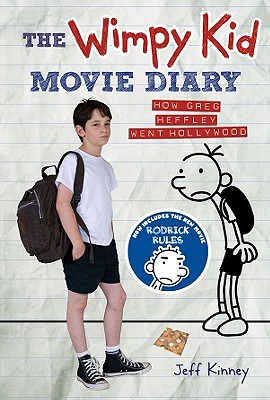
Thus, what surprised me most about Jeff Kinney’s book about The Diary of a Wimpy Kid wasn’t that I liked it (though I have not read the books, only saw the films) but how detailed it is, yet also accessible. Kinney describes much of the filmmaking process through all three phases of production simply yet precisely. However, aside from tricks of the trade, he also makes the journey personal discussing both his journey with the character and the books and then the films. He goes on to include a bit about the affinity and coincidences in chronology that exist between Gregg Heffley and Zachary Gordon, the actor who plays the role.

Here again you also have another author discuss why changes were made to the narrative when transcribing it to the screen and being fully in support of them. However, Kinney has perhaps the simplest, most bulletproof fanboy block of them all “If everything that happened in the book happened in the movie why would you want to see it?” He also talks about the difficulty in casting Gregg because he recognized that the character had to start as severely flawed but still likable and I believe that balance was struck.

Aside from the specifics of the productions, which prove that movie-making is always hard work (as if that needed proving) I really liked getting a glimpse into the creative process, which is shown not just on Kinney’s part but the first film’s director and the young cast (Gordon and Robert Capron wrote essays as their characters, which are dead on). Aside from the insight that illustrate how the film came into being I think this really is a great book for kids. If they already like the series and are interested in seeing how movies are made you won’t find the elements of production explained more directly, plus discussing concepts in conjunction with a film they’ve seen make it easier to learn.

This is a quick, enjoyable read that is worth seeking out for fans of the series or if you’re just looking to get your feet wet learning the basics of filmmaking. The edition I read had some Rodrick Rules content added but it wasn’t a significant amount so I wouldn’t hold out for a second update and just get it now if you’re interested.