Thankful for World Cinema: Mother, I Love You (2013)

Introduction

For an introduction to the concept of Thankful for World Cinema please go here.

Mother, I Love You (2013)

Mother, I Love You tells a tale that upon initially glancing at the synopsis may seem like it’s been told a time too often.

Raimonds, a 12 year old boy, falls into a world of petty crime while trying to stay out of trouble with his mother.

However, one thing to admire about the synopsis is that it is not intent on divulging too much of the forthcoming film. A reductive synopsis, for this viewer, is preferable as opposed to an excessive amount of plot detail. This is in essence the plot.

The intriguing thing about this film is that it’s not an overly-stylized treatment. There are no affectations of gangs or syndicates. Not that the stakes aren’t high but the film is concerned first and foremost with it characters, how they react to situations and the consequences of their actions. A simple happenstance of fate, some free time and boredom are what allow Raimonds to travel down the rabbit hole.

However, the domino effect of that one choice comes into play when things start to go wrong for him. Lies are told and further crimes occur. Ultimately, he knows he’s come to a crossroads and must decide whether to head back in the right direction or wander out past the point of no return.

The film also admirably keeps these events grounded closer to what might resemble and actual reality. It still fills the dramatic need of a given conflict or scene but without going overboard with dramatic histrionics that can viewed as compulsory.

There are arcs for the main figures involved that are very believable as well as well-drawn supporting players. The two lead performances, that of Raimonds (Kristofers Konavalovs) and Mamma (Vita Varpina), are captivating and truthful. The chemistry shared and created by them as scene partners allow subtext, lines left unsaid, to speak volumes.

There is a briskness to this film in pace that may feel it feeling rushed if not well-directed and -edited, but that is not the case here. The direction and editing are first-rate. The tone of the film is established immediately, the scenes underscored effectively through wondrous musical choices.

Mother, I Love You aside from an overriding plotline that could be plucked from any corner of the globe does have its cultural specificity to Latvia and effectively opens a window into that microcosm. While doing that though, it does create its characters as individuals rather than types, they are imbued with personality and it’s their home through their eyes we see. This is a compelling, engaging, accessible film that rewards those digging a bit deeper (if they choose to), and it’s a film that should be sought out.

8/10

Thankful for World Cinema – Paradise: Faith (2012)

Introduction

For an introduction to the concept of Thankful for World Cinema please go here.

Paradise: Faith (2012)

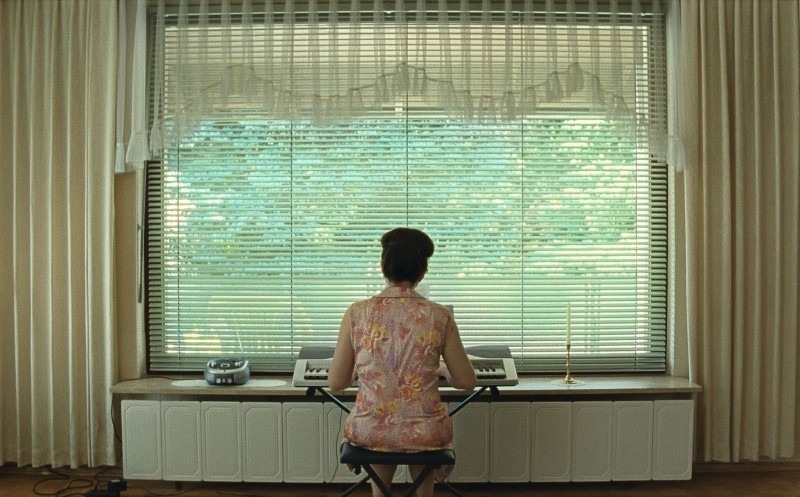
With his initial installment in this trilogy, Paradise: Love, Siedl established his template for the precipitous decline away from any hopes of fulfillment that his leading ladies face. In this film, the starting point is a far different one wherein Anna Maria (Very ably played by Maria Hofstätter) seems to have her devoutly religious, stern life well in hand and then things change.

The challenges that this particular tale faces are some of the same the first film does in terms of borderline exploitative narrative. Where it falls is that while the prior film only seemed over-extended; here the film frequently has a vacuous feeling. Certain points are raised and later expounded on, but they frequently over-stay their welcome and scenes last long after they cease to function. Not only is this a pacing issue but a question of narrative necessity.

Furthermore, it’s plainly apparent here that he works off loose outline and through improvisation. There’s nothing wrong with that, except when it shows. In other improvisational works (See any Mike Leigh film or even the prior film) there’s nary a hint of the nature of how the script/narrative is constructed.

Whereas the film does have some undeniably comedic moments, where some may even laugh in spite of themselves; it seems a bit of spite exudes the narrative. There doesn’t seem as detached and analytical an eye to this tale as there is with Love. Instead it seems we’re given a protagonist to pillory whether we want to or not and there’s only so much gratification one can derive from that.

Again, this is not a complaint about protagonist likability. Blue Jasmine is one of the best films of the year. I wouldn’t say I like Jasmine (Cate Blanchett), however, I do understand her and am made to invest in her fate. With Anne Maria, who shares (at least in her own perception) a similarly tragic fate, it’s as if we’re watching her slowly being tied to the stake and burned – and when all is said and done this film has not aroused vengeful glee, pity or disgust but rather ennui.

5/10

Updates: November 4th, 2013

As tends to happen from time to time, things came up on the previously intended update day (November 1st) that made updating the lists due for additions (as well as other posts) a bit hard.

However, many exciting things are afoot at The Movie Rat. So here’s a quick rundown.

First, and these posts will be forthcoming soon, we are in the midst of a new theme: Thankful for World Cinema.

Second, The Movie Rat is currently co-hosting its first ever giveaway thanks to the fine folks at Film Movement. Details on how you can win Broken and three other films can be found here.

As you also may have noticed, new pages are up (and will continue being added) go here to learn more about The BAM Awards and the Associations this blog is a part of.

I may have been a bit generous but my Contenders for Favorite Older Film First Viewed in 2013 saw its most additions in October.

Five new titles added to My Radar.

Another change on the site is that October 2013 marked the last time I will post a Mini-Review Round-Up. The reason being that in the last theme many mini-reviews spawned their own post anyway – and the idea originally was to save myself some work. In the end it doesn’t save work but creates more. Yes, this will make it easier to fill up my schedule. However, this will also give some oft overlooked films a post all their own rather than being buried in a long running post where they need to be found.

My Year-End Dash will likely remain a running post.

Four candidates added to the Entertainer of the Year Award race.

One name added to the Lifetime Achievement Award.

Lastly for today is my contribution to the Silent Recasting Blogathon where I re-cast Harry Potter as a silent film.

Next updates should be on November 15th, as scheduled.

Silent Recasting Blogathon: Harry Potter and the Philosopher’s Stone (1917 – a 17-Chapter Serial by Louis Feuillade)

This is my contribution to the Silent Recasting Blogathon at Carole and Co.

Had I given this post more time, in terms of design, I’d have come up with an actual one sheet as opposed to just a color-corrected banner image. However, what I am lacking in graphics I am prepared to try and make up for in terms of an alternate history narrative.

In this take I am imagining a parallel universe wherein there is a J.K. Rowling who instead of publishing Harry Potter and the Philosopher’s Stone in 1997 did so in 1897. With the book being published at this time, I also imagine that the British title would not have been changed for US audiences, due to the fact that American English and the King’s English were more closely related at the time.

What I imagine would have ensued had such a book come into being 100 years before it actually was written is quite a long process wherein the rights to the cinematic adaptation of the book changed hands a few times, and eventually taking 20 years to bring to the screen.

In fact, in this alternate history all the books would’ve been published, and similarly successful, before any film version had been made.

The development of the motion picture first started under the auspices of Georges Méliès and Star Film Company. However, with the closest thing to extended narrative that Méliès had offered where things like series of shorts based on The Dreyfus Affair and titles roundabout 30 minutes he felt uncomfortable fully committing to adapting the title to the big screen. As Star fell on hard times he let his option lapse prior to his first dealings with Gaumont in 1910.

When the rights were free again British filmmakers were again outbid. This time by Ufa in Germany. They tinkered with the idea for a few years and were willing to give a young, as of yet unproven, Fritz Lang a go at it and even began the casting process a few times, but ultimately they were not yet ready to take the project on properly.

Gaumont then finally got their chance at the rights in 1916. They began discussing the project with Louis Feuillade. Feuillade at this point with both Fantomas and Les Vampires under his belt had some clout and wanted to treat the book faithfully and turn the 17 chapters in the book into 17 shorts making one serialized feature. Though they were already casting the budget required to shoot that much material of so fantastical a story became something that Gaumont would ultimately balk at.

It was clear that it was a monumental task for any one studio to take on a globally renowned tale in an age when the concept of a worldwide blockbuster did not yet exist. Untrod trails were being blazed and nervousness abounded.

That was when Carl Laemmle and Universal Studios stepped up to the plate and offered a co-production deal that would not only guarantee many screens in the US but also assistance on inter-titling the film in quite a few language that would likely lead to the films profitability.

With Universal shouldering much of the financial burden they were able to make a few demands: first, production would move to Hollywood. They would willingly retain Feuillade and have him work with a translator, but would need to discuss new casting options.

With such a big, unprecedented project underway studio affiliations were all but meaningless and the stars lined up. Eventually, the cast started to come together with many of Feuillade’s original choices being replaced by American counterparts.

In the role of Harry, Gordon Griffith was cast replacing Fabien Haziza whom Feuillade had directed in Judex.

Gordon_Griffith_signedx850w

Feuillade didn’t have a Ron, so he was open to discussions. It ended up being one of the more heated debates. Wesley Barry was considered as he was actually a ginger. However, Laemmle argued, especially in black-and-white and tinted film, that that didn’t matter so the role ended up going to the more expressive Coy Watson, Jr.

Coy Watson

Hermione was the role most bantered about. As opposed to the boys, few of the actresses considered were actually the age they were playing. Due to that fact much crystal-ball-gazing was done as they debated who would be able to play Hermione as the series progressed with the least likelihood of needing to be recast. Eventually hopes for longevity won out over bigger name older actresses and Mary Miles Minter, got the part and eventually lead to her also being cast in Anne of Green Gables.

mary-miles-minter-flying-A-publicity-photo

Many of the supporting parts were open-and-shut discussions.

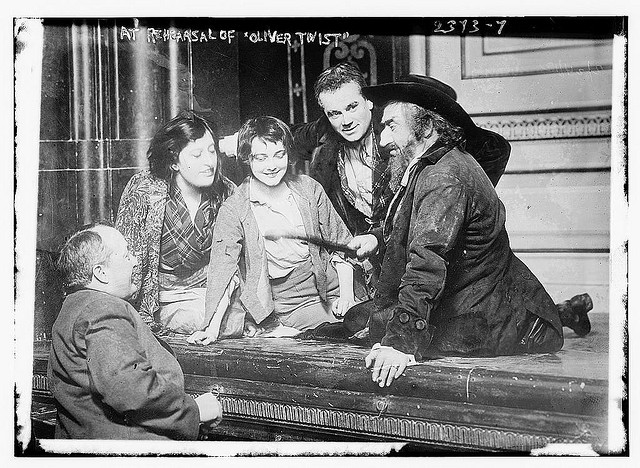
Harry’s friend Neville Longbottom was a role they were unafraid to go overseas for and cast Tibi Lubinsky (a.k.a Tibor Lubinszky, seen in the center of the photo below).

2163042781_e00f33d2e5_z

While Draco Malfoy, another nemesis, was cast locally with True Boardman, Jr.

TrueBoardmanJrCrop

The Dursleys were decided quickly. Buddy Messinger was selected as Dudley and Louise Fazenda and Mack Swain, who had paired so often in the Wilful Ambrose films, would bring the necessary comedy to his parents.
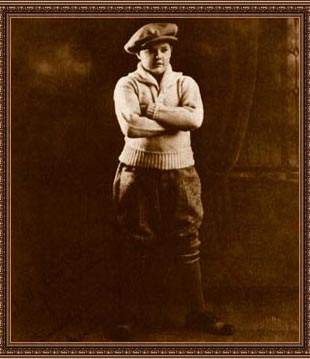

Messinger

Louise Fazenda

Swain19

John Barrymore, carried himself with a gravitas beyond his years, and was cast as Albus Dumbledore.

john-barrymore-profile_opt

On the comeback trail, and with the film in need of more comedic touches (as per the studio not necessarily per Feuillade), Fatty Arbuckle was cast as Hagrid.

The overly-nervous Professor Quirrel was deemed to be a job for Harold Lloyd.
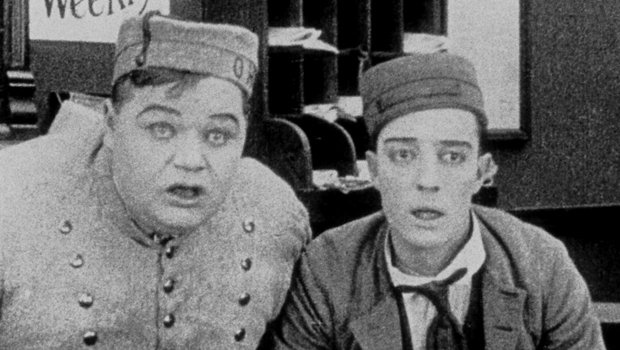
Fatty Arbuckle and Buster Keaton

While, his superior, and villain to the whole series could only be the Man with a Thousand Faces, Lon Chaney.
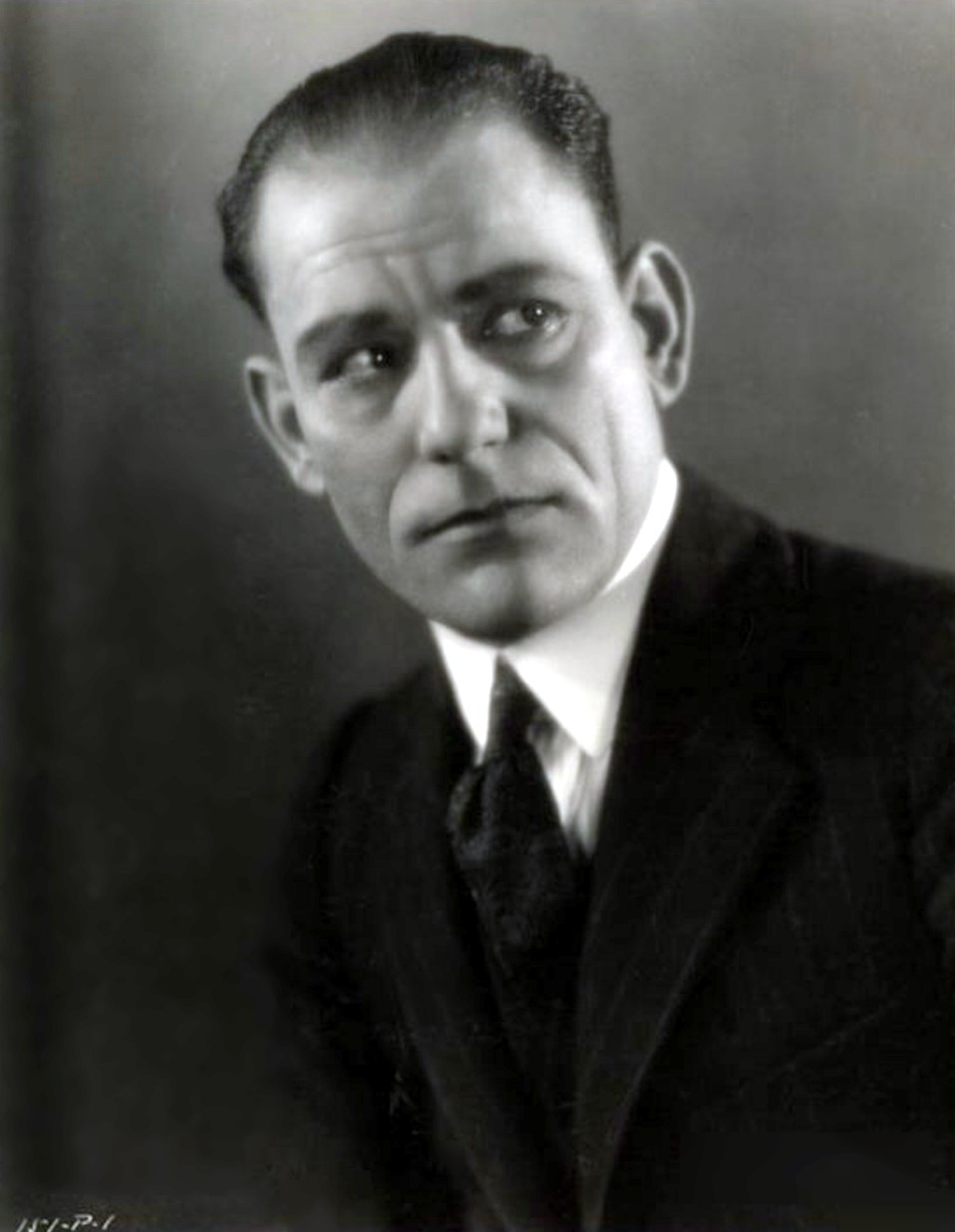
Lon_Chaney_by_Clarence_Sinclair_Bull_R1

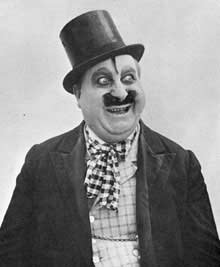
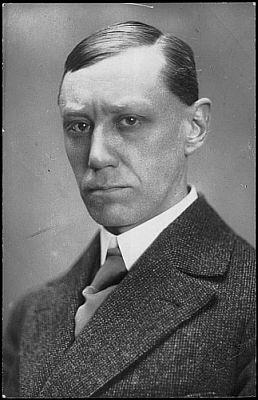
The role of Severus Snape was one much debated as Feuillade wanted something to stem the tide of comedic actors coming in to preserve some balance at least. The final two candidates were comedian Max Linder and as-of-yet-unknown German actor Mac Schreck. Feuillade won the argument and Schreck’s appearance in this film would make waves in Germany especially with F.W. Murnau who would later cast him in Nosferatu.
5561798_135566554083

As opposed to the Harry Potter series in actuality, which had to replace Professor Dumbledore (Michael Gambon took over after Richard Harris’ death), here it was Minerva McGonnigall that needed to find a new actress to fill the role later on. Sarah Bernhardt who would start the series and was unable to complete it. Feuillade was able to convince Universal that the inclusion of the renowned French stage actress would add box-office appeal among women.

Sarah_Bernhardt_by_Paul_Nadar_(crop)

With such a cast as this in place this alternate-universe version of the film was a hit akin to the one in our own. As for who would come in to play key figures down the line that may be decided in future blogathons, or can be speculated in the comments below. Hope you enjoyed!

2013 BAM Award Considerations – November

Last year I had one massive running list and it became very cumbersome to add to, and to read I’m sure. By creating a new post monthly, and creating massive combo files offline, it should make the process easier for me and more user-friendly for you, the esteemed reader. Enjoy.

Eligible Titles

Blind Spot
In Bloom
Ender’s Game
The Notebook
Watchtower
Class Enemy
La Playa DC
It’s All So Quiet
Once Upon a Time Veronica
About Time
The Green Wave
Schooled: The Price of College Sports
Two Lives
The Old Man
Great Expectations
Thor: The Dark World
Pete’s Christmas
In the Fog
You and the Night
Bernie & Ernie
The Fifth Season
The Christmas Ornament
The Color of the Chameleon
Hannah Arendt
The Hunger Games: Catching Fire
Contest
La Jaula de Oro
I Declare War
Philomena
The Book Thief
Frozen
The World’s End

Best Picture

Ender’s Game
Class Enemy
It’s All So Quiet
Two Lives
The Old Man
Frozen
Philomena

Best Foreign Film

Blind Spot
The Notebook
Watchtower
Class Enemy
La Playa DC
It’s All So Quiet
Once Upon a Time Veronica
The Green Wave
Two Lives
The Old Man
In the Fog
You and the Night
The Fifth Season
The Color of the Chameleon
Hannah Arendt
La Jaula de Oro

Best Documentary

Last year this was an omitted category, due mostly to the fact that too few total candidates existed to make the slate feel legitimate. I will hope to be able to rectify that this year.

The Green Wave
Schooled: The Price of College Sports
Bernie & Ernie

Most Overlooked Film

As intimated in my Most Underrated announcement this year, I’ve decided to make a change here. Rather than get caught up in me vs. the world nonsense and what a film’s rating is on an aggregate site, the IMDb or anywhere else, I want to champion smaller, lesser-known films. In 2011 with the selection of Toast this move was really in the offing. The nominees from this past year echo that fact. So here, regardless of how well-received something is by those who’ve seen it, I’ll be championing indies and foreign films, and the occasional financial flop from a bigger entity.

Blind Spot
The Notebook
Class Enemy
It’s All So Quiet
The Old Man
Great Expectations
The Fifth Season
The Color of the Chameleon
La Jaula de Oro
I Declare War
Philomena

Best Director

Blind Spot
Ender’s Game
The Notebook
Class Enemy
It’s All So Quiet
Two Lives
The Old Man
Great Expectations
Philomena

Best Actress

Nilay Erdonmez Watchtower
Hermila Guedes Once Upon a Time Veronica
Rachel McAdams About Time
Julian Köhler Two Lives
Natalie Portman Thor: The Dark World
Kate Moran You and the Night
Barbara Sukowa Hannah Arendt
Jennifer Lawrence The Hunger Games: Catching Fire
Judi Dench Philomena

Best Actor

Jules Werner Blind Spot
Asa Butterfield Ender’s Game
Olgun Simsek Watchtower
Igor Samobor Class Enemy
Jereon Willems It’s All So Quiet
Domhall Gleeson About Time
Yerobla Toguzakov The Old Man
Jeremy Irvine Great Expectations
Chris Hemsworth Thor: The Dark World
Vladimir Svriskiy In the Fog
Niels Schneider You and the Night
Ruscen Vindinliev The Color of the Chameleon
Josh Hutcherson The Hunger Games: Catching Fire
Sam Louwyck The Fifth Season
Steve Coogan Philomena
Geoffrey Rush The Book Thief
Simon Pegg The World’s End

Best Supporting Actress

Viola Davis Ender’s Game
Doroteja Nadrah Class Enemy
Piroska Molnár The Notebook
Liv Ullmann Two Lives
Helena Bonham Carter Great Expectations
Aurélia Poirier The Fifth Season
Janet McTeer Hannah Arendt
Elizabeth Banks The Hunger Games: Catching Fire
Emily Watson The Book Thief

Best Supporting Actor

André Jung Blind Spot
Harrison Ford Ender’s Game
Voranc Boh Class Enemy
Jan Zupancic Class Enemy
Martijn Lakemeier It’s All So Quiet
Bill Nighy About Time
Sven Nordin Two Lives
Robbie Coltrane Great Expectations
Anthony Hopkins Thor: The Dark World
Vladislav Abashin In the Fog
Alain-Fabien Delon You and the Night
Django Schrevens The Fifth Season
Brendan Meyer The Christmas Ornament
Ulrich Noethen Hannah Arendt
Stanley Tucci The Hunger Games: Catching Fire
Josh Gad Frozen
Nick Frost The World’s End

Best Performance by a Young Actress in a Leading Role

Lika Babulani In Bloom
Hailee Steinfeld Ender’s Game
Karen Martinez La Jaula de Oro
Mackenzie Munro I Declare War
Sophie Nélisse The Book Thief

Best Performance by a Young Actor in a Leading Role

Asa Butterfield Ender’s Game
András Gyémánt The Notebook
László Gyémánt The Notebook
Zachary Gordon Pete’s Christmas
Toby Irvine Great Expectations
Brandon Lopez La Jaula de Oro
Gage Munroe I Declare War
Michael Friend I Declare War
Daniel Flaherty Contest

Best Performance by a Young Actress in a Supporting Role

Mariam Bokeria In Bloom
Abigail Breslin Ender’s Game
Bebe Cave Great Expectations
Bailee Madison Pete’s Christmas
Katherine McNamara Contest

Best Performance by a Young Actor in a Supporting Role

Aramis Knight Ender’s Game
Andrés Murillo La Playa DC
Orynbek Moldakhan The Old Man
Peter DaCunha Pete’s Christmas
Toby Irvine Great Expectations
Dennis Andreev The Color of the Chameleon
Rodolfo Dominguez La Jaula de Oro
Siam Yu I Declare War
Alex Cardillo I Declare War
Kenton Duty Contest
Gill Vancompernolle The Fifth Season
Django Schrevens The Fifth Season
Nico Liersch The Book Thief

Best Cast

Blind Spot
Ender’s Game
The Notebook
Watchtower
Class Enemy
It’s All So Quiet
About Time
Two Lives
The Old Man
Great Expectations
In the Fog
You and the Night
The Color of the Chameleon
The Fifth Season
The Color of the Chameleon
Hannah Arendt
Philomena
The Book Thief
The World’s End

Best Youth Ensemble

In Bloom
Ender’s Game
Pete’s Christmas
The Fifth Season
Contest
La Jaula de Oro
I Declare War
The Book Thief

Best Original Screenplay

Watchtower
Class Enemy
You and the Night
The Fifth Season
La Jaula de Oro
I Declare War
The World’s End

Best Adapted Screenplay

Blind Spot
Ender’s Game
The Notebook
It’s All So Quiet
Two Lives
The Old Man
Great Expectations
In the Fog
The Color of the Chameleon
Philomena
Frozen

Best Score

Ender’s Game
The Notebook
It’s All So Quiet
Two Lives
The Old Man
Thor: The Dark World
You and the Night
The Fifth Season
The Color of the Chameleon
La Jaula de Oro
I Declare War
The Book Thief
Frozen

Best Editing

Blind Spot
The Notebook
Class Enemy
It’s All So Quiet
The Green Wave
Two Lives
The Old Man
Great Expectations
The Color of the Chameleon
The Fifth Season
La Jaula de Oro
I Declare War
Philomena
Frozen
The World’s End

Best Sound Editing/Mixing

Blind Spot
Ender’s Game
La Playa DC
It’s All So Quiet
Two Lives
The Old Man
Thor: The Dark World
In the Fog
The Hunger Games: Catching Fire
La Jaula de Oro
I Declare War
The World’s End

Best Cinematography

Blind Spot
Ender’s Game
The Notebook
Watchtower
It’s All So Quiet
Two Lives
The Old Man
Great Expectations
In the Fog
You and the Night
The Color of the Chameleon
The Fifth Season
La Jaula de Oro
The Book Thief
Frozen

Best Art Direction

Ender’s Game
The Notebook
Watchtower
La Playa DC
It’s All So Quiet
Two Lives
The Old Man
Great Expectations
Thor: The Dark World
In the Fog
You and the Night
The Color of the Chameleon
The Fifth Season
The Hunger Games: Catching Fire
La Jaula de Oro
I Declare War
The Book Thief
The World’s End

Best Costume Design

Ender’s Game
The Notebook
It’s All So Quiet
Two Lives
The Old Man
Great Expectations
Thor: The Dark World
The Color of the Chameleon
Hannah Arendt
The Hunger Games: Catching Fire
I Declare War
The Book Thief

Best Makeup

Ender’s Game
The Notebook
Two Lives
The Old Man
Thor: The Dark World
You and the Night
The Color of the Chameleon
The Hunger Games: Catching Fire
I Declare War
The Book Thief

Best Visual Effects

Ender’s Game
The Notebook
The Green Wave
The Old Man
Thor: The Dark World
You and the Night
The Hunger Games: Catching Fire
I Declare War
Frozen
The World’s End

Best (Original) Song

Ender’s Game
The Notebook
La Playa DC
About Time
Schooled: The Price of College Sports
The Hunger Games: Catching Fire
Contest
La Jaula de Oro
Frozen

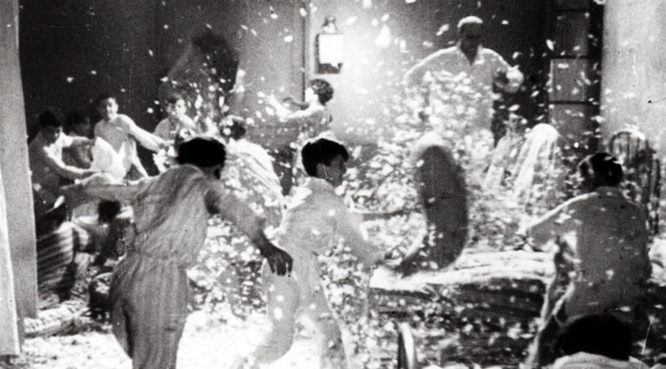
Short Film Saturday: Zéro de conduite (1933)

Jean Vigo is perhaps the most proportionally influential filmmaker of all-time based on his small body of work. His penultimate film, of only four, was the following short.

An essay on Criterion about it states a few things well right at the outset:

French sociologist Roger Caillois proposed that every form of human recreation could be placed somewhere on a continuum between two terms: ludus and paidia. The first of these represents games defined almost wholly by their rule systems. Crossword puzzles and chess might lie near the ludic extreme. Paidia, by contrast, is sheer tumult, a realm of spontaneous roles and invention and a ceaseless overturning of bodies. If one were to assign an emblematic sound to paidia, it could only be that which opens Zéro de conduite (1933): the screams of kids at recess, a mass of voices expressing nothing beyond the creative energies of play in and for itself.

As Kite goes on to discuss some of the design and the kismet behind this film’s design one can see by choice and chance a precursor to the Nouvelle Vague due to some of the naturalistic filmmaking choices. The not immediately tangible plot, a challenge to conventional structure and the rebellious, dangerous nature of the tale itself all play into that. By AMPAS standards this film is actually a feature, but few titles ever fit into this mid-range and being about half as long as most features I think it applies as a short and is fairly important one.

To view this film please visit this link.

Thankful for World Cinema 2013 Introduction

I’ve done this theme a few times. I started it on The Site That Must Not Be Named, but my focus was too narrow (The first year it was just Old World, tying it to the upcoming Thanksgiving holiday).

The idea as of last year was to take some days to focus specific on World Cinema. World meaning made outside the US, and as of this year not always necessarily in a language other than English). Now, I write about and seek out foreign films often. I am a dual-citizen of the US and Brazil. I have grown and have found many different cinemas I connect with globally, as each nation does have its own voices aside from just genre cinema, but they also bring their own voice to genres.

In the forthcoming posts I seek not only to hopefully reveal under-viewed films to people, both through new posts and those already done, but also to find new titles myself.

Much like with the 61 Days of Halloween, this is a short focus on something that is usually a style of film that attracts me anyway. If you look at the BAM Awards’ Best Picture, Director, Actor, Actress, Supporting Actor, Supporting Actress and Screenplay awards have all been awarded to films made outside the US. It’s just a time to focus on and give special attention to these films here.

In the coming days and weeks I will also continue to add pages to the menu bar on this site and there you will find links to posts from prior years as well.

Enjoy!

Broken DVD Four-Pack Giveaway: Courtesy of Film Movement

On November 5th one of the best films of the year to date, Broken, will be released on DVD. As I have frequently said, I never tire throughout the year (and sometimes beyond that year) of championing a great film and this is one. Another thing I’ve frequently mentioned is my fondness for Film Movement (as well as their Film of the Month Club).

In light of the aforementioned facts, the kind folks at Film Movement have made available a copy of Broken for a giveaway run in conjunction with The Movie Rat. So now you have a chance to heed my advice to “watch Broken, it is an absolutely exquisite piece of cinema.”

But, wait, there’s more! Film Movement has also offered three other foreign-produced films (Befitting the current Thankful for World Cinema theme), to join Broken making an awesome prize package and a perfect introduction to their films.

If you win you will also get Clandestine Childhood, Shun Li and the Poet and Aliyah.

This giveaway is open to entrants from the US & Canada Only.

To enter:

1. Follow this link: http://www.filmmovement.com/email-join/facebook/

2. Sign up for the Film Movement newsletter.

That is all. Easy, yes?

Only those signing up between now and 11/8 will be eligible for the giveaway, so get crackin’!

This giveaway has now ended.

61 Days of Halloween: Haunter (2013)

Introduction

For the concept of 61 Days of Halloween, as well as a list of previously featured titles, please go here.

Haunter (2013)

The synopsis of Haunter gives you facts that lead you quite a bit of the way into the story:

The ghost of a teenager who died years ago reaches out to the land of the living in order to save someone from suffering her same fate.

Given that as a starting point one would hope that there are layers to this tale, and those who share that hope will not walk away from this film disappointed. For while the comparisons that Haunter has drawn to both The Sixth Sense and Groundhog Day are not unwarranted, there is more at play here and a very intriguing myth being built after all.

The film’s cinematography has great panache and sets the tone throughout, the camera wanders through the world of the story and takes different vantage points on its early-stage déjà vu scenes.

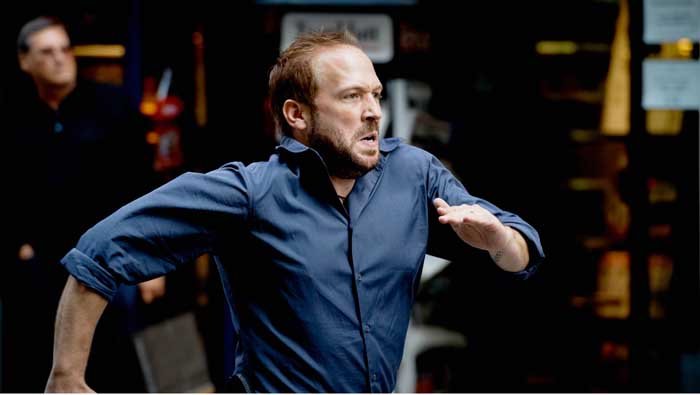
For each of the characters within the story, be they live or be they dead, there is a moment of discovery. Our protagonist Lisa (Extremely well portrayed by Abigail Breslin) is the first to have such a discovery, and, as such, it is through her eyes that we experience this film and start to uncoil the mysteries therein.

One such mystery is what the exact nature of The Pale Man (Chillingly rendered by Stephen McHattie) be he natural or supernatural. As the myth starts to build and the pieces start to fall in place there are surprises in store and there are very intricately transgressed borders between the states of being. The way this handled allows there to continue to be a sense of mystery to the film.

While there is a slight leaden quality to pace towards the tale end of Act II, the conclusion is ultimately quite satisfying as the investment we as an audience have been asked to make in these characters is a fruitful one. Their fates are something that become a concern, and as those who have passed come to the realization that they are past more details fall into place.

Furthermore, the family dynamics, the fulcrum of the dramatic element of the tale changes and we see why. These moderations, these tones and notes would not hit home as well without contributions from the whole cast be it Peter Outerbridge, who has to be a source of empathy and fear, grief-stricken and terrifying; Sarah Manninen whom runs the gamut from TV playing a role to scared victim to knowing realist; or Peter Da Cunha (whose specific echo is one of the key indicators of the film) who plays a soft-spoken, sunny child who is resigned to a cautious fear, and also ultimately terrified.

Despite whatever superficial similarities this film bears to other more famous works, and I thought of a few others myself, the narrative fabric this film weaves is wholly its one and a great one to look at and get lost in. This is a fantastic horror film that melds a few different subgrenre approaches and should be one you look out for whenever you need another horror fix.

8/10

61 Days of Halloween: The Curse of the Fly (1965)

Introduction

For an introduction to the concept of 61 Days of Halloween, as well as a list of previously featured titles, please go here.

The Curse of the Fly (1965)

One thing that becomes clear when your are viewing a series of films in hindsight is when the death knell rang. When you’re in the midst of things occurring extemporaneously, it can be easy to be hopeful and want a course correction that may not necessarily be better than just abandoning ship.

Now, a lay-off in a series is not always a bad thing. A contemporary example would be that the Paranormal Activity series just skipped its first year since the series debuted, and will return in the early part of 2014. However, with the prior film (still being wildly successful in my mind) being six years prior, the changing climate of the nation as the ’60s progressed; a tale like The Fly had to change and wasn’t necessarily going to work.

So in this The Curse of the Fly there is no fly so to speak, the curse is a euphemism. However, the decks are also virtually scrubbed of any connections to the prior to films only bringing in a very old Inspector Charas to fill in blanks. However, the characters who are brought in don’t contribute in a great way: the colleagues in London add a conscience, the servants in the Delambre add an unfortunate racial stereotype (as well as whitewashing) that seems extraneous even for that kind of thing; the love interest distracts from building the new Delambre generation. A generation that’s building the myth of the series by not being as far from the first incident as one may think at first. Or is it? That was murky too.

All this splits focus, however, there’s also the fact that the fly element is removed and what the threat is, is deformity as attempts of transatlantic teleportation are seriously disfiguring test subjects.

There’s less spectacle, less character, less drama, less suspense, less everything in this film such that the end, not only of this installment, but of the original series is a sweet relief. The mythology of this series is great and could easily be picked up and updated again, maybe even in a truly Quebecois version, but sadly this is an unfortunate final chapter to the original series.