Royalty on Film Blogathon – The Chronicle of Narnia: The Lion, the Witch and the Wardrobe (2005)

Introduction

When I first read about the Royalty on Film Blogathon, one film jumped out at me immediately as the topic I should write about. Now, having selected The Chronicles of Narnia: The Lion, the Witch and the Wardrobe as Best Picture at the BAM Awards I have written about it. However, a specific piece on the royalty featured within this film, and the interesting narrative and philosophical devices they are employed in was something I couldn’t pass up.

Method

Chronicles-of-Narnia-cover

The approach I wanted to take to this topic, because I love this story so, was to revisit the story in three different forms. Aside from a look at the film itself I also wanted to examine the two translations that any novel takes before reaching the big screen (novel to screenplay and screenplay to finished film). This is not a fanboy needing a talking down but rather a comparative analysis.

The Lion, the Witch and the Wardrobe and Its Royals
Background2

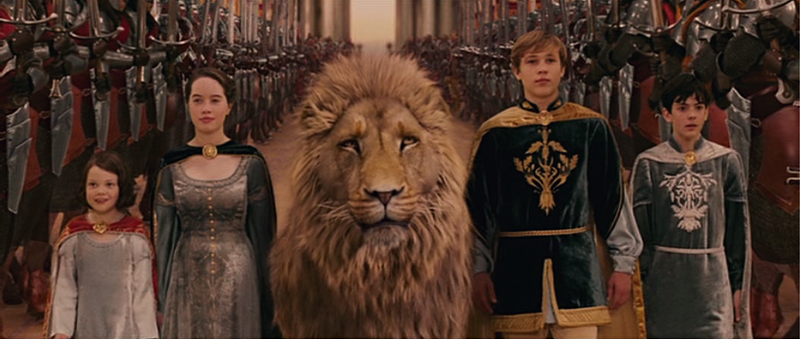
Now, one thing all versions of this particular installment of The Chronicles are focused on, is the power struggle, in external terms, of the chosen monarchs of this land (the Pevensies) and the presumptive tyrant (the White Witch), as well as the one between the White Witch and the Godhead of Narnia (Aslan).

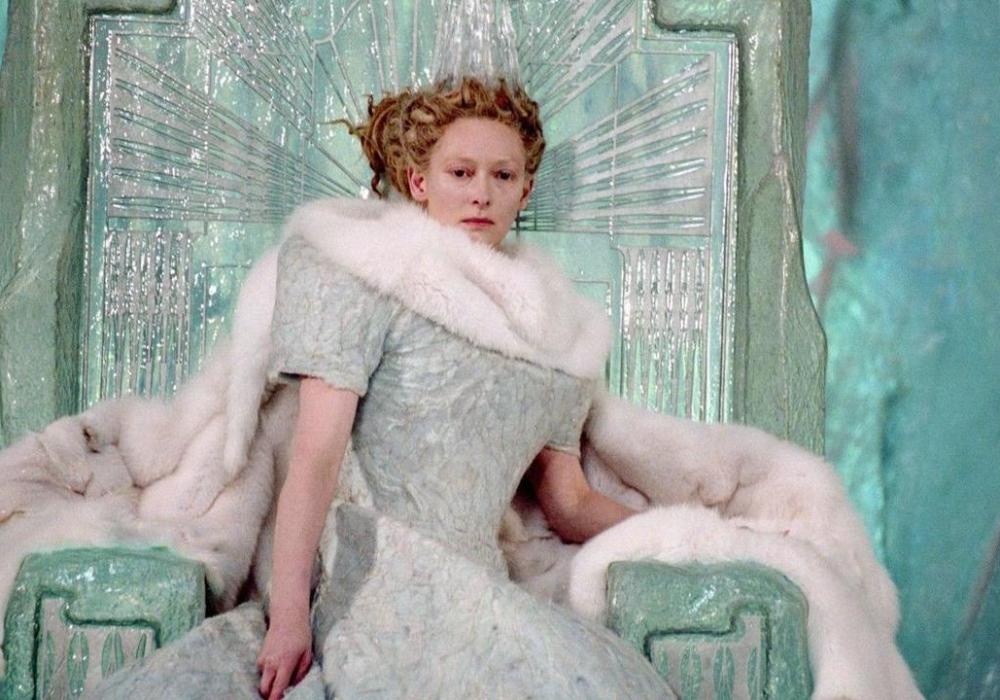
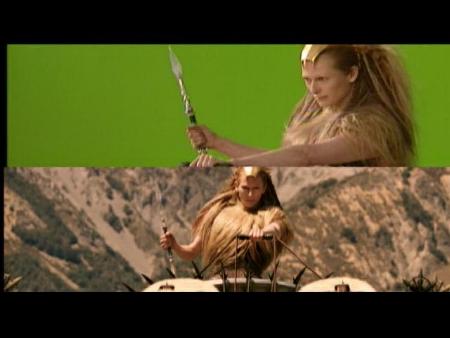
Jadis, The White Witch, Chatelain of Cair Paravel, Empress of the Lone Islands, Etc.
The Chronicles of Narnia: The Lion, the Witch and the Wardrobe (2005, Disney)

The bones both to the story and the arc of the White Witch’s persona are not only well established in the book but they are very well adhered to by the screenplay. She: hired Tumnus as a spy, talks to Edmund upon his arrival, harps on the Four Monarchs prophecy, per Lucy and others she has “no right to be queen,” levies constant threats in true authoritarian style, establishes the Secret Police, and seeks to consolidate her power at all costs.

The bits of detail in the book are left out of the film add a bit more depth but do not really rob the film of much: on occasion she is called Lilith, after “Adam’s first wife”; she is a Half-Jinn, Half-Giantess; and was the Emperor’s (akin to the Father in the Christian trinity) hangman.

Edmund Pevensie, King Edmund the Just
The Chronicles of Narnia: The Lion, The Witch and the Wardrobe (2005, Disney)

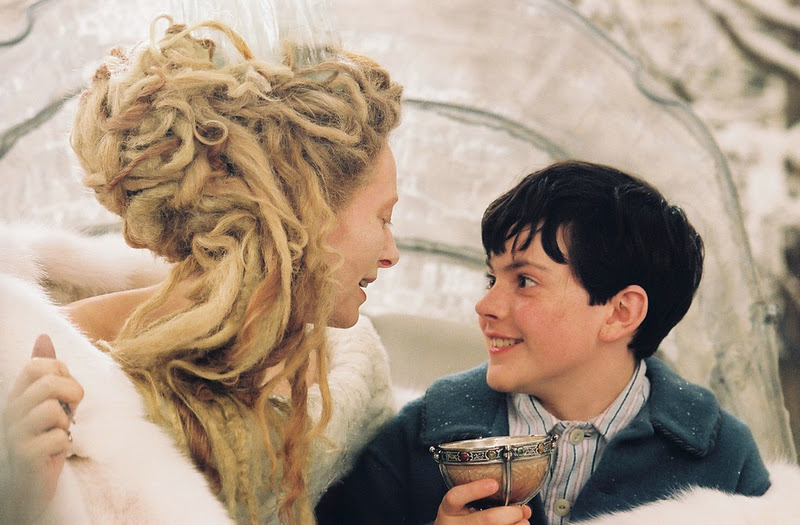
One thing this particular filmed version of the story gets absolutely right beyond a shadow of a doubt is the complexity and conflict of Edmund’s chareacter. Oversimplification or piling on of him for his mistakes, as I witnessed in a stage version due to either the bastardized script or the unfaithful direction of the theatre company performing it; is not only a wrongful interpretation but angers me to no end.

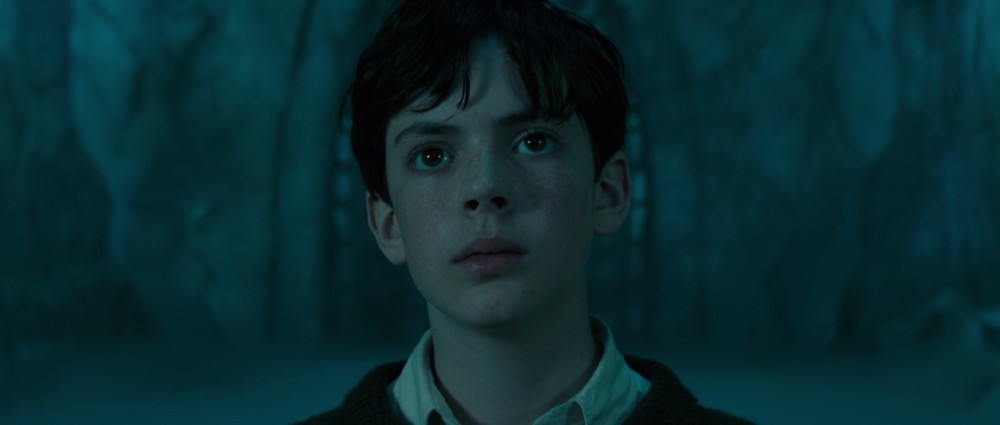
In the novel we get insights like “Edmund did not like this arrangement at all but dared not disobey” and that “Deep down inside him he really knew that the white witch was bad and cruel.” However, simple visual literacy, as well as the adept personification by Skandar Keynes (which earned him a BAM Award Nomination as Best Actor also) make it quite clear that that doubt and conflict exist within him early on despite his regrettable decisions. In the book it’s stated in black and white he realizes he was lied to and regrets his decision. In the film there is less verbal fat and more visual fodder.

What the book includes for all the children are some of the things they either dreamed of before assuming the throne or did once they took it. Edmund dreamed of roads he’d build, a private cinema, giving the beavers lesser legal status, getting revenge, and building railways. It also describes his reign as one where he proves to be “great in council and judgment” and that he is “graver and quieter” than his siblings as he grows, no doubt influenced by these formative experiences upon coming to Narnia.
The-Chronicles-of-Narnia-The-Lion-The-Witch-The-Wardrobe-the-chronicles-of-narnia-26557043-1920-816

Now, the films spend even less time with the children being actually crowned monarchs than the book does, however, what it does do to compensate for that fact is have loyalists refer to them as “King” or “Queen” or “Your Majesties” and also show where these Sons of Adam and Daughters of Eve act worthy of the thrones they will possess that are their right.

Edmund later leads by example, feels pity for Tumnus who he lead to his slaughter, is condemned a traitor and is to be sacrificed for penance and never pleads for his life. His actions in battle are not only part of his redemption but Peter vouches for him. He is also spared of details of the deal the White Witch and Aslan struck. All of this is reflected in the film.

He comes a long way, the longest way of all, from the young naïf swayed merely by offers of endless Turkish Delight.
Aslan
Aslan_res-e1325267362299

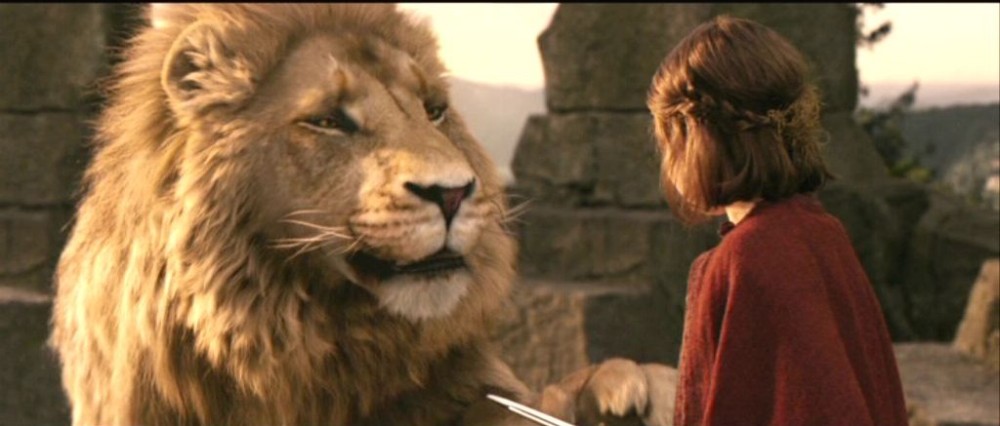
Being the deity of this world is frequently referred to as a king as well much in keeping with the Judeo-Christian tradition. He is touted as the rightful king, and in an example of terrestrial kingliness he holds private council with both the White Witch and Edmund (after his rescue). The film wisely follows the books example of having these conversations occur off (screen/page). We are witness merely to the aftermath and it adds a bit of mystery to the proceedings. His willingness to act as a sacrifice and also to want to spare Susan and Lucy the sight of his death but willing to accept their company for the journey is in essence a service a king would provide his subjects.

Lucy, the Valiant and Susan, the Gentle
171557_1232357045056_full

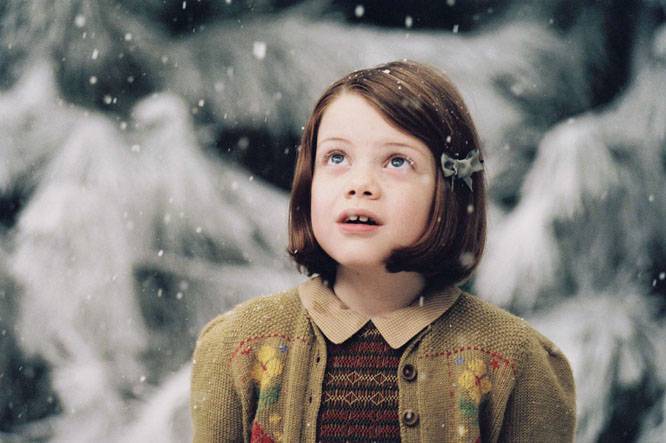
The evidence in the screenplay of the children working into their roles as monarchs is evidenced on the page as well. In one of the earlier drafts when the film version was still referred to as The Hundred Year Winter, Peter is referred to as nodding in “kingly” fashion in a descriptive the precedes the coronation. On page 68 of the script there is use of “majesties” in plural.

This is needed in the film as in the book their coronation is toward the end (pp.193, per the omnibus pagination), as are honors bestowed upon their friends (p. 194). Lewis concludes that “They governed Narnia well and long and happy was their reign” and “All foul brood was stamped out.” Furthermore, they “…made good on laws and kept the peace and saved good trees from being unnecessarily cut down and saved young dwarfs and young satyrs from being sent to school, and generally stopped busybodies and interferers and encouraged people who wanted to live and let live.”
0874eb7e635fe457545a8270cfde25f6

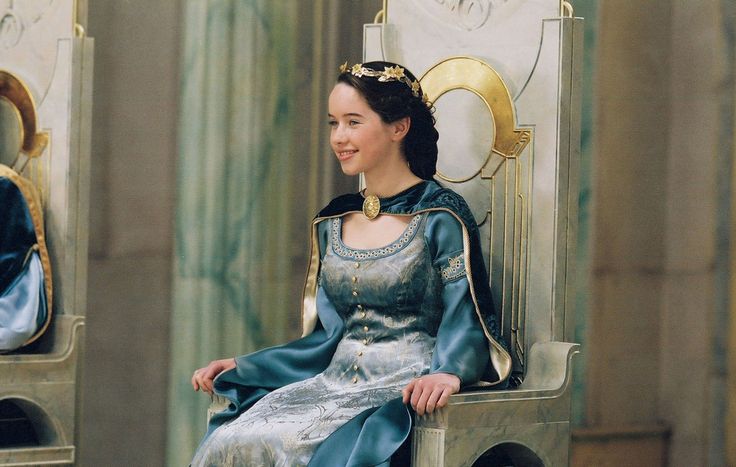
Over the years they earned their nicknames. In the films Aslan bestows the monikers at coronation. King Peter the Magnificent, Queen Susan the Gentle, Queen Lucy the Valiant. In the film, they had to earn the names along the course of the film such that Aslan could bestow them upon them. Also, having them be assigned territories of Narnia to take special care of to shutdown the nitpicker wondering why one kingdom needs four monarchs.

Peter’s nickname is best exemplified by his leadership leading up to and during the battle. Edmund’s name of Just is perhaps the most fitting for it is through being unjust himself to start that he starts to learn firsthand what is right and proper in given situations. Lucy’s valiance is on display from the start as she never wavers in her certitude that the quest to save Tumnus, and thus, Narnia, is right. Susan’s gentility is one you have to dig for. However, its her protectiveness of her siblings, wanting to see them out of harm’s way, her needing to be coaxed into battle, and trying to avoid the conflict if it an be avoided, is where it is seen most readily.

Escalation
The-Chronicles-of-Narnia-The-Lion-The-Witch-The-Wardrobe-the-chronicles-of-narnia-26561655-1920-816

In the script, and then in the film, you can see how certain aspects become emphasized. In the film there is more emphasis on the battle, which is dealt with in post-mortem in the book. In the script the White Witch more convincingly sways Edmund here than in the book because the language is simplified and less on the head. Tilda’s interpretation of the White Witch then takes the character to the next level.

In the book there is no incidence of Edmund and Tumnus in cells next to one another. This triangulation wherein the White Witch plays Tumnus off Edmund, exagerrating “He traded you in for sweets,” truly allows for additional depth for all character involved: Tumnus suffers further, Edmund experiencing this and plotting his escape aid him redemption, and the Witch is further vilified in cinematic terms.
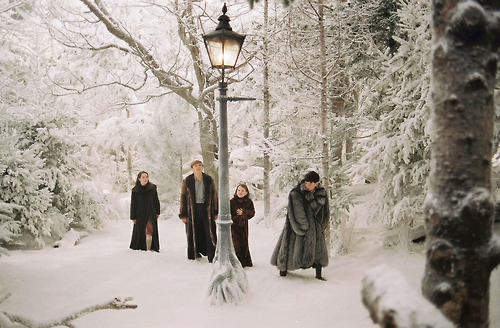
The Chronicles of Narnia: The Lion, The Witch and the Wardrobe (2005, Disney)

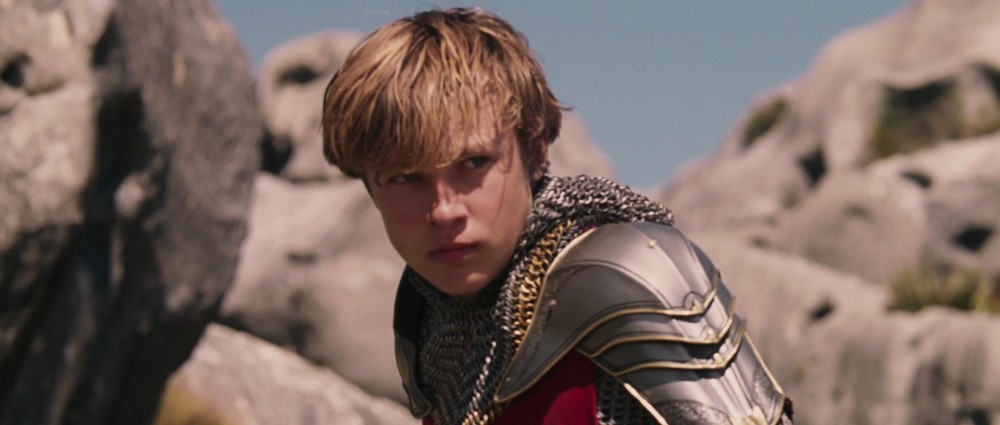
As they prepare for war, Edmund really comes full circle fully committing to a battle he knows he must participate in. The emphasis of screentime spent on their training adds good bonding time for the siblings.

Susan asks: “Edmund already nearly lost his life! What are we supposed to do?”
Edmund responds: “Whatever we can.”

Conclusion
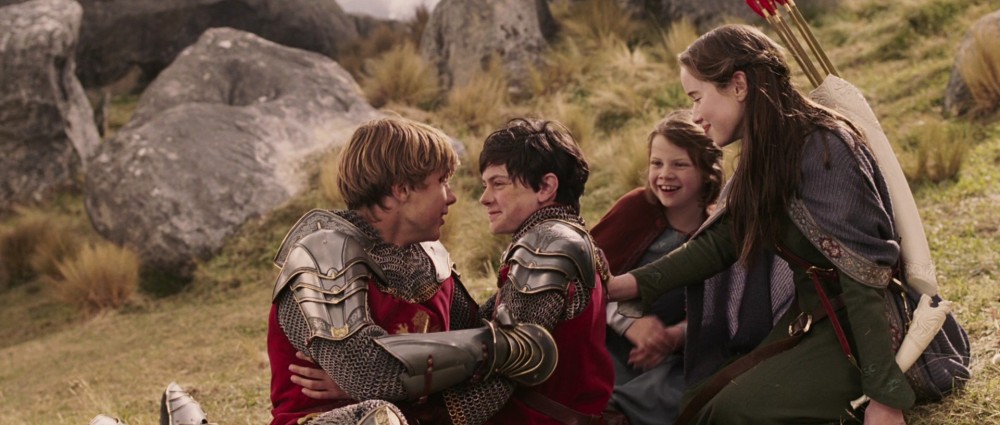
the-chronicles-of-narnia-the-lion-the-witch-the-wardrobe-the-chronicles-of-narnia-26562156-1920-816

Yes, the White Witch through being the antagonist and the reigning monarch, justly or not, takes the led in this film. However, as magnetic and magnificent as Swinton is; he desires and actions are all highly logical and compelling. Having those who are prophesied to inherit a throne slowly travel from a feeling of unworthiness to a desire for and a deserving of that seat is a more compelling journey. Furthermore, the return of a God-king to a land and an ousting of the evil ruler is also compelling. There are few characters in said books that are commoners at the end, but those who bring us into the story, those we travel with are those who will assume the thrones and those we follow. Aslan’s showing favor to the Pevensies lends truth of being anointed by God to this mythic landscape and provides the perfect counterbalance in this story.

The Lion, the Witch and the Wardrobe is nearly flawless tale, and a main reason for this is the unique looks at regality it affords us.
Athletes in Film Blogathon: Amazing Grace and Chuck (1987)

Introduction

When first learning of the Athletes in Films Blogathon, there were some obvious choices I could make. However, having just written about Space Jam, and not holding in it in as high esteem as some in my generation and younger, the only clear choice left for me was to write about Amazing Grace and Chuck yet again. Though having written on it extensively as part of a larger piece, I didn’t focus too much on the professional athlete involved in a key role. Therefore, I will do so here.

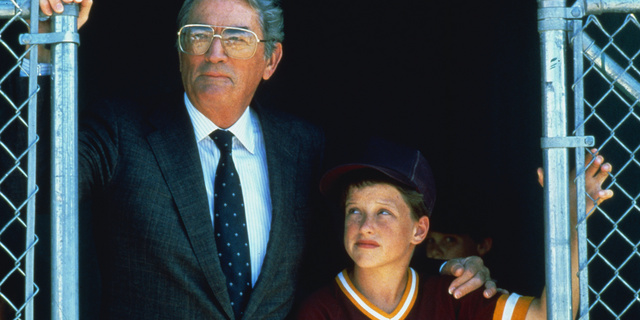
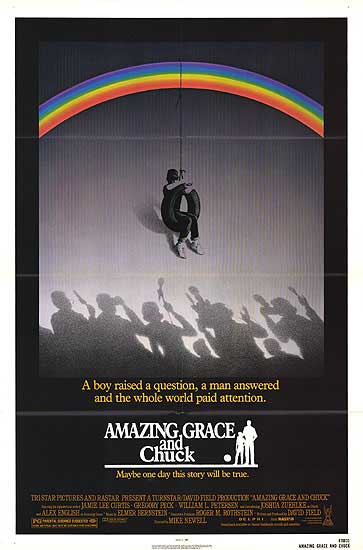
Amazing Grace and Chuck (1987)

Amazing Grace and Chuck (1987, TriStar Pictures)

This is a film in which:

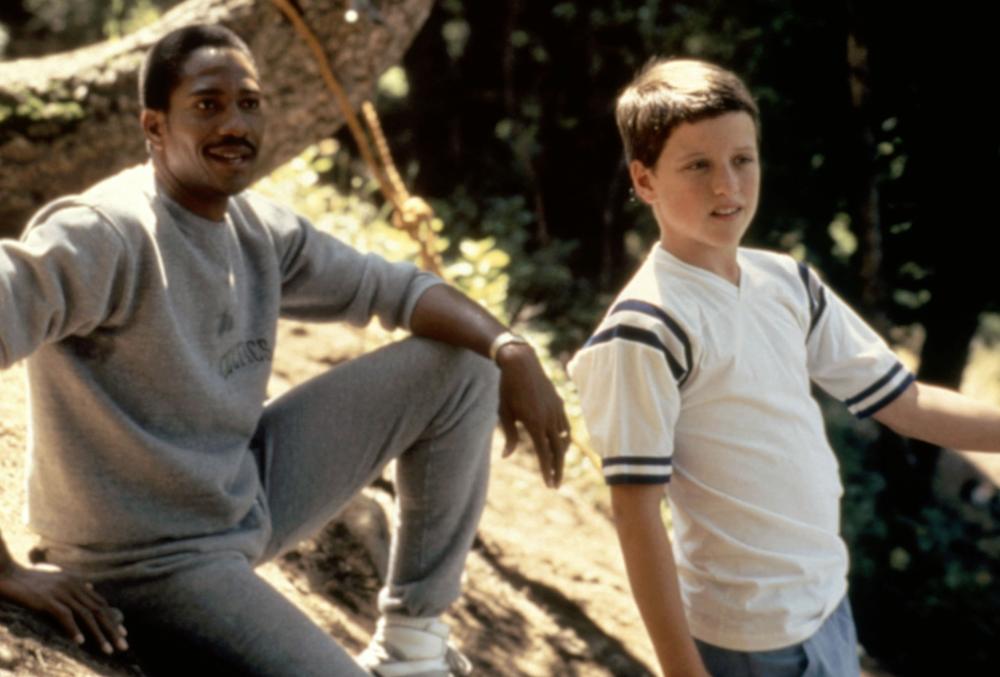
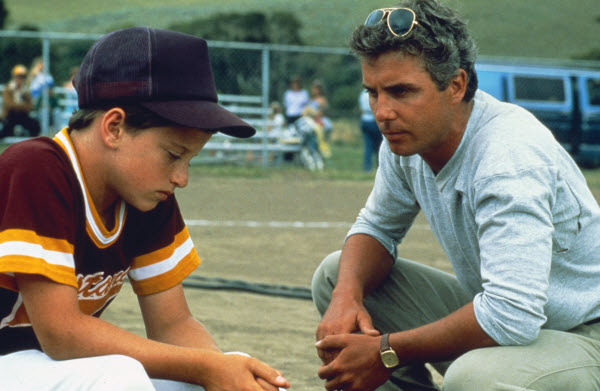
A little league player named Chuck refuses to ever pitch again until nuclear weapons are disarmed. Basketball star “Amazing Grace” Smith follows the boy’s example, and starts a trend.

The athlete in question in this film is:

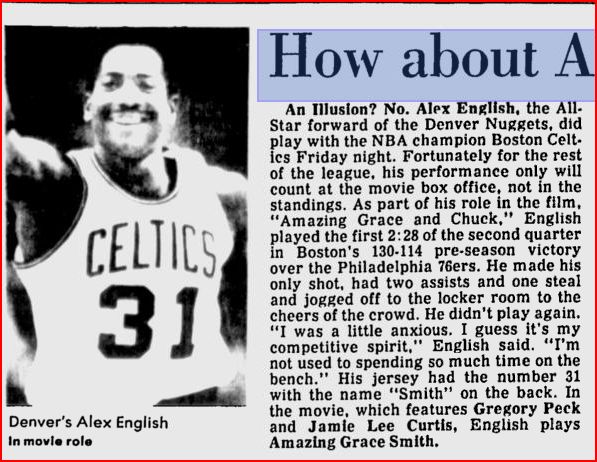
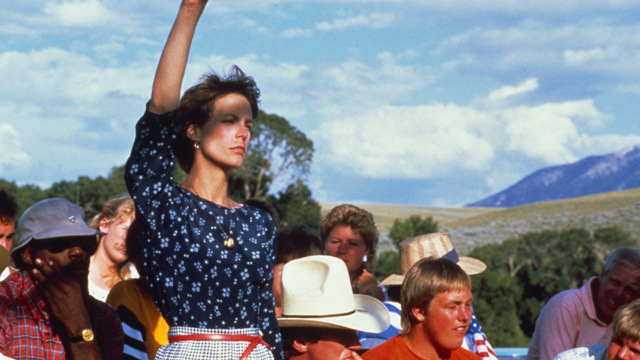
…played by Alex English who was a player for the Denver Nuggets at the time this film was produced. We see him playing, hit a three-point shot and give his famous three fingers in the air gesture, after the game his agent/best friend, Lynn (Jaime Lee Curtis) reads him an article about Chuck and the wheels start spinning.

With the memory of his wife and daughter gnawing at his mind, Amazing decides to quit basketball and do like Chuck did, an official protest has begun. At one point someone asks Amazing “Do you really think you’re going to bring an end to nuclear weapons?” Amazing turns to him and says “I don’t know but wouldn’t it be nice.” This soon starts a snowball effect and so many athletes join the cause that professional sports are crippled and the movement spreads worldwide.

Alex English Celtics

English (pictured) played a preseason game with the Boston Celtics that was used as his game footage for the film. Having an active player play an exhibition with a team he was not contracted by is an impressive feat that Columbia/Tri-Star and the production team pulled off with the NBA’s cooperation.

The notion of athletes as activists does have quite a few precedents in sports. Here are some examples:

  • Muhammad Ali refuses induction in Vietnam.
  • “Republicans buy sneakers too.” Michael Jordan on his sociopolitical neutrality as a public speaker.
  • 1980s a decade of sports as politics: consecutive Summer Olympic boycotts.
  • First Post-9/11 games in New York.
  • “I can’t breathe” shirts in NFL.
  • Athletes for Trump.

Alex English

MSDAMGR EC020

This film marked Alex English’s debut as an actor. Later he went on to play Mayor Wade on Midnight Caller, then the coach of the Cleveland Cavaliers in the Whoopi Goldberg vehicle Eddie. The following year (1997) he was in The Definite Maybe as “The Premiere.” It was his first big screen role as a non-athlete and his second time playing some sort of leader. Despite an intermittent, free of too-much fanfare acting career, he did develop a second type aside from the most obvious one based on his first career. His most recent role was in Lumera, which was the feature film debut of his son writer/director Alexander English, Jr. who sure enough got bit by the bug during dad’s forays into the entertainment industry.

Critical Reception

Amazing Grace and Chuck (1987, TriStar Pictures)

With regards the reaction to the movie, it was critically panned. Variety noted that “Amazing Grace and Chuck is destined to go down in history as the camp classic of the anti-nuke genre. As amazingly bad as it is audacious, film will live forever in the hearts of connoisseurs of Hollywood’s most memorably outrageous moments.”

Prescient words as one of my viewings of this film was an unexpected premiere on TCM not too long ago, and Warner Archive recently rescued this film and has made it available on DVD at long last I could move on from my recorded off TV version.

However, not all the reviews were as harsh as Variety‘s. Janet Maslin of The New York Times at least had gentle praise for the performers stating that “Mr. Zuehlke, who is so precocious and somber, and Mr. English, who is nothing if not sincere…” which he most certainly is. Director Mike Newell chose English well. Newell has had tremendous results from young actors in his charge. A professional athlete like a child has less craft than an experienced, trained actor — so much falls to the director to cast well, finding the right persona, and coaxing as much natural response as his trust engenders from his actor.

Amazing Grace and Chuck (1987, TriStar Pictures)

If limiting the casting options for Amazing Grace to contemporary basketball players of the late-‘80s English stands out as the obvious pick: as Michael Jordan would later show in Space Jam he was a bit stiff performance-wise and a bit too cool in persona to pull it off. Charles Barkley would be more suited in a comedy and would not bring the necessary gravitas to the film. Magic Johnson was too Hollywood to not be a distraction in this role. English fits.

Newell went on to imply that the audaciousness — and the Amazing Grace quote — are the very point of the film that must be taken into account when appraising its virtues and contrasting them to its deficits:

“I hope this film will leave audiences energized and with a great surge of hope. I hope it will be a reminder that the individual can make a difference and that humanity is capable of following its best instincts.”

Conclusion

Amazing Grace and Chuck (1987, TriStar Pictures)

In my initial piece I concluded by saying:

This is a film that is idealist and dares to dream. It takes the fears of Three Mile Island and Chernobyl and combines them with the hope of Glasnost and presented us with a fantasy. The poster for this film should tell you it’s a fantasy. And it’s one that only could have come out of the 80s, this film literally drips 80s. In the 1990s, and especially in the present, disarmament was the furthest thing from anyone’s mind. It’s a great film about one person can make a difference and a film with a message.

This paired with Newell’s notion of the certitude I have that English was likely the best possible choice from a shallow talent pool of professional basketball acting talent. A humility, Grace (to match the fictional nickname), believable idealism, and the ability to quietly inspire followers was a necessity for this concept to have a chance and its what Alex English could bring to the table naturally.

O Canada Blogathon: Pit Pony (1997)

Introduction

This is my second contribution to the O Canada Blogathon hosted by Speakeasy and Silver Screenings.
Synopsis

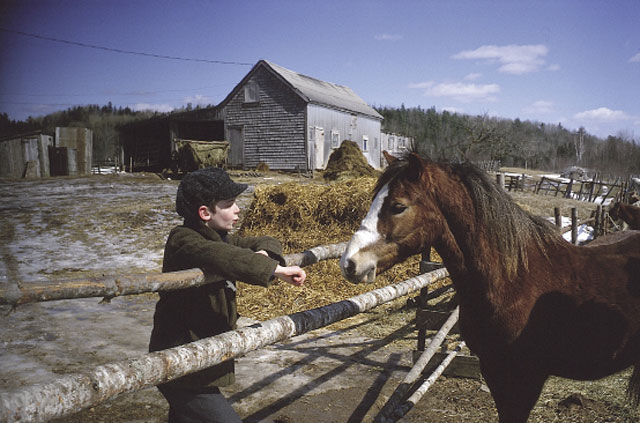
Pit-Pony-film-images-77b32252-6d3f-4bec-9dd7-ea85c7eb223

Pit Pony (1997)

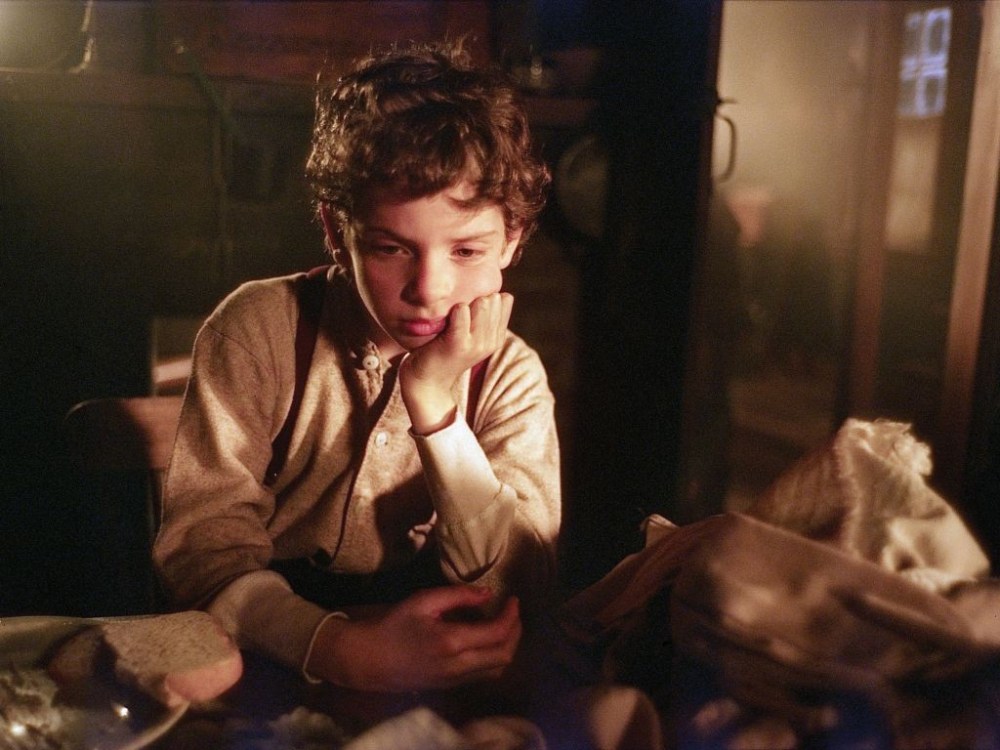
Glace Bay, Nova Scotia Canada, 1901. Willie MacLean is a 10-year-old boy with a love for horses and liking to school to cape the difficult times his family has. Willie’s stern, but benevolent father is a coal miner in a local mine along with his older brother John. But when Willie’s father is injured and John is killed in an accident at the mine, Willie is forced to step into his brother’s shoes to support his older sister Nellie, and two younger sisters until their father recovers. Willie soon finds work at the mine lonely (aka: the pit) and unfriendly in which he forms a bond with a pit pony horse in order to make it though each day.

Background

51c3bfoiPyL._SX322_BO1,204,203,200_

I wrote about this property for my Cinematic Trip Around Canada:

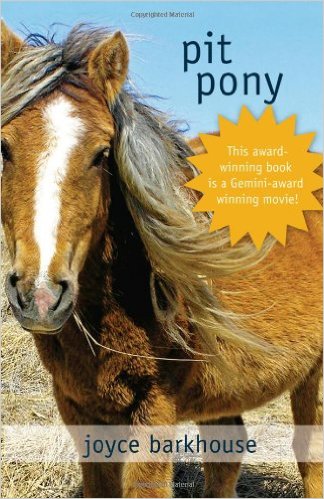
Pit Pony is one of those properties that you come across by chance. I first became familiar with it due to the television series that expanded upon the story, which bounced around several different US broadcasters. It’s one of the few shows I’ve seen in its entirety on multiple occasions. It reaffirms my belief that, although rarely implemented, the half-hour drama, especially when shot single-camera, is the most effective TV format. You have in this series palpable drama, romance, all in a turn of the century mining town so there’s a Dickensian struggle to is also.

Eventually, the TV show lead me to seek out the novel upon which it was based, and also the feature film that kickstarted the series. The film is essentially very faithful to the book and the series picks up from there spinning out new tales. In some ways the film isn’t as cinematic as the show is at its best. However, the emotional truth is there owing mostly to the fact that is shares many of the same actors. The various incarnations of the story but mainly the series is why Nova Scotia is near the top of my list of places to go; those vistas need to be seen in person.

On the subject of the book, I enjoyed it a great deal and may share it with my own child.

Movie/Show Ties and Differences

li-pit-pony-2

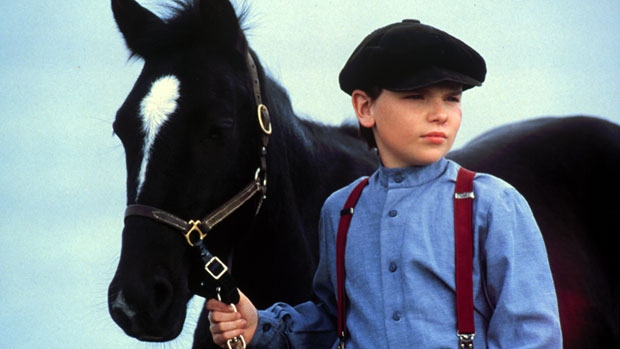
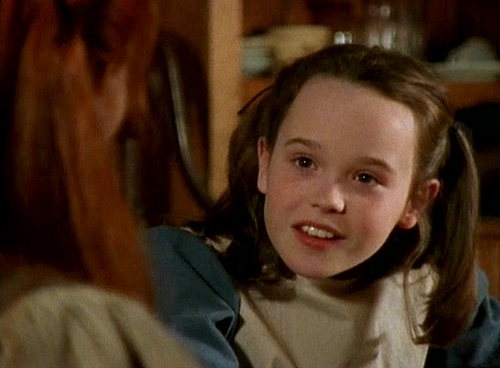
There are far more similarities in the film and TV series than there are differences. From the top Cochran Productions to the cast featuring a young Ellen Page (credited as Ellen Philpotts-Page), to Heather Conkie writing the script to Eric Till directing, then helming five episodes. The most notable differences are Ben Rose-Davis as Willie, not Alex Wrathell. Gabriel Hogan as Ned Hall, not Shaun Smyth.

Inherent Conflicts

1982425,5r_xmXX4krQKoVZqnDsjroGIrnm5p1+bJ7HeG6Sv2u62x1pEi68ZP6ykQPq_5ra3crfTSJG1TkgOhTnYFZavhw==

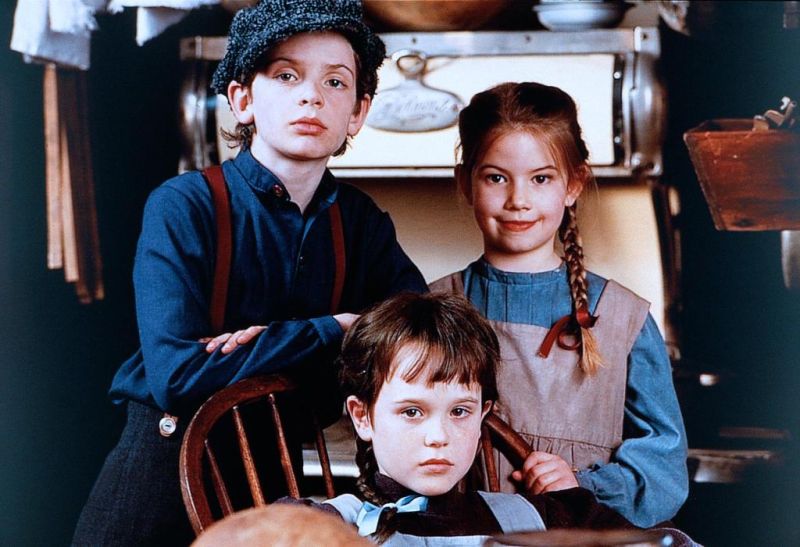
Within the framework of this tale there are a lot of inherent conflicts built in. Conflicts that can be examined in further detail and can fluctuate in importance. This is one of the strongest indicators of how strong it could be (and was) as a TV series. Among these struggles are:

  • Carving out a living in a mining town where the company controls your fate.
  • The clash of working class and educated.
  • Management vs. labor; strikes (here Ned’s past haunts him).
  • Coming-of-age.
  • The threat of disease, namely consumption.
  • The tug of an important industry that is unsafe.
  • Fear, best illustrated by the fact that the Ocean Deeps mines actually extend out under the Atlantic.
  • Rebelling against the family business.

Even the love interest subplot well folded in, as to get something he wants (driving lessons from Ned and a new position) Willie must put in a good word for Ned with Nellie.

Themes

600full-pit-pony-screenshot


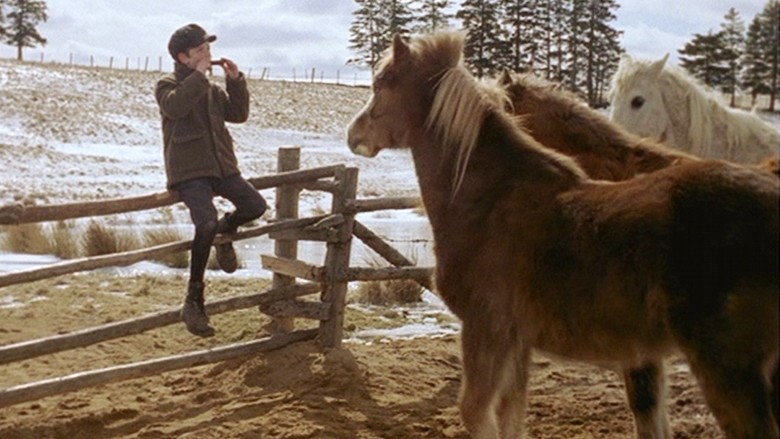
Just as the conflicts in the narrative are varied so are some of the themes ever present in this story and stories like it. The film seeks to free both a boy and a horse from the mine, so much so that the title could just as easily refer to boy or horse. There are losses of family members to deal with, and the ever-present danger. The earth is quite literally a player as the miners go deep beneath the ground being symbolically interred, and as Ned states; he wants to work above the ground not beneath it. The boy and his horse, as well as the threats to the horse are commonplace but combined with all these other factors and permutations it stands out as a unique layer.

Ending

113433_ori

This is the only part of this piece where I may have to warn you away with a spoiler alert. They’re vague but there. For the brave you may read on.

Many elements work in the climax’s favor:

  • It’s thought to be bad luck for a woman to be seen at mine, then Nellie comes to talk to Ned this occurs right before the climactic events.
  • A shot of rats running, which was foreshadowed as a sign of impeding trouble.
  • A growing flame, foreshadowed as how miners detected leaks; the alert whistle rings through town and silences every one.
  • Ned heroically goes after Willie.
  • Willie attempts to rescue his bully, Simon, and his horse, Gem.

The realizaton that nearly all is well is dramatically rendered also. The rescue scene is cutaway from so we wait with those worried, then there are shots of entrance pulley and rope; the survivors are in the last coal car that surfaces.

Nova Scotia

The mine collapse claims Willie’s horse, Gem, but one of the surprises, and an uplifting bittersweet note is that Gem, who was pregnant, delivered a foal. Whereas working the mine was the only way he could be with Gem as the horse was property of the mine, this foal was given to Willie as a gift/reward for his valor in rescuing Simon.

Further uplifting the conclusion is the return to health of Willie’s dad (not unlike in Flipper) there will be a change in the characters between the movie and the film, but this one is at least explained in the writing of the show). Lastly, and most importantly, it’s out of the mine and back to school for Willie, as his dad arranged to get him out while he finished his recovery at home.

The film ends on a gorgeous silhouette shot at magic hour. The 4:3 cinematography is good but the show, likely endowed with a bigger budget, had far more consistently brilliant imagery. At the very end are two title cards that drive home how commonplace the practice of employing minors in the mines was. In 1923 boys were no longer allowed in the pits. It is estimated that around 100,000 had worked in them in Canada to that point.

Conclusion

28697100lQk

It’s not just a primal gut reaction to the thought of working in subterranean climes, or the simpler, harder times that make something like Pit Pony a success. Even the film, as quickly and broadly as it paints its many conflicts and relationships, pulls on the heartstrings. The sense of place is evidenced not just by how lovingly Glace Bay is portrayed but also by the common ancestry (Scotland) many characters share that grounds it. It’s a provincial portrait, a subcultural one, a loving one, but like most specific tales there’s a universality within it that transcends borders and time periods.

Some stories in many versions are ones you cling to because they mean a great deal to you and they’re well known. Others you may cling to more tightly because they’re not as universally known and they seem to call out and speak to you in a unique and special way. Pit Pony is one of those stories I consider myself fortunate to have encountered. I know I’m not alone in admiring it, but I also know there aren’t throngs who know it, nor is it yet classic. However, that just makes me want to hold it more dear and share it with those who would hear.

O Canada! Blogathon – Kids in the Hall: Brain Candy

Introduction

This is a post that is part of the O Canada Blogathon hosted by Speakeasy and Silver Screenings. I will have another contribution to it soon!

Kids in the Hall: Brain Candy

This is one of those films that I’ve written about some in the past but never dedicated and entire post to it. So here it comes, and I discuss the plot in some detail, and if that matters to you even in a comedy, consider this your spoiler alert.

This is a film that in the retroactive days was added to the BAM Awards roster of nominees in 1996 for Best Original Screenplay.

I discussed it when I decided to take a Cinematic Trip Around Canada on Canada Day:

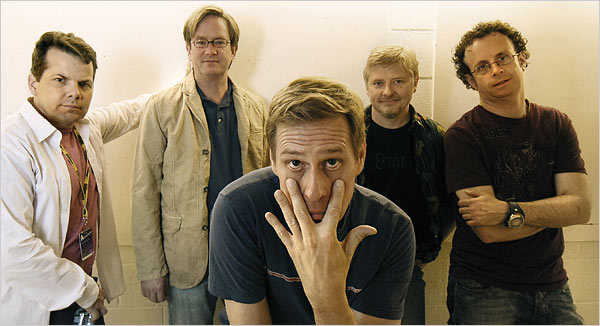
“I have said previously how underrated and amazing I think The Kids in The Hall: Brain Candy is. While it too falls into the vague category and does make a lot of commentary apropos of ‘90s America, it’s still The Kids in the Hall, in my head (where it’s 72 degrees all the time) this movie is in Canada.”

brain-candy-1

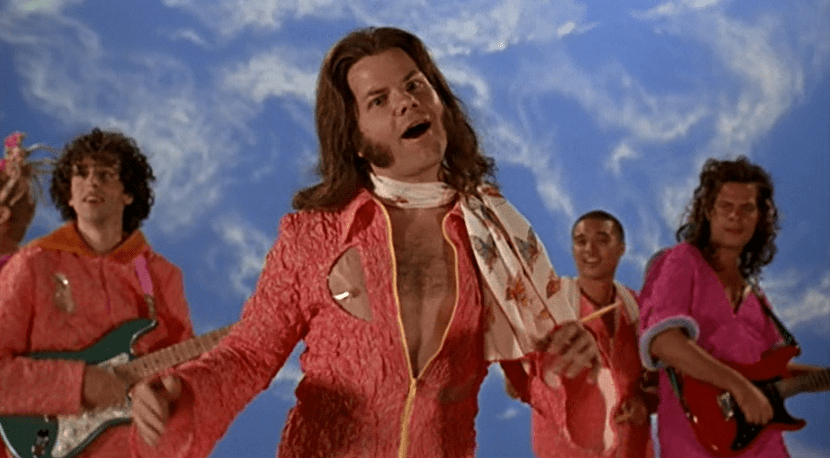
And this is true, within the framework of the narrative the film never explicitly states where its set. However, having the Queen of England (Scott Thompson’s version) make a cameo approving the drug is the only time that the film being set in Canada is hinted at. It is definitely shot there as the cities of Toronto and Mississauga are both thanked in the end credits.

Later, I went on to lament that this attempt at the end of the run of their show fell on its face and didn’t spawn other Kids in the Hall (KITH) films:

Why this film received such a cold shoulder and is largely overlooked is beyond me. The Kids in the Hall probably could’ve made a slew of films with a colon and their troupe’s effort following it in the title. They could’ve become the 90s incarnation of Monty Python. This film is hugely overlooked and vastly underrated. The franchise here is not the Brain Candy concept but rather the troupe’s brand of comedy transposed onto the big screen. Perhaps in the economically affluent, blasé, Generation X 90s a droll, snide stab at pharmaceutical companies and anti-depressants was not the way to go but it is hilarious. If you haven’t yet checked out their one and only feature length film to date please do. They still do shows and have appearances in Canada and each member does individual projects but perhaps the harsher times will reawaken the need for KITH as a unit.
MSDKIIN EC015

Lastly, while still on a high from The Avengers (the first one, obviously) I imagined other properties who could benefit from a similar build-up in phases. KITH was one of them:
I preface this choice by saying I adore Brain Candy, I know I’m in a minority when I say that but I do. However, that’s not to say I wouldn’t love to see a Kids in the Hall film where they play say 995 out of 1000 characters and bring in many of their famous characters. One needs to only see the rendition of a film not unlike Kiss of the Spider Woman that Bruno Puntz Jones (David Foley) and Francesca Fiore (Scott Thompson) do to know how cinematic they can be and how easily they can pull it off.
The film expectedly and boldly uses the kids as a number of characters each:

Dave Foley as Marv / Psychiatrist / New guy / Raymond Hurdicure;

Bruce McCulloch as Alice / Cisco / Grivo / Worm pill scientist / Cop #2 / Cancer boy / White-trash man;

Kevin McDonald as Dr. Chris Cooper / Doreen / Chris’ dad / Lacey;

Mark McKinney as Simon / Don Roritor / Cabbie / Gunther / Cop #1 / Nina Bedford / Melanie / Drill sergeant / White-trash woman;

and Scott Thompson as Baxter / Mrs. Hurdicure / Wally Terzinsky / Malek / Big Stummies scientist / The Queen / Raj / Clemptor.

brain-candy-6

I’ve completed the Megaset of the entire series since watching this film last (just to make sure I’d seen them all) and, thus, the characters from the show making an appearance are more noticeable now. They are the Cops, White-Trash Man and White-Trash Woman, The Queen, and Cancer Boy, and we’ll get to him more later. All the other characters listed above were creations made for the film, some are variations on types the Kids already played some were entirely new.

As per usual with the show as well all five kids are rarely in the same scene, on the odd occasion some of them even play against themselves. However, what makes this film work is far more than the KITH being up to their usual tricks.

The Kids in the Hall

Firstly, they found in this story of those developing a revolutionary anti-depressant and those who may or may not need to use it a way to tell a unified story and still keep a sketchy-feel to it. Therefore, it’s the perfect transitional project from one medium to another. Since then I met someone who happened to work on the film and they told me how frustrating it was to have to incessantly run off copies of new script pages due to frequent rewrites. I can see how this could be frustrating and how this could happen. You craft a sketch and if it works great, that character may recur, if it fails you can move on and hope it’s forgotten. Film, for those used to getting a reaction from a live audience is a tough medium, and this perfectionism is nothing less than I’d expect from these five.

The film works because in large part there are memorable, hilarious moments in all the various prongs this story tackles. However, as silly as it can be it is a moderately-positioned send up over-medication; the fine-line between wanting to be happy all the time and depression. It takes a hard, skeptical look at the pharmaceutical industry, as one of key plot points is that they are pushing for the drug to go non-prescription, that in the light of the comas the drug is inducing. It’s set up to go there as budget cuts in research pressure the lead character Chris, played by Kevin McDonald, to state the drug is ready when they clearly need to do more testing on it. His becoming a rock star for inventing the drug and the eventual, final coup of critique wherein the coma victims are venerated like deities.

Flashbacks and memory are two great motifs that can be uniquely used in film, if not unique to the medium itself. I usually respond very well to both and the film uses both prominently and perfectly as the drug seeks to have the depressed subject “lock on to their happiest memory chemically.” It’s a great set-up that makes for some hilarious (and depressing) happiest memories.

Some of the memorable moments in Brain Candy include but are not limited to:

“I’m Gay!”

“Happiness Pie”

I remember watching this with my uncle in Brazil and he cracked up at this part. Sadly, we’re not yet living in a world that will shot “Who cares?” at such an announcement.

“You are gay!”

“This urine is great!”

“A Pill That Gives Worms to Ex-Girlfriends”

“I wanna talk about drugs…”

The film tanking is actually unsurprising considering this article. As they were set to reunite for live shows (one of which I saw!) Bruce confirmed Paramount wanted Cancer Boy cut from the film, they wouldn’t budge, and Paramount retaliated by cutting their advertising budget, and many screens for the film vanished. Sadly, I get the reaction on both sides. The Cancer Boy scene is one I laugh at while shaking my head and saying “That’s so messed up,” but I still laugh. I get Paramount wanting it cut but am not sure I get them cutting off their nose to spite their face. The article also features a video Siskel and Ebert battling over the film, as per usual, I’m with Gene.

I also love some of the more hidden jokes in the film like Drug Variety magazine, cameos by Brendan Fraser, Adam Reid of You Can’t Do That On Television (“Chris Cooper signed my scar!”) and some others like Missus Hurdicure’s tea never stops falling or “Ne allez-vous pas au media,” and Don Roritor being essentially another rendition of Lorne Michaels.

Kids in the Hall: Brain Candy (1996, Paramount Pictures)

The three month time leap the film takes is risky but allows it to be a rise-to-and-fall-from-fame story as well for Cooper’s character and underlines how humanity often doesn’t listen to advice that’s given to us in out own best interest. The hidden coma victims, then the spin of comatose living communities is genius and fitting. As is when Roritor tries to certify Chris as being clinically depressed, thus, forcing him to take his own medication. Another gamble was that the film features a stinger, which was a bit more unusual in the mid-to-late ‘90s than it is now.

The Kids in the Hall: Brain Candy may not have been a hit even if Paramount dedicated more resources to it, maybe it was always destined to have a cult status because The Kids in the Hall aren’t for everyone. And that’s OK. If there’s one mistake this Canadian troupe never made it’s that of pandering. They do material they believe in and if you don’t like it, that’s fine, there are plenty of other safer, more boring acts out there. Always daring and avant guard, I’m grateful for this film maybe more so than the series as I’ve enjoyed it several times over.

I now leave you with some thoughts Dave Foley shares regarding the differences between the US and Canada. Per the set-up most of the Canadian facts are fabricated, as it’s KITH most are hilarious and it ends perfectly and with a point as Brain Candy does. It’s a great sketch and this is a great film by my favorite troupe.

Backstage Blogathon: Our Gang Follies of 1936 (1935)

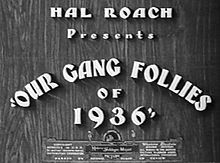
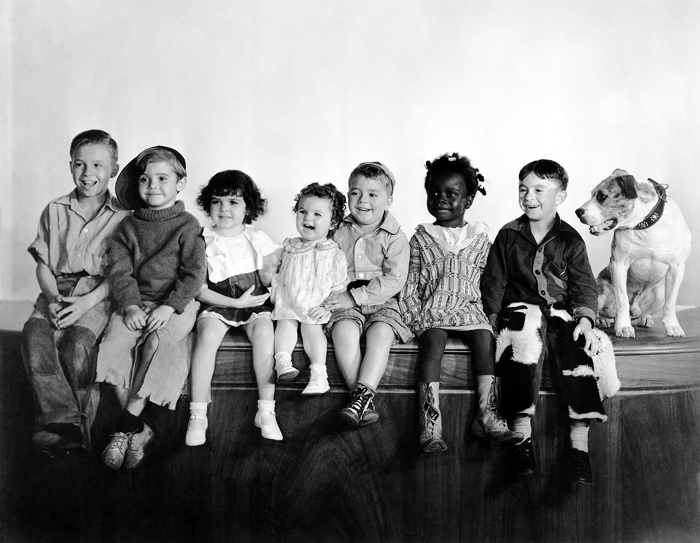
Our Gang Follies of 1936

When considering the Backstage Blogathon, as to whether or not to participate in the first place, there was very little to consider. As it comes to wanting to choose topics that allow me a more personal approach than most this theme does well.

Being the Backstage Blogathon it allows me to talk about my relationship with one of the performing arts. In this case, it is the theatre. This history is one with deep infatuations and long absences.

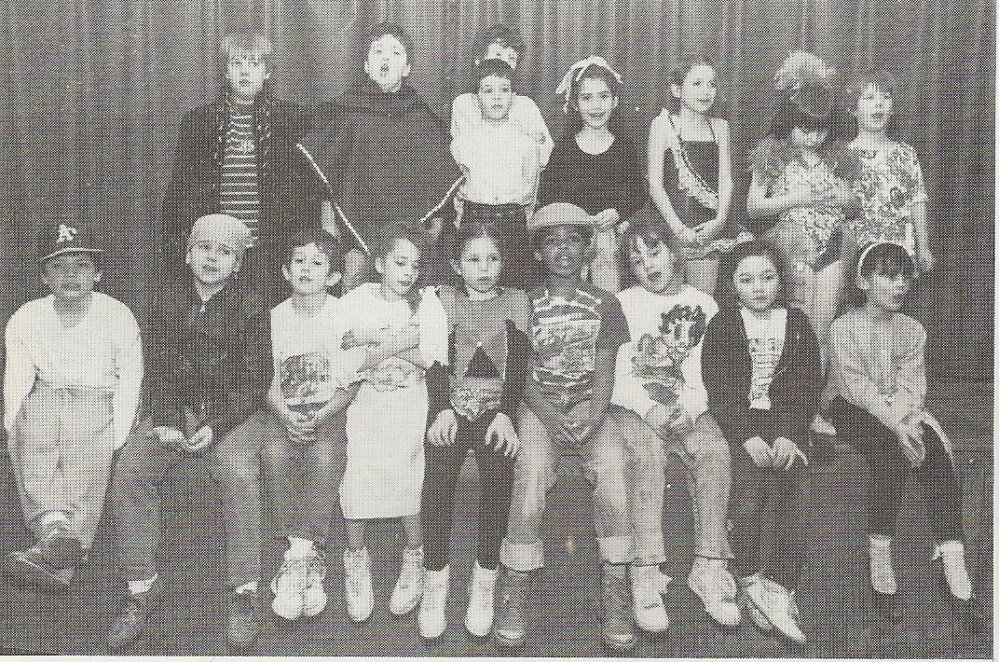
My first exposure to theatre really was in grade school, where, as most children have been, I was involved in two school plays. First, there was a version of Peter Pan, where despite my willingness and desire to be Pan, the older, predicted actor was chosen. Later, I was in something called The Wishing Well. Though I have since found cast pictures I have not as of yet tracked down which play this is and who exactly is the playwright.

wishingwellcast

These sojourns in grade school were the only ones until after I was in college where by chance I got involved in a community theatre, and over the course of four years did sort of a self-run education in theatrical arts where I eventually wrote and directed some plays of varying lengths

My stage work may be one of the next projects I tackle in my aims to self-publish a great number of my works. More about these shows can be read here and even seen in part here.

This more or less brings us to the present and my selecting Our Gang Follies of 1936 as my title for this blogathon. It was the second time, where I signed up for one of Movies Silently’s great blogathon’s and saw something on the wishlist worth nabbing. In this insistance one motivation was the opportunity to see another title off the Little Rascals box set, while jumping chronologically and also scratching off one curiosity.

s-l1600

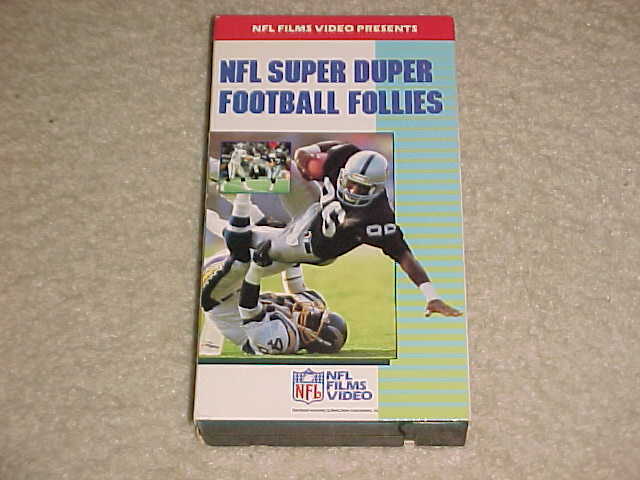
The curiosity being that I got to put to bed any misconstrued notion I still carried with me from childhood over what follies were in this sense. My first exposure to the phrase as a child were the NFL football follies – so, I knew of it as a euphemism for a mistake. When ads for revivals of the Ziegfeld Follies and the like came around I was confused. Eventually, I got it by osmosis but onky recently confirmed it’s merely another way to describe a theatrical revue.

So, on to the version by Hal Roach’s Rascals…

ourgang1-06-16-14

MGM’s series of short subjects were, of course, popular for years. These 2-3 reel comedies were later repackaged for television where their longevity was prolonged. This was one of the series of shorts I seem to remember getting some exposure to on Saturday mornings via TCM. That was some time ago and more recently I’ve been wading my way through a large, yet not complete as it claims, box set.

This particular short is later down the line than I’d gotten, and thus, the first of Gus Meins’ directed shorts that I was privy to viewing. In brief, the short deals with the Gang, starting with Spanky as the barker, seeking to gather an audience to watch “6 Acts of Swell Actin’”.

The cast is large and wholly made up of kids. The tale is musical, yet more more enjoyable than most could expect.

Some of the acts include: tap-dancing bellhops, Alfalfa singing “She’ll be comin’ Around the Mountain”, hula girls, a kickline, a trio of singing sisters, Darla singing (sounding better than she has any right to. Voices as young as hers, especially for girls, are usually quite piercing even when in tune), a skeleton dance that hearkens back to silent film days, and the oft-delayed Flory-Dory Sixtett number.

As a side note this was my first time watching the actual Buckwheat in a short. My first exposure to him was Eddie Murphy’s version.

The gags in this short, unlike some of their shorts, are varied and plentiful: there is a monkey shoeshining, cross-dressing, animal hiding in a bodice, things go wrong and it’s live, hiding in hay, running skull, gunshots at boots, and animated eyes.

It’s no wonder there was a sequel was a sequel to this short a few years later. This version is well done and allows great variety in scenes, different talents to be displayed and many jokes.

The Tin Drum: A Critical Ode in Picaresque (Part 1)

Statement of Intent

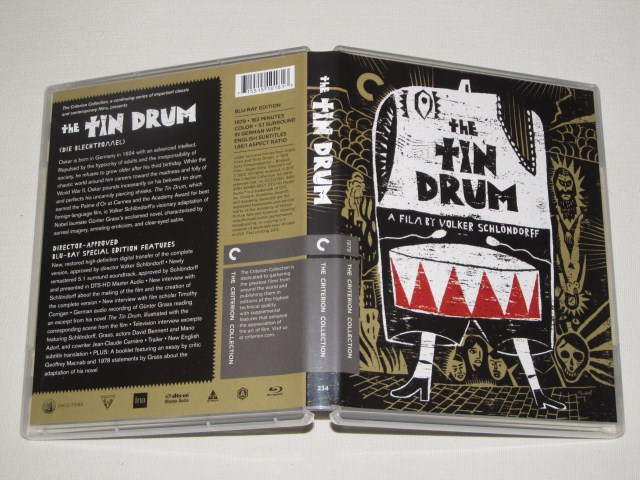
If one is not already rolling their eyes at the title of this piece, it is actually one that fits. So, what does the title mean? Mainly that The Tin Drum is a film I owe an homage, an ode, on this blog. It’s not a poetical one but a critical one, and much in the fashion of this film, it is one in a picaresque tradition.

When trying to ponder this blogathon entry, and how I would go about tackling something like The Tin Drum, I had a few different ideas. Prior to even joining the Grace Kelly blogathon, I thought of reading the play. Similarly, I considered reading Günter Grass’ novel theprior to writing this. I did not read The Swan by Ferenc Monár and I barely got into The Tin Drum.

I also planned on watching the definitive cut before this blogathon started as well as the supplements. With many recent blogathons I was ready well ahead of time. Not this time.

TinDrum13

So, I will have to do what I did for Léolo, except I will start this as a series on the last day of the blogathon and will continue daily until I am finished. I am dealing with a leviathan much more unruly than what I allowed myself with Léolo.

I will use this post as an index linking to each individual post as they go live.

Thank you all for reading and bearing with me. I hope you come back, and as a teaser as of this writing I am planning on 12 parts and have so far written at least 3,688 words.

Unlike in the film, Santa Claus will come, not the gasman.

The Wonderful Grace Kelly Blogathon: The Swan (1956)

Introduction

This is the first of two consecutive blogathon participations where I had intended to read the original texts (the play in this case, and the novel in the next). As it stands, these grandiose plans will have to be scrapped, and I will need to include both The Swan along with the Tin Drum (should I get to the book) to the long list of titles I watched before I read. Most of the Hungarian playwright, Ferenc Molnár’s, works are available online in the public domain either on Project Gutenberg or Internet Archive.

As for the film version, which was released in 1956 (four years after Molnár’s death) was one of Grace Kelly’s final screen credits before retiring from the screen after becoming Queen of Monaco.

A renewed interest in Kelly, sparked partially by the forgettable Grace of Monaco, is what drew me to this blogathon, and Molnár and this connection to her late career drew me to The Swan.

Grace Kelly the Swan

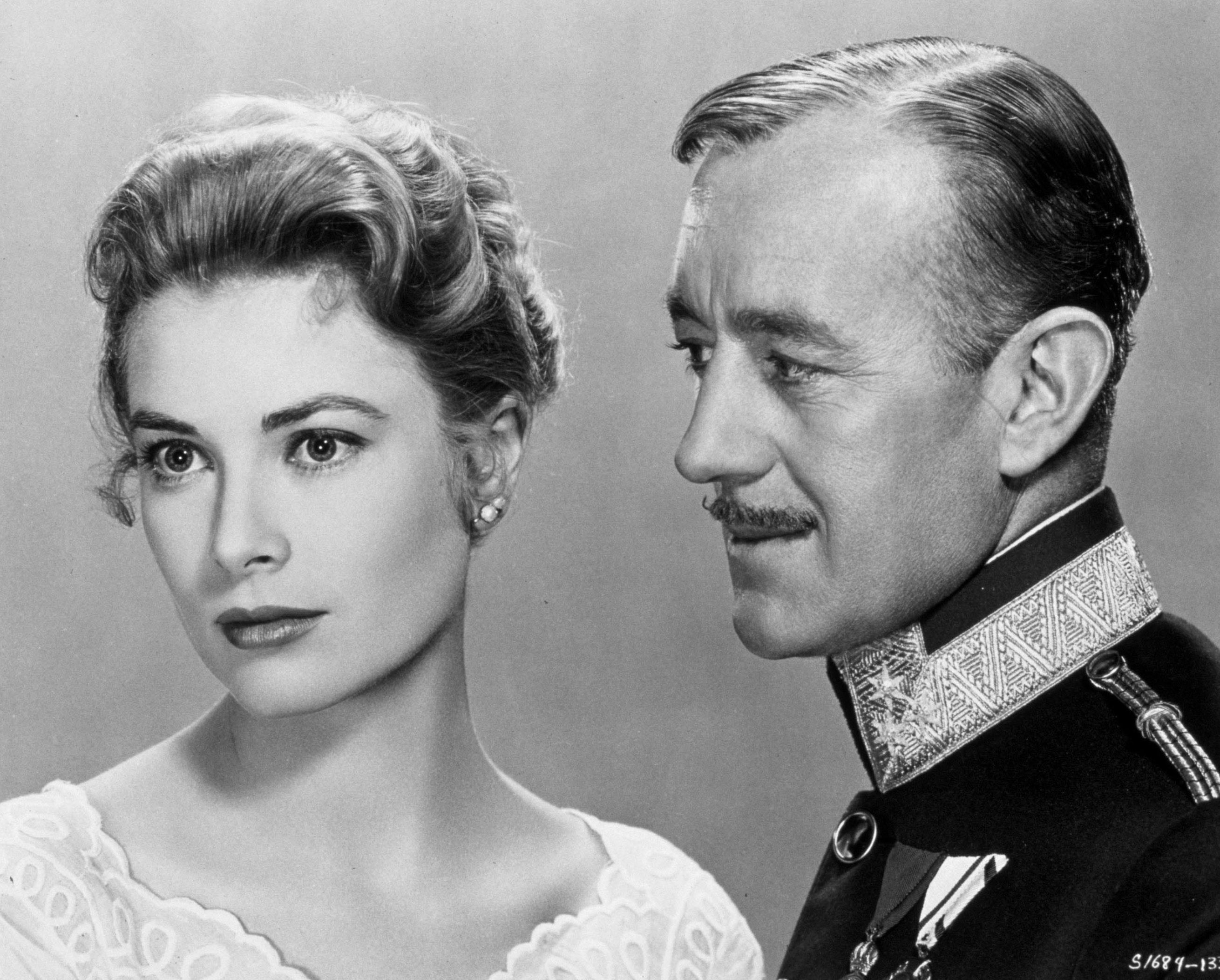
The Swan (1956, MGM)

Firstly, yes, I believe I will be reading Molnár’s work after having seen this film. More on that later, but first the focus of the blogathon: Grace.

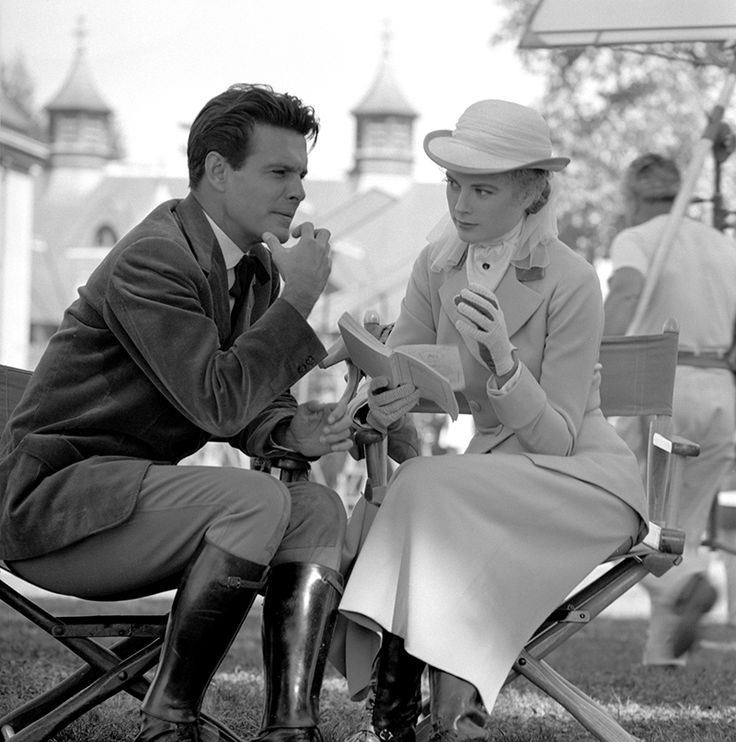
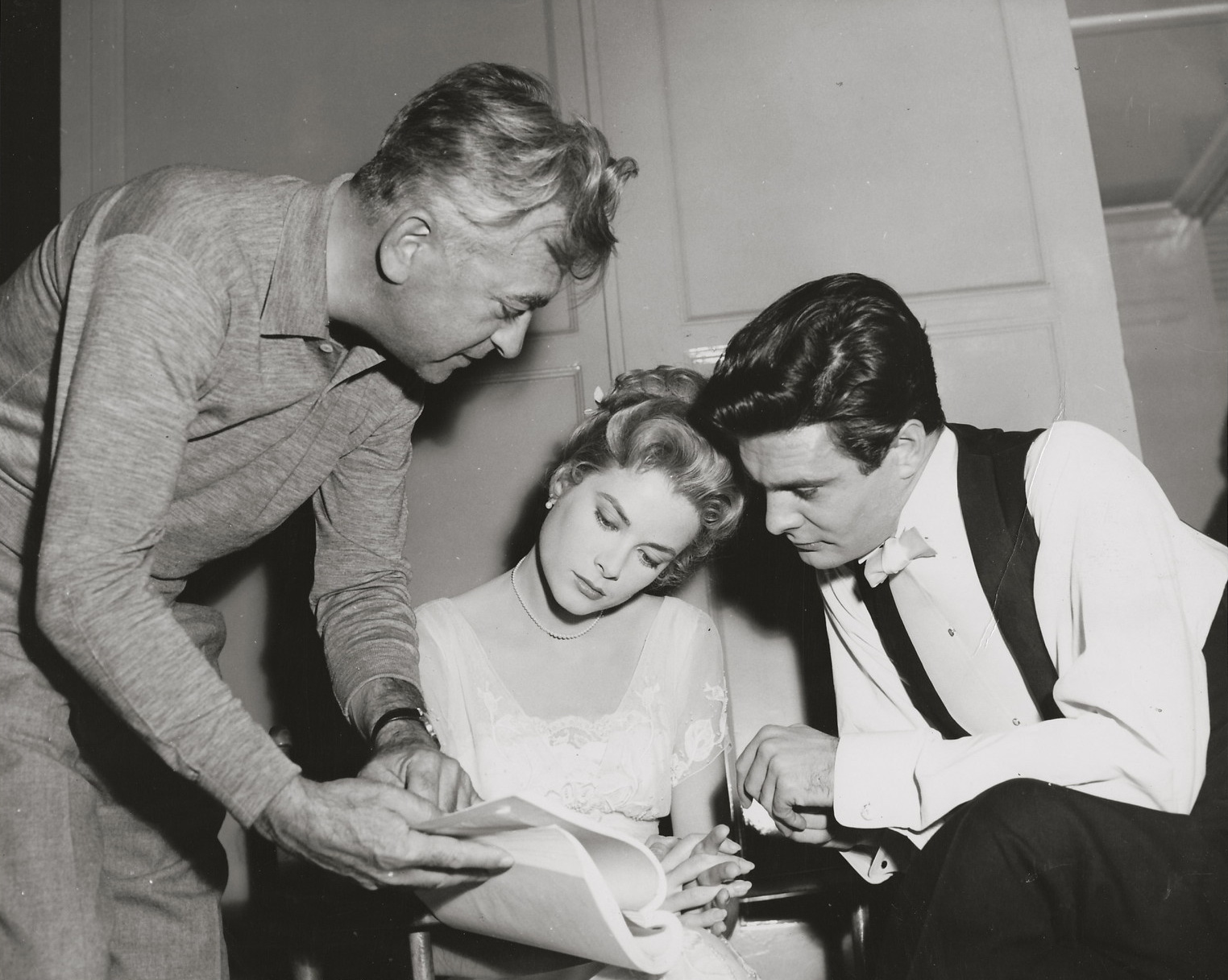
One thing that was interesting to see, as someone who has now seen nearly 1/3 of her scant titles, was the added range this role allows her. We all have blind spots almost everywhere, even film enthusiasts, and Grace outside Hitch’s movies was one of mine. Kelly was Hitchcock’s perfect blond not only in terms of appearance but for how he could cool down her refined class, and make her be quiet, or calculating, or a cipher as the case may be. Here she was likely drawing off real-life emotions but was allowed several facets – a few I’d not quite seen.

Firstly, there is the physical prowess she exudes. Now, it’s very clear from the first time you watch her that few actors’ names were ever so fitting as Grace Kelly’s. She has a regal air and gait anyway, always, did but when you add her fencing, ballroom dancing, and some of her emotional vulnerability it’s very impressive. Emotionally she’s ill-at-ease, distraught, nervous, and very noticeably listening and reacting in the most intense scenes.

The Swan (1956, MGM)

That and she’s practically a textbook example, even in Cinemascope, of the rule that actors on film must adjust to the framing; having more leeway of movement and gestures in wide shots and being more subtle the closer the camera comes. Not that it’s ever that close as there are lots of wide shots and long takes.

This and the minimal airing out of the play were used to exploit Cinemascope, which was created to offer something TV couldn’t play up some the of theatrical elements in a cinematic milieu, fitting as much early TV were playhouse shows and the lines of theatre, television, and film were blurred.

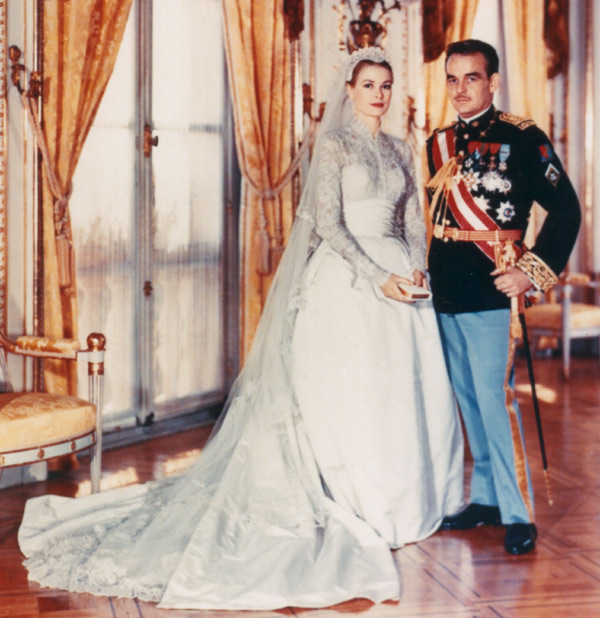
The drawing from real life experience is not me stretching that she was royalty later and plays royalty here, this film was actually released shortly after her marriage to Prince Rainier of Monaco, surely that was part of the appeal to her and to MGM’s marketing department. “I want to be a queen” she protests at one point as her becoming a princess was imminent.

Hungary

Flag_of_Hungary_(1867-1918).svg

The setting of this film is labeled as Central Europe 1910, but it’s really the Austro-Hungarian Empire right before World War One. The decadence of the Empire in its latter days has been fodder for Hungarian writers and will likely continue to be. This was a project that director Charles Vidor could relate to as he was one of many who left either Hungary or Austria-Hungary before it to Hollywood. Born Károly Vidor in Budapest, 1900; he was around the age of Alexandra’s brothers at this time.

However, some of the setting is evident even in Anglicized text like the paddle game, mentions of the great plain, the Puszta; which I never heard being referred to as a place where mirages frequently happen; Szeged and (where your paprika likely comes from). I was also glad they broke into French on occasion which was almost universally the language of European royal courts. At least this is a compromise of the convention of translating to English.

Whereas sometimes foreign comedies don’t translate this does because it’s about dry wit, impropriety in highly proper environments and some well-played, subtle physical comedy.

Themes and Motifs

The Swan (1956, MGM)

The themes and motifs in this film are quite apparent but very much appreciate nonetheless. Among them are the role of religion in politics and maintaining the status quo. Father Hyacinth, the monk and a relative, is likely an underrated character and quite shrewd. He’s nearly duplicitous in his ability to influence even though he also admonishes the royals, most of the characters are layered like this rather than being archetypes. There are also overtures of class warfare, the rights to culture and one’s “place in society.” As is not atypical with royals, and in Hollywood couples, there is an age difference of 15 years. The plot also centers on marrying for political gain versus love, there’s a refreshing spin on jealousy plots and a jilted lover.

Conclusion

Grace Kelly wedding photo

This film is also proof that older films are worth watching despite their Oscar pedigree or lack thereof. The film is an early Cinemascope title, the sets are as opulent as Golden Age mise-en-scènes, and the score by Bronislau Kaper, albeit sparsely used is mellifluous.

Despite focusing on Kelly it is an ensemble piece and aptly performed by Alec Guinness, Louis Jourdan, Jessie Royce Landis, Brian Aherne, Estelle Winwood, Agnes Moorehead, Christopher Cook and Van Dyke Parks.

Even though there is a slight bit of predictability, I appreciated the refereshing take on a manipulated love triangle and the sociopolitical themes aside from the romance.

The Swan (1956, MGM)
The Swan, a nickname and metaphor that plays early and late in the film. To not tease the end too much I was not surprised what the ending was after seeing Internet commentary like “the end didn’t work for me.” Keeping in mind the cultural relativism of Hungrian works, which I am familiar with, as well as realistic expectations in the real worls and not in Hollywood claptrap the ending makes perfect sense and it is all the more bittersweetly beautiful for it.

Swashathon: Robin Hood Daffy (1958)

Introduction

This is my contribution for the Swashathon hosted by Movies Silently.

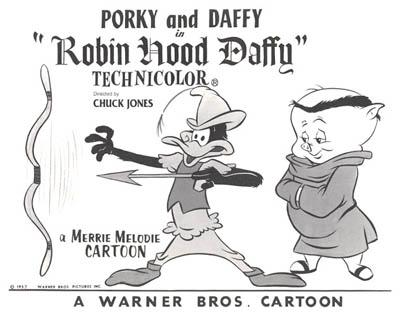
Robin Hood Daffy (1958)

Robin Hood Daffy (1958, Warner Bros.)

This was another blogathon where I thought I would not have a title to contribute. Part of it had to do with the fact that Swashbuckling is such a niche that I didn’t think I’d have much to contribute as it’s not one I can claim any level of expertise in. I could’ve offered up for Kim but that would require a re-watch and it didn’t jibe with my schedule. That’s when on a double-check (triple-check? quadruple-check?) I noticed that Robin Hood Daffy was there and I just had to write about it. Any chance to discuss the Looney Tunes is a good one.

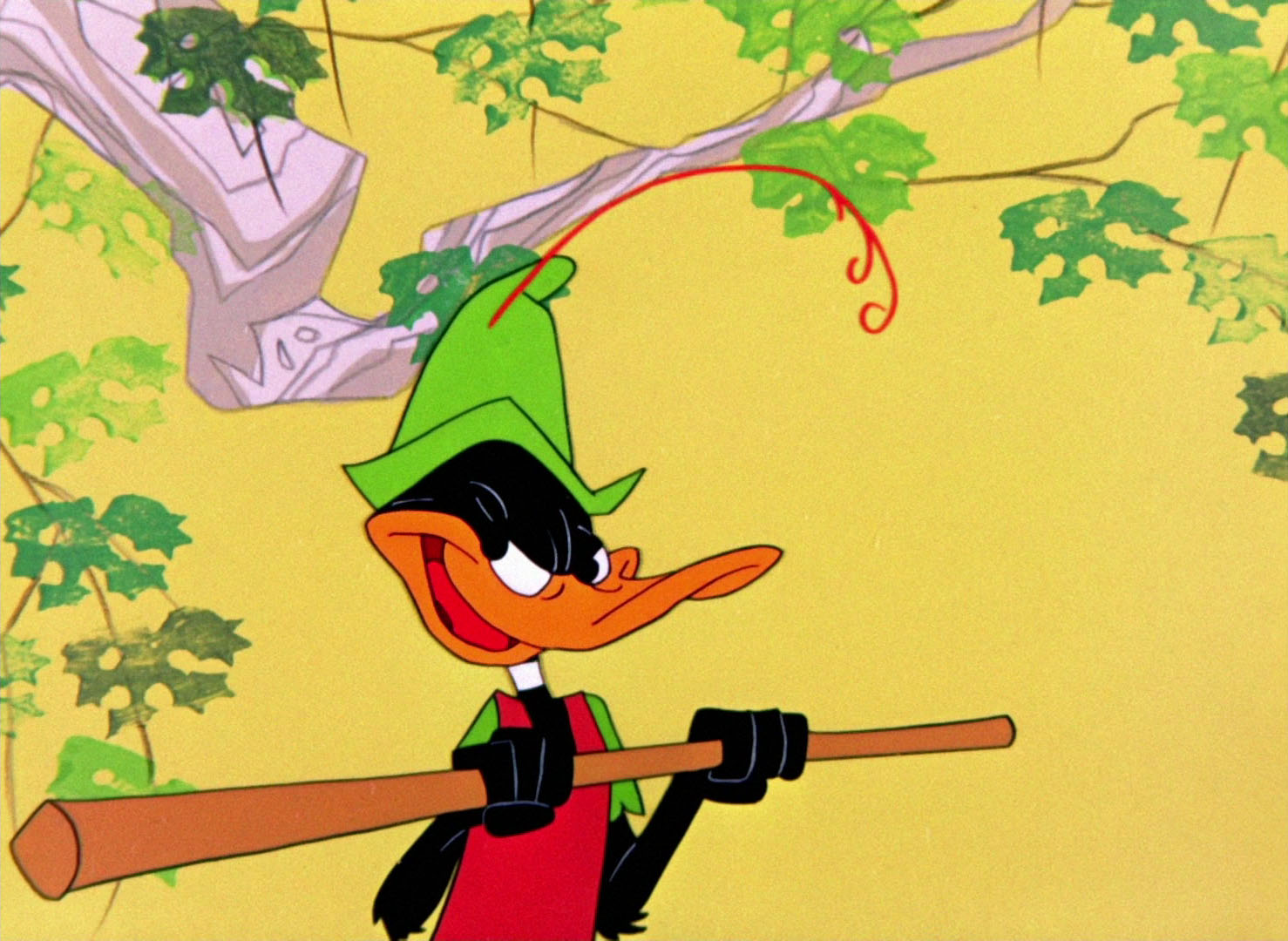
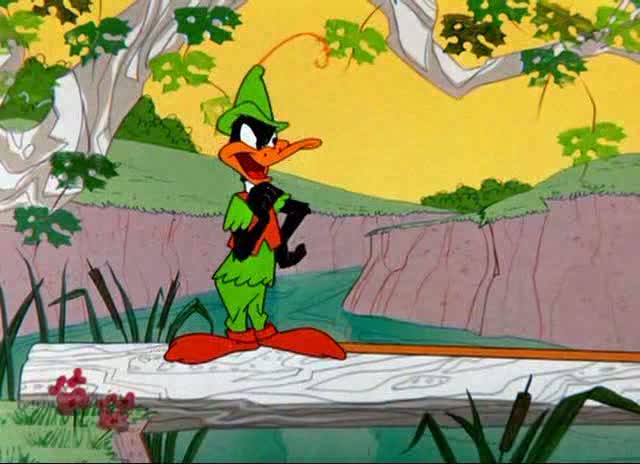
I know this short very well, as I know many, so it prompted me to look up the precise definition of swashbuckling as my understanding over-emphisized sword-play and I knew Daffy’s Robin Hood never had a sword.

The definition reads as follows:
—noun
1 a swaggering swordsman, soldier, or adventurer; daredevil.

Robin Hood Daffy (1958, Warner Bros.)

So there it fits.

As for the Looney rendering of the tale of Robin Hood there are some things that are worth noting without giving a blow-by-blow of a short that runs fewer than seven minutes.

Perhaps first and most importantly is the notion of cartoon casting. And by this I do not mean voice actors. For once Warner had Mel Blanc in the fold they knew they had a good thing and he was one-man show. What I mean is match the existing characters in a stable of cartoon talent as the parts in an adaptation, matching the correct types. Daffy as a hapless Robin and Porky as a jolly and sarcastic Tuck is perfect and offers a brilliant send-up of the Robin Hood tropes and story.

Another commonality this shares with other great Looney Tunes is the direction of Chuck Jones. Jones being one I so admired he was the first director whose writing I read, in Chuck Reducks.

Robin Hood Daffy (1958, Warner Bros.)

This short is also a reflection of my understanding of film progressing, or maybe it’s more proper to say it is an astute example of children’s innate ability to grasp adaptation and different renditions of similar material. What I mean is that Disney’s Robin Hood was at the time likely my favorite movie, and remains my favorite Disney film. They represent two drastically different approaches to the anthropomorphizing of the Robin Hood characters, in two different film forms, but use the same medium (animation). I loved them both growing up, much in the same way as I enjoyed the goofy 1966 Batman TV series as well as the 1989 Tim Burton film, and the new school. I later saw the Errol Flynn-starring Robin Hood in High School.

The gags are spectacular, and some are among my all time favorites such as Daffy’s minstrel song, “Ho, ho, very funny. Haha, it is to laugh”, “Yoicks! And away!”, and more.

The work is elevated to the level of genius in set-up (Tuck/Porky doesn’t believe Daffy is Hood). And then the payoff at the end. It so perfectly befits them both and should be known to children and film buffs everywhere if it isn’t already.

One Of My Favorite Cartoons Blogathon: Duck Amuck (1953)

Duck Amuck (1953) 

This is a post written as part of the One of My Favorite Cartoons Blogathon hosted by Movie Movie Blog Blog. Firstly, I must sya that I am thankful that I didn’t have to narrow it down to just one.

Next, considering the fact that I just wrote about another Looney Tunes short that’s tangentially similar to this one it was a natural choice. That superficiality is that this short starts like its going to be another swashbuckling tale not unlike the later Robin Hood Daffy but with this one being a Musketeers tale.

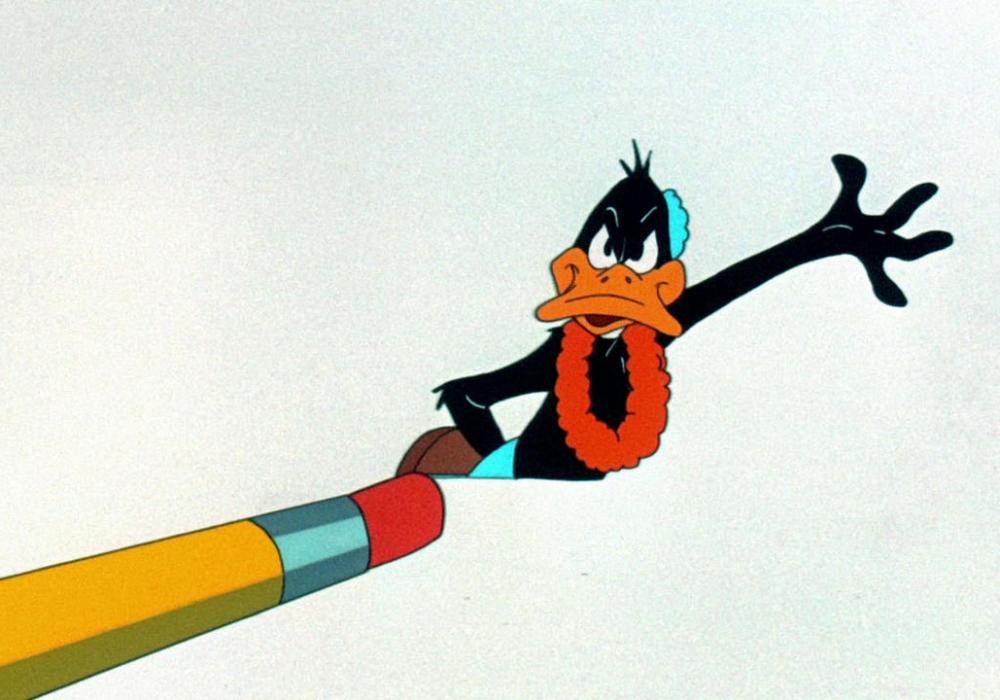
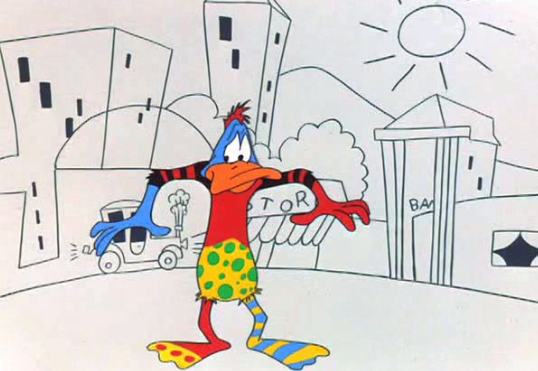
However, we soon see that there is something very different afoot here as this tale starts to play with the conventions of animation as the unseen animator starts to taunt Daffy having him walk off backgrounds/sets, putting him in perpetually juxtaposed situations like having him change into ski attire to match the newly alpine environs only to have him them ski onto a Hawaiian beach.

Duck Amuck (1953, Warner Bros.)

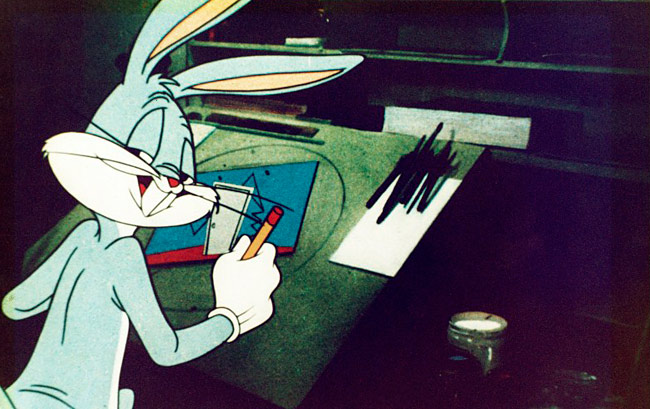
This then escalate as he is erases faced with being muted and creating incongruous sound effects. Things continue to childish backgrounds, changing his whole physiognomy, a childish background, invasion of black to the image, doubled frames, a premature end, and then finally, the coup de grâce is that the fourth wall is demolished as we leave the world of the cell to see who it was who was animating him. This short was already meta enough it just had to add the cherry on top with a hilarious, perfect cameo.

This is one I still had bits memorized from even though I’d not seen it in years. What this blogathon prompted me to do was to listen to the commentary and watch the featurette that accompany this short on the Golden Collection DVD set, which I had not yet seen.

Much of the commentary is provided by Michael Barrier, an author who wrote about the golden age of the animated short. He documented the fact that Warners were resistant to using Bugs in such a limited role (as the invisible-until-the-end animator). The animators discuss in the featurette how it had to be him based on the dynamics of their relationship.

Duck Amuck (1953, Warner Bros.)

The idea started with the germ of the concept without an end in mind, as was frequently the way Chuck Jones did things. Aside from the struggles against the studio where they had to be defiant and use Bugs anyway there was also the internal battle between Jones and animator Ed Selzer. Daffy has an abnormally long monologue in this film (800-feet of stock). Selzer wanted to run a pencil test with synchronized sound to prove the animation he had worked with the pauses built in. Jones wasn’t sure. Warners were always budget conscious (even though these tests were never deeloped), and pencil tests were scarce. Ones with sound were unheard of. Selzer was proved correct.

Duck Amuck is definitely one of the finest Looney Tunes shorts ever. Much of that is echoed in the featurette entitled “Hard Luck Duck” that features interviews with Willi Ito, Bob Melendez, Chuck Jones, Leonard Maltin, Joe Alaskey, Jerry Beck, Noel Blanc, Art Leonardi.

Disney was frequently at its best when they let their creativity cut loose like in the Pink Elephants sequence of Dumbo, the same can be said for Warners as evidenced in Duck Amuck.