A Cinematic Trip Around Canada

As I knew Canada Day was coming up, I wanted to write a post wherein I took a trip cinematically around Canada; considering the fact that I know the geography of Canada better than most countries I have never lived in. As I started trying to pick films by province or territory, I quickly realized there were some complications afoot.

The first complication being British Columbia, specifically Vancouver. Vancouver and its vicinity are a host to myriad productions, but due to the areas diverse geography it’s usually doubling as another city. Then there are the maritime provinces and northern territories, which are less frequently featured. It very quickly became clear that this post would first highlight some of the Canadian cinema I have seen and enjoyed, but would also serve an exploratory purpose and cause me to seek out new titles. Therefore, in conjunction with this post I will also create a Letterboxd list.

Essentially, the ideal is to have the film both set in and produced in the Canadian province mentioned. Co-productions will be valid for this list, but ideally I will be seeking Canadian productions.
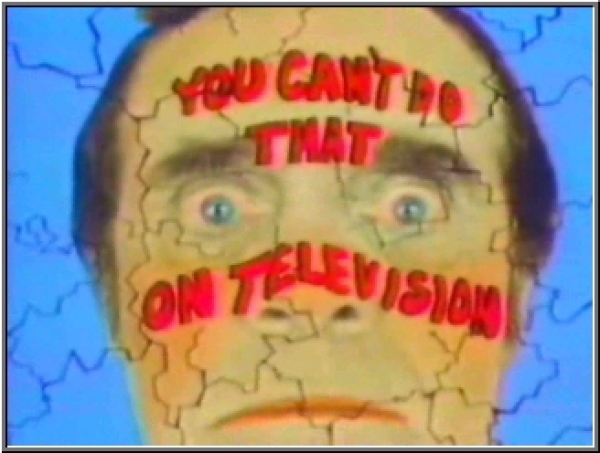
I can’t exactly pinpoint where my fascination with all things Canadian began. Yes, I’ve always been obsessed with hockey, but this burgeoning affection during my childhood also coincided with many of my entertainment staples being either vaguely or blatantly made in Canada such as You Can’t Do That on Television, The Kids in the Hall, Are You Afraid of the Dark? and to an extent SCTV. Regardless, the affinity has always been there and since thanks both to the internet and internationally distributed calendars I’ve come to learn of Canada Day, and decided to compile at least the beginnings of a list.

All-Around Canada

To start with, I’ll include some films that traverse much of the nation in order to attempt to compensate for some of the areas wherein I’ve had difficulty finding selections.

In the vaguest sense of the word the recent NBC Sports Net documentary Cold War on Ice is an all-encompassing Canadian tale inasmuch as it deals with the 1972 Summit Series that pitted Canada’s best NHL talent versus the Soviet team. If you scripted a 8-game series the way this one unfolded it’d be hard to believe, but it actually happened.
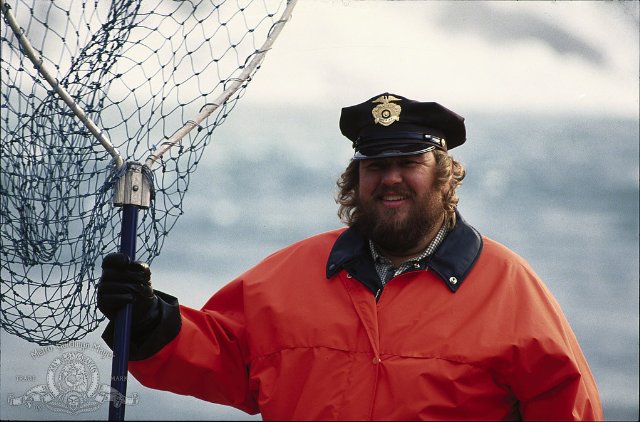
If you trust the IMDb’s filming location info, and you can’t always, Canadian Bacon doesn’t traipse through nearly as much of Canada as it could. However, I do recall this film being quite funny and underrated in my mind. It’s a great collection of many of Canada’s finest and funniest, that does a tremendous deal of US-themed satire also, as it’s directed by none other than Michael Moore.

Now, in compiling these suggestions I realized that many areas in the country were a bit underpopulated in terms of films I have already seen. Therefore, I turned to my Twitter friends north of the border and received many suggestions, which I’ll include throughout all sections of the post starting now:
One international production suggested to me by was The 49th Parallel, a film I’ve meant to see but have not yet, it chronicles a U-Boat stranded in northern Canada during World War II.

One Week was also suggested to me by quite a few people and it’s one that upon being reminded of it I realize that I was interested in it when it had just come out. The film is about a man seeking meaning in his life on a cross-country motorcycle trip.

Quebec

I go to Quebec next because, while Canada is a predominantly Anglophonic nation, it is also a Francophonic nation and due to that fact Canada has regularly submitted a Best Foreign Language Film nominee since 1971. In that time five Canadian films have been nominated: Jesus of Montreal, The Decline of the American Empire, The Barbarian Invasions (Won), Days of Darkness and Incendies.
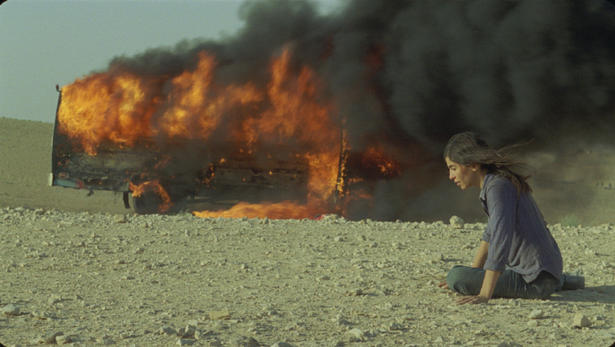
The Quebecois cinema does have its own mark of originality as it can at times produce perfectly distilled hybrids of European and North American sensibilities, having at the same times an always unique voice on the world cinema stage.
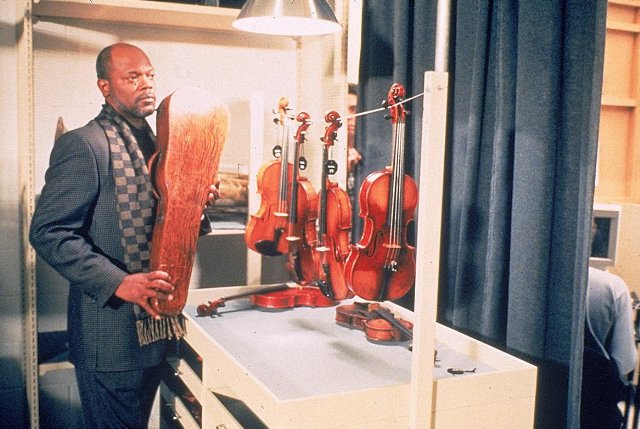
Some other films from Quebec I’ve seen and enjoyed greatly are: The Red Violin, while this is a globe-trotting, time-traveling tale with a star-filled cast, the present day action does occur in Montreal. It’s writer-director is French-Canadian, Francois Giraud, and it’s a film I’ve seen many times over that I enjoy tremendously.

A completely French-Canadian film (were my revisionist BAM Awards still legitimate would’ve won many awards) called Leolo. It’s a poetic, bizarre and unique tale of a young boy’s adolescence in 1970s Montreal. Sadly, this was the last vision Jean-Claude Lauzon brought to fruition as he tragically died in a plane crash in 1997.

Sitting in my to be watched pile is the Criterion Collection edition of Mon Oncle Antoine. Films I was suggested for Quebec include: Ma vie en CinemaScope, C.R.A.Z.Y., Le Chat dans le Sac, L’eau Chaude L’Eau Frette, Gerry, Going the Distance (1979) and Bon Cop, Bad Cop.
British Columbia

British Columbia is one of the trickiest as mentioned above. For the time being, I’ll have to stick with suggestions kindly provided me by a friend. In the meantime, rest assured that if you’ve seen enough movies you’ve likely seen British Columbia in disguise and didn’t realize it.

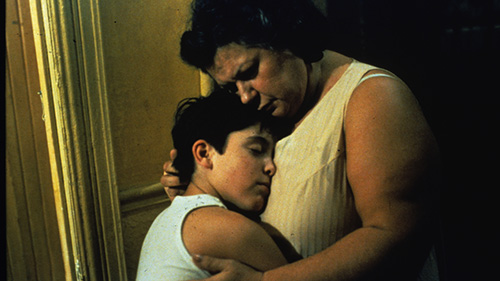
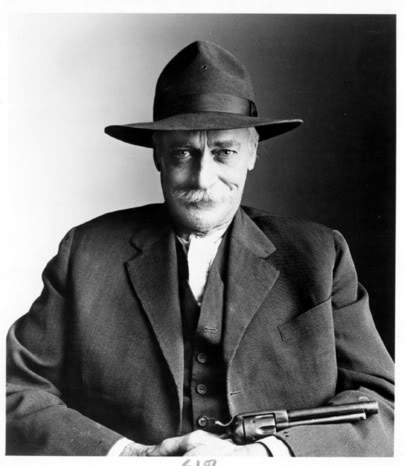
The suggestions were The Grey Fox, about a gentleman bandit who heads north after years in jail to ply his trade in Canada and My American Cousin, which tells a tale of a mysterious visit from a family member and the intrigue it introduces to a Canadian family’s life.
And also a suggestion was Everything’s Gone Green about a man who’s tries to work a money laundering scheme while working at a lottery magazine.

Nova Scotia

This is perhaps the best and most rewarding part of this post to me. The reward is that again thanks to those who responded to my Twitter inquiries I now have more Nova Scotia-based tales to seek out Margaret’s Museum and New Waterford Girl.
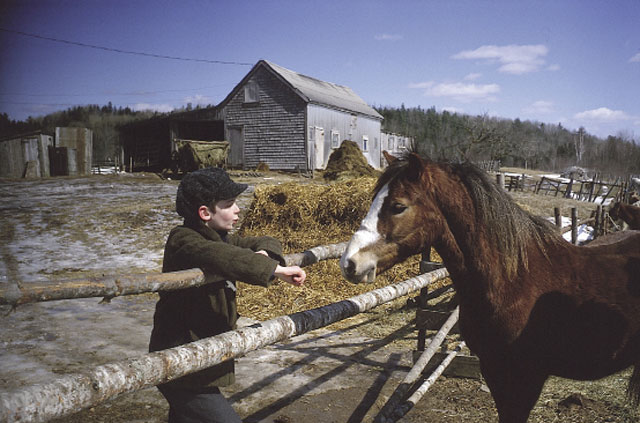
It was, however, one of the places I had a ready suggestion for but just the one. Pit Pony is one of those properties that you come across by chance. I first became familiar with it due to the television series that expanded upon the story, which bounced around several different US broadcasters. It’s one of the few shows I’ve seen in their entirety on multiple occasions. It reaffirms my belief that, although rarely implemented, the half-hour drama, especially when shot single-camera, is the most effective TV format. You have in this series palpable drama, romance, all in a turn of the century mining town so there’s a Dickensian struggle to is also.

Eventually, the TV show lead me to seek out the novel upon which it was based, and also the feature film that kickstarted the series. The film is essentially very faithful to the book and the series picks up from there spinning out new tales. In some ways the film isn’t as cinematic as the show is at its best. However, the emotional truth is there owing mostly to the fact that is shares many of the same actors. The various incarnations of the story but mainly the series is why Nova Scotia is near the top of my list of places to go; those vistas need to be seen in person.

Newfoundland and Labrador

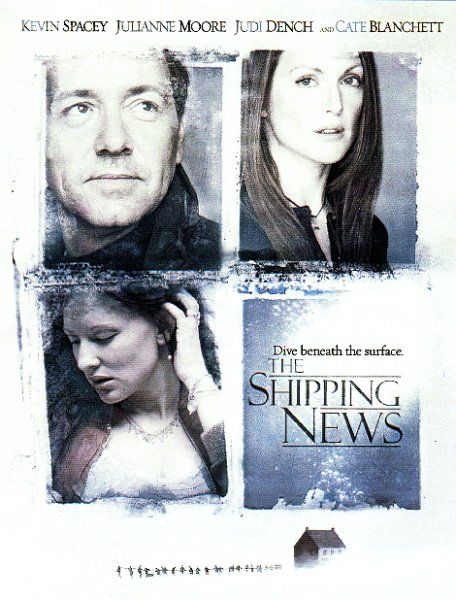
Here is another part of the country wherein I was very glad to have a helping hand. I’ve honestly not seen anything set or produced in this province as of yet. However, with The Shipping News, which was suggested by a few people, and Rowdyman that should be quickly remedied.
Ontario

Ontario, Toronto specifically is another city, which while not as renowned as Vancouver, is a chameleon. Yet there are some very clear examples of films made there where the setting is either clearly Ontario or is vague thus makes it somewhat Canadian in my mind all the same.

If you haven’t seen Pontypool remedy that. I do want to revisit it, and while I’m not currently crazy about the third act, it is truly effective stuff.

It’s likely a film I should’ve included on my Embarrassed to Say list but I saw Videodrome for the first time not too long ago and it wouldn’t be what it is if not made by Cronenberg and Cronenberg wouldn’t be Cronenberg without being Canadian. Both he and Atom Egoyan made many a film in Canada, though perhaps not specifically set there. However, Egoyan’s earlier works all seem to be and are well worth seeing.
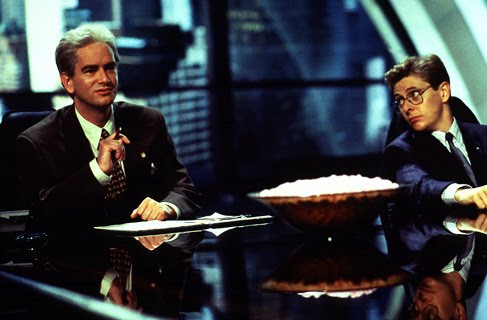
I have said previously how underrated and amazing I think The Kids in The Hall: Brain Candy is. While it too falls into the vague category and does make a lot of commentary apropos of 90s America, it’s still The Kids in the Hall, in my head (where it’s 72 degrees all the time) this movie is in Canada.

Suggested to me: Nobody Waved Goodbye and Breakfast with Scot.

Northwest Territories and Nunavut

There are two reasons I had to combine these two territories: First, since Nunavut came into being in 1999 a boundary may have shifted moving a previously made film from the Northwest Territory to Nunavut. Second, specific information is hard to find on productions that shoot that far north so to play it safe I’ll discuss both rather than being incorrect.

One film that was suggested to me was Atanarjuat: Fast Runner, which I recall seeing during its initial US Theatrical release at the Angelika in New York I believe.

That film was the first installment of a loose trilogy, I have yet to see the middle film, but the third Before Tomorrow was one of my favorite films in 2009 and won a BAM for its cinematography. I believe the only location cited in the filming is northern Quebec and I don’t recall if it was supposed to be doubling for the even further north Nunavut isles or if it was supposed to be a literal setting.

From a film history perspective Nanook of the North is an early groundbreaking documentary even though the titles offer a clearly biased (at times racist), dated interpretation of the footage it’s still an interesting film, but an American one.

Manitoba

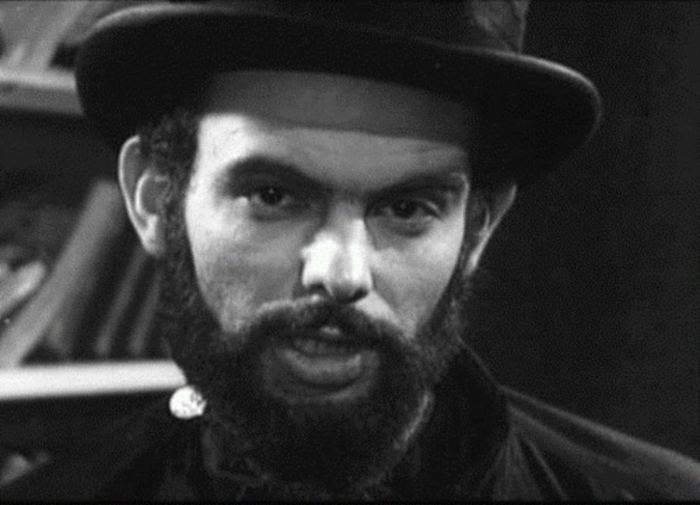
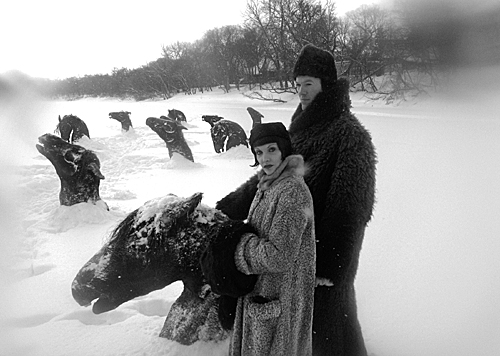
When I think of Manitoba cinematically one name jumps immediately to the fore: Guy Maddin. I was suggested The Saddest Music in the World but would submit My Winnipeg a wonderfully personal, bizarre and artful portrait of a man and his strange relationship with his hometown. The narration, which is plentiful and great has been published as a book and would make a great companion to the film if you can track it down on DVD.
Seeing as how two National Film Board animated shorts were nominated for the Oscars this year I spotlighted a great Canadian short in a Short Film Saturday post: The Cat Came Back is one of my single favorite animated shorts ever.

The Nature of Nicholas, which is a tremendously creative, well-crafted, surreal fable about a boy struggling with his feelings for his best friend.

Alberta

This proved to be a tough one for me to figure also. I know the Canadian rockies and plains have been used as substitutes but to find a film shot and set there was a challenge. I didn’t want to cheat here with something like King’s Ransom, the ESPN Films doc about the Wayne Gretzky trade. However, answers did find me…

The first was via a tremendous suggestion by one of those I asked for input and a response I got was Passchendaele, which is a tale of a veteran his girlfriend, a nurse and a naive child during World War I, which sounds like a film well worth seeking out.

Then I was reminded of my second favorite Oscar nominated animated short from this year: Wild Life. You can read my thoughts on it here.
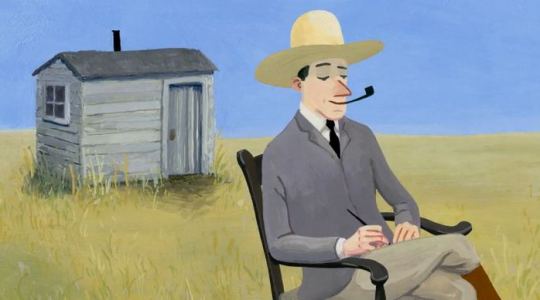
Lastly, like a bolt of lightning it struck me to search out information on perhaps the most successful lampoon for the Mystery Science Theatre 3000 gang: The Final Sacrifice. Now, typically I will go on laughing jags in good MST3K episodes. However, never before in one of these episodes was I fighting against asphyxiation so hard, never did my face hurt so from laughing, nor did cry from laughing so hard; as when I first watched this film. Like a typical selection by the show, it’s not quality cinema but this is one of those bad movies that really goes for it, which makes it enjoyable in its own right. It’s not one of those limp, plotless trudges it gives them a lot to play off of. This film tries hard, it creates a mythology and perhaps the greatest character name ever, and I’d argue a decent anti-hero; Zap Rowsdower. So after struggling, I did find some Alberta product that is rather intriguing in one way or another.

Saskatchewan

Saskatchewan was another one I had a tough time with. When I first really started to watch and follow Canadian football I was drawn to the Saskatchewan Roughriders in part because that’s the professional team there. I subsequently learned a bit more about the region but I don’t believe I’ve seen a film made in and set in the province, I could be wrong but it’s not coming to mind at the moment.

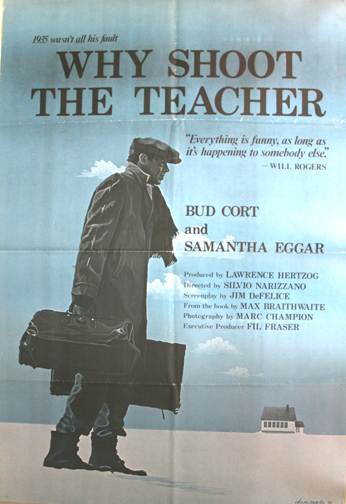
Here is where a suggestion came in handy, again this one was Brendan Meyer’s: Why Shoot The Teacher? which tells the tale of a young man who just graduated college in the east and the only job offer he receives is in a one-room school house in the prairies. There’s a clear clash and fish-out-of-water element but eventually he does connect to the place and the people and they to him. It’s one of the more intriguing suggestions I received.
Yukon

I had to go and search the IMDb because my inquiries did not yield results for the Yukon, though there are some interesting ones at least in terms of locations.
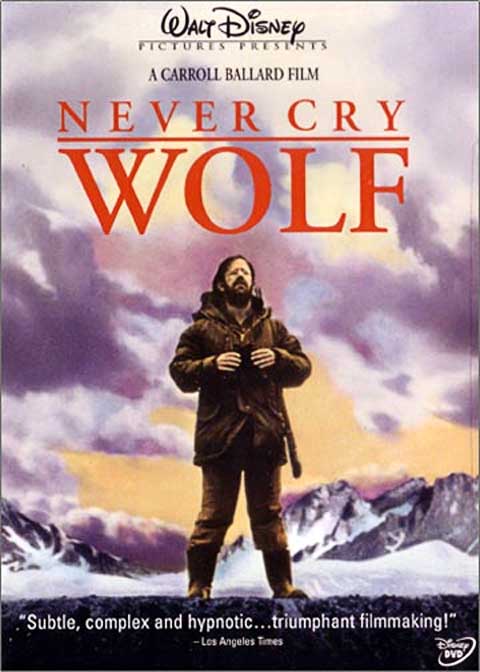
The recent film The Big Year had scenes there though I suspect doubling. A recent horror film entitled Whisper used the Yukon to double for New England. Therefore, the most recent film that was both shot in and set in the Yukon, I believe, is the 1983 Disney film Never Cry Wolf.

Its an area with a fascinating history and great scenic locations, which could be utilized more.

Prince Edward Island

Part of what I really enjoy about expansive posts like this one is that I invariably learn things. Now, clearly I found many films worth pursuing but where I learned most was here. I got no suggestions for PEI and it nearly slipped my mind. However, the IMDb didn’t offer much in the way of film productions set there. I did discover that there is quite a bit of legacy on Prince Edward Island in the person of Lucy Maud Montgomery whose novels about Emily of New Moon and Anne of Green Gables that are renowned the world over. Television productions, be they series or TV movies of the books, were filmed there but apparently no feature film adaptation was shot there. It is quite impressive that two such well-known series not only came from the same author but round out this post nicely.
Conclusion

I already knew Canada offered diverse film selections but approaching it this way I came away with myriad titles to seek out and discover, along with some others I was aware of but didn’t include here. If you’re interested in assembling your own tour there are several resources you can check out, you’ll find two below:

The National Film Board

You can also visit and search via provincial or territorial film boards.
Canuxploitation

That Movie Sucked: Trailers That Give Too Much Away

I had a recent Twitter conversation with Larry Richman, after he had attended an advance screening of Someone Like Us, and he had some interesting thoughts on the film. I told him I was glad to hear some of them after having seen the trailer. When he watched the trailer he confirmed what I feared: The trailer essentially gives away the entire movie.

I am doing my best to forget the details of said trailer before seeing it and won’t link to it here, but it does raise the point about why trailers feel the need to be so spoiler-laden. Now, there are certain realities I know and acknowledge, such as: I believe (and correct me if I’m wrong) it’s mainly the marketing department (in a studio) in collaboration with the producers who select highlight type moments, good footage and shop them out to companies who specialize in cutting trailers together. They usually get two or three different versions and choose one. Essentially, it’s a sub-contractor relationship. However, this outsourcing of the job isn’t the only reason that over-sharing in trailers occurs, if you ask me. The first part is that some involved with the film select segments to supply the bidders. So the selection has to be a bit more guarded.

What is going to compel me to see a movie is not necessarily knowing the synopsis, not that synopses are innocent of giving away too much (far too often on the back of a film you are told not just the first act break but the second also). What will compel me is getting a sense of the tone of the film with some compelling images that make me wonder “What’s that about? I have to see that!”

Some notable examples of this for upcoming films are:

Les Miserables (Teaser)

The Road (2012)

Even way back when in the Golden Age and before when audiences were not as sophisticated in certain respects as they are now, trailers disseminated information through voice-over and text but not too much of the story was seen and heard through actual footage:

1930s

Dracula (1931)

When I went to YouTube I just typed in the very generic search of “1930s Trailer” and sure enough I got more or less what I expected. A presentational pitch with hyperbolic text, grandiose announcements and key images that intimate what the film is but give very little real information. A lot of times with older films you were allowed to see a piece (sometimes a large piece) of a scene play out but you had little context by which to understand it. It was all just supposed to be enticing.

1940s

Casablanca (1942)

Approximately a decade later the formula was still pretty much the same. The hard thing is watching trailers for films you’ve seen already, for some the edit seem to be giving away a lot of the story because you know it, but it’s really not. Think of the moments in Casablanca that became iconic and none of them are here the farewell, “Louis, this could be the start of a beautiful friendship…”, “…shocked to find that there’s gambling going on in this establishment”, “As Time Goes By,” etc. Yes, this trailer is selling the adventure and danger much more than it is the romance but it’s not shying away from it either. The ethos is still similar in these two examples compelling images, backdrop, genre, stars but not the whole film.

1950s

Invasion of the Body Snatchers (1956)

My favorite professor in film school, Max Simkovitch, was not only great at planning double and triple features but also at screening clips and trailers. Therefore, even if something didn’t quite make it on the syllabus, we were made aware of it and tempted to see it. His horror/Sci-Fi class was where I first got a glimpse of Suspiria and then I had to track it down. We also watched The Invasion of the Body Snatchers there and while I can’t argue that this is a brilliant trailer, it is fragmentary enough in the ethos of its time to succeed. There is the frame of panicked reaction. First, you assume insanity then as images compound you think there’s more to it. The best part is the impact of the film is far greater than the trailer and the trailer doesn’t show it all, or intimate it all either. The bad part is that it doesn’t show you just how very good this movie is.

1960s

Psycho (1960)

Now, I will grant you that there are many things that allow this trailer to be as unique as it is. Firstly, you’re dealing with Alfred Hitchcock one of the greatest directors to ever walk the face of the Earth. However, he was also by this point a TV personality too. So his pitching his own film in an extended trailer is not so odd. However, what’s really brilliant about this Psycho trailer is how it seems to be telling you everything but there is so much misdirection and trickery afoot.

1970s

The Exorcist (1973)

Now, this is absolutely brilliant. There is next to now visual information revealed. There is one high contrast shot of Regan, no clear indication of what many of the shots mean and you don’t see the face of the exorcist. That creates the reaction you want. It gives you the emotional tenor of the film and compels you to want to see it. The voice-over works in conjunction with the images and scenes as opposed to presenting them. This is a clear indicator of the evolution of movie trailers. However, this sophisticated near artistry will in the course of the next forty years of film history will lose its restraint and start to give away too much information.

1980s

The Empire Strikes Back (1980)

Granted here’s another case where you’ve got a lot going for you as you set about creating a trailer: this is the follow-up to the most successful box-office smash of all-time as of this trailer’s debut, you have John Williams’ score and incredible visuals. Yet the temptation could exist to overplay your hand but it’s laid back. You have an exciting kinetic montage, with no information of any kind divulged really and the voice-over only comes in at the very end for one line. Perfect.

1990s

Jurassic Park (1993)

I tried to get a Spielberg film on for the 80s, I couldn’t because I thought of E.T. but the trailer I found had an incessant narrator who wanted to delineate every emotional beat in the whole film. With this short, if not brilliant Jurassic Park trailer, I think I re-affirm my point. Spielberg’s images are always strong. Here the story does a lot of the selling anyway, so just briefly touch upon what the chaos in the park is and make it a short, quick sell.

2000s

Peter Pan (2003)

For quite a bit of time I thought of Peter Pan as a standard-bearer of shorts. It had been some time since I had seen the trailer but I remembered how it had set the expectations very high for me, and then I saw the film it lived up to or exceeded practically every one of them. However, it also is a great illustration of how treacherous a game the cutting of trailers is. For above, what you have is the second version of the trailer. Multiple versions of trailers existing is nothing new, but what struck me as most interesting is that the minutest of changes could have such a drastic impact. When I found the #2 trailer I knew pretty quickly it was the one I liked for it seemed a more fragmentary and tonal presentation of this vision of the story whereas the #1 (below) felt a lot like a demonstration “Here’s this part of Neverland and this part and that part.”

The Present

As for the newer crop the trailer fo Dark Shadows is bad, but does contain a similar tonal dissonance to the actual end product. The Girl with the Dragon Tattoo is an excellent trailer.

Dark Shadows (2012)

The Girl with the Dragon Tattoo (2011)

A recently compelling one, that convinced not only me, but many people to see the bad movie being hocked, was that of The Devil Inside.

It’s widely acknowledged that the marketing job done by Paramount to make this film a financial success while thudding with critics and audiences alike is astoundingly good. Another recent Paramount win was the viral marketing effort, the introduction of the “Demand It” concept prior to the release of the first Paranormal Activity film. However, regardless of whether you liked the film or not, the trailer is practically all the highlights of the film. Watch below…

Now, I will readily admit that I, as someone who frequents multiplexes and art houses alike and have a tendency to be quite early, such that I watch not only the trailer but the pre-show, will view these more times over than the average spectator. However, the success of the studios, the box-office both domestically and globally relies on everyone, and trailers are one of the best methods to repeat your business. You have a captive audience, a packed auditorium for the latest tentpole, all the big movies want to advertise in front of it. Whereas sometimes commercials work better because they can give less away, a trailer gives you anywhere from 90 to around 150 seconds to give your best pitch. So please try and tantalize not bore.

When a short film of mine Suffer the Little Children got into Shockerfest, we were afforded the opportunity to buy commercial time on local cable airwaves to advertise our screening. With only 30 seconds and my proclivity to tease rather than over inform, this is what I decided to do:

Here you’ve seen quite a few of the major plot points in the story, however, without knowing the Stephen King short story upon which the film is based you don’t necessarily know the context or the significance of the events. The shots come at you quickly, with juxtapositions that are apropos of nothing and little dialogue is heard. You are given the tone of the piece and some allusions as to what it’s about but you are not told everything. That’s as it should be I feel, even given more time to play around.

Far too often, after seeing a trailer, I will snidely say to myself “That movie sucked.” Now, of course, I’ve learned that the trailer is never a good indicator of what the film is. However, while I do want to be compelled to see the film by the trailer I don’t want to feel like I watched the movie. I felt John Carter, despite other marketing missteps at least attempted to compel with images first and not giveaway all the plot intricacies therein. The removal of the qualifier ‘of Mars’ from the title, the reticence to be upfront about the literary pedigree of the tale right off the bat likely had more to do with its failing, than a trailer that didn’t spoon-feed absolutely everything.

I think above there are plenty of examples of how to do it and how not to do it, and I hope that we get more good than bad in the future. However, in the meantime caveat emptor, buyer beware is definitely a motto to live by. Most recently I heard warnings to stay away from the trailer for Sinister. He is correct. The movie does look very good but there is much information in the trailers. So happy viewing but try and avoid spoilery trailers.

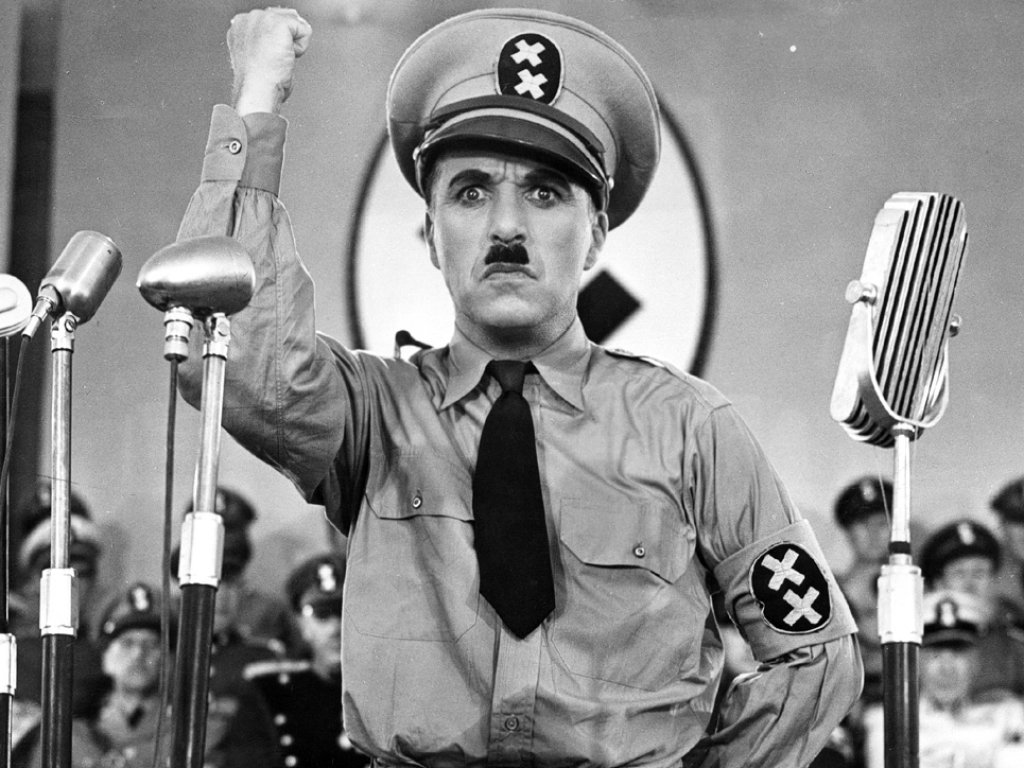
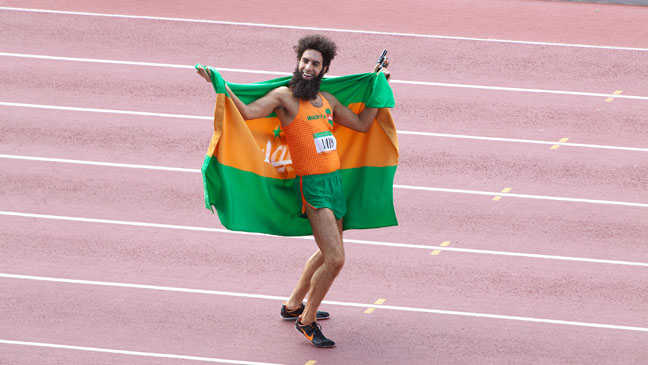
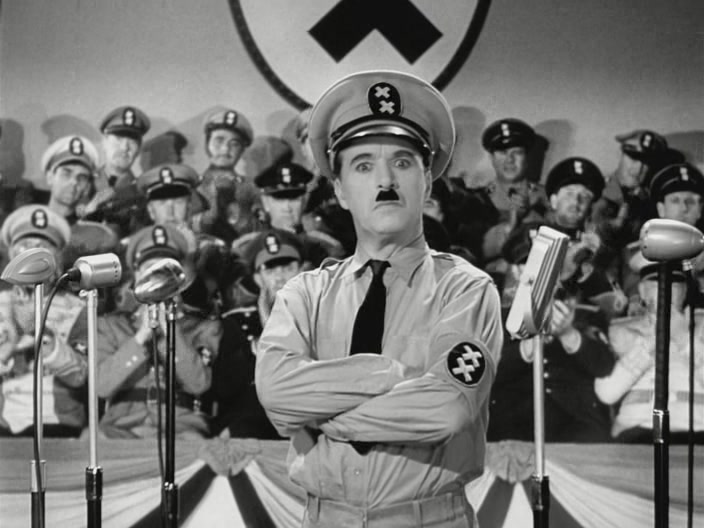
Comparative Analysis: The Dictator (2012) and The Great Dictator (1940)

I have often said that I do not enjoy indulging in comparative analysis when writing a standard review. Sometimes it does come up by I try not to focus on that aspect. However, there will be the rare occasion where the comparative analysis angle is far more intriguing than a standard review, so I have taken it here. I hope you enjoy it and welcome comments.

After having seen The Dictator a thought occurred to me that would invariably shift the tone and direction of the piece I wrote regarding it and it would thus not be a traditional review. The thought was as follows: The Dictator is like Sacha Baron Cohen’s own take on The Great Dictator. Now before proceeding with this line of reasoning allow me to state unequivocally that I am not for a second equating Cohen to Chaplin. What I am saying is that the parallels that this film shares with the one made 72 years ago are rather hard to ignore.

Frankly, I could also write a little more on this topic and explaining why this film does work to the extent that it does and find that this is a much more interesting dialogue than “How funny is this?” as that’s quite the subjective question, and “How does this rank in Cohen’s canon thus far?,” ibid.

Now, this might seem a rather facile allusion at first but what most intrigued me about this thought was the absolutely refractory nature that this tale has and that it makes The Dictator not only true to its time but as true to the artistic force driving it as The Great Dictator was.

The first confluence that the two films share is that there is a rather overt political message being delivered in the film. Each fits the tone of the actor and the film perfectly aside from being a necessary oration for the political climate in which it was spoken. Chaplin, the silent star, who resisted the advent of sound with fervor eventually, slowly gave in. The Great Dictator was his grudging embrace of the new form. That’s not to say Chaplin didn’t make it a visual venture, as this film features the iconic playing with the globe scene but it does also have the memorable speech, one of the most brilliant pieces of acting ever committed to celluloid. The silent star has a stump speech wherein he not only wears his heart on his sleeve but belies the fact that he is a double for the dictator.

The Dictator does have its own double aspect, however, as the title indicates, it focuses on the dictator rather than the double, and the speech here is given by the dictator not the double. The speech, as opposed to being heartfelt, goes from being tongue-in-cheek to sarcastic to the near equivalent of a bit from The Daily Show or The Colbert Report, the 21st Century replacement of the political cartoon. Chaplin’s speech was made during the darkest moments of the 20th century and was a message of hope, whereas Cohen is speaking in a world that alternates between great apathy and great fervency, where there is much conviction with little to no information despite the ready availability thereof. In the end, his is a rather even slam of both sides showing the warts totalitarianism and capitalism have.

While Cohen’s tale creates a fictitious nation meant to capture the foibles of as many leaders of Aladeen’s ilk as possible, Chaplin’s is clearly a caricature of Adolf Hitler, and has the additional layer of being a personal statement by Chaplin on his own behalf, who had for years been a presumed Communist by Hoover’s FBI.

While the cinematic quality of either is never going to be confused, I will reiterate that each reflects their lead perfectly. Chaplin was every bit the dramatist, the sensitive artist as he was a comedian, he’s cinema’s crying clown, only he’s unlikely to frighten small children. Cohen is broad, crude and if he’s left a member of his audience un-offended he feels he’s failed in his mission. His style is a perfect reflect of the excess and vapidity of the global political scene in this day and age. This is not to say that decisions of today’s world leaders do not carry weight, but while the world is always in the balance we’ve rarely come so close to the brink of global devastation as we did in World War II. Therefore, the tone of events allow for greatly contrasting tones in the films.

Cohen’s film taking place in a world that is not completely and totally at war allows there to be more societal commentary here, namely in the person of Zoey (Anna Faris). It’s not subtle and it doesn’t always work perfectly but she is the personification of what I referenced above: much conviction with not enough information.

The insanity of World War II also lead to the creation of the United Nations, what was essentially supposed to be a more effective solution than the prior League of Nations. In some ways it has been, in others not as much, this is also a notion that this film toys with quite a bit. Whereas The Great Dictator tackles the Nazi notion of Aryan superiority foremost, then the major players of the Nazi party and then the party’s constructs. The tertiary commentaries of The Dictator vary from totalitarian mindset, to post-9/11 paranoia, the year of protest and more.

While very different tonally, in terms of comedic and dramatic effect it would be fascinating to see these two films as a double feature and further compare and contrast them, but there are some of the most apparent parallels that I found upon one viewing of the newer film.

For the record, there is a bit of inconsistency in The Dictator for my liking. The laughs stop long enough so you notice some of the sillier plot points so the most I can give it is a 7/10. Having said that, I clearly found method to Cohen’s madness such that I took up this tangential association as the most interesting way I could find to discuss it. No film is perfect but there are few films in this day and age that even have something to say, and no matter how crass the method of delivery or how silly the context that does mean a great deal, and I definitely appreciated that.

The Drive-In Movie Experience

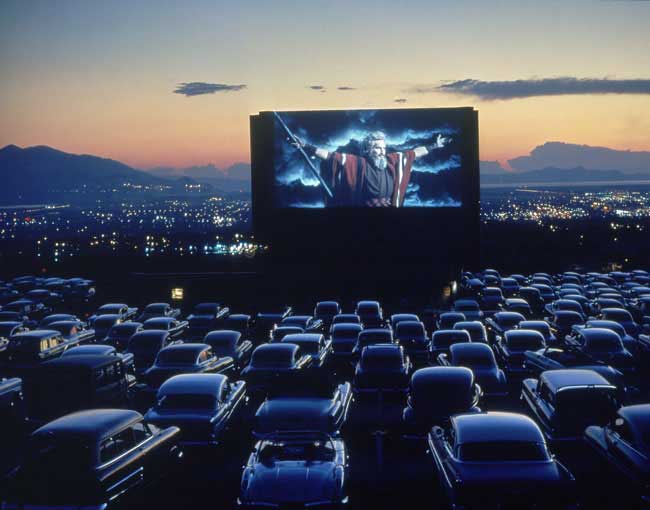
Today as I surfed around, I discovered that it was the anniversary of the first drive-in theater opening. The first theater opened in Camden, New Jersey. There are several places covering that angle, and Google even had their daily doodle reflect the date.

What struck me as fortuitous timing was the fact that I’ve been anxiously anticipating emails of schedules from a drive-in recently. I’m getting that itch to go again soon. What’s more surprising is that not so long ago I’d never gone at all.

Drive-ins may be a dying breed but they’re by no means extinct. If you’d like to experience one you can go here to find the one closest to you. This is the site I use to find the one I trek to. The interest was kindled by realizing that when vacationing in Central PA, I was not that far removed from some. Therefore, I found the one closest to me, which is a hike.

However, it’s a great time and something a movie buff must try. My recommendation would be to go see something you’ve seen already the first time around. This isn’t that hard to do as the schedules are usually a bit staggered on major releases and they will bring back older films.

For example, my most recent trip was around Halloween to see Paranormal Activity 3 followed by The Exorcist. My initial trip was to see the more family friendly slate of the weekend Dolphin Tale and Real Steel. Those were encore viewings to get my feet wet and used to the experience, which is surprisingly good.

The theatre I go to has two dedicated radio frequencies by which the sound is played in your car. Therefore, if you have good sound system the aural experience is rather good. The visual is not the greatest, which is why it’d behoove you to arrive a little early for a good spot. However, considering some projection snafus I’ve seen and heard about, it’s not the worst experience either.

The admission per person is about equivalent to one ticket at a multiplex. Example, The Delsea Drive-In is $9 per adult, $4 per child; for the double feature. The concession selection is extensive, and like a conventional theater this is where they make their money, but you can buy an outside food permit, if you wish.

So there are the basics regarding the drive-in experience, I suggest you look for one close to you and make a trip of it.

When Is It Time To Stop a Movie?

This is a topic I was thinking about just recently. It was likely inspired by some godawful Netflix or the like. There are many schools of thought on this but essentially it’s something I’ve never been consistent with and it’s also an emotional visceral decision rather than an intellectual one, so I thought it was worth some examination. Without further prelude: Do you have a hard and fast rule regarding when to just stop watching a movie?

Clearly the environment one finds themselves in will impact how heavily you debate it. I’ve only theatrically ever walked out of one film, Jumanji. While I don’t necessarily regret the decision, the thought of “I’d rather be home and I should be leaving” did factor in. Either way, that’s the only precedent and while I’ve been tempted I’ve not done it again.

The stop or move on question comes into play a lot more when dealing with home video, more specifically on Netflix.

Some films, such as the one referenced in the picture Satan’s Little Helper, have the Train Crash Effect on you as a viewer, which is to say no matter how bad it is you have to keep watching. Regardless of the fact that I never even grew an ironic fondness of the film it was good fodder for joking.

Some films, of course, are so terrible they actually hurt your eyesight. The prime example of this would be Dollman, a film that’s the antithesis of Demonic Toys inasmuch as its so bad it’s offensive. That film I turned off within 10 minutes.

Which brings us to the argument of time; Syd Field’s theory that you typically know if you like a film within the first 10 minutes has some basis in fact but isn’t gospel. It’s more a guideline emphasizing the importance of a strong start to screenwriters. Few, if any, endings have ever salvaged a film in my mind. Many endings have ruined films. Usually, the cut-off is the mid-point. One film I saw recently really started to collapse around that point and few improve beyond it.

Is the 50% rule set in stone in my mind? Sadly, it’s not that easy. I’ve rarely stopped a movie past that point, but I have found redeemable qualities or scenes beyond it in the past when all that had preceded said point had been irredeemable.

I’m given further pause by films I nearly quit on very early on but I stuck with and eventually loved. The most notable example being Dogville. Eventually I got past my resistance and really started to appreciate what was happening. That does complicate things and is a case against ever turning anything off.

While I certainly understand the philosophy behind not wasting one’s time any further the allure of the unknown and the possibility of something to latch on to is compelling.

When watching a film as a group it’s easy to make it a democratic process. The question can be raised: “Are we done with this?” If there’s no consensus you can tune out in some fashion, which is an option when viewing solo but then why even keep the movie playing?

I suppose this is a roundabout way of putting my thoughts down and hoping for some insight from without that will lead me to a conclusion but in all likelihood it will remain an instinctual decision. If I think there’s something I can glean or catch from continuing I shall, if it’s pointless I shan’t. What are your thoughts?

Moviegoing Abroad

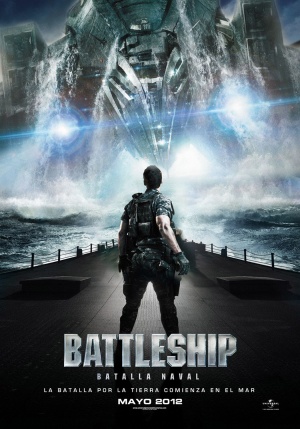
I actually watched Battleship a few days before it came out here in the US, as I was in Mexico in time. This wasn’t the first time I saw a movie there. I went last year also, and while it’s not something I’d recommend everyone, but if you’re a movie freak going to a foreign movie house is definitely something to do.

Part of the reason I decided to write about it this time was with more and more conversation about the filmgoing experience in the US it’s more valuable perspective now more than ever.

So here are some benefits to checking out a flick abroad.

1. Check The Listings, You Might Get Lucky

Part of the motivation to see Battleship was that I knew it came out abroad before it came out in the US. This is a the case more and more now, so if you time it right you could see something before all your friends. Maybe it’ll even be good.

2. The Price is Right

Granted this all depends on your exchange rate and how favorable it is. Going to see Harry Potter and the Deathly Hallows Part 2 was not really any cheaper Brazil than it was here (However, art houses in Brazil may be cheaper I haven’t been to one recently). This is especially true when you factor in the fact that soft drinks and candies are sold in normal sizes but still up-charged. However, the USD equivalents in Mexico were akin to when I’d take the bus to a multiplex for matinees in the mid-90s, meaning: ticket $5 USD, $2.50 Soda and under $2 for Candy.

3. Concession Variety

Now, clearly when you’re abroad you’ll find things that are ubiquitous like Coca-Cola but also things that are rather indigenous like this year’s find Freskas, which are Nestle’s answer to Whoppers with ice cream-like flavors.

At this particular Cinemark there was also a coffee/liquor bar in the back with other snacks, which is usually only an arthouse thing here, dine-in locations being a rare exception.

4. Etiquette

OK, I can only gauge this based on my limited experience and will qualify that my experiences in Mexico have been during/towards the end of the work day and the theaters weren’t that full but they were quiet. Conversely, my Potter screening in Brazil was late and rather full but for the most part filled with quiet reverence that film deserved.

5. Experience

My two trips to this Cinemark in Mexico and another mall-attached multiplex in Brazil have been clean theaters, where seats could be chosen ahead of time (get this, no extra charge! Take that Cinema de Lux!), seats that are comfortable, lights that go down on time, good projection with no significant degradation of quality even in 3D and based on my interaction courteous professional staff (for the most part).

Not to generalize for clearly the more you frequent and inadequately run movie house the more warts you find but it’s a game of chance when you happen upon a house that doesn’t do things right, when they do odds are you’ll have a great time.

As I mentioned above, it takes a certain odd egg to see a movie on vacation abroad. However, if you think you’re one it’s definitely worth doing.

In-Flight Movies

I typically see myself as someone a bit caught between times. In certain ways I’ve always been drawn to older materials in terms of film and television, but also seeking out newer ways in which to consume these products as I’ve discussed previously. In an age when there’s any number of ways to access new or recently released films I was surprised that one (at least) had escaped my commentary until recently. This could have to do with the fact that I hadn’t seen one in a while, but what I’m referring to is the in-flight movie.

In my experience there are two different presentations here: the communal screens, where either monitors or projection screens spread throughout the cabin are viewed; or personal screens, which are affixed to the backside of the seat in front of you.

My viewing experiences have usually been better with the latter. Though I’ve experience films this way on fewer occasions, I recall having seen anew and at first analyzed The Sixth Sense and then most recently I saw Chronicle.

Now based on those two I saw better movies in this way but there’s more of an intimacy. You’re still getting sound in a headset but there’s less to distract you from the image on screen when it’s right in front of you as opposed to the lottery of monitors and screens. A big screen on a wall might seem more cinematic, but you have not chosen your seat or your distance from said screen so in that case I’d prefer something a bit more democratically equidistant, that and I’m a front row kind of viewer anyway.

The biggest downside to in-flight viewing is the PA tapping into your headset, which will occasionally cause you to rip your earbuds out in shock not unlike when Dr. Evil screamed into his space-mike in The Spy Who Shagged Me, but other than that it’s a pretty good way to pass the time, much better than most.

A Nation’s Emblematic Film: Brazil

Now, I cannot for a second claim that my viewing of all of Brazil’s significant films in the history of the nation’s cinema is complete. However, making a watch list for myself is just one motivation for writing this piece. The others are: one, there are likely many coming across this piece who couldn’t name a handful of Brazilian films. Second, it’s really about thinking of films and culture in a different way. This really isn’t about naming what is the greatest Brazilian film of all-time, or any other nation that this series might focus on, but rather to open the discussion on a nation-by-nation basis about indigenous cinemas and cultural portraiture. If I had one film, and one film only, to show someone to say “This is Brazil and what you need to understand about it” what film would open that dialogue best, if not address all those points?

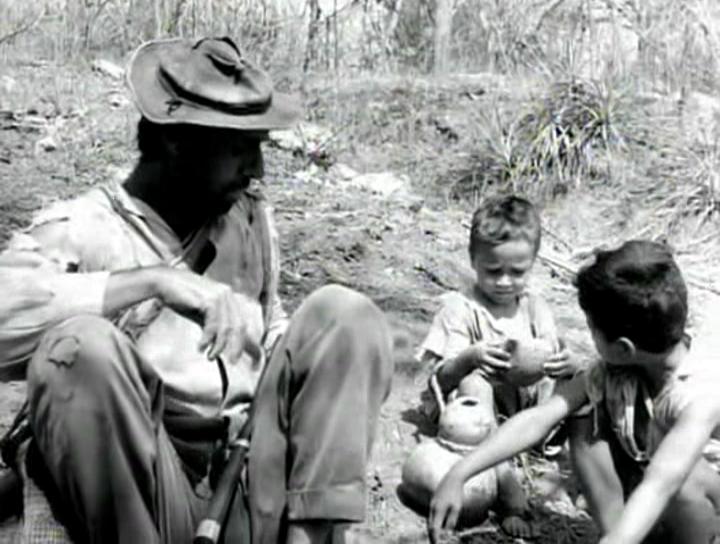
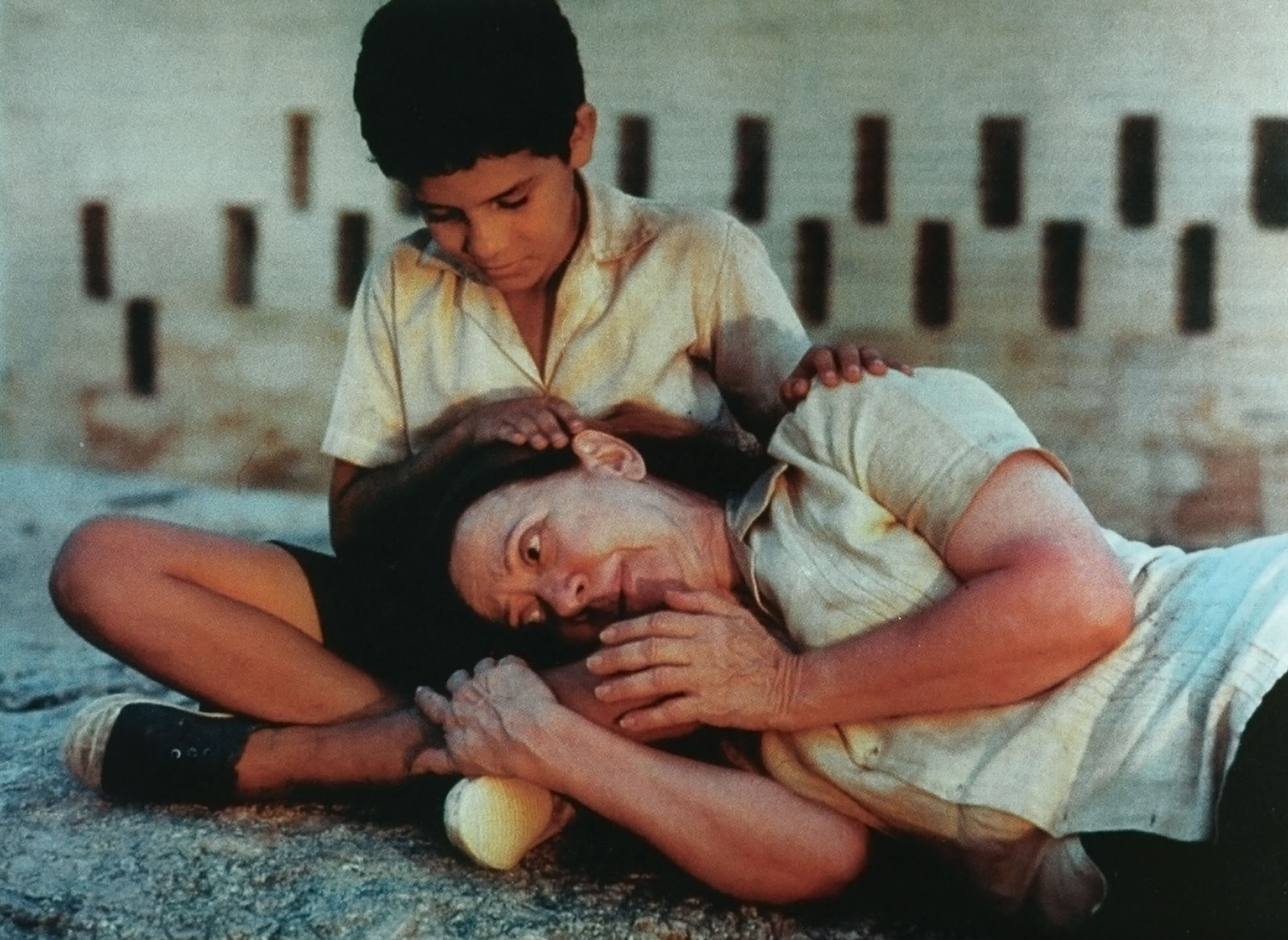
This idea came to me after a recent viewing of Vidas Secas (Barren Lives). I’m not sure that film is the representative choice but it gave me the idea, and made me think “At least I’ve seen this film now and my citizenship won’t be revoked.” What struck me as particularly Brazilian in the film was not only its locale (Brazil, like all large nations, can be quite regional but there’s seemingly something universally Brazilian about the northeast) but also the theme of persevering through hardships in that film.

Universal themes such as the ones mentioned above are just one of the watermarks of these films that can be discussed, aside from more specific traits like the migrant population and the era in the nation’s history. While the themes touched upon in the film are very Brazilian, it is a tale of being humbled, a thoughtful drama, which doesn’t have the joie de vivre that is so common in Brazil, and many other Latin nations, in spite of circumstances. Does that mean Vidas Secas can’t be the emblematic film? No, but others are worth considering, this one is still alive.

Films like Kiss of the Spider Woman, or any other foreign production, are not in the running. That specific example was clearly shot in Brazil by a naturalized Brazilian director but the way the script was written it could’ve been any authoritarian Latin American state in the 1980s, locality wasn’t the point of the film.

Fernando Ramos da Silva in Pixote, A Lei dos Mais Fraco (HB Filmes)

Another Babenco film Pixote is a better example thematically. However, once you factor in the unfortunate history the film has (A child of the favelas, Fernando Ramos da Silva [pictured above] was cast for authenticity, but was murdered at the age of 18, as he went back to live where he always had) makes choosing this film a bit sensationalistic and tabloid, not that I’m looking to have my selection propagandize, but the film and the aftermath are inextricable to me. Such that any symbolic honor not based solely on cinematic merit is difficult to bestow upon it. I could, and still may, write a whole other piece about the ethics of hiring impoverished amateur children as actors. This case, and that of Slumdog Millionaire, illustrate a cruel injustice in my mind: the bottom line is there are professional actors of all ages everywhere, if you do not want to be beholden to that child after the film, as you should be, hire one of them. If you hire an amateur child from substandard living conditions you should, as Walter Salles did for Vinícius de Oliveira in Central Station, help improve their station in life. At that point you truly are picking a lottery winner rather than just casting a role.

Vinícius de Oliveira and Fernanda Montenegro in Central Station (Sony Pictures Classics)

What of Central Station then? Central Station made quite a bit of money in the US. It was nominated for an Oscar for Best Foreign Language Film and Best Actress. Brazil has more a pedigree on the high-end of world cinema than most would expect. What separates Brazil from most is the consistency of product and, of course, due to the dictatorship there was censorship and artists had to fend for themselves. Now, the government is more active in promoting the arts, the major studios have a presence in the country and so forth. Yet, the fact that Brazil has been up for the Oscar, is the only Latin American nation to win the Palme d’Or (O Pagador de Promessas) and has also scored at Berlin (Elite Squad) is not what is going to dictate the most Brazilian film. Those are just indicators of quality.

Therefore, what’s the quality of Central Station? It has memorable source music, it’s a heart-wrenching drama, it tells a tale of a letter-writer and poor illiterate boy. It crosses that divide and it check off a lot of the qualities I’m looking for in a film representative of Brazil. Not to mention that it’s named after the largest train station in the country, therefore it’s a metaphor for the country and the letter-writer hears many stories from people of all walks of life that are indicative of the country and its people. The blend that exists.

José Mojica Marin in À Meia-Noite Levarei a Sua Alma (Anchor Bay)

I think perhaps what is most important about addressing this question is deciding why certain films, or series of films, are being selected. It truly becomes a bit existential for me (and a tad corny) because the search is where the value is. Take for example the Coffin Joe films, after having seen a box set of his works I watched the documentary about him. In that film his frequent screenwriter made a very astute observation, which is that José Mojica Marins did something he thought was impossible: he created a Brazilian horror personage. All the other archetypes are decidedly American or European but this blend of religion, existentialism, patriarchy, propagation and misogyny is the perfect Brazilian horror type. In one singular, virtually indestructible entity Marins encapsulates and exaggerates virtually every possible aspect of the male psyche in Brazil and twists it to horrific effect. Does this make his films the most Brazilian? It’s not entirely out of the question. It certainly makes his films worth mentioning here, but hearkening back to how I introduced this question; no, I wouldn’t show someone Coffin Joe and say “This is Brazil.” I would show them Coffin Joe and say “This is horror” though.

A Opera do Malandro (The Samuel Goldwyn Company)

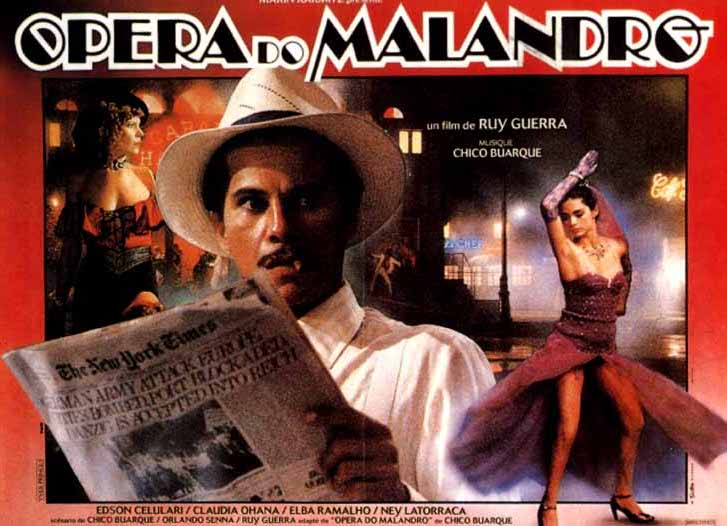
Now, with regards to the aforementioned regional aspect to the country, I and most my family have our roots set in Rio de Janeiro, though we’ve since scattered quite a bit. With that in mind, most of us recognize and appreciate the musical diversity of the country, but our affections are usually for Samba and MPB (Música Popular Brasileiro) above all else. Few artists represent these genres and Brazil as well as Chico Buarque. That brings me to A Opera do Malandro, which is a musical based on an album he wrote. It wasn’t Buarque’s only foray into musical entertainment, he and many stars wrote a version of the Town Musicians of Bremen (‘Os Saltimbancos’) that is a standard. Yet, here his tale is a cinematic adaptation, period piece, a sort of Brazilian noir, which represents a kind of Brazilian, (the Malandro), akin to but nor quite a wise guy back in a similar era here. So it doesn’t quite pass the universality test.

Alexandre Rodrigues in Cidade de Deus (Miramax)

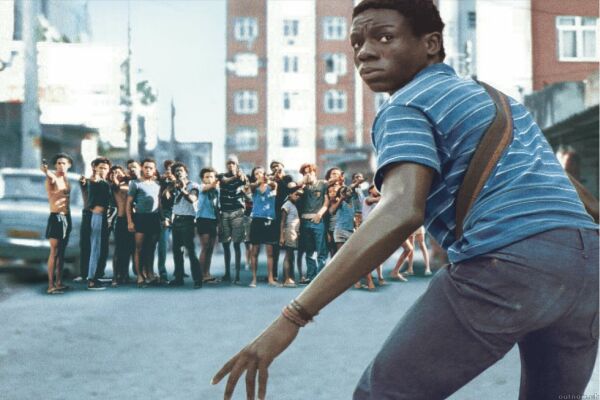
Perhaps, the most accomplished work in the history of Brazilian cinema is City of God. This is a film that was a hit domestically as well as internationally, it earned box office success and critical acclaim. When writing about it I have likened it to the great films in history. Again this selection isn’t about greatness but representativeness. So while this film and the Tropa de Elite (Elite Squad) movies are great dramatizations of societal problems and brilliantly map out “How’d things get this way?” they don’t paint a portrait of all of Brazil, which I’ll admit is hard to do, but as endemic as corruption in police and politics is, and as large as trafficking and crime syndicates in favelas have been, they are localized stories cinematically. So we move on to other choices.

Marepessa Dawn and Breno Mello in Orfeu Negro (Janus Films)

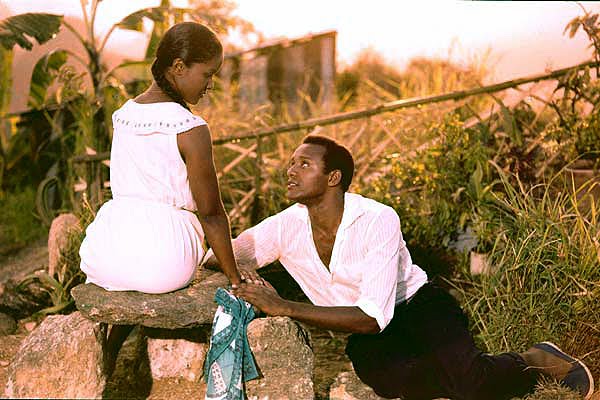
Perhaps, some symbolic stories are the last two that need to be discussed: Orfeu Negro (Black Orpheus) and Dona Flor e Seus Dois Maridos (Dona Flor and Her Two Husbands). Now, the former has had international success. However, it is a co-production with France, which I could even let slide but the fact of the matter is its the transposition of a Greek myth to (at the time) modern day Rio. Therefore, as Brazilian as it is with Carnaval and Samba Schools, it’s still rather European too. As for Dona Flor, its incorporation of Magical Realism and its colonial/post-colonial commentary made indirectly through her husbands and the fact that it’s based on a novel by one of Brazil’s greatest authors (Jorge Amado) make it a great candidate. However, Amado is Amado. As much of the director’s voice as can be added is but if you know anything about his work any of them bear his mark a bit too much to be truly emblematic of a nation in the encompassing sense I’m trying to choose said film within, which rules out any films based on Nelson Rodrigues‘ plays.

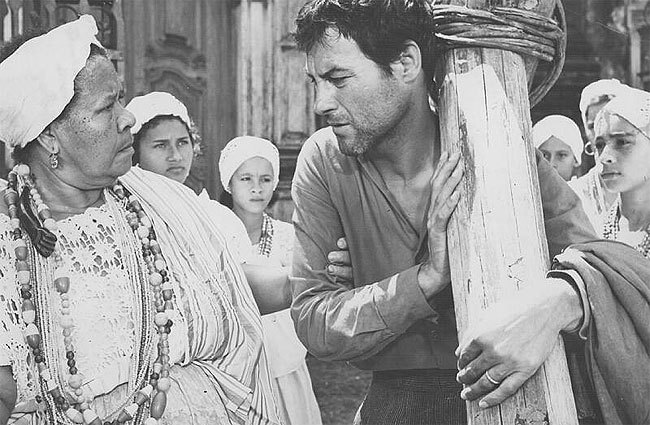
Leonardo Villar in O Pagador de Promessas (Lionex Films Inc)

So even as I began to outline and write this piece I realized there are big films from Brazil that I have not seen. At least two would be candidates for this honor The Given Word (The Given Word) and Menino de Engenho (Plantation Boy). There are likely others as well but those two are likely the ones with a universal quality combined with indigenous uniqueness that would qualify it here. For now, based on what I’ve see it’s Central Station, but I’m quite eager to continue searching and if you have any suggestions yourself please feel free to comment below!

Rewind Commentary- A Home Video Trend I Hope to See Continue

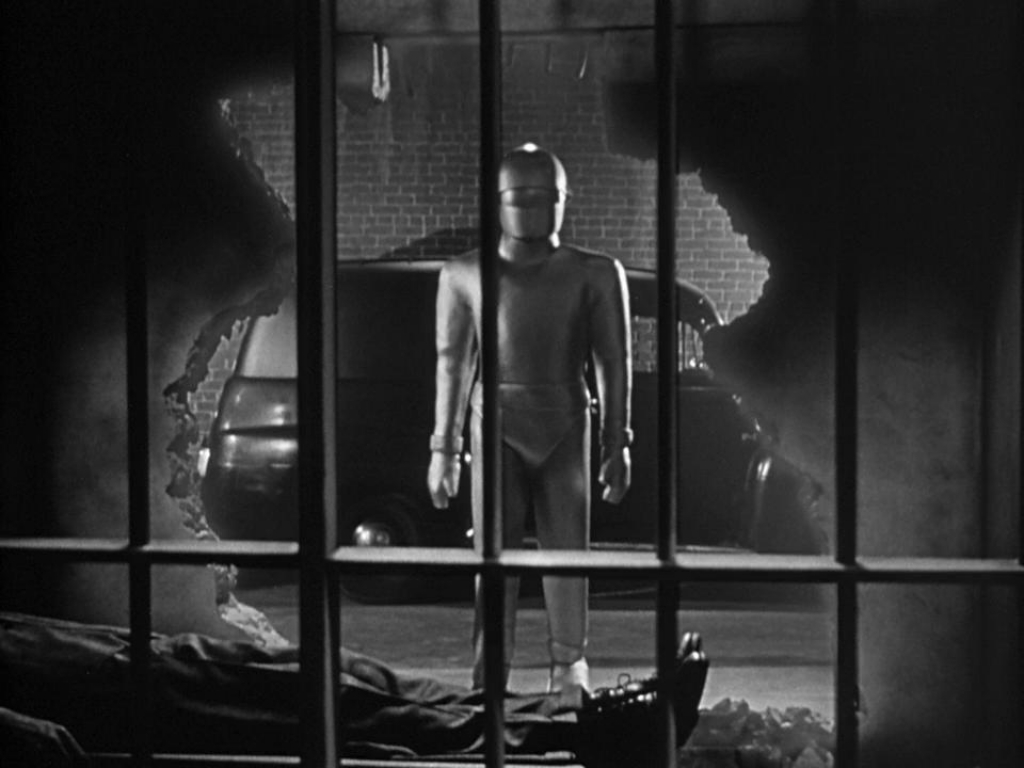
The Day the Earth Stood Still (20th Century Fox)

As those who know me, and if such a person exists, cyberstalk me, know I created this blog after writing on another site, which shall remain nameless, for a while. The point is, I have material sitting around waiting to be re-used on occasion I will re-post them here. Some of those articles may have been extemporaneous at the time but are slightly random now, hence the new title and little intro, regardless enjoy! And in this one it’s something I haven’t seen followed through.

Recently The Day the Earth Stood Still, the remake, was released on DVD. I did not see the movie. It was one of those instances where I saw no need for the film to be rehashed. How the work of the fantastic Robert Wise could be modernized or improved upon was something I never understood.

How an intelligent science fiction classic could be turned into something that looked like Independence Day turned my stomach. It follows a pattern in film and society, which I will likely comment further on in upcoming columns, that what exists just isn’t good enough. The permanency of film, which I think is part of its beauty, just doesn’t cut it. People don’t want to see The Day the Earth Stood Still from the 50s…or maybe there is hope. Maybe we’re just not discerning and we’ll see whatever slop the studios throw in front of us.

In releasing its DVD of the remake Fox has included, at no additional charge, a copy of the classic version of The Day the Earth Stood Still. This is a marketing strategy I could deal with, and knowing this is part of the scheme ahead of time I might not be as averse to the rash of remakes.

Now don’t get me wrong I don’t believe there’s altruistic intent in this move. They want to appease disgruntled fans and try to sell DVDs. Why not have it both ways though? Why not always do this? If you’re going to remake, update, re-imagine, reboot (call it what you will) a classic and introduce a new audience to it, raking in a ton of cash regardless, why not show them where the idea came from. After all as a studio, Fox in this case, both films are your product, so why not promote both? As a studio you are not a Johnny Come-Lately looking to hock electronics for the ADD generation you have a veritable arsenal of product ready-made at your disposal so put it out there, enlightening people on film history and commerce can go hand-in-hand just look at Turner’s Forbidden Hollywood deal with Warner. These are films that only really have historical relevance but are now exposed, packaged and available for purchase.

Remakes won’t stop but at least they can start to serve some purpose aside from just generating income from a public unaware or unexposed to the source material. Hopefully, this title won’t be the last to be packaged this way.

The Flip Side: Seeing the Movie Then Reading the Book

Asa Butterfield in Hugo (Paramount)

Recently I re-posted a series of articles I wrote on The Site That Shall Not Be Named (no it’s not the Dark Lord’s site) about how to divorce oneself from the source material when you’re watching an adaptation of a beloved book, comic, TV Show or what have you. If you want to read that series start here, otherwise bear with me.

In that series I really tackled a problem many face but mainly it pertained to books and their readers the most. To be more specific people who happened to have read the book prior to watching the film, which is a tough transition.

However, a twitter friend of mine and blogger in his own right, recently posted this intriguing entry:

People who follow me at all know I read a lot.

I read books now more than ever, used to read more newspapers and magazines.

But, I hear all the time, I want to see say “Hunger Games” but I need to read the book/books first. I personally prefer seeing the movie first.

Books are a totally different format, richer, longer, have subtext, a medium of words. Film is a medium of images and sounds, and quite a bit shorter at around 90-120 minutes. The average screenplay is 95-125 pages long, the average book is around 300 pages. It’s simply different.

For me a good example of this is Martin Scorsese’s “Hugo”. Although the book the “Invention of Hugo Cabret” by Brian Selznick is very cinematic, and the look is in the movie, Scorsese adds scenes, depth of character and a few other things I don’t see in the book. I did see “Hugo” before reading the book, and think if I read the book first I would have used my image of the book to cloud the movie and not loved the movie for what it did well but get trapped in comparisons.

An example of a book I did read first which clouded my judgment of the movie is “Jurassic Park.” I quite enjoyed Micheal Crichton’s novel, and I missed several scenes (especially the river scene) that were in the book in the movie. Although Spielberg does a good job with it, I find actually the monster movie “The Lost World” to be more fun. I think this is partially because my view of the book hurts the movie.

Another example for me from a recent movie is “The Hunger Games.” My wife has read through this series twice already, and I am still around 20% in the first book. I quite enjoyed the movie, and wonder if my judgment of the book would have clouded how I see the film.

Basically movies and books are entirely different mediums. If you try to make the movie just like the book you get boring movies like Chris Columbus’s Harry Potter 1 and 2, which although good and nowhere near as rich to me as Cuaron’s version that shares the vision of the book but doesn’t feel the need to get everything in Harry Potter 3 (still the best of the series to me.
What do you think?

The general points up there I agree with almost without exception. I wanted to quote the post mainly for context and also as shorthand to expound on my observations on this opposite phenomena I didn’t examine.

I completely agree with the assertion that one musn’t read the book before seeing the movie. The book is not Cliff’s Notes to the film. The film has to sink or swim on its own merits. With regards to The Hunger Games, I liked it but I knew innately that there was backstory and subtext from the book only being hinted at on screen, however, it didn’t ruin the film for me.

With regards to subtext allow me to make a minor semantical point: yes, many films are surface only but when you study them you learn to read them (I’m not being poetical, we say that) and seek the subtext. Some films are what they are; vapid or brilliant there’s not much else going on, those are few. There will be more forthcoming dialogue simply because the examples are ones I so closely relate to but I will transition, believe me.

Another thing that even I didn’t really examine in the prior series is that there really isn’t a direct correlation between pages in a book and a screenplay. One can make it, and I have, for a mathematical argument but truly the literal conversion of book to film can have so many more variables. A good example would be Swann’s Way by Marcel Proust. I stuck with it and finished it and liked, despite it being the most challenging read of my life. Such is the stream of consciousness and transition from reality to memory to fancy to dream that it makes it a very involving and exhaustive experience. Were you to take certain pages out of the book and transcribe them to screenplay form you could have so many changes of time and location that one novel page could be three to four screenplay pages. Again, if you’re a completist and being literal. A good film of the book would have some of those montages implied in the writing but not all of them.

Certain writing styles do imply montage as Eisenstein talks most about in the book of his I’m in the midst of and what can be done in a paragraph of prose may take a page or more in a screenplay depending on how you decide to exploit it cinematically. This is just further food for thought when thinking about taking something that’s purely text and turning it into visuals.

With regards to the example of Hugo above it’s amazing that we both reached virtually the same conclusion about the film having inverted reading schedules. I took The Invention of Hugo Cabret out of the library and devoured it because it was a quick read, liking the story much better than the presentation thereof and then though I knew Scorsese and Logan made certain changes I felt they enhanced the film and made it the best of 2011.

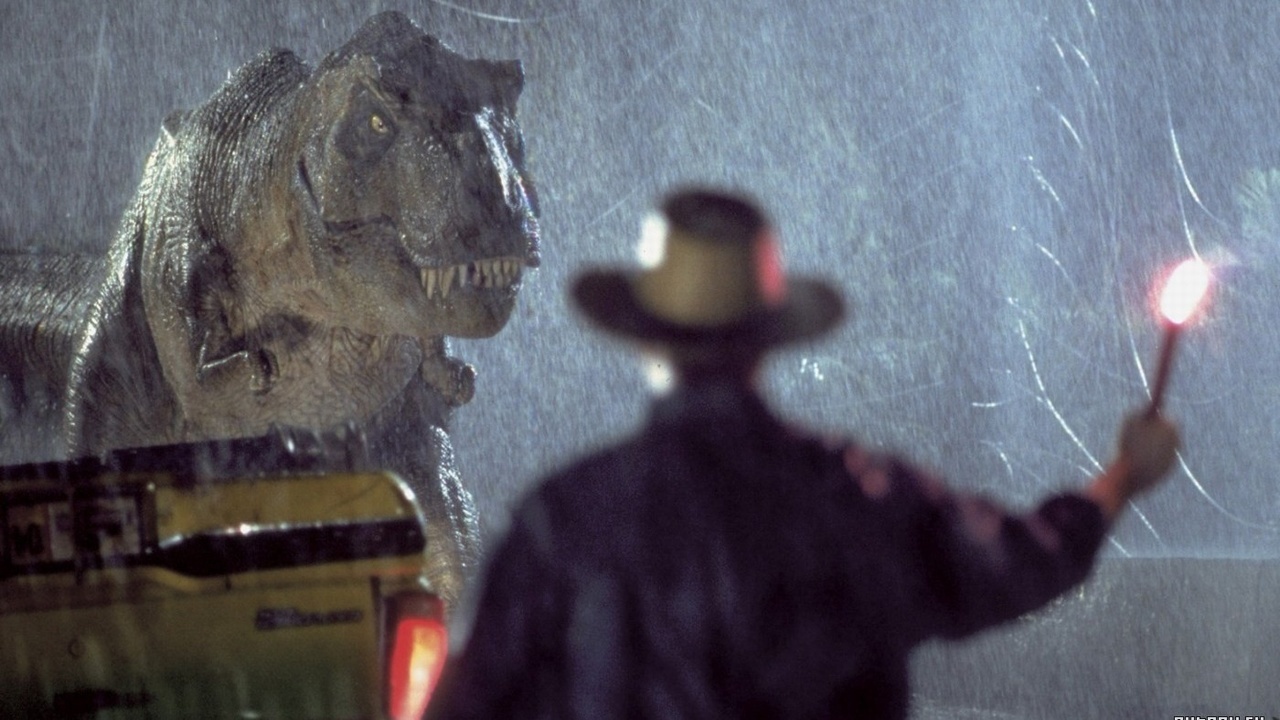
Sam Niell in Jurassic Park (Universal Pictures)

With regards to the Jurassic Park films, I actually tried to read the book and I failed to complete it despite needing to write a book report on it. That did not diminish my desire to see it or affect my view of it. I absolutely adored every second of it. Being a budding cinephile and a kid who at more than one point wanted to be a paleontologist it was, and will remain, one of the most exhilarating movie-watching experiences of my life. It’s magical. On the other hand, I didn’t try and read The Lost World, I disliked it a lot. How much? This much. I was pleased to learn in my Spielberg class that part of the reasoning behind his doing The Lost World was that Universal had been begging him for a sequel since 1982 and he would not hear of it being E.T.

Michael Gambon and Daniel Radcliffe in Harry Potter and the Half-Blood Prince (Warner Bros.)

As for the Harry Potter films: I love them and I love the books. My love for both is separate but equal, to re-appropriate an old phrase. I always read them before I saw them but with the few production delays they had the gap between reading and viewing grew as the films moved on. My favorite is The Half-Blood Prince, it’s the apex of the story cinematically and in the books I feel so much of what was built in the series lead to that point. The Prisoner of Azkaban is great but like many of the films they stumble at the goal line, metaphorically speaking but that one just loses the ball entirely with the very last image and piece of voice over. Only part of the issue with the first two films is Columbus. The other part is that the books steadily grew in size through the course of the series. Slavishness to the novel was easy, and maybe a requisite to establish the franchise at the beginning. As the books grew slavishness became more difficult to accomplish, nearly impossible, thus the films truly came into their own as a separate but equal enterprise.

So having said all that in the interest of piggybacking and elaborating on points I previously made; What about seeing the movie first and then reading? I am very intrigued by the idea but I do not have much practice with it. I have a few candidates in mind to try it with but let’s see what case studies I have (Yes, we are quite literally discovering it together, hence why I wanted to write this post).

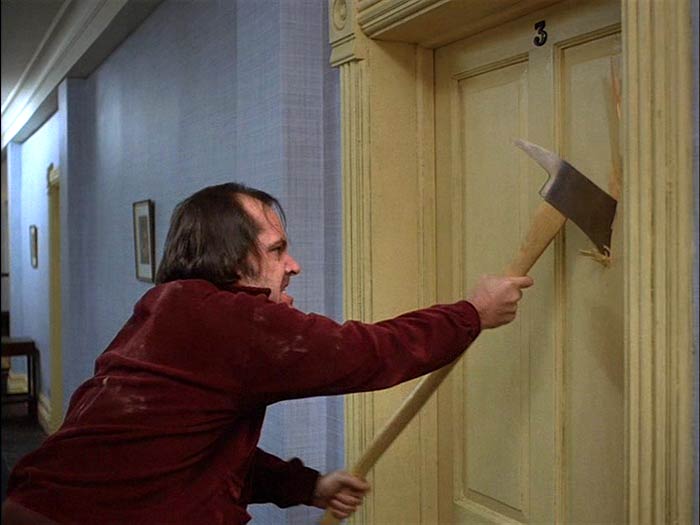
Jack Nicholson in The Shining (Warner Bros.)

The Shining

I decided to pick up a Stephen King book because I saw The Shining. I was just into High School and it was the first time I enjoyed being scared. I was averse to horror before then. I learned from King and went on to read many that he read. However, the film and the book are very different beasts. I had no problem with having a cast in my head, King even acknowledges that in a foreword or afterword of one of his books, but like I said it was different. I didn’t dislike it. I don’t disagree with King’s comments about Kubrick either, yet I still enjoy Kubrick’s riff on the story more than the book or the mini-series. Do I skew to the movie for having seen it first? Yes. However, then there’s The Hunger Games. I tried to read it as a library book. Hardly started. I then saw the movie still knowing next to nothing and would likely enjoy the book more.

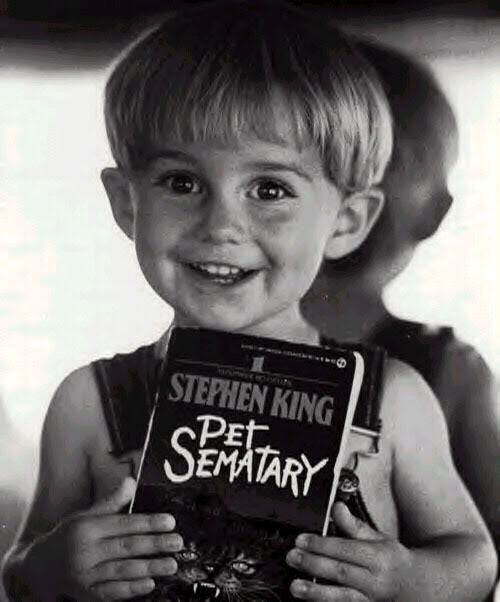
Pet Sematary

Miko Hughes holding a copy of Pet Sematary

Here’s one where if you make me pick which one I like I’ll kick, scream and refuse. I love them both so, so much.

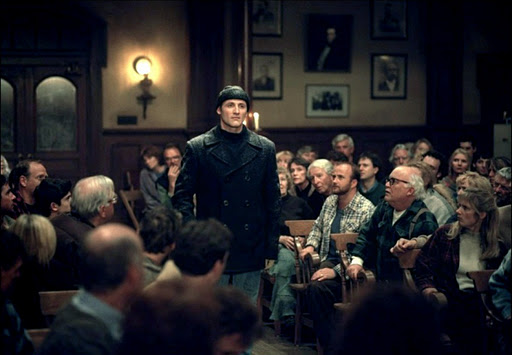
Storm of the Century

Colm Feore in Storm of the Century (ABC)

Ha, I’m such a cheater because this is a screenplay but regardless I may be in a minority but I really enjoyed it in both incarnations.

Hellraiser/The Hellbound Heart

Doug Bradley in Hellraiser (New World Pictures)

Clive Barker brings such imagination and originality to everything he does it’s hard to be disappointed but it is a somewhat different interpretation of the vision than the one he put on screen I find. Similarly, he’s working on a comics series of Hellraiser now, which is incredibly good.

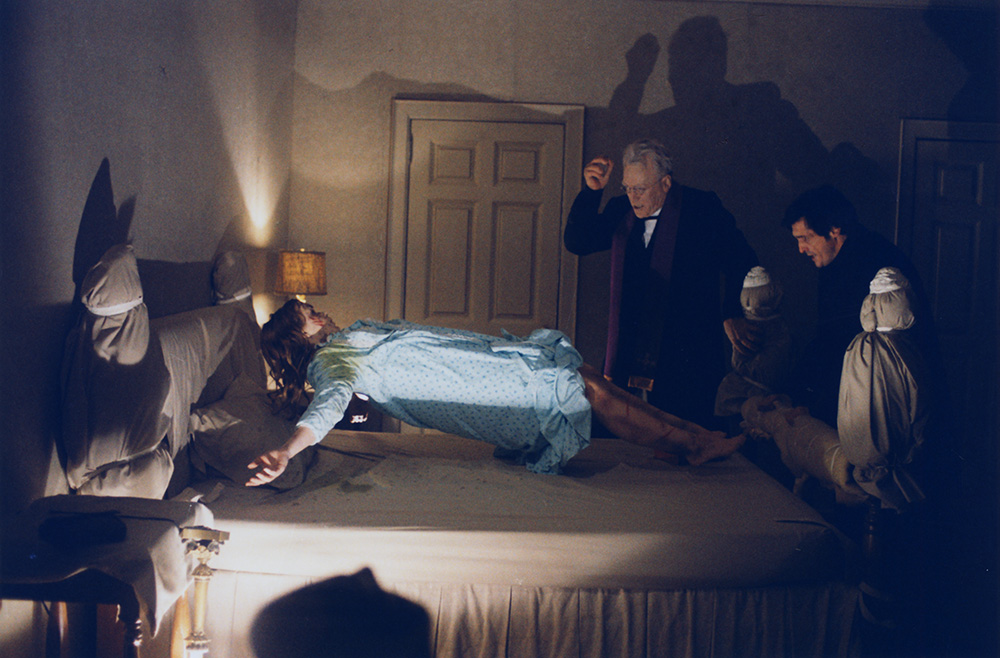
The Exorcist

Linda Blair, Max Von Sydow and Jason Miller in The Exorcist (Warner Bros.)

With all apologies due William Peter Blatty the movie rips the book to shreds quality-wise. However, the reading experience was just fine.

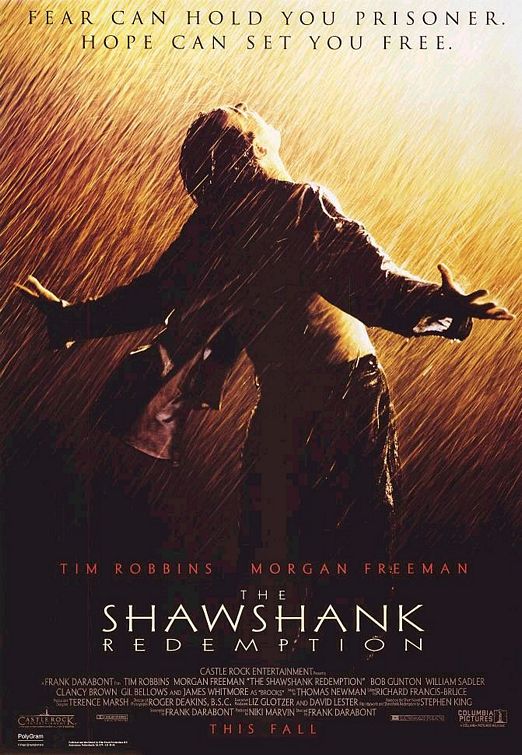
Rita Hayworth and the Shawshank Redemption/The Shawshank Redemption

The Shawshank Redemption (Columbia Pictures)

It wasn’t a tainted reading experience in any way and it’s evidence of why Frank Darabont is Stephen King’s best adapter.

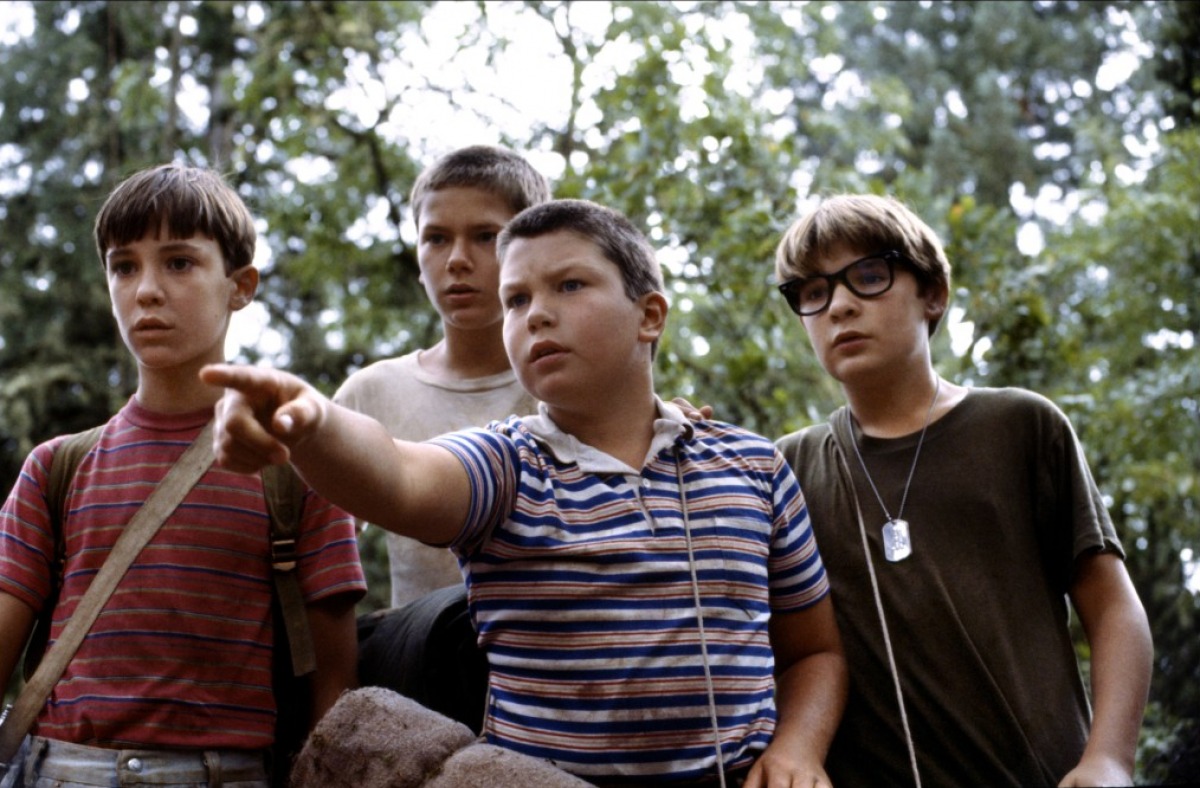
The Body/Stand by Me

Wil Wheaton, River Phoenix, Jerry O'Connell and Corey Feldman in Stand by Me (Columbia Pictures)

In a similar way to Stephen King’s reaction to Darabont’s The Mist he also loved this one because of a crucial change Rob Reiner made for the better. Reading it was fine, watching it more lively. In this case it might’ve tainted it in my mind from having seen it so much.

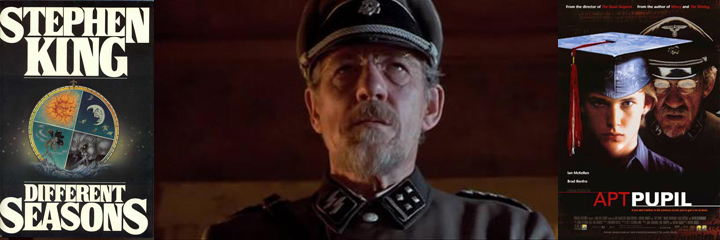
Apt Pupil

This story as written is outstanding. Yes, the cast remained the same but the story delves into the psychology of the situation in ways the film scarcely attempts. You should read it.

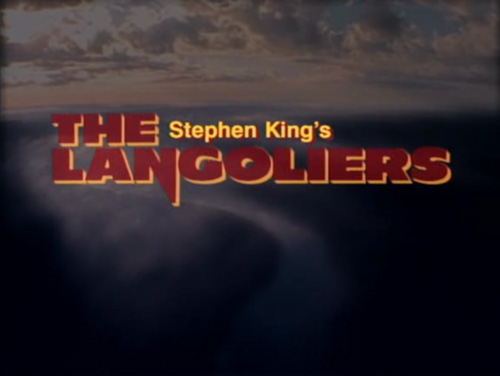
The Langoliers

The Langoliers (ABC)

Augmented by having seen it first in part because I love the mini-series up until the very end. It’s like King says, the story just falls into place so smoothly and that translates on to the page and the mini-series is great until one of the worst third act blunders, and effects shots ever.

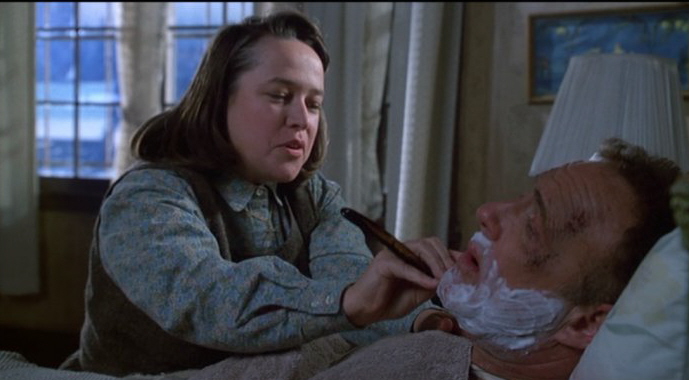
Misery

Kathy Bates and James Caan in Misery (Columbia Pictures)

How can having Kathy Bates in your head not make it better?

Cycle of the Werewolf/Silver Bullet

The Cycle of the Werewolf (Signet/Berni Wrightson)

It’s a totally different beast entirely. It’s a short little book with Berni Wrightson working his magic illustrating it, giving you new images to focus on.

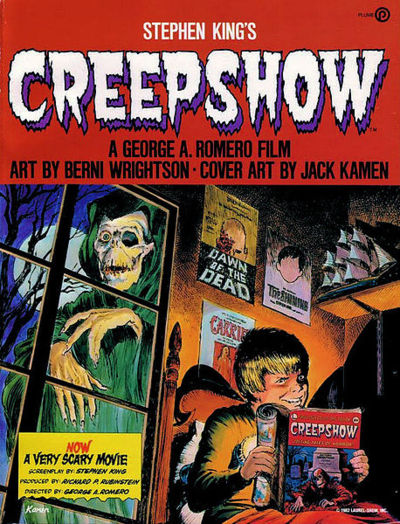
Creepshow

Creepshow (Berni Wrightson/Signet)

Quite frankly with the premise of Creepshow being tales in the style of old EC Comics how can it not be a good comic book, seriously?

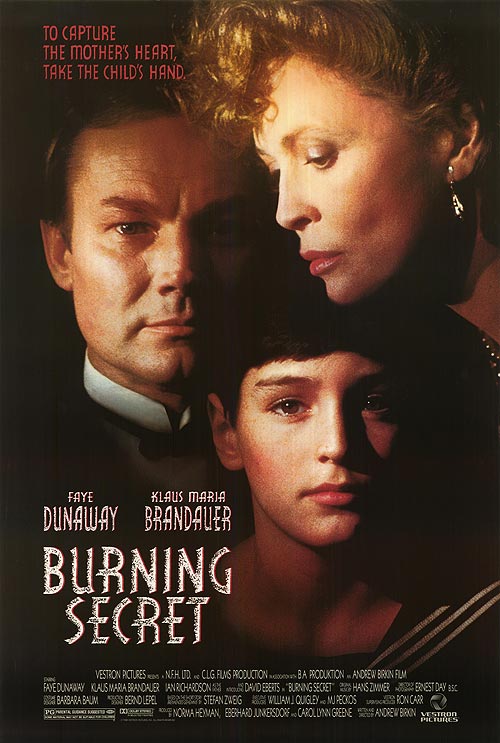
Burning Secret

Burning Secret (Vestron Pictures)

I’m surprised I had forgotten this one. This tale is quite literally the perfect example of this list. I saw this film by chance on Netflix. I was rather intrigued by it and was curious to read the book. The book was rather short and a quick read. The adaptation is great because it develops cinematic subtext without using any of the inner-monologue inherent in the prose. What this does is create an air of mystery and a questioning of motives, at least to an extent, which never happens in the book. The strength of the book is that you get explicit detail about the thought processes of each character. In short, you get slightly different but very well-realized renditions of the tale. In each version the medium is exploited brilliantly.

These are likely the only examples I can be completely certain of. Having thought on them: Yes, the argument does have merit. It can be better and more enjoyable to watch and then read. This might mean that The Hunger Games and A Song of Fire and Ice are in my future.