Films Losing the Religious, One Way or Another

Is there any winning with Hollywood and religious-themed fare? Many times, especially in recent examples, it feels like there isn’t. Frequently the film industry is pilloried for its content, as if visual fictions shape the lives of young people more than scripture. However, then when religion comes back in vogue on film (as almost everything does at some point) then that too creates issues. This year has been one of those years.

Noah was the first title to come under a lot of fire for its Biblical inaccuracy.

However, some of the issues that come to light when those complaints are registered is that the complaints themselves are inaccurate. As highlighted in this piece on The Daily Show.

It’s not an uncommon case at its core. It essentially boils down to selective reading and remembering of the Bible. Yes, the Bible does state that Noah is nude and drunk after the waters have receded and he’s cultivated wine. So one thing that Noah does do well is fill in the blanks wherein Noah is conflicted about his duty and where God is silent he has Noah wonder if he’s following His intent correctly.

Following test screenings where religious viewers had bad feedback Paramount returned with some humorous advertising.

Noah (2014, Paramount)

I agree with their stand that their film about Noah need not be a model of Biblical accuracy. I am fine with most of the decisions made in the film. My main issue with Noah is a filmic one not a dogmatic one inasmuch as I feel many of the conflicts and suspenseful scenarios are somewhat old hat and strung out far past their effectiveness.

The fact that the Bible does not cite Ham as deprived a wife or that Tubal-Cain tried to storm the ark is not a concern to me, in cinematic parlance motivations and conflicts were necessary. For after the flood there is a diaspora of Noah’s children to repopulate the Earth. Some additional incentive in that regard is not a bad thing.

While I can’t say I walked away pleased, I can say I appreciated Noah not being treated as a well-meaning buffoon as he was in The Bible: In the Beginning… And piggybacking on the Jon Stewart comment about the Old Testament, that may well be true, it’s a more dour, wrathful section so why make it Hollywood? Conversely, that and effects work may be why there’s never been a big budget rendition of Revelations. However, Noah did underscore that focused Biblical tales have a better chance of succeeding than sprawling pastiches.

Son of God (2014, 20th Century Fox)

In seeing that Daily Show piece I myself was stunned. I knew that in liking Son of God in spite of some of its sketchiness, incessant gravitas and occasional bouts of television, I would be in a minority. However, I could not predict that the casting of Diogo Morgado as Jesus would prove an issue to some.

The curious thing about this is that it has nothing to do with the fact that he’s Portuguese and occasionally had accent lapses, or even that he’s too Caucasian in appearance, but rather that he’s too attractive. This is even more surprising considering that I didn’t really hear much of this complaint when The Bible, the mini-series from which this feature was spliced, aired initially.

I don’t feel I need to belabor the point that an actor is an actor. He is playing a role. In fact, in an upcoming project on the CW he will be playing the devil – so his look is clearly malleable. I can’t say I haven’t been guilty of over-scrutinizing the appearance of an actor playing Jesus, but I’ve moved past such immature notions and it shouldn’t influence an overall impression of a film.

Heaven Is For Real (2014, Sony Pictures)

I’ve seen plenty of films that earned accolades from religious and family-based organizations that were downright awful. There can be a convergence of quality cinema and doctrinally palatable material, but they are not mutually exclusive and a decision needs to be made on both sides. For the filmmaker and consumer story decisions need to take precedent, and for the viewer only interested in faith-based stories they need to decide whether they’d prefer being ignored or slightly misrepresented. For the latter at least creates a talking point. In seeing trailers for Noah I knew it took liberties with the story. I may not have liked all of the decision or some of the techniques, but I definitely appreciated the intent.

Godspell (1973, Columbia)

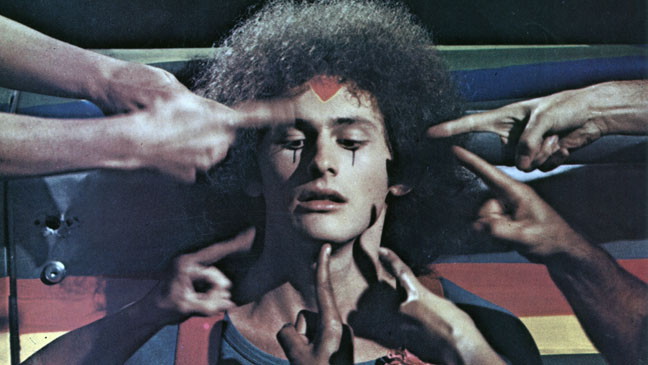
For Son of God its tonality and casting of main parts were its strengths, but its trying to be too inclusive in the narrative created some issues. In the most recent film Heaven is For Real I was surprised to find debate and grappling with belief all over the place and thought. I have yet to hear if these doubts also made people uncomfortable but, in this recent rash of religious fare, it may be the best albeit not based in Scripture. Ultimately, films have to treat Scripture as source material, be it blasphemy or not. Essentially the same rules that apply to adapting other works to screen. The Word is still there untouched. The film is just another rendition thereof. Godspell is not any less powerful to me just because Jesus didn’t really have a fro or striped pants.

By Any Means Necessary 2014

This is a follow-up to a piece I posted in 2012 to list, and also remind myself to take advantage of as many ways to watch movies as I possibly could. Well, much as time does not stand still neither does technology and there are many more options now.

Recently, among many other changes in my home, I also got a Roku. Aside from streaming membership sites there are also myriad free channels that I have recently added to my homepage.

As opposed to just one post wherein I will list many options for myself and others to consider I will post this as a series after I have adequately tried a new channel or other means of watching films. More to come.

Labor Day and the Flawed Release Calendar

Labor Day

I will try and promise that this is my one release date/calendar rant of the year, but I will try and make it count for something. Here I will discuss the release path of Labor Day and some issues with the film calendar that it illuminates.

Now as this link indicates the film debuted on August 29th at the Telluride Film Festival. This release date is close to when its ideal release window should be. I know that in my initial 61 Days of Halloween posts I jested about how Labor Day as a cinematic holiday is about as significant as Arbor Day. And, historically speaking, that’s about right. There isn’t an over-abundance of films set around the time, and at the end of the day all the fete really means is a long weekend, the last vestige of summer. Therefore, it is more useful as a backdrop than a theme, but it does serve this story well and signify a specific time of the year to a North American audience.

The initial release date for Labor Day was announced as December 25th. Surely, that created some internet snickering, but as per the Hollywood code it indicated some confidence in the film. Although, it was a seasonally incorrect choice.

However, cramming your releases in at Christmas is what you “have to do” if you believe your film is an award contender. Here is my diatribe on the tyranny of release dates.

Here were the films that came out on December 25th:

47 Ronin, Believe, Wolf of Wall Street, Grudge Match, The Secret Life of Walter Mitty, Mandela: Long Walk to Freedom (Expanded).

When all was said and done this awards season only The Wolf of Wall Street made significant noise but it was ultimately shutout on Oscar night.

Eventually, the plan was for Labor Day to open in a limited Oscar-qualifying run on 12/27 and to open wide on January 31st. On the 27th Lone Survivor and One Chance opened in limited release. It opened against That Awkward Moment nationwide. That all would make it seem like it was an advantageous move marketing-wise. Less crowded weekend, plus the fact that January is usually a landing site for junk, or properties studios do not know what to do with, boded well for a nation-wide expansion of an Oscar hopeful.

So what happened?

The Release Date History

Labor Day (2013, Paramount)

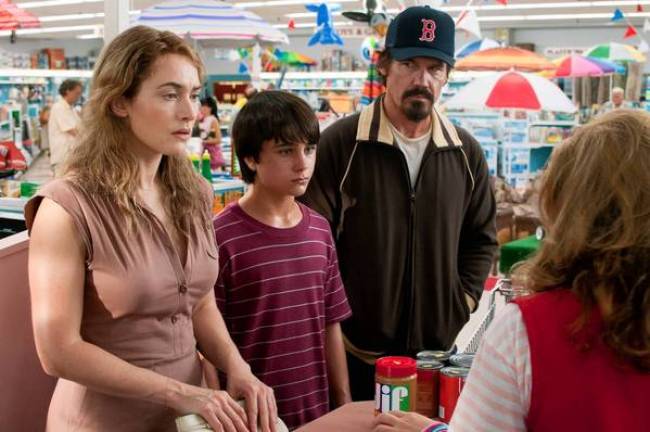
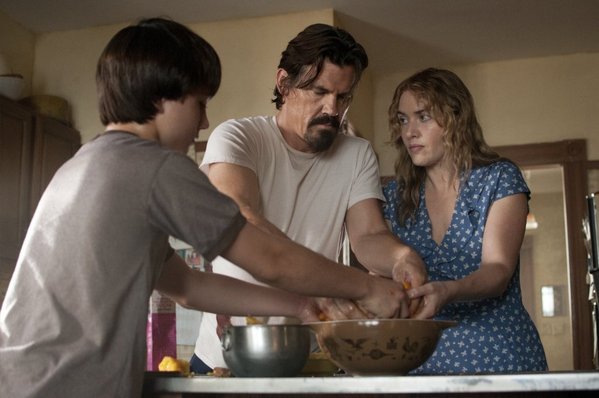
As of today Labor Day has not made its production budget back at the box office. The Rotten Tomatoes isn’t great (http://www.rottentomatoes.com/m/labor_day_2013/) but audiences flock to things in droves that critics slam creating terms like critic-proof.

One attribute that frequently affects releases in the fourth and first quarter of the year is weather. The east coast is a large proportion of the movie-going public and when it wasn’t snowing in January it was cold and about to snow. So nothing lit up the box office like The Devil Inside did. Not that that’s hard scientific evidence, but it never helps overall numbers.

Buzz has to be deafening to draw the crowds out nothing woke the masses up this year until The Lego Movie came out.

The Oscars are a big money-grab. They cost money and they, ideally, render you money. The end-of-year qualifying didn’t grab any attention. A Golden Globe nomination for Kate Winslet isn’t going to get butts into seats. No one cares. No one knows who the Hollywood Foreign Press is or what they say.

The Facts of a Brave New World

New Year's Eve (2011, Warner Bros.)

What does all that amount to? Essentially the studio seemed to scramble. They wanted in to the year end fray to try and grab some holiday money and garner some accolades. What wasn’t taken into account, aside from narrative-appropriate release was the fact that the times they are a-changing.

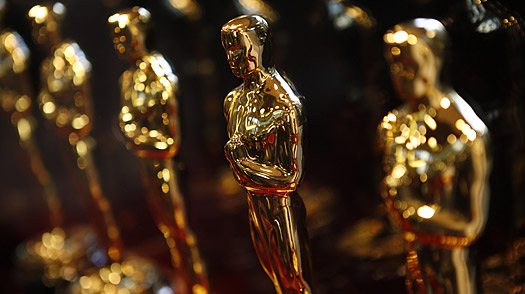
Long-delayed films in this Internet age are no longer getting the kiss of seat. Films are delayed for many reasons. The fact of the matter is, you’re unlikely to change how the Oscar and other award machinery works. The Academy and the studios are all complicit in making that work the way it does. However, the fact that 67% of those polled claimed to have not seen a single best picture nominee on Oscar night should concern everyone in the industry. The idea isn’t just bragging rights, guys.

That and Labor Day weekend, while usually not offering huge box office takes, is a soft spot in the annual schedule seeing as how the “fall films” aren’t quite ready to bow and August is the no-man’s-land of the summer schedule. For example, last year’s long-holiday winner was The One Direction movie with nearly $16M not a huge number but if Labor Day could’ve gotten that opening weekend it’d be in a different boat considering its relatively modest budget.

So I don’t think a delay would’ve hurt, I don’t think a tie-in with the actual date the story is set-on would hurt. Valentine’s Day and New Year’s Eve were mostly-asinine ensemble romcoms but still managed to win the box office mostly on timeliness. Even stupid holidays are things people would rather think about on said holidays rather than when they know they’re gonna freeze when they get back out of the theater.

Lastly, and a complete other story entirely, more same date VOD should start happening for titles that aren’t expected to rake in Frozen or Iron Man 3 like amounts of cash.

The “Award Film” Same-Old Same-Old

Blue Jasmine (2013, Sony Pictures Classics)

Blue Jasmine
The Grandmaster
Prisoners
The Great Gatsby
Iron Man 3
The Lone Ranger
Despicable Me 2
The Hunt
The Croods

The above-listed films are the only, I repeat, only films nominated for Academy Awards in any category that were released prior to the month of October.

Forget the fact that two of the most well-received films of the year were Mud and Fruitvale Station released in May and July were absent from Awards season.

There are many things that The Silence of the Lambs accomplished that will never occur again: it was a film that built-up momentum over the course of weeks, but it also a February, yes, February release that went on to Best Picture. Memories now are too short, perhaps by choice but part of the game, which is annoying is that you can’t release titles in the first three-quarters of the year and hope to garner nominations. The studio had some faith in Labor Day and because it held on to that glimmer of hope it put itself in a disadvantageous position financially.

A Season Turn, Turn, Turn

Halloween (1978, Compass International)

Part of the reason, aside from award consideration, that a title like Labor Day can land in late-December/January is that seasonality, with regards to film releases is not as much of a consideration anymore.

This is both a good and bad thing, the good thing is that if you’re a horror fan (as I am) you can expect horror films year-round. However, during my doubly-long focus on horror there were few theatrical wide-releases I could focus on and featured an indie VOD title as well.

With that example, and a more reason instance of Free Birds being available to rent or buy now despite its obvious tie to Thanksgiving there was less hesitation about pushing Labor Day into award season I’m fairly sure. A decision I feel ultimately hurt more than it helped. For in January if you’re not a purveyor of junk or catching up on Oscar fare you’re usually not seeing much, you’re recovering from Christmas more than likely.

Another negative of the current film game is that studios and the Internet have ensured that opening weekend becomes more and more important. Studios slotting release dates for titles that are two to three years from fruition are now news. Similarly, so are shifts in release date.

The award shuffle is ultimately not worth the effort a lot of the time. Films that debut in that time frame and don’t get the notice they want end up being buried and lost, perhaps losing an audience they had a chance to get at a different time. An example would be Monuments Men, which bowed out entirely and has made upwards of $100M worldwide.

I will leave the final word on finding the right time and not being tethered to releasing a film at “Awards Season” to Wes Anderson who said this in a recent Hollywood Reporter interview:

I don’t even have an opinion about it anymore. Every movie I’ve ever done was released in November or December until Moonrise Kingdom, which opened in May. It did better than any of my films had done in ages. It seemed like it helped that it didn’t come out in the middle of all this stuff [awards contenders]. It didn’t round up all kinds of prizes, so why not be released in May? And we weren’t finished with Grand Budapest in time to come out last year. I would not have wanted to try to rush it out. At the same time, I’m very happy not to wait 10 more months to release it. And Berlin seemed perfectly suitable, since we filmed the movie in Germany.

March to Disney: The Jungle Book – Beyond the Bare Necessities

Introduction

Last year to coincide with a trip to Walt Disney World in March, I decided to have a month-long focus on Disney fare. Their vaults are vast and varied enough such that this is a theme that could recur annually. Below you will find links to the inaugural posts written for the theme.

The Jungle Book: Beyond the Bare Necessities

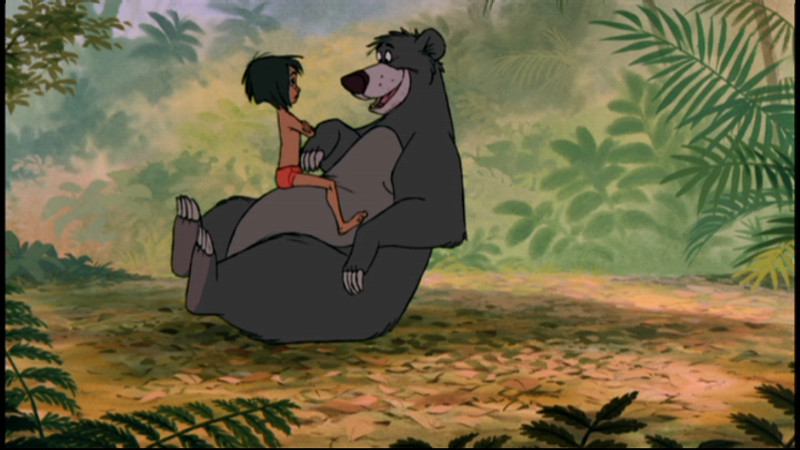
The Jungle Book (1967, Disney)

I won’t speak for others in this regard, but I know to me, even though I’ve seen this movie a number of times; I typically struggle to put my finger on other scenes in The Jungle Book beside “The Bare Necessities” without racking my brain. I found that this happened with some of the late-’60s and ’70s titles and this is not because I don’t find them up to snuff with other Disney animated fare. I think what it is, as I noted after having also re-watching The Sword in the Stone (which I will cover here shortly), is that there’s a more sketch-like approach to the storytelling.

Previously on film the Korda brothers with Sabu in the lead brought this tale to life. However, with Disney’s penchant for anthropomorphism it was clear this was a candidate for a new treatment for a new generation. This title is yet another, of many, that is cited as being Disney’s last. I’ve heard this so many times I don’t even know which one is true anymore.

The voice cast features many legends from the Disney stable who made their presence known in other Disney films, many in the Winnie the Pooh shorts/feature: Phil Harris, Sebastian Cabot, Bruce Reitherman and Sterling Holloway.

In some ways the standout nature of the music in this film is an example of the double-edged sword that is the incredible talent of the Sherman Brothers. I always hum the songs and then have to remind myself of the voice talent that was assembled for this film.

The Jungle Book (1967, Disney)

The talent in general all around is there for at this point Disney animated features were a well-oiled machine with Wolfgang Reitherman at the helm directing.

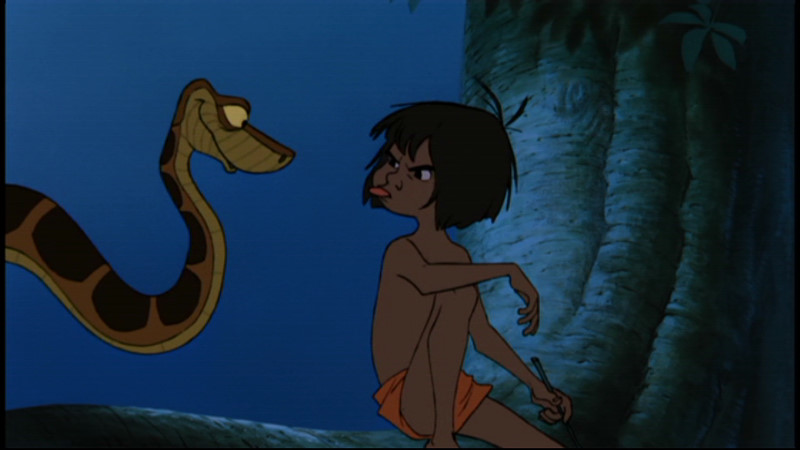
What struck me upon this viewing of the film was that there is a certain subtlety to the approach of this story. There is an ongoing antagonist, Shere Khan, in this tale, he’s not omnipresent, but much like the Gmork in The Neverending Story many years later; he’s always lurking about. He’s less present here than in the live action. However, the thrust of this tale being can Mowgli continue to survive in the jungle as we slowly try to convince him to go to the man village, it is still important as Mowgli must learn man-like ways to adapt and survive. As sparse as Khan’s appearances are, he still nearly takes out a deer and immediately draws a dangerous parallel to Bambi heightening his fear factor.

Another subtle touch is the way in which the passage of time is indicated from when Mowgli is a baby to the present day: “10 times the rains had come and gone,” indicative of years seeing as how the rains refer to monsoon season. Lastly, there’s an underlying indicator (at least to a younger viewer) of the coming-of-age struggle in this tale when Baloo responds to Bagheera’s assertion that he to to the man village: “The man village. That’s awful, they’ll make a man out of him.”

The tale is narrated by Bagheera, a panther, the one who puts Mowgli with wolves in the first place. In terms of segments there’s Bagheera’s finding him, his being raised by wolves, and then his time with Baloo being the third segment.

The Jungle Book (1967, Disney)

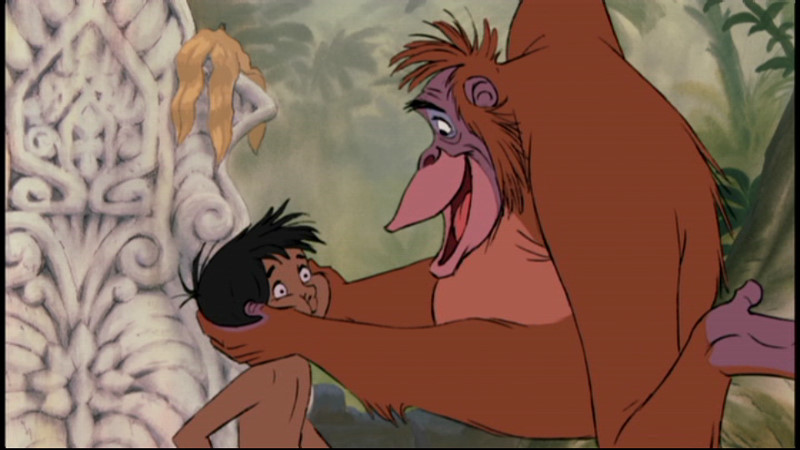
There are also in these segmented tales difficulty in recalling that there is an ulterior motive in long song sequences. For example, King Louis is after something in “I Wan’na Be Like You’ it just takes a bulk of that song for it to come to the fore.

Brisker storytelling is found when the elephants are introduced by their marching song. Another Pooh alumni is found here as Clint Howard voices the young elephant and he was the first voice of Roo.

An interesting aspect of this film, and one that likely captures the imagination of the young to this very day, is here you have a boy who gets to roam the jungle and live with and be like animals; he tries to become them. It’s a whimsical tale that falls short of the horror of children becoming animals in Pinocchio.

One of the better elements of the film is that Baloo’s sense of responsibility in getting Mowgli to the safety of his own kind comes just as Mowgli learns he wants to be with Baloo. It’s a perfect midpoint. Mowgli has his own understanding of his belonging, Baloo’s eyes have opened and he has another entirely.

The Jungle Book (1967, Disney)

Another thing that really does work, and lends itself to a feeling of “looseness” about the structure of this film is that characters are often introduced as silly or caricatures, but end up serving a vital purpose. Mowgli is missing which brings the elephants back to search for him. The vultures who seem like nothing more than the Disney writers and animators riffing on The Beatles, and maybe a reactionary attempt to create non-controversial comic relief birds (see Dumbo) also factor into the finale.

Furthermore, I was reminded that a musical moment in this film provides one of its better jolts as Khan jumps in at the end of a song and gets the ball rolling on the climactic events of the story.

Perhaps this one of the things my subconscious decides to block out, but there is one of the more effective near deaths in the Disney canon. That and the dialogue-free execution of Mowgli’s decision is some of the finest animation and direction that they did. Everything is apparent, but nothing is painfully obvious. It’s sensitively and beautifully rendered and it’s something I recalled as soon as the film started. As many times as I’ve seen it it still gives me chills. It’s wonderful.

So, yes, the structure is a bit episodic and the songs are infectiously memorable. However, that ought not obscure some of the truly gorgeous and wonderful things that occur in this movie.

March to Disney: The Advances of Peter Pan

Introduction

Last year to coincide with a trip to Walt Disney World in March, I decided to have a month-long focus on Disney fare. Their vaults are vast and varied enough such that this is a theme that could recur annually. Below you will find links to the inaugural posts written for the theme.

Peter Pan (1953)

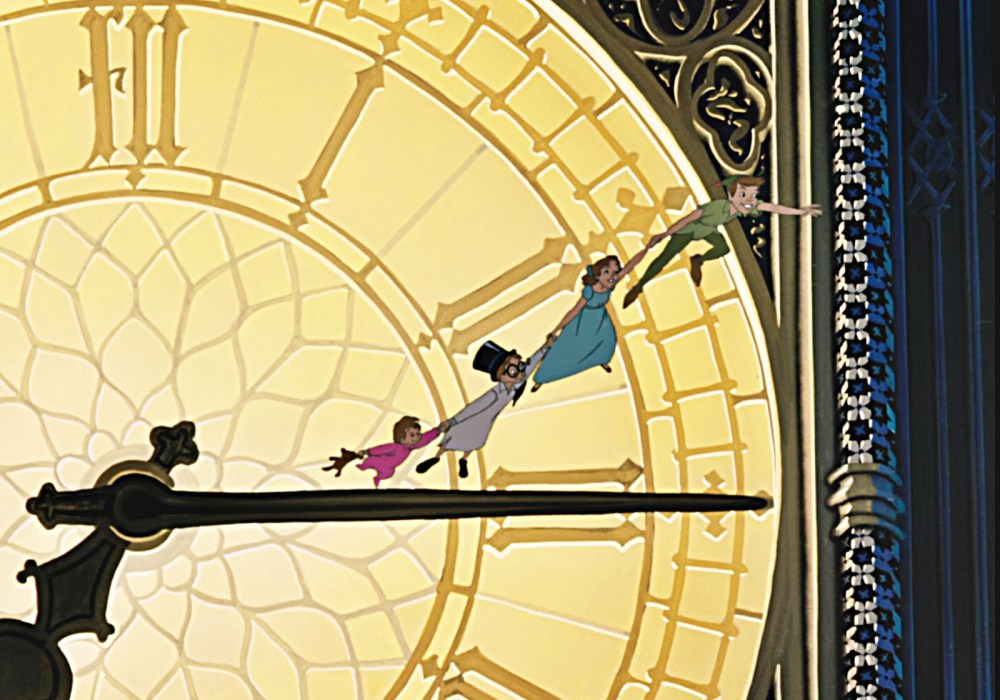
Peter Pan (1953, Disney)

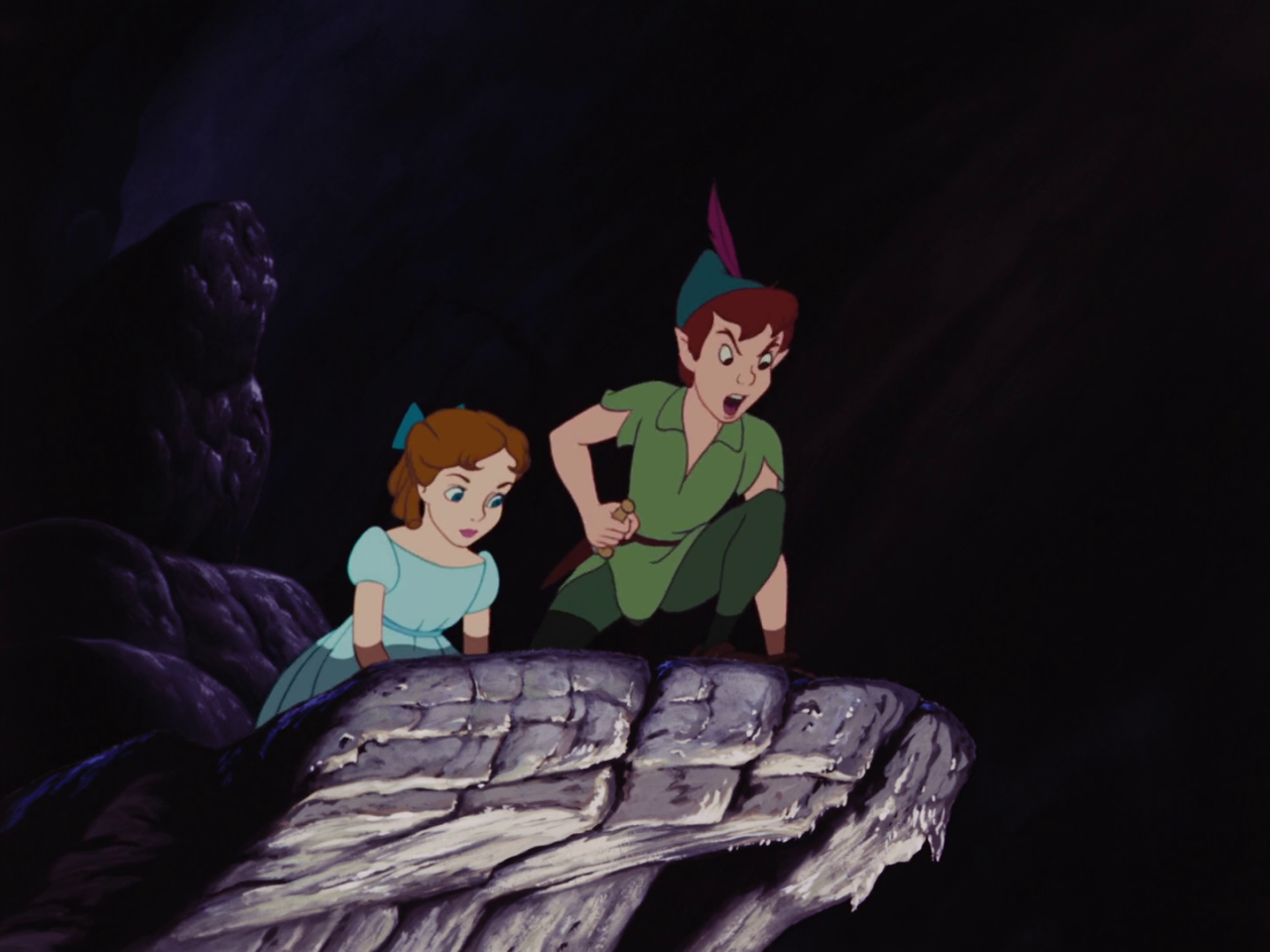
Walt Disney’s production of Peter Pan is one that seems like its oft overlooked. That is why I a glad that it has recently come back up in the Disney rotation both with a Blu-ray release and also with a new Disney World attraction. Of course, the story is one that is universally known and beloved, but what can be lost with such a ubiquitous narrative is the distinguishing characteristics of each individual rendition.

Disney, from 1938 to its eventual 1953 release, dedicated himself to bringing this story to the silver screen anew in a version unlike anything anyone had yet seen. It’s ingenious but sometimes it takes a genius to think of something so ingenious: even in the 1950s the only way to bring forth a revolutionary interpretation of this story was to animate it.

With the conventions of stagecraft being stripped like actors flying on wires, an actor in a dog suit, a light as Tinkerbell and a girl playing Peter; the easiest way to changes these things, things that occurred on screen in the silent era, was to draw it.

The recycled documentary on the Blu-ray (it was on the DVD release as well) does well to highlight that the animators in this film had the brand new challenge of attempting to depict weightlessness of the human form. For to be able to fly, a person had to also be able to float.

Disney to this point, and past it in its history, used live models regardless, but never had their role been as pivotal as it was here for the animators through them were given guidance, and a frame of reference without the constraint of cameras rolling and a production around them, as to how to create said effect.

Peter Pan (1953, Disney)

The actors ability to pantomime for the animators was just one thing that had to be taken into consideration. Casting in this day and age at Disney was a multi-faceted process. Typically, animators were usually dealing with specific characters so they too had to “cast” so to speak. Yet, there was also the voice aspect to consider. Here there were a few inspired choices made.

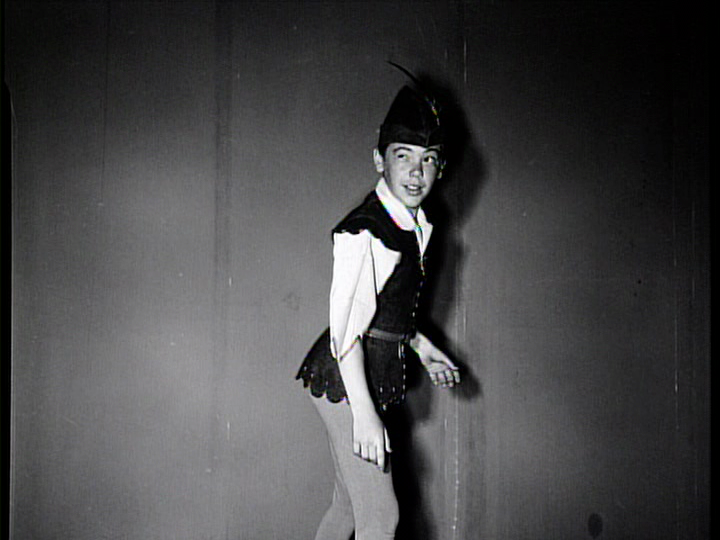
First, there was Hans Conreid, who was most notably a radio actor, in the tandem roles of Mr. Darling and Captain Hook. There is a duality to his voice and so much emotion that he can emit through it that makes it one of the more indelible performances in the Disney canon. It is also rightly noted that Bobby Driscoll, although Disney’s first contract player and roundabout the right age for the part, was still the proper choice. Sure, it was the easy choice but it was the correct one. It was his Disney swan song, and perhaps his most lasting turn.

Also interesting to note here, in hindsight, that some of the concept art was darker than what Walt eventually approved for use in the film. Especially considering that it seems that P.J. Hogan’s sensibility in his ’03 live action version is closer to those original concepts. While it would’ve been great to see those things drawn by the talented hands at Disney un-softened. I look at it more as a calculated decision by Walt rather than softening for softening’s sake.

There is still in this story the threat of death and of growing up being flaunted in the face of children. Hook’s menace is quite real and present, thanks in large part to Conreid. Therefore, the visuals needn’t be as harsh as initially designed to get the message home. The emotions desired will still be elicited. Also, at a young age kids don’t necessarily consider stylistic choices. The danger, the emotions in general, are generated by the characters how they act and interact rather than the atmosphere.

What Walt Disney’s Peter Pan is most definitely Disney’s version of the narrative but also one that is progressive in terms of altering, and depending on your opinion, correcting prior conventions of this particular narrative. Like many things in the canon there are the iconic moments, namely Tinkerbell who became part of the Walt Disney Pictures logo. And she should be, since the first cinematic image of the character was his creation. However, in that logo she blends with Cinderella’s castle and is removed from her original context. The context being this film, which in spite of its changes and quirks is one of the true Disney masterpieces. A labor of love unquestionably re-branded, but also indebted to its source, and one that should live in the consciousness of children and children-at-heart for generations to come.

Foreign language Film Issues 2013: A Simple Plan (Part 5 of 5)

A Simple Plan

I didn’t initially think of a plan to propose for this year, but a rather simple solution came to mind. I think that using the existing rule about qualifying American of English-language films with regards to running time and a one-week engagement in Los Angeles (maybe for this category they can even add New York) that the Academy can shortlist some outstanding foreign films that have already gotten US exposure, and thus, hedge their bets about having some further interest in the potential pool of nominees. That would be Phase One.

Phase Two would, and could, operate in much the same way the foreign language submissions currently work. The US-released foreign films that could get shortlisted would likely encompass many of the nations that could benefit from additional submissions due to their history and high quality (France, Sweden, Germany, Japan, etc.) as well as those who may have multi-cultural populations and produce films in multiple languages (China, India, Belgium, Canada, etc.).

Essentially, this idea would be the smallest increase in eligible films of any I’d proposed. My first was the largest with a World-Cup-inspired merit system, the next also nearly doubled things. If a shortlist is, for the sake of argument 12 titles, this years submissions would be up to 88.

The Oscars do signify something, a much larger something to those whose eyes and ears are not glued to the process. I can’t argue that there isn’t prestige and that I don’t love the show. I have come to embrace the fact that Oscar winners are really about films easiest to build consensus around. Therefore, the committees, at least to some degree, operate correctly. What needs to be rectified is the fallacy that only one film per nation is worthy of Oscar consideration. The Oscars are the ultimate audience and judge so let them, add to the pot along with whatever films come their way via national committees.

The bottom line is that every year there’s a new facet I consider about the imperfections of the system. And, in fairness, based on what I’ve read, the Academy is working towards improvements on this category. I’m not sure that the entire membership voting on the winner is a good thing or a bad thing, but it’s a change. More changes still need to be made, more things taken into consideration when pooling candidates as I think I’ve shown in a number of ways.

Foreign Language Film Issues 2013: Hollywood Rules (Part 4 of 5)

As has been the case in years past I will here look at some of the issues plaguing the Best Foreign Language Film nomination process at the Oscars. Since this year I am touching on a large array of interrelated topics I thought it best to post my thoughts in a series. To read the introductory post of the series go here.

This text picks up immediately where the last part left off.

Hollywood Rules

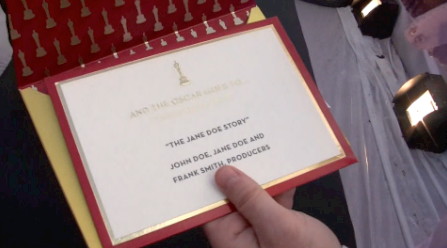
Oscar Envelope

It has been suggested that the Academy, or an offshoot thereof, should select the foreign films eligible. My newest suggestion will feature a compromise on that notion.

However, it is worthy of consideration of the fact that, no matter what amount of importance or disdain you view the Academy with, this is their awards. There was a time when the cinematic revolutions worldwide filled independently-owned movie theaters and had the college set watching and artsy-er breed of cinema, but times have changed. Therefore, taking a hard look at what the Academy is short-listing, and ultimately nominating and why, is something we and national committees should be doing. If the films being chosen with the Academy in mind is this just not cutting out the middle man? I’m not a fan of playing Devil’s advocate, which is what I was doing there, but I can’t find a lot of room to argue against it; save for the fact that I don’t care for it much and have an alternate idea, which will be presented in the final installment.

The Golden Globes, really?

Golden Globe Statue

If you follow critics and movie geeks on Twitter, or even if you just Google The Golden Globes and find some brutal op-eds on them you’ll see how dubious their nominating process is. This is excluding the fact that the membership is so small. Yet, even this much-maligned body accepts multiple nominations from nations, but the Oscars can’t?

Release

how_oscar_dvds_helpand_hurt

The Academy this year disqualified Blue is the Warmest Color, which is a Palme d’Or winner and one of the most talked about foreign arthouse releases of the year solely on the basis of the fact that its release date IN FRANCE was too late.

One recent argument that has emerged is that a US release date should be a requirement. That has its pros and cons, but surely if a film has seen European festival dates and has already seen a US release that qualifies it, how can you disqualify it because of its domestic release date. It’s beyond counter-intuitive.

Eligibility for Oscars in Other Categories and Snubs

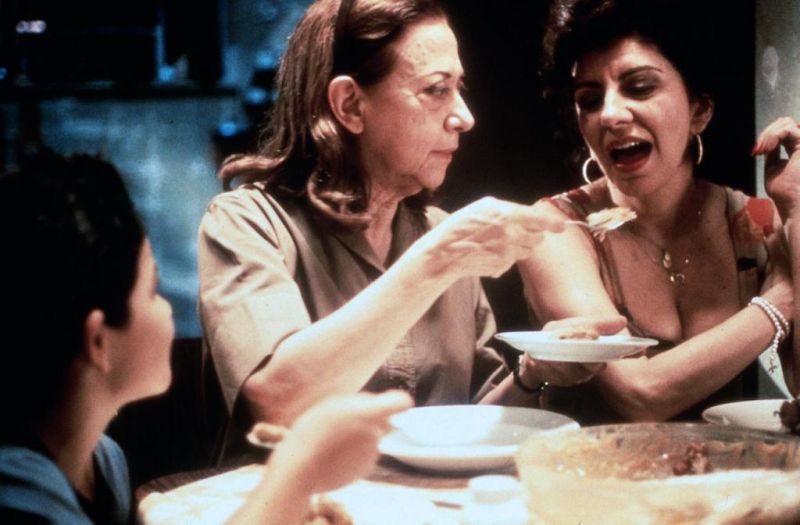
Central Station (1998, Sony Pictures Classics)

While on the topic of snubs that brings related topics this year. I’ve not yet seen the film, but have seen fairly universal raves and lauds for Lea Seydoux and Adèle Exarchopoulos in the aforementioned Blue is the Warmest Color. Due to the fact that the Academy has ruled said film ineligible for Best Foreign Language Film it is also ineligible for other categories.

Yes, there have been instances of foreign films being nominated for multiple awards: three instances jumping quickly to mind would be Amour (5), Central Station (2) and Fanny and Alexander (6) in all those cases those films were submitted as the foreign language selection for their respective nation, therefore, eligible in additional categories. Any snub this year can also write off any chance at nominations in ancillary categories.

Committee Submissions

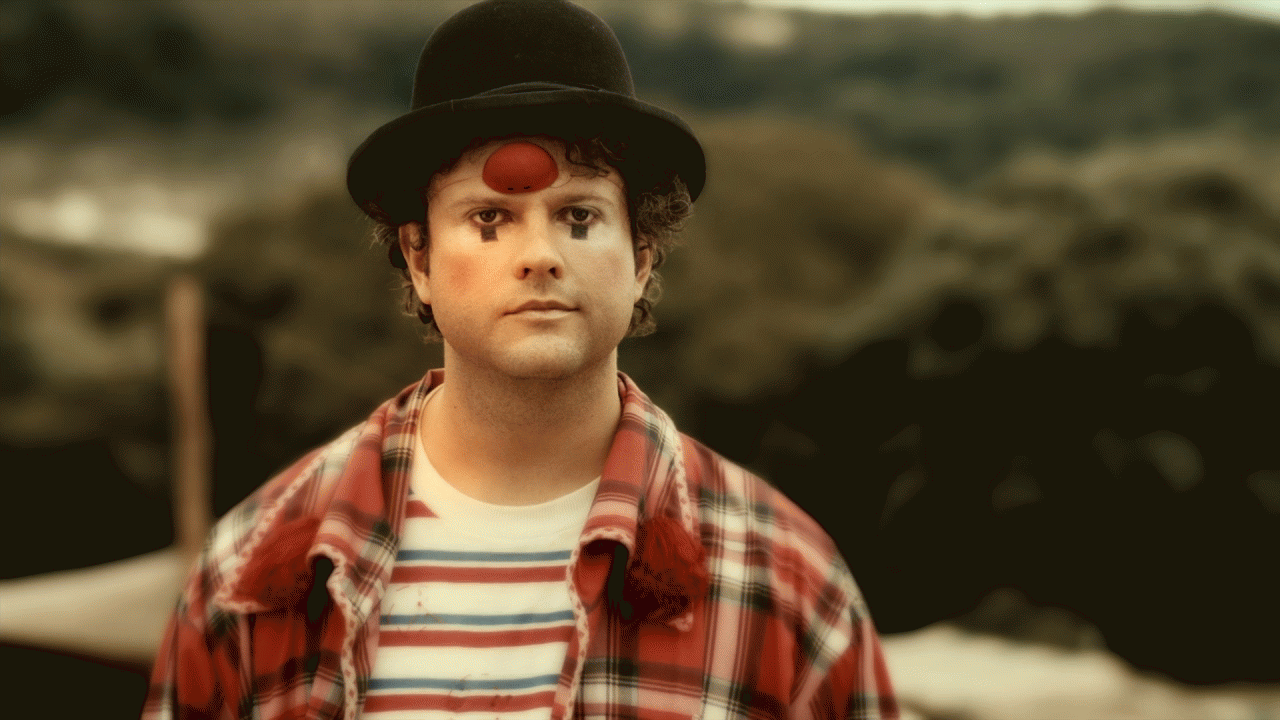
O Palhaço (2011, Bananeia/Globo Filmes)

With all the case-studies discussed prior, and with most countries I’m sure; it’s a small body making the decision of which film to select. Whenever you’re dealing with a small body I get the feeling, even though I was offered no proof of it, that undue influences could affect outcomes. I’m not saying they haven’t; it’s possible. I think most people who watch film and know the mechanics understand that the “best” isn’t always sought out. Sometimes it’s the most commercial, sometimes the most “Oscar-friendly”, sometimes other factors can be seen as coming into play.

This series will conclude tomorrow with part 5.

The Classic Movie History Project Blogathon, 1944: Carmen Miranda, The Three Caballeros and the Good Neighbor Policy

Introduction and Approach

With the Classic Movie History Project Blogathon it was always my feeling that there was, and is, only so much of any given time period that one can truly discuss given the confines of a blog post. Truly if you’re looking at an artform such as film one that was so fruitful at this time, and already a global enterprise, then it becomes doubly impossible to accurately encompass the landscape at the time.

Therefore, I felt that the best way to tackle this year was to find an entry point. An entry that would allow me to discuss the topic I chose to focus on through the guise of one film. The Good Neighbor Policy, due to my being a dual citizen of the United States and Brazil, was always a topic that fascinated me. Therefore, I found my “in” in 1944’s (due to its premiere date in Mexico) The Three Caballeros.

Ideally, I would’ve loved to have taken in more retrospective viewings of various artists leading up to this post. As fate would have it, this blogathon fell around a time where the blog was very busy and my viewings are slight. Therefore, I hope it will inspire future viewings. In the meantime, however, there are insights one can glean from this title, and some things I do know to be true about how a pacifist, isolationist policy of non-interference did open up Hollywood to new names, voices and cultures.

Political Background

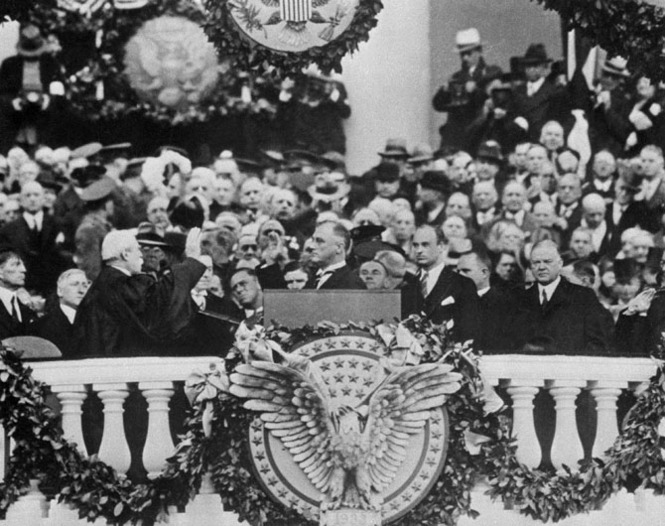
FDR Inauguration 1933

The film that is the centerpiece of this article is one that comes towards the end of The Good Neighbor Policy’s era. An era commonly defined as ending in 1945 with the threat of the Cold War looming following the end of the World War.

The policy was intimated at Roosevelt’s inaugural address in 1933:

“In the field of World policy, I would dedicate this nation to the policy of the good neighbor, the neighbor who resolutely respects himself and, because he does so, respects the rights of others, the neighbor who respects his obligations and respects the sanctity of his agreements in and with a World of neighbors.”

This policy was later formalized as any number of occupations and treaties were altered to reflect said intention, and later the formation of the Office of the Coordinator Inter-American Affairs (CIAA) in August of 1940 and appointed Nelson Rockefeller to head the organization. The Great Depression’s necessities aside, it was a policy a long time coming, whereas two such examples of US involvement in Brazil were attempts to free the Amazon waterways for trade and siding with Bolivia with politically, and with additional kinds of support if necessary, in a dispute over a piece of land that now forms the state of Acre.

The Policy’s Impact on Hollywood
carmen1702

It was the CIAA that pushed the Good Neighbor Policy into the entertainment field. Walt Disney Studios and 20th Century Fox participated; RKO can be said to (though Welles never finished his documentary, and his being sent to Brazil has been generally cited as an excuse to wrest control of the edit of The Magnificent Ambersons away from him).

The question of how much influence entertainment has is always something open to debate, however, there’s no question that when seeking to improve an image in the American consciousness the World’s Fair of 1939 was one step, but the motion picture would reach many more hearts and minds.

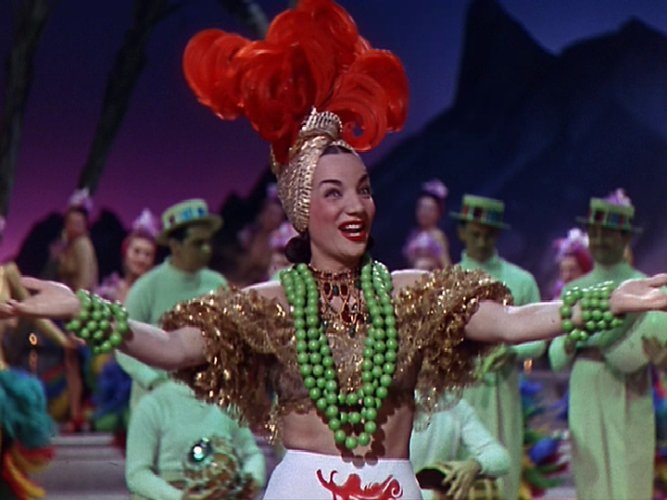
With regards to Carmen Miranda, who representing Brazil, rose to stardom earlier than Disney could get their efforts to the screen; it illustrates the double-edged sword of a nation being brought out of its shell and into the consciousness of another for the first time.

Miranda received lavish praise and early stardom here in the US and eventual backlash in Brazil that was ultimately rescinded, just prior to, and upon her untimely passing. Essentially, the difficulty, and the issue is, that no one person is a monolith. She is not a monolith, she is not “The Brazilian bombshell,” but a Brazilian; one Brazilian. While the studio system of the 1940s was the perfect time to bring about some stars generated from these policies due to the amount of films generated and the star-specific packaging many titles employed, it was also a time sure illustrate some issues in the way global figures were handled in pre-globalized world.

Now I grant that I’ve seen footage of Miranda but not the films, but I know her playing an Argentine in Down Argentine Way is a stretch, so I take some of the same issues with that concept as they did.

Essentially, I view Miranda as a unique personality and persona that seemed to have been shoehorned into almost anything Latin in her time at Fox. The failure of Fox is a lack of specificity, which is where Disney excels in their treatment of Brazilian subject matter.

1944
SaludosAmigosLC

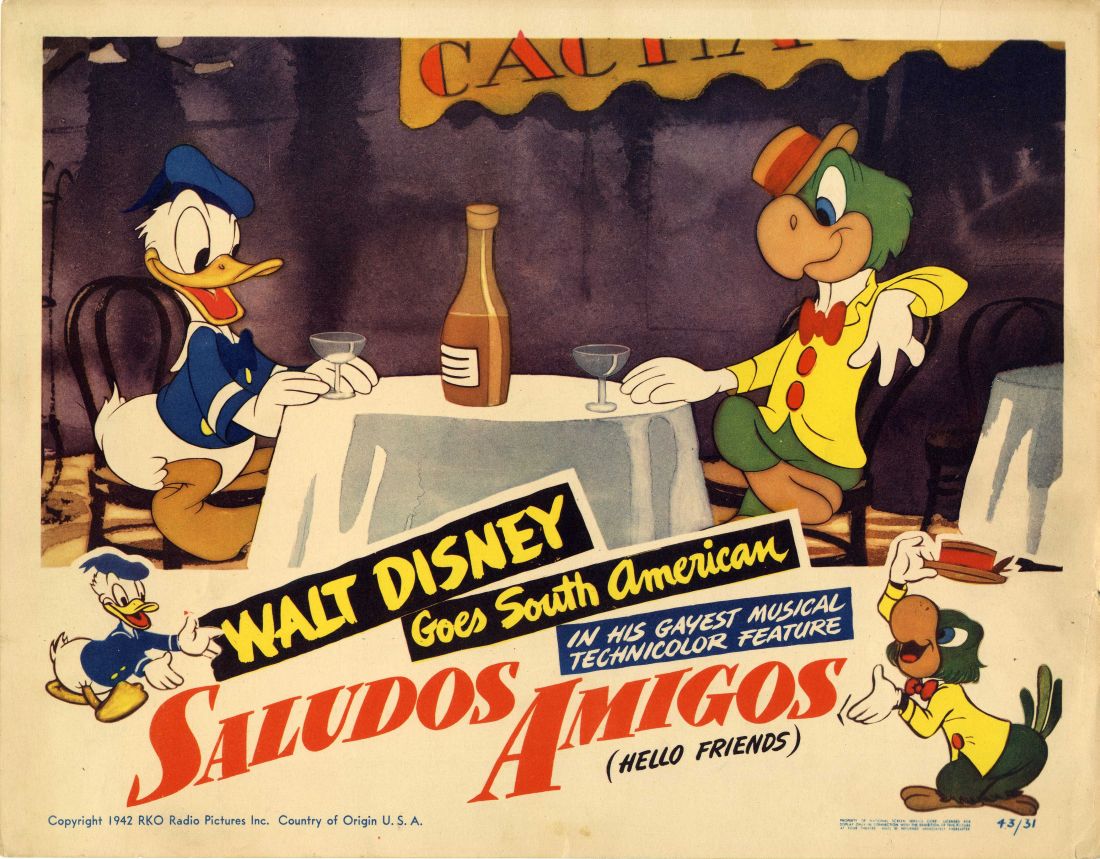
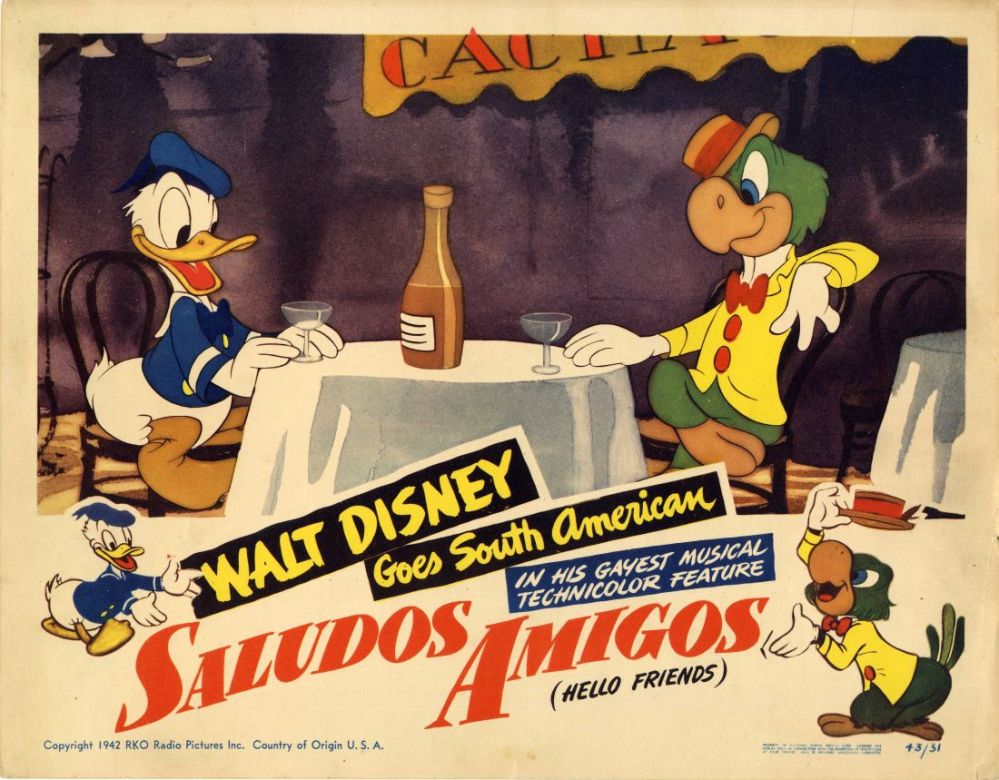
The road to the creation of The Three Caballeros really begins with the release of Saludos Amigos two years prior. Where the Three Caballeros stands out is adding another new character to the mix and expanding the what we knew of one character. And it is worth noting that being ahead of the curve by about 70 years these films premiered in Brazil and in Mexico, as mentioned above, respectively a few months ahead of hitting US theaters.

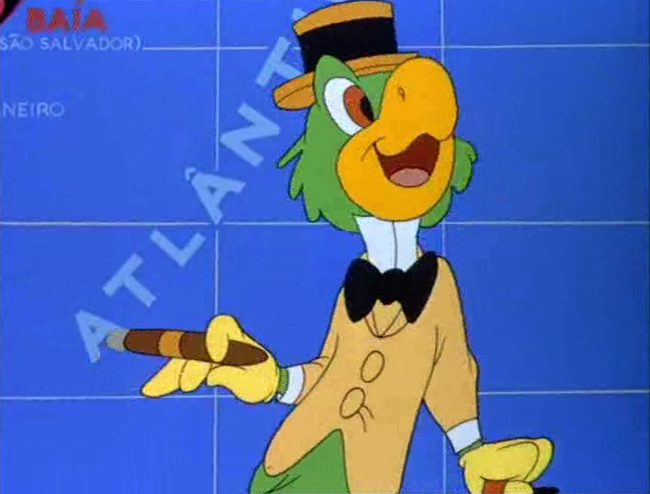
Saludos Amigos features four segments (Lake Titicaca, Pedro, El Gaucho Goofy and Aquarela do Brasil) the first features Donald in classic form struggling on a journey through the mountains; the second an anthropomorphized airplane on an adventure through Chile; thirdly, as one might expect from the title, it’s Goofy flubbing through the ways of the South American cowboy; then via the newly-introduced José Carioca, or Zé Carioca as he is known colloquially, Donald is given a musical medley, metamorphosing watercolor tour of Brazil.

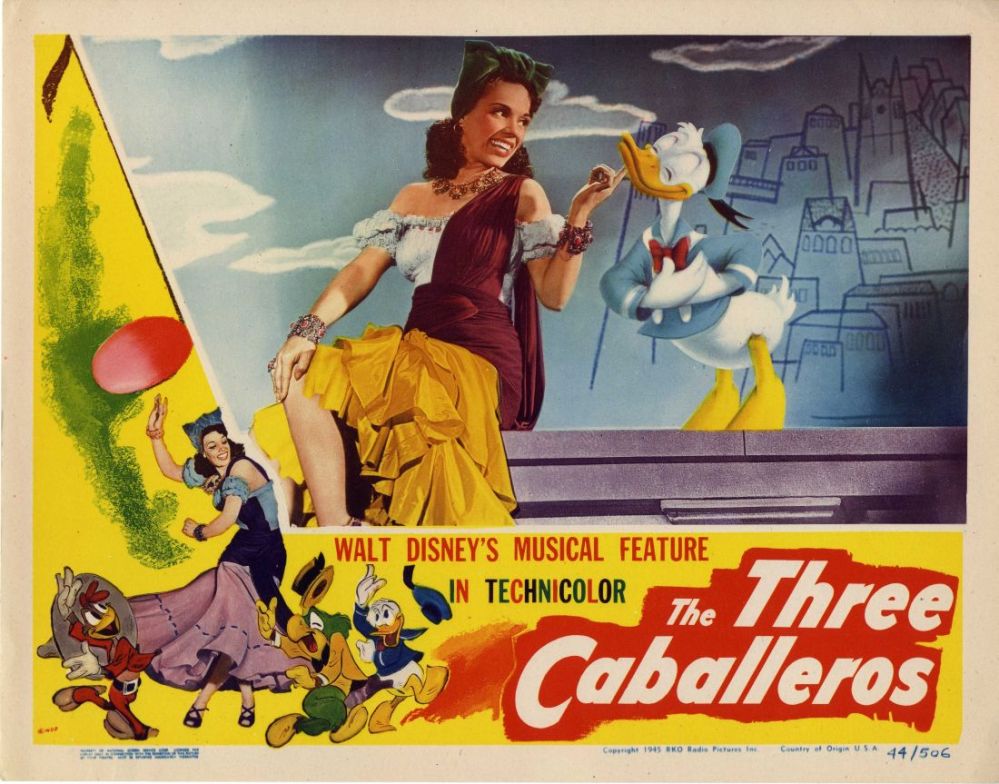
The Three Caballeros
ThreeCaballerosTheLC3

The Three Caballeros is similarly constructed in a composite style. However, as opposed to Saludos Amigos it gets into full-blown feature film range (71 minutes) as opposed to Saludos Amigos‘ technically-feature-film-but-really-a-short film range (42 min).

This film puts Donald Duck front and center as opposed to just having a segment. Donald not only makes it a humorous film, but is also perhaps the most representatively American character to go on a South/Latin American tour. Not only that but the precedent of bird characters had already been set with José Carioca being introduced last time, and Panchito Pistoles joining the trio this time.

The framing mechanism in this film is birthday presents to Donald. The great thing is that the first segment is going to Bahia, a part of Brazil it turns out Zé only knows by reputation, which is a move I appreciate because it tips its hat to how big and regional a country Brazil is.
Snapshot 2014-01-14 13-50-34

Next there is The Cold-Blooded Penguin segment which is a great way to incorporate going all the way up the Pacific coast of South America. There is a quick interstitial with some rare bird species introduced that it also used to transition, and there’s also a hilarious tongue-in-cheek reference to Professor Holloway voiced by Sterling Holloway.

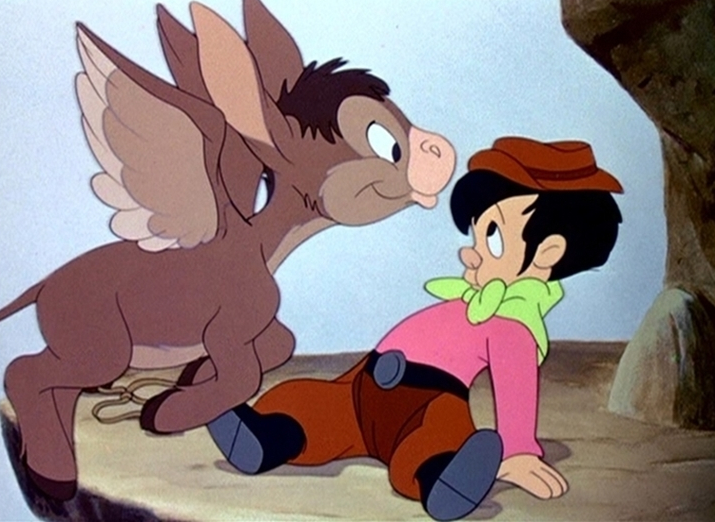
Whereas the last film there was an Argentine gaucho tale here there is a Uruguayan gaucho one with tale of the flying donkey, The Flying Gauchito. While being influenced by the Good Neighbor Policy and at time didactic by nature there is also a good bit of naturalness where things are sometimes just said and not instantly translated, or translated at all, and just left to incite further curiosity.

With the tour of Bahia there is beautiful scenery, which I’d like to see restored. Implementation of live-action and animation co-exisiting. It also allows the music to speak for itself. Music which for this film, in Portuguese, was written by the famous Brazilian sambista Ary Barroso.
Snapshot 2014-01-14 13-53-28

So in his two-film stint Zé Carioca gets a decent tour of Brazil in. Owing to the fact that Mexico is our neighbor to the south, and that this is Panchito’s lone appearance, I understand how and why Mexico gets a much more thorough tour. It starts with the introduction of the history of the piñata and a Mexican Christmas custom of Posada; continuing with the Story of flag/Mexico City; there’s a song accompanied by montage; a Favorite dance illustrated, a trip to Veracruz for the Lilingo; Acapulco beach; the second live action/animated sequence: “You Belong to My Heart” that leads into a long very Disney, with Berkeley allusions; a metamorphosing montage concluding in literal fireworks, and a trilingual “The End.”

Aftermath
Snapshot 2014-01-14 13-59-50

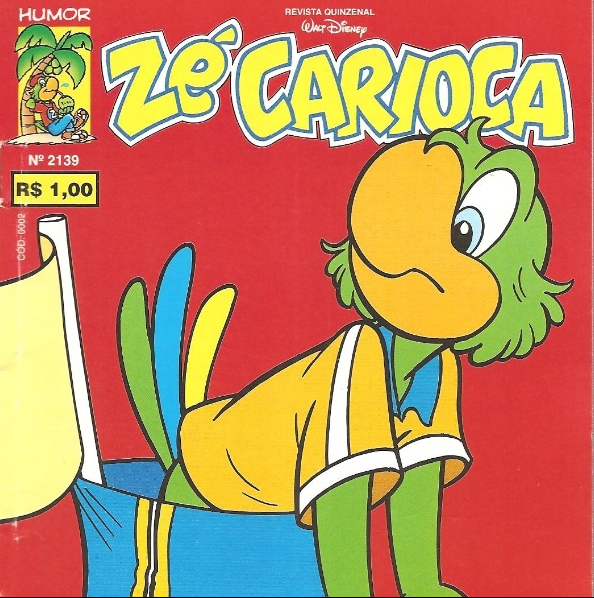
Zé Carioca still survives, and, in fact, thrives in comics in Brazil. Being an originally by Disney he’s a obviously canonical, but is a testament to the power that the Disney characters have in that medium. In fact, in the Brazilian comics his own universe has expanded to include many supporting characters and cousins that represent different parts of the country. Aside from that he has resurfaced in American comics in stories by Don Rosa; on television, in Mickey Mouse Works and House of Mouse and in film as one of the many cameos in Who Framed Roger Rabbit. In the Disney Parks, the addition The Gran Fiesta Tour Starring The Three Caballeros reintroduces them to many.

Panchito Pistoles, aside from being a mascot on some Mexican WWII aircraft, he has not had much life outside American-made Disney products.

Funnily enough, while there were mixed feelings about Brazil’s first breakthrough thanks to the Good Neighbor Policy, the cartoon no less, that has had a bit of staying power and seems to have offered a less controversial representation. It’s well documented, even in a documentary that I’ve not yet seen, but want to; that Disney and/or his team spent a bit of time in Latin America therefore they got a good sense of the culture and at least on parts I can attest to didn’t go off half-cocked. and created some lasting, lovely tributes to a people and a culture that have stood the test of time.

Conclusion
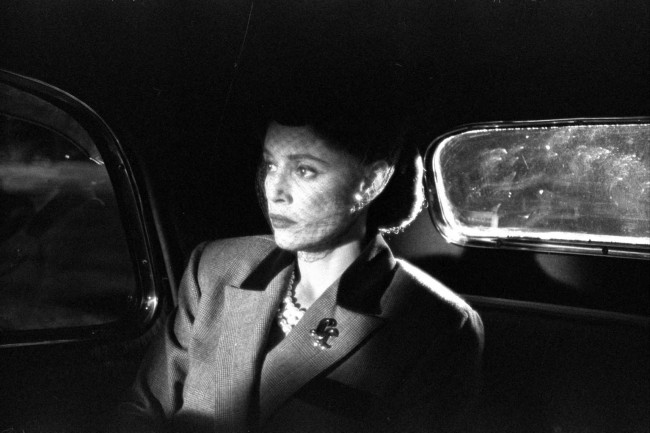
Kiss of the Spider-Woman (1985, HB Filmes)

It’s pretty interesting to have happened upon this topic now. I recently discussed both the breakthroughs and the lamentations I had about the globalization of casting. My impetus was another, but the discussion of current Brazilian actors and the roles they are afforded in American films for global consumption is oddly not that different that this one.

A progressive governmental impetus was a great breakthrough for Latin culture in the American cinema. Not to be overly-reductive, but it’s sad the Cold War retarded whatever progress could’ve been built off that momentum for a number of years, and when you consider that McCarthyism would soon be in play and careers and lives would be ruined it’s not too far from accurate. As best as I can figure there would not be another Brazilian-born actress breaking through into American films in any significant way until the mid-eighties [Marília Pêra in Mixed Blood (1984) and Sonia Braga in Kiss of the Spider Woman (1985)].

However, I do have hopes regarding the ever-digitizing and -shrinking world that both the long-overlooked past will not be ignored and that mistakes of the past will be righted in the future. There’s a hilarious Carmen Miranda gag on Family Guy where Carter says: “Am I a singer or a dancer? No one knows, they just remember the fruit.” Which is the sad truth with regards to the past. As for the future, the bottom line is that when you go outside what’s known there are new and interesting stories to be told. The Three Caballeros is testament to that, which is 70 years old. Maybe one day we’ll learn from that.


2013 Neutron Star Award

Introduction

OK, so what is the Neutron Star Award? As I watched older selections through the year, I was frequently compelled to pick a film based on the fact that Vincent Price was in it. When I was younger I was very actor-oriented, more so than with directors. The fact that an actor had that kind of draw, and was one who is sadly no longer with us, made me think there had to be some kind of way I could honor them.


So I thought literally about stars, and being a nerd I confirmed that a neutron star fits the definition of a star that has gone out but glows more brightly after its passing.

2013 Cadidates

Below you will find a list of the candidates that made their presence known for this award this year:

Rainer Werner Fassbinder
Coy Watson, Jr.
Louise Fazenda
Jackie Searl

The Runners-Up

While I found more Jackie Searl titles this year than I was previously familiar with, I already knew of him. Furthermore, the fact that my above-linked post introduced some to his other works, or his works in general, was reward enough. So a mere mention of him here suffices.

Coy Watson, Jr., as I alluded to in my review of his book, provided the invaluable service of giving me the incentive to seek out other actors, filmmakers and their works, but I saw few of his works.

Louise Fazenda was an actress whom I knew next to nothing about before 2013, so I was hard-pressed not to pick her after watching some of her shorts and a feature for a blogathon. In the end her impact was not the greatest…

2013 Honoree

Rainer Werner Fassbinder

The award was created last year to recognize an actor, but this year’s winning selection is a slight fudge. However, I don’t feel I’ll be likely to re-define or expand the award any time soon so I’m going to go with it.

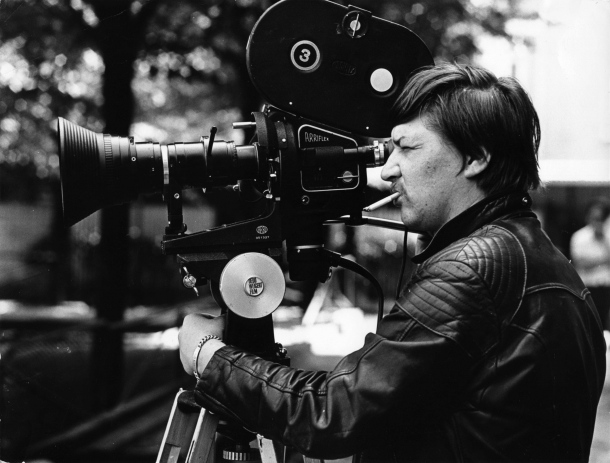
Basically, the winner did act in films and did even play leading roles, however, to be completely honest, Rainer Werner Fassbinder is winning this award for his work as a writer and director. Now a bit like Jackie Searl I did have some familiarity with Fassbinder in the past. He made appearances on both my 2011 and 2012 Favorite Older Movies list.

However, 2013 was much more viewing many more appearances and was topped off by my getting both the Region 2 box sets of his films. Granted even those aren’t all his works.

When you see a few things by a director you are responding to individual titles, when you see quite a few you start responding to a voice and Fassbinder’s was a voice I sought to hear speaking repeatedly through 2013, and I’m sure that will continue into the new year. In tandem with this award you should look out for this year’s favorites list, which will include his titles; and I may create a subsequent series designed to reflect the year’s winner as I have with other body-of-work awards in the past.

Fassbinder had a knack, in standard feature-length dramas, making the first forty minutes impossibly gripping over and over, of also creating approachable density and magnetic melancholy, and it’s why I sought to come back to his works many times over last year and why he is the recipient of this award.

The Foreign Language Film Issue 2013: Immigrant Songs and Co-Productions (Part 3 of 5)

As has been the case in years past I will here look at some of the issues plaguing the Best Foreign Language Film nomination process at the Oscars. Since this year I am touching on a large array of interrelated topics I thought it best to post my thoughts in a series. To read the introductory post of the series go here.

This text picks up immediately where the last part left off.

Those are just three examples that came to mind wherein I had some information and/or a contact to bounce ideas off of. There are likely many more examples. The first that jumps out is China but the Wikipedia page on Oscar submissions does not breakdown dialect of submissions as do some other pages.

However, also becoming far more prevalent are films that cross borders either because they deal with immigration worldwide or because the stories and/or financing dictate as such.

Immigrant Songs

Two Lives (2012, IFC/Sundance Selects)

Some recent films that deal with immigration narratives occurring outside the US are:

Shun Li and the Poet

Tells a story concerning Chinese diaspora wherein she connects with a Croatian expat who is well established in Italy.

Italian Movies

Also set in Italy but tells a tale involving a far greater cross-section of immigrants from disparate places.

Two Lives

is Germany’s Oscar submission this year and while it concerns Stasi activity in the Former German Democratic Republic much of the action is set in Norway and much of the dialogue is in Norwegian.

Eat Sleep Die

Is Sweden’s entry in the 2014 Oscar fray and concerns a Muslim émigré from the Balkans.

These are just a few examples of fairly contemporary films where even within the narrative placing and appellation of origin on the film can be a little murkier than it has been in the past. The underlying point of all these pieces is really that the world is changing, and the nature of the film business is as well, at a far more expedient rate than the foreign language film Oscar rules.

Co-Productions and the Conundrum of Nationality in a Globalized World

Amour (2012, Sony Pictures Classics)

Even when the narrative seems pretty centralized in terms of setting and physical production facilities usually you’re looking at a multinational pool of funds that went into making said film.

A few quick examples from just last year would be Amour and The Artist. Amour had French producers, cast, script, setting, and facilities; the other portions of money and the brain-trust was Austrian. It being a Haneke project Austria submitted it.

So long as there is the one film/country rule in place I’m fine with committees choosing to submit a film or pass on it. The aforementioned Two Lives most definitely felt like a more Germanic film, especially when you consider some of the behind-the-scenes talent. Norway opted for I am Yours which tells the tale of a Norwegian-Pakistani single mother struggling in love.

This series will conclude in mid-January after my lists and awards are complete.