Bernardo Villela is like a mallrat except at the movies. He is a writer, director, editor and film enthusiast who seeks to continue to explore and learn about cinema, chronicle the journey and share his findings.
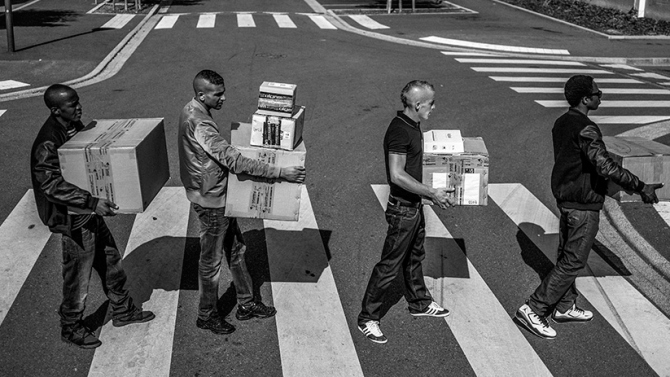
May Allah Bless France is a work of ultimate auteur filmmaking, not unliked The Perks of Being a Wallflower, inasmuch as the film is not only written and directed by the same man, Abd Al Malik, but he is also the author of the novel upon which the film is based. This immediacy instantly gives the film a decided edge over your standard rise-to-fame biopic.
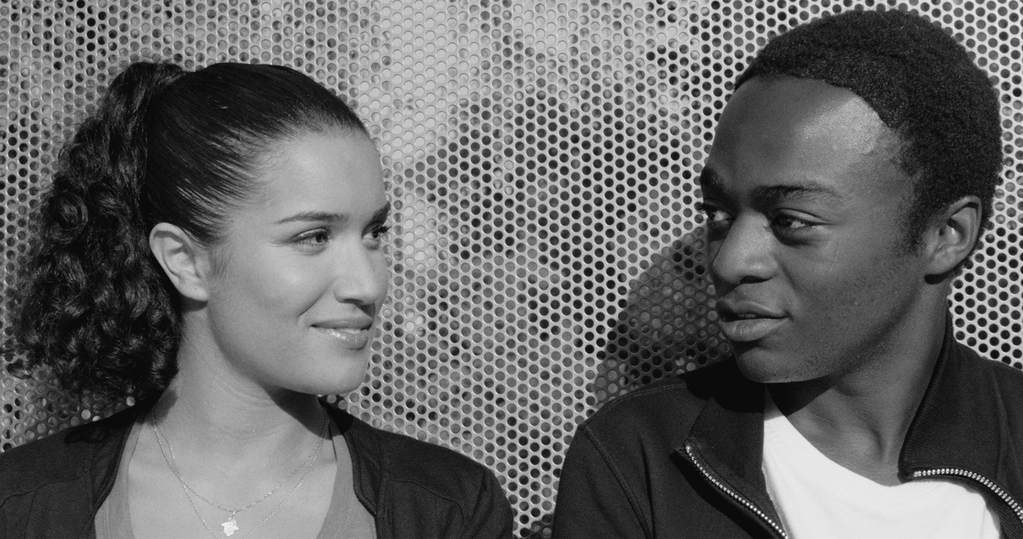
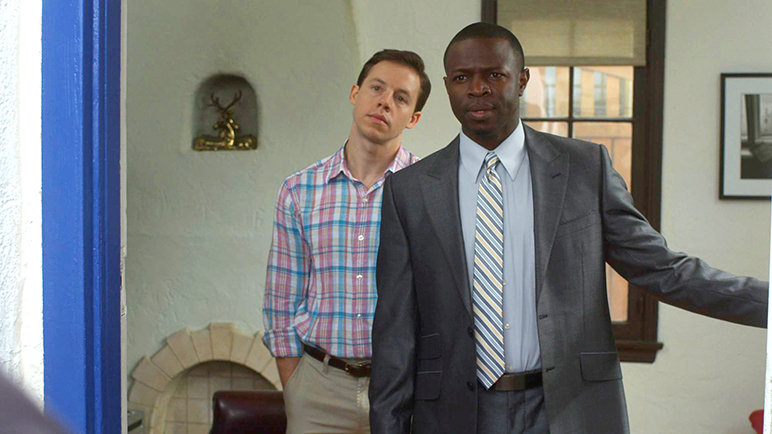
The specifics of this story are how Régis (Marc Zinga) rises out of his underprivliged circumstances with the support of family, education and rap. Unwilling to be a simplistic chronicle it also balances the subplots of his adoption of the Islamic faith, his relationship with his girlfriend (Sabrina Ouazani), and losses along the way where he must choose definitively the course his life will take.
Special commendation is earned by this film for the manner in which it it discusses Islam, and its perception, as well as engaging in some debate among the faithful about how to best practice their religion, a struggle with dogmatism – while also not holding back the forward momentum of the plot.
The film is certainly carried with impressive, charasmatic and effective ease by Marc Zinga who embodies his character so well I wasn’t so sure he wasn’t the auteur. That fact, and the decision to make the film black-and-white, along with some other plot elements do make the case for this film being a modernized spin on Truffaut’s The 400 Blows.
It doesn’t reach that height because the film is more consistent, taut, and engaging; in this film its montages accompanied by the freestyle and polished versions of rap songs, performed excellently by Zinga. One song (“Tin Soldier”) is quite and earworm, and all of them have serious content to them. This frequency of music toward the end of the film means it finishes quite strong after being inconstent in its first two-thirds.
When this film was finished I was left with a smile on my face and quite moved by how it closes. In this story you have a protagonist who comes to the early realizaion that generally speaking he, like other African emigrés, are not wanted in France, yet they still love their country. Most importantly Malik doesn’t allow his sense of ostracism to define him but rather it forms the core of his motivation to succeed. The uplifting message of hope, change and perseverance is truly universal and this is a film many should see.
As those who know me, and if such a person exists, cyberstalk me, know I created this blog after writing on another site, which shall remain nameless, for a while. The point is, I have material sitting around waiting to be re-used on occasion I will re-post them here. Some of those articles or reviews may have been extemporaneous at the time but are slightly random now, hence the new title and little intro, regardless enjoy!
Frozen (2010)
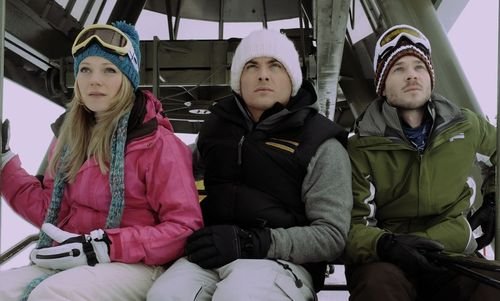
Frozen is a suspense/horror film which speculates on what may happen if three twenty-something friends were caught on a ski lift overnight. Despite playing to favorable and classically hyperbolic reactions at Sundance this film, despite its promise, is deeply flawed. There are spoilers herein.
The three protagonists Parker (Emma Bell), Joe (Shawn Ashmore) and Dan (Kevin Zegers) are well set up in the beginning portion of this film, however, that beginning is too protracted and talky especially considering the plot and the nature of it.
The concept of the film is not the film’s downfall. The fact that these three get caught on the ski lift overnight is, in fact, a good concept which is not fully explored and those parts which are explored aren’t very well executed. One means for escape is never attempted and the first attempted was bound to fail based on how it was done. Joe jumps from the lift, abandons his snowboard but still tries to land on his feet, which was bound to break his legs.
Considering the film is called Frozen, the most the characters ever suffer is low-grade frostbite and not hypothermia as you might expect and furthermore the deaths are not due to the elements but wolf attacks. This acts sort of as the opposite of a deus ex machina, wherein the characters’ destruction is brought about by a seemingly divine, or demonic, plot element randomly thrown into the mix.
So far as the cast is concerned the expression “two out of three ain’t bad” comes to mind. Emma Bell seems to be trying too hard in this part and goes over-the-top in her more emotional scenes. Kevin Zegers isn’t there very long but is serviceable when he is there leaving the standout and ‘the glue’ as Shawn Ashmore who did quite well but even his best efforts can’t keep this thing together.
After being trapped conversations the characters are engaged in are far too distracted from the situation to be believable. They seemingly forget the very real situation they are in for much too long. Breaking some of the backstory – filling up with quiet or renewed panic would’ve been better.
The characters in this story were placed in a situation with really only three outs and they only tried two. They could’ve been put in a slightly more advantageous situation. Despite the claustrophobia and occasional tension the film does build it is all torn down by the missteps along the way.
Despite a well-intentioned effort at a different kind of suspense tale Frozen is tepid at best.
In the cinematic equivalent of word association, the first movie that Finding Neighbors reminded me of is Scott Pilgrim vs. The World, which in many regards this film is the antithesis of. The reason this comes to mind is because of the obvious, occasional attempts at blending the graphic novel form, and some animation, with conventional live-action film this film makes. However, while Pilgrim’s video game/graphic novel-inspired flashes are necessary world-building here the artwork stands in lieu of montage, and as a sort of white elephant as the Flesh Fair barker in A.I. put it (“originality without purpose”). And even that very originality is dubious when you get beyond the fenestration to the narrative and the personages below.
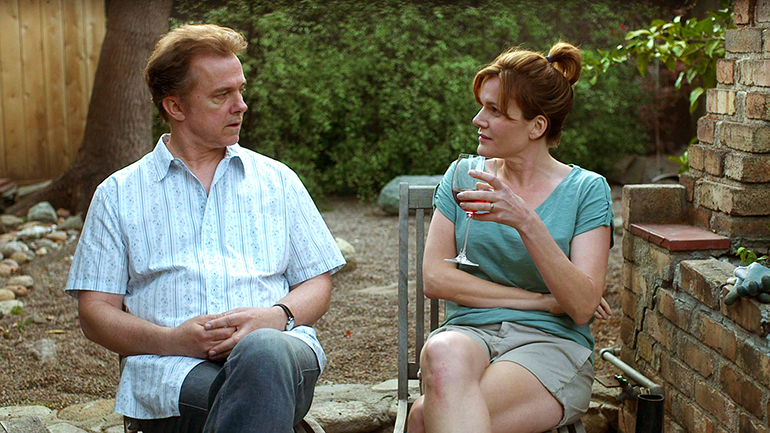
The film’s presumed need for such affectation can be found in its synopsis. It centers itself around Sam Tucker’s (Michael O’Keefe) creative and mid-life crisis and his inability to connect with or even really talk to his wife, Mary (Catherine Dent). The flashpoint, such as it is, for the film is his now six-months overdue latest graphic novel. A lateness that has his publisher contacting their counsel and his agent having a conniption.
The film’s dealing with Sam’s mid-life crisis occurs mostly through his lack of forthcoming with issues and concerns that come up in his personal and work-life. This is an idea easy to identify with but issue is rendering it such that it’s interesting to watch. The built-in formula becomes quite tiresome. One entire subplot, that of his vixen neighbor Sherrie (Julie Mond), while necessary for the character is quite strange in its only slightly ascending stakes, and oddly disproportionate amount of screentime allotted to it. Much better realized is the main subplot, his burgeoning friendship with Jeff (Blake Bashoff).
It is in these scenes, and the climactic fights, and discussions, that O’Keefe is at his best, but Bashoff ultimately is the highlight of the film. While there are some smiles, and comfort to be found in the resolution this film finds it’s a bit predictable also.
Finding Neighbors is a fitting title because it’s in getting to know others that Sam really starts to examine his life, relationship, art, and struggles as he opens himself to let others in. In that the arc works well to building the bridge that will allow the eventually reconciliation and repentance for past omissions of emotion and attention. However, the road to get to that final destination is ultimately not one worth traveling.
For the 1995 commemoration of the 100th year of cinema the Pontifical Council for Social Communications created three lists of “Some Important Films.” Francesco was among those included on the list titled “Religion.” Clearly that makes sense but it well could have gone on the “Art” list.
Francesco (1989)
This is the second film I had the privilege to see thanks to Film Movement’s new line of repertory releases referred to simply as Film Movement Classics. Perhaps more so than The Tall Blond Man with One Black ShoeFrancesco shows the worth of repertory lines that bring overlooked gems to the fore anew. There really cannot be enough outlets such as these available.
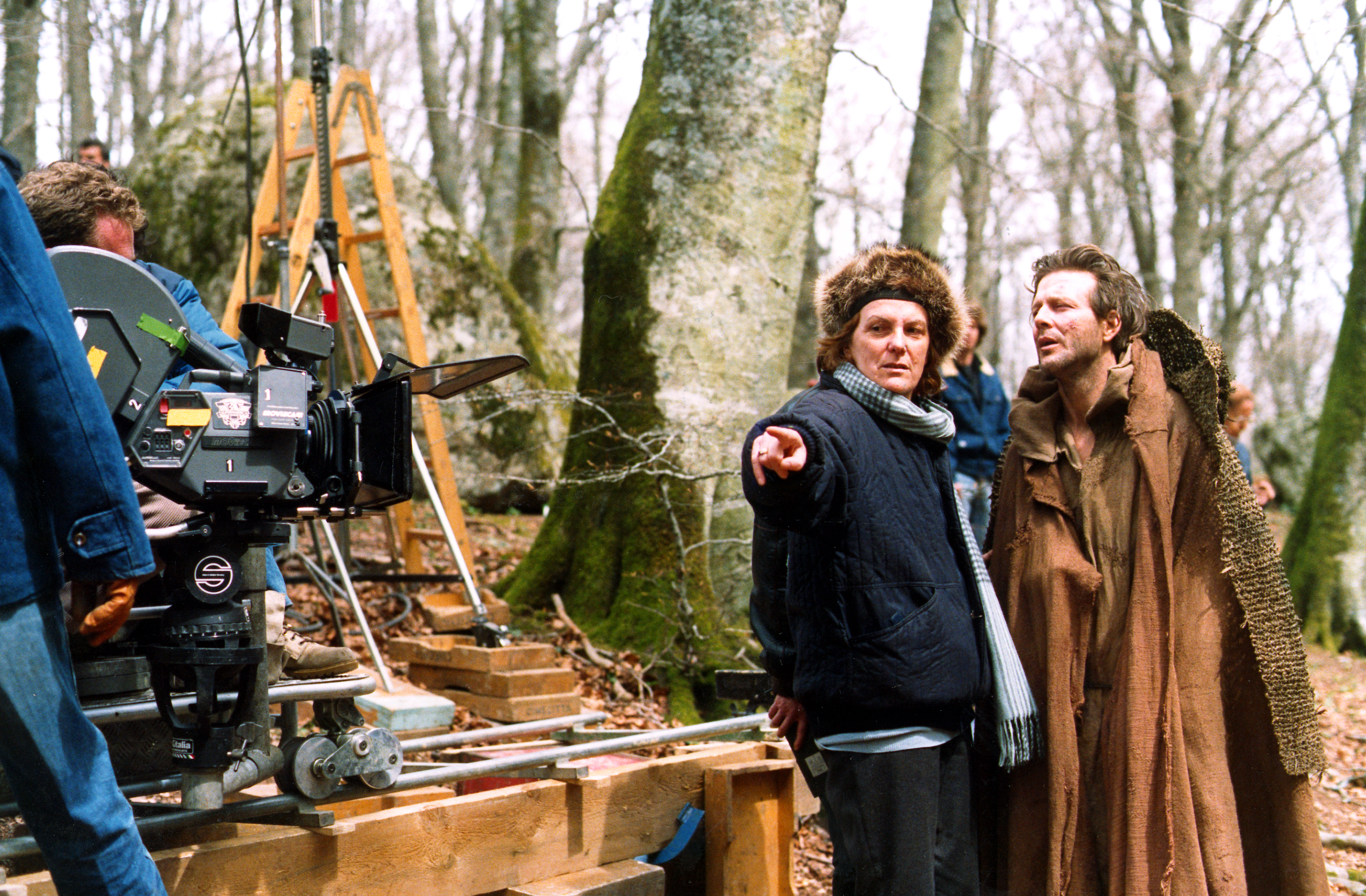
Francesco tells a story of the life of St. Francis of Assisi but this is no rote cradle-to-grave tale but rather remains a fairly focused account of his spiritual awakening, the inception of his brotherhood, and the personal and theistic struggles he faces after having been granted permission from Pope Innocent III to formalize his order.
Yet there is a simple austerity in Francis’ ways, a kind and gentle nature, one that embraces and accepts all humanity and strives only to approximate himself to divinity and nature that makes this a tale that’s universally accessible, and not merely one for the devoutly religious. Aside from this necessary focus another of the film’s strengths is not falling into any divisive tactics and tells of the conflicts Francis faced with a respectable semblance of distance.
This ability to portray a man of God who preaches in a film that doesn’t preach to its audience is most admirable. Furthermore, Cavani’s cinematic stylings in this tale make this an engaging experience in purely aesthetic terms. The production design is rightly award-winning, the score from Vangelis, as per usual is a standout, and fits in an anachronistic way that should make Moroder jealous, and features a sensitive, soft-spoken and brilliant performance by Mickey Rourke in an unlikely and inspired bit of casting.
Also, noteworthy about this release is that it could be seen as definitive cut of the film. Not only has this film been unavailable in the US for many years but it is a new 133-minute version. This is a significant improvement on the original US release (104 minutes); and is reportedly a more disciplined, effective version than the 150-minute Italian release.
Francesco is a film I had not even heard of, much less seen, and one I was glad to have a gander at. I’m also thankful this is the first full version of St. Francis’ life I took in. While any one can identify with his naturalist tendencies and love of birds, this earnest devout portrayal; a man fighting peaceably for a belief in conducting oneself, he firmly believes can inspire all and I can see why he continues to have such a following.
Bonus Materials
The bonus materials on this disc are a bit lacking compared to Film Movement Classic’s prior release, but there is still some good to be found.
The essays included are welcome. One is from the filmmaker Liliana Cavani on the unusual tale that to her to create her works on Francis, this one especially; and a take from critic Aaron Hillis, which fills in more background information.
Also included is a truncated press conference from Cannes, which almost would’ve been better off being omitted. It’s four minutes long, incomplete, and pack with overly-‘80s Rourke and the kinds of questions you would expect a Hollywood star like Rourke to get there.
Conclusion
Francesco is a wonderfully re-presented title that should delight viewers for secular and holy reasons alike.
A film like The Summer House truly make one examine what the borderline of exploitation and art is. The selfish utilization to capitalize on vulgar tastes is the cornerstone of all forms of exploitative cinema. The mark of art and craftsmanship is if the work in question can take that story element which may be considered to be depraved or base and render out of it a narrative with a greater purpose, one that could underscore common themes or concerns and be about more than just the shocking aspect that will invariably garner the film attention.
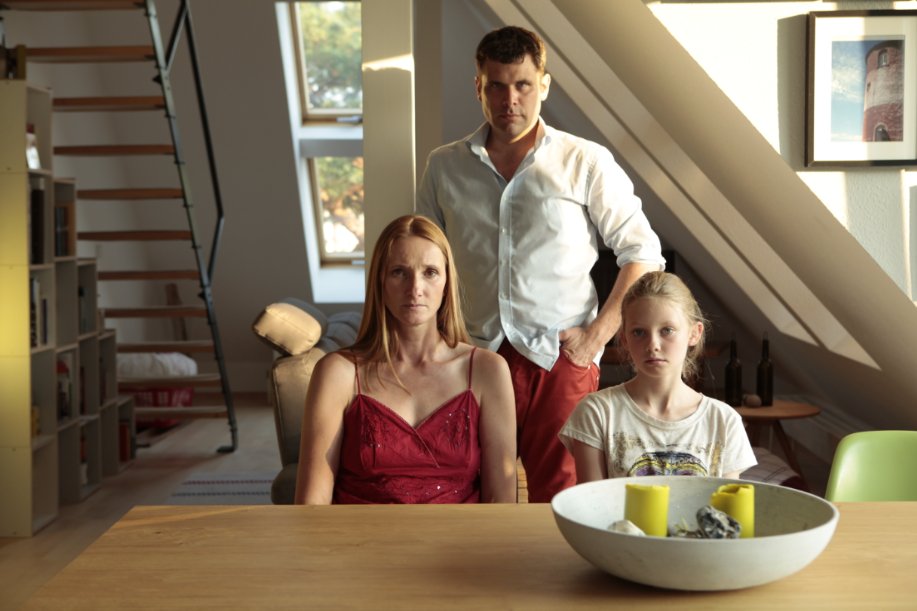
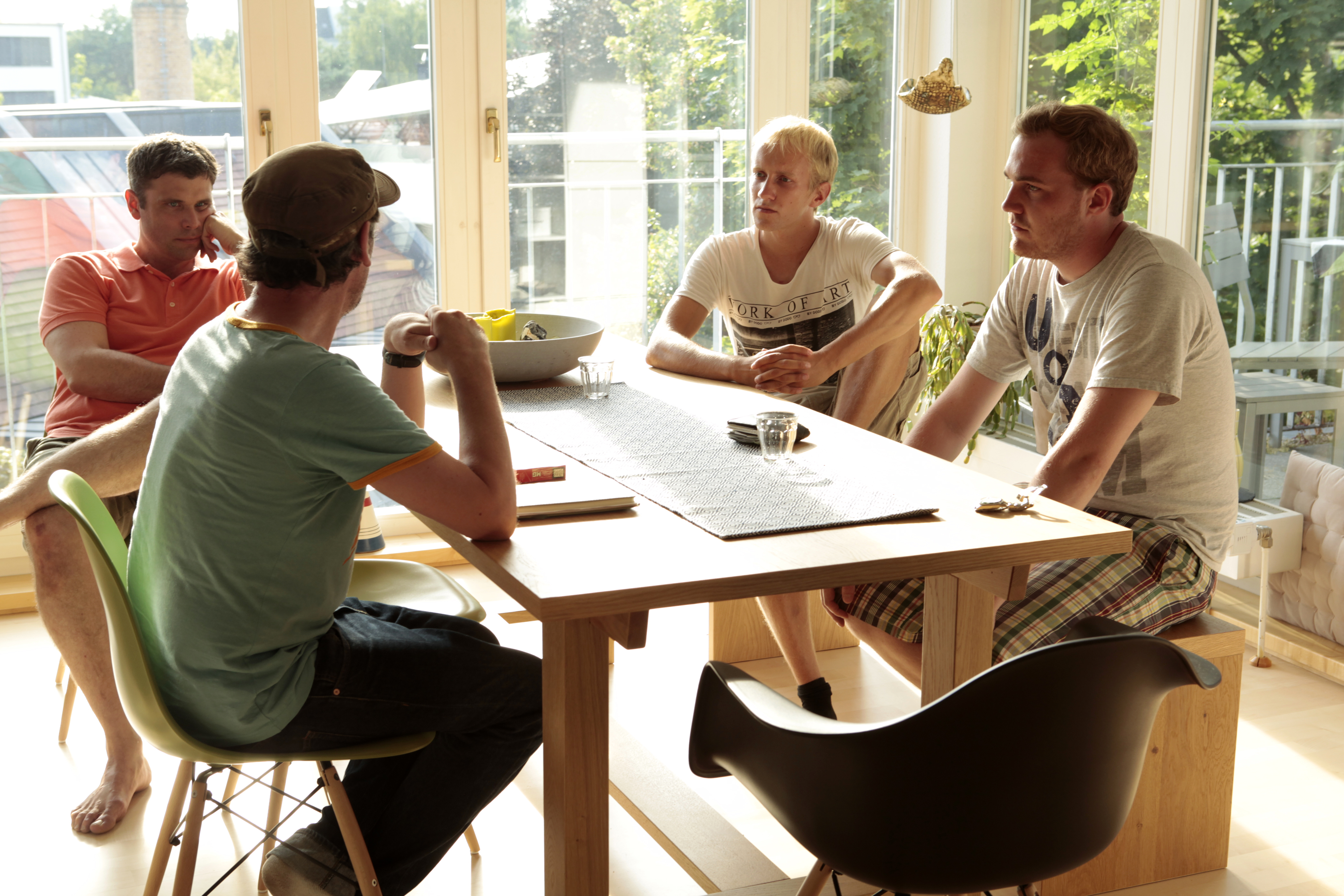
Over the course of a summer the Larsen family: Markus (Sten Jacobs), Christine (Anna Altmann), and Elisabeth (Nina Spletstoßer) are rocked to their very foundation by the pains they the carry. Their internalized struggles only externalize themselves in a vacuum and their convergence is combustible. Markus, whose commonplace appears to be indulging his bisexual tendencies on side (even these are rendered to a chilling effect) sees himself reach new depths of decadence. Acting as a catalyst for this pending familial implosion is Markus’ fascination with a friend’s twelve-year-old son Johannes (Jaspar Fuld).
This is not unprecedented subject matter. Lolita and Death in Venice deal with these themes also – and this film does have a less myopic, more diverse vantage point than Michael does. The concern with plots like these is not even so much how tastefully the distasteful can be rendered but rather to what greater purpose does it serve.
Here is a case where the distributor Artsploitation seems to have a rather keen eye. Before I saw Reckless I was fearful it’d be too much in the BTK school of things like Hostel with little other point than to make you squirm, but that was not the case there; and it certainly isn’t the case here.
Each character in this claustrophobic drama has their own distinct arc, and for family members there is scarcely overlap as for many reasons they scantly communicate. One of the bonus features discussed below is a rehearsal of a virtually dialogue-free dinner scene that is the epitome of the state of this family unit for a majority of the film. Each has their own aims and desires which can seemingly be achieved without the others standing in their way. Things of staggering significance are debated and decided upon without consultation, not to spoil it, but some of these are things most couples would discuss.
And for all the attention the sensational aspect of this film will get nearly equal, if not greater, screentime is given to Markus’ escapades with men. This film does a great deal with circumstance and it makes scenes that would otherwise be fairly innocuous chilling because of their set-up and with its more delicate situations it shows restraint and tact while still being disturbing and provocative.
One of the more impressive things about this film is the way it builds itself in a less traditionally formulaic fashion, typical of European cinema throughout, then, after certain revelations, plays perfectly into a classical suspense formula at the drop of a hat. Furthermore, this late in the game shift makes things that seemed a bit too overt before work in hindsight as now subtextual motivations in the cut, edit and performances are clear.
In terms of performance, Jacobs’ excessive openness in glances is partially absolved by late-in the-game revelations. His ability to be distant and stern with his family, chillingly charming and human with Johannes, and calculating with his friends is impressive. Altmann has perhaps the most unenviable arch as much of her unhappiness is unspoken and enigmatic and yet communicates perfectly in some rather difficult solo scenes. Spletstoßer and Fuld have very different characters to play and in each different tones. Spletstoßer often needs to be distant but observing, and Fuld plays more subtext than at times we realize. It’s a triumph for the cast overall, a testament to their trust in Burz and his process.
The Summer House is most definitely an uncomfortable viewing experience that is not for the ill-prepared or faint of heart, for reasons in addition to the aforementioned ones that will remain a surprise. What’s most impressive about the apparent genre-shift is that it then brings out the universal genre reactions inherent to thrillers and had me rooting and reacting audibly to the turns whereas a majority of the film was cerebral and wandering in the gray areas of drama, at best. That is quite a feat in and of itself. In the special features (you can see my commentary on them below) Burz discusses how this is a departure for him in terms of genre and it not being autobiographical. It certainly made me curious about his work as his results here with his troupe on treacherous ground is highly impressive.
Special Features
As is the case with any home video release I review I like to take in all the features. Typically, just for ease, I view them in order. With this film it is actually the preferred method. As you scroll through the features one-by-one you get a more complete view of just how this film came into being conceived.
As is the ideal for this bonus content usually, in a way few releases do anymore, it’s giving you an inside and as complete a look as they can at the thought processes during the making-of and edit.
Having this be the first Burz film I’ve seen, and I believe the first one to come to the US, it was edifying to learn that he works in an improvisational fashion not different to Mike Leigh and others. It was also intriguing to learn how much of a skeleton crew they worked with and some of the restraints of the production making what was accomplished more impressive in a technical regard.
Here are the features specifically, which really make the disc a furthermore immersive experience.
Rehearsal
Master shot of a nearly silent dinner scene where the family’s disconnect is intensely illustrated.
Deleted Scenes
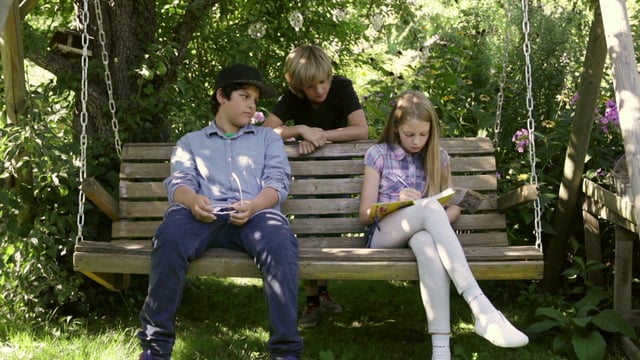
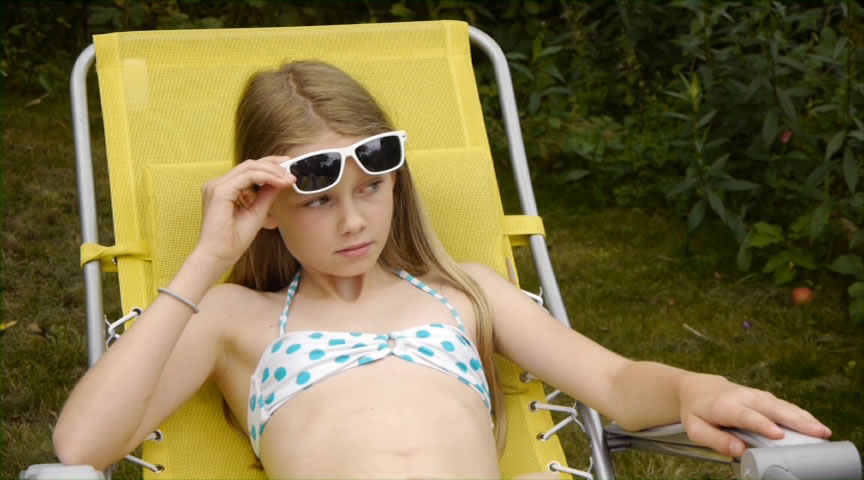
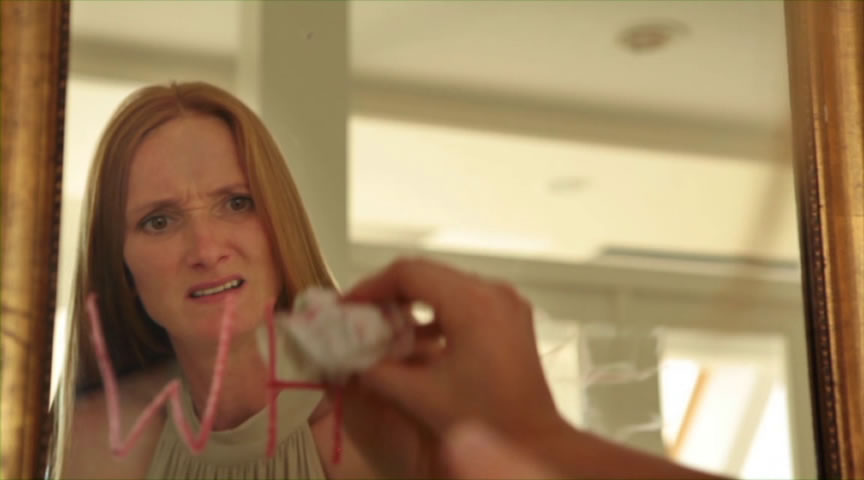
As tends to be the case, the scenes deleted from a film are better off having remained outside the cut. However, there is a curiosity sated here, and one can see how the pace of the film is aided in having excised them.
Extended Scenes
The extended scenes are a bit different and there is additional context added that otherwise is merely inferred rather than shown.
Alternate Ending
When completing the film one of things that will have you pondering it for some time is the ending. Seeing the alternate take will convince you that the way the film chose to go was indeed correct
Interviews
Where this release starts to downright Criterion-like in the amount of additional content it includes is in the extensive interviews with cast and crew, which gives tremendous insight into the creative process, and each member’s views on the myriad themes running through the film.
Curtis Burz (Director/Writer/Editor)
Thoughtfully shares stories on the making of the film in thematic and practical senses, and working with his familiar players.
Bastian Schick (Composer)
Discusses his musical philosophy in constructing the score, his joining the troupe and how he made Burz’ acquaintance.
Andreas Gockel and Peter Sebera (Directors of Photography)
In separate interviews Gockel and Sebera give technical insight on how the location, skeleton crew, and amount of equipment affected decisions. The insights on specs make some of the shots accomplished even more impressive.
Furthermore, it’s interesting to hear each speak separately about their working relationship in the unusual circumstance of co-DPs on a shoot, and their familiarity with one another making the hand-off from one to the other easier.
Sten Jacobs (Actor)
Both lead actors provide interesting insight on what it was like to work in an improvisational atmosphere, as well as one wherein the location made for an unusual production schedule.
Anna Altmann (Actress)
What Altmann adds that Jacob didn’t is insight on a far more enigmatic character. Furthermore, the unique insight of having her real-life daughter playing her daughter on the film and how she was very pleased with the results as mother and actress in allowing her the freedom to the work independently with minimal stage-parent style interference.
Trailer
After having seen all the other material it really is refreshing to finally see the trailer. Knowing the story and events therein one can see how much is concealed in the cut while still making it pique a potential audience member’s curiosity.
—
The Summer House is now available on DVD and digital video outlets.
One of the most challenging conundrums a film can face is documenting the activities of a voyeur. Whereas in a novel the author can decide how much of character’s thought processes to reveal, and to what end, even a film’s most earnest attempts to disseminate the desired amount of information may not reach an audience or be received.
This task becomes more difficult when it’s widely agreed that the novel the film is basing itself on is commonly agreed to have an enigmatic protagonist.
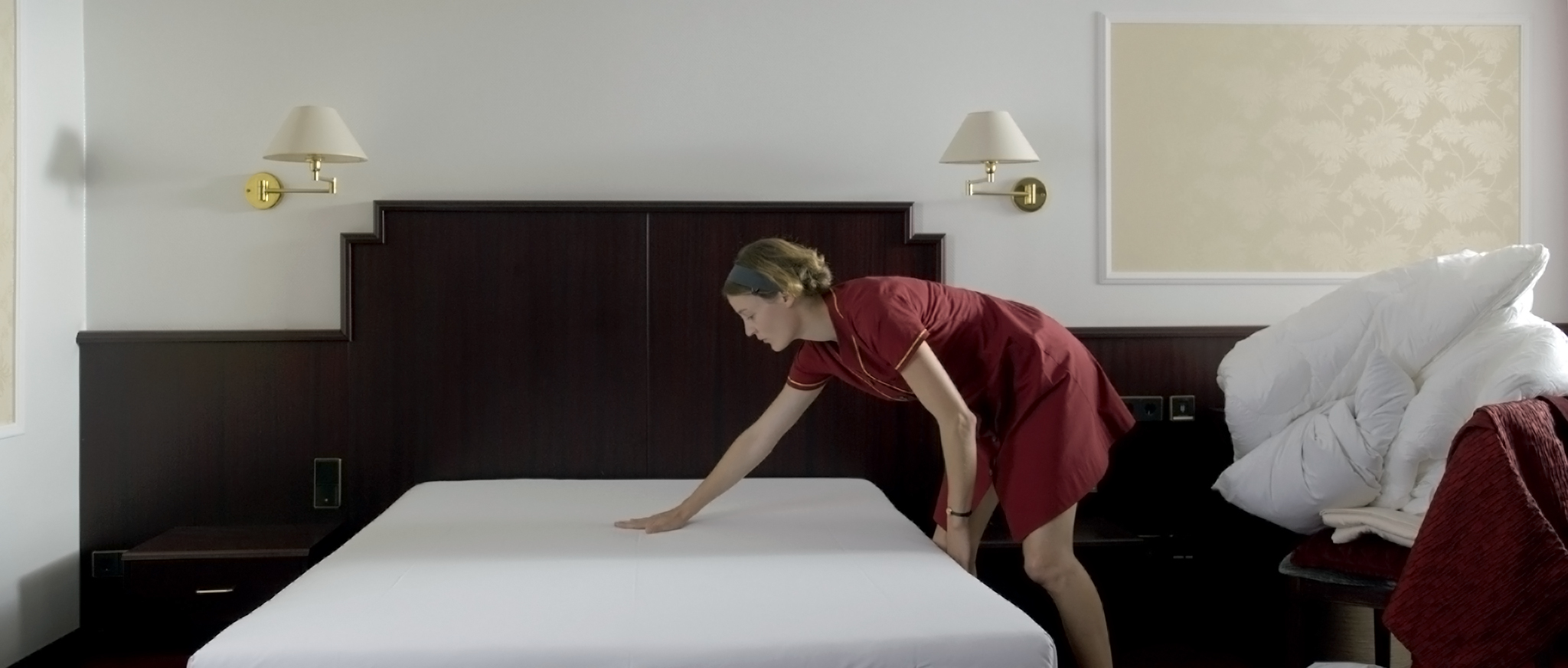
The Chambermaid tells the tale of Lynne, the most dedicated and proficient employee at her hotel. She gives the rooms immaculate care and attention. Unbeknownst to the guests she gives them equally clandestine attention looking through their things, hiding under the bed, listening to their conversations, and so forth.
Being placed in the role of observing the observer can be a distancing and disenchanting one particularly when not given sufficient illumination on the character’s motivations, wants, and needs. However, what occurs in this film as Lynne (Vicky Krieps) develops a relationship, both personal and physical with call-girl Chiara (Lena Lauzemis) she begins to emerge from her shell but we remain observers. Much like her psychologist, who remains unseen like Antoine Doinel’s, we’re left in many instances where we see only the surface she decides to reveal.
The film begins with Lynne sharing a story of how her whole philosophy on life was formed at a young age. The majority of the film is her exploring if there’s any truth, any genuine emotion behind the lie she believes life to be. Yet that morsel at the beginning is the only thing easily learned for the audience. And we have more real information than her psychologist ever does, and even we don’t really ever fully know what landed her in in-patient treatment.
In the most banal terms The Chambermaid can be reduced to a woman learning how she can about living life, while being an active participant rather than a passive spectator. Getting her to make that decision will be a process that will be imperfect and cause some pain but one that ultimately happens and it’s the one the audience is invited to see. The ebb-and-flow, the essential struggle underway to come to that conclusion is one that is a bit inundated by the set-pieces and the gorgeous mise-es-scène, which displays that not only can prisons be self-imposed, but they can also be brightly colored.
At the beginning Lynne ruminates on the story her mother told her about the waves being caught in a seashell. As a child, she bristled at this wondering how something so large could be contained in something so small. Yet that statement seems to define the philosophy of the whole film where a much bigger tale of Lynne’s whole life is reduced to this flashpoint where she finally spies something in one of her hotels room that prompts her to act rather than view.
Far too often the word mundane carries with it the connotation of a story that will induce ennui. However, the mundane when skillfully deployed and dramatically rendered even a seemingly simple morality tale can be so universal and inviting that things like language, currency, and location are no barriers.
Such is the case with the Bulgarian film The Lesson. It’s a film whose title is even simpler than its premise, as the title belies the fact that the financial, and moral, complications a school teacher Nade (Margita Gosheva) faces are intertwined and coming at her from several different directions.
The threads that run through this film from beginning to end are: she’d trying to discover which of her students stole a wallet, she’s trying to chase down payment for recent translation work she did for a small company, and then get out of a financial mess in her personal life.
Yet, as the case usually is, each of these issues feeds off the other and they are intermingle wondrously. That is not the only thing that’s awe-inspiring here; one nearly needs to be reminded of the fact that this is, in fact, a film that’s co-directed (Kristina Grozeva and Petar Valchanov). The result is such a singular vision you wish there’d be fewer roadblocks to co-directing. Regardless, in this film Grozeva and Valchanov clearly present a unified, powerful voice that is hynoptic to see.
The film becomes a further inspiration when reading the directors’ statement on the Film Movement release. A real bonus of their physical editions but I will preserve that surprise for those that get it, and also further tease that there’s a fascinating short documentary, Crooked Candy, about a man’s lifelong love affair with Kinder Eggs that must be seen by chocolate lovers and the young at heart.
The film’s neorealist qualities are an antidote not only to the ripped-from-headlines story but also to the overwhelming majority of films that seem to refuse to acknowledge that small stories can say big things and matter a great deal. It’s a drama that builds itself around relatively miniscule amounts of money, we at times don’t even know the total in local currency until later on (and web searches can confirm what the amounts translate to locally), and the point is they don’t matter. It’s about more than livelihood but survival and trying to do what’s right.
The film in its laid back way ups the suspense, about midway through in a way that makes it feel like a traditional third act. An indicator this films 100+ minutes were more than likely built in five-acts. However, there are still surprises, shocks, and drama in store in the latter half.
The central figure in the story is Nade. She is the one whom all events revolve around and must take decisive action when all others are unwilling to do anything much less the right thing. The least an audience asks of its protagonist is that they be watchable. Gosheva makes Nade much more than someone you want to watch but rather someone you have to watch. Her magnetism and sensitivity, intelligence, toughness, and at times impetuousness are all identifiable that make her one we’re drawn to whether we always agree with her decisions or not.
The Lesson, like any lesson, could be an experience that is didactic, drudgery or could be an experience you’ll likely hold on to and cherish for a long time. This film is far closer to the lattermost option on that list.
For 61 Days of Halloween, as well as for my posts categorized as Shyamalan Week (these usually lead up to, or surround, one of his new releases), I usually do some posts that are formatted a bit differently.
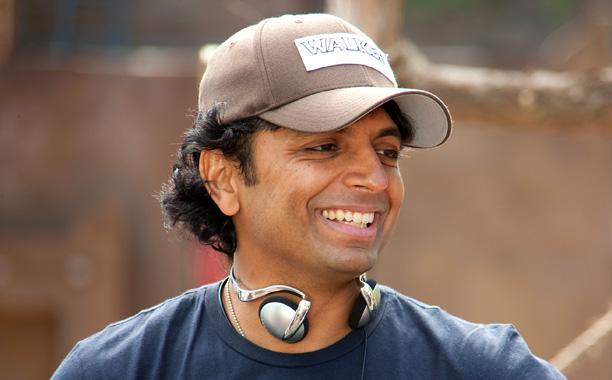
It’s with that I commence discussing M. Night Shyamalan’s The Visit. As per usual with Shyamalan, I go in depth and may reveal plot details you’d rather not know, so spoiler alert. Forewarned is forearmed.
The Visit (2015)
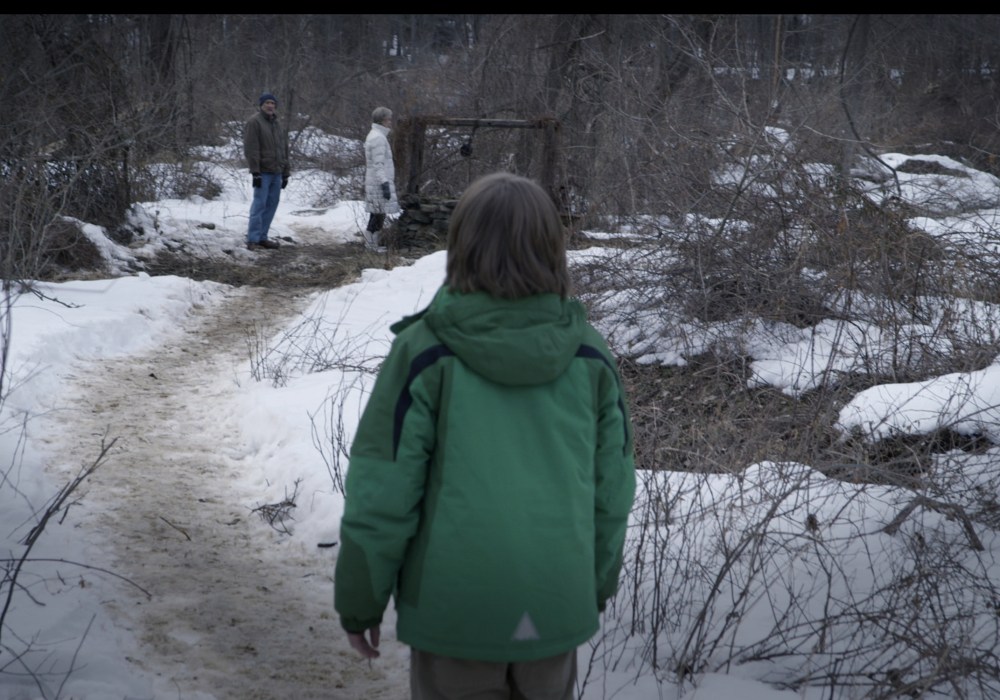
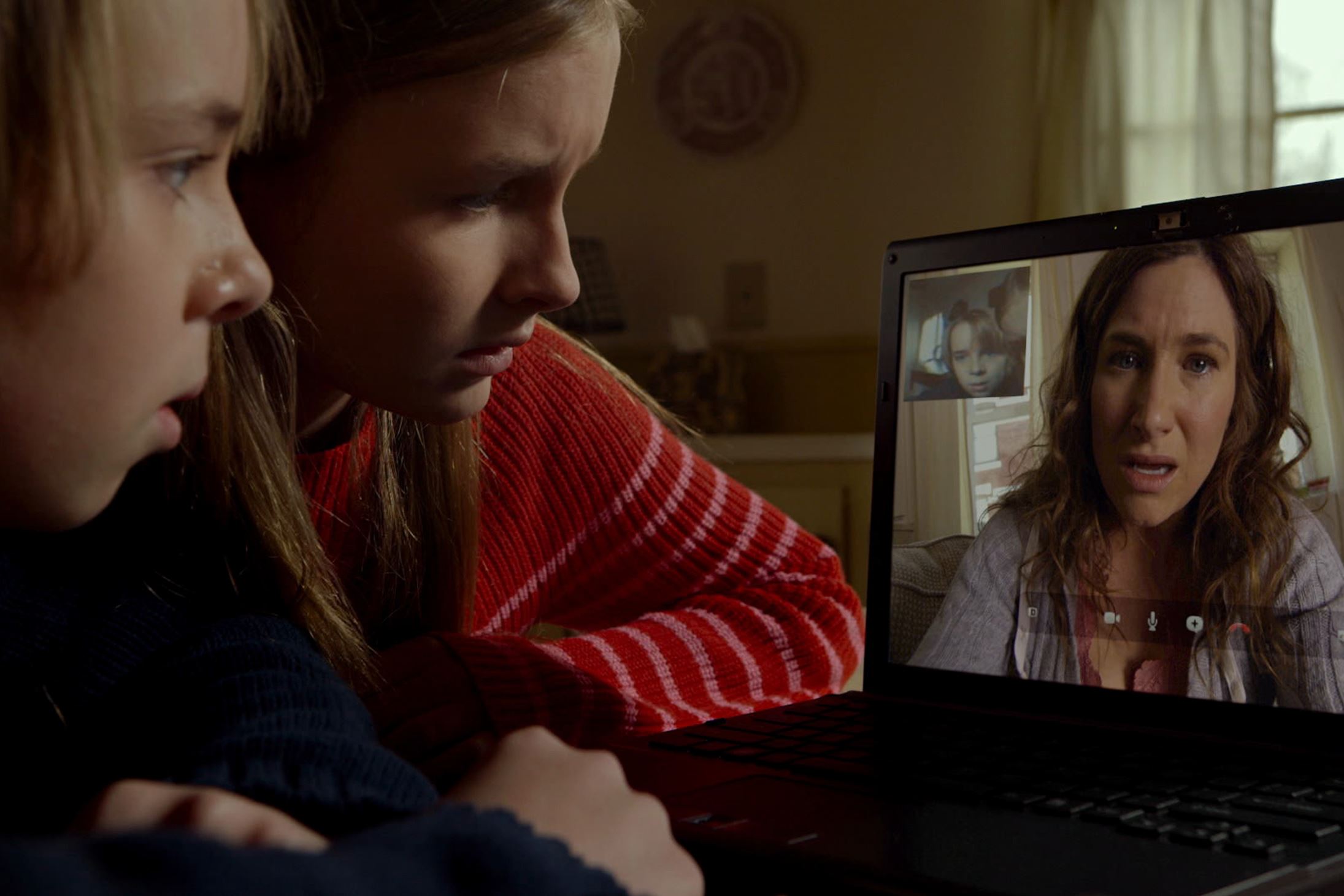
The Visit has a simple set-up: two kids, aspiring filmmaker, Becca (Olivia DeJonge), and her irreverent younger brother, Tyler (Ed Oxenbould), are going to spend a week with their grandparents (Peter McRobbie and Deana Dunagan) to get to know them as they are long estranged from their mother (Kathryn Hahn). It’s a scenario that allows for a stripped-down, character-driven relatively shoestring take from M. Night Shyamalan, and it’s also a perfect vehicle for found footage.
As do a lot of other found footage premises, so what makes this one work?
Auteur Theory
Knowing a director’s work can be a double-edged sword, to Shyamalan for me; I feel it always works as a benefit. Here what ends up occurring is that you’re put in the mindset of a Hansel and Gretel (Not the witch-hunters) tale immediately through the set-up that’s reinforced by the marketing but it ends up being the first of the film’s misdirections.
Shyamalan works some of his common touches better in this film than in many of his others including the ones with the most similar occurrences.
In no particular order they are:
Mom’s full story about the fight that lead to her leaving home, along with the fact that she is a single mom is reminiscent of The Sixth Sense.
In this film the tale of sports-related trauma is more organically folded in and involved the climax than in Signs.
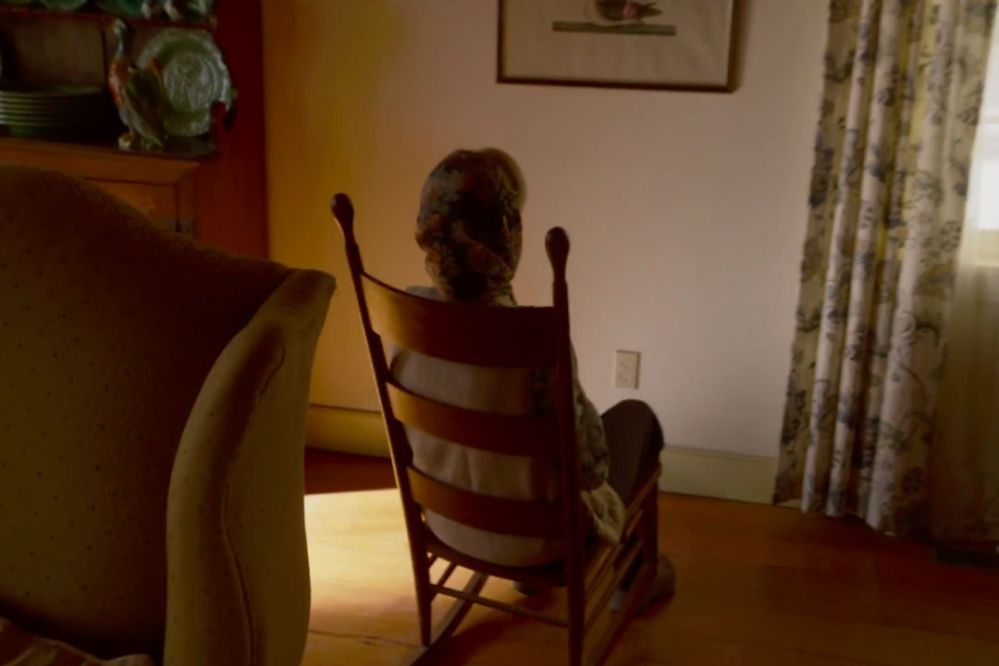
When Grandma is stalling to tell the truth about her relationship with her daughter the tale she tells in its place, that sounds like lunacy, is not unlike The Lady in the Water.
The inclusion of Sundown Syndrome, a strange and fairly rare affliction, is also a recurrent theme most notably employed previously in Unbreakable.
Lastly, Pop Pop’s tale of the white creature with yellow eyes he saw at the factory reminds me of the creature in The Village.
\
Way back when, I forget if this was on At the Movies or in an article, Roger Ebert exclaimed that M. Night Shyamalan’s Pennsylvania was beginning to be a cinematic analog of Stephen King’s Maine. Here Shyamalan goes to Masonville, PA. Even as someone who lived in the state for four years it’s still a marvel to me how vast and expansive to me. It’s certainly a larger in-state playground than King has.
There are all touches that delighted me, and there’s a sort of active engagement, what-next urgency to my viewings of his films (most of them) that have me rapt regardless, like a kid listening to campfire story.
So far as his dovetailing he’s not only filmmaker who does so, and that’s also like a King story. With regards to the moviegoing public there seems to be a strange phenomenon with Shyamalan where certain people keep going to see his movies though they may not necessarily want to. It’s like sports fandom: you believe your team hasn’t been good in years, and maybe never will be again, but you still won’t give up your season tickets.
Performance, Tonality and Character
It manages to successfully shift tones and close-out all aspects of its narrative appropriately. It’s unquestionably both comedy and horror (the inclusion of Hahn and Oxenbould was a hint even beforehand). However, unlike many horror/comedies it does not struggle in either aspect and it does find equilibrium.
It excels mostly because Olivia DeJonge and Ed Oxenbould are both inordinately exceptional and achieve the unique tricks of appearing natural as if the camera is just rolling, being believably awkward when the moment demands it, and also entirely inhabiting their characters.
They have many memorable moments: the companion coerced confessions, freestyle rapping, and Oxenbould when snapping out of freezing in a rage are dream takes for an actor and director both.
DeJonge’s interpretation of Becca is that of clearly intelligent girl without a note of falsity or petulance, heartbreaking in her embittered memories of her father. These two are really the glue that holds the film together.
This is not to discount Peter McRobbie and Deana Dunagan. They provide some of the needed laughs as well, all the necessary scares which are very effectively delivered, and even one heart-rending moment. Their feat is also not limited as their physicality is a triumph for both.
With a cabin fever aspect to the story, and a lack of a supernatural element, character is at a premium and remains so. The characters are explored even more than the plot is built but both are slowly revealing themselves sometimes it’s even subsumed in seeming temporary nonsense.
Even in the conclusion where Tyler is allowed to do his closing freestyle rap (Shania Twain, bitches!) and Becca is looking into the mirror, her former aversion to such and the trauma that started that behavior were previously established. We see the growth and progression of both.
Newfound Footage
This film takes a few tired found footage tropes and injects some life into them, as well working a few tried-and-purported-to-be-true ones better than prior acclaimed films of the technique.
Incessant documentation is a new reality that is becoming more accepted by society with less and less backlash with each passing day, therefore one of the past requirements of this technique is already passé.
In differentiating itself from the newer brood of the found footage approach it both doesn’t ignore the cameras to its detriment nor does it obsess over the “Why Are We Filming This?” Conundrum.
With regards to the past it does at times it seem to echo The Blair Witch Project with dramatic moments in corners. It also takes what was the entire basis of at least twoParanormal Activity films, distills it into one chilling scene; and thus condemns the former to the purgatorial state of anti-cinema wherein it belongs for all eternity.
Conclusion: The Visit Twists
The Visit is a film that deals with creatures both real and imagined, the real being people, the ghosts of this tale being figurative. It’s a film where I was not waiting for a twist but rather reveals, but this one is successful because it was just sitting there waiting to be discovered like some others, but is highly organic and intrinsic to the plot. Furthermore, little morsels of prior information that seemed meaningless before ring true after it.
Another way for a viewer to ruin their potential enjoyment of a film is to be expecting a twist and constantly trying to ferret out what it is. What would happen if there was none? It’s like going to see an adaptation of a book and constantly be referring to your mental checklist about which favorite parts were included and which were edited out. It occludes you from focusing fully on what’s before you because you’re worried about parallel problems.
How many given endings can a story really have in cinematic terms? In most movies, especially Hollywood releases, you know how things will go. You’re there for the journey.
Previously I discussed how at least Shyamalan is consistently giving us something to talk about, something a lot of people can’t even claim, which is noteworthy at the very least. I still want to discuss, and watch, and I wanted this visit to continue and enjoyed it greatly.
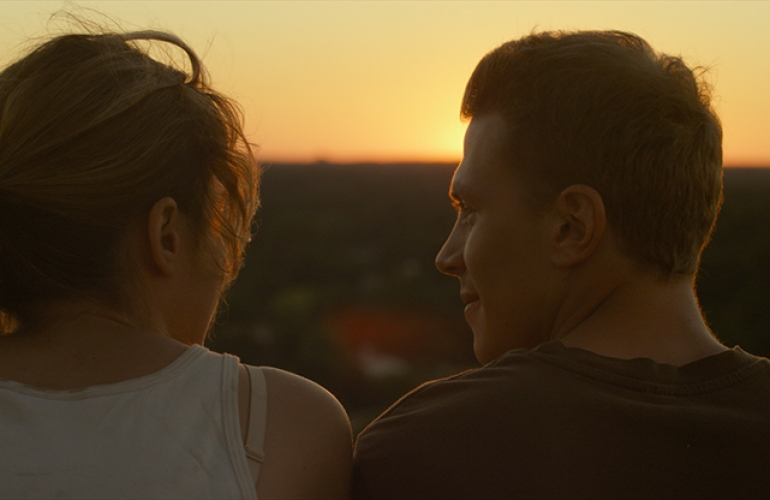
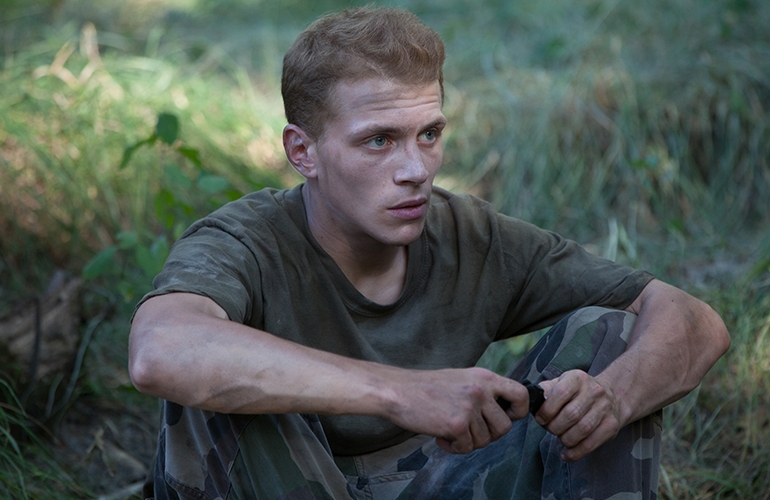
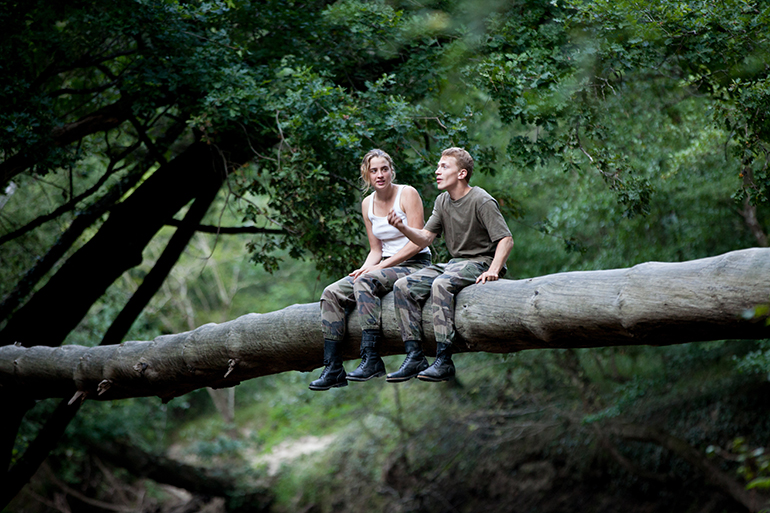
Love at First Fight is a French dramedy that tells of the relationship between twenty-somethings Madeleine (Adèle Haenel; Aliyah, Three Worlds) and Arnaud (Kévin Azaïs), two young people searching for themselves. The English title promises are far cutesier romcom than the French title Les Combattents (The Combatents), which is far closer to the truth of the matter.
The film begins with Arnaud and his brother, Manu (Antoine Laurent) having a contentious meeting with a sales rep trying to to pass off a subpar coffin to them. They storm out and it establishes their line of work, they are contractors and are taking over their late father’s business. Manu is more dedicated than Arnaud, which is part of his internalized and externalized conflicts.
Enter Madeleine who is a wannabe survivalist and army recruit, who is in a transitory life-moment herself setting off down this path after earning a few master’s degrees. With this the film introduces its strongest performance and to an extent its largest problem.
There is no wit in platitudinal cynicism. To find truth in nihilistic existentialism one needs to find a uniqueness in the characters worth exploring, exploiting, and extrapolating this idiosyncrasy into universality, and this film doesn’t really accomplish that task.
And to do so it’s best to not have a character put themselves through a situation obviously predestined for failure, and not only failure but one in the most frustrating way possible. Truly this section does allow the original title top ring true, but as previously stated it does get tiresome.
While it is compelling that the seemingly more lost-in-life Arnaud is more comfortable in their self-imposed survival situation, the winding down of the film is overly-languid under-compelling relegating this film to ultimate mediocrity.
Azaïs’ performance is sufficiently endearing, Haenel is a true talent and I have yet to even view her most well-known works, but ultimately they are the only thing that makes this film a tolerable pastime. There are films to be seen and to be made about the 21st century malaise not exclusive to Milennials alone, but this is not among them.
There are a few gorgeous images, some laughs and the standout leads but the drama is never compelling enough and the sweetheart element is never touching enough. A film about a survivalist ought to be able to keep its head above water better than this.
When this review was first posted on The Site That Shall Not Be Named, I spent far too many words on reacting to the reviews of others. Of all the reviews I’ve written it’s one of two I lamented most. The other does not bear rewriting here because the less thought spared to that film the better. However, with this film seeing as how I was trying to write a minority, albeit not staunch defense of it; I failed that aim by trying to counter arguments. Unless, entirely relevant I dislike comparative analysis of films as a shortcut to writing a review. If that’s the aim it should be a separate piece. Argumentative points or analysis of mass reaction are made for op-ed pieces not an appraisal of the film itself. Therefore, I present to you now an edited version of that review which internalizes, and distills it all to what I thought of the film and nothing else.
This isn’t a complicated movie and moves briskly. A film can have a slow pace if that is the appropriate pace for the narrative being told, this film works with the pace it has and does not seem to be extraordinarily quick-moving and there are peaks and valleys in the emotional ebb.
I never saw the TV show. I don’t care if I do but I liked this. One can have a preference for one or another but ultimately a film is its own work. How much it used or discarded of the original is ultimately a debate that’s academic, and ought not affect one’s interpretation of what is presented. On that note there was a flashback I was begging Shayamalan for early on the film and it was delivered at the climax and it was better and more well-placed where he put it and quite emotional. So sometimes he does know best.
One of the more enjoyable elements of the film was that it was a essentially a simple through-line which was not burdened by unnecessary complications just necessary information.
As for the dialogue, it does slip into the unforgivable zone on the rare occasion. It serves a function and moves the story along. This is no worse than Mr. Lucas, who himself has referred to his dialogue as “wooden,” and I always referred to as “functional” as it did what it needed to
.
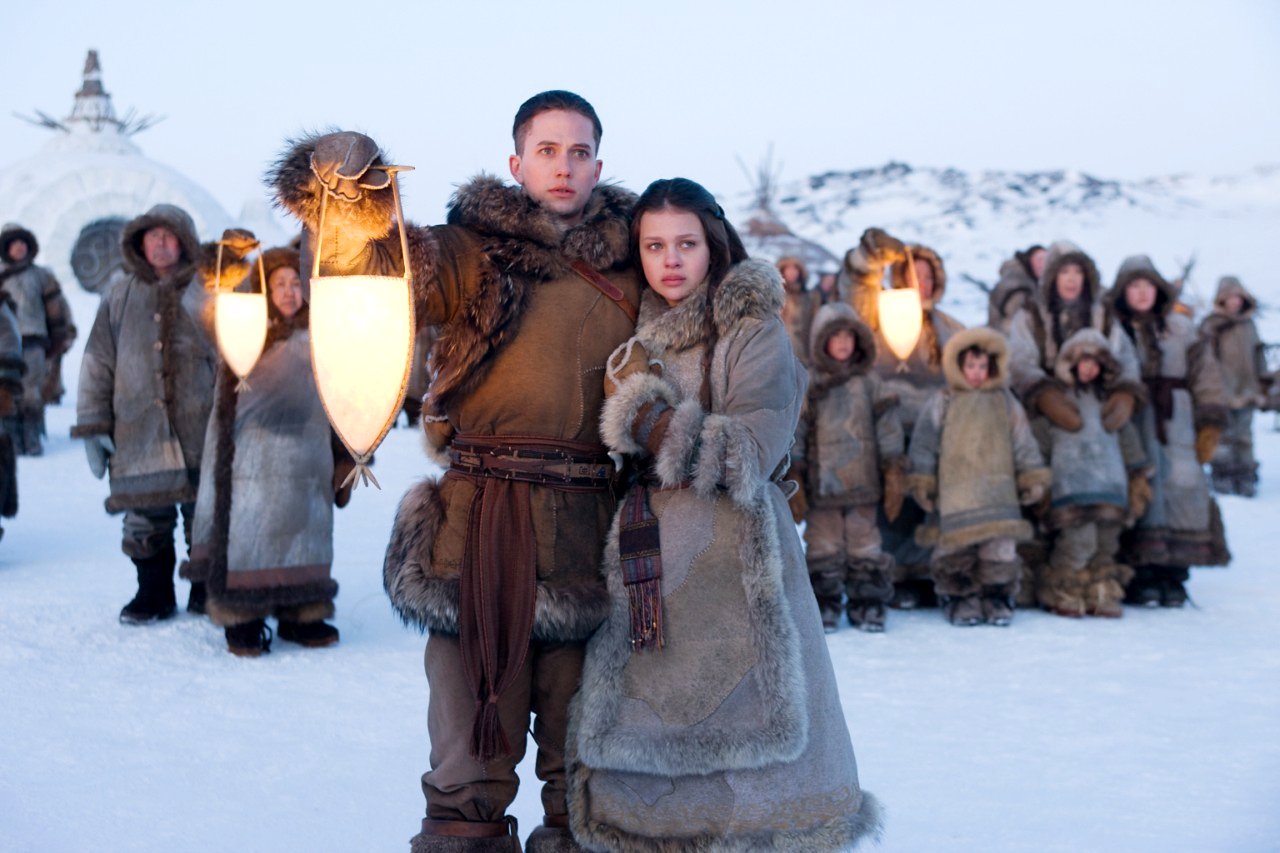
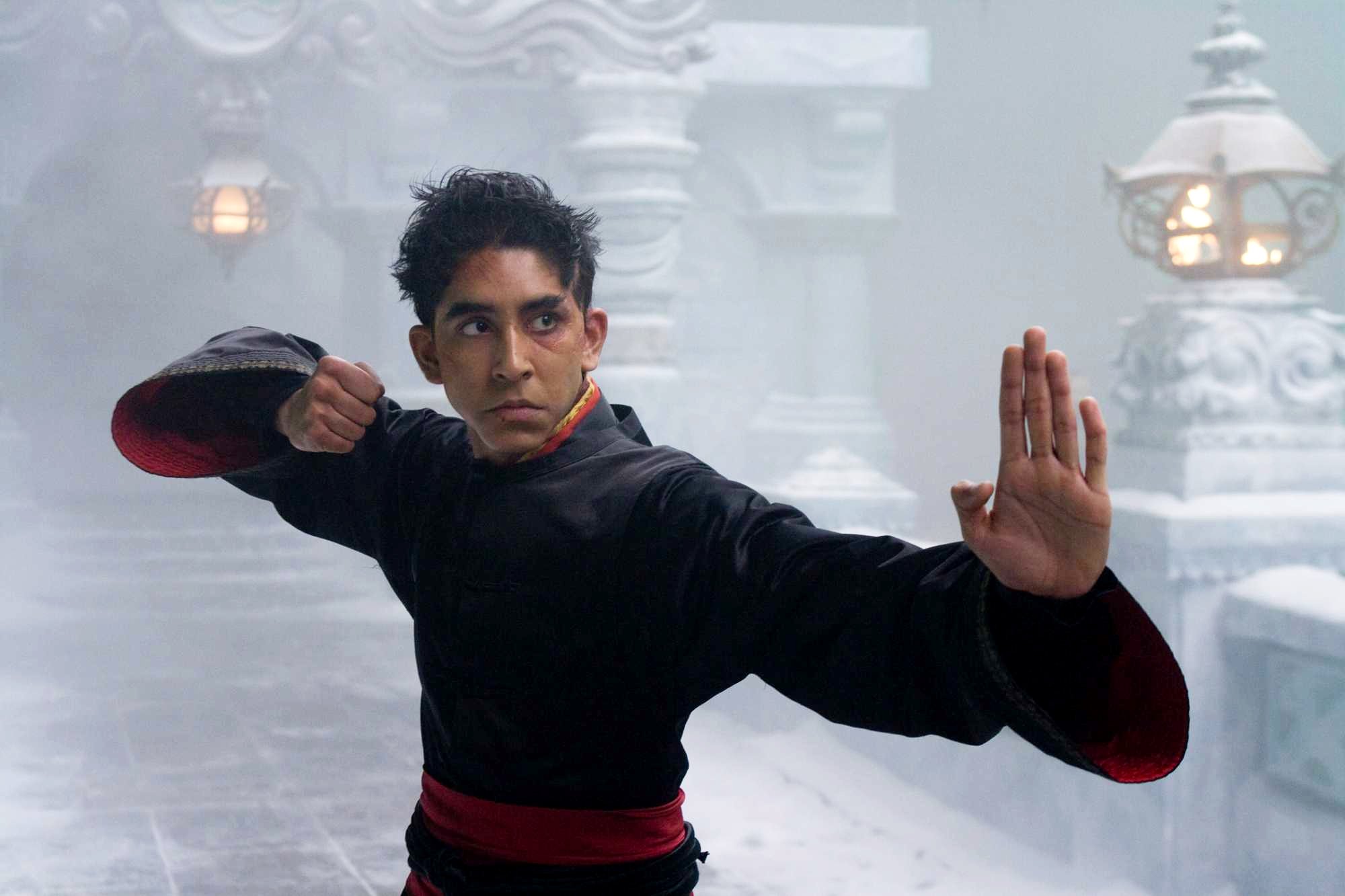
The effect of the performances on the film overall, as is the case with most motion pictures, is nominal. It’s true Jackson Rathbone is better in Twilight than here but there are some cornerstones here like Dev Patel and Shaun Toub. Meanwhile, the protagonist, Noah Ringer, isn’t asked to carry too much of the load. Most of the time he is “bending” (performing martial arts) as opposed to speaking. Should the series continue he will be able to develop his acting skills not unlike the Harry Potter cast who were very raw and unpolished when they started.
As for the 3-D, it wasn’t shot in 3-D, so don’t watch it in 3-D. I saw it in 2-D and it looked fantastic. All you really need is good cinematography, which this has and the production design is absolutely out of this world in its splendor and brilliance. Philip Messina deserves special recognition for his work here (Note: in December I will likely cover some BAM Awards oddities through the years. This was one of my more lamentable snubs). The same goes for Judianna Makovsky’s costumes. The score, as is typical for James Newton Howard, is wonderful.
What I liked here is that you saw M. Night Shyamalan go to a different place. I first became an admirer of his after seeing the vastly underrated Wide Awake, which was actually his second feature. After he did the The Sixth Sense and it was one of the biggest sleeper hits of all-time the burden of expectation fell on him. While he enjoyed(s) making “feature-length Twilight Zone episodes” it became kind of a game. “What’s the twist?” or “What did you think of the twist?” as opposed to “What did you think of the movie?” About the only thing I did appreciate about The Happening was the fact that he tried to monkeywrench his own formula and deliver a tale with no easy answer. As is the case with many works of fiction like that it’s hit-or-miss. Here he finally bit the bullet and went on a full on departure and for the most part lost himself in the story and didn’t make it your standard Shyamalan aside from the expected cameo, which is a lot less subtle and welcome than the “Find Hitch” appearances he is referencing.
Overall, though flawed, I thought it was a successful step in a different direction for the director (Note: mind you this was his first feature after The Happening.




 As tends to be the case, the scenes deleted from a film are better off having remained outside the cut. However, there is a curiosity sated here, and one can see how the pace of the film is aided in having excised them.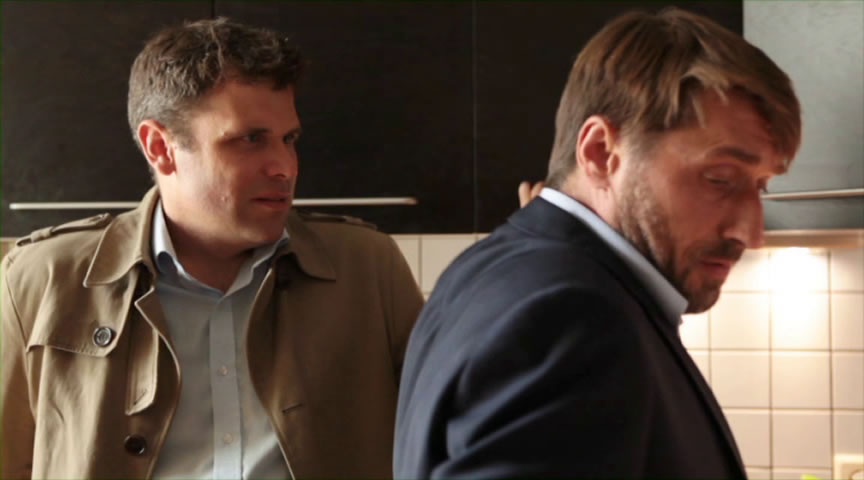












 The Movie Rat