Review: Abuse of Weakness

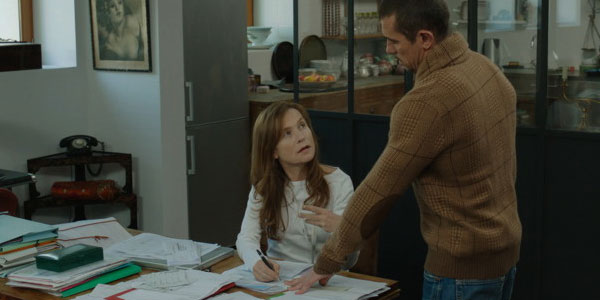
Abuse of Weakness concerns a filmmaker, Maud Shainberg (Isabelle Huppert) who has a stroke and then becomes the victim of a notorious con man, Vilko Piran (Kool Shen). If you know that which the film fairly readily give to you, you know the whole story essentially.

In this film very little is a surprise. It starts with the stroke: quickly and suddenly. However, without belaboring its rather enjoyable pantomime of The Diving Bell and the Butterfly it moves on to Maud being recovered. She is then looking for her next project and sees an interview on TV where Vilko talks candidly of his criminal past. He is not an actor, but she as a director sees something in him and is convinced he is the one for the movie even though he is not a professional actor.

Sadly, the film becomes a protracted and fairly clumsily laid-out self-fulfilling prophecy. Vilko on the television show explains his entire modus operandi. In this statement if the blueprint to how he will view their relationship. Now, the specifics of what he will do may be vague, but the outcome is apparent. He does not appear to be precisely intelligent, and neither did she appear to be that gullible and stupid such that hardly any charm or coersion is used to extract funds from her.

Another aspect of this film that is noteworthy is the performance of Huppert. She is brilliant in the small recovery section. She also nearly singlehandedly manages to keep this film afloat through most of its running time. However, the problems that plague this film not only remain, but seem to be exacerbated as the story progresses. Even giving her character a pass for her initial fascination we also see her psychic decomposition in an altogether disengaging fashion. She is initially tough and bullheaded. Tacks employed by her favorite conman never change, her resistance and rebellion just lessen over time.

Even if all that were forgivable there is a seemingly tacked-on closing expository scene, which as one might expect, does not offer any real resolution. Instead we watch her confusion as she thinks back and in hindsight tries to decipher why she acted as she did. It illuminates neither the narrative, nor her character in any real way so it could be truncated, if not excised entirely. It seems as if its crafted for potentially frustrated audience members, which at this point I most certainly was, but it offers no closure merely more running time.

That ending does play into a systemic temporal abuse that this film employs. Its pace dies as slow a death as its protagonists will dwindles. Some of that seems to be by design as the narrative chronology encompasses a long period. Yet there comes a point where the illustration has been made and the whole suffers.

There are many stories that are self-fulfilling prophecies. That is a given narrative truism: knowing where this story is going from the beginning does not doom the story to be of little to know interest. The protagonist knowingly going into a precarious situation does make it a harder trick to turn, and does render him or her less identifiable. There is a distancing we feel from events, a torpor of voyeurism that creates a hollow experience. At the beginning and the end, at Maud’s most comprehensible and incomprehensible emotional ebbs, we are at our closest to her; in the interim we are persistently pushed away and forced to hold on for dear life if we care, either in empathetic or morbid way. In the end we care in no way and are left bereft of visceral interaction with the story and numbed from lack of palpable intellectual stimuli.

3/10

Review: I Am Yours

I Am Yours tells the tale of a young Norwegian Pakistani single-mother, Mina (Amrita Acharia), trying to balance the demands of family, her career as an actress and dating in Oslo.

For last year’s Thankful for World Cinema when deciding what topic I would tackle as the Oscar voters’ issue of the year the co-production was essentially the topic. In modern cinema even films that don’t necessarily have a multicultural aspect are produced by many countries and companies working in concert. Those co-productions are further encouraged by sociopolitical alliances and migratory patterns the world over. In short, the immigrant experience is now a tale that can be told the world over. Whereas Chaplin helmed and starred in the 20th Century’s iconic version, there can be many more visions for the 21st Century from the world over, and this is just one of those tales.

This is a different kind of experience as those which can be exposed through the new post-colonial cinema as I cited here. In films such as this and others such as Shun Li and the Poet the experience is other. While the themes of assimilation and embracing, and struggling with, one’s diversity are omnipresent it’s a different kind of story that can add new complications to age-old human dramas.

I can hear you, if you’re still with me and reading, saying: “Yeah, well that’s great, but how about this movie?” That’s kind of what I’m driving at. The ostensible narrative that of Mina trying to please, or just get along with, her parents (Rabia Noreen and Sudhir Komar Kohli); raise her son (Prince Singh); deal with her ex (Assad Siddique) and date Jesper (Ola Rapace) is not where the interest lies, which is the film’s greatest issue. Essentially, if you’re an optimist it’s a zero-sum operation wherein Mina has to learn to find, and fend for herself, and not try and meet anyone else’s expectations. At worse she loses almost everything in order to realize that she too has to find herself.

One can see through Mina’s passion, of sorts, influences of her ancestral home fighting with influences of her adopted home. They fight for her at different times and when she decides to run to one or the other she is pushed away as not wholly their’s. This read is made easier to infer due to the fact that some specifics of her story are glossed over or omitted entirely.

Due to the fact that I am a first generation American and a dual citizen I am more sensitive, and should be more inclined to be truly moved by such a tale. The issue ends up being that it’s an overly-academic exercise and not as much of a visceral connection. The superficial narrative is not engaging enough to find the riches of the potential symbology and commentary to be truly valuable.

The film functions as well as it does thanks to the captivating and charming interpretation of a pained young girl seeking fulfillment by Amrita Acharia. It truly is a star-making turn such that if the film lacked her contribution it would’ve been a completely lost cause. Instead it does have a heart and soul, it just has one that’s not adequately exposed onscreen to make the film rise above its ascribed station.

If there is any doubt about what some things that should be read, thought on and discussed with regards to this film the title dispels those doubts. Due to what it seeks to express, and the performance of Acharia, it is definitely worth seeking out. It may speak more strongly to others than it did to me, and it is definitely a dialogue that will be, and should be, revisited many times over.

6/10

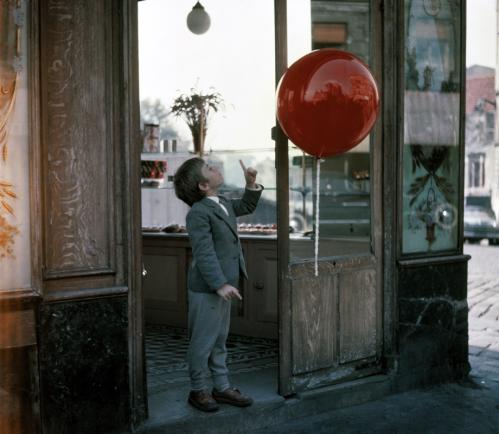
Thankful for World Cinema: The Red Balloon and White Mane

The Criterion Collection packaged two of the most influential short films of all time on one great, yet stripped-down DVD package. They are both written and directed by the same man, Albert Lamorisse. Both are the recipients of many awards and have quite a few narrative similarities and as such they make great companion pieces.

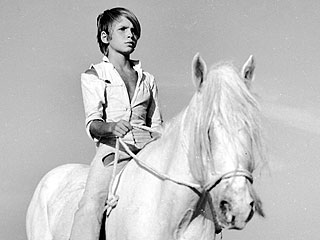
White Mane, which is shot in stunning black and white with magnificent vistas of the French countryside, Camargue, is a modified tale of a boy and his horse. In this scenario, however, the horse is wild and the boy, whose intentions are pure, wants to keep the horse, whereas the Ranchers seek to only do it harm. It ends in a similar fashion to The Red Balloon except in a somewhat more bittersweet fashion as opposed to the whimsy of the other.

There are some brilliant dissolves in the film and while there is occasional dialogue it is for all intents and purposes a silent film as is The Red Balloon.

The second film in this collection is without a doubt the more well known. As a short it won an Academy Award for Best Screenplay in open competition against Hollywood features in 1956. This was a film that conquered the world both literally and figuratively. Yet it drew sharp criticism from one of cinema’s finest critics at the time and later one of its great filmmakers, Francois Truffaut.

Writing for Les Cahiers du Cinema at the time Truffaut literally tore the film to shreds. Rather than regurgitating his entire article point for point let us summarize: Truffaut found the personification of the balloon to be its unpardonable sin. Where Truffaut was coming from was being one who preferred the fables of La Fontaine as opposed to the films of Disney. La Fontaine told the tales about animals without making them speak, without humanizing them in any way and what he felt Lamorisse had done was fall into the schmaltz of Disney.

It is certainly conceivable how one can see this as a problem; however, the opposite view is the one I take. It takes little to fascinate and delight a child and considering that this child is alone most of the time there is the possibility of skewed perspective. It is a simple tale about a child’s delight and is told simply such that we connect. Had it been something other than a balloon it might not have worked but it does. There’s just something primal about it and many do connect with the Disney style, just as the man himself once said: “All right. I’m corny. But I think there’s just about a-hundred-and-forty-million people in this country that are just as corny as I am.”

While each one of these has a very small moment that makes you scratch your head somewhat, a moment which will not be revealed here, both are well worth your while – especially The Red Balloon. They are both fascinating and despite similarities they are their own works with their own distinct approaches to shooting and the edit aside from the obvious fact that one is sleekly shot in black and white and the other in shot in the unparalleled lusciousness of three-strip Technicolor.

White Mane 8/10

The Red Balloon 9/10

Review: The Snowtown Murders

The Snowtown Murders

Note: Potential spoiler below. The ending is discussed but not in detail.

Next to nothing in this film works, that’s just the sad fact. I will discuss them with as much brevity as humanly possible and brevity would’ve helped this film. Typically when I’m discussing pace it refers to certain scenes and shots being truncated and rendered more quickly to allow the totality of the film to flow better in this film the first issue you have is that there are scenes of little to no narrative necessity or consequence that not only are allowed to occur but at times repeat themselves (see the bull sessions about stomping out pedophiles).

Characters are very poorly introduced and the population of the tale is too large. Some of the struggles of this film can be attributed to attempting to remain true to the real-life story upon which its based but not excused. A huge cadre combined with indirectly acquired information and at times implied incidents is not an easy road map to success. The protagonist in the tale is a bit too passive such that it would’ve almost been better told from a different perspective especially since it became clear who the perpetrator would be though the film took a while to formally announce it. The score designed to be grating ends up being just annoying. The film also seems to show where it ought not and have restraint where it ought not. This tact adds importance to the MacGuffin and exacerbates the delusional vigilante angle that’s really just a cover for psychosis. Granted that’s important to convey but once demonstrated that needn’t be reinforced.

The film despite all its massive flaws still keeps on a decent trajectory in terms of narrative build but then meanders irrevocably when it should be building towards some sort of concrete conclusion but instead decides it’s shown us enough horrors such that enough is enough, and rather than finding an artistic way to convey the deserved downfall of these people they’ll just give us the information in cards. This is information I could’ve acquired in a web search but I’d have preferred to have seen it now that my time’s already been wasted. Finish the job! Give me the epilogue visually. It’s not quite the slap in the face that the end of The Devil Inside is but considering the start this one had the totality may have been worse.

Furthermore, as if that wasn’t bad enough, I really needed convincing in this film and I didn’t get anything to sway me. I thought of This is England while watching this film which has perhaps an even more vile ‘charismatic antagonist’ but both in writing and performance is far more believable as someone who would be followed perhaps even against one’s will. It seems that things occur and are shown here just because they actually happened and no thought was given to narrative propriety and almost seems deliberately sensationalistic at times and never interesting.

2/10

Review: The Mystery of Happiness

Santiago (Guillermo Francella) and Eugenio (Fabián Arenillas) are longtime friends and business partners. They seem to be as in sync as best friends are when they are children, and then one day Eugenio disappears without a trace. Nothing about the timing of it makes any sense. Disconsolate Eugenio’s wife, Laura (Inés Estévez), shows up seeking to help run the business and find her husband. As they search they want to know what prompted this and how well they really knew him.

The Mystery of Happiness balances elements of comedy and drama, offering insights about life, as well as sensitive touches and laughs much the way last year’s Dos más Dos did, which is also an Argentine film. The main difference being that this film doesn’t begin with a subject matter as inherently humorous and over the top.

While the film introduces in Santiago and Laura comedic foils, but where there is a delicate touch in this film is the way in which it easily introduces a dual examination of relationships of two different types: best friend/business partner and spouse. The way the examination is conducted is also wise: with Eugenio being practically a ghost each deserted party is left to wonder about his/her respective relationship and also give their impression of the other pair.

One way in which this film makes itself a touch unique is through the quirky private eye character that is brought into the fray. Oudukian (Alejandro Awada) is an enigmatic figure who through his unrevealed life experience, and his arcane approach to interpersonal relationship examination steers the abandoned wife and business partner in the right direction. In essence, he acts more like a guide, a guru, rather than a traditional private eye, and the main characters conduct the search. This works fine because it allows the world of this story to stay small and this small mysterious character to stay shrouded.

This film begins with a sumptuous montage of Santiago and Eugenio walking about enjoying various activities. It establishes their seemingly inseparable nature, and also sets a tone for the visual approach to storytelling in this film. As per usual, it sounds ridiculous to laud a film for a visual storytelling approach as it is a visual medium, but the fact of the matter is being dialogue-heavy is a very easy trap to fall into, for comedies especially. In this film, however, many of the key moments are conveyed entirely in visuals: the opening, the montage then mirrored and the conclusion and denouement are specific, important examples.

The Mystery of Happiness is a funny and moving story that finds people in search of answers about relationships they thought they had. The literal disappearance of Eugenio symbolizes the vanishing of stability in their lives and is a classic example of a MacGuffin. The film balances its funnier moments with heartfelt, bittersweet ones. This is occasionally underscored by music which is always brilliant especially Nico Cota’s re-orchestration of “Aquarela do Brasil.” The Mystery of Happiness is now available to stream and on DVD and is most definitely worth viewing if you want to see a mature dramedy that’s not afraid to take things seriously as well.

9/10

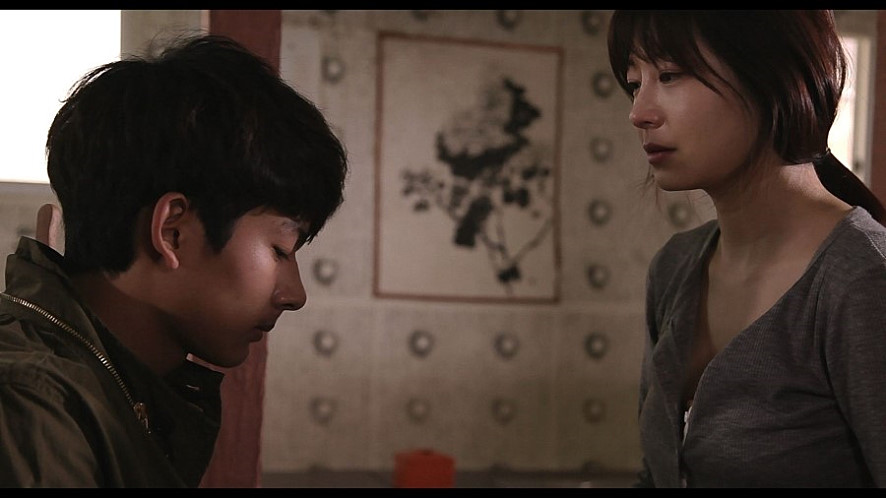
Review: Moebius

In synopsizing this film too many sites, like the IMDb, have versions of the story that are far too reductive. So much so they are dangerously vague and would leave the potential viewer woefully ignorant. I’ve frequently written of the benefit of going in to a film with a clean slate. However, in some cases an ounce of prevention is worth a pound of cure. To be almost equally cutesy one could categorize this film as the Bobbit case extrapolated into Greek domestic tragedy, or a vicious cycle of betrayal and attacking manhood, or you could visit Ram Releasing’s site for an even more exact version of the story. With all the severing and revenge going about you do want to be somewhat prepared.

This is another film that could be far more sensationalistic with its squeamish subject matter. As opposed to Cannibal this one does occasionally show rather than imply, however, such a happenstance is rare. Those instances are noteworthy because the balance between the grotesque and comedic aspects of the narrative at play are probably some of the lesser moments of the film. This is in terms of tonal equilibrium which is a far less subjective criteria than the nearly irrevocably prudish “good taste.” For once you make the commitment to take the journey of this story you have to realize that it’s not a rabbit hole you’re going down, but rather a Möbius strip, so if you are perturbed by a beat or revelation once, odds are some refraction of that very same narrative iteration will recur.

Another consideration about this film is that is one where there is almost no dialogue. Specifically, I don’t recall there being any after the opening sequence in the film. To it’s credit it doesn’t need any dialogue over 90% of the time. A few of those situations where it is needed are just those where it’s hard to believe nothing would be said by any party involved. Even more rare is the scene that would’ve been illuminated by some piece of dialogue.

As such it is a film that relies and tells its story visually. The images do communicate are perfectly composed and artfully lit. Yet it also stays true to environment and the story, only toward the end in a dream sequence, and the climactic one, are there any affectations that are not entirely diegetic.

Sometimes a story can be twisted, can shock and place its characters through the wringer, not have them be particularly likeable and it all works, even when ostensibly the play’s the thing and it’s not seeking to expound upon some deeper meaning. In Moebius’ case it almost begs for more. Perhaps that is something that will come with further reflection and reviewing. It being a film lacking in dialogue it allows the audience to plumb its depths (which are pretty deep considering where we begin) for some other meaning if we want. One can easily infer commentary, but it’s almost too superficially preoccupied too much of the time such that deeper psychological portraiture of these people is forfeited to an extent.

However, any film is unique in the way it plays to the individual audience member, and Moebius will be no exception. It will garner a wide range of reactions and perhaps reads. It may repel or fascinate, engage or bore, but it refuses to be ignored and for that any film enthusiast must be thankful. For in an age where far too many films are safe here is one that doesn’t dare to be divisive it insists on it.

7/10

Review: 1,000 Times Good Night

Rebecca (Juliet Binoche) is one of the world’s foremost photojournalists. She specializes in going into war zones and getting the shots few would dare to. After a life-changing event she, her husband (Nikolaj Coster-Waldau) and her daughters (Lauren Canny and Adrianna Cramer Curtis) struggle to hold their family together as they wrestle mixed emotions about her employment.

1,000 Times Good Night drops you into the deep end from the start. It places you alongside an embedded journalist. With scarcely any dialogue of significance we follow Rebecca as a suicide bomber is prayed over and prepares to do what she sees as her duty. It is an affecting and hypnotic start to the film. Much like Rebecca herself we merely see her in the field, are just focused on her in the moment. That assignment having ended we see her making her way home. A family we didn’t know was there, that feared for her safety, emerges. As the film goes on to be about the family’s struggles with each other and the demands of the matriarch’s employment, we see what a sage beginning to the story this was. Instantly we are shown the dilemma facing them all: what Rebecca does matters, she’s excellent at it, and it separates her from her family and consistently threatens to tear them apart.

Having persistently been in war zones she faces battles at home. However, when dealing with a narrative such as this the tendency can be to treat this with too facile a touch, make conflicts too petulant and infantile (especially the adult ones). Similarly, there are also cycles of acceptance and rejection ongoing. The characters each struggle within themselves and then with one another.

Not only is there a fairly complicated relationship each character shares with the fact that Rebecca is a professional photographer but there are some reversals as well. The film also deals with two very different types of mise-en-scène to create: both area of conflict set-ups and more homey scenarios. The film excels in both and then really puts the cherry on top when it combines them both in a necessary narrative turning point.

The films direction from that crucial midpoint, how it deals with the secrets kept and lies told are the only significant slips in an otherwise sure-handed film. However, the sequence in question is not long and the ill-effects are overcome and backed up by a very strong and decisive third act.

The framing mechanism in the narrative works perfectly, and again almost entirely without any need of dialogue, encapsulates the central struggle of the story. The success of the final act of the film surpasses merely mechanical distinction. The visceral connection that conclusion makes is due in large part to Juliette Binoche’s interpretation of her character. Binoche is strong throughout, a women always seemingly entirely present in her current environs, a convincingly passionate crusader for justice and loving mother racked by guilt. Her performance alone is enough to carry the film, but she does have help.

Nikolaj Coster-Waldau does have to breakout from a personage that seemingly has less dimension than the other but he shows compassion, vulnerability and hurt anger and effectively creates the image of a father who not only raises his girls alone, but feels estranged from a wife he’s still married to. Lauryn Canny, as Rebecca’s eldest daughter, has the unenviable task of being a typically rebellious, dramatic teenager throughout much of the film. However, she does eventually shows other levels and to her character, even if she’s still a bit immature. Not to be undersold Adrianna Cramer Curtis’ quiet loyalty to begin with is a necessary counterpoint that adds much emotion.

1,000 Times Good Night
in dealing with a woman caught between two sets of responsibility and two worlds, the second where she wields a camera like a weapon, has the responsibility to be a highly visual film. It is so, but is also a fairly taut and moving account that offers a lot to think of as families the world over balance homebound and global responsibility in different ways all the time.

8/10

Review: Finn

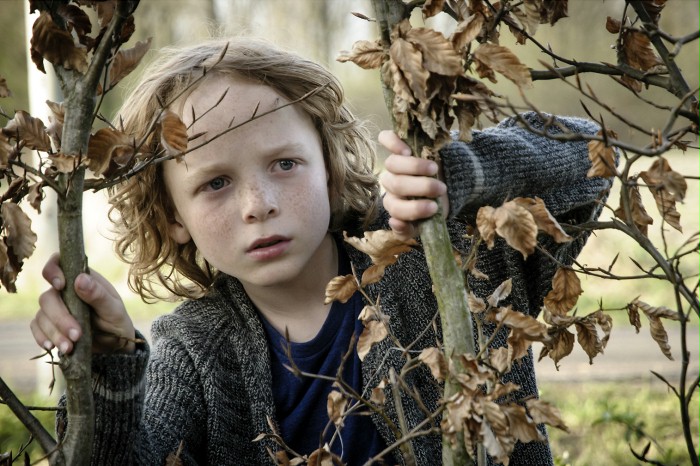
Finn is about a nine-year-old boy, played by Mels van der Hoeven, who lives in a small town with his father (Dan Schuurmans). One day Finn notices someone has moved into the abandoned farmhouse that he passes as he goes to and from school. He is drawn there by a wonderful sound he’s never heard before: a violin playing. He starts to take lessons with the old player (Jan Decleir), and skipping soccer practice. His father discovers this and forbids him. As the story moves on it becomes clear that his father’s concern is not just about Finn fitting in. All this time Finn wants: to know more about his mother, to fix their relationship, his father to open up, and to know what’s so bad about the violin anyway.

It would be easy to watch the trailer, or read other online synopses and dismiss Finn as being just another run-of-the-mill family dramedy. You may be lead to believe that it’ll be cutesy and geared mostly for children, however, one of the best things about it is that it respects all its potential audience members, and would likely entertain them in equal measure. For while Finn definitely seeks to speak to both children and parents it portrays a world that can draw both in.

The world of the story is seen mostly through Finn’s eyes, and though he’s known his pains (like never knowing his mother) it is a still a world that most children have experienced at one time or another: a world of magical realism. Finn openly wonders about the connections between music and magic, the ability to induce visions; in short believes in the unseen world and is not shy to talk about it. Resistance is met when he does share it though. He estranges his best friend and confounds his father, to say the least. So there is a balance struck.

Finn (2013, Attraction Distribution)

This balance allows for the creation of a bittersweet, sensitive narrative and as events unfold and revelations are made joys and sorrows walk hand-in-hand. The gorgeous nature of this film is precisely that the journey it takes you upon ebbs and flows. With each narrative progression truths are being revealed and though the truth invariably introduces new pains (pains both Finn and his father seek to avoid) it is ultimately freeing and allows them to move on with their life.

The journey taken here is most definitely a heart-rending one. It’s a film that could easily rest on the laurels of its mellifluous orchestrations, and captivating pastoral scenes of the low country but combines that with a universal, unpretentious and moving story. Due to the fact these things play off of one another the film is allowed to true resonance and cannot be dismissed as nice, cute or quaint, but rather a wholly realized intimate family portrait that should be shared not only at the holidays, but by families the world over.

This is a film populated by deceptively hard characters to play: Finn, has to be simultaneously precocious in that he seeks greater meanings in life and his activities, but naive enough to believe in the improbable and even impossible. The deft scripting assists in that regard but van der Hoeven is often the one, as the film’s namesake, carrying the scenes, who needs to connect with the audience and does. Shuurmans has to be simultaneously quiet definitively hurt and guarded. He has to be brusque with his son without ever alienating the audience and he succeeds in spades because as bad as the arguments get it’s always clear he is torn, has his reasons, but believes he’s doing right by his son.

The film flows with such ease that it washes over you like a dream, which is fitting. This is a factor that should also make this film one that’s conducive to revisiting. Considering that this film is repped by Attraction Distribution, who have had a good track record lately of getting European produced family fare seen in both Canada and the US, prospects of the audience for this film widening are quite good. This is most definitely a film worth finding. This kind of beauteous, lyrical family drama has nearly been the exclusive purview of Benelux in recent years. It is a moving, sincere film ought to be discovered, and one of the best of the year to date.

10/10

Review: For a Woman

This is a family drama told in hindsight. Anne (Sylvie Testud) tells the story of her parents Léna (Mélanie Thierry) and Michel (Benoît Magimel) as Russian emigres in post-war Paris especially after Michel’s estranged brother, Jean (Nicholas Duvauchelle) returns.

What’s most intriguing about this film is not just the fact that a daughter is wondering about the origins of her family, specifically what her parents’ life was like before she was born, but the facts that it commingles familial dramas and postwar political intrigue. All too often films that deal with Wold War II in some way see the liberation of Europe as the endgame. Some of the most fascinating European films are postwar, set either during reconstruction or in involved in the politics of a new Europe. This one goes there and furthermore examines some of what happens when you’ve moved past survival and are living with compromises made to move on.

Jean arrives enshrouded in mystery. His return to Michel’s life is sudden and almost unceremonious. There’s always some doubt about his nature or identity, but the conflict ends up being one in family rather than the fact that he’s still a Soviet and comrade, and his brother is a communist expat.

These narrative elements may seem like they’re too different to connect but when family is involved everything connects. With everything connecting there could be a tendency to lose the characters behind the ideas they represent and to muddle through to a conclusion. What this film does is end its commentaries on family and politics in separate scenes. One in a discussion and one in a voice over to close a tale. Each is astutely stated and a perfectly presented synthesis of hypotheses.

The most interesting thing again is that it wanders into gray areas, and fights to explain that gray against characters and a world that insist on black-and-white both in political and familial arenas. When not wanting to lose your characters to your ideas the performances by the actors are crucial.

Thierry compassionately portrays a woman torn between her emotions and duties; Magimel plays a cockeyed-optimistic struggling to hold on to ideals in the face of staggering new realities, and Devauchelle a passionate yet embittered cynic seeking unattainable levels of revenge. Each conveys characters as they are and makes you wonder both about where they came from and where they end up. While this film is an origin story of sorts for its narrator, it resists the flashier sacrificial, survivalist beginnings of the characters maturely realizing that life does goes on, and the future is constantly striven for.

The film keeps apace on both its fronts working with a smooth ease that allows you to settle in and ruminate on this situation without losing your interest or pushing it too quickly. The balance that For a Woman strikes may be imperfect but it’s not an easy one to strike and it holds on well enough to entertain and provoke thought in equal measure.

7/10

Review: Cannibal

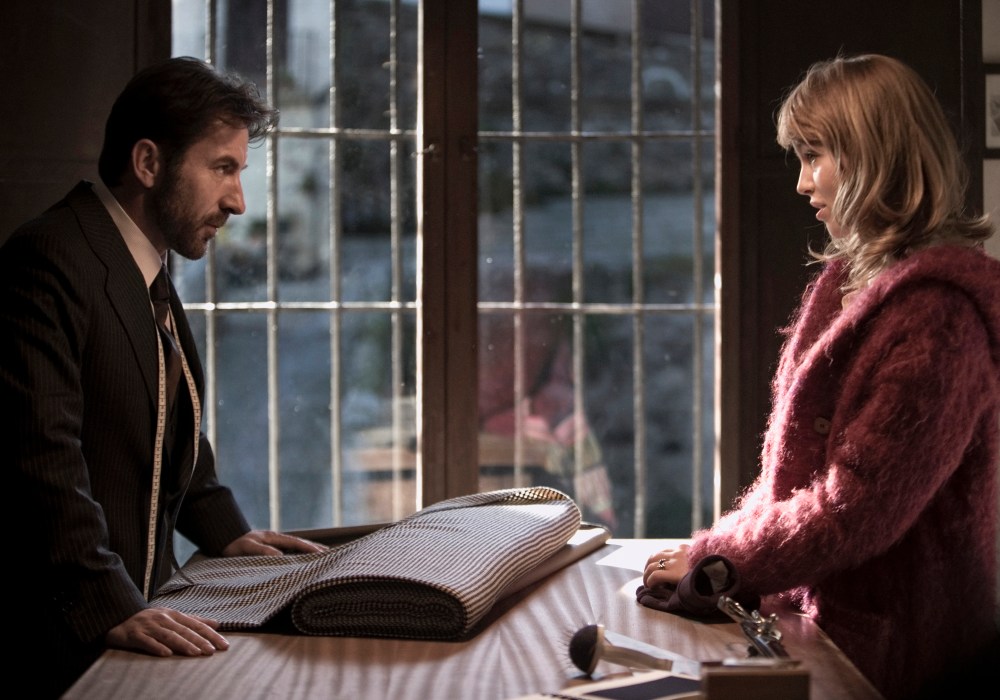
Set in Granada Cannibal follows a renowned tailor living a double-life. In the his second life he preys and feeds on women, literally. What disrupts his depraved routine is when Nina comes into his life. She introduces feelings of guilt and genuine affection into his life, and from thereon conflicts ensue.

With a set-up such as that it can be difficult to see how a film of this kind can be easily watchable. While the facts and some of the events of film are undoubtedly disturbing, it’s the way they are introduced and addressed that makes it clear from the outset the approach here will be different than most. There have been famous cinematic cannibals, of course, perhaps the most notable being Hannibal Lecter. Yet as good as The Silence of the Lambs is there is intended shock elements there, and even more so in some of the sequels.

The film opens softly, relatively speaking. After having the facts established as non-grotesquely as possible, we watch much of his routine and how this psychotic is part of his commonplace. The editing of said sequence as well as the framing builds the world effectively. The effect redoubles because of how it works around the viscera. As such it’s not daring you to look away, but daring you instead to continue to look. As intimated, the ritual is not the focus of the film.

The film seems like it’ll play out like a revved up version of Jeanne Dielman, but rather than a slow slip from a solitary, maniacal existence it’s a spiral to real consequences as Nina arrives not knowing him, and seeking answers. As such, starting in the second act it patterns itself like a more traditional suspense film. Due to the mitigating factors of this story, and how it starts, you know it cannot end in a very conventional way, and it doesn’t.

Another thing that lowers the tenor is the fact that there are narrative ellipses. This means that the film will not dwell on the facts, instead we know what happens, and much as it does in real life, we don’t know where it’s happening or how, or maybe not even that it is happening just that it does.

Where the simulacrum attempted in this film really hits home is in the performance of Antonio de la Torre as Carlos, who convincingly portrays the type who many would describe as charming and affable if they met him in a business setting, whom apartment-dwellers would say “nice, but kept mostly to himself” if news reporters came asking about him; and Olimpia Melinte, who is perhaps more compelling because as both Nina and her sister Alexandra she adds to the commentary of the film. Melinte, like her characters is Romanian but working in Spain. She not only performs with equal comfort in either language, but also renders these two sisters as separate, yet clearly related despite having little time to work with one of them.

Cannibal works because it departs from an expected course, revels in ambivalence and discomfort; and eschews histrionics. The close of the film is jaw-dropping due to one revelation, if not the overall outcome. Fans of suspense or horror and art house films may find something to like here. Those who appreciate both are likely the ideal target for this film. For any of the above it is worth seeking out. It is available on DVD now from Film Movement.

7/10