Review- Bully

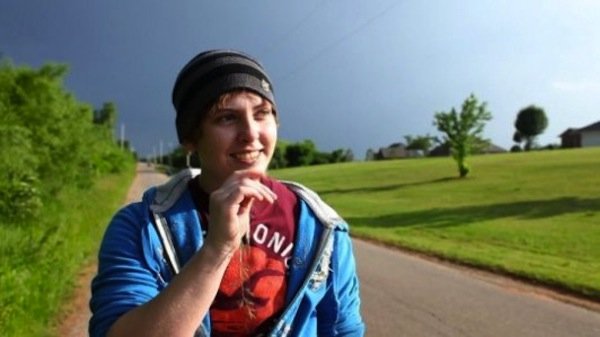
Kelby in Bully (The Weinstein Company)

Clearly with all the press that Bully had received from its initial rating, to the online animus it caused, to the subsequent edits and marketing campaign; there are many things outside of simply what’s in the film that can be discussed, even as it pertains to filmmaking. However, that doesn’t really apply to the film itself and if further discussion needs having I will post it here. That situation mutated a few times, therefore it’s best I didn’t comment pre-release, and therefore I will proceed.

Similarly, the subject of bullying itself is one I could talk about extensively. I’ve seen from afar, yet closer than most, some of the effects that it can have. How it should be handled can be couched many different ways based on your cultural or political background, however, that’s neither here nor there in this review as this film, like many documentaries are and should be, isn’t about finding a cure for the issue but rather examining the issue. And let’s face it, in spite of increased media coverage of incidents, there are still those in this country who will say there isn’t an issue.

Eseentially, my feeling is that there’s always been an issue, it’s worse and harder to deal with in today’s world, and we as a society have been too slow to act but we need to.

Yet, what of the film Bully? As I stated above, what it does is seek to examine a very broad subject on a closer level by citing several different kinds of examples. In some cases the students in question are living with it on a daily basis, some have confronted the issue, some shy away from confrontation, in some cases we only meet the family as the bullied has since committed suicide. In another, a student reacted harshly and goes through the juvenile justice system. While the film could’ve been slightly more geographically diverse, it does do a good job of going around our vast nation and showing the similar patterns of behavior and administrative inaction and/or ineffectual action.

However, that conclusion is the one I’ve drawn. The film does volunteer the occasional dissenting opinion about the severity of the issue, however, the film never through a narrator or through over-manipulated editing, tries to espouse a dogma. Instead, it allows the subjects to offer their opinions and feelings. On a few occasions, it captures incidents but merely displays them rather than invoking judgment within the narrative. It’s presenting evidence, which we are parsing.

Perhaps the best and most persistent example of this technique is the fact that, wherever possible, the main cause of a student’s being bullied is suppressed or hardly commented upon. For it truly is not the point, and while the film doesn’t actively try to impose an opinion on its audience it’s made from an anti-bullying point of view and there is ample footage and facts to support it. However, anti-bullying can be a secondary and tertiary rallying cry of other activists, therefore to focus it strictly on the issue of bullying by removing the catalyst as much as possible, it examines the phenomena, its impact on its victims and keeps its focus and scope as narrow as possible, which is essential in documentary work.

In keeping with the theme of the film’s scope, there are a number of case studies made within the film but the film is very astute at establishing these personalities and locations such that as cuts are made from narrative to narrative there is minimal reminding we as an audience need of who these people are, where they’re from and what their precise situation is. It’s a credit to the filmmakers because it allows the film to have a sense of flow rather than being segmented case-by-case it traverses the nation over the course of a year and follows an emotional ebb and flow to its conclusion.

What stands out most in that the film is at its most effective when it reveals how these things affect those who love the victimized. Typically, the bullied are resigned to one extent or another or not present. What’s most revealing is the collateral damage caused in the families examined.

The fact that some people searched for a solution in this film just shows that they acknowledge that there’s an issue and they’re desperate for there to be an answer for this generation’s sake, and for those to come. However, while this film is zeitgeist to some it still has to contend with a faction who dismiss the notion and it as propaganda. I think the film very strongly and steadfastly makes its case that there is, in fact, an issue and that it must be addressed and it will continue to be an issue until serious actions are taken and policies are adhered to. The film is a heartbreaking necessity, both in its making and its need for an audience. It’s a film that should be seen by all and I hope it has a long life.

10/10

Review- Wrath of the Titans

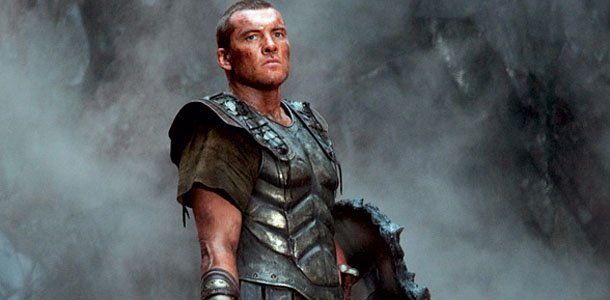
Sam Worthington in Wrath of the Titans (Warner Bros.)

The first film in this newly reborn series was passable, but barely. There was a rote nature to it that held it back from being all it could have been. While this film doesn’t maximize the full potential of Greek mythology, it does implement its gods and demigods in a much more enjoyable fashion than the prior installment did. What minor stumbles occurred in this installment were more just missteps than an over-aching approach that was slightly off, so the end result is very enjoyable.

To start with the elements that are slightly off: one of my pet peeves that makes suspension of disbelief rather difficult in many films, (and it is truly a question of accents more so than performance) is the unwritten cinematic tradition in the US has stated that British accents substitute for foreign tongue when the film is shot entirely in English. The first installment adhered to said rule, so it was fine. Here it is sketchy. Sam Worthington is speaking with a full-on Australian accent. While I applauded the decision in the Narnia series that took Caspian from sounding Castilian to using his natural voice, it’s more forgivable in a fantasy, and at least in the Narnia series there was a conscious attempt to make the Telmarines sound like they were from another country in a fantastical realm, hence the affectation. Here there’s no basis in logic for the switched accent.

Yet, despite that distraction, the performances are good. Worthington is slightly more engaging than before; Fiennes and Neeson are allowed to strut their stuff more than they were. Meanwhile, Rosamund Pike adds a much needed tough-girl factor and John Bell, as Helius Perseus’ son, gives an effective performance which acts as Perseus’ catalyst in part.

The beginning of this film means well by establishing that Perseus has had it with the gods and their games and he should be reticent, however, the stakes introduced are far too high for him to ignore. We end up knowing he’ll resist but concede to the quest so the first act is rather bereft of tension. To the film’s credit, tension does come eventually but this beginning holds it back, and despite all the past experiences he has seems uncharacteristic.

Once the obligatory resistance is overcome the story really kicks into high gear and becomes very entertaining indeed. There is an ease with which the story flows in this installment that was not quite as present previously.

Similarly, and this is crucial, several different mythical elements are introduced in this film, and barring the occasional bit of expositional dialogue, they are folded into the mix much better. This more seamless blending of mythological tropes makes the story far more engaging and enjoyable than the predecessor.

I can’t speak for the 3D as I did not see it as such, however, the effects work is definitely an upgrade and when you consider the fact that much bigger creatures, both in stature and importance, are tackled than this is also a very welcome change.

The score of the film also does its part to churn the film along while adding the necessary tension to the mix.

The new incarnation of Greek Myth films has not yet been perfected but this most certainly is a step in the right direction and very much worth checking out.

8/10

Rewind Review- Clash of the Titans (2010)

Sam Worthington in Clash of the Titans (Warner Bros.)

As those who know me, and if such a person exists, cyberstalk me know I created this blog after writing on another site, which shall remain nameless, for a while. The point is, I have material sitting around waiting to be re-used on occasion I will re-post them here. Some of those articles or reviews may have been extemporaneous at the time but are slightly random now, hence the new title and little intro, regardless enjoy!

I had planned on seeing the original Clash of the Titans by streaming it on Netflix but I did not get around to it, which is just as well. This film cannot only be measured against that or Greek Mythology in general but it should be looked at like any other adaptation and judged on its own merits.

It is a film that definitely passes the popcorn test. Fans of Eddie Izzard will know precisely what I’m talking about; it’s an action-packed film that holds your attention and keeps you scarfing popcorn (or pick your poison) incessantly while still keeping your eyes glued to the screen. It is a film that is very well paced and you won’t feel the time go by at all.

Any film in this day and age can engender a lengthy discussion of its technical aspects and merits. Technically speaking this is a solid piece of filmmaking. The cinematography and editing are both very good. There are only two technical aspects in which this film is in any way deficient.

The first would be in 3-D, now as I stated previously I did not view this film in 3-D, however, watching it in 2-D I cannot see how that would’ve enhanced the experience at all. Having bogus rotoscoped dimension added to the mix wouldn’t make it look any better and it does look pretty darn good.

The second deficiency is pertinent to all viewers of the film regardless of their dimensional preference and that is the CG. Now some of it is quite impressive such as The Kraken, the giant scorpions and for the most part the Pegasus almost looks real, however, there are weaknesses particularly Medusa who never really rises above a video game quality of rendition. Treating Medusa similar to how Percy Jackson did would’ve been preferable.

The film, as can be expected, builds its characters briskly and without too much characterization. It’s a plot-point-to-plot-point kind of tale that lets you know just enough to keep you engaged and never goes the extra mile to fully immerse you.

For example, we get a quick little introduction about how and why the people got disillusioned with the gods and about the birth of Perseus and his miraculous survival. Then we skip ahead 12 years. We see a young Perseus, who somehow is unjustly uncredited in this film, play a scene and when Hades attacks his opinion of the gods is cemented. He has no knowledge of his demigod status at this point. Skip ahead eight more years and he is now in his final incarnation played by Sam Worthington, who at this point if not known by name to all should be recognizable as “The Avatar Guy” and is very capable.

We follow and understand the rest of his struggle and he’s a good protagonist who eventually figures out when he needs to take the advice given but this film never wants to, in the words of Phil Collins, get “in too deep” and to further quote people “Not that there’s anything wrong with that.”

It’s still a fun enjoyable time which is elevated by great actors like Ralph Fiennes and Liam Neeson playing parts they could play in their sleep.

The climax is rather good and well executed and just be warned that the title doesn’t tie in to the plot at all. It’s brainless entertainment in a good way just don’t seek to have any life’s unanswerable questions addressed and go along for the ride.

7/10

Review- Boy

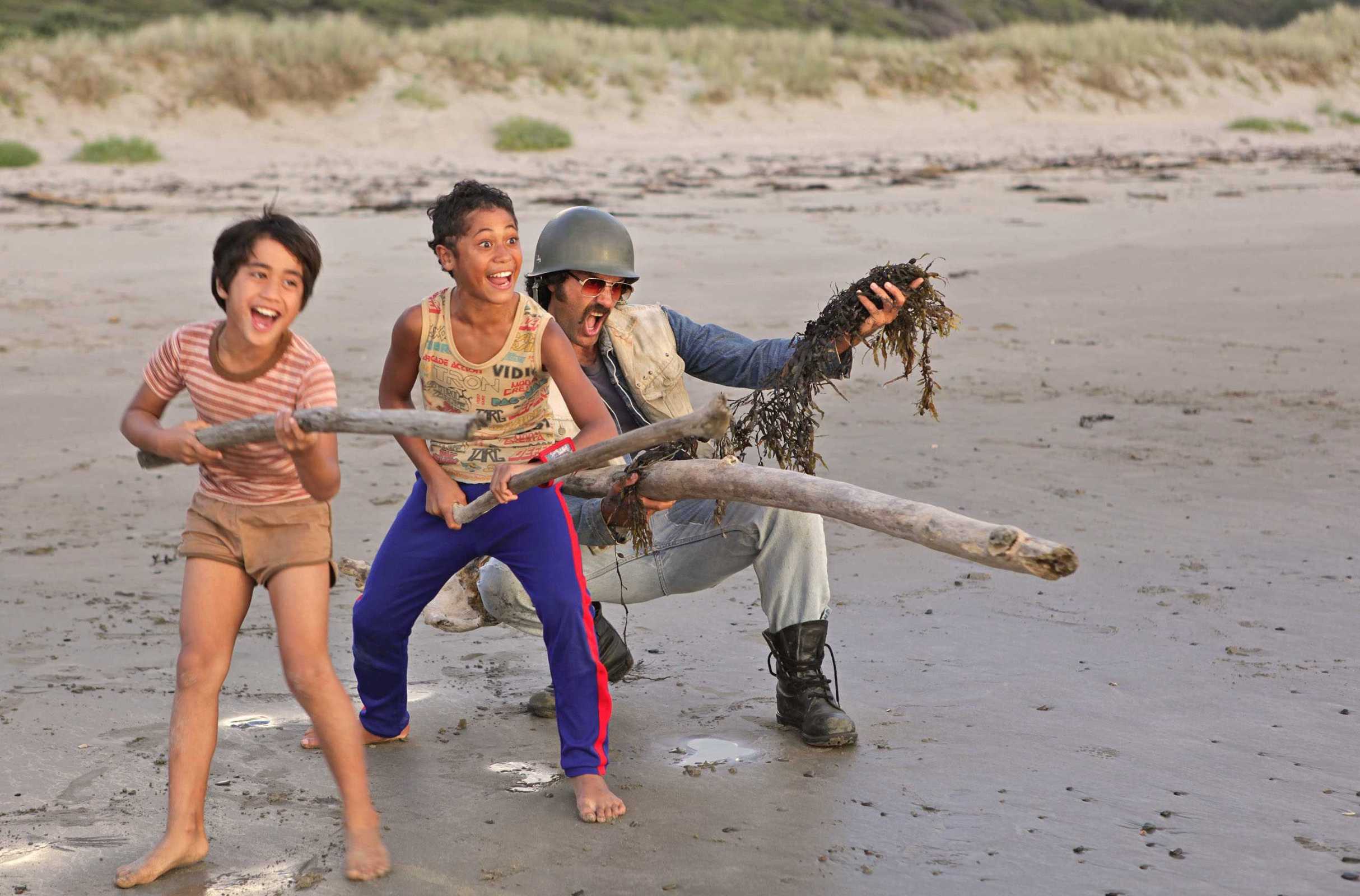
Te Aho Aho Eketone-Whitu, James Rolleston and Taika Waititi in Boy (Unison Films)

That Shakespeare line about names comes up often when I think about films, because at times a title can either say it all or say very little. A film entitled simply Boy can be seen as kind of a middle ground, it invites further investigation. A seemingly nondescript word for a title it turns out that Boy is actually what our protagonist is most commonly referred to, hence the title is eponymous.

What stands out in the early-going, as Boy (James Rolleston) introduces us to his world with an embellished front-of-class presentation, is that the film can be said to have some flair and originality. There are flashes of a fantasized life both in live action and in child-like animation. What it brought to mind was Submarine, which made me cautious. There are great things going on in the first half of that film (a film too many callously over-simplify) but that spark and originality only carries it so far as I feel it gets bogged down. Here quite the opposite happens, while the quirkier elements are more intermittent as the film progresses the elements do get to the heart of the characters, and help to develop the comedy and drama inherent in the story. They are a boon to the film and a segue into the world.

The film is a tale of a father’s estrangement from his family, his son’s desire to have him around, to reconcile with him and coming to terms with the realities of one’s family. Given some of the facts of the story it could be too easy to take the story to a melodramatic or maudlin place but this film never does that. This is, of course, a credit to the screenplay but also to the actors. The first of note being Taika Waititi, who not only plays the father but is the film’s writer and director, what makes this fact even more impressive is that I didn’t know that beforehand and found that not only was his comic persona a rival to a Paul Rudd character but he also plays the more dramatic portions of the story very well. Add that to all the behind the scenes work he did, being the heart and soul of the film, and it’s truly brilliant and awe-inspiring.

The equilibrium of tone allows this film to have quite a brisk pace, which makes it an enjoyable watch regardless of the tonal shift in the story. Things time out just right and no section of the film seems disproportional.

While the film is about Boy and it very much focuses on his character’s arc, his younger brother Rocky (Te Aho Aho Eketone-Whitu) has a very significant subplot. Eketone-Whitu’s performance is one which is much more silent than Rolleston’s but every bit as effective. He is quiet because he feels like an outsider and due to certain facts about his character is struggling to embrace not only his place in the family but also who he is.

Which leads me to another brilliant touch this film has, Rocky’s conflict is with his past and his brother, in part it makes him quieter and kinder and also leads him to bond with a character they refer to as Weirdo (Waihori Shortland). To not discuss it too much, part of what makes it so great is not just the natural, logical connection they share but it takes a character that seems like he’ll be excess and makes him essential. Similarly, Boy has quite a journey in his tale but his certain isolation and conflict with his father makes him a bit angrier, so his personal connection is to fantasy and his idolatry of Michael Jackson, which considering it’s set in 1984 is a logical choice.

I’ve written quite a bit about endings, not in the broader sense as in happy or sad, open or resolved; but rather in the minute sense of picking the precise moment and the precise note. This film ends perfectly. It ends with a punchline but also with the realization of who their father is and embracing that for better or worse. The tale is truly complete and the film is over. Both boys have gone through very different reactions to their father’s return to their life and their emotions have run the gamut, but they’ve reached a peace with what the unchangeable status quo is.

Boy is an excellent film, which illustrates best how specificity translates to universality. This is a film set in 1984 on the east coast of New Zealand about a Māori family yet you can be on any continent in any corner of the world and enjoy this film and take something away from it. Why? Because it’s true and connects to something innate in all people, which makes it great.

10/10

Review- We Need to Talk About Kevin

Tilda Swinton and Ezra Miller in We Need to Talk About Kevin (Oscilloscope Labs)

I’ll never get used to living outside of the New York/Los Angeles inner-circle in cinematic terms, even if I was there it would not change the fact that I take umbrage with the end of year release patterns that delay viewership of many good films for those living in the rest of the country. I was going up to NYC and my plan was to catch this film during that trip, that plan hit a snag when I realized the limited one-week Oscar-qualifying engagement ended right before my planned trip. Thus, I have not had a legitimate chance to see it until just recently, and it becomes a 2012 BAM eligible film, and not a 2011 film, despite its technical release date.

We Need to Talk About Kevin
is a film that’s largely about perspective, memory and how that may influence the perception of reality. That’s not all its about but that certainly plays a large part. It tells the tale of Eva (Tilda Swinton) who is struggling to move on with her life after her son, Kevin (Ezra Miller), commits a mass murder at his high school. All that is established early on, and much of the narrative is her reflecting back on his upbringing, from his birth to the present.

Memories are built on one fact that lends us a clue to an incident and over time they become either hazy or gilded depending upon the emotion we associate with that memory. There is a truth to all she remembers but just how much embroidering her subconscious does in a futile search for answers is not clear. One of the best things the film does thematically is to not treat so difficult a subject with facility, but rather depth. There are precursors to the event but also other moments that belie it. Therefore, Kevin is not always a black and white antagonist he has moments of seemingly lucid humanity, which he then counteracts but any flatness of character can be an affectation of the storyteller’s, Eva’s, perspective. Having already lived these things and now reliving them in hindsight her associations and interpretations of relationships are set: Her husband, Franklin (John C. Reilly) is placating, non-confrontational and an ineffectual parent and Kevin is opaque, she doesn’t know what goes on in his head, except that she feels constantly antagonized by him.

While the film functions on two planes, the present and past, for the most part it moves in relative chronology within those planes. Flashbacks typically are done as sequences. There are quick flashes when she encounters someone from her former life whom she is trying to separate herself from. This relative chronology does give the film a fairly even and steady pace that is truly only broken in occasions by the steadily increasing severity of Kevin’s actions. It’s a film that needs to be told as it is, for the story elements told in precise chronological order with no flashbacks whatsoever would not be effective at all. Instead you get a very cinematic treatment of the story, a story that visually takes you into its protagonist’s thoughts.

Much of my interest in this film was not just due to the amount of positive buzz I heard about the film itself on Twitter but also the praise being heaped upon Tilda Swinton, whom I love. I can see now why she got the attention she did, she is brilliant and understated in this film. With regards to her Oscar snub, I both get it and don’t get it: I get it because there’s not really a great clip moment, which is cliché but that seems to drive things in terms of perception, but I don’t get it because it’s just so good. There’s a tremendous understanding by her, and everyone in the film about acting for and into the edit. Things are done very precisely as if they know where the cuts are and what impact they’ll have. Clearly, this is also a credit to the editor and director, however, that point plays into the concept of not doing too much. It is a film and these actors employ film techniques and know the assist they’ll get on the technical end and exploit it greatly. It’s a must see for students of the craft.

Yet as much as this is is Eva’s and Swinton’s film she does get some tremendous support. Based on the aforementioned interpretation of his character John C. Reilly is perfectly cast. Granted he does have range but in his even tone he does come off as a man who would be a buddy style of father and wouldn’t harm a fly. Ezra Miller doesn’t have a tremendous amount of credits to his name as of yet but the roles he has taken thus far have been challenging and have made him one of the go to actors in indie films and perhaps he will find a crossover success soon. As for this film he plays the part to a tee, meaning though his actions might be mostly one note the way he plays them aren’t always.

Typically, when you have a character who is aged during the course of a story you don’t have significant screen time dedicated to all the actors who play said character, in this case three. Jasper Newell, who is the middle incarnation of Kevin, carries much of the middle of the film and is very impressive, even more so when you consider its his feature film debut. Not to be outdone there is another solid performance in the young cast by Ashley Gerasimovich, who has one of the great moments where the numbness you can feel watching it breaks as she engenders tremendous sympathy.

We Need to Talk About Kevin may not be an easy film to watch in a number of ways but it is all the more rewarding for it. All facets of the production contribute greatly to a mind-play wherein a mother is lost searching for answers about just how her child could do such a thing and if anything could’ve been done. It’s a visual tale that is truly pure cinema, it’s truly great.

10/10

Review- Silent House

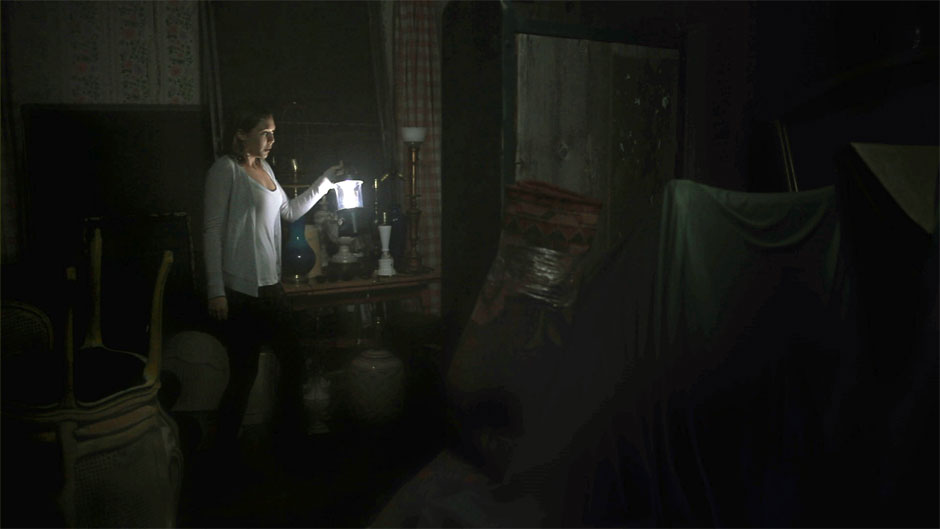
Elizabeth Olsen in Silent House (Lidell Media)

With Silent House you have yet another horror film that is a remake of a recent release overseas. What is undeniable is that the concept of a single take style horror film is intriguing, however, the execution of the style and its application to this particular story leaves a lot to be desired. You have on the one hand a lot of technical merit and on the other hand not a lot of narrative merit at all.

Any time you’re taking a notion that Hitchcock experimented with, one he did brilliant things with, you have promise but that promise is never close to fulfilled here. The ruination of this film is not all at once, which makes it all the more frustrating, however, the seeds are sewn early.

One thing that doesn’t quite jive with the production concept is that at some point, after great pains have been taken to establish the reality and immediacy of the situation, the score comes in. Which just alerts you to the artificiality of the situation, which seems to be what they’re trying to avoid so it’s a confusing and unfortunate decision.

In a film where there will be jump scares induced mainly by audio cues, and visuals are to an extent sacrificed, a lot of the film depends on its performers. So far as the lead is concerned Elizabeth Olsen, who broke out last year with her acclaimed performance in Martha Marcy May Marlene, is a very capable indeed. She accomplishes the rare feat of actually being as quiet as possible but also convincingly scared. It’s not a scream queen performance, it’s the antithesis of that and she does very well with it. None of the film’s failure can be placed on her.

The rest of the cast is another story and part of it has to do with the quality of the performance but also, and equally important, is the fact that many of the supporting players contribute massively to the film’s unfortunate transparency. The film is trying to hide secrets and give you twists, it means well but fails to really surprise.

Based both on the dialogue and the interpretation of Adam Trese, Eric Sheffer Stevens and Julia Taylor Ross the actors may as well be saying “Subtext” as well as have it stamped on their forehead. Everything’s played such that you start speculating, a bit uncertainly about the nature of all these people and later are proven correct and you really didn’t want to be. Similarly, it makes the single take a bit more confounding since the ideal visual style would maybe not have been seemingly objective but rather definitively subjective, an all POV tale but regardless of that, which doesn’t really affect my view of this film, the path they chose was marred with mistakes.

Horror films, perhaps more so than any other genre, have become very concerned (perhaps overly so) with twists and keeping the audience guessing. This is not necessarily a bad thing but it does complicate the equation quite a bit and gets more than its fair share of films in trouble than it ought to.

There’s nothing wrong with wanting to pull a fast one on the audience, but to do so your slight of hand has to be impeccable and here not only was the reveal unsatisfactory, so was the set up. I could see it coming a mile away and I was hoping I was wrong, then I wasn’t and it turned what could’ve been a decent, stripped-down horror story into something of a quasi-farcical failure.

5/10

Review- Being Flynn

Robert De Niro and Paul Dano in Being Flynn (Focus Features)

If one watches the trailer then a lot of Being Flynn is revealed. This is not an uncommon phenomenon in this era of film, but it was enough to convince me to watch this film, and it also illustrates the major hurdle the film has. The film deals with what occurs when Nick (Paul Dano), a youth seeking direction in his life, starts to work in a homeless shelter and sees his estranged father (Robert De Niro) there.

It’s a plot in the trailer that makes it seem like a very unlikely chance encounter. In actuality, the leap of faith needed to believe this scenario is not nearly as large. There are furtive awkward reunion attempts prior to fate intervening as it does. This is a very good thing indeed and it allows all the baggage the two characters have to be dealt with when tension is at a boiling point.

The film does use a good deal of voice over narration and what’s more it has two narrators, father and son. Voice over is always a treacherous balancing act but this film does rather well with it and gives additional insight into these two not completely dissimilar characters. Voice over can be looked at as a story-telling bridge, bridging the gap that a visual cannot for editorial or aesthetic reasons. The key is to build footbridges not suspension bridges, to build them intermittently and this film does that.

That does not mean this film is devoid of visual signature and style quite the opposite there is quite a bit of visual interest, which is mainly added through the edit. The film has quite a few flashback sequences that mainly serve to illustrate Nick’s upbringing and the impact his father’s absence had. The film enters these passages creatively and more often than expected but always with great results and it really resonates.

These flashes aside from giving us very good fragmentary performances from Julianne Moore, shades of her turn in The Hours, and Liam Broggy as Young Nick, also help establish the tonality of the film. The sequences aren’t juxtaposed as much as they are forerunners to the twists and turns of fate in the present day. There’s a bittersweet quality as it shows what was, with hints of what could’ve been and eventually there are echoes of the past in the present that seem equally unavoidable.

Yet as dour as the film is at times there is a certain balance of emotions at play. There is some humor to it when appropriate and certainly tenable drama not just voyeurism, you feel this movie not only watch it.

This is the kind of film that for all its other merits hinges on its performers and with these two the film excels. This is the kind of challenging emotional and engaging work that Paul Dano does frequently and that Robert De Niro doesn’t do nearly enough of anymore. They work brilliantly together and regardless of the frequency with which either does this kind of film it’s great that they do it here.

Since the Weitz brothers have stopped working exclusively in tandem they’ve done some rather interesting work, and this film is no exception. While this film takes its unexpected turns and ends well but a bit loosely but is very good and worth seeking out.

9/10

Review- The Hunger Games

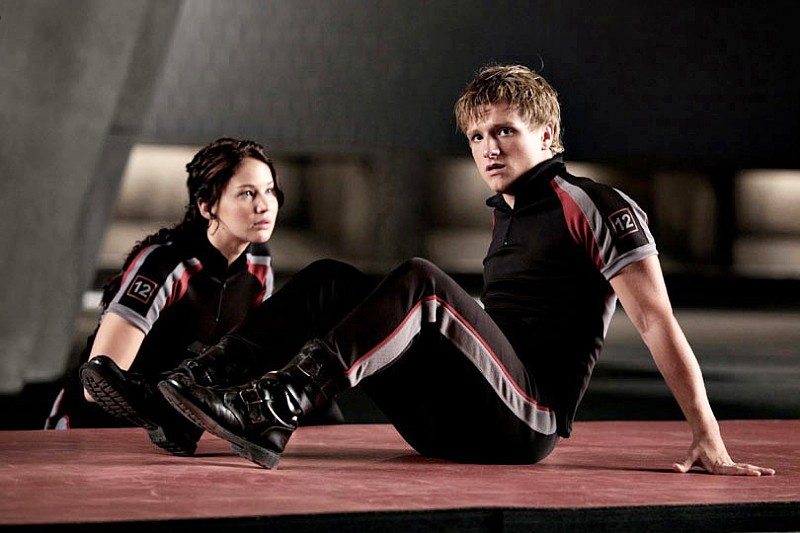
Jennifer Lawrence and Josh Hutcherson in The Hunger Games (Lionsgate)

The Hunger Games, as many expected, was one of the most anticipated films of the year. It will likely go down as one of the top earners of the year as its early run totals rank amongst all time highs, and it’s a three-time box office champion. I wanted to read the books but never really did, I borrowed the first book from the library and got through half of the first chapter and didn’t get to renew it. Therefore, I had little foundation to go upon but found the film for the most part to be quite enjoyable and captivating.

The double-edged sword in this film is that the backstory of this world, this dystopian future where America is unrecognizable and not even named as such anymore, is not overtly told. The positive to that is that there are not really any overly-elongated and elaborate expository sequences and the negative is that at times you are left flailing about awaiting the next tidbit of information that will enlighten you. You eventually do get sufficient information to get by but you also get the sense that there are unplumbed depths that are likely the key to the book’s success.

The only other truly significant struggle this film faces is in the game itself Katniss (Jennifer Lawrence) is steadfast in her character but she only attacks her opponents when in a bind, which is admirable but there is much waiting, hiding and running. Essentially, it’s a slight editorial problem more so than a character flaw. Virtue is a positive and Katniss has it in spades there were just a few opportunities that are better off not presenting themselves if that is to be her approach.

Those minor reproaches aside there is a lot to like in The Hunger Games. Perhaps the best part of the film’s success is that now everyone can see just how awesome Jennifer Lawrence is. She already has an Oscar nomination that she was very worthy of, but it was Natalie Portman’s year, for which she was woefully under-publicized and Winter’s Bone is not the kind of draw that this film is. In a similar vain, I’ve known for quite some time that Josh Hutcherson would be a superstar and this is truly his breakout. Now, Josh has a long track record from the Journey series, to appearing in the Best Picture Nominated The Kids Are All Right, to his early days as a young performer that garnered him a BAM nomination for Bridge to Terabithia, however, here as Peeta, a character who knows the game better than Katniss at the start but isn’t as steadfast or strong-willed as she is, he brings his chops to a big vehicle. That could be the most impressive facet of the film; not only is there action and commentary but also room for performances. You should also look for Stanley Tucci’s great supporting turn.

Aside from the aforementioned concern in the Game the film’s pace stays rather brisk even if its running time tops two hours. The tale is a bifurcated one: before the games and the games themselves and they are distinctive sections of the film that are a bit different but they balance quite well. The before the games section builds up some good drama and anticipation and to an extent the game brings good sequences and tension.

The Hunger Games also presents a pretty interesting vision of a futureworld most vividly conveyed by the production design, which is amazing and also the makeup and costuming. Now the latter is not something I was not instantly enamored with but it was a bold and consistent choice and it is a class distinction that is a kind of interesting future-retro hybrid, as the exaggerated hair and makeup hearkens eons past where powdered wigs and ivory faces were status symbols.

The ending of the film foreshadows much larger hurdles and problems to come in the series that even teases it will grow outside just the insular world of the Games and branch out into the politics of this world. Perhaps the upcoming installments will fill in some of the nagging blanks.

When a film does a lot very well the few things that leave you wondering do tend to stand out a little more than they would otherwise but this is a very enjoyable, occasionally funny, romantic, dramatic and thrilling film.

8/10

Review- Safe House

Ryan Reynolds and Denzel Washington in Safe House (Universal)

Safe House is a film that in many ways is your standard spy-caper. I will give it credit by saying that it does try to do some different things to slightly alter the equation, however, it is ultimately the bits that are the same old song and dance that really get in this film’s way and trip it up.

To start out with the more positive notes, the film is very watchable and there’s a decent amount of tension due to the kinetic editing style. The beginning of the film is quite creative in as much as the cuts come quickly, but also break chronology such that you are investing in a situation, and getting information later. Eventually, the lackluster nature of the information betrays this artistry to an extent but this facet of the film did its utmost to elevate the piece as a whole.

The editing style was in part a necessity. The cinematography didn’t feature the worst abuses of hand-held camerawork I’ve seen, but the camera is hyperactive in this piece and it can be a turn off to those prone to motion sickness or are aesthetically averse to such things. For the most part it works, but there are points within it where I wish it would relax and the quick edits really salvaged many shots making them more watchable than they otherwise should’ve been.

The script develops a decent story in most respects. The setup and ultimate plot of the antagonist are intriguing enough. The problems come into the storytelling when elements that are overly-trite or too frequently done are brought into the mix in terms of dialogue and certain character’s attitudes. As with any tale of this nature suspension is of disbelief is necessary because there will be moments of absurdity. There are good elements to the scripting but definite issues that overshadow the positives to an extent.

The performances to an extent are also a mixed bag. In the positive column are Denzel Washington and Ryan Reynolds. Washington has thankfully taken to some quieter, more intelligent and less bombastic parts recently as opposed to things like Training Day, where I don’t find him nearly as interesting. He plays this character intelligently, but also gets to layer him. Reynolds has played action before but he also plays in a romance plot here and in very dramatic confrontations with many characters in this film and does equally well in all of them. It’s likely a performance of his that will be overlooked, though it should not be.

As for the problematic performances: One, sadly, is Brendan Gleeson’s, it’s not him in his top form. I’m unsure as to whether the character was supposed to have a slightly faded Irish brogue or if his American dialect was just off in this part, but it influenced the end result regardless. Another is Vera Farmiga and some of the issue is her character. There’s nothing to her. She’s a plot device. She believes what will likely be the official version of the story is really what’s happening, other than that there’s no characterization to her. I’ve liked Farmiga in some works quite a bit and been a bit too hard on other times, so I think when she’s stuck with a character of this ilk she really has a tough go of it.

Lastly, there are some surprising and pleasant twists but one of the biggest ones occurs in the third act and it’s terribly transparent from the start of the scene based on the entire execution, and the scene is far too long and it really detracts from what should be a pivotal moment.

Truth be told, I wasn’t planning on seeing Safe House, I saw it to have a dine-in movie experience. However, I will say that while I didn’t like it it was better than I thought it would be so you may see it differently than I did.

5/10

Rewind Review- Pufnstuf (1970)

Jack Wild and Billie Hayes in Pufnstuf (Universal)

As those who know me, and if such a person exists, cyberstalk me know I created this blog after writing on another site, which shall remain nameless, for a while. The point is, I have material sitting around waiting to be re-used on occasion I will re-post them here. Some of those reviews may have been extemporaneous at the time but are slightly random now, hence the new title and little intro, regardless enjoy! This review pertains to the DVD release.

The timing of the release of Pufnstuf, the motion picture adaptation made in 1970 of the popular TV series, was no coincidence. Across the top of the cover is blazoned from the producers of Land of the Lost. However, this kind of tie-in advertising on a cover can be misleading.

Just from seeing the trailer and a few episodes of the original Land of the Lost series anyone can tell the two are vastly different. Land of the Lost box sets are likely likewise brandished “Now a Major Motion Picture.” Even though the series and the release are as dissimilar as The Brandy Bunch renditions were it’s not necessarily a bad thing it’s just another case of caveat emptor.

Pufnstuf, as a motion picture looks almost exactly like it did as a show, puppety costumes à la Sesame Street and some times two-dimensional set pieces. That’s what the show was. Having never seen the movie what’s great to see was the occasional cinematic device thrown in to spice things up, usually during songs like fast- and slow-motion, quick cuts (like New Wave speed), matte painting (some better than others), creative use of stock footage, image flips, cuts to orange (of all colors) and even a slightly canted shot or two.

For film fans many of the voices, as you may or may not know are inspired by old movie stars, it’s the cartoon logic of funny for adults and kids but for vastly different reasons, examples being: John Wayne, W.C. Fields, Edward G. Robinson and James Cagney.

For fans of the show it’s an old-fashioned origin story basically replacing the theme song and showing how it all got started and it even answered a few questions or went slightly more in depth like: how Jimmy and Freddy the Flute first met, why a British kid is on a crazy island full of anthropomorphic Americans and adding an outsider element to make the fact that he’s alone away from his family OK, if we ever thought of it. I also appreciate the fact that the parents didn’t appear, they were ghosts. As they should be in a kids story.

The film features a pretty good cameo by Mama Cass, who of course sings but oddly you don’t mind the wait because she’s pretty funny. All the songs are pretty good and original to the film. Jack Wild carries most of them and handles them with his typical ease and flair.

Typically, when dealing with a television show being turned into a movie when I have been a fan of the show. I want to see something akin to the best episode ever, if the film is intended to be a straight remake and not a reboot or spoof. What you get with Pufnstuf is just that, everything at its absolute peak. Billie Hayes is hilarious in what is definitely her best rendition of Witchiepoo. In an episode there would be cheesy jokes that would make you roll your eyes or sigh, a lot of the jokes here are still cheesy but they work. The only thing that comes close to it was the aired only once episode, which is on the DVD of the series, where mushrooms were eaten, no lie. The music and consistency of this puts it over the top.

This DVD is a must for any Krofft fan who enjoys their creations as they were first intended, not how they’re being reintroduced to the world.

10/10