Thankful for World Cinema: The Fifth Season (2012)

Introduction

For an introduction to the concept of Thankful for World Cinema please go here.

The Fifth Season (2012)

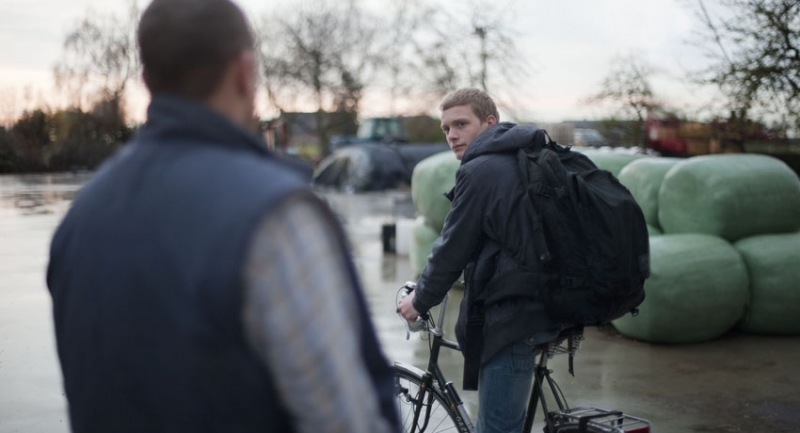
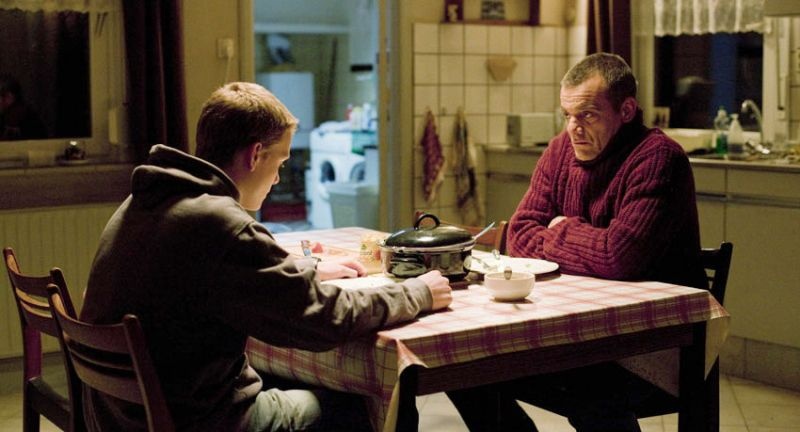
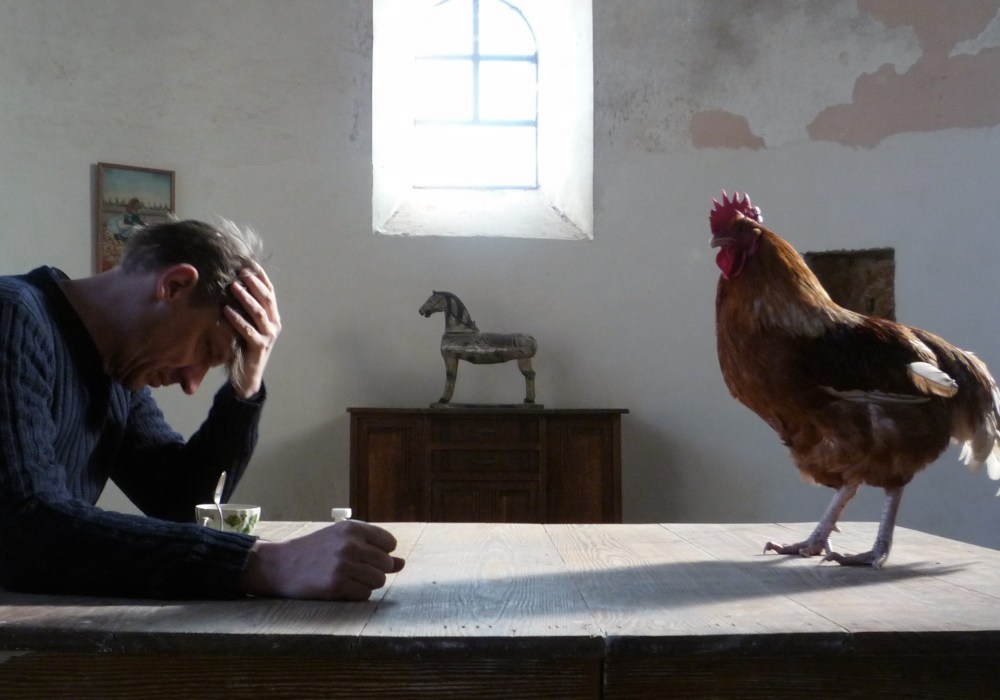
The Fifth Season is a film that tells the story of a small town in the Ardennes region of Belgium that starts to suffer greatly when winter doesn’t end as its supposed to. This is a film that starts out with a more community-oriented view and starts to narrow its focus to a few central figures and storylines, as the climate begins to take its toll on the agrarian community more and more as things deteriorate.

These problems get their first indicator at a bonfire celebration. In a scene that could be plucked out of a low-key horror film you get a sense that some very weird things are afoot. As with many stories about unusual occurrences, there is naught found in the way of explanation. In lieu of that we examine people under duress and see what they do when bereft of  basic necessities. It’s a harsh illustration not only of the affects of climate change but also mob mentality which assumes that it can’t be everyone’s fault, which is the more likely explanation, but rather seeks to find a single person to scapegoat.

However, on smaller levels you also witnesses relationships deteriorate: such as the young couple like that of Alice (Aurélia Poirer) and Thomas (Django Schrevens) and even between man and beast. There are also small wondrous scenes that turn bittersweet in light of later events like the wonderful scene where Pol (Sam Louwyck) and his son Octave (Gill Vancompernolle) sing one of Papageno’s arias together.

There in this film a precision of framing as well as a tonally brilliant approach to the edit that communicates far more than any piece of dialogue in the film can. Thus this way the utter malaise that the town is thrown into, the depth of despair is exactly communicated, whilst how they react to it is guarded such that those moments where there is a lashing out still come as a surprise.

In The Fifth Season nature and the environment are not merely part of the atmosphere, but are turned into an active player, much as it is in reality. The task of making it a palpable entity in a two-dimensional plain is never easy and this film succeeds at that and having its impact on the characters rendered quite dramatic; more dramatic, in fact, than if anything supernatural had occurred, because few things are actually more palpably frightening than a cessation of any kind of order to something we as a species had become reliant upon – this is especially true when we’re most to blame for such erratic shifts.

8/10

Thankful for World Cinema: The Old Man (2012)

Introduction

For an introduction to the concept of Thankful for World Cinema please go here.

The Old Man (2012)

In a day and age when it seems that remakes are more endemic than ever before, though that may not be the truth; hearing that The Old Man and the Sea has not only been re-adapted but also transplanted might send up red flags. My reaction was the opposite, I was intrigued not only by the fact there was a new version, but also the fact that the locale had be moved to Kazakhstan. Knowing the bones of the tale, even if not having the fondest memories of it, and that some things would invariably change, and that it’s a good canvas for cultural representation and philosophy; I was quite intrigued.

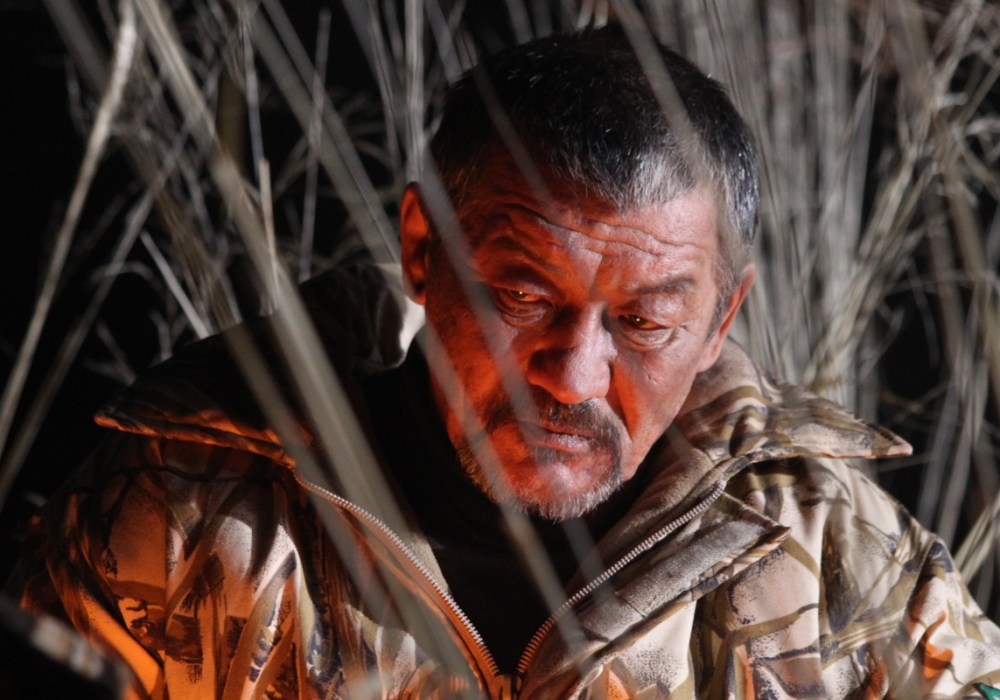
Even knowing a few things going into the film I was very pleasantly surprised in a few ways. Firstly, the venue of the tale changes in more than a few ways. This film is called Shal, when transliterated from its native language. In English it’s just referred to as The Old Man. In short, the sea does not apply to this tale instead the film is landlocked and tells the tale of an old shepherd. The wilderness he battles is the eurasian steppe rather than the sea, which brings wolves into play. Thus, aside from the source material it brought to mind the recent film The Grey. However, I feel this film excels far more than that one did in its man versus nature elements because it’s defenestrated to a greater degree. There are fewer affectations of traditional action films and more human drama, more philosophy, more searingly gorgeous imagery and even further respect for the beasts of prey as there is the added element of the old man protecting his herd.

This is also a generational tale wherein quietly the Old Man’s grandson who he tongue-in-cheekily calls Sheitan-bek, translated as “dickens,” comes to a newfound maturity and shows his respect for his grandfather, and thus his elders. The setup of the generational divide is well-executed and though very steeped in indigenous culture and religious mores does have a universal quality to it. One example of it would be that though in rural Kazakhstan the grandfather’s passion for football knows no borders and he struggles with poor television reception to watch Barça and names all his sheep after members of Brazil’s 1970 World Cup team.

Shal (2012, Kazakhfilm)

The film’s scoring is as evocative as its imagery and always finds a way to beautifully underscore the tension and other emotions the film seeks to elicit. Similarly the acting runs the gamut far more than one might anticipate, and is filled with great moments both large and small. Yerbolat Toguzakov plays the eponymous role marvelously being curmudgeonly when needing to be but also showing flashes of wistful humor, soul-searching introspection and fate-cursing. Not to be overlooked though is Orynbek Moldakhan, who has to convincingly play the role of a seemingly typical gaming-addicted youth who is also believably perceptive and valiant when serious events occur.

One thing that struck me while watching this film was how much more captivating it would be if experienced on a big screen. That as much as its overwhelming quality and universally truthful themes that fold in gently to the narrative, and don’t overwhelm it; are reasons that this film should see wider distribution in North America and beyond.

9/10

Thankful for World Cinema: Two Lives (2012)

Introduction

For an introduction to the concept of Thankful for World Cinema please go here.

Two Lives

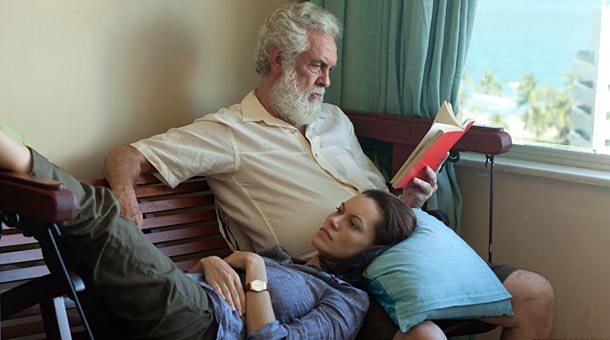
Sometimes it takes a bit of distance temporally in order to discuss things in cinematic terms. About a generation after the fall of the Berlin Wall it seems more tales about the days of a divided Germany, as told in a unified one, are becoming more frequent. In this tale a simple request from a lawyer for statements in a proceeding about the Lebensborn children sets of a domino effect leading many family secrets to come to the fore.

In another trend that’s becoming more and more prevalent in a globalized world, it is a multicultural tale as the lead, Katrine (Juliane Köhler) and her family live in Norway. The legal proceedings being in a European court are held in English.

The film begins with a frame that quickly is closed up and establishes character and intrigue and there are plenty of both to follow. Throughout the film the use of flashbacks are significant while not being excessive. Images that don’t quite register at first are revisited with more context or footage later at the right moment for blanks to be properly filled in.

Due to the nature of the tale as there are a few different timeframes represented there good use of makeup. There are also interesting visual techniques such as different “film stock” photographic effects for older footage to add to the visual intrigue; aside from the great lighting and framing of shots throughout.

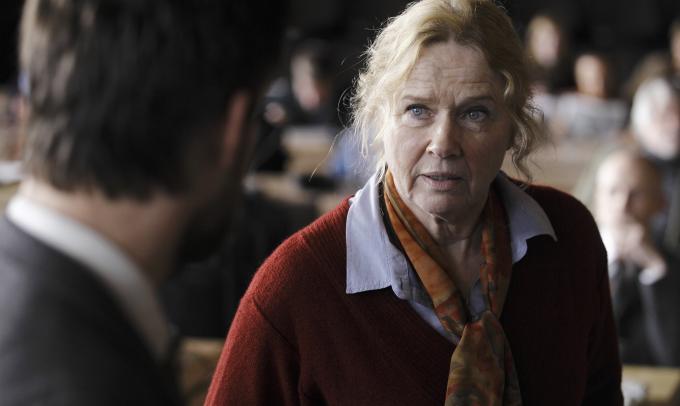
Köhler’s performance is of course key, but it is through the supporting cast that the power of this film really comes through. Most notably appearing in this film is living legend Liv Ullmann. This may be the first time I’ve witnessed her working in her native tongue (Norwegian), and, she is as captivating and as spot-on as she’s ever been. Sven Nordin as Katrine’s husband Bjarte plays a deceptively sensitive man quite astutely. Admirers of The White Ribbon may also recognize Rainer Bock.

As secrets unravel in this film, there are two kinds of suspense being employed in equal measure for double the effect that many films would have. Thus, tropes and relationships from two disparate kinds of films are brought together here in perfect unison with great aplomb.

Two Lives is the kind of film that gets some of its bigger surprises out of the way (at least hinted at) fairly soon but has quite a few of them throughout. Even if you are the type adept at, or who enjoys, guessing what will happen next; the drama in the film will still keep you glued to the edge of your seat. The execution of this film from all production departments is great.

8/10

Thankful for World Cinema- Class Enemy (2013)

Introduction

For an introduction to Thankful for World Cinema please go here.

Class Enemy (2013)

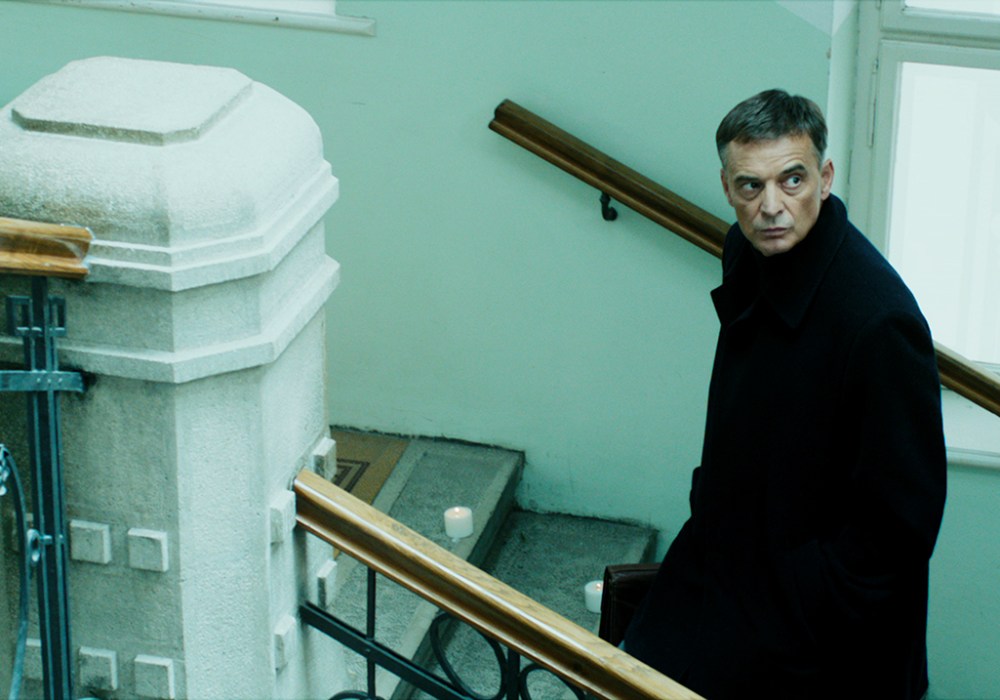
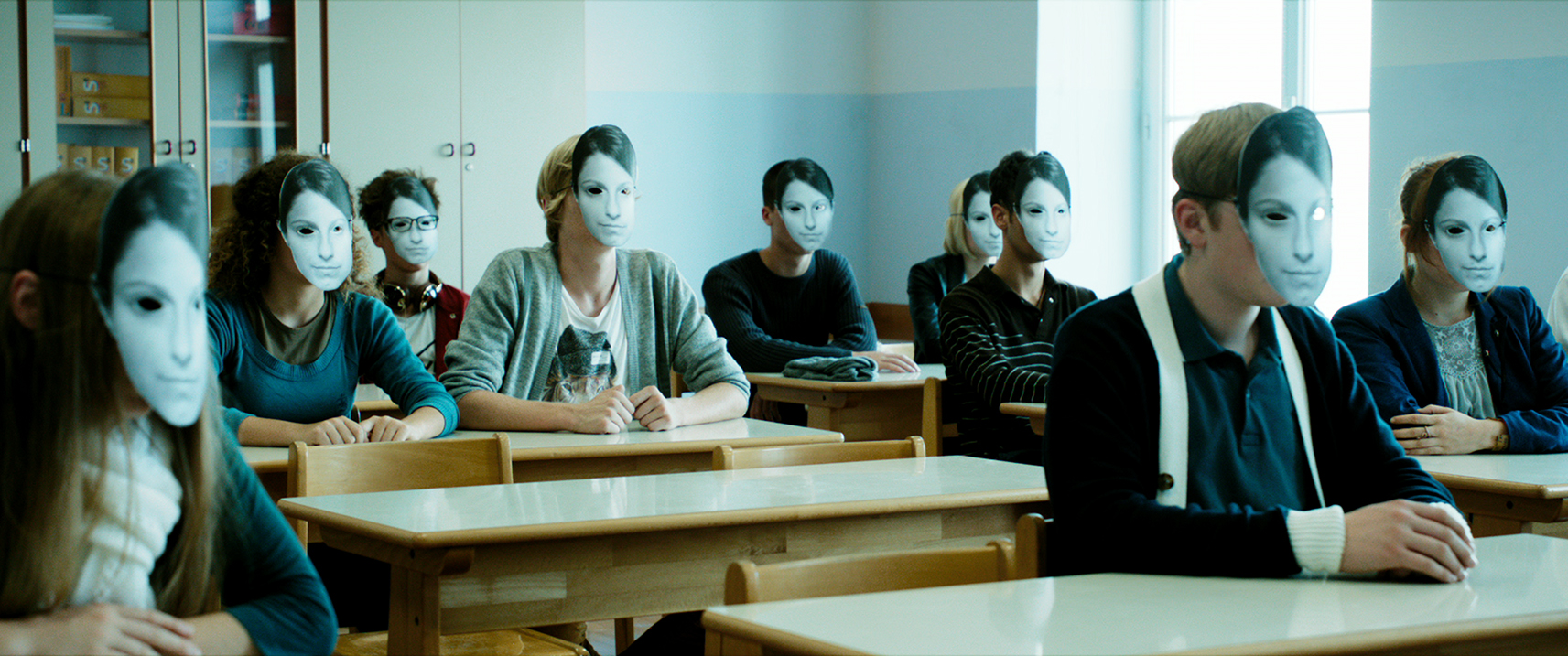
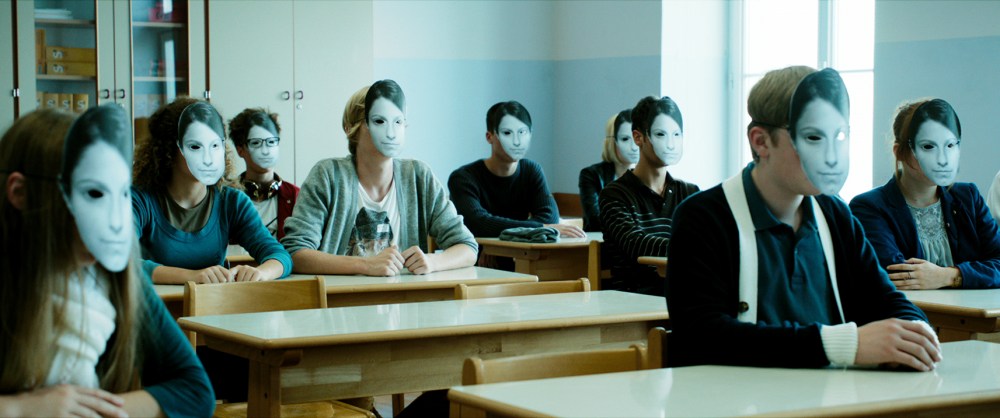
Class Enemy, which is Slovenia’s official selection for Best Foreign Language film, tells a tale of a high school class that singles out its new German teacher (Played by Igor Samobor) as the party responsible for their classmate’s suicide (Sabina played by Dasa Cupevski). The film picks up right as their favorite teacher, whom Robert (Samobor) is replacing, is going out on maternity leave and follows the back-and-forth struggle between the three main factions (teacher, students and administration) throughout the school year consistently adding layers to the characters, and conflicts.

On the surface this seems like the kind of concept that might run out steam and run into redundancy, fallacies or tedium but through that consistent layering either of single characters, a faction or the central struggle; the film remains riveting throughout. Furthermore, it achieves that level of tension by refusing to turn a judgmental eye on any particular party and refusing to color its personages in either black or white, but, ultimately shades them all in grays. In the end, not to put too fine a point on it, the “mystery” is left a bit gray also.
Class Enemy (2012, Courtesy of Triglav Film)

This feat is even more impressive when you consider the fact that when dealing with subject matters such as teenage suicide, student-teacher relations, or any of the myriad ancillary topics this film addresses it can be easy to be callous. However, this film is written and directed with enough finesse such that it conveys the truths as each individual character sees it without disrespecting opposing opinions. Perhaps the best exchanges with regards to this occur with the school’s headmaster. Robert is called in to see her when the conflicts are still relatively tepid and he is befuddled asking something to the effect of “They were offended by that?” To which the headmaster answers: “Welcome, to the 21st Century, Robert.”

That is perhaps the most perfectly crafted line of the film. It’s something that is true regardless of what your vantage point is. It’s not trying to make things like teen suicide or bullying smaller, but merely addressing another truth. The film is similarly adept at having its characters differentiated and not necessarily always holding politically correct opinions. The characters express said opinions earnestly and due to performance and writing the intent is always clear. In a film structured in part as a generational clash there needs to be such understanding and conflicting perspectives for it to work. Even something as youth-centric as The Breakfast Club had good insights into the few authority figures, the adults, and had them not always agree. “The kids haven’t changed, Vern, you have” the Janitor tells the principal there, and while that may usually be true, perhaps this tale stumbled onto a slightly different angle: with the same impetuousness as always the kids here are lead to say something they never vocalized before.

Class Enemy (2013, Triglav Film)

While this is a drama built on a fulcrum which all other events spring off and feed on persistently it does continue and escalate from there. Characters progress and regress; step forward and back, and come to grips with things at different times especially in light of some developments that come to the fore later on.

Perhaps one of the most interesting choices in this film is use of language. Since the German class is the main battleground it allows cultural norms to be more frequently a talking point. Robert is one of those hardline teachers who will not allow the native tongue to be spoken in his class; this was a method that was more often used as a threat in my education and rarely implemented. This fact makes much of the dialogue in the film German, which, of course, puts more of an onus on the performers, but allows for other affectations like repeated, exaggerated use of the term Nazi, and other perceptions; as well as a focus on the works of Thomas Mann.

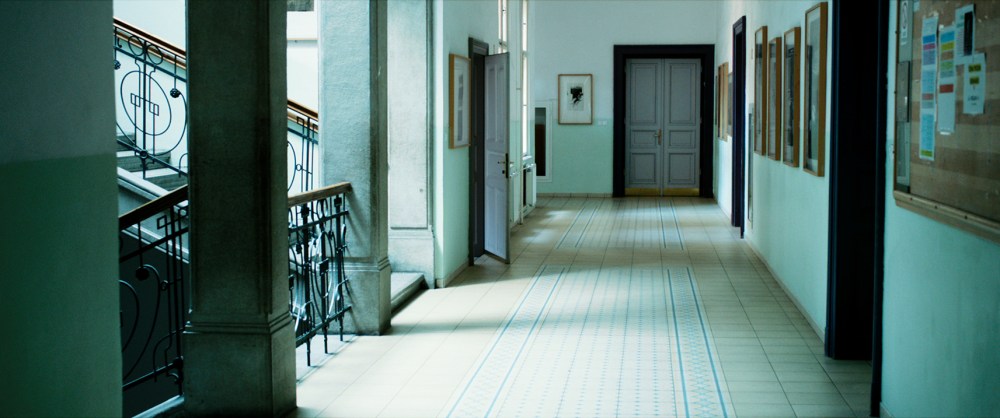
As may have been intimated earlier, the fact that this is a film ostensibly about teenage high school rebellion does not minimize the drama, or the feat that this film is. I hope the allusion to The Breakfast Club would allude to that too. However, while this may deal with darker, more modern themes with less of a light at the end of the tunnel, less of an end to that tunnel really; it is a similarly insightful piece on themes essentially omnipresent; allowing it an introspection, gravitas and expiation of adolescent and educator frustrations alike.
Class Enemy (2013, Courtesy of Triglav Film)

Clearly a tale such as this could not hope to work as well as it would like to without great performances throughout the cast. Clearly, first and foremost would be Igor Samobor as Robert. There is a certain enigmatic magnetism to his performance that allows you wonder as to his character’s precise motivations at times, information that is eventually disseminated; and he plays the villainous-type (to those who still remember their studious days and tendencies well) to a tee. Among the students there are also many great turns: Dasa Cupevski’s screentime is short but memorable; Voranc Boh’s Luka is usually the leader and an effective agitator of the youthful rebellion; perhaps most impressive in his rather divided nature is Jan Zupancic in his portrayal of Tadej. Then there is Doroteja Nadrah who fades in and out of prominence as a character, but is no less impressive.

Class Enemy, when all is said and done, is basically everything you want out of a dramatic piece. It tackles difficult dramatic questions and does not shy away from exploration without concrete answers, but instead knows that better films usually take the journey well; exploring and changing their characters along the way, and more importantly, it understands that the best dramas aren’t about victors or where they audience sides, but how much we enjoy watching them engage in battle.

10/10
Thankful for World Cinema – The Notebook (Le Grand Cahier) (2013)

Introduction

For an introduction to the concept of Thankful for World Cinema please go here.

The Notebook (Le Grand Cahier) (2013)

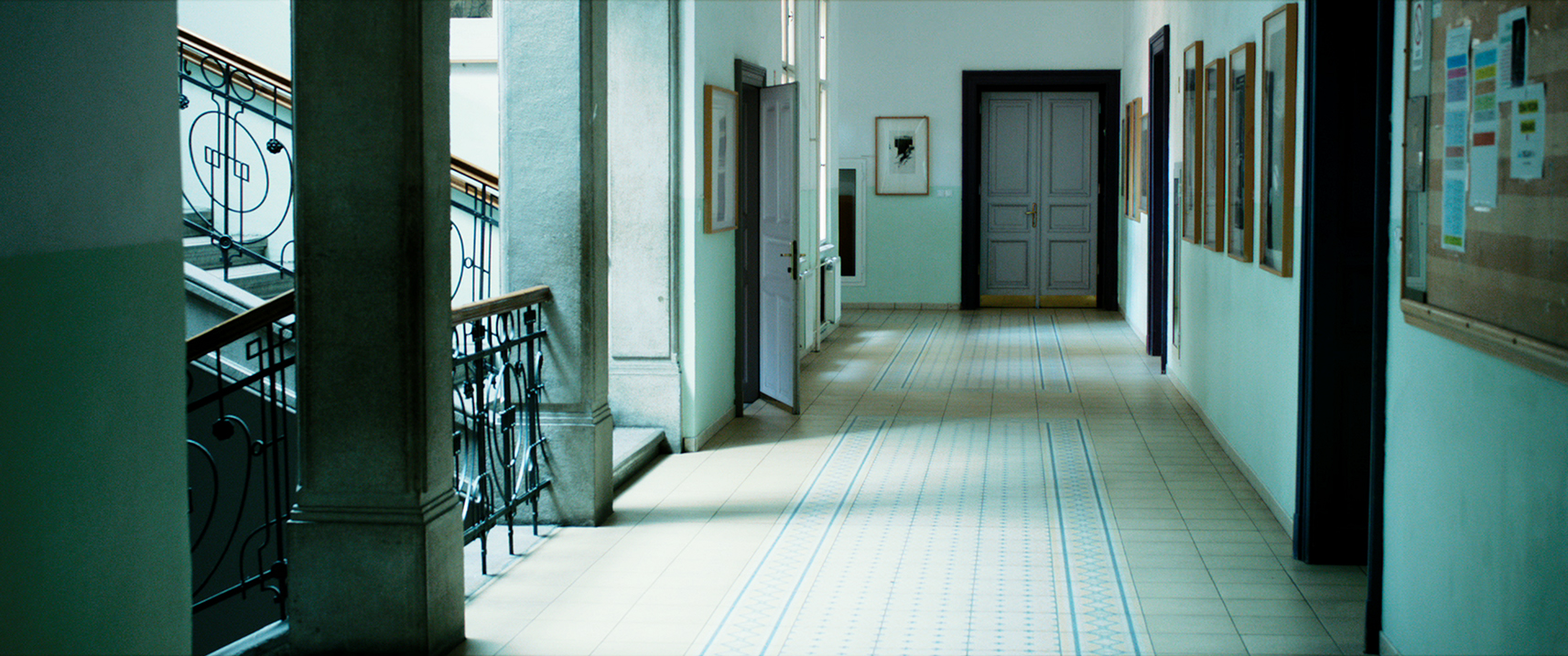
After seeing The Notebook, I went and reread my post on The Witman Boys in part because it was the other Janos Szas I had seen to date. I started on that task merely to remind myself of it a bit more (as writing can help fill in the blanks that memory decides to leave). However, what I found as I looked it over was a film more similar to The Notebook than I’d remembered.

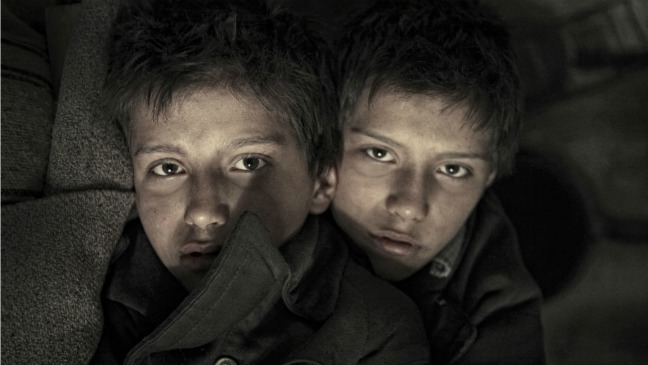
The parallels do go beyond merely a shot of two brothers with their face in close proximity to one another. And this is also not to be implied as a slight on either film; quite the contrary, it makes for a very fascinating look at the auterism behind both and also the refinement and the increased power that the newer film has.

The films both have inciting incidents wherein the boys are changed by something beyond their control. In The Witman Boys its the loss of their father. In The Notebook the second World War is raging on and the boys’ parents worry for them and want them protected. The Witman Boys has similar brothers each with a designated name whereas The Notebook is about twins whom are never referred to by name and are credited as “One” and “The Other.” This is an important fact because the idea is to make the twins inextricable from one another and also to make them symbolic.

For as One and The Other move away from a metropolitan area (presumably Budapest) to the Hungarian countryside, they come closer to the horrors of the war and have to learn to cope with life during wartime in their own unique way.

This is where the tonality of the film comes into play. Children coping with the ravages of war is not a new topic. It’s how the topic is dealt with that dictates the tonality of the film, and in certain regards the success of it. Much liked Szas’ prior film this is not going to be an uplifting tale.

Prior to the boys being taken to live with their estranged grandmother their father gives them a notebook to write down “everything” in. Twins have a tendency to stick close together regardless, but when placed in such isolation the tendency to stick by one another, at least to start, is redoubled; and gives them even more incentive to live a microcosmic existence wherein they seek to define morality, strength and learn how they can best cope in the tumult about them with no outside assistance.

That then lays the groundwork for the film which is told through entries the notebook. Voice-over allows episodes of the story to be tied together . While the wondrous visuals created by Christian Berger, this time exploiting color in a parable. The images are usually gorgeous regardless, but stark when they have to be and edited together precisely to render the progression (or degeneration if you prefer) of the boys from wide-eyed innocents to hardened survivors, who frighteningly at times still have a childlike understanding of things, and at others have a cold and calculated, all-too adult outlook.

Not that those things ever seem wrong for they work in a proper progressive order and lead to a gutting finale whose impact is hammered home when you fully realize how and why things occur the way they do.

One of the fascinating things about this film is not only does it find a way, for the most part, to remove the narrative from the frontline but it still keeps the war close by. It tells a dark, haunting tale in one of the 20th Centuries worst moments that goes above and beyond simplistic moralizing about a specific conflict but makes a more sweeping point. A point uttered through visuals and actions and not directly through dialogue, such that you’re still engaged in watching a story, a disturbing one, but a story nonetheless.

Tying this back into the auteurist aspect, so as not to leave it abandoned as an introductory ploy: many directors have told tales that parallel one another. Hitchcock himself said that “self-plagiarism is style.” With regards to World War II, Steven Spielberg has been there quite a few times in very different ways (1941, Empire of the Sun, Schindler’s List, Saving Private Ryan). It’s not the fact that a director returns to a common ground that matters, but rather what he does when he gets there. What Janos Szas does here is amplify and refine the sensibilities employed in The Witman Boys to this adaptation, sharpening the impact of the story and making it one that can resonate universally. Whereas the prior film was one that could bring one to Hungarian cinema, here he pushes Hungarian cinema out to the world.

9/10

Thankful for World Cinema- Watchtower (2012)

Introduction

For an introduction to the concept of Thankful for World Cinema please go here.

Watchtower (2012)

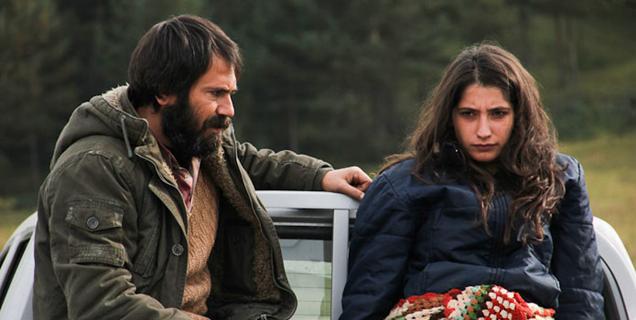
There are films about situations and there are films driven by their characters. There are not as many that find an interesting situation, and the right characters to place in that situation, as Watchtower does. The characters of interest in the film are Seher (Nilay Erdonmez) and Nihat (Olgun Simsek). Each has a rather different job: Nihat has just started working in a watchtower where basically he’s looking to see if anything out of the ordinary is going on in the surrounding mountains and forests in the Turkish countryside; this usually would have to do with the prevention of rampant wildfires. Nihat, meanwhile, is a hostess on a cross-country bus line. In this way their paths do occasionally intersect.

The film builds well dedicating long portions to telling the story of each of these solitary and willfully ostracized people. It soon becomes clear that each has a secret that is a great burden to them. The secrets, and their situations, will inevitably join their narrative strands. We know this.

The unfurling of the stories spins much like water going down a drain; circling ever closer to the truth of the matter. The performances, especially that of Erdonnez, are wonderful.

This film only faces one true stumbling block, and it is one that holds it back from the greatness it seems destined to achieve for much of its running time. The glimpses of the characters and their plights are riveting for how the film slowly unravels what bothers them about their predicament and why they feel they cannot share it. However, the situation they find themselves in together struggles to find a conclusion and eventually, for all intents and purposes, drops the narrative.

I’ve sat with this ending and thought on it for some time. It’s not the kind of, let’s call it an “open” ending for lack of a more suitable term; that elevates the film. Conversely it is not one that undoes a great deal of the good that was accomplished before it. However, it is still a disappointing and unsatisfactory close to the tale.

There reaches a point in a certain kind of narrative where if you move past the plot point you’re on you’ve stopped telling one tale and moved on to another altogether. Therefore, that ending has to feel like a button, and what occurs afterward can be explored in another film or in the mind of the viewer. I think that Inception would actually be a good, recent, widely-viewed example of that (not that these films bare any similarity). The point being that the last image was meant to be the last image in that film. It had to be. Here it felt a bit like settling and that’s highly unfortunate, but not ruinous to the whole.

Watchtower has characters with baggage who are in binds and meet a crossroads. It is interesting to watch them get there, and see how they interact when their paths cross. I just wanted to go on their journey a little longer, and that can’t be all bad, now can it?

7/10

Thankful for World Cinema: La Playa DC (2012)

Introduction

For an introduction to the concept of Thankful for World Cinema please go here.

La Playa DC (2012)

Here is another film, this one also in this year’s crop of Oscar submitted films, that deals with some compelling cultural dynamics and sociopolitical intrigue. La Playa DC concerns three brothers, mainly Tomas (the middle child). He is an Afro-Colombian teenage whose family has fled their pacific coast home, a war-torn part of the nation.

Due to the bloody history the American institution of slavery, the Civil Rights Movement, and American myopia in general; it can take a moment to allow the fact that racism is an issue in other countries as well, much as immigration is oft debated in many parts of the world. The distinction of the racism faced in this film, which is reflecting Colombian society is that it’s an insidiously quiet one, and not one that’s overt or vocally discouraged. There may not be much frankness in these regards here but it is discussed.

This scarcely touching upon the issue in an open way is one of the film’s better aspects. There are reactions and attitudes that are indicators. One notable instance is the utterance of the phrase “you people” and another would be when Chaco, Tomas’ older brother, in reaction to what just happens says it’s that kind of thing he wanted to move away from.

Chaco has recently returned home after being deported. However, he knows how and where he messed up and hopes to give it another go. This acts as the MacGuffin in story, the goal: heading to North America. The other concern is for their youngest brother who is already drug-addicted and living on the streets. A lot of the action concerns him: finding and/or protecting, but its Tomas we really focus on.

He’s the one who faces the change. Though he does arc well, and is portrayed in an aptly engaging way there are some things that hold this film back despite the fact that we get a full and sensical personal journey of self-discovery. While the film goes to great lengths to have a documentarian aesthetic it also doesn’t try to look too interesting. Too often there are overly-long reverse steadicam shots which give us too long of a view of the back of a head. This is also an editing concern.

While there is some creativity to how certain situations resolve themselves usually those decisions are represented in ways completely lacking drama or any sliver of suspense. This is too low-key a concept to softly deliver some of its few shocking blows. That and the long seeming stretches between these incidents make it a disengaging watch despite all the interesting and relevant things its conveying through its narrative.

5/10

Thankful for World Cinema- Reading: It’s All So Quiet (2013)

Introduction

Please note: this is an in-depth commentary on the aforementioned film. For a spoiler-free review please go here. For an introduction to Thankful for World Cinema in general please go here.

SPOILER ALERT: Please do not read this section if you have yet to see the film.

Reading: It’s All So Quiet

As became clear when I was watching the It’s All So Quiet, and you may have inferred if you read between the lines of my above reaction, the passions and unrequited loves in question are homosexual in nature. For better or worse, when that enters the mix the film, for all else it may be, is usually lumped in LGBT films. That’s completely an affectation of society as there is an unspoken heteronormative mandate in genre cinema.

However, in thinking about this film in that regard, instead of just as a great film, a few things came to mind by way of comparison, things that this film succeeds in doing moreso than many.

When I wrote about North Sea Texas at this time last year I took to task many of the gay-themed tragic love stories. Or, to be more accurate, I took to task the notion that all the stories had to be laced with a sense of tragedy. What North Sea Texas does that I love is offer a light glimmering at the end of the tunnel for those watching it whom may need to see that light there, and know that it’s a possibility.

Not that there hadn’t been great works with a tragic framework, but that needn’t be all of them. When I considered the fact that this was a repressed romance it took me back to Brokeback Mountain. When I discuss that film I have to take care to make sure I don’t sound as if I’m flagellating it. I don’t hate it, though it’d be easier if I did, I think that there are issues with it as well as things about it that are generally overlooked.

One thing that’s fairly apparent in that film is that it is a star-crossed romance. It’s society, as well as the parties involved, that do the repressing. However, one must consider the fact that they do have the occasional, passionate, not-as-delicately-rendered-as-it-could-be tryst. This film has none of that. This film doesn’t have “I wish I could quit you” because nothing ever starts and that’s what makes it a more evocative, bitter and effective film. It speaks to that place that every gay man has been; the closet, to the terrible tongue-tied doubts, to the self-hating silent denials and crying yourself to sleep.

Emotions boil over here on occasion sure, but as a gesture, a slight overture or a half-mumbled utterance directed to a half-conscious, half-dead father and therein lies the power of this film.

It’s a shame, only to a very small extent, that the film was not constructed in a more popularly palatable way because this is the powerful statement about repression and self-ostracism; the loneliness and regret witnessed here. This film paints a sensitive portrait that you’d almost have to bend over backwards to twist into a hateful place. For the danger, the double-edged sword, of the tragic homosexual romance onscreen is that it can be seen as inadvertently reinforcing homophobic societal mores.

In short, the importance of It’s All So Quiet is in its stealth, tender telling the tale of self-repression in a very humanist way. It’s not the only thing the film deals with. It deals with Helmer in all he does, as a whole. However, this man cannot be whole (not through the duration of this film) for he refuses to accept one fraction of his nature. So, though he may seem fine at other times and we see him ably, warmly do other things; there is an underlying sadness that isn’t just due to his father’s infirmity and death. It’s due to this complete portrait of an unfulfilled that dialogue can be furthered, and it’s due to the skill from all aspects of the production of this film that this strong statement can be made.

Thankful for World Cinema- Mini-Review: It’s All So Quiet (2013)

Introduction

When summarizing It’s All So Quiet, it can be tempting to say too much seeing as how there are not a lot of salient plot points worth discussion. As such I have decided to write about in two different posts.

In the first part (below) I will merely state my reaction to the film without divulging too much of the film. In a separate post, and if you choose to see the film I hope you come back and read it, I will discuss it at bit more in depth going over those few salient plot points.

For an introduction to Thankful for World Cinema in general, please go here.

Mini-Review

It’s All So Quiet is a film that sets you up from its pace virtually from the start. The opening titles roll for two-and-a-half minutes on a shot of wheat, with farmland and sunlight behind it. From this you should be prepared for a fairly deliberately paced film. If you’re not you’ll surely get the hint from the next few scenes where the protagonist Helmer (Jeroen Willems) first moves his bedridden father and then sets him up upstairs with a new bed in the living room.

However, as deliberate as the pace is the subtext of the film is fairly clear throughout and thanks to the actors most of their thought processes communicate their sentiments where words do not.

Helmer’s deciding to move his father upstairs is just the first upheaval in this film. The next that will occur is that a new, young farmhand Henk (Martijn Lakemeier) comes to work and live there and throws things into further disarray.

The cinematography in this film is magnificent. The cast proves time and again that so little of film acting is about the spoken word but rather playing the frame and physicality; dialogue-free Willems and Lakemeier share one of the most poignant and moving scenes I’ve watched this year.

As the story progresses, despite its lack of blunt commentary on the fact you soon will see what the film is about and the tale of repressed desire and unrequited love woven so skillfully by Nanouk Leopold here is one of the best of its rare breed that I’ve seen.

10/10

Thankful for World Cinema: Once a Upon a Time Veronica (2012)

Introduction

For an introduction to the concept of Thankful for World Cinema please go here.

Once Upon a Time Veronica (2012)

How does one paint a portrait of a contemporary Brazil? How best does one illuminate the sense of utter helplessness one can feel, when faced on a daily basis with the problems others are facing both at home and in the workplace? How can one find any peace, if not by going from psychiatrist at public hospital and into private practice?

Once Upon a Time Veronica is not the only Brazilian film of recent vintage to tackle some of these questions, at least in part if not in whole. Neighboring Sounds dealt with a species of urban malaise (in the same city) not completely dissimilar from the kind illustrated in this film – and shares a cast member in common with this film (WJ Solha).

This film deals well in dichotomy, if not in an overall portrait. It hinges on the performance of the eponymous Veronica (Hermila Guedes) and does much of its soul-searching as she talks into her tape recorder. As the film ends she makes her last entry into the recorder, not that she as a person is complete, or a finished product (for who ever is?), but she’s ready to let that crutch go and accept herself.

The self-examination is a mean to an end for the character as much as it’s a MacGuffin, but is the search of an interesting person enough to hang a story upon when the narrative framework is uninteresting? It’s not quite. The investigation, even bereft of concrete answers, is usually worth it. Even if a character is deemed merely interesting.

Perhaps a lot of the issue this film faces is that its protagonist is laid bare and not commented upon. Another part of the issue is that there isn’t a great deal of externalization of her conflict, it’s a very internal debate with few decisions made. When a character is treated as such then they are open to interpretation and reactions to said character can be varied.

There are technical aspects, as well as performance aspects of this film that are admirable but it all comes down to the narrative. It’s one I saw as treading far too much water and my view on some of her decisions is colored by sections of the storytelling I found to be lacking. My take on her and the film may have been different if things were presented differently. As it stands, I find this intimate portrait as un-compelling as her conclusion of her introspective thesis.

5/10