Book Review: Damnation by Janice Lee

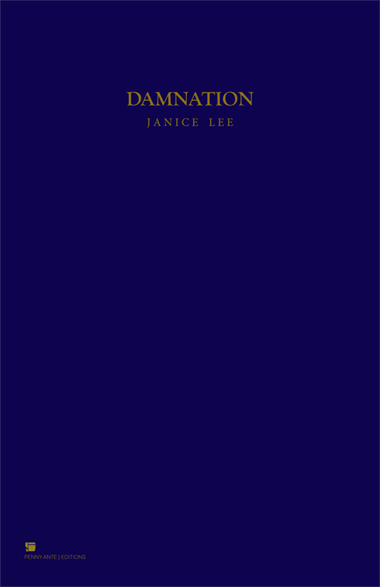
As I have mentioned in the past, the only time I will stray from writing directly about film on this site is only in such a way that it still ties back to film. Therefore, when I was informed about Janice Lee’s book Damnation, I had to jump at the chance. Damnation is a book telling a fragmented narrative through prose poetry influenced by the works of filmmaker Bela Tarr. Tarr being the renowned Hungarian filmmaker (He also recently won BAM Awards for Best Director and the Lifetime Achievement Award).

Usually, I approach Prefaces/Forewords and Afterwords/Appendices as optional, however, they come most highly recommended in this book. They are quite informative with regards to the process and have great insights into the work, and Tarr as well.

That’s not to say that the narrative cannot stand alone. In fact, if you are familiar with Tarr this is a tale you’ll definitely enjoy a great deal. However, something that is referenced in the afterword, written by collaborator Jared Woodland, is of note: he refers to this work being one in “the genre of Bela Tarr.” That is a most astute encapsulation, not only of the book but of Tarr’s work; for the true greats seem to work in an arena all their own.

As I read it, I found that although the book is called Damnation it culls influence from many of his works to form this story, and sure enough in the back it lists the references as four films (Damnation, Satantango, The Werckmeister Harmonies and The Turin Horse). It also struck me that since this is a pastiche, my long-burning question about what the best introduction to Tarr would be has found an answer, and it is Damnation by Janice Lee.

However this book is not inundated in its influence. For in any work that’s considered an homage there has to be some personality or spin from the author herself to make it work, and this book absolutely has a personal touch. It paints with Tarr to tell the author’s tale.

Any cinephile, whether familiar with his work or not, should enjoy the book as well for the poetical styling of the prose; the images wrought play out like a film. Scenes begin and are cut, and one can see the cuts within scenes. It’s a living embodiment of Eisenstein’s theory of poetry as a verbal montage.

The tale-such-as-it-is is interesting. It’s phrased as such because the narrative doesn’t follow a conventional form. There are incremental repetitions of locales and characters, who all have designated labels rather than names. However, it’s also because Tarr created stories-such-as-they-are. The works referenced especially are multi-character tableaux wherein the personages ruminate on the various existential and metaphysical questions at play.

The book offers neither setting nor location to lend it a timeless quality, as it follows the universal theme of decay. Yet, even with this tonal portrait of the commonality of disintegration, it’s still a page-turner, and not just for the cinematic elements within for there are many equivalencies in the writing technique that make it a cinematic as well as a literary document.

One way in which the flow is manipulated is that towards the end the vignettes become smaller and intensify. This portrait of a dying town on the verge of apocalypse, painted in labels, inviting involvement/creation, is quotable and filled with descriptives of sound again making it audiovisual, but passages about stench and texture bring you into a literary realm anew. Its staying in the present tense and insisting that you proceed, without stopping; also makes it cinematic.

Tarr may have just recently retired, but aside from the work he is doing to teach young filmmakers at his school, his legacy can be felt here, and in the countless other artists he will continue to inspire. The obsession for Lee and Woodland isn’t over either, for they are currently writing a book on Tarr’s long takes in Satantango. So aside from a work of fiction he inspired there will now be a scholarly, cinematic work on one of his masterpieces.

It’s a joy, and not a wonder, that sketches of frames (re-created storyboards) from Tarr’s films are found in the appendices of the book as well. For the book is not only drawing from said images but expounding on them, creating new ones; a new tapestry. The power of Lee’s work is as undeniable as the films that inspired her and are truly a gift to us all. Do yourself a favor and seek this book out, you’ll be glad you did.

For more information on Janice Lee you can visit her website. Damnation is available for (pre-)order at Amazon here.
61 Days of Halloween: Sisters (1973)

Introduction

For an introduction to the concept of 61 Days of Halloween, and a list of previously featured titles, please go here.

Sisters (1973)

One of the good things about going off a list, at least in part, to decide on viewing options is that it allows for more occasions for you to be a blank slate. A lot of the selections I’m seeing for this year are from Stephen King’s list of the best horror films from 1950-1980 that he included in his book Danse Macabre. I have replicated the list on my Letterboxd page (check it out!).

When I received Sisters from Netflix I knew it was De Palma and before Carrie and that’s all I could remember. Thankfully, the synopsis on the disc mailer didn’t give too much away.

On a personal note this may be my favorite film I’ve seen that set mostly on Staten Island. I had no idea that was coming and how it’s introduced is great: Danielle (Margot Kidder) is a Quebecois model/actress, and after a gig her and Philip (Lisle Wilson) have dinner and have it cut short by her ex (Emile Breton). Philip offers to take her home. She tells him she lives on Staten Island, and it goes something like this:
“Staten Island?” he says.
“Yes, Staten Island is part of New York isn’t it?”
Philip, smiling, says: “I guess it is.”

I was born in Manhattan, but I spent most of my formative years on Staten Island, and that statement in a nutshell is the conundrum of being from there; that whole “We’re New York too, dammit” subtext. A short exchange of dialogue encapsulates it on both sides.

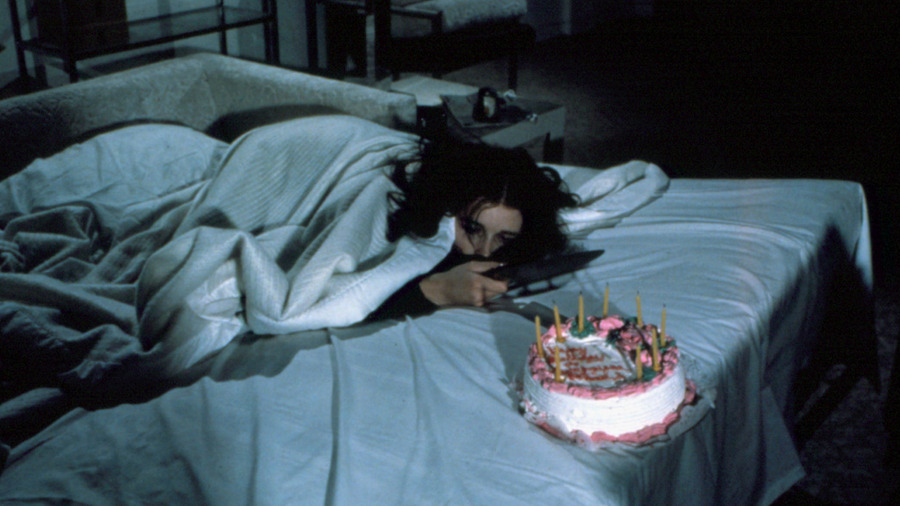
Personal baggage aside, Sisters is a great little gem. I use that term because it starts with a fairly small series of events one after another that slowly turn in to a much bigger plot than was intimated at first. The simple Hitchcockian mystery element gets more byzantine as it progresses; even throwing some last second misdirection, making certain things even weirder than they are.

The first suspenseful passage features, yet another recently-viewed example of, a great use of split-screens. It’s a film that’s tied up in the psychology of its characters, their relationship to one another and secrets buried in the past.

In a certain way there were also parts of it that reminded me of Cronenberg as there were weird, significant things afoot with few characters noticing or being affected.

With scoring by the legendary Bernard Herrmann this film is quite the riveting pulse-pounder with a few jaw-dropping moments in store for those who do see it.

2013 BAM Award Considerations – October

Last year I had one massive running list and it became very cumbersome to add to, and to read I’m sure. By creating a new post monthly, and creating massive combo files offline, it should make the process easier for me and more user-friendly for you, the esteemed reader. Enjoy.

Eligible Titles

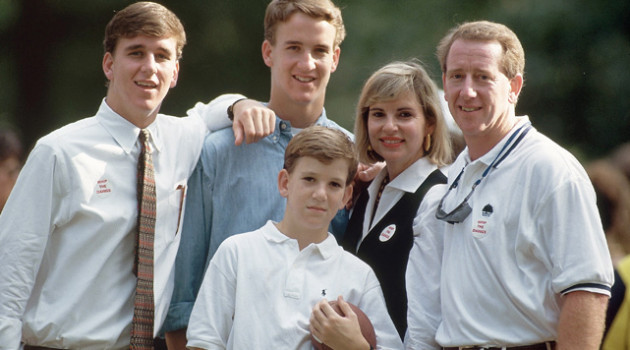
The Book of Manning
Cloudy with a Chance of Meatballs 2
Metallica: Through the Never
The Almost Man
Romeo and Juliet
Machete Kills
League of Denial: The NFL’s Concussion Crisis
Captain Phillips
Big Shot
No Más
Free Spirits
Gravity
The Stream
Carrie
Escape Plan
Paradise: Faith
Jug Face
Haunter
Bad Grandpa
The Counselor
Stitches
Mother, I Love You
This is What They Want
Enough Said

Best Picture

The Almost Man
Romeo and Juliet
League of Denial: The NFL’s Concussion Crisis
The Counselor

Best Foreign Film

The Almost Man
Mother, I Love You

Best Documentary

Last year this was an omitted category, due mostly to the fact that too few total candidates existed to make the slate feel legitimate. I will hope to be able to rectify that this year.

The Book of Manning
League of Denial: The NFL’s Concussion Crisis
Big Shot

Most Overlooked Film

As intimated in my Most Underrated announcement this year, I’ve decided to make a change here. Rather than get caught up in me vs. the world nonsense and what a film’s rating is on an aggregate site, the IMDb or anywhere else, I want to champion smaller, lesser-known films. In 2011 with the selection of Toast this move was really in the offing. The nominees from this past year echo that fact. So here, regardless of how well-received something is by those who’ve seen it, I’ll be championing indies and foreign films, and the occasional financial flop from a bigger entity.

Machete Kills
The Almost Man
Romeo and Juliet
Mother, I Love You

Best Director

The Almost Man
Machete Kills
Romeo and Juliet
The Counselor
Mother, I Love You

Best Actress

Solvei Grimen Fosse The Almost Man
Hailee Steinfeld Romeo and Juliet
Amber Heard Machete Kills
Sandra Bullock Gravity
Maria Hofstätter Paradise: Faith
Lauren Ashley Carter Jug Face
Vita Varpina Mother, I Love You
Julia Louis- Dreyfus Enough Said

Best Actor

Dane DeHaan Metallica: Through the Never
Henrik Rafaelsen The Almost Man
Douglas Booth Romeo and Juliet
Tom Hanks Captain Phillips
Danny Trejo Machete Kills
George Clooney Gravity
Nabil Saleh Paradise: Faith
Michael Fassbender The Counselor
Ross Noble Stitches
James Gandolfini Enough Said

Best Supporting Actress

Laura Morante Romeo and Juliet
Sofia Vergara Machete Kills
Julianne Moore Carrie
Natalya Baranova Paradise: Faith
Penelope Cruz The Counselor
Cameron Diaz The Counselor
Toni Collette Enough Said
Catherine Keener Enough Said

Best Supporting Actor

Thomas Arana Romeo and Juliet
Barkhad Abdi Captain Phillips
Demian Bichir Machete Kills
Mel Gibson Machete Kills
Paul Giamatti Romeo and Juliet
Rene Rupnik Paradise: Faith
Steohen McHattie Haunter
David Hewlett Haunter
Javier Bardem The Counselor
Tommy Knight Stitches
Thommas Kane Byrnes Stitches
Ben Falcone Enough Said

Best Performance by a Young Actress in a Leading Role

Hailee Steinfeld Romeo and Juliet
Noura Jost The Stream
Chloë Grace Moretz Carrie
Abigail Breslin Haunter

Best Performance by a Young Actor in a Leading Role

Jacob M. Williams The Stream
Kristofers Konovalovs Mother, I Love You

Best Performance by a Young Actress in a Supporting Role

Eleanor Zichy Haunter
Kelianne Coughlan Stitches

Best Performance by a Young Actor in a Supporting Role

Kodi Smit-McPhee Romeo and Juliet
CJ Diehl The Stream
Michael Capperella The Stream
Alex Maizus Jug Face
Peter DaCunha Haunter
David Knoll Haunter
Jackson Nicholl Bad Grandpa
Matis Livcans Mother, I Love You
Ryan Burke Stitches

Best Cast

The Almost Man
Machete Kills
Romeo and Juliet
Paradise: Faith
Haunter
Bad Grandpa
The Counselor
Mother, I Love You
Stitches
Enough Said

Best Youth Ensemble

Romeo and Juliet
The Stream
Haunter
Mother, I Love You
Stitches

Best Original Screenplay

The Almost Man
Machete Kills
Haunter
Mother, I Love You
Stitches
Enough Said

Best Adapted Screenplay

Cloudy with a Chance of Meatballs 2
Romeo and Juliet
Haunter
The Counselor

Best Score

Romeo and Juliet
Captain Phillips
Machete Kills
Gravity
The Stream
Haunter
The Counselor
Mother, I Love You
This is What They Want

Best Editing

Cloudy with a Chance of Meatballs 2
Romeo and Juliet
Captain Phillips
Gravity
Escape Plan
Jug Face
Haunter
The Counselor
This is What They Want
Stitches

Best Sound Editing/Mixing

Captain Phillips
Gravity
Jug Face
Haunter
This is What They Want
Stitches

Best Cinematography

Romeo and Juliet
Gravity
Escape Plan
Paradise: Faith
Haunter
The Counselor
Mother, I Love You
Stitches

Best Art Direction

Romeo and Juliet
Machete Kills
Escape Plan
Paradise: Faith
Haunter
The Counselor
Mother, I Love You
Stitches

Best Costume Design

Romeo and Juliet
Machete Kills
Haunter
The Counselor
Stitches

Best Makeup

Romeo and Juliet
Machete Kills
Bad Grandpa
The Counselor
Stitches

Best Visual Effects

Machete Kills
Gravity
Haunter

Best (Original) Song

Cloudy with a Chance of Meatballs 2
Metallica: Through the Never
The Almost Man
Haunter
Mother, I Love You
Enough Said

61 Days of Halloween: Seed of Chucky (2004)

Introduction

For an introduction to the concept of 61 Days of Halloween, as well as a list of previously featured titles, please go here.

Seed of Chucky (2004)

With Seed of Chucky I went in expecting next to nothing based on what occurred the last time around. What I got in it was surprising, if not redemptive. The film series that in Chucky’s first not-targeting-a-kid film felt a bit unbalanced. Here, albeit further out on a cliff, with still some head-scratchers and eye-rollers (it really wastes some time at the beginning) the film goes into a full-on-meta rendition, after it hinted at a world wherein Chucky (as well as Jason and Michael Myers) were real.

Jennifer Tilly’s involvement here makes much more sense because it gives her plenty more to do (being both onscreen and working voice) and is an appropriately self-deprecating, yet oddly reverential work for her. Also, striking mostly correct and humorous notes are the participation of Redman and John Waters, two men whom I never believed I would put in the same sentence together.

While the Glen or Glenda homage here is subtler and more clever than the Bride of Frankenstein in the previous installment, it may have been the only thing subtle about the entire thing. It does become more and more outlandish as it goes but a lot of the jokes and kills work to great effect.

While there is a descent into an unfortunate cacophony of events and screaming there is a some of actual self-exploration by these villains-turned-protagonists. As hard as it is to believe, there is some internal and external conflict in the film about their natures and trying to fulfill their pyrrhic mission of returning to human form.

However, not only do the blunders that hold it back come out far too often, but a lot of the good that’s done towards the middle of the film is undone by the grinding to a halt nature of the climactic sequences as well as what happens in the tag. I grant that to get any enjoyment out of this film at all, you do have to be prepared for any and all kinds of sophomoric, silly content that doesn’t further things too much.

It’s a sequel wherein I didn’t mind the direction it chose to go in at all, it just didn’t get there as well as it could have. It’s also a film in a bit of a catch-22. The prior film of the series crossed a point of no return: the girlfriend was brought into the fold so the direction of the series was altered. This film went further afield so to continue down that road would’ve been foolhardy. It was definitely time for the reset button to be hit after this one if it was to continue at all.

Said direct sequel that, based on reports, goes back to its roots is due out on video on October 8th

Updates: October 1st, 2013

So after a longer than expected lay-off here are the latest round of updated posts on the site today. These are all additions to posts that are designed to be frequently updated – or as I like to call them “running posts.” What’s different in this installment is that I added a description of what the updates entail and spaced it more. The next updates will be posted on October 15th, 2013.

Films Viewed in 2013
Over 400 features now!

Favorite Older Films First Viewed in 2013

Now at 60 feature films.

2013 BAM Award Considerations – September

Added two remaining titles to the mix.

My Radar

Crossed off two; added 14 and so it goes.

Series Tracker

Added 15 links.


Mini-Review Round-Up: Late August/ September 2013

Reviewed 5 films to close out the post.

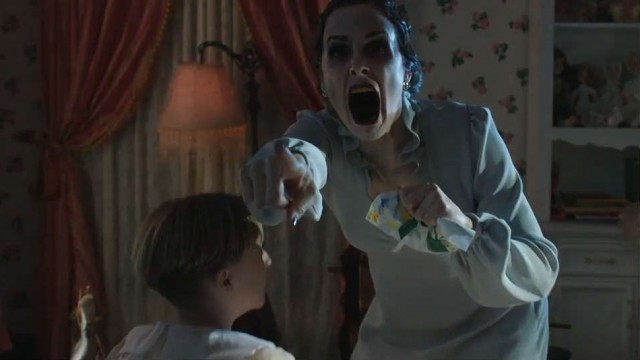
61 Days of Halloween: Insidious: Chapter 2 (2013)

Introduction

For an introduction to the concept of 61 Days of Halloween, and a list of previously featured films, please go here.

Insidious: Chapter 2 (2013)

Usually with these 61 Days of Halloween posts I am usually writing about an older film. However, owing both to the fact that I want to come as close to having 61 posts in this theme as possible, and also that new horror film releases are now virtually year-round; I figured that a film being released between September 1st and October 31st in cinemas also warranted coverage.

It also warrants discussion because not only is it a sequel to one of the best horror films of 2010 (Back when I still didn’t have a genre-specific list) but also because of how it goes about being a horror sequel. It seems that, for one reason or another, many horror sequels: a) don’t take chances b) are very hesitant to stick too close to the end of the first film in terms of chronology.

However, what James Wan, Leigh Whannell and the team at Blumhouse did here is akin to a few things. First thing that came to mind was John Carpenter’s Halloween II that was very close in chronology treatment of his and Debra Hill’s story. The second, being a modern reference, is what Marvel Studios is doing. Their initial films in series be it Thor, Iron Man or Captain America have all been variations on the origin story, but as the franchises built up goodwill, and their cups runneth over after The Avengers; there’s been some risk-taking.

There’s a glorious dichotomy omnipresent throughout all of Insidious 2. After a teaser scene that takes us back in time, but is also referenced a few more times, and key to the story; the film picks up the narrative the day after events in the previous installment. For while the narrative picks up where it left off it goes down paths and alleys that are not entirely expected. It takes you there with mellifluously macabre scoring, mesmerizing edits and wondrous camerawork. It rips a few other pages out of the euroshocker (namely Argento) catalog, but it also continues to expound upon its myth building. It doesn’t do what’s expected, but none of it feels inorganic or forced. Both Wan and Whannell have very consciously crafted a story that warranted this kind of exploration. For what’s the point of a follow-up if its to be a carbon copy rather than a continuation?

I have yet to attend a double-, triple- or any other multi-film experience to mark the release of a new installment in a series, however, this is the one I most lament because I fully intended on going to but life got in the way. It’s not that I felt seeing the first film over was necessary when I walked out, it just would’ve been all the more glorious.

While a chapter of the tale closes at the end of this film (the syntax of the title is very apropos) there can still be more to tell as the film branches out. This marvelous bookend of a story also leaves one wanting more and can easily deliver it. To date Insidious: Chapter 2 is the best horror film I’ve seen this year not only for its bravado, but, also because of how it follows through on its characters searches and arcs, which gives the actors room to stretch and also expand or contrast to the prior film.

61 Days of Halloween: The Case of the Bloody Iris (1971)

Introduction

For an introduction to the concept of 61 Days of Halloween, as well as a list of previously featured titles, please go here.

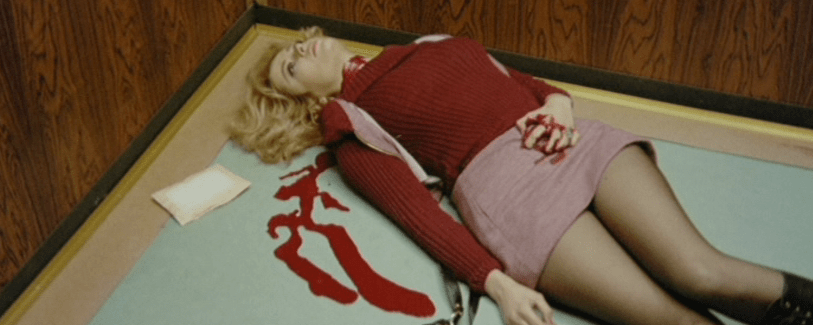
The Case of the Bloody Iris is a giallo film from 1971 by director Giuliano Carmineo. It’s written by Ernesto Gastaldi based on his own story. Now as is the case with many Giallo films it could end up being “just another one,” especially considering that this one does take place, at least in part, in the world of fashion (as quite a few do). Staple actors of the genre Edwige Fenech and George Hilton are leads. A lot of it boils down to how it all shakes out in the end.

Without spoiling it, I was highly satisfied with the result of the whodunit. There were, in my estimation, a few unsavory possibilities in that regard, and the best path was taken. The outcome does leave a question or two, but most of it works.

Yes, there are a few elements that do date it however some of the representations (both in terms of ethnicity and sexuality) while ensconced in the lack of political correctness of the day are somewhat departures from the norm, which was refreshing to see.

The mystery is cloistered about one building. The police involvement can be counted on for a bit of bumbling, and comedy, but they are mostly competent. It’s just that the enigmatic nature of the case does prove to be a rather difficult one.

For as many complications this film foists upon itself and engaging in the occasional flashback sequence, it never gets confusing which is another win for it. And, on a pet peeve note: gialli have some of the greatest, most florid titles in cinema. However, the more often than note end up being a bit of a stretch (one example would be The House with the Laughing Windows) that is not the case here. Despite its strong elements I can’t say it’s a great giallo, but it is a good one that is worth seeing if you’re a fan of the genre.

Silent Feature Sunday- Haxan (1922)

While I do watch many new films, and have annual awards and will discuss current cinematic topics. Part of my desire to create my own site was to not have an agenda forced upon me that was not my own. This allows me to discuss films from all periods of history whenever I see fit. Recently my Short Film Saturday posts have been running toward silents more often. I questioned this tactic for a second until I realized that if I really do hope to encompass all of film history then the silent era most definitely should not be ignored. If you mark the silent era from the birth of film (1895) to the first talkie (1927), and I realize it could be argued that the silent era stretched a few years beyond that, and also that there were experiments with sound very early; that’s still 27% of film history at current which was entirely silent. Therefore a weekly post (or, however often I put it up) is not out of line at all mathematically or otherwise.

The good news is that many silent films are available to watch online, and are in the public domain. So I will feature some here.

Yes, folks, I missed this post last week. The reason was I had a feature I’d not seen scheduled and I didn’t have the time to see it. This weekend I wanted to get you at least one title I had already seen. Thankfully, in researching I found I had neglected Häxan. In fact, it’s a title I previously wrote about. Here are some of my thoughts on it when I discussed its DVD release.

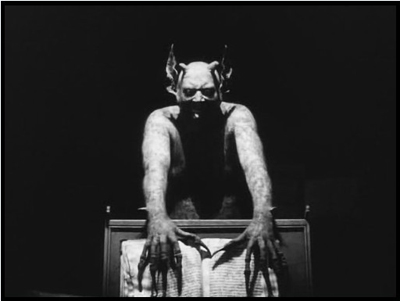
Häxan is a fascinating piece of cinematic history for a number of reasons – the first certainly being that it is one of the earliest films to straddle the line between fact and fiction; narrative and documentary. Second, because it is one of the earlier (#134) releases by the Criterion Collection.

The film tells its tale of witchcraft and satanism from the middle ages through the modern times. It cleverly uses vignettes (dramatizations if you prefer) and slides, illustrations etc. It goes from a title describing reasoning and custom behind an act or belief to a scene in which it is depicted or to an illustration where typically a pencil held by an unknown person indicates to us the area of interest.

The film goes along chapter by chapter revealing reason and the cause and effect of the hysteria concerning witches and the devil. Although, we at one point find out that several trials involve people from the same household there is little by way of a through-line, and that is by design. However, it does make it slightly troublesome to follow in part because you expect it to come back to one scenario or another but it doesn’t. Alas, one of the perils of blending fact and fiction, it moves and is structured like a doc but is portrayed as fiction much of the time so the audience member expects similar conventions.

Towards the end it does do a fascinating feat of simulacrum and tell the audience its reusing actors, does demonstrations and the titles take on a very analytical approach but it is some of the more enjoyable stuff in the film.

Criterion gets very high marks for this particular release for a number of reasons. First, there are two versions of the film on this DVD – one the 1922 silent, and then a 1968 re-score, voice-over included re-do by avant-gardists called Witchcraft Through the Ages.

In the former Criterion did a great job re-recording the score and returning the film to its original intended tinting. Tinting was a fabulous technique which was widely practiced in the silent era because it gave you the wonderful contrast and grain of black and white but it was bright and lively. It was also a tremendous tool for symbolism of time, place, emotion and so forth as colors hold many associations for people.

The original Häxan is very much worth watching.

I scored Häxan a 7/10. Enjoy!

61 Days of Halloween: Dead of Night (1977)

Introduction

For an introduction to the concept of 61 Days of Halloween, and a list of previously featured films, please go here.

Dead of Night (1977)

I can’t say I’m a Dark Shadows fanatic, but I can say I’ve seen enough to know that I love what it was on TV and that I really dig Dan Curtis’ style. That was reinforced when I saw Burnt Offerings a few years ago and it made My Favorite Older Movies First Seen in 2011 list. I purchased it soon after that rental, and if I forced myself to rank that list it would’ve come out on top.

Yet, due mostly to my very split interests, I have scarcely gone back to Curtis’ filmography since, although this title did intrigue me. Ironically, as I was recently mentioning that I was on an anthology kick and hadn’t seen one in a while; the kick is now back, as this film is one also.

Another huge name attached to this film, this time as writer, is Richard Matheson. When Matheson recently passed away I noted that though I had not read him I had at the very least been influenced by his work in film and on television.

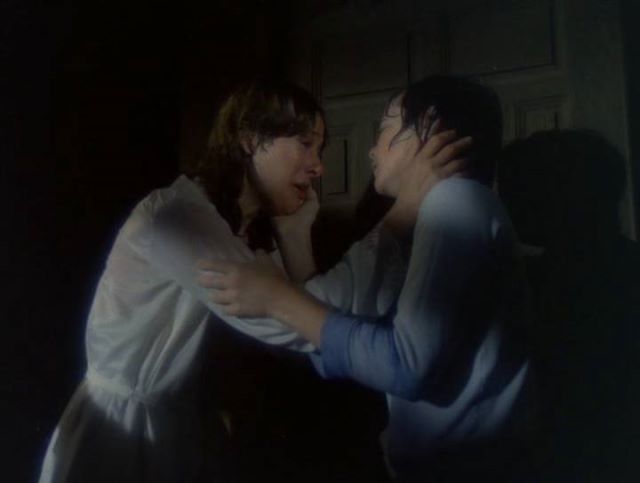
This is a TV movie that tells three tales, and the opening monologue does not lie, each tale works in a bit of a different milieu: the first, regarding a very odd time traveling incident is a fantasy, a work of imagination, that is not bereft of eeriness. The second is a mystery tale though also with a decidedly horror slant, as in this one Matheson is working off his own short story about vampires. The grand finale, and it is grand, is the truest horror tale of them all, titled simply “Bobby” deals with the horrific results of a grieving mother getting what she wished for: the return of her deceased son.

It is a taut tale, it runs 72 minutes for the three tales, so each is roughly the equivalent of an episode of a half-hour TV show; which is a perfect vessel for drama. There is a tenor of seriousness and an undertone of tension throughout the film, which culminates in rather narrative film fashion in the last tale, which is absolutely pitch perfect. Joan Hackett and Lee Montgomery are the only actors in the tale, barring a voice-over husband away on business, and they are frequently in singles and could not be more flawless in their commitment and delivery.

Dead of Night is a great anthology and one that really gives me an impetus to move Curtis further up my queue, as this is masterfully done.

Short Film Saturday: If I Am Your Mirror

Last weekend was the first time in a while I missed one of these posts. I will attempt to make it up at some point. Essentially I didn’t have my horror shorts lined up yet.

This one I found courtesy of Film School Rejects. It’s a rather apropos star because one of the earliest scares I remember was listening to The Tell-Tale Heart read aloud in grade school. This film offers quite a unique spin on the tale, rightfully citing it draws inspiration from it; as opposed to being a direct, literal adaptation. It’s a very visual tale with a unique style of animation employed to convey it. There is only one significant piece of dialogue in its 20-minute running time. A lot of the film is told in montage and flashback. If ever you needed proof that animation is a medium and not a genre, this should do the job quite well.

Enjoy!