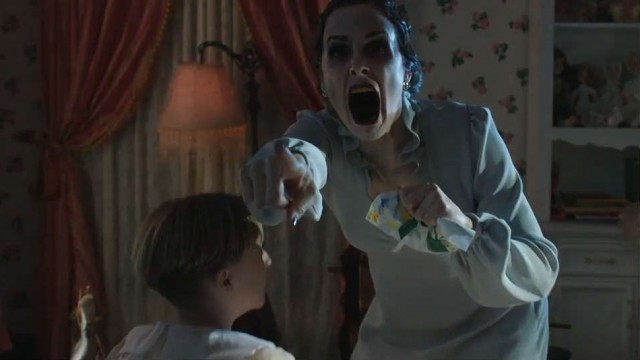
61 Days of Halloween – Films to Keep You Awake: A Real Friend (2006)

Introduction

For an introduction to the concept of 61 Days of Halloween, as well as a list of previously featured titles please go here.

Films to Keep You Awake: A Real Friend

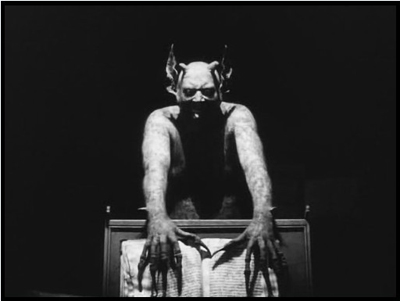
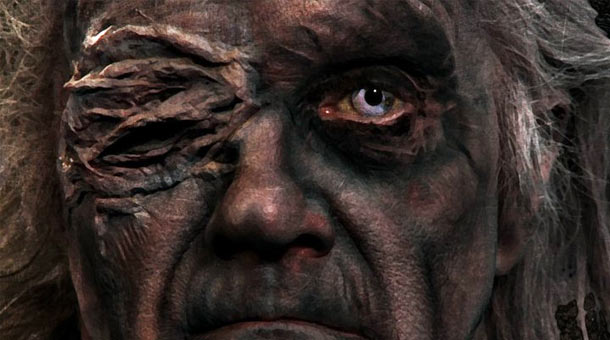
In continuing to chronicle the titles in this series of horror films we come upon perhaps the most unfortunate title of all of them just because of how misguided certain efforts within the film are. One staple of horror filmmaking is the teaser scene. It’s a scene that’s an early instant jolt to get the audience in the mood, and also give them an early scare prior to some time spent character building. What some films do (like a few in this series) is have the connection to the main thrust of the plot be nebulous. The problem with that in this case is that the connection is practically trivial as the character involved ends up being almost a non-factor.

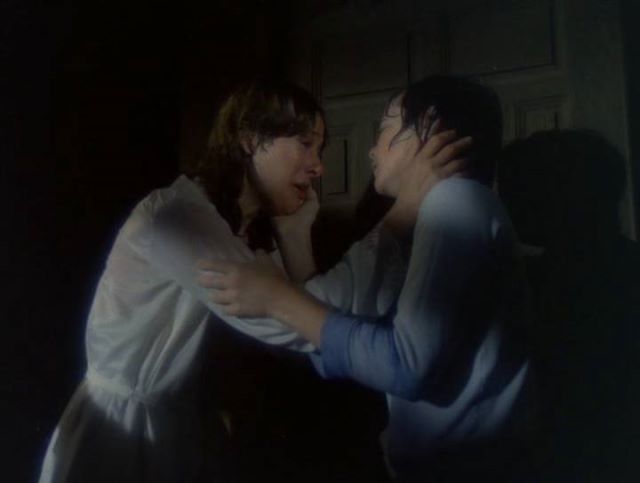
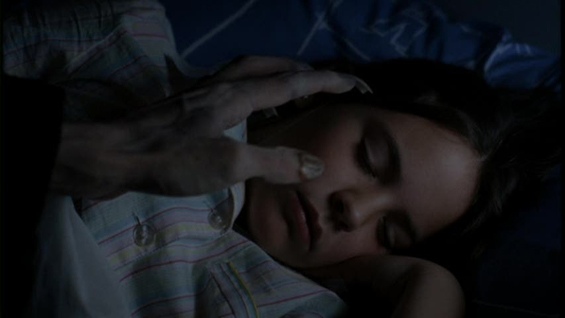
I, for one, love developing character when there are unique or interesting aspects that were previously unknown being revealed. This film dabbles in a bit of redundancy establishing certain things about Estrella repeatedly: she doesn’t interact, she likes to read, she has an over-active imagination are all facts that are beaten to death in this tale. Due to the fact that she likes reading, horror fiction mainly, and likes watching horror movies; it’s a license for the film to fawn over influential horror figures, but A Real Friend drowns in influence. Not just influence but a grab-bag of them: a Leatherface-like character, zombies, vampires and such. That can work, see The Monster Squad, but the film has other tricks up it’s sleeve that make it harder to tolerate.

As I’ve stated, films on the shorter side need to do a little more work if they also want to have a slower burn; the shorter a movie is the quicker patience runs thin. Yet, while facts about characters are known in some cases motivation remains a mystery for it: you wonder what the man Estrella refers to as “Vampire” wants, what anyone wants really.

There are more serious, more detrimental missteps later on that detract from the fact that we eventually do get fairly satisfactory answers to questions asked for far too long in a film of this length. There are laughable moments, ones where you step out of it because things are just unbelievable; unconscionable lapses in judgment and eye-roll worthy extraneous twists. It finds one way after another to be worse in act three. If you’re a completist, watch this title. You may like it better than I did. However, if you’re a bit more discerning pass it by.

Review: V8 – Start Your Engines!

Writer/Director Joachim Masannek’s claim to fame to date is Die Wilden Kerle, or The Wild Soccer Bunch as it is known in English. Hitting German cinemas today, and likely expanding internationally through the end of the year and into 2014, is his latest film. V8 – Du Willst der Beste sein, or V8- Start Your Engines!. In a manner similar to the trajectory of the aforementioned series, V8 combines elements of myriad genres to put a unique spin on its tale.

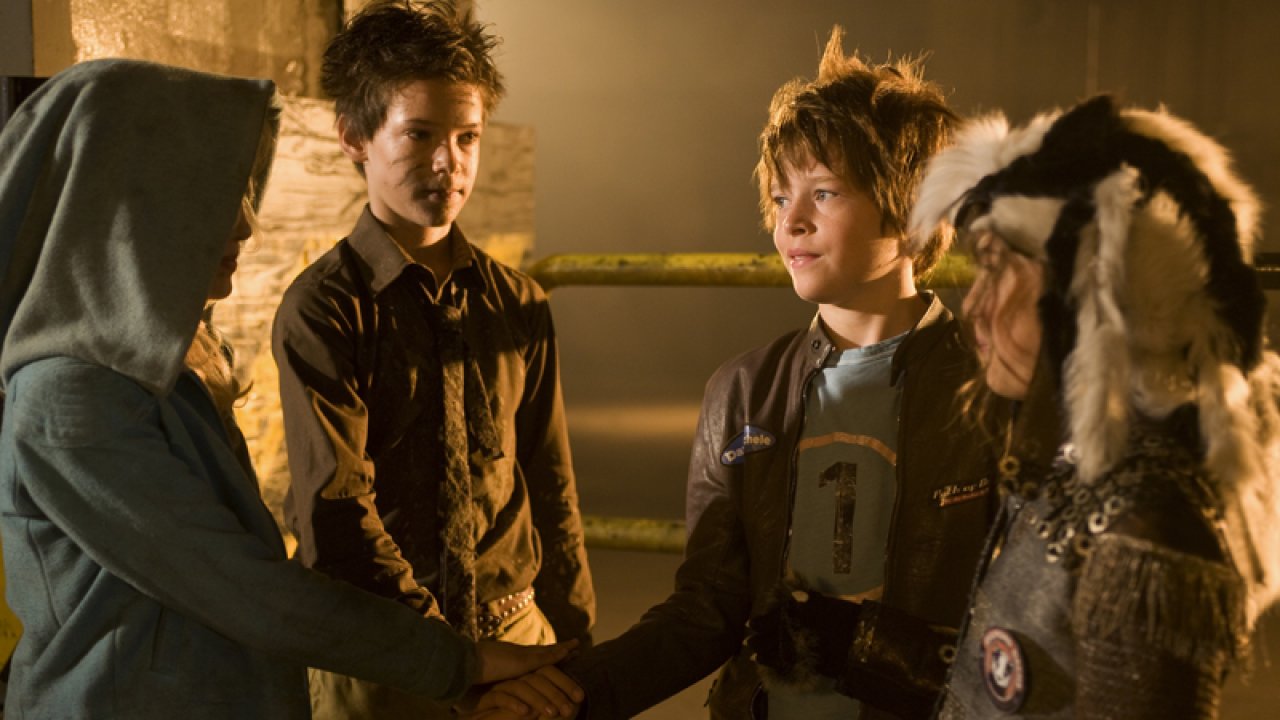
At its core it’s a sports movie about four kids who are selected to challenge the reigning local go-kart champions, who are one win away from solidifying their place in a mystical castle. However, the myth of that locale, the secretive nature of these races and other things layer on a fantastical element to the story. Whereas Die Wilden Kerle seemed to leapfrog its predominant genre from film to film Masannek here it creating a melange from the get-go and what makes it even more impressive is the naturalistic way in which it occurs. It functions even with these disparate elements, such as being a film designed for kids, but also having its coming-of-age aspects, not unlike The Crocodiles (Vorstadtkrokodile), allows it to work on a few levels.

Not forgetting that while the core group of character are four, the antagonists (The Barracudas) are at least that excluding their posse; it’s highly impressive that the film does not get bogged down, the leads don’t get sketched like the multi-character tales in the prior franchise, but knowing them is key to driving the story forward. The Barracudas use what they know about the interpersonal dynamics of the V8 team to precision in trying to get an upper hand. So, yes, there are comedy elements (most which do translate- some remain obscured in the unique brand of dialogue Masannek’s films occasionally have); there’s manipulation that gets you on the side of the challenging team; there’s the struggle to individuate, to do what you like and do it well, all the clashing that budding friendships can have, as well as a subsumed love triangle which plays into all that – as well as a sibling rivalry. And, even with all that the film doesn’t feel messy at all because for the most part this disparate elements rise above the fray organically.

V8 - Start Your Engines! (2013, Universal/Rat Pack)

Yes, and then it’s a racing film as well, which it is predominantly, but focus needed to be given to what separates it. The racing are very well done and one of the motifs the film frequently employs to great effect it many iterations of split-screens in its montage building and it’s one of the most effective consistent uses I’ve seen.

While Masannek demands a lot of himself as a writer and director juggling these emotional tones, genre tropes and plot elements that also puts a lot on the shoulders of the young ensemble who rise to the challenge on countless occasions. The leads being David (Georg Sulzer) and his sister Luca (Maya Lauterbach), David’s love-interest Kiki Lilou (Klara Merkel) and Robin (Samuel Jakob) his rival, the poor little rich boy whose father care more about his success than him. Sulzer easily communicates his frustrations with his his sister, with Robin, when they’re at odds; as well as more sincere emotions. David is an imperfect protagonist who does make mistakes but is ultimately affable enough. Lauterbach carries herself with a poise of an actress at least twice her age and pulls off many of the affectations of her character flawlessly. Merkel’s character has to be equal parts tough-as-nails and sensitive and is never off-putting, but always endearing; a very promising screen presence. Whereas Jakob has the most deceptively difficult challenge before him, playing the character with the stiff upper-lip who only occasionally cracks and does very well.

However, the exploits of the rival team are nothing to scoff at. Namely, Nick Romeo Reimann, who up until this point has been a heroic lead, plays a villain adept at mind-games brilliantly. Also, noteworthy is Tom Hoßbach who must quietly portray that deep down he’s the good-natured one of the lot.

V8 - Start Your Engines! (2013, Rat Pack/Universal)

V8 not only does more juggling of genre elements and themes in kid-centric sports film than say something like Real Steel, but it also is a more sophisticated implementation of Masannek’s style as well as a series starting off on the right foot. As opposed to say the Fast & Furious franchise, which it does tip its hat to. V8 finishes its tale in a very gratifying fashion. How the final outcome is achieved is excellent and there are some good turns in the road along the way. It’s especially worth noting that the race that all the drama lead up to is also very well-executed. The film makes no secret of its intent to set-up a sequel, but it also finishes appropriately. With this as a set-up building quite a fascinating and endearing mythology, I welcome that prospect with open arms and I’m quite sure there are audiences worldwide that would too.

9/10

61 Days of Halloween: Bride of Chucky (1998)

Introduction

For an introduction to the concept of 61 Days of Halloween, and a list of previously featured films, please go here.

Bride of Chucky (1998)

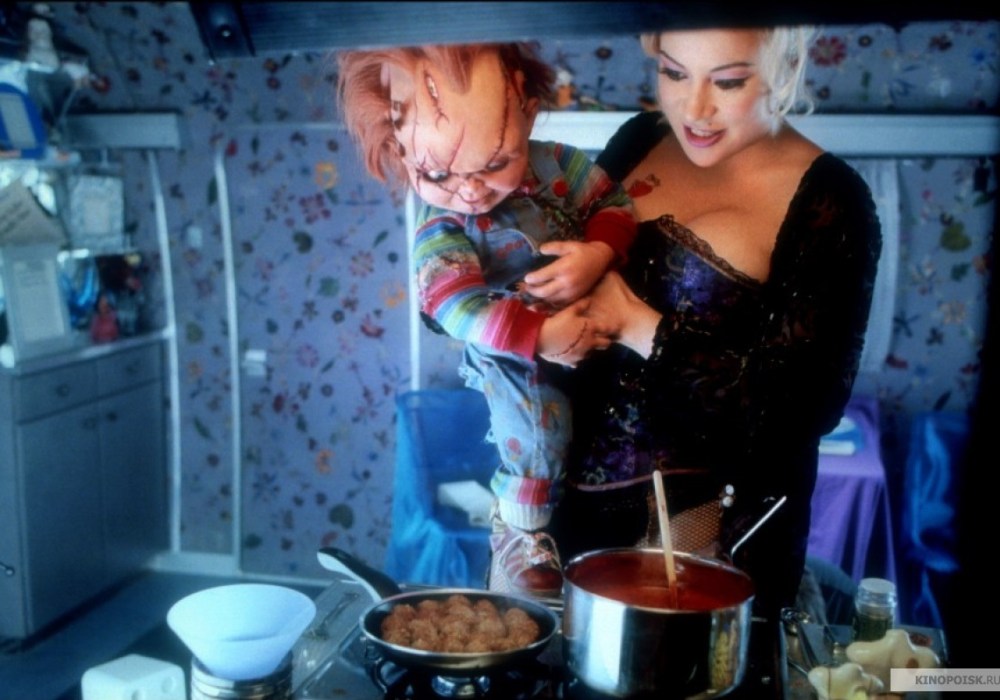
This is the point wherein the Child’s Play series takes a departure from its original course. Not to say that there’s anything wrong with that. In general, horror sequels can be repetitive enough as it is without having the same antagonist/protagonist paradigm every time out. However, what happens here, after a halfway-decent setup, in which Chucky’s ex-girlfriend finally hunts him down in doll form and resurrects him; is that this installment wanders too far into the realm of self-parody.

As I previously noted, comedy was always a part of the equation in the initial run of these films, as there is a reboot in the offing. However, far too much of this one is comedy. Furthermore, it falls into the trap of late-series horror films of making the antagonist the star. While the films were always referred to commonly as “Chucky movies” his name never made it into the title until this installment.

The antagonist becoming the lead late is not inherently a bad thing, but what matters is who they’re up against, how present they are and what they hope to achieve. Far too much of the film is spent with Chucky and his newly-formed doll-bride sitting and waiting, listening as a troubled girlfriend and boyfriend are eloping, and then running from the law because of what the demon dolls did.

Not only are this couple annoying but the girl is portrayed by Katherine Heigl so it’s essentially doomed from the start. The Frankenstein myth-lending is fine but the spiral this film goes down, and ends up being even more ridiculous, less humorous and interesting than I had anticipated. Mind you this is following a first act that was slightly better than expected. However, at the end I was left wondering not only what Jennifer Tilly was doing in this film, but everyone involved.

61 Days of Halloween: Die Farbe (The Color Out of Space) (2010)

Introduction

For an introduction to the concept of 61 Days of Halloween, and a list of previously featured titles, please go here.

Die Farbe (The Color Out of Space)

As I have discussed in two prior posts, the 61 Days of Halloween features on both The Curse and Die, Monster, Die!; H.P. Lovecraft’s The Colour Out of Space is not only a great horror story but also a tremendously malleable one. When I happened upon this title at a Second and Charles (a secondhand media retail chain) I just had to jump at the chance to see it, and I’m very glad I did.

The malleability of the tale again shines through as in this rendition while the tale begins in Arkham, Massachusetts; the protagonist is in search of his father who vanished in Germany after World War II, and that is where he will spend most of his time. As he arrives in his last known whereabouts he meets a man who starts to tell him of the strange events that had occurred in that town. These events make up a bulk of the short story.

Now the film being transplanted to Germany is already a bold decision that works out quite well. The next emboldened choice is that the film is predominantly in black and white. It’s a great choice for Lovecraft’s antiquarian style, but also aids in selling a majority of the effects work that is needed to render this tale. Yet, in a tale about color it is further brave – and without putting to fine a point on it, does serve a purpose.

There is some English dialogue in the film, but a vast majority of it is in German, and due to that performances are usually spot on. Both the cinematography and the edit do tremendous things to build the atmosphere of outre and foreboding that is one of Lovecraft’s hallmarks. Things in this tale are slightly askew and on a precipitous decline leading to one earth-shattering moment and it moves there almost unerringly.

The workmanship in this tale rivals what the H.P. Lovecraft Historical Society has been able to do with its films. It really is quite a work and proves that The Colour Out of Space is what I would refer to as one of the great stories, meaning that I can view many renditions of it and revel in the tweaks an modifications each brings to the table.

What’s odd is that apparently this film was released on video in the US in August of 2012, however, I never heard of it until the day I found it, so I think I will enter it into the mix for this year’s BAM Awards. It is available to stream free for Amazon Prime members and on DVD and Blu-Ray.

61 Days of Halloween: Child’s Play 3 (1991)

Introduction

For an introduction to the concept of 61 Days of Halloween, as well as a list of previously featured titles, please go here.

Child’s Play 3 (1991)

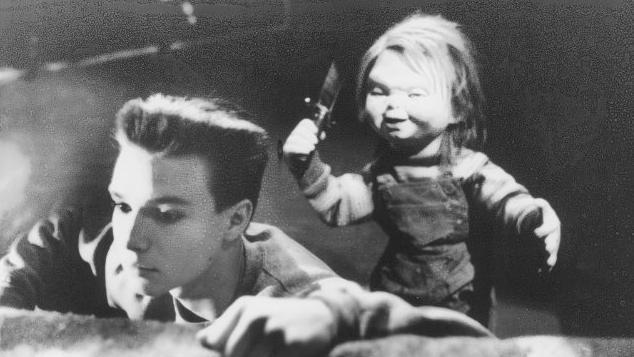
As with any series of horror films that runs long enough, there comes a point where shifting the protagonist becomes necessary. Andy Barclay (here played by Justin Whalin) is still the central figure of his tale but the innovation of this film is that Chucky, through a creative loophole, finds a new target body to try and take over.

As is the case with many later-on sequels in horror series, you have to further suspend disbelief than is even normally required just to stick with things. There’s a few examples of that: the fact that Chucky, melted and virtually dead, is recycled by the factory and fashioned into a new toy; or the fact that the company both would restart the Good Guys line after the bad publicity and changes in the marketplace; and, lastly, that they would have Andy Barclay’s whereabouts on file. As if corporate spies would keep tabs on a person that closely, a person they were now vowing to forget as they reintroduced the toy.

One course correction this film has is the reintroduction of a strong, relatable female character. As Andy is now remanded to a military academy, he meets De Silva (Perrey Reeves) who becomes one of his closest allies. The new target of Chucky’s quest for a human body is Tyler (Jeremy Sylvers) a younger boy closer to the age Andy was in the first film.

Two things become readily apparent as the series progresses: first, the comedy element is always there, so unlike Freddy there’s no real unfortunate shift in the character but rather one in focus it would seem. The series is always stronger when a toy is targeting a child, in the next installment, and likely in the final one (to date) that focus is lost and cartoonishness finally rules.

What occurs in this installment is that the first kill of any kind takes a while so it does build suspense. There are some unsavory types running the school so it makes those creative kills rather enjoyable, and through the events there is revealed to those close to Andy that what he’s saying about the doll is true so the insanity plotline, as strong as it is to establish his world, is less necessary here.

The film is not without missteps, like Chucky laying low until lipstick is applied then suddenly war is on. The change of venue to the amusement park is nearly without purpose save visual interest, and there are other awkward moments and imperfections, however, fewer of those come out in the characters where we’re supposed to draw identification, so it works better than the previous film for sure.

61 Days of Halloween: V/H/S 2 (2013)

Introduction

For an introduction to the concept of 61 Days of Halloween, and a list of previously featured films, please go here.

V/H/S 2 (2013)

Albeit a new film I figured it’d make more sense to cover this here as opposed to in the Mini-Review Round-Up Post. As you may be aware, the first installment of this film series was not one I was fond of in the slightest. However, one of the perks of an anthology film series is that as each installment rolls around there are more variables that can make the quality of one to another quite different. This film overall is an upgrade in technical and narrative terms.

While still a bit lacking, one thing this film improves on from the first is the handling of the frame. There is a bit more thought and effort put into it, and most importantly purpose. Now it’s not impeccable, however, it is not an encumbrance to the film. It’s productive rather than counterproductive.

Most of the tweets and reviews I’d seen to date singled out one particular story in the film for special mention, and that would be “Safe Haven”. That title definitely deserves all the praise it’s getting. However, part of why I decided to feature this film this way was to give the other chapters their due.

In a way, the four main stories that form this film are kind of like a sandwich. The first and last film keep things in place, and aren’t as good as the middle two but serve their function. It’s the first segment (“Phase 1 Clinical Trials”) that had me thinking I was in for another long haul. That’s another thing that made this film better, it runs shorter and has one less segment. “Phase 1 Clinical Trials” deals with a man who when given a prosthetic eye (with recording capabilities, which is clever) can now see ghosts. It starts out a little slow and has its unfortunate patches, but the segment does pull through and makes itself entertaining in the end.

With a helping hand from the Eduardo Sánchez, director of the The Blair With Project, “A Ride in the Park” is a great first-person real-time look at beginnings of a zombie apocalypse. And though the glitchy-ness of VHS-recording is still a little too present throughout, it’s downgraded and accompanied by really good camerawork throughout in this piece especially.

“Safe Haven” is a tandem project from Gareth Huw Evans, writer/director of The Raid, and Timo Tjahjanto that takes you behind the scenes of a cult compound in Indonesia. And that’s as much as bears saying plot-wise. This particular segment, as much as a short can, takes a slow burn approach and then really ratchets up the intensity and the events to nearly unfathomable levels. Answers to questions are not quite all given, some are implied, some are left somewhat mysterious, and that only ramps up the horror. There are some truly jaw-dropping moments in this one that make it very memorable indeed.

“Slumber Party Alien Abduction,” seems at first like it may be an unfortunate way to end the film. However, after a perhaps overly-long stasis things do pick up and it becomes a far more intriguing and well-executed tale than the first one and it has some very good, natural, funny and convincing performances from its young cast. The end of this one it likely the most memorable.

V/H/S 2 is the kind of horror anthology I wanted the first one to be. It’s a good step for the genre, and quite honestly the frequently under-thought found footage approach. I’d be glad to see the series continue now and can only hope The ABCs of Death rebounds this well.

With most 61 Days of Halloween posts I’ve refrained from scoring films so I can discuss themes more, since this is a shared Mini-Review Round-Up post, and those usually are scored, I will give this title a 7/10.

Journalism in Classic Film Blogathon: Doctor X (1932) and The Return of Doctor X (1939)

Introduction

Firstly, I’m glad to be contributing to Comet Over Hollywood and Lindsay’s Movie Musings blogathon. Secondly, I have to say that there are two very distinctive reasons why I chose these films for analysis: one, I am currently ensconced in my 61 Days of Halloween theme so anything that could combine that with a blogathon was preferred. Two, I firmly believe that while all films may not reach “greatness” or “importance” they are all worth being looked at seriously. Analyzing a particular aspect of these films made it easier. Yes, I said films twice now. That’s the last note I should mention: I thought Doctor X was on YouTube. I was mistaken, but it was on Netflix on a two-film disc with a later, similar but unconnected film so I watched both, and it’s a good thing I did.

Background

Doctor X (1932)

When looking at a specific profession as portrayed in film I think it important to discuss briefly my experience, limited as it may be, with it. I believe that at some point in junior high school I did take a very rudimentary elective in journalism. More to the point that is where you learn the very basics. Furthermore, being in an age with media at the tip of our fingers one can’t help but scrutinize media coverage. It is an interesting age for the profession of journalism because information, and misinformation, travels faster than ever before. Both great and not so great things are possible because of it. I think at current it’s also an interesting age for the journalist as represented in fiction again. Author Christopher Rice encapsulated it best in a tweet saying that thanks in large part to the rise of Swedish mystery novels in popular culture the literary figure of the journalist has been redeemed. There was a time when this personage seemed to be in a morass, however, that’s shifted. The cinematic tales I’ll examine, as outlandish as they might be, are closer to the halcyon days of representation.

Doctor X (1932)

Doctor X (1932)

The synopsis of Doctor X describes Lee Taylor as wisecracking, and they’re not kidding. This reporter, Lee Taylor (Lee Tracy), following a series of murders referred to as the “moon killings” in several cases seems more content to joke around (he even wears a joy buzzer – it does function as a plot device later, but still) than take anything seriously. However, that line he’s toeing never really gets crossed as he does do his job. He does so both in a diegetic and non-diegetic sense. In the diegetic, he is committed to breaking the story wide open. The police talk to Dr. Xavier (Lionel Atwill) he rounds up his staff (the suspects in the case) and retreats trying to sniff out who it is himself for a period of 48 hours. Lee sneaks in and is, in a non-diegetic sense, our eyes. He similarly overheard talking in the morgue by pretending to be a corpse. There may have been breaches in professional etiquette throughout this film, but at least most of them kept him removed from the action and an impartial observer. Breaking in where he was not wanted or allowed notwithstanding at least he was tries in the end.

However, there are worrisome acts, aside from the aforementioned ones of dubious legality, throughout. For example, he complains of all he has to go through just to get the minimal amount of information he has to report when checking in and then asked off the case, then when his ego and pride are played to he claims to have been joking. Due to the performance of the scene the intent (joke or sincerity) is obscured. Overall, though, the film seems to be more slanderous to cops than reporters. The police continuously barter with Doctor Xavier, who is not the antagonist, to allow him to conduct his own search and present his findings. The police threaten and bloviate but ultimately do not interrupt the drama before it’s time. They are within their rights to interrupt the game of charades passing for a film, but they do not.

While Tracy does make some blunders, like becoming smitten with Xavier’s daughter and becoming a part of the story he’s covering, at the end (to an extent) he is far more admirable in his efforts than the police are in their inaction. Yet none really come off that great, for the young Miss Xavier (Faye Wray) does get him to sit on the story, at least for a little while. And that’s why it’s fortunate I did the double feature because not only is The Return of Doctor X (1939) a much better film, but it also has a much better and more well-portrayed reporter.

The Return of Doctor X (1939)

The Return of Doctor X (1939, Warner Bros.)

One might think these films are related, despite having similar templates one really could at best call this film a sequel-in-name-only though you’d be hard-pressed to prove even that. Other differences are that this film was not shot on two-strip technicolor and not directed by Michael Curtiz, but this is better film, and a better portrayal of a journalist. Part of that has to do with the performance by Wayne Morris as Walter Garrett, and part of that has to do with the writing. Interestingly, in this film the reporter’s presence is felt more throughout. Taylor disappeared for large chunks of time, usually hiding out, but he was also peripheral to the action – a plot device, a living MacGuffin. Garrett, however, finds himself embroiled when a strange turn of events puts him in the middle of a controversy and makes him look a fool.

He eventually has to go at it on his own, with a little help from a friend, to clear his name and try and solve the mystery. The film seems to use the prior installment as a template rather than a bible. For example, Xavier was not the antagonist in the first, he had a murderer in his midst and struggled to discover whom he was. Suddenly, in less than seven years, he’s a mad scientist – hence the films are similar yet disconnected in that way. Likewise, Garrett isn’t a wisecracker so much as he’s a well-meaning goof. He does do his sneaking around here too but nothing that seems unorthodox, all quite par for the course.

He’s also resourceful. His friend, Michael Rhodes (Dennis Morgan) is a doctor. He asks him questions, then follow-ups, then joins him to talk to people and eventually they investigate as a team.

With regards to women and his work he’s a little more levelheaded than his predecessor at one point he says “This is no time for dames.” He only allows a “dame” to distract him, and influence a choice, in the denouement when everything is already decided.

Much as the reporter is much surer of himself, this film is also surer of itself itself. It runs a full 14 minutes shorter (62 as opposed to 76) than the prior installment and the difference feels bigger than that because of how well-placed all the story elements are. Not to mention the fact that you have Humphrey Bogart before he was big playing a deliciously creepy role.

Conclusion

The Return of Doctor X (1939, Warner Bros.)

My analyses of how well each of these two fictional characters do their job is not meant to be propagandizing. There are good and poor practitioners of all professions. However, A bit of recognition and understanding by the film about how well Tracy does his job seemed necessary. The phrase “loose cannon” is cliché but it’s something that usually comes up. People who are by the book versus people who are unorthodox is a classic trope, it comes up, it’s discussed. In Doctor X he seemed more a vessel with which to tell the story. Maybe I had to rack my brain more but it was hard to come up with a reporter in a horror film that qualified in terms of time period. However, that’s not to say it’s a dead concept in the genre now. There is a bit of a resurgence. The first two, and maybe the fourth, films in the [REC] series have a journalist lead, as well as the US remakes Quarantine and, though it’s a very minor point so does The Baby’s Room. In the wonderful adaptation of Stephen King‘s 1408 to the big screen John Cusack plays a journalist of sorts, a writer who debunks supposedly haunted locales. Regardless of how omnipresent it may or may not be in the genre it is a useful device for horror that could be further utilized.

61 Days of Halloween: Pulse (1988)

Introduction

For an introduction to the concept of 61 Days of Halloween, and a list of previously featured films, please go here.

Pulse (1988)

This is one of those films I avoided revisiting for a long time. I have a few of these. Essentially what I’m scared of is that, no matter how marginally I liked it, that upon re-viewing it, under further scrutiny, I’ll find myself disappointed. I’m pleased to report that I didn’t come away with that feeling this time. Now I’m not going to sit here and pretend that you don’t have to seriously suspend disbelief to even give this one a fair shake, but I still think it works. Yes, electricity seeming to have a consciousness and coming to attack you, for whatever reason, is outlandish. However, 1980s horror cinema brought us many a silly topic, but the great thing about the decade is how many were pulled off successfully.

This film significantly upgrades the notion of suburban terror for it’s a tale wherein it’s quite literally the house that after you. While other horror films used the notion of being young homeowners and debating leaving as the real-life element (The Amityville Horror) or home invasions; here this film finds a way to nearly anthropomorphize the house and give it ways to physically hurt you. And, of course, any time something that’s very important, a near necessity, becomes dangerous that’s an ingredient for successful horror fare also.

In a way I thought of this film as an upgrade on Maximum Overdrive, in part because of the necessity attacking, but also because this film made a decision that film did not, and that was having little by way of explanation. Yes, characters hypothesize, both those who know the truth of what’s really happening and one that doesn’t, it sounds good but it can’t be confirmed. It certainly sounds better than the comet in Maximum Overdrive, and Stephen King’s tale Trucks avoided speculation.

The film begins and ends with a montage of electrical devices and carriers, tight angles and wide to establish and drive home the point. There is also a classic approach of being shown a crazy result and then having that unseen incident make sense as the story progresses we see that a pattern is repeating. The escalation of events also makes sense because the film starts with a kid (Joey Lawrence) being witness to odd occurrences and that naturally instill disbelief in the improbable story that’s being told. As events escalate belief becomes easier and the burden of excessive disbelief is avoided.

Aside from some cool, and very ’80s, macro-cinematography and effects work what really carries this film is the performances. Most notably those of Cliff De Young and Joey Lawrence. Also, noteworthy is his younger brother Matthew who plays a funny supporting role, but the drama is palpable through most of the film. The characters are established and they have their conflicts, which are only exacerbated by the strange events. As the events increase in intensity their bearings slip, they become more strained, more irritable and they all pull it off.

Yes, Pulse is a weird little movie with a goofy premise, but it has a lot going for it and will entertain you if you give it shot.

61 Days of Halloween – Films to Keep You Awake: Blame (2006)

Introduction

For an Introduction to the concept of 61 Days of Halloween, and a list of previously featured films, please go here.

Blame

This installment of the series is offered by Narciso Ibáñez Serrador. The only other film I’ve seen of his is Who Can Kill a Child?, the original not the remake, which I enjoyed a bit more. Although many years later it’s interesting to see a filmmaker only twice and at two very different stages of their career, especially when some of the themes that are being explored are similar. This title is the most recent of his listed on the IMDb. While there are some interesting aspects to the film, and some of it is well-handled; I can’t help but feel it shares a lot of the difficulties the earlier film works: namely there are some dubious decisions by characters and some head-scratching moments.

However, what this film has going for it is that its tale is, eventually, a more layered one and touches upon themes too often avoided in American horror films. However, there does come a point in a film where it can be said you’ve been playing coy for too long and are starting to hurt the end result. The delayed nature of the reveals adds a sudden choppiness to the reveals and a very quick escalation with minimal time to absorb the impact of what is seen.

There is certainly a deftness of hand in how this tale is wrought, but it ultimately encounters some issues that titles truncated to have shorter running times do; inasmuch as I feel this film would’ve benefitted from being expounded upon such that the overall flow of it was more consistent. As it stands there are interesting scenes a themes, as well as effective sequences, that don’t gel into a completely successful whole.

61 Days of Halloween: The Dead Father (1985)

Introduction

For an introduction to the concept of 61 Days of Halloween and a list of previously featured titles please go here.

The Dead Father (1985)

I have covered the films of Guy Maddin on a few occasions here. However, even with all that coverage there are a few of his films I had not seen. One such film was Tales from the Gimli Hospital, his first feature.

On the DVD of that film, one whose horror qualifications are disputable, there was the short film The Dead Father. This is one that is more obviously a horror tale. It’s one in which death is a transient experience. One misapprehension I recall from my days in film school is that writing “homey” or family-based tales was us students playing it safe, sticking far too close to writing what we know. However, it’s not the motif or the milieu you work with, but rather how you use it. Much of Maddin’s works, this one included, are family portraits but you could not confuse Maddin with any other filmmaker because of how he tells his stories in narrative, visual and editorial senses.

Even with it poetical use of voice over and sparse use of dialogue there are still silent film tropes all about this film starting with the introductory photo title cards of the characters. Maddin’s style is embossed on this film, and though he has experimented with different kinds of tales; he has created his own approach and that really started here.

While short films are a starting point for most, if not all filmmakers, few modern auteurs can be referred to as short film artists and Maddin is most certainly that. He continues to make many shorts and he tells tales that are as long as they have to be and is not only making features but made a short as recently as last year in an anthology, and one due out next year.

This is a film that sets its tone with weird off-kilter photo albums immediately and continues to its creepy, gross finale with occasional humor and persistent oddities throughout. Unlike many of his shorts, this film is not available online but instead is on the Kino edition of Tales from the Gimli Hospital it is definitely recommended viewing if you’re looking for something a bit different.