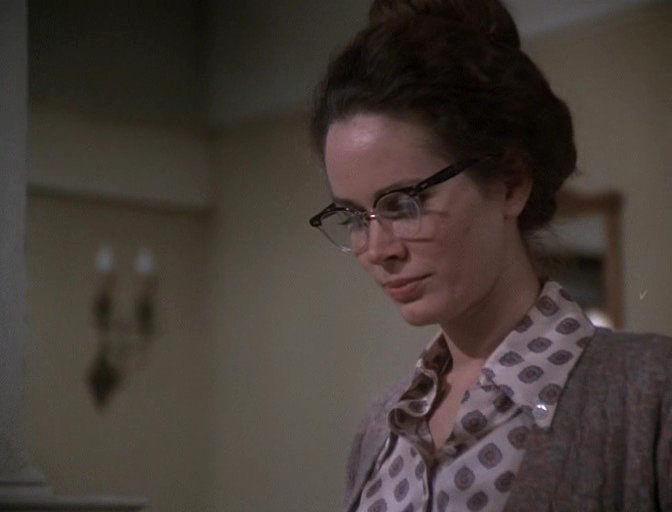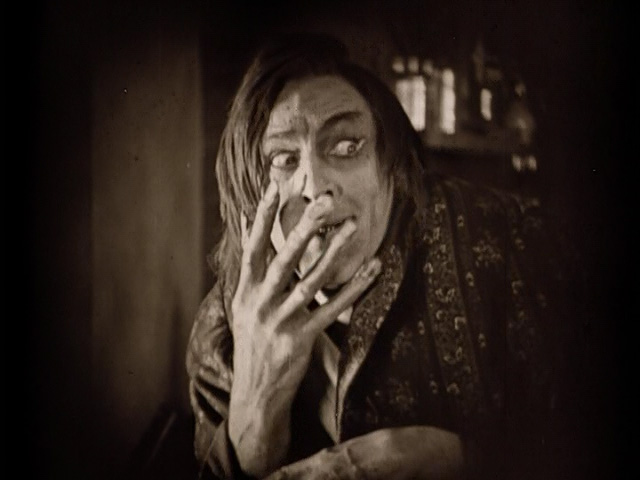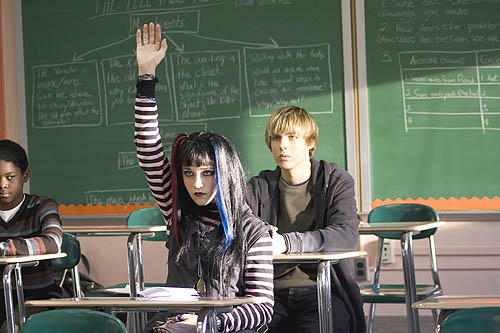
61 Days of Halloween: Curse of Chucky (2013)

Introduction

For an introduction to the concept of 61 Days of Halloween, as well as a list of previously featured films, please go here.

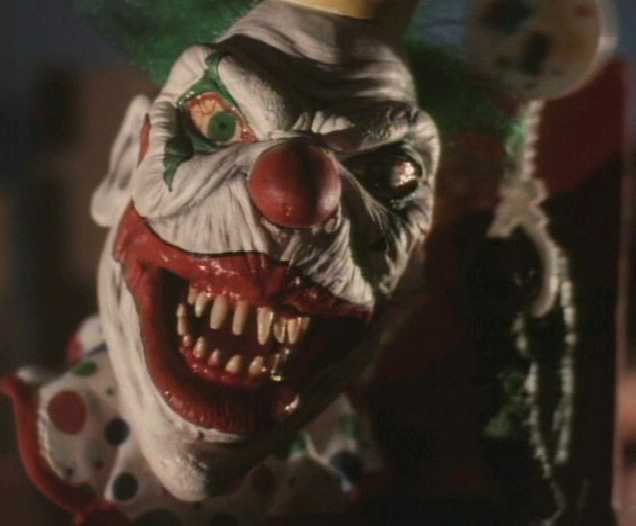
Curse of Chucky (2013)

When I got a new Redbox code I was seriously debating what to do with it. I had recently resigned myself to the fact that I would, for the foreseeable future have very few screenings that were not for the purposes of 61 Days of Halloween for myriad reasons. However, considering some of what I had heard and the desire, after having seen all of the other films recently, to see this one too I settled on it.

When I was done watching Curse of Chucky I was quite nearly hyperbolic about it but lowered my tweet reaction to a more guarded “redeeming” film. However, that is not meant as a slight or that I second-guessed my enjoyment of it. I was, even though I am not a massive fan of the series, practically gleeful after the film was over because of what it managed to do.

One example to contrast against is the Children of the Corn series. I covered, but did not write about all of them, one year. Essentially, what would need to be done to rectify that series, without (again) rebooting it, would be something far more involved than what Chucky accomplished here. You could almost write a book-length (OK, maybe a Kindle single-length) concordance of the Children of the Corn films to try and rectify and corollate all the new rules that emerged, or ones that changed and mutated.

The Child’s Play films never went too far outside the norm in terms of its general groundwork. What it did was change the tenor and formula of the series. It went from quasi-serious horror with a ridiculous premise to just ridiculous. However, this film did two things: first, it went back to its bread and butter (nothing wrong with that, bread and butter tastes delicious) but refused to disown where the series had been.

Yet, while it doesn’t reinvent the wheel it does have a new wrinkle in its approach. Yes, there’s a connection established to these new characters and why Chucky cares about going after them, but the timeframe of the story is also a short one and the tale is cloistered. A vast majority of it takes place in one locale amidst a set group of characters all under the same roof.

The connections come mostly in the discovery phase as well as in denouement, and many of those just made me smile. This film has a clever new wrinkle in terms of a doll usage in real-life, as well as a surprising touch of interpersonal.

Last, but certainly not least, is Fiona Dourif (Daughter of Brad, the voice actor behind Chucky) brings back into the fold a protagonist you can root for wholeheartedly both because the film does build her character and because of her performance.

Any time a frustrated fan says “Why bother?” about a sequel, films like this one should be cited as examples of the ship being righted. This Chucky movie does something nearly impossible, after six films in a horror franchise I actually want to see a seventh.

61 Days of Halloween: Demonic Toys 2 (2010)

Introduction

For an introduction to the concept of 61 Days of Halloween, as well as a list of previously featured films, please go here.

Demonic Toys 2 (2010)

While I did not include the original in this series, I did write about Demonic Toys previously. It was one of my favorite older movies first seen in 2011

This movie is part of the reason that this list is called “Favorite” and not “Best.” I don’t usually distinguish between the two but this is the rare film in my estimation that garners that elusive title of “So Bad It’s Good.” It has an audacious script by David S. Goyer (pre-Nolan Batman films) and a great albeit dubbed evil kid performance by Daniel Cerny, good flashbacks and chemistry between leads. For all its faults, which are myriad, I still found it to be very enjoyable to watch. Beyond that it nearly defies description. I wanted to include it in my 61 Days of Halloween series but I stuck with mostly posting about the original class, this year I may include it.

So at the most recent Mosnter-Mania Con I saw available on DVD this sequel. I actually saw the first a few times and decided to give it a try. This installment made quite a bit later, is a little less ambitious than the prior one and as such, while there’s definitely some cheese involved in dialogue and some of the effects work, and the acting must be forgiven; it too works. This tale goes into the collector realm and has the clan, with a new, valuable addition (as well as demons and ghosts in tow).

Having now seen only two of these films and more of the more popular Puppet Master series I’m not sure why this one doesn’t have more of a following. It’s funny, a bit more self-aware and so far still combines its tropes pretty well and gets good effect out of them.

It’s in this clan where I find myself a fan of the villains. It’s childish but Baby Whoopsie cracks me up non-stop.

Full Moon Features has recently started its own streaming service where this and many of their other titles can be found if you’re interested.

61 Days of Halloween: Gorgo (1961)

This is another selection that came to me by way of Stephen King’s list of horror films in Danse Macabre. I have to admit, I chuckled a bit and had some trepidation when I saw that this was a monster movie. After all I’m fairly sure that during the period from which King curated the list (1950-1980) there were other, more well-known giant-monster-attacks-city films; most notably the Japanese brood. So what makes Gorgo special?

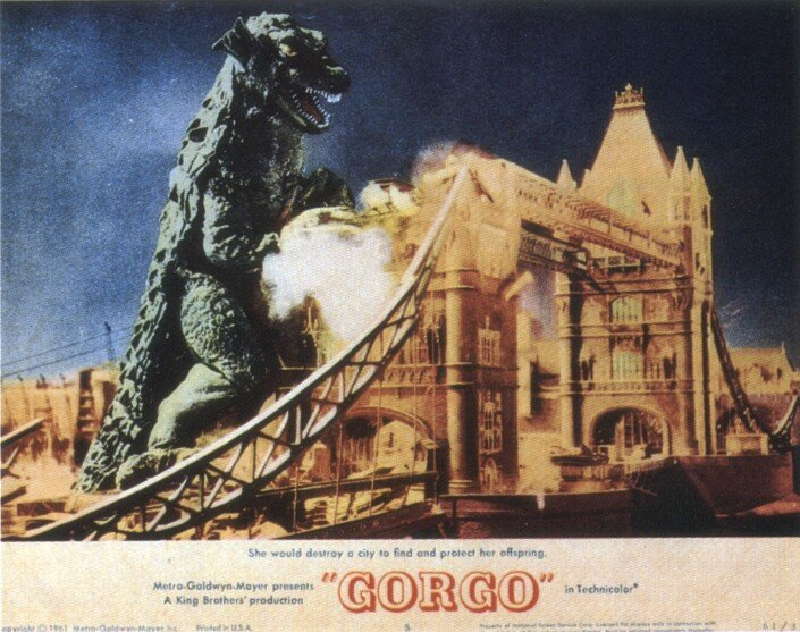
I soon realized what it was and it’s not really about the fact that this species of prehistoric beast is discovered off the coast of an Irish isle, but rather the thing the film does in just 78 minutes. There’s a period of time wherein the film is like a proto-Jaws. There is a threat identified and a mostly unseen enemy. There is a plan to try and take it down.

What occurs then is a spin on King Kong, which has also been done. One notable example I viewed, that didn’t really work out, was Jurassic Park: The Lost World. However, here it does work because that second twist on the average monster film isn’t the last.

The last one is given away by this poster here. The beast that’s captured and taken to a London circus is a baby. Big, angry momma is coming for him and that’s where all the tense, well-wrought and choreographed chaos ensues.

I won’t say there aren’t period clichés and touches of cheese, both eternal and due to dating in the film, but it really is well done. There’s the especially disheartening note that the kid assistant, if he had only been listened to, could’ve saved everyone a lot of trouble.

One of the great things about going down this list is discovering titles you should have seen by now. An even better one is watching films you wouldn’t have seen otherwise, and this film qualifies in that regard.

61 Days of Halloween: Trilogy of Terror (1975)

Introduction

For an introduction to the concept of 61 Days of Halloween, as well as a list of previously featured films, go here.

Trilogy of Terror (1975)

At times it’s interesting, in fact, preferable to watch things out of chronological order when it comes to the work of a given director that are not in a series. I viewed and wrote about Dan Curtis’ anthology follow-up to this film, Dead of Night, before I got to this one the more famous of the bunch.

Whether or not I was inspired to go on a mini-Curtis binge I was likely to take this in as an homage to the late, great Karen Black, an actress I’ve not seen as much of as I would’ve liked by now, so this was welcome for that reason alone (Although she did help another Dan Curtis film greatly that being Burnt Offerings). For this anthology is fascinating inasmuch as it allows its lead to reinvent herself in three separate stories with quite different characters in each. It’s a great showcase and not a bad idea for how to assemble an anthology.

Yet, even with anthologies this one and the one that follow it have a similar structure. “Julie” the first tale in the trilogy has a bit more of an air of mystery to it. In something I’ve not seen much from anthology installments it plays more to subtext and isn’t overt about the nature of the power struggle. Similarly, the first tale in Dead of Night, while eerie has a definite air of mystery to it.

In “Millicent and Therese” much like “There’s No Such Thing As Vampires” there’s a conflict between characters being discussed with an outside party, and apropos to this particular tale the game is changed.

Lastly, this anthology ends with its doozie “Amelia” it’s the iconic moment from the film and the final shot in this film is seared on my mind not only for its execution, but because of Black’s commitment to her business. It’s haunting. A similar wallop is delivered by “Bobby” to close out Dead of Night.

Again involved in the writing of this film is Richard Matheson so the quality of the scripts, as well as the narrative design of the films, owe much to his work as well. However, Trilogy of Terror works not only because it had the interesting idea of having the same star in each tale, but of putting her in different kinds of roles and casting the right one, as Black knocks it out of the park here.

Silent Feature Sunday: Dr. Jekyll and Mr. Hyde (1920)

Introduction

While I do watch many new films, and have annual awards and will discuss current cinematic topics. Part of my desire to create my own site was to not have an agenda forced upon me that was not my own. This allows me to discuss films from all periods of history whenever I see fit. Recently my Short Film Saturday posts have been running toward silents more often. I questioned this tactic for a second until I realized that if I really do hope to encompass all of film history then the silent era most definitely should not be ignored. If you mark the silent era from the birth of film (1895) to the first talkie (1927), and I realize it could be argued that the silent era stretched a few years beyond that, and also that there were experiments with sound very early; that’s still 27% of film history at current which was entirely silent. Therefore a weekly post (or, however often I put it up) is not out of line at all mathematically or otherwise.

The good news is that many silent films are available to watch online, and are in the public domain. So I will feature some here.

Dr. Jekyll and Mr. Hyde (1920)

Folks, the intent here initially was to get to see some new silent features I’ve not seen. However, in certain cases I have been pressed for time to screen them. But, wanting to keep this post active I have dug around and found some titles that I have seen that I had not considered yet.

Dr. Jekyll and Mr. Hyde is what I would describe as one of the great stories, which in my vernacular means that I’ll gladly take in many renditions of it. This 1920 version features John Barrymore and is among the best of the bunch. Enjoy!

Silent Feature Sunday: Waxworks (1924)

While I do watch many new films, and have annual awards and will discuss current cinematic topics. Part of my desire to create my own site was to not have an agenda forced upon me that was not my own. This allows me to discuss films from all periods of history whenever I see fit. Recently my Short Film Saturday posts have been running toward silents more often. I questioned this tactic for a second until I realized that if I really do hope to encompass all of film history then the silent era most definitely should not be ignored. If you mark the silent era from the birth of film (1895) to the first talkie (1927), and I realize it could be argued that the silent era stretched a few years beyond that, and also that there were experiments with sound very early; that’s still 27% of film history at current which was entirely silent. Therefore a weekly post (or, however often I put it up) is not out of line at all mathematically or otherwise.

The good news is that many silent films are available to watch online, and are in the public domain. So I will feature some here.

Waxworks (1924)

I initially planned on including this film as a literal 61 Days of Halloween selection because I have a DVD of it that I’d been meaning to watch. As it happens, after I saw it on the DVD I learned that it is available online so I decided to feature it here. One reason I did is because it’s a good chance to discuss different versions of Silents available. Most of it has to do with image quality. This YouTube version is the newly restored cut but the compression is not as good as a professionally manufactured DVD. Movies Silently has a wonderful, comprehensive post on this very topic that is worth reading.

As for the film, for an anthology it has quite an unusual structure. Two of the stories are in excess of 30 minutes in length, while the last is just 10 or so. However, due to the way the stories are handled it works. The third is the most expressionistic and visually arresting. The entire film uses tinting to great effect. I had not gotten around to seeing Paul Leni’s work, which are few yet highly regarded, and this film is a good start to the viewing. Enjoy!

61 Days of Halloween – Films to Keep You Awake: To Let (2006)

Intorduction

For an introduction to the concept of 61 Days of Halloween, and a list of previously featured films, please go here.

To Let (2006)

This is perhaps the hardest of the series to write about. Juame Balagueró is a filmmaker whose work, form what I’ve seen (which is a handful of his titles), I usually like. He has a way of layering his tales, a disturbed sensibility (essential for horror) and usually paces his tales very well. This is not the film to watch if you want to see that statement exemplified, however.

As has been a pattern in posts about these films there had been much discussion of pace because when the running time is something outside the norm then the film needs to do something outside the norm to make it work. This does not. It is the shortest of the six films and feels like it’s the longest by far. There are both editorial and narrative reasons for that.

However, pace is not the only issue this film has. This film has a fairly outrageous premise, which in and of itself isn’t a problem, especially for a horror film. However, it’s one that’s fairly well telegraphed. Only the details are twists. There is in a film like this a “get outta there” element that has to be dealt with. And it is, but the turns it takes make it further and further insane, aside from the fact that they occasionally waste time in an already short yet long-seeming film.

For a tale such as this one to work the acting has to be spot on and it’s perhaps the least effective in the entire series, which contributes to the telegraphing that this woman plans to keep this couple as long as possible, whether they like it or not.

But wait there’s more, it’s also visually disturbing in the wrong way. There is excessive and artless jiggly-cam at the most inopportune moments.

I could go on to further enumerate the faults I find with the film but that would become tiresome. Needless to say this is one of those movies where even the more basic things like business (the actor’s actions) are poorly staged and executed. If you were to skip just one of the six films this would be it.

The Book of Manning: A Personal History and Mini-Review

Introduction

This is another post that was intended as a Mini-Review Round-Up entry, but then grew legs and so I decided to post it separately.

Personal History

To be completely honest, though I knew about the upcoming slate of 30 for 30 films for this fall; I was caught unaware by this installment of the ESPN Films series under the banner of SEC Storied.

And apparently this was not the debut installment, but rather part of plan to have four conference-specific titles per year. However, when the subject of the Manning family came up it’s not a wonder that I heard about about it and then saw the documentary.

It’s only now with hindsight that I could see that my fascination with this family has gone on longer than I realized. I was too young to witness Archie Manning’s career as it was happening, but I remember seeing footage of the fleet-of-foot gunslinger left on an island and run ragged when playing for the mostly hapless New Orleans Saints. In fact, in my nameless-player, league-branded NES game he was a large reason I “created” my own similarly gifted and bedraggled field general for the same team.

NFL (Nintendo)

Later on I, of course, became aware of Peyton in his college days and when he joined the Colts, though I am not a Colts fan, that would be the team I’d most consistently watch (besides the my own) to see him play. Peyton Manning is must-see TV.

Almost anyone can note how the story of the Manning family, at least in football terms, is like a fairy tale. However, it becomes a bit more so in my case. Of course, part of the fascination in watching Peyton play is not just his prowess, but a bit of envy, “Why can’t my team’s quarterback be just a little like that?”

I became even more aware of the fact that Eli was a college quarterback than I was of Peyton. Partially because he was the little brother. I think he was a sophomore when the pipe dream of his ending up on the New York Giants entered my mind and I laughed it away as an impossible notion. In fact, I never entertained it as something tangible until rumors started coming around about his not wanting to play in San Diego.

Super Bowl XLII (ESPN)

I can’t remember who else was in the running but the Giants weren’t the only team to need a quarterback that year, but were the only one’s who could pull the trigger on the deal. Eli Manning was a quarterback for the New York Giants something less than two years after I had the crazy idea. Not only that but later that same ill-fated 2004 season I lucked into a ticket for a late-season, virtually meaningless game against the Atlanta Falcons. Eli’s first start was a close-run loss wherein I screamed myself hoarse. After that history it’s not a wonder I was one of his few staunch-yet-silent-supporters as he and the Giants struggled to get their bearings. Despite the start to this season, two borderline-miraculous Super Bowl runs later, what’s not fantastical in that story?

The Film

Ole_Miss_vs_Tennessee_1969_(4233310964)

As intimated above the footballing aspect of the Manning family seems to be a fairly tale. Yet I long ago learned of the unfortunate circumstances Cooper Manning faced in his freshman year of college. However, what makes this an interesting tale is that there are in Archie and Cooper’s stories highly unfortunate events. The first molds Archie in his personal life as a man, the next fuels Peyton in his will-to-win on the field.

So there’s a redemptive aspect to Peyton’s section of the film. Yet, although brief there is one to Eli’s as well because of the perceived slight the state of Mississippi felt that Archie and Peyton had levied upon them. Though there was no such slight and the reasoning each had for their actions were justified.

In editorial terms there is a slightly repetitious nature to the film. However, that’s one of the few things you can quibble about. There are a few brief, well handled re-enactments. The stills, pictures as well and the one-on-one interviews give you a more complete version of the tale than if there had just been game footage involved.

The college football, the Southeastern Conference, slant on the story allows it probably a better structure than one that took in more of each of the three pro careers involved and it ends up working better for it.

I could almost disqualify myself from a rating based on the aforementioned personal history, but you can consider that the grain of salt portion of the review. It still does work and I think, since it is a family story even more than a football one, and Olivia is interviewed quite a bit as well; non-fans will also enjoy it.

8/10

Mini-Review Round-Up October 2013

Here’s my standard intro to this post:

I had quite a review drought to end 2011 so I think the remedy for this kind of post would be to have the post be cumulative monthly. Therefore, after each qualifying film a short write-up will be added to the monthly post. The mini-reviews will be used to discuss Netflix and other home video screenings. Theatrical releases, regardless of how they are seen whether in an auditorium or on VOD, will get full reviews [That is when deemed necessary. As I wrote here I do want to focus more on non-review writing wherever possible].

For a guide to what scores mean go here.

The Book of Manning

The Manning Family (Ibid.)

This review was not-so-mini, you can find it here.

The Almost Man

The_Almost_Man_2_0

The man-child has been the topic of comedies, and discussed in film writing, for most of the history of cinema. The brand of childishness in these men changes as society does. The recent trend is skewing toward adolescent man-children who still have the same sense of humor, a similar outlook on the world, and terrors as children do at that formative time (where some grapple with those issues persist into adulthood). Few films have likely, and none that I’ve seen or can think of, taken this character/problem type to a seriocomic place with such commitment and results.

If I had to venture a guess I’d say it’s the inciting incident of this film where (the event that propels the story and sparks conflict) most audience members will go along with or abandon it. If you go along with it and focus on characters, especially Henrik (Henrik Rafaelson), specifically what they want and how they go about trying to get it; then you’ll get into the film. The handling of it is mature even if the act was not: it’s about “what now?” and not “why?” A crossroads has been reached, and, thus, the struggle; the delicate balance of finding true adulthood without losing oneself, begins.

Rafaelson is especially impressive because it’s one thing to play an overgrown goofball and get laughs and another to then get introspective dour and try to assume new responsibility and maturity. He achieves both and engenders empathy as well.

This film is a briskly told tale is one that never feels insincere whether in its stasis (when the young couple enjoys one another’s company and is content to lark about), or later when there is an ebb-and-flow, an attempt to change. Likewise, the film does not end with an insincerely sudden fairy-tale ending, but rather, at a new beginning; the dawn of a new-found maturity.

8/10

Free Spirits

spiritstlouis

The difference this ESPN 30 for 30 doc and any other that this is the first to deal with one of the maverick sports leagues of the 1960s and 1970s. While there was already a USFL doc, the ABA and AFL had not been addressed. Of course, the USFL merging with the NFL was never a possibility. This film tells the tale of the Spirits of St. Louis, one of the two teams left out in the cold when the ill-fated league merged with the NBA.

The film mainly just traces the short, but significant two-year history of the team. The reason they were not absorbed, is not really a mystery. However, though there is an abrupt shift in gears late in the game (though the writing is on the wall throughout) the surprise this film has in store is the fallout and windfall from the non-merger.

It seems some of these docs thrive because of their running time and others could use a little more. This one would’ve been served by a little more of a lead-in, but it still tells its tale well.

7/10

Big Shot

bigshot

Growing up in New York, but being a New York Ranger fan I was only vaguely aware of the fiasco that was John Spano’s scam to try and purchase the New York Islanders. However, after being fully informed of all that went on here I can say that no team or its fans (no matter how big an arch-rival) deserves to go through this, especially when you consider that the league was at least partly to blame.

Actor-turned-director Kevin Connolly would’ve already scored in my book by not only giving appropriate background on what the Islanders were very early in their existence, but also how they declined, and that he had seen the best and worst of times. However, where the film transcends that is that he actually got to sit down with the man himself and not only faced him in as respectful a fashion as you could ask for, but allowed him to tell his story about how this all happened, and explain (to the extent possible) what he was thinking when things went down.

It’s the kind of story that could only be true and it’s a truly brilliantly rendered account of it quite-nearly blow-by-blow with many of the most concerned parties involved.

10/10

No Más

Duran-Leonard-1

I am glad I sought other reviews before sitting down to write this one. In doing so I discovered that the director of this film also directed Renee, which could still be the greatest 30 for 30 installment yet. And he has also covered boxing before. That gives me some perspective but still leaves me perplexed and greatly disappointed.

Firstly, there is a question of balance: whereas the most recent installment, which I will discuss below, evenhandedly presents interpretations of the career of a controversial figure. This one becomes skewed down the line. Both fighters (Leonard and Duran) are introduced. However, after the infamous incident (wherein Duran quit during the rematch), and many theories are examined to no satisfactory conclusion; the film takes a few odd turns.

In one turn, Leonard (at least based on the way this story I knew the bare minimum about) comes off almost like a sore-winner who never faced any backlash for that fact. Almost like the antithesis of Mary Decker Slaney in terms of public perception.

This shift is a weird occurrence because the film, based on what footage they do have, is seeking a resolution and an answer. Yet, it becomes increasingly apparent that no new or publicly acceptable version of why Duran quit would surface. Despite that there they are face-to-face in a boxing ring in the present day, talking in a highly staged manner, and when Duran is giving at least a more detailed version of his truth than he ever told his audio is drowned out for Sugar Ray’s take on it and how he was able to (eventually) let it go.

I’m not saying I believe Duran’s story or questioning Leonard’s right to a vantage point, but in documentary terms starts to bang its head against the proverbial wall insisting on its interpretation of events being told.

At this point in the series a mediocre doc would be the worst 30 for 30, but this one sadly isn’t even good because of its insistence on seeking an absolute truth and its skewed narrative.

4/10

This is What They Want

article-2409480-00D6AC6C00000190-530_964x689

Here’s a 30 for 30 that deals with something I witnessed, at least in part, and still have images of seared on my mind’s eye. How final the run was at the time was something I didn’t realize but I knew I liked Connors, and I’m glad that this documentary spent at least some of its time discussing his oft overlooked prowess which is lost amidst his antics, perception and longevity.

As mentioned above, the film is evenhanded. It neither paints Connors as seen through rose-colored glasses nor does it judge. Certain things said about him by other subjects are related back to him and he responds and then the ball is in your court.

However, a bulk of the narrative is chronicling how a 39-year-old Connors (a feat that will likely never be duplicated) made it all the way to the semifinals of the US Open in 1991. It focuses most on the Patrick McEnroe and Aaron Krickstein matches, but also has great insights to the Paul Haarhuis and Jim Courier match-ups.

There are cinematic elements that take this film to another level from the edit (how it humorously illustrates certain perceived notions), the music that underscores the emotions of the film beautifully and the persistent flow. Furthermore, as you might expect from a film crowded with former players, analysts and writers there are great insights for the fan of the game and the layman alike; as well as some illuminating nuances of tennis explained that differentiate it from other sports.

This is What They Want, much like Connors’ improbable run that year, is quite nearly immaculate.

10/10