Short Film Saturday: Alice in Wonderland

If you saw the new Alice in Wonderland and absolutely could not stand it then this may be the antidote:

The first adaptation of the story on film in the world has recently been restored by the British Film Institute, BFI. It was recently posted on their YouTube page.

This is just some of the amazing and important work that film institutes do and this short encapsulates the magic of cinema. These images shot nearly 109 years ago can still be seen today in a world, especially the film world, these makers could never have imagined.

Here is more information about this particular version of the film from the YouTube description:

“The first-ever film version of Lewis Carroll’s tale has recently been restored by the BFI National Archive from severely damaged materials. Made just 37 years after Lewis Carroll wrote his novel and eight years after the birth of cinema, the adaptation was directed by Cecil Hepworth and Percy Stow, and was based on Sir John Tenniel’s original illustrations. In an act that was to echo more than 100 years later, Hepworth cast his wife as the Red Queen, and he himself appears as the Frog Footman. Even the Cheshire cat is played by a family pet. With a running time of just 12 minutes (8 of which survive), Alice in Wonderland was the longest film produced in England at that time. Film archivists have been able to restore the film’s original colors for the first time in over 100 years.”

Paranormal Activity 4 and the Found Footage Problem

This year saw another installation in the Paranormal Activity series. I will not bemoan the perpetuation of the series. I understand that. They cost virtually no money and the profit margins have been fairly huge. As a business decision, it’s a no brainer.

When writing about the first installment of this series, removing the marketing scheme which was brilliant and the hoopla, I complained it was like a surprise symphony.

I have not given up on the series entirely and what I find odd is that each film has done something, in a particular section of the film, that if removed (as if that were possible) and combined with another section of another installment, would make a whole enjoyable horror film.

The main issue that this series has confronted in the sequels is that it hasn’t broken far enough away from the formula that the initial film established. If one looks at any lengthy horror series almost any of them will have a film that bucks the trend. Now, of course, that could backfire but at least it’s an attempt to shake things up.

What part three does best is have payoffs and a fairly good climax, but the build-up as per usual is fairly mind-numbing. In this recent installation certain motifs and twists are introduced, but it ultimately builds to something we’ve all seen before. Whether you’re a fan of the series or not, it’s not a progressive move.

Even purists couldn’t argue that the Halloween and Friday the 13th series kept trying to up the ante and find new avenues by which to lead into their new tales. What I can give to the first part is that it does catch you off guard, but the set-ups for the very modest scares are are too long, this film at least progressed (to an extent) the visual aesthetic.

Part of the dereliction of the series can be attributed to fear of rocking the boat, but the other part hinges on the found footage element. More often than not the found footage approach is used as a crutch rather than a license, or a challenge, to be more creative.

In four, I was very close to liking it, but they felt beholden to the formula.

Ultimately, how vital either this series or implementation of the found footage technique will be how varied, creative and unique the footage sources are. The image quality can be degraded but an over-abundence of static, uncut images is not modernizing; it’s regression to the advent of sound, if you’ll allow the hyperbole.

Cameras are now ubiquitous accessories, so there is much untrod ground in this series and the approach. It must be trod if found footage is not to die by atrophy.

My Rating Scale

Since my post on lists not being complete, which is an essence an amendment to my initial manifesto, I have not written many reviews, but I will have cause to with 61 Days of Halloween coming up. Keeping that in mind, it has come to my attention, both through my own ruminating and from some comments, that there is a slight incongruity to my rating scale. I have changed it very slightly at the bottom end.
I have not yet, but may still, sample my scores and average them. I know I tend to grade generously and don’t really make apologies for that. However, I’ve realized that the top end definition doesn’t mesh with the bottom end. In short, it’s easier, by definition for a 10 to be assigned than a 1. More to the point, it’s been easier to assign a 2 than a 1. Therefore, both the definition for a 10 and a 1 now include references to best in the year and downplays all-time, since that’s hard to gauge instantaneously.

Here is the altered rating scale:

Below is my rating scale. I try to be as precise as possible in describing what each number signifies. If you need further clarification please feel free to leave a comment.

1. = Terrible, no redeeming qualities, one of the worst films of the year, occasionally ever.
2. =Awful but of some minute value- among the worst of the year.
3. =A film with one maybe two strong elements but overall unforgivably poor.
4. =A film with a few mistakes too big to overlook.
5. =Marginally bad, a film with it’s good points but ultimately suffering from a fatal flaw that prevents it from achieving decency.
6. =A mediocre film; not bad but nothing special.
7. =Better than average, definitely worth viewing.
8. =A standout film with promise that is not quite fulfilled.
9. =A film which is just an iota, a minor fix or two short of greatness.
10. =A great film. Best genre can achieve, contender for best of year & rarely all-time. There are gradations in all ratings.

The Dichotomous Parallel Between MP3s and Digital Copies

Recently, I drew the parallel between the digitization of music and that of cinema. Digitization in terms of the end user’s home entertainment product. I often describe myself as being caught between two times because I always like to have links to the past, while conversely staying fairly current. I remember when MP3s first came around it was amazing. It was like “Ermagerd, I can listen to music on the computer” (That is, if we talked that back then).

Maybe it had a little to do with the fact that the internet was still in its infancy and we all either turned a blind eye to, or were ignorant to, the piracy it incurred. Eventually, the free music party came to a halt. While Lars Ulrich was neither the right person, nor an un-douche, he had a point about Napster. The fact of the matter is the word monetization wasn’t even in the vernacular back then. In the end, it was Apple with the inception of iTunes and the iPod that legitimized MP3s. Now, there was and is music business tussling there too. The point of the mini-history lesson is: Music on a computer was instantly fine with the masses. I can’t say it was preferred, even I have to give it to certain formats (even the analog ones) for having un-reproduceable qualities, but it was widely and quickly accepted as a norm.

With movies that’s not really the case. I’m citing mostly myself in this instance but the shelves of a Best Buy and the warehouses of Amazon will back me up on this, films on physical media are still king even if not by much. However, having some sort of file saves room. I had a clutter of CDs that I then jammed into my iTunes and could access it at the touch of a button on my iPod. With movies I’d still rather hold the disc.

There are gray areas which I’ll come to, devices may play a large part. Apple didn’t just start iTunes, as I mentioned they added an accessory. So, yes, the new album I both wouldn’t be something I physically received, but I’d access it through a device.

This tactile obsession is a bit odd and interesting. I think the volume of streaming done on Netflix and Amazon will indicate that we’re fine with cutting the rental store out. We just want to see a movie. People have been watching movies on TV since there was TV, and even more frequently since the advent of HBO. However, that’s watching a movie. Owning a movie up until recently has meant possessing a physical copy of the film.

Even within the realm of digital film there’s a slight stigma I feel. I like having as a bonus a digital copy of a film … on a disc that I can download into my iTunes. However, Ultraviolet annoys me and is something I’ve not used and I think many others feel the same way, and I have access to digital versions of many Disney films I’ve purchase, which remain unstreamed. It still comes down to having a box with a film in it feeling more like owning it even though the issue of space is still present.

Perhaps, this is a slower evolution, or maybe physical copies of films on one media or another will never die our for home video use. Perhaps it’ll be smaller or less successful films that go digital only, while the blockbusters and new classics that can still make a killing on video will get DVDs and Blu-Rays and whatever comes next. I don’t know the answer; time will tell. I just thought it was such a jarring juxtaposition for me personally of how readily I accepted digital representations of one artform but struggle with another. Furthermore, it’s confined to a feeling of ownership, of wanting to have that film in my grasp. I can watch any old thing by any number of streaming methods even as a first viewing but ownership still equates to a holding the film, and I’m sure I’m not alone there. That may change for me and for many some day but it hasn’t yet.

Mini-Review Round-Up: November 2012

I had quite a review drought to end 2011 so I think the remedy for this kind of post would be to have the post be cumulative monthly. Therefore, after each qualifying film a short write-up will be added to the monthly post. The mini-reviews will be used to discuss Netflix and other home video screenings. Theatrical releases, regardless of how they are seen whether in an auditorium or on VOD, will get full reviews.

For a guide to what scores mean go here.

Ghosts of Ole Miss

If it were in anyway possible, it’d be interesting to examine this 30 for 30 entry in a vaccuum. The reason I say that is: as a film about the integration of Ole Miss with a unique subplot about the undefeated football team that played and was overshadowed by sociopolitical unrest on campus during that year, it’s intriguing. However, the film purports to examine the team and be a testament to the team, to memorialize the forgotten squad. While there are plenty of interviews with players about on campus events and quick chronicles of game events and results, the team becomes a subplot in a film supposedly mainly about them. The struggles of integrating the school ought not be overlooked, but when there’s little overlap between the tales aside from time and place structural balance becomes hard to find.

The film does very well to examine the cultural morass that many face, southerners in this case, that exists when you’re trying to balance pride, heritage and also acknowledging past failings and dark moments. Some of the voice over is very well-written and poetic in a way that seems unique to the south, as much as the music is lyrical and local. However, this personal connection also fights for time with the football team’s tale and the exposition of the events surrounding the integration. Ultimately, the film succeeds by giving you barely enough to get by on each angle, but it would’ve been better served by restructuring and/or delving further into each aspect.

6/10

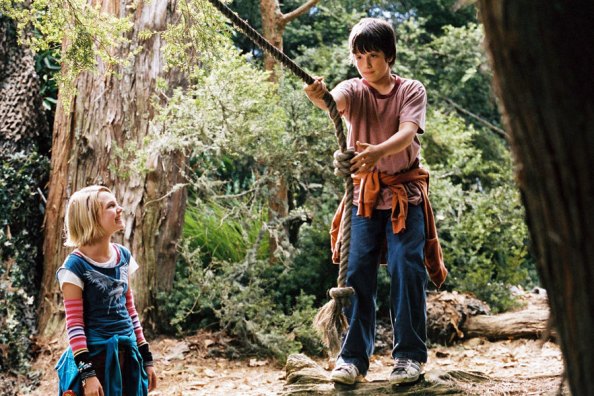
Benji

It’s a method I generally try to avoid, but perhaps the best way to discuss Benji is via comparative analysis. After I had seen Benji what occurred to me is that there was some structural similarity to 9.79*, and that being that it is mainly a chronology of events (this one far more linear) but there is a late-in-the-game monkeywrench thrown into the mix. I will not expose details to preserve surprise, but the late revelation here only has one side telling the story period, not just on camera. Furthermore, the revelation, in my mind didn’t really shift the legal burden of blame.

Regardless, for the most part, this is an effectively rendered tale for the most part that reveals a mostly unknown personage now. The film does well to just present its case and not comment upon it. The only other issue it suffers from is that there is a slight lack of ebb and flow. There is a definitive rise-and-fall, but its crescendo and decrescendo. The rigidly linear nature of this tale hinders its efficacy some.

7/10

Off White Lies

I find myself commenting on a film’s subtlety quite often. Rather than sounding like a broken record I will expound on that. It’s one think to tell an intricate story without spoon-feeding an audience like say Tinker Tailor Soldier Spy, and another to tell a simple story in a straightforward way. However, to tell a simple story, subtly; jumping in medias res and making revelations indirectly rather than with overt exposition is quite a feat. As is often the case, it’s not necessarily the end destination that matters with a film, it’s the journey. With necessary information being delivered when absolutely necessary and without drawing attention to itself we are allowed instead to focus on the characters and how they interact. This is especially helpful when dealing with a father-daughter dynamic. We see how they interact and the why becomes more and more apparent as we learn more about them.

The story, such as it is, moves rather smoothly ends at an appropriate time and features good performances all around.

8/10

The Dynamiter

As I tweeted immediately after seeing The Dynamiter, it seems to be par for the course that every year there will be a Film Movement selection that will slowly, subtly work on me and leave me bawling nearly uncontrollably, and almost unbeknownst to myself, by the end. Last year’s film was A Screaming Man. What both films share in common is a simple tale of people with simple desires, facing seemingly mammoth obstacles to overcome and struggling mightily against them.

Yet, even that congratulatory paragraph doesn’t really do this film justice. For the magic this film weaves, it creates in a mere 73 minutes. It’s a running time so brisk you’d never imagine it’d have the power in its finale to sneak up on you, but it does.

In writing up any sort of reaction piece to a film, I am somewhat loathe to quote other works, be they literary or musical, to echo my sentiments. However, that’s really more a writer’s pride than anything because sometimes, with the really good films, they are more accurate. One such work is a spoiler so I’ll avoid it, leaving just one: this film does indeed seem to have “The Invisible Touch,” it takes control and slowly tears you apart.

It’s a film that’s deserving of a re-screening and a bigger write-up, but something tells me I’ll be writing about it again at the end of the year.

10/10

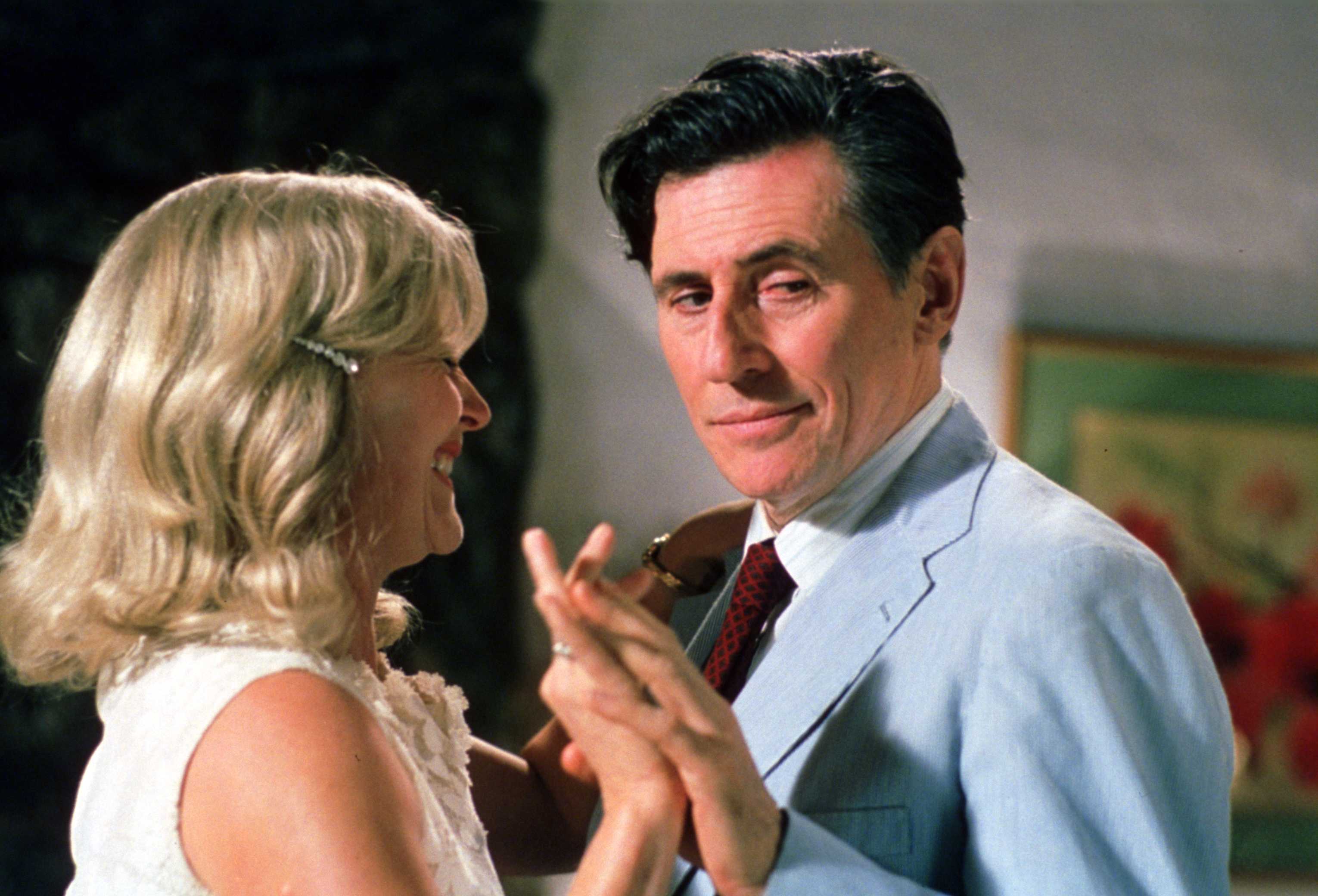
The Best Exotic Marigold Hotel

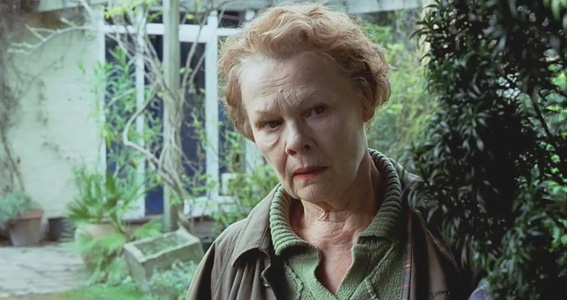
The Best Exotic Marigold Hotel is a cautionary tale, in the best way possible, and part of why I love the year-end sprint to catch up on releases of the year. Towards the end of the year, I get a little less finicky about selections and just watch things, not just to be adventurous but admittedly to bolster the BAM qualifiers. This may all sound quite underwhelming but the impetus to see this film was really a personal recommendation.

I knew of the film but frankly the trailer and all other marketing elements didn’t sell the film. What looked at the outset a rather myopically comedic tale turns out to be, in reality, a wide-ranging inclusive, heart-warming, bittersweet, charming and funny film; in short, one of the more well-rounded experiences.

The character’s narrative threads which start out very disparate reminded me in some ways of Love, Actually but with more interweaving and less contrivance to get things linked up. There is a general emotional over-current that makes this true also, not just some similar cast members.

Through the natural functioning of the narrative there is ample room, which is taken full advantage of, for commentary on myriad topics that is never extraneous, which adds to the enjoyment of the film.

One thing I can applaud the marketing of the film for is that it did leave many of the surprises of this tale in tact, and if you take this journey you will definitely be rewarded.

10/10

Teddy Bear

Teddy Bear is a testament, not only to Film Movement’s Film of the Month Club and the bonuses they include on their DVDs but cinematic acclimatizing. What I mean by that is not necessarily that the packaging of a film, or the presentation thereof, can condition a viewer, but when you’re visiting a slightly different avenue of film a bit of an introduction can be beneficial.

My best and favorite professor in film school was Max Simkovitch. Not only was he an uncanny “bill builder” in terms of doubles and triples, but he also put you in the right frame of mind to absorb the film you were about to see. Is that to say I liked everything I screened in his classes? Not at all. However, it kept me in place where I would and continue to fight against making the film what I thought it ought to be, take it for what it was and judge it on its own merits.

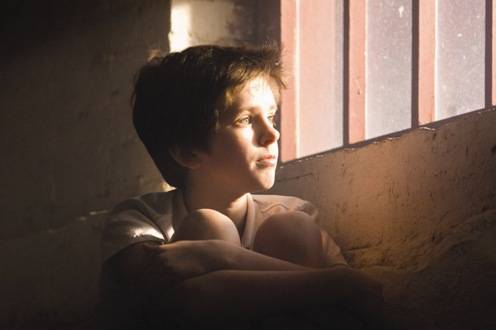
How this relates back to Film Movement is that for the DVD of Teddy Bear they include two prior shorts by Mads Matthiesen an up-and-coming Danish filmmaker. In seeing these two shorts, one of which was the basis for the feature Teddy Bear, you definitely get a taste for his style and in the short Kim Kold shows flashes that, yes, he will convey the effective gentle giant needed for the narrative.

The feature is an effective tussle between mother-and-son, portrait of loner trying to break out of his shell and an underdog love story. The pace is imperfect later on, but the tale is always engaging, endearing and watchable, if not completely realized.

7/10

The Pact

This is the kind of movie that will be referred to as a slow burn. The slow burn in the horror genre, the gradual but consistent build-up, has become more popular as of late. However, like any technique or philosophy it is not inherently good or bad. What I believe is that if you’re going to take this approach you have to take the escalating events to a fairly wild and unpredictable place. The stakes and incidents continue to increase and just when you think you have the film pinned down it expands.

The films imperfections, barring a seemingly nonsensical title and a jolt-shock end shot, are mainly that early pace that makes it a tough tale to get into. The performances are inconsistent, but the story does just enough to buoy it. How much each individual enjoys the film will likely vary on his or her patience, and their embracing or rejecting of the twists.

6/10

A Chrismoose Carol

The review of this film can be found here.

ATM

I often discuss the merits of going into a film as a clean slate. I can’t say I went in 100% clean to this film, however, I don’t see that as a detriment here. I found this was streaming, saw it qualified as a 2012 release, and added it to my queue without further thought for a time. One tweet by a fellow Twitter compatriot who disliked it, didn’t give much away, but intrigued me enough to give it a play.

A few things struck me as odd as it pertained to ATM: the first of which is that it does hold interest and a fairly believable premise through a much larger portion of the film than I expected based on what I heard. While I will credit the film for its set-up and a certain degree of cleverness in it maniacal plan, the second oddity is that the most major twist I was way ahead of, and the resolution was one that doesn’t stand up to harsh scrutiny, and the length of the reveal allows you to scrutinize it. It reminds me a bit of Penumbra but with more annoyance and less impact.

This is also a film that inflated its running time to its detriment. It cut out of the closing credits at least three, if not four times, to additional montages hinting at more villainous plots. Such were the cutaways that it bloated the credits crawl (which were slow to begin with) to nine minutes. The film clocks in at exactly 90 minutes with it included. It wouldn’t have saved the film, but it is OK to run less than 90 minutes. It really is. Add to that a very slow reveal, and you have an end that doesn’t end long after the point where the film becomes completely asinine.

4/10

Home Alone: The Holiday Heist

Home Alone: Holiday Heist (2012, 20th Century Fox)

For my review of this film please go here.

I didn’t quite catch up to the backlog of November titles viewed, seeing as how I managed to get into an end of year viewing groove early. The titles that would’ve been here will appear in the December running post. All these lists also qualify films for the BAM Awards, which have many exciting dates in the month to come.

Adding To Your Classics Library

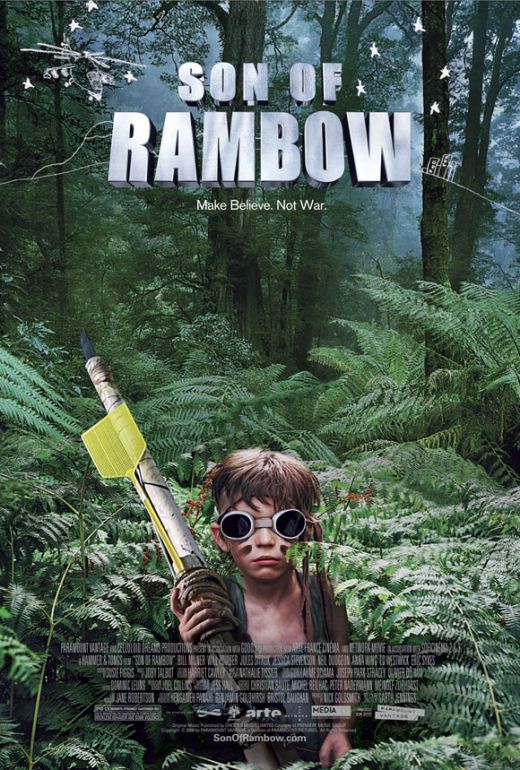
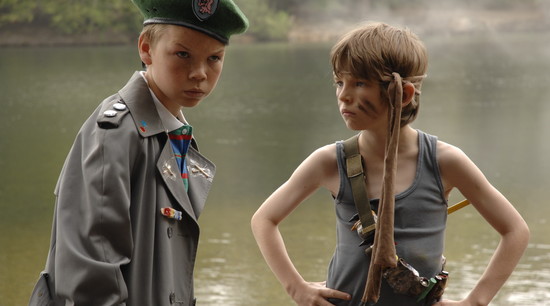
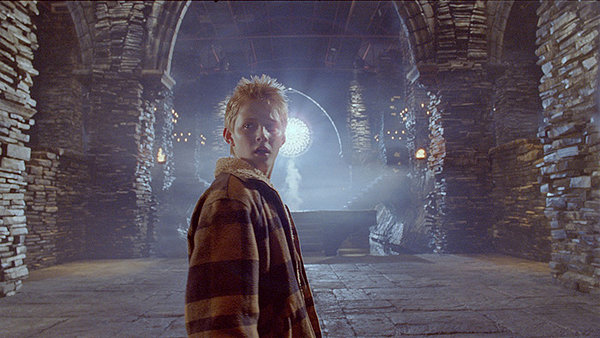
A while back on Twitter, Bill Milner a great young actor, as well as past nominee and honoree, asked a simple yet important question: it was about bolstering his library of classics.

This is a fascinating question for me, and for any cinephile I feel, because it brings up the elusive question of “What are the essentials?”

My response was, and is, one that I think is not only apropos, but one I think a lot of people can use. Now, a reminder this is not a piece that aims to be a starter kit by cherry-picking milestones in film history, but rather one that will augment your collection when you think to yourself: “Well, what should I be getting now?”

My proposition is simple and personal, we all have our favorite directors throughout the various eras of cinema. I suggest getting the oft-overlooked works of these greats. More often than not these are the films I’ll point out as being a personal favorite.

Anyone, and everyone, can, and has, write, speak or opine on the greatness of Jules and Jim or The 400 Blows, but the film of Truffaut’s that affected me most was The Green Room (aka The Vanishing Fiancee), and its absence from DVD for so long bothered me. Hitchcock would be another good example. Everyone knows the widely recognized masterpieces he made. However, few of his films ever engaged me on first viewing like Rope did, even though he wasn’t too fond of his no-cut experiment, or for that matter Dial M for Murder, though I’ve never seen it in 3D.

Those are just two quick examples with a few films to illustrate my point. Who the directors are that you seek out the oft overlooked works in their ouevre is your choice entirely, but when one has the staples you’re filling in the pages, and, I for one have always been one to seek things out that are a little off the beaten path even amongst the most highly regarded cineastes.

The Problems of Limiting Foreign Film Submissions (Part 2 of 2)

Similar to the first installment of this piece there was one nation where I got a more rounded, abundant reaction. However, I still didn’t have near the sample size as I did with Brazil. Therefore, I wanted to test the waters and get samples from around the world about the foreign film submissions from my Twitter friends’ respective countries. Even with fewer reactions, and fewer characters with which to glean and convey information, I still got some interesting insights that furthers my hypothesis that limiting a nation to one film submission to the Oscars for consideration can cause issues. Some of these reactions point to aforementioned stumbling blocks, some are new. As is the case with Brazil’s selection, I have not had the chance to see the films that have been submitted on behalf of the nations listed below. I will attempt to see as many of them as I can. Also, I realize that some of these opinions may venture into more perception than reality, but that’s kind of the point. There is a threshold where perception becomes reality and behind every cynicism is some truth, so these opinions do highlight flaws in the system.

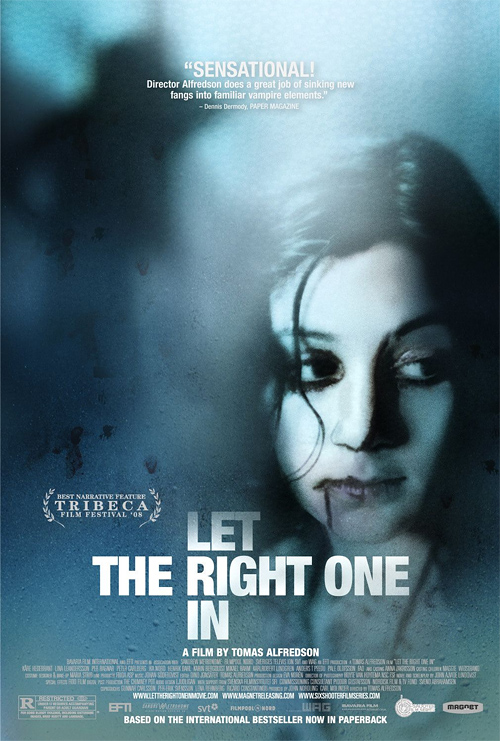
Sweden

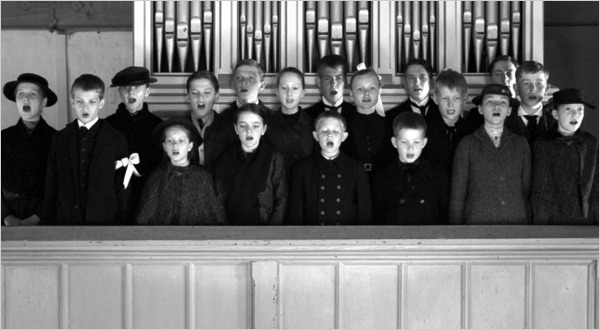
Sweden’s is a case I alluded to in my prior commentary and review about Simon and the Oaks, so I was glad to get the kind of feedback I did there. Sweden’s official selection is The Hypnotist by Lasse Hallström. The general reaction I got from the handful of people who ended up commenting was that it was a weak choice. In fact, the notion I had in mind when formulating the “reputation of the director” question was echoed here. What prompted me to write that question was the conventional wisdom of ‘Oh, well, so-and-so directed it so it has to be selected.” The reactions to the the film itself were mixed to negative, as was the perception of its choice, and chances of making a dent on the nominees list. I also saw in this selection a reflection of a common theme with a award shows in the US, wherein the film was submitted to the Academy but hadn’t premiered, which is not dissimilar from press screenings of late-December releases that are up for awards before a vast majority of moviegoers have gotten a chance to see it. If these comments are any indication, I wouldn’t be surprised to see either Brazil or Sweden missing out on the shortlist. More tellingly they seem to play out scenarios and ill-feelings that would be alleviated by additional selections.

Canada

Canada, and the next section, are in this list for a few reasons. So far as Canada goes, I have a lot of Twitter contacts there, and it’s important to note that none I asked had seen War Witch at the time I asked. Quite a few heard of it and wanted to, some went on to learn of its fairly impressive festival run to date. So again you have, at least based on a small sampling, an underseen film, which would benefit from Oscar attention. I don’t necessarily think that it represents a language barrier (That is, however, a selection concern for many nations where multiple languages and/or dialects are spoken), as the film was only playing in Vancouver when I asked.

Chile

The difference between the answers I got from two contacts in Chile and the myriad I have in Canada is that the Chileans were both well aware of No, it has been well-received and they intended on seeing it.

France

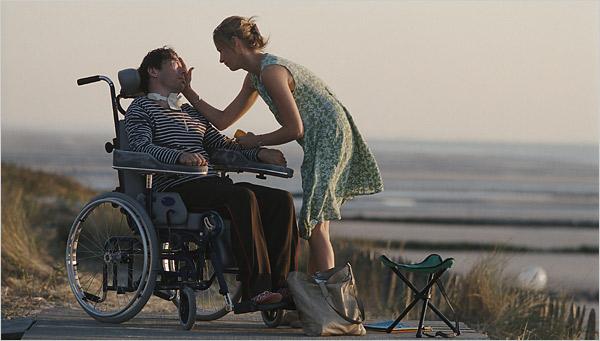
When asking a contact in France I got very interesting and honest feedback regarding The Intouchables, which I missed over the summer. He believed it a worthy selection for many reasons, but also added that it was “the most Weinsteinable,” which, of course, refers to the Weinstein Company who are not only Award forces but purveyors of ‘gateway’ foreign film selections.

Conclusion

Lastly, I asked a huge foreign film watcher my question. The answer was qualified by not having seen sufficient titles from any country to make definitive statements, but he did cite both France and Denmark as countries that had stronger films in his estimation that could’ve been submitted. In the end, the point of this exercise is not to definitively approve or condemn a film selection. It has been to gather information from those who have seen said film(s) and are familiar with the machinations of their nation’s film industry. In doing so I hoped and think I have illustrated that there are issues with the system at current that would be alleviated by allowing for additional submissions. If you were to introvert the Oscar screening process, that is to say, were I to only stick to Oscar nominees I never would’ve discovered Le Grand chemin, and if it wasn’t self-evident by now, my personal awards (The BAM Awards) do not have a limiter. However, as I’ve stated with many synonyms this plan is an interesting academic exercise, somewhat impractical, and unlikely to be implemented in any way shape or form. Therefore, what can we take from all this? If nothing else, it’s that whether there’s a cinema that we’re close to personally, either through relations or by aesthetic appreciation, we should try to get to know it more fully. Rather than just debating and griping about the film it submits to the Oscars, have another immediately in mind, or better yet know and appreciate that cinema well enough to not care what the submission is, but just think of that as a bonus. Should the country you call home, home away from home, or whose films you enjoy gets nominated; that’s great. If it does not, you can still watch all its other great films.

Thankful for World Cinema: Black Peter

Facets, for those who don’t know is a great distributor with whom lovers of independent, arthouse and international cinema should become well acquainted.  The selection of their films is only one reason. Another is their scholarly attitude. What is meant by this is the following: first, this DVD is part of the Czech New Wave line. Yes, it is true that the New Wave started in France with a very specific group of filmmakers, but its reverberations were felt worldwide and spawned similar movements elsewhere like the Czech New Wave and Cinema Novo in Brazil. Second, is that this DVD actually includes a booklet, with an essay in it no less. Remember when DVD first started and you’d get at least a fly leaf with chapter list? Now, no more. At least here there is not only a booklet, but actual information.

Also, another benefit if you join Facets site is the occasional discount and sale only available through them. There was a code sent out via email to subscribers so this DVD only cost me $0.01 plus shipping.

The booklet is interesting because it tells of Forman growing up with family acquaintances in their grocery store. A location not dissimilar to where our protagonist finds himself apprenticing at the beginning of this tale, he is employed to watch for people shoplifting and report or confront any who are. This film has a rather humorous beginning but other than the occasional interaction between Peter and his parents has little to offer later on.

It is the kind of film that you know has something going on but may not be absolutely certain what immediately. What is clear is that there is a generational and philosophical gap being exposed. They are represented both by Peter’s father and his boss who represent the older generation and a more repressed, rationalistic, communist frame of mind. There are also, however, liberating agents at play mainly being romance in the person of Peter’s girlfriend and Rock N’ Roll music. Both of which converge at a local dance floor for an extended sequence.

What is also likely to throw an audience off with a lack of context is that, to quote Mark Twain, “those looking for a plot will be shot.” Milos Forman, acclaimed director of One Flew Over the Cuckoo’s Nest and Amadeus, said of this film that he wanted to “collect the ‘most real,’ that is, the flattest snippets of life to make a deadly satire of it.” Keeping that and the fact that Forman wanted to take a documentarian style mixing neorealistic elements with the New Wave in mind, it is a success in that regard. It’s just not a resounding one.

The bully characters while they are very annoying at the start slowly, wordlessly become Peter’s allies. Moving from older more backward sentiments to younger more modern ideas but their involvement is cumbersome in what plot there is and is at times too much.

Inasmuch as the director seems to achieve what he wanted it was successful. All New Wave films were in effect experiments and this one didn’t fail miserably and is entertaining enough but certainly not earth shattering.

6/10