Review- A Bag of Hammers

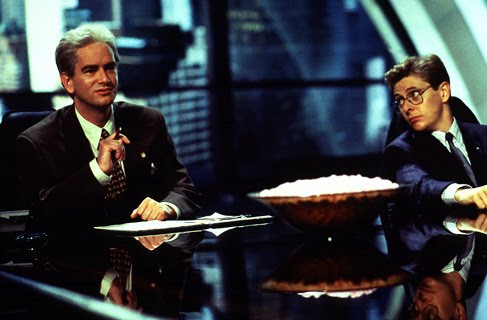
A Bag of Hammers is a comedy, which follows two men in their 20s who make a living stealing cars and suddenly find that responsibility falls into their laps when a neighboring child loses his mother. The film, as some have noted, fits a bit to the mold of About A Boy. The main difference being that here its a pair of men and they are somewhat less reticent to assume responsibility.

The film is quite funny but it does mix in its themes rather well because of that fact. There are comments on child rearing and social services being made with out being too on the head about either of them. Also, considering that this pair of leads can be seen as beyond imperfect role models and quintessential slackers it does underline the points that are being made. These same points are further underlined by the fact that their background is not dissimilar to that of the young boy’s.

One thing the film is to be commended for is its handling of quirkiness. The temptation to be quirky in pursuit of originality is a strong one, especially in an indie film, especially in a comedy. However, quirkiness for quirkiness’ sake can be a disturbance to the progression of a film. What this film does well is makes the idiosyncrasies seeming necessities, and builds them through the characters and not as plot devices.

The pace of a film is a significant boon to it. The film doesn’t run long but I think that we all know that running time is not necessarily a fair gauge of pace. The pace is positively breezy throughout and the film really flows well for the most part.

The lone exception to the pacing brilliance is the fact that the third act is a bit abrupt. I can’t say it’s the handling that’s poor, it’s just that there’s a certain disproportion to the structure and a bit of acceleration through the end that could require a little more time than it gets.

However, what does need to be said is that the film is propelled to said end by a brilliantly framed and beautifully rendered wish-fulfillment montage, the likes of which you rarely see in this day and age. It truly is the coup de grace of the entire film and it’s rather breathtaking and should serve as an instructional as to how to construct a montage.

One thing that’s interesting to note is that the film, despite some it’s comedy being rather broad and it’s dramatic question being very much up front, it does handle thing with a certain bit of restraint. Namely after the film myself and the two friends I viewed it with were debating the sexuality of the two friends. It’s something that’s never addressed directly but certainly gives food for thought.

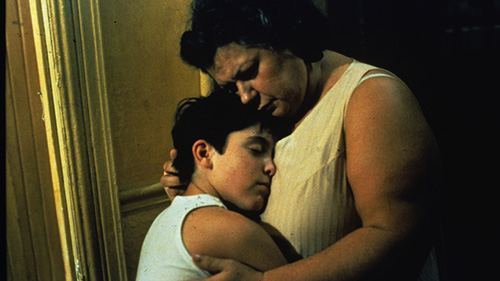
The performances in this film are wonderful. Jason Ritter, the spitting image of his father John, plays his character sincerely with great comedic timing and dramatic aplomb. He even carries the film through it’s most difficult patch where his character is resistant to taking care of the boy. Jake Sandvig is comedically deadpan and very sensitive as the character who reaches out to the child. The child, of course, plays a crucial role and Chandler Canterbury who is a very talented, as of yet underrated young talent, is very good in this role. He retains innocence while emoting the browbeaten posture of a child in an inadequate home situation and also shows great restraint emotionally. The scenes between him and his mother feature some of the best writing in the film.

A Bag of Hammers is by no means perfect but it does deserve to be seen and sought out if you have not heard of it yet. It’s both funny and moving and gets the manic depressive seal of approval: you’ll laugh, you’ll cry. Be on the lookout for it.

8/10

Book Review- Through a Glass Darkly by Jenny Worton

With book reviews I will typically limit myself to books that are about a film, filmmaking or filmmakers. However, there will be the occasional tangential exception and this is one of them. Through a Glass Darkly is one of the most famous films by Ingmar Bergman, but many of his films are very adaptable to the stage, and already have been either while Bergman was living or through the Ingmar Bergman Foundation.

Bergman himself was also every bit as much a man of the theatre as he was of the cinema. As for the adaptation it is written by Jenny Worton and the first thing of note is that it is easier to recommend for fans of Bergman and the piece. I picked up this brisk 72-page play at The Drama Book Shop for $18, which is not cheap so that’s the first grain of salt with which to take the play.

However, for the most part the play does manage to translate the palpable drama of the tale from screen to stage. There are a few head scratching decisions though; the story is neither moved in time or locale but there are I believe three profanities, only one of which really rings true given the situation. There is also the occasional awkward piece of dialogue, but for the most part it reads like Bergman’s tale. It must also be stated that the edition I read has a disclaimer within it that states dialogue may have altered between rehearsal process and debut.

There’s also the double-edged sword of sparse scene description, which gives productions a bit of freedom but also can at times catch the reader unawares as certain scenes perhaps seemed more minimalist at first and then developed.

Another pet peeve of minimal importance is that the biblical quote that inspired the title is nowhere to be found. In the film there is a title card at the start, but here there’s no textual allusion to it at all. No food for thought, only an assumption that we may know it. Now, this may be the playwright not wishing to impose some sort of multimedia aspect on anyone seeking to produce it. However, that is becoming more common in the theatre and might be a nice touch.

Granted it’s not Bergman adapting himself, which would be ideal, but it is a very good take on the tale. If you’re a fan of Bergman or the theatre it is worth looking into indeed in spite of a steep price.

Hero Whipped: The Double Life of Archie Andrews

It’s about time to do one these again, as other ideas in the vain are coming to the fore, and I want this one focused and not as scatter-brained.

As you may or may not know, Archie Comics have been shaking things up over the past few years. The introduction of Kevin Keller, the first openly gay character in this comics universe, was a big step and perhaps the most significant of all such recent stories. I think many comics fans cut their teeth on the Archie tales, I know I did. What makes them a good stating place is that they’re usually humorous tales about the commonplace. That’s why Keller is significant, he’s been folded into a world that just accepts him.

Kevin Keller, however, was the second bold initiative from Archie recently. The first was the Life with Archie series that plays out two different realities: Archie marries Betty and Archie Marries Veronica. Each issues is double-sized in page count and magazine-sized in proportion at a standard comics rate, less if you subscribe like I do.

The stories, now several arcs deep, have always mirrored each other and it got me to thinking about the doppleganger phenomenon in certain realms of fiction. I haven’t had extensive experience with such phenomena with it but what it ultimately lead me to conclude is that this series could be great preparation for more involved and less direct, nonlinear storytelling modes kids may encounter as they grow older.

The first example that came to mind was the film The Double Life of Veronique. This film aside from having a signature and extremely memorable theme plays with the notion that we all have a double in rather dramatic and no frills kind of way. Here you also have slightly different interpretations of established characters, which is not only a staple of comics but occurs in other media too. One for instance would be Stephen King who, via his pseudonym Richard Bachman, treated his characters from Desperation almost like they were actors and recast and re-purposed them in The Regulators.

The story also has a soap opera like feel in the best sense of the word. I think of these as my stories; the tension is palpable and is delivered in drips and drabs. Each storyline and subplot is touched on just enough to keep you coming back for more. Each character’s plot runs about 2-3 pages per issues, thus they have about an issue (two counting both tales) per arc of their plot. Just enough to incrementally move things along.

Another thing the series does which is crucial to breeding comics readership and is applicable to certain films as well, is that it plays with the parallel dimension/multiverse concept in a stripped-down dramatic sense. The lack of grandiosity and superhero tropes introduces a fundamental of the medium in a much more conventional, comprehensible tale for the neophyte and rewards long-time readers with glimpses of old favorites and puts new spins on old tales.

It’s a series that can still relate to teens but what it’s doing is making strides to stay somewhat in step with the times, which I think many will admit it hadn’t until recently. The aesthetic benefits of laying a foundation of more complicated story structures and approaches can be easily understood is what is really exciting; and the pedagogical abilities of comics, even in fiction ought never be overlooked. I’ve said it before and I’ll say it again, comics essentially taught me Portuguese and organizations like Reading With Pictures know of this power too.

Not to say that Archie’s social forwardness combined with its pushing its own aesthetic boundaries while staying true to its characters and style isn’t exciting too; but it’s this added element and depth that this series has that separates it, and makes it a great gateway to comics, more involved narratives and is the best fodder for cinematic adaptation they’ve likely ever had.

It’s brilliant on so many levels.

Short Film Saturday: A Therapy (2012)

Helena Bonham Carter and Ben Kingsley in A Therapy (Prada)

At the time of his arrest I wrote an editorial on Roman Polanski. It’s not really topical unless there’s a new development with regards to his status so I don’t foresee reporting it any time soon. I will merely state that I watch films and the works of filmmakers. I do not confuse the artist and the man, nor do I allow my perception of creative persona to color what my thoughts are on a person and vice versa. After all, Woody Allen still releases a film a year on average and his scandalous divorce from Mia Farrow is barely mentioned anymore.

Having said all that, here are some interesting things to note about this very short film Polanski has made for Prada. First, it’s a short film commissioned by a corporation, which is back en vogue since BMW started making a few for web consumption. The second thing is the film is completely about the performance of Ben Kingsley and is a great example of a flashback not taken. You can see in his face there’s a reverie, a remembrance but we see it only in his face and not in actuality. It’s great stuff.

A Therapy (2012)

The Drive-In Movie Experience

Today as I surfed around, I discovered that it was the anniversary of the first drive-in theater opening. The first theater opened in Camden, New Jersey. There are several places covering that angle, and Google even had their daily doodle reflect the date.

What struck me as fortuitous timing was the fact that I’ve been anxiously anticipating emails of schedules from a drive-in recently. I’m getting that itch to go again soon. What’s more surprising is that not so long ago I’d never gone at all.

Drive-ins may be a dying breed but they’re by no means extinct. If you’d like to experience one you can go here to find the one closest to you. This is the site I use to find the one I trek to. The interest was kindled by realizing that when vacationing in Central PA, I was not that far removed from some. Therefore, I found the one closest to me, which is a hike.

However, it’s a great time and something a movie buff must try. My recommendation would be to go see something you’ve seen already the first time around. This isn’t that hard to do as the schedules are usually a bit staggered on major releases and they will bring back older films.

For example, my most recent trip was around Halloween to see Paranormal Activity 3 followed by The Exorcist. My initial trip was to see the more family friendly slate of the weekend Dolphin Tale and Real Steel. Those were encore viewings to get my feet wet and used to the experience, which is surprisingly good.

The theatre I go to has two dedicated radio frequencies by which the sound is played in your car. Therefore, if you have good sound system the aural experience is rather good. The visual is not the greatest, which is why it’d behoove you to arrive a little early for a good spot. However, considering some projection snafus I’ve seen and heard about, it’s not the worst experience either.

The admission per person is about equivalent to one ticket at a multiplex. Example, The Delsea Drive-In is $9 per adult, $4 per child; for the double feature. The concession selection is extensive, and like a conventional theater this is where they make their money, but you can buy an outside food permit, if you wish.

So there are the basics regarding the drive-in experience, I suggest you look for one close to you and make a trip of it.

Short Film Saturday: Bye Bye Inkhead

As is the case with many of the shorts I’ve been posting I found this one on twitter. One way or another most of them surface from there.

This one was posted by Patrick Gibson, a young actor most recently seen on SyFy’s mini-series Neverland, who posted here his first role.

Here is the information provided with the YouTube upload:

Directed by Adrienne Michel-Long. Featuring Kathy Downes, Pauge Behan and Patrick Gibson.


Rita’s relationship with husband Michael is in difficulty: she is tired of looking after her two small children and just wants to get back to work. An au pair seems like the solution to all her problems….or is it?


Adrienne Michel-Long works as a film director and writer. She has directed two short films. Her first was an RTÉ and Irish Film Board Short Cuts International award winning short film, which was called Bye Bye Inkhead (2001). Luka her second award winning short film, which she also wrote, was also an Irish Film Board funded “Short Short” (2004).

Cast and Crew: http://imdb.to/Inkhead

It’s a humorous string of situations, which while it doesn’t follow a rule of three it does complete its tale and rather visually also. It also differentiates itself in as much as its not a classic nanny tale, wherein the perfect nanny is found but best not to say more than that. Enjoy!

When Is It Time To Stop a Movie?

This is a topic I was thinking about just recently. It was likely inspired by some godawful Netflix or the like. There are many schools of thought on this but essentially it’s something I’ve never been consistent with and it’s also an emotional visceral decision rather than an intellectual one, so I thought it was worth some examination. Without further prelude: Do you have a hard and fast rule regarding when to just stop watching a movie?

Clearly the environment one finds themselves in will impact how heavily you debate it. I’ve only theatrically ever walked out of one film, Jumanji. While I don’t necessarily regret the decision, the thought of “I’d rather be home and I should be leaving” did factor in. Either way, that’s the only precedent and while I’ve been tempted I’ve not done it again.

The stop or move on question comes into play a lot more when dealing with home video, more specifically on Netflix.

Some films, such as the one referenced in the picture Satan’s Little Helper, have the Train Crash Effect on you as a viewer, which is to say no matter how bad it is you have to keep watching. Regardless of the fact that I never even grew an ironic fondness of the film it was good fodder for joking.

Some films, of course, are so terrible they actually hurt your eyesight. The prime example of this would be Dollman, a film that’s the antithesis of Demonic Toys inasmuch as its so bad it’s offensive. That film I turned off within 10 minutes.

Which brings us to the argument of time; Syd Field’s theory that you typically know if you like a film within the first 10 minutes has some basis in fact but isn’t gospel. It’s more a guideline emphasizing the importance of a strong start to screenwriters. Few, if any, endings have ever salvaged a film in my mind. Many endings have ruined films. Usually, the cut-off is the mid-point. One film I saw recently really started to collapse around that point and few improve beyond it.

Is the 50% rule set in stone in my mind? Sadly, it’s not that easy. I’ve rarely stopped a movie past that point, but I have found redeemable qualities or scenes beyond it in the past when all that had preceded said point had been irredeemable.

I’m given further pause by films I nearly quit on very early on but I stuck with and eventually loved. The most notable example being Dogville. Eventually I got past my resistance and really started to appreciate what was happening. That does complicate things and is a case against ever turning anything off.

While I certainly understand the philosophy behind not wasting one’s time any further the allure of the unknown and the possibility of something to latch on to is compelling.

When watching a film as a group it’s easy to make it a democratic process. The question can be raised: “Are we done with this?” If there’s no consensus you can tune out in some fashion, which is an option when viewing solo but then why even keep the movie playing?

I suppose this is a roundabout way of putting my thoughts down and hoping for some insight from without that will lead me to a conclusion but in all likelihood it will remain an instinctual decision. If I think there’s something I can glean or catch from continuing I shall, if it’s pointless I shan’t. What are your thoughts?

Book Review- The Film Sense by Sergei Eisenstein

Eisenstein’s The Film Sense is a book I had never even seen in print anywhere before. I happened to find it when I was in Brazil searching through a rather large bookstore’s film section. You know a bookstore is good when you find many foreign language offerings, and I was able to pick up quite a few film texts in English there.

Sergei Eisenstein is likely the only filmmaker whose work as a theorist is of equal importance. Aside from spear-heading montage as the defining element of film, he wrote extensively about it and it’s all brilliant stuff. His angle in this book is tremendous. In it he seeks to create a “film sense” by drawing on elements of other art forms. Much of the writing actually does have to do with music as he is discussing how incorporating sound and music will co-exist with picture cutting.

There are many brilliant talking points. First, he touches on word and image, which is similar to a touched upon topic in Film Form, here he examines examples of montage in other artforms. Then he talks about synchronization of the senses, which is how film can, will and should play on all our senses, especially given this new development. In a perhaps revolutionary way he also discusses color in literature and in music and relates it to film, even though at this writing color was an abstract concept seen in shades of gray.

The writing flows beautifully and is just brilliant in terms of observation and the sources from which he draws. He illustrates how cinema must be the culmination of all other artforms and draw from them. I will admit it gets a bit dense with the both the in depth musical discussion, as I am more intuitive rather than well-versed there, and a bit with the montage flow diagrams and shots, having seen some of the films helps but the point does usually come across regardless.

Also, this is a rare book where the appendices are not only a must read but brilliant. They include: shot sheets, treatment sections of un-produced works, outlines and a very detailed bibliography for further reading.

All in all this is a fantastic book that is worth seeking out for serious aestheticians, filmmakers and film students. I found it endlessly fascinating such that I made many notes and underlined significantly and considered further analysis of the text but will leave it as this brief recommendation instead.

Mini-Review Round-Up May 2012

I had quite a review drought to end 2011 so I think the remedy for this kind of post would be to have the post be cumulative monthly. Therefore, after each qualifying film a short write-up will be added to the monthly post. The mini-reviews will be used to discuss Netflix and other home video screenings. Theatrical releases will get full reviews.

For a guide to what scores mean go here.

From Time to Time

Kwayedza Kureya, Alex Etel and Eliza Bennett in From Time to Time (Freestyle Digital Media)

This is a film that I saw a little bit ago and I struggled with whether I’d qualify it for this year’s BAM Awards or just leave it in the Gray Area. Typically, I go by US release date (so long as I had a legitimate chance to see it), should a film have not had a US release date (namely only released overseas, or seen in a festival, etc.) it’s qualified in the year viewed. With regards to From Time to Time, I knew that its actual vintage was a few years old and it was released in the UK some time back, however, it only his US home video very recently. Technically, that is is its US release since it didn’t have a theatrical run, so there you have it.

This is a very interesting ghost drama, which has a few interesting things going in its favor: first, it cuts through time with great facility and creates a British gothic tale with the ease of Magical Realism. This stripping down of the typical pretensions of supernatural tales making the acceptance of these other-worldly facts commonplace allows the film to dwell in a more dramatic and intriguing milieu. Second, as clearly intimated above this film deals in two periods but makes them both intriguing and vital and blends them wonderfully. Lastly, this film features very strong performances most notably by the under-utilized Alex Etel, last seen by me in Sea Horse; Maggie Smith, whom at this point could benefit any and every film in creation and Carice Van Houten, whom viewers of Game of Thrones may recognize.

This is an intriguing film that is worth looking for on Netflix or other home video resources.

8/10

Chronicle

Dane DeHaan in Chronicle (20th Century Fox)

Since I viewed this film on a plane it was easy and not distracting to take notes on an iPhone, but I will try to keep these comments brief as the review is supposed to be “mini.” Having said that, this was a film I heard a lot about and I love the fact that it is divisive. I had a lot of stumbling blocks to overcome in this one, but seeing elements enacted as opposed to just hearing about them are two completely different things.

This being a found footage film there are “cheats,” inasmuch as it’s not always the same source camera providing the footage, but as events escalate you’ll see why it’s possible, you just get no hint as to who put it all together. That’s a minor concern regarding the handling of technique.

In fact, the only other quibble I have has to do with Casey (Ashley Hinshaw) who is a blogger, thus she too obsessively records things. It’s a bit convenient but mostly the film works in the found footage milieu because it remains tremendously reflexive, and it has to. Andrew (Dane DeHaan) feels compelled to record his life due to his abusive father (a wonderfully malignant villain with few parallels), it clearly continues after the mysterious inciting incident.

Perhaps what is most brilliant and moving about the film is that it creates a sense of identification immediately and it builds from there. It’s not a case of likability but rather understanding. It gives characters powers, and inherently responsibilities, they’re not necessarily equipped to cope with and shows you what they do.

Yes, there is a slightly Jackass, slight YouTube voyeuristic quality to certain scenes inherent in the found footage approach but things to do come back that seemed as if they didn’t fit, and the seemingly frivolous is sublimated quickly. Through it all it remains a character study. It’s a film that does not get overly-concerned with its technique to the detriment of its plot or personages.

Clearly, the performances need to be really strong for a film of this kind to work. That is the case with Michael B. Jordan as Steve, who convincingly plays the winning, popular, untouchable jock but also conveys some hidden depths when allowed to. However, the true standout is Dane DeHaan who is asked to deal with far more range in a film of this kind than you’d expect and is magnetic and captivating in all facets of his character. The scripting shows a certain amount of restraint in many of his scenes and intonation and expression have to convey a lot and he does.

There’s an air of mystery to the story even after the inciting incident as you learn with the characters but are still not overly-inundated with facts.

The sound mix is rather effective especially as it counterbalances with certain moments of dead silence paired with powerful images. The visual effects aren’t as flashy as some other films but very strong.

I tend to try and avoid things that can be construed as pull quotes but the film did get quick a few visceral, nearly unconscious reactions from me I laughed, I was was on the verge of tears a few times and my jaw literally dropped at least once.

I have the few small reservations mentioned above but many prejudices I had coming in vanished entirely and I came away resoundingly impressed with this film.

9/10

Corpo Celeste

Yle Vianello in Corpo Celeste (Film Movement)

I have previously discussed the benefits of programs like Film Movement. This film is their most recent offering.

What is most interesting about Corpo Celeste is that it comments through its narrative or visuals on any number of topics but always does so in an interesting, thoughtful and compelling way it is never didactic, pedagogic or heavy-handed. This is key with themes such as coming of age, religion, politics, family and nationalism (to name a few) being discussed. Most of the reason the film can do this is that all of these things are discussed personally and visually. They barely need to be elucidated. When dialogue is employed to convey the touched-upon themes it is used sparingly and tightly.

The personal approach keeps a film that might be overly aloof rather cool and connected. One of the more interesting things about it is the approach the film takes in bringing its protagonist to the fore. The first few images, scenes even you rarely see Marta alone, she is in crowd scenes and crowded dinner tables and gatherings. Our knowledge the story is to be about her allows us to get a glimpse of her world and her not really seeing a place in yet, hence she’s coming of age. She soon comes further and further into focus and in some way identification is already established.

The film features a tremendously natural performance by Yle Vianello, which enables you to connect to the film not only through her character but through any facet you see fit. The two major ways to connect to the film are either as a coming-of-age tale or a spiritual journey. Many of us have been through either, if not both, so closely examining these two major journeys in one protagonist makes it quite effective.

This is a really good film that is worth your while. The DVD also features the Academy Award nominated short Raju, which I saw earlier.

8/10

Hick

Chloe Grace Moretz in Hick (Phase 4 Films)

Hick is a resoundingly disappointing experience on a number of levels. One reason this is so is that Derick Martini, the director of this film, crafted a wonderful film a few years back entitled Lymelife. It was one of my favorite films of the year in question, while some of those same motifs and actors that made that film work are back in this film there’s little else that binds the two. Part of the issue with this film is it’s a case of novelist acting as screenwriter backfiring, it can be a wonderful thing, but here it’s a detriment. The film does not move well; the denouement is massive; the amount of coincidence; the lack of clear motivation on the part of certain characters; seemingly extraneous elements, and awkwardly staged situations are some of those reasons. The lead in the film is Chloe Grace Moretz, who as previous honors have indicated is very talented, yet even her excellent performance cannot salvage this film.

What it reminded me of was Leolo gone wrong. You have a very strange home life and an adolescent seeking to escape. The world isn’t very firmly established neither is the protagonist’s desire, not at first. She clearly is haunted by the loss of a sibling but that’s not clear imemdiately. She has a goal but it quickly becomes clear she’ll need a new one, and how she finds it and why is underdeveloped and is a tremendous example of deus ex machina. The pace of the film is also off and it feels a lot longer than it is. Hick is one worth avoiding.

4/10

First Position

Gaya Bommer Yemini and Aran Bell in First Position (Sundance Selects)

I can’t claim to be an aficionado but I am a fan of dance. Through my production company I sponsor a dance competition, so while not an insider I do know my fair share about the world this film describes. What I was somewhat fearful of was that this film would serve as a glorified infomercial for YAGP (Youth America Grand Prix), which is the world’s largest youth dance competition.

All those fears are soon allayed. The necessary information is divulged such that the layman understands the enormity and the gravity of the competition and the controversy regarding any competition is vaguely hinted at, but mostly the film is an introduction to just how competitive the world of dance is, and also a glimpse into how dedicated these artists must be from a very young age.

Yet any film can only get so far on the facts alone. Where First Position succeeds is that it profiles dancers from diverse ethnic and economic backgrounds and also with varying aesthetic philosophies. The film is structured very dramatically such that the performances with the highest stakes appear latest in the cut and the flow from performer to performer is just right and well-ordered.

What starts as an informative, introductory doc soon turns quite the emotional experience that gets you very invested in the outcome. It’s a great film sure to please fans of film and dance alike.

10/10

Citizen Gangster

Scott Speedman in Citizen Gangster (IFC Films)

This an interesting story about a man, Eddie Boyd (Scott Speedman), in post-WW II Canada who frustrated with his job and trying to get by embarks on a career as a bank robber. The film interestingly has a quick and effective genesis. The pathology and inspiration is properly established in a short time such that through the course of the film you follow the protagonist further and further past the point of no return. It’s the case of an anti-hero plot in as much as it does at least create a sense of identification if not sympathy.

The film also has a tremendous amount of technical prowess that helps create the world of the story. The cinematography offers a tremendous balance between stark, pale sunlit exteriors and blown-out interiors. When you combine this with the production design which was very concerted on white interiors with one accent to break up the monotony.

When you consider some of the scoring and performances there is quite a lot working for this film. The only thing that really holds it back in anyway is that from about the mid-point on the pace does become very stilted, which is especially noticeable towards the climax and denouement. Having said all that, this is a film that should be getting more notice and I’m glad to have seen it. As indicated above, it’s especially strong in compartmental areas but is intriguing enough in its narrative, especially for those unfamiliar with the details of the story upon which it is based, to sustain interest.

7/10

Hospitalité

Kanji Furutachi, Bryerly Long, Kenji Yamauchi, Kiki Sugino, Kumi Hirodo and Eriko Ono in Hospitalité (Film Movement)

Comedy just may be the most culturally specific genre of them all. In my experience, each culture has their own precepts it brings to comedy. Granted there are some things that are universally embraced as funny, but cinematic aesthetics, narrative constructs and indigenous commonalities often color how these tropes are conveyed. Which is a very roundabout way of saying that certain films purported to be comedies have struck me with confusion, surprise, and consternation on occasion. American comedy being typically rather broad is rather accessible; British comedy being somewhat dry and witty I’ve always been drawn too and being Brazilian I have a grounding there in where the jokes are coming from.

Hospitalité is a Japanese film, which is quite funny at times simply because it relies almost wholly on situations, characters and the element of surprise to deliver its humor. Where it loses a bit of its steam is that it could use a bit of tightening up in length and towards the end. The power plays exhibited are necessary but perhaps a bit drawn out there too. In essence, the dramatic elements of the narrative are overplayed as there isn’t a lot of follow through.

You may find it more funny than I did, and to be fair there are effective dramatic elements and pieces of commentary being made, but as it is a situation that is seemingly simple and does follow the house-guest-from-hell mold rather there’s just a certain deliberateness and gravitas to it all that drains it a bit.

6/10

Michael

Michael Fuith in Michael (Films du Losange)

I generally remain vague about plot descriptions in my reviews. Philosophically I believe that if you happened upon my review you know enough about the film and you’re just looking for some further information. With a film such as Michael one does need to be forewarned: while not sensationalistic or exploitative this film does chronicle about five months in the life of a pedophile. You will be disturbed and affected by it: I guarantee it. What is most effective is that the film does so almost exclusively through implication.

The film edit of the film is tremendous and much of the dialogue on reflection implies so much more than is said. One example of how the film communicates horrible consequences while doing little is a simple visual: Michael and Wolfgang, the child he has captive, are setting up a bunk bed in his room. That scene has made its point and hits you in the gut.

What makes the film most harrowing is the humanistic portrait painted of Michael. With an act as awful as child abuse, whether of a physical or sexual nature, some films overplay their hands. Meaning they feel the need to make the antagonist over-the-top and borderline cartoony as if to re-emphasize the inherent villainy and cruelty of their actions. Yet more often than not that kind of writing takes a viewer out of the moment. This film takes things as mundane as decorating a Christmas tree, talking to a neighbor or a haircut and tinges them with malignancy and implications that belie the simplicity of the line spoken or the action taken.

You also have in this film two performances that make this film work and they are those of Michael Fuith, who used his awkwardness to endearing effect in Rammbock, but here is intimidating, frightening, awkward and charming as needed. Then there’s also David Rauchenberger, who while not in the film a tremendous lot, has the unenviable task of playing the victim who as times dour, at times detached, at times a child and also rebellious.

The craftsmanship of the film is what truly makes it work. There’s one scene that really doesn’t jibe with the restraint, and the ending is one I stewed on but decided it is earned, as a whole other film would start had it continued.

8/10

Review- Dark Shadows

With a film like Dark Shadows I have to spend a bit of time discussing where I’m coming from here and couching it. While I cannot claim to be an expert, I am a fan of the show and do have quite a fondness for it. Having said that, there will be no armchair direction or writing here make no mistake of that. I will gauge the film based on the direction and manner it was interpreted not how I would’ve preferred it, and I will be explicit in explaining why it still doesn’t work.

From the moment I saw the trailer I had a sense for what this film was going to try to be. It’s a rare case of a trailer being true to the tone of the finished product. What you get in this film is a very uneasy balance between horror elements and attempts at humor and self-parody. Essentially, it tries to be The Brady Bunch films, which are true to the tone and spirit of the show but poke fun at the show too.

What makes this different and not as successful is a disharmony in tone. It goes from a facsimile of a horror scene to forced humor. I should’ve counted attempted jokes for the percentage of success was very low. I literally laughed out loud thrice, once was a suggestive joke David (Gully McGrath) made about Carolyn (Chloe Grace Moretz). With the Brady films clearly it was always silly. How this would’ve worked better is either of two ways: One, be the kind of over-the-top horror the show was, which is humorous to some, or two, play it straight dramatically and tongue-in-cheek comedically. Instead, you could feel the gears shift and the sudden impetus “Must try and be funny now.” It’s one of the more forced comedies I’ve ever seen in that regard.

There are many Tim Burton movies I have loved. I am among the many who still have enough fondness for much of his work such that I will still come to see what he’s done. However, I’m not really angered by this turn so much as disappointed. Granted it’s not an original piece but I thought Dark Shadows and Tim Burton, what could possibly go wrong? The following did: The complete lack of tonal cohesion, the near glacial movement of the plot when there’s not an over-abundance of things going on, the thinness and simplification of characters.

Why is this one frustrating and not infuriating? I did like the performances for the the most part. Again, this is divorcing expectation and examining the actual content. However, it comes down to the milieu within which the players played. When the film is straight-up gothic-style horror it’s rather breathtaking. Those moments are few and far between but it shows the potential of the narrative had there been a sort of balance or reversal of tone.

Johnny Depp, who in his now long renaissance, is at times too big and too much the center of attention in certain films does well here. His Barnabas Collins is his own and I don’t begrudge him that, I just feel the performance would’ve been augmented further in a tale more worthy such an awesome vampire. For even in this rendition Barnabas deserves better.

Touching upon the Brady Bunch notion again there is the fish out of water aspect; the concept of the Brady films was that it was the 1990s and they were very much still stuck in the 1970s, while here Barnabas was in the 1970s after being interred in 1752. It plays the fish out of water but the film tries so hard with musical cues, other pop culture references and an Alice Cooper performance that is not up to his “Feed My Frankenstein” in Wayne’s World 20 years ago; that they just become tired, then trite and finally bothersome. We get it, it’s the 70s. Moving on.

Contrary to divorce where it’s only the children who suffer in a movie that’s bad it’s really only the kids who leave unscathed: Chloe Moretz doesn’t really have a lot to do here but shows a more mature side of her persona, which is easing and accelerating her transition from in-demand child actress to eventual A-List leading lady. Gully McGrath in sparing moments plays one of the more rounded characters in the film and shows a glimpse of his talent. Bella Heatcote, though not a child actress, is new talent who likely has much more to show in a more rounded role.

An example of a wasted, underdeveloped character in this film is that of Willie Loomis. Aside from being a weirdo his only other functions are being a stooge and a driver. Wonderful, really needed the new Freddy Kreuger for that part.

Partially to expiate the film its slowly moving, thin plot there’s some randomness thrown into the end of the film, which while are hat tips to the show are also slightly foreshadowed and only serve to prolong the cacophonous silliness that is the climax.

In the end, whether I agreed with it in principle or not, Dark Shadows made an attempt to do something different and it failed there also.


4/10