Short Film Saturday- Ralph Phillips

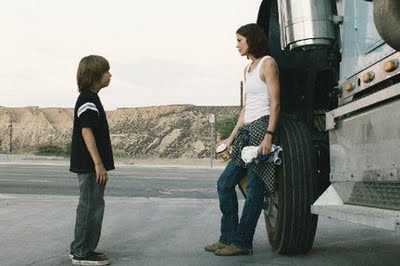
Ralph Phillips in Boyhood Daze (Warner Bros.)

Continuing the theme of under-utilized characters I now turn my attention to the Looney Tunes. In the short film game the Looney Tunes are without question my favorite cadre of characters. I love some of the smaller personages especially, however, they are fewer and further between than other groups. The Looney Tunes while they do have depth in talent are buoyed mostly by their titanic personalities. Having said that the two Ralph Phillips shorts that Chuck Jones directed have always been favorites of mine. They are lyrical and whimsical celebrations of childhood imagination. Of all the characters in the Warner canon he is who I’d most want to see more of owing mostly to the fact that he has only these appearances. Establishing him as a dreamer makes him suited for shorts or a TV series and he could be easily incorporated into the Looney Tunes comic published by DC Comics, I’m uncertain if he ever has been.

So here are the two shorts, the first of which was nominated for an Academy Award.


The Flip Side: Seeing the Movie Then Reading the Book

Asa Butterfield in Hugo (Paramount)

Recently I re-posted a series of articles I wrote on The Site That Shall Not Be Named (no it’s not the Dark Lord’s site) about how to divorce oneself from the source material when you’re watching an adaptation of a beloved book, comic, TV Show or what have you. If you want to read that series start here, otherwise bear with me.

In that series I really tackled a problem many face but mainly it pertained to books and their readers the most. To be more specific people who happened to have read the book prior to watching the film, which is a tough transition.

However, a twitter friend of mine and blogger in his own right, recently posted this intriguing entry:

People who follow me at all know I read a lot.

I read books now more than ever, used to read more newspapers and magazines.

But, I hear all the time, I want to see say “Hunger Games” but I need to read the book/books first. I personally prefer seeing the movie first.

Books are a totally different format, richer, longer, have subtext, a medium of words. Film is a medium of images and sounds, and quite a bit shorter at around 90-120 minutes. The average screenplay is 95-125 pages long, the average book is around 300 pages. It’s simply different.

For me a good example of this is Martin Scorsese’s “Hugo”. Although the book the “Invention of Hugo Cabret” by Brian Selznick is very cinematic, and the look is in the movie, Scorsese adds scenes, depth of character and a few other things I don’t see in the book. I did see “Hugo” before reading the book, and think if I read the book first I would have used my image of the book to cloud the movie and not loved the movie for what it did well but get trapped in comparisons.

An example of a book I did read first which clouded my judgment of the movie is “Jurassic Park.” I quite enjoyed Micheal Crichton’s novel, and I missed several scenes (especially the river scene) that were in the book in the movie. Although Spielberg does a good job with it, I find actually the monster movie “The Lost World” to be more fun. I think this is partially because my view of the book hurts the movie.

Another example for me from a recent movie is “The Hunger Games.” My wife has read through this series twice already, and I am still around 20% in the first book. I quite enjoyed the movie, and wonder if my judgment of the book would have clouded how I see the film.

Basically movies and books are entirely different mediums. If you try to make the movie just like the book you get boring movies like Chris Columbus’s Harry Potter 1 and 2, which although good and nowhere near as rich to me as Cuaron’s version that shares the vision of the book but doesn’t feel the need to get everything in Harry Potter 3 (still the best of the series to me.
What do you think?

The general points up there I agree with almost without exception. I wanted to quote the post mainly for context and also as shorthand to expound on my observations on this opposite phenomena I didn’t examine.

I completely agree with the assertion that one musn’t read the book before seeing the movie. The book is not Cliff’s Notes to the film. The film has to sink or swim on its own merits. With regards to The Hunger Games, I liked it but I knew innately that there was backstory and subtext from the book only being hinted at on screen, however, it didn’t ruin the film for me.

With regards to subtext allow me to make a minor semantical point: yes, many films are surface only but when you study them you learn to read them (I’m not being poetical, we say that) and seek the subtext. Some films are what they are; vapid or brilliant there’s not much else going on, those are few. There will be more forthcoming dialogue simply because the examples are ones I so closely relate to but I will transition, believe me.

Another thing that even I didn’t really examine in the prior series is that there really isn’t a direct correlation between pages in a book and a screenplay. One can make it, and I have, for a mathematical argument but truly the literal conversion of book to film can have so many more variables. A good example would be Swann’s Way by Marcel Proust. I stuck with it and finished it and liked, despite it being the most challenging read of my life. Such is the stream of consciousness and transition from reality to memory to fancy to dream that it makes it a very involving and exhaustive experience. Were you to take certain pages out of the book and transcribe them to screenplay form you could have so many changes of time and location that one novel page could be three to four screenplay pages. Again, if you’re a completist and being literal. A good film of the book would have some of those montages implied in the writing but not all of them.

Certain writing styles do imply montage as Eisenstein talks most about in the book of his I’m in the midst of and what can be done in a paragraph of prose may take a page or more in a screenplay depending on how you decide to exploit it cinematically. This is just further food for thought when thinking about taking something that’s purely text and turning it into visuals.

With regards to the example of Hugo above it’s amazing that we both reached virtually the same conclusion about the film having inverted reading schedules. I took The Invention of Hugo Cabret out of the library and devoured it because it was a quick read, liking the story much better than the presentation thereof and then though I knew Scorsese and Logan made certain changes I felt they enhanced the film and made it the best of 2011.

Sam Niell in Jurassic Park (Universal Pictures)

With regards to the Jurassic Park films, I actually tried to read the book and I failed to complete it despite needing to write a book report on it. That did not diminish my desire to see it or affect my view of it. I absolutely adored every second of it. Being a budding cinephile and a kid who at more than one point wanted to be a paleontologist it was, and will remain, one of the most exhilarating movie-watching experiences of my life. It’s magical. On the other hand, I didn’t try and read The Lost World, I disliked it a lot. How much? This much. I was pleased to learn in my Spielberg class that part of the reasoning behind his doing The Lost World was that Universal had been begging him for a sequel since 1982 and he would not hear of it being E.T.

Michael Gambon and Daniel Radcliffe in Harry Potter and the Half-Blood Prince (Warner Bros.)

As for the Harry Potter films: I love them and I love the books. My love for both is separate but equal, to re-appropriate an old phrase. I always read them before I saw them but with the few production delays they had the gap between reading and viewing grew as the films moved on. My favorite is The Half-Blood Prince, it’s the apex of the story cinematically and in the books I feel so much of what was built in the series lead to that point. The Prisoner of Azkaban is great but like many of the films they stumble at the goal line, metaphorically speaking but that one just loses the ball entirely with the very last image and piece of voice over. Only part of the issue with the first two films is Columbus. The other part is that the books steadily grew in size through the course of the series. Slavishness to the novel was easy, and maybe a requisite to establish the franchise at the beginning. As the books grew slavishness became more difficult to accomplish, nearly impossible, thus the films truly came into their own as a separate but equal enterprise.

So having said all that in the interest of piggybacking and elaborating on points I previously made; What about seeing the movie first and then reading? I am very intrigued by the idea but I do not have much practice with it. I have a few candidates in mind to try it with but let’s see what case studies I have (Yes, we are quite literally discovering it together, hence why I wanted to write this post).

Jack Nicholson in The Shining (Warner Bros.)

The Shining

I decided to pick up a Stephen King book because I saw The Shining. I was just into High School and it was the first time I enjoyed being scared. I was averse to horror before then. I learned from King and went on to read many that he read. However, the film and the book are very different beasts. I had no problem with having a cast in my head, King even acknowledges that in a foreword or afterword of one of his books, but like I said it was different. I didn’t dislike it. I don’t disagree with King’s comments about Kubrick either, yet I still enjoy Kubrick’s riff on the story more than the book or the mini-series. Do I skew to the movie for having seen it first? Yes. However, then there’s The Hunger Games. I tried to read it as a library book. Hardly started. I then saw the movie still knowing next to nothing and would likely enjoy the book more.

Pet Sematary

Miko Hughes holding a copy of Pet Sematary

Here’s one where if you make me pick which one I like I’ll kick, scream and refuse. I love them both so, so much.

Storm of the Century

Colm Feore in Storm of the Century (ABC)

Ha, I’m such a cheater because this is a screenplay but regardless I may be in a minority but I really enjoyed it in both incarnations.

Hellraiser/The Hellbound Heart

Doug Bradley in Hellraiser (New World Pictures)

Clive Barker brings such imagination and originality to everything he does it’s hard to be disappointed but it is a somewhat different interpretation of the vision than the one he put on screen I find. Similarly, he’s working on a comics series of Hellraiser now, which is incredibly good.

The Exorcist

Linda Blair, Max Von Sydow and Jason Miller in The Exorcist (Warner Bros.)

With all apologies due William Peter Blatty the movie rips the book to shreds quality-wise. However, the reading experience was just fine.

Rita Hayworth and the Shawshank Redemption/The Shawshank Redemption

The Shawshank Redemption (Columbia Pictures)

It wasn’t a tainted reading experience in any way and it’s evidence of why Frank Darabont is Stephen King’s best adapter.

The Body/Stand by Me

Wil Wheaton, River Phoenix, Jerry O'Connell and Corey Feldman in Stand by Me (Columbia Pictures)

In a similar way to Stephen King’s reaction to Darabont’s The Mist he also loved this one because of a crucial change Rob Reiner made for the better. Reading it was fine, watching it more lively. In this case it might’ve tainted it in my mind from having seen it so much.

Apt Pupil

This story as written is outstanding. Yes, the cast remained the same but the story delves into the psychology of the situation in ways the film scarcely attempts. You should read it.

The Langoliers

The Langoliers (ABC)

Augmented by having seen it first in part because I love the mini-series up until the very end. It’s like King says, the story just falls into place so smoothly and that translates on to the page and the mini-series is great until one of the worst third act blunders, and effects shots ever.

Misery

Kathy Bates and James Caan in Misery (Columbia Pictures)

How can having Kathy Bates in your head not make it better?

Cycle of the Werewolf/Silver Bullet

The Cycle of the Werewolf (Signet/Berni Wrightson)

It’s a totally different beast entirely. It’s a short little book with Berni Wrightson working his magic illustrating it, giving you new images to focus on.

Creepshow

Creepshow (Berni Wrightson/Signet)

Quite frankly with the premise of Creepshow being tales in the style of old EC Comics how can it not be a good comic book, seriously?

Burning Secret

Burning Secret (Vestron Pictures)

I’m surprised I had forgotten this one. This tale is quite literally the perfect example of this list. I saw this film by chance on Netflix. I was rather intrigued by it and was curious to read the book. The book was rather short and a quick read. The adaptation is great because it develops cinematic subtext without using any of the inner-monologue inherent in the prose. What this does is create an air of mystery and a questioning of motives, at least to an extent, which never happens in the book. The strength of the book is that you get explicit detail about the thought processes of each character. In short, you get slightly different but very well-realized renditions of the tale. In each version the medium is exploited brilliantly.

These are likely the only examples I can be completely certain of. Having thought on them: Yes, the argument does have merit. It can be better and more enjoyable to watch and then read. This might mean that The Hunger Games and A Song of Fire and Ice are in my future.

My Year in Film: 1987

So here’s another retroactive list from me. I think it’s safer to assume that this one is more tinged with nostalgia than the 1994 one. In this case, I believe a majority of the films included are ones I saw during or shortly after the year for the most part. Well, in terms of the American releases. Now, in 1987 I was five and six years old, meaning I was just starting my schooling.

I believe most of the films I saw were video or HBO selections. I specified American films above because there are some great foreign titles, that need no disclaimer, which I discovered later on that were released in this year. As for the disclaimer: you see what my relative age was when the films came out or when I got to see them, therefore that is your grain of salt. Again, as I did before, I will stress that the way I assemble this list is usually based on its noteworthiness in my estimation and not necessarily its impeachable quality. However, I will discuss that a bit with each film that’s included.

One thing that’s interesting to note is that this post serves a function as a replacement (and possible prelude) to a series I wanted to do this year. If you take 25 years of age as the youngest a film can be to be considered a classic then the film class of 1987 would be eligible this year. It’s interesting to examine what holds up and what doesn’t after all that time.

Some personal entertainment-related milestones for the year include: my favorite thing in the world was ALF (such that I had a lunch box and much more) and if memory serves I was a year away from my first theater-going experience. For I seem to recall that being Bambi and per the IMDb the only re-release I would have memory of occurred in 1988. Also, I don’t think I watched the Super Bowl for another few years but I knew that the Giants had won.

Without further ado, the list, which is in no particular order:

1. Blind Date

Blind Date (TriStar Films)

Of the 80s movies that made Kim Basinger a star, and for a time one of my favorite actresses, I’m not sure I like this more than something like My Stepmother is an Alien, however, both that and this are so hazy in my memory I can’t honestly tell how they hold up, but I remember adoring them at the time and it’s definitely a marker for the year.

2. Amazing Grace and Chuck

Amazing Grace and Chuck (TriStar Pictures)

In a paper I wrote about the 1980s I discussed this film at great length. It was a truncated repost on this site that I’ll start over, however, suffice it to say I think there are few films that are as resoundingly a product of their times than this is. I discovered it much later and love it.

3. Innerspace

Innerspace (Warner Bros.)

I’m not sure it’s possible to chronicle a year in 1980s without including a Joe Dante film. As is the case with a lot of films on this list I haven’t seen them in a while but I think this film, for quite some time, has been overlooked and dismissed unjustly.

4. Roxanne

Roxanne (Columbia Pictures)

This is one of Steve Martin’s best balancing acts between his comedic and dramatic talents. His put-down monologue is fantastic and I still quote: “It must be great to wake up in the morning and smell the coffee…in Brazil” often.

5. The Lost Boys

The Lost Boys (Warner Bros.)

I was a late-comer to the horror genre so I didn’t discover this film until later on. And as if to underline my point, few and far between are those who dislike this film, therefore when I can defend Joel Schumacher I do. You can knock some of his films but not all, not even close.

6. The Monster Squad

The Monster Squad (TriStar Pictures)

The rise to cult status of The Monster Squad is truly amazing and practically unprecedented and I’m a small part of the years later surge in its popularity. I saw it many years after its release on VHS and loved it. I now have it on DVD and I get why it’s adored and also why it flew under the radar in its initial release.

7. The Curse

The Curse (Trans World Entertainment)

As I’ve mentioned previously, few films exemplify the alchemy of horror better than this film. It’s got a lot going against it but it still works very, very well.

8. Hellraiser

Hellraiser (New World Pictures)

I was first introduced to this film in a horror class I took in college. It just keeps getting better with age like a fine wine. It also stands as one of two films that have gotten me literarily smitten with its writer, in this case Clive Barker. I immediately started chasing down his books after seeing this and Candyman in the class.

9. Baby Boom

Baby Boom (United Artists)

Here’s another I’ll admit is cloudy but I do remember watching it quite a bit on HBO back in the day, and I believe that many of the Diane Keaton films I saw were partially a result of this film. Not to mention that as silly as it may be it is also a sign of the times. Women still had some strides that needed making in terms of equality, and this was one of the films and/or shows that was broaching that subject. Perhaps, not the best or most serious but noteworthy nonetheless.

10. Hope and Glory

Hope and Glory (Columbia Pictures)

This is another film I discovered later on and it is also a film that is exponentially better on the big screen. I discovered it on video. I was fortunate enough to see it introduced by John Boorman at BAM Rose Cinemas in Brooklyn. The viewing was very memorable but I’ll be eternally thankful for the response he gave my question about casting a young lead. It helped me a great deal in preparing for an upcoming production.

11. Planes, Trains & Automobiles

Planes, Trains & Automobiles (Paramount)

This one is a favorite for so many. As I often say John Hughes created innumerable new templates for story that were used in film and television alike. This one is no exception, while many avoid the twist in the tale the framework has been re-used several times as has The Breakfast Club, Ferris Beuller’s Day Off, Sixteen Candles and so on.

12. Au Revoir Les Enfants

Au revoir les enfants (Orion Classics)

I can’t say I’m a completist with his work but I love Louis Malle. In this film he tells a very personal story and you can feel that throughout the film it’s really its most remarkable quality.

13. Empire of the Sun

Empire of the Sun (Warner Bros.)

I saw this film many years after its release. I saw it sometime in the summer of 2001. I remember the date specifically because after multiple viewings my opinion of Artificial Intelligence: A. I. had solidified and having had a Spielberg class and hearing things like “this is his most European film” but not being able to see it I was very anxious. Being properly prepared for it in all regards it blew me away. I love it.

14. Wall Street

Wall Street (20th Century Fox)

This film I remember viewing in a high school economics class the first time around. Now there was a slightly more cynical, realistic approach that the teacher employed when discussing it, and he had his motives for showing it but not only was it a victory for me against an attempt pedagogical indoctrination, but I still really enjoyed the film a great deal. That is not surprising as it was during Oliver Stone’s heyday.

15. Throw Momma from the Train

Throw Momma From the Train (Orion)

This is another one I’m far removed from seeing but the premise is outlandish and it’s made to work thanks to the casting of Momma, but then you also have Billy Crystal and Danny Devito working together, so my childish sense of humor (which for the most part remains in tact) adores it.

16. Overboard

Overboard (MGM/UA)

Amnesia it seems was big in the 80s, at least I think it was I can’t remember (I’m so sorry). It was an oft-used theme then it seems but this was the best take. There aren’t many great tandems anymore but this one was a match made in cinematic heaven regardless of material and cheesy posters.

17. The Grand Highway

The Grand Highway (Miramax)

This is a film I discovered quite some time later. I think it’s likely the most overlooked of them all. This film did get a US remake, which I discuss here. I think this is a really great film that more people should see. I wrote about the remake of this film and will re-post that series here.

18. Um Trem Para As Estrelas

Um Trem Para As Estrelas (FilmDallas Pictures)

Another staple on these lists, when I can find one, will be a Brazilian film. This was a pivotal time in Brazil politically as the country was making the always difficult transition from a dictatorial government to a democracy. That serves as the backdrop for this coming of age tale. The film also portraits Brazil’s vibrant pop music scene of the era with many performances by popular artists included. I remember I rented this from Movies Unlimited back when they had a physical location, and while deliberate in pacing I enjoyed it a great deal.

19. Mio in the Land of Faraway

Mio in the Land of Faraway (Miramax)

A lot of funny things and parallels come to mind when there’s mention of this film. First, this seems to be my obligatory Christopher Lee title. Second, here’s Christian Bale’s second appearance on this list, in his neophyte, pre-bad press phase. It’s also strange in that it’s an all English-speaking cast enacting a foreign fairytale, similar to the The Neverending Story with much less press in the US. This one also only was released in the US in 1988. I really do like this film for the narrative, the lead performances, and because it’s good cheese. I can’t argue there’s none here.

20. Pelle the Conqueror

Pelle the Conqueror (Miramax)

In my retroactive BAM days I placed this film as an ’87 release even though it made its splash globally the following year, seeing as how this list is in retrospect I’ll place it here. Not only is this a great film wherein Bille August burst on to the scene but it’s yet another great performance in the career of Max von Sydow. It’s also an incredibly moving film.

21. In a Glass Cage

In a Glass Cage (Cinevista)

If there was ever a director to which the term no-holds-barred applied without question it’s Augusti Villaronga. There are likely synopses that give away only what is necessary to discuss the film, I’d rather spoil nothing about this film except to say this film is not for the faint of heart or the queasy. Even if you’ve seen many films, few are this dark and disturbing. It relishes in making you uncomfortable. It’s likely not a film you’d want to see more than once but perhaps what’s most effective is that it pushes your buttons regardless of what’s happening.

22. Bad

Bad (Epic Records)

Two things straight off the bat: If I could’ve included Madonna I would have but “Open Your Heart” as a video came out in December 1986. As for what a music video is doing on this list, I had a short film in my 94 list and I did write (not yet reposted here) after Jackson’s passing about how his videos were more cinematic than most and in the 80s they were more story-based in general. It may not be quite the production that Thriller is but there’s no bothersome disclaimer at the front and this one was directed by Martin Scorsese so it has more than enough merit to it.

23. La Bamba

La Bamba (Columbia Pictures)

I was, as were many of my classmates, quite literally obsessed with this movie and Richie Valens for quite a long time after it came out.

24. Ernest Goes to Camp

Ernest Goes to Camp (Buena Vista Pictures)

Writing a blurb for a Ernest movie is simple: either you like this character of the late Jim Varney or you don’t. I always liked him even though I saw this film later on.

25. The Garbage Pail Kids Movie

The Garbage Pail Kids Movie (Atlantic Releasing Corporation)

Here’s a film that will fall under the memorable category. I fall neither in the cult following of this movie nor the rabid hatred thereof, but I have seen it twice and do recall it was the quest of a friend of mine’s in junior high to obtain this film. It may well have been the seed for my loathing of the concept of something being out of print.

26. Masters of the Universe

Masters of the Universe (The Cannon Group)

Another big deal for me when I was young was He-Man. More so the animated series than this film. Now, I loved it at the time but I have since revisited most, if not all of the series, and the fish out of water approach to the movie while amusing is certainly not why we kids adored the show. It was Eternia and the characters and landscape there. It certainly wasn’t as the quote at the bottom of this poster states the Star Wars of the 80s, I think that was still Star Wars.

27. Dennis the Menace Dinosaur Hunter

Dennis the Menace Dinosaur Hunter (LBS Communications)

There are some things I really loved as a kid that I would come very close to forgetting and then through some nearly miraculous happenstance be reminded of in a very powerful way and my affection would be rekindled. The more notable cases are musical but this film fits that bill. It was a TV project that I know I’ve seen many times but each after nearly having forgotten it existed. I liked, and still do like, Dennis the Menace as a character and I was obsessed with dinosaurs so this film is one I’d naturally gravitate to.

28. Flowers in the Attic

Flowers in the Attic (New World Pictures)

Here’s one that I nearly forgot about as I used the IMDb to jog my memory and somehow I hadn’t voted on this one though I viewed it when I was a rather anal-retentive voter. I saw this film later on and it’s definitely a cult favorite. You either love it or loathe it but perhaps what’s most notable for me is that after having seen it I considered reading V.C. Andrews but when I discovered the author’s name had become and overly-exploited brand name posthumously, I shied away. Perhaps, with an even better interwebs than ever before, I’ll look into her again and see what she actually wrote and what is just attributed to the name.

Thus concludes my journey through 1987 what year I’ll revisit next I know not but may it be as memorable as the first two.

Review- Bully

Kelby in Bully (The Weinstein Company)

Clearly with all the press that Bully had received from its initial rating, to the online animus it caused, to the subsequent edits and marketing campaign; there are many things outside of simply what’s in the film that can be discussed, even as it pertains to filmmaking. However, that doesn’t really apply to the film itself and if further discussion needs having I will post it here. That situation mutated a few times, therefore it’s best I didn’t comment pre-release, and therefore I will proceed.

Similarly, the subject of bullying itself is one I could talk about extensively. I’ve seen from afar, yet closer than most, some of the effects that it can have. How it should be handled can be couched many different ways based on your cultural or political background, however, that’s neither here nor there in this review as this film, like many documentaries are and should be, isn’t about finding a cure for the issue but rather examining the issue. And let’s face it, in spite of increased media coverage of incidents, there are still those in this country who will say there isn’t an issue.

Eseentially, my feeling is that there’s always been an issue, it’s worse and harder to deal with in today’s world, and we as a society have been too slow to act but we need to.

Yet, what of the film Bully? As I stated above, what it does is seek to examine a very broad subject on a closer level by citing several different kinds of examples. In some cases the students in question are living with it on a daily basis, some have confronted the issue, some shy away from confrontation, in some cases we only meet the family as the bullied has since committed suicide. In another, a student reacted harshly and goes through the juvenile justice system. While the film could’ve been slightly more geographically diverse, it does do a good job of going around our vast nation and showing the similar patterns of behavior and administrative inaction and/or ineffectual action.

However, that conclusion is the one I’ve drawn. The film does volunteer the occasional dissenting opinion about the severity of the issue, however, the film never through a narrator or through over-manipulated editing, tries to espouse a dogma. Instead, it allows the subjects to offer their opinions and feelings. On a few occasions, it captures incidents but merely displays them rather than invoking judgment within the narrative. It’s presenting evidence, which we are parsing.

Perhaps the best and most persistent example of this technique is the fact that, wherever possible, the main cause of a student’s being bullied is suppressed or hardly commented upon. For it truly is not the point, and while the film doesn’t actively try to impose an opinion on its audience it’s made from an anti-bullying point of view and there is ample footage and facts to support it. However, anti-bullying can be a secondary and tertiary rallying cry of other activists, therefore to focus it strictly on the issue of bullying by removing the catalyst as much as possible, it examines the phenomena, its impact on its victims and keeps its focus and scope as narrow as possible, which is essential in documentary work.

In keeping with the theme of the film’s scope, there are a number of case studies made within the film but the film is very astute at establishing these personalities and locations such that as cuts are made from narrative to narrative there is minimal reminding we as an audience need of who these people are, where they’re from and what their precise situation is. It’s a credit to the filmmakers because it allows the film to have a sense of flow rather than being segmented case-by-case it traverses the nation over the course of a year and follows an emotional ebb and flow to its conclusion.

What stands out most in that the film is at its most effective when it reveals how these things affect those who love the victimized. Typically, the bullied are resigned to one extent or another or not present. What’s most revealing is the collateral damage caused in the families examined.

The fact that some people searched for a solution in this film just shows that they acknowledge that there’s an issue and they’re desperate for there to be an answer for this generation’s sake, and for those to come. However, while this film is zeitgeist to some it still has to contend with a faction who dismiss the notion and it as propaganda. I think the film very strongly and steadfastly makes its case that there is, in fact, an issue and that it must be addressed and it will continue to be an issue until serious actions are taken and policies are adhered to. The film is a heartbreaking necessity, both in its making and its need for an audience. It’s a film that should be seen by all and I hope it has a long life.

10/10

Review- Wrath of the Titans

Sam Worthington in Wrath of the Titans (Warner Bros.)

The first film in this newly reborn series was passable, but barely. There was a rote nature to it that held it back from being all it could have been. While this film doesn’t maximize the full potential of Greek mythology, it does implement its gods and demigods in a much more enjoyable fashion than the prior installment did. What minor stumbles occurred in this installment were more just missteps than an over-aching approach that was slightly off, so the end result is very enjoyable.

To start with the elements that are slightly off: one of my pet peeves that makes suspension of disbelief rather difficult in many films, (and it is truly a question of accents more so than performance) is the unwritten cinematic tradition in the US has stated that British accents substitute for foreign tongue when the film is shot entirely in English. The first installment adhered to said rule, so it was fine. Here it is sketchy. Sam Worthington is speaking with a full-on Australian accent. While I applauded the decision in the Narnia series that took Caspian from sounding Castilian to using his natural voice, it’s more forgivable in a fantasy, and at least in the Narnia series there was a conscious attempt to make the Telmarines sound like they were from another country in a fantastical realm, hence the affectation. Here there’s no basis in logic for the switched accent.

Yet, despite that distraction, the performances are good. Worthington is slightly more engaging than before; Fiennes and Neeson are allowed to strut their stuff more than they were. Meanwhile, Rosamund Pike adds a much needed tough-girl factor and John Bell, as Helius Perseus’ son, gives an effective performance which acts as Perseus’ catalyst in part.

The beginning of this film means well by establishing that Perseus has had it with the gods and their games and he should be reticent, however, the stakes introduced are far too high for him to ignore. We end up knowing he’ll resist but concede to the quest so the first act is rather bereft of tension. To the film’s credit, tension does come eventually but this beginning holds it back, and despite all the past experiences he has seems uncharacteristic.

Once the obligatory resistance is overcome the story really kicks into high gear and becomes very entertaining indeed. There is an ease with which the story flows in this installment that was not quite as present previously.

Similarly, and this is crucial, several different mythical elements are introduced in this film, and barring the occasional bit of expositional dialogue, they are folded into the mix much better. This more seamless blending of mythological tropes makes the story far more engaging and enjoyable than the predecessor.

I can’t speak for the 3D as I did not see it as such, however, the effects work is definitely an upgrade and when you consider the fact that much bigger creatures, both in stature and importance, are tackled than this is also a very welcome change.

The score of the film also does its part to churn the film along while adding the necessary tension to the mix.

The new incarnation of Greek Myth films has not yet been perfected but this most certainly is a step in the right direction and very much worth checking out.

8/10

Short Film Saturday- Roger Rabbit

In keeping with the concurrent themes of animation, the “amusement park studios” I also got around to thinking (based on last week’s post) about some lesser-known or under-utilized characters. I think that the animated short proceeding a feature is still a viable commodity and on occasion you will see a new attempt at one. Usually the new class are characters established previously in a feature, even when that character is new. Following the success of Who Framed Roger Rabbit there were a few shorts made to try and prolong the character’s notoriety. I’m not certain but I think these were the only two made. I thought, and still do think, they’re great. They’re a tip of the hat to the classics in a hyperactive interpretation of animated slapstick tropes.

5 Reasons the Suspiria Remake May Not Be The Worst Thing in the History of the Universe

Suspiria (International Classics)

I am not a proponent of remakes in general and certainly am not a fan of the idea of a Suspiria remake, however, in light of recent information I am more positive than I was.

5. Possibility of Reviving A Classic

A common fear with a remake is that the original will be replaced with Suspiria it will likely not be the case. Aside from horror buffs you hardly every heard mention of this film before, when news of the remake first broke people are talking about Argento’s version more than ever before and good or bad the release of the remake will likely revive interest in viewing the original.

4. The Road Less Traveled Theory

Another reason this film may not be such a bad thing is something I’m calling The Road Less Traveled Theory, meaning that in remakes people always seem to be wary of seeing iconic scenes re-interpreted, likely the fault of the Psycho remake. I have reason to believe the story will be updated somewhat and the film is one of such intricacies that there are other avenues to explore and other ways to portray things and it’ll likely look like a very different movie.

3. Natalie Portman

Initial Reports way back when, speculated she might be in the running for the film, yet she stands sort of as a symbol of the positive casting possibilities this film has. Portman, or someone like her, is a positive because I have a feeling based on the inherent tension of Suspiria, plus the fact that David Gordon Green always gives his actors something to sink their teeth into, we should see her (whomever she may be) best.

2. David Gordon Green

You have at the helm of this project a man who has not only directed such diverse ventures as Undertow, Pineapple Express and The Sitter but also someone who is writing the adaptation. So you have not the puppet of some studio, I don’t think Green has yet been accused of that but a man fully invested in bringing his vision of this tale to the screen. Whether or not you like the adaptation presented is another thing entirely but it should be a focused and skillful interpretation of the story.

1. Argento’s Blessing

Up until recently this project had proceeded through pre-production stages without talking to Dario Argento and beyond not getting a seal of approval they hadn’t officially been granted the rights of adaptation, which is a hairy situation to be in. Now Argento has conceded because he has come around to the viewpoint that he is “convinced that his movie is a masterpiece and can’t be overshadowed.”

Which is a fair enough point. Why people get up in arms about remakes is usually due to the “How Dare You” syndrome we fall victim to when hearing about it. Indeed, there has been a rash of remakes of films that can’t be topped recently but in truth they, and similarly sequels, do not truly detract from the original inherently, it is our perception that skews. Similarly, if we really were so sick of all these retreads we would stay away en masse. While those who don’t know any better will flock out to see these films, the fact of the matter is the information is out there to be had so if you’re going to see a remake at least see it knowingly. The internet is a great thing sometimes.
 
These are the reasons I am not as scared as I once was. Fingers crossed.

Rewind Commentary- The Plight of the Uncredited

Mike Greenberg and Mike Golic (ESPN)

As those who know me, and if such a person exists, cyberstalk me know I created this blog after writing on another site, which shall remain nameless, for a while. The point is, I have material sitting around waiting to be re-used on occasion I will re-post them here. Some of those articles may have been extemporaneous at the time but are slightly random now, hence the new title and little intro, regardless enjoy!

A few days before Just Wright was released, the Queen Latifah basketball-related project (yeah, I nearly forgot about it too), I was watching Mike and Mike in the Morning on ESPN2 and they related how they were upset because not only did they provide their voices but shot a cameo which stayed in the cut of the film but were uncredited in the closing titles. While they merely provided a sound bite for Valentine’s Day and were listed in the closing credits.

Similarly, when I saw Clash of the Titans I was surprised to find that Young Perseus, the one with a speaking part not the baby, was also uncredited. Only recently did the IMDb figure out his name is Otto Farrant and list him in the uncredited section of the cast.

The question is, though: why are these people uncredited? I understand not crediting Angry Fan #52 or some other extra an audience member might single out but no one else would but these are people all who had speaking parts, the first scenario was and “as themselves” cameo but deserves noting and the second instance was an actor playing the younger version of the protagonist. What gives?

Hopefully, this is an aberration and not a trend either way I don’t like it. Those who work on a film whether on screen or behind the scene deserve their credit.

Rewind Review- Clash of the Titans (2010)

Sam Worthington in Clash of the Titans (Warner Bros.)

As those who know me, and if such a person exists, cyberstalk me know I created this blog after writing on another site, which shall remain nameless, for a while. The point is, I have material sitting around waiting to be re-used on occasion I will re-post them here. Some of those articles or reviews may have been extemporaneous at the time but are slightly random now, hence the new title and little intro, regardless enjoy!

I had planned on seeing the original Clash of the Titans by streaming it on Netflix but I did not get around to it, which is just as well. This film cannot only be measured against that or Greek Mythology in general but it should be looked at like any other adaptation and judged on its own merits.

It is a film that definitely passes the popcorn test. Fans of Eddie Izzard will know precisely what I’m talking about; it’s an action-packed film that holds your attention and keeps you scarfing popcorn (or pick your poison) incessantly while still keeping your eyes glued to the screen. It is a film that is very well paced and you won’t feel the time go by at all.

Any film in this day and age can engender a lengthy discussion of its technical aspects and merits. Technically speaking this is a solid piece of filmmaking. The cinematography and editing are both very good. There are only two technical aspects in which this film is in any way deficient.

The first would be in 3-D, now as I stated previously I did not view this film in 3-D, however, watching it in 2-D I cannot see how that would’ve enhanced the experience at all. Having bogus rotoscoped dimension added to the mix wouldn’t make it look any better and it does look pretty darn good.

The second deficiency is pertinent to all viewers of the film regardless of their dimensional preference and that is the CG. Now some of it is quite impressive such as The Kraken, the giant scorpions and for the most part the Pegasus almost looks real, however, there are weaknesses particularly Medusa who never really rises above a video game quality of rendition. Treating Medusa similar to how Percy Jackson did would’ve been preferable.

The film, as can be expected, builds its characters briskly and without too much characterization. It’s a plot-point-to-plot-point kind of tale that lets you know just enough to keep you engaged and never goes the extra mile to fully immerse you.

For example, we get a quick little introduction about how and why the people got disillusioned with the gods and about the birth of Perseus and his miraculous survival. Then we skip ahead 12 years. We see a young Perseus, who somehow is unjustly uncredited in this film, play a scene and when Hades attacks his opinion of the gods is cemented. He has no knowledge of his demigod status at this point. Skip ahead eight more years and he is now in his final incarnation played by Sam Worthington, who at this point if not known by name to all should be recognizable as “The Avatar Guy” and is very capable.

We follow and understand the rest of his struggle and he’s a good protagonist who eventually figures out when he needs to take the advice given but this film never wants to, in the words of Phil Collins, get “in too deep” and to further quote people “Not that there’s anything wrong with that.”

It’s still a fun enjoyable time which is elevated by great actors like Ralph Fiennes and Liam Neeson playing parts they could play in their sleep.

The climax is rather good and well executed and just be warned that the title doesn’t tie in to the plot at all. It’s brainless entertainment in a good way just don’t seek to have any life’s unanswerable questions addressed and go along for the ride.

7/10

My Year in Film: 1994

First, a tip of the hat to @bobfreelander who was the first I saw doing retroactive year-in-review posts and why I will do a few. Now, while I will be able to contextualize my picks to an extent I cannot be as anal retentive as I wanted to. Ideally, I would’ve loved to say I saw these movies in the year in question and these later, but I cannot with any degree of accuracy. The reason this matters to me is that I was 13 to 14 when these films were being released. Now I, unlike many students around me when I was in school, have been able to exonerate many films I saw before studying films formally from over-analysis. So while many are getting a pass or some sentimental value attached to them I shall not disown them, they are still me. Much in the way I am no longer making BAM Awards for years where I didn’t actively track releases, I am also not changing winners as I did on rare occasions in my teens. This list like those awards are a snapshot, time can reshape one affection for a film, whether heightening or lessening it but the films that mark that year for you mentally remain pretty much identical.

I start with 1994 in part because it was a great year for me in general, I was out of sixth grade and into 7th and 8th and I rather enjoyed Junior High where using your mental faculties to achieve a heightened sense of immaturity was rewarded, at least amongst my circle of friends. Sports-wise it was a great year as my faith in my beloved New York Rangers was rewarded, I knew it’d be a championship season in pre-season and it was. Then not too long after I saw Brazil win its 3rd World Cup while visiting my family.

Not that movies lagged that far behind, if at all. Many of these films, whether I saw them during the calendar year or soon thereafter, have been favorites for many years.

The films are in no particular order.

1. Satantango

Sátántangó (Kino Lorber)

I’ve been meaning to give this film an annual viewing but at 7+ hours in length it is very hard to schedule. I first heard about this film in college when it wasn’t readily available on DVD but I hunted it down. Having it was like having gold such that I even loaned it to a professor once. It’s an impressive example of story-telling muscle-flexing as it goes back and forth in time with many events repeating at intersecting points of perspective, as we follow characters and see certain events over through their eyes. Its ending is a shocking as such a minimalist ending can be and gives me goosebumps every time.

2. Milk Money

Milk Money (Paramount)

Here’s one I could’ve seen in ’94 but didn’t. In a world where I didn’t have a computer or access to the IMDb I couldn’t confirm my casting misconceptions, namely at the time I confused one of the girls in a quick shot in the trailer with Anna Chlumsky. I did eventually see it on HBO and this was where my admiration for Melanie Griffith originated and I hunted down practically everything she did after seeing it. Now hooker with a heart of gold stories weren’t new to me even then but the context and the slightly verboten yet laissez-fair handling of this one along with its outcome are a major part of what won me over.

3. Once Were Warriors

Once Were Warriors (Fine Line Features)

When the Independent Film Channel (IFC) first hit the airwaves I watched it practically every night for a week, and as an atypical teen movie fan I craved something different and I got it. This is a harrowing tale of a Maori family in New Zealand. I’m not even sure if I’ve even revisited it. Even if I have it could surely qualify as a film you only need to see once.

4. Disclosure

Disclosure (Warner Bros.)

This is a great film. Yes, it’s true Michael Douglas gets Michael Douglas-ed in it, if you’ve seen enough of his films you get what I mean, but sexual harassment was a hot button issue in the country as there was a politically correct renaissance about and to flip expectations to have an actress like Demi Moore, in likely her best role, in that position make it a compelling drama.

5. The War

The War (Universal)

For those of you who may have been asleep during the 90s and didn’t know, Elijah Wood was one of the most prodigious child actors who ever graced the silver screen. This film of his is his most criminally under-seen. It’s a great allegorical tale wherein Wood does his most serious work as a youth but he’s supported by Kevin Costner, Mare Winningham and Lexi Randall. If you’ve never seen this film do yourself the favor.

6. Little Giants

Little Giants (Warner Bros.)

G-Men! OK, if you read my intro you probably surmised I’m a native New Yorker, however, that’s not the only reason that this film makes the list, there are some others. It is smart that this film does play into actual NFL rivalries and takes the Bad News Bears motif to football but there’s some more to it. Part of it has to do with seeing Ed O’Neill in a movie and perfectly cast, it being one of Rick Moranis’ last theatrically released films plays into it some. Yet it’s also about the team, which plays into the appeal of any underdog story, and also it may be the most effective rivalries in terms of having certain off-the-field relationships with the opposition.

7. A Feast at Midnight

A Feast at Midnight (Live Entertainment)

This is a film that I found a few years later. One thing that’s refreshing about it is that it’s a tale of boarding school mischief that doesn’t get too dark. Essentially the boys at this school are tired of their crap food. They learn to cook and bake and sneak about in the dead of night to have proper feasts. More comedy and tension are added by Christopher Lee who plays the headmaster who they refer to as a dinosaur and many scenes play out as homages to Jurassic Park, which are just brilliantly done.

8. Vanya on 42nd Street

Vanya on 42nd Street (Sony Pictures Classics)

If I recall correctly this was an impromptu purchase. I typically used my weekend allowance to take a bus to the multiplex and then to the mall after to pick up another film. This was likely one of them. It didn’t lead me to instantly pursue more Chekhov but it was the spark that opened the door for my appreciation of his work.

9. The Shawshank Redemption

The Shawshank Redemption (Columbia Pictures)

What could I possibly say about this film that hasn’t been said before? I didn’t see it in 1994 as it was slightly before I discovered Stephen King, and my life forever changed. I saw it later and I saw it before I read it, and I learned Frank Darabont is a King adaptation master, and this is his best work.

10. North

North (Columbia Pictures)

Here’s the section of the list where I’ll place a couple of movies you likely hate and I hope you’ll do me the kindness of scrolling past them if you do hate them rather than closing your browser window. For those of you who are still with me, I can even understand how you can dislike North and It’s Pat, the latter much more than the former. However, with this one I really don’t get how some claim its one of the worst things ever. Yes, it’s another Elijah Wood title and while here he’s more comedic this one really does have more to do with the concept than him or the supporting all-star cast. It’s a wish-fulfillment story and yes, based on the tale you know where it’ll likely end up, but that doesn’t stop it from being a very effective fantasy in my estimation.

11. It’s Pat

It's Pat (Touchstone Pictures)

I get it on this one, OK? Pat is gross, that’s what makes the sketch funny for those who do think it’s funny. I’d say this is likely the most avoided and reviled SNL-sketch based feature of them all, I will not claim that it’s the best, but I do like it. Julia Sweeney is a very underrated comedienne and this is her best character.

12. The Little Rascals

The Little Rascals (Universal Pictures)

I can’t remember if I ever consciously wanted to see this movie but having younger siblings it was acquired on home video and I ended up watching it many times and I ended up liking it quite a bit also. Looking back you could almost draw a parallel between this and The Three Stooges in as much as those actors were The Little Rascals, so theoretically a remake shouldn’t work but it was cast so well and the story was very much in the spirit of the original with minor updates such that it works very well.

13. Airheads

Airheads (20th Century Fox)

When you rely on cable television for your viewing you can end up watching things over and over whether you want to or not. An example or not would be Empire Records, I have no idea what convinced me that seeing it over and over would change my opinion of it. It just kept getting suckier. This I liked right away and wanted to see many times over, it’s just a hilarious and well executed premise.

14. The Client

The Client (Warner Bros.)

Joel Schumacher can be very divisive and I certainly cannot defend all of his films. However, those that I can I will tooth and nail. This is one of them. I watched The Client many years later and it has in it perhaps one of the tensest first acts I can recall. It doesn’t let up much from there.

15. Speed

Speed (20th Century Fox)

Here’s a film that’s become a bit of a punching bag in hindsight. I will grant there is a level of silliness to it, however, if you get past the whole 50 MPH thing, (which I have) it rather works. Also, one must bear in mind that this was really Sandra Bullock’s breakout role so she was new to us and about to be beloved by many. Also, this is Keanu many roles before we saw that being Keanu is about the extent of his range.

16. Trading Mom

Trading Mom (Trimark Pictures)

This is a film that it took me a while to track down, eventually it debuted on cable. My willingness to see it was mostly due to Anna Chlumsky’s involvement. It would be a great double-feature with North as there are similar themes to it, Wanting to Change Parents but Realizing Yours Are the Best, however, it also features a great performance by Sissy Spacek in many incarnations. Its a more down-to-earth and stripped-down version of the aforementioned premise that still works rather well.

17. Serial Mom

Serial Mom (Savoy Pictures)

I’ve seen this movie a lot of times but none very recently. This could be John Waters at his demented best. This is where I not only learned a rule of fashion but also got “Day Break” stuck in my head for life. Kathleen Turner is incredible in this.

18. The Hudsucker Proxy

The Hudsucker Proxy (PolyGram)

I avoided this film for a long time for a number of reasons. I like Coens films when I watch them but my viewership of their filmography is very incomplete, the title and description also made it seem like it couldn’t be that interesting. It’s perhaps the best argument for just watching the movie. I love it.

19. Major League II

Major League II (Warner Bros.)

As opposed to the sequel later in this list this is one that I think I like more than the original. It’s sillier, funnier and doesn’t take the high road in the ending but those are all things I like about it. Plus, taking the approach that this team overachieved and now rests on its laurels and struggles is pretty smart and true to life.

20. Ace Ventura: Pet Detective

Ace Ventura: Pet Detective (Warner Bros.)

It’s a very simple discussion when dealing with Jim Carrey: Either you love the over-the-top end of his comedic repertoire or you hate it. I love it and Ace Ventura is the prime example of this facet of his gifts.

21. Trevor

Trevor

This film I first saw only last year. It’s the only short on this list. It’s almost more important for its significance than the film itself for this film is what spawned The Trevor Project. Perhaps what’s most impressive is that it really was ahead of the zeitgeist in terms of a hot button issue. It deals with a youth struggling with his sexuality and is suicidal. It won an Oscar after it was made and was re-introduced in a TV special hosted by Ellen DeGeneres but now it has a third incarnation as The Trevor Project is one of the most notable and active NGOs in the nation right now. Granted its a film buoyed by its message and its significance but few films, especially shorts, have this kind of track record so far as reemergence and staying power are concerned.

22. Menino Maluquinho- O Filme

Menino Maluquinho - O Filme (Filmes Europa)

Below you will see another comic character that I love come to life. I saw this a few years after the release of the film. This film benefits from the fact that though this character is featured in Brazilian comic strips he originated in graphic novels and this film tackles the story told in the first of those books for the most part and that streamlines things and makes the interpretation very pure.

23. Forrest Gump

Forrest Gump (Paramount)

This is another film that has become somewhat of a punching bag over the years. Taking the visceral arguments out of the equation (for I do like and connect to the film) the significance of this film in certain cinematic is in fact that it breaks rules about a passive protagonist, in that it employs one, and it works very, very well. You’d be hard pressed to find many other situations where it would but here no doubt it does. I predicted Tom Hanks would win the Oscar on the eve of the show when asked, and not only was I right but I was pleased. It’s another question of time. Hanks has become more interested in producing and has become an Oscar ceremony staple but I’d never question his merits in the roles that won him statues.

24. Little Odessa

Little Odessa (Fine Line Features)

Here is another IFC special. I did revisit this one at least once. It’s a tremendously underrated film and features a great turn by Edward Furlong before his depressing decline.

25. Richie Rich

Richie Rich (Warner Bros.)

Macaulay Culkin is precisely 364 days older than I am, so his stardom was kind of a big deal for me growing up for he was, and is, essentially my age. Furthermore, add the fact that here he was interpreting one of my favorite comics characters of all time and this was going to be a must see for me. Now, here’s an example similar to one you’ll see below where the star and the involvement in a project is more significant to than the film, for I definitely nitpick this one and the follow ups (though they be Culkin-less) it wasn’t an interpretation completely without merit, I did like a lot of it.

26. Blue Chips

Blue Chips (Paramount)

Another cable special and another I’ve given many viewings. Nick Nolte is, as he tends to be, brilliant in this film. However, what really elevates this film for me is the great examination of the moralistic quagmire that amateur athletics are. Nolte’s confession speech while rather unrealistic in a real context, as sports fans know all too well, allow for the film to really expose the inevitability of star athletes getting perks and incentives to go to certain colleges.

27. My Girl 2

My Girl 2 (Columbia Pictures)

Alright, no My Girl 2 is not a great film, there are a few entries on this list I wouldn’t call great. As I mentioned in my introduction that’s not quite the point of this post. It was a film that was overly delayed, in my estimation, and brought a new writer into the fold but the fact of the matter is it’s the sequel to what was at the time my favorite movie ever, and a film I still have a great affection for, so that makes this notable. It’s a film I do pick nits with endlessly but the fact that it matters to me cannot be denied.