Make Your Own Film Festival: Macaulay Culkin

Introduction

I’ve been planning this post for a while. It’s been put off a few times due to timing. I, unlike many, am not interested in poaching traffic when the tabloids create a story based on the latest candid shot of Culkin replete with speculation on his health, state-of-mind and the like. Therefore, the only logical date upon which to post such a festival/retrospective list would be on his birthday.

One reason Culkin’s birthday always stuck in my head is because he’s precisely 366 days older than I am. So aside from being the matinee idol of my generation, I always felt a certain kinship due in part to that fact.

In assembling this list, or a list of any actor’s work, there will be hits-and-misses, the order of this list is based on a combination of the the quality of the film and the quality of his performance.

Without further ado the list. Happy viewing, and happy birthday, Macaulay!

10. Saved! (2004)
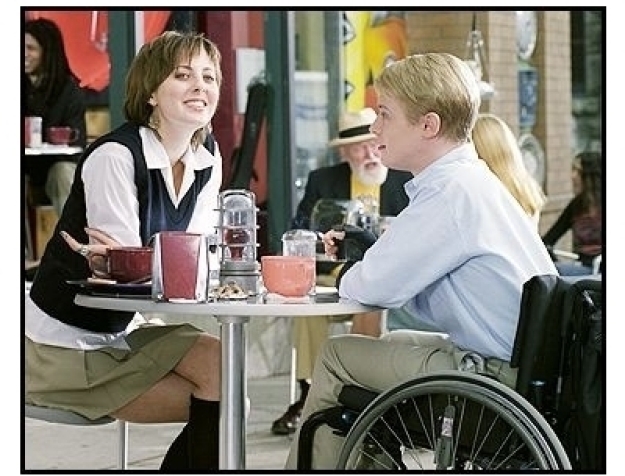
Saved! (2004, United Artists)

I had no issue with the intent of the satire, but it just didn’t work for me; it’s been done so you better be damn good at it and it wasn’t . It wasn’t righteous indignation so much as self-righteous indignation. It was good to see Macaulay with a cast of his peers for a change, it just seemed like stretching for stretching’s sake. Ironically, it was his younger brother Rory who became better at post-adolescent snarkiness.

9. Party Monster (2003)
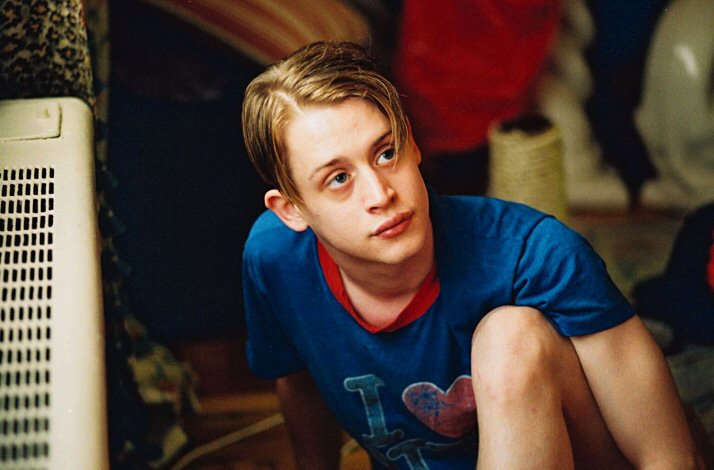
Party Monster (2003, Strand Releasing)

If this list was predicated solely on the quality of his performance this one lands much higher. It slips based on the film. I thought he really kicked ass and was on the comeback trail. Maybe others thought there wasn’t a lot of acting going on and that was the persona he’d grown into, I disagree.

8. Rocket Gibraltar (1988)
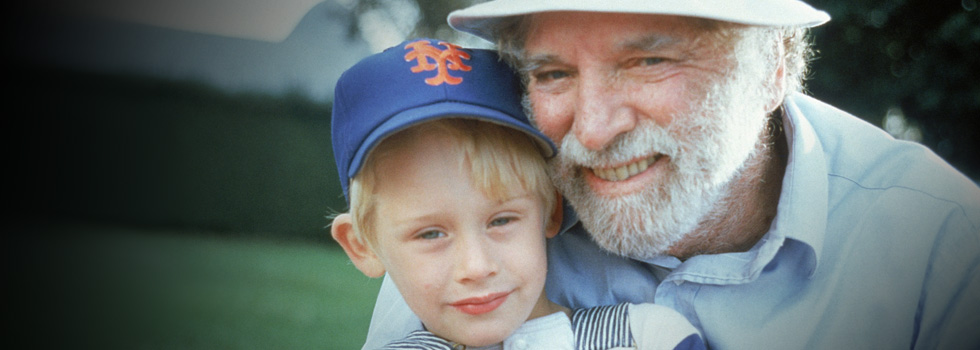
Rocket Gibraltar (1988, Columbia Pictures)

This one is not omitted and sneaks on to the list for two reasons: First, it’s a larger, in terms of screen time, and less well-known pre-Home Alone appearance than Jacob’s Ladder. Secondly, it’s a late-career appearance by Burt Lancaster. Those are both qualities that make it worthy of some note. And, frankly, if you haven’t seen Jacob’s Ladder get off the Internet and get to it already.

7. Getting Even with Dad (1994)
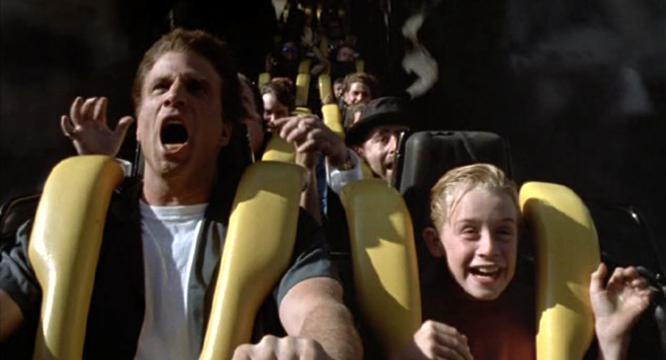
Getting Even with Dad (1994, MGM)

At least in this film Culkin seemed to draw on his personal experience to make the movie a modicum better than it would’ve been otherwise. There was a bit more press about behind-the-scenes aspects than onscreen about this one, such as Culkin’s salary. Kit’s dealings and negotiating tactics were beyond infamous at this point. One thing that made its presence felt in the film was this as reported by Lehigh Valley’s Morning Call:

Macaulay Culkin’s character was supposed to have a short haircut in this movie, but Culkin, who had let his hair grow at the time, liked his looks and did not
want to cut it. His father, Kit Culkin, demanded on behalf of his son that he be allowed to keep his hair the way it was, pointing out that his character was
more a rough around the edges, working class boy and not a clean-cut, prep school one. He got to keep his long hair.

Quite honestly, it was these few bits of truth that made and otherwise milquetoast film tolerable.

6. Home Alone 2: Lost in New York (1992)
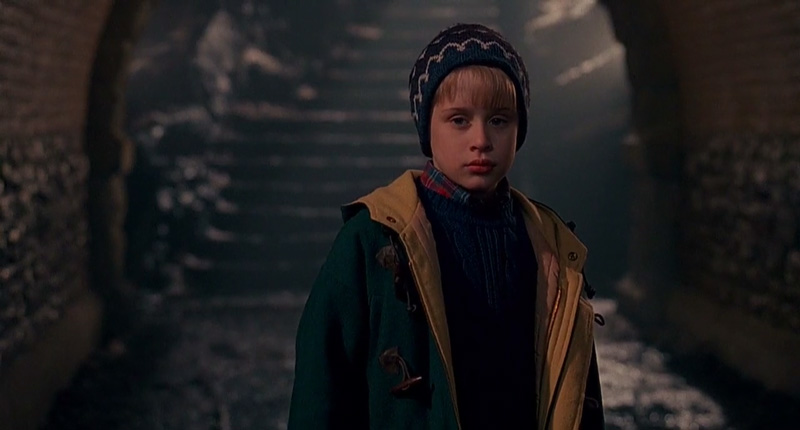
Home Alone 2: Lost in New York (1992, 20th Century Fox)

This film is, as many have noted, a mirror image of the original. He’s not actually home, nor is he really alone. It’s a good imitation by him and the film. The wolf-in-sheep’s-clothing aspect made me backlash against it when I realized it. I almost tried to keep it off this list, but it was the first time I ever laughed so hard I cried so that’s why it’s here.

5. Richie Rich (1994)

Richie Rich (1994, Warner Bros.)

Rather than readdress reservations discussed in the aforementioned link, I think this could’ve been a more chameleon-like turn. Culkin by this point just seemed like he was going through the motions, so the character had to be more him than the other way around.

It is, however, a frightening simulacrum also when you extrapolate to his real life at the time “poor little rich boy.”

So there is some ambivalence but I still like it…though maybe not as much as I did then.

4. The Nutcracker (1993)

George Balanchine's The Nutcracker (1993, Warner Bros.)

Again, in the above-linked post I discussed this film. This is his father/manager’s ultimate triumph. This film was his wish-fulfillment not Macaulay’s. He looked the part, and they didn’t ask him to dance it; so as a hybrid it’s a better film than a ballet. I’m surprised it maintained Balanchine’s name on it for that reason now that I think of it

3. The Good Son (1993)
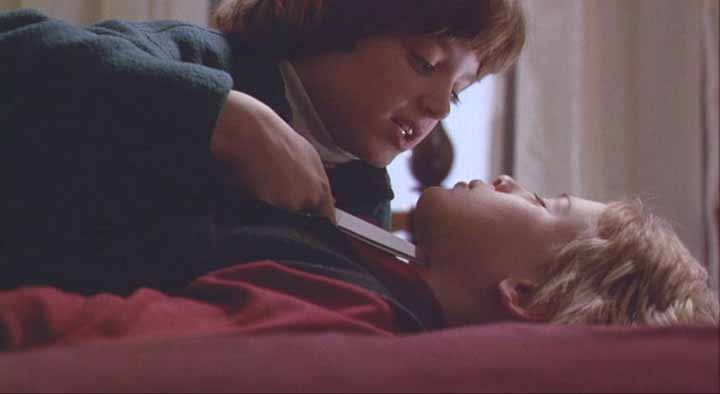
The Good Son (1993, 20th Century Fox)

There are actually a lot of good talking points to this film I find. It seems like a film that was too easily dismissed at the time due to its cliffhanger. I think the scripting, credited to Ian McEwan (a writer not yet on my ‘Essentials’ list, but who I have read a bit of), is underrated; and the tension is quite palpable throughout. While it does take a Bad Seed-style approach things never get too outlandish.

Again, if you dig, there are behind-the-scenes dramas, namely Fox’s initial desire to cast an unknown and Kit’s power-playing for Macaulay’s inclusion. In the end, it created one of the best young tandems I’ve seen: Culkin and Elijah Wood.

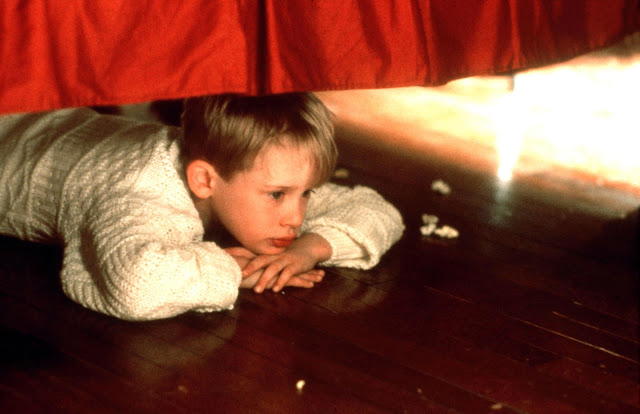
2. Home Alone
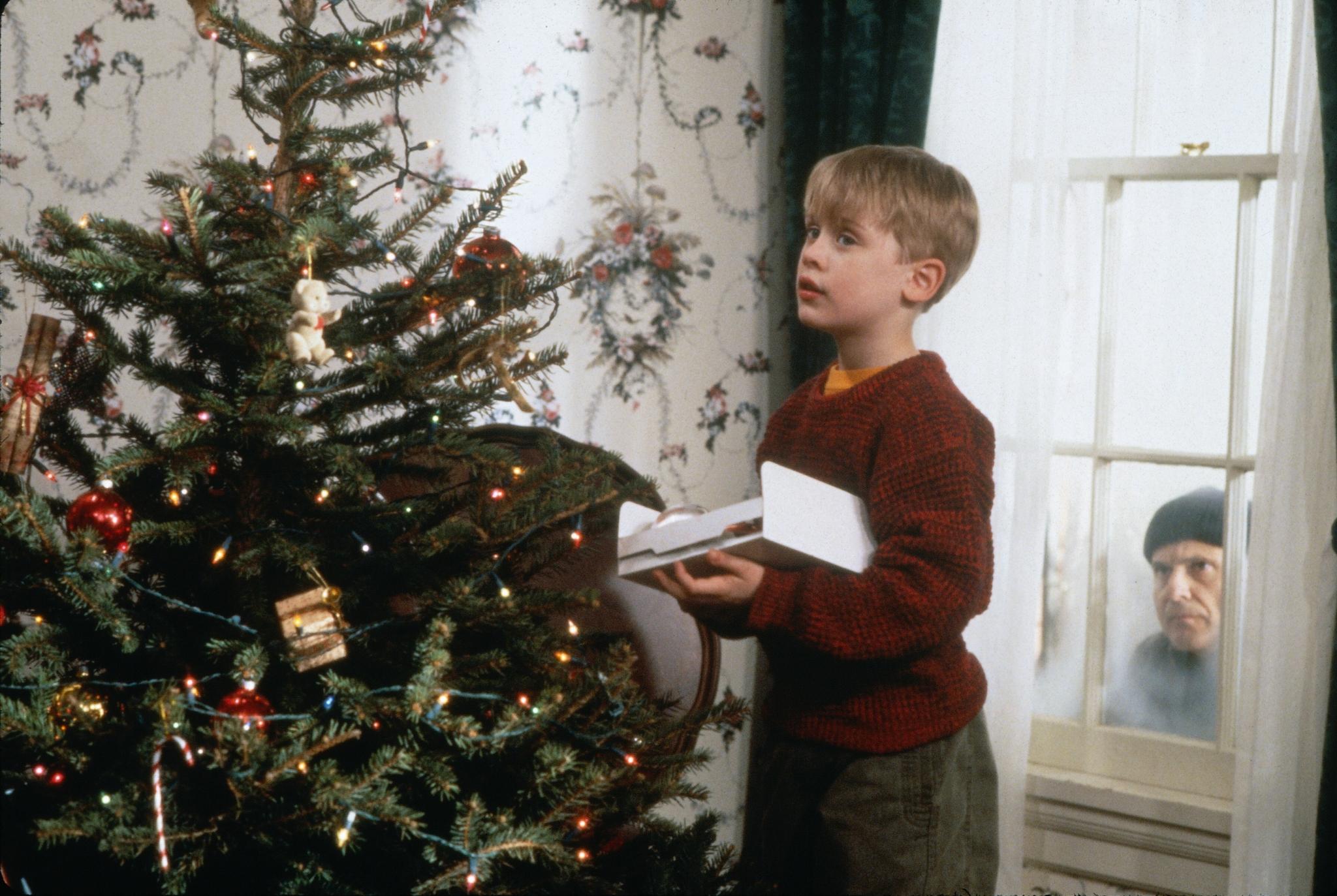
Home Alone (1990, 20th Century Fox)

Perhaps what has not been said about the original Home Alone is that it is yet another example of John Hughes’ prophetic casting genius. I heard many such stories at a screening of The Breakfast Club, however, this was one too. Culkin’s character interrogates his uncle’s girlfriend through the mail slot in a door in Uncle Buck, (omitted from this list) and that was the spark for this film.

Aside from that, you probably have heard it all: it’s an actually-deserved Golden Globe nominated turn and a new-age Christmas staple, hilarious, rewatchable and memorable film.

1. My Girl (1991)
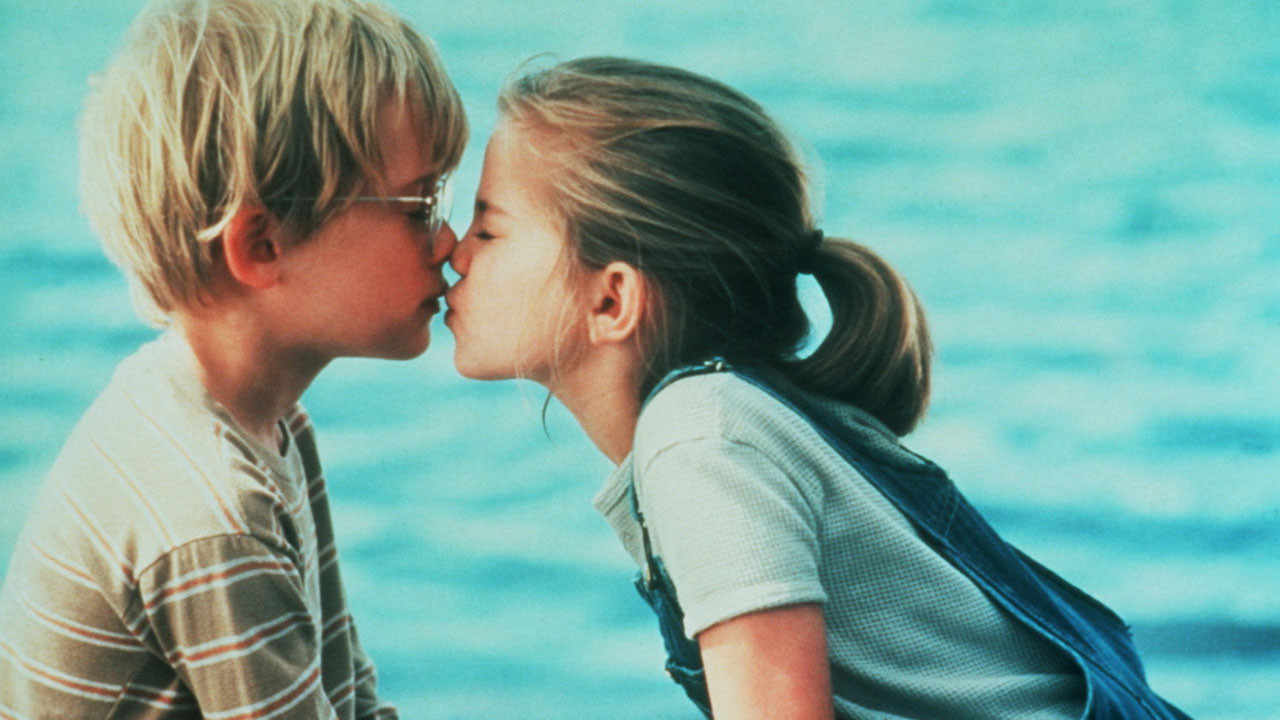
My Girl (1991, Columbia Pictures)

However, this was once upon a time my all-time favorite film and, of course, still holds a special place in my heart. Specifically to this list, My Girl was awesome for him because it really wasn’t his persona before or after. It’s probably his best performance to date because of that. In light of that fact and his clout it was also amazing he was attached to it considering the fate of his character.

Honorable Mentions
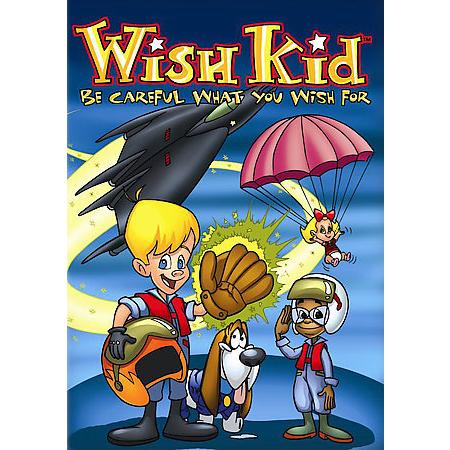
Wish Kid (1991, DiC Enterprises)

As noted in the body of this piece, a few titles were left out, and rare ones remain unseen. You can view his complete filmography here.

I already mentioned Jacob’s Ladder above.

Macaulay Culkin also took over a part of my Saturday morning cartoon line-up in the twilight of my obsessively watching whatever cartoon offerings were available; so if you feel like looking out for his 13-episode series called Wish Kid it is out there.

Lastly, the Michael Jackson’s Black or White was a big deal at the time, both its premiere and its groundbreaking artistry and he kicks things off there too.
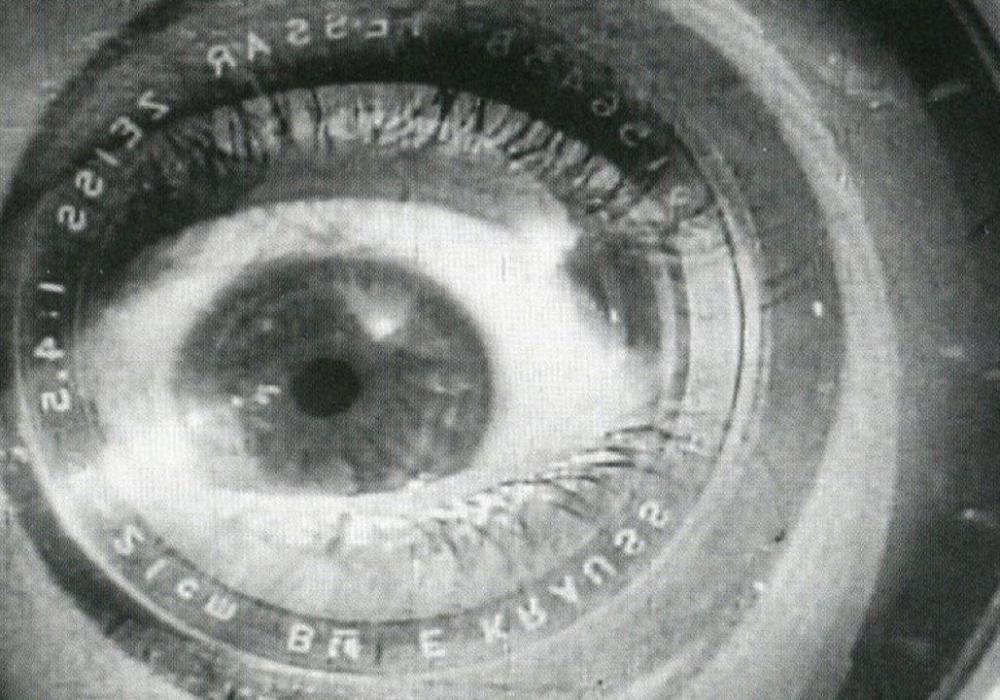

Silent Feature Sunday: Man With a Movie Camera (1929)

While I do watch many new films, and have annual awards and will discuss current cinematic topics. Part of my desire to create my own site was to not have an agenda forced upon me that was not my own. This allows me to discuss films from all periods of history whenever I see fit. Recently my Short Film Saturday posts have been running toward silents more often. I questioned this tactic for a second until I realized that if I really do hope to encompass all of film history then the silent era most definitely should not be ignored. If you mark the silent era from the birth of film (1895) to the first talkie (1927), and I realize it could be argued that the silent era stretched a few years beyond that, and also that there were experiments with sound very early; that’s still 27% of film history at current which was entirely silent. Therefore a weekly post (or, however often I put it up) is not out of line at all mathematically or otherwise.

The good news is that many silent films are available to watch online, and are in the public domain. So I will feature some here.

Coming two years after the release of Berlin: Portrait of a Great City, Man with a Movie Camera is a more kaleidoscopic and dizzyingly, intoxicating piece of early Cinéma vérité, or as the director of this film, and true forerunner of the movement; Dziga Vertov called it Kino-Pravda. The idea is the same: a portrait of a city (this time Moscow) from day-to-night, sure there’s a more Stalinist slant here, but while the politics may be dépassé or objectionable but the cinema is eternal.

Short Film Saturday: Vogue

Here Madonna again (the theme started here) not only gets cinematic with many of the visuals emulating the halcyon days of Hollywood both on film and in promotionals stills but there are also references to many of the biggest stars of yesteryear in the lyrics.

More specifically with regards to the photos here’s what the Wikipedia article says about the images. To check the sources visit the actual page:

Filmed in black-and-white, the video recalls the look of films and photography from The Golden Age of Hollywood with the use of artwork by the Art Deco artist Tamara de Lempicka and an Art Deco set design. Many of the scenes are recreations of photographs taken by noted photographer Horst P. Horst, including his famous “Mainbocher Corset”, “Lisa with Turban” (1940), and “Carmen Face Massage” (1946). Horst was reportedly “displeased” with Madonna’s video because he never gave his permission for his photographs to be used and received no acknowledgement from Madonna.[29] Some of the close-up poses recreate noted portraits of such stars as Marilyn Monroe, Veronica Lake, Greta Garbo,[30] Marlene Dietrich, Katharine Hepburn, and Jean Harlow. (Additionally, several stars of this era were name-checked in the song’s lyrics.)[31] Several famous Hollywood portrait photographers whose style and works are referenced include George Hurrell,[32][33] Eugene Robert Richee,[34] Don English,[35] Whitey Schafer, Ernest Bachrach, Scotty Welbourne, Laszlo Willinger, and Clarence Sinclair Bull.[36]

Enjoy!

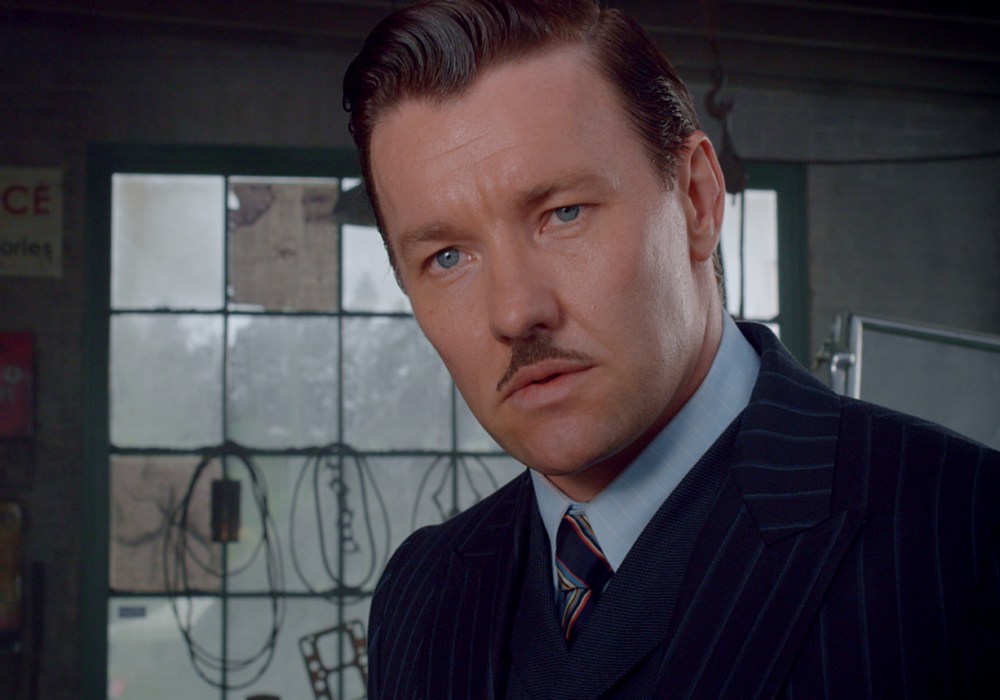
Don’t You Recognize Me: Joel Edgerton

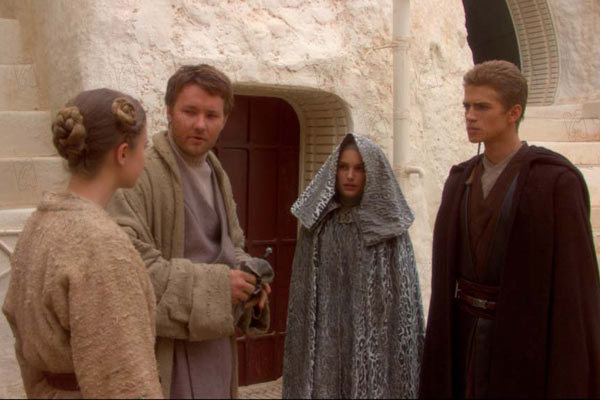
This particular entry is a bit different than prior ones in the series inasmuch as this one occurred while I was re-watching the Star Wars prequels. As I didd I saw the young version of Lars and thought to myself, “He looks familiar.” I’ll admit to a brian-cramp because he hardly looks much different at all, but surely enough it’s Joel Edgerton whose star and profile has been consistently rising over the past few years.

Star Wars: Episode II- Attack of the Clones (2002, 20th Century Fox)

Tarzan Thursday: Tarzan and the Mermaids (1948)

Introduction

Last year the character of Tarzan celebrated his 100th year in print. A serialized version of the story first appeared in 1912. A hardcover collection of Tarzan of the Apes first appeared in 1914. Being in the middle of the Tarzan centennial period it’s an opportune time to (re)visit many of the screen renditions of the character.

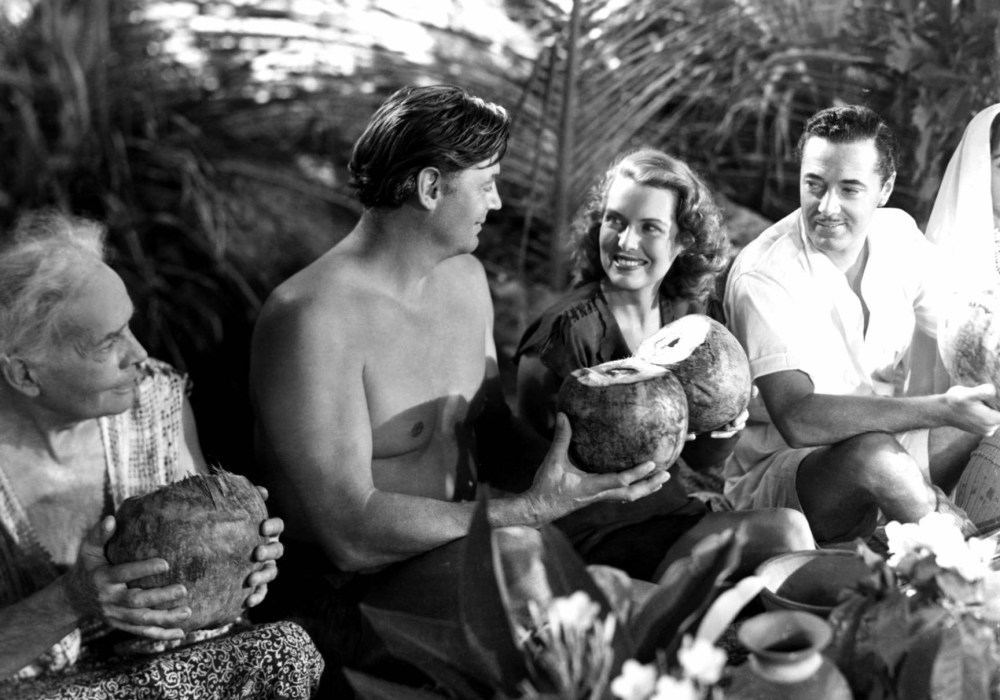
Tarzan and the Mermaids (1948)

So as I alluded to in the last post Tarzan and the Mermaids, aside from being the last Weissmuller Tarzan, also changed some trends up. So what exactly is different? Well, there are a few things:

Firstly, Boy (Johnny Sheffield) is written out of this edition. “Boy is away at school in England,” Jane says to let the audience know. The problem with these writing-outs is they are paradoxically more interesting tales. Jane nursing soldiers; Boy being educated in the UK would’ve made interesting asides or cutaways. Thus, if you could’ve re-cast or convinced the actors to take smaller parts it would’ve been a great wrinkle to add to the tale.

As it happened that was the only mention though, it was very much a writing out. Coincidentally, Sheffield’s only other steady acting gig was as a Jungle Man, named Bomba (another coincidence), whom he played as many times as Weissmuller played Tarzan.

The issues with this last installment can be summarized by saying that the great Dmitiri Tiomkin’s score is the best part of this film. The smallest issues is that they’re rehashing the forbidden/secret society mold. As useful as it ends up being, there is a very long expository voice-over to start the film. It’s as if the whole production was a contractual obligation to everyone involved and Weissmuller and Joyce sought as little screentime as possible.

Whereas previously a matte painting of the escarpment was a major reveal, as the series progressed it went further and further in mapping Tarzan’s environs and neighbors. Here there is a tracking shot across a fictional map to the island in question near the start. This is a highlight, which illustrates what a wasteful experience this really is in the end.

The natives finally all seem to be “of color,” which is an amazing advance, and the heroics are helping the two star-crossed lovers from the island find each other again. So how can that be bad? Well, throw in a singing postman who seemingly just flew in from Latin America to sing really long “impromptu” songs about things he sees. No, this isn’t a Family Guy joke, this really happens in this film.

This film doesn’t have a second stasis but it does follow a climactic sequence with a tremendous lull that’s a failure in editorial, tonal, score-spotting and any other number of ways. It’s major lag in the third act acts as false denouement and puts the exclamation point on the complete and total mess this final installment is. It’s rare to see what ended up being the last film in a series so definitively feel like one and so richly deserve to be one. So far as this group was concerned it felt this series was over before this one even really started. And unlike other three-film segments in the series there was no feeling of finality, this film just ended like it started suddenly.

Contemporary Trailers That Work

A while back I posted a long, but not ill-conceived, rant about why I hate spoiler-ridden trailers and how terrible they are. I did have a counterbalance of some “newer” trailers that I think evoke mood, create intrigue, and give me that I-wanna-see-that sensation. However, two things have occurred: I’ve wondered to myself “Was that too ‘Get off my lawn!’?” and I’ve seen some really great trailers as of late that are far more current examples that deserve kudos.

This is a great trailer. Owing to the fact that I know the film and can see what’s being withheld:

In The Family

But that’s an indie, you say. So here are some bigger films in terms of budget and marketing push. All of these are upcoming or have not yet been seen by me:

The Secret Life of Walter Mitty

The Wolf of Wall Street

Fruitvale Station

Now with those three the common thread is that at most you have a sense of what the movies about, as opposed to those I complained about that have you feeling like you just sat through that whole film unwittingly and unwillingly. A trailer is small fraction of the content of an actual film but some do make it feel like the film itself, only longer.

Now I realize I may be a bit of a throwback wanting to be surprised as much as I can and not always know what’s coming around, which is why I usually wait to see trailers at a multiplex rather than the day they drop. So here’s what I think is a great trailer but plays closer to convention in form, inasmuch as you see many plot points. What’s great is that it being a suspense film that likely has more twists and turns than indicated, and it jumbles up the pieces somewhat so you don’t feel like you know all that’s a head of you.

Prisoners

So those are some of the trailers that have gotten my attention, and while there will be many more that stink and tell too much I’m always willing to acknowledge those that seem to get it.

Underrated Dramas: Brazil

Introduction

Recently I decided to partake in another great theme going on at Rupert Pupkin Speaks. The last list I did there was for the Underrated Comedies series. As I anticipated there, was far more competition among movies I like to make the dramas list than the comedies list. So much so that I decided to post ancillary lists here before the big list debuts there. I wasn’t able to get all the contenders onto these lists but I was able to feature the most competitive regions (foreign films were one of my main foci). This is the last of the lists, you can find the first such list here and the second here.

Underrated Dramas: Brazil

Brazil immediately came to mind as another region that could have its own list for me. As opposed to the Benelux region, where I’m seeing much of the zeitgeist and that’s getting me more interested in the region in general as well as their history in film, with Brazil the intrigue is life long owing to my dual citizen status. A few other criteria I tried to hit were to have disparate decades represented, and even though there are two 1986 titles, one is period and one is “present day.” I also tried to find films whose availability is limited. So while these are all great and highly recommended they may be hard to track down.

On to the list…

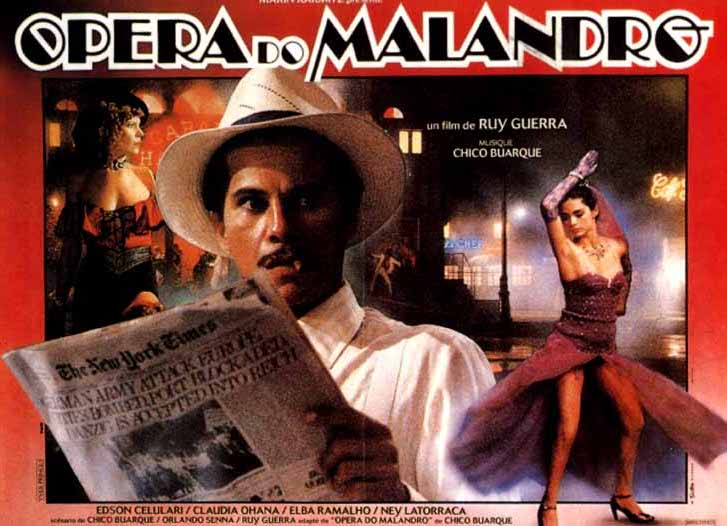
Malandro (A Opera do Malandro) (1986)

A Opera do Malandro (1986, The Samuel Goldwyn Company)

I have likely written about all these films before, so rather than quote myself I will link and then discuss the film briefly from a new vantage point.

When playing national word-association most will mention football (soccer) when it comes to Brazil. I would hope they would also mention music at some point if pressed for more words. Chico Buarque is among Brazilian music’s legendary names. Here you have a film that’s a dramatization of songs he wrote, but also quite a telling and compelling drama. The images I always associated with these songs in my mind here are given form and context in a great way, incorporating period and obfuscated commentary.

All Nudity Shall Be Punished (Toda Nudez Sera Castigada) (1974)

Toda Nudez Sera Castigada (1974)

Once when looking to get into the works of one of Brazil’s most famed writers, Machado de Assis, I was surprised to learn that some of his works had been translated into English. When seeking to discuss this Rodrigues-based film I decided to search anew. Apparently there was once a translation of his collected works that’s gone out of print. I’m not surprised by that fact. However, why I think films based on his works could translate better is the very nature of the medium itself. Especially now, you can get films to you. Theatre has, and always will be, either in text or as a spectator, something you have to actively seek out; it’s about live performance. All you can have at the push of a button is something recorded. Therefore, a visual interpretation of his plays, which would fill in blanks a reader may not know or think to fill in, could very well connect. This film is particularly effective, shocking and rather emblematic of his style and would work brilliantly as an introduction.

Love Me Forever or Never (Eu Sei Que eu Vou te Amar) (1986)

Eu Sei Que Eu Vou Te Amar (1986)

Whenever a film has garnered a major international award and then falls into relative obscurity, it always makes me wonder why. That question becomes even more relevant when the award was an acting award, but the film itself is also very strong. Fernanda Torres, daughter of Brazil’s most acclaimed actress, Fernanda Montenegro; has in this film her breakout role that won her Best Actress at Cannes. However, for as cloistered and chamber-bound this film is, it really is a tour-de-force and doesn’t feel overly-stagey due to the edit, and is well worth watching should you be able to find it.

Elite Squad 2: The Enemy Within (Tropa de Elite 2: O Enimigo Agora É Outro) (2010)

Tropa de Elite 2: O Inimigo Agora e Outro (2010, New Video)

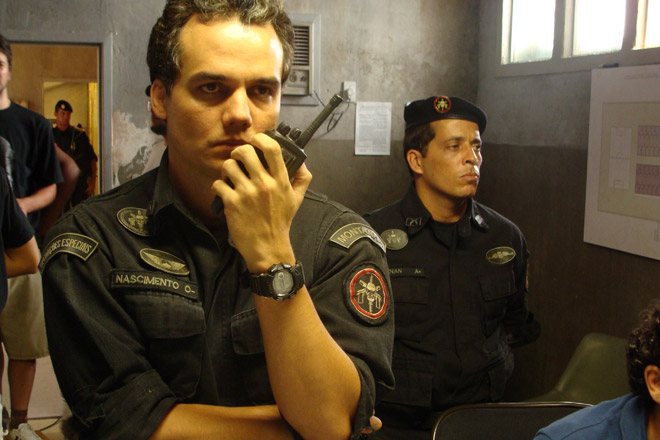
It sounds trite to start with: A sequel better than the original, but it really is. Granted, I’d never recommend you start with part two, but if you’re looking for an impressive double-feature with well-directed and choreographed action and sociopolitical intrigue it’s hard to top these films. These are also the films you should be watching when asking yourself: “Where did Spider in Elysium come from?” These are the kinds of, usually superior films, crossover international actors make their names in. Director José Padilha has also been rumored or linked to English-language titles and may get one yet.

Blue Eyes (Olhos Azuis) (2009)

Olhos Azuis (2009)

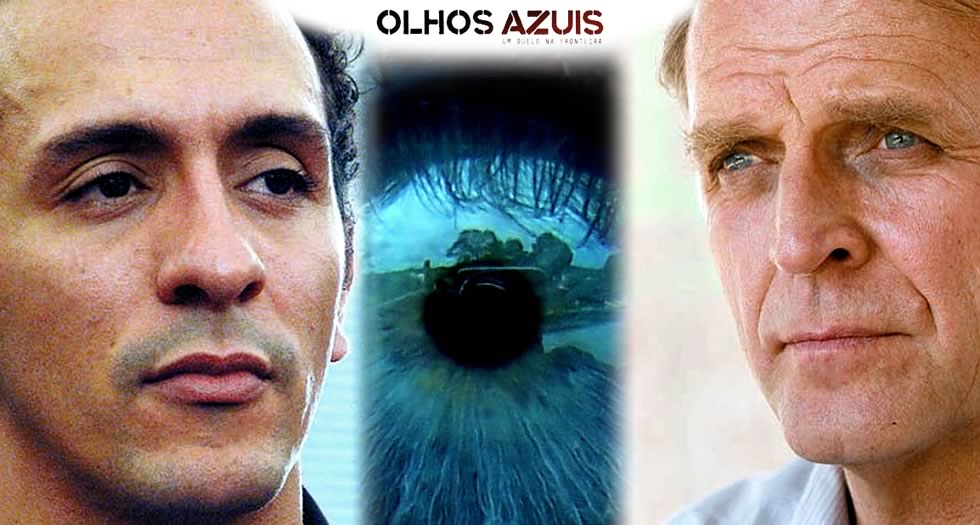
Kind of as antidote to the issues I discuss in the globalization of casting piece this film is a tremendously taut drama that puts an American character actor, David Rasche, in a starring role and maximizes his underutilized talents. This is a mightily overlooked piece of work that addresses the immigration question head on. It takes things to extremes and does engage in literal debate, but it’s about its characters too so that makes the piece inherently human for as politically charged as it is. It’s worth looking for as it features Irandhir Santos of the above title in another great role.

Film Thought: Why I Balk at the Megaticket Experiment

Not too sound too much like a get-off-my-lawn-type but I did have a few thoughts on the recent Megaticket trial for World War Z.

Now, as much as possible, I will separate these thoughts from my thoughts on the film itself.

As many have pointed out, it’s fairly ironic that this trial occurred about a month after Steven Spielberg and George Lucas spent quite a bit of time speculating on the future of films, and Spielberg made the observation that moviegoing in a theatrical setting was heading the way of the Broadway musical becoming cost-prohibitive for the average consumer. This ticket hit half the $100 bogey he set.

And this is what the $50 got you:

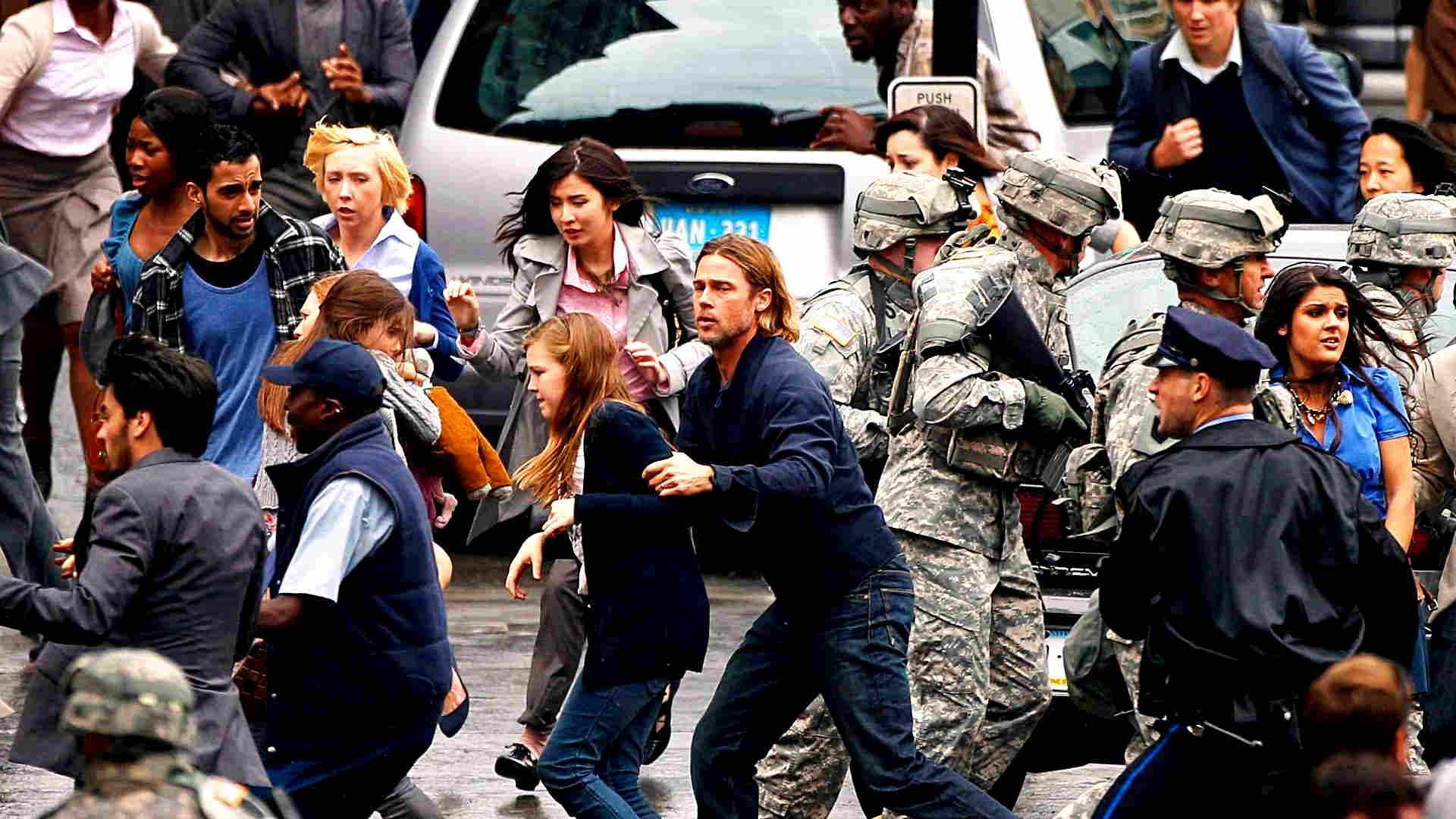
included a ticket to a 3D screening of the movie on June 19, two days before the film’s release; one HD digital copy of the movie when it becomes available; one pair of “World War Z” custom RealD 3D glasses; a full-size limited-edition movie poster and a small popcorn

World War Z (2013, Paramount)

My first issue is that if you look at the cost per item, you’re about breaking even but reserving the right to own everything right away (They claim $75 in value. If that’s true they’re overvaluing the glasses and digital copy to me). However, you get no soda and you get no physical version of the film.

I’m not going to say I’d never parttake in a megaticket experience (the early screening is likely the most enticing in this now/future film culture that exists). However, if I were to do it I would more likely shell out the money for a DVD/Blu-ray combo and a title that was pre-sold to me.

I honestly still have issues believing World War Z was pre-sold to anyone. Yes, the novel had quite a following, but it was widely reported that this was an adaptation in name only. So for something say like Star Wars: Episode VII, I might consider it. Otherwise it’s going to take me a while to get on board.

The inclination is already for the studios to forgo risk-taking, if we, the movie-crazed minority, will jump at the opportunity to give up even more cash per head than we already do we’re further ensuring the studios’ business plan and endangering theatrical attendance.

Not too be overly-alarmist but it’s not hard to foresee the slippery slope this could lead us down. Make sure we don’t redefine what an event film is. Some releases may be worth this treatment but not most, and certainly not all.

Silent Feature Sunday- Berlin: Symphony of a Great City (1927)

While I do watch many new films, and have annual awards and will discuss current cinematic topics. Part of my desire to create my own site was to not have an agenda forced upon me that was not my own. This allows me to discuss films from all periods of history whenever I see fit. Recently my Short Film Saturday posts have been running toward silents more often. I questioned this tactic for a second until I realized that if I really do hope to encompass all of film history then the silent era most definitely should not be ignored. If you mark the silent era from the birth of film (1895) to the first talkie (1927), and I realize it could be argued that the silent era stretched a few years beyond that, and also that there were experiments with sound very early; that’s still 27% of film history at current which was entirely silent. Therefore a weekly post (or, however often I put it up) is not out of line at all mathematically or otherwise.

The good news is that many silent films are available to watch online, and are in the public domain. So I will feature some here.

When writing of this film as one of my favorite older films first seen in 2011, I wrote:

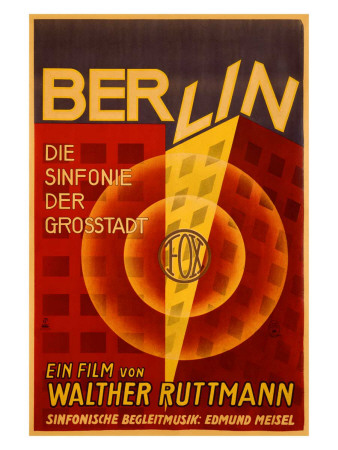
One of the most accurate titles you’re likely to see. It is the day in the life of a major metropolitan area but the way it’s cut and shot really is symphonic.

While I was economical to not blurb that post into being completely over-bloated, it did also remind me of another film, about another city that blew my mind. That’s as much as I’ll say now as I hope to feature it next week.

Enjoy!

Short Film Saturday: Oh Father

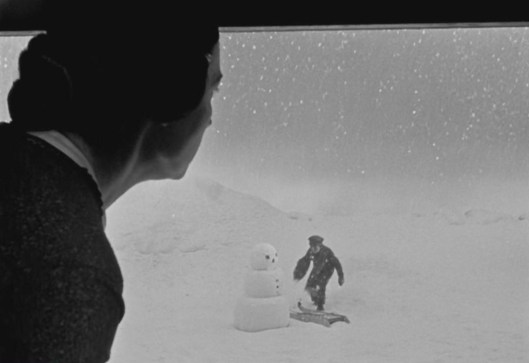
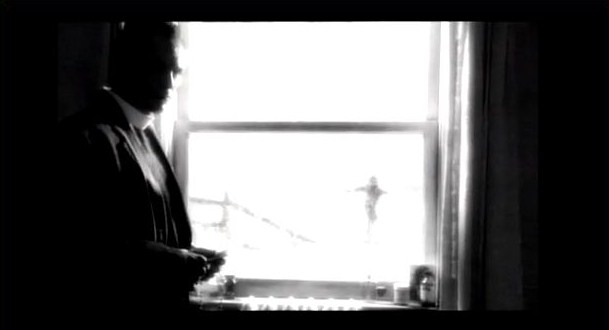
This Madonna video also features a cribbed image from a well-known film but it is not as renowned as her borrowing liberally from Metropolis for “Express Yourself.” This video for “Oh Father” borrows images from Citizen Kane. Kudos to the Comet Over Hollywood for spotting it and inspiring this month-long focus on Madonna’s videos.

Citizen Kane (1941) was named the greatest film of all time by the American Film Institute in 1998.

But prior to this, Madonna used themes from the Orson Welles film in her 1989 music video “Oh Father,” according to writer E. Ann Kaplan.

A scene similar to Citizen Kane in Madonna’s video “Oh Father”

The whole video is shot in black and white. At the beginning of the music video, a priest is looking out the window, watching a little girl spin and play in the snow. Inside, the little girl’s father is lying over her mother as she dies.

Madonna’s video was modeled after his scene of Agnes Morehead as Mary Kane watching young Charles Foster Kane playing outside.

The scene is similar to young Charles Foster Kane playing in the snow as his parents are inside, preparing to send him away with guardian to be raised in luxury. When Kane is taken away from his parents, he acts rebellious and is expelled from several universities.

The song and video were Madonna’s attempt to accept her mother’s death and her father remarrying.

“I had to deal with the loss of my mother and then had to deal with the guilt of her being gone and then I had to deal with the loss of my father when he married my stepmother. So I was just one angry abandoned girl. I’m still angry,” she is quoted as saying in a 2002 biography “Madonna: An Intimate Biography” by Randy Taraborelli.

Citizen Kane (1941, RKO.)

Oh Father (1990, Sire/Maverick, Warner Bros.)

Kane allusions aside it’s a fairly haunting video that I could scarcely watch when I was younger. On a musical note, there are perhaps no two more disparate back-tp-back tracks in her discography than this followed by “Dear Jessie” on Like a Prayer.

Enjoy!