Bela Tarr Retrospective: Werckmeister Harmonies (2000)

Introduction

As has become customary for winners of the Ingmar Bergman Lifetime Achievement Award at the BAM Awards, I have begun a Bela Tarr retrospective. The introduction and initial short film post can be found here and here.

Werckmeister Harmonies (2000)

So it’s been a little longer than I wanted it to be before I returned to this series and gave my first closer look at a title but here it is.

With Werckmeister Harmonies not only do you have Tarr fully embracing his new aesthetic but you also have him creating the trajectory of his remaining films. What can be found here is the opening salvo in the ongoing dialogue of his cinema. Some of the themes both visual and otherwise start here and you can feel them echoed in later works.

For example, the film begins with a shot of a piece of wood being added to the fire on an oven. Now, as it turns out here this is just the opening frame of a lengthy tracking shot, but the motif of wood-burning ovens, flames through the grate and things of the like reappear, most notably in the Turin Horse.

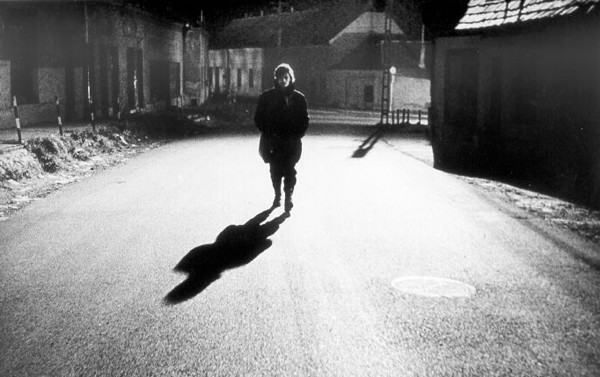
The opening shot is an intricate and quite a famous one. It is perhaps the most we will hear out of our protagonist. However, interestingly this protagonist is one whom for the most part is just a vessel with through which we can be shown the story, such that it is.
Werckmeister Harmonies (2000, Facets)

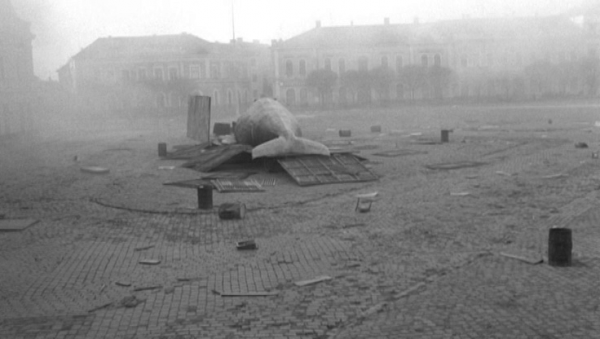
There are two significant and long speeches in the film and much like the only dialogue of consequence in The Turin Horse, the temptation to disregard it rather than trying to ferret out some semblance of meaning is compelling but erroneous. The first such extended piece of dialogue is right there in this opening tracking shot wherein Janos describes to bar full of inebriates the workings of the solar system. I read of a God Complex in one essay but the way Janos walks around observing the whale, being transfixed by it and assigning it no special significance, save for the wondrous work of God that it is, doesn’t quite mesh. I think the intent is likely to define Janos here for we will see little else throughout that does. He listens and does what he is told most of the time. Whether or not he does that to a fault is debatable, but what this is establishing is that he thinks on a simple matter and sees the wonder of it, much like a child would, and seeks to share his wonder. The barkeep lets him go on only so long before kicking him and everyone else out.

The second dialogue passage of significance is when the title the Werckmeister Harmonies is disseminated. It is a rant on musical theory on how the tuning of instruments and the regimentation of notes and octaves created something far more mechanical and less artful and organic than existed prior. On the surface it has nothing to do with anything else, save for the fact that it is this old man’s, Gyuri Eszter’s, obsession. However, it’s not the explanation that matters, but how he feels about it. He likens it to man tinkering with the work of God and here, yet again, we have a theological reference. Now, God here is being invoked in a more existential and cosmic way, rather than in a dogmatic way. It’s seemingly invoked as a larger ideal rather than a denominational claim, much like the the whale and the so-called prince, a dwarfish shadow-figure whose face is not shown threatens the natural order in the minds of many in the town, are.

As in much of Tarr’s work when he stayed shooting in black-and-white, moved the camera more and created a course the film is about decay. It’s about how we as human beings are always teetering on the edge of devolution and anarchy.
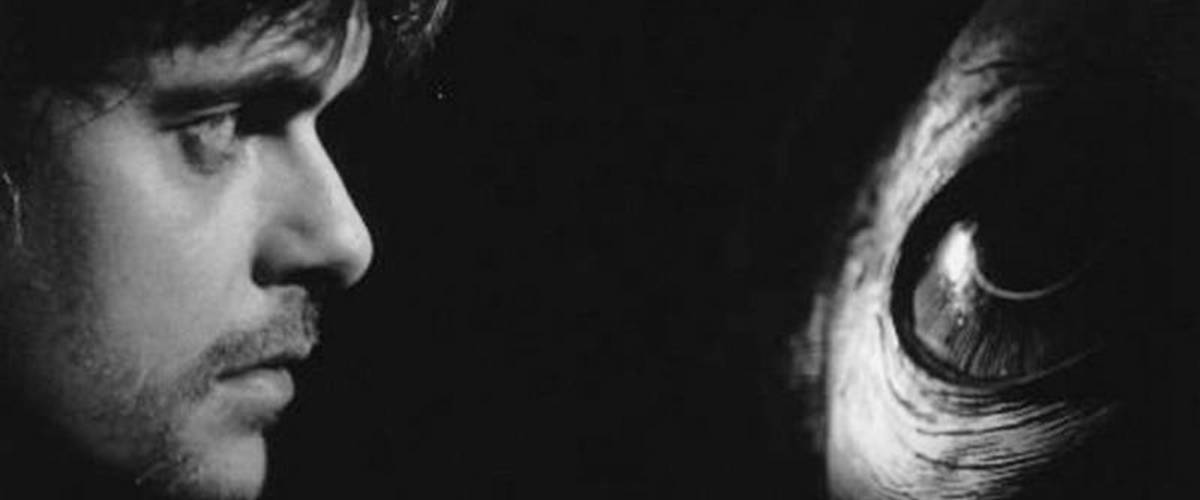
Werckmeister Harmonies (2000, Facets)

The sound of church bells in this film, much like in Satantango are ascribed and ominous connotation; similarly to that film a broken clock in a church starts working anew rather mysteriously. Much in the way many of the people, except Janos, interpret the whale in their own way. The allegory of the whale is perhaps the most powerful in Tarr’s filmography because for as large and imposing as it is, as much of a spectacle as it is, it can’t do anything. It does not do anything and neither does the feared Prince who evokes passion and creates followers. However, the people believe they can and do and that’s what causes them to react the way they do. The people want no change, in spite of its constancy, and when something threatens that they lash out.

The order the enraged mob seeks to be restoring is an illusion. It’s as much an illusion as film is, which could be why Tarr in this instance brought in two German actors, the wide-eyed, childlike Lars Rudolph as Janos and the formerly omnipresent Fassbinder vamp Hannah Schygulla; and had them speak their lines in German and then had them dubbed, and not necessarily in a way that syncs perfectly, because something it always off.

Uncle Gyuri Eszter, in his diatribe about the Werckemeister harmonies, states that what the struggle is as follows “the octave versus the note; the natural tune versus the manmade construct; the heavenly versus mundane; human hubris versus divine gifts.” And that’s much of what the struggle in this film is.

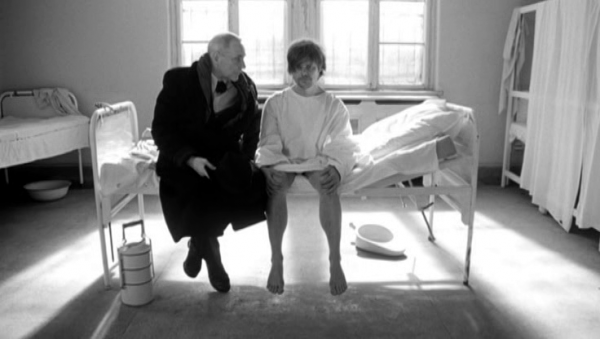
There are still mysteries to be unraveled. Many can assume, since we did not see him through much of the assault on the hospital, that Janos was not there. However, that long and significant tracking shot ends on him looking terrified after the violence stops upon the site of the frail old man who no one wants to harm. So one can wonder did he just witness it all, unable to stop it; or was he a party to it. Similarly is the account he reads in the church one he found or one he wrote himself. The film leaves them purposely vague. However, I think it correlates more with both his passivity and his folly that he was merely a witness. What is left unsaid the end that he was inactive in the assault and not the author of what he read.
Werckmeister Harmonies (2000, Facets)

When all is said and done he’s the perfect scapegoat. The society back to its so-called sense and must now restore order and the most logical scapegoat is Janos. They, meaning all the citizens, recognize neither God nor Man, so he must leave. The end of the film is uncle Gyuri Eszter going to see the whale. It is left out in the square on display where the madness began passive and immobile as it always has been.

It’s a film that’s really not about what happens, but why it happens and that answer is not nearly so nebulous people have willed it to be. They’ve assigned meanings based on their fears and ignorance and punished the guilty. In almost an eschewing of genre toward the end there is a helicopter, maybe verifying early rumors of military involvement, hovering in the sky behind Janos. It circles him quite bit, but it’s not going to try and barrel him over like the cropduster in North by Nothwest. It’ll just watch him and let him know that he’s targeted. He’s the odd man out because he embraced the whale and got the finger pointed at him and now he must go down the train tracks and out of town.

All that remains is delusion and lies, he’s told once and that’s the way it stays. It’s merely an illustration of that statement is what the film is. The people fear, they know nothing. They do not move on. The Prince is gone, the circus is burnt, the whale lies alone; an abandoned blasphemy and things go on unchanged.
Celia: A Cautionary Tale of Video Titles

I enjoy attending MonsterMania Con because it allows me a periodical dousing in horror. Recently I’ve taken to finally viewing some of the selections that I acquired while there this last go-round.

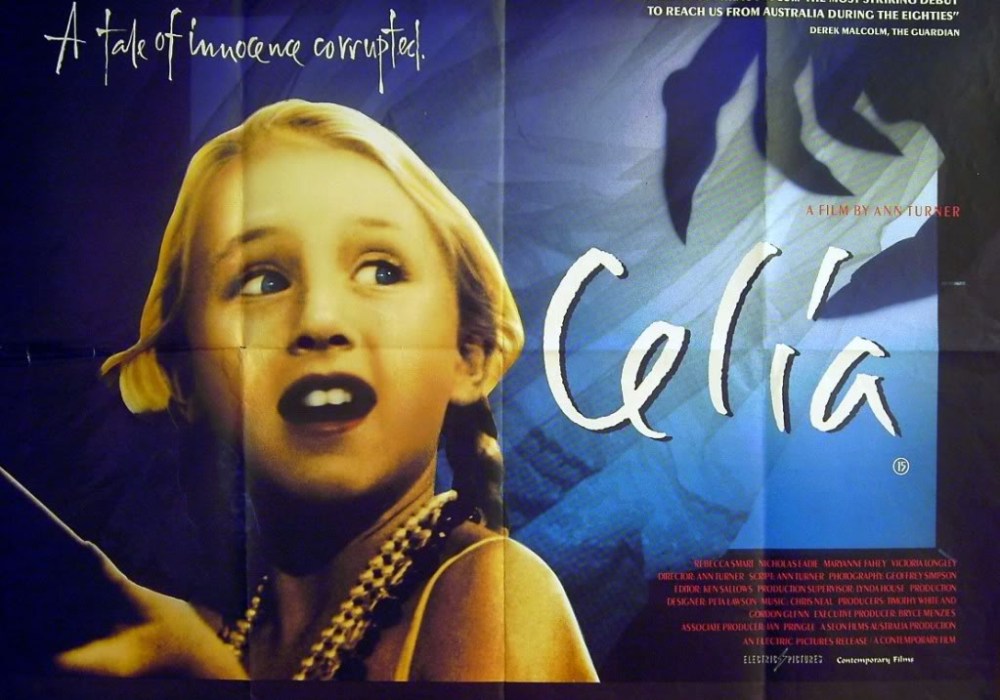
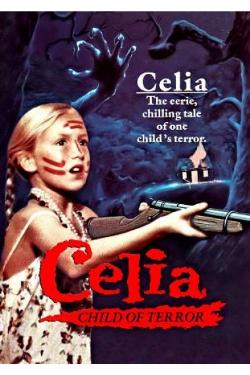
My most recent selection brought to mind, yet again, an issue that seems to be popping up more and more. One film I picked up was bombastically proclaiming itself as Celia: Child of Terror, and the cover image featured a girl (Rebecca Smart) with shotgun in tow.

Now the image of her holding the shotgun does occur in the film, and there is build in the film throughout. However, the title Child of Terror evokes something entirely different than what the pull quotes suggest. Child of Terror evokes something exploitative and potentially hokey, meanwhile, the pull quotes wherein Janet Maslin of the New York Times makes an allusion to Blue Velvet and where Tom Hutchison of The Mail compares it favorably to The 400 Blows and The Fallen Idol portend something more serious-minded. So these things do not necessarily mesh. However, it was the quotes and the synopsis that sold me on the film.

Celia: Child of Terror (1989, Scorpion Releasing)

As the film started, I was reminded of some of the factoids I absorbed about it months ago when deciding whether or not I should buy it. I saw the title Celia come up, without subtitle and something I kind of knew, but didn’t fully acknowledge until that moment, crystallized: Child of Terror was an add-on by the video distributor, a video box title as it were. Sure enough, the IMDb confirms that.

I was ready and open for anything and found that the subplots, the rise up to a boil at certain sections of the film, like the rabbit muster in Australia in the late 1950s and the ostracism of Communists and Communist sympathizers, make the film a more artful and dramatic piece than the box advertised. I rather enjoyed the film and I can separate something that’s in the control of the marketing department and/or distributor and the filmmakers. I can guarantee you that this subtitle has coerced others to buy or rent it and had them come away disappointed because they felt duped.

The other place I noticed something similar recently is that Full Moon Pictures has had a tendency lately to rename films of theirs that are about a decade old and re-release them through Redbox. On Redbox’s site the film shows a new release date so you assume it’s a new film rather than a re-issue. The only reason I caught on the first time around was through researching the cast. Eventually through an actor’s filmography I was able to discover what the film was called the first time it was released.

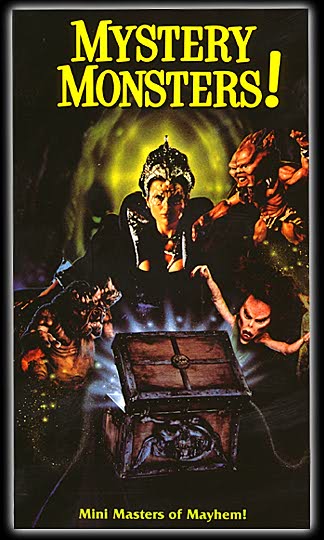
Mystery Monsters (1997, Full Moon)

The Full Moon film was called Goobers on re-issue and I liked it enough to include it here. I’m not quite sure yet if Celia will end up on the 2013 version of that list, but I do know that while Full Moon and Scorpion Releasing may be boosting their sales and rentals through this slightly misleading branding, but they’re playing with fire with this strategy.

Consumer advocacy shouldn’t really play into criticism. The film is the film and a review of said film is one’s explanation of what they think of the film and why. However, I am, at the end of the day, also a consumer so I think it appropriate to make this statement of caveat emptor separate from a review. This is just another case wherein one should be very careful. I knew full well that Goobers would likely be quite silly, I just didn’t know it was an old film. I learned and pass that knowledge on so that others may avoid that. I also knew that Celia would likely be artsier than the title implied and that too turned out to be the case. I was fine with both films, but not with the marketing strategies employed, and thought that others should be aware of said practices so you can make more informed viewing decisions.

Don’t You Recognize Me: Sarah Paulson

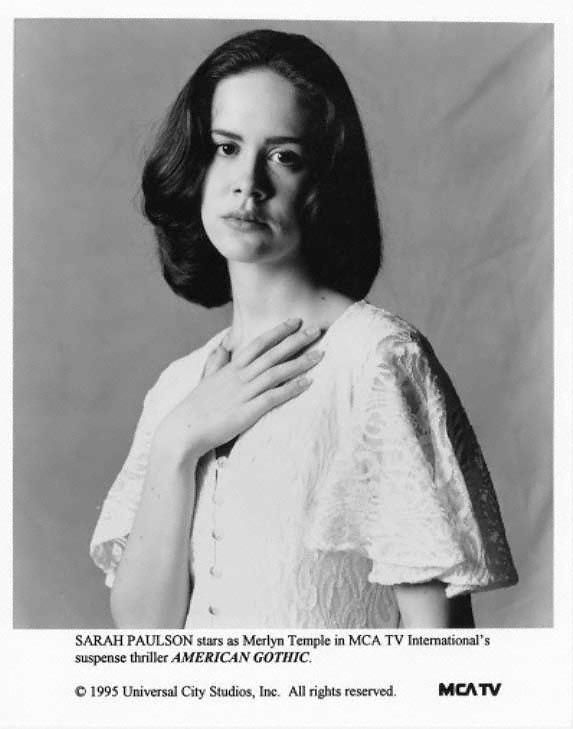
So here I am again with another of these posts that I plan on tossing up when I suddenly realize I knew someone who is far more familiar from an earlier role. This post marks the first actress included in the festivities in Sarah Paulson. However, it also is the first where I actually realized two early roles.

The first role Paulson’s occurred to me when I recently wrote about underrated comedies. I realized that she was in Held Up. She is in it the pretty girl that no one really notices until their all stuck together for quite some time in a very humorous scene.

American Gothic (1995, MCA TV)

However, there came another instance recently where I spotted her. I sat down to start watching American Gothic for the first time in eons and I noticed her name in the credits there and sure enough her role is pivotal in the first episode.

She may be most well-known now for appearances in Martha Marcy May Marlene, Mud and American Horror Story: Asylum but these are some early roles that did give an indication of her talent.

Short Film Saturday – The Adventures of Billy (1911)

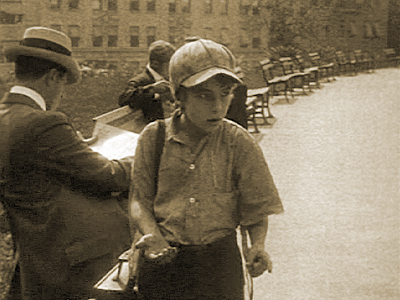
There are a few things to note here: the first is that this is the second Griffith title I watched for this weekend. The first I felt, though more interesting in its construction, is not as effective a narrative. Also, interesting to note, and I haven’t seen too much of this even in the silent era, but the title role of Billy, a boy, is played by Edna Foster, a girl. This is a practice more common on stage and in ballet than on film. In spite of that it is still an enjoyable film that gives you a sense of Griffith’s penchant for melodrama and social problem films.

Django Unchained: Mandingo Fighting and Phrenology

Introduction

The first full-length post on Django Unchained, my choice as Best Picture of 2012 was my first guest post and first translated post. However, owing to the accolades I gave it, and the wait, it was time to post my own thoughts on the film. This is the last of four posts. The first can be found here, the second part can be found here and the third here.

Mandingo Fighting and Phrenology

Here’s another section where some may have missed the forest for the trees. When we go to Candieland, perhaps the most deliciously hilarious and ironic name for a plantation to American audiences for its allusion to a board game where almost everything is wonderful, and, well, candy; we are introduced, directly and indirectly to two concepts: the first is Mandingo fighting.

Now, here’s a piece that covers the niggling question of “Is Mandingo fighting even a thing?” To be completely honest, I hadn’t read any piece on it until now, because to an extent it didn’t matter, and I’ll explain why shortly.

Next, there’s John Candie’s (Leonardo DiCaprio) “scientific” assertions of why blacks are inherently subservient. The speech, his illustration of the ridges on the inside of the skull and the smashing of said skull are ultimately what won Leonardo DiCaprio his second BAM Award for Best Supporting actor; it’s a moment as captivating as it is chilling.

Django Unchained (AP/The Weinstein Co.)

Now, getting back to the matter of truth, I will draw a parallel to Argo. Right after Argo won its anticipated Best Picture some select Canadians decided to go into a tizzy about the historical inaccuracies of the film. Apparently, they needed to be reintroduced to what movies are and the fact that just because they purport to be based on historical events does not mean they are under any sort of oath to be factual.

Coming back to Django, it does not purport to be based on historical events. Quite to the contrary it is consciously telling an alternate history. So, how come when we as the film nerds hear of gripes about a historical thriller we rationally say “Well, it’s not a documentary and doesn’t have to report the facts” yet, invention in a work of fiction can bother us? I ask this question hypothetically just to point it out. I don’t think too many people were upset by either of these elements in the film, but why should a film that’s not beholden to as many facts as one “based on a true story” not invent things?

Mandingo fighting as an element in the film is not only an ode to blaxploitation film of the 1970s, but it’s also an allegorical representation of how the slave states were in essence cannibalizing the African populous and profiting off their bloodshed. As King Schultz would say it was “another flesh for cash trade.” If nothing else in the film, things that actually happened like slaves being branded and whipped, people being lynched or the Klan burning crosses and terrorizing the ignorant, then this would; and it did me.

Django Unchained (2012, The Weinstein Co.)

As for the Candie theory on black subservience, considering that the pseudoscience of phrenology purported that the characteristics of the skull indicated ones faculties or mental traits, this is not that outlandish to put into a racist character’s mouth. What’s outlandish in this day and age is anyone giving any credence to phrenology. However, even if phrenology charts never went so far as to say indicate “African subservience” there was a generally unfounded and accepted belief that these were inferior, in fact, inhuman beings and these were the most dramatic rendition that Tarantino found to illustrate those points, and he drove them home so hard it should shame anyone.

Whether there is any basis in fact for these constructs is virtually irrelevant. For as Hitchcock said “…in my fantasies, plausibility is not allowed to rear its ugly head.” Any of Hitchcock’s edicts needed to be ciphered a bit. I think he meant he didn’t lose sleep if something seemed plausible, I think he did worry about if it made the story better and if it made sense, and I think these touches by Tarantino definitely do.

In Anticipation Of: The Necroscope

NOTE: This post has been updated. New information that supersedes the production update in the body can be found at the bottom of the piece.

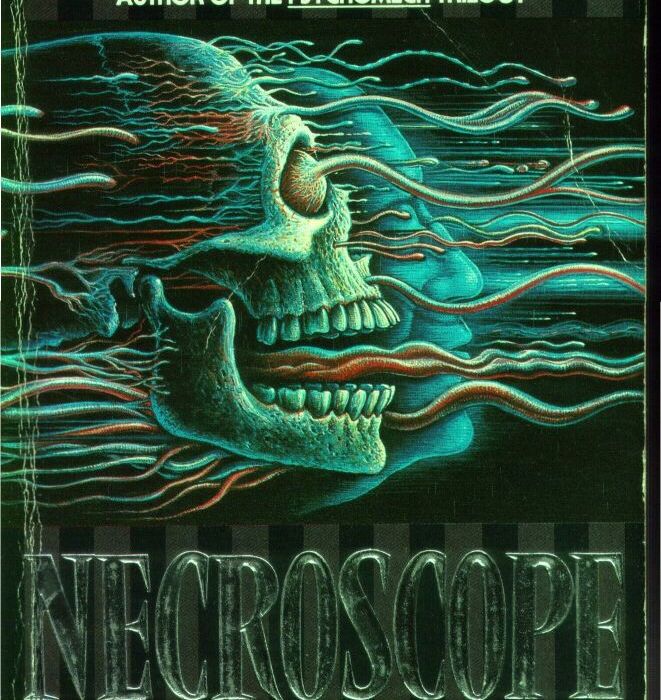
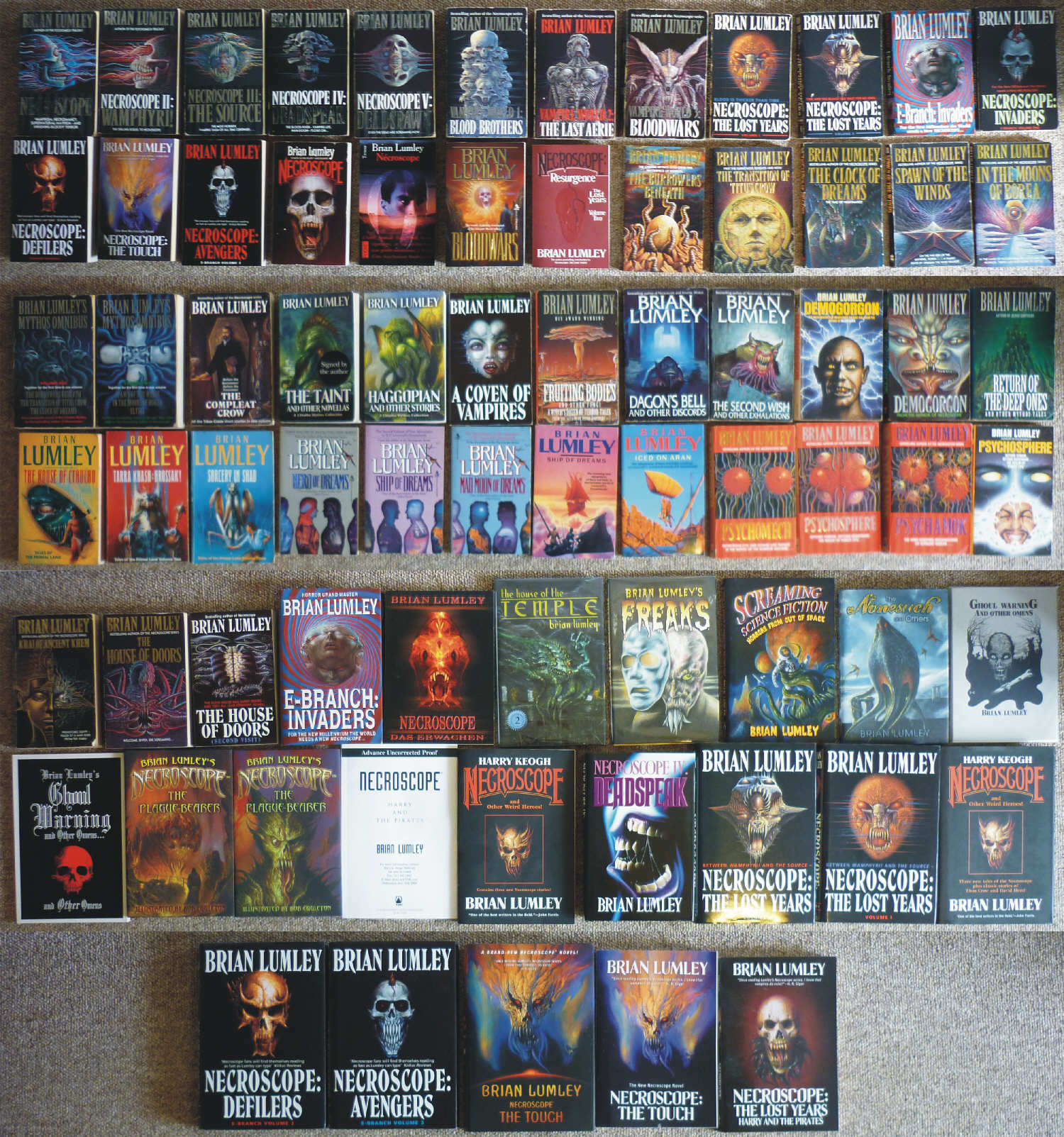
The first time I did a piece labeled In Anticipation Of it was regarding Mercy the adaptation of the Stephen King short story Gramma, which was produced by Blumhouse and will be released by Universal Horror. With this one I have decided to go with something that I’ve watched off an on for a long time that could probably be better described as being development purgatory rather than development hell for a long time.

My history with the Necroscope, if we are to be quite literal, goes back to just after I started reading the horror genre. I really started to embrace horror, and enjoy being scared, after I watched The Shining in a cinema class. I then proceeded to read Desperation, then Bag of Bones, and despite my not enjoying that one quite so much, I borrowed It and then I was a King devotee for life. As I went to browse bookstores for more King, or other future possibilities, I came across the Necroscope series. The only reason I delayed really was because it took me a while to look up and confirm the correct reading order.

The books that really caught my attention were the covers and stories of the Vampire World trilogy, books six thru eight. However, there was the debate about committing, at least in theory, to a series that long. Then I did. The first two books are brilliant; absolute masterpieces of the horror genre. Further on down the line there are still strokes of genius. For as good as the beginning is that section, which I did eventually get to, is very strong. And the most recent book, a short novel entitled The Möbius Murders, is by far the strongest installment in The Lost Years chronology.

Necroscope (Bob Eggleton)

Part of the issue with a film, or potential series of films, in my estimation, has been the budget that I believe a halfway decent adaptation would incur. While I was in college I immersed myself in Lovecraft for a time such that not only was I worried for my mental health for a week or so, but I also managed to turn out my take on the mythos in screenplay form. The script was what I wanted it to be: a tale that would take its time yet consistently build atmosphere and pace. However, my best guess that at is original 150 pages its budget would be at least one million dollars a minute, and that’s a problem for a Lovecraftian tale. Therefore, I decided to turn said spec script into prose. Just look at how the supposedly high-budget At the Mountains of Madness fell apart. My expectation for the budget on Necroscope is similar. Add to that the international intrigue, foreign tongues, potential for voice over, finding the correct tone and detailed mythology being built; and there are pitfalls.

Yet, that hasn’t stopped the property from being optioned numerous times. Like I said, I get why, but as Lumely’s site reports it’s now six consecutive years the option has been picked up. What prompted me to write this piece was that after hearing the words “Necroscope” and “movie” on TV, as Glenn Hetrick was introduced on an episode of FaceOff I wondered “Is it really that much closer to happening?”

As per Lumley’s site in March, it seems not, save for the most recent renewal. Maybe Hetrick was just trying to get some interest, buzz and free advertising for the possibility. Can’t say I blame him really.

geek_lumley_lg

However, this property, which is amongst the iconic properties of horror fiction, is also on a short list of big properties oft delayed, and this one likely offers a bigger tonal challenge onscreen as opposed to things like King’s Dark Tower and The Talisman, which have also been oft delayed and changed hands many times. It’s getting to a point where I do wonder if I could fight my fandom when a film came out: could I supplant my image of Harry in my mind? Could I deal with a Yulian not speaking Romanian, and so on? I’d like to think so. However, with this project so long in the offing and seemingly still so far off I honestly can’t answer as a fan if I want to see the film happen. I just know that if it does, when it does I’ll be there.

UPDATE: I recently saw a link to a Necroscope fan group on Facebook, joined, and it seems Glenn Hetrick messaged the group Admin with an update on the status of the project. It reads as follows:

Happy New Year Guys! There is nothing that I can discuss at the moment, we are honing the pitch and script and setting up meetings for early 2014 with studios, but this entire process, contracts, waiting for responses, etc. is quite drab I assure you, so the reason I have been silent is that there is nothing new to report other than we are moving forward. Not a day goes by that I do not spend time on the phone or computer trying to push this ahead, if you think you are feeling impatient I also assure you it is far worse for me. There is also the legality of the whole thing, which will compel me to remain reticent even once we have a deal, up until such time an interested STUDIO concretes a deal, picks it up and then decides to officially announce the project, which i feel will be sometime this year. During that entire period I will not legally be capable of discussing the project publicly, but just know I am throwing everything I got at this. It requires a Herculean effort to get a film produced by a major studio and near impossible to get that done right, with integrity of the source material intact, a promise I made to Brian personally. I am years into the process…we are getting close. Know that as soon as there is something to report, I will do it here. Currently working on Hunger Games sequels and will be going back to shoot Face Off again soon, during which time I am developing new designs and visuals for our pitch whilst tweaking the script, fingers crossed everyone! Ok, rob, get to liking, I want bloody fingers!

Book Review – Pre–code Hollywood – Sex, Immorality, & Insurrection In American Cinema 1930–1934

One parallel I’ve recently noticed that exists between non-fiction writing and filmmaking is that the question of scope is very much relevant to both. If you want to truly convey your message and your narrative, you had better not lose the reins and have control of where you are taking your audience/reader.

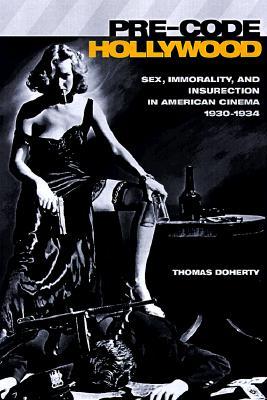
What’s most impressive about Pre-Code Hollywood is that while it covers a vast array of topics it’s always tying back to cinema. If one is to attempt to be comprehensive in covering the how and why advertising and film had perhaps their wildest, most defiant short span in America then many things need to be accounted for: what the films were (including a vast array of subgenres); why they were which touches on many sociopolitical upheavals worldwide during this volatile time and what industry politics and machinations were that allowed producers and studios to so openly scoff at the Production Code in its early years.

In short, there is a lot to discuss and there is virtually nothing this book leaves uncovered. There were a number of subgenres that truly mark this period like Prechment Yarns, Gangster Films, Prison films, those are fairly well-known, but then there’s also the Dictator Craze, the subversive traits running through many films, the Depression-tinged tales, whether in large or small doses, that touched on obvious or at times more timely side effects of the economic hardships facing the nation and the world.

While those kinds of effects may all seem obvious it was also a time that was revolutionary in film. Sound was new and the one-liner and fast-talking dame were coming into vogue. It was a time where there was a craving for the morality play of the Three Little Pigs from Walt Disney and also for the inappropriate innuendo of Mae West; in short, pretty much anything goes.

This creative bedlam, of course, could not last. The brushback, and how that all came to a close, is also included. It’s truly rare that in the history of anything that a four-year-period can be so crucial, yet here is one. I had, of course, learned of the inception of the Production Code and of this period, but for years had only the vaguest notion of what this era was truly like and why, even having seen many of these films. With this book you’ll walk away with a much deeper and richer understanding of it. For not only was it a wondrous, yet brief stint, but it also set the stage for the true Hollywood Classical style to emerge.

Short Film Saturday: The Show (1922)

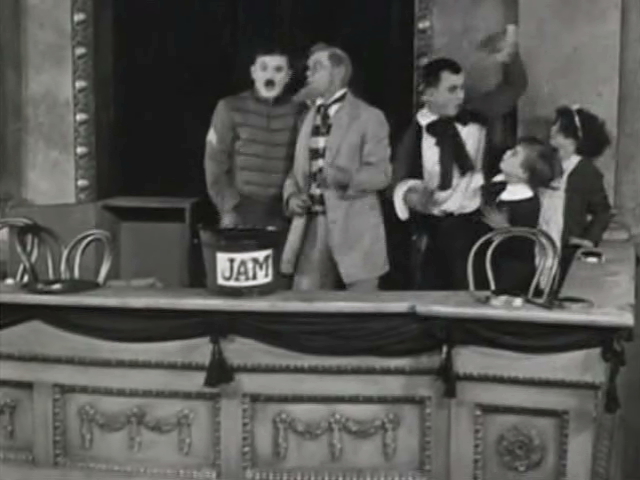
There are a few interesting things to note about The Show. Firstly, this is a silent and solo appearance by Oliver Hardy. I know both he and Stan Laurel both worked in the silent era, but they only truly excelled with one another and after the inception of sound.

Hardy does fine but is not nearly as dynamic silent as he is with audio. The lead is Larry Semon, though it seems at times in silent comedies that the gags were the star rather than the actors. The gags in this film are great and kept me laughing pretty consistently.

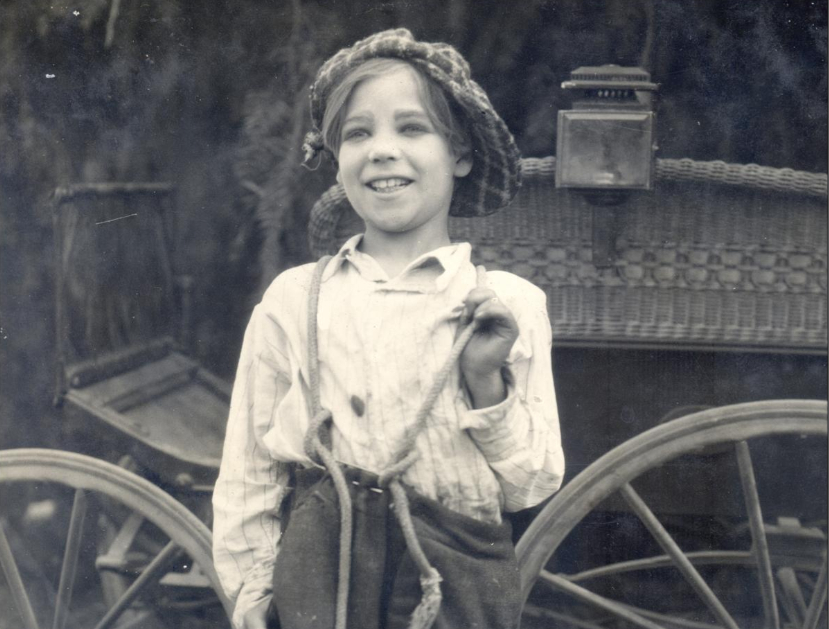
Lastly, the reason I even knew of this short is because I recently read a wonderful memoir called The Keystone Kid. In it author Coy Watson, Jr. chronicles his childhood in Edendale, CA; (Where the first west coast studios were established), the exploits of his father, Coy, Sr., an ingenious behind the scenes man most noted for being the first wire technician in films; as well as his own and those of his siblings who all acted. In an appendix there are descriptions, photos and a filmography. I have been in search of many of them and this is the first I found.

His entrance in this short is noticeable. He is part of a family who is frugal and creative when it comes to theatregoing. Enjoy!

Film Thought: Film Word Association

It recently occurred to me that though one could think of many moments to associate with almost any film, especially one you particularly enjoy. Some films have that one iconic moment or element that stick in your mind, in some cases whether you saw them or not. For some of these films it’s a positive attribute, in other cases less so.

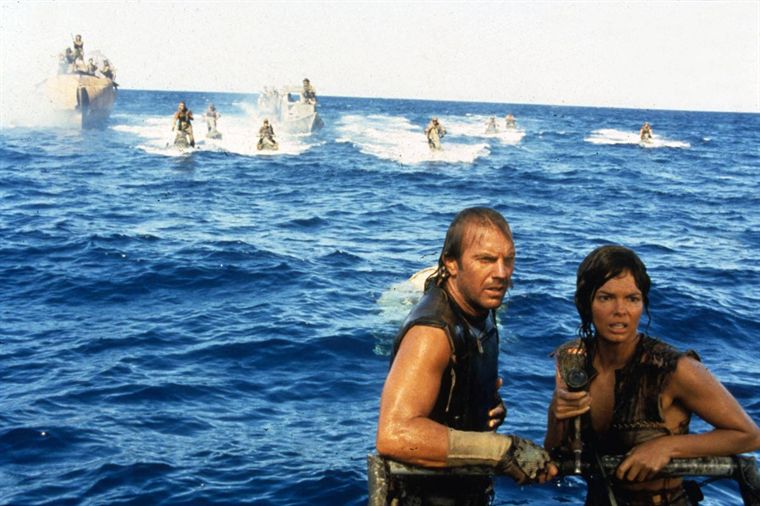
What made this notion come to mind was hearing mention of Waterworld. The word that instantly came to mind was: urine. Now, I don’t believe I’ve ever seen more than a few fleeting glances for it save for a scene here or there on TV. However, I heard of that element of the story enough that it’s the first thing I thought of. Similarly the original Total Recall had in it its famous scene that was the first thing that came to mind. That word association would be a cheat being two words, but still you get the idea.

It made me wonder how many films would conjure one instant word or image. It’d be rather trite for me to sit here listing all the ones I came up with, I think it’d function better as a game. If you want to try it here you can feel free to comment, or you could do it any of number of ways online or in person, with friends, family or non-frightening looking “strangers on a train” (Tennis, see it’s easy!). I’m sure there would likely be some rather funny results if were forced to pick a descriptive and representative word from a number of films.

Book Review – The Keystone Kid

From Time to time when a book should happen to overlap into the realm of film in some way I will take occasion to review it if recommended.

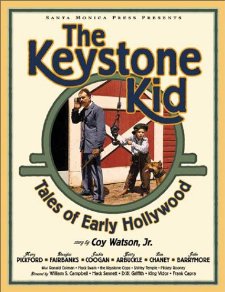
I’m not one who is usually prone to reading memoirs. However, when doing research for a personal writing project, the very same one that inspired Poverty Row April, I came upon a fascinating memoir called The Keystone Kid by Coy Watson, Jr.

Starting from his father’s emigration from Canada to California and how Coy, Sr. met his mother, through the arrival of the film industry in southern California, in Edendale not Hollywoodland as of yet, to later milestones; this book offers a fascinating and unique look at the artform when it was being created essentially on the fly. I will try and preserve most of the surprise for you the prospective reader, but I will note that one of the incredible revelations is that Coy Sr. was quite the intuitive creative force behind-the-scenes in the formative years of the film industry.

As for Coy’s childhood recollections, the descriptions are vivid and free from embellishment. His tone is an impressive combination of childhood wonder and elderly reminiscence that you could sit and read (or imagine yourself listening to) for hours. It’s one thing to make a simple declarative statement, for example, when he discusses how much love was in the Watson house, but he really makes you feel that and the playful, fun and adventurous early days of film. While the tale is told anecdotally there is also a certain plotting to it. Certain things, like Watson’s interest in photography, are setup then followed up upon later.

The Keystone Kid (2001, Santa Monica Press)

Aside from the wonderfully moving storytelling, the book also does serve as a significant document in film history illuminating not only Coy, Senior’s status as a pioneer, but also serving as a reminder that even before the Barrymores, this was the first family of film with all nine of the Watson children gracing the screen in more than 1,000 films. Yes, that’s one thousand not one hundred.

There are some amazing things in the book that will leave you awestruck and they could’ve only happened when films were young, and they could only be reported by someone who lived it. It’s a fascinating, wonderfully enjoyable book that’s highly recommended for all fans of film.