Dubbing Review: Harry Potter and the Chamber of Secrets (Brazilian Version)

One thing I thought would be interesting to include in a Thankful for World Cinema-themed post would be a closer look at dubbing. I have written about dubbing prior. However, in this instance I figured a suitable follow-up to the initial discussion of dubbing as a practice would be to take a closer look at a film by focusing on its dubbed track.

To be able to do this more easily I chose a film I was very familiar with (Harry Potter and the Chamber of Secrets) as well as choosing a foreign version I could analyze well (The Portuguese voice cast from Brazil).

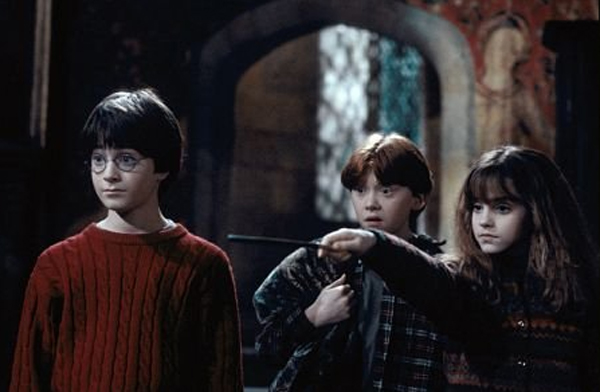
Rupert Grint in Harry Potter and the Chamber of Secrets (Warner Bros.)

Here are my thoughts on the dub of the film:

Firstly, I think (and I may experiment to see if this holds true) that understanding key for viewer and casting. From a viewer’s perspective who does not speak the language they are then listening to it’ll play out like that scene in Home Alone where the kids are in Paris watching a dubbed version of It’s a Wonderful life and are befuddled by it. In cinematic terms, I think the dub, on closer inspection, does tamper a bit the the integrity of the soundtrack. At least with this film the voices were more isolated and separated from the rest of the audio mix. I’ll grant my set-up may have some to do with it, and perhaps disc settings.

However, I found that listening to this film in Portuguese was a very enjoyable experience in spite of some of these minor quibbles. There were, of course, necessary dialogue adjustments and changes of syntax in deference to making the sync match better, but more often than not the new line was analogous enough that the sacrifice of exactitude was acceptable. One example of these changes would be:

When Malfoy says to Goyle “I didn’t know you could read” the Portuguese translates back as “I didn’t think you could read.”

That’s a minor example, especially compared to what happened to Let the Right One In‘s subtitles on home video. In a lot of cases it’s rewording as opposed to rewriting. More often than not things are done beautifully in this dub actors have the proper inflections and are cast impeccably nailing so many characters dead-on; one small example would be Vernon. There is some word play beautifully adjusted so it still works in Portuguese. Some of the few lamentable things are ones that really don’t make sense and you think would be mandated like the Dr. Strangelove reference in Cornish Pixie scene is out and the Parseltongue is no longer jumbled.

When you know the script fairly well it really gives you more insight to technique. Examples being that stiff-lipped actors help such that the audience is easier to sell on a match of lip movement because of it. There are some more liberties taken with the precise wording when a line is delivered by a character whose mouth does not appear onscreen (whether in voice over or over-the-shoulder). Some lines, in the interest of matching, are accelerated or decelerated as necessary. The trick then becomes for the actors to keep the same intentions of the original while performing a very technical task and in this particular film that usually happened. At times this is not quite by design, every so often an actor would feel a bit too rushed, but considering some of the bad dubs I’ve subjected myself to it’s hardly worth belaboring.

]Charles Emmanuel in the studio for Harry Potter and the Sorcerer's Stone (Charles Emmanuel/Warner Bros.)

Watching the film in a different way you’re also on the lookout for different sections; one of the sequences that is absolutely nailed is the Dark Forest sequence. There are many standouts but perhaps the most prominent being Charles Emmanuel, with him it’s almost as if Rupert Grint had learned to speak Portuguese. The interpretation of the character was so in sync. Ana Lucia Grangeiro as Hermione is also excellent. She apparently was, if she no longer is, an incarnation of Monica.

Perhaps the biggest thing I realized in this viewing is that dubs themselves are productions, not unlike films. Some get it right, others do not. The Harry Potter series was a first class production in English, as well as in (Brazilian) Portuguese. Dubs also have the unenviable task of recreating the reality of the film for a new audience. I’ve not yet seen it, but my cousin told me how Darth Vader in Portuguese had a more robotic quality to his voice; and that it was almost a letdown when he saw it in English for the first time. Granted much of it has to to do with what you experience first, but that’s the point: a kid who’s still mastering reading, or can’t yet, will not be able to deal with subtitles. With the quality of dubs that Harry Potter received in Brazil it seems that many kids there got a fairly similar experience to the ones here.

Film score: 10/10
Dub score: 9/10
Thankful for World Cinema: The Golden Dream (La Jaula de Oro) (2013)

Introduction

For an introduction to the concept of Thankful for World Cinema please go here.

The Golden Dream (2013)

La Jaula de Oro is a film that I was completely unaware of until one of my more dedicated readers saw an article written about it in light of the Directors’ Fortnight in Cannes and sent it my way. The film then ended up on My Radar and one I wanted to see not only based on the story but based on the director’s work with non-professional young actors in this film.

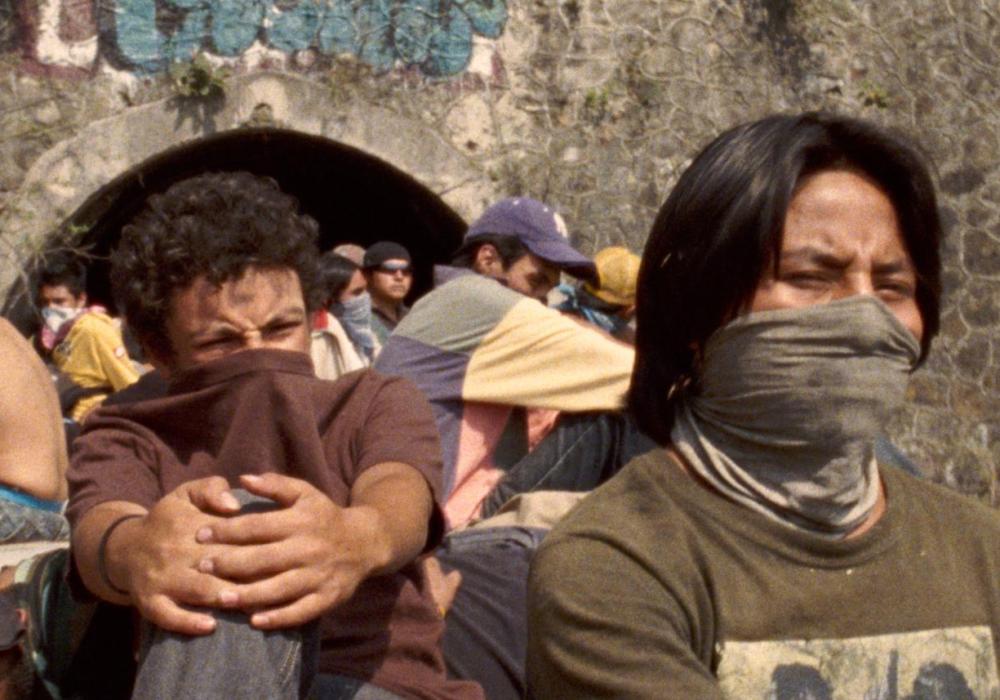
La Jaula de Oro follows three Guatemalan teenagers Juan (Brandon López) , Sarah (Karen Martínez) and Chauk (Rodolfo Domínguez) as they try to get through Mexico and ultimately across the US border.

This is a film that has very little reliance on dialogue and few conversations of any consequence. It’s a story that’s told with visuals at the forefront, focusing on the landscapes around the characters and how they interact with them and each other non-verbally.

The film sets this tone early on as we watch Juan and Sarah each make their own preparation for their first attempt to leave. Some of the maneuvers made may seem curious but as events play out they will become clear. Other occurrences that are wordless are the way the characters change in the way they look at each other. This quietude is almost by necessity inasmuch as Chauk is a Guatemalan native and does not speak Spanish; therefore nonverbal cues are key.

López, Martínez and Domínguez all perform admirably in this film and based on the direction, and the work they all put in together, you’d never guess that this was their first venture. López has perhaps the most challenging role before him not just being the lead, but also taking a seemingly simple arch through several one-note iterations and slowly progressing. However, the progression does come through. Martínez has a persistent duality to her role as the has to have a gentle nature but also be tough enough to be believable as a boy, as she is traveling as such. She achieves both these tasks with ease. Lastly, Domínguez through all his close-mouthed stolid persona has to emote wordlessly with few single reaction shots and manages to.

In an interesting decision that I’ve seen a few times, but never as persistently as in this film, when Chauk does speak his native tongue it is not subtitled. His companions don’t understand exactly what he said so neither do we, but in most cases we get the gist.

The film does illuminate many situations and facts about the northward migration that most either don’t know or never considered. Firstly, that it’s not just Mexican citizens trying to cross the border but also some of the realities on the road, which is really the focus. For the film eschews the MacGuffin of illuminating what is exactly that’s prompting these teenagers to make their attempts solo. It cares about the journey instead.

La Jaula de Oro puts its characters before any overarching messages. Sure, they are there if you look for them based on how certain situations play out but they are never vocalized. It’s a depiction rather than soap-boxing and it’s one of the more compelling dramatizations of this journey that’s been rendered in the past several years.

8/10

Thankful for World Cinema: You and the Night (2013)

Introduction

For an introduction to the concept of Thankful for World Cinema please go here.

You and the Night (2013)

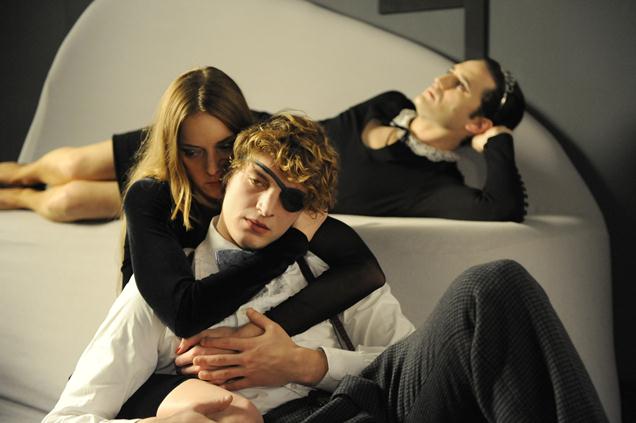
I have a theory about this film. I put that forward from the start to immediately plant the seed that it’s the kind of film that one might develop theories about. Now, the cynical view would be that any film that requires theories about it is being far too abstruse for its own good. However, there are a number of affectations within this film that I believe make theorizing not only necessary but welcome.

The set-up, on the surface, is a simple one. Round about midnight a couple and their live-in transvestite maid are in preparations for an orgy. The guests at said orgy are all “labeled.” And I mean labeled such that they are hardly if ever referred to by name but rather as a label: The Slut, The Star, The Stud and The Teen. Even the maid, who can be argued to be one of the more central figures in the narrative, is usually referred to as just that, The Maid.

That’s just one thing that lends some credence to theory-bearing. The hints flow into the story slowly. There is a deftly not-much-commented on futuristic music player, there are sudden theatrical infiltrations of negative fill in the apartment during story telling by many of the players. When there are intrusions of seeming reality (such as the police in search of a missing person) the interaction is odd, stylized and over-the-top, but decidedly so and not accidentally. All this and more contribute to a notion that the film is fact an utter fantasy fashioned as such to examine as many sexual quirks and avenues in singular psyches as possible.

The lack of convention can be plainly seen in the third act as fantasies dissolve back into a reality that more closely borders the surreal than ever before in the film. These are the more secondary intimations that have less bearing on the plot, the more obvious hints that I interpreted this way cannot be discussed lest they give away too much of the film’s action.

There are many subgenres and approaches to film that require more out of actors and this film certainly gets plenty from its ensemble. The central triad is played by Kate Moran, Niels Schneider, whom I recognized from Xavier Dolan’s Heartbeats, here he is equally as evocative if not more so; and lastly Daniel Maury as the maid. For as absurd as the interactions of this trio may be they pull it off, and more importantly, behave as if it’s the most natural thing in the world. Flanking them are footballer-turned-actor Eric Cantona who has a similarly unenviable task of not only saying his monologues straight-faced but selling them and succeeds. Fabienne Babe astutely plays the star-in-hiding with skeletons in her closet. Alain Fabien Delon, son of legendary French leading man Alain Delon, brings a perfect ingenue-like quality to this film and effectively plays a fought-over prize. Perhaps the most enigmatic, and in some ways most lacking character is that of The Slut, however, this is no fault of Julie Bremond’s. There is an attempt to plumb a profundity beneath a pornographic façade of all of these characters. The results with her character just don’t prove as conclusive as they do with the others.

There is an odd kind of mysterious magic that keeps You and the Night engaging throughout. It’s tale is a curve rather than a straight line and thus the end is a bit of an ellipsis. However, ultimately the journey is an intriguing one which plays out a bit like Pirandello writing an exploration of human sexuality for a different medium in a different century.

6/10

Thankful for World Cinema: In the Fog (2012)

Introduction

For an introduction to the concept of Thankful for World Cinema please go here.

In the Fog (2012)

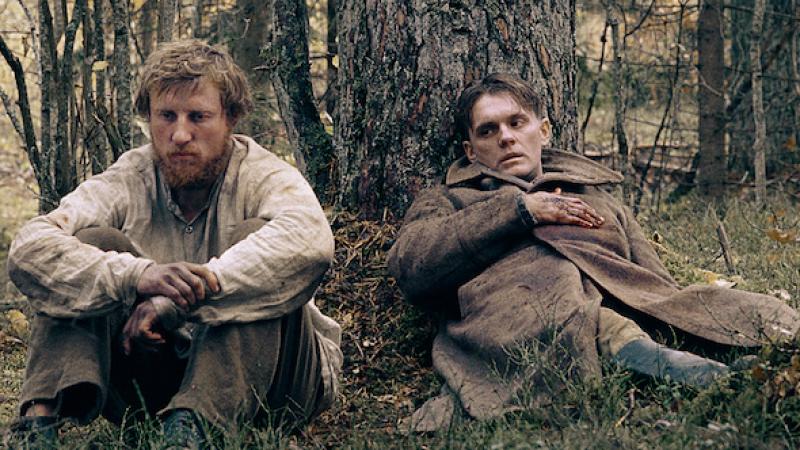
In the Fog goes about its narrative in a few ways that are a bit outside the norm. By norm I mean standard three-act formatting and forward-moving chronological narrative. What this film does is persistently but languidly pushes its narrative forward about twenty to thirty minutes at a time then at a necessary crossroads backtracks to fill-in any blanks that may have been left by the previous passage. However, the reason this method works for the most part is that you get a bare minimum of information as you need to be able to follow the plot. What the backtracks do is illuminate the shock, but what had occurred prior is engaging because of the basic drama, and in part some of the disorientation being felt.

Another aspect that makes this structural decision adept is as you follow the tale of this man who has been wrongly accused of collaborating with the Nazis who are occupying Belarus at this time is that the end of his, and the film’s, story are not that difficult to figure out. However, the structuring of the tale is such that impact of most plot points and twists is heightened and made more profound by information you glean after the fact.

Nearly all the drama in this story centers around three soldiers: Sushenya, the accused (Vladimir Svisky), Burov, sent to capture him (Vladislav Abashin) and his partner Voitik (Sergei Kolesov). It is largely thanks to these three performers that you stay as engaged in this tale as you do. Much of the time these three are interacting, either recounting what has occurred or engaging when only stakes and not details are yet understood and its their commitment and clarity that is communicating what the details omit.

Another aspect of this film that is worth noting is that the framing is usually rather loose and withdrawn, leaning toward wide shots that are fairly static. It plays into the more storytelling nature rather than a battle tale. The film is a human tale amidst a war not a war film amidst humanity.

Perhaps the most interesting aspect of this film is the psychological. Both the psychology of the characters that is examined throughout, but also the psychology of the Nazi nemesis in this film, which is very accurately portrayed and seemingly well-adapted from the source material.

The only things that really holds this film back are that slight bit of lag, and the fairly clear endgame in sight. However, those are not the be and all and end all of this film, thus, those facts are not ruinous to this film and it does manage to engage well enough.

7/10

Thankful for World Cinema: The Fifth Season (2012)

Introduction

For an introduction to the concept of Thankful for World Cinema please go here.

The Fifth Season (2012)

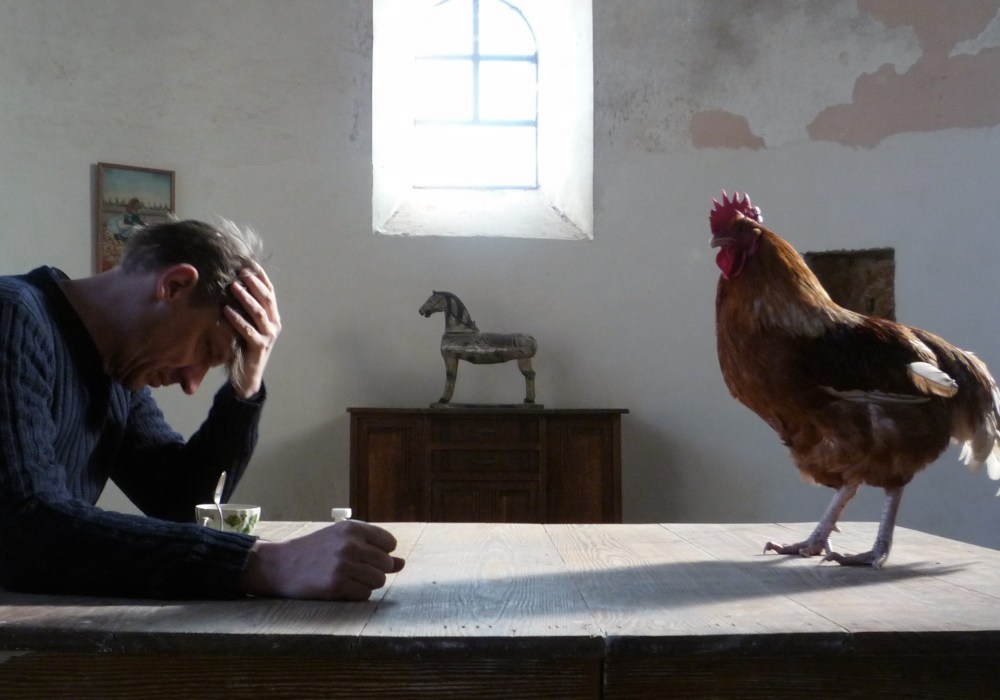
The Fifth Season is a film that tells the story of a small town in the Ardennes region of Belgium that starts to suffer greatly when winter doesn’t end as its supposed to. This is a film that starts out with a more community-oriented view and starts to narrow its focus to a few central figures and storylines, as the climate begins to take its toll on the agrarian community more and more as things deteriorate.

These problems get their first indicator at a bonfire celebration. In a scene that could be plucked out of a low-key horror film you get a sense that some very weird things are afoot. As with many stories about unusual occurrences, there is naught found in the way of explanation. In lieu of that we examine people under duress and see what they do when bereft of  basic necessities. It’s a harsh illustration not only of the affects of climate change but also mob mentality which assumes that it can’t be everyone’s fault, which is the more likely explanation, but rather seeks to find a single person to scapegoat.

However, on smaller levels you also witnesses relationships deteriorate: such as the young couple like that of Alice (Aurélia Poirer) and Thomas (Django Schrevens) and even between man and beast. There are also small wondrous scenes that turn bittersweet in light of later events like the wonderful scene where Pol (Sam Louwyck) and his son Octave (Gill Vancompernolle) sing one of Papageno’s arias together.

There in this film a precision of framing as well as a tonally brilliant approach to the edit that communicates far more than any piece of dialogue in the film can. Thus this way the utter malaise that the town is thrown into, the depth of despair is exactly communicated, whilst how they react to it is guarded such that those moments where there is a lashing out still come as a surprise.

In The Fifth Season nature and the environment are not merely part of the atmosphere, but are turned into an active player, much as it is in reality. The task of making it a palpable entity in a two-dimensional plain is never easy and this film succeeds at that and having its impact on the characters rendered quite dramatic; more dramatic, in fact, than if anything supernatural had occurred, because few things are actually more palpably frightening than a cessation of any kind of order to something we as a species had become reliant upon – this is especially true when we’re most to blame for such erratic shifts.

8/10

Thankful for World Cinema: The Old Man (2012)

Introduction

For an introduction to the concept of Thankful for World Cinema please go here.

The Old Man (2012)

In a day and age when it seems that remakes are more endemic than ever before, though that may not be the truth; hearing that The Old Man and the Sea has not only been re-adapted but also transplanted might send up red flags. My reaction was the opposite, I was intrigued not only by the fact there was a new version, but also the fact that the locale had be moved to Kazakhstan. Knowing the bones of the tale, even if not having the fondest memories of it, and that some things would invariably change, and that it’s a good canvas for cultural representation and philosophy; I was quite intrigued.

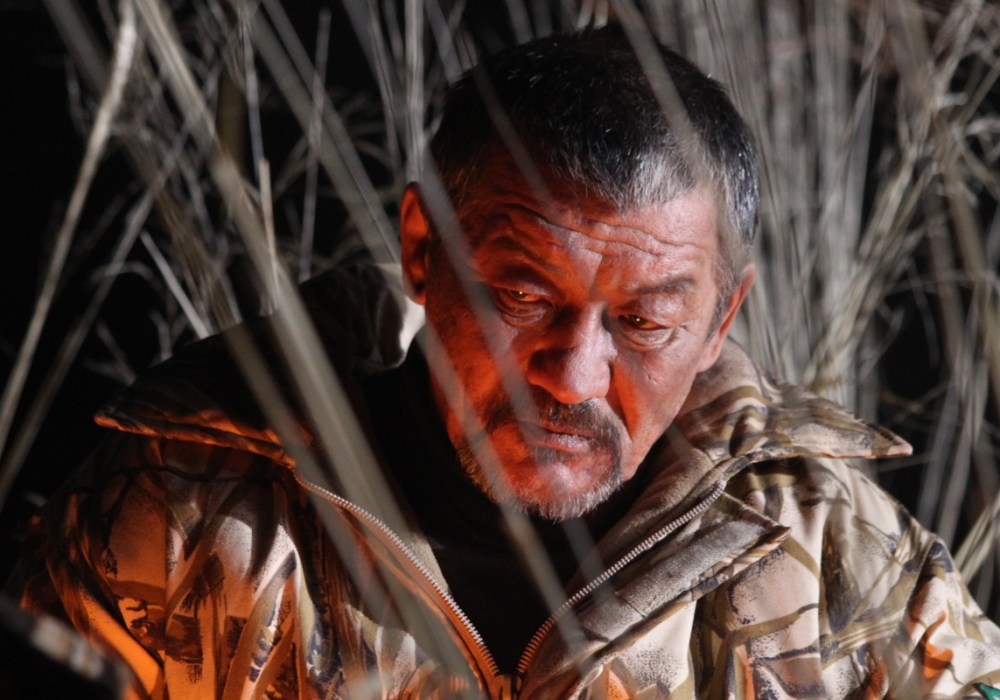
Even knowing a few things going into the film I was very pleasantly surprised in a few ways. Firstly, the venue of the tale changes in more than a few ways. This film is called Shal, when transliterated from its native language. In English it’s just referred to as The Old Man. In short, the sea does not apply to this tale instead the film is landlocked and tells the tale of an old shepherd. The wilderness he battles is the eurasian steppe rather than the sea, which brings wolves into play. Thus, aside from the source material it brought to mind the recent film The Grey. However, I feel this film excels far more than that one did in its man versus nature elements because it’s defenestrated to a greater degree. There are fewer affectations of traditional action films and more human drama, more philosophy, more searingly gorgeous imagery and even further respect for the beasts of prey as there is the added element of the old man protecting his herd.

This is also a generational tale wherein quietly the Old Man’s grandson who he tongue-in-cheekily calls Sheitan-bek, translated as “dickens,” comes to a newfound maturity and shows his respect for his grandfather, and thus his elders. The setup of the generational divide is well-executed and though very steeped in indigenous culture and religious mores does have a universal quality to it. One example of it would be that though in rural Kazakhstan the grandfather’s passion for football knows no borders and he struggles with poor television reception to watch Barça and names all his sheep after members of Brazil’s 1970 World Cup team.

Shal (2012, Kazakhfilm)

The film’s scoring is as evocative as its imagery and always finds a way to beautifully underscore the tension and other emotions the film seeks to elicit. Similarly the acting runs the gamut far more than one might anticipate, and is filled with great moments both large and small. Yerbolat Toguzakov plays the eponymous role marvelously being curmudgeonly when needing to be but also showing flashes of wistful humor, soul-searching introspection and fate-cursing. Not to be overlooked though is Orynbek Moldakhan, who has to convincingly play the role of a seemingly typical gaming-addicted youth who is also believably perceptive and valiant when serious events occur.

One thing that struck me while watching this film was how much more captivating it would be if experienced on a big screen. That as much as its overwhelming quality and universally truthful themes that fold in gently to the narrative, and don’t overwhelm it; are reasons that this film should see wider distribution in North America and beyond.

9/10

Thankful for World Cinema: Two Lives (2012)

Introduction

For an introduction to the concept of Thankful for World Cinema please go here.

Two Lives

Sometimes it takes a bit of distance temporally in order to discuss things in cinematic terms. About a generation after the fall of the Berlin Wall it seems more tales about the days of a divided Germany, as told in a unified one, are becoming more frequent. In this tale a simple request from a lawyer for statements in a proceeding about the Lebensborn children sets of a domino effect leading many family secrets to come to the fore.

In another trend that’s becoming more and more prevalent in a globalized world, it is a multicultural tale as the lead, Katrine (Juliane Köhler) and her family live in Norway. The legal proceedings being in a European court are held in English.

The film begins with a frame that quickly is closed up and establishes character and intrigue and there are plenty of both to follow. Throughout the film the use of flashbacks are significant while not being excessive. Images that don’t quite register at first are revisited with more context or footage later at the right moment for blanks to be properly filled in.

Due to the nature of the tale as there are a few different timeframes represented there good use of makeup. There are also interesting visual techniques such as different “film stock” photographic effects for older footage to add to the visual intrigue; aside from the great lighting and framing of shots throughout.

Köhler’s performance is of course key, but it is through the supporting cast that the power of this film really comes through. Most notably appearing in this film is living legend Liv Ullmann. This may be the first time I’ve witnessed her working in her native tongue (Norwegian), and, she is as captivating and as spot-on as she’s ever been. Sven Nordin as Katrine’s husband Bjarte plays a deceptively sensitive man quite astutely. Admirers of The White Ribbon may also recognize Rainer Bock.

As secrets unravel in this film, there are two kinds of suspense being employed in equal measure for double the effect that many films would have. Thus, tropes and relationships from two disparate kinds of films are brought together here in perfect unison with great aplomb.

Two Lives is the kind of film that gets some of its bigger surprises out of the way (at least hinted at) fairly soon but has quite a few of them throughout. Even if you are the type adept at, or who enjoys, guessing what will happen next; the drama in the film will still keep you glued to the edge of your seat. The execution of this film from all production departments is great.

8/10

Thankful for World Cinema- Class Enemy (2013)

Introduction

For an introduction to Thankful for World Cinema please go here.

Class Enemy (2013)

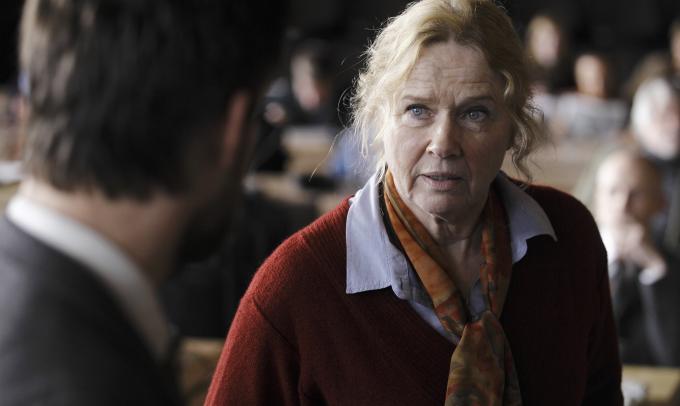
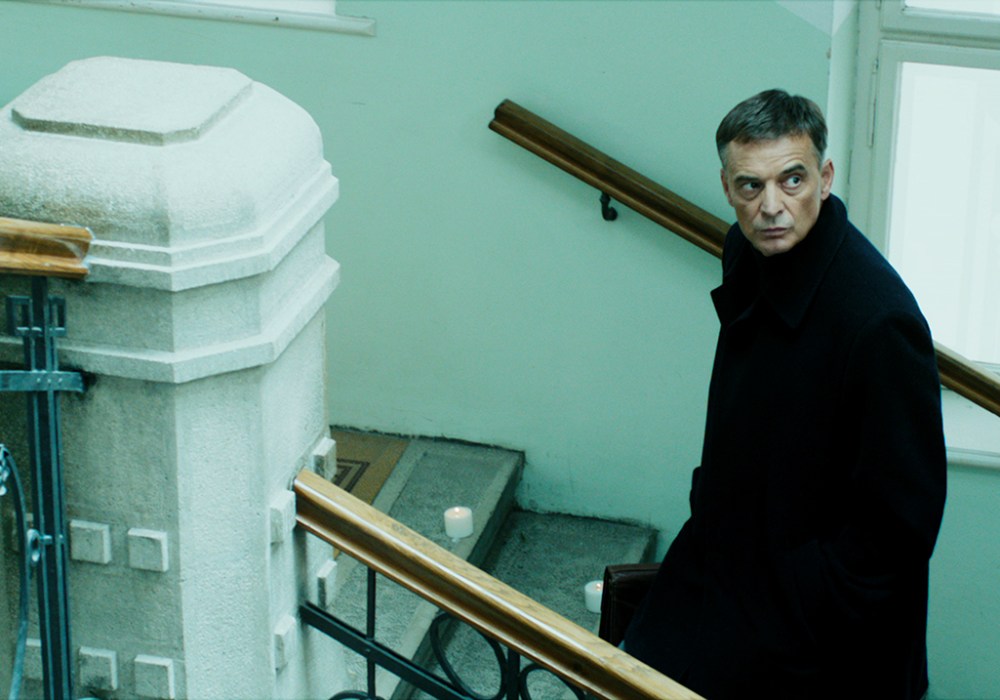
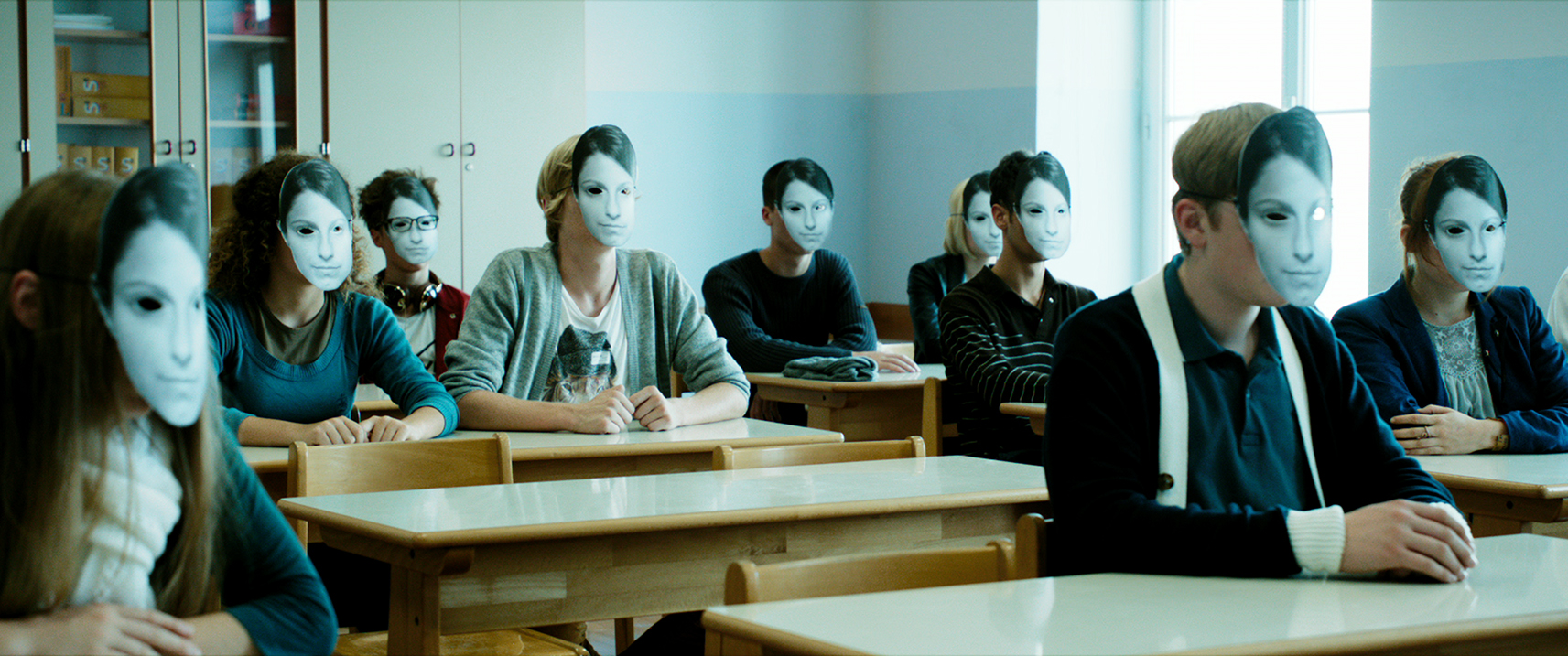
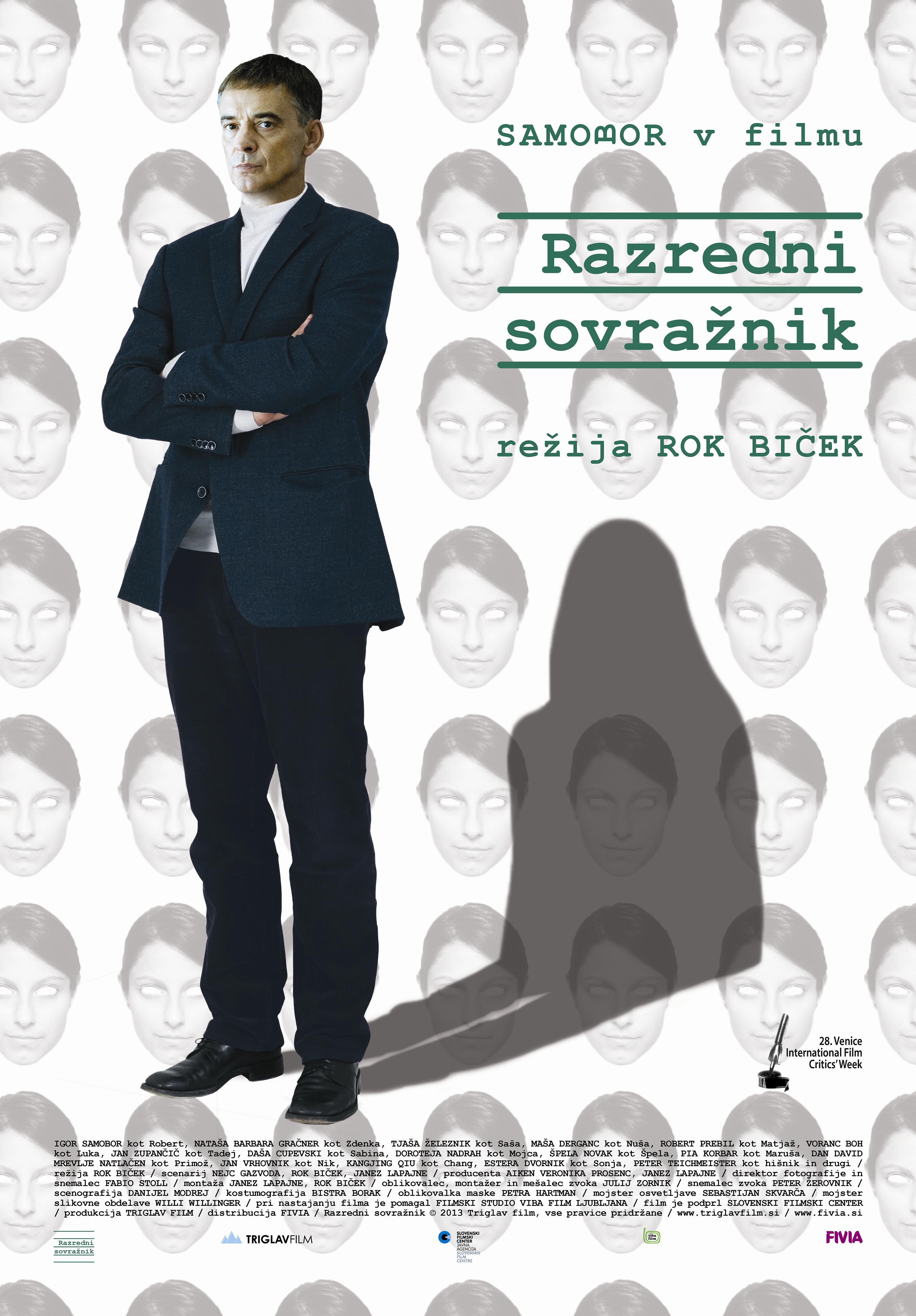
Class Enemy, which is Slovenia’s official selection for Best Foreign Language film, tells a tale of a high school class that singles out its new German teacher (Played by Igor Samobor) as the party responsible for their classmate’s suicide (Sabina played by Dasa Cupevski). The film picks up right as their favorite teacher, whom Robert (Samobor) is replacing, is going out on maternity leave and follows the back-and-forth struggle between the three main factions (teacher, students and administration) throughout the school year consistently adding layers to the characters, and conflicts.

On the surface this seems like the kind of concept that might run out steam and run into redundancy, fallacies or tedium but through that consistent layering either of single characters, a faction or the central struggle; the film remains riveting throughout. Furthermore, it achieves that level of tension by refusing to turn a judgmental eye on any particular party and refusing to color its personages in either black or white, but, ultimately shades them all in grays. In the end, not to put too fine a point on it, the “mystery” is left a bit gray also.

Class Enemy (2012, Courtesy of Triglav Film)

This feat is even more impressive when you consider the fact that when dealing with subject matters such as teenage suicide, student-teacher relations, or any of the myriad ancillary topics this film addresses it can be easy to be callous. However, this film is written and directed with enough finesse such that it conveys the truths as each individual character sees it without disrespecting opposing opinions. Perhaps the best exchanges with regards to this occur with the school’s headmaster. Robert is called in to see her when the conflicts are still relatively tepid and he is befuddled asking something to the effect of “They were offended by that?” To which the headmaster answers: “Welcome, to the 21st Century, Robert.”

That is perhaps the most perfectly crafted line of the film. It’s something that is true regardless of what your vantage point is. It’s not trying to make things like teen suicide or bullying smaller, but merely addressing another truth. The film is similarly adept at having its characters differentiated and not necessarily always holding politically correct opinions. The characters express said opinions earnestly and due to performance and writing the intent is always clear. In a film structured in part as a generational clash there needs to be such understanding and conflicting perspectives for it to work. Even something as youth-centric as The Breakfast Club had good insights into the few authority figures, the adults, and had them not always agree. “The kids haven’t changed, Vern, you have” the Janitor tells the principal there, and while that may usually be true, perhaps this tale stumbled onto a slightly different angle: with the same impetuousness as always the kids here are lead to say something they never vocalized before.

Class Enemy (2013, Triglav Film)

While this is a drama built on a fulcrum which all other events spring off and feed on persistently it does continue and escalate from there. Characters progress and regress; step forward and back, and come to grips with things at different times especially in light of some developments that come to the fore later on.

Perhaps one of the most interesting choices in this film is use of language. Since the German class is the main battleground it allows cultural norms to be more frequently a talking point. Robert is one of those hardline teachers who will not allow the native tongue to be spoken in his class; this was a method that was more often used as a threat in my education and rarely implemented. This fact makes much of the dialogue in the film German, which, of course, puts more of an onus on the performers, but allows for other affectations like repeated, exaggerated use of the term Nazi, and other perceptions; as well as a focus on the works of Thomas Mann.

As may have been intimated earlier, the fact that this is a film ostensibly about teenage high school rebellion does not minimize the drama, or the feat that this film is. I hope the allusion to The Breakfast Club would allude to that too. However, while this may deal with darker, more modern themes with less of a light at the end of the tunnel, less of an end to that tunnel really; it is a similarly insightful piece on themes essentially omnipresent; allowing it an introspection, gravitas and expiation of adolescent and educator frustrations alike.

Class Enemy (2013, Courtesy of Triglav Film)

Clearly a tale such as this could not hope to work as well as it would like to without great performances throughout the cast. Clearly, first and foremost would be Igor Samobor as Robert. There is a certain enigmatic magnetism to his performance that allows you wonder as to his character’s precise motivations at times, information that is eventually disseminated; and he plays the villainous-type (to those who still remember their studious days and tendencies well) to a tee. Among the students there are also many great turns: Dasa Cupevski’s screentime is short but memorable; Voranc Boh’s Luka is usually the leader and an effective agitator of the youthful rebellion; perhaps most impressive in his rather divided nature is Jan Zupancic in his portrayal of Tadej. Then there is Doroteja Nadrah who fades in and out of prominence as a character, but is no less impressive.

Class Enemy, when all is said and done, is basically everything you want out of a dramatic piece. It tackles difficult dramatic questions and does not shy away from exploration without concrete answers, but instead knows that better films usually take the journey well; exploring and changing their characters along the way, and more importantly, it understands that the best dramas aren’t about victors or where they audience sides, but how much we enjoy watching them engage in battle.

10/10

Thankful for World Cinema – The Notebook (Le Grand Cahier) (2013)

Introduction

For an introduction to the concept of Thankful for World Cinema please go here.

The Notebook (Le Grand Cahier) (2013)

After seeing The Notebook, I went and reread my post on The Witman Boys in part because it was the other Janos Szas I had seen to date. I started on that task merely to remind myself of it a bit more (as writing can help fill in the blanks that memory decides to leave). However, what I found as I looked it over was a film more similar to The Notebook than I’d remembered.

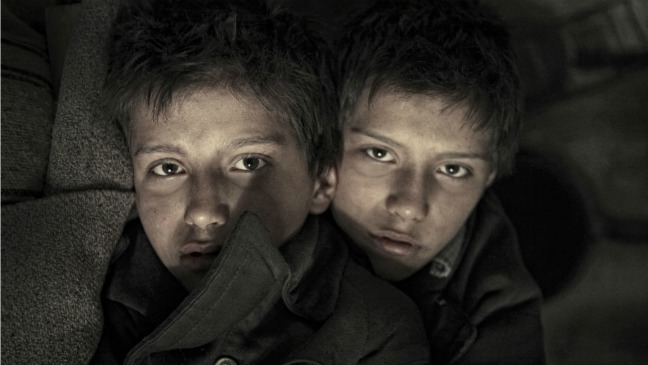
The parallels do go beyond merely a shot of two brothers with their face in close proximity to one another. And this is also not to be implied as a slight on either film; quite the contrary, it makes for a very fascinating look at the auterism behind both and also the refinement and the increased power that the newer film has.

The films both have inciting incidents wherein the boys are changed by something beyond their control. In The Witman Boys its the loss of their father. In The Notebook the second World War is raging on and the boys’ parents worry for them and want them protected. The Witman Boys has similar brothers each with a designated name whereas The Notebook is about twins whom are never referred to by name and are credited as “One” and “The Other.” This is an important fact because the idea is to make the twins inextricable from one another and also to make them symbolic.

For as One and The Other move away from a metropolitan area (presumably Budapest) to the Hungarian countryside, they come closer to the horrors of the war and have to learn to cope with life during wartime in their own unique way.

This is where the tonality of the film comes into play. Children coping with the ravages of war is not a new topic. It’s how the topic is dealt with that dictates the tonality of the film, and in certain regards the success of it. Much liked Szas’ prior film this is not going to be an uplifting tale.

Prior to the boys being taken to live with their estranged grandmother their father gives them a notebook to write down “everything” in. Twins have a tendency to stick close together regardless, but when placed in such isolation the tendency to stick by one another, at least to start, is redoubled; and gives them even more incentive to live a microcosmic existence wherein they seek to define morality, strength and learn how they can best cope in the tumult about them with no outside assistance.

That then lays the groundwork for the film which is told through entries the notebook. Voice-over allows episodes of the story to be tied together . While the wondrous visuals created by Christian Berger, this time exploiting color in a parable. The images are usually gorgeous regardless, but stark when they have to be and edited together precisely to render the progression (or degeneration if you prefer) of the boys from wide-eyed innocents to hardened survivors, who frighteningly at times still have a childlike understanding of things, and at others have a cold and calculated, all-too adult outlook.

Not that those things ever seem wrong for they work in a proper progressive order and lead to a gutting finale whose impact is hammered home when you fully realize how and why things occur the way they do.

One of the fascinating things about this film is not only does it find a way, for the most part, to remove the narrative from the frontline but it still keeps the war close by. It tells a dark, haunting tale in one of the 20th Centuries worst moments that goes above and beyond simplistic moralizing about a specific conflict but makes a more sweeping point. A point uttered through visuals and actions and not directly through dialogue, such that you’re still engaged in watching a story, a disturbing one, but a story nonetheless.

Tying this back into the auteurist aspect, so as not to leave it abandoned as an introductory ploy: many directors have told tales that parallel one another. Hitchcock himself said that “self-plagiarism is style.” With regards to World War II, Steven Spielberg has been there quite a few times in very different ways (1941, Empire of the Sun, Schindler’s List, Saving Private Ryan). It’s not the fact that a director returns to a common ground that matters, but rather what he does when he gets there. What Janos Szas does here is amplify and refine the sensibilities employed in The Witman Boys to this adaptation, sharpening the impact of the story and making it one that can resonate universally. Whereas the prior film was one that could bring one to Hungarian cinema, here he pushes Hungarian cinema out to the world.

9/10