Chaney Blogathon: By the Sun’s Rays (1914)

Note: You can view the film in its entirety below, as I do discuss the plot liberally feel free to view it prior to reading.

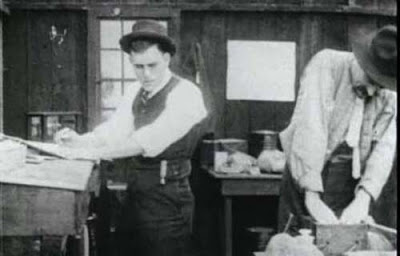
In order to be able to participate in another wonderful blogathon hosted by Movie Silently and the Last Drive-In, I volunteered to discuss By the Sun’s Rays. This is an 11-minute short film from 1914 released in Universal’s infancy that features Lon Chaney as a villain.

The reason this was a preferable selection for me is because I didn’t manage to squeeze in a Chaney title during my last theme 61 Days of Halloween (though I wanted to) and my current theme Thankful for World Cinema features films produced abroad. Therefore, the fact that this was presented as an option allowed me to buck my theme slightly to discuss it and I’m glad I could.

Here’s a fairly succinct synopsis of the film from an IMDb user:

Frank Lawler, a clerk for a mining company, colludes with a bandit gang about the timing of gold shipments with a mirror signal system and has designs on Doris Davis, the daughter of the local branch manager. The company’s main office dispatches their top detective John Murdock, who goes undercover to expose the scheme and rescue the Doris from the unwanted advances of the dastardly Lawler.

Chaney plays Lawler, and there are a few interesting things about the film. First, the appropriately florid description of the nature of Chaney’s character may paint the picture in a reader’s mind of a dastardly, handlebar-mustache twirling lothario if they’ve not seen the film. What’s refreshing, and what makes the film work in my estimation, is the fact that Lawler’s villainy, thanks to Chaney’s portrayal, is fairly subdued. In the segment of the film where Dora (Agnes Vernon) is distracting him from his intended rounds with her feminine wiles you can, even in a fairly wide shot, read the inner-monologue of Chaney’s struggle. It’s not over-the-top but is present and convincing enough that you understand the struggle he faces.

Similarly he lurks in the background in a few frames eavesdropping and plotting, awaiting his moment. To take his reactions and manifestations of character too far would render the film far too comedic for its intended western/action tone. Therefore, even here nearly one hundred years ago a few acting styles removed from what is considered modern and acceptable practice you have here similar truths about applicable acting styles for genres.

It has also been noted that this is Chaney’s earliest extant film and that is of significance too as it is the earliest indicator, in a small dose, of his ability, and is valuable and worth examining from that perspective as well. Enjoy!

Thankful for World Cinema- Watchtower (2012)

Introduction

For an introduction to the concept of Thankful for World Cinema please go here.

Watchtower (2012)

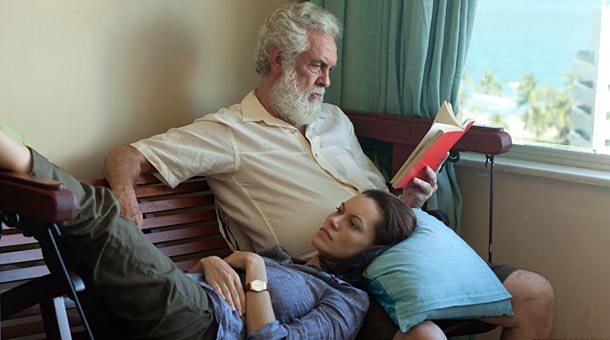
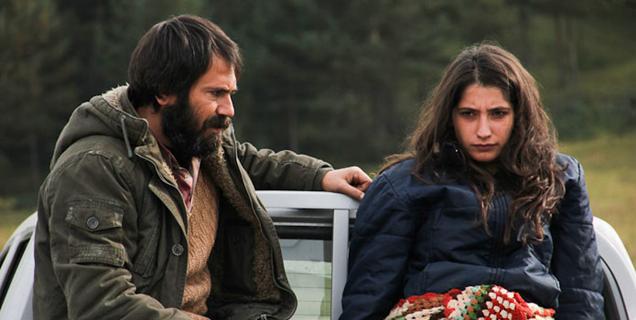
There are films about situations and there are films driven by their characters. There are not as many that find an interesting situation, and the right characters to place in that situation, as Watchtower does. The characters of interest in the film are Seher (Nilay Erdonmez) and Nihat (Olgun Simsek). Each has a rather different job: Nihat has just started working in a watchtower where basically he’s looking to see if anything out of the ordinary is going on in the surrounding mountains and forests in the Turkish countryside; this usually would have to do with the prevention of rampant wildfires. Nihat, meanwhile, is a hostess on a cross-country bus line. In this way their paths do occasionally intersect.

The film builds well dedicating long portions to telling the story of each of these solitary and willfully ostracized people. It soon becomes clear that each has a secret that is a great burden to them. The secrets, and their situations, will inevitably join their narrative strands. We know this.

The unfurling of the stories spins much like water going down a drain; circling ever closer to the truth of the matter. The performances, especially that of Erdonnez, are wonderful.

This film only faces one true stumbling block, and it is one that holds it back from the greatness it seems destined to achieve for much of its running time. The glimpses of the characters and their plights are riveting for how the film slowly unravels what bothers them about their predicament and why they feel they cannot share it. However, the situation they find themselves in together struggles to find a conclusion and eventually, for all intents and purposes, drops the narrative.

I’ve sat with this ending and thought on it for some time. It’s not the kind of, let’s call it an “open” ending for lack of a more suitable term; that elevates the film. Conversely it is not one that undoes a great deal of the good that was accomplished before it. However, it is still a disappointing and unsatisfactory close to the tale.

There reaches a point in a certain kind of narrative where if you move past the plot point you’re on you’ve stopped telling one tale and moved on to another altogether. Therefore, that ending has to feel like a button, and what occurs afterward can be explored in another film or in the mind of the viewer. I think that Inception would actually be a good, recent, widely-viewed example of that (not that these films bare any similarity). The point being that the last image was meant to be the last image in that film. It had to be. Here it felt a bit like settling and that’s highly unfortunate, but not ruinous to the whole.

Watchtower has characters with baggage who are in binds and meet a crossroads. It is interesting to watch them get there, and see how they interact when their paths cross. I just wanted to go on their journey a little longer, and that can’t be all bad, now can it?

7/10

Short Film Saturday: College Boy

I considered posting this in June but as significant a statement as this was not only about sexuality but about gun violence and bullying, I wanted to minimize the tragic albeit significant films or videos I posted in connection to what is LGBT Pride Month. However, this short film, which is also a music video with a significant and cinematic narrative, is also helmed by noted director Xavier Dolan so I figured it’d fit to be posted here.

Please note that this video has not been rated but was removed from French TV and the cause of controversy so viewer discretion is advised.

Updates November 15th, 2013

So not much in the way of updates this time. That’s mainly because the interval was shorter than usual and I’ve been mostly watching movies trying to enliven the BAM contenders and Thankful for World Cinema.

So the BAM Award Considerations for the month are newly-updated. Again. Check them out.

My films viewed list is updated with more titles and links. No new older favorites because I’ve been watching almost all new films.

Lastly, updated My Radar. Not much in the way of adding titles, but a few more scratched off or queued up.

The next update day will be on Monday, December 2nd.

Thankful for World Cinema: La Playa DC (2012)

Introduction

For an introduction to the concept of Thankful for World Cinema please go here.

La Playa DC (2012)

Here is another film, this one also in this year’s crop of Oscar submitted films, that deals with some compelling cultural dynamics and sociopolitical intrigue. La Playa DC concerns three brothers, mainly Tomas (the middle child). He is an Afro-Colombian teenage whose family has fled their pacific coast home, a war-torn part of the nation.

Due to the bloody history the American institution of slavery, the Civil Rights Movement, and American myopia in general; it can take a moment to allow the fact that racism is an issue in other countries as well, much as immigration is oft debated in many parts of the world. The distinction of the racism faced in this film, which is reflecting Colombian society is that it’s an insidiously quiet one, and not one that’s overt or vocally discouraged. There may not be much frankness in these regards here but it is discussed.

This scarcely touching upon the issue in an open way is one of the film’s better aspects. There are reactions and attitudes that are indicators. One notable instance is the utterance of the phrase “you people” and another would be when Chaco, Tomas’ older brother, in reaction to what just happens says it’s that kind of thing he wanted to move away from.

Chaco has recently returned home after being deported. However, he knows how and where he messed up and hopes to give it another go. This acts as the MacGuffin in story, the goal: heading to North America. The other concern is for their youngest brother who is already drug-addicted and living on the streets. A lot of the action concerns him: finding and/or protecting, but its Tomas we really focus on.

He’s the one who faces the change. Though he does arc well, and is portrayed in an aptly engaging way there are some things that hold this film back despite the fact that we get a full and sensical personal journey of self-discovery. While the film goes to great lengths to have a documentarian aesthetic it also doesn’t try to look too interesting. Too often there are overly-long reverse steadicam shots which give us too long of a view of the back of a head. This is also an editing concern.

While there is some creativity to how certain situations resolve themselves usually those decisions are represented in ways completely lacking drama or any sliver of suspense. This is too low-key a concept to softly deliver some of its few shocking blows. That and the long seeming stretches between these incidents make it a disengaging watch despite all the interesting and relevant things its conveying through its narrative.

5/10

Thankful for World Cinema- Reading: It’s All So Quiet (2013)

Introduction

Please note: this is an in-depth commentary on the aforementioned film. For a spoiler-free review please go here. For an introduction to Thankful for World Cinema in general please go here.

SPOILER ALERT: Please do not read this section if you have yet to see the film.

Reading: It’s All So Quiet

As became clear when I was watching the It’s All So Quiet, and you may have inferred if you read between the lines of my above reaction, the passions and unrequited loves in question are homosexual in nature. For better or worse, when that enters the mix the film, for all else it may be, is usually lumped in LGBT films. That’s completely an affectation of society as there is an unspoken heteronormative mandate in genre cinema.

However, in thinking about this film in that regard, instead of just as a great film, a few things came to mind by way of comparison, things that this film succeeds in doing moreso than many.

When I wrote about North Sea Texas at this time last year I took to task many of the gay-themed tragic love stories. Or, to be more accurate, I took to task the notion that all the stories had to be laced with a sense of tragedy. What North Sea Texas does that I love is offer a light glimmering at the end of the tunnel for those watching it whom may need to see that light there, and know that it’s a possibility.

Not that there hadn’t been great works with a tragic framework, but that needn’t be all of them. When I considered the fact that this was a repressed romance it took me back to Brokeback Mountain. When I discuss that film I have to take care to make sure I don’t sound as if I’m flagellating it. I don’t hate it, though it’d be easier if I did, I think that there are issues with it as well as things about it that are generally overlooked.

One thing that’s fairly apparent in that film is that it is a star-crossed romance. It’s society, as well as the parties involved, that do the repressing. However, one must consider the fact that they do have the occasional, passionate, not-as-delicately-rendered-as-it-could-be tryst. This film has none of that. This film doesn’t have “I wish I could quit you” because nothing ever starts and that’s what makes it a more evocative, bitter and effective film. It speaks to that place that every gay man has been; the closet, to the terrible tongue-tied doubts, to the self-hating silent denials and crying yourself to sleep.

Emotions boil over here on occasion sure, but as a gesture, a slight overture or a half-mumbled utterance directed to a half-conscious, half-dead father and therein lies the power of this film.

It’s a shame, only to a very small extent, that the film was not constructed in a more popularly palatable way because this is the powerful statement about repression and self-ostracism; the loneliness and regret witnessed here. This film paints a sensitive portrait that you’d almost have to bend over backwards to twist into a hateful place. For the danger, the double-edged sword, of the tragic homosexual romance onscreen is that it can be seen as inadvertently reinforcing homophobic societal mores.

In short, the importance of It’s All So Quiet is in its stealth, tender telling the tale of self-repression in a very humanist way. It’s not the only thing the film deals with. It deals with Helmer in all he does, as a whole. However, this man cannot be whole (not through the duration of this film) for he refuses to accept one fraction of his nature. So, though he may seem fine at other times and we see him ably, warmly do other things; there is an underlying sadness that isn’t just due to his father’s infirmity and death. It’s due to this complete portrait of an unfulfilled that dialogue can be furthered, and it’s due to the skill from all aspects of the production of this film that this strong statement can be made.

Thankful for World Cinema- Mini-Review: It’s All So Quiet (2013)

Introduction

When summarizing It’s All So Quiet, it can be tempting to say too much seeing as how there are not a lot of salient plot points worth discussion. As such I have decided to write about in two different posts.

In the first part (below) I will merely state my reaction to the film without divulging too much of the film. In a separate post, and if you choose to see the film I hope you come back and read it, I will discuss it at bit more in depth going over those few salient plot points.

For an introduction to Thankful for World Cinema in general, please go here.

Mini-Review

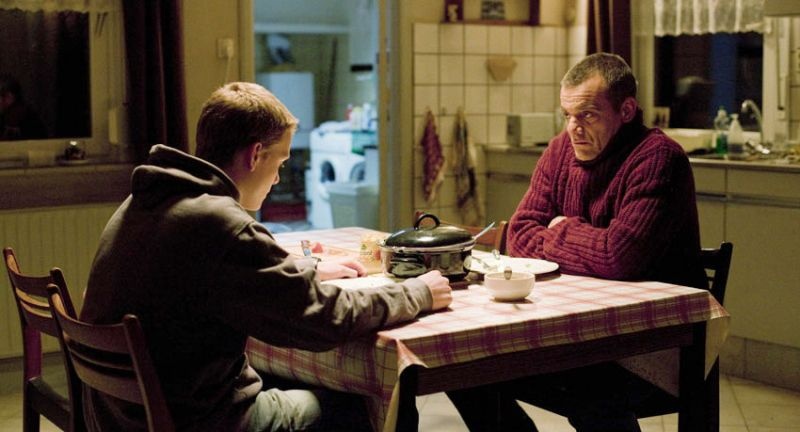
It’s All So Quiet is a film that sets you up from its pace virtually from the start. The opening titles roll for two-and-a-half minutes on a shot of wheat, with farmland and sunlight behind it. From this you should be prepared for a fairly deliberately paced film. If you’re not you’ll surely get the hint from the next few scenes where the protagonist Helmer (Jeroen Willems) first moves his bedridden father and then sets him up upstairs with a new bed in the living room.

However, as deliberate as the pace is the subtext of the film is fairly clear throughout and thanks to the actors most of their thought processes communicate their sentiments where words do not.

Helmer’s deciding to move his father upstairs is just the first upheaval in this film. The next that will occur is that a new, young farmhand Henk (Martijn Lakemeier) comes to work and live there and throws things into further disarray.

The cinematography in this film is magnificent. The cast proves time and again that so little of film acting is about the spoken word but rather playing the frame and physicality; dialogue-free Willems and Lakemeier share one of the most poignant and moving scenes I’ve watched this year.

As the story progresses, despite its lack of blunt commentary on the fact you soon will see what the film is about and the tale of repressed desire and unrequited love woven so skillfully by Nanouk Leopold here is one of the best of its rare breed that I’ve seen.

10/10

Thankful for World Cinema: Once a Upon a Time Veronica (2012)

Introduction

For an introduction to the concept of Thankful for World Cinema please go here.

Once Upon a Time Veronica (2012)

How does one paint a portrait of a contemporary Brazil? How best does one illuminate the sense of utter helplessness one can feel, when faced on a daily basis with the problems others are facing both at home and in the workplace? How can one find any peace, if not by going from psychiatrist at public hospital and into private practice?

Once Upon a Time Veronica is not the only Brazilian film of recent vintage to tackle some of these questions, at least in part if not in whole. Neighboring Sounds dealt with a species of urban malaise (in the same city) not completely dissimilar from the kind illustrated in this film – and shares a cast member in common with this film (WJ Solha).

This film deals well in dichotomy, if not in an overall portrait. It hinges on the performance of the eponymous Veronica (Hermila Guedes) and does much of its soul-searching as she talks into her tape recorder. As the film ends she makes her last entry into the recorder, not that she as a person is complete, or a finished product (for who ever is?), but she’s ready to let that crutch go and accept herself.

The self-examination is a mean to an end for the character as much as it’s a MacGuffin, but is the search of an interesting person enough to hang a story upon when the narrative framework is uninteresting? It’s not quite. The investigation, even bereft of concrete answers, is usually worth it. Even if a character is deemed merely interesting.

Perhaps a lot of the issue this film faces is that its protagonist is laid bare and not commented upon. Another part of the issue is that there isn’t a great deal of externalization of her conflict, it’s a very internal debate with few decisions made. When a character is treated as such then they are open to interpretation and reactions to said character can be varied.

There are technical aspects, as well as performance aspects of this film that are admirable but it all comes down to the narrative. It’s one I saw as treading far too much water and my view on some of her decisions is colored by sections of the storytelling I found to be lacking. My take on her and the film may have been different if things were presented differently. As it stands, I find this intimate portrait as un-compelling as her conclusion of her introspective thesis.

5/10

Thankful for World Cinema: The Green Wave (2010)

Introduction

For an introduction to Thankful for World Cinema please go here.

The Green Wave (2010)

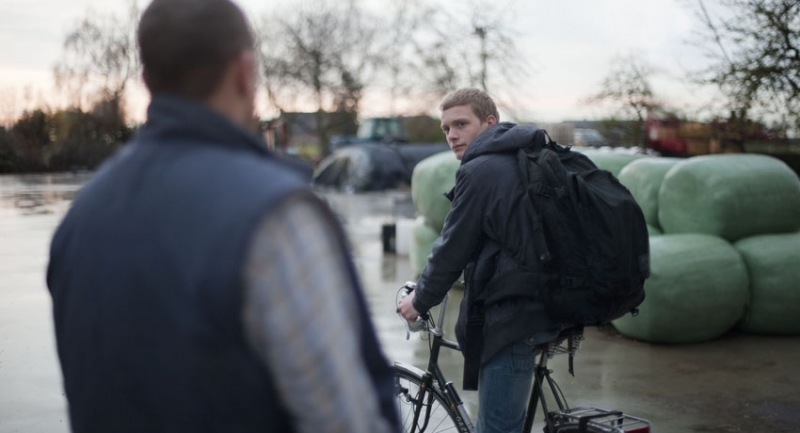
I have previously written about the events in Iran in 2009 as one documentary I had previously covered very nearly backed into those momentous events by accident. However, here with The Green Wave those events are the focal point and there are very creative things done by the filmmakers to try, as best as they possibly can, to recreate those events.

With any world events that can be described as historic, more so with those that can be considered to be movements, it’s a nearly insurmountable task to attempt to capture the totality of what occurred and how in one film. Yet, even with such a potentially massive scope this film does well in another way: it limits its scope some by mostly focusing on writings posted in blogs and on other forms of social media.

To be able to render what occurred in said writing on film there are some very well done and artistic animated scenes created. Yet there is quite a lot of video, including clips concerning the brutality regular citizens faced at the hands of the military and police. Therefore, some viewer discretion is advised as some of the images are quite disturbing.

There are also interview subjects that fill in the gaps. The time period is also limited some. The narrative of the documentary starts just before the later-contested elections and carry on through the end of the year.

As daunting a task as it is to try and capture all of that information this film does extremely well in disseminating the basics from the political climate in general, to a populous awoken, the voter suppression and fraud, the outcry, the backlash, the final straw and the activation of the nation-at-large.

Yet, perhaps the most valuable piece of the film is that its the first actual testament, which leans heavily on first-hand Internet accounts that shows the power of social media as a keeper of history as events occur. As with anything there many methods of usage that fall short of the “highest and best” use, but here unleashed before all who watch this film is the undeniable proof of one of its most powerful implementations.

The perspective of the film is also one that is very fair. It focuses mainly on the how and why and speaks to only citizens and ex-pats allowing them another outlet to speak about their country and what occurred there. This is a truly moving piece of filmmaking that offers a glimpse into one of the most important sociopolitical movements in the world in recent years. It’s the kind of watchful, necessary eye I’d like to see turned on the protests in Brazil where the internet is also a tool that has chronicle to overreaching abuses, and excessive force used by military police against protesters.

8/10

Short Film Saturday – Why Wear A Poppy

Why Wear a Poppy (2012, Encore Cinemas)

Whenever possible I like to tie these selections to an upcoming holiday. In the US November 11th is Veteran’s Day and worldwide it is Remembrance Day. This film dramatizes a poem entitle “Why Wear a Poppy” which discusses the significance of the latter holiday’s symbol. This film does start a tad shakily, but when it enters the poem it hits its stride and makes the strong decision to not return to class and ends with the poems end, which makes it all the more powerful.