Bernardo Villela is like a mallrat except at the movies. He is a writer, director, editor and film enthusiast who seeks to continue to explore and learn about cinema, chronicle the journey and share his findings.
For an introduction to the concept of 61 Days of Halloween, and a list of previously featured films, please go here.
V/H/S 2 (2013)
Albeit a new film I figured it’d make more sense to cover this here as opposed to in the Mini-Review Round-Up Post. As you may be aware, the first installment of this film series was not one I was fond of in the slightest. However, one of the perks of an anthology film series is that as each installment rolls around there are more variables that can make the quality of one to another quite different. This film overall is an upgrade in technical and narrative terms.
While still a bit lacking, one thing this film improves on from the first is the handling of the frame. There is a bit more thought and effort put into it, and most importantly purpose. Now it’s not impeccable, however, it is not an encumbrance to the film. It’s productive rather than counterproductive.
Most of the tweets and reviews I’d seen to date singled out one particular story in the film for special mention, and that would be “Safe Haven”. That title definitely deserves all the praise it’s getting. However, part of why I decided to feature this film this way was to give the other chapters their due.
In a way, the four main stories that form this film are kind of like a sandwich. The first and last film keep things in place, and aren’t as good as the middle two but serve their function. It’s the first segment (“Phase 1 Clinical Trials”) that had me thinking I was in for another long haul. That’s another thing that made this film better, it runs shorter and has one less segment. “Phase 1 Clinical Trials” deals with a man who when given a prosthetic eye (with recording capabilities, which is clever) can now see ghosts. It starts out a little slow and has its unfortunate patches, but the segment does pull through and makes itself entertaining in the end.
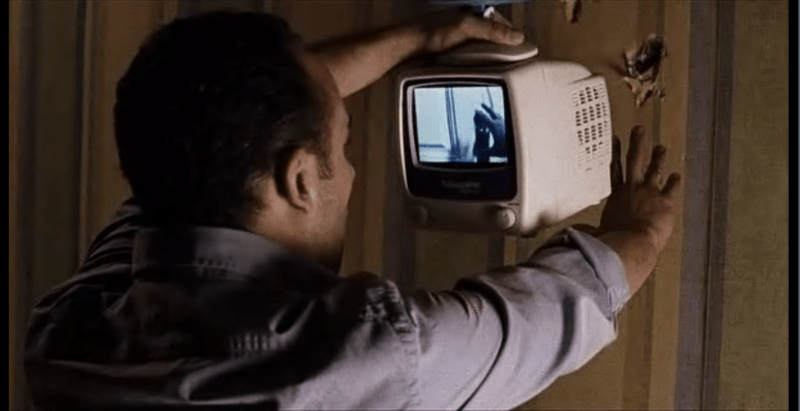
With a helping hand from the Eduardo Sánchez, director of the The Blair With Project, “A Ride in the Park” is a great first-person real-time look at beginnings of a zombie apocalypse. And though the glitchy-ness of VHS-recording is still a little too present throughout, it’s downgraded and accompanied by really good camerawork throughout in this piece especially.
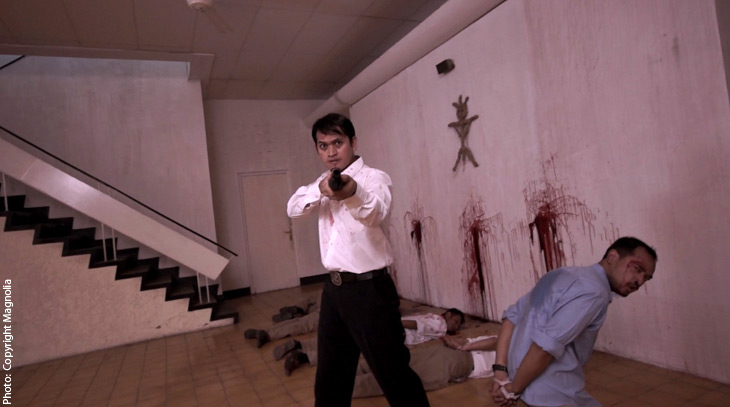
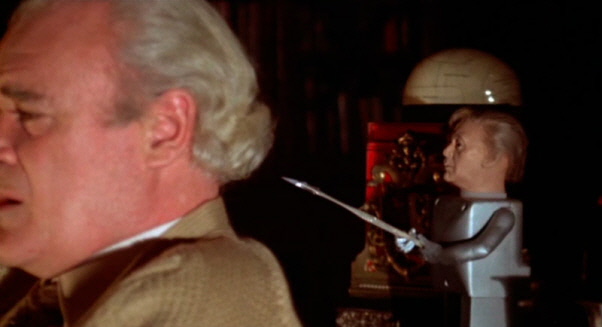
“Safe Haven” is a tandem project from Gareth Huw Evans, writer/director of The Raid, and Timo Tjahjanto that takes you behind the scenes of a cult compound in Indonesia. And that’s as much as bears saying plot-wise. This particular segment, as much as a short can, takes a slow burn approach and then really ratchets up the intensity and the events to nearly unfathomable levels. Answers to questions are not quite all given, some are implied, some are left somewhat mysterious, and that only ramps up the horror. There are some truly jaw-dropping moments in this one that make it very memorable indeed.
“Slumber Party Alien Abduction,” seems at first like it may be an unfortunate way to end the film. However, after a perhaps overly-long stasis things do pick up and it becomes a far more intriguing and well-executed tale than the first one and it has some very good, natural, funny and convincing performances from its young cast. The end of this one it likely the most memorable.
V/H/S 2 is the kind of horror anthology I wanted the first one to be. It’s a good step for the genre, and quite honestly the frequently under-thought found footage approach. I’d be glad to see the series continue now and can only hope The ABCs of Death rebounds this well.
With most 61 Days of Halloween posts I’ve refrained from scoring films so I can discuss themes more, since this is a shared Mini-Review Round-Up post, and those usually are scored, I will give this title a 7/10.
Firstly, I’m glad to be contributing to Comet Over Hollywood and Lindsay’s Movie Musingsblogathon. Secondly, I have to say that there are two very distinctive reasons why I chose these films for analysis: one, I am currently ensconced in my 61 Days of Halloween theme so anything that could combine that with a blogathon was preferred. Two, I firmly believe that while all films may not reach “greatness” or “importance” they are all worth being looked at seriously. Analyzing a particular aspect of these films made it easier. Yes, I said films twice now. That’s the last note I should mention: I thought Doctor X was on YouTube. I was mistaken, but it was on Netflix on a two-film disc with a later, similar but unconnected film so I watched both, and it’s a good thing I did.
Background
When looking at a specific profession as portrayed in film I think it important to discuss briefly my experience, limited as it may be, with it. I believe that at some point in junior high school I did take a very rudimentary elective in journalism. More to the point that is where you learn the very basics. Furthermore, being in an age with media at the tip of our fingers one can’t help but scrutinize media coverage. It is an interesting age for the profession of journalism because information, and misinformation, travels faster than ever before. Both great and not so great things are possible because of it. I think at current it’s also an interesting age for the journalist as represented in fiction again. Author Christopher Rice encapsulated it best in a tweet saying that thanks in large part to the rise of Swedish mystery novels in popular culture the literary figure of the journalist has been redeemed. There was a time when this personage seemed to be in a morass, however, that’s shifted. The cinematic tales I’ll examine, as outlandish as they might be, are closer to the halcyon days of representation.
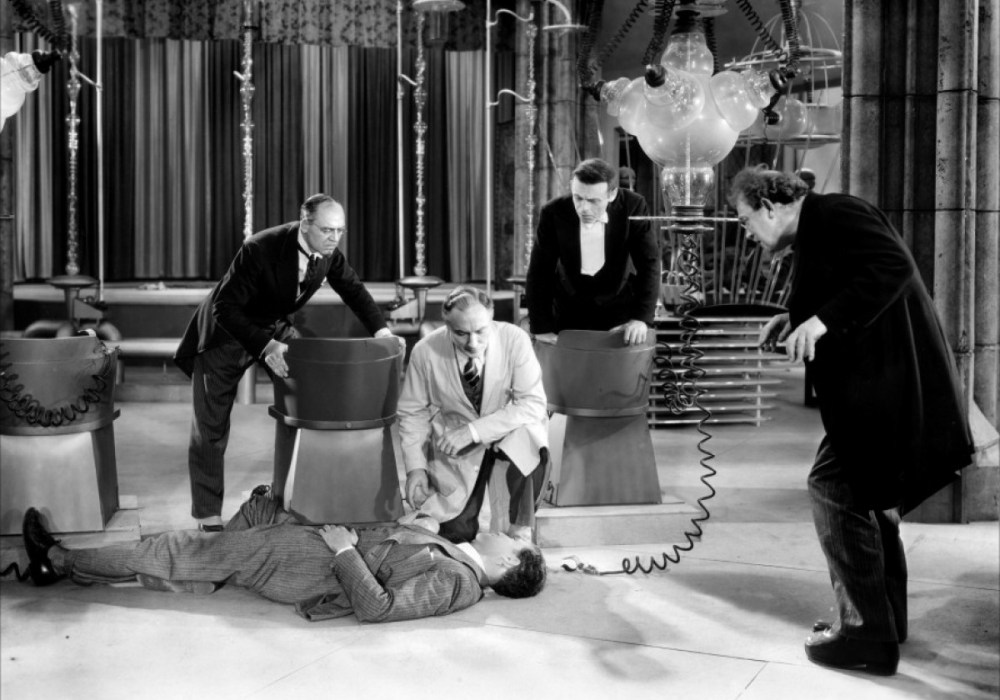
Doctor X (1932)
The synopsis of Doctor X describes Lee Taylor as wisecracking, and they’re not kidding. This reporter, Lee Taylor (Lee Tracy), following a series of murders referred to as the “moon killings” in several cases seems more content to joke around (he even wears a joy buzzer – it does function as a plot device later, but still) than take anything seriously. However, that line he’s toeing never really gets crossed as he does do his job. He does so both in a diegetic and non-diegetic sense. In the diegetic, he is committed to breaking the story wide open. The police talk to Dr. Xavier (Lionel Atwill) he rounds up his staff (the suspects in the case) and retreats trying to sniff out who it is himself for a period of 48 hours. Lee sneaks in and is, in a non-diegetic sense, our eyes. He similarly overheard talking in the morgue by pretending to be a corpse. There may have been breaches in professional etiquette throughout this film, but at least most of them kept him removed from the action and an impartial observer. Breaking in where he was not wanted or allowed notwithstanding at least he was tries in the end.
However, there are worrisome acts, aside from the aforementioned ones of dubious legality, throughout. For example, he complains of all he has to go through just to get the minimal amount of information he has to report when checking in and then asked off the case, then when his ego and pride are played to he claims to have been joking. Due to the performance of the scene the intent (joke or sincerity) is obscured. Overall, though, the film seems to be more slanderous to cops than reporters. The police continuously barter with Doctor Xavier, who is not the antagonist, to allow him to conduct his own search and present his findings. The police threaten and bloviate but ultimately do not interrupt the drama before it’s time. They are within their rights to interrupt the game of charades passing for a film, but they do not.
While Tracy does make some blunders, like becoming smitten with Xavier’s daughter and becoming a part of the story he’s covering, at the end (to an extent) he is far more admirable in his efforts than the police are in their inaction. Yet none really come off that great, for the young Miss Xavier (Faye Wray) does get him to sit on the story, at least for a little while. And that’s why it’s fortunate I did the double feature because not only is The Return of Doctor X (1939) a much better film, but it also has a much better and more well-portrayed reporter.
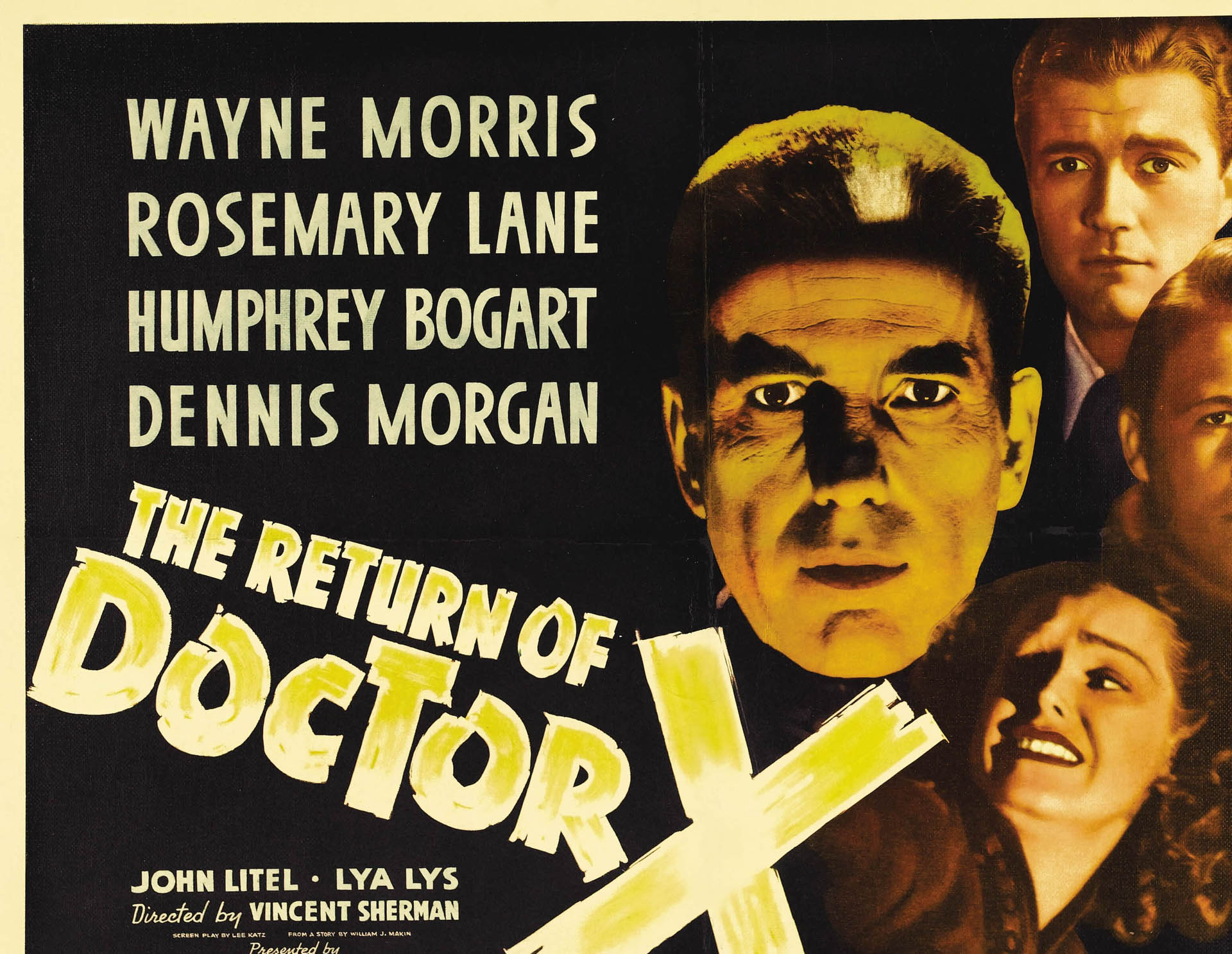
The Return of Doctor X (1939)
One might think these films are related, despite having similar templates one really could at best call this film a sequel-in-name-only though you’d be hard-pressed to prove even that. Other differences are that this film was not shot on two-strip technicolor and not directed by Michael Curtiz, but this is better film, and a better portrayal of a journalist. Part of that has to do with the performance by Wayne Morris as Walter Garrett, and part of that has to do with the writing. Interestingly, in this film the reporter’s presence is felt more throughout. Taylor disappeared for large chunks of time, usually hiding out, but he was also peripheral to the action – a plot device, a living MacGuffin. Garrett, however, finds himself embroiled when a strange turn of events puts him in the middle of a controversy and makes him look a fool.
He eventually has to go at it on his own, with a little help from a friend, to clear his name and try and solve the mystery. The film seems to use the prior installment as a template rather than a bible. For example, Xavier was not the antagonist in the first, he had a murderer in his midst and struggled to discover whom he was. Suddenly, in less than seven years, he’s a mad scientist – hence the films are similar yet disconnected in that way. Likewise, Garrett isn’t a wisecracker so much as he’s a well-meaning goof. He does do his sneaking around here too but nothing that seems unorthodox, all quite par for the course.
He’s also resourceful. His friend, Michael Rhodes (Dennis Morgan) is a doctor. He asks him questions, then follow-ups, then joins him to talk to people and eventually they investigate as a team.
With regards to women and his work he’s a little more levelheaded than his predecessor at one point he says “This is no time for dames.” He only allows a “dame” to distract him, and influence a choice, in the denouement when everything is already decided.
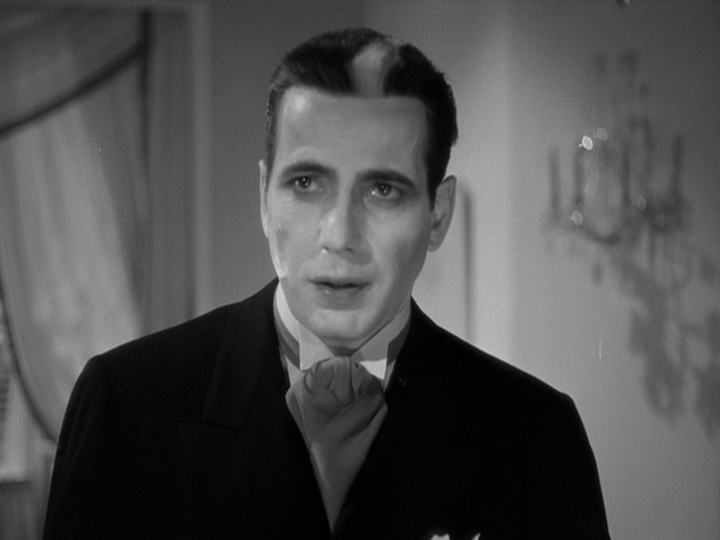
Much as the reporter is much surer of himself, this film is also surer of itself itself. It runs a full 14 minutes shorter (62 as opposed to 76) than the prior installment and the difference feels bigger than that because of how well-placed all the story elements are. Not to mention the fact that you have Humphrey Bogart before he was big playing a deliciously creepy role.
Conclusion
My analyses of how well each of these two fictional characters do their job is not meant to be propagandizing. There are good and poor practitioners of all professions. However, A bit of recognition and understanding by the film about how well Tracy does his job seemed necessary. The phrase “loose cannon” is cliché but it’s something that usually comes up. People who are by the book versus people who are unorthodox is a classic trope, it comes up, it’s discussed. In Doctor X he seemed more a vessel with which to tell the story. Maybe I had to rack my brain more but it was hard to come up with a reporter in a horror film that qualified in terms of time period. However, that’s not to say it’s a dead concept in the genre now. There is a bit of a resurgence. The first two, and maybe the fourth, films in the [REC] series have a journalist lead, as well as the US remakes Quarantine and, though it’s a very minor point so does The Baby’s Room. In the wonderful adaptation of Stephen King‘s 1408 to the big screen John Cusack plays a journalist of sorts, a writer who debunks supposedly haunted locales. Regardless of how omnipresent it may or may not be in the genre it is a useful device for horror that could be further utilized.
For an introduction to the concept of 61 Days of Halloween, and a list of previously featured films, please go here.
Pulse (1988)
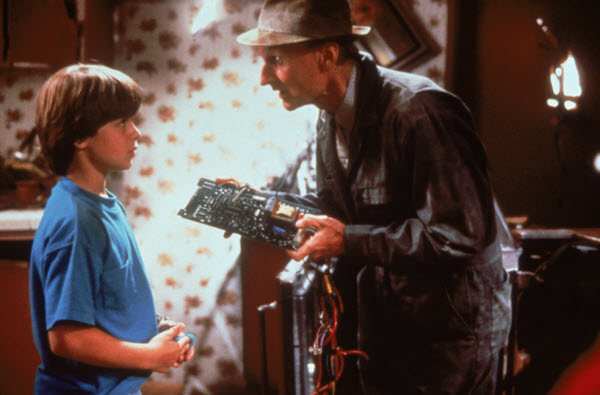
This is one of those films I avoided revisiting for a long time. I have a few of these. Essentially what I’m scared of is that, no matter how marginally I liked it, that upon re-viewing it, under further scrutiny, I’ll find myself disappointed. I’m pleased to report that I didn’t come away with that feeling this time. Now I’m not going to sit here and pretend that you don’t have to seriously suspend disbelief to even give this one a fair shake, but I still think it works. Yes, electricity seeming to have a consciousness and coming to attack you, for whatever reason, is outlandish. However, 1980s horror cinema brought us many a silly topic, but the great thing about the decade is how many were pulled off successfully.
This film significantly upgrades the notion of suburban terror for it’s a tale wherein it’s quite literally the house that after you. While other horror films used the notion of being young homeowners and debating leaving as the real-life element (The Amityville Horror) or home invasions; here this film finds a way to nearly anthropomorphize the house and give it ways to physically hurt you. And, of course, any time something that’s very important, a near necessity, becomes dangerous that’s an ingredient for successful horror fare also.
In a way I thought of this film as an upgrade on Maximum Overdrive, in part because of the necessity attacking, but also because this film made a decision that film did not, and that was having little by way of explanation. Yes, characters hypothesize, both those who know the truth of what’s really happening and one that doesn’t, it sounds good but it can’t be confirmed. It certainly sounds better than the comet in Maximum Overdrive, and Stephen King’s tale Trucks avoided speculation.
The film begins and ends with a montage of electrical devices and carriers, tight angles and wide to establish and drive home the point. There is also a classic approach of being shown a crazy result and then having that unseen incident make sense as the story progresses we see that a pattern is repeating. The escalation of events also makes sense because the film starts with a kid (Joey Lawrence) being witness to odd occurrences and that naturally instill disbelief in the improbable story that’s being told. As events escalate belief becomes easier and the burden of excessive disbelief is avoided.
Aside from some cool, and very ’80s, macro-cinematography and effects work what really carries this film is the performances. Most notably those of Cliff De Young and Joey Lawrence. Also, noteworthy is his younger brother Matthew who plays a funny supporting role, but the drama is palpable through most of the film. The characters are established and they have their conflicts, which are only exacerbated by the strange events. As the events increase in intensity their bearings slip, they become more strained, more irritable and they all pull it off.
Yes, Pulse is a weird little movie with a goofy premise, but it has a lot going for it and will entertain you if you give it shot.
For an Introduction to the concept of 61 Days of Halloween, and a list of previously featured films, please go here.
Blame
This installment of the series is offered by Narciso Ibáñez Serrador. The only other film I’ve seen of his is Who Can Kill a Child?, the original not the remake, which I enjoyed a bit more. Although many years later it’s interesting to see a filmmaker only twice and at two very different stages of their career, especially when some of the themes that are being explored are similar. This title is the most recent of his listed on the IMDb. While there are some interesting aspects to the film, and some of it is well-handled; I can’t help but feel it shares a lot of the difficulties the earlier film works: namely there are some dubious decisions by characters and some head-scratching moments.
However, what this film has going for it is that its tale is, eventually, a more layered one and touches upon themes too often avoided in American horror films. However, there does come a point in a film where it can be said you’ve been playing coy for too long and are starting to hurt the end result. The delayed nature of the reveals adds a sudden choppiness to the reveals and a very quick escalation with minimal time to absorb the impact of what is seen.
There is certainly a deftness of hand in how this tale is wrought, but it ultimately encounters some issues that titles truncated to have shorter running times do; inasmuch as I feel this film would’ve benefitted from being expounded upon such that the overall flow of it was more consistent. As it stands there are interesting scenes a themes, as well as effective sequences, that don’t gel into a completely successful whole.
For an introduction to the concept of 61 Days of Halloween and a list of previously featured titles please go here.
The Dead Father (1985)
I have covered the films of Guy Maddin on a few occasionshere. However, even with all that coverage there are a few of his films I had not seen. One such film was Tales from the Gimli Hospital, his first feature.
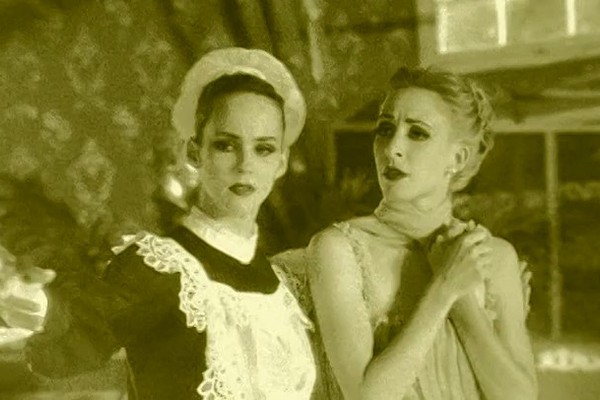
On the DVD of that film, one whose horror qualifications are disputable, there was the short film The Dead Father. This is one that is more obviously a horror tale. It’s one in which death is a transient experience. One misapprehension I recall from my days in film school is that writing “homey” or family-based tales was us students playing it safe, sticking far too close to writing what we know. However, it’s not the motif or the milieu you work with, but rather how you use it. Much of Maddin’s works, this one included, are family portraits but you could not confuse Maddin with any other filmmaker because of how he tells his stories in narrative, visual and editorial senses.
Even with it poetical use of voice over and sparse use of dialogue there are still silent film tropes all about this film starting with the introductory photo title cards of the characters. Maddin’s style is embossed on this film, and though he has experimented with different kinds of tales; he has created his own approach and that really started here.
While short films are a starting point for most, if not all filmmakers, few modern auteurs can be referred to as short film artists and Maddin is most certainly that. He continues to make many shorts and he tells tales that are as long as they have to be and is not only making features but made a short as recently as last year in an anthology, and one due out next year.
This is a film that sets its tone with weird off-kilter photo albums immediately and continues to its creepy, gross finale with occasional humor and persistent oddities throughout. Unlike many of his shorts, this film is not available online but instead is on the Kino edition of Tales from the Gimli Hospital it is definitely recommended viewing if you’re looking for something a bit different.
For an introduction to the concept of 61 Days of Halloween and a list of previously covered films go here.
Asylum (1971)
Last year I got into a real kick of watching as many horror anthologies as were easily accessible. The anthology film, horror or otherwise, was one I’d not seen too many times. Granted they are one of the rarer approaches but they are out there. The most recent notable editions in the genre are, of course, The ABCs of Death and V/H/S. I had heard, from more than one source, that this was the best of them so it was one I knew I had to give a go once this theme rolled around.
Not only had I heard it was quite good, but it was also cited as one of the 100 (or so) best horror films from 1950-1980 by Stephen King in his seminal work of non-fiction, Danse Macabre. And titles on that list are high on the pecking order so far as things I want to be seeing during this theme.
With this film the approach is one closer to a nested anthology, which is to say that the stories more naturally flow in a narrative sense. Some anthologies are rather regimented and segmented. Here the the frame is highly important both in terms of the screen time it’s given and the impact it has on the tale overall. There are far too many anthologies I’ve seen, even in the small amount, that treat the frame as a throwaway or as secondary. This does not.
With the tales spawning from the minds of the deranged there is also a brilliant liberation from “reality” and standard rules. The drawback that most will point to regarding anthologies is that invariably some tales are better than others, some are even so good that they nearly salvage otherwise dreadful films. Part of why this film is so well-regarded is the fact that pretty much all the stories in this film (frame included) stand on virtually equal footing, and they’re all quite good, creepy, weird, and well-executed.
Amicus Productions are not a name I’m very familiar with but they are a company whose titles are worth getting to know. Asylum being a prime example.
If you’ve been paying extra-close attention you may have noticed I’ve not adhered to my policy of updating or adding new content daily as of late. Essentially what has occurred is that I got ahead of the game for a period of time where I was away but didn’t get ahead after returning to the daily grind. So I took some days off to re-strategize: I will slowly and surely build the surplus starting today, which is my regularly scheduled round of updates to running lists. Below you will find links to all that has changed today. New content will arrive tomorrow.
The next update day will be Tuesday, October 1st, 2013.
For an introduction to the concept of 61 Days of Halloween and list of films previously covered please go here.
The Baby’s Room (2006)
As I mentioned last post, the very least I ask out of a series of horror films is that there be some concerted attempt to push the envelope within the confines of the genre. That’s exactly what this film does. Contrary to another film in this series that I’ll cover at a later date it does take a while to deliver on its connection between the main thrust and the teaser scene, but when it does it really works ingeniously and gives the film a creative avenue through which to explore its themes in both audio and visual ways.
While many of the films in the series, and in my experience with Spanish horror in general, can be a bit deliberately paced; the incidents in this film stack themselves nearly atop one another. The pace is fairly quick which does keep one fairly engaged both emotionally (as you watch the rapid deterioration of a relationship and mental state) and intellectually (as you fight to keep up not only with the twists and turns, but to decipher the rules that govern this cinematic universe).
Also, on the intellectual end of the spectrum there is a paradoxical nature to the film, which to my mind elevates it. Also bumping this film into another echelon are the performances. When there’s much dealing with mental state and personality it’s a pre-requisite for greatness if not passibility and this film does have very few chinks in its armor.
I believe that I may not have been as impressed by The Baby’s Room the first time I saw it, and that may have to do with the results of the narrative because what this film actually does, which too many horror films fail to do, is get me to care about what becomes of the characters within it. In one scene you see the protagonist quite literally pick up a figurine, a piece of a game; when you pick up all the pieces of the puzzle that is this film you get quite a dazzlingly terrifying portrait.
Firstly, my apologies for this post being late, and to subscribers who may have seen this post come up raw, unfinished and unedited. I’ll do my best to keep that kind of thing from happening again (it’s already happened far too often).
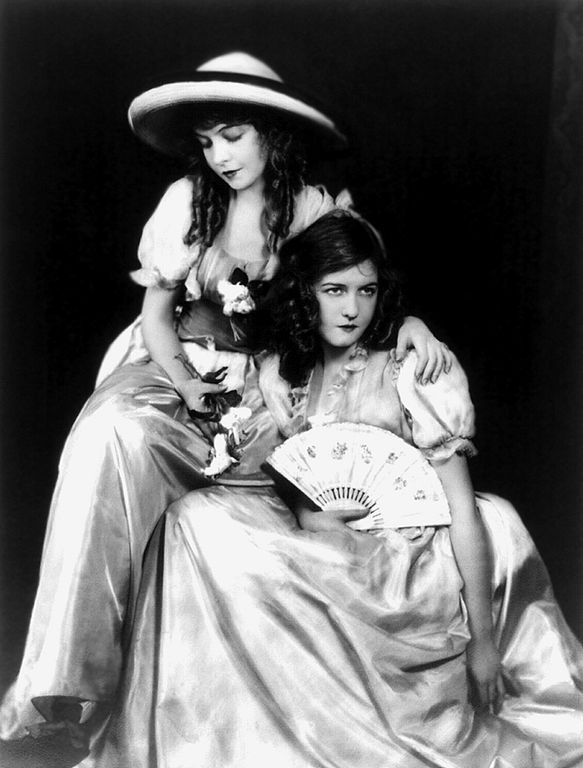
My goal in this post for this blogathon was to through viewing the works of Dorothy and Lillian working together not only come up with a unique angle on their collective filmography, but, also get to know them better. Yes, I know Lillian’s work on Night of the Hunter. Her quote about children is one of my favorite in the annals of film history. However, I can’t claim much knowledge about them. I knew more about them than I did about Louise Fazenda, but not too much. Therefore, a perfect opportunity to learn.
If looking at it like a science experiment I used many of the same methods to hunt down the Dorothy and Lillian titles that I did with Louise. Sadly, though The Internet Archive yielded me no results. Youtube did get me the chance to view nine films, however, few featured them very prominently. Those that did will be embedded.
However, even if this strikes me as somewhat disappointing, I have gained some knowledge and surely my goals are always lofty and not always likely to be reached. For I should recall that it was Lillian Gish herself who said:
I’ve lived long enough to know the whole truth is never found in history texts. Only the people who lived through an era and who are the participants in the drama, as it occurred, know the truth. The people of each generation are the accurate historians of their time.
So, no, in this approach only finding a few of the works they did together I can’t be all-encompassing but perhaps there’s something new that can be found.
Films Viewed
An Unseen Enemy (1912) So Near, Yet So Far (1912) The Burglar’s Dilemma (1912) The Musketeers of Pig Alley (1912) The New York Hat (1912) The Painted Lady(1912) Judith of Bethulia (1914) Home, Sweet Home (1914) Orphans of the Storm (1921)
Observations
Firstly, almost by accident I watched these films in something resembling chronological order. I searched based on the IMDb list, which sorted them that way and then I created a YouTube play list in the order things were found. As per the official Lillian Gish siteAn Unseen Enemy marks her debut.
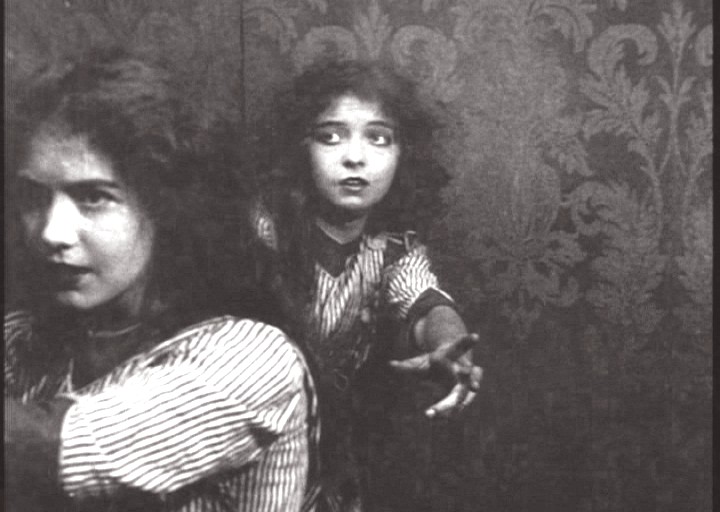
In my note-taking I was a bit more poetical about the ladies’ participation in this film referring to them as “mournful ingenues” rather than “damsels in distress.” However, that’s what it boils down to. There’s nothing atypical about this work from Griffith, not anything exceedingly spectacular save for the fact that it began their association with him and it would prove rather fruitful for both. It was an auspicious start to watching them both because they’re scarcely apart for even a second.
In terms of working in tandem The Musketeers Pig Alley is not a prime example as here Lillian plays a significant role and Dorothy plays a small part as “frizzy-haired woman in street,” as would end up being the case quite a bit; as it was Lillian who was regarded as one of the greatest actresses of the silent age, but I was keen to re-examine it after I saw it earlier this year and thought nothing too much of it. What created that turnabout was Scorsese’s mention of it in this brilliant article. The film didn’t appeal to me too much more but the shot he refers too, which was unusual for the time, did.
As little as that film has to offer for both of them, Lillian’s physicality does shine through in her contributions to the narrative.
Going in chronological order through much of the early small works the sisters both did for Griffith/Biograph did have me rather dejected regarding my hopes of finding something worthwhile.
A note to all those writing about film is that one must watch first and find the angle second. Reversing that equation can have very adverse effects on your viewing experience. Giving me little fodder to discuss, but a film I thought was very enjoyable, such that it buoyed me to continue was The New York Hat.
Closing out what represented the selections that marked the early part of their careers was an odd little film called Home, Sweet Home. Here these another good scene of the sisters together. As the protagonist (Payne played by Henry B. Walthall) flirts with his sweetheart (Lillian) her sister (Dorothy) get some great reactions while facing away from them. The story is an interesting pre-cursor to what Griffith would later do in Intolerance structurally, though I suspect this is far less successful. The sisters start the film but do go out for a while. If you can stick it out it’s worth taking in. I had difficulty doing so, I must admit.
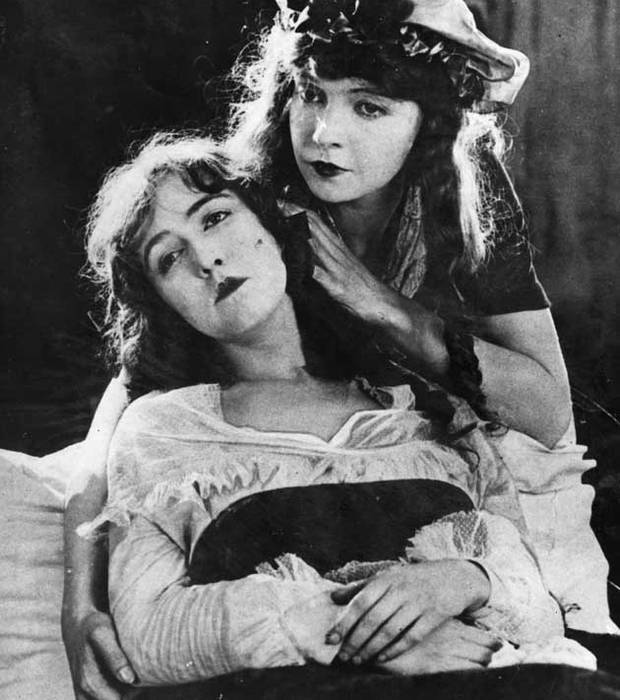
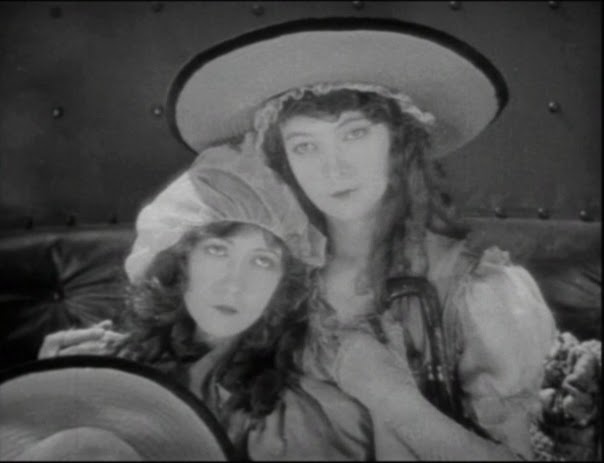
Much as my playlist did for me, I save the best for last for you. This is one of three features that I took in and this one is a long one at over 140 minutes but truly the story is a fairly epic one, but also intimate. Fate, more specifically the events leading up to, during and immediately following the French Revolution; tear apart these two sisters many times over. Louise, played by Dorothy, is blind, and Henriette, played by Lillian, is even more protective of her because of it. You add into the equation things like: it’s another D.W. Griffith work; one of his sprawling, great melodramas and you can see how special this title is without, even factoring in other things like that it was the last time Lillian worked with Griffith and that she suggested the film, as it was based on a popular play.
However, the film is not just excellent, but both Lillian and Dorothy are exceptional in it. Playing blind in the silent era is not something I think I’ve been privy to yet so it’s not quite as big as I expected it to be and that’s a credit to Dorothy. The fact that one sister is a caretaker for another is augmented by the genuine sisterly affection that shines through their performances.
Here is where you see a citation, much as I alluded to earlier, being personified. Lillian was one of the finest actresses around, but the already more naturalistic style that came in as cameras moved closer to actors was something that she was already more than capable of previously. The litany of scenes and different emotions conveyed by the two in this film is would be quite long if I enumerated them all.
However, key in this film is that they each have significant screen time in the film, but much of it is spent separated and in search of one another. Thus, each sister gets her chance to shine. This makes it perhaps a more powerful and impactive film as Lillian’s career continued strongly for years and Dorothy didn’t transition to sound nearly as successfully.
The Syndrome of Siblings in entertainment, particularly film, can be a vicious one because whether or not a rivalry does exist; the public, both at large and within an industry, has a tendency to compare. And comparisons can adversely effect the sibling who is generally perceived to be the lesser of the two making an isolated and impartial evaluation hard or impossible to come by.
One example of how they both shine is in a fleeting reunion, which can be referred to as this film’s “balcony scene.” For a scene such as that to work both of the actors have to pull it off, especially in a wide angle (which at least a portion of the scene is) and they do, emoting as befits their character.
Conclusion
Regardless of how history may recall the Gish sisters individually “the whole truth cannot be found in history texts.” What can still be found are some of their works. I did, through my limited exposure in the past, come to post with a hierarchy in mind, but as I saw the first short with faces so similar and performances virtually on par it made me wonder about that – even identifying them become difficult in these version. Perhaps what it illustrates is that both were better together, and Lillian was more capable when they were not paired.
Yet, I can’t help but think bigger than that. For film is collaborative art: without Lillian Griffith doesn’t have Orphans of the Storm to his credit; without Dorothy Lillian may not even think to suggest it; without each other they can’t deliver the performances they do. And then, what of us, filmmakers and lovers both, where are we without both of them, without our ability to enjoy and learn from them? It may be impossible to quantify, but thankfully one needn’t answer that question but can merely enjoy what they have contributed.
For an introduction to the concept behind 61 Days of Halloween and a list of films previously covered please go here.
Graveyard Disturbance
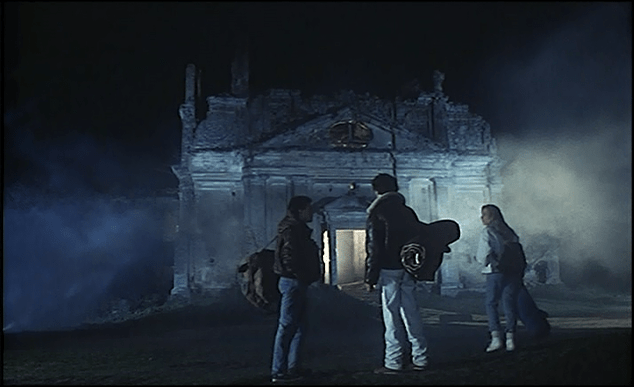
This is a film that was directed by Lamberto Bava, son of Mario and director of such films as Demons, for a televised horror film series called Brivido giallo. The inherent value of horror series in my estimation is challenging the writers and directors to create, be they within a theme or some of constraint to further contribute to the genre and hopefully push it forward. If it breeds experimentation and something new that’s ideal, but the goal ultimately, at least from an analytical viewpoint, is to not allow it to stagnate.
I’ve not seen other films released under Brivido giallo, but, sadly this title has little to offer in the way of either being a piece of quality workmanship or originality. That’s not to say it’s entirely bereft of positives but the film positions itself poorly to attempt to exploit said positives. The location, the atmosphere and overall art design is fairly great. However, it’s bookended by both poor acting and a fairly slapdash story so the atmosphere can only go so far.
As the mystery the characters find themselves in unravels itself, it wants you leaving more, in a bad way. It creates a mythos that is undernourished and it would have done well to exploit the “non-Euclidian nature” of the environs they found themselves within.
The first act offers almost nothing in the way of the incident, however, a title such as this one is not enough to get me to shut the door on Bava or this series of releases. When one watches horror one does so knowing there will be many failed ventures before finding something truly special.