Mini-Review: The Wall

Introduction

This is a post that is a repurposing of an old-school Mini-Review Round-Up post. As stated here I am essentially done with running multi-film review posts. Each film deserves its own review. Therefore I will repost, and at times add to, old reviews periodically. Enjoy!

The Wall

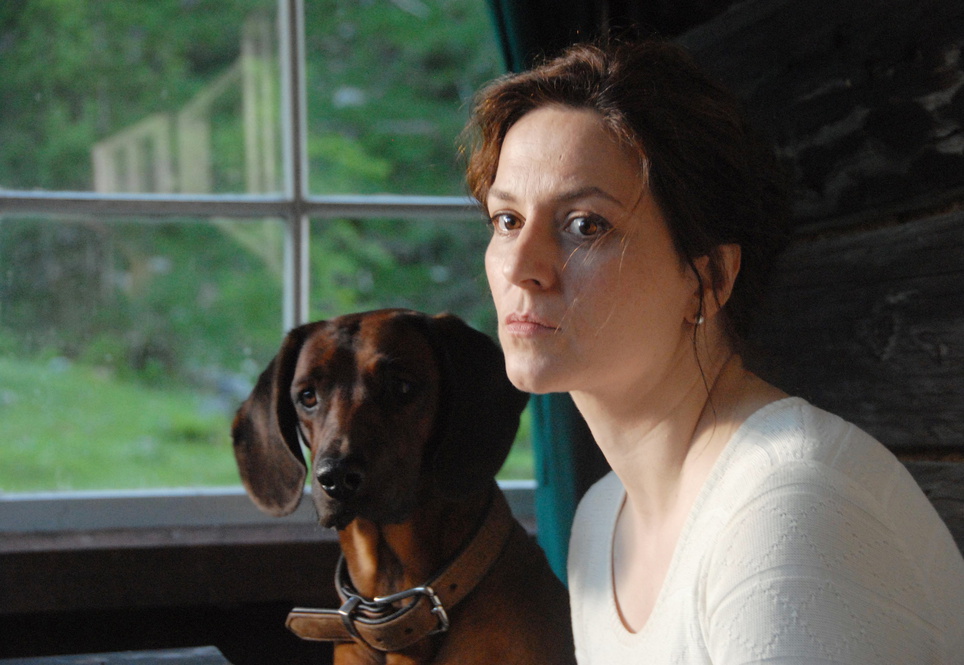
If you’ll forgive the simplistic analogy the way I can best express my feelings and thoughts about this film are via comparison to an analogous title. This film tells the tale of a woman going on a vacation in an alpine cabin who suddenly finds herself surrounded and isolated by an invisible barrier, a wall. In that regard it reminds me of Stephen King’s Under the Dome, more so the book than what I saw of the series. Therefore, it’s a tale not so much about the how and why but what occurs under the “dome,” or inside the wall while it’s up. There’s much exploratory voice over, nearly incessant amounts and not much by way of findings in the report that is being written; subtly surreal additions and interactions with new animals that through a lot of inner-monologue reveal less than something like Bestiaire. A well-acted and shot narrative, but not a very compelling one.

5/10

Review: Stranger (Zhat)

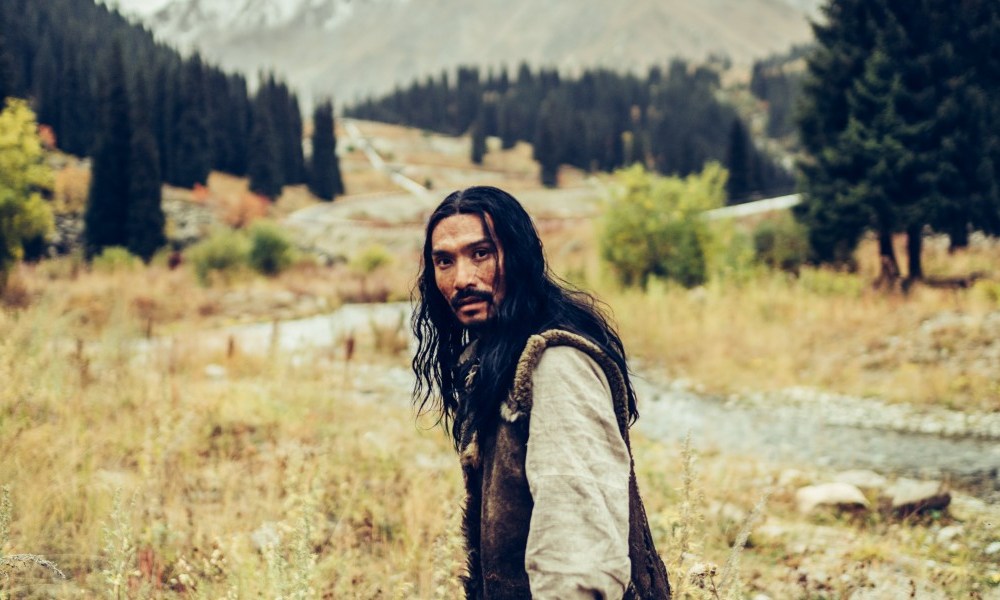
Yermek Tursunov’s previous film, that I was able to see, was The Old Man (Shal), and it was Kazakhstan’s official submission to the Academy Awards and was nominated for quite a few BAM Awards including Best Picture and won Best Cinematography. The Old Man was part of a trilogy. This one is not part of that multigenerational tale of familial legacy but Stranger very much feels of Tursunov’s milieu; exploring the world of Kazakh nomads.

In this case a tumultuous period of the 20th century in this then Soviet-state. Events are realized, and come home visually without too much assistance from the dialogue. However, it allows us to more quickly bring ourselves into the film and experience it not as outsiders, insistent on knowing precise causes and affects, but rather much as our protagonist Ilyas does. He doesn’t quite understand what’s going on and why his parents and friends are disappearing as enemies of the state, and he doesn’t care what the reasoning is. He just feels it’s not right, refuses to “get with the program,” and runs off. Not only living the only way he’s known how, but adopting and even closer-to-the-earth more insular existence than he heretofore had.

Music is perhaps more crucial to Stranger than it was to the old man because the narrative is not one compressed in the dramatic unities of time and space in cinematic terms but rather a sweeping epic than spans decades and goes from the protagonist’s childhood to his death. The timelessness and majesty of the music are another tool used to draw us in. For truly music, perhaps even more so than cinema, can have the evocative quality needed to truly transport a person to a time and place they’ve never been and identify as if they have.

Stranger (2015, Tursunov Film)
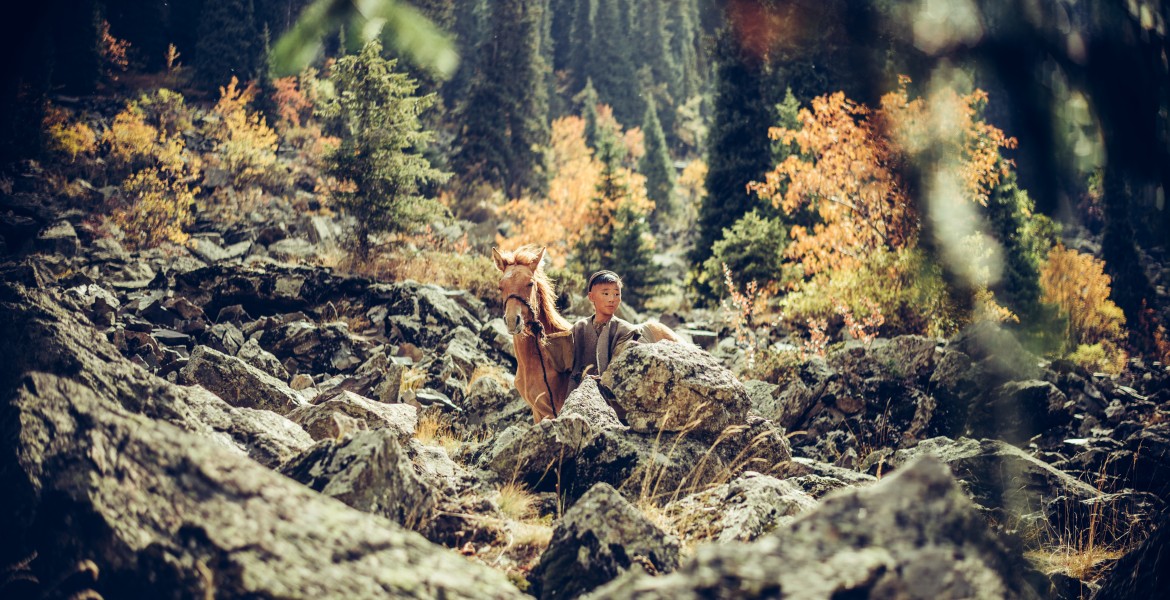
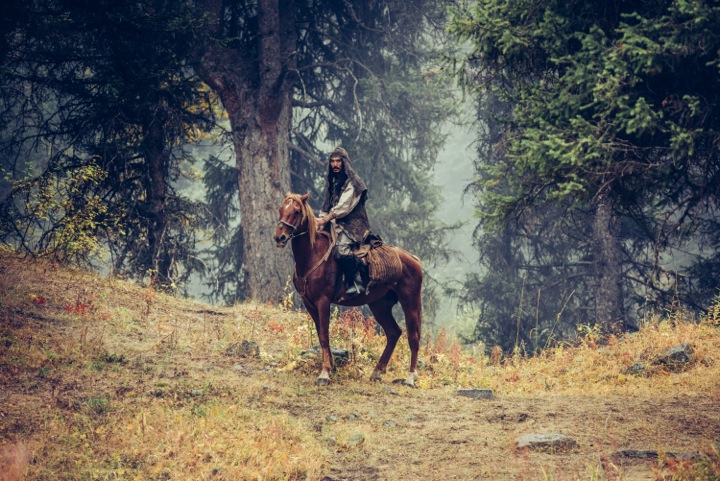
With a tale that concerns a reclusive nomad and the small village he leaves behind and can only occasionally return to for short times. The cinematography by Murat Aliyev lovingly captures the steppes in their beauty and brutality but is also the key to creating the marvelous mise-en-scène this film has. The framing, quality of light, and the fact that this film speaks far more in images than in dialogue makes it even more crucial that it is this good and it is.

Stranger also hearkened me back the to the Norwegian film Pathfinder (Ofelas), but with a more allegorical than traditional epic slant. Most of that has to do with the magnetic performance of Erzhan Nurymbet not just the fact that he’s frequently isolated. Perhaps the rarest feat this film can claim is the equilibrium in quality of performance between two actors playing versions of the same character at different ages. Typically aging of a character from childhood into adulthood is only used to create an inciting incident, or illustrate a trauma; usually the appearance is all that remains the same. However, with Stranger there is shown, simply, in a gorgeous montage, Ilyas’ transformation from wide-eyed innocent fleeing into uncertainty to a fully red-blooded nomad more adept at living in the woodlands of the steppes than what passes for society in collectivized village. This is a testament to Erzhan Nurymbet, Nurgali Nugman, and the edit of the film.

An edit which frequently is deftly artful to convey the passage of time visually without having to resort to titles. In fact, only at the beginning do we outsiders get some necessary background information. What proceeds after that is a story embodying many aspects of that title card in one character’s life.

Stranger (2015, Tursunov Film)

Even though the film may not be traditionally uplifting its a wonder to see the world through Tursunov’s eyes anew. I’m sure that some will experience these same joys for the first time. For beautifully made films about difficult subjects that deal in the highest of artistry and a minimum of didacticism are far too rare, even rarer still is the hypnotic ambience of these Kazakh film worlds.

9/10

Mini-Review: Stuck in Love

Introduction

This is a post that is a repurposing of an old-school Mini-Review Round-Up post. As stated here I am essentially done with running multi-film review posts. Each film deserves its own review. Therefore I will repost, and at times add to, old reviews periodically. Enjoy!

Stuck in Love

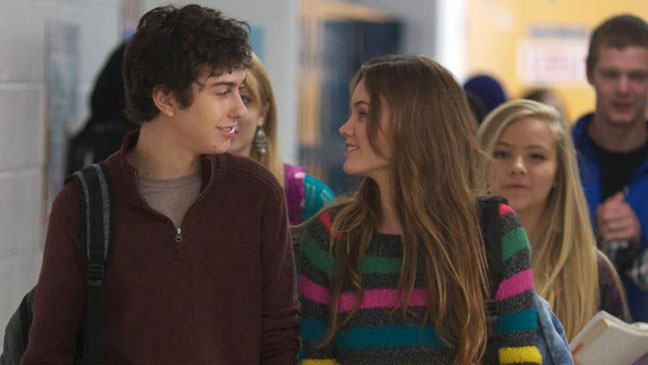
While the cast is talented and the characters are ultimately likable Stuck in Love unfortunately relies a bit too much on convenient plot devices. The kids have been raised to be writers and they all succeed at exceedingly early ages and with seeming ease. The conflicts are there and the characters arcs are there, but the big moments are bit too simply achieved, that and there was a generalized sense of predictability. Despite the characters’ quirks nothing too surprising occurs. Lastly, on the production end the selection of source music is rather invasive, annoying and a bit too on the head more than once.

5/10

Blu-ray Review: Children of the Night

Children of the Night (Limbo, 2013)

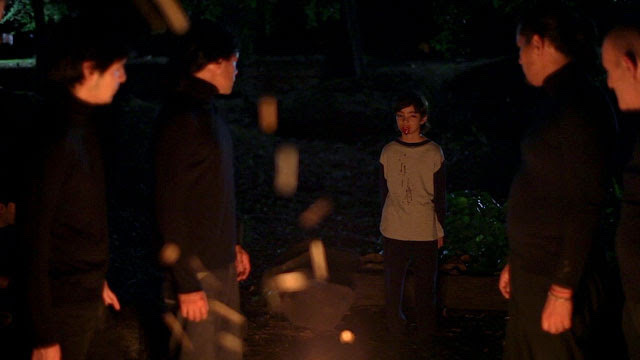
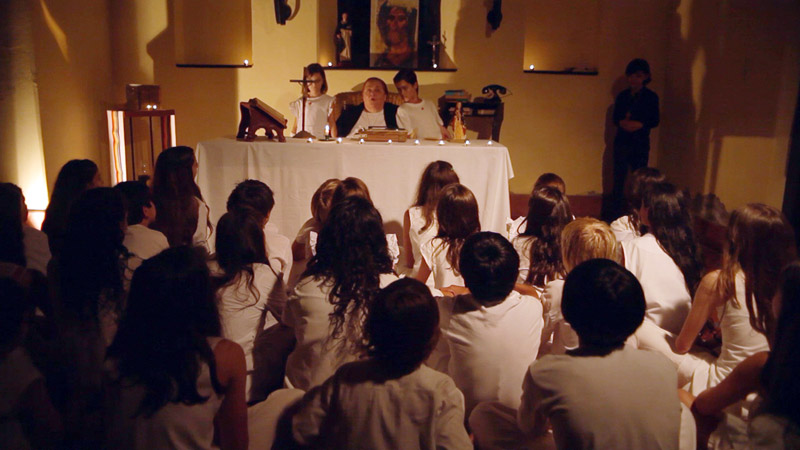
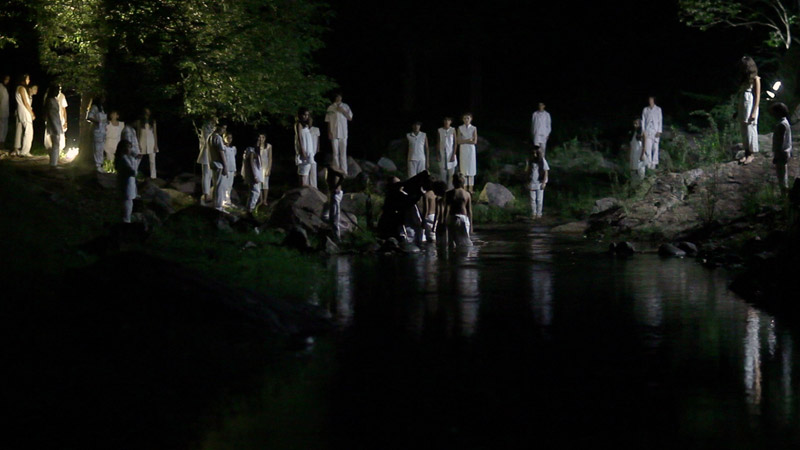
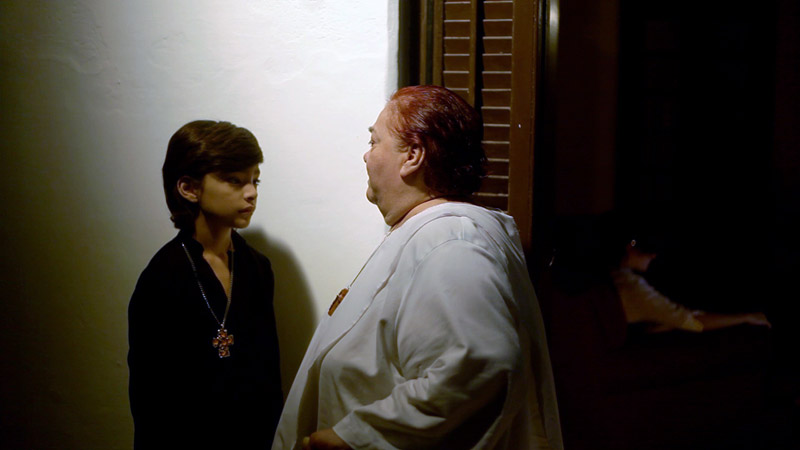
Children of the Night is a film that offers a fairly different take on the vampire lore, and seems just as interested in using the guise of the vampire tale to make societal commentaries as it is in twisting the tropes of the genre.

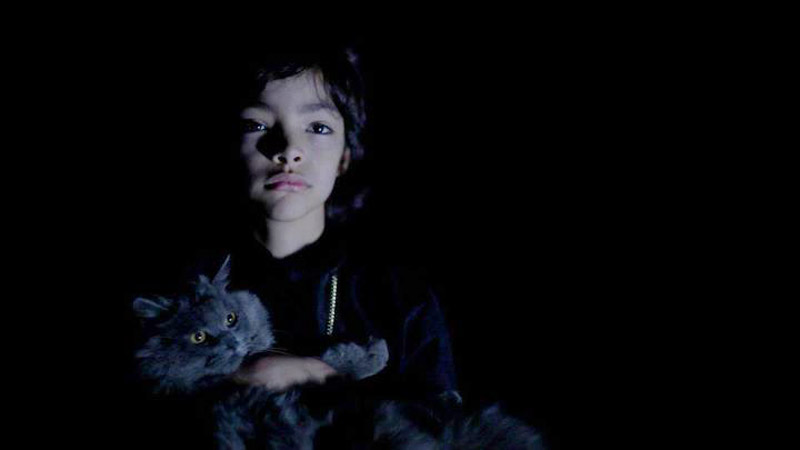
It kicks off with Alicia (Sabrina Ramos) being contacted at her newspaper about doing a profile on Limbo, which claims it is a group home for children with a rare disease. As Alicia arrives and starts talking to Erda (Ana Maria Giunta) the true vampiric nature of these inhabitants starts to make itself known, as well as why she was really asked to come.

The English title play off a famous quote from Dracula, and it’s not entirely unfitting. It allows the audience to some extent understand what the film will be about as well as disambiguating it from other films also entitled Limbo.There are also allusions to Dracula herein so that makes it even less of a stretch.

Children of the Night (2013, Artsploitation Films)

It’s nearly inevitable now that when you hear of a tale of vampires who are children you will invariably think of Let the Right One In, or the Amerian remake Let Me In. This film is neither of those films and it’s not really trying to be. Aside from the mystery portion of the tale, which is not that long, it’s not playing things entirely straight. There is much dark humor to be found and it’s much appreciated.

Also allowing the film stand out is that it combines story elements interestingly. There is a compulsory vampire hunter angle thrown into the mix, which allows some of the expected viscera and action sequences. However, much of the intrigue in this film are about interpersonal relationships, and the suspense elements are from learning new bits of information.

If you’re one who’s over-concerned with budget allow me to assuage your fears: yes, this is quite a microbudget film. However, the film nevr puts itself in situations where that becomes apparent or a detriment. in fact, there are instances where its refreshing to see something actually being done, instead of virtually occurring with the aid of CG. The film gets quite ingenius about it as well.

Children of the Night (2013, Artsploitation Films)

The locations, the way its shot, and the uniquely indigenuous and entrancing score crafted by writer/director Iván Noel help to create a very unique atmosphere. The two leads newcomer Ramos and renowned veteran Giunta are positively captivating in their scenes in tandem. They are buoyed by two fairly strong debut turns among the young cast by Lauro Veron and Toto Muñoz. The latter especially as he is our introduction to this world, and has some of the longest, soul-searching scenes within.

Children of the Night is not a run-of-the-mill vampire tale. However, with the most recent surge in popularity of the vampire over (due mostly to an over-abundance of cynical, subpar, dime-a-dozen, mass-produced junk) the thoughtful well-rendered tale with laughs and gore within should still find an audience.

Bonus Features

Making-Of Featurette
Children of the Night (2013, Artsploitation Films)

It’s always interesting to see making-of featurettes. In this case it is especially intriguign to see some of the restraints they faced. You also see some footage from preproduction through to the making of the film, along with theatre games to get the kids warmed up. There are some English titles to give one a sense of information though I will warn viewers: my Spanish is pretty good so I got everything I could out of the featurette. Some may not.

Commentary

Children of the Night (2013, Artsploitation Films)

If some parts of the feturette leave you wanting the director’s commentary will help. Noel discusses the makign of throughout, all in perfectly enunciated English, and gives you soem great insights. While on occasion there’s some overload for those not as interested in the technical or textual aspects, he does counterbalance that by not talking the entire time and letting some scenes play out.

Children of the Night is available today on digital platforms, DVD, and Blu-ray.

It runs 105 minutes, with dialogue in Spanish subtitled in English.
Mini-Review: 17 Again

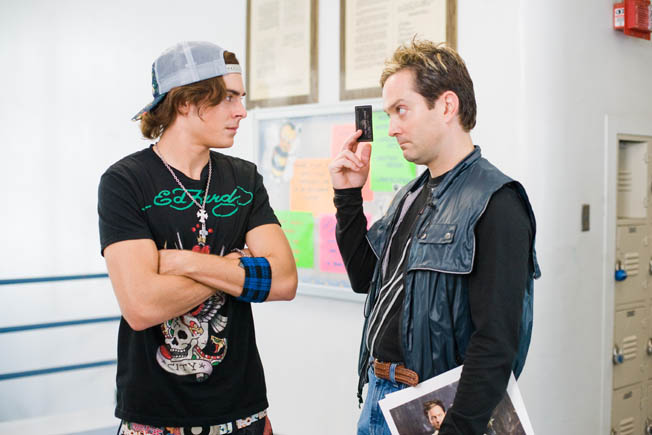
As you watch 17 Again you might wonder how often a concept like this can possibly work. This certainly isn’t a Romeo & Juliet type template, but it seems that no matter how many times this, or things like it, come along people will watch, and it will be enjoyable… to an extent. Then I realized it’s like the cinematic equivalent of a sitcom – enjoyable but disposable – use once and destroy.

So, yes, you do laugh, because the father does often forget he looks like Zac Efron and not Matthew Perry, and yes there are flaws. For instance almost no one recognizes him as, at the very least, a reincarnation of Mike O’Donell. What does work in this film’s favor are: Zac Efron, who being given a part where he needs to be more than an archetype delivers, and is rather impressive; Dad dialogue being delivered by a twenty-something that sounds funny when it needs to be and heartfelt when it has to be is no easy feat; and the biggest kudos go to Thomas Lennon who played Mike’s friend Ned to perfection. Lennon provided most of the comedy that put the film over the top and also had the most fully realized character. He was a continuation and expansion of his former self.

Suspension of disbelief occasionally becomes difficult with things like the coach not recognizing Mike, and Ned trying to beat Mike up thinking him an intruder for an overly-extended sequence. However, these flaws are counterbalanced with portions of the film which are told visually, especially in the beginning of the film, a decent editing style in certain scenes, and I did feel Burr Steers’ stamp on the dressing down of the bully scene. It was nice to see a glimmer of authorship in a generally formulaic piece.

If you’re looking to for an enjoyable way to kill time this film is as good as any.

6/10

Review: Birds of Passage

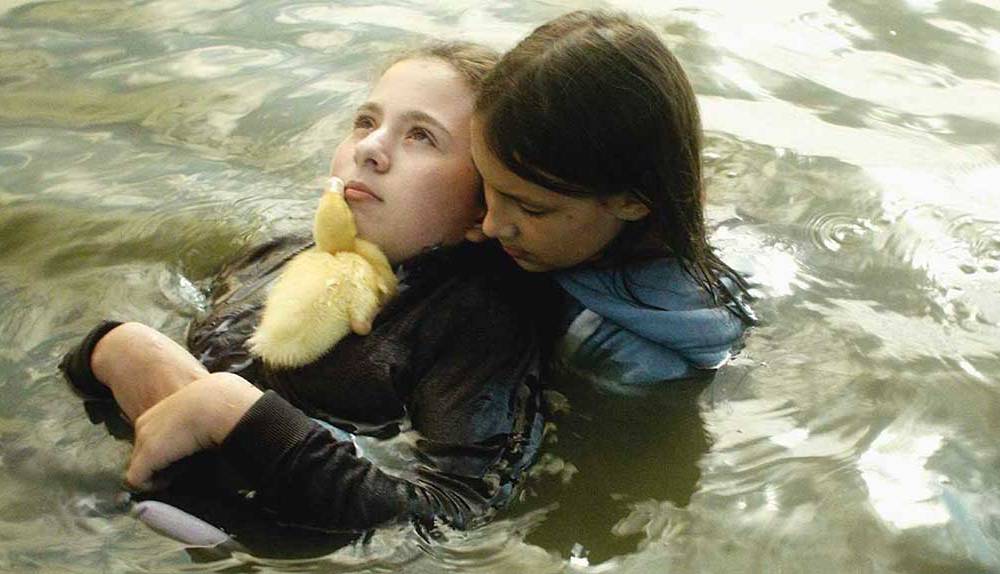
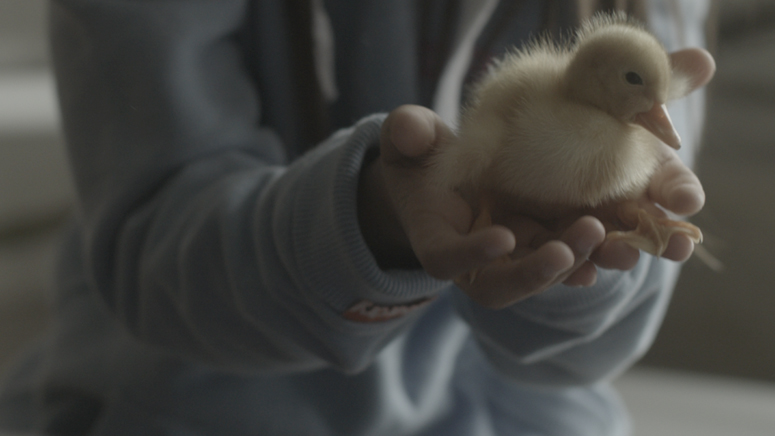
Birds of Passage tells a story that in synopsis, and in the trailer appears to be quite charming. The set-up is a simple one: Cathy (Clarisse Djuroski) receives a duck egg from her father (Alain Eloy) for her tenth birthday. The duckling imprints on her friend Margaux (Léa Warny) as its mother. Margaux is disabled, and wheelchair-bound so her parents do not think she can keep the duckling. Cathy and Margaux are then determined to find a way for her to care for the duckling at all costs.

This is a very simple, and straight forward story, which is always very refreshing. However, in a tale with so few sections where a single decision by a character can send it off the rails, it almost always veers off course, at least for the time being, and the total effect is irreparable to the end product.

In key moments there is a certain obtuseness to some of the characters that is hard to abide. This is not to say that characters, especially children, cannot make mistakes, it’s the how and when, combined with the predictably of the mistake or odd decision that ultimately makes this one hard to latch on to.

6106_piepkuikens

On positive notes: this film is a prime example of the importance of the first image we see, this one being a static shot of swans on a pond as the credits roll over it. There is a symmetry here, and a visual coming-of-age that is apparent and easy to admire. There is also throughout a reconciliation without speaking that is refreshing.

However, this brings us to yet another difficulty. In this film there are four parents, only one of whom is tolerable, in fact, he’s my favorite character. In coming-of-age tales individuation and parents being seen as a barrier is a natural state of affairs, but something’s off when the thought occurs to you “With parents like this who needs enemies?”

The young leads perform admirably, and the very close of the film, and occasional comic relief are nice but ultimately do not salvage the film. This is a film that should be a slam dunk: kids, one disabled, taking a road trip to not just save their duck from becoming pâté but so that it surrogate mother can usher it to its own independence (and their own), yet the whole thing becomes an example of how to take easily identifiable and watchable characters and situations utterly intolerable.

5/10

Mini-Review- The Haunting in Connecticut 2: Ghosts of Georgia

The Haunting in Connecticut 2: Ghosts of Georgia

I nearly did a commentary on the rise of, and you may even consider it to be a re-emergence; of nonsensical, paradoxical film titles such as this one. Essentially, I made peace with this silly title by likening it to Halloween III. The fact that a disconnected narrative was lumped into a series should not influence my opinion of the title. Sadly, this film is not quite of the caliber of Season of the Witch.

While I can’t knock it entirely, I can’t say I came away from it liking it. What the film does have going for it are the occasional good scare and an interesting mythology and themes it plays upon. Southern gothic tales seem like they’re the latest milieu ripe for the picking in horror, and this film at least starts the conversation. However, the build is a bit staggered such that the climax is drained of some of its tension by flashing back to fill in blanks that have already mostly been filled in by us being allowed time to reflect.

Unnecessary doubt can always be a bothersome aspect in horror and this film eschews most of that and almost reverses it to be too willing to believe visions, but it works. Thus, there’s not quite balance: there’s a doubter you know is in denial, a fairly silent skeptic and a vocal prodder. Ultimately it is the construction of the myth from near the mid-point in act two into act three which cause issues, and could very well be an editing issue as opposed to a writing one.

It’s not a film I would not be averse to revisiting, and it doesn’t feel like a wasted experience, but also doesn’t feel like it’s quite up to what it could’ve achieved. A lot of what does buoy it is the performances of mother and daughter, Abigail Spencer and Emily Alyn Lind.

5/10

Mini-Review: The Ghastly Love of Johnny X

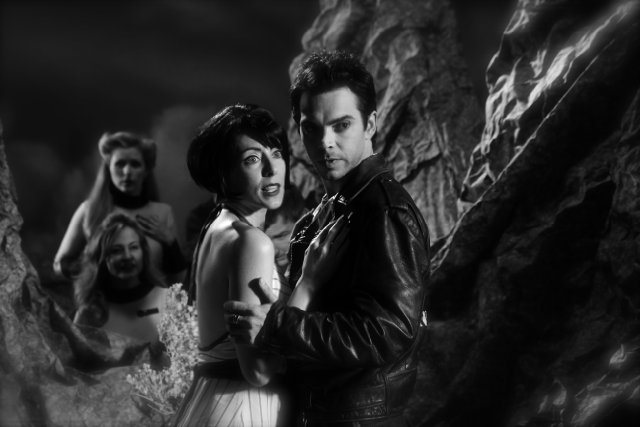
The Ghastly Love of Johnny X

There is an odd concoction of elements that the Ghastly Love of Johnny X is trying to blend. Its charms, however, are not enough and the spell it attempts to weave doesn’t have enough staying power to make it a truly successful venture.

What it does well is riff on nuance pretty brilliantly, create some memorable lines, it’s odd and unique and has its moments in terms of cinematography, production design and musically (in terms of arrangement if not always the singing – yes, it’s a musical too).

All that sounds good and the tale of a man exiled from his home planet to earth to wander with a gang of ’50s style hoods and try to earn his way home does have potential. The issues it ends up facing are that it devolves into being what it seeks to emulate in the worst ways as opposed to transcending to it while still making us laugh at its tropes; namely a cheesy ’50s movie except this one plays quite a few genres at once. In short, the pace begins to suffer; there are touches slightly too modern; the plot, goals and motivations of characters become muddled and the comedy starts to click less consistently.

Also, as a musical there are some very long stretches between some of the numbers that are far too big. It’s not an entirely regrettable experience, but one I can’t say I’d recommend.

4/10

Review: Alfie the Werewolf (Dolfje Weerwolfje) (2011)

Introduction

A brief editorial note. Somewhere along the way laziness officially took over and I stopped citing both the original title and the English translation in reviews of foreign films. This is now a thing of the past. Enjoy!

Alfie the Werewolf (Dolfje Weerwolfje) (2011)

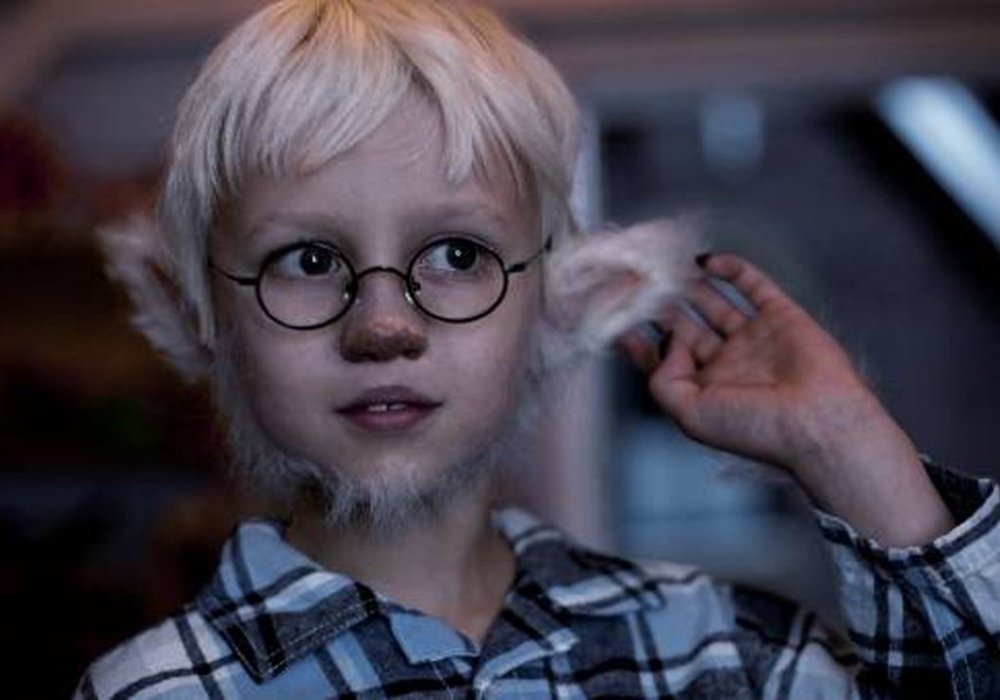
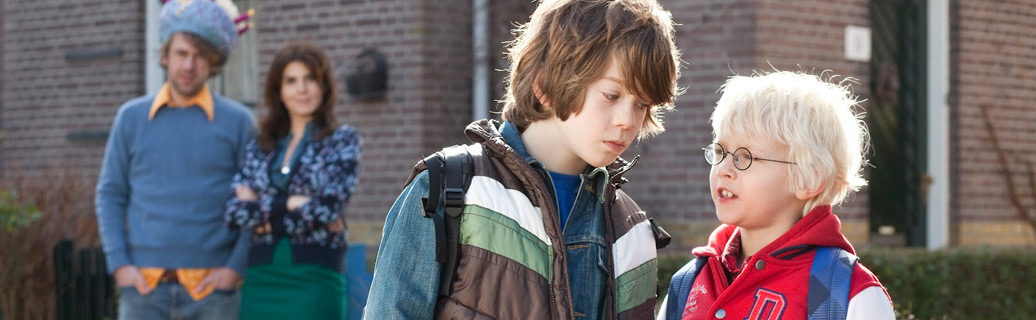
Alfie the Werewolf  is the tale of a foundling boy (Ole Kroes) who is staring to feel ostracized because he is treated differently than his brother (Maas Bronkhuyzen) at school. When the full moon comes he starts to discover just how different he may be. The title gives away just what tha difference is.

The treatment of the concept is most definitely one geared towards humor and a youthful audience, as opposed to one that lends an excessive amount of gravitas to it. The seriousness, the dramatic undertone, is left to the handling of the character’s wants and needs rather than any preternatural elements within the narrative.

If you’re looking for an analogous American film The Little Vampire comes to mind, even though I think that one plays into the darker side of the vampire lore albeit in an infantile fashion. In this film the werewolf is given the treatment of a kind of species rather than a curse or burden. This may be an expected approach when you consider this film is aimed at children. In certain ways, this also allows the condition to act as a metaphor, much as it always does.

Alfie the Werewolf (2011, Attraction Distribution)

While this is certainly not the film nor the score that Finn possesses Fons Merkies’ music is quite a standout in this film. It’s still fully orchestral but frequently has a melodic, lighter, jazzy feel that allows some of the common tropes of the subgenre to relax a bit.

Yet again this is an adaptation of a Dutch children’s novel. This series of books has been translated into English but their availability in the US in physical editions is scarce. They are easier to find as eBooks. Due to this fact its good that the film has been brought to North America through Attraction Distribution so that kids may be able to discover the story.

Perhaps what’s most refreshing about this film, from a production value and aesthetic standpoint, is the fact despite being a 2011 domestic release in the Netherlands it does not shy away from practical effects work. Yes, CGI is use where it’s truly beneficial like making the lycan child run about, but for more settled scenes he’s in a suit and make up. It is very well-done indeed.

Alfie the Werewolf is an enjoyable film for all members of the family, and perhaps most intriguing for parents is that it is a fairly benign way to reach a compromise with your kids on viewing material. It could satisfy the desire to see a werewolf movie but would not be potentially emotionally scarring in the process.

6/10

Mini-Review: The Moth Diaries

Introduction

This is a post that is a repurposing of an old-school Mini-Review Round-Up post. As stated here I am essentially done with running multi-film review posts. Each film deserves its own review. Therefore I will repost, and at times add to, old reviews periodically. Enjoy!

The Moth Diaries

It’s a bit of a shame when a film that offers a different perspective on a subgenre fails to catch lightning in a bottle. The Moth Diaries is not only subtle vampire tale set at an all girls school, but is also directed by a woman. It’s a slow-burn, which never quite catches fire all the way and it doesn’t really bend convention too much save for the casting and setting. Some of the better parts of the film are the overt allusions to the Gothic literature, from which all vampire tales draw at least some inspiration, which doesn’t bode too well for the piece at hand. The film doesn’t seem to detach itself too much from the source material, and there is an excessive amount of voice over for the story being told. Perhaps the novel is a better vehicle for this tale than the film as constructed.

5/10