61 Days of Hallowen: Son of Dracula (1943)

Introduction

For an introduction to the concept of 61 Days of Halloween, as well as a list of previously featured titles, please go here.

Son of Dracula (1943)

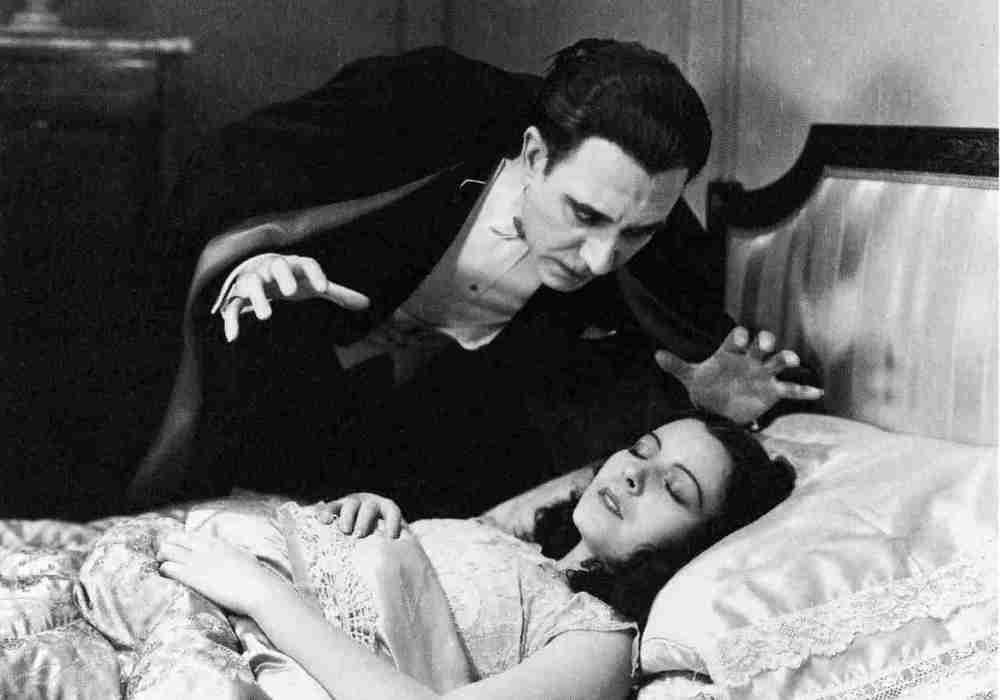
As I mentioned in the previous post about this series of films, and in other prior, one wants something a little different in the sequels to an original success; not so different that the intentions of the film have changed, but different enough to avoid rote repetition. The Dracula series from Universal, if nothing else, at least accomplished the goal of always offering up something different in its sequels.

How this film changes things up is not just making it about the Son of Dracula rather than his daughter but the approach becomes different as well. The film becomes one about a love triangle, and a Film Noir-like plot hatched by one of the characters involved, and, yes, a touch of madness as well, which is par for the course.

This is what lends the spark and intrigue to the tale, how vampirism is used in the motivations of the characters. It’s also interesting that here shifting the tale from England to America, thus, taking much of the Gothic element out is addressed as part of the story, and is part of the new count’s motivation and not just ignored. There is a touch of the old world through a supporting character who functions fairly well; not just as that link but also for needed expository information.

This is also the first of two consecutive films in the series that will feature Lon Chaney, Jr. However, true to the form of the series, and of Chaney’s career; he will not be Dracula in the next one.

As third installments in series go this is a pretty darn good one overall and has quite a bit of intrigue to it.

Short Film Saturday: The Facts in the Case of Mister Hollow (2008)

OK, I’ve missed more than I should have lately, but I’m back with a good one. This film employs a deceptively simple device to tell an intricate tale about an unsolved murder case. The device is a 3D journey through a photo to pick up clues. Spotting all of them and piecing them together is left to you. There is no dialogue and it’s very well done. Enjoy.

61 Days of Halloween: Dracula (1931 – Spanish Version)

One odd fact about the Pre-Code Era (and I believe this may have continued into the dawn of the Golden Age), that I was only vaguely aware of until I was reminded of it in the brilliant overview of Poverty Row I read; was that studios large and small would film foreign-language versions of their own titles for foreign markets. A majority of these films were in Spanish and German.

Subsequently when I went to try and find films for my Poverty Row April theme, I wanted to find some of these films but they were not readily available on the internet. So fascinated by this concept was I that I was ready to write a post about it and how some studio, if they have them in good shape, should dig these titles for a box set presentation.

I still may do that, but by chance I discovered that the Dracula Legacy Collections, which like all these sets is out-of-print but frequently available for resale, contained the Spanish version of Dracula. So I had to get it, and get it I did.

Standard operating procedure for these films was that they would use the same sets that the English-language film was using but shoot overnight while that crew was on break.

If you happen to view this film I strongly suggest that you watch the intro interview with Lupita Tovat Kuchar (confirm) where she goes into the detail. Now, when dealing with a film like Dracula the inherent fear of the foreign-language version is that it’s going to serve merely as a diversion, and be a curiosity but not have any merit of its own. This is not dissimilar to the fear about many modern day remakes; if this version isn’t offering something slightly different why have it at all.

Following that train of thought this Dracula is to the English one what Let Me In is to Let the Right One In; it gives its own spin to the tale. To be quite frank there are things about the Spanish version that I absolutely adore and think work better than the standard-bearing classic. Blasphemy I know, and many of them are film-nerdy kind of things, but I think the overall influence will be felt.

There are some shots, and edits executed differently than in Browning’s. The overall edit is quite different because I couldn’t peg an entire scene as being new but they evolved slower. Whereas, the English version has a lot breaks within lines, this film seemed to have more breaks between them, thus, more silence and added a bit to the foreboding. The lack of scoring is somewhat similar but there are some spots where a score comes in that are different, that and the music itself is a different composition.

When it comes to performance, I cannot say that someone tops Lugosi as Dracula. However, (name) does do very well. (name) as Renfield is a standout. There’s a certain raw, honesty to his persona that make his over-the-top version of the madness ring truer. Perhaps, it has something to do with the fact that there’s a less presentational, theatrical cast surrounding him so his madness, loudness rings truer. It’s funny that the Spanish-language telenovela many years would become shorthand for hammy acting, yet this cast (with some Dracula facial expressions notwithstanding) is a bit more natural.

The more deliberate pacing which allows this film to clock in at 104 minutes as opposed to 75 minutes, allows for a properly timed, more well-executed finale in my estimation. Essentially, this film under the steady hand of (name) working with his cast through an interpreted, corrected most of the things I thought needed a tweak in the other Dracula. Now, granted there are trade-offs to each, but this version is very good indeed and worthy of viewership.
61 Days of Halloween: Dracula’s Daughter (1936)

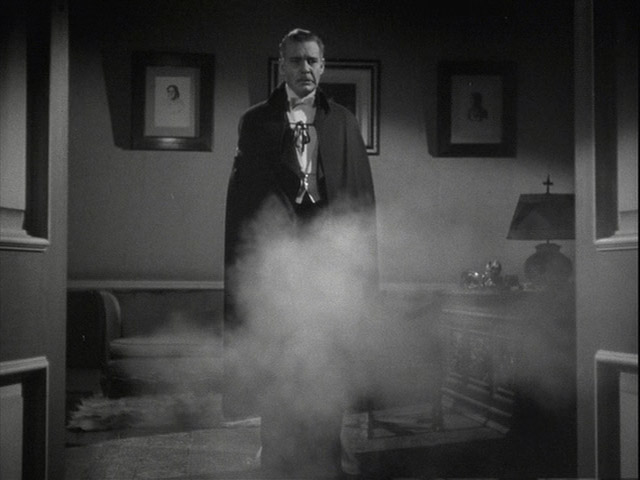
One thing that’s a bit strange about Dracula as a property at Universal, at least through a modern person’s eyes, is that after the first film Dracula was done. Frankenstein was indestructible; The Wolf Man perpetually had his struggle between his two natures; the Creature is a victim always and The Mummy, is, of course, a mummy. So this is the one where it instantly deviated from its central figure once the first film was over. It had to because of its own pre-established rules about the nature of the vampire. However, many modern franchises have rewritten and retconned such things down the line.

With the fact that the original Count Dracula was out of the equation that would mean a new way to tell a vampire tale would have to be found, and naturally new descendants, similarly cursed would need to be found. Choosing a daughter first is an interesting choice for the time, however, the resourcefulness of the film doesn’t stop there.

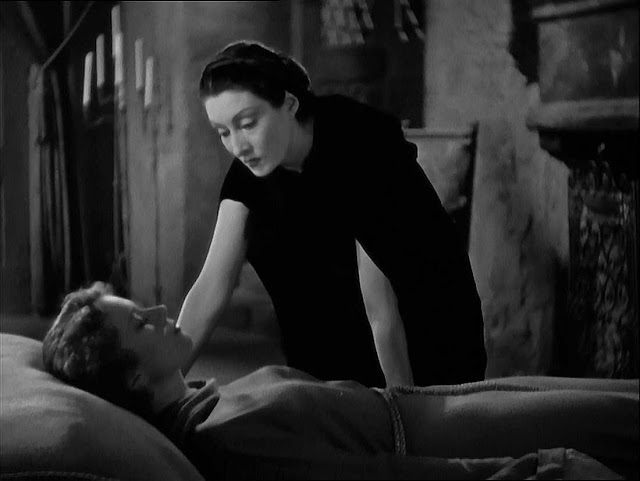
The film introduces her as a woman, Countess Marya Zaleska, who seeks psychiatric consultation to free herself from an evil influence that she dances around explaining. So in this film there is a conscience and torn nature introduced to the equation. However, this is not the only duality introduced in this film. As I picked up on and this Sight on Sound piece elucidates:

You see while in Dracula the count preyed mostly on attractive members of the opposite sex, Countess Zaleska’s victims tend to be of the same sex. Dracula’s Daughter is in fact the first vampire film that shows any hint of fanged homosexual preference. This notion is perfectly illustrated in the pivotal scene where the Countess asks her manservant Sandor (Irving Pichel) to fetch her a model to paint. In comes Lilli (Nan Grey), a slender beauty with jazz age hair. While the Countess tries to contain her urge to feed she begins to paint the comely model, who has propped herself against a wall. As Lilli tries various poses to find the right one that appeals to her painter’s liking she makes the mistake of lowering her conservative dress, nearly exposing her breasts in a scene that must have set the censors in a tizzy at the time. The Countess, seeing such delicate bare flesh, cannot contain herself any longer and approaches the young lady with a look of lust in her eye. After she hypnotizes Lilli with that giant ring of hers she begins to bite. While the scene’s subtext flew by audience’s heads at the time of release, the obvious underpinnings of Countess Zaleska’s lesbianism is blatantly obvious to modern viewers. Thus the Countess’ vain attempt to fight her urge for blood can be seen as a metaphor for what the Countess is truly trying to fight, her urge to be with other women, which, if you think is controversial now, just imagine what it must have been like seventy seven years ago.

Around the time the film was released Dr. Theodore Malkin (a professor) wrote and published an essay that equated the vampire from literature and cinema to the “predatory nature of homosexuals” (Poupard). While misguided in nature, the link between vampires and homosexuality has grown even more prominent. Hammer Studios even formed a niche in evocative and expertly made films that featured lesbian vampires (particularly The Vampire Lovers and Lust for a Vampire). The lesbian theme was the most overt until The Lost Boys and, more importantly, Neil Jordon’s Interview with the Vampire (based on Anne Rice’s erotic Vampire Chronicles series) came along that male homosexuality became more pronounced within the vampire mythos.

Now, at times, just the mere mention of subtext is enough to send some running for the hills. Don’t you worry about it none, this is most definitely not one of those films that you’d feel lost in without some kind of guide book. It actually starts just after the first one ends and introduces its character perfectly. The only thing it plays close-to-the-vest with the panache of figurative literalness (A phrase coined by the Hayes Committee for the implication, as opposed to statement of illicit details) is the aforementioned undertone.

As I recently mentioned, surprises are welcome in sequels and this one has a few of them which makes it worth checking out all by itself but they’re well-handled, too.

61 Days of Halloween: R.L. Stine’s The Haunting Hour- Don’t Think About It (2007)

Introduction

For an introduction to the concept of 61 Days of Halloween, as well as a list of previously featured titles, please go here.

R.L. Stine’s The Haunting Hour – Don’t Think About It (2007)

As I’ve reference a few times, in my youth I had an aversion to horror. I didn’t relish being scared back then. As someone who gravitated to the genre later in life, I take no umbrage with the idea of juvenile horror such as the likes that R.L. Stine creates. Yes, many kids (much younger than I when I was started to read Desperation), cut their teeth on Stephen King. However, not all kids are the same (which is a small part of why I avoid giving parental guidance advice). However, I can remember instances where a certain frightening tale did intrigue me; Poe would be an example. Had I at a young age know of Stine I may have gravitated to the genre earlier.

This year, having had a number of his books come to me secondhand, I’ve read quite a few before donating them to the local library; and as evidenced by the TV shows that bear his name, they are twisted tales that don’t always work out so great for the protagonist, which can really scare kids. (I hope to be able to prepare a post [or series of them] about The Haunting Hour, the series, before Halloween).

As for this film, it took me a while to get around to screening this one because the last film I’d seen based on one of his works was quite a bad miss. This one, however, thankfully, mostly works.

A lot of that has to do with the practical effects work by Gregory Nicotero, one of the best in the game right now, who created an awesome creature for this film.

The film works itself into its story slowly. It does follow its protagonist (Emily Osment) and builds her character, and motivations for all the characters involved, but it does so a bit languidly. When things do get going though they’re rather freaky and things resolve themselves nicely, with the characters growing and a well-earned horror-film end.

As this film felt a bit stretched, it will be interesting to see if the planned Goosebumps film, comes to fruition if the anthology-styling suits it better, which it should.

61 Days of Halloween: Dracula (1931 – Philip Glass Score)

Introduction

For an introduction to the concept of 61 Days of Halloween, as well as a list of previously featured titles, please go here.

Dracula (1931) Philip Glass Score

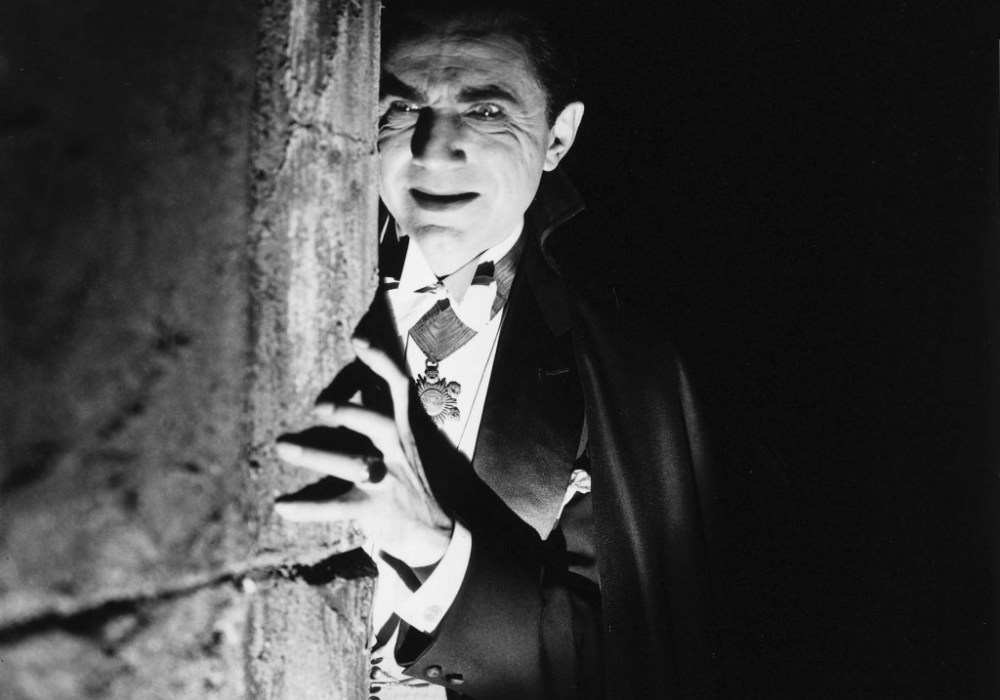
My reaction to my first viewing of Dracula was slightly more favorable than that of my first viewing of Freaks. I’ve seen this version at least twice, and I enjoy Browning’s work (and will look into more) but have yet to find the transcendence that others have in some of his titles.

Being a completist I seriously considered re-watching the original cut of the film before watching one with a newly orchestrated score by the genius that is Philip Glass. I decided to pass on yet another viewing and it was a decision that was almost instantly validated. I remember many of the beats precisely. I was able to finish many lines of dialogue, mainly Lugosi’s, and that’s because it’s memorable not just because all the lines have a very deliberate reading.

So I didn’t feel I was missing anything by comparison. One thing that I found peculiar, which is not uncommon in early talkies, is that the soundtrack is fairly quiet. People wanted to hear dialogue and the now-primitive-seeming sound-design. It seemed a few years would pass before scores would swell anew. And, that’s a bit difficult to adjust to in a horror film. Some, like The Birds, work especially without music; others need it.

Granted the scoring in a horror film can be looked at as invoking Pavlovian response (this music is eerie therefore you are scared) but it’s very much a part of the fabric of horror cinema, and a sight better than jump-scaring an audience to death.

The score laid over this version is not only brilliantly cyclical and quasi-monotonous as is Glass’ signature but the spotting, the decisions about where music would be overlaid is extraordinarily precise and inspired. It absolutely elevates the film to new heights because it’s done with a tasteful understanding of what kind of score would befit a film such as this.

This is as opposed to something like the Moroder version of Metropolis, which sought to put an ’80s interpretation of futuristic music on the film. The music, while good in isolation, is now dated and doesn’t jibe properly with the film.

There’s a fine line between artistic restoration and musical graffiti; Glass’ work at the service of Dracula is the former and Moroder’s production of Metropolis is the latter.

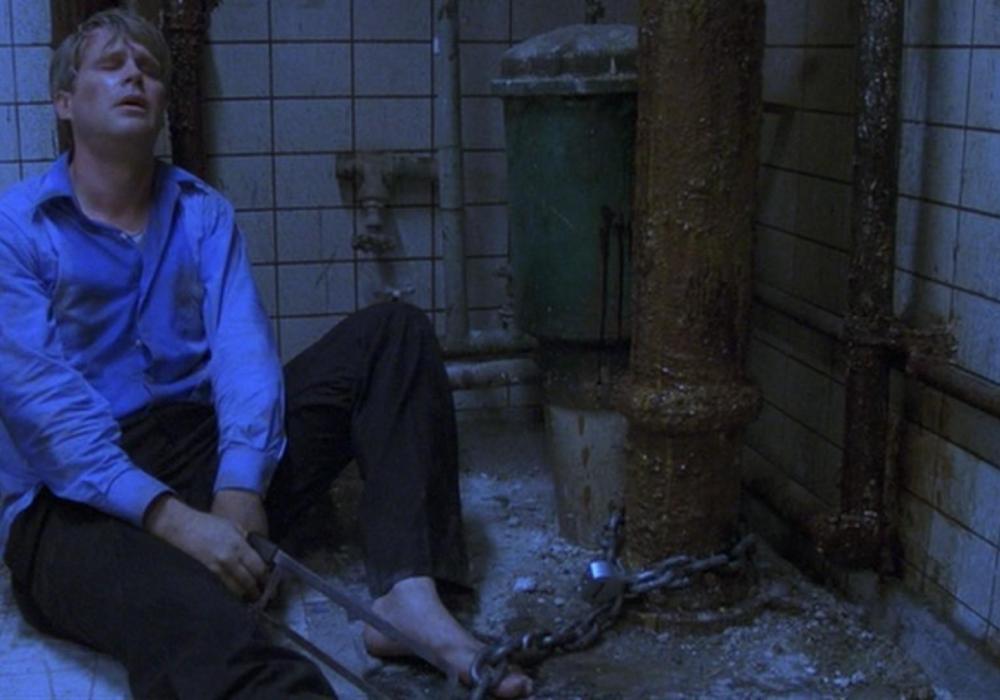
61 Days of Halloween: Saw (2004)

Introduction

For an introduction to the concept of 61 Days of Halloween, as well as a list of previously featured titles, please go here.

Saw (2004)

So, yes, this is a new one to me this year. Whenever something as well-known as Saw goes unwatched for so long I feel compelled to do a little explaining.

In 2004, I was still in school and not only busy, but also picky. I wasn’t as into horror as I am now, not that I didn’t like it, but just that I hadn’t gotten around to it. Things like Saw weren’t on my radar screen yet, not really.

The easiest thing in the world to do is not watch (or be properly exposed to something) and then pin a label on it to dismiss it. I’ve seen things “worse” or more graphic in execution since this came out, made both before and after it. The label that gets tossed about here is, of course, torture porn.

If one looks at the dictionary definition of pornography it can be applied to any number of things, one of the most popular and dismissive Letterboxd reviews of Extremely Loud & Incredibly Close merely cites it. However, the connotation is almost solely sexual. So when something seems to revel in a certain motif it’s called [blank] porn: food porn, torture porn and the like.

There’s been no embracing of this moniker by almost anyone in the horror community, and nor should there be. It’s meant, based on every instance I’ve heard it used in, as a slanderous remark. Like calling a big-budget, high-concept movie you disliked slick.

While I’m sure the series, as any must, ups the ante. How it starts is with much more suggested violence and gore than expected; as well as more intricate storytelling and more focus on the characters than one would expect. Something like Hostel, which I saw before this, is more befitting a negative label like that because aside from the abuse the stupid tourists, who don’t necessarily deserve it, suffer there’s not a lot to redeem that film. Not much else to it at all.

Would I have gotten around to seeing this now had it not been for James Wan and Lee Whannell going off to make the Insidious movies to show they can wield a different brand of horror? Maybe. Just maybe not as soon as I did. I nearly picked up the whole series cheap and used a few years ago but balked.

My reticence is not so much being repulsed such that I can’t watch, that’s scarcely happened since I came of age, but rather of their being nothing else there like say in Cannibal Ferox. What works brilliantly in Saw is that you get a very full portrait of the villains method, and some of his past, but by the end of the first installment you barely know him so that’s a great jumping off point for the second film.

There are probably some other, bigger horror titles I should knock off my to watch list, but this one’s time had come and I’m glad I got around to it.

61 Days of Halloween – Films to Keep You Awake: The Christmas Tale (2006)

Introduction

For an introduction to the concept of 61 Days of Halloween, as well as a list of previously featured titles, please go here.

The Christmas Tale (2006)

This is the second film in this series that was featured in my Favorite Older Films First Seen in 2012. Here is what I wrote about it:

As mentioned above in Spectre, this is a Six Films to Keep You Awake tale, but this is the more accessible of the two I chose. It deals with a group of kids who find a woman trapped in a hole, as they learn about what got her there each faces moral dilemmas about how to deal with the situation. It not only sets up good horror but great character study.

This is the kind of film that immediately starts off on the right foot. It begins with a hilarious parody of a cheesy horror film. However, aside from entertainment value that faux-film-within-this-film will serve as the rules that these kids eventually refer to in fighting their enemy.

The tale is set in Spain in the 1980s and features a group of friends all of whom are introduced with pop-up title cards, but as opposed to say something like Feast, it’s easy to tell them apart after that, especially considering that the characters are well-defined after that. Also, while being set in the ’80s it’s not over-saturated with nostalgia or references. The faux-film is vague and the other persistent reference is a character trait and key to the film.

As mentioned above, part of what makes this film really good is that it balances horror, drama and comedy. The way the drama comes in is that through drawing on these characters’ personalities there are a few moral debates about how best to proceed in the strange situation they find themselves in. It ultimately factions them before they reunite.

I’ve discussed acting in a few of the posts in this series and Maru Valdivielso has quite the task set before her needing to be believable in a few different notes aside from working in a lot of make-up at times and also playing someone in pain through most of the film without being grating. She succeeds in all these tasks with flying colors.

Perhaps what’s best is not just that there’s a very visually appealing climactic sequence, but also the fact that even within a short film such as those in the series are, there are quite a few reversals of fortune that keep you guessing. There are many surprises in store for you if you should decide to watch this film so I shan’t discuss it too long lest I give it away. This is definitely the most highly recommended title of the series. If you’ve not seen the work of Paco Plaza yet, this could be a good place to start get a quick sense for what he does before moving on to the [REC] series.

61 Days of Halloween: Curse of Chucky (2013)

Introduction

For an introduction to the concept of 61 Days of Halloween, as well as a list of previously featured films, please go here.

Curse of Chucky (2013)

When I got a new Redbox code I was seriously debating what to do with it. I had recently resigned myself to the fact that I would, for the foreseeable future have very few screenings that were not for the purposes of 61 Days of Halloween for myriad reasons. However, considering some of what I had heard and the desire, after having seen all of the other films recently, to see this one too I settled on it.

When I was done watching Curse of Chucky I was quite nearly hyperbolic about it but lowered my tweet reaction to a more guarded “redeeming” film. However, that is not meant as a slight or that I second-guessed my enjoyment of it. I was, even though I am not a massive fan of the series, practically gleeful after the film was over because of what it managed to do.

One example to contrast against is the Children of the Corn series. I covered, but did not write about all of them, one year. Essentially, what would need to be done to rectify that series, without (again) rebooting it, would be something far more involved than what Chucky accomplished here. You could almost write a book-length (OK, maybe a Kindle single-length) concordance of the Children of the Corn films to try and rectify and corollate all the new rules that emerged, or ones that changed and mutated.

The Child’s Play films never went too far outside the norm in terms of its general groundwork. What it did was change the tenor and formula of the series. It went from quasi-serious horror with a ridiculous premise to just ridiculous. However, this film did two things: first, it went back to its bread and butter (nothing wrong with that, bread and butter tastes delicious) but refused to disown where the series had been.

Yet, while it doesn’t reinvent the wheel it does have a new wrinkle in its approach. Yes, there’s a connection established to these new characters and why Chucky cares about going after them, but the timeframe of the story is also a short one and the tale is cloistered. A vast majority of it takes place in one locale amidst a set group of characters all under the same roof.

The connections come mostly in the discovery phase as well as in denouement, and many of those just made me smile. This film has a clever new wrinkle in terms of a doll usage in real-life, as well as a surprising touch of interpersonal.

Last, but certainly not least, is Fiona Dourif (Daughter of Brad, the voice actor behind Chucky) brings back into the fold a protagonist you can root for wholeheartedly both because the film does build her character and because of her performance.

Any time a frustrated fan says “Why bother?” about a sequel, films like this one should be cited as examples of the ship being righted. This Chucky movie does something nearly impossible, after six films in a horror franchise I actually want to see a seventh.

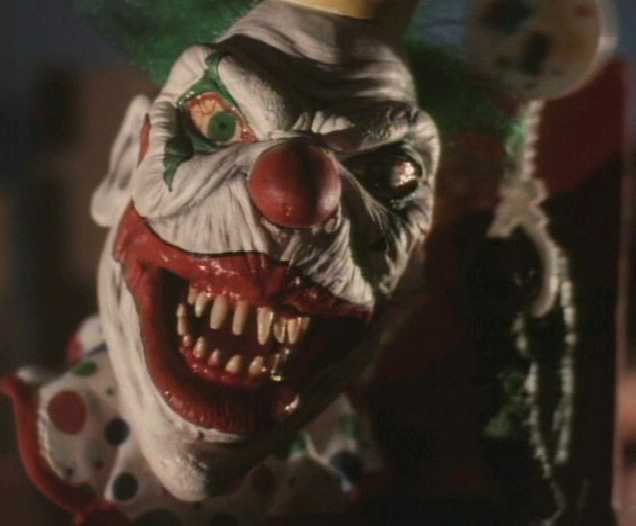
61 Days of Halloween: Demonic Toys 2 (2010)

Introduction

For an introduction to the concept of 61 Days of Halloween, as well as a list of previously featured films, please go here.

Demonic Toys 2 (2010)

While I did not include the original in this series, I did write about Demonic Toys previously. It was one of my favorite older movies first seen in 2011

This movie is part of the reason that this list is called “Favorite” and not “Best.” I don’t usually distinguish between the two but this is the rare film in my estimation that garners that elusive title of “So Bad It’s Good.” It has an audacious script by David S. Goyer (pre-Nolan Batman films) and a great albeit dubbed evil kid performance by Daniel Cerny, good flashbacks and chemistry between leads. For all its faults, which are myriad, I still found it to be very enjoyable to watch. Beyond that it nearly defies description. I wanted to include it in my 61 Days of Halloween series but I stuck with mostly posting about the original class, this year I may include it.

So at the most recent Mosnter-Mania Con I saw available on DVD this sequel. I actually saw the first a few times and decided to give it a try. This installment made quite a bit later, is a little less ambitious than the prior one and as such, while there’s definitely some cheese involved in dialogue and some of the effects work, and the acting must be forgiven; it too works. This tale goes into the collector realm and has the clan, with a new, valuable addition (as well as demons and ghosts in tow).

Having now seen only two of these films and more of the more popular Puppet Master series I’m not sure why this one doesn’t have more of a following. It’s funny, a bit more self-aware and so far still combines its tropes pretty well and gets good effect out of them.

It’s in this clan where I find myself a fan of the villains. It’s childish but Baby Whoopsie cracks me up non-stop.

Full Moon Features has recently started its own streaming service where this and many of their other titles can be found if you’re interested.