Django Unchained: Apparent Defeat and Tarantino’s Cameo

Introduction

The first full-length post on Django Unchained, my choice as Best Picture of 2012 was my first guest post and first translated post. However, owing to the accolades I gave it, and the wait, it was time to post my own thoughts on the film. This is the third of four posts. The first can be found here and the second part can be found here.

The Apparent Defeat and Tarantino’s Cameo

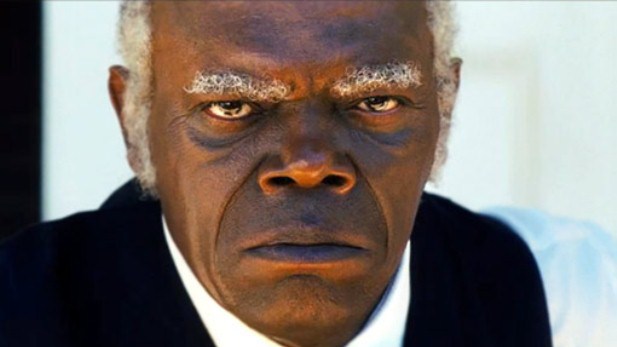
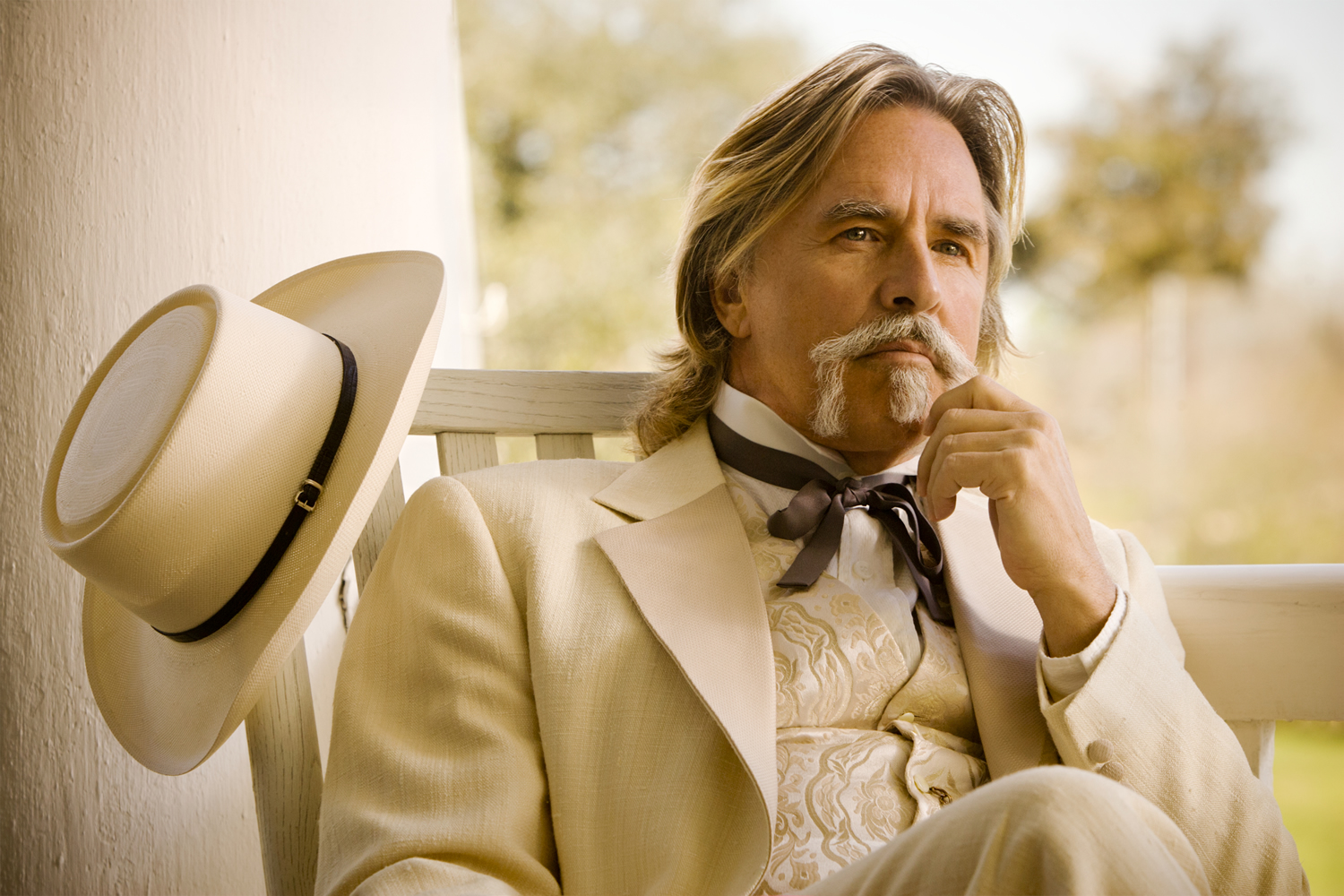
Two of the more aesthetically controversial decisions in Django Unchained, ones that were fairly roundly criticized, were in the latter section of the film and interrelated in the story’s chronology. They are Django’s being sold into slavery anew to a mining company and Quentin Tarantino’s cameo appearance. The main critique of the section is that it adds an unnecessary half-hour to an already bloated film. Now, clearly I’ve already stated that Django was my favorite film of last year, so I can’t debate and cajole one into liking it more than one does, or liking it period if one dislikes it.

However, I wonder if the people who claim that there’s an extraneous half-hour in Django have fully considered the ramifications of truncating the story by that much. If not giving those critiquing the benefit of the doubt, you end up with a fairly anti-climcatic tragedy, wherein there’s bloodshed but Django doesn’t win. Now, given the benefit of the doubt, let’s assume you’d have given Django some improbable escape from Stephen’s clutches and the final show down is bumped up, it’s still not as effective. The apparent defeat of Django is not strong enough. What this segment does is it puts Django back where he was when the film started. However, this time there is no King Schultz to get him out of it by “legitimate” means. This is where Django truly becomes the hero of the tale. He brilliantly, through his own intelligence, skill-set and quick reflexes gets himself away from his captors. Now he’s a hero. Now he stands on his own. Now he can truly ride off into the sunset after his triumph.

So the existence of this section of the film is not only fine by me, but essential in my estimation. Tarantino’s appearance, to the extent that it it’s there, isn’t so much. Now, I will state a few facts to clear this up just a bit. Firstly, I was not surprised that Tarantino appeared in the film, what was more surprising was where he appeared. His cameo may have been better served on a plantation or in the KKK scene, which was funny anyway. However, based on the chatter I did think it was more involved and longer than it was. Now, did it play into my decision-making during my personal awards with regards to Best Cast and Best Director nominations and winners? Yes. However, to be fair I think that auteur criticism, once feared to be an overly-cultist altar of worship has started to reverse itself a bit in the internet age to an overly-nitpicky bitch-fest.

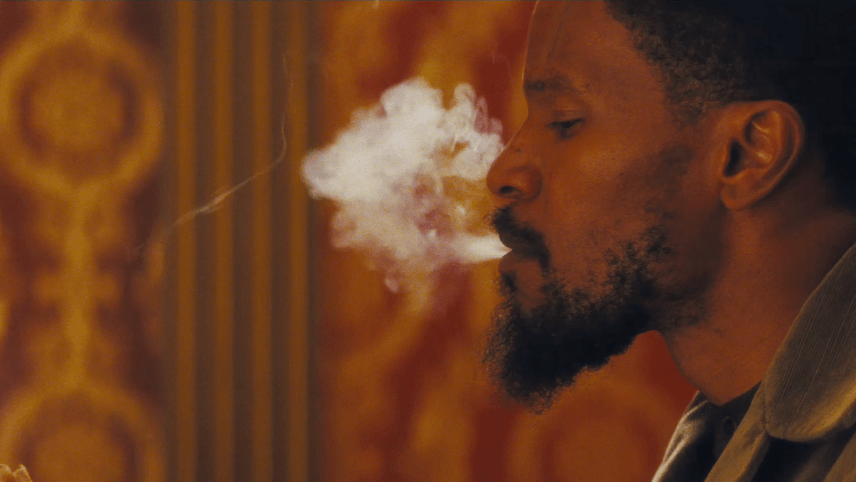
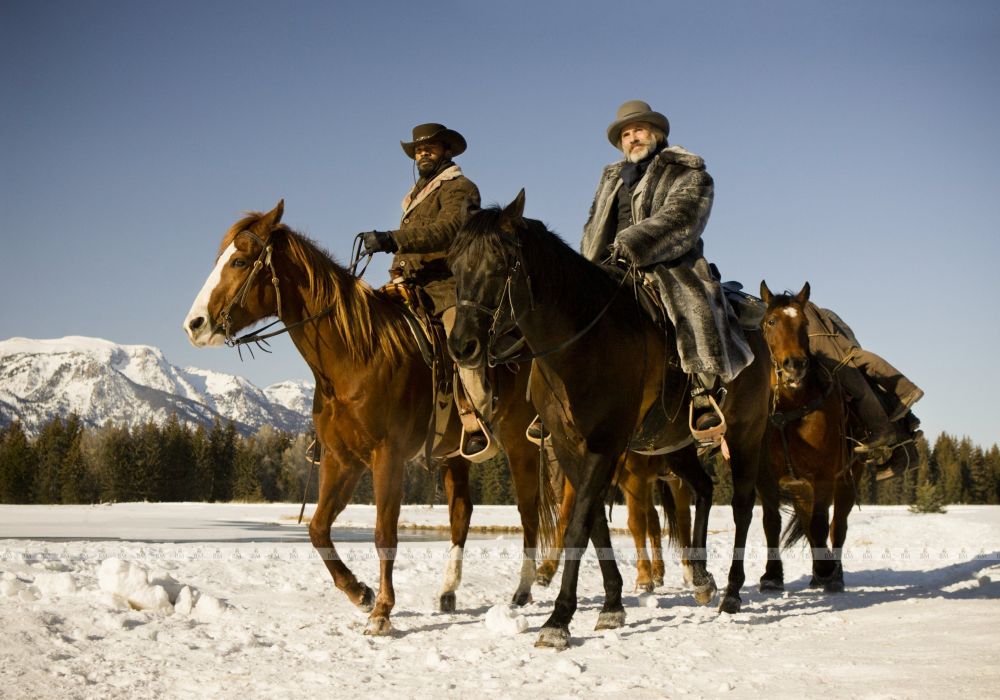
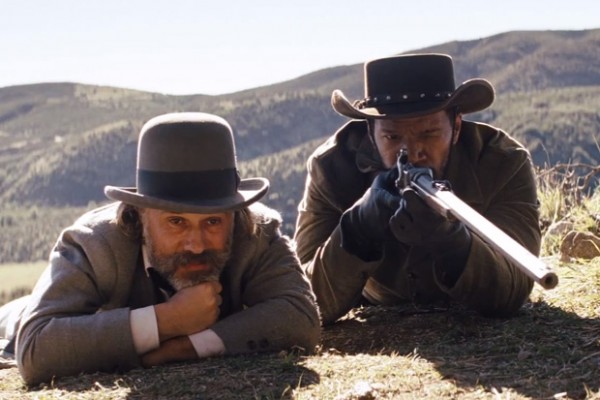
Django Unchained (2012, The Weinstein Company)

There’s no such thing as perfect film. Yes, there are little things, which are what nitpicks are, you can point out that are off, whether in fact or in your subjective opinion, about every single film. All of them. My favorite film professor relayed a story to us about his one conversation with Robert Wise. Wise being the acclaimed director, who previously edited Citizen Kane. My professor said to him he thought it perfect or nearly so. Wise immediately pointed out he wished he didn’t leave such a long beat coming out of one of Raymond’s flashbacks. And I had noticed that, and when he heard it mentioned my professor agreed. Regardless of what you think of Kane the moral of the tale is simple: no film is perfect. Though I see where and how Tarantino appears in this film as an actor as a misstep, it’s not a serious error that affects the whole of the film.

One thing you have to respect about Tarantino, even when it comes to bug you, is that he doesn’t care; that’s practically what auteurism is. He’s making the film his way and if you don’t like it, tough. The last filmmaker who seriously overstepped the cameo appearance into supporting character was M. Night Shyamalan in Signs. He’s since pulled that back to where it should be. Shyamalan is also a prime example of auteur theory gone awry. People came to expect the twist ending from him in everything such that when people either didn’t get one or didn’t like the twist it altered their feelings on the film. I’m quite certain his prior filmography is why he dropped out of Life of Pi ages ago, and I can almost guarantee that if was exactly the same film with his name on it the reception wouldn’t have been as positive.

This is where auteur theory needs some checks on it. It doesn’t mean filmmakers or films get a pass, but just a little more perspective is taken into account, like is it par for the course for the filmmaker for said element to be featured? If so, does it work? If not, how big a deal is it really? If it was an intended departure those expectations shouldn’t factor in and so on. So, yes, that bit of casting was off, however, I don’t think it colors the whole film. I think the double whammy for many is that they didn’t necessarily see the need for the section of the film he was in so his appearance is further jarring.

Django Unchained: The Politics of Language

Introduction

The first full-length post on Django Unchained, my choice as Best Picture of 2012 was my first guest post and first translated post. However, owing to the accolades I gave it, and the wait, it was time to post my own thoughts on the film. This is the second of four posts. The first can be found here.

The Politics of Language

This brings us to the racial component of the film. Here’s where the mistaken impression about genre can come in for many people. There is comedy in this film, but it’s not a comedy. This is no more a comedy than For a Fistful of Dollars is. Yes, it’s funny the way Django turns around his former owners line and says to him “I like the way you die, boy.” It’s also funny when Clint Eastwood in For a Fistful of Dollars changes his intial coffin order to four. It doesn’t make either film a comedy.

However, the facade of a western is where the similarity between the film ends. The moments of overt comedy are there for you to laugh at in Django Unchained. The Klan eyehole scene may have been the funniest scene in any film I saw last year simply because it was such an ingenious cutting down of a hateful organization that seeks to taunt, terrify and kill. Yes, even some of the laughs can be tinged with uneasiness, but that’s the goal.

The death of slave owners is designed to be laughed at, but I wouldn’t be surprised if there were some deadened reactions to that. Upon introducing another, even more risqué skit than he had done previously (this one about a white family with a coincidentally racist name) Dave Chappelle said something to the effect of “Apparently, people didn’t think killing a slave owner was funny. I could watch that all day.” Which brings us to another source of controversy in this film the usage of the N-word.

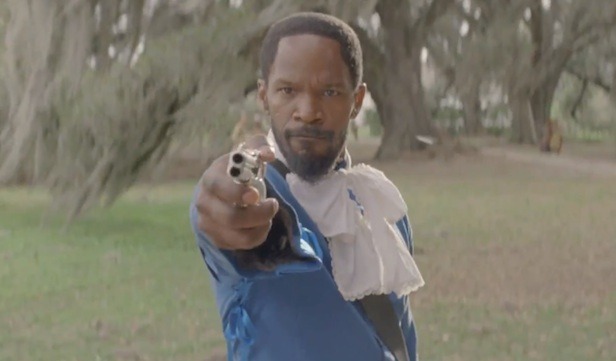
Django Unchained (2012, The Weinstein Company)

Is it difficult to listen to it that many times, and spouted so hatefully? Of course. Especially when either Django or Stephen uses it. That’s the point and intent for a modern audience. Then there’s also the fact that that’s not far off the frequency you would’ve heard back then.

Yes, some words invariably cause issues as I noted in The Gay Dilemma, but when a script is well-crafted you can go a step beyond what is a generally accepted politically-correct norm and make a point as in The Sitter. I’m not one for censorship, and am in favor of artistic license, and the word belongs in this film as much as it does in Huckleberry Finn. In others it may be gratuitous and unnecessary, but that’s why I tend to take things like this on a case-by-case basis.

Furthermore, one shouldn’t allow the presence of a word, even one as disparaging and denigrating as that one, obscure the totality of the film. While he does get assistance, Django gets necessary training to be able to be the hero of the story, which he is. Will Smith’s assessment about Django’s secondary nature is only accurate if you’re into counting words of dialogue. King’s departure from the narrative gives Django plenty of time when the tale is his alone. He’s the one who has flashbacks and whose goals drive the story. Most importantly, in terms of race, Django’s nobility and heroism is not shown solely through his fortitude, his ability to withstand punishment like Kunta Kinte; his strength is his ability to fight back. And as much training as he gets, his intelligence is something he’s born with not given.

Samuel L. Jackson: The Unbreakable Avenger

Warning: if for some strange reason you have yet to see Unbreakable you should before reading this, there are spoilers within.

When I saw that Bubbawheat was doing a blog-a-thon covering actors in comic book movies, I thought it was very appropriate. Now there generally is a delineation between comic book and superhero films, and there is value at looking at individual actors who have appeared in this kind of movie multiple times. However, one of these roles played by Samuel L. Jackson is in a film that toes the line very carefully.

Now, when referring specifically to the superhero film it’s especially interesting because we are currently immersed in a seeming golden age of the the Superhero film. There were occasional bursts of greatness, but now these kinds of tales are attracting not only the state of the art techniques, not only A-List actors, but also top directors and writers to the cause creating richer, more human stories, that are still filled with incredible spectacle. In short, we’re getting a much more complete film than we ever thought we were going to get from the genre.

However, being in the midst of such an age sometimes we don’t necessarily stop and look around to see how we’ve gotten to where we are. Looking at some actors who have participated in many of these films can start to show us some of the indicators of the rise of this subgenre.

The Avengers (2012, Marvel/Disney)

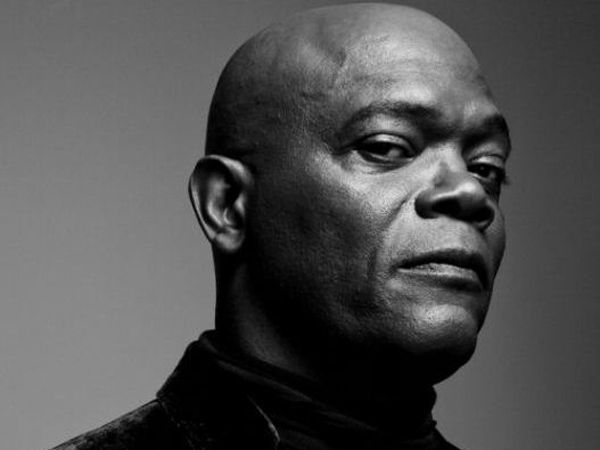
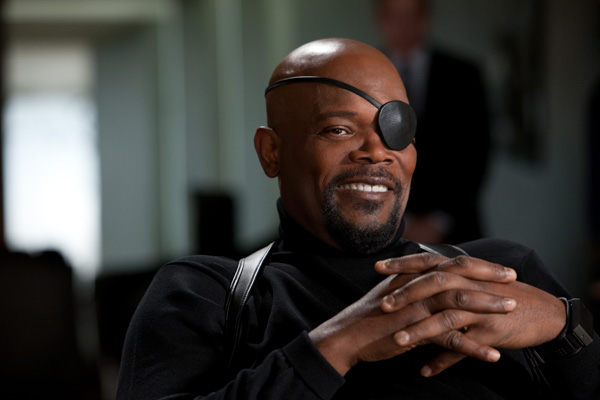
Samuel L. Jackson is a man who has been myriad films from record-setting blockbusters to small indies he believes in and wants to help out. Sam himself may have a type and a persona, however, he doesn’t allow that to pigeonhole the kind of film he does. It’s funny that I find myself writing about Sam Jackson again so soon after I named him 2012’s Entertainer of the Year, but a line I wrote in that post came back to me as I scanned the list of candidates for this blog-a-thon. With regards to his still-ongoing portrayal of Nick Fury in Marvel’s Phase One, I parallel it to Alan Rickman‘s work as Severus Snape.

Aside from the fact that Rickman appeared in one series, and Jackson’s portrayal of Fury is part of a universe of franchise films, there are really a few similarities of note. If you’re looking just at the film textually, and not inferring any pre-acquired information from the comic books, Fury’s presences in each film is a necessity, but it’s nebulous. We try, as we go from tale to tale, to ferret out his nature and his intentions. Ultimately we see his main desire in Phase One is the creating The Avengers. However, and there is some follow-through on this in The Avengers itself, being the head of an intelligence organization he does dabble in a gray area much of the time, and that was set-up bit by bit in the films leading up to The Avengers and expanded there. I can only imagine that as the Marvel films proliferate that his character will continue evolve and become richer.

Now, make no mistake about it Fury is most definitely on the right side of the divide. The other of his comic book film characters I am taking a closer look at is Elijah Price in M. Night Shyamalan’s Unbreakable. Now, this character brings to mind another statement I made in writing about Jackson’s entertainer of the year award, in the four films I cited in that award (The Good Samaritan, Meeting Evil, Django Unchained and The Avengers) he was a protagonist in two and an antagonist in the other two. He usually splits that fairly. Now, Price’s confrontational and difficult demeanor is apparent throughout. The twist, when Shyamalan still did them, is that views himself as the super-villain in his delusional relationship with David Dunn (Bruce Willis).

Unbreakable (2000, New Line Cinema)

This was a film well ahead of its time. There are quite a few reflexive superhero tales around now from the well-known and well-done Kick-Ass, to lesser known ones of lesser quality. However, Unbreakable, about which sequel rumors persist to this day is the kind of film that really could, and still can, have a sequel blow up and be something far greater than the original.

I’m not a critic of Unbreakable. I do like it, however, it’s not a film that’s impeccably rendered like The Sixth Sense is, or even like Shyamalan’s earlier film Wide Awake is. Jackson is a self-proclaimed comic fan, Ubreakable was his first title in the milieu and his filmography since then bears that out.

As either the persistent, hovering-around-the-periphery lynchpin on the Marvel universe or the injury-riddled, megalomaniac always seeking the yin to his yang, Samuel L. Jackson has always had an aptitude for injecting superhero films with life, for creating layered characters with quite a few notes to them. As the subgenre progresses one can only imagine Jackson going along with it and adding his own unique flavor to the entries to come.

Once Upon a Time in the 80s: Conclusion (Part 17 of 17)

This is the brief concluding chapter to a much longer series. If you would like to read the other posts in the series you can find links to all of them here.

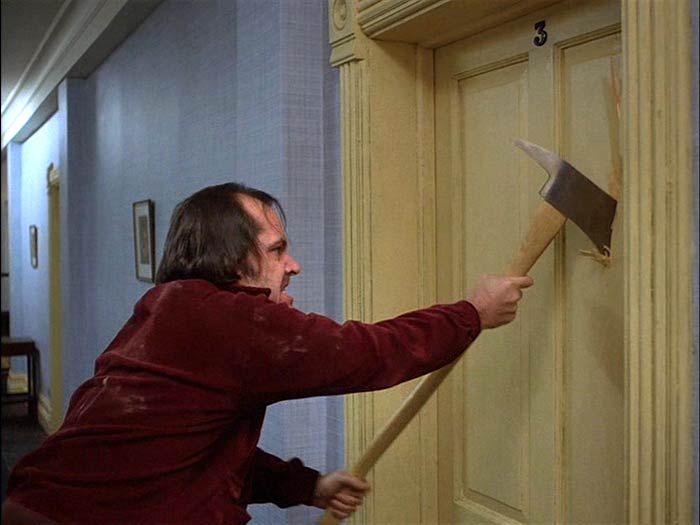
Films from almost any period in time give off a certain feeling, a vibe. And if you weren’t there or at least don’t know of an eras circumstances you might not get that feeling. At least one can appreciate that the ’80s were a time of aesthetic experimentation and the images of the decade did have a certain warmth. There was no such thing as political correctness so characters were more honest and the scale wasn’t as big moneywise so a small film with big ideas had a chance, although the scale was growing. The ’80s will leave us with a lasting legacy good and bad as I have shown. There were great films I didn’t discuss in detail like E.T. or The Shining but they are movies that are ultimately timeless and aren’t marked but their era, notice I didn’t say dated.

While in the ’90s we were overwhelmed and barraged by violence and the mundane existence of suburbia and apathy. If there’s one thing that we learned from the 80s is that film is the only medium that can capture our dreams.

The MPAA’s Unshifting Malaise

I believe that in my manifesto on this blog I stated that I was both not claiming that I was providing consumer advocacy, for the most part, and I was also not a source for parental guidance. My intent is to chronicle my journey through watching films. I’ve also mentioned in introduction to certain themes that either things I am writing, plan to write, or my desire to minimize my massive pile of unwatched DVDs have influenced watching themes. In short, my goal is to have my blog be as diverse as my viewing options and interests. So at times I will get more technical, other times more fan-oriented.

My goal at either end of the spectrum is to stay on the more aesthetic end of the spectrum be it as a fan or filmmaker. However, the news of the MPAA’s new approach to ratings, though not really changing the focus of how it grades films, is noteworthy.

I think that the expanded rating box, where an explanation of what induced said rating, is an improvement. I could go on about what the deficiencies in the rating system are, but that’s not what I’m addressing. I think the quotes in this article to an extent show promise. There is no “X” branding. There is no barring rating in the US, not really.

Admittance to an R-rated film is still possible with a parent or guardian. What I like in the new system is that more of an onus is being put on the parent. The uniqueness of each child is being acknowledged, the reasons for a rating are being made more visible is parents can accept or dismiss causes for the ratings as ones that concern them when considering viewing options.

Now, the flawed criteria of the MPAA needs to be learned by parents. Themes aren’t counted as heavily as things that can be counted. That is to say that counting profanity is easy, and quantifying the pervasiveness of a theme isn’t. However, I’d dare say a film being ostensibly about something would matter more to a parent than how many bad words are in it. So “themes” is a word to look for.

And the fact that there will be PSAs geared towards instructing parents on how to read the new rating boxes and trailers is also good. However, the flaw is clearly that how films are rated hasn’t changed at all. It’s camouflage. Violence is still going to be rated easier than sexuality because no modification of the criterion was announced.

My biggest complaint, however, is not about the non-change change from the MPAA, but of reported “good news.” Granted, CinemaCon, where the announcements by the MPAA, exhibitors and studios are being made are mainly a self-congratulatory affair, and the gripe-fest is secondary, but I find it hilarious that we believe based on secret shoppers that underage ticket buyers are really being kept out of R-rated films 75% of the time.

Here’s a story of why I believe that to be so: My blog earns its name from when I was a teenager and I’d pay for a matinee and hang around for a second film and see that on the same admission – hence my friend and I would hang around the movies, we were movie rats. If I wanted to see an R-rated film I’d get a ticket to something else if I had to and just enter the theater where the film I wanted to see was playing. I don’t do these things anymore, but based frequenting my local theater a lot it can easily still be done. So I have a hard time believing as many kids are being kept out of R-rated films as the MPAA believes. If you don’t believe me just look at some of the recent Nickelodeon Kid’s Choice Award Nominees where the performance or film is one that technically one kids shouldn’t have been allowed to see and where they likely didn’t get their parents permission.

In the end, the MPAA’s change is nearly non-existent but it is a minor benefit. However, at this rate of change they be in the right vicinity at some point in the next century, but I wouldn’t hold my breath.

Django Unchained: Introduction and the Spaghetti Western Treatment

Introduction

Django Unchained (2012, The Weinstein Company)

So after having translated a post regarding Django Unchained here are my thoughts on the film, which will appear weekly in four parts. With regards to the translated post there is scarcely a thing I disagreed with that was being stated. However, the reason we read and the reason we write is that everyone has a slightly different perspective.

The reason I didn’t touch on Django at the end of last year was two-fold: first, there is the overwhelming crush of the end of year wherein I try to view as many films as I can and should to consider for my annual awards and list. The second reason is that I didn’t want to rush such a writing is that Django is a film that touches on enough raw nerves and opens enough old wounds, though skillfully, that a discussion on it should not be held in haste and cramming something in late December just because I wanted something to link to when I announced my awards. That wouldn’t be right.

Having said that I did want a few writings on my site with regards to the film because with Django being my favorite film of 2012, it earned it. And the class of 2011 with Super 8 and Hugo had quite a few write-ups along the way and since that documented a different facet of the film that appealed to me.

Django Unchained (2012, The Weinstein Company)

The next obstacle would be what specifically to tackle in such a sprawling an epic film. The dangers in doing so come from both ends of the spectrum; one could either be too broad or too myopic in one focus. I’ve decided to split the difference and give each topic of the film I saw fit to address some attention in a sort of epistolary fashion, with headlined sections below.

I have made some commentary on the film in my awards, but will augment some points and talk about some new ones here.

The Spaghetti Western Treatment

Django Unchained (2012, The Weinstein Company)

Tarantino has embarked on a seeming trilogy, if not more films, that deal in alternative history. When Inglourious Basterds rolled around I wasn’t sure before I saw it how far into an alternative history it would go. Some works of fiction that take place during World War II have told such microcosmic tales that whether or not they did happen, could happen, or could not happen, are academic points. With Inglourious Basterds it became very clear that the escalation wouldn’t end until a triumphant climax wherein the big wigs would be killed from Hitler on down. There would be no cowardly suicide for Hitler in this tale. Basterds was also constructed much in a similar way to some of Tarantino’s other films with chapters that seem disconnected at first, but form a whole when they combine and connect.

For a work like Django Unchained, one that would roundly explore America’s racist slave-owning past, a different approach was needed. In Basterds the heroes would clearly be the enemies of the Nazis both military (“The Basterds” in the US Army) and civilian, a Jewish girl and a black man. Here with slavery, a much longer running, entrenched and regulated system, a different tact was needed if it was to be an antebellum tale, which it is.

This tale predating the Civil War is very significant. It brings the story to a more personal place and takes much of the politics out of it. There’s no washing away of sin through a Union army whose “truth is marching on,” or a benevolent leader doing what he can to keep the country together and free the slaves. Not in this film.

Django Unchained (2012, The Weinstein Company)

However, the film must pay lip service to credibility, to borrow a phrase from Stephen King, which is where King Schultz comes in. King Schultz on the surface could seem to be the typical benevolent white character whose presence is nearly always a prerequisite in a film on race relations in the US. There are key differences here though: mainly, Schultz is German. Now, wanting to work with Waltz again I’m sure factored into Tarantino’s decision. However, when looking at the films in tandem it makes an interesting delineation: Nazis are the enemy, not Germans. Look at how King can see what’s right and wrong, how he uses the system to exploit it. The film goes further to incorporate Teutonic sensibilities by having Django’s wife, his motivation, be named Broomhilda and know how to speak German. Furthermore, one of the great scenes of the film is King’s relating the legend of Siegfried to Django. This by extension takes back a legend, made more popular by Wagner, from Nazi clutches.

Simply using something like the Underground Railroad or a white abolitionist plot doesn’t fit the script of the justified revenge that was built in to Basterds and was the goal here. So Schultz assisting Django to manipulate the system by buying his freedom, teaching him to be a bounty hunter and then concocting a scheme to find and free his wife is necessary so that revenge can play out in this film as well.

The way the scheme works out, the play-acting required by Django to succeed are all things that make the Spaghetti Western structure perfect for this tale. What made the Spaghetti Western so popular, for the most part, was the graying of the hero. The methods weren’t always honorable, both ends were played against the middle, even who was the villain was at times nebulous. All these things were for the most part new to the genre. All these things were things a black cowboy, a freeman, would need in order to be able to reclaim his wife in this era. Cinematically, however, it’s also an interesting comment. It took Italian filmmakers with new ideas and a fresh outlook on a beloved American genre to re-invent and re-invigorate it. It took those same cinematic precepts used by an American to give us one of the most brutally honest, compelling and refreshing looks at race in America for quite some time.

Once Upon a Time in the 80s: Kidco (Part 16 of 17)

Note: This article features in-depth plot analysis that may contain spoilers, read on at your own peril.

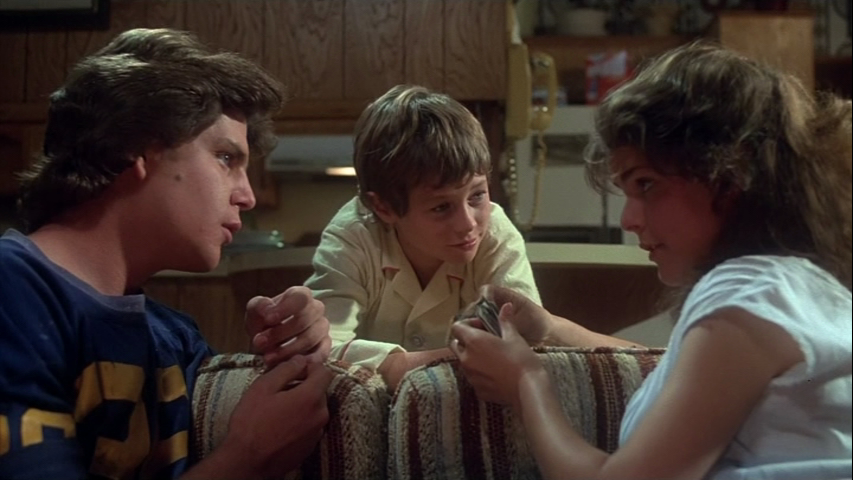
Kidco is another one of those fantastical films although it has a very grounded theme. It was written by a man, well let’s just say this was his best work, because Bennett Tramer went on to create probably the most famous television show that’s “So Bad It’s Good,” called Saved by the Bell. This film tells the story of Dickie Cessna, played aptly by Scott Schwartz. I happened to have obtained a copy of the film’s script and I think Tramer describes the protagonist best: “Dickie possesses the all-American good looks of a Norman Rockwell cover: sandy hair hanging over his forehead, healthy tanned complexion, a big toothy grin…Combined with the shrewd eyes and alert demeanor of a junior executive who yearns to be running the company himself. Dickie’s only twelve years old — but he’s been looking for an angle since he was in the womb.”

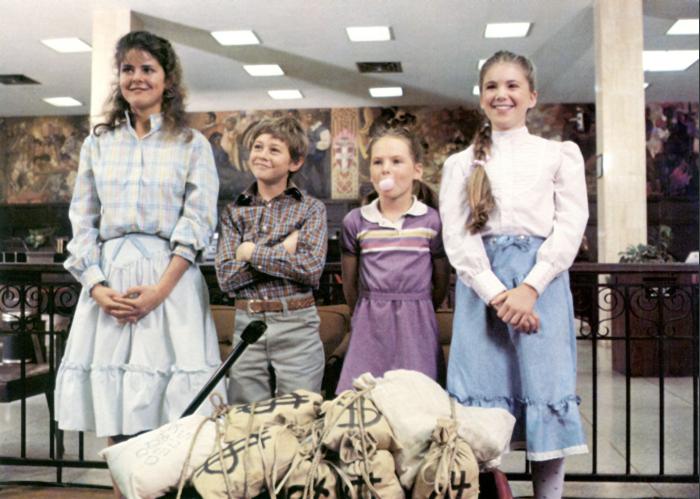
We start off watching his Keno scheme at school which is busted by the principal. He also tricks some Japanese tourists to go on a moose trail when touring his father’s ranch and dangles a moose head from out of the bushes. He’s the quintessential 80s hero; anything for a buck, but he’s the little guy so who’s gonna come after him? The crummy feds, of course. We first meet with these agents when they come to inspect his father’s ranch because the Board of Taxation needs to appraise his assets. First, Dickie gives them bad directions and then when they arrive his sisters lead them to the barn where they supposedly live and put on an act of misery. 
 

Kidco (1984, 20th Century Fox)

Dickie’s father tells him he has to stop running scams in school so he takes him up on the loophole. Yet then he stumbles on to a legitimate business opportunity when he sees they throw away piles and piles of manure everyday and all the local companies are complaining that Orville Peterjohn, the town tycoon, is charging them an arm and a leg for fertilizer.

Their first client is the owner of a local driving range and they go on from there. Peterjohn starts to lose business so he gets in contact with the feds. He wants them investigated after he sees them on a talk show where they claimed to have made $30,000 in profits over the summer. They are then charged with not paying sales tax, not having a seller’s permit and not listing the contents of the product. Not only are they brought to trial, but Dickie and Bette Cessna (Tristine Skyler) decide to defend themselves. This provides for some of the most hysterical moments in this film.

Kidco (1984, 20th Century Fox)

At one point, Dickie decides he needs to deliver a speech to state his case and says closing with “The United States could’ve been the greatest country in the world but they had to go and bust Kidco.” This is also a film that deals heavily with the fundamental differences between children and adults and Dickie says “Youth is wasted on the young. Children should be seen and not heard. Your honor, if we believed in cruddy old sayings like that Kidco wouldn’t have made a cent.” While Dickie’s vocabulary is lacking he is always brutally honest and has no problems insulting a lawyer which is always fun to watch and what this film has which I think is great is a triumphant defeat.
    

They get out of the sales tax because their father has already paid sales tax on the hay and oats the horses ate that became the manure. It’s a great moment because you see it coming and Dickie says “Your honor we’re getting taxed at both ends!” The judge under heavy media and political scrutiny to be easy on the kids quickly dismisses the charges. Then the prosecutor reminds him the other charges still stand before the court. There is a plea bargain struck because there’s really no way they’ll be completely absolved. They’ll be given a special seller’s permit and must pay practically all their profit’s worth in fines. The triumph comes when they walk outside.

Kidco (1984, 20th Century Fox)

There is a gathering of thousands of kids and Dickie gets up before them and starts talking, riling them up. Neil (Tom Mackie), a cub reporter who’s been helping them out, gives Dickie a box full of orders for Kidco T-Shirts then Dickie grabs a bullhorn and says: “And we wanna tell you, you just made us enough dough to pay our fine…and buy supper for every kid in San Diego! Maybe now those bozos will pick on someone their own size” then he announces plans for a new shirt with his picture on it. And the kids chant “Kid-co, Kid-co, Kid-co.” Some of the details in this film are really what make it work. For example, instead of baseball pennants over his bed Dickie has pennants of Ford, Standard Oil and General Motors. And at the very end there are protest signs that read: “In Kids We Trust,” “Peter Pan Lives,” “Children’s Coalition,” “Kids Liberation,” “Suffrage for Kids” and “Equal Rights for Kids.”

These signs are fantastic. The whole tone of the movie is perfect. In many films made in the United States children are given little or no respect as people they are portrayed as stupid, whiny, troublemakers. Few and far between are the films that treat them with any respect. This film screeches for and demands that respect. Not only that but it’s a great portrayal of big business in the 80s where kids were also looking for money and identifying themselves with corporations. Kidco might be a strange and unusual little film but it is most definitely funny and it is definitely a film of the 80s.

Work Cited: Tramer, Bennet. Kidco. Screenplay. September 1982, Frank Yablans Productions.
 Ibid.
 

Quentin Tarantino’s Django Unchained: How Good it is to Kill Fascists, Racists and Slave Owners!

Ladies and Gentlemen,

What we have here is a most unique and historic occasion! This is not only the first guest post ever on this blog, but it is also a bi-lingual post. My cousin Rodrigo Guéron on Facebook posted a brilliant essay about Django Unchained . I thought it was great and asked him if he’d mind my translating it. So below you will find not only my translation of the text, but also beneath it, for those of you who speak Portuguese and would prefer the original text, I have included that as well. Enjoy!

Quentin Tarantino’s Django Unchained: How Good it is to Kill Fascists, Racists and Slave Owners!

Rodrigo Guéron

Philosopher. Adjunct professor Art Institute of UERJ (Universidade do Estado do Rio de Janeiro). Author of the book From the Image to the Cliche, from the Cliche to the image: Deleuze, Cinema and Thought. Director and Screenwriter of the short films 750 Cidade de Deus (750 City of God), Cladestinidade (Clandestineness) and Eu Estou Cada Vez Melhor (I’m Always Getting Better).

Django Unchained (2012, The Weinstein Company)

Funny, I was never a Tarantinophile. My mind wasn’t blown, in the ’90s, like some of my friends, by Pulp Fiction; I liked the movie, certain scenes and images especially, but that’s it. Truth be told I really liked a movie that the cultists of the director consider minor: Jackie Brown. Then along came Kill Bill, that I thought was very interesting, and I disagreed with what most critics said about the film, namely, that this, and Taratino’s films that followed, were a collage of references, a montage of cinematic citation, sketches and pop cliches: pastiche couture. That wasn’t exactly an untruth, but it was understating these films. Similar things have been said about Django Unchained, and I continue to think that in a way the critique of Tarantino’s cinema isn’t giving him enough credit.

From the beginning, I would say that Tarantino fights and confronts the US’s past and images of America’s past (Or better yet the past relative to imagery), not differentiating, as in Godard’s Notre Musique, if the image portends to be documentary or fiction: they deal with the memories in the collective consciousness that they’re created from, above all else a memory with a present to be dealt with. To begin such a story, we’d think that the first images of the film we’d face would be of blacks in the bonds of slavery. As a matter of fact, they are there, but it has a void too, a void of imagery, a shrieking omission, specifically a counter-image. In the American cinema, and in history, slavery appears through racism, the abscess of Anglo-Saxon Hollywood. Through its absence, for lack of a protagonist, or through the stereotyping of blacks in films and, finally, that these re-affirming constructs act as images of resistance, like exuberance and empowerment, become stereotypes themselves. But the remixed past of Django Unchained goes well beyond these images: the great, epic images of “America” that are present. And in that it makes sense to mix westerns and slavery: a combination that almost never occurred is, at the heart of it, a combination that was always latent, as if Saturation and Omission met each other on the corner of History and Cinema.

It’s clear that, it’s so impossible to make a western today, it’s so impossible to believe anew in those old epic fables (save the exceptionally beautiful No Country for Old Men by the Cohen Brothers which displays that, nearly debunking my statement) as impossible to not consider the epic majesticness, the power of the images of these civilizing fables mix cinematographic beauty (the beauty of life and the world, and not the dark underbelly of cinema) with sanguinary violence of all the conflicts and genocides of Manifest Destiny. In the middle of the impasse created by this heritage, it’s as if a space was opened up by kicking and screaming to create the images that Tarantino invents in Django, an impossible black cowboy, ex-slave, freedom fighter, bounty hunter, fighting against his captors to free his lady fair.
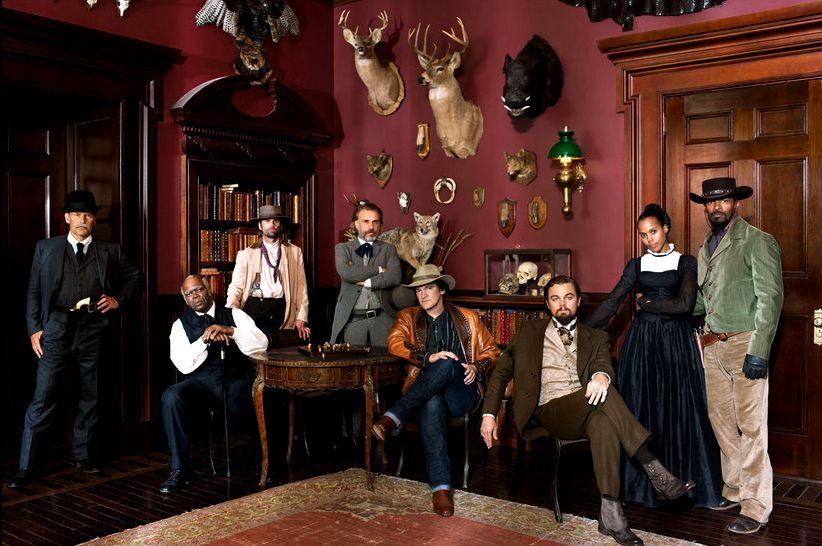
Django Unchained (2012, The Weinstein Company)

But it’s so impossible to believe in a cowboy the way we used to, that one who is black politically correct, didactic, militant of liberal America, would be ridiculous and absurd. On the other hand, if Tarantino made his film a simple parody, or just a comedy, (as the great Spike Lee equivocally interepreted), it’d have eschewed violence in a cynical and impotent way. At the end of the day, cinema is violence, cinema is war, they’re as inextricable from one another as history and violence; whether it be the banalized violence of imagery or a violence of the banal in images; whether it be the aesthetically beautiful violence, sometimes cold and ascetic, sometimes redemptive (for a “great cause”) and, finally, a fascinating violence, attractive: a violence with the promise of great fun and pleasure.

And that’s not all, the situations in westerns are so impossible, so ridiculous, but at the same time are a past that happened, it’s almost irrelevant if it was in cinema or in fact. From old movies there are some images fascinate me to this day: fearless men, sagas, sublime landscapes. Aside from the obvious, the cowboy is at the same time a child, an innocent, sensitive and sanguinary. A heroic nomad, he comes last, does dirty jobs for others before himself, he’s also, violently civilized: the vagabond cowboy is a freedom fighter before “America” becomes the the United States of America. And in the United States film itself is, like a cowboy’s tale, a westerly march.

Tarantino creates in this black cowboy nothing credible, a fearless freedom fighter who’s enamored, who confronts a past, which is invariably tragic. In a mishmash of cinema and history, history and cinema, he duplicates images ad infinitum, showing us all its sides. Sometimes in just one movement, as times in frenetic comings-and-goings, he destroys the past as well as he salvages it. It even gives the impression that one of his filmmaking guides was the most beautiful anti-fascist text by Nietzsche (A philosopher who was, paradoxically or not, a hero to the Nazis): On the Use and Abuse of History for Life.

Django Unchained (2012, The Weinstein Company)

At the intersection between Memory and Forgetting, between what we can’t relive and what is impossible (and undignified) to forget; between what we can no longer believe and what we wish to affirm; between cynicism and innocence; between raw, real violence and film effects; between the pretension of realism mixed with moral lessons and the ridiculousness of improbable situations; Tarantino chooses all this at the same time. We make fun of, laugh at, disbelieve, and surprisingly, we are on the edge of our seats like adolescents from the mid-20th century rooting for their heroes. And this is how we find ourselves getting frightened, nearing delirium like beasts before a huge massacre: a “just” massacre, the perfect revenge: a copy of a copy of a copy, but totally anti-Baudardrillian, posing as not at all nihilistic: potent. And the whole theatre is buzzing like when the young Jewish girl in Inglourious Basterds, in the middle of Occupied Paris, blew up the theatre with Hitler, Goebbels, Goering and the whole Third Reich in attendance. It’s an absurdity that’s good: the deliciousness of cinema unmasked, rustic, stripped of dramatic recourses and moribund cinematic technique, mixing the deliciousness of seeing how history absurdly should have been for the general welfare of all. In fact, if cinema is a fallacy, science and its “truths” can be the same way: certain situations in the film are so stupid like the “scientific” explanation that a slave owner gives about the brian of blacks. But their power is also maintained because it’s fascinating and engenders pleasures. Cinema and its joys have much to do with this. This is why the scene where the slaves are setting the table in the plantation house is perhaps one of the most beautiful of the film.

Hollywood always wanted to give us the omnipotent sensation of the desctruction of evil; for this it was necessary to drown under the polarization of good vs. evil to later get rid of all our desires – and above all the anti-desire: fear and guilt- within it. Only Hollywood isn’t over our heads: it is part of the power, either with active violence, or with the impotence of fear and guilt: impotent images. The “politically incorrect” relates to these things, and it’s still capable of turning, with its spectre, a legion of proto-fascist figures of the establishment posing as the irreverent “politically incorrect.”

On the other side, if the American cinema doesn’t get tired of killing for a great cause, or of promising an assassination with a great fun – and us with heroic assassins- Tarantino in Django permits us to to play joyfully at being just, saying “Fuck off!”, to our delight, to everything politically correct. Now we can even laugh, celebrate and get as blood-spattered as we want with the triumph of good we always wanted: the best happy endings of all time.
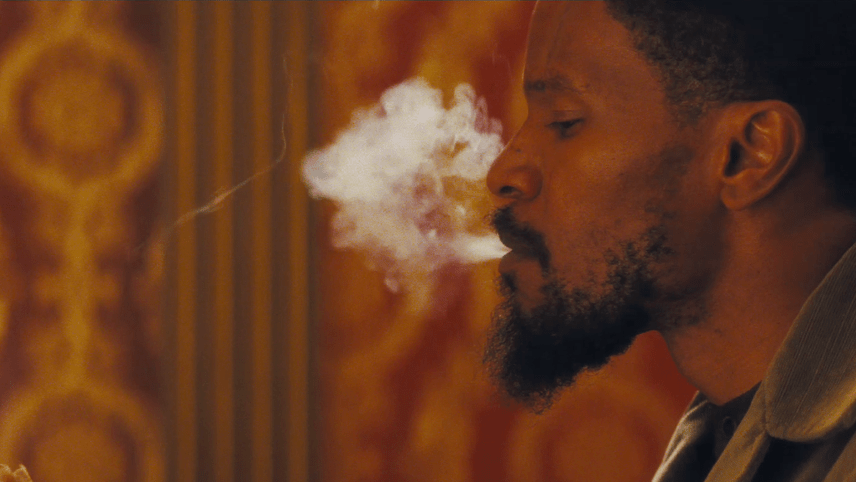
Django Unchained (2012, The Weinstein Company)

The omnipotent American cinema of destruction of evil is triumphanty destroyed and resuscitated by Tarantino, who in the same gunsling kills liberal-Christian guilt with a bullet to the head. It’s not good enough anymore to kill “robbers,” “Indians,” “Communists,” “Islamic terrorists,” or all the other supposed enemies of “America.” Much less feel compassion for them. What’s good is killing fascists! What’s really good is slaughtering slave owners and racists! It delicious to see these pigs to the slaughter without any pity whatsoever.

Django Uncahined (2012, The Weinstein Company)

The Original Text

Django Livre, de Quentin Tarantino: como é bom matar fascistas, racistas e escravocratas!

Rodrigo Guéron

Filósofo. Professor Adjunto do Instituto de Artes da UERJ. Autor do livro, “Da Imagem ao Clichê, do Clichê à Imagem. Deleuze, Cinema e Pensamento”. Diretor e roteirista de Cinema, autor dos curta metragens “750 Cidade de Deus”, “Clandestinidade” e “Eu Estou Bem cada Vez Melhor”.

Engraçado, nunca fui um tarantinista. Não vibrei como alguns amigos nos anos 1990 com Pulp Fiction; gostei do filme, de algumas cenas e imagens em especial, e pronto. Na verdade eu gostei mesmo era de um filme que os cultuadores do diretor consideravam menor: Jackie Brown. Mas já em Kill Bill, que achei muito interessante, comecei a discordar do que grande parte da crítica dizia do filme, a saber, que este, e outros filmes de Tarantino que o seguiram, eram uma colagem de referências, montagem de citações cinematográficas, quadrinhos, clichês pops: uma espécie de costura de pastiches. Isso não era exatamente uma inverdade, mas era pouco para estes filmes. Coisas semelhantes tem sido ditas sobre Django Livre, e continuo achando que esta espécie de senso comum da crítica sobre o cinema de Quentin Tarantino não dá conta da força do diretor.

De início, eu diria que o que Tarantino faz em Django Livre é lidar e enfrentar o passado dos EUA, ou seja, as imagens do passado dos EUA (ou melhor, o passado enquanto imagem), não fazendo diferença, como na espetacular edição da primeira parte da História(s) do Cinema de Godard, se são imagens documentais ou de filmes de ficção: trata-se de memória e o que a constitui; sobretudo memória como um presente a ser enfrentado. A princípio, pensaríamos nós, as primeiras imagens a serem enfrentadas seriam as da escravidão e dos negros. E de fato elas estão lá, mas neste campo há também um vazio, uma falta de imagens, uma omissão gritante e, em especial, uma contra-imagem. No cinema americano, e na história, a escravidão aparece pelo racismo, pela assepsia anglo-saxã de Hollywood, pela ausência, pela falta de protagonismo ou pelo estereótipo dos negros nos filmes e, finalmente, pelo que estes construíram como imagens de resistência, como exuberância e empoderamento, e até como estereótipos de si mesmos. Mas o passado remexido em Django Livre vai bem além destas imagens: são as grandes imagens épicas da “América” que estão ali. E assim faz todo sentido misturar western e escravidão: a mistura que quase nunca houve é, no fundo, a mistura que sempre esteve latente, como se saturação e omissão se encontrassem numa esquina da história, e do cinema.

Mas, é claro, é tão impossível fazer hoje um western, é tão impossível crer de novo naquelas velhas fábulas épicas (e o belíssimo Onde os Fracos Não Tem Vez dos irmãos Coem mostram isso, quase me desmentindo), quanto é impossível não considerar a grandeza épica, a força das imagens destas fábulas civilizatórias que misturaram uma beleza cinematográfica gigantesca (beleza da vida e do mundo portanto, e não do umbigo do cinema) com a violência sanguinária de todos os conflitos e genocídios da “marcha para o Oeste”. É no meio do impasse criado por esta herança, como se abrisse um espaço a cotoveladas para poder criar as suas imagens, que Tarantino inventa Django, um impossível cowboy negro, ex-escravo, justiceiro, caçador de recompensas, lutando contra seus algozes senhores para libertar a sua amada.

Django Unchained (2012, The Weinstein Company)

Mas é tão impossível crer num cowboy como antes, que um cowboy negro politicamente correto, didático militante da moral liberal estadunidense, seria ridículo e absurdo. Por outro lado, se Tarantino fizesse do seu filme uma simples paródia, ou apenas uma comédia, (como o grande Spike Lee equivocadamente entendeu), teria banido de modo cínico e impotente a violência. Afinal de contas, cinema e violência, guerra e cinema, são tão imbricados quanto o são história e violência; seja a violência banalizada das imagens e a violência do banal em imagens; seja a violência bela e estética, às vezes ascética e fria, às vezes redentora (por uma “grande causa”) e, finalmente, uma violência fascinante, atraente: a violência como promessa de um grande gozo e prazer.

Mas isso ainda é pouco, as situações dos westerns são impossíveis, são ridículas, mas ao mesmo tempo são o passado que houve, pouco importa se no cinema ou de fato. Nos velhos filmes de mocinho e bandido algumas imagens fascinam ainda hoje: homens destemidos, sagas, paisagens sublimes. O cowboy é ao mesmo tempo uma criança ingênua, sensual e sanguinária. Herói nômade, ele vem antes da besta branca civilizatória ocidental, faz o serviço sujo para ela antes de ser, ele também, violentamente civilizado: o cowboy errante e justiceiro antes da “América” se tornar EUA. E nos Estados Unidos o próprio cinema é, como num western, marcha para o oeste.

Tarantino cria este cowboy negro nada crível, justiceiro destemido e apaixonado, enquanto enfrenta a sempre trágica lida com o passado. Num emaranhado de cinema e história, história e cinema, ele duplica infinitamente as imagens, mostrando-as em todos os seus lados. Às vezes num só movimento, às vezes em idas e vindas frenéticas, ele destrói o passado tão bem quanto o resgata. Dá até a impressão que um de seus manuais de filmagem foi o mais belo e anti-fascista dos textos de Nietzsche ( filósofo que foi, paradoxalmente ou não, herói dos nazis): “Das Utilidades e dos Incovenientes da História para a Vida”.
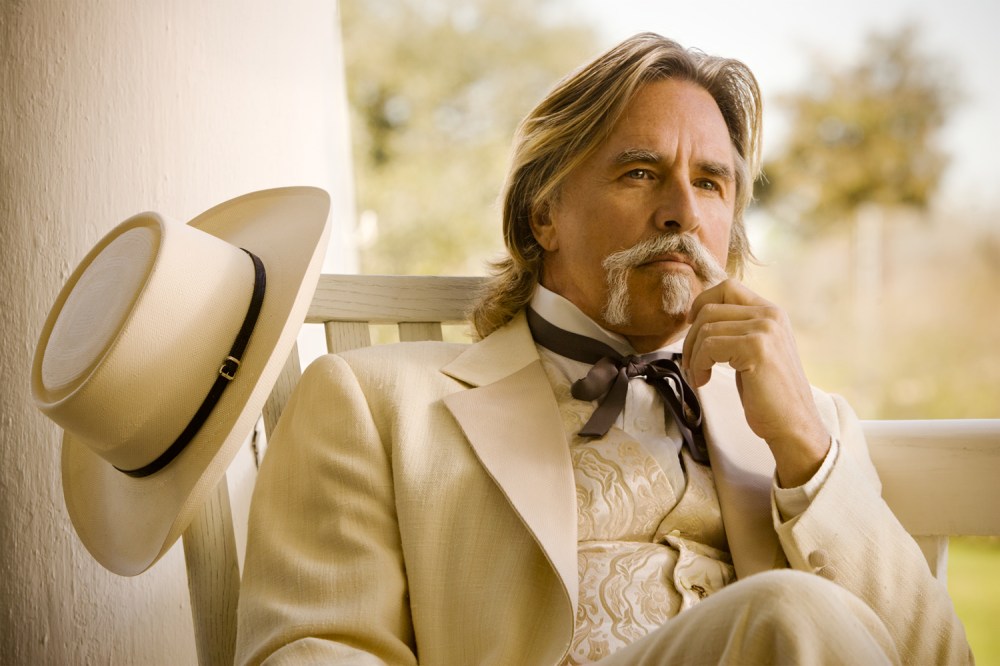
Django Unchained (2012, The Weinstein Company)

Na encruzilhada entre memória e esquecimento, entre o que não podemos reviver e o que nos é impossível (e indigno) esquecer; entre o que não conseguimos mais crer e o que temos o desejo de afirmar; entre o cinismo e a ingenuidade; entre a violência crua e real e o efeito cenotécnico; entre a pretensão de realismo misturada às lições de moral e o ridículo das situações inverossímeis, Tarantino escolhe tudo isso ao mesmo tempo. Debochamos, rimos e descremos juntos e, surpreendentemente, somos arrebatados na cadeira do cinema como adolescentes do meio do século passado torcendo por seus mocinhos. E assim nos pegamos se assustando e delirando como bestas diante de um grande massacre: o massacre “justo”, a vingança perfeita: a cópia, da cópia, da cópia, mas totalmente anti baudrillardiana, posto que nada niilista: potente. E o cinema todo vibra como quando a mocinha judia, de Bastardos em Glória, em plena Paris ocupada, explodiu a sala de cinema com Hitler, Goebbels, Goering e todo o Terceiro Reich dentro. É o absurdo que é bom: a delícia do cinema desmascarado no tosco de seus recursos dramáticos e cenotécnicos moribundos, misturado à delícia de ver como a história absurdamente deveria ter sido para a felicidade geral todos. De fato, se o cinema é uma falácia, a ciência e suas “verdades” podem sê-lo do mesmo jeito: certas situações do filme são tão estúpidas quanto a explicação “científica” que o senhor de escravo dá sobre o cérebro dos negros. Mas o poder também se mantém porque é fascinante e engendra prazeres. O cinema e suas delícias têm muito a ver com isso. Por isso a cena das escravas arrumando a mesa de jantar do senhor na casa grande talvez seja uma das mais belas do filme.

Hollywood sempre nos quis dar a onipotente sensação da destruição do mau; para isso precisou nos afogar na polarização bem x mau para depois despejar todo o nosso desejo – e sobretudo o anti-desejo: o medo, a culpa – nela. Só que Hollywood não está acima de nossas cabeças: ele é parte do poder que nos atravessa, seja como violência ativa, seja como a impotência do medo e da culpa: imagens impotentes. O “politicamente correto” tem a ver com estas últimas, e ainda é capaz de gerar como seus espectros uma legião de almofadinhas proto-fascistas, figuras do establishment pousando de irreverentes “politicamente incorretos”.

Por outro lado, se o cinema americano não se cansa de matar por uma grande causa, e de nos prometer o assassinato com um grande gozo – e nós como heróis assassinos –, Tarantino em Django nos permite brincar deliciosamente de sermos justos, mandando à merda, para o nosso deleite, todo o politicamente correto. Agora já podemos rir, comemorar e se lambuzar de sangue à vontade com o triunfo do bem que sempre desejamos: o melhor final feliz de todos os tempos.
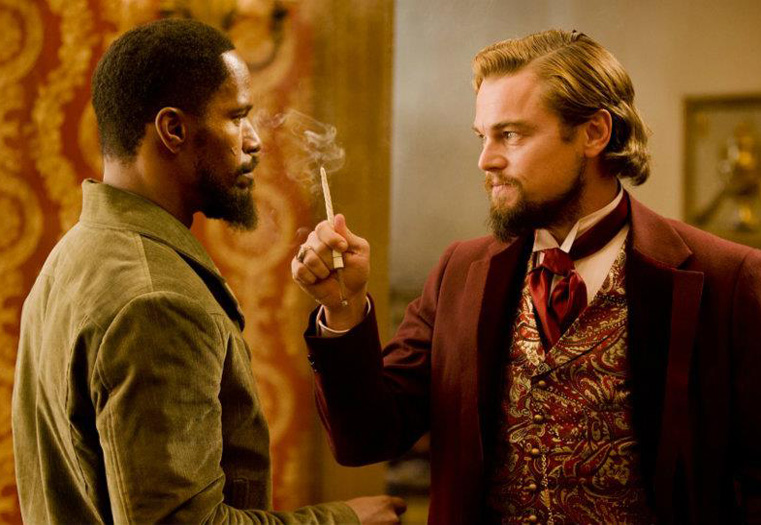
Django Unchained (2012, The Weinstein Company)

A cinematográfica onipotência estadunidense da destruição do mal é triunfalmente destruída e ressuscitada por Tarantino, que no mesmo movimento de pistola mata a culpa liberal-cristã com uma bala na testa. Bom já não é matar “bandidos”, “índios”, “comunistas”, “terroristas islâmicos”, ou todo e qualquer suposto inimigo da “América”. Nem muito menos sentir compaixão por eles. Bom mesmo é matar fascistas! Bom mesmo é trucidar senhores de escravos e racistas! É delicioso poder mandar esses porcos todos pelos ares! Sem pena alguma.

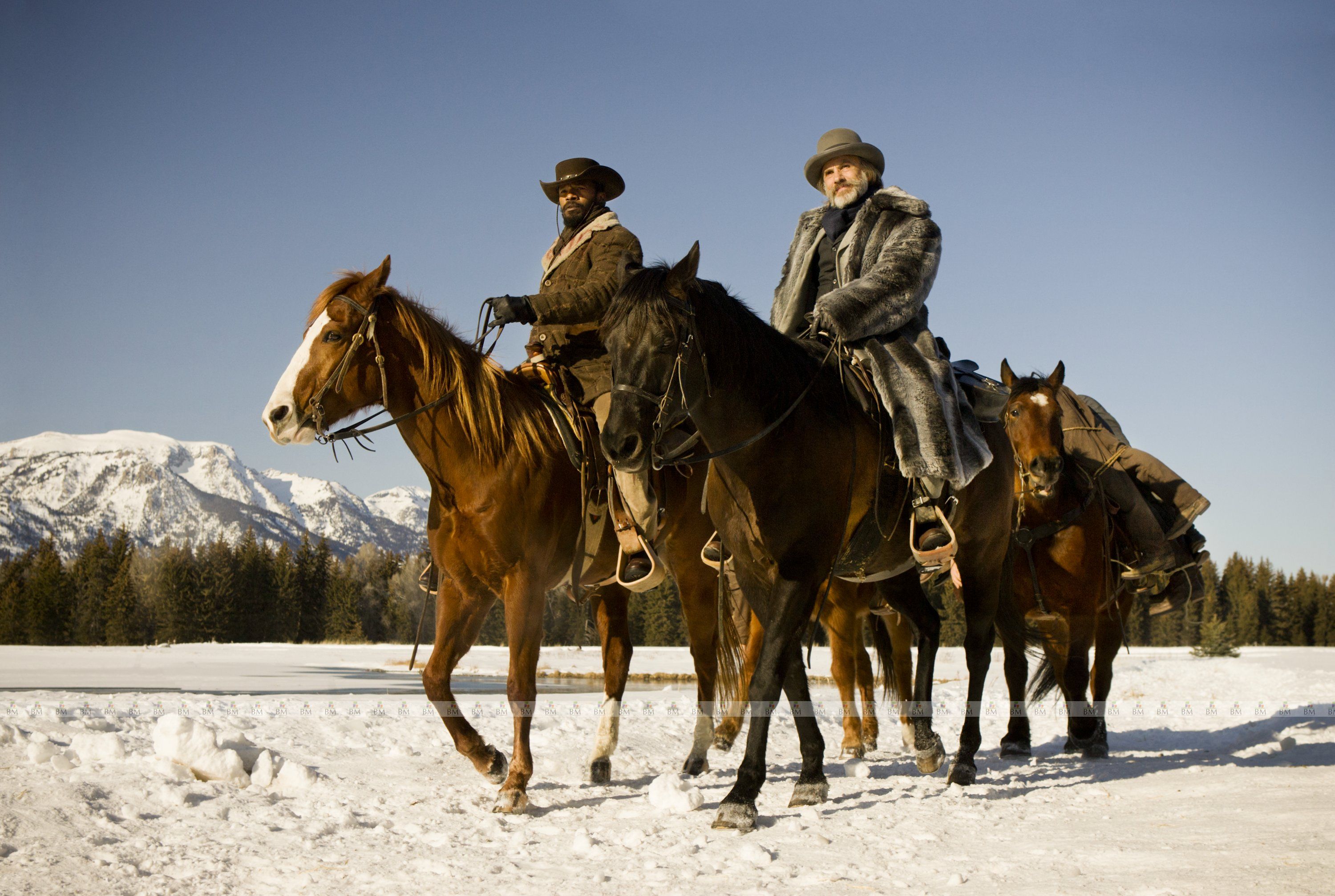
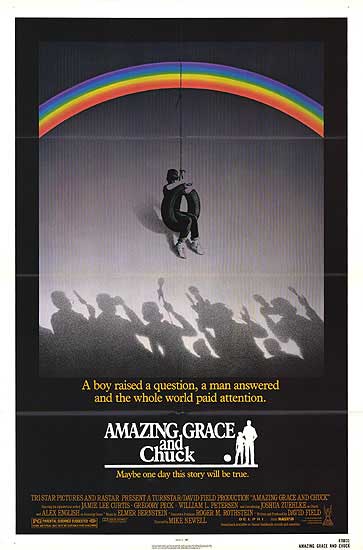
Once Upon a Time in the 80s: Amazing Grace and Chuck (Part 15 of 17)

Warning: This post features in depth story analysis, which includes spoilers. If you have not seen this film proceed at your own risk or not at all.

This film was the catalyst for this paper. I think what I admire above all else in filmmaking is bravery and I think it was very risky to make this film. This is an idealistic fairy tale about global nuclear disarmament and of political martyrdom. David Field, writer, and Mike Newell, director, knew no fear in making this film, there was no ceiling for how far it could go. While it’s an outlandish tale, it admits as such, and gives it even more redeeming value in the process.

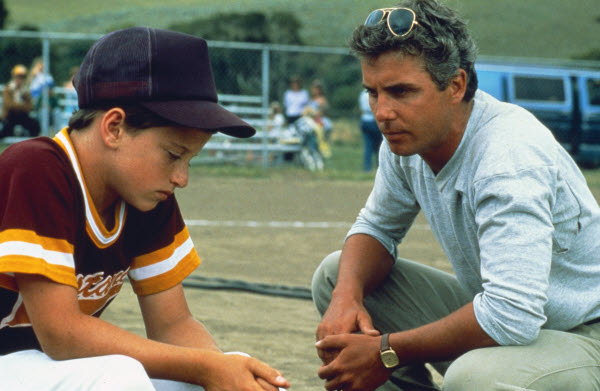
The film very early on inserts a title stating “Once Upon A Time There was a Boy…” it’s a fairy tale, for some reason some Americans just cannot comprehend that a fairy tale can be depicted in a live action film. What we have in this film is a grassroots movement. A boy, Chuck Murdock (Joshua Zuehlke), is taken on a field trip to a missile silo one day. The kids are shown an actual missile, Chuck is the only one who questions its existence and is also very frightened because his father is in the Air Force. After the trip the Congressman who led them around pulls him aside and tells him “That missile will never be used, that’s why it was built,” it’s that kind of thinking that got us in an arms race stockpile and made us want to scare the other guy into not using their weapons. That night Chuck has a nightmare that he is caught at the silo during a nuclear attack.

The next day when he gets on the pitcher’s mound he decides to quit baseball. He states it’s “his best thing,” and no one understands why their star pitcher walked off the field. Then he explains that he won’t play baseball again until there are no more nuclear weapons.

Amazing Grace and Chuck (1987, TriStar Pictures)

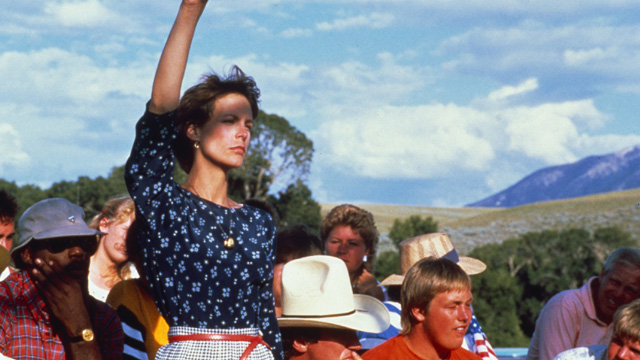
The other protagonist of this film is a professional basketball player nicknamed “Amazing Grace” Smith, played by Alex English who was a player for the Denver Nuggets at the time this film was produced. We see him playing, hit a three-point shot and give his famous three fingers in the air gesture, after the game his agent/best friend, Lynn (Jaime Lee Curtis) reads him an article about Chuck and the wheels start spinning.

With the memory of his wife and daughter gnawing at his mind, Amazing decides to quit basketball and do like Chuck did, an official protest has begun. At one point someone asks Amazing “Do you really think you’re going to bring an end to nuclear weapons?” Amazing turns to him and says “I don’t know but wouldn’t it be nice.” This soon starts a snowball effect and so many athletes join the cause that professional sports are crippled and the movement spreads worldwide. So leftist is this film that Ted Turner was a consultant and used this film to promote CNN with many news reports in the film brandishing their logo.

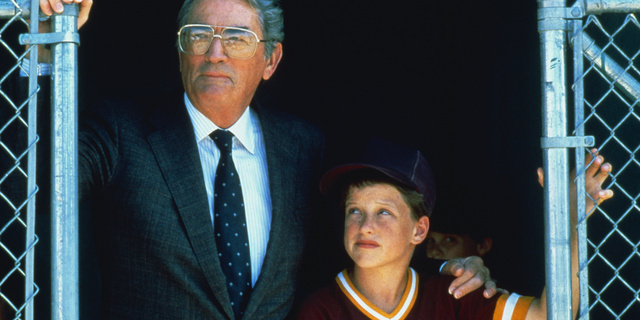
The protest continues and gains national recognition. Chuck meets with the president and he eventually proposes that the Americans and Russians will disarm within seven years but this plan is rejected because the President (Gregory Peck) might not be in office by then. The protest causes problems between Chuck and his father and Amazing Grace starts getting anonymous phone calls. A powerful businessman, who has been threatening Amazing Grace, tricks him into getting on one of his planes and then he blows it up. Following Amazing Grace’s death Chuck vows not to talk anymore and this movement sweeps across the world and forces another meeting between the Russian Premier and the President.

Amazing Grace and Chuck (1987, TriStar Pictures)

We see them meeting at people in Montana in a cabin just a few miles from Chuck’s home. The President opens by saying “Are your grandchildren talking to you?” the Premier laughs and says “No.” Then they talk about how troubling it is that they’re losing their children. And ultimately this is what the disarmament would be for: so they don’t lose their children. They agree on total nuclear disarmament immediately. And, of course, the president goes to visit Chuck and thanks him.

Now a lot happens in these two hours and it all ends with Chuck stepping back up on the mound. The Russian Premier is there, so’s the President. The catcher starts to give him signs he shakes off the fastball one, and the curve two, and then he turns to the crowd and makes the three-point gesture. And every one stands and repeats the gesture, yeah it’s been done to death but in this film it all works. Chuck looks up to the heavens when he’s poised and says a word to Amazing, he throws the pitch and we follow the ball in close shot as it spins through the sky and cut to black and then there’s a title it reads:

“But wouldn’t it be nice.”
-Amazing Grace Smith

Amazing Grace and Chuck (1987, TriStar Pictures)

This is a film that is idealist and dares to dream. It takes the fears of Three Mile Island and Chernobyl and combines them with the hope of Glasnost and presented us with a fantasy. The poster for this film should tell you it’s a fantasy. And it’s one that only could have come out of the 80s, this film literally drips 80s. In the 1990s, and especially in the present, disarmament was the furthest thing from anyone’s mind. It’s a great film about one person can make a difference and a film with a message.

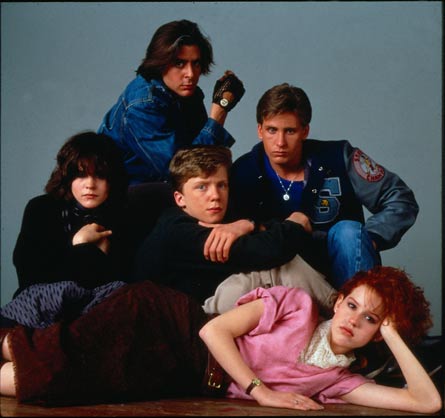
Once Upon a Time in the 80s: The Breakfast Club (Part 14 of 17)

Warning: This article features in depth plot analysis. If you have not seen this film you are urged not to read on. Spoiler alert administered.

John Hughes was a big name in the 1980s, but more so as a writer/producer than as a director. He started off as a writer with the National Lampoon’s crew. While it’s true he did work in a formulaic manner, and did practically invent the template for the teen film of the 80s; he did strike gold from time to time. The teen film of the 80s was so badly adapted to the 90s it spawned a spoof film called Not Another Teen Movie at the turn of the century. Hughes became a big player as a writer/producer but rarely directed his own scripts. He directed this film but his other films ran the gamut quality-wise from Weird Science, Ferris Beuller’s Day Off and Curly Sue to Vacation, The Great Outdoors and Home Alone. Hughes’ best directorial efforts were this film and Trains, Planes and Automobiles; regardless of all that this is his seminal work.

We start with a quote by David Bowie which is much better in the written word than it is in the song itself: “…And these children/ That you spit on/As they try to change their worlds/ Are immune to your consultations,/They are quite aware/ Of what they’re going through…” and the image shatters so we begin…

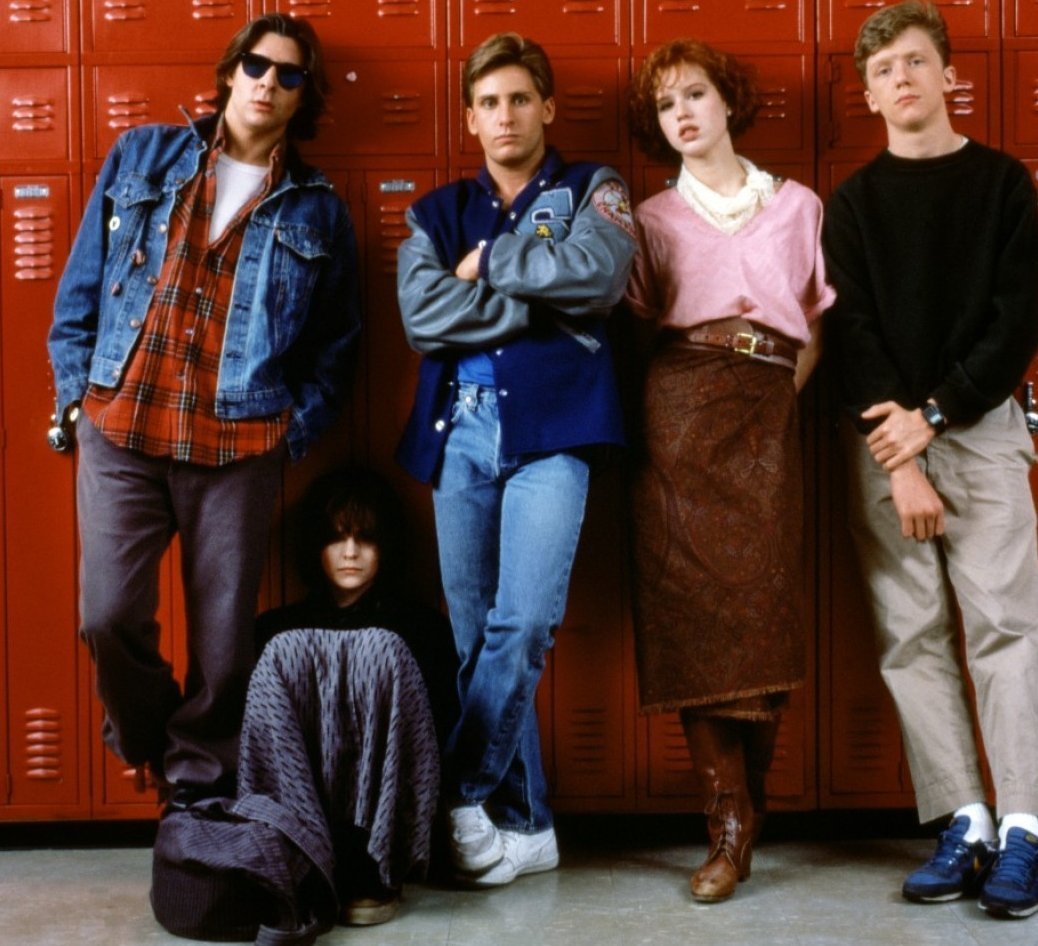
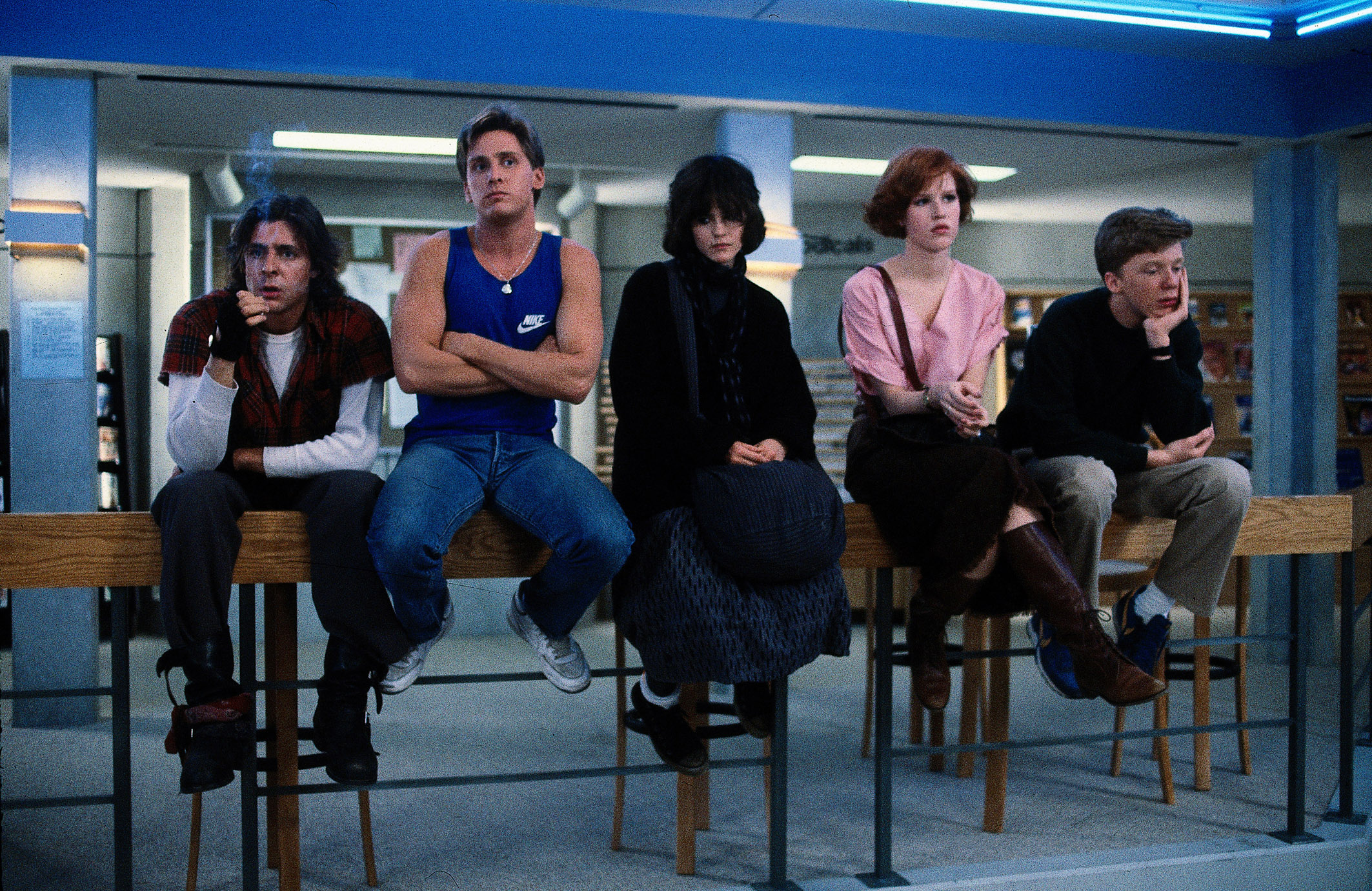
The Breakfast Club is in essence two things: it is first a character study and secondly, a timeless manifesto of teen angst. The setting is Saturday detention, our five protagonists are all here for reasons of their own but they are thrown together in the school library for eight hours and have to co-exist though they are very different. This is one of Hughes’ great situations and has been repeated on shows like Dawson’s Creek. Hughes is a master of creating a great situation for comedy. The premise of Sixteen Candles is that everyone has forgotten the main character’s birthday and it was a plot of one episode on practically every sitcom in the 1980s. This film is almost a play it is so dialogue-driven, however, if you turned it into a play I don’t think it’d work not that that’s going to stop anyone from trying [I’ve since learned at a screening with a Q & A hosted by Kevin Smith that this film was initially written as a stage play].

The Breakfast Club (1985, Universal)

“Anyone who moans that cinema in the 80s amounted to the death of dialogue and the triumph of action Jackson, should take a look at this movie. It’s all talk.”

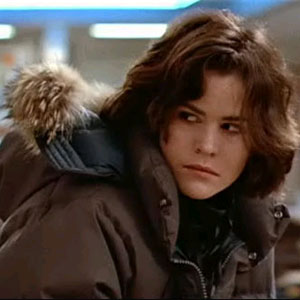
The characters are immediately defined as we see them dropped off at school. Brian (Anthony Michael Hall) is told by his mother to use his time to study, he protests saying he isn’t supposed to study and she says he has to find a way; he’s the brain. Andrew (Emilio Estevez) is being reamed out by his father that he won’t get a scholarship if he gets caught again that and his letter jacket tell us; he’s the jock. Claire (Molly Ringwold) is being told that cutting school doesn’t make her a defective; she’s the popular girl or the princess. Allison (Ally Sheedy) is dropped off without a word when she goes to say goodbye the car speeds off and almost runs over Bender (Judd Nelson) so we have the last two, the basket case and the criminal. These labels are very important because that’s what we all perceive them as in the beginning and how they perceive each other and we learn about these characters and they bond with each other. While they’re in detention they’re each supposed to write a 1,000 word essay but they choose to do something else instead.


Why they ended up in detention ends up being like the “Rosebud” of this film. Except in this film it is but a gimmick. In their discussions, we find out more and more about these characters and what pushed them there. We find out about their home lives and for all of them there is something that makes it unbearable for them. In a very memorable scene Bender re-enacts a typical night in his house and depicts an argument between his parents. When Andrew doesn’t believe him he lifts his sleeve and says “See this? It’s about the size of a cigar. See this is what you get in my house when you spill paint in the garage.” Andrew relates how his father was always browbeating him to be number one and how he’s been made to hate weakness. Claire’s affections are a prize her parents keep fighting over since their divorce. Brian relates how he nearly killed himself, albeit with a flair gun, because he got a B in shop and his parents demand academic excellence from him “I can’t have it, and my parents can’t have it,” he says. At the end, we find out Allison’s problem is that her parents outright ignore her and that’s why she’s been contemplating running away. Their discussion concludes with the question “My God are we all going to turn into our parents” and Allison “It’s inevitable at a certain age your heart dies,” which leads us to the antagonist.


The Breakfast Club (1985, Universal)

The villain in this film is Principal Vernon (Paul Gleason). He is the establishment. And when he gets Bender alone he ranks him out like nobody’s business, and you just want to punch him right in the face, and he even gives Bender the chance to but Bender’s not used to this brutal honesty and is scared to death. I’d even say his tough guy image is an act even though he does have a hellish home life. Vernon also talks to the janitor and complains that “Every year these kids are getting more and more arrogant,” and then the Janitor speaks the truth saying “Come on, Vern, the kids haven’t changed you have. What do you think you’d think of yourself at their age?” and that ends the conversation. The principal is the embodiment of everything these kids hate and fear becoming. And he also gives a very good and funny performance. The teen angst of this film is apparent. When this film becomes a manifesto is when at the end they decide to ask Brian to write their essay for them and he agrees.


While there is a montage at the beginning of all that is high school. This is also a striking visual sequence. We see Vernon holding the paper, Claire and Bender being romantic, Andrew and Allison holding hands and Brian getting into his car. And we hear Brian doing a voice-over narration:

“Dear Mr. Vernon: We accept the fact that we had to sacrifice a whole Saturday in detention for whatever it is we did wrong, but we think you’re crazy for making us write an essay telling you who we think we are. You see us as you want to see us: in the simplest terms, in the most convenient definitions. But what we found out is that each one of us is a brain, and an athlete, and a basket case, a princess, and a criminal. Does that answer your question? Sincerely yours, The Breakfast Club.”


The Breakfast Club (1985, Universal)

And as the narration ends we see Bender walking across the football field and he pumps his fist in the air as “Don’t You (Forget About Me)” by Simple Minds plays the frame freezes. It’s the best, and one of the few acceptable, freeze frame endings I’ve ever seen; it’s perfect.


Some of the vernacular in this film is very 80s for example I don’t think I’ll ever know what “Neo-maxi-zoom-dweebie” is but the themes and storyline that run through this film are timeless such that I only came to see this film about three years ago (as of this writing). It’s a great piece of adolescent rebellion and a great comedy undoubtedly Hughes’ best work.

Works Cited: p. 33 Brat Pack: Confidential Andrew Pulver and Steven Paul Davies. BT Batsford: London, 2000.
The Breakfast Club. Dir. John Hughes. 1985. featuring Emilio Estevez, Judd Nelson, Molly Ringwold, Ally Sheedy, Anthony Michael Hall, Paul Gleason. Universal Pictures.