Favorite Film Discoveries of 2015

This is an idea I first saw on Rupert Pupkin Speaks. The idea is to list your favorite films from the past year that you saw for the first time, but exclude new releases. This allows much more variety and creates a lot of great suggestions if you read many of them.

Enjoy!

Favorite Film Discoveries of 2015
This list kicks off with three disparate short films by Carol Ballard that I watched on the Criterion Collection release of The Black Stallion:

The first is…

The Perils of Priscilla (1969)

The story of a cat told from its POV.

Crystallization (1974)

With amazing technique and engineering this film shows the process of crystallization bigger than life.

Seems Like Only Yesterday (1971)

A series of interviews with centenarians about the changes they’ve seen in the world.

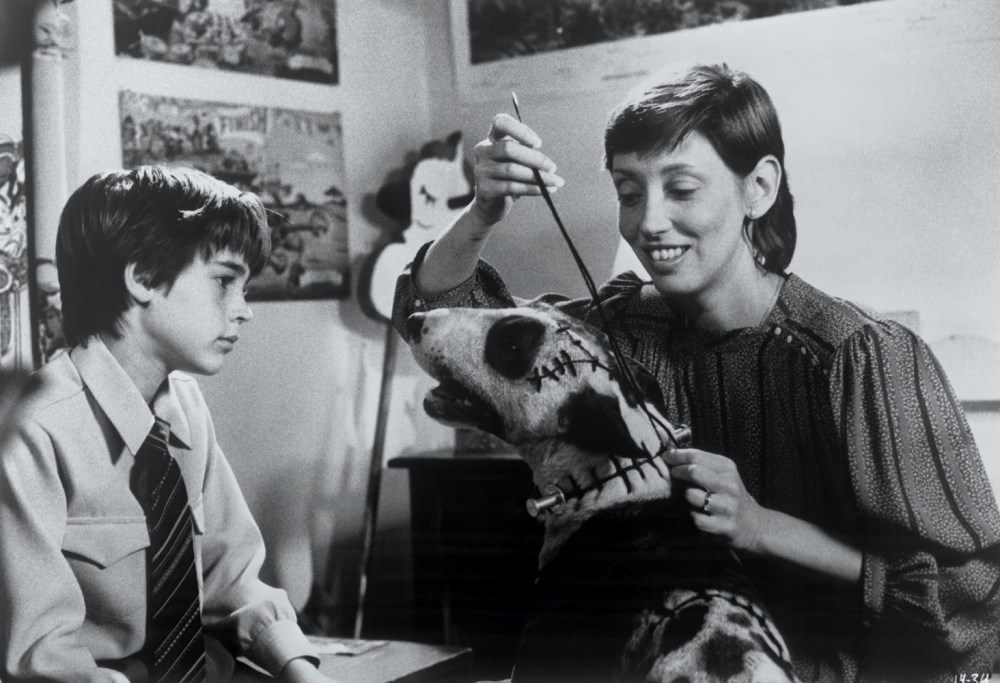
Frankenweenie (1984)

CLH1.CA.Oe.0924.halloween2.O.1

Seen as one of my few 61 Days of Halloween selections this one was long overdue, but well worth the wait. Not what I’d call a discovery but rather a confirmation. This is Burton at his finest and weirdest.

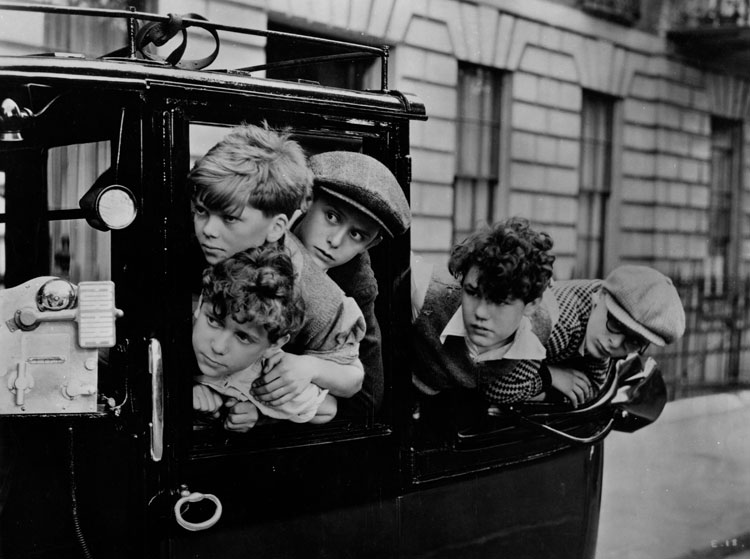
Our Gang Follies of 1936 (1935)

220px-Our_gang_follies_1936_TITLE

The gags in this short, unlike some of their shorts, are varied and plentiful: there is a monkey shoeshining, cross-dressing, animal hiding in a bodice, things go wrong and it’s live, hiding in hay, running skull, gunshots at boots, and animated eyes.

It’s no wonder there was a sequel was a sequel to this short a few years later. This version is well done and allows great variety in scenes, different talents to be displayed and many jokes.

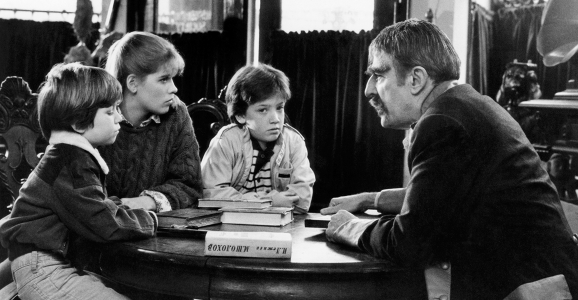
Mr. Boogedy (1986)

mr-boogedy1

This is another Disney viewing during 61 Days of Halloween that I saw thanks to TCM’s new Disney Vault special programming block. This is another mid-’80s title from Disney, this one playing on The Wonderful World of Color and at current is available digitally or thru Disney Movie Club. Richard Masur, David Faustino of Married …. with Children and Benji Gregory of ALF are the standouts.
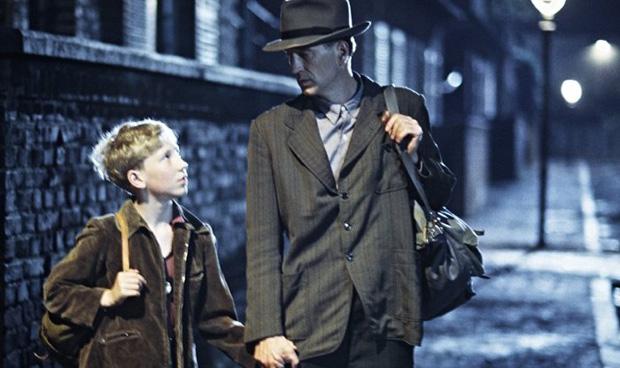
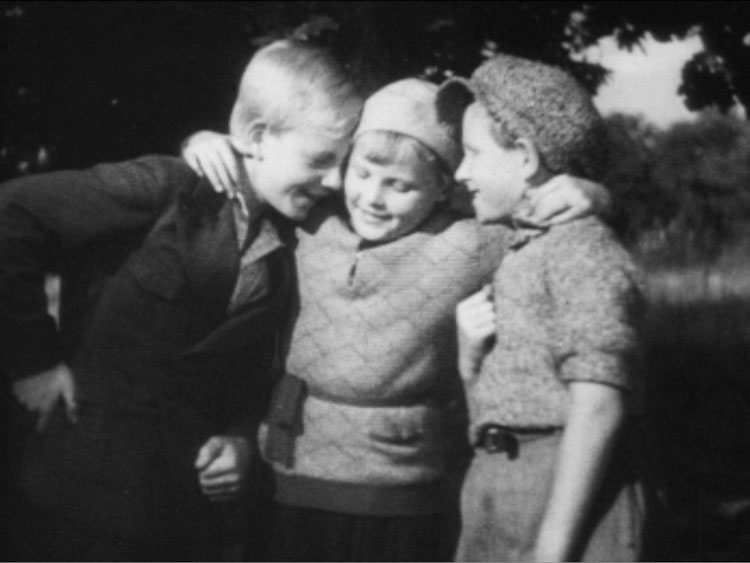
Historien om en Gut (1919)

The movie has a simple thru-line:

After being accused of stealing the teacher’s watch, Esben escapes with a ship and gets work at a farm. He then works his way back home, to get justice.

So this is an old one and curiously is listed as a 90-minute run time but this version runs about 48 (not sure if there’s anything missing) but it seems complete. One of my pet projects may be to put more proper titles on it and upload it.

Francesco (1989)

Francesco (1989, Film Movement Classics)

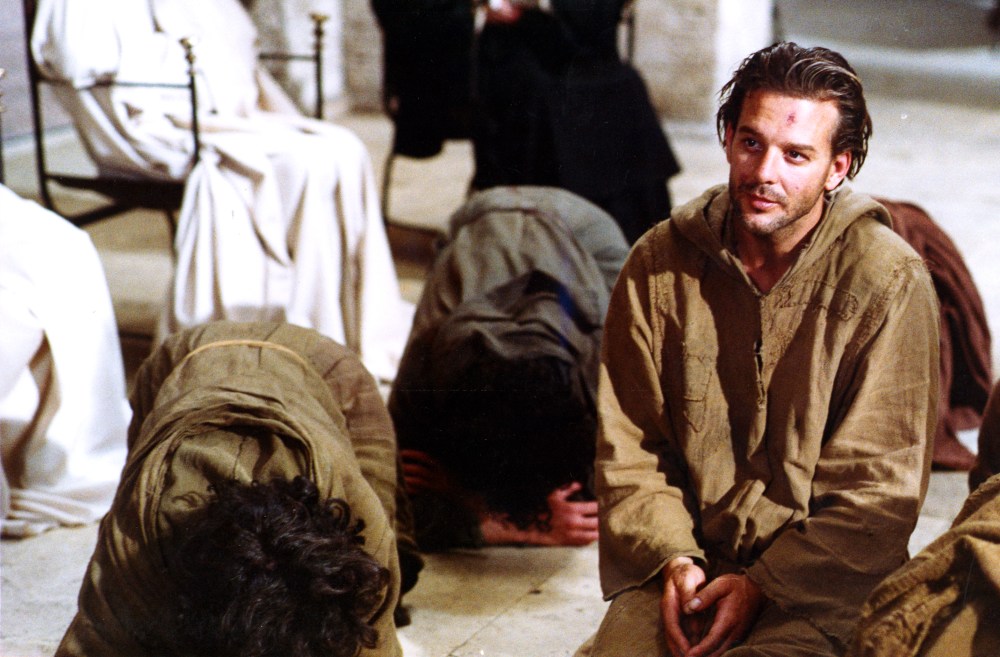
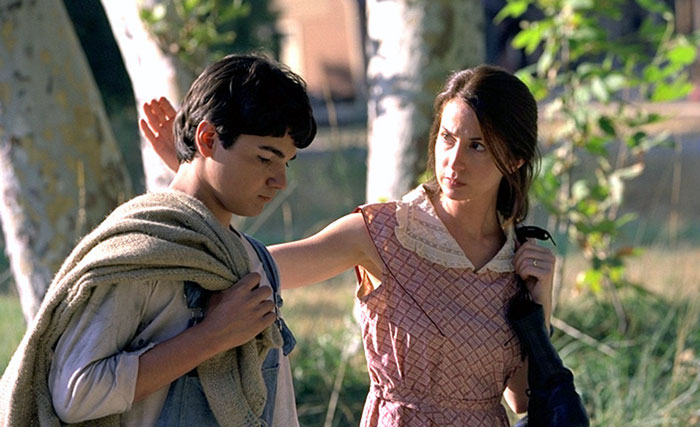
Francesco is a film I had not even heard of, much less seen, and one I was glad to have a gander at. I’m also thankful this is the first full version of St. Francis’ life I took in. While any one can identify with his naturalist tendencies and love of birds, this earnest devout portrayal; a man fighting peaceably for a belief in conducting oneself he firmly believes can inspire all and I can see why he continues to have such a following.

Francesco is a wonderfully re-presented title that should delight viewers for secular and holy reasons alike.

Galloping Bungalows (1924)

Being a Mac Sennett comedy the to-be-looked-for staples are slapstick comedy and insane chases, this film most definitely has both. The runaway house trailer being chased by any number of police and fire engine is breathtaking and frequently hilarious. Much of this hilarity due to Billy Bevan whose milieu when he headline was the wild marital farce, per Wikipedia,  and this title certainly fits into that realm

Tom und Hacke (2012)

tom-und-hacke-2012-film-rcm1200x627u

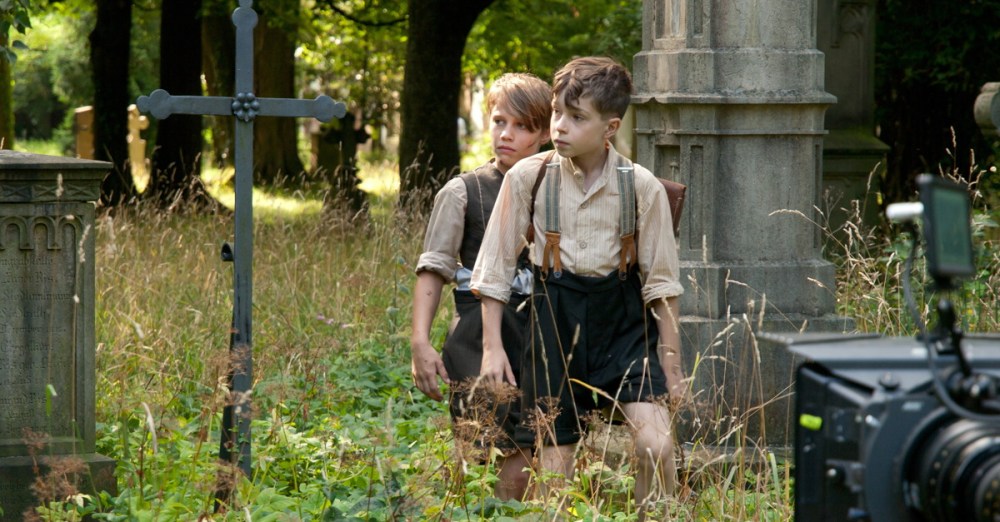
Transplanting a story to another culture, especially a classic like Tom and Huck doesn’t always work. This German rendition does.

The Legend of Rockabye Point (1955)

The old fishing boat captain tells the story of Chilly Willy, a singing polar bear and a bulldog who quickly falls asleep when he hears a lullaby.

Did a lot of Woody Woodpecker watching in the early part of 2015, but Chilly Willy will always be my favorite in that gang and I loved this one and don’t think I’d seen it.

The Apple Dumpling Gang (1975)

The Apple Dumpling Gang (1975, Disney)

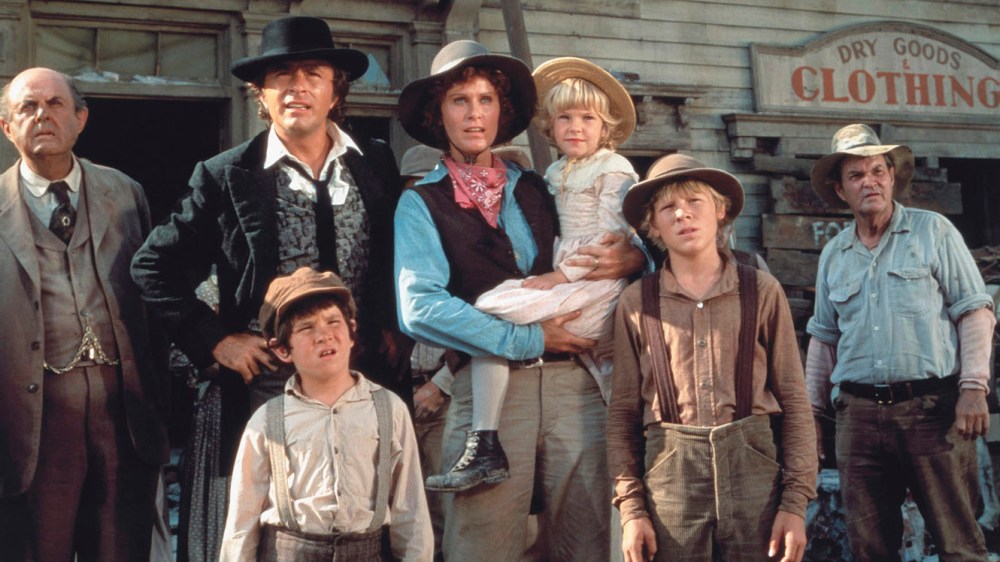
Not entirely dissimilar from Bedknobs and Broomsticks here you have adults that are not necessarily altruistic, but the lead Russel (Bill Bixby) does change and come to genuinely care for the kids. Meanwhile, Dusty (Susan Clark) does come to care for Bill even though she ends up with him only for the kids’ well being at first.

The Apple Dumpling Gang is a humorous enjoyable tale that looks brilliant in this Blu-ray upgrade. If you are a member of the Club and a fan of the film it is definitely recommended for the picture alone even though it offers no extras.

The Playful Pelican (1948)

Another Walt Lantz title, this one features Andy Panda and a Pelican. The creativity seemed to break out when Woody wasn’t there.

The Tin Drum (1975; Director’s Cut in 2012)

TinDrum13

As I mentioned here I have a long history with The Tin Drum. However, I agree with Schlöndorff’s assessment that this version is almost like another movie and superior to the version we al got to know, and many of us appreciate greatly.

I loved this film before and I love it more now with the longer cut, much in the same way the TV cut of Fanny and Alexander is better than the theatrical.

Knick Knack (1989)

I honestly cannot remember if saw this one before or not. It seemed new at the time, either way it’s really neat.

https://www.youtube.com/watch?v=X2gTnvUeGU0

Miami Connection (1987)

oh_my_god

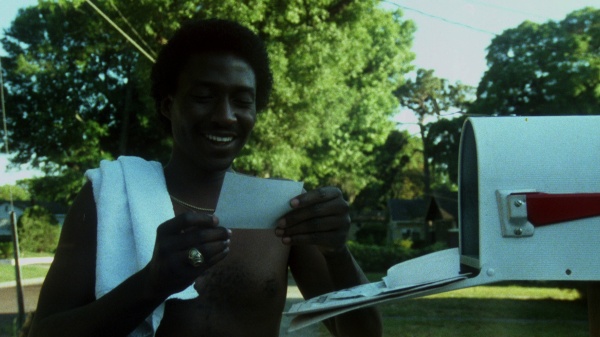
Is Miami Connection a good movie? Not at all, is it more readily embraceable as something asa bad movie I love than much of Rifftrax’s fare? Absolutely.

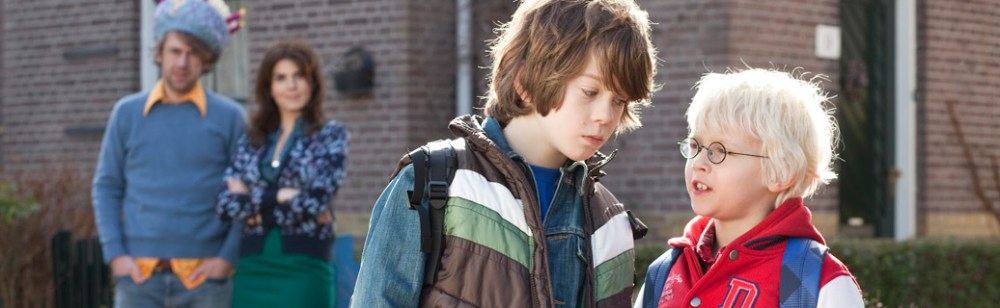
Alfie the Werewolf (Dolfje Weerwolfje, 2011)

Alfie the Werewolf (2011, Attraction Distribution)

Perhaps what’s most refreshing about this film, from a production value and aesthetic standpoint, is the fact despite being a 2011 domestic release in the Netherlands it does not shy away from practical effects work. Yes, CGI is use where it’s truly beneficial like making the lycan child run about, but for more settled scenes he’s in a suit and make up. It is very well-done indeed.

Alfie the Werewolf is an enjoyable film for all members of the family, and perhaps most intriguing for parents is that it is a fairly benign way to reach a compromise with your kids on viewing material. It could satisfy the desire to see a werewolf movie but would not be potentially emotionally scarring in the process.

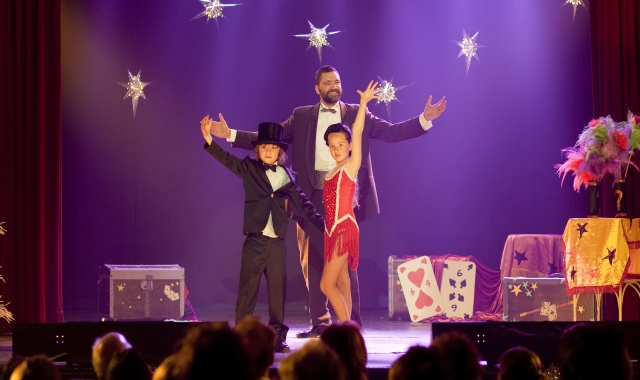
Magicians (Het Geheim, 2010)

The Magicians (2010, Attraction Distribution)

Most family films would only be tasked with resolving the concerns of one family unit. The Magicians decides to take the task of trying to sort out two family situations. There is also the ongoing struggle Sylvie faces in her house with her father living overseas and her mother being detached leaving her mostly to the care of an Au Pair. This dual purpose is most refreshing and combine that with the unusual-though-not-unprecedented disappearing foible it keeps you engaged.

The Magicians is well-edited and paced. It tells its story briskly, in a manner lacking pretension but conversely it’s not devoid of content. The whole family can enjoy, laugh, and learn from this film.

Astro Boy (2009)

file_538738_astroboyreview

Astro Boy has become an increasingly bigger thing for me. It started with many of the graphic novels and now I finally saw the movie and enjoyed it and felt it a very good representation of the character.

So Much for So Little (1949)

Post-War Chuck Jones, and sadly relevant now because it tells you that you should: VACCINATE YOUR CHILDREN!

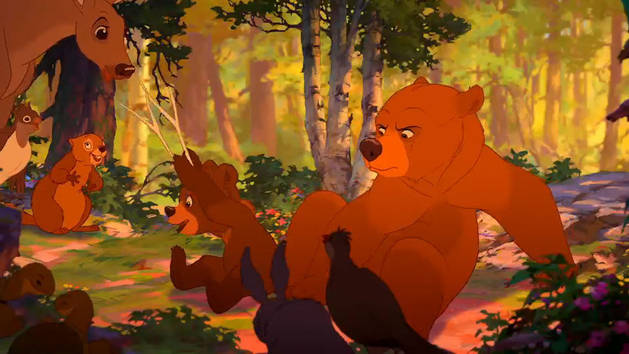
Brother Bear (2003)

image_7ec6d4ae

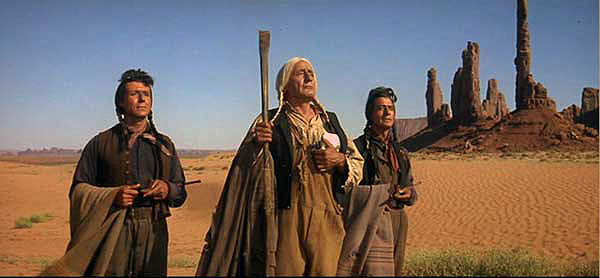
This is the Disney movie where you know ahead of time someone turns into a bear. It’s Native American themed which always appeals to me, and when it was out my brother really wanted to see, but it slipped through the cracks for years. Glad I finally got to see it and the better than expected straight-to-video sequel.

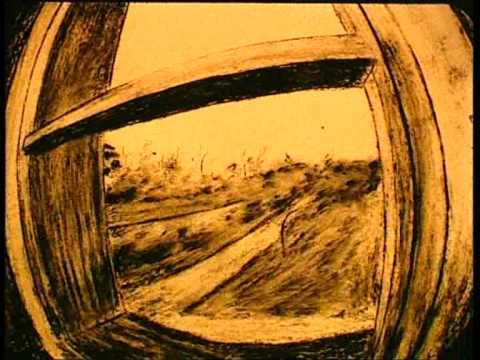
The Hand (1965)

I happened upon this film by chance. I had yet to see a film by Jiří Trnka. Having seen many of Švankmajer’s works I always wanted to. The clay-animation herein is quite excellent and the subject matter appropriately surreal. Enjoy!

http://www.youtube.com/watch?v=cS4Th36zN_g

Rubber Tires (1927)

The way in which this one is a discovery is that I finally found it. I knew that Rubber Tires existed, long before I finally caught it and read Junior Coghlan’s autobiography. This photo has been around a bit teasing its existence.

Rubber Tires

I thought it may have been lost. Then I saw it. Not as mad-capped as I would’ve liked but funny nonetheless.

https://www.youtube.com/watch?v=fsPYcVUbnis

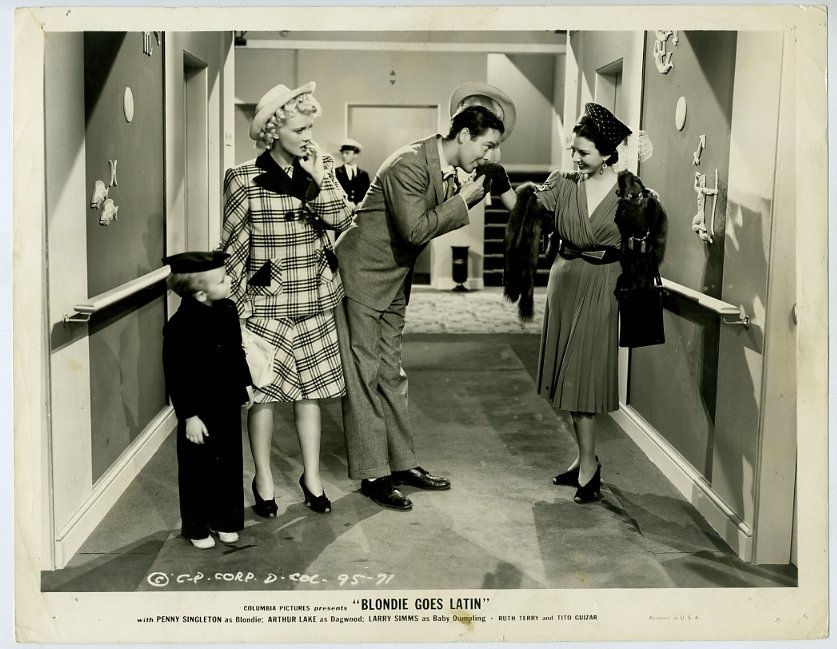
Blondie Goes Latin (1941)

m57933

Thia is a sort of representative pick. Here is how I introduced the Blondie films when I first posted a few of them on my Free Movie Friday post:

Firstly, anyone lamenting that sequels are “ruining movies” today, this is one of the easiest examples to cite proving that everything old is new again, meaning sequels are not a modern scourge. There were about 25 of these films released over a thirteen year period. Also worth noting is that long before the Harry Potter films Larry Simms grew up on film – at least in real life if not so much as Baby Dumpling.

I finally started watching a box set of these short, easy-viewing comedies this year. They are in the public domain, readily available and usually quite enjoyable even if the formula has few variables. The series may bolster this section for quite some time as the completist in me does want to get through all of them.

Of particular interest in this one is that it seems to play right into the Good Neighbor Policy.

Where the Red Fern Grows (2003)

Where the Red Fern Grows (2003, Disney)

This film was noteworthy especially for the casting of a Native American in the lead role. The character is only a few times referred to as having any native blood, this is unique as it had not happened yet. Some of my thoughts on why it’s significant below:

The reason that is, is true inclusion and universality means casting actors from all over, as rounded characters and in mixed films. Having all films be a melting pot is utopian, and I get arguments against films for targeted audience, but for the time being they are sadly a necessity. Roles in general for African Americans, Asians, Latinos, women, Native Americans, little people and other groups are limited. Roles for the aforementioned groups in a dimensional piece they play a part of are more limited still. Roles for these groups are usually reserved, in the US, for race-specific films like civil rights tales.

Therefore, when I was under the impression that Ashton was just in the film I was intrigued. However, that only lasted so long as a fractional Cherokee heritage of his mother was referenced. So it does not meet the Love Actually standard, but one thing it did is fully embrace Billy’s heritage. Another thing it does is cast an actor of Native American lineage in a film not ostensibly about his lineage as The Education of Little Tree was.

Flipper (1963)

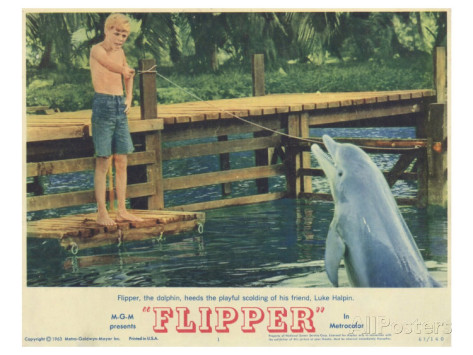
Flipper (1963, MGM)

In one regard it acts as the origin of how Sandy and Flipper meet, how Flipper becomes his de facto despite the fact in most regards Flipper is not really held captive. In a rather forward-thinking way he’s only really penned when injured and a short while after that. Beyond that her stays fairly free-roaming and seems to seek human companionship almost more than they seek him.

Santa Claus (1898)

The oldest Santa Claus movie can’t be that bad, can it? It’s short and sweet.


The Tall Blond Man with One Black Shoe (1972)

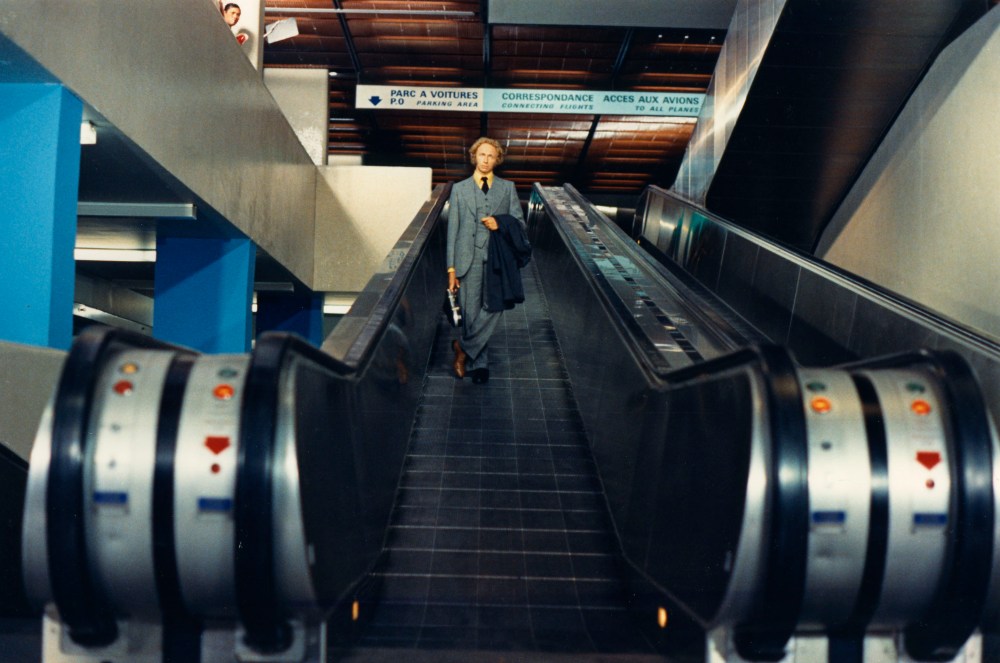
The Tall Blond Man with One Black Shoe (1972, Film Movement Classics)

The film works sight gags in a fashion that is eternally accessible and hilarious, and does indeed make gorgeous use of visual storytelling from Parisian backdrops, to instrument-adorned apartment walls, ornate opera houses and spy offices.

Add to that the catchy, cheeky score by Vladimir Cosma, the physical virtuosity of Pierre Richard, and the clockwork precision of the script crafted by Yves Robert and Francis Veber and you have an unqualified comedic success.

That’s a wrap!

Favorite Film Discoveries of 2014: Part Four (The 2000s)

This is the same idea as “Favorite Older Films First Viewed in” which I did since 2011. The idea was one I first saw on Rupert Pupkin Speaks. I have usually done the list in parts. This time I will find ways to group the films.

My first installment can be found here. The second installment can be found here, and part three here. In this installment I will focus on a segment of films I do not discount from a list like this: Post-2000 releases. Since I have an annual award anything else is usually eligible, I do usually try to keep them a bit older, but 2014 was rather different in a few regards.


Miracle in Bern (2003)

Miracle in Bern (2003, Universal)

One thing that was a bit of predestination it would seem is that prior to the 2014 World Cup I watched two German films that were football (soccer) themed. The first being a story surrounding West Germany’s unlikely win in 1954 that focuses on the scorer of the eventual clinching goal in the final against Hungary and the young boy who idolizes him and is like a good luck charm. On a footballing note one interesting factoid is that the club the boy is a fanatic of, and the goalscorer Helmut Rahn played for; Rott Weiss-Essen has since fallen by the wayside in the tiers of the German Bundesliga.

It’s a film that works a number of plots very well and has very realistic, and time-appropriate football action. It’s only available on region 2 disc but it well worth watching if you can, especially for fans of the sport.


The Wild Soccer Bunch 4 (2007)

The Wild Soccer Bunch 4 (2007, Ratpack)

In Joachim Masannek’s film adaptations of his football-themed books it seems each installment is odder than the last. While no title in this series has the balance, cast or layers that his most recent title V8 does, this film is enjoyable in its own right and likely the oddest of the lot that stands five films deep, and threatens to grow.

This one is only available on region 2 as an import and is recommended for fans of children’s film, football and the weird.

Real Injun (2009)

Reel Injun (2009, Kino Lorber)

In what was an all-too-rare experiment I watched this film on the Kino Lorber app I watched this film free, with a 60-90 second commercial break per 10 minutes. It usually only costs a dollar to by pass the commercials.

This is a fascinating, eye-opening doc that discusses the changing face of the Native Americans on film. It delves into how stereotypes developed and how they either influenced, played off or ran counter to societal perceptions through the ages. With any group examining the portrayal they have had on film is crucial and this one stands with The Celluloid Closet and Bamboozled as powerful statements on depictions of minority groups in American cinema.

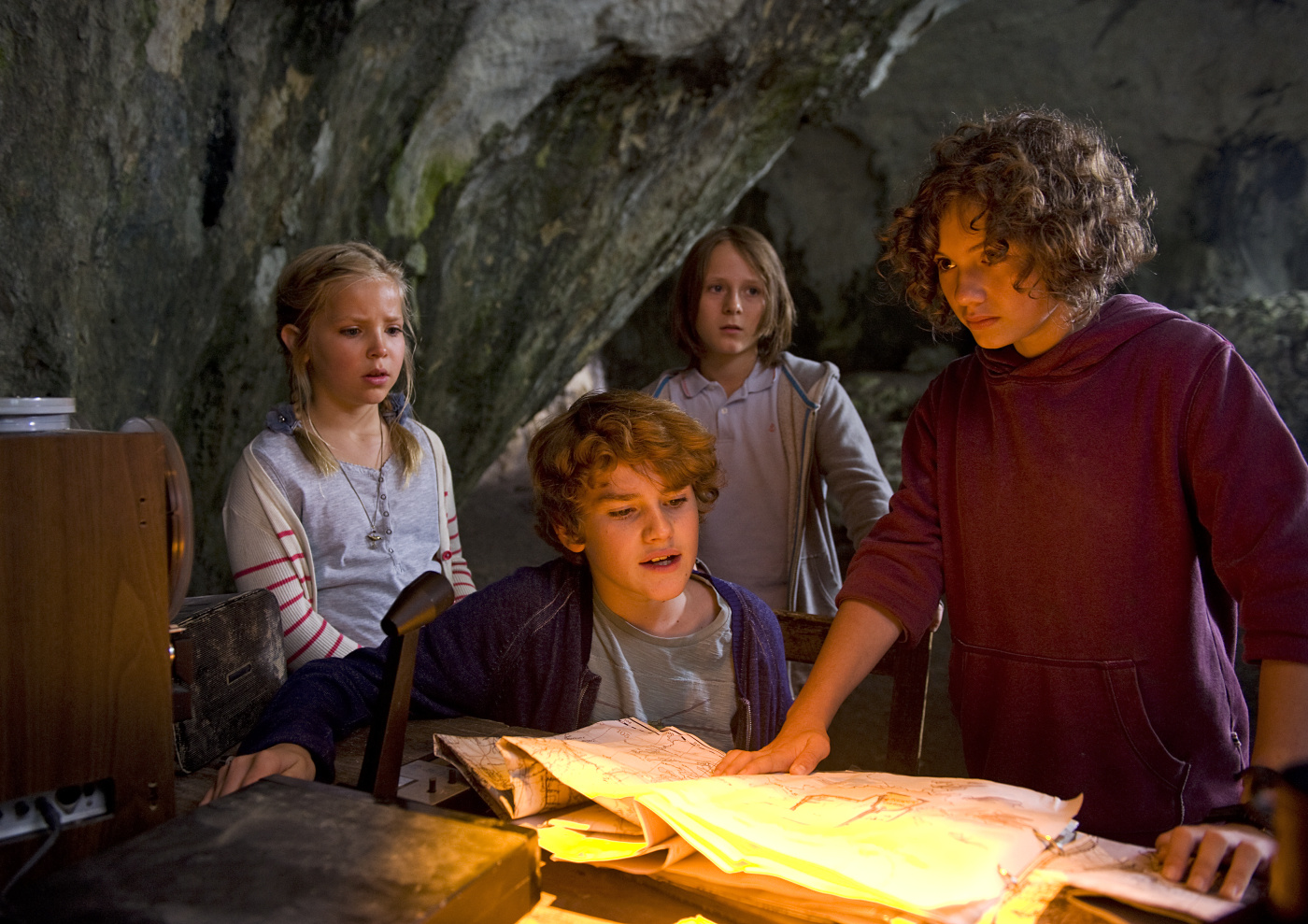
The Famous Five (2012)

The Famous Five (2012, Beta Cinema)

When you dig around through international releases long enough it becomes quite interesting to discover what films, books, shows, music, etc. register abroad that may not have quite such an impact in your home culture. Such is the case of The Famous Five series.

Prior to discovering this current incarnation of these cinematic adaptations I was unfamiliar with the series and author Enid Blyton both. As it turns out both this series and her works continue to be very popular both in her abroad and in her native England. Though she died in 1968 she was one of the top 10 selling authors in the UK during the first 10 years of the 21st century. Her film adaptations to date have been all overseas. The first two were serials in 1957 and 1964 in the UK. Then in 1969 and 1970 there were two adaptations in Denmark. The current German series is the most prolific and most profitable at the box office to date.

I went into part three blind to all these facts, as well as to the cinematic backstory that accompanied these films. Therefore, I backtracked to be better able to appraise these films on their own merits, including how this particular film worked in conjunction with the other two.

The Famous Five feature a familiar formula of smart kids who get embroiled in mysterious capers by chance or insistence and save the day. The fact that there are two boys, two girls and an extra-smart dog make the best of The Hardy Boys, Nancy Drew and Rin Tin Tin rolled into one.

The original in the new series is available on Blu-Ray in Germany with English subtitles and does offer the kinds of smart kid-based adventure film that’s too rare here.

This concludes the 2014 list. See you next year!

Favorite Film Discoveries of 2014: Part Three (Assorted Features)

This is the same idea as “Favorite Older Films First Viewed in” which I did since 2011. The idea was one I first saw on Rupert Pupkin Speaks. I have usually done the list in parts. This time I will find ways to group the films.

My first installment can be found here. The second installment can be found here. In this installment I will focus on a mixed bag of films thematically and based on release date.

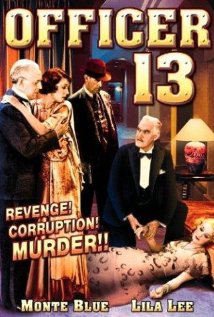
Officer 13 (1932)

Officer 13 (1934)

In this year’s Poverty Row April post I said I’d dedicate Sundays to sharing features. However, I missed last week so I will get two up this weekend.

When I found out that this was available from Alpha Home Video I did not find it on the Internet Archive. It has surfaced since I saw it. This film features early performances by both Mickey Rooney and Jackie Searl.

The film deals with a cop who seeks vigilante justice when the system won’t find solutions. It’s a surprisingly effective title.

To view the film go here.

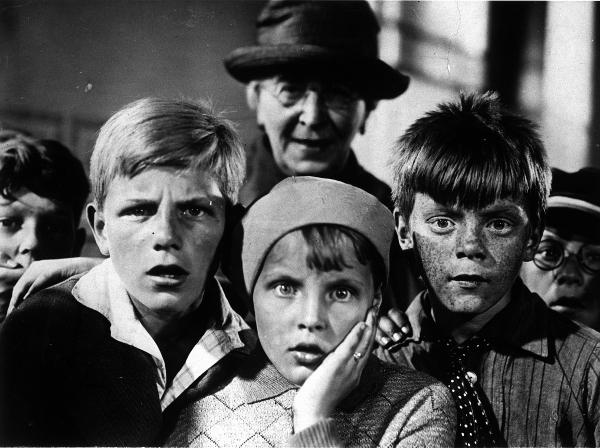
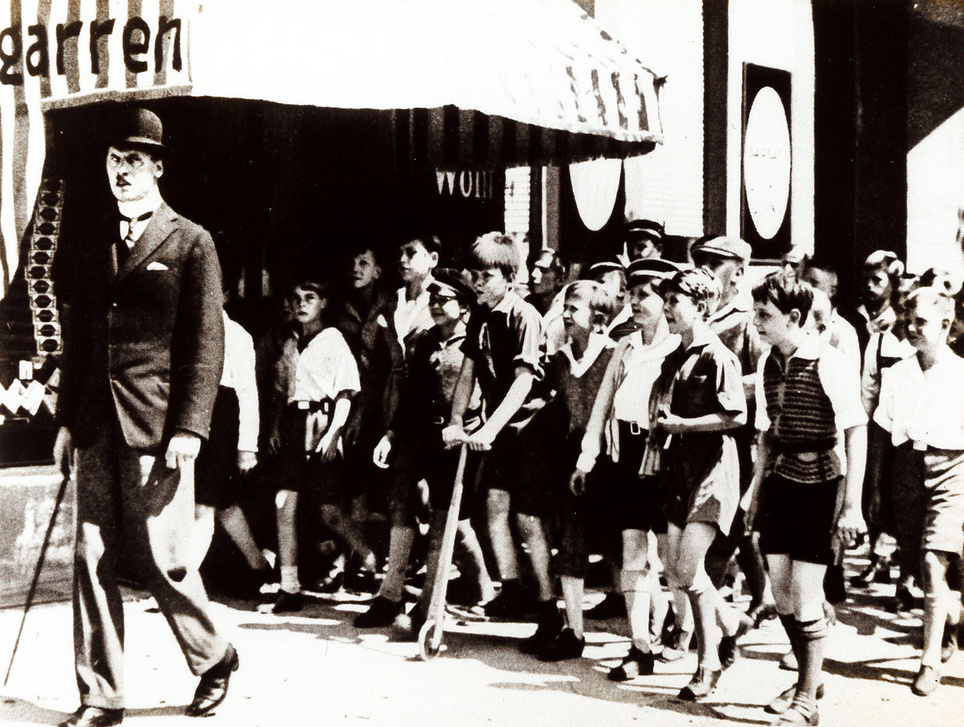
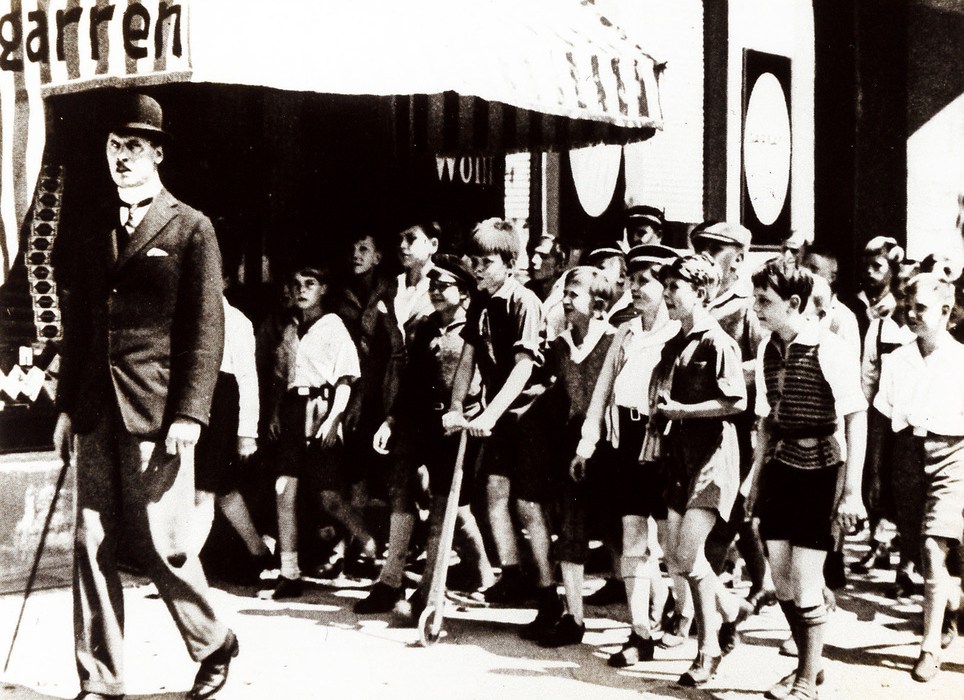
Emil and the Detectives (1931)

Emil and the Detectives (1931, Ufa)

A later remake of this story appeared on my list a few years back. I saw this and the 1935 version for the Billy Wilder blogathon. Here was my take on it it from there:

Emil and the Detectives (1931)

Emil und die Detektive (1931, Ufa)

My first exposure to this tale in anyway was the 1964 Walt Disney-produced version. Interestingly enough it ends up being rather a hybrid of the first two adaptations of the novel onto film. The actors are American but the story is German-set. As one would expect Disney is still Disney but much of the charm of the story still exists and it was one of my favorite film discoveries of 2012.

This tale is German and translated, but with a solid cast, very well-composed cinematography and an engaging storyline it works fairly well.

Clearly the standout the first time around was the visual-flair. The kids’ world with adults on the periphery is there, it’s adventurous and fun but a safe world. What Wilder and the team brought to the 1931 tale, that is likely also part of the fabric of the book, is that there is a naturalism to it, which when dealing with a crime and solving it means there is an inherent level of danger. With Disney some of the edge is taken off and its clubhouse-like. What is delightful to see the seeming opposites co-exist naturally.

What was written by the New York Herald seems well warranted and rings true to this day:

“The great simplicity in design and execution, the perfect naturalness and the move away from that particular sentimental hypocrisy and affectation, which often viewed as an inevitable prerequisite of cinematic oeuvre.”

Emil and the Detectives (1931, Ufa)

While sticking fairly close to the source Wilder taps into and accentuates some of the universal truths of this tale and storytelling for young people that this narrative highlights. First, there is the introduction of the audience to “another world.” Though not a fantasy world in any sense, but rather just the big city we are still viewing somewhere fairly unknown to the protagonist and perhaps to us as well. The creation and depiction of the outsider is perfectly played.

Something that Michael Rosen underscored that I had never quite put my finger on is the following:

“I’ve always felt that children’s books that last the best are those which engender a sense of yearning in the child: you want to be there, you want to be them, you want to be as clever or as lucky as them. For me Emil and the Detectives has this in bucketloads.”

I would go so far as to extend that notion to any great children’s literature read at any age. For example, I first read Harry Potter in my senior year of High School, if I’m not mistaken, and as I made my way through that series I had that sense of yearning also.

Now something else Disney did was to add a more fantastical feel to the tale. Whereas what was shocking and controversial about the book, and handled so well by the original film versions, was the naturalness of the setting in which these children find themselves. It isn’t a fantasy or a far off world, but rather these kids, much like those that lived at that time, much like you or I in real city with a very real problem. Perhaps it is that singular notion that has kept the story alive even through a period where the Nazis tried to rewrite German culture and Europe and the world wasn’t as willing to dabble in anything Teutonic.

Emil and the Detectives (1929)

The trajectory of the project is one that will look familiar. It’s not that unlike a hot literary project today. It was published in 1929 was an almost instant hit. In 1930 a version hit the German stage, the adaptation by Kästner himself. The film rights were then picked up by Ufa. Although, a relative unknown at this point Wilder ended up working on versions of the film with Kästner and others. The success of People on Sunday had allowed him to become a professional screenwriter that the studio would tap for such an important project as this one.

One thing that the 1931 Emil and the Detectives excels at is visual storytelling. It is one of the earliest and most important German sound films but it is not as stagebound as many early US talkies are. There are montages, moving shots around Berlin and a wondrous impressionistic dream sequence which is breathtaking. Suspense is built by watching, following or hiding and not dependent on dialogue exchanges for too much.

Film Quarterly in 1933 astutely stated that:

“It is remarkable that the cinema all but ignores the very considerable audience of children that supports it; and it is tragic that the few films specially made for children lead one to wish that they had been ignored.”

This a lead-in to praise for this film, and in many ways, that can still be true today what’s key is that that the filmic touches are left to the apt maneuvering of the crew behind the scenes and the kids for lack of a better term just have to be themselves and seem to be selected specifically to be able to “be” their part rather than “play” it.

Emil and the Detectives (1931, Ufa)

As the date on the Film Quarterly review indicates the original film version had quite a legacy. While sadly many of the young actors who took part in the film would end up dying on the front in World War II it did launch an acting career for three of its cast members Hans Richter, Martin Rickelt (then Baumann) and Inge Landgut.

Such was its continued success that it was showed on Christmas in 1937 as Wilder was in the US and Kästner was forbidden to write.

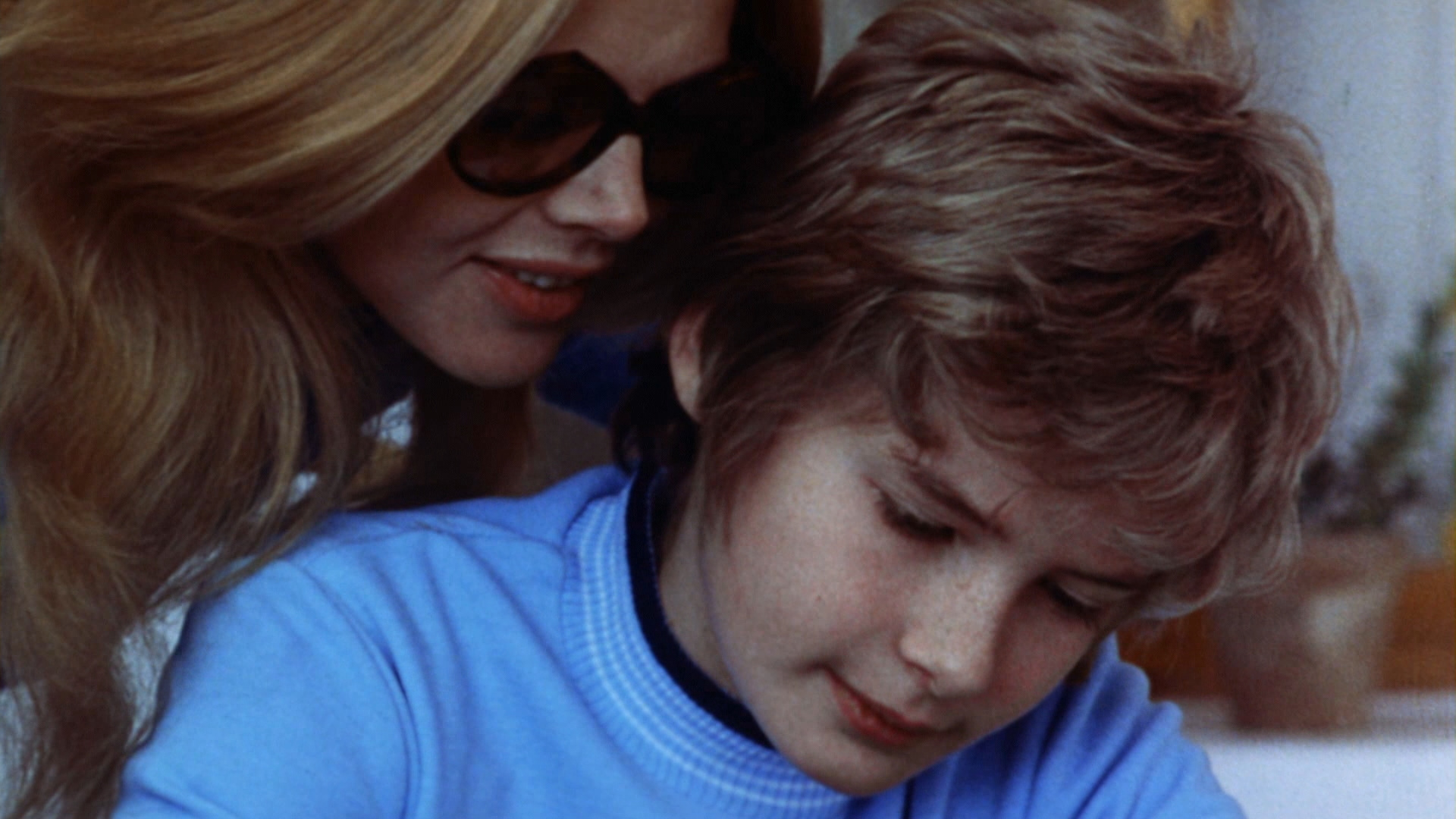
What the Peeper Saw (1972)

What the Peeper Saw (1971, VCI Entertainment)

This is one I had known of for quite some time but was unavailable on video until this last year. Thanks to VCI Entertainment’s limited run it enjoys a new day in the sun. Just knowing that Brit Eklund stars in it (star of some of the better-known gialli), and Mark Lester playing as against his Oliver! persona as possible (as seemed to be the idea behind all his choices of roles after it) are intriguing enough. Add to it the diabolical mindgames between stepmother and stepson, and the twists this tale takes and it’s highly entertaining and still rather shocking. Quite worth looking into if you’re intrigued and not dissuaded by a dysfunctional family feud.

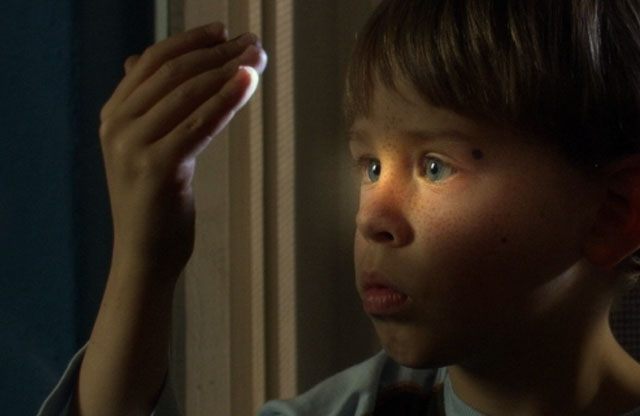
Children of the Moon (a.k.a Mondscheinkinder) (2006)

Mondscheinkinder (2006, Piffl Medien)

This is a visually imaginative, creative film about a child isolated by a rare photosensitive condition, his dreams and his best friend who acts as sister and protector to him. It features tremendous voice-over, creative use of animation. It’s touching, entertaining and well acted.

This series will conclude on Monday.

Favorite Film Discoveries of 2014: Part One (Shorts)

This is the same idea as “Favorite Older Films First Viewed in” which I did since 2011. The idea was one I first saw on Rupert Pupkin Speaks. I have usually done the list in parts. This time I will find ways to group the films. I noticed I had four short films that are available to view online so I figured I’d start with them.

Les Oeufs de Pâques (1907)

I only recently discovered the works of Segundo de Chomon. He seems a worthy Spanish counterpart to Georges Méliès. This is a presentational, magic style of silent film implementing many invisible cuts, but it is very enjoyable.

His Wooden Wedding (1925)

Many thanks to Fritzi over at Movies, Silently for suggesting this film when I wanted a wedding-themed silent. I was unfamiliar with Charley Case before viewing this film, and look forward to seeing more. It’s quite funny. Enjoy!

Mickey’s Race (1933)

This is a selection that is fitting not only in light of Mickey Rooney‘s recent passing, but it also plays into my Poverty Row April theme.

This is purportedly the last of the series of Mickey McGuire shorts (back when Rooney was credited as such) that he starred in while not signed with a major studio. The story is simple escapist fare and fairly humorous. It’s more noteworthy because I had not yet seen one of these shorts. Enjoy!

Please follow the link to view the film:

https://archive.org/embed/MickeysRace1933ShortFilm

The Fly (1981)

I when watching this film preferred to take a textual approach rather than a subtextual one. Regardless, it’s one of the most impressive pieces of first-“person” perspectives I’ve seen. For more of a read and more of a background on this film check the post on The Dissolve that drew this piece to my attention.

Best Films of 2014: 10-1

This series began with installmens 25-21, 20-16, and 15-11, and concludes here.

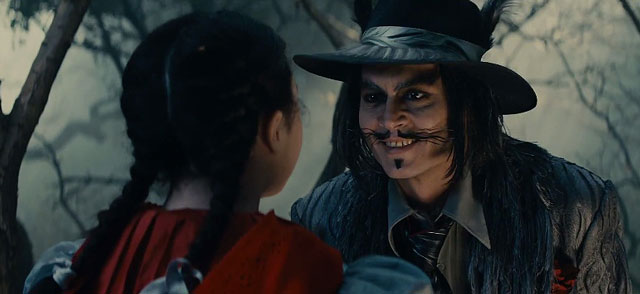
10. Into the Woods

Into the Woods (2014, Disney)

Two years following Les Miserables it was actually hard to imagine watching a traditionally produced musical (Vocals recorded in studio and played back on set for syncing) being anywhere near as effective as the live audio-recording in the aforementioned film. While there are inherent moments where suspension of disbelief must be willful, it’s no different than any other musical once you know “how the sausage is made.” However, when you factor in the fact that I truly enjoy this music, the humorous take on the many fairy tales, and the fact that the cast really knocks it out of the park:

When judging the merits of a cast as a whole it can get complicated. All the consideration of course is about how the cast acquits itself within the work in question. The two biggest factors are usually the depth of the cast and how high the bar is set that the players are clearing. However, it must be acknowledged that when you think you know an actor and you see them surprise you that’s a great joy. That happens on a few occasions in this film. One of those instances is Chris Pine. Yes, having just seen Horrible Bosses 2 I knew he could be funny but his seemingly Shatner-inspired take on Prince Charming along with a good voice make his turn a joy. Meryl Streep is seemingly always in search of the next thing to show that she can also do and knocking one of the showstopping numbers out of the park is quite a boon. The portrayal of the Wolf in Into the Woods can be one of the most problematic, but Johnny Depp is in very good form here. Daniel Huttlestone follows through on one-upping his breakout in Les Mis. Tracey Ullman brings her usual persona and vocal chops the table. Christine Baranski is a very welcome addition to the cast. Lilla Crawford breaks out and is the stage-to-screen transition in this cast. James Corden may get the breakout performer from this cast showing great comic timing, and affable persona and vocals. Emily Blunt now adds leading lady in a musical to the list of things she can handle easily along with action star in the same year. All the cast get kudos for helping to make a traditionally produced (music recorded in studio and played back on set) musical watchable anew.

The editing, in fact, the entire production team depart-by-department excels. The only things that hold it back is that the edit could’ve been the slightest bit tighter in the home stretch, but it’s a film I already revisited and would gladly do so again soon.

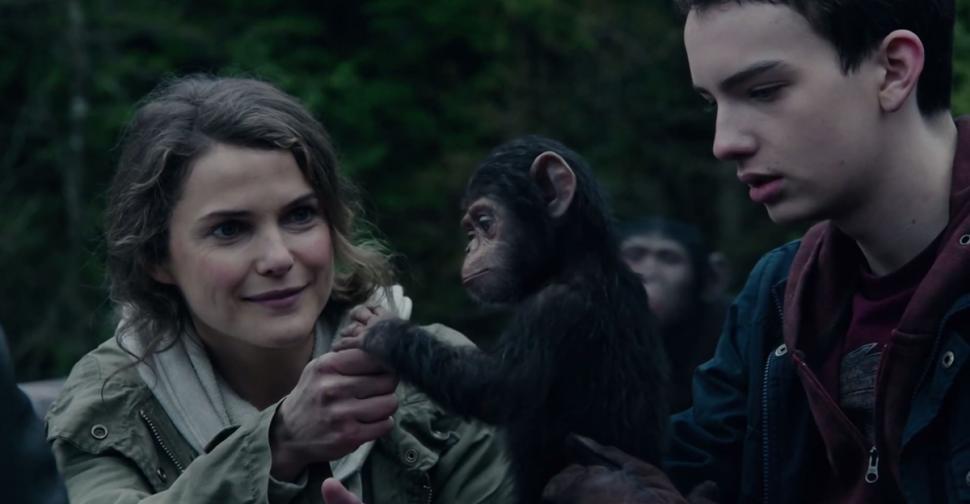
9. Dawn of the of the Planet of the Apes

Dawn of the Planet of the Apes (2014, 20th Century Fox)

Chimpanzees? How many times can chimpanzees, and other apes, really work? At this point it’s hard to say but what Matt Reeves did here was highly improbable. He not only made this one a dramatic, tense, quasi-tragic tale with few missteps he also made images ridiculous out of context work so effectively.

Not only did he do that but he managed a quantum of salvation on the first prequel without retconning the newly begun series, which is highly commendable. It’s impossible to say what the future of this series hold, but this is one of the too rare prequels that proves there can be more than a paint-by-numbers approach to these stories and something vital, important and current can come out of them.

8. Captain America: The Winter Soldier

Captain America: The Winter Soldier (2014, Marvel)

I may have been one of the few who expected even more than I got out of Guardians of the Galaxy having prepared for that release by starting on the Marvel series when it began. While most were blindsided by all the fun they’d have (and it is) and how cute Baby Groot is (and he is) what may be overlooked is the game-changing effect this installment has on the Marvel Cinematic Universe, one which also crossed over to the small screen and Agents of S.H.I.E.L.D.

To say too much more would be to give it away, but I was quite floored with this one and got here and impact similar to those who lauded the first Cap I feel.

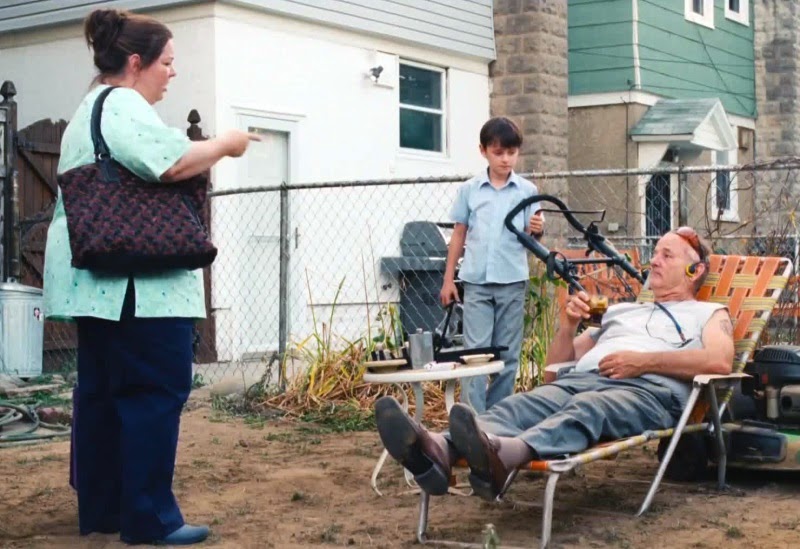
7. St. Vincent

St. Vincent (2014, The Weinstein Company)

As will be mentioned below the comedic and dramatic are balanced in this film, and the balancing act is not always an easy one in order to get equal effectiveness from both aspects. In actuality I feel St. Vincent works better with the more serious end of things. While the refreshing aspects of a New Age parochial school philosophy, some redefinition of sainthood do stand out, it is the common tropes where the careful handling of subjects by this film is best exemplified.

It also has a demanding conclusion for its young protagonist Jaeden Lieberher which he delivers on in spades. It may promise the classic manic depressive response (I laughed, I cried) but for me in this case it was true, and thoroughly enjoyable.

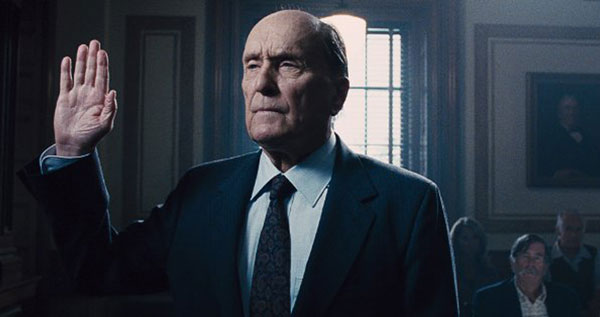
6. The Judge

The Judge (2014, Warner Bros.)

It may have looked at worse like award-baiting, or a star-tandem film, but It’s more than just Robert Duvall:

What takes Robert Duvall over the top is not just the exacting version of a crusty persona, not just the battle-weary fatigue of a life that’s fought back hard, but also the quiet truths that moments elicit from him. There is a universal individuality to character that he drives home, a kindness that exudes from beneath his gruffness and a sensitivity that circumstances and age bring forth from him.

And more than just Robert Downey, Jr.:

Robert Downey, Jr. is probably equally as capable as a serious and comedic actor. His sensitive portrayal of an estranged, jaded lawyer earns him a nomination anew.

Even I, likely in the interest of time and economy of words, underplayed his performance. It’s refreshing to see him playing a character who is a flawed, hurt human being without supreme wealth or superhero tools; there’s scarecely a false or wrong moment in the entire film. It’s a film good enough to go from the seeming ridiculousness of him urinating on opposing counsel at the beginning and then have the balance to later strike home with real emotional stakes to walk the tightrope of anticipated mourning and laughing off the inherent ridiculousness of certain white lies parents have to tell their kids as evidenced when Hank washes his father after he’s soiled himself and told his daughter what she needed to hear to not see it.

There are many moments not textbook that work on a number of notes in this film, and its that nebulous area of navigation that pulls it this high up the list.

5. Calvary

Calvary (2014, Fox Searchlight)

Transitioning from Saint Vincent where Brother Geraghty says that Catholicism is the best religion because it “Has the most rules,” to one about a Catholic priest, a good one facing a crisis on several fronts. In confessional his life is threatened in a week’s time. His questioning whether to name the parishioner (Doing so would violate an oath of his calling) and trying to dissuade him, forces him to reflect and question many things about life and faith and the state of the world.

It’s one of two films on this list that are about religion’s role in the modern world, unafraid to tell the stories that dabble in doubt, that do not pander, and lack preaching to a choir but rather represent the dilemmas facing the characters effectively and sensitively. Intelligent discourse on religious topics in this day and age are welcome.

Brendan Gleeson’s best actor turn can be attributed to:

..The seriocomic balance being a factor as well as how much of a load a lead had to factor is ultimately what leads to Brendan Gleeson to the top of the heap. In a tale of a good priest in a world that openly questions the role of religion in the secular lives of parishioners the easy temptation is to write and portray that character simplistically; this priest is anything but the same goes for Gleeson’s nuanced detailed performance.

It’s a film that allegorically reinterprets the passion and plays it in a modern context, but offers heart as well as questions, thought, critiques, humor, along with an example of piety.

4. Stations of the Cross

Stations of the Cross (2014, Beta Cinema)

When you hear that a film approaching two hours in length is comprised of 14 long-takes it can be hard to imagine sitting and watching it. However, when you take into account the film is called Stations of the Cross (Of which there are 14) then things start to coalesce a bit more.

Earlier this year I wrote a post where I chronicled how in one way or another Hollywood was fighting a losing battle in its attempt to provide faith-based entertainment. Whether it be the fault of the film, or the faithful there has usually been a disconnect. While on the indie circuit films like Calvary have proven that just because a film deals ostensibly with ecclesiastical concerns doesn’t mean it needs to pander or be bereft of intelligence as far too many faith-based films feel they need to be. In following a pattern where I have factored in the US distribution status of a film into choosing the recipient of this prize Stations of the Cross takes the cake here. The transparency with which this film transcribes the fourteen stations of the cross make it accessible and the debate or interpretation and non-judgmental character study make it a film that can be relatable to an audience whether they agree with the application of Catholicism practiced in this film or not.

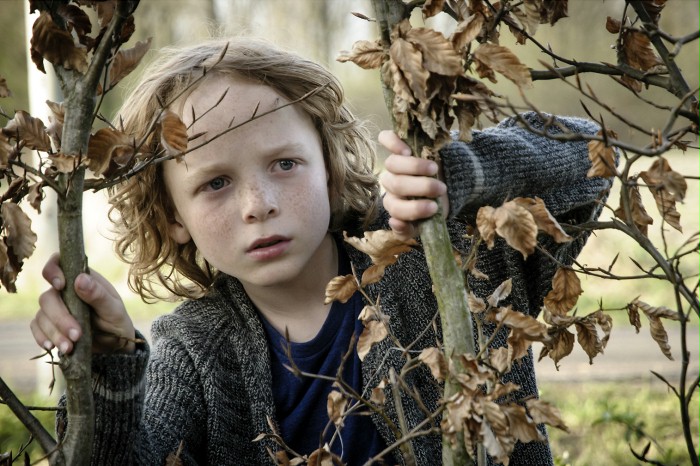
3. Finn

Finn (2013, Attraction Distribution)

As I’ve done these lists for a few years the numbers on the list have started to take on a significance aside from their numeral. The number three has been a line of demarcation not just of the truly most exceptional of the year, but usually the spot where the most surprisingly great film of the year pops up:

This is a film populated by deceptively hard characters to play: Finn, has to be simultaneously precocious in that he seeks greater meanings in life and his activities, but naive enough to believe in the improbable and even impossible. The deft scripting assists in that regard but van der Hoeven is often the one, as the film’s namesake, carrying the scenes, who needs to connect with the audience and does. Shuurmans has to be simultaneously quiet definitively hurt and guarded. He has to be brusque with his son without ever alienating the audience and he succeeds in spades because as bad as the arguments get it’s always clear he is torn, has his reasons, but believes he’s doing right by his son.

The film flows with such ease that it washes over you like a dream, which is fitting. This is a factor that should also make this film one that’s conducive to revisiting. Considering that this film is repped by Attraction Distribution, who have had a good track record lately of getting European produced family fare seen in both Canada and the US, prospects of the audience for this film widening are quite good. This is most definitely a film worth finding. This kind of beauteous, lyrical family drama has nearly been the exclusive purview of Benelux in recent years. It is a moving, sincere film ought to be discovered, and one of the best of the year to date.

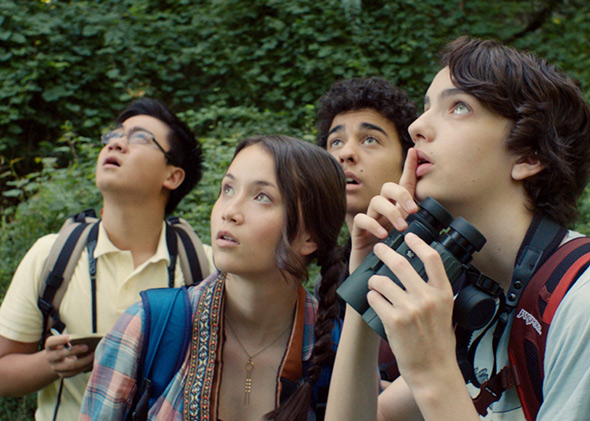
2. A Birder’s Guide to Everything

A Birder's Guide to Everything (2014, Screen Media Films)

One of the reasons that writing a list like this still serves a purpose even with a full awards slate are films like A Birder’s Guide to Everything this film, and the next one down, are full experiences, that are very strong across the board but may not have that standout big enough that earns a “prize” or a “sweep.” I feel I may have even parsed words too much in citing Smit-McPhee’s performance, the heart of the film, in the Best Performance by a Young Actor in a Leading Role write-up:

This all is not meant to detract from another sparkling turn by Kodi Smit-McPhee that made A Birder’s Guide to Everything one of the best films of the year,

Those sparse compliments extend to the cast as well:

the cast of Birder’s bring a lot of honesty, humor and heartfelt emotion to their roles

Those things (humor, honesty and heart) matter a great deal, especially the middle one because there doesn’t seem to be an abundance of that in North American films. There is a bit more in indies but not too much. This film delivers those qualities in spades, is wholly engaging and as a side effect brings a nerdy hobby into a cooler light.

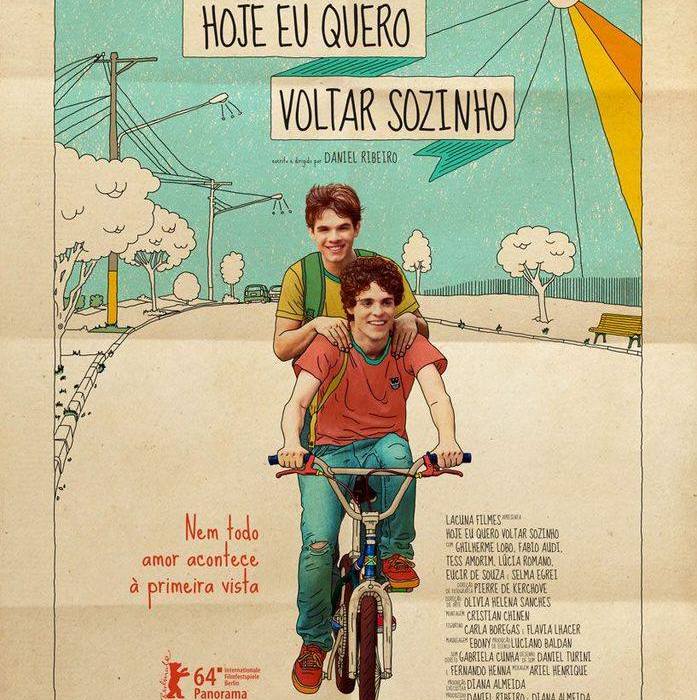
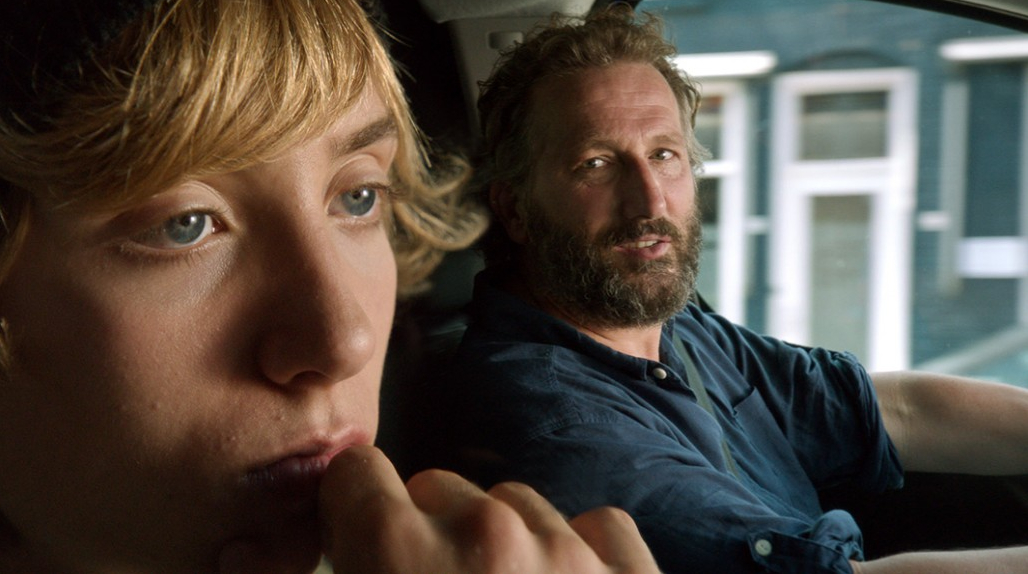
1. The Way He Looks

The Way He Looks (2014, Strand Releasing)

By this point I’ve already written about this film quite a bit so it becomes a bit redundant to try and add too much more than I already said in the review:

One of the most fascinating angles this film takes on is naturally the addition of an omnipresent burden or condition that makes the awakening of sexuality, and the self-realization of sexual identity, a bit more difficult. It’s also a quietly made statement about the fact that one’s sexual orientation is merely a part of a person’s identity. When examining the narrative progression in retrospect it’s clear some of his dissatisfaction and desire to find himself, perhaps abroad, has its roots in this as-of-yet unrealized facet of his personality.

And in the BAM Awards post:

When all is said and done the statement The Way He Looks is never overt, but always clear. There are any number of ways you can extrude Leonardo’s blindness into a statement about love, but the film allows you to do that yourself and never says so in so many words. The delicacy of the handling of the story, the warmth it exudes throughout and the investment made in the characters that has you understanding their plight quite well is what makes the film’s conclusion so satisfactory and so well earned.
And to close, it’s a tremendous stride for Brazilian cinema who has submitted some controversial choices for the Oscars. This seems to follow an upward trend and also follows up on the work that North Sea Texas did a few years ago for gay cinema.

Best Films of 2014: 15-11

This list began in two installments 25-21 and 20-16. It will conclude in one more part.

15. Oculus

Oculus (2013, Relativity Media)

I have often mentioned how merely starting a dialogue after having viewed a film is a boon in and of itself. Aside from that it is also my belief that horror cannot be safe, and in that vein this film is one that does tweak with things inasmuch as its not interested in motivating the malevolent entity at the center of the film. Furthermore, it is a film that plays in two time periods and features four tremendous performances (Brenton Thwaites, Karen Gillan, Annalise Basso and Garrett Ryan). It also offers its protagonists no safety whatsoever. You may not like it as much as I do, but it is most definitely looking out for.

14. The Drop

The Drop (2014, Fox Searchlight)

Even if you only know Dennis Lehane (Mystic River and Shutter Island specifically to this example) from the filmic adaptations of his written work you know there’s usually a huge reversal or fortune or what you thought you knew was true in the third act. In many prior instances this fact has lead to a downgrade of the overall quality of the film to varying degrees. Here quite the opposite happens and The Drop grows tremendously. Also, this film features an excellent turn by Noomi Rapace, one two absolutely stellar performances by Tom hardy this past year that earned him a BAM Award nomination, and one of the last films for James Gandolfini.

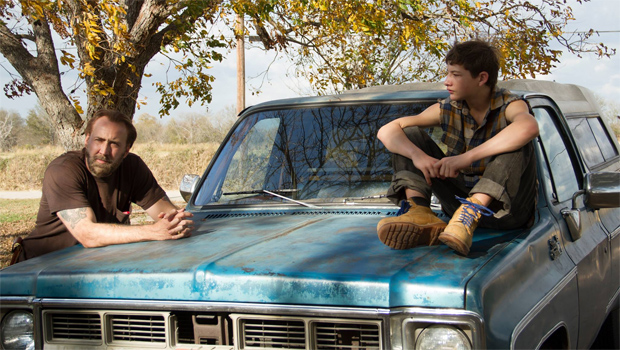
13. Joe

Joe (2013, Roadside Attractions)

“That dog is a asshole!” Perhaps one of the dividing lines between people who need black-and-white characterizations and those who can embrace grays are films like Joe. Joe (Nicolas Cage) likes dogs just fine, he loves his dog, but seeks to deal with one he dislikes with fatal finality. Similarly, he may not be what is commonly thought of as a good man but when he sees wrong he has to rectify it and he has to deal with it in his way whether society or people like it or not. His chance encounter with, employment of, and befriending of Gary (Tye Sheridan) brings another set of challenges to his life. There are bad things that happen in Joe, there is some redemption to be found, and closure too. It’s about some decent people in hard situations and how they respond. Joe is a tense film that is buoyed by accomplished direction and wonderful performances by Cage and Sheridan.
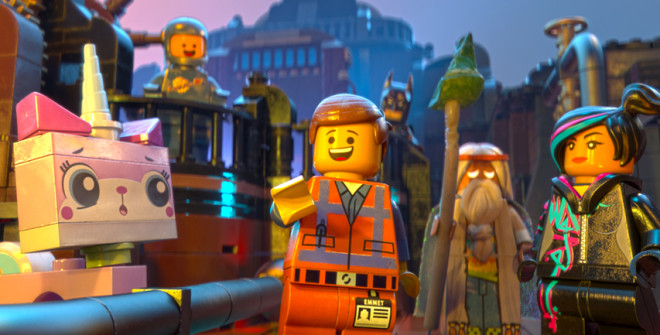
12. The Lego Movie

The Lego Movie (2014, Warner Bros.)

“Everything is awesome!” Or so Emmet and other people in the world of this story like to believe. In seeking out more is where the adventure begins and the commentary sets in. The Lego Movie is insanely meta, creative and funny. It also gets touching with its reveal. The song will get stuck in your head, the score will have you tapping your toes and those who ever felt confined by sets will find their liberation here. It was the first revisited film in 2014 and it will likely earn many other revisits by other people.

11. The Strange Color of Your Body’s Tears

The Strange Color of Your Body's Tears (2013, Strand Releasing)

This is a film I didn’t re-watch yet but has lived off-and-on in my mind since I saw it. The initial ambivalence about it overall are fading away. Yes, I was floored by the sound mix, edit, the visuals and oneiric flow, but I think now that I’ve chewed on it enough that it’s the giallo elevation I wished Amer was, and whether or not I get it intellectually is almost secondary to its overall gut-punch impact. It’s a film you should allow to ravish you. I cannot guarantee that it will be as rewarding for the uninitiated as it is for someone who knows Giallo, well but if you stick with it and start to reconstruct the jigsaw you may well find you like it as well.

This list will conclude shortly.

Best Films of 2014: 20-16

This is a continuation of my series on the Best Films of 2014. It began yesterday here and will continue with a post on 15-11.

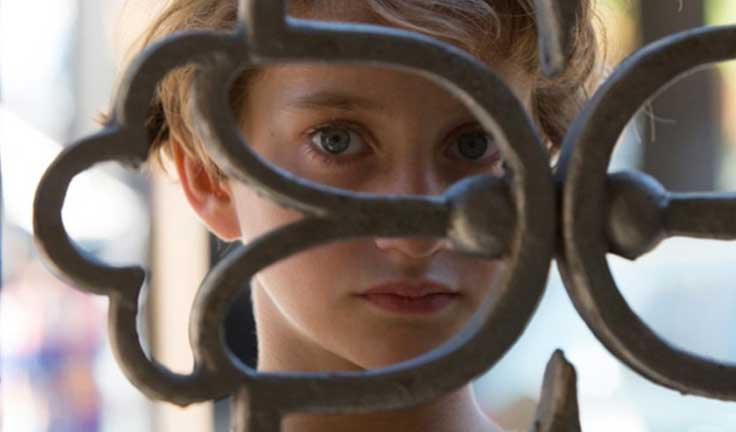
20. Misunderstood

Misunderstood (2014, Orange Films)

Making its North American debut at the New York Film Festival Misunderstood is an independent seriocomic coming of age story that should hopefully land US distribution but so far as I know has yet to. Here were my closing thoughts on the film upon having first viewed it:

Misunderstood is refreshing inasmuch as its a coming-of-age tale that does not focus solely on one rite. It’s a slice of life for Aria’s character with many of the usual concerns: schools, friends, first crushes and the like, as well as some other concerns conveyed in somewhat more unorthodox circumstances such as her relationship with her siblings with the spiritual world and more. It’s a film that wants you to laugh along with it as it’s trying to strike that universal chord that rings true to all regardless of circumstances. Misunderstood is aptly named very ably portraying not only its protagonist’s being misunderstood but also understanding her at a deep, fundamental level and conveying her story clearly.

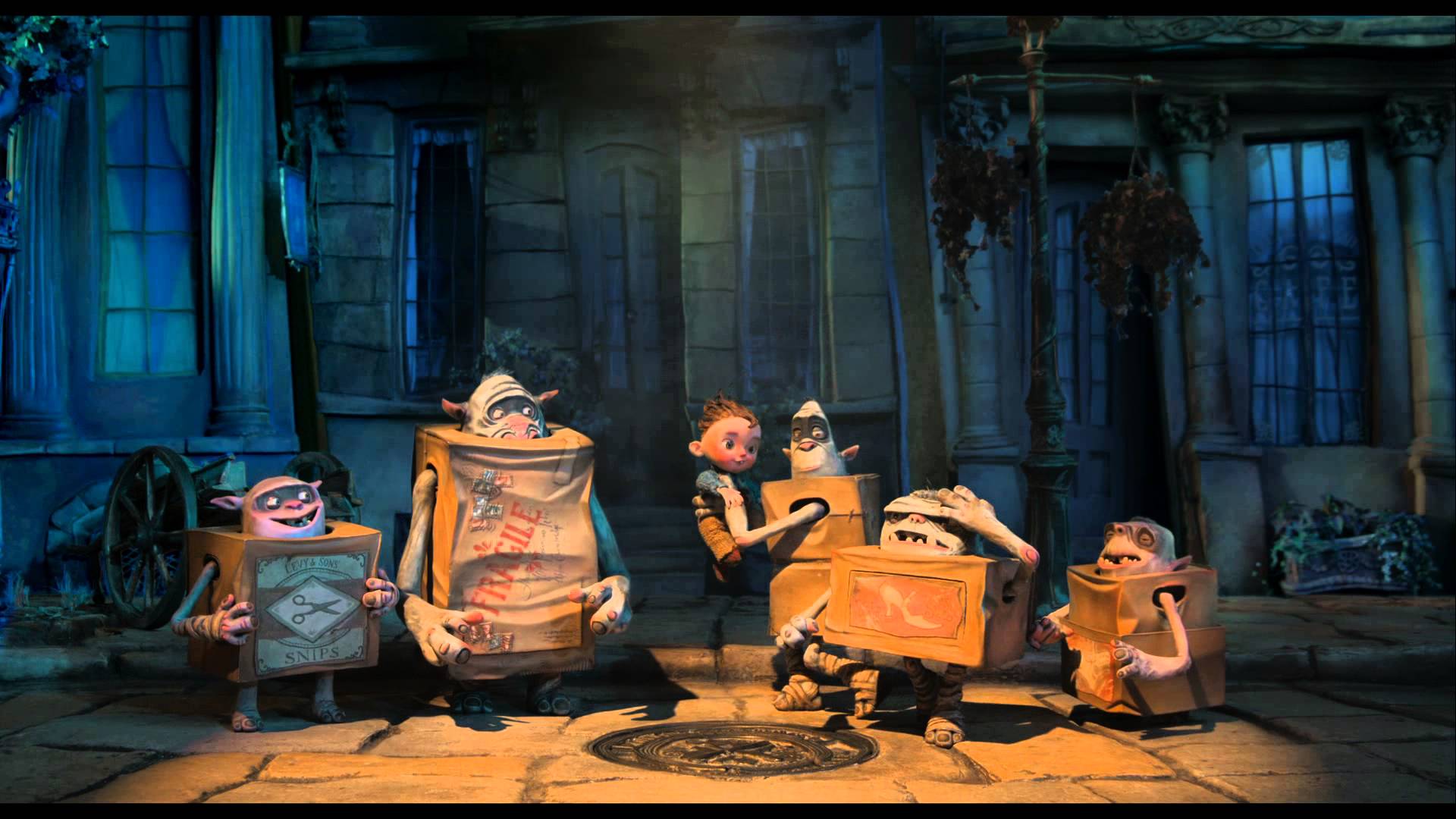
19. The Boxtrolls

Boxtrolls (2014, Laika)

For those who enjoy animation for all audiences and a bit of diversification in technique and producers for the animated medium there is not a better place to turn at current than Laika. Their latest stop-motion venture is idiosyncratic, and is a marvelous example of world-building as well as the ever-increasing virtuosity of their departmental prowess. As the BAM Awards exemplify The Boxtrolls is a film that excels in various facets of production and tells an entertaining and charming story. It’s proof that animation is not just for kids stories and that there are many great players in the animation game at the moment.

18. 20 Lies, 4 Parents and a Little Egg

20 Lies, 4 Parents and a Little Egg (2013, Waterland Film)

A film that handles some complicated ground with excellent acting, heart and humor it made an impression early in the year that stuck through the year as a whole:

20 Lies, 4 Parents and One Little Egg doesn’t tread easy ground. When you’re dealing with a family-based comedy-drama that concerns two sets of same-sex couples the dangers become either insensitivity or faux-edginess. What this film opts for instead is heart and humanity and a brief toe-dip into the complexity of human emotions, and that’s the right path and it’s well-navigated here.

17. The Jewish Cardinal

The Jewish Cardinal (2012, Film Movement)

As was touched upon in an earlier op-ed, and will be again with the BAM Award prizes, dealing with religious matters in film can be a complicated matter when the virtues of entertainment and faith aren’t always synchronized. The biggest hurdle to overcome is perhaps creating effective drama and not giving in to the lowest common denominator:

To preserve the surprise of it, I will avoid describing the detail the peace that Jean-Marie comes to and the conclusion he reaches regarding his identity at is really only discussed at the most pivotal points of the film. However, it is an intriguing way to look at it.
Clearly, as described above, this is a film that’s not afraid to discuss matter of faith, but also take those discussions into some difficult, challenging places. It’s a story wherein it could be tempting dumb it down and mollycoddle but it does not, quite the opposite it respectfully challenges those watching it to think – proving that faith-based films needn’t be neither propaganda or mindless.

16. Edge of Tomorrow

Edge of Tomorrow (2014, Warner Bros.)

Typically some semblance of intelligence is not necessary to make an effective action film. However, when a bit of thought is there and exhibits itself it can elevate simple action or sci-fi conceptions to bigger heights. This is a film that revels in the cleverness of its narrative constructs and edits, but has more to offer than just meta intrigue. While the ending does not serve it as well as it could it is still one of the most complete viewing experiences of the past year that is another testament to Tom Cruise’s stardom and testament to multi-talented Emily Blunt.

Best Films of 2014: 25-21

25. Fury

Fury (2014, Sony Pictures)

“War! What is it good for?” Fury doesn’t necessarily cover new ground but the ground it does cover it covers exceedingly well. Telling a majority of the story through the eyes of a naive, scared young man (Logan Lerman) who feels he has no business being transferred to a tank unit does well to simulate the shock of dealing with the biggest war mankind had known. Aside from making the battles assaultive experiences there are also great patches of ambivalence, fear, and anger. In short, it’s a job very well done of running the gamut.

24. Chef

Chef (2014, Open Road Films)

Keeping it simple is not as easy as it looks in anything. Jon Favreau who has reinvented himself as a director of some of the largest tentpole films of the past decade goes back to basics here and tells the story of a chef who gets complacent professionally and personally. He then goes back to basics running a food truck that sells Cuban sandwiches and reconnects with his son. It’s the kind of straightforward quality entertainment that should be easier to find.

23. Boyhood

Boyhood (2014, Paramount/IFC)

I took in one viewing of Boyhood and enjoyed it. I say that because sometimes it’s easy to feel like you’re slamming something simply because you’re not also naming it among the very best of the year. It’s a tremendous idea and approach by Linklater that pays dividends and hopefully is riffed upon in the future. The trajectory of the narrative and performances, studying the seamless edit are all fascinating. This film also has the unique distinction of containing virtually all of Ellar Coltrane’s performances as a young actor. It’s the kind of bold, visionary filmmaking that should be the norm and not the exception.

22. Big Hero 6

Big Hero 6 (Disney, 2014)

Ahh, Disney and Marvel. It’s easy to stick either up on these lists if you’re a fan as I am. However, there have been times (that I remember well) where Disney animation was down. With this being the first real confluence of the two simultaneously on screen there was a lot that could’ve gone wrong yet none of it did. In narrative terms this is a film of such tonal gear-shifting that it shouldn’t work, similarly its balance of Pooh-like comedy and superhero tropes shouldn’t work, but it all does. It’s heart-warming, funny, engaging and high octane. It’s a great time and one that will likely earn revisits.

21. Mission: Sputnik

Mission: Sputnik (2013, Attraction Media)

Mission: Sputnik is a charming, funny, well-acted parabolist tale with the backdrop of the days leading to the fall of the Berlin Wall” that proves that “More often than not it is in our fictions that our histories live. Our fictions do not define our histories but they do pass them on and begin the discussions with future generations. The children playing the central characters in this film were likely not born in the 20th century, but are conveying a tale set against the fall of the Berlin Wall to their generation, and perhaps future ones. It’s a film worthy of starting the discussion because of how it treats the subject with a childish gaze of half-understanding through a maelstrom of oncoming sociopolitical upheaval.” It’s a layered bit of family entertainment that is fun and smart.

Cinematic Little League All-Star Team

In April I participated in a blogathon that was leading up to opening day of the Major League Baseball season. I had designs of a far more grandiose post featuring multiple line-ups. However, the time the first team took precluded me from doing so.

However, when I gave up on that notion I decided that there was a perfect time for a post about a second all-star team and today is the day. I typically have had a Little League related post on the eve (or day) of the World Series commencing, as I usually head out there. Since today is the parade in Williamsport and tomorrow the games begin I thought the timing was perfect.

A few things of note about the selection of this particular fictional squad…

Firstly, I tried to avoid having players from the same team/films selected. However, there aren’t too many Little League oriented films and in paying lip service to reality most leagues don’t have a tremendous number of teams from which to cull their all-stars.

Second, while I tried to adhere to Little League codes of conduct in selecting players but they’re not all choir boys. Regardless, on of Little League’s goals is to shape the young individual not reinforced ready-made upstanding teammates/athletes. I was tempted to go outside the parameters of baseball tales, but only did so when appropriate.

Third, as anyone who watches Little League regularly will tell you players have to be willing and able to play a number of positions. Furthermore, in film, to aid the audience they usually only play one position. In reality there is movement and many pitchers are needed, not just one. I tried to accommodate both the realities of Little League and the films.

Last, as with many films about adult baseball players, there is usually a bit of underdog nature and growth in the player. I picked players either for consistency or for the maximum of their ability.

Sponsor – Richie Rich (Macaulay Culkin)

Richie Rich (1994, Warner Bros.)

Little League was built from the ground up with the help of sponsors. To this day companies sponsor local teams, leagues and the Little League in general. So why shouldn’t this team have one? And who would be more apt to sponsor a team than Richie Rich?

Manager- Billy Heywood (Luke Edwards) Little Big League

Little Big League (1994, Columbia Pictures)

Movies allow for this unique situation to occur. Clearly, a manager will be an adult in reality but I had some kids to choose from here and I think Billy brings the know-how and confidence to bring this rag-tag bunch together.

Catcher – Schroeder – Charlie Brown’s All Stars (a.k.a. Lucy Must Be Traded, Charlie Brown)

Peanuts

There is one baseball-centric Peanuts special at least. The comic strips encapsulate the fascination and essence of baseball to a child. The untimed endlessness of play and the omnipresence in summer. When I was young I fancied myself a catcher and I felt that Schroeder was the prototype of how the position should be played, how the game should be approached and how the pitcher should be worked with.

Pitcher – Henry Rowengartner (Thomas Ian Nicholas) – Rookie of the Year (1994)

Rookie of the Year (1993, 20th Century Fox)

I added a bench because it’s adhering to Little League convention and because pitchers no longer hurl every game. When I had to think of a go-to ace I did have to bend the rules a bit and find a who had the stuff, albeit for a short time and unusual circumstances, to play in the majors.

Shortstop – Tanner Boyle (Timmy Deters) The Bad News Bears (2005)

The Bad News Bears (2005, Paramount)

I think in the overall scheme of things there is a balance of different personalities on this team that evens it out such that a few combative firecrackers are fine. Tanner Boyle in the newer Bad News Bears though more foul-mouthed seems more a spark than a detriment and being a shortstop fills a key position on the diamond.

Third Base – Benny “The Jet” Rodriguez (Mike Vitar) The Sandlot (1993)

The Sandlot (1993, 20th Century Fox)

Usually the Little League axiom is to take you best athlete and have him play short, others would amend that to catcher considering how important being a backstop is in that game. However, if those positions are in capable hands it’s a bonus to have your best athlete elsewhere. Rodriguez just may be that and plays the hot corner, which is even more crucial on a 2/3 conventional size field.

Second Base – Garo Daragabrigadien (Jeffrey Tedmori) The Bad News Bears (2005)

The Bad News Bears (2005, Paramount)

Garo is one of the original characters in the new version and aside from representing an ethnicity that reflects the present of this film he has one of the more impressive transformations in the film.

First Base – Timmy Timmons (Victor DiMattia) The Sandlot (1993)

The Sandlot (1993, 20th Century Fox)

Not too many flashy stretch plays at first base in Little League movies. Typically much of the drama when the ball is put in play is catch/no catch and how the team manages to get the ball to first. Timmy can competently handle the position with this squad.


Rightfield – Lucy Charlie Brown’s All Stars (a.k.a. Lucy Must Be Traded, Charlie Brown)

Peanuts (UFS)

Lucy may not be a great outfielder, but she’s a worse holder. With the pitchers on this team I’d expect groundballs and strikeouts rather than fly balls. However, traded or not, bonked or not, I feel she can be utilized.

Centerfield – Kelly Leak (Jackie Earle Haley) The Bad News Bears (1976)

The Bad News Bears (1976, Paramount)

Smoking and motorcycle riding make him not the poster boy for the team, but his contributions to the team on the field are undeniable. The original rendition is more truly a badass and a star player. Though he moved around the outfield some he’ll play center and have freedom to move laterally to compensate for his flankers.

Leftfield – Kevin Buckman (Jasen Fisher) Parenthood (1989)

Parenthood (1989, Universal)

Little League and Kevin’s inability to catch the ball, and the team to win, is a subplot of this film. Second Base is his lowpoint but there is a triumphant moment back where he belongs and with different coaching and perhaps sports psychologist (Provided by Lucy for five cents) he can contribute. Even if he doesn’t the outfield are where the substitutions would happen.

No DH this ain’t the American League.

Bench

Here’s where some of the talented pitchers that can’t play every day can be found and will move around the diamond as substitutes as needed on off-days pitching-wise.

Amanda Whurlitzer (Tatum O’Neal) The Bad News Bears (1976)

The Bad News bears (1976, Paramount)

You just can’t keep her off the team, and this version seems a whole lot more dominant than the newer incarnation, maybe the sequels have something to do with that.

Ángel Macías (Jake T. Austin) The Perfect Game (2009)

The Pefect Game (2009, Image Entertainment)

This is the first actual Little Leaguer I could think of that was represented on the big screen. The 1957 Monterrey, Mexico team was the first foreign team to win the LLWS. They had a great story. I wanted to include at least one representative from this team.

Enrique Suarez (Jansen Panetierre) The Perfect Game (2009)

The Perfect Game (2009, Image Entertainment)

Ángel Macías was the ace and threw a perfect game, but he was not the only talented pitcher on the team. If there’s one thing the pitch count limits in Little League prove is that you can never have enough pitching.

Joey Turner (Carter Jenkins) The Bad News Bears (2005)

The Bad News Bears (2005, Paramount)

If there’s one trend I wanted to buck with this list it was that only players on the “good guy’s” team get picked. However, what the trope is that the rival team has a star player, he always wins and that’s part of why he’s a jerk, and usually he sees the error of his ways in light of his recent loss. In considering what would be best for this hypothetical team’s chemistry I went with the new version of this character as he seems to be a hair better at pitching and never really seems to be genuinely a bad guy, but rather is being who his father thinks he should be. Respect where its due Brandon Cruz is great in this part.

Michael ‘Squints’ Palledorous (Chauncey Leopardi) The Sandlot (1993)

The Sandlot (1993, 20th Century Fox)

Usually at this point with your last roster spot you’d want maybe another player capable of getting behind the plate. However, the pitching staff is really solid. The Achilles heel really is the outfield so we may as well find some more help there. I debated each of the outfielders on the Sandlot crew and this one seemed the best option defensively.

Considerations for Favorite Older Film of 2014

Here is where I will assemble the titles that will have an opportunity to make a list wherein I chronicle my favorite vintage titles that I first saw during the last calendar year. It is a concept introduced to me by Brian Saur that I have done since 2011. Here is the 2011 version. The 2012 version was published in five parts starting here, as was the 2013 list, starting here.

Unlike my BAM considerations where I will now post a new entry monthly, I will have this list run through the entire year, but will denote when titles were added.

January

The Good Bad Boy

April

Officer 13
Mickey’s Race (1933)
Easter Eggs (1907)
Hoosier Schoolboy
His Wooden Wedding (1925)

May

Miracle in Bern
Swiss Family Robinson (1960)
Mondscheinkinder (Children of the Moon)

June

Die Wilden Kerle 4
Reel Injun
Emil and the Detectives (1931)

July

Ivan’s Dream
Tarzan (1999)
The Famous Five