Once Upon a Time in the 80s: The Breakfast Club (Part 14 of 17)

Warning: This article features in depth plot analysis. If you have not seen this film you are urged not to read on. Spoiler alert administered.

John Hughes was a big name in the 1980s, but more so as a writer/producer than as a director. He started off as a writer with the National Lampoon’s crew. While it’s true he did work in a formulaic manner, and did practically invent the template for the teen film of the 80s; he did strike gold from time to time. The teen film of the 80s was so badly adapted to the 90s it spawned a spoof film called Not Another Teen Movie at the turn of the century. Hughes became a big player as a writer/producer but rarely directed his own scripts. He directed this film but his other films ran the gamut quality-wise from Weird Science, Ferris Beuller’s Day Off and Curly Sue to Vacation, The Great Outdoors and Home Alone. Hughes’ best directorial efforts were this film and Trains, Planes and Automobiles; regardless of all that this is his seminal work.

We start with a quote by David Bowie which is much better in the written word than it is in the song itself: “…And these children/ That you spit on/As they try to change their worlds/ Are immune to your consultations,/They are quite aware/ Of what they’re going through…” and the image shatters so we begin…

The Breakfast Club is in essence two things: it is first a character study and secondly, a timeless manifesto of teen angst. The setting is Saturday detention, our five protagonists are all here for reasons of their own but they are thrown together in the school library for eight hours and have to co-exist though they are very different. This is one of Hughes’ great situations and has been repeated on shows like Dawson’s Creek. Hughes is a master of creating a great situation for comedy. The premise of Sixteen Candles is that everyone has forgotten the main character’s birthday and it was a plot of one episode on practically every sitcom in the 1980s. This film is almost a play it is so dialogue-driven, however, if you turned it into a play I don’t think it’d work not that that’s going to stop anyone from trying [I’ve since learned at a screening with a Q & A hosted by Kevin Smith that this film was initially written as a stage play].

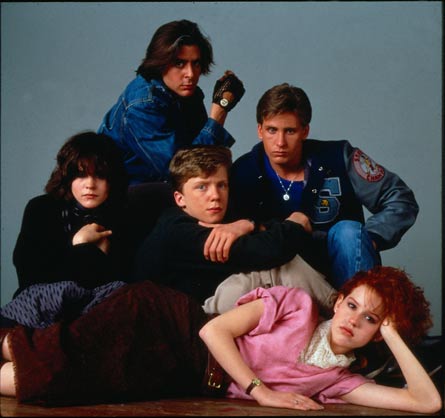
The Breakfast Club (1985, Universal)

“Anyone who moans that cinema in the 80s amounted to the death of dialogue and the triumph of action Jackson, should take a look at this movie. It’s all talk.”

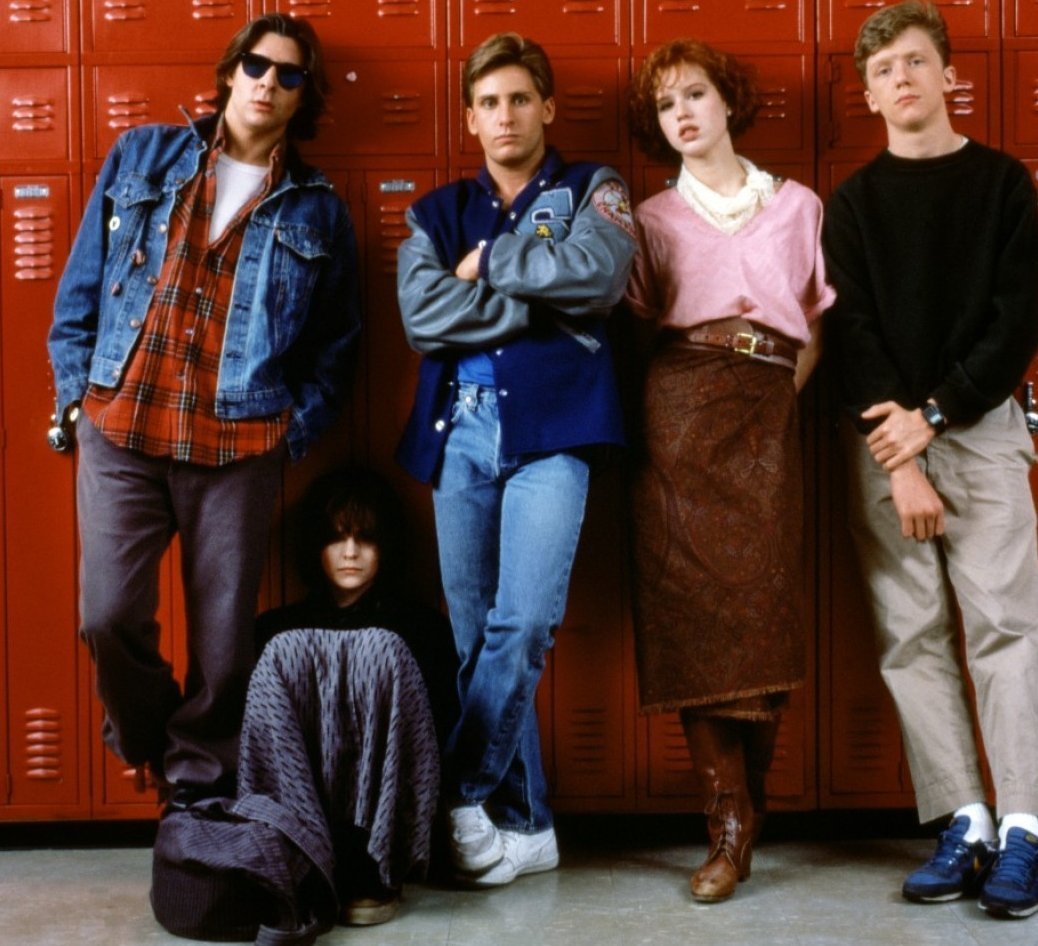
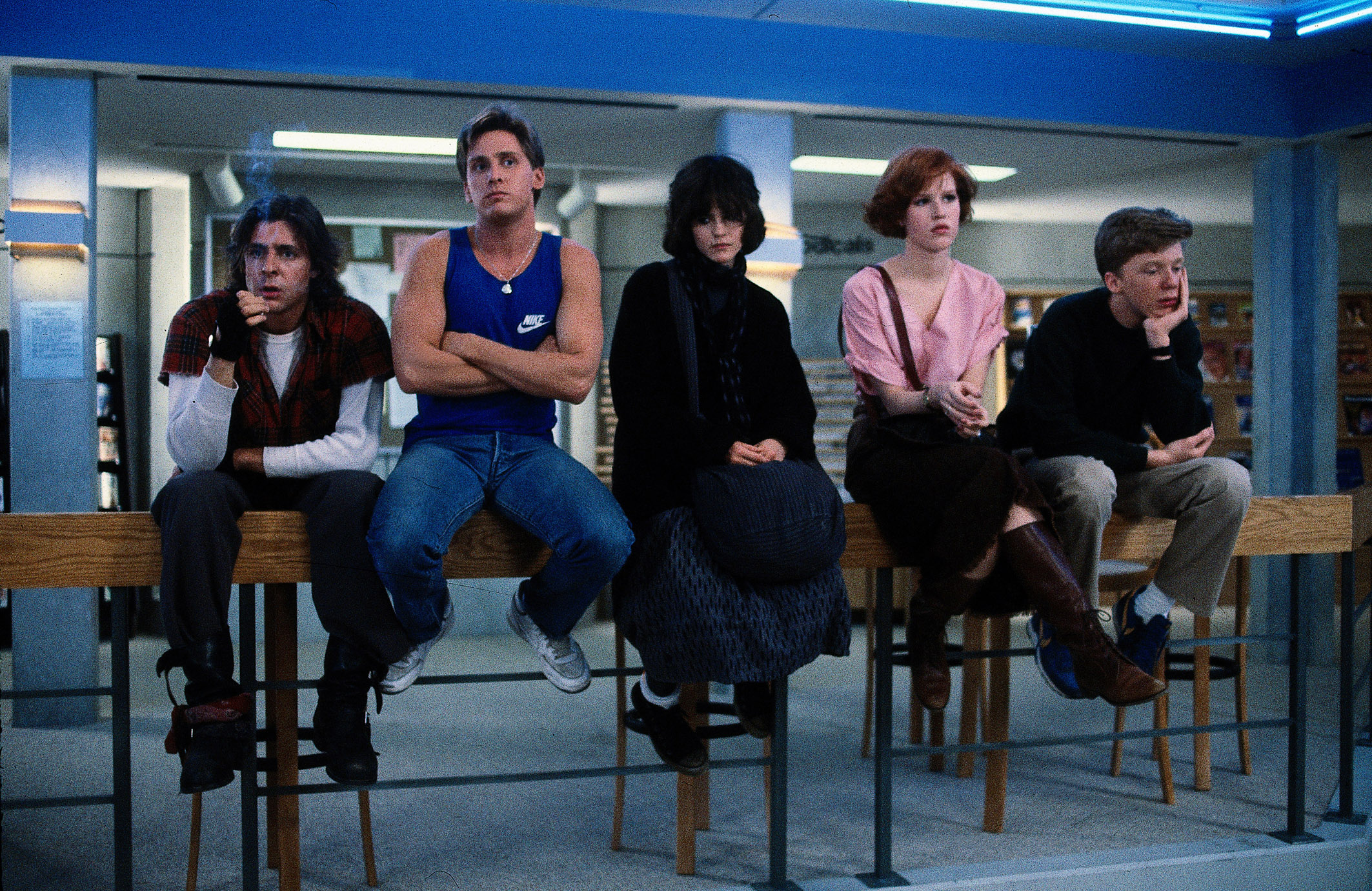
The characters are immediately defined as we see them dropped off at school. Brian (Anthony Michael Hall) is told by his mother to use his time to study, he protests saying he isn’t supposed to study and she says he has to find a way; he’s the brain. Andrew (Emilio Estevez) is being reamed out by his father that he won’t get a scholarship if he gets caught again that and his letter jacket tell us; he’s the jock. Claire (Molly Ringwold) is being told that cutting school doesn’t make her a defective; she’s the popular girl or the princess. Allison (Ally Sheedy) is dropped off without a word when she goes to say goodbye the car speeds off and almost runs over Bender (Judd Nelson) so we have the last two, the basket case and the criminal. These labels are very important because that’s what we all perceive them as in the beginning and how they perceive each other and we learn about these characters and they bond with each other. While they’re in detention they’re each supposed to write a 1,000 word essay but they choose to do something else instead.


Why they ended up in detention ends up being like the “Rosebud” of this film. Except in this film it is but a gimmick. In their discussions, we find out more and more about these characters and what pushed them there. We find out about their home lives and for all of them there is something that makes it unbearable for them. In a very memorable scene Bender re-enacts a typical night in his house and depicts an argument between his parents. When Andrew doesn’t believe him he lifts his sleeve and says “See this? It’s about the size of a cigar. See this is what you get in my house when you spill paint in the garage.” Andrew relates how his father was always browbeating him to be number one and how he’s been made to hate weakness. Claire’s affections are a prize her parents keep fighting over since their divorce. Brian relates how he nearly killed himself, albeit with a flair gun, because he got a B in shop and his parents demand academic excellence from him “I can’t have it, and my parents can’t have it,” he says. At the end, we find out Allison’s problem is that her parents outright ignore her and that’s why she’s been contemplating running away. Their discussion concludes with the question “My God are we all going to turn into our parents” and Allison “It’s inevitable at a certain age your heart dies,” which leads us to the antagonist.


The Breakfast Club (1985, Universal)

The villain in this film is Principal Vernon (Paul Gleason). He is the establishment. And when he gets Bender alone he ranks him out like nobody’s business, and you just want to punch him right in the face, and he even gives Bender the chance to but Bender’s not used to this brutal honesty and is scared to death. I’d even say his tough guy image is an act even though he does have a hellish home life. Vernon also talks to the janitor and complains that “Every year these kids are getting more and more arrogant,” and then the Janitor speaks the truth saying “Come on, Vern, the kids haven’t changed you have. What do you think you’d think of yourself at their age?” and that ends the conversation. The principal is the embodiment of everything these kids hate and fear becoming. And he also gives a very good and funny performance. The teen angst of this film is apparent. When this film becomes a manifesto is when at the end they decide to ask Brian to write their essay for them and he agrees.


While there is a montage at the beginning of all that is high school. This is also a striking visual sequence. We see Vernon holding the paper, Claire and Bender being romantic, Andrew and Allison holding hands and Brian getting into his car. And we hear Brian doing a voice-over narration:

“Dear Mr. Vernon: We accept the fact that we had to sacrifice a whole Saturday in detention for whatever it is we did wrong, but we think you’re crazy for making us write an essay telling you who we think we are. You see us as you want to see us: in the simplest terms, in the most convenient definitions. But what we found out is that each one of us is a brain, and an athlete, and a basket case, a princess, and a criminal. Does that answer your question? Sincerely yours, The Breakfast Club.”


The Breakfast Club (1985, Universal)

And as the narration ends we see Bender walking across the football field and he pumps his fist in the air as “Don’t You (Forget About Me)” by Simple Minds plays the frame freezes. It’s the best, and one of the few acceptable, freeze frame endings I’ve ever seen; it’s perfect.


Some of the vernacular in this film is very 80s for example I don’t think I’ll ever know what “Neo-maxi-zoom-dweebie” is but the themes and storyline that run through this film are timeless such that I only came to see this film about three years ago (as of this writing). It’s a great piece of adolescent rebellion and a great comedy undoubtedly Hughes’ best work.

Works Cited: p. 33 Brat Pack: Confidential Andrew Pulver and Steven Paul Davies. BT Batsford: London, 2000.
The Breakfast Club. Dir. John Hughes. 1985. featuring Emilio Estevez, Judd Nelson, Molly Ringwold, Ally Sheedy, Anthony Michael Hall, Paul Gleason. Universal Pictures.

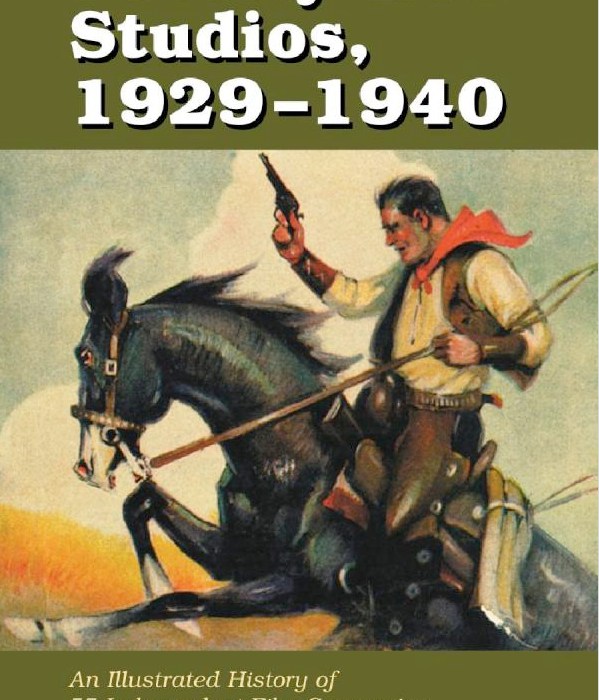
Book Review: Poverty Row Studios 1929-1940

As I mentioned on Monday, this is the book that inspired me to take a closer look at Poverty Row studios and seek out more of those films. However, the book itself does deserve some highlighting.

Clearly, when you’re dealing with non-fiction film writing there will be some occasions when an opinion will be espoused that you don’t agree with, but the only way you agree with everything is if you write it yourself. The book is informative, engaging, at times funny, and very well cross-referenced, which is good when many of these studios had crossover actors, studio heads, writers and the like.

The introductory paragraphs give you a great overview of the company’s history, as long or short as it may have been. There are synopses and cast and crew listings for most all titles included in the volume and occasional synopsis/reviews for some films.

The introduction to the book itself states that it does not include Mascot or Monogram films (for the purposes of my theme I may seek those out myself) mainly because dedicated volumes to said studio were put out by the same publisher so it would prove redundant. Also not included is Republic Pictures who was close to being in between a major studio and a Poverty Row studio absorbing many debt-ridden indies and having some big budget films later in its existence.

The stories both on the business end and of the films are told conversationally, cordially and with enthusiasm, which makes it a very fun read indeed.

2013 BAM Award Considerations – April

Last year I had one massive running list and it became very cumbersome to add to, and to read I’m sure. By creating a new post monthly, and creating massive combo files offline, it should make the process easier for me and more user-friendly for you, the esteemed reader. Enjoy.

Eligible Titles

Time of My Life
Survive and Advance
John Dies at the End
Evil Dead
Admission
Crush
California Solo
The Sorcerer and the White Snake
4some
Olympus Has Fallen
G.I. Joe: Retaliation
At the Gate of the Ghost
Allez, Eddy!
Renoir
Disconnect
Leonie
Oz the Great and Powerful
The Croods

Best Picture

Time of My Life
At the Gate of the Ghost
Allez, Eddy!
Disconnect
The Croods

Best Foreign Film

Time of My Life
At the Gate of the Ghost
Allez, Eddy!
Renoir
Leonie

Best Documentary

Last year this was an omitted category, due mostly to the fact that too few total candidates existed to make the slate feel legitimate. I will hope to be able to rectify that this year.

Survive and Advance
Elway to Marino

Most Overlooked Film

As intimated in my Most Underrated announcement this year, I’ve decided to make a change here. Rather than get caught up in me vs. the world nonsense and what a film’s rating is on an aggregate site, the IMDb or anywhere else, I want to champion smaller, lesser-known films. In 2011 with the selection of Toast this move was really in the offing. The nominees from this past year echo that fact. So here, regardless of how well-received something is by those who’ve seen it, I’ll be championing indies and foreign films, and the occasional financial flop from a bigger entity.

Time of My Life
At the Gate of the Ghost
Allez, Eddy!
Leonie

Best Director

Time of My Life
John Dies at the End
At the Gate of the Ghost
Allez, Eddy!
Disconnect

Best Actress

Lotte Pinoy Time of My Life
Jane Levy Evil Dead
Tina Fey Admission
Victorie Cermakova 4some
Chermarn Bonnyasak At the Gate of the Ghost
Barbara Sarafian Allez, Eddy!
Andrea Riseborough Disconnect
Paula Patton Disconnect
Christa Theret Renoir
Emily Mortimer Leonie
Mila Kunis Oz the Great and Powerful

Best Actor

Koen De Graeve Time of My Life
Shiloh Fernandez Evil Dead
Paul Rudd Admission
Lucas Till Crush
Robert Carlyle California Solo
Jet Li The Sorcerer and the White Snake
Hynek Cermak 4some
Ananda Everingham At the Gate of the Ghost
Jelte Blommaert Allez, Eddy!
Jason Bateman Disconnect
Michel Bouquet Renoir
Shidô Nakamura Leonie
James Franco Oz the Great and Powerful

Best Supporting Actress

Viviane de Muynck Time of My Life
Jessica Lucas Evil Dead
Lily Tomlin Admission
Marika Sarah Prochazkova 4some
Silke Cnockaert Allez, Eddy!
Hope Davis Disconnect
Rachel Weisz Oz the Great and Powerful

Best Supporting Actor

Geert Van Rampelberg Time of My Life
Iwein Segers Time of My Life
Paul Giamatti John Dies at the End
Lou Taylor Pucci Evil Dead
Wallace Shawn Admission
Nat Wolff Admission
Jiri Langmajer 4some
Ludek Munzar 4some
Dom Hetrakul At the Gate of the Ghost
Phongpat Wachirabanjhong At the Gate of the Ghost
Mario Maurer At the Gate of the Ghost
Peter van den Begin Allez, Eddy!
Max Thieriot Disconnect
Frank Grillo Disconnect
Jean Rottiers Renoir
Takashi Kashiwabara Leonie

Best Performance by a Young Actress in a Leading Role

Best Performance by a Young Actor in a Leading Role

Jelte Blommaert Allez, Eddy!
Colin Ford Disconnect

Best Performance by a Young Actress in a Supporting Role

Savannah Lathem California Solo
Valerie Samalova 4some
Marika Sarah Prochazkova 4some
Coleen Leempoel Allez, Eddy!
Louca Platon Leonie
Joey King Oz the Great and Powerful

Best Performance by a Young Actor in a Supporting Role

Felix Maesschalck Time of My Life
Nat Wolff Admission
Gregor Buaer 4some
Vaclav Marhold 4some
Finley Jacobsen Olympus Has Fallen
Mathias Vergels Allez, Eddy
Jelle Claymans Allez, Eddy!
Jelle Florizoone Allez, Eddy!
Jonah Bobo Disconnect
Aviad Bernstein Disconnect
Thomas Doret Renoir
Bowie Gunn Leonie
Julian Ogawa Leonie
Daichi Flaherty Leonie

Best Cast

Time of My Life
Evil Dead
4some
At the Gate of the Ghost
Allez, Eddy!
Disconnect
Renoir
Leonie
Oz the Great and Powerful

Best Youth Ensemble

Admission
4some
Allez, Eddy!
Disconnect
Leonie

Best Original Screenplay

4some
Allez, Eddy!
Disconnect
The Croods

Best Adapted Screenplay

Time of My Life
John Dies at the End
Evil Dead
Admission
At the Gate of the Ghost
Renoir
Leonie
Oz the Great and Powerful

Best Score

Time of My Life
Evil Dead
At the Gate of the Ghost
Allez, Eddy!
Disconnect
Renoir
Leonie
Oz the Great and Powerful
The Croods

Best Editing

Time of My Life
John Dies at the End
Olympus Has Fallen
G.I. Joe: Retaliation
At the Gate of the Ghost
Allez, Eddy!
Disconnect
Renoir
Leonie
Oz the Great and Powerful
The Croods

Best Sound Editing/Mixing

John Dies at the End
The Sorcerer and the White Snake
Olympus Has Fallen
G.I. Joe: Retaliation
At the Gate of the Ghost
Allez, Eddy!
Oz the Great and Powerful
The Croods

Best Cinematography

Time of My Life
John Dies at the End
California Solo
The Sorcerer and the White Snake
Olympus Has Fallen
At the Gate of the Ghost
Allez, Eddy!
Disconnect
Renoir
Leonie
Oz the Great and Powerful
The Croods

Best Art Direction

John Dies at the End
Evil Dead
4some
At the Gate of the Ghost
Disconnect
Renoir
Leonie
Oz the Great and Powerful

Best Costume Design

Evil Dead
The Sorcerer and the White Snake
G.I. Joe: Retaliation
At the Gate of the Ghost
Allez, Eddy!
Renoir
Leonie
Oz the Great and Powerful

Best Makeup

Time of My Life
Evil Dead
Olympus Has Fallen
At the Gate of the Ghost
Renoir
Oz the Great and Powerful

Best Visual Effects

John Dies at the End
Evil Dead
Olympus Has Fallen
G.I. Joe: Retaliation
At the Gate of the Ghost
Oz the Great and Powerful

Best (Original) Song

At the Gate of the Ghost
Oz the Great and Powerful
The Croods

Mini-Review Round-Up April 2013

Here’s my standard intro to this post:

I had quite a review drought to end 2011 so I think the remedy for this kind of post would be to have the post be cumulative monthly. Therefore, after each qualifying film a short write-up will be added to the monthly post. The mini-reviews will be used to discuss Netflix and other home video screenings. Theatrical releases, regardless of how they are seen whether in an auditorium or on VOD, will get full reviews [That is when deemed necessary. As I wrote here I do want to focus more on non-review writing wherever possible].

For a guide to what scores mean go here.

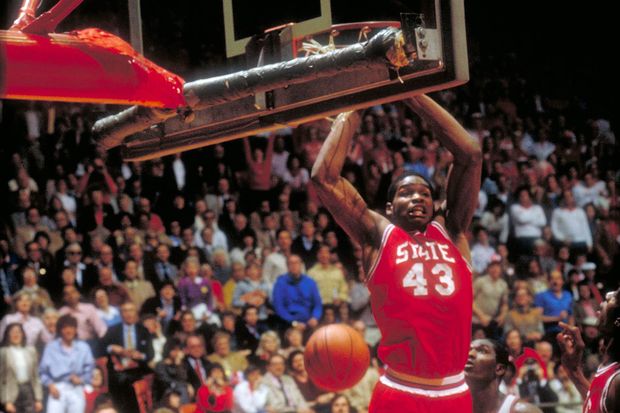
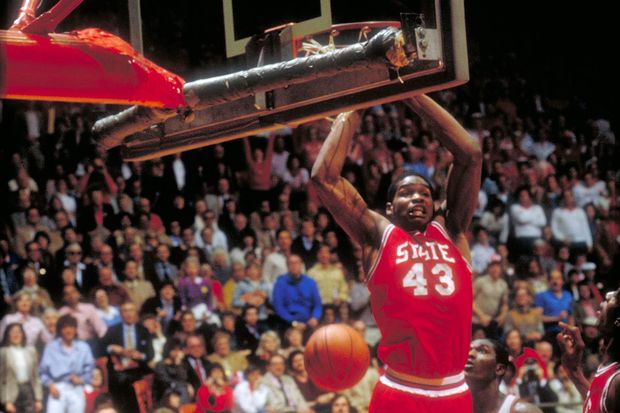
Survive and Advance

Lorenzo Charles (1983/ AP)

So the ESPN 30 for 30 films are back at it in full force. Even those who turn a critical eye to ESPN look upon this series of documentaries as an example of what the self-proclaimed worldwide leader is still capable of when it sets its mind to it, and perhaps this film is now at the forefront of that conversation.

The set-up and structure is as simple as it is powerful, but in ways unexpected. Many, who have even a passing knowledge of sports, know of the improbable championship run of NC State in 1983 and later on the passionate, legendary speech by Jim Valvano at the ESPYs (Perhaps the last time they had true relevance) what the film does is take a step or two beyond those known moments. It starts with the funeral of Lorenzo Charles, the man who scored the now iconic dunk off a just-short Hail Mary three-point attempt. This is the impetus for the players to have reunions “If we don’t see each other once a year, we’ll only be coming to each other’s funerals.” says Whittenburg, and thus, they meet and form the frame of the tale. However, the film navigates through the pre-championship years and championship year runs with flash-forwards containing prophetic, funny and entertaining Valvano sound bites. It gives the title further poignance that is never too finely underlined.

After the championship things come closer to a point of convergence and carry more impact and the two meanings intertwine, again without being over-stressed. It’s a film ostensibly about a miraculous run, but it’s very clear from early on that the run will occur and the miracle truly becomes the off-the-court impact and what comes from it all, as sad a tale as it is.

10/10

Time of My Life

Time of My Life (2012, Strand Releasing)

This is the kind of film that faces and overcomes the danger of falling into an issue-film trap of being overly-involved in stump-speeching, soap-boxing and campaigning. When your film purports to highlight seminal case in the instituting of euthanasia laws in a country both that, and an eventual death, become inevitable.

However, what Time of My Life does so well is tell the personal narrative first and foremost and then fold in the issue film as the tale progresses. Yes, there are many issue films that will have circumstances dictate their cause, but what you also get here is a film whose emotional impact is withheld until later.

That is not to say this film doesn’t pack an emotional wallop, it most certainly does, and quite a big one. What it does do is postpone the big hit. The story travels through time and each of the early, fairly short sequences have their own tenor and know when they should end. What it builds is a more rounded, bittersweet emotion not overly-concerned in melancholy, not consciously pulling at heartstrings until the very end. When it does attempt to play them it does so very successfully.

Time of My Life features brilliant performances throughout, and some really smart, great writing; especially as it draws towards its conclusion and a crushingly beautiful emotional climax. If you know what you’re signing up for, it’s a tremendously moving and rewarding experience.

10/10

John Dies at the End

John Dies at the End (2012, Magnet Releasing)

Conventional wisdom is that the horror film, one could even extrapolate this to any kind of genre cinema, cannot be too smart. This is a notion that Don Coscarelli seemingly disdains in his cinema, and usually in the best way possible. Coscarelli’s constructs usually have a surface that are engaging enough to get you beyond the murk of the not-as-clear moment, but if you dig beneath the seeming clarity into the ambiguity, the areas open to interpretation, you are further rewarded.

Coscarelli’s films usually play in this milieu through nightmare logic, in this case in the guise of a mind-expanding, dimension-crossing drug. So it usually leads you to a place where you’re ready to slough off the normal restraints of time and space, which helps you to dive in.

There’s been much unoriginal talk about the lack of originality in cinema. What John Dies at the End exemplifies from the start is that it’s looking to take the road less traveled, in a way it’s not usually trod.

It’s an enjoyable ride, which I may be better able to quantify should I happen to watch it again, but it’s well worth taking. It’s especially worth taking if you’re looking for something a little bit out of the ordinary. Something that’s funny, weird and unexpected and all Coscarelli.

8/10

Crush

Crush (2013, Millennium Entertainment)

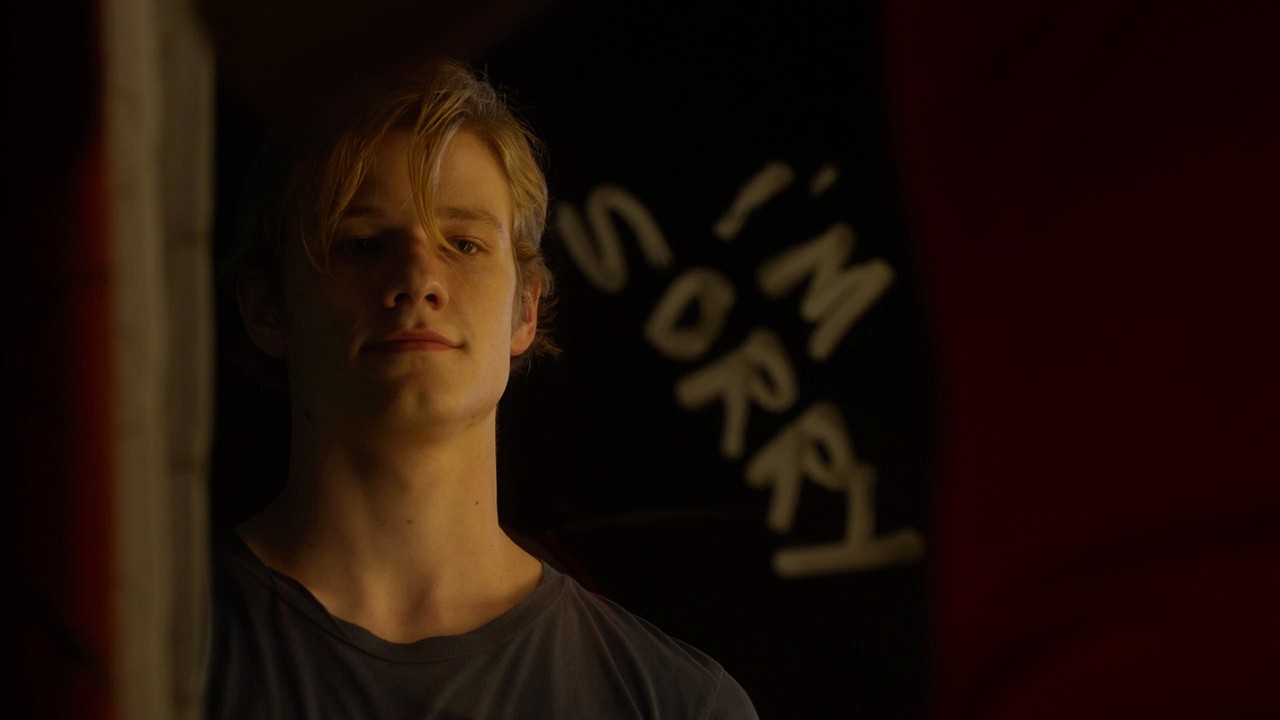
Whereas prior I discussed a film that is fairly unique, here we deal with a film that’s on well-trod ground: the obsessive-psychotic female crush. It’s not a subgenre I’ve seen too much of, but I have seen it and it is one I am open too. In the horror and thriller genres it is far too often a female character who is victimized, pursued and the subject of gaze. The reversal of that gender role is refreshing.

Sadly, it is in these fairly academic trappings that are givens of the synopsis of Crush where its greatest successes lie. The execution of the narrative constructs and precepts leaves a lot to be desired.

The performance of the main target, the default lead played by Lucas Till, is quite good. However, the story may not hinge on, but works towards and spins off from, a major reversal and neither the build-up or the follow-through is sufficiently paced or engaging enough. Not to mention that the film insists on buttoning up several narrative threads in its denouement unnecessarily.

4/10

California Solo

California Solo (2012, Strand Releasing)

To not put too fine a point on it this is a film that features a circle closing. It’s a character study, a low-key drama which isn’t going to have outlandish plot points and twists and turns. There is progression and conflict, mostly of the internal variety, but it’s more subtle than one is used to. The circle closes on this story, but some slight coming to terms has occurred.

So how does one go about assessing a tale wherein little to seemingly nothing changed? It comes down to the engaging nature of the narrative, how it builds, how the subtle construction of it works.

Carlyle’s performance is great, but in a tale such as this that tends to be a given rather than a boon. What seems to be missing here is not the change or the evolution but the crescendo. Instead the impetus for change seems to be more of the same. The inciting incident in essence repeats itself such that what our protagonist strove to avoid becomes unavoidable, it’s how he looks at it that changes and it’s very internalized.

To go on much further would be to literally spoil it. It doesn’t have to be revelatory eureka moment, but a more profound, moving, defeated – any kind of emotion really – button to this tale, even with similar structures being supported, would’ve carried more weight.

5/10

The Sorcerer and the White Snake

The Sorcerer and the White Snake (2012, Magnet Releasing)

Eventually this film does figure out where its going, and in essence what it wants to be, but its biggest struggle is in the build up. There are parallel story threads that have to join but also there are combative, jarring techniques, and dueling tones that never really find a harmonious balance. Juggling tone is one of the hardest things for a film to do. When a film is doing that and also juggling approaches for much of the first half it can be virtually insurmountable.

When the film settles on what its main narrative thrust will be, oddly enough, is when the pace starts to suffer. The climactic showdown is seemingly never-ending and a full-out assault of the substandard visual effects work we had just gotten the occasional taste of for the first hour of the film. Granted DVD is less forgiving than celluloid, but with many titles shot and projected digitally, films are less and less forgiving and this hits you with its effects work and it hurts.

However, as indicated above, the effects work isn’t the main issue. The fact that the narrative is based on a Chinese legend is also granted. So it’s not what happens in the film that’s the issue as how it happens. It’s the kind of story that may have been more impressive animated when you take into account how certain things were handled in live action from the stuntwork, to prosthetics, acting, dialogue and so forth.

Oddly enough while the film is still patchwork is when its most successful. When it finds its narrative focus all its deficiencies come into focus as well and there are many.

3/10

The Condemned

The Condemned (2012, Strand Releasing)

This can be a tough film to discuss without putting too fine a point on things and giving away several key elements, but like the film I will try to be subtle. There has been much talk in recent years, as it’s been more in vogue as of late than in years past, of the slow burn, particularly as it applies to the horror genre. A slow burning tale, as I’ve likely stated before, is not one that’s in and of itself problematic. Usually, the key to success for these films is either of two things: first, incremental and consistent, even if slight, escalation of stakes, and second, a sufficiently impressive and resonant pay-off to the wait.

The Condemned does not build quickly, even for a slow burn, but it excels tremendously in the pay-off department. What’s interesting is that it dabbles with many known tropes: haunting, children, secrets and the like, but with the way things play out it even toys with the very notion it even being a horror film, in a similar way to how last year’s The Hidden Face did, but ultimately remains one for all else it is.

There are subtleties throughout, things you are advised to recall though you may not think it crucial at the time. The Condemned is a wonderfully rendered tale that does sufficient visual exposition and elaboration on its turning points such that most, if not all, loose ends are tied up and the whole piece is elevated by, and not subjugated to, its trickery.

Its surely for horror fans, and I’d say art house fans too as it is an intelligent, well-acted and crafted film that does linger. It seems like the horror crop of 2013 may be a brainier bunch than ones in the past few years.

10/10

4Some

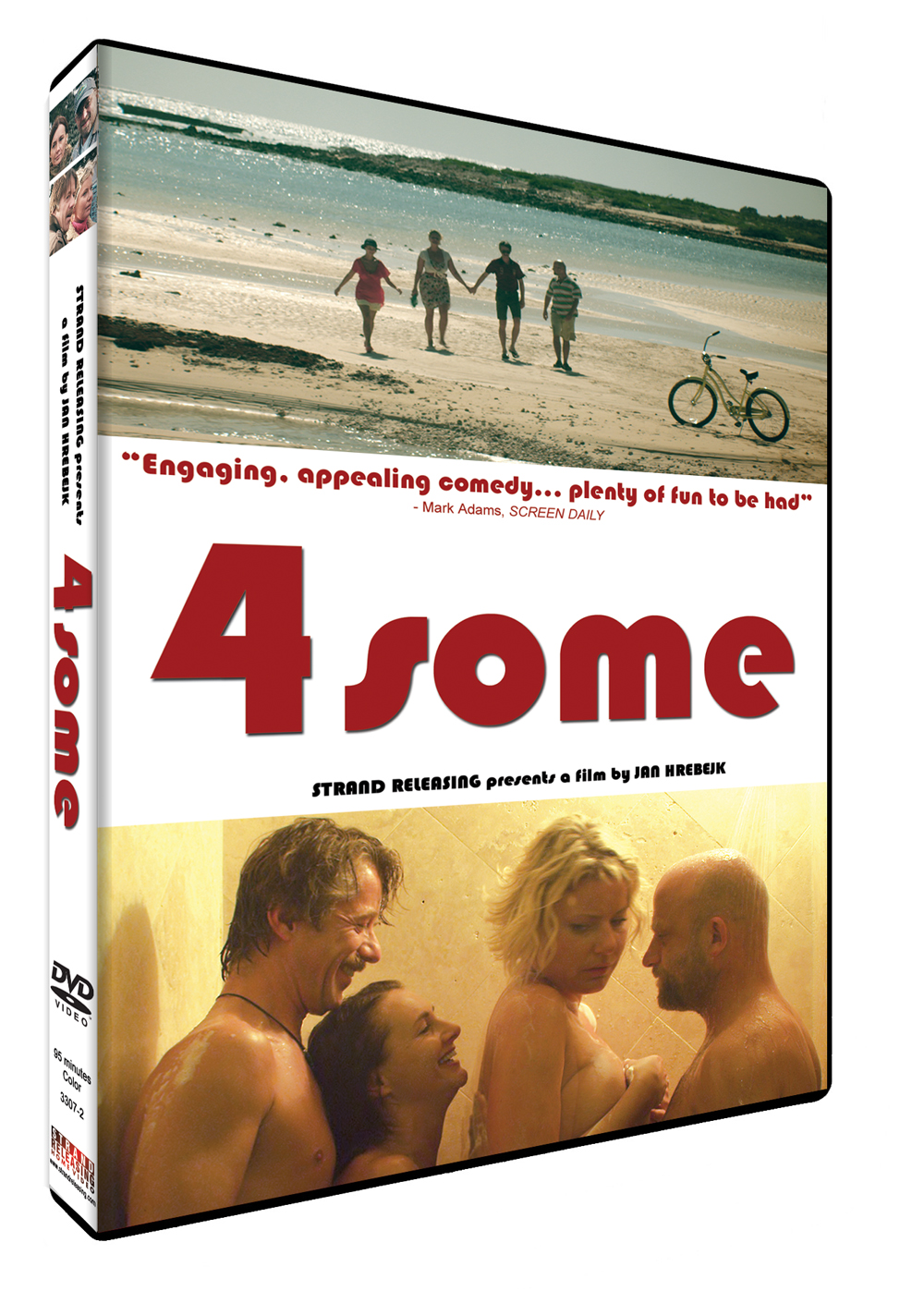
4Some (2012, Strand Releasing)

Rather than be a broken record and say yet again, like some truism that must be inherently understood and not questioned, that when I say I dislike comparative analysis in reviews, I say it because it runs the risk of making a review about pitting one film against another. If there’s one thing I believe firmly is that each and every film must be judged solely on its own merits. Meaning it’s judged on how well it creates its world, exercises its dramatic questions, builds its conflicts and so and so forth. Each film, no matter how similar it may be to another, has its own goals and desires.

Having said that we’re all human and recognize patterns and themes, and that can be helpful, useful, educational and fun. So when I started watching 4Some immediately Bob & Carol & Ted & Alice came to mind. The difference of time and place is obvious, but aside from inherent philosophical and aesthetic differences between America of the 70s and the Czech Republic of today there is a lighter approach to this version. I’d say the acting in this film rivals the brilliant foursome of that one, though the prior film treated its subject heavier. Though there are clear implications, conflicts and issues created by the unusual arrangement the couples find, they try to take it in stride and the situations are mostly comical. The marriages deal more in malaise rather than suppressed emotion; so what boils over is more humorous and less combustible. Rather than the dull squalor the couples experienced, their romances come alive.

The largest success of the film is that the couples’ children, themselves paired off (though not openly), also form a quartet that is a refracted image of their parents generation. They give a glimpse of the future, comment on the story in choir-like fashion, but more subtly and provide a good counterpoint subplot.

The only issues the film really has are a bit unfortunate and hold it back from being much better than it is. There are some drowsy, time-filling montages, which are more problematic in a film this short. Then there’s also the rather abrupt, slapped-through-the-end-credits, somewhat half-baked conclusion of the tale. It’s good for a chuckle but a bit odd and opaque such that it tonally didn’t jibe as well. It’s a minor, mostly personal complaint, others may interpreted differently, and its still very enjoyable on the whole.

7/10

At the Gate of the Ghost

At the Gate of the Ghost (2012, Magnet Releasing)

As soon as I saw that this film was an adaptation of Rashomon, I knew I wanted to see it. Now, knowing that some statements need to be made: Firstly, there mere fact that it builds its narrative on a great skeleton is not enough to make or break it. It also bears noting that even Kurosawa’s version was based on earlier Japanese texts so the opportunity to create new renditions of the tales exist all the time, and doesn’t really fit into any perceived “scourge of remakes” complaints one might have. The same goes with Hitchock’s films as he dealt almost exclusively in literary adaptations. Any other asides to these effects are likely covered in my fanboy series, so I shall proceed.

What makes a new, transplanted version of a known classic tale either work or not usually has to do with what’s done to make the story particular to the new locale and how well it embodies the spirit of the original narrative rather than how dogmatically it sticks to the script. The new local is incorporated quite well, on the surface turning a Shinto priest into a Buddhist monk might seem a superficial change, that analysis would be too reductive. It would discount the connection between religion and national identity far too much, especially considering the period in which this film is set (16th Century Thailand).

The other thing this film does well is that it quickly inserts an artfully rendered, character-building montage so that the monk’s inner-turmoil is explained and we get a sense of him and what he sees his duties as. At the start of the film he makes a difficult decision. We then see all that factored into the aforementioned decision and the bulk of the film is about the straw that broke the camel’s back so to speak.

As with any tale based on Rashomon, or of a similar construction, much of the success hinges of the interpretation and execution of the varied interpretations of an incident from different points of view. The wildly variegated versions delivered here are nearly flawless told and very well-executed with fantastic acting throughout.

If you have not seen Rashomon I would, of course, recommend you see that first. However, whether you have or have not, I think this alternate take is one that is likely to find many fans of its own as it is a rather gripping, evocative and emotionally charged version in its own right.

9/10

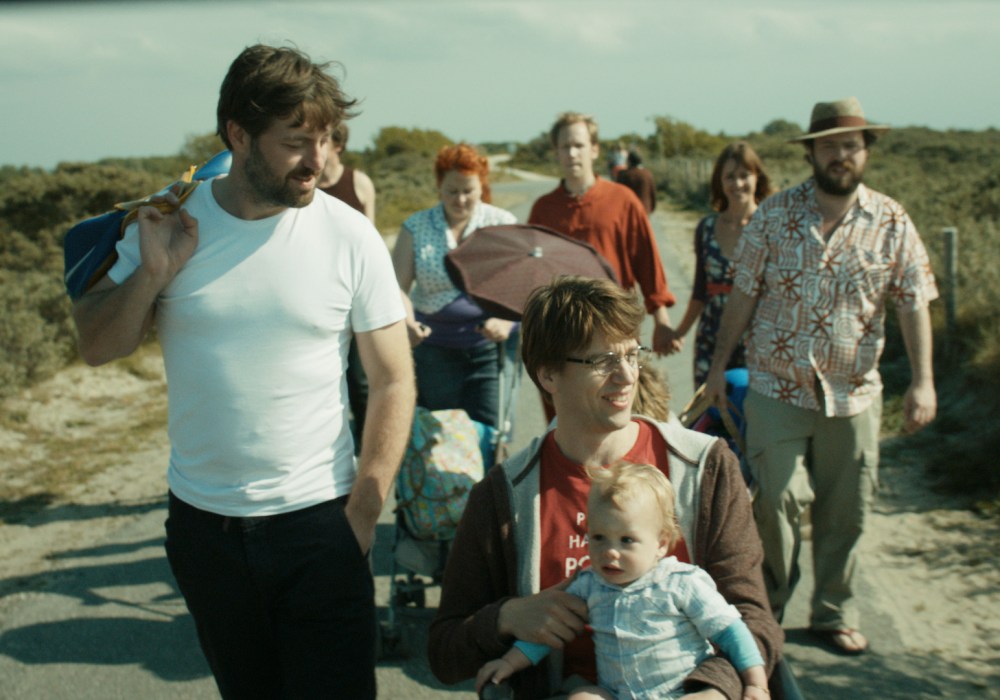
Allez, Eddy!

Allez, Eddy! (2012, Benelux Film Distributors)

Though this film by rights should be included in this post, but the review written for it was too long. You can read its review separately here.

Elway to Marino

John Elway and Dan Marino (LA Times)

I almost waited to write this one more time than I did. As a football fan, especially one who grew up with John Elway being my favorite player, it’s hard to keep a documentary like this in perspective. However, aside from the mind-blowing revelations about the intricacies and the process that was the most pivotal draft in the history of the league, I keep going back to cinematic elements, to the storytelling and ask myself: is this picture being painted as well for all as it is for me?

Naturally, the seismic impact of the would-be moves have more effect when you have hindsight, but the film really does a wonderful job. Any documentary owes its success to perseverance and a little bit of good fortune. The good fortune in this case is that Elway’s agent, Marvin Demoff, not only also represented Dan Marino, but kept a diary of the meetings and calls regarding John Elway’s pursuers as the process for him was always likely to be complex and he wanted to relate information accurately, but he still had it.

In narrative terms it has subplots, dovetails, ironies, revelations and everything you could want. In technical terms, in terms of building a documentary, I think it has a lot of that going too. The scoring highlights and builds the tension, the b-roll shots and editing decisions build the drama, the narration is well-written and excellently delivered by Tom Selleck. It contains interviews with most of the key players you’d want to hear from. Not only that, but in terms of structuring it doesn’t do anything tremendously unique like some have done, but the little touches really do act as the coup de grâce, the withholding of title cards with player resumes for dramatic impact fore example.

Lest I go on too long to keep this “mini,” this truly is a great installment in the series that may not have the “human interest” emotional wallop some do, but for fans it’s a must. There’s drama for all concerned, for non-fans this series should be able to bring you along for the ride also. It’s incredible.

10/10

Poverty Row April: Viewing Log and Introduction

Introduction

Welcome, to another month and another theme. My plans for this one I believe will be similar to 31 Days of Oscar, which means that I believe I will keep this theme to one running log, and if I should find occasion a few additional posts to fill in some detail.

The theme for April will be films produced by what were known as the Poverty Row studios. Most of them were not around long, and while all their productions were made on a shoestring, and their facilities were located in a strip of desert on the outskirts of Los Angeles, some of them are quite good and have endured. One of my first exposures to the serial format that I really enjoyed was a Poverty Row project entitled, Blake of Scotland Yard by Victory Pictures Corporation.

This theme idea was inspired by a few factors, the main one being that I read a book entitled Poverty Row Studios, 1929-1940; cover-to-cover as research for a personal writing project. The book profiles a vast majority of these small companies that sprouted up like weeds at the end of the silent era/the dawn of sound.

The additional impetus, aside from further research, was added because the book contains filmographies, synopses and reviews that sound intriguing. Due to their vintage and copyright history many of these films are now in the public domain and easily found at The Internet Archive. When you further add the fact that many of these films were designed to play in double-bills and run about an hour, there’s more added incentive.

More details about the era and the companies will be included as the films are viewed, but the last thing that bears mentioning now is that many of these studios featured, actors, directors, writers and musicians either on the way up or the way down in their career, so that drew me to a number of the choices I plan to make.

In the log I will include links to the Archive selections where applicable. So it’s fun, easy, free, and fascinating to take in a bunch of these films when I’ve already had occasion to see a few without being aware that they fell into the Poverty Row category at the time. It will also allow me, and perhaps you if you’re so inclined, to see some weird and mostly forgotten stuff that oughtn’t be.

A Shriek in the Night (1933, Allied Pictures Corp.)

1. A Shriek in the Night (1933)

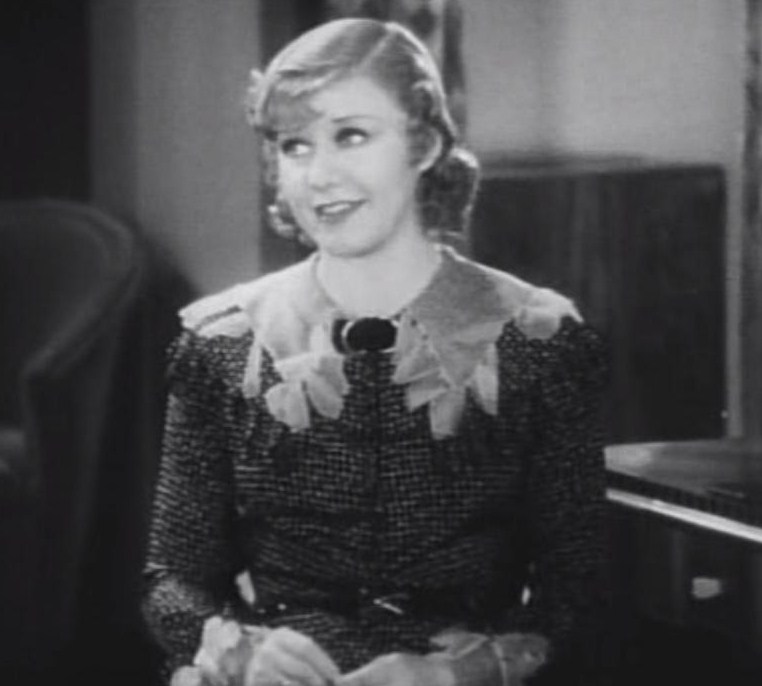
This is, for the most part, an entertaining and engaging mystery tale. It’s interesting that the film features an early appearance by Ginger Rogers. The downfall of the film is the staging and editing of the climactic sequence, which includes cheats that drain some of the suspense from it.

7/10

2. Maniac (1934)

What a nutty, perambulating, mutating story this one is. Refracted through time some of the quotes do seem legitimately like what psychiatric textbooks would describe the conditions, and the title cards where these quotes appear help rein in the otherwise wild story. Again this is another one that is great fun, has many unexpected turns, that make up for the technical failings (some may have to do with degradation, real or through video), but then the conclusion is terribly run-of-the-mill and unsatisfying.

5/10

3.Shadow of Chinatown (1936)

It became quite apparent as I started to watch this film that I was watching a composite serial. What that means is a feature length version of a serial, this was usually done to have a second profit off the same project. To give credit where credit is due the editors did a pretty marvelous job. I never saw the serial, but followed the narrative fairly well. This tactic does create more clumsy exposition than otherwise necessary and some seemingly wild intuition. The breakneck pace aside it was easy to take in though ultimately unsatisfying because I knew there was backstory all over the place that I wanted to know more about and never would in this version.

4/10

4. Toll of the Desert (1935)

This was the most frustrating view of them all. The set-up: An accident. A father assumes he lost his wife and son takes up with bandits. The son is saved by locals and raised as their own. Many years later estranged father and son, strangers to one another, cross paths. The set-up is brilliant. Some of the plot points are great, on paper. However, the cast, and the production that Commodore Pictures was able to assemble for this film is not up to snuff to say the least. It’s also a story that needed more time. The difficulties of working a 50-70 minute feature are more strongly underscored by a bad one. The conversations are redundant, dialogue is frequently a wooden time killer rather than revelatory. It’s definitely a concept that would be worthy of revisiting with different talent.

3/10

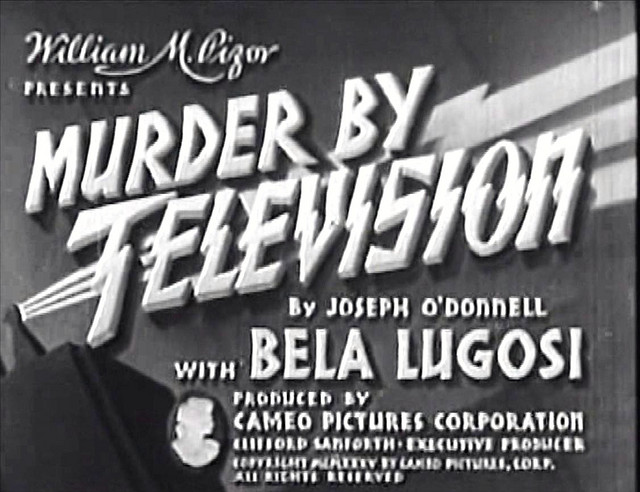
5. Murder by Television (1935)

Murder by Television (1935)

The idea is rather out there and not over-drawn as it can be in much B-grade fare, but the pace and quantity of events is rather sparse throughout the middle. The film features a good post-Dracula appearance by Lugosi. However, in spite of a good twist it’s a bit lethargic.

5/10

6. Phantom (1931)

Of all the four films being added to this post today this one is the most debilitatingly dull. As will become a theme, there is a criminal here referred to as The Phantom. Here, however, it’s an escaped con. The set-up is a bit clunky and awkward, whether just establishing facts or in attempting misdirection. The angering thing here is that this film takes a nosedive in pace from the mid-point forward, and completely disengages.

2/10

7. The Rawhide Terror (1934)

Here is another terribly frustrating western because of it being a good concept squandered. The film is another poorly staged and shot affair that subjugates, through poorly expository, overt foreshadowing, a good concept and leaves it twisting in the wind for far too long.

3/10

8. The Phantom Cowboy (1935)

Aside from the staple obstructionist arm-holding-up-a-cape-motif there are some good things going on in this film. Again, you have here a short tale wherein the pace suffers, here character identification also suffers and lessens the impact this tale could have. There is also a deplorable excess of early comic relief in this film, which makes that section of the film hard to bear.

4/10

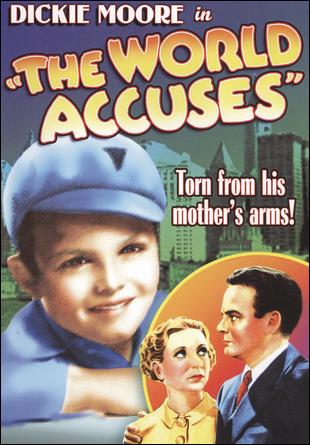
9. The World Accuses (1934)

The World Accuses (1934)

Prior to this screening the selections that I had made for this theme were threatening to make a liar out of me. Save for Short Film Saturday, I did not feel the need to link to any of these titles on the Internet Archive. Aside from the debut screening in the series there wasn’t even another title to which I awarded a passing grade, though others had close calls and good qualities.

Are there melodramatic building blocks to this tale? Yes. Are they necessarily used as such? Not especially. There are some narrative shorthands to cram this story into an hour, but the inciting incident is big, quick and out there. There is a strong villainess and a desperation-forced substitute for that role. The story takes some great twists along the way and is always engaging. As with any story of its kind, it requires you exercise suspension of disbelief, but it never lost my interested either intellectually or emotionally.

In his book Pitts describes much of the acting he watched as high school play caliber. I thought he jested too much, but through some of these I’ve chucklingly agreed. The entire ensemble in this film is capable here, even if a bit stock at times. Surely it’d take talented kids to have a Poverty Row studio like Chesterfield to build a tale around by Dickie Moore (maybe best known as the voice of Pinocchio) and Cora Sue Collins. The production values, particularly the set design, was a bit higher here than standard Poverty Row fare.

8/10

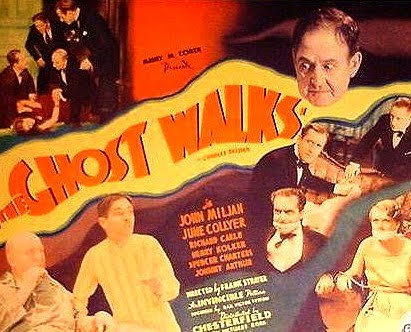
10. The Ghost Walks (1934)

The Ghost Walks (1934)

Well, one more and you can call it a streak. As I watched this in the wee hours, it made me wish I watched a few more during the day, like I did early on when my luck wasn’t nearly as good.

Perhaps the first thing that struck me as a side note is that this is the first of the selections I chose that struck me as being very Pre-Code, though its December 1st, 1934 release date made it after promised Code re-enforcement. Most of that impression has to do with the theatrical producer and his the male secretary, the secretary both in affectation and through dialogue directed at him, is being portrayed as gay – perhaps the biggest code taboo. This all leads me to my second point, which is had the acting not been of such quality, the lines not as well-timed or funny, this film would’ve been ridiculous. Instead it’s one of the funnier films I’ve seen in a while. Granted the horror/thriller portions are intended too and the first act pantomimes a straight horror film excellently, but the comedy is very much by design and laugh out loud funny.

The only patch this film, wherein a staged murder mystery in a creepy house comes true, stumbles is toward the end when the villain monologue plays out it’s not tremendously successful at being either a villainous horror plot or comedic. However, that’s a small bit of this film that runs a little over an hour and is highly entertaining throughout.

9/10

11. The Tonto Kid (1934)

This film got a second chance from me and in the end it truly did deserve, and earn it. My first attempt at screening this film was marred by home remediation project for a leak, thus, a lot of ambient noise was about. Pair that with digital files, substandard sound technology from early talkies and you can see my issue.

The film had more for it than I initially gave it credit for, but there were issues inherent with a sixty minute feature abound, such as telling a rather intricate tale that quickly, establishing a plethora of characters and motivations early on and lastly tying up loose ends very quickly.

However, it is an interesting film to note merely for the fact that it is a very early example of a western hero who plays both ends against the middle and is a gray character, one whose motivations and true nature aren’t very easy to figure.

6/10

12. In Love with Life (1934)

In Love with Life (1934, Invincible)

A few things come to mind when discussing this film, most are specific to Poverty Row others aren’t as much. I’ve discussed the running time and the utilization thereof on a few occasions in these posts. This is not something that stems from worries about my attention span or time management issues but is inherent to structuring. Some of these films are trying to cram a lot of film into not much time, others are at points stretching. This one, at a brisk 51 minutes seems to handle things just right.

Now one note I will include, I believe this is the TV edit. I base this conclusion on both the book by Mr. Pitts and the IMDb, which list the running time at 66 minutes, as does a supposedly remastered version available on the IMDb. Sadly, with many of these Poverty Row titles those are the only cuts that remain. If this is truly a TV edit kudos to the editors of this version, while it is brisk it never feels overly truncated. There just seem to be a few instances of dropped frames.

Things that separate this film are: that there is scoring throughout rather than just on the opening and closing title, there are moving shots which required sophisticated sound editing, elevated production values for the budget namely set design and good montage/titling work.

Not exclusive to, but more common in works of this type, are stories that pre-date and lead up to the stock market crash. It being a melodrama the moral is clear: we lost our money but have what matters. However, it doesn’t go as far over the top as it could, particularly with a mother-child separation at the beginning. It plays its tropes fairly well and quickly.

9/10

13. The Racing Strain (1932)

This is a film that seems to be entirely about the periphery and not about the center. In other words, it’s hollow. If you look at the description it purports to be a race car driver who is struggling to overcome alcoholism to return to the top, and that’s in there but not the focus. In fact, the racer in question is not even the protagonist. The protagonist is really his young mechanic, Bill, more commonly referred to as Big Shot (Wallace Reid, Jr.). He’s the character with a trauma to overcome, who has to grow, who comes to the rescue of his driver, who gets into fights. However, there’s approximately three times as much set up as pay-off.

And this is discounting the fact there’s a thinly-written, plot device of a character whose a punching bag for racist jokes and slurs. The movie just doesn’t move enough. Again it’s a shame because the idea is good, but it’s one that could’ve focused more on the addiction to make it a closer facsimile to The Champ. The idea for the project makes sense especially considering the involvement of Wallace Reid‘s son. He and Dickie Moore, on loan from Hal Roach to film one scene, are among the only redeeming qualities this film has, but most of it is wasteful.

2/10

14. Oliver Twist (1933)

Again there’s a disparity of running time between what I saw and what the IMDb lists. Having said that an extra 10 minutes wouldn’t have made this version feel any less like a Cliff’s Notes version of Oliver Twist. I come dangerously close to breaking my own fanboy ethos here, but even in strictly cinematic terms the treatment is a bit rushed, for a tale that can be such an epic and sprawling one. Oliver’s walk to London for example is one scene as opposed to a montage. Some of the casting choices are quite strange, namely The Artful Dodger, and disbelief has to be suspended throughout due to the fact that Dickie Moore is an American in London. There are enjoyable elements to it, mostly due to the bones of the tale, and being a Monogram film it is higher rent than most, but still feels a bit slipshod.

5/10

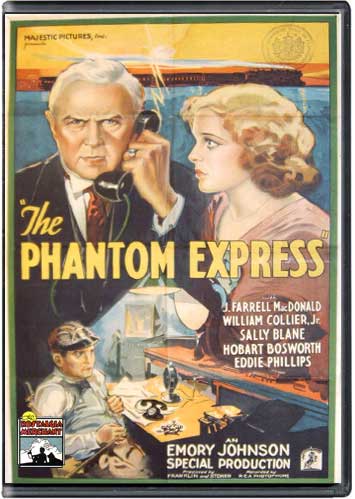
15. The Phantom Express (1932)

The Phantom Express (1932)

As I read and downloaded titles I noted the proclivity for the word phantom in titles. It must’ve scored well in marketing research of the day, it gives an air of mystery and intrigue. Sadly, no film I saw with the word phantom in it had either featured a ghost or been any good. This one at least accomplished the latter and is a highly entertaining tale. It’s not a whodunit so much as a “howdunit” as the perpetrators are revealed early. The film concerns a man who derails a train attempting to make an emergency stop causing many fatalities. He claimed there was an oncoming train he wanted to avoid, there was no record of this supposed train so it was dubbed “The Phantom Express.” The investigation into the mystery, the repeated incidents, the reveal along with explicatory closing monologue are all great. The effects work, mainly miniatures, may look primitive now, but is well done for the time and budgetary constraints. It’s really captivating stuff.

10/10

16. The Night Rider (1932)

Here again we have another western tale with a mysterious desperado whose identity is withheld throughout. The issue that films of this kind have faced thus far is that they are so preoccupied with the opacity of the villain’s identity that little else, if anything, gets developed. There are many attempts at humor, which mostly fail; the identity is well-guarded, but the reveal is poorly staged, and lastly, the story just flatlines once it takes its sweet time establishing all its players. It does that clearly enough, but little of what follows is compelling.

3/10

17. Ten Minutes to Live (1932)

Quite a few times during this festival I have gone back to what is essentially the bible to this theme Pitts’ book on the Poverty Row Studios. It list companies, filmographies, synopses and has reviews. When I read of Oscar Micheaux, who for 30 years as an independent filmmaker was a pioneer. He was not only a virtual one man operation, but a black man doing so from 1918 to 1948 makes him even more compelling. While he jump-started many a career, he was not without controversy both in his community and in white America also. In the end, I knew I had to see at least one of his films. I’m not sure if I searched The Internet Archive for all the titles listed in the book. After watching this film I did refer back to the review and my take on it is similar to Pitts’ “a jumbled mess,” and though it’s his only film I’ve seen, Pitts’ assertion that it’s his worst film is one I would hope would hold true. The sound is shoddy, the acting is the real-life inspiration of “bad acting” impersonations and much of the 57 minutes of screen time is wasted on non-diegetic song-and-dance numbers that act as filler during minimal stories, which, as Pitts states, are likely recycled footage.

1/10

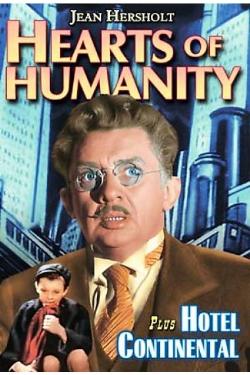
18. Hearts of Humanity (1932)

Hearts of Humanity (1932)

They don’t make melodramas like they used to. To be a little less trite, because they make nothing like they used to, what made melodramas in the Pre-Code and Golden Age era work was the unrelenting wave of unabashed emotion, the incredible circumstance, be it hardship or triumph, the near-cloying tugging at heart strings in a tale with a more straight-forward narrative style made for a less cynical world. Yes, these date them, but any film from any period can be perceived as dated. What these films don’t fear is trying too hard for the emotional response.

In this film there’s an example of much of what I was talking about as a boy is orphaned one day through two unrelated acts. Both his parents die on the same day. His father has just learned of his mother’s demise when he meets his unfortunate fate. The plot that follows his less high-stakes to an extent, but it is moving. Jean Hersholt is endearing in the lead and Jackie Searle showed his ability to play endearing characters as well as conniving ones, though his Irish accent isn’t that great. It’s a simple film, but a truly enjoyable one in the style that only this era could produce.

8/10

19. High Gear (1933)

Oddly enough here you have an example, right after the last, of a melodrama that doesn’t work. This one also features Jackie Searl (as he was more commonly credited) albeit in a smaller role, he’s also orphaned, has a similar climax in terms of plot points, but is flat, rushed and for the most part ineffectual. Part of the issue with this film is that the stakes aren’t all that high. The climax of the film and denouement are lazily, cheaply handled with poor dramatic effect. The characters in this tale are flatter and less engaging than the prior one. Again this is a case of parallels causing easy comparison, but it just doesn’t work. The child, aside from the scene of immediate shock, seems greatly unaffected by his being orphaned. The trauma our protagonist deals with is handled with mediocrity and while the film moves well-enough and is done quite professionally in most regards save for the writing. In the end it’s just too much to overcome.

5/10

20. One Year Later (1933)

One Year Later (1933)

Every once in a while there is a film that will have you firmly ride the fence for a while. I usually like to give myself time to digest and think about a title. There have been quite a few titles that were about nothing or next to nothing in this theme (and that was not unexpected). This film is clearly not in that category, but it does have its issues, and plays a little coy with the details of the drama unfolding.

Ultimately this title gets a pass for a few reasons: while it doesn’t use a lot of voice over or flashbacks, the combination of audiovisual cues was still new film grammar at the time, it does tell a tale of fractured chronology, which is rather different than most of the fare thus far. Though it plays a little hard to get and does time-wasting tactics, it is also playing subtext while skirting what precisely happened in the year of the story that intervened. The events that escalate towards the film’s climax don’t click as well as they could, but they all make sense. I had a concentration lapse that cost me not to fully account motivations at first; I’ve bridged those gaps. It’s a film that is well-made, takes interesting story paths and for the most part stays engaging, despite its hiccups and difficulties.

6/10

21. Sex Madness a.k.a. Human Wreckage (1938?)

This title opens up more of the idiosyncrasies that Poverty Row titles had. Extant copies of the film do not have all the titles in front of them, therefore the director and release year are left in some doubt. Next, many of these films would have entered the public domain by now anyway, though many others were never copyrighted. Lastly, I noticed that the distributor as per the IMDb is the company that handled States’ Rights Distribution. Essentially, these small production companies, in order to find more screens, would then have these distributors act as subcontractors to barter podunk screens in certain states for them. Long story short, it’s the wrong company.

Now, I had planned, when I had more grandiose goals for this theme, as I typically do when these things start; to see more exploitation films of this era. However, I got at least this one. In all honesty, two things happened: firstly, while shocking for its era the title still proves hyperbolic, which isn’t shocking. Second, though highly melodramatic, the film for the most part was much better than I could’ve expected. It’s a bit bald-faced but it does put its didacticism in story elements and disguises its PSA DNA pretty well. If it had just not broadcast one key point I could’ve passed it.

5/10

22. The Mystery Train (1931)

Here again you get another misnomer. This film is not so much a mystery, but what it does have enough of is sufficient levels of intrigue. Also, it has what few of these titles have had and that’s a clear and distinct structure that works very well in its running time. Prior to the inciting incident two set of circumstances are perfectly drawn, thus so are motivations. This propels the film through much of the second act.

Fate, and a climax that is not quite as thrilling as the start bring it down slightly, but the way it does end is interesting, but it is is a very entertaining film.

7/10

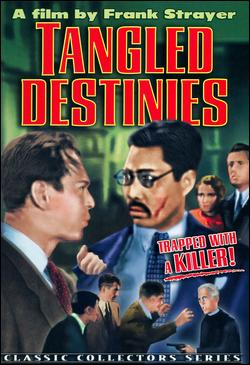
23. Tangled Destinies (1934)

Tangled Destinies (1932)

If you’ve ever seen a murder mystery weekend episode of a sitcom, the gag is that invariably a real murder ends up occurring. This is the kind of tale that inspired that charade because for the most part it plays out like one of those tales, minus the subterfuge. The set-up is fantastic: an emergency landing of a small plane during a storm forces the passengers to seek refuge in a nearby empty house. The storm causes power surges and ample opportunity for the mysterious murderer/crook to strike.

There are some Pre-Code twists to it that will leave you guessing, and the occasional not-suitable-for-the-21st-Century comment, but the film does well to build and develop its mystery and buck expectations.

8/10

This concludes the running post for my Poverty Row April theme. Albeit in May, I will return with some concluding thoughts on the series tomorrow.

2013 BAM Award Considerations – March

Last year I had one massive running list and it became very cumbersome to add to, and to read I’m sure. By creating a new post monthly, and creating massive combo files offline, it should make the process easier for me and more user-friendly for you, the esteemed reader. Enjoy.

Eligible Titles

Jack the Giant Slayer
Bestiaire
The Awakening
Sleep Tight
Straight A’s
The Last Exorcism 2
Leviathan
A Dark Truth
Storage 24
The Incredible Burt Wonderstone

Best Picture

The Awakening
Straight A’s

Best Foreign Film

Best Documentary

Last year this was an omitted category, due mostly to the fact that too few total candidates existed to make the slate feel legitimate. I will hope to be able to rectify that this year.

Leviathan
Bestiaire

Most Overlooked Film

As intimated in my Most Underrated announcement this year, I’ve decided to make a change here. Rather than get caught up in me vs. the world nonsense and what a film’s rating is on an aggregate site, the IMDb or anywhere else, I want to champion smaller, lesser-known films. In 2011 with the selection of Toast this move was really in the offing. The nominees from this past year echo that fact. So here, regardless of how well-received something is by those who’ve seen it, I’ll be championing indies and foreign films, and the occasional financial flop from a bigger entity.

Best Director

The Awakening
Straight A’s

Best Actress

Eleanor Tomlinson Jack the Giant Slayer
Rebecca Hall The Awakening
Anna Paquin Straight A’s
Ashley Bell The Last Exorcism 2

Best Actor

Nicholas Hoult Jack the Giant Slayer
Ryan Phillippe Straight A’s
Dominic Hall The Awakening
Pep Tosar Sleep Tight
Steve Carell The Incredible Burt Wonderstone

Best Supporting Actress

Imelda Staunton The Awakening

Best Supporting Actor

Stanley Tucci Jack the Giant Slayer
Isaac Hempstead Wright The Awakening
Powers Boothe Straight A’s
Spencer Treat Clark The Last Exorcism 2
Steve Buscemi The Incredible Burt Wonderstone
Jim Carrey The Incredible Burt Wonderstone

Best Performance by a Young Actress in a Leading Role

Best Performance by a Young Actor in a Leading Role

Best Performance by a Young Actress in a Supporting Role

Sydney Rawson Jack the Giant Slayer

Best Performance by a Young Actor in a Supporting Role

James Kirkham Jack the Giant Slayer
Isaac Hempstead Wright The Awakening
Riley Thomas Stewart Straight A’s
Zachary Gordon The Incredible Burt Wonderstone
Mason Cook The Incredible Burt Wonderstone
Luke Vanek The Incredible Burt Wonderstone
Peter DaCunha A Dark Truth

Best Cast

The Awakening
Straight A’s
The Incredible Burt Wonderstone

Best Youth Ensemble

The Awakening
Straight A’s
Jack the Giant Slayer
The Incredible Burt Wonderstone

Best Original Screenplay

The Awakening
Straight A’s
The Incredible Burt Wonderstone

Best Adapted Screenplay

Best Score

The Awakening
Jack the Giant Slayer

Best Editing

The Awakening
Straight A’s

Best Sound Editing/Mixing

Jack the Giant Slayer
Leviathan

Best Cinematography

The Awakening
Straight A’s

Best Art Direction

Jack the Giant Slayer
The Awakening

Best Costume Design

Jack the Giant Slayer
The Awakening

Best Makeup

The Awakening
Straight A’s
Storage 24

Best Visual Effects

The Awakening
Jack the Giant Slayer
Storage 24

Best (Original) Song

Short Film Saturday: Aquamania (1961)

This Goofy short is notable for a few reasons. The least of which is that this was another chapter in the series of shorts that saw Goofy take up recreational activities or sports with predictably disastrous and hilarious consequences. More interestingly than that is that later in Goofy’s filmography he became increasingly more human, compared to his embryonic state he was positively urbane at this point, such that he became a suburban father later on, and this short features his son, Junior. Interestingly, when Goofy saw a revival in the 1990s in the film A Goofy Movie and the subsequent television series Goof Troop, Junior was supplanted by an older more modern rendition of his son named Max. Seeing as how much time has passed it’d be interesting to see Disney either reintroduce Junior parallel, along side or in place of Max. I think the first possibility could be the most interesting. Sophistication in audiences has taken another step forward and alternate realities, or plot-lines are easier to sell now. It’d be neat to see, as I perpetually dislike characters getting eschewed prematurely. Regardless, this short still stands and it’s quite funny.

Once Upon a Time in the 80s: Parenthood (Part 13 of 17)

Warning: this article features in depth story analysis and several plot points are revealed. If you have not seen the film, read at your own peril.

What The Neverending Story is to 80s fantasy Parenthood is to the family film of the 80s, although I doubt you’ve ever seen anything like it before or since. The film was written by Babaloo Mandel and Lowell Ganz a writing team that date back to the 70s working on Laverne and Shirley and they still work together, which is a rarity in this day and age. They’re credits include Gung Ho, Multiplicity, A League of Their Own and Spies Like Us and Parenthood was directed by Ron Howard who has always made pretty good films. 


This film has one of the best opening scenes. A father (who will later be Jason Robards) brings his son to a baseball game but has to go see some clients so he leaves him with an usher and it’s his 9th birthday. The usher sits next to him and starts a conversation the boy responds and says “You’re not really here. You’re an amalgam. A combination of all the ushers my dad left me with over the years. You see my dad, when he was a kid, was without a positive male influence,” and so on. This is hysterical dialogue coming from a kid and there’s a partial break in the fantasy and we see his wife, Karen (Mary Steenburgen); still as a kid he tells the usher that’s his wife. “The game’s over, honey,” and the fantasy is broken. We see Gil (Steve Martin) get up, no longer a boy but a middle-aged father of three.

Parenthood (1989, Universal)

That sets the stage. What’s different about Parenthood is that it shows many of the problems a family can go through by depicting an extended family that has more interaction than most American families. Gil and Karen’s main concern is for their son Kevin who has emotional difficulties and gets too tense at school. We witness their struggle against the public school’s administration who want to label him ‘special’ when we can clearly see he’s a normal child. Then there are his sisters Susan (Harley Kozak) and Helen (Dianne Wiest). Susan is married to a super-genius, Nathan (Rick Moranis) who is grooming their daughter Patty to be a genius as well. He gives her vocabulary flashcards and teaches her complicated algebra and reads Kafka to her, although she’s just four. Helen, meanwhile, is divorced from her husband and left to raise the rebellious and monosyllabic Gary (Joaquin Phoenix f.k.a. Leaf Phoenix) and the love-struck Julie (Martha Plimpton). Then there’s Larry (Tom Hulce) the get-rich-quick-schemer who never worked a day in his life who comes home to a family reunion with a son named Cool, who’s black. His explanation being “I was dating this show girl; she was doing this show Elvis on Ice. Anyway, she shows up with Cool one day and says ‘You take Cool. I shot someone. I have to leave the country. That’s a parent?’ Then of course, the patriarch, Jason Robards, who has some difficult decisions to make along the way.


These sagas play out so cleverly and realistically and everything in this film just works. Gil and Karen refuse to have their son put in special education and they say they’ll take him to a therapist and send him to a private school rather than have him stigmatized. What really works about the meeting is that at first there is finger-pointing but they are also defiant of the public school system, which just doesn’t work. Gil promises to get a second job and his job, getting more clients and trying to work more hours becomes a crucial part of this film. Towards the end of the film after Gil is passed over for a promotion in favor of Phil Richards, a man who is a ghost in this film, we hear about but never see him, who is single and has time to tender to his clients every need; Gil in a fit of rage quits. He comes home and his wife tells him she’s pregnant. This is one of the few films in the 80s that actually deals openly with the issue of abortion. And it’s even more difficult to do in a comedy but it’s very well-handled. We also hear some of Martin’s funniest lines here: “Let’s see how we can screw the fourth one up? Hey, I know, let’s have five, let’s have six, why don’t we have a dozen and pretend they’re donuts?” In the end they have their baby and what’s great is that Kevin does have his shining moment by winning his team a baseball game but it’s not a cure-all he goes on living day by day that won’t permanently fix the problem, just like Gil saving his birthday party didn’t as Karen pointed out, and that’s real.

Parenthood (1989, Universal)

Susan’s struggle is that she finds no romance in her life anymore and she’s frustrated that Nathan’s only concern is turning Patty into the next Kierkegaard. When she tells him they could go to Mexico over the summer he immediately thinks it’s a great chance for Patty to learn Spanish. Susan’s suggestion that she stays at Gil’s is shot down because he doesn’t like her being there. So when Nathan says we’ll get two rooms, she asks herself “Which one will I be in?” While Gil and Karen go through a crisis with their children and how best to raise them Susan and Nathan’s relationship is on the brink of falling apart. At one point, Nathan finds her diaphragm has holes in it and it starts a major fight because everything is academic with him and you must wait five years between having children. Susan is so frustrated by her relationship with him that she breaks up via flashcards. Yet we see that all she wants is to be wooed when Nathan comes into her classroom where she teaches one day singing their wedding song. At the end of this film, they’re happy and Patty has finally been allowed to be a child which was one of their major arguments.


Helen’s is the most difficult and heartwarming of all the family conflicts overcome in this film. Despite all the seemingly melodramatic events in this film it is most definitely a comedy but a very intelligent and well-constructed one that has something to say. Julie is madly in love with Tod (Keanu Reeves). We’re introduced to her as she’s hiding Tod under her bed. After her mother leaves he comes back out and they start to make love and he takes pictures. We don’t see anything and it’s very tastefully done, but the story takes a great twist. One of the best moves by the writers is the pictures. Julie and Tod go to a one hour photo booth and pick up their photos and see their mother at a work party. They go back to see if there’s another envelope for Buckman and find it was already picked up. When Julie gets home this leads to a fight that has her leave the house and move in with Tod. The fight also has some of the best lines of the film in it. Helen is looking at the picture and says “Woo, here’s one for my wallet.”


Parenthood (1989, Universal)

Through the whole movie Helen can’t get through to Gary until she breaks into his padlocked room and finds a stash of porn. After Helen talks to Tod she finds out that Gary had felt like a pervert until they had talked. See even the brain-dead boyfriend in this movie serves a purpose? Julie comes home married and her troubles with Tod escalate. Helen goes out with Gary’s science teacher and it all ends with Julie also giving birth. Now many people have overemphasized the “giving birth as a road to happiness theory” in this movie and that’s just rubbish. First, to make a happy ending and have everyone reunited; where better than a maternity ward? Secondly, the births are symbolic of life going on and the families moving on and moving past their problems, and are not to be taken in an overly-political way. Helen, for example, found peace within her family before she and her daughter gave birth.


What also makes this movie different is that there’s not a happy ending for everyone and not everyone sees the light, so to speak. Part of the strength of this film is that Larry never changes. His father has a restored car that Larry drives off with and has appraised because he owes gangsters $20,000. Prior to this encounter Frank, the father, talks to Gil and asks his advice because he knows Gil is “a good father,” and they share their miseries and the most poignant line of the film the father says “It never ends. It doesn’t matter if you’re 30 or 40 or 80, he’ll always be my son, just like Kevin is your son.” Towards the end Larry comes to his dad asking for help paying them off because he blew the money he’d gotten earlier at the track. If he doesn’t come up with the money he’ll die. In a very poignant scene we see Larry waiting by shaking his watch back and forth on his wrist. His father will pay them $1,000 a month but the worst part of it for us is that he’ll have to put off his retirement. Larry is so self-involved that not only has he found another shady business deal, this time in South America, but he almost forgets Cool and his father spares him the trouble and says he’ll take care of him.


Parenthood (1989, Universal)

In all this drama it’s hard to see the humor in the film so here’s some: When Tod begs Julie to come back after a momentary breakup she says “I wouldn’t live with you if the world was flooded with piss and you lived in a tree,” when Larry comes home Gil’s son Justin asks “Who’s that?” Gil responds “It’s my kid brother, Larry, your uncle. Don’t give him any money.” And the list goes on and on. This is truly a great movie about how insane family life is and how we tend to need each other anyway. This film made nearly $100 million when it was released in 1989 yet, oddly, I’ve heard few people talk about it. This is probably Steve Martin’s best work before he started writing and showing us his intellectual side, not that this film isn’t smart, but it’s no Picasso at the Lapin Agile. This is most definitely one of the most underrated films I’ve ever seen and a quintessential 80s comedy that no one can top.

March to Disney: Disney Animated Feature Ranking

This is a series of posts this month wherein I will focus on Disney films. For more on my background with Disney films and about the timing of this focus please read the introductory post here.

To be honest, this list was part of the motivation for me to do this theme. Another, as has been the case for a lot of what I’m planning this year, is a not insignificant stack of unseen DVDs and Blus (that I’ve now amazingly gotten through, so far as Disney films are concerned!).

So, to cut a long story short: this list was an imperative, but not one I looked forward to compiling. Any list is really splitting hairs. That becomes even more apparent when you’re picking from a group of films you generally love, some of which have been with you since early childhood. Any list can have a decent amount of pliability. Meaning that come next year I could revisit the concept and change the order. So I thought it more important to stratify my Disney films seen rather than be obsessed about “Well, is this one #3 or is it closer to #7?”

To split the films up in this way, should render a lot of these selections immutable, rather than losing sleep over which films crack the top 10.

Lastly, a few footnotes: I have excluded hybrid films for the purposes of this list (things like Song of the South and Bedknobs and Broomsticks) because it’s not fair to compare mixed medium films with wholly animated ones. Also, only films by Walt Disney Animation Studios are eligible (So Pixar titles, and things like A Goofy Movie and The Brave Little Toaster, produced by different divisions, but released by Disney are also ineligible) essentially these are the films that were “counted” (e.g. back in the days when Disney would announce its “35th full length animated feature”).

Any films I have yet to see will be noted at the bottom. Should I see them between now and next year, I will update the post accordingly.

As I tend to say for every list: all things are relative. For the most part I absolutely adore Disney animated films so some films that I love will slip when ranked and be branded with a moniker of “Middling.” That’s a comparative label. Many of them get very high scores on their own.

Three Caballeros (1943, Disney)

Package films are included and sprinkled throughout. It’s hard to compare a package films to a standard feature narrative so the ranking of some may belie their quality. If you’ve not seen The Many Adventures of Winnie the Pooh, Saludos Amigos, The Three Caballeros, Fun & Fancy Free, Make Mine Music and Melody Time they come highly recommended.

The Crème de la Crème

Robin Hood
Dumbo
Bambi
Pinocchio
Peter Pan
The Lion King
The Many Adventures of Winnie the Pooh
The Little Mermaid
Sleeping Beauty
Alice in Wonderland

Excellent Works

Cinderella
Snow White and the Seven Dwarves
The Fox and the Hound
Beauty and the Beast
Aladdin
The Jungle Book
The Sword in the Stone
Lady and the Tramp
101 Dalmations
The Aristocats

Great Works

The Rescuers
The Rescuers Down Under
The Great Mouse Detective
Wreck-It Ralph
Winnie the Pooh

Middling Works

Saludos Amigos
The Three Caballeros
Fantasia
Bolt
The Hunchback of Notre Dame
The Black Cauldron
Oliver and Company

Lesser Works

Fantasia 2000
Pocahontas
The Adventures of Ichabod and Mr. Toad
Chicken Little
Hercules

Films Unseen to Date

Mulan
Tarzan
Dinosaur
The Emperor’s New Groove
Atlantis: The Lost Empire
Lilo & Stitch
Treasure Planet
Brother Bear
Home on the Range
The Princess and the Frog
Tangled

March to Disney: Titles That Should Come Out of the Vault

To be brief, I completely and totally understand the inherent logic of Disney’s vaulting strategy. As a business model, it seems to have worked, because if it wasn’t working the practice would’ve been discontinued by now. Essentially the idea is: if you make a film available only for a limited time every x number of years you’ll drive up demand and sell more.

To be honest, I can deal with the larger titles, a majority of the animated features are ones that I’ve rushed to get when a new format came around. Upgrades are always a questionable call, but ultimately I’ve gone and gotten things over again a few times. Those are the titles I would consider strategically vaulted.

Now, there are then the lesser known titles, which seem to be buried more so than anything. Granted when you’re putting out a new title on DVD there are expenses such as marketing, manufacture, restoration and mastering, but one solution would seem to Disc on Demand, like Warner Archive. Now, Disney launched its own made-to-order line in 2011, but have scarcely used it releasing three titles per year.

Another possibility that Disney does seem to be using more is digital. However, as I talk about here, I still struggle to detach myself from physical copies of movies. And even in the digital realm I’d much rather a digital copy that I can play on a computer or phone and move about rather than one stored elsewhere that I have access to. However, if you are interested Disney does have many OOP titles available for purchase only via Amazon Instant Video things like The Prince and the Pauper.

In the list below, however, I will list currently unavailable Disney titles I’d like to see released on some platform.

Song of the South

Song of the South (1946, Disney)

I’ve mentioned it on numerous occasions: Disney pretends like this film doesn’t exist only until it’s time for another greatest hits compilation then they dust of “Zip-A-Dee-Doo-Dah” or get one of their new singers to cover it. You can’t have it both ways. Aside from the fact that it should be available. Maybe On Demand would be the way to go here. Only those with a familiarity with the product or the studio go that route, it’d be less likely to cause a stir that way than if it was sitting on a shelf in Best Buy.

Mom’s Got a Date with a Vampire

Mom's Got a Date with a Vampire (2000, Disney Channel)

There aren’t that many DCOMS, there are even fewer this good and most of them are usually connected with a holiday. This is hands down my favorite of them all.

Spin and Marty

Spin and Marty (Disney, 1955)

The characters Spin and Marty were introduced to young audiences as a serial story that was part of the The Mickey Mouse Club. The Adventures of Spin and Marty was released as part of the Disney Treasures collection. That constitutes the first season of the show. The second and third seasons have yet to be released. Disc on Demand has proven to be a great solution for shows that have small but dedicated followings. I think this would qualify.

Kniga Masterov

Kniga Masterov (2009, Disney)

I am not sure this is the film I mentioned in the Zokkomon piece, which may have been a Disney channel film, but it is also a fantasy and looks pretty awesome. When part of my premise in that write up was this line should get diversified, I had to find something right? You will find a trailer and a clip here. I believe this is a great idea for all studios. Many of the majors produce films the world over, and most nations have their own genre cinema as well as their more artistic directors. Watching either kind of film from another country is usually a rewarding experience in one way or another. It seems like Russia would be the next logical spot for Disney World Cinema to release some titles from.

Good Morning, Miss Bliss

Good Morning, Miss Bliss (1988, Disney Channel)

OK, so this is kind of a representative choice. Here’s the thing Disney Channel is now in its 30th year. At the start of the last decade it started getting serious in terms of creating popular shows that became phenomena, but they still don’t package their shows properly on DVD, collecting a handful random, disjointed episodes by theme and not by season.

So, if choosing one title to represent Disney, why this one? This was one of the first comedic scripted shows The Disney Channel did (I just learned it was them). Furthermore, I don’t think I ever saw the show as Good Morning, Miss Bliss; but rather repackaged as Saved by the Bell, as some characters do transition over there. Not knocking Saved by the Bell‘s song at all, everyone of a certain age knows it, but I also never saw this show’s opening.

Now, I realize these same episodes are likely included in the Saved by the Bell set, and rights can be complicated. So, if that really bothers you a lot pretend I said Even Stevens, because that had “Influenza: The Musical,” one of the best single episodes of anything, and it was back when Shia LaBouef was funny and we all liked him.

What do you want to see Disney release? I always am eager to learn of new titles. It also bears mentioning that there are great online resources to try and gather momentum for releases like Open Vault Disney.